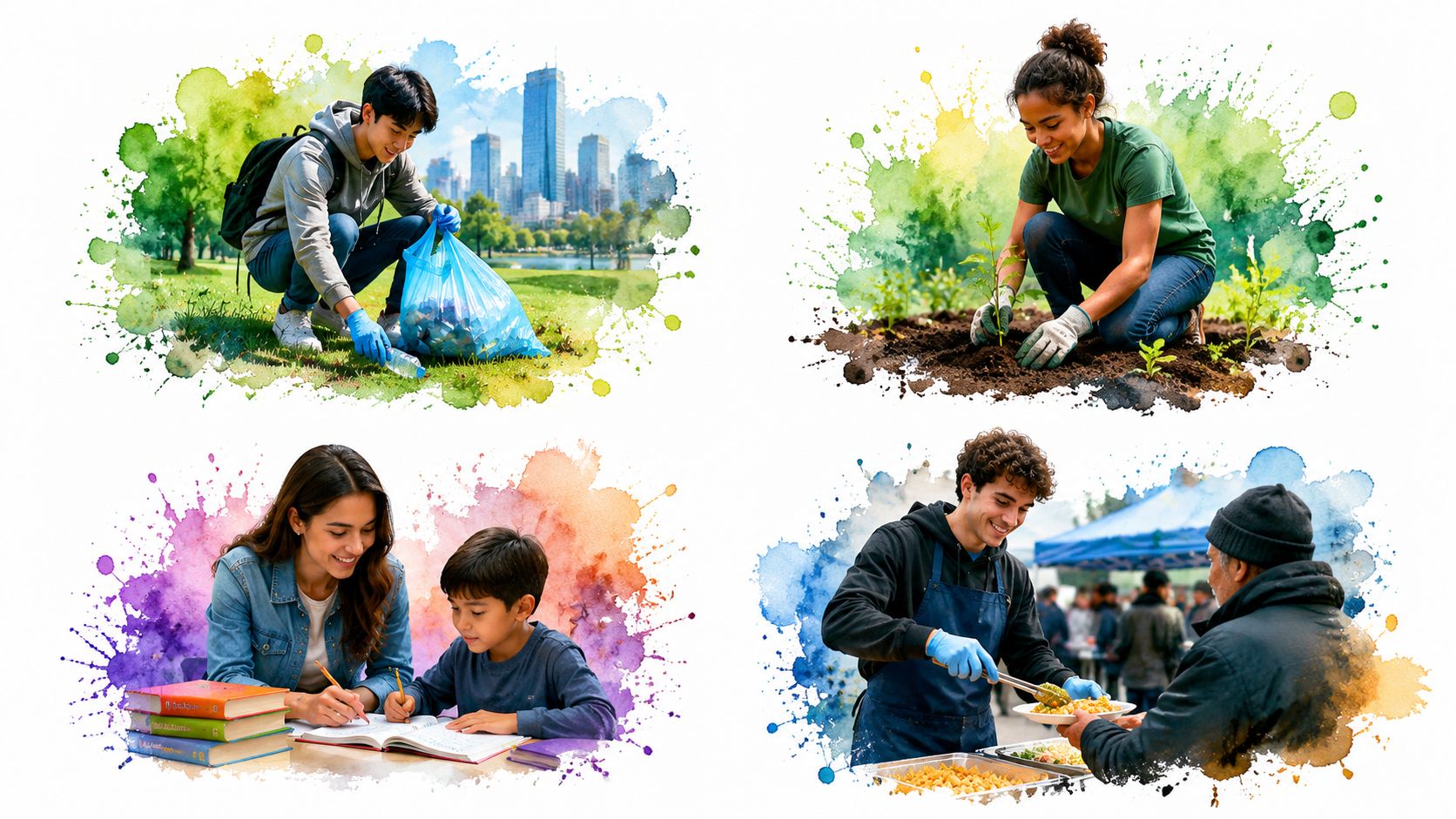
Tag: student volunteer opportunities

  • 7 Ideas for Community Service for Students (2026)

    7 Ideas for Community Service for Students (2026)

    I've stood in my kitchen staring at an old bag of nuts and a sticky jar in the back of the fridge like they were boulders. Then I went outside, picked up a stranger's crushed coffee cup, and it felt weirdly easy. That's when community service for students clicked for me.

    Your own mess has history. Other people's mess usually doesn't. You can move it. You can finish something. You can look down at a cleaner sidewalk, a sorted shelf, a planted tree, a happier classmate, and say, “I did that.” That's why service works so well when your brain feels jammed. It gets you out of rumination and into motion.

    This isn't only about hour logs and application blurbs. It's about finding out who you are when it's cold, or awkward, or early, or inconvenient, and you still show up. If you want community service for students that changes you, start with something real, visible, and easy to repeat.

    1. Litter Caterpillars
    Litter Caterpillars

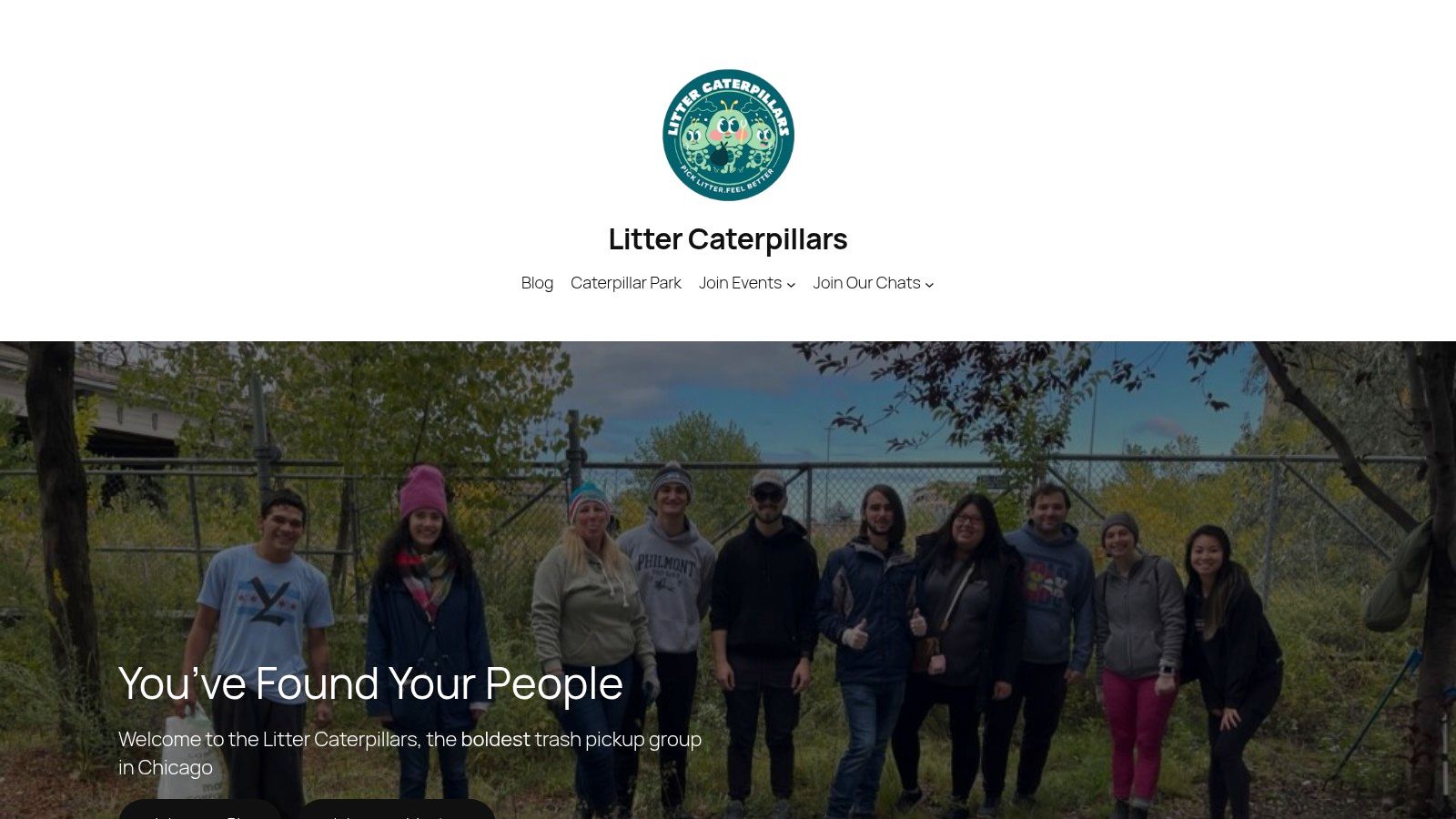
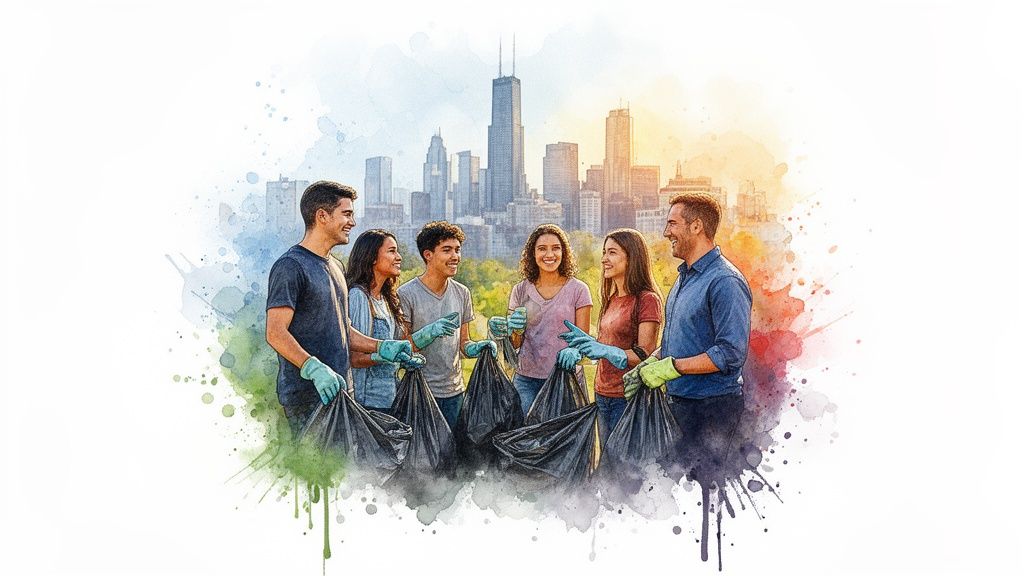
    One of the clearest service stories I've seen starts with a cold Chicago morning, a grabber in your hand, and a block nobody else felt like claiming.

    You show up half-awake. There's fast-food trash pressed into the curb, bottles in the grass, a wet flyer stuck to the sidewalk. An hour later, the pile is in bags, people are laughing, and the street looks like somebody finally cared. That shift matters. You came out to clean a corner, but you also proved to yourself that you can finish something.

    That's the pull of Litter Caterpillars, the Chicago cleanup crew started by Kevin Tao. The idea behind it is stronger than “pick up litter.” If your own life feels backed up, helping clean up somebody else's mess can get you moving again. Weekly cleanups, rough weather, missed sleep, awkward first introductions. It all becomes training. You build courage by doing a simple hard thing on purpose, over and over, with other people beside you.

    Why students remember this one

    Some service programs give you a task and send you home. Litter Caterpillars built a culture people want to return to. Flags, badges, group chats, rituals, a theme song. That sounds goofy until you realize how many students quit volunteering because nothing pulls them back the next week.

    Practical rule: Pick a service group that gives you a reason to come back when your motivation disappears.

    That return factor is a real issue. Researchers at the Do Good Institute found that millions of U.S. high school and college students volunteered each year, while participation rates still sat far below half, according to the Good Intentions Gap in Action report. Interest is not the problem. Repetition is.

    Litter Caterpillars is strong at repetition because the work is visible and the identity is shared. You are not staring at a vague goal. You can point to a cleaner alley, an emptied lot, a park edge with fewer cans and wrappers, and say, “We changed that today.” If you want to understand more about why volunteering helps students grow over time, this kind of visible, recurring service is a powerful example.

    What stands out, and what can test you

    The biggest strength is how concrete it feels. Trash cleanup gives you a before and after in the same morning. Litter Caterpillars also pushed past one-day service and helped transform an empty lot into Caterpillar Park in Englewood. That kind of result changes how you see “small” volunteer work. A few bags of trash can become a habit. A habit can become a crew. A crew can change a block.

    A few practical notes matter.

    • Best part: You can join without money pressure, and the focus stays on volunteering, safety, and community.
    • Best for: Students, new residents, and anyone who wants friendship built into the work.
    • Hard part: It's physical. Weather, walking, and early mornings can wear on you.

    I like that last part more than I used to. Waking up early for a cleanup is not glamorous. That's why it works. You start to see yourself differently when you keep showing up anyway. For some students, community service is a line on a resume. For others, it becomes the place where they get their life back in order. Litter Caterpillars makes a strong case for the second version.

    2. DoSomething.org

    Some days you don't need a grand mission. You need one decent action that fits between class, work, and dinner. That's where DoSomething.org has an edge.

    It's built for teens and young adults who want service without needing a car, a huge time block, or a big group. The platform runs short actions you can do online or in person, and it gives you step-by-step guidance instead of dumping you into confusion. If you've ever wanted community service for students that feels less like “join a committee” and more like “start now,” this one is strong.

    When I'd choose this over an in-person crew

    I'd pick DoSomething if your life is scattered. Maybe your schedule changes every week. Maybe transportation is a pain. Maybe you need a smaller on-ramp before you try a recurring volunteer commitment.

    Its appeal is flexibility. Actions are usually compact, and the platform has photo-proof submission plus downloadable volunteer hour certificates. If you're trying to learn why volunteering helps students grow, this kind of low-friction action is a good first experiment because it removes a lot of excuses.

    Sometimes the best volunteer opportunity is the one you'll actually complete this week.

    There's also a real historical reason this matters. Student service has been common for a long time when schools and organizations make it organized and easy to join. The National Center for Education Statistics reported in 1999 that 64% of public schools had students participating in community service activities recognized by or arranged through the school, and 57% of public schools organized those activities. In schools where students participated, 89% had school-organized opportunities. That data is in the NCES report on student community service.

    The tradeoff

    DoSomething is clean and convenient, but some schools still prefer logs signed by a live supervisor. So before you bet your graduation or club requirements on a certificate, check what your school counselor or advisor accepts.

    • Great fit: Solo students, students with limited transportation, and students who need fast hour documentation.
    • Less ideal: Anyone whose school only accepts supervisor-signed paper forms.
    • Nice bonus: You can test different causes without getting locked into one identity too early.

    3. Habitat for Humanity Youth and Campus Chapters

    If you want service that feels solid, Habitat is hard to ignore. There's something powerful about touching materials, stocking a ReStore shelf, or helping a campus chapter run projects that support housing work. You leave with sore legs sometimes, but also with the feeling that your Saturday had a backbone.

    Habitat for Humanity youth programs give students a few paths in. You can volunteer locally, join or start a campus chapter, help with advocacy and fundraising, work in a ReStore, or try a Collegiate Challenge trip if you're old enough and ready for more commitment.

    Why students keep coming back to Habitat

    Habitat has structure. For a lot of students, that's a gift. You don't need to invent the opportunity from scratch or wonder if the adults know what they're doing.

    If you're searching for more community service ideas for college students, Habitat is one of the cleanest bridges between one-time volunteering and a longer service habit. It also works well for students who like team projects and don't mind rules, waivers, and clearer supervision.

    What I'd tell a nervous first-timer: Start with a ReStore or non-construction role if heights, tools, or job-site noise make you tense.

    The part people forget

    Habitat feels accessible, but local rules matter. Build-site tasks can change by age and affiliate, and some break-trip options bring travel costs or fees. So this isn't always the cheapest path.

    Still, there's a reason many students trust it. It's recognizable, visible, and easy to explain on an application without sounding fake. You worked with people. You showed up. You learned how much planning goes into something as basic as a safe, stable place to live.

    4. buildOn

    buildOn (U.S. Service Learning Program)

    buildOn is for students who don't want service to be random. If you do better when service is tied to school, mentors, teachers, and a long runway, buildOn's U.S. programs make a lot of sense.

    I like this model because it treats service like a practice, not a burst of guilt. In partner high schools, students get after-school and in-class service-learning tied to real community work. That can mean meals programs, tutoring, support for seniors, and leadership development over time instead of a single “volunteer day” photo.

    Why the school-based setup matters

    By the mid-1990s, student participation in service was already broad. One source summarized that an estimated 49% of U.S. students in grades 6 through 12 reported participating in a community service activity during the 1995–96 school year, and later national volunteer data showed continued large-scale adult volunteering as well. The same summary notes that in the year ending September 2023, 75.7 million Americans formally volunteered through organizations, or 28.3% of people age 16 and older. That overview is in the University of Nebraska Omaha service-learning summary.

    That doesn't mean every student turns service into a lasting habit. It does tell me that organized channels work. buildOn leans straight into that reality. If your school is already part of the network, you don't have to wrestle the logistics alone.

    For students curious about service-learning programs, this is one of the clearer examples of what “integrated into school life” looks like.

    The friction point

    The downside is access. buildOn is strongest inside partner schools, so if your campus isn't connected, you may need a teacher or administrator to help open the door. And the international Trek side takes extra commitment.

    • Best for: High school students who want sustained service and leadership, not occasional hour-chasing.
    • Hard part: You may need school buy-in before any of it becomes real.
    • Why I'd still consider it: Consistency gets easier when the opportunity already lives where you spend your week.

    5. Student Conservation Association
    Student Conservation Association (SCA)

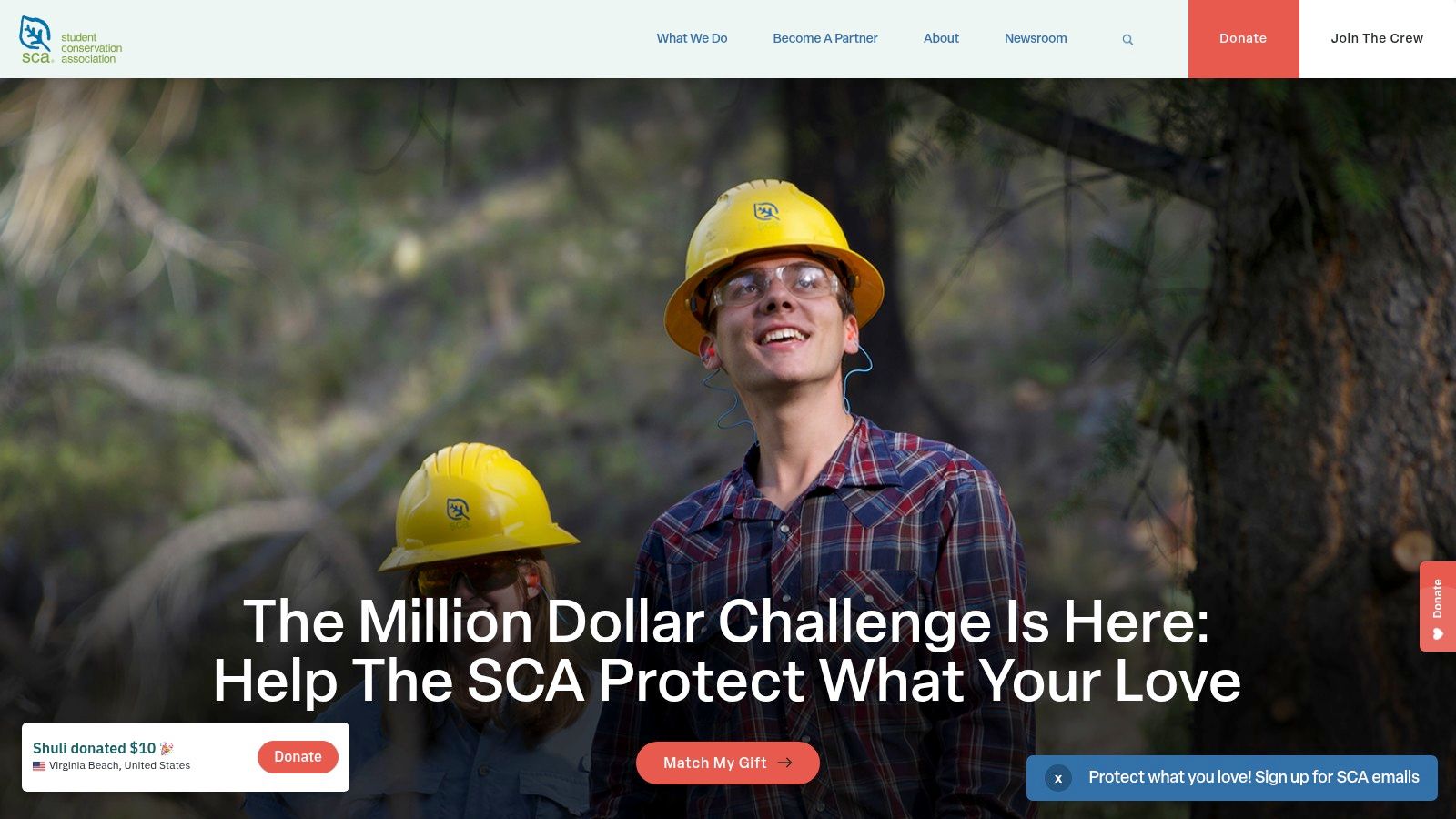
    A lot of students do better once they get outside and start using their hands. I've seen what happens when someone spends a morning hauling brush, clearing a trail, or planting trees with a crew. They stop performing “being helpful” and start feeling useful.

    That's why Student Conservation Association stands out. It gives high school and college-age students real conservation work, often in crews and internships that put you in parks, public lands, urban forestry projects, and other outdoor assignments. If Litter Caterpillars begins with picking up one ugly mess on your own street, SCA feels like the next level. You learn what it means to care for a whole place with other people counting on you.

    Why this one changes people

    The shift happens fast. You show up early. You get dirty. You carry tools correctly or somebody gets hurt. You learn that “I forgot” does not help your crew when there's a trail to repair or invasive brush to remove before the heat gets bad.

    That kind of service gets under your skin in a good way.

    A school service club can teach responsibility. Outdoor crew work tests it. You feel the day's effort in your legs, your shoulders, and the quiet way your team starts trusting you more. For some students, that is the moment service stops being a college application line and starts becoming identity.

    There's a practical side too. Organized volunteer programs track hours, placements, and participation carefully, and the systems around volunteer work keep getting more formal. The Credence Research volunteer management platforms report says Independent Sector and the Do Good Institute estimate the value of a volunteer hour at $36.14 in 2025. That does not make your time meaningful by itself, but it does show that serious organizations treat volunteer work as real work.

    What I'd weigh before joining

    SCA makes a lot of sense if you care about climate, parks, forestry, restoration, or outdoor careers and want service that could grow into job skills. Some programs may offer stipends or education awards, depending on the role.

    The hard part is fit. Your region, the season, transportation, and gear can all affect what's available. Some opportunities are local and manageable. Others ask for more planning than a busy student can realistically give.

    Still, I keep coming back to this kind of work because it can straighten you out a little. A cold morning on a conservation crew has a way of cutting through excuses. You show up, do your part, and head home different than you arrived.

    6. Key Club International

    If you want community service for students that lives right inside school, Key Club International is the classic answer. I mean that in a good way. You don't have to build a service life from scratch when your club calendar, sponsor, and officer team already exist.

    Key Club is student-led, which changes the feeling of the work. You aren't only attending projects. You can plan them, recruit friends, run meetings, and learn how messy group leadership really is. That's useful. Service gets more real the second you have to remind other people to bring supplies and show up on time.

    Why this works for shy students too

    A lot of students think leadership clubs are only for polished extroverts. I don't buy that. School clubs are one of the safer places to practice taking up space because the stakes are lower and the rhythm is familiar.

    Key Club has school-based chapters, officer roles, guides, and a path to start or reactivate a chapter. It also has mentorship through Kiwanis sponsors, which can help if you want adults around who understand how to move a project from “good idea” to actual event.

    The downside nobody should hide

    The quality depends a lot on the local club. A strong chapter feels alive. A weak one can feel like a spreadsheet with snacks. There are also dues. The plan notes international dues at US$10, and district or local dues can vary.

    • Strong fit: Students who want recurring service with friends from school.
    • Better than it sounds for: Students who want to learn logistics, public speaking, and project ownership.
    • Watch out for: Dead chapters, uneven energy, and joining for the title instead of the work.

    If your school has a good chapter, it can become the simplest way to make service part of your normal week.

    7. Best Buddies Schools Programs
    Best Buddies – Schools Programs

    Trash cleanup changes a block fast. Best Buddies changes a room more subtly. You feel it when students who usually stay on the edge of school life are suddenly included in the joke, the lunch table, the event, the friendship.

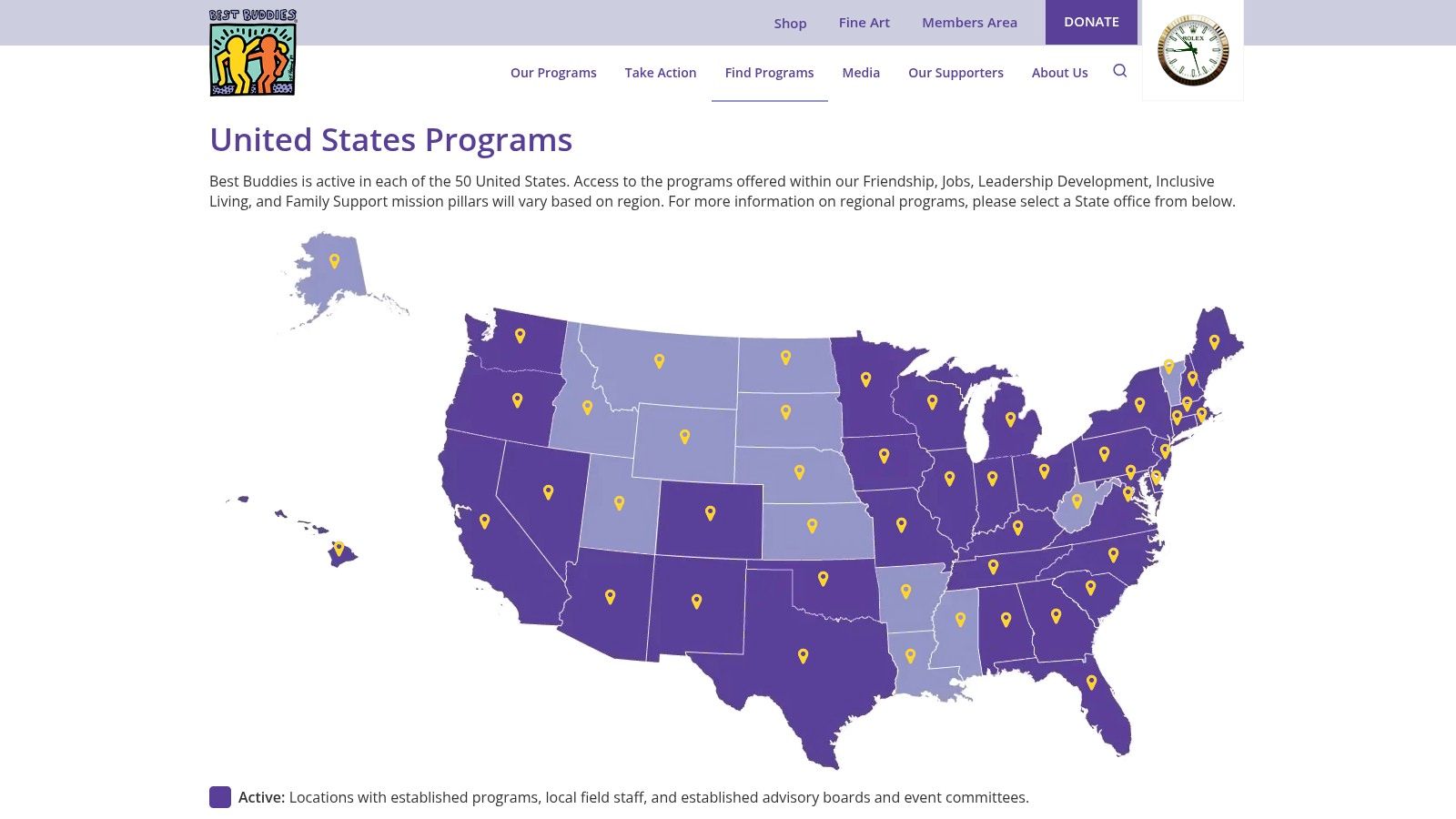
    Best Buddies schools programs pair students with and without intellectual and developmental disabilities through one-to-one friendships, group activities, and leadership roles. There are middle school, high school, and college chapters, plus e-Buddies for virtual connection in some cases.

    Why this can change you

    This kind of service asks more from you than one good Saturday. It asks for patience, attention, consistency, and respect. If you're flaky, people feel it. If you show up, they feel that too.

    I think that's why this model can shape students so profoundly. You aren't dealing with an abstract cause. You're dealing with a person, a name, a conversation, and the responsibility of being someone safe and reliable.

    Community service gets personal fast when somebody notices whether you came back.

    What to know before you jump in

    Best Buddies has a clear chapter structure and strong materials for officers and advisors. That helps. But in-person matching can vary by school or region, and some students may need to help relaunch a chapter instead of stepping into a polished one.

    The plan notes that high school and college chapters are often expected to pay annual chapter dues, commonly around US$350. That cost can be a real barrier, so ask questions early instead of getting excited and then stuck.

    Still, if what you want from service is friendship, empathy, and a reason to become more dependable, this one is hard to fake your way through. That's part of its strength.

    Student Community Service: 7-Program Comparison

    Program 🔄 Implementation Complexity ⚡ Resource Requirements 📊 Expected Outcomes 💡 Ideal Use Cases ⭐ Key Advantages
    Litter Caterpillars Low–moderate (volunteer-run weekly events) Low (volunteers, grabbers, bags; minimal funding) High visible neighborhood cleanups; community projects (e.g., park) Weekend hands-on cleanups; local community-building Consistent visible impact; strong volunteer culture
    DoSomething.org Very low (digital, step-by-step actions) Minimal (internet access, short time blocks) Quick documented actions; volunteer-hour certificates Students needing quick/remote volunteer hours Very accessible and scalable for youth
    Habitat for Humanity – Youth & Campus Chapters Moderate (affiliate coordination; chapter setup) Moderate (training, possible trip fees, volunteer time) Tangible housing/neighborhood impact; resume value Structured campus service, ReStore roles, build projects Recognized brand with training and local support
    buildOn (U.S. Service Learning Program) Moderate (school partnerships; program integration) Low for partners (free in-class resources); requires teacher buy-in Sustained logged service, SEL and leadership gains Partner high schools seeking curriculum-aligned service Structured, school-integrated programs that boost retention
    Student Conservation Association (SCA) Moderate (applications, age limits, crew logistics) Variable (paid crews/stipends available; gear/travel may apply) Skill-building, paid field experience, AmeriCorps pathways Students pursuing conservation, urban forestry, career prep Paid opportunities and clear conservation career pathways
    Key Club International Low–moderate (school chapter with sponsor) Low (student time, small membership dues) Ongoing school-based service; leadership development High school students seeking leadership and service roles Large network, officer training, mentorship pipeline
    Best Buddies – Schools Programs Moderate (chapter setup, buddy matching, training) Moderate (advisor support, possible chapter dues) Measurable inclusion and improved school climate Schools aiming to increase inclusion for students with IDD Comprehensive training/resources and measurable social impact

    Making It Real Your First Step

    You've got options now. Good. Don't turn that into procrastination.

    Pick one thing and move. Send one message. Fill out one form. Join one cleanup. Ask one teacher about a chapter. Community service for students works best when you stop treating it like a personality trait and start treating it like a calendar event.

    If you care about hours, track them like they matter because they do. Use a notebook or a spreadsheet. Log the date, organization, what you did, how long you served, and the name and contact info of the adult in charge. Get signatures or confirmations right away. Don't trust your future self to remember details after three busy weeks.

    Safety matters too. Go with a friend the first time if you can. Tell a parent, guardian, or roommate where you're going. Wear clothes that match the job. If it's outdoor service, think about weather, water, gloves, and sunscreen. If anything feels off, leave. You don't owe anyone your discomfort just because the event has a good cause attached to it.

    Then there's the part students usually mess up on applications. They list duties and forget the story. Don't write like a robot. Write like a person who changed. Say you got up early every Saturday and learned that discipline feels less dramatic than movies make it look. Say you picked up trash with strangers and made actual friends. Say you joined a chapter, kept showing up, and found out reliability is a form of kindness.

    I also think you should be realistic about motivation. You won't always feel inspired. That's normal. Sometimes service is cold hands, awkward introductions, a long bus ride, or a morning when your bed is winning the argument. Go anyway, at least once or twice past the point where the novelty wears off. That's where the true stuff starts. That's where you stop borrowing identity from the cause and start building your own.

    If I had to give you one final push, it's this. Don't wait until your life feels organized enough to help other people. A lot of us started helping because our lives weren't organized. Service gave us a place to practice being the person we wanted to become.


    If you want a version of community service for students that gets you outside, gives you visible wins, and helps you build courage with other people, join Litter Caterpillars. Show up on a weekend morning, pick up one piece of trash, and see what happens to your mood, your habits, and your circle.
  • 10 Life-Changing Benefits of Volunteering for Students in 2026

    10 Life-Changing Benefits of Volunteering for Students in 2026

    I get it. Your schedule is a beast. Juggling classes, staring down study guides, maybe even slinging coffee for cash, makes volunteering feel like a luxury you can't afford. I was there. My own life was a disaster zone, literally and figuratively. My apartment was a museum of things I'd failed at, and every piece of trash felt like it weighed a ton. I was stuck.

    Then I stumbled onto a secret. Cleaning up someone else's mess is a million times easier than cleaning up your own. It's like hitting the reset button on your own life. For me, that reset switch flipped in a Chicago hailstorm, picking up soggy napkins with a handful of friends. Sounds insane, right? But that single moment—that shared battle against the ridiculous—changed everything. It was the birth of Litter Caterpillars, and it showed me a truth I have to share with you.

    The real benefits of volunteering for students aren't just about fluffing up your resume or checking a box for service hours. It's about building a life that feels lighter. More connected. A life humming with purpose. It's realizing that by showing up for your community, you are, in the most profound way, showing up for yourself. Let’s dive into the 10 ways giving your time can completely rewire your world.

    1. Build a Real Professional Network (Without the Awkward Handshakes)

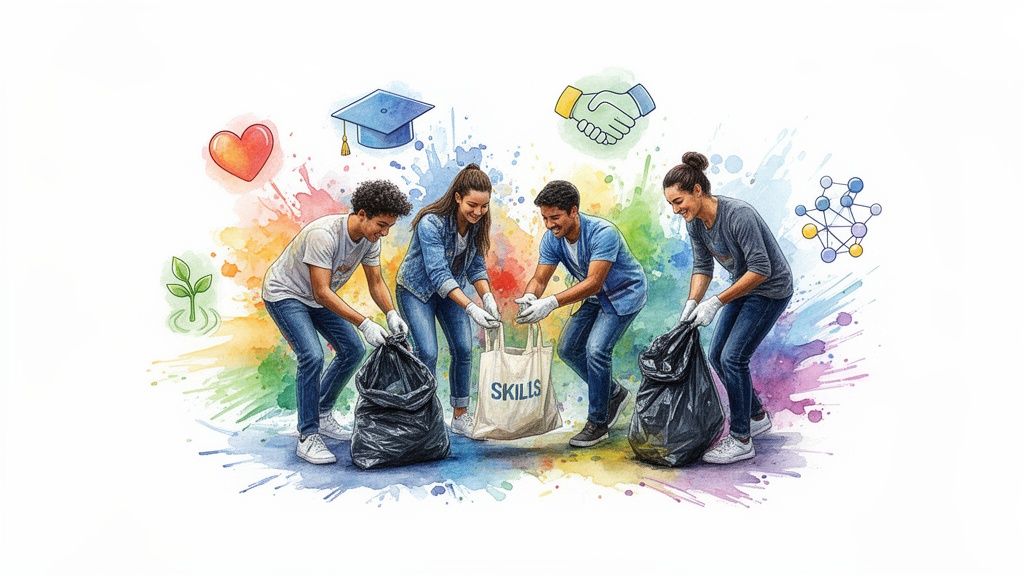
    Forget those stuffy networking nights where you nervously orbit a cheese plate and swap business cards like they're trading cards. Picture this instead: you're building a powerful connection with a software engineer while pulling a rusty bike frame out of a bush. This is one of the most incredible benefits of volunteering for students: authentic networking. It puts you shoulder-to-shoulder with established pros from every corner of Chicago, all focused on a goal you actually believe in.

    Diverse young volunteers with gloves and trash bags cleaning up a park area.

    You will meet people in tech, healthcare, the arts. Not because you're trying to sell them something, but because you're both dedicated to making the city better. I've personally watched students land amazing internships and find mentors for life just by striking up a conversation over a full trash bag. These aren't just flimsy business connections. They are real friendships, cemented by a shared mission. You're not just a student asking for a favor; you're a teammate making a real difference.

    How to Make it Happen

    • Show Up Consistently: Attend cleanups regularly. This is how you build deep roots with other volunteers. Familiar faces bloom into meaningful conversations.
    • Be Curious: Ask people about what they do and what lights them up. You'll be floored by who you meet.
    • Share Your Goals: Don't be shy about your own dreams. Volunteers genuinely want to lift each other up.
    • Take the Lead: Volunteer for a role like a ward coordinator. It raises your visibility and lets you work side-by-side with community leaders.

    This approach turns networking from a cringe-worthy chore into an adventure. You can find more about building your career through service at our young professional networking events.

    2. Develop Leadership and Responsibility Through Consistent Commitment

    True leadership isn't a title someone gives you; it's the reputation you earn by showing up when it's hard. It's proving you are the person people can count on, especially when the rain is pouring down or the task is gritty. This is where consistent volunteering forges a kind of responsibility that no classroom can teach. It’s one of the most powerful benefits of volunteering for students: building resilience through unwavering dedication.

    This is not a one-and-done event. It is a promise. At Litter Caterpillars, we've been cleaning up Chicago every single weekend for over three years. Rain. Shine. Blizzards. Negative wind chills. When you show up, week after week, you're not just a volunteer anymore; you're a pillar of a team. You build the kind of accountability that defines a true leader. I've seen students like Kevin Tao completely transform their own habits, building a three-year weekly tradition of service that has inspired hundreds of people. That is the kind of story that defines your character.

    How to Make it Happen

    • Start with Attendance: Your first mission is just to show up. Week in, week out. Consistency is the bedrock of trust and responsibility.
    • Lead a Ward: Once you're a familiar face, volunteer to be a ward coordinator. You'll manage logistics, guide others, and take direct ownership of your community's success.
    • Mentor Newcomers: Take a new volunteer under your wing. Guiding someone else is an incredible way to solidify your own leadership chops.
    • Embrace the Challenge: Don't duck out on the tough days. Leading a cleanup during a surprise downpour shows a level of commitment people never forget.

    This journey from participant to leader is at the very core of what we do. You can start building your own leadership legacy by joining one of our upcoming cleanup events.

    3. Improve Mental Health Through Outdoor Service and Community Connection

    The relentless drumbeat of exams, deadlines, and social pressure can seriously mess with your head. Volunteering offers a powerful way out. It's a cocktail of physical activity, sunlight, and genuine human connection. Getting outside and focusing on a simple, tangible mission—like cleaning a park—quiets the frantic buzzing in your brain. Think of it as active mindfulness. It grounds you in the present, pulling you away from academic stress and the endless scroll of digital isolation.

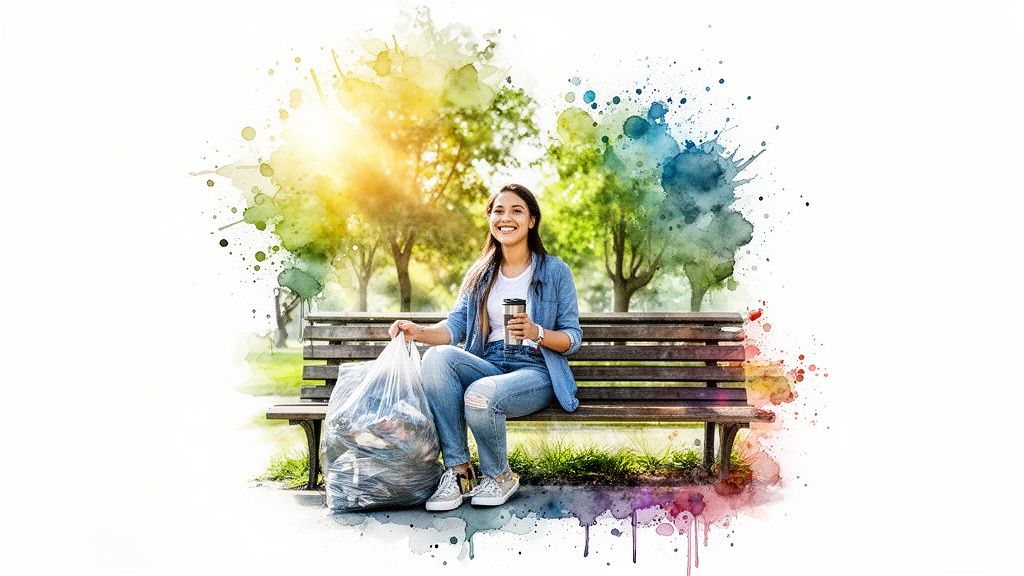
    Smiling woman on a park bench with a full trash bag, holding a coffee cup, surrounded by watercolor art.

    This benefit of volunteering for students is deeply personal for me. I've watched students use our weekend cleanups as their escape hatch, finding that a few hours of service does more for their mood than a whole day locked inside. Research from the University of Chicago even backs this up, confirming that outdoor volunteering can slash symptoms of depression and anxiety. You are not just cleaning a street; you are clearing your mind. Building your own resilience. The simple act of turning a trashed space into a beautiful one is a mirror for the personal growth you're experiencing inside.

    How to Make it Happen

    • Be Consistent: Try to attend cleanups for at least a month. You'll feel the mental health benefits multiply as it becomes a restorative habit.
    • Practice Mindfulness: Focus on the physical task. The sounds of the city, the fresh air, the feeling of making a visible difference. Let your worries dissolve.
    • Connect with Others: Don't be afraid to share what's on your mind. Real community is built on mutual support, and you'll find others who just get it.
    • Invite a Friend: If you know someone who's feeling isolated, invite them to join you. Sharing this experience can strengthen your bond and their well-being.

    Volunteering is this unique space where you get to care for your community and yourself at the exact same time. See how our community comes together at our next neighborhood cleanup event.

    4. Create Lasting Friendships and Find Your People

    College can feel like an island, and making friends who really get you isn't always easy. But imagine finding your tribe not in a chaotic dorm party, but while working together to bring a neglected park back to life. This is one of the most powerful benefits of volunteering for students: it blasts past superficial small talk and forges connections based on shared values and action. It’s about building a real community.

    Five diverse, joyful volunteers in blue shirts embracing, with colorful watercolor art splashes.

    At Litter Caterpillars, we're all about building friendships. Our inside jokes, our badges, and our consistent weekend cleanups create this incredible sense of belonging, like a sports team but with more trash bags. I have seen students who felt completely adrift find their closest friends here, bonding over a shared mission to serve all 50 Chicago wards. These are not flimsy connections. They are friendships forged in the trenches of shared purpose—and sometimes shared absurdity, like when our three co-founders bonded forever during that sudden hailstorm cleanup.

    How to Make it Happen

    • Pick a Ward and Stick With It: Show up at the same neighborhood cleanup consistently. Seeing the same faces week after week is the fastest way to turn strangers into friends.
    • Be Brave, Exchange Info: After a few cleanups, don't be shy. Suggest grabbing a coffee or swap social media handles to stay in touch.
    • Invite a Friend Along: Bringing a buddy can make the first time less intimidating, and the shared mission will strengthen your bond.
    • Get Involved Online: Jump into the group chats and follow the social media pages. Stay plugged into the community vibe between cleanups.

    This transforms the hunt for community from a stressful chore into a natural side effect of doing good. You can find more ideas for connection in our guide to community building activities for adults.

    5. Gain Real-World Environmental and Sustainability Impact

    Reading about climate change can leave you feeling powerless, like a tiny boat in a giant storm. You might wonder if anything you do even matters. When you volunteer with an organization like Litter Caterpillars, you get to see the immediate, undeniable results of your hard work. This is one of the most incredible benefits of volunteering for students: you witness environmental change with your own eyes, one filled trash bag at a time.

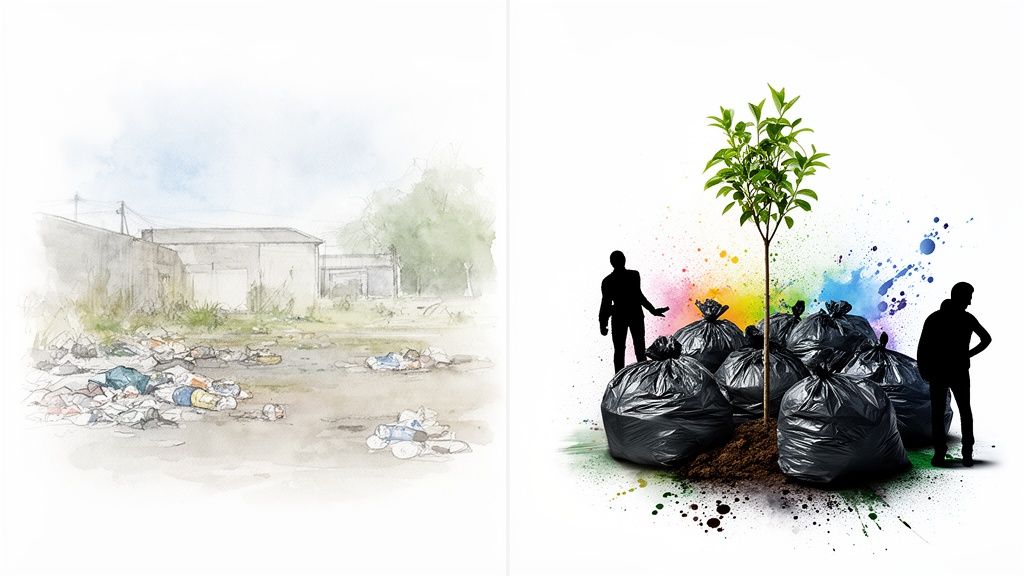
    Contrasting scenes: a polluted lot with trash on the left, and a planted tree, people, and trash bags with vibrant splatters on the right.

    This is not a theoretical discussion. This is direct action. You are physically removing garbage that chokes wildlife, reclaiming public spaces for people to enjoy, and stopping waste from clogging our city's arteries. I have seen our teams transform a neglected, trashed-out lot in Englewood into a beautiful community park. I’ve seen us collect literal tons of litter during a highway shutdown for a bike event. Your efforts create a measurable ecological impact and provide concrete proof that your actions are powerful.

    How to Make it Happen

    • Track Your Impact: Keep a personal log of bags you've filled or blocks you've cleared. Watching the numbers climb is insanely motivating.
    • Document Everything: Snap before-and-after photos of the areas you clean. This visual proof is gold for your portfolio or for sharing on social media to inspire others.
    • Understand the 'Why': Dig into local environmental issues. See how your cleanup work plugs into the bigger picture of urban sustainability.
    • Connect Your Actions: Realize that every piece of plastic you pick up helps protect local birds and improves water quality in our lake.

    This hands-on work transforms abstract environmental worries into a personal, winnable mission. You can explore a deeper understanding of these principles and learn more about what environmental stewardship means on our blog.

    6. Build Resilience and Overcome Fear Through Consistent Courage

    Academic pressure and life's sudden left turns can feel crushing. What if you could train your brain to see challenges not as walls, but as jungle gyms? This is another core benefit of volunteering for students: it builds real psychological armor. It’s about learning that fear, failure, and even suffering are not things to be dodged, but ingredients for a stronger, more interesting you.

    When you show up for a cleanup in a blizzard, with negative wind chills clawing at your face, you're doing more than just picking up trash. You are teaching yourself that you can handle discomfort. That you are tougher than you think. I will never forget our first hailstorm cleanup; that's when it hit me that suffering truly adds flavor to life and moves the plot forward. This mindset, forged in the crucible of Chicago weather, becomes a superpower you can use to ace exams, tackle tough projects, and face down any obstacle life throws at you.

    How to Make it Happen

    • Embrace Discomfort: Intentionally sign up for a cleanup on a day with "bad" weather. Consider it your resilience training ground.
    • Reframe Your Mindset: When you feel challenged, tell yourself, "This is making me stronger." Turn that negative inner voice into your personal hype man.
    • Share Your Fears: Be open with other volunteers about what scares you. Vulnerability is a superpower that builds incredible bonds and shows you you're not alone.
    • Transfer the Skill: Apply the same courage you used to face the freezing cold to that intimidating class presentation or that difficult conversation you've been avoiding.

    This is how you build an unbreakable spirit, one brave choice at a time. You can start practicing this unique form of courage at our next Litter Caterpillars cleanup event.

    7. Explore Chicago Neighborhoods and Discover Community Resources

    Your life as a student can easily become a bubble, trapped between campus and a few favorite haunts. Volunteering pops that bubble. It turns the entire city of Chicago into your living classroom. Imagine truly getting to know the diverse, vibrant soul of this city—from the murals of Pilsen to the lakefront trails of Rogers Park—not as a tourist, but as a community partner. This is a huge benefit of volunteering for students: it’s a ground-level education in urban geography and sociology.

    With Litter Caterpillars' mission to serve all 50 wards, you're not just cleaning a street; you are unlocking a new part of the city every single weekend. You will meet the small business owners who are the beating heart of their communities. You will learn from residents who have watched their neighborhoods change over decades. You will discover incredible local nonprofits you never knew existed. I have seen students find their favorite taco spot in Englewood after a cleanup or connect with a community garden in Humboldt Park that sparks a whole new passion. This is how you weave yourself into the real fabric of the city.

    How to Make it Happen

    • Be a Neighborhood Explorer: Intentionally sign up for cleanups in wards you've never even heard of. Make a goal to volunteer in a new corner of the city each month.
    • Talk to Locals: Ask long-time residents about their neighborhood’s story and what makes it special. Their memories offer insights you'll never find in a guidebook.
    • Support Local Businesses: After your cleanup, grab a coffee or a bite to eat at a neighborhood spot. It's a fantastic way to support the community you just served.
    • Document Your Journey: Take photos and jot down notes about what you discover in each neighborhood. It will deepen your love for Chicago’s incredible diversity.

    This transforms your service into an urban adventure, making you not just a student in Chicago, but a true Chicagoan. Ready to start exploring? Check out our upcoming city-wide cleanup events.

    8. Develop Practical Skills in Project Management and Event Coordination

    Your resume says you have "leadership skills," but what does that even mean? Volunteering is your chance to prove it. Forget abstract classroom theories; this is where you can manage a real project from start to finish. It’s one of the most practical benefits of volunteering for students because it gives you a low-stakes place to gain high-stakes professional skills. You are not just picking up trash; you are coordinating logistics, managing people, and executing a plan that gets real results.

    Imagine telling a future employer you organized a 50-person cleanup event across three different neighborhoods. You had to manage supplies, communicate schedules, pivot when the weather suddenly changed, and make sure everyone had a great experience. That is project management. When I see students step up to lead a ward cleanup, they are learning how to allocate resources, motivate a team, and track outcomes—skills that are directly transferable to any career path you can imagine.

    How to Make it Happen

    • Ask for Responsibility: Raise your hand to be a ward coordinator or help plan a special event. Leadership roles are often just waiting for someone to ask.
    • Document Everything: Create supply checklists, draft communication templates for volunteers, and track key metrics like attendance or bags collected. This is how you build your project portfolio.
    • Shadow an Expert: Learn from experienced coordinators. Watch how they handle curveballs and manage group dynamics before you take the lead yourself.
    • Master the Tools: Get comfortable using platforms like Meetup or group chats to manage RSVPs, send out updates, and keep your team fired up.

    This kind of hands-on experience is worth a thousand lines on a resume. You can start building these skills today by signing up to help lead a local cleanup at our volunteer opportunities page.

    9. Build Confidence and Self-Trust Through Demonstrated Accomplishment

    Classes and exams often test what you know in theory, which can leave you wondering what you're actually capable of in the real world. This is where volunteering offers one of its most life-changing benefits for students: it builds rock-solid confidence through tangible results. You are not just studying theories of social change; you are making change happen, one filled trash bag at a time. It’s about proving to yourself, through undeniable action, that you can make a real impact.

    When you see a park go from neglected to beautiful because of your work, that visual proof is electric. Our founder, Kevin Tao, started out feeling swamped by even the smallest tasks, but consistent, focused action turned that doubt into a city-wide movement. Each cleanup you do provides concrete evidence of your competence and your contribution. This feeling of self-efficacy doesn't stay in the park; it follows you into your exams, your interviews, and your future career challenges, reminding you that you are a person who can overcome obstacles and create real results.

    How to Make it Happen

    • Track Your Impact: Keep a running tally of your attendance or the number of bags you help fill. Seeing those numbers grow over months is undeniable proof of your dedication.
    • Take Before-and-After Photos: Document the spaces you help transform. Visually seeing the change you created is a massive confidence booster.
    • Celebrate Small Wins: Acknowledge every achievement. Filling your first bag. Making a new friend. Leading a small group. Each one is a brick in the foundation of your self-trust.
    • Journal Your Journey: Write down how you feel before and after a cleanup. Notice your own evolution from feeling nervous at your first event to feeling like a seasoned community leader.

    This process turns volunteering into a powerful personal development tool, transforming you just as you transform our neighborhoods. You can start your own transformation story at our next community cleanup event.

    10. Learn Kindness, Unity, and Service-Oriented Values Through Practice

    You can read about values like kindness and unity in a book, but you can only truly learn them by living them. This is where volunteering becomes more than a resume booster; it becomes a character-building forge. It is your chance to actively practice service-oriented values in a community that lives and breathes them, transforming who you are from the inside out. This is one of the most profound benefits of volunteering for students: it’s a workout for your integrity.

    At Litter Caterpillars, I see this magic happen every single weekend. Our "volunteer-first" philosophy means we put your safety and happiness above everything else, rejecting the typical donation-based model to keep the focus purely on service. This culture is deliberate. By showing up on a Saturday morning, you are choosing to be part of a group that values community over comfort. You are internalizing principles not through lectures, but through repeated choices—like deciding to help a new volunteer or working together to clear a tough spot. These small actions build a foundation of character that will guide your decisions for the rest of your life.

    How to Make it Happen

    • Notice Values in Action: Pay attention to how people treat each other. See how decisions are made. Ask yourself what principles are guiding this group.
    • Discuss What You See: Talk with other volunteers about the values you observe. These conversations make your own commitment deeper.
    • Reflect on Your Growth: After each event, take a moment. Think about how your own choices reflected values like kindness or teamwork.
    • Bring Values Elsewhere: Apply the service-oriented mindset you're building to your studies, your friendships, and your future career.

    This is not passive learning; it is an active process of becoming a more compassionate and community-minded person. You can start building your character with us at our next neighborhood cleanup event.

    10-Point Student Volunteering Benefits Comparison

    Program 🔄 Implementation complexity ⚡ Resource requirements 📊 Expected outcomes ⭐ Ideal use cases 💡 Key tips
    Build Professional Network and Career Connections Low–Medium: recurring meetups + informal outreach Low: weekly time, basic social tools New professional contacts, mentorships, internship leads Students seeking internships, career connections Attend consistently, share goals, connect on socials
    Develop Leadership and Responsibility Through Consistent Commitment Medium–High: sustained commitment, coordination roles Medium: time, coordination skills, minimal admin tools Verifiable leadership experience, project ownership Applicants needing leadership evidence, résumé builders Start with steady attendance, volunteer as ward coordinator
    Improve Mental Health Through Outdoor Service and Community Connection Low: simple to join but needs routine Low: time, outdoor attire, travel to sites Reduced anxiety/isolation, improved routine and resilience Students needing routine, mood support, social contact Commit 4–8 weeks, practice mindfulness, bring a friend
    Create Lasting Friendships and Find Your People Low: social engagement through repeat attendance Low: time, participation in events Deepened friendships, sense of belonging Students seeking authentic social networks Attend same ward regularly, exchange contacts, join events
    Gain Real-World Environmental and Sustainability Impact Medium: scalable logistics for measurable projects Medium–High: supplies, coordination, data tracking Tangible cleanup results, park creation, local ecological benefits Environmental coursework, civic engagement, advocacy Track metrics, take before/after photos, partner with orgs
    Build Resilience and Overcome Fear Through Consistent Courage Medium: repeated exposure to discomfort required Low: time, willingness to face challenging conditions Increased grit, growth mindset, greater tolerance for adversity Personal development, resilience training Start with a challenging cleanup, reframe discomfort as growth
    Explore Chicago Neighborhoods and Discover Community Resources Medium: travel logistics across wards Medium: time, transport, basic research Geographic knowledge, community contacts, resource discovery Urban studies, local internships, community research Research wards beforehand, talk with residents, take notes
    Develop Practical Skills in Project Management and Event Coordination High: complex logistics, multi-ward planning Medium: tools, communication platforms, leadership time Project management experience, logistics and budgeting skills Students pursuing nonprofit/business/administration roles Volunteer for coordinator roles, document processes, track metrics
    Build Confidence and Self-Trust Through Demonstrated Accomplishment Low–Medium: consistent participation and reflection Low: time, tracking tools (simple log/journal) Improved self-efficacy, reduced imposter syndrome Those building self-confidence, preparing applications Log attendance and outcomes, celebrate small wins, journal progress
    Learn Kindness, Unity, and Service-Oriented Values Through Practice Low: cultural immersion via repeated service Low: time, engagement in community norms Internalized service values, stronger ethical habits Character development, values-based leadership Discuss values with peers, reflect, model behaviors consistently

    Ready to Start Your Transformation? Here’s Your First Step.

    You’ve reached the end of this list. But you’re really standing at a new beginning. We’ve journeyed through ten powerful benefits of volunteering for students, blowing past the simple resume boost. We've seen how picking up a single piece of litter can be the first move in building a professional network, developing unshakeable confidence, and finding friendships that feel like coming home.

    This isn't just a theory. It's your map. Think of your life as a tangled ball of yarn. Each thread is a different part of you: your career dreams, your hunger for connection, your need for purpose, your mental health. Volunteering is the act of gently pulling on just one of those threads. As you pull, you find it’s connected to all the others. And slowly, the entire knot begins to loosen, revealing a clear, strong line.

    Your Path from Insight to Impact

    The journey from reading this article to changing your life is paved with one simple action: showing up. The gap between the person you are right now and the person you want to become isn't some giant chasm you have to leap across. It's just a series of small, doable steps.

    • You learned that consistent commitment builds leadership. Your first step is to sign up for just one event. Forget next month. Just focus on this weekend.
    • You saw how service forges real friendships. Your first step is to smile and say "hello" to the person working next to you.
    • You discovered that small actions build self-trust. Your first step is to pick up one bag of trash and feel that immediate rush of a job well done.

    This is the real secret behind the benefits of volunteering for students. The transformation isn't a lightning strike. It is the gentle, persistent growth that comes from planting a seed and actually tending to it. We are the Litter Caterpillars because we believe in this process of metamorphosis. We aren't perfect people. We are just people trying to grow. To become something more. Through service, you learn to trust yourself, forgive your past mistakes, and build a life defined not by your plans, but by your purpose.

    It all starts with that first courageous step. You don't have to have it all figured out. You don't have to be the most outgoing person there. You just have to be willing. Your future self is waiting for you to take this chance. Let’s get to work.


    Ready to take that first step and experience the benefits of volunteering firsthand? Join Litter Caterpillars at our next Chicago cleanup. Find an event and connect with a community dedicated to transformation by visiting our website at Litter Caterpillars.