Tag: sustainable habits

  • Reducing Plastic Use One Small Action at a Time

    Reducing Plastic Use One Small Action at a Time

    Forget some massive, impossible lifestyle overhaul. Cutting back on plastic is just about taking one small step. Just one. The journey away from a world of single-use junk isn't a switch you flip overnight. Imagine it more like building a bridge, one plank at a time. It’s a whole series of tiny, empowering choices that you make, which stack up until you've created a whole new way to walk through the world.

    The Surprising Power of Starting Small
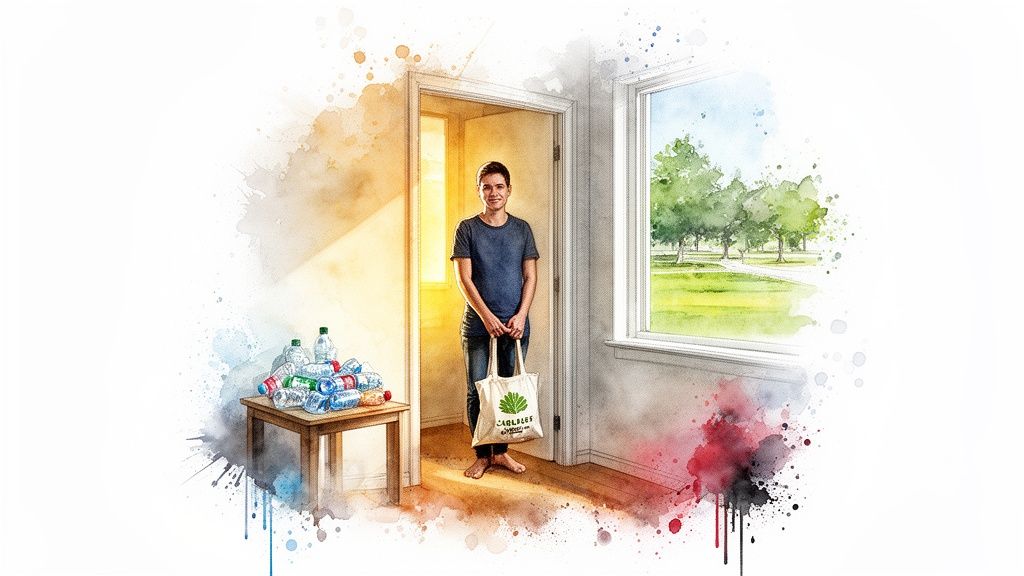
    A young man with a reusable bag stands in a doorway near a pile of plastic bottles, looking towards a park.

    I get it. Another lecture about plastic? No. Hear me out. This isn't about guilt. It's about you finding your own power. For me, this whole thing started in my own apartment, surrounded by my own junk. A mountain of it. Every old takeout container, every forgotten plastic bag, felt like a 500-pound weight pinning me to the floor, a physical anchor to a messy past I desperately wanted to leave behind.

    The real change didn’t come from a perfectly executed plan. It came from a simple, gut-level decision to just do something. Anything. And in that messy process, I stumbled upon a weird truth about myself that I bet you'll recognize, too.

    Why Is It Easier to Clean Someone Else's Mess?

    It's a strange quirk of our minds, but it's true: cleaning up a park, a street corner, a highway—somebody else’s mess—often feels way easier and more satisfying than tackling the clutter in our own homes. What is that about? I think it’s because it’s a pure act. A gift. You have no emotional baggage tied to a stranger’s discarded coffee cup.

    Picking it up is simple. Clear. A straightforward win. You do that over and over, and you start building this weird kind of momentum. It’s like a secret training ground for courage. You start by cleaning up a little patch of grass, and before you know it, you’ve found the strength to finally face the mess in your own life.

    This is the secret behind reducing plastic use that nobody ever talks about.

    This isn't just an environmental chore. It’s a path to reclaim your own space, to simplify your life, and to find a real connection with a community of people who actually care. You start by transforming the world outside your door, and somehow, that transforms you from the inside out.

    The Real Impact of One Small Action

    Your point isn't to become perfectly plastic-free tomorrow. The goal is just to start. Think of your current habits like a well-worn path in the woods. It's the easy trail, the one you can walk down without thinking. Choosing a reusable bag or turning down a plastic straw is like taking the first step off that path to carve out a new one.

    At first, it feels intentional. Maybe even a little awkward. But every single time you do it, that new trail gets clearer, more defined. Soon enough, it’s your new default route. Each time you make that conscious choice, you’re not just stopping one piece of plastic from hitting a landfill or floating in our lake. You're rewiring your own brain and sending a quiet but powerful message to the world. This is a huge part of what environmental stewardship is really about.

    • You reclaim your power. Businesses listen when money talks. Every time you say no to plastic, you're casting a vote for the kind of world you want to live in.
    • You simplify your life. Fewer disposable things means less clutter. Less stuff to manage. More headspace for what actually matters to you.
    • You inspire others without even trying. When you show up with your reusable coffee cup or produce bags, you make it look normal. People see you, and it makes it easier for them to start, too.

    This whole journey kicks off with a single, courageous step. Maybe it’s joining a local cleanup. Maybe it's buying a reusable water bottle. Maybe it's just saying "no thanks" to a plastic bag. That one action is the spark. It proves to you that change is possible and that you have the power to make it happen, right here, right now.

    Building Your Everyday Plastic-Free Toolkit
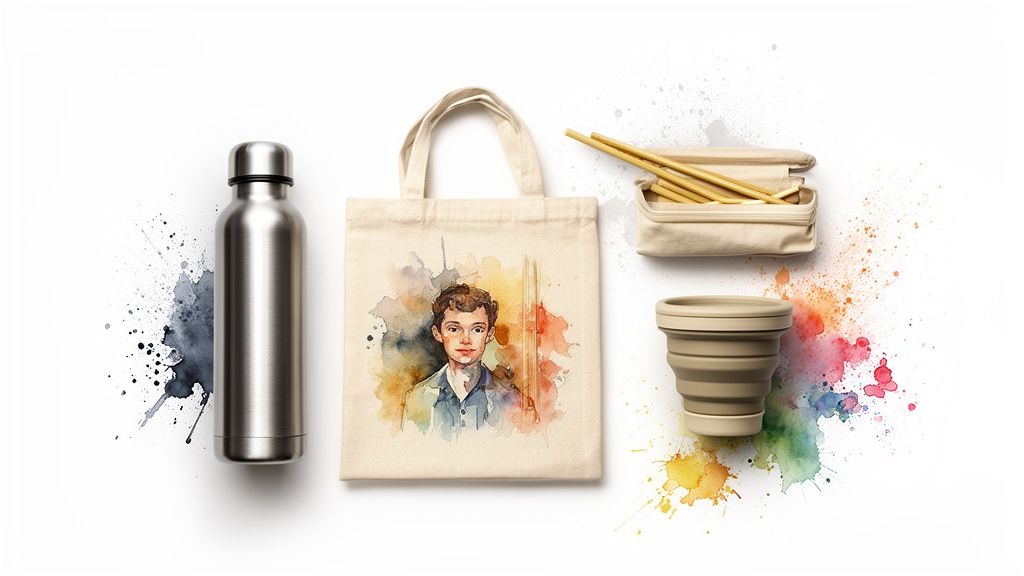
    Sustainable reusable products for reducing plastic waste: a water bottle, tote bag, straw set, and collapsible cup.

    Let's get real. Big, meaningful change doesn't happen in a flash. It's built from tiny, consistent habits—the kind you barely notice until one day you look back and realize everything is different. That’s how we have to tackle plastic. Forget the overwhelming, all-or-nothing guilt trip. We’re starting with simple swaps you can actually manage.

    Think of it like building a muscle. You don't walk into the gym for the first time and try to bench press a car. You start with something you can handle. You do it consistently. You get stronger. That's our game plan here.

    Start With The Big Four

    When I lead our Litter Caterpillars cleanups, I see the same four villains over and over again. Plastic bags, bottles, straws, and coffee cups. They’re scattered across every park and sidewalk in Chicago, and when you see them all piled up together, it cuts through the noise. It shows you exactly where to start your fight.

    Focusing on these "big four" is the smartest way to begin because they're absolutely everywhere. Taking them on first builds momentum and gives you the confidence to keep going.

    Your goal isn't perfection; it's preparation. The entire secret is just having your reusable alternative ready before you need it.

    This is where your toolkit comes in. It’s not about buying a bunch of fancy new gear. It's about putting together a simple "go-kit" that lives in your backpack, your car, or by your front door. You just grab it and go.

    Your First Four Plastic Swaps

    Ready to start? Don't overthink it. Kicking plastic to the curb begins with a few key swaps that have a surprisingly massive impact. Think of this table as your starting line.

    Single-Use Plastic Item Easy Reusable Swap Why It Matters
    Plastic Water Bottles A durable water bottle Saves you money and keeps thousands of bottles out of our parks and waterways.
    Plastic Grocery Bags A few tote bags They're stronger, hold more, and a single one can replace hundreds of flimsy plastic bags over its lifetime.
    Disposable Coffee Cups A travel mug or thermos Most paper cups are lined with plastic, making them unrecyclable. A travel mug is a simple fix.
    Plastic Straws & Utensils Reusable straw/utensil set Easy to carry and refuse the throwaway plastic that pollutes our environment for centuries.

    Nailing these four habits is a massive win. Once these become second nature for you, you'll find it's so much easier to tackle the next set of challenges.

    Assemble Your Simple Go-Kit

    Your kit needs to fit your life, but here's a basic setup that has worked for me and hundreds of our volunteers. It makes ditching plastic feel automatic.

    • Reusable Water Bottle: This is your foundation. Find one you actually like—stainless steel, glass, whatever—and make it your sidekick.
    • A Few Tote Bags: I keep foldable cloth bags everywhere. One in my backpack, a few in my car. They take up no space and save me from ever needing a plastic bag at the store.
    • Travel Mug: If you drink coffee or tea, this is a no-brainer. Lots of Chicago cafes even give you a small discount for bringing your own cup.
    • Simple Utensil Set: You can buy a bamboo set. Or you can just grab a fork and spoon from your kitchen, wrap them in a napkin, and call it a day. It’s that easy.

    Having this kit ready removes the friction. Thirsty? You have your bottle. An unplanned stop at the store? You have your bags. You’ve already made the right choice before you even had to think about it.

    The scale of this problem can feel paralyzing, I know. But your actions really do matter. Projections show that by 2040, plastic pollution could swell to 280 million metric tons a year. Packaging is the main driver, and that’s exactly where our simple swaps hit them where it hurts. You can dig into these global plastic trends to see why every little bit you do helps.

    Make It a Habit

    Once your kit is ready, the real work begins. You need to turn its use into a reflex. I used to forget my tote bags all the time. My fix was stupidly simple—I started hanging them on the doorknob right next to my keys. I couldn’t leave the house without seeing them.

    Find your own tricks. Set a phone reminder. Put a sticky note on your dashboard. Whatever it takes for you. Make your reusable kit as essential as your wallet or phone, and soon enough, you won’t have to think about it at all. It'll just be what you do.

    How to Navigate the Grocery Store Plastic Minefield

    You ever walk into a grocery store, ready to do the right thing, and just get completely overwhelmed? I have. It feels like an impossible maze of plastic. A minefield. Every single step feels like a compromise when you see a cucumber shrink-wrapped for no reason.

    But we can get through it together. This isn't about making shopping some miserable chore. It's about learning to see the store differently—making smarter choices that actually feel good. It’s about turning that frustration into a personal win.

    The amount of packaging we face is insane. By 2025, the world will be drowning in 225 million tonnes of plastic waste, and packaging is the main villain, making up 33% of all plastic produced. You can read more about this global plastic waste challenge to see why what we put in our carts really matters.

    Master the Produce Aisle

    Let’s start where the fight is most obvious: the produce section. This is your first, best chance to make a huge dent in your plastic habit. It’s where I started my own journey.

    My strategy is dead simple. I always choose the naked option. If there’s a loose apple next to a plastic-bagged one, the choice is easy. I bring my own mesh produce bags for stuff like green beans or mushrooms to dodge those flimsy plastic bags on a roll. It’s a tiny action, I know, but man, it feels like a victory every single time.

    Seek Out the Bulk Bins

    The bulk bin section is your secret weapon. For years, I walked right past it. I thought it was too complicated. But it's incredibly simple and one of the best ways to absolutely slash your packaging waste. You get exactly what you need—no more, no less—without any of the plastic baggage.

    Here’s how you can make it work:

    • Bring your own containers. I keep a few lightweight glass jars and cloth bags in my main grocery tote. Just get them weighed by a cashier before you fill them up so you're not paying for the weight of the jar.
    • Start easy. Don't try to go all-in on day one. Start with things like oats, rice, nuts, or dried fruit.
    • Embrace the freedom. This is the best part. You can buy the exact amount you need. Just need one cup of quinoa for a new recipe? No problem. You cut down on food waste and plastic waste in one go.

    This isn't just about avoiding plastic; it's a fundamental shift in how you shop. You go from being a passive consumer grabbing pre-packaged stuff to an active participant, choosing exactly what you want and how you want it.

    Become a Packaging Detective

    Once you get past produce and bulk, you have to become a bit of a detective. For everything else on your list, from pasta sauce to yogurt, you need to train your eye to spot the non-plastic options.

    I have a mental checklist I run through for every item:

    1. Can I get this in glass? (Think sauces, pickles, jams)
    2. Is there an option in a metal can? (Beans, tomatoes, soups)
    3. Is it available in paper or cardboard? (Pasta, crackers, eggs)

    Choosing glass, metal, and paper is a power move. These materials have way higher recycling rates than plastic and can actually be repurposed. It’s a simple hierarchy that guides your hand toward better choices without making your shopping trip take forever.

    And finally, don't forget the power of your own voice. The checkout line is your last stand. A simple, "No bag, thanks, I've got my own," is easy. But you can go further. At the deli counter, I’ll ask, "Can you wrap that cheese in paper instead of plastic?" Sometimes they say no, but a lot of the time, they’re happy to do it. You're not just cutting your own plastic use; you’re planting a seed. You're showing the store that its customers want better options.

    From Personal Action to Community Movement

    Changing your own habits is a huge first step. It proves to you, more than anyone else, that this stuff is actually possible. But the real change—the kind that shifts a whole neighborhood—starts when we connect with each other. It’s when your one action inspires two more people, and their actions inspire ten more. That’s how a real movement catches fire.

    I’ve seen it with my own eyes. Litter Caterpillars wasn’t born from some big strategic plan or a fancy grant. It started with just three of us huddled under a tree, shivering through a freak Chicago hailstorm, wondering if we were completely nuts. We felt so tiny. But that moment of shared suffering and purpose lit something inside us. It proved that even a small, crazy crew could make a difference.

    You don't need to be a nonprofit to do this. You just need an idea and the guts to ask your neighbors to join you.

    Plant the Seeds of a Repair Culture

    We live in a throwaway world. The story goes: if it breaks, toss it and buy a new one—usually wrapped in a ton of plastic. We can push back on that. You and I can create spaces where things get a second chance at life.

    Ever thought about hosting a "Repair Cafe"? It’s way simpler than it sounds. Just pick a date. Find a spot like your garage or a park district room. Then you just put the word out for people to bring their broken stuff. A wobbly chair. A toaster that won't toast. A jacket with a torn pocket.

    Then, you find the fixers. Every neighborhood has them. The retiree who can fix any gadget. The person who’s a wizard with a sewing machine. The bike nerd who can true a wheel in five minutes flat. You bring these two groups together. Suddenly, you're not just fixing stuff. You're weaving a community together, sharing skills, and directly fighting the need for more new, plastic-wrapped junk.

    Make Swapping the New Shopping

    Here’s another powerful move: the "Swap Meet." It’s basically a party with a purpose. Instead of buying new things, we just trade the good stuff we already have. This is a direct hit against the mountains of plastic packaging that comes with every new t-shirt, toy, or gadget.

    A simple blueprint for you to start:

    • Pick a theme. A kids' clothing and toy swap is always a winner. Or try a book or plant exchange.
    • Set some ground rules. Keep it simple. Something like, "Bring 5-10 quality items, take home the same number."
    • Make it fun. Crank up some music. Turn it into a social event, not just a transaction.

    These swaps build a culture that values using what we have and connecting with our neighbors more than just clicking "buy now." It’s a powerful reminder that we already have everything we need, right here.

    This flowchart shows how even a routine chore like grocery shopping can become a powerful act against plastic waste.

    It’s all about those small, intentional shifts—like you choosing loose produce over pre-packaged or hitting the bulk bins—that add up to make a huge difference.

    Turn Volunteering Into a Celebration

    When we started Litter Caterpillars, I knew one thing: this couldn't feel like a chore. People are busy. If you want them to show up on a Saturday morning, you have to offer more than just a garbage bag. You have to offer an experience. You have to offer joy.

    This is our secret: We make service feel like a party. We lean into pride and identity because doing good should feel good. We’re not just cleaning a street; we’re reclaiming it for our community.

    We bring flags. We have a theme song. We hand out badges. Sounds silly, right? But it works. It turns a bunch of strangers into a team. A crew. That shared identity makes people want to come back. That's why we invite everyone to find out how to join a volunteer trash pickup and see it for themselves.

    You don’t need anything fancy to get your own crew together. A post in a neighborhood Facebook group, an event on Meetup, a few stories on Instagram—that’s all it takes to get the ball rolling. Start small. Invite five friends to clean up one block. Celebrate it like you just won the championship. Then you do it again. That’s how you go from one person’s idea to a neighborhood’s movement.

    Finding Your Zero Waste Community in Chicago

    Trying to make a big change all by yourself can feel like shouting into the wind. I’ve been there. The good news? You don’t have to go it alone. Chicago is humming with incredible people and places ready to back you up on this journey. You just have to know where to look.

    This isn’t just about finding stores; it’s about finding your people. Think of this as your personal map to the local sustainability scene, a guide to plugging into the energy that’s already here.

    Where to Find Your Supplies and Your Tribe

    Your first step is often the most practical one: where can you go to shop in a way that feels good? Chicago has some gems that make avoiding plastic not just possible, but genuinely enjoyable. These aren't just stores; they're community hubs.

    • Zero-Waste Refill Shops: Places like these are total game-changers. You bring your own containers—jars, bottles, bags, whatever you've got—and fill them up with everything from laundry detergent and shampoo to spices and olive oil. It’s such a simple concept that directly attacks the problem of single-use packaging.

    • Community Gardens: Joining a local garden is a powerful move. You get to grow your own food, which means zero food miles and absolutely no plastic packaging. Better yet, you get your hands in the dirt alongside neighbors who share your values.

    • Specialized Recycling Centers: Let's be real, recycling can get confusing. Knowing where to take those specific items that can’t go in the blue bin is a huge relief. We put together a guide on where to find Chicago's specialized recycling centers to make sense of it all.

    The scale of the plastic problem is insane. Global production hit 436 million metric tons in 2023 alone. Since the 1950s, we’ve made 8.3 billion tonnes of the stuff, and a staggering 79% of it has ended up in landfills or nature. That’s why finding local solutions and support is so crucial; it turns a global crisis into a manageable, local fight for you and me.

    Join Us on the Front Lines

    If you’re ready to turn that feeling of "I should do something" into real action, I want to personally invite you to join us. At Litter Caterpillars, we're not just picking up trash; we're building a community of givers, doers, and friends, block by block. Showing up for a cleanup is the most direct way I know to see your impact in real-time.

    You can feel the difference you make with your own two hands. It’s an incredible feeling.

    The joy of service is a real and powerful thing. It’s the antidote to feeling helpless. When you work alongside others for a shared cause, you build a connection that goes deeper than just a shared interest—you build hope.

    We meet every single week, no matter the weather. From the North Side all the way to Englewood, where we’re building Caterpillar Park on a lot we won at auction, we are present in our city.

    How to Get Involved with Litter Caterpillars

    Getting started is simple. We've made it as easy as possible for you to plug in and find your place with us.

    1. Find an Event: Check out our schedule on Meetup or Instagram. We post all our weekly cleanups there with details on where and when we'll be.
    2. Just Show Up: That’s it. Seriously. You don’t need to bring anything but yourself and a willingness to help. We provide the bags, gloves, and the good vibes.
    3. Become Part of the Crew: After your first event, you’ll see what I mean. The energy is contagious. You’ll meet amazing people from every corner of Chicago who, just like you, decided it was time to do something.

    This is your invitation. Come experience the joy of service firsthand. Let’s make our city cleaner and our community stronger, together.

    Common Questions About Reducing Plastic Use

    Over the years, I've heard so many great questions from our volunteers and community members. We all start this journey with a bit of uncertainty. We wonder if we're doing it right. If it's even worth the effort. My hope is that sharing my answers to these common hurdles helps light the path for you, too.

    Isn't a Low-Plastic Lifestyle Expensive?

    This is a massive misconception. I'm so glad you asked. It's easy to look at some fancy, branded "eco" products and think this whole thing is for people with money to burn. But the real heart of reducing plastic is actually about saving money, not spending more.

    It’s a shift in your mindset. You go from buying more to using what you already have. You stop spending your hard-earned cash on things you don’t actually need, like endless bottles of water or disposable coffee cups. It pushes you to be resourceful. Shopping the bulk bins, for example, is almost always cheaper per ounce than buying pre-packaged stuff.

    At Litter Caterpillars, our whole vibe is built on resourcefulness, not expensive gadgets. Your most powerful tools are a reusable bag you probably already own and the simple habit of asking yourself, "Do I really need this?" Both of those are completely free.

    What If My Friends and Family Don't Get It?

    I feel this one on a personal level. It can be isolating, and frustrating, when you feel like you're the only one trying, especially around people you love. When I first started this journey, I definitely got some strange looks.

    My best advice? Lead with inspiration, not judgment. Nobody responds well to a lecture. Instead, just live your values. Show up to the picnic with your cool reusable water bottle and your own utensils. When someone asks you why, share your personal story. Tell them about the fun you had at a community cleanup or how good it feels to have a less cluttered life.

    Remember the story of Tom Sawyer? He made the boring chore of painting a fence look like the most exclusive, exciting activity in the world. Frame your choices with joy and positivity. People are drawn to that energy far more than they are to guilt.

    Make your sustainable choices look appealing and easy, and people will naturally get curious. That curiosity is the door to a real conversation.

    Can My Small Actions Really Make a Difference?

    Yes. A thousand times, yes. I know how it feels to stand in front of a huge problem and feel completely powerless. I felt that exact same way when I was staring at the overwhelming mess in my own apartment—it felt impossible.

    But then I cleaned one small corner. Just one. And suddenly, tackling the next corner felt a little bit easier. That is the entire philosophy behind Litter Caterpillars. We don't try to clean the whole city in one day; we clean one block, and we celebrate that victory.

    Every single piece of trash you refuse sends a tiny but clear message to businesses that you, the customer, demand better options. When you join a group, your one action gets multiplied by ten, then a hundred. It creates a ripple of change you can see and feel. Your "small" action is not small at all. It's everything. It's the spark that starts a new habit for you, proves you have power, and changes things right where you are.


    Ready to turn that spark into a flame? Join Litter Caterpillars this weekend and see for yourself how good it feels to make a difference. Find your next cleanup event and your new crew at https://www.littercaterpillars.com.
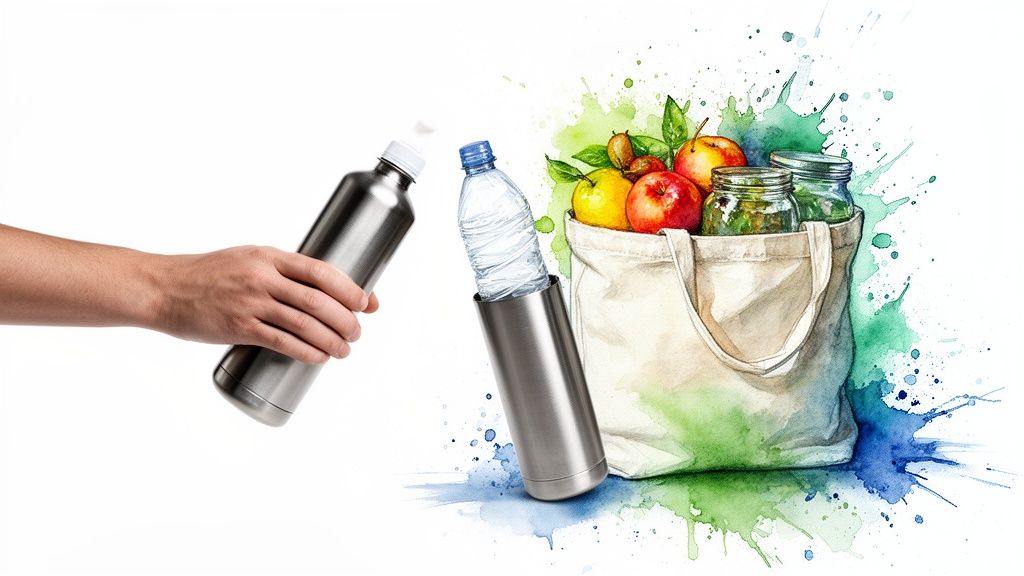
  • How to Reduce Plastic Use A Guide to Fearless Change

    How to Reduce Plastic Use A Guide to Fearless Change

    Figuring out how to use less plastic can feel totally overwhelming, like being asked to clean up an entire city by yourself. But the real magic isn't in some huge, heroic act. It's in the small, brave choice to clean up your own corner of the world—and in doing so, cleaning up your own life. This is about decluttering your space to make room for something better inside you.

    Your Mess Is Your Superpower

    This whole thing didn’t start with a grand plan to save the planet. It started with my own personal mess. For years, I just couldn't get my own space organized. My apartment was a mess, and frankly, so was my life.

    Every little piece of trash, every forgotten item, felt like it weighed a thousand pounds. That old jar of jam in the back of the fridge wasn't just jam; it was a memory from a trip, a piece of the past I just couldn't seem to let go of.

    My life felt stuck, bogged down by all the physical and emotional junk I'd collected. After getting out of a chaotic relationship, I knew I had to make a change. I decided to finally face the things that had always felt impossible for me: consistency, bravery, and cleanliness.

    One day, I was looking at the litter on the streets of Chicago, and it hit me. It was a perfect reflection of the chaos I felt inside. A wild idea popped into my head: what if cleaning up someone else's mess was actually easier than cleaning up my own? What if that one simple act could be the key to unlocking everything else?

    It’s a crazy truth, but we discovered that service isn't just about helping other people. It's one of the most powerful forms of self-care there is. It's how you prove to yourself that you can show up, that you can make a real difference, and that you're stronger than your own mess.

    Born in a Hailstorm

    The origin story of Litter Caterpillars is perfectly, beautifully chaotic. Our very first cleanup was just three of us. We were out there, bravely picking up trash, when a classic Chicago spring storm decided to show up—a bizarre mix of freezing rain and hail. We ended up huddled under a tree, shivering, as one ride-share after another canceled on us.

    In that freezing, slightly miserable moment, it all clicked. Suffering together for a good cause wasn't just bearable; it was fun. It was an adventure. It advanced the plot of our lives.

    And that's the heart of what we do. We show up. No matter what.

    Reducing your plastic use isn't about sacrifice or trying to be perfect. It’s an act of self-respect. It's about taking pride in your choices and building the life you actually want, one small, brave step at a time. The goal is to build habits that serve both you and your community.

    This journey will help you find consistency and, more importantly, find your people. If you're looking for where to begin, learning more about how to find volunteer work can be a powerful first step in that transformation.

    Your Personal Plastic Purge Is a Brave First Step

    You can’t change the world overnight. But you can change what’s on your kitchen counter. This is where the real work begins—not with some overwhelming wave of guilt, but with a simple, brave first step.

    Think of it like a treasure hunt in your own home. The goal isn't to judge yourself for what you find. It's to see. To become aware of what's actually there. That awareness is the starting line for any real transformation.

    You’re just taking inventory. What plastic are you really using every day? Where is it hiding? This isn't a test; it's just getting curious.

    The Home Plastic Audit: A Gentle Investigation

    Forget complicated spreadsheets or weighing your trash. Just grab a notepad or open a new note on your phone. For one week, just pay attention.

    Wander through your home and, without any judgment, jot down the single-use plastic you see.

    Your mission is to find your personal "Big Four" plastic culprits. For most of us, they hide in plain sight:

    • Bottles: Water bottles, soda, juice, cleaning sprays, shampoo.
    • Bags: Grocery bags, produce bags, sandwich baggies, snack wrappers.
    • Cups: Coffee cups (yep, those paper-looking ones are lined with plastic!), takeout drink cups.
    • Containers: Takeout clamshells, yogurt tubs, berry containers, microwave meal trays.

    One of our volunteers, Sarah, told us her "aha!" moment came from looking at her own recycling bin. She thought she was doing great, but when she really looked, it was overflowing with the exact same plastic iced coffee cups and salad containers every single week. It wasn't a moment of failure. It was a moment of clarity. She finally saw her pattern.

    That’s what this audit is for. It gives you a pattern, a starting point. It turns a vague, scary problem—"the plastic crisis"—into something you can actually tackle: "my yogurt container habit." Now that is a problem you can solve.

    Your First Four High-Impact Swaps

    Once you’ve spotted your own Big Four, the fun begins. This is where you start taking your power back. You don't have to become a zero-waste guru overnight. Just pick one. Then another.

    Start with these simple, high-impact swaps to kickstart your plastic reduction journey. These changes are easy to implement and address the most common single-use items.

    The Plastic Villain Your Hero Swap Why It's a Win
    Single-Use Water Bottles A reusable water bottle you love This is the easiest win. You save money, cut waste instantly, and stay hydrated. Find one that feels like an extension of you!
    Plastic Grocery Bags A set of sturdy reusable bags Keep them in your car or by the door. This one habit stops hundreds of flimsy bags from becoming litter each year.
    Disposable Coffee Cups A reusable coffee mug or travel tumbler Many cafes even give you a discount for bringing your own. Your coffee tastes better and stays warmer. Win-win.
    Plastic Produce Bags Reusable mesh produce bags They're lightweight, washable, and let the cashier see what’s inside. A simple swap that gets rid of those annoying, impossible-to-recycle bags.

    These small changes are about more than just switching products; they’re about building a new muscle.

    The point isn't perfection. It's progress. It’s about building the habit of choosing durability over disposability. Each swap is a vote for the world you want to live in.

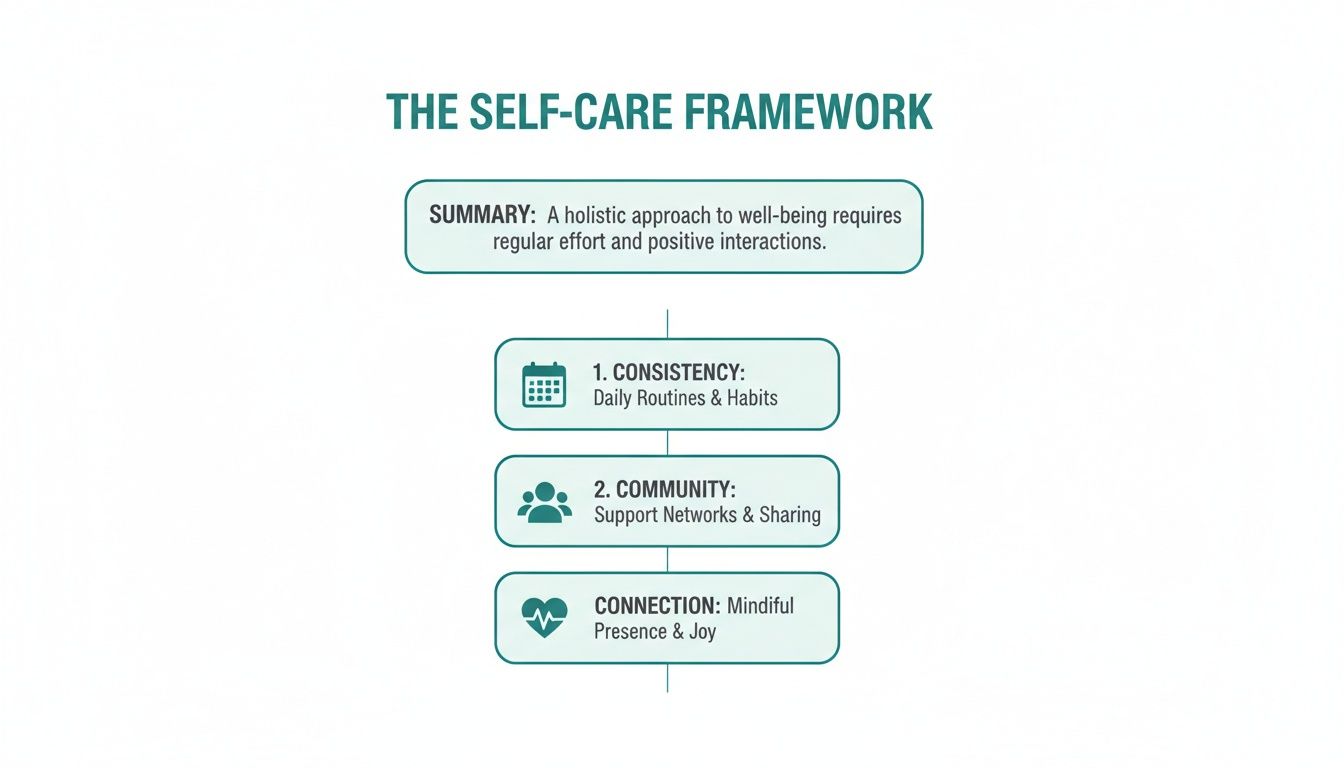
    This journey of reducing plastic isn't just about the environment; it's a powerful form of self-care rooted in consistency, community, and connection.

    A self-care framework diagram detailing summary, consistency, community, and connection for well-being.

    When you show up for your own goals consistently, you naturally find others on the same path. It builds a powerful sense of belonging and reminds us that we’re not in this alone.

    Why We Must Target Packaging First

    If you want to make the biggest dent in the plastic problem, you have to go after the biggest villain in the story. It’s not the durable plastic in your car or your computer. It’s the stuff we use for a few minutes and then toss without a second thought.

    It’s the packaging.

    Imagine the plastic crisis is a river overflowing its banks. You could spend all your energy scooping water out downstream, or you could be brave and go straight to the source where the floodgates are wide open. Packaging is those floodgates. It's the wrapper on your granola bar, the clamshell holding your salad, and the bottle your soda came in.

    These things have an incredibly short life with us, but an eternal one in our environment. Going after them is the most powerful and direct way to turn down the flow.

    The Numbers Behind the Story

    This isn’t just a feeling; it’s a cold, hard fact. A massive chunk of the plastic problem comes from these fleeting encounters. Around 40% of all global plastic production is for packaging alone, and it makes up a similar slice of the waste overwhelming our planet.

    The scariest part? Global plastic production is set to soar, but our ability to manage the waste is barely inching forward. This means if we don't change course, even more of this packaging will end up littering our streets, parks, and oceans.

    Stepping in here is powerful because you’re tackling the largest and fastest-moving part of the problem. You can dig into the full scale of this challenge in the Breaking the Plastic Wave assessment.

    When we, as a community, make a conscious choice to refuse single-use packaging, we're not just making a small personal statement. We're sending a powerful economic signal.

    Your Choices Are Your Voice

    Every time you shop, you're on the front lines. Your choices at the grocery store, the coffee shop, and the local farmers market are a direct vote for the kind of world you want.

    It’s a quiet, kind rebellion against the throwaway status quo.

    • At the Grocery Store: Choosing loose produce instead of the pre-packaged stuff. Hitting up the bulk bins with your own containers. Picking the glass jar of pasta sauce over the plastic one.
    • At the Coffee Shop: The simple act of saying, "I have my own cup."
    • For Takeout: Politely refusing the plastic cutlery and straw. Some brave folks even bring their own containers for their food.

    These actions might feel small, but they create ripples. When a business owner sees more and more customers bringing their own bags or cups, they notice. It starts a conversation. It plants a seed that maybe, just maybe, there's a better way to do business.

    Choosing to reduce packaging isn’t about deprivation. It's about intentionality. It's about choosing to own fewer, better things and honoring the resources used to create them. You're not losing convenience; you're gaining control.

    Community Is the Game Changer

    This is where individual action blossoms into a community movement. At Litter Caterpillars, we see this magic happen every single weekend. When we talk to local shop owners about reducing their plastic footprint, it’s not an attack; it’s an invitation to partner with us.

    Supporting a local business that offers refills for soap or olive oil is a powerful way to show there's a real demand for a different system. Organizing a local swap meet for household goods means fewer new things need to be bought, packaged, and shipped.

    It’s about building a new culture, one where durability is valued over disposability. Targeting packaging is the most strategic, high-impact place to start. It’s where your personal choices and community actions can create the most visible and immediate change, turning the tide one coffee cup, one grocery bag, one brave conversation at a time.

    The Truth About Recycling and Why Reuse Is Our Superpower

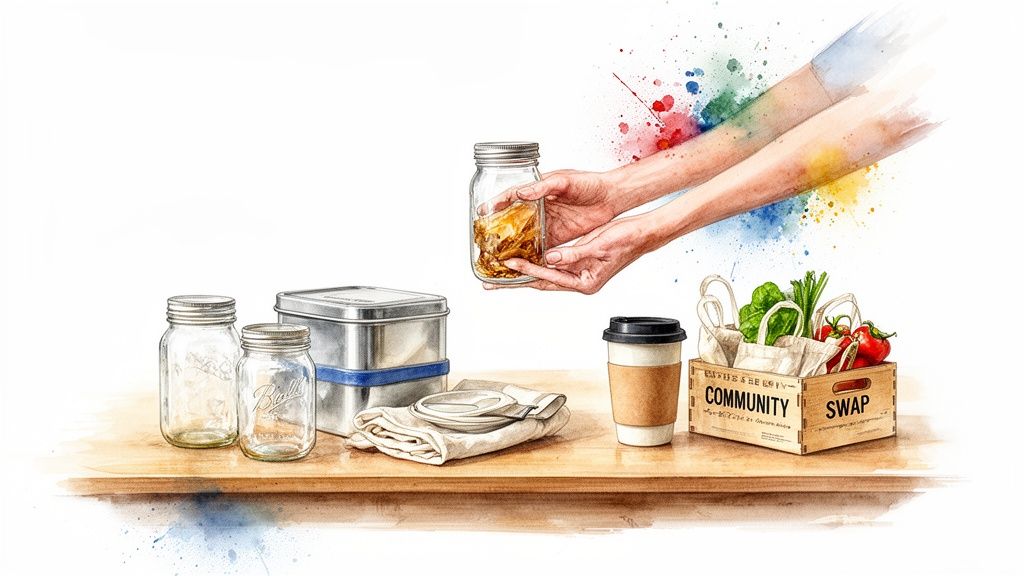
    Various reusable containers, a community swap crate with produce, and hands holding a jar of food waste on a wooden table.

    Time for some real talk. We need to have a fearless, honest conversation about recycling.

    For decades, we’ve been fed this comforting story: just toss your plastic in the blue bin, and it'll magically get a second life. It’s a nice thought. The problem is, it’s mostly a fairytale.

    Recycling isn't the solution to our plastic crisis. It's a last-ditch effort, and the system itself is completely overwhelmed and broken. Thinking we can recycle our way out of this mess is like trying to bail out a sinking ship with a teaspoon. Sure, it feels like you're doing something, but the water is still rising.

    The hard truth is that only a tiny fraction of the plastic we dutifully sort ever gets recycled. The numbers are, frankly, shocking.

    The Myth of the Blue Bin

    Let’s be brave and look at the actual data. Globally, the amount of plastic waste that gets recycled is depressingly low—somewhere around 9-15%. Meanwhile, most new plastic is made from virgin materials, not our old bottles and containers.

    This isn’t some accident. The system is rigged to favor making new plastic because it's often cheaper and easier than collecting, sorting, and processing used stuff. This means even with our best intentions, recycling can’t possibly keep up.

    Improving our recycling systems is important, don't get me wrong. But it’s not enough. To dig into the data behind this gap, you can read the full breakdown of plastic waste statistics.

    Understanding this isn't about feeling hopeless. It's about channeling our energy where it actually makes a difference. If you want a practical first step, get to know your local system. Our guide to Chicago recycling centers can show you what’s really possible right here in our community.

    Once we accept that recycling can’t save us, we can finally embrace our true superpower: reuse.

    Unleashing Your Superpower of Reuse

    This is where the story gets exciting. This is where we take our power back.

    Reuse isn’t about buying a bunch of fancy new "zero-waste" gear. It’s a mindset shift—from disposable to durable, from temporary to treasured. It’s about seeing the value in what we already own and building systems in our neighborhoods that make reuse fun, easy, and social.

    At Litter Caterpillars, we see this superpower in action every single week. It’s not some grand, complicated strategy. It's just a series of small, kind, and brave actions that add up to something huge.

    • Neighborhood Swap Events: We’ve seen people organize simple swaps for everything from books and clothes to kids' toys and kitchen gadgets. It’s basically a party with a purpose, keeping perfectly good stuff in circulation and out of the landfill.
    • Mug-Sharing Programs: A few of our volunteers bravely walked into their local coffee shops. They started a simple conversation: "What if we helped you start a mug library?" Now, a couple of local cafes have a shelf of donated mugs for customers to borrow and bring back. It’s a small act of trust that builds incredible community bonds.
    • Refill Partnerships: Supporting businesses that offer refills is one of the most powerful things you can do. It creates a real market for reuse and shows business owners that we are hungry for a different way of doing things.

    Reuse is an act of rebellion. It’s a quiet, powerful declaration that we value our resources, our communities, and our planet more than the fleeting convenience of a throwaway culture.

    This isn't about being perfect. It's about being intentional. It's about choosing the library book over the new paperback, the hand-me-down jacket over the fast-fashion trend, and the refillable jar of oats over the plastic-wrapped box.

    Each act of reuse is a vote for a more resilient and connected world. It's a skill we build, a muscle we strengthen, and a superpower we can all unleash together.

    Go Far Together by Uniting Your Community

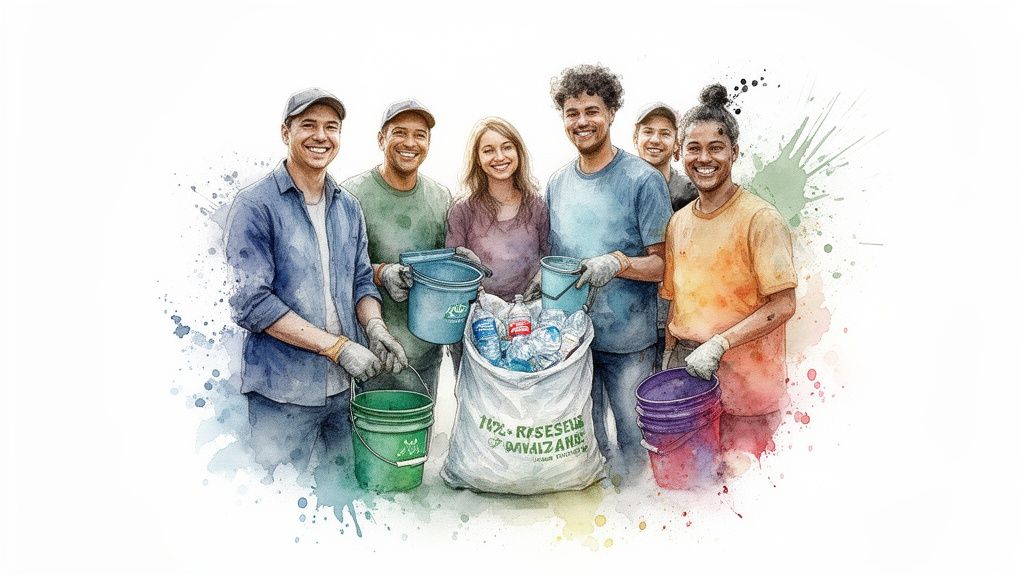
    A diverse group of smiling people holding buckets and a bag full of plastic bottles, promoting recycling.

    Trying to tackle the plastic problem alone feels like an impossible, lonely chore. It’s like trying to paint a giant mural with a tiny little brush. Sure, you'll make a mark, but you'll never bring the whole picture to life by yourself.

    But doing it with friends? That turns the chore into an adventure.

    This is the entire soul of Litter Caterpillars. We live by the old wisdom: "If you want to go fast, go alone. If you want to go far, go together." We are living proof that small actions, when multiplied by a community, create a force that's way bigger than any one of us.

    Here’s how you can turn that quiet desire for change into a powerful, joyful community movement. It's easier and a lot more fun than you might think.

    Start a Conversation, Not a Crusade

    Your first move isn't organizing some massive event; it's just starting a small conversation. We've found that the people running our favorite local spots—the coffee shops, taco stands, and grocery stores—are often just as worried about waste as we are. They're just crazy busy running their businesses.

    So instead of showing up with demands, approach them with kindness and genuine curiosity.

    A simple, friendly opener can work wonders:

    • "I absolutely love your coffee! Just wondering, have you ever thought about offering a little discount for people who bring their own mugs?"
    • "Your tacos are the best in the neighborhood! We're trying to cut down on plastic at home. Would you mind if we brought our own container for takeout next time?"

    See? It's not a confrontation. It's an invitation to team up. You're not just some random customer; you're a neighbor who gives a damn. You’d be amazed how many small business owners are thrilled to have a customer who wants to find solutions with them.

    Create an Event That Serves Others

    Ready for the next step? Host an event. But here’s our secret sauce: frame it around giving, not just taking away trash. This is exactly why we schedule our cleanups on weekend mornings. It acts as a filter for kindness. The people who show up are the givers—the ones ready to serve their community before anything else.

    And your event doesn't have to be a litter cleanup. It can be whatever your neighborhood really needs.

    • A Repair Cafe: Get a few handy neighbors together in a garage or community center. People can bring their broken toasters, ripped jeans, and wobbly chairs to get fixed up for free. This directly fights our throwaway culture and builds incredible skills and friendships along the way.
    • A Neighborhood Swap Meet: Pick a theme—kids' toys, books, clothes, or kitchen stuff. Everyone brings their gently used items and "shops" for free. It’s basically a party that keeps perfectly good things out of the landfill and helps everyone save some cash.
    • Organize a Community Cleanup: If you want to dive right in, this is our bread and butter. It's simple, the results are immediate, and it's incredibly satisfying.

    The key is to set small, achievable goals. Your first goal isn't to clean the whole city. It's to get five neighbors to show up and clean one block. Success builds momentum like nothing else.

    The Math of Making a Real Impact

    Sometimes, the sheer scale of global plastic production—somewhere around 436–450 million tonnes annually—can feel completely paralyzing. But community action has a powerful, measurable effect that you can actually see.

    Small, repeated changes, when multiplied across a whole neighborhood or city, add up to real reductions in waste. For example, if every person in a city the size of Chicago cut their single-use plastic by just 5 kg a year through these kinds of community efforts, it would prevent 13,500 tonnes of plastic waste annually. That’s the weight of over 1,000 city buses.

    This is why we set practical, numerical goals at Litter Caterpillars. If we organize 52 weekend events where 200 people each pledge to skip just 10 single-use items that week, that’s 104,000 fewer items in the waste stream. That's a real, countable number. It's proof that what we do together actually matters.

    This is your invitation. Find your people. Start small. Be brave. Your collective impact is the real superpower, and it’s just waiting for you to unleash it.

    Answering Your Questions About Ditching Plastic

    Starting out, you're going to have questions. That's a good thing. It means you're paying attention and you're brave enough to question the way things have always been done. Here are a few we hear all the time, answered with the honesty you'd get from a friend.

    Isn't It Expensive to Live with Less Plastic?

    This is the biggest myth out there, and we need to smash it right now. Sure, some of those fancy "zero-waste" stores can feel a little pricey, but the real point of cutting out plastic is simple: buy less stuff. And buying less always saves you money.

    Think about it. Your single-use plastic habit is like a subscription you never even signed up for, draining your bank account every week. A reusable water bottle might cost a few bucks once, but bottled water can set you back hundreds of dollars a year. Buying oats from a bulk bin is almost always cheaper per ounce than buying them in a plastic canister.

    Yeah, there's a small upfront cost for a few good reusables—a solid water bottle, some cloth bags, a travel mug—but they pay for themselves in weeks. The most expensive habit you have is the disposable one.

    This isn't about buying expensive eco-gadgets. It’s about getting back to a simpler, smarter way of living. We focus on what works for real people with real budgets, because this has to be a movement for everyone.

    What If My Family or Roommates Just Don't Get It?

    This one is so real. It’s where your bravery and kindness really get put to the test. You can't force people to change, and trying to will just make everyone miserable. The most powerful tool you have is leading by a joyful example.

    Don't lecture. Just do.

    Rock your reusable grocery bags. Talk with real excitement about the cool local shop you found that does olive oil refills. Cook an amazing dinner with all the plastic-free stuff you got at the farmers market.

    People are inspired by action and joy, not guilt trips. Start by creating your own "zone of influence." Maybe it's just your shelf in the pantry or your corner of the fridge. Focus on your own journey. A lot of the time, when people see how easy and rewarding it is for you, their curiosity gets the best of them. Be patient, be kind, and own your path.

    I'm So Overwhelmed. Where Do I Even Start?

    You start right here. Right now. Don't try to become some zero-waste guru overnight. That's a surefire way to burn out.

    Pick one thing. Just one.

    The easiest, most powerful first step for almost anyone is this: get a reusable water bottle you actually like and promise yourself you'll use it every single day for a month. That's it. That's your only job. This one small habit builds the "muscle memory" you need until grabbing your reusables is as automatic as grabbing your keys.

    Once that feels totally normal, pick your next one thing. Maybe it's always bringing your own bags to the store. The goal isn't perfection; it's progress. Small wins build momentum. Remember what we learned in that hailstorm: every big change starts with one small, brave step.


    Ready to turn that personal fire into community action? Litter Caterpillars is where you find your people, get your hands dirty, and make a difference you can actually see. Join us for a weekend cleanup—we bring the gear, you bring the heart. Find your next adventure at https://www.littercaterpillars.com.