
A volunteer arrives on a cold weekend morning, hands tucked into a coat, wondering whether anyone will notice if they turn around. Then the group's song starts. Someone claps the beat, a newcomer catches the chorus, and the first task suddenly feels less like an entrance exam.
That's what the best theme songs for teams can do. They give people a shared phrase, a pace for the work, and a memory they can carry home. Football supporters have used chants and songs since the late nineteenth century, with Norwich City's “On the Ball, City” written in the 1890s and still associated with the club today according to The New York Times. A team song can be grand, funny, rough around the edges, or as short as a repeated clap and name.
Ella Duke's Litter Caterpillars theme song gives us a real reference point for a volunteer group built around bravery, kindness, unity, and service in Chicago. The eight ideas below match specific moments, from personal transformation and first arrival to neighborhood work, friendship, and the closing celebration. Before you use a commercial recording, check permission and licensing. If you commission original music, put ownership and usage rights in writing.
1. The Anthem of Transformation
A hail storm can become the first verse.
Three people huddle beneath a tree, shivering while Ubers repeatedly cancel. The cleanup hasn't gone according to plan, yet the story has already changed. Litter feels easier to move than the private mess each person carried in, and the miserable weather adds a strange spark. That scene gives a transformation anthem its spine.
The song begins in disorder. It moves through the moment someone picks up the first piece of trash, meets a stranger, or realizes they can return next weekend. Then it rises into a chorus about becoming a little braver through repeated service. A caterpillar works well as the central image because transformation happens gradually. The song can leave room for imperfect people who still show up.
Build the story from real voices
Ask volunteers for a short memory. One person might describe arriving after a difficult season. Another might remember the first time they led a task. A third might talk about finding clarity while walking block by block.
Use those memories to shape verses, then keep the chorus simple enough for everyone to join. A full recording can carry the emotional story, while a short cut can open an event before the group starts moving.
Practical rule: Let volunteers recognize themselves in the song before you ask them to sing it.
Play the full version while people gather and talk. Bring in the shorter refrain when you need the room to stand up straighter. The song should make a nervous volunteer think, “I can begin here,” rather than suggest that everyone must already feel fearless.

2. The Sunday Morning Rally Cry
The rally song needs to wake up the room before the coffee does.
Keep the lyric direct. Give people a line they can repeat while they pull on gloves, check supplies, and step toward the first block. A driving beat can turn a quiet weekend morning into a shared departure. The song doesn't need a complicated story. It needs a clear invitation to move.
Sports teams have long used fight songs and chants before competition. Football supporters often repeat a club name in a clap pattern, creating a call-and-response rhythm that works even when people don't know a full song as described in this overview of football chants. A volunteer group can borrow that mechanic without copying a stadium performance.
Teach the chorus at the door
Start with the leader singing one short line. Let the group answer. Repeat it until new volunteers can join without studying a lyric sheet.
You can use a simple structure:
- Leader's line: Call the group name or the day's purpose.
- Group response: Repeat a short phrase about showing up.
- Clap pattern: Use a steady rhythm that people can follow while standing.
- Final lift: End with the neighborhood or destination.
Run the rally cry in the first moments of every event. A newcomer might arrive tense and silent, then discover that participation requires one echoed phrase, not a solo performance. That small success lowers the social barrier.
Record volunteers singing it together, including the rough edges. A polished track can sound distant. A living version with footsteps, laughter, and uneven voices tells people that the invitation belongs to them.
3. The Neighborhood Explorer's Ballad
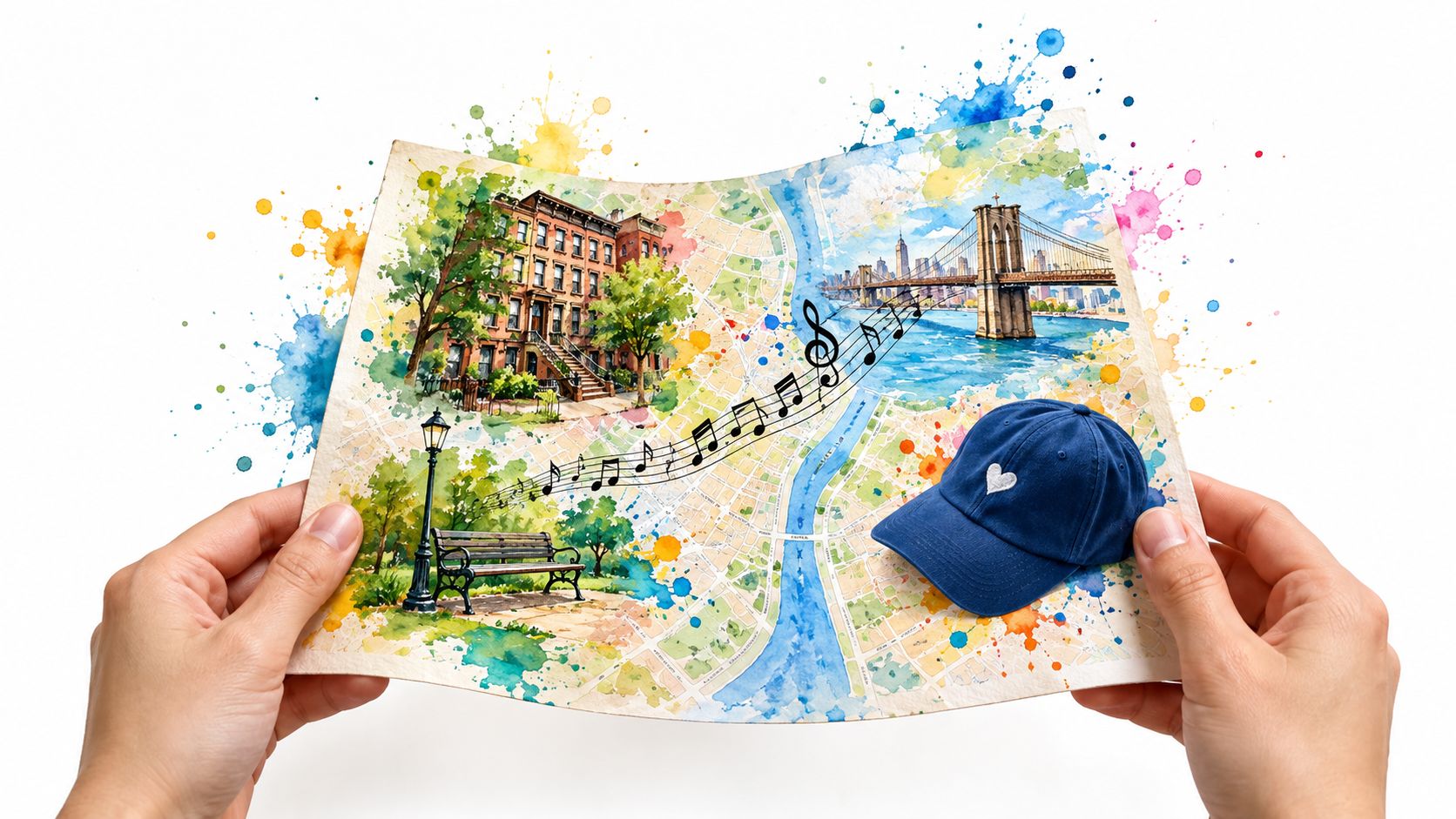
A Chicago cleanup can feel like a walk through a giant storybook. One block gives you brick walls and corner stores. Another gives you a park, a viaduct, or a view that a newcomer would've missed from a car.
Build the ballad like a map. Each verse can name a neighborhood, a local detail, or a moment volunteers experienced there. Start with several places and let residents help write the sections that describe them. A person who grew up nearby may supply the image that turns a generic city song into something honest.
Woody Guthrie used folk songs to name American regions and working people. Local guides and city musicians also use songs to give places a voice. Your group can create a similar travel log through service, with volunteers discovering Chicago while they clean it.
Let residents write the route
Invite people from each neighborhood to contribute a line, story, or spoken introduction. Give volunteers a lyric sheet so they can follow the route during the song. A chorus can return to Caterpillar Park in Englewood, while the verses move through the wider city.
Keep the song flexible. Record each neighborhood section separately, then release or play the relevant verse when the group works there. That approach gives residents room to hear their own place without forcing every event to use the full version.
For planning, pair the song with Chicago neighborhoods to explore. Ask participants what they noticed, what they learned, and which detail deserves a line next time.
The ballad should feel like an invitation to pay attention. A volunteer doesn't only collect litter. They learn the rhythm of a street, meet the people who live there, and carry a clearer sense of the city into the next cleanup.
4. The Friendship Multiplier
A newcomer joins for the cleanup and stays for the person beside them.
That person might be a nurse, a student, a longtime resident, or someone who also came alone. They bend, pick up, walk, and talk. By the end, they've exchanged names. Later, they text about another event, a difficult week, or a funny piece of trash someone found beneath a bush.
A friendship song should leave room for that surprise. Make it playful rather than sugary. Write about mismatched personalities, awkward introductions, shared gloves, and the jokes that appear after an hour of work. The chorus can say that people came to move litter and found one another along the way.
Use real laughter
Record the song with volunteer voices. Keep a little laughter in the background if it feels natural. A perfectly clean vocal track can lose the warmth that makes a group feel accessible.
Play the song near the end of an event, when people have already worked side by side. That timing lets the lyric describe something they've just experienced. You can also use it in recruitment posts aimed at people who want community but feel tired of shallow introductions.
Try a chorus with a simple question and answer:
- Question: Who showed up today?
- Answer: We showed up together.
- Question: Who did we meet?
- Answer: A friend by the next block.
The song can point people toward friendship-building activities after the cleanup. Keep the invitation gentle. Some volunteers will sing loudly. Others will listen while they pack their supplies. Both people belong in the circle.
5. The Bravery Anthem
Fear walks into the cleanup before the volunteer does.
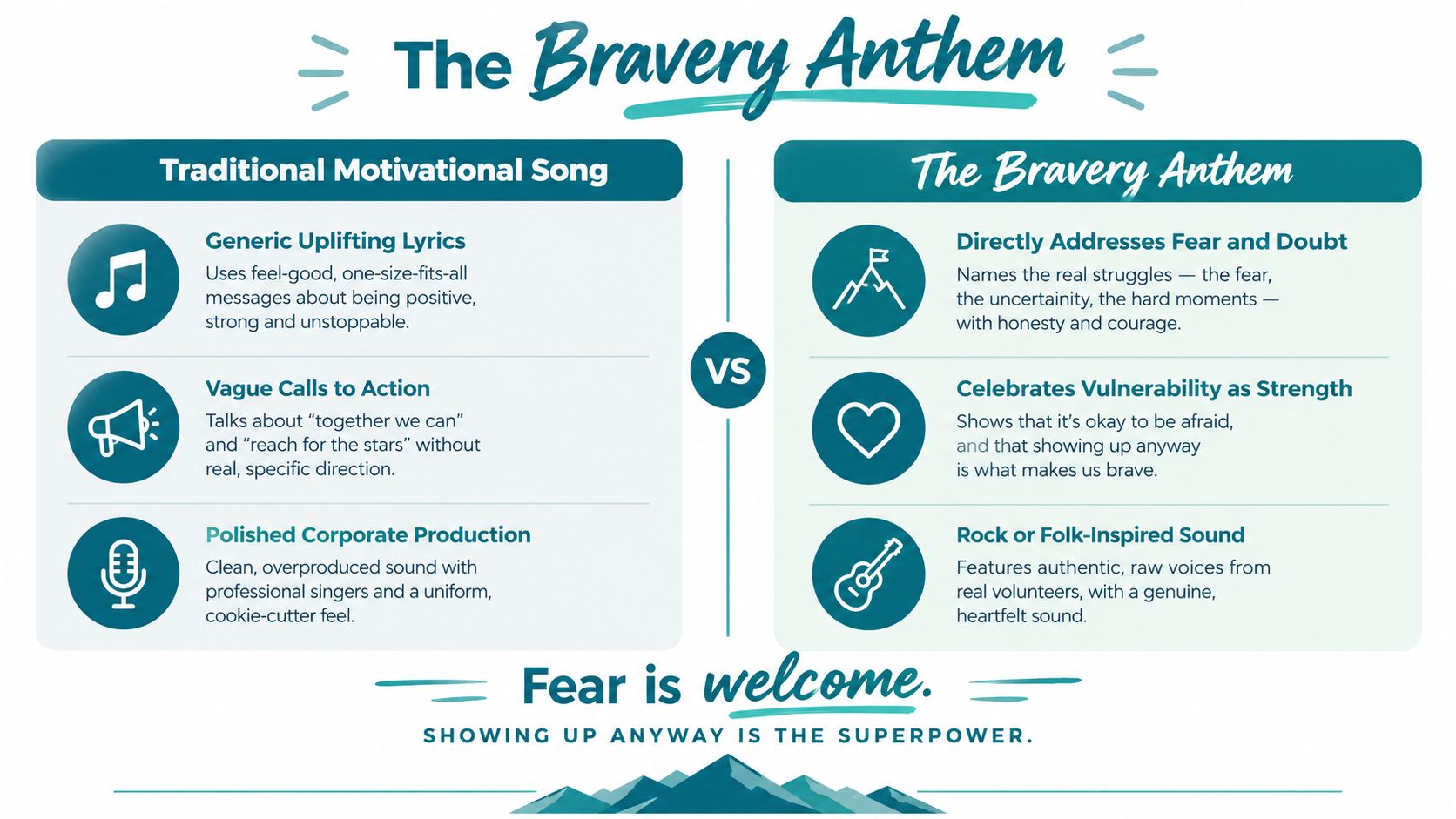
A person may worry about entering an unfamiliar neighborhood, talking to strangers, handling a difficult task, or looking clumsy in front of experienced volunteers. A bravery anthem gives that fear a place in the story. It says that showing up counts, especially when confidence hasn't arrived yet.
Use the hail storm as the central image. The sky turns rough. The group takes cover. The phones keep showing cancelled rides. Nobody looks heroic, yet everyone remains part of the adventure. That scene makes bravery tangible. It isn't a cape. It's a wet coat, cold hands, and one more decision to keep going.
Make courage repeatable
Write lyrics that describe small choices. Someone introduces themselves. Someone asks for help. Someone tries a new route. Someone returns after an embarrassing first attempt.
Volunteer testimonials can supply the strongest lines. Ask when a person felt nervous and what they did anyway. Let the song celebrate action without pretending that suffering feels easy.
You can play the anthem before a new task or an unfamiliar route. Pair it with a small recognition ritual, perhaps a badge or a spoken thank-you. The badge shouldn't rank people. It should give a visible name to the choice they made.
“Bravery can sound like a group singing while the weather refuses to cooperate.”
Keep the melody accessible. If the song demands a dramatic vocal performance, nervous people may stay quiet. If the chorus feels like a promise the whole group can make, they'll have a way into it.
6. The Work Song
The work song needs to fit the hands.
A volunteer bends. Picks up. Walks. Drops litter into a bag. Repeats. The music should support that cycle without demanding attention. Bass and percussion can provide a steady floor, while a sparse melody leaves enough space for conversation.
Sailors used sea shanties to coordinate shared physical effort. Labor songs also matched repeated tasks with repeated rhythms. A cleanup group can adapt the idea for gloves, grabbers, bags, and long walks. The song doesn't need to tell people how to work. It can make the pace feel less scattered.
Test it on the actual route
Play an early version while volunteers clean. Watch the pace, then ask what felt comfortable. A track that sounds energetic through headphones may feel exhausting outside. Another may leave too much silence between movements.
Build a loop that can continue through the cleanup, but keep the arrangement light. People need to hear safety instructions, street noise, and one another. Let the refrain return often enough to create structure without turning the task into a drill.
Use this volunteer team-building activities resource when you pair the work song with a cooperative task. The music can support movement, while the activity gives people a reason to communicate.
The right work song creates a quiet physical rhythm. A group spreads across a block, then slowly gathers again. Bags fill. Conversations come and go. Nobody needs to announce unity because their steps already share a pace.
Before you finalize the track, listen to this example for a sense of the kind of rhythmic energy a group song can carry.
7. The Newcomer's Welcome Song
The first ten minutes can decide whether someone returns.
A newcomer stands near the briefing, holding supplies too tightly and scanning faces for a place to land. They don't know the jokes, the route, or the names. A welcome song can give them a clear signal before anyone finds the perfect conversation starter.
Keep the lyric warm and slightly self-aware. Admit that arriving alone feels strange. Thank people for taking the first step. Say that nobody needs to perform, know every name, or understand the whole group immediately.
Make the welcome visible
Have current volunteers sing toward the newcomer rather than leaving them to decode an established circle. Eye contact matters. So does the next action. Follow the song with a low-pressure icebreaker, such as sharing a name and one small reason for coming.
A camp welcome song can ease homesickness. Greeting rituals in recovery groups can give newcomers a defined place in the room. College orientation programs also use music and group rituals to reduce the awkwardness of arrival. Your version can use the same basic human move, a repeated invitation that people can accept at their own speed.
Keep the chorus short. A new volunteer may remember only one line, and that's enough. The song should make belonging feel available before the person has completed a task.
Avoid turning the welcome into a public test. Nobody should have to sing alone, clap on the correct beat, or explain personal details. Let listening count as participation.
8. The Victory Celebration Song
The bags sit in a row. The tools return to their containers. People drop onto benches, tired and smiling, with dirt on their shoes and a story from the last block.
That's when the celebration song begins.
Sports teams often sing after victories, and some clubs repeat their song during entrance, after a win, and in the clubrooms afterward as described in this overview of music at sporting events. The Chicago Bears even had players sing the “1985 Super Bowl Shuffle,” while the Boston Red Sox turned Neil Diamond's “Sweet Caroline,” released in 1969, into a seventh or eighth-inning Fenway Park ritual since the late 1990s according to Sports Illustrated.
A volunteer group can create a smaller, kinder version of that ritual. Keep the song short. Let the lyrics mention what the group finished that day, whether they cleared a difficult corner, worked through cold weather, or welcomed several first-time volunteers.
End with choice, not pressure
Save the song until everyone sits down. Some people will sing. Some will clap. Others will listen and enjoy the pause. Make every form of participation acceptable.
Leave a space where the leader can add a line about the day. That detail makes the ending feel earned. The group hears its own work named, then gets a clear emotional finish before people leave.
You can record the final chorus if everyone agrees, but ask permission before posting anyone's voice or image. The memory should belong to the volunteers first.

8-Point Comparison of Team Theme Songs
| Song | 🔄 Implementation complexity | ⚡ Resource requirements | 📊 Expected outcomes | 💡 Ideal use cases | ⭐ Key advantages |
|---|---|---|---|---|---|
| The Anthem of Transformation | 🔄 High, careful narrative crafting and multiple versions | ⚡ Moderate–High, songwriting, recording, volunteer stories | Deep emotional connection; stronger purpose alignment | Pre-event gathering, recruitment, storytelling moments | ⭐ Strong cross-demographic resonance; durable storytelling asset |
| The Sunday Morning Rally Cry | 🔄 Low, simple hook and chant structure | ⚡ Low, minimal production, leader to lead chant | Immediate energy boost; higher turnout and motivation | Event starts, quick social media clips, wake-up reminders | ⭐ Highly memorable and easy to teach |
| The Neighborhood Explorer's Ballad | 🔄 Medium–High, rotating verses and ongoing updates | ⚡ Moderate, resident contributions, periodic recording updates | Increased local belonging; educates volunteers about places | Area-specific events, neighborhood outreach, social storytelling | ⭐ Builds place-based pride and talking points |
| The Friendship Multiplier | 🔄 Medium, authentic voice, playful arrangement | ⚡ Low–Moderate, recordings with volunteer voices, informal production | Stronger social ties; improved word-of-mouth recruitment | Recruitment events, post-event socials, young-professional outreach | ⭐ Drives retention by emphasizing social connection |
| The Bravery Anthem | 🔄 Medium, needs authentic testimonials and rising intensity | ⚡ Moderate, careful tonality and quality production | Reduces hesitation; attracts growth-oriented volunteers | Introducing new tasks/neighborhoods, confidence-building moments | ⭐ Powerful at countering imposter syndrome and fear |
| The Work Song | 🔄 Low–Medium, tempo testing and loopable structure | ⚡ Moderate, tempo trials, looped recording, volume management | Improved efficiency and synchronized group flow | During cleanup work, long-duration physical tasks | ⭐ Enhances coordination and creates meditative flow |
| The Newcomer's Welcome Song | 🔄 Low, short, direct, warm arrangement | ⚡ Low, simple recording, consistent playback at events | Higher first-time retention; lowers social friction | First 10 minutes of event, onboarding, briefing | ⭐ Strong immediate impact on newcomer belonging |
| The Victory Celebration Song | 🔄 Low, short and punchy; timing sensitive | ⚡ Low, brief recording or group sing-along | Ritual closure; reinforces return likelihood | Post-event wrap-ups, group photos, reflection circles | ⭐ Leaves a positive final memory that boosts return rates |
Give Your Group a Soundtrack
Choose the song from the moment that needs help.
If people arrive nervous, start with the Newcomer's Welcome Song. If the group needs energy before the first task, try the Sunday Morning Rally Cry. If volunteers lose rhythm during physical work, write the Work Song. If fear keeps people from trying unfamiliar tasks, use the Bravery Anthem.
The other four ideas answer different needs. The Friendship Multiplier fits a group that wants deeper connections. The Neighborhood Explorer's Ballad gives Chicago service a sense of place. The Anthem of Transformation tells the story of why people changed through showing up. The Victory Celebration Song gives the day a warm finish people can remember.
You don't need a full album. Start with one chorus and test it in the room where you'll use it.
- Name the audience: Decide whether you're writing for newcomers, longtime volunteers, children, workers, residents, or everyone together.
- Choose the emotion: Pick one feeling for the first version, such as courage, welcome, motion, friendship, pride, or relief.
- Write one repeatable line: Keep the words short enough for a person to learn after hearing them once.
- Test a brief version: Use the song at one event before you spend time on a polished recording.
- Ask what felt true: Invite honest reactions from people who sang, listened, or stayed quiet.
- Revise before recording: Remove lines that sound forced, confusing, or too personal for a group setting.
Music can support cooperation when people hear upbeat songs. In Cornell lab experiments, teams exposed to upbeat music contributed about one-third more to a shared group good than teams hearing unpleasant music, and the effect continued when researchers compared them with a no-music control Cornell's report explains the experiment. For a volunteer team, that points toward familiar, welcoming, low-friction tracks. Aggressive or unpleasant music may create the wrong mood for shared work.
Choose carefully when the group includes people with different experience levels. Music can build affiliation, yet a group goal can also divide people when the attempt ends in failure or embarrassment, according to research on music-making and group identity from the University of Cambridge repository. A song should invite shared success, not turn singing into another performance test.
Permission matters too. Check the rights before you play or publish a commercial recording. When you commission original music, write down who owns the composition, recording, and future uses. A distinct sonic identity can help a team avoid relying only on generic licensed tracks. An analysis of 154 brands found that custom or original music made up 6.4% of average brand audio content, while 80% of A-Grade and B-Grade brands used owned music at least some of the time as reported by BestAudioBrands. Treat those figures as context for audio branding, not a promise that every team needs a custom song.
A group finishing a cleanup hears its own voices. The chorus wobbles. Someone laughs. The last bag moves into place. Next weekend, that sound can bring the memory back before anyone picks up a grabber.
Litter Caterpillars brings Chicago volunteers together for weekly trash pickups, neighborhood service, friendship, and team identity through flags, badges, and theme songs. Visit Litter Caterpillars to find an upcoming event, meet the group, and help create a shared sound for the next cleanup.