Tag: trash pickup

  • Cleaning Up Park: Your Complete Volunteer Guide

    Cleaning Up Park: Your Complete Volunteer Guide

    At our first Chicago pickup, three of us huddled under a tree while spring hail rattled around us and Uber drivers kept canceling. I'd started a trash crew to practice cleanliness, consistency, and bravery, and Chicago apparently wanted to administer the final exam immediately.

    Why Cleaning Up Park Work Matters More Than Bags of Trash

    I remember the shivering more clearly than the litter. We'd shown up to clean somebody else's mess, and suddenly we had a shared problem, a ridiculous story, and a reason to look after each other.

    That tree wasn't a sensible severe-weather shelter. I wouldn't repeat that decision today. Showing up matters, but getting everybody home safely matters more.

    Three people huddled together under a tree during a rainy day in a city near Uber taxis.

    The mess I could finally move

    Before I started the crew, I struggled to clean my own home. Old food and forgotten bags carried sentimental stories, so I kept postponing decisions about them.

    A wrapper beside a park bench didn't have that emotional luggage. I could grab it, bag it, and finish something. That small, complete action felt good.

    Doing it beside another person felt better. Conversation didn't require a clever introduction or an impressive job title. We had a task between us, which made meeting people feel less like an audition.

    I don't need you to arrive as a perfectly organized person. I need you to arrive willing to help, and willing to let somebody help you.

    Give people a reason to return

    I think of cleaning up park spaces as friendship with a practical assignment. You learn who checks on a cold volunteer, who carries spare supplies, and who can make a soggy morning funny without making anyone miserable.

    Our weekly outings have taken us through heat and blizzards. We've also cleaned a highway during a bike-event shutdown, an unusual opportunity that doesn't turn an ordinary active highway into volunteer territory.

    A corporate service day can introduce people to cleanup work. A recurring crew gives those introductions somewhere to go.

    • Remember people: Learn names and ask about the conversation you started last time.
    • Share responsibility: Let newcomers choose manageable tasks instead of handing them the ugliest corner.
    • Protect the atmosphere: Welcome late arrivals, respect early departures, and keep donation pressure out of the morning.

    I want volunteers to leave with less trash on the ground and another person they're glad to see next weekend. The bag gives us something to carry. The friendship gives us a reason to come back.

    Planning Your First Park Cleanup Event

    Pick a site you can understand on foot. For a new crew, I'd choose a compact park edge with a clear entrance over an enormous stretch of lakefront that requires a search party to find the organizer.

    Chicago has more than 600 parks and approximately 8,800 acres of green space, according to the Chicago Public Library's Park District history. You don't need to solve that whole map on your opening morning.

    Make the invitation easy to accept

    I choose weekend mornings because I want to build a service-minded routine. That's my organizing preference, not a personality test for anybody who works weekends or enjoys going out.

    Give people an exact meeting point: a named entrance, a fieldhouse doorway, or a recognizable intersection. Add an address and a description of how they'll recognize you. “Meet somewhere near the playground” invites confusion before anybody touches a grabber.

    Call or email the park supervisor before you recruit widely. Explain your proposed area, attendance expectations, equipment, and disposal plan; ask about competing events, access, approvals, and any tasks volunteers should avoid.

    • Park staff: Ask where collected waste should go and which maintenance concerns need staff attention.
    • Aldermanic office: Request help identifying the appropriate city contact or coordinating neighborhood outreach.
    • Nearby businesses: Ask for a specific contribution, like water, snacks, or an agreed disposal arrangement, rather than an undefined partnership.

    For the event-organizing side, EventUploader's resource on planning conferences and retreats is a related reference. I'd keep a park cleanup lighter than a corporate event, with clear responsibilities and fewer moving parts.

    Build a small safety net

    Use a sign-up form to collect contact information, accessibility needs, and an emergency contact with consent. Keep private information out of the public volunteer chat.

    Create a WhatsApp or other group chat for changes, and explain your buddy system before arrival. Choose an accessible route and a nearby substantial shelter; cancel or shorten the outing when conditions become unsafe.

    A copyable pre-event timeline

    • Before announcing: Walk the site, contact its manager, and settle disposal.
    • When inviting: Publish the meeting point, expected finish, clothing advice, and contact method.
    • The evening before: Check weather and closures, prepare supplies, and confirm who'll lead.
    • Before leaving home: Send a clear go, change, or cancellation message.

    I'd rather send an unglamorous update than make a newcomer stand alone beside a locked gate.

    What to Bring to a Park Cleanup

    Pack your kit the night before. Morning-you deserves better than a frantic search for gloves while somebody waits at the park.

    I divide supplies into safety gear, pickup tools, and morale boosters. Use this trash pickup equipment guide as a starting point, then match the kit to your site and weather.
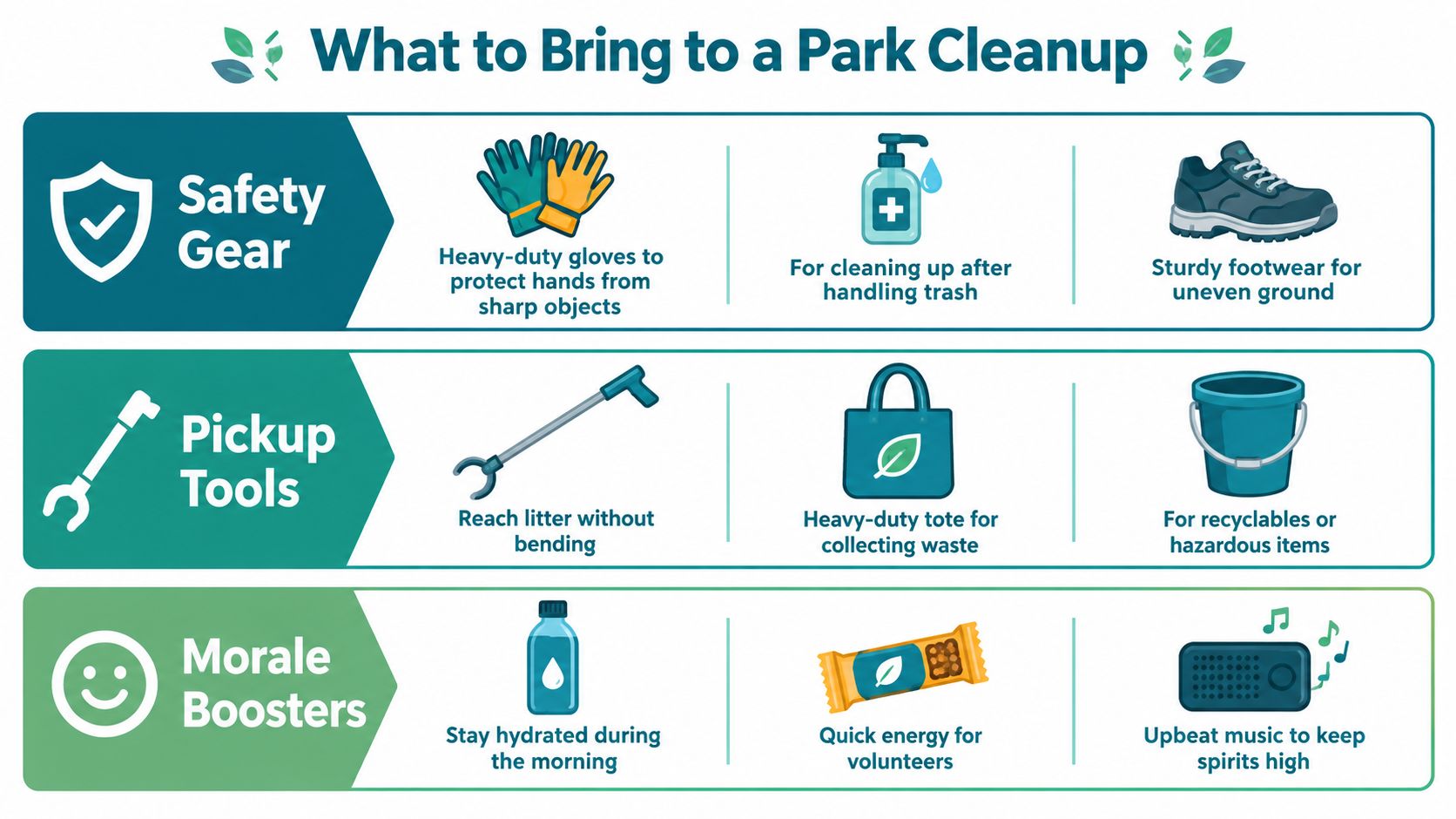
    A helpful infographic outlining essential items to bring for a successful and safe park cleanup event.

    Protect hands, feet, and attention

    I prefer reusable, heavy-duty nitrile-coated work gloves over thin cotton gloves for routine litter pickup. Check the manufacturer's protection rating, and don't confuse a coated glove with permission to handle needles or sharp glass.

    Wear closed-toe shoes with useful tread. In cold weather, bring layers that let you move; near road edges, choose bright outerwear or a visibility vest and stay out of traffic.

    • Work gloves: Bring spare sizes, and replace damaged pairs.
    • Hand hygiene supplies: Carry sanitizer for the outing, then wash your hands when you can.
    • First-aid basics: Include simple supplies and identify who'll respond if someone gets hurt.
    • Weather protection: Pack suitable layers, sun protection, and extra drinking water.

    A grabber keeps your hands away from ordinary litter and reduces repeated bending. Try its trigger before the event, especially if you'll wear bulky gloves.

    Carry tools without carrying trouble

    Use sturdy bags in different sizes, a reusable tote for equipment, and a small bucket for ordinary recyclables when your disposal arrangement accepts them. Don't use that bucket to collect hazardous items, even if a checklist illustration suggests otherwise.

    Leave needles, unknown chemicals, suspicious containers, and heavy dumped objects alone. Record their locations and ask the responsible agency or site manager to arrange removal.

    Packing rule: If I can't explain how we'll handle an item safely and dispose of it properly, it stays out of the volunteer bag.

    Bring a notebook or small trash scale if you want to record findings. Keep bags manageable rather than packing them until somebody has to wrestle them.

    Snacks belong in a separate clean container. A little music, perhaps our theme song by Ella Duke, can make the morning cheerful, but keep the volume low enough to hear teammates, bikes, and park users.

    Running the Cleanup Hour by Hour

    Start with names, not marching orders. A newcomer should know who leads the outing, where to return, and how to stop without feeling that they've disappointed the group.

    I'd use the following schedule as a sample plan, then shorten it for weather, mobility needs, or a smaller site. Nobody earns extra kindness points by staying exhausted.
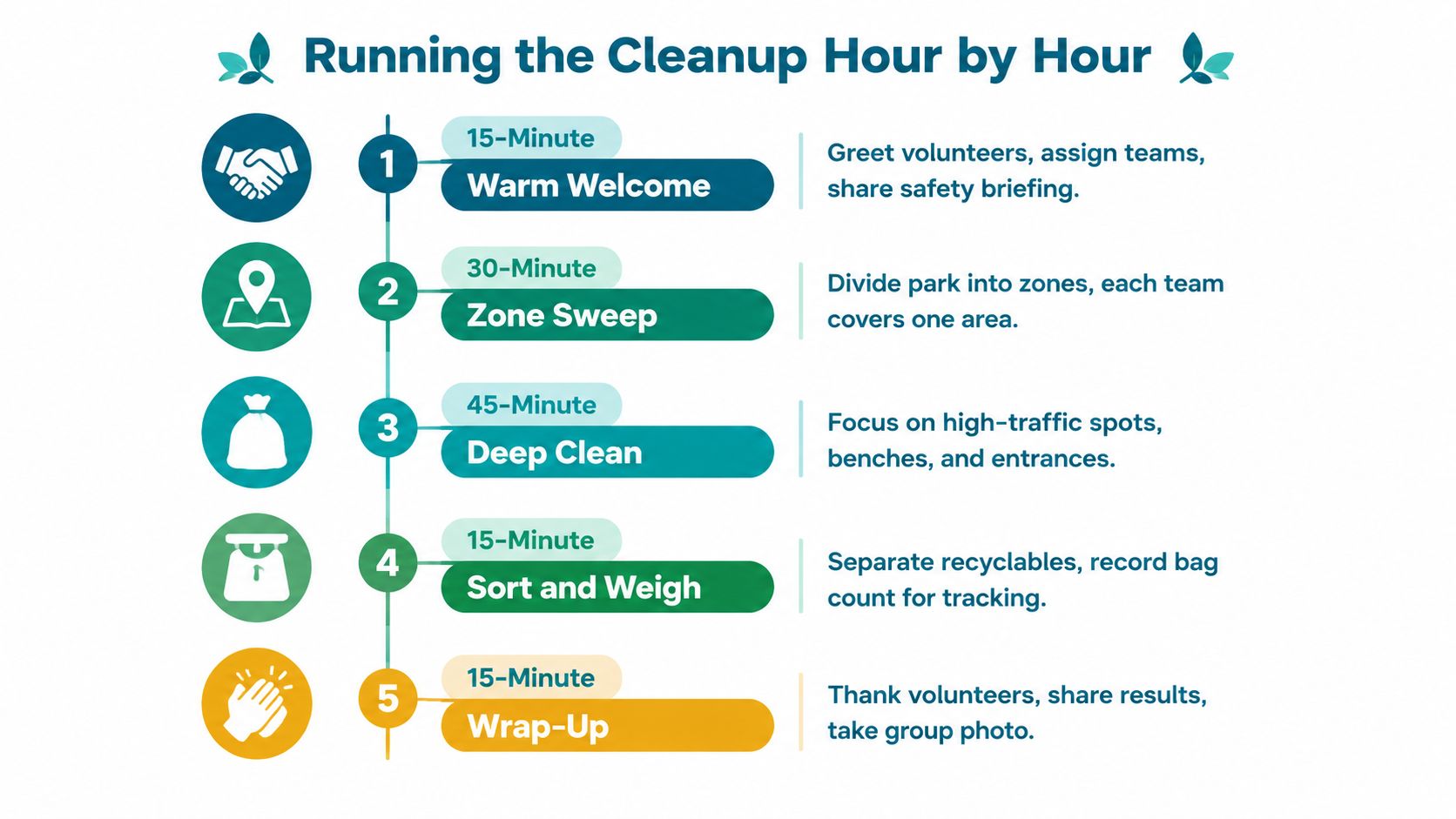
    A five-step infographic showing a timeline for organizing a park cleanup event with time durations and tasks.

    Start together, then spread out

    Use the opening 15 minutes for introductions, name tags, and a safety briefing. Show the boundaries, explain the disposal arrangement, identify shelter, and tell volunteers which items to leave alone.

    Pair people up and give each pair a recognizable zone. Use paths, entrances, or benches as boundaries rather than vague gestures toward “over there.”

    • Opening zone sweep, 30 minutes: Walk your assigned area and collect ordinary, accessible litter. Keep paths open for other park users.
    • Focused cleanup, 45 minutes: Return to busy entrances, benches, and gathering areas. Don't reach into hidden spaces or pull apart dumped piles.
    • Sort and record, 15 minutes: Separate accepted recyclables during collection where practical, then record bags, weights, or material categories without reopening mixed waste.
    • Wrap-up, 15 minutes: Confirm disposal, retrieve equipment, and close together.

    During active work, schedule water and check-ins about every 30 minutes. Treat those intervals as organizer reminders, not limits on when someone can rest.

    Finish the job you started

    Ask pairs to collect and carry bags without dragging them across paths. If you weigh bags, use a consistent method and record what you measured; don't guess at a result because it sounds impressive.

    Take before-and-after photographs from the same position. Ask permission before photographing volunteers, and avoid turning nearby residents into background props.

    You can always tell me you're tired, uncomfortable, or ready to leave. You don't owe the crew an explanation.

    Use 10 minutes of the wrap-up for a short debrief. Ask what people found, what surprised them, and which spot needs another visit or professional attention.

    Leave the remaining wrap-up time for thanks, an optional group photo, and equipment checks. Before everyone scatters, confirm that no bags, tools, or volunteers remain out in the work zones.

    Picking the Right Ward and Reading City Rules

    I don't choose a cleanup site by zooming out until Chicago looks manageable. I choose an address, understand the surrounding blocks, and find out who already handles maintenance there.

    Chicago has 50 wards, and the city organizes street sweeping by ward and ward section; the City Services by Address dashboard lets you look up an address's ward, community area, and applicable sweeping information. Use that information to coordinate your outing rather than assuming the municipal schedule follows your volunteer calendar.

    Choose a workable patch

    Use this Chicago ward boundaries guide to orient yourself, then check the specific address. A ward gives you a starting area; it doesn't tell you who owns every nearby parcel.

    Look separately at park property, sidewalks, road edges, and vacant lots. Ask permission before entering private property, and avoid moving a cleanup onto a busy roadway because the adjacent grass looks tidy.

    The Chicago Park District Code prohibits bringing material into a park and leaving or dumping it unless you remove it or use an approved receptacle, limits access from 11:00 p.m. to 6:00 a.m., and requires permits for tents, canopies, or other structures. Confirm where your collected waste can go before anybody fills a bag.

    I don't assume a park bin can accept the entire crew's haul. Ask the supervisor about capacity and approved disposal arrangements, especially if you expect bulky litter.

    Know when the owner needs to act

    Chicago's sanitation ordinance guidance requires owners of vacant and unimproved lots to remove litter, debris, and abandoned vehicles and keep weeds from growing above 10 inches. Document those conditions separately rather than treating everything as volunteer work.

    Our crew won an empty lot at auction to develop Caterpillar Park in Englewood. Taking ownership is a different undertaking from organizing a public-park pickup; you shouldn't inherit somebody else's maintenance duties by showing up with gloves.

    Chicago Cleanup Rules and What They Mean for Volunteers

    Rule What It Says Volunteer Takeaway
    Park waste disposal Remove material or use an approved receptacle. Confirm the final destination before collecting.
    Park access The code limits overnight access. Plan within permitted hours.
    Structures Tents, canopies, and other structures require permits. Ask before bringing event infrastructure.
    Vacant-lot upkeep Owners must address litter, debris, vehicles, and excessive weeds. Document conditions and contact the responsible party.

    Choose a place where you can finish responsibly. An abandoned bag beside an overflowing bin isn't the ending I want.

    What Success Looks Like Beyond Bags Collected

    A clean bench can still sit beneath a broken light. I can remove the wrapper beside it, but I can't promise that a resident will feel comfortable sitting there after dark.

    In a 2025 randomized controlled trial in Montevideo public squares, researchers estimated that removing trash bins reduced measured litter by 43.5%, yet found no significant change in people's perceptions of cleanliness, according to the public-space intervention study. I wouldn't use that result to recommend removing Chicago's bins; I'd use it to question whether our bag count tells us enough.
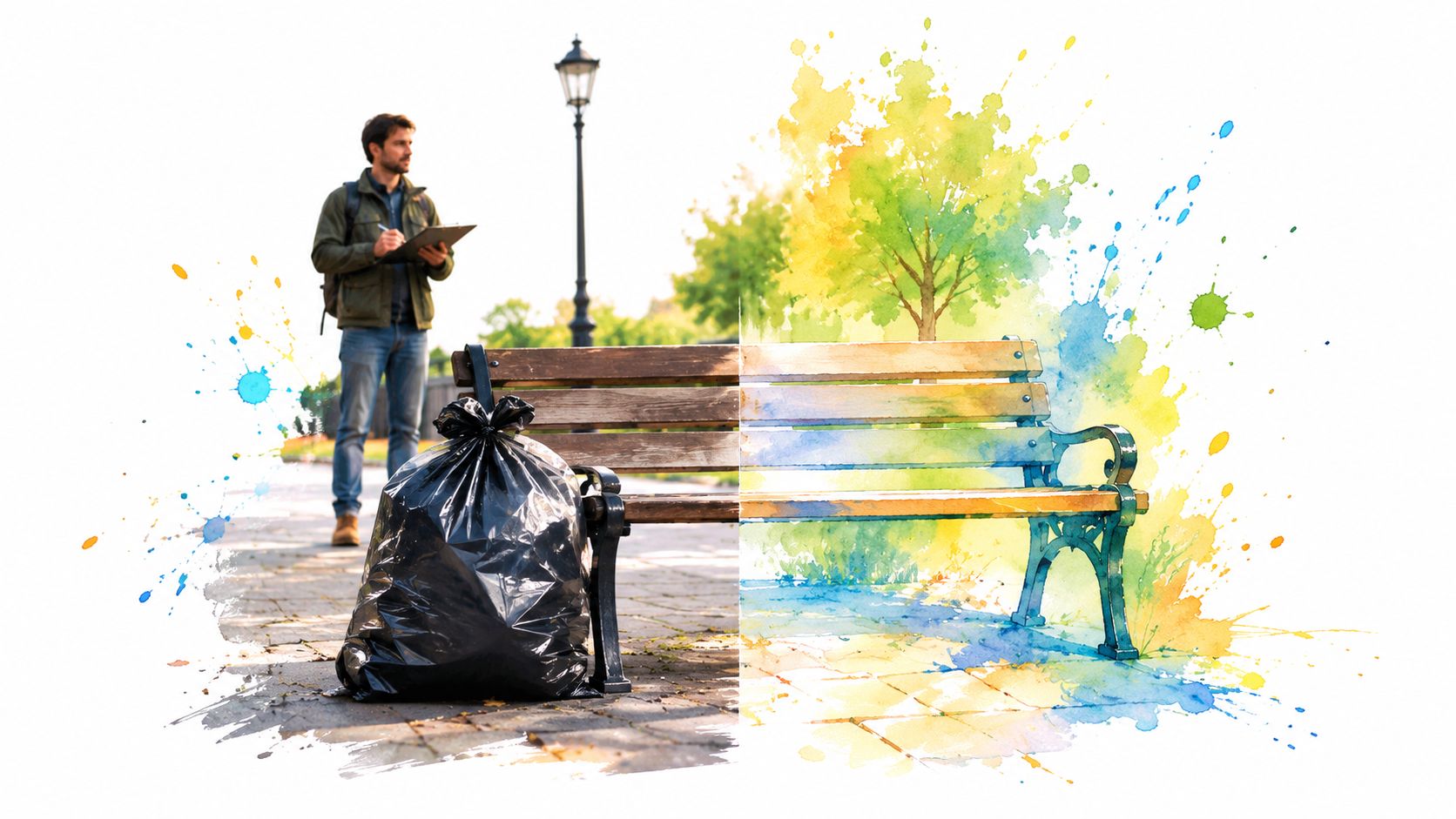
    A man stands near a park bench with a garbage bag, transitioning into a vibrant watercolor illustration.

    Record what you find and what people experience

    An EPA-supported Wichita study involved 70 citizen scientists at 24 cleanup events across 12 parks, who categorized 1,765 larger litter items and collected 30 gallons of smaller litter; plastic accounted for 47% of categorized items, and food-and-beverage litter accounted for 49% of the total, as documented in the EPA's litter research projects. For our crew, that's a practical reason to record materials and locations, rather than only bags.

    Use a notebook entry that takes roughly 60 seconds as a suggested habit. This community impact measurement guide is another starting point for choosing what to track.

    • Use: Note return visits and whether children and older adults use the space, without collecting identifying details.
    • Comfort: Ask willing residents how the park feels at different times of day.
    • Aftercare: Record broken lights, blocked sightlines, graffiti, overflowing bins, and damaged play equipment.

    Report conditions without blaming neighbors

    In an underserved neighborhood, I want our photographs to document maintenance needs, not imply that residents failed a housekeeping inspection. Volunteers can remove ordinary litter while asking municipal agencies and property owners to handle their responsibilities.

    Send a plain report: location, observed condition, date, photograph if appropriate, requested action, and safe contact information. Describe an abandoned vehicle or damaged fixture without investigating it yourself, and keep the report reference for follow-up.

    Ask residents what they want addressed. Their answer may have very little to do with the bag you're holding.

    Show Up Next Week and Bring a Friend

    I started with personal struggles and a willingness to try something uncomfortable. You can start with a park you already walk past and a friend who'll answer your message.

    Keep your starter plan small enough to carry out. Choose a ward, a park, and a Saturday morning; confirm permission and disposal, then prepare gloves and grabbers.

    Make your next move

    • Find a crew: Check Meetup, Instagram, or neighborhood organizations for an upcoming outing.
    • Start your own: Invite someone you know and give them a clear meeting point.
    • Keep it kind: Respect people's limits, share easy tasks, and change plans when safety requires it.

    A weekly practice gives you another chance when a morning goes sideways. I want people to return because they felt welcome, useful, and cared for, not because I talked them into ignoring the cold.


    Litter Caterpillars organizes weekly volunteer trash pickups across Chicago, with bags, gloves, grabbers, and a volunteer-first approach to safety and friendship. Visit Litter Caterpillars to find an upcoming cleanup and join the group chat, then bring a friend or come ready to meet one.
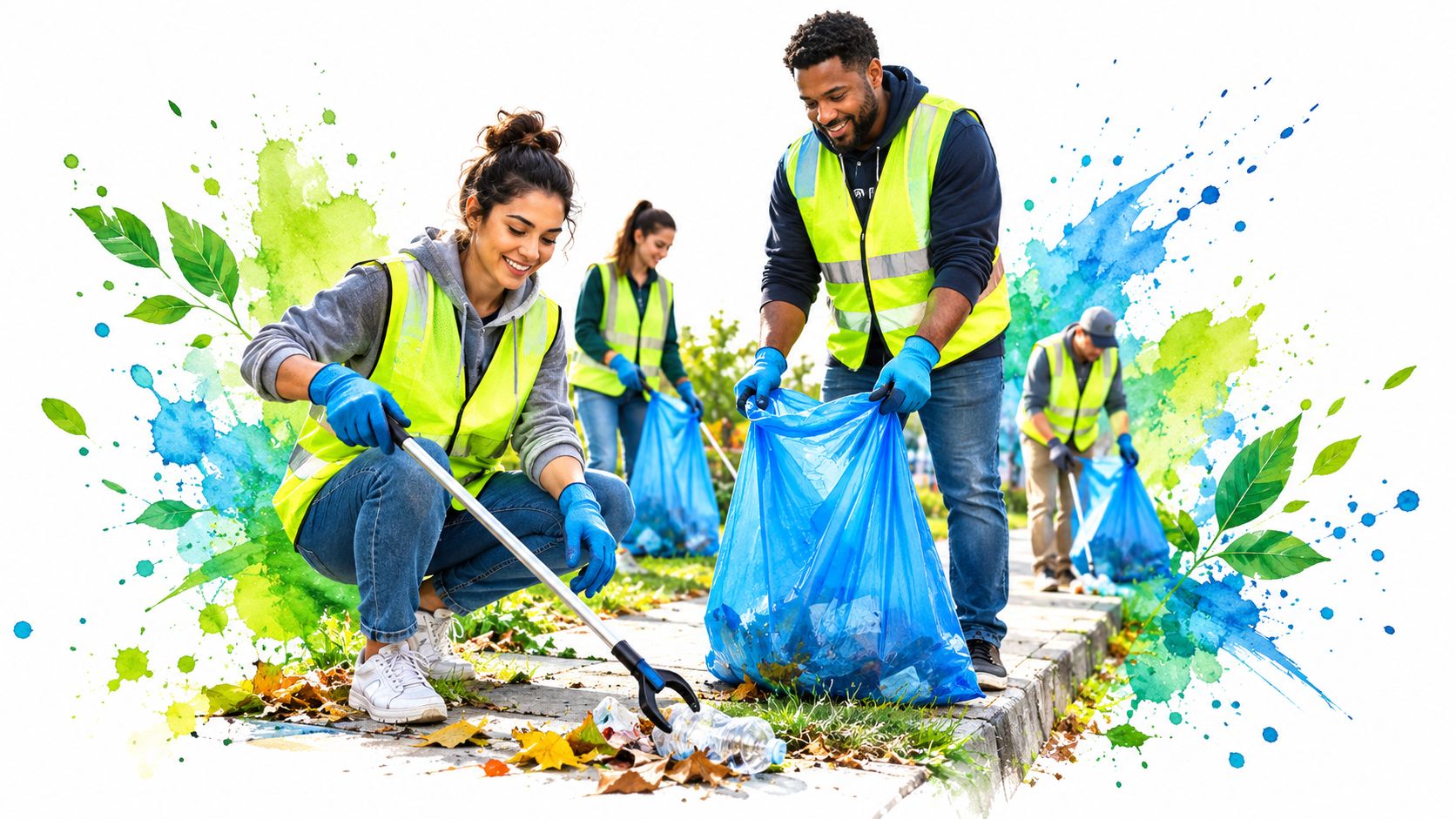
  • Neighborhood Trash Cleanup: Your Step-by-Step Guide

    Neighborhood Trash Cleanup: Your Step-by-Step Guide

    At sunrise on a Chicago curb, I once watched cigarette butts freeze into gray slush while a broken bottle glittered under the streetlights. Three volunteers laughed through numb fingers, and by 9 a.m. that ugly corner had become our meeting place.

    Why Your Neighborhood Trash Cleanup Starts with a Story

    People rarely join a neighborhood trash cleanup because they want another item on a civic calendar. They join because a place has become personal. Maybe your child found glass beside the playground. Maybe the alley behind your apartment collects fast-food wrappers after every windy night. Maybe you walk one block to the train each morning and finally decide you're done stepping around the same mess.

    I learned to lead with that honest reason. I don't announce a grand campaign to clean an entire city. I say, “We're clearing the alley behind the school because kids use it every day.” That sentence gives neighbors something they can see, understand, and remember.

    A small starting point also protects your crew from exhaustion. Choose one block, one alley, or one park strip. Set a defined radius, a two-hour window, and a volunteer cap that lets everyone talk to one another. A sprawling route creates confusion, weakens safety, and leaves new volunteers wondering whether their effort changed anything.

    Give the cleanup a shape

    Before you post an invitation, write down:

    • The place: Name the cross streets, entrance, or alley.
    • The reason: Explain who uses the space and what keeps bothering you.
    • The promise: Describe what volunteers can finish during the event.
    • The limit: State where the route ends and when everyone goes home.

    That boundary matters for the work and for the story. A cleanup guide from A Rocha's litter cleanup manual recommends fixing the cleanup area before anyone starts, recording litter inside that agreed space, and noting hazards that need later attention. When you keep the boundary clear, you can compare one event with the next instead of relying on a vague feeling that the block looked better.

    Let the first story recruit the second crew

    At the end, take one group photo at the same landmark. Tell people how many volunteers came, how long they worked, and what they collected, if you counted or weighed it. Then post the story in plain language.

    “Three people cleared the curb where the bus stop meets the viaduct. We found broken glass, food containers, and a tire. Next Saturday, we're taking the next block.”

    That message feels reachable. It also filters out people who want a grand gesture without showing up for ordinary work. A tight first event gives committed neighbors a place to return, and it gives you a real story to share when you recruit again.

    Scoping Your Route and Setting the Boundaries

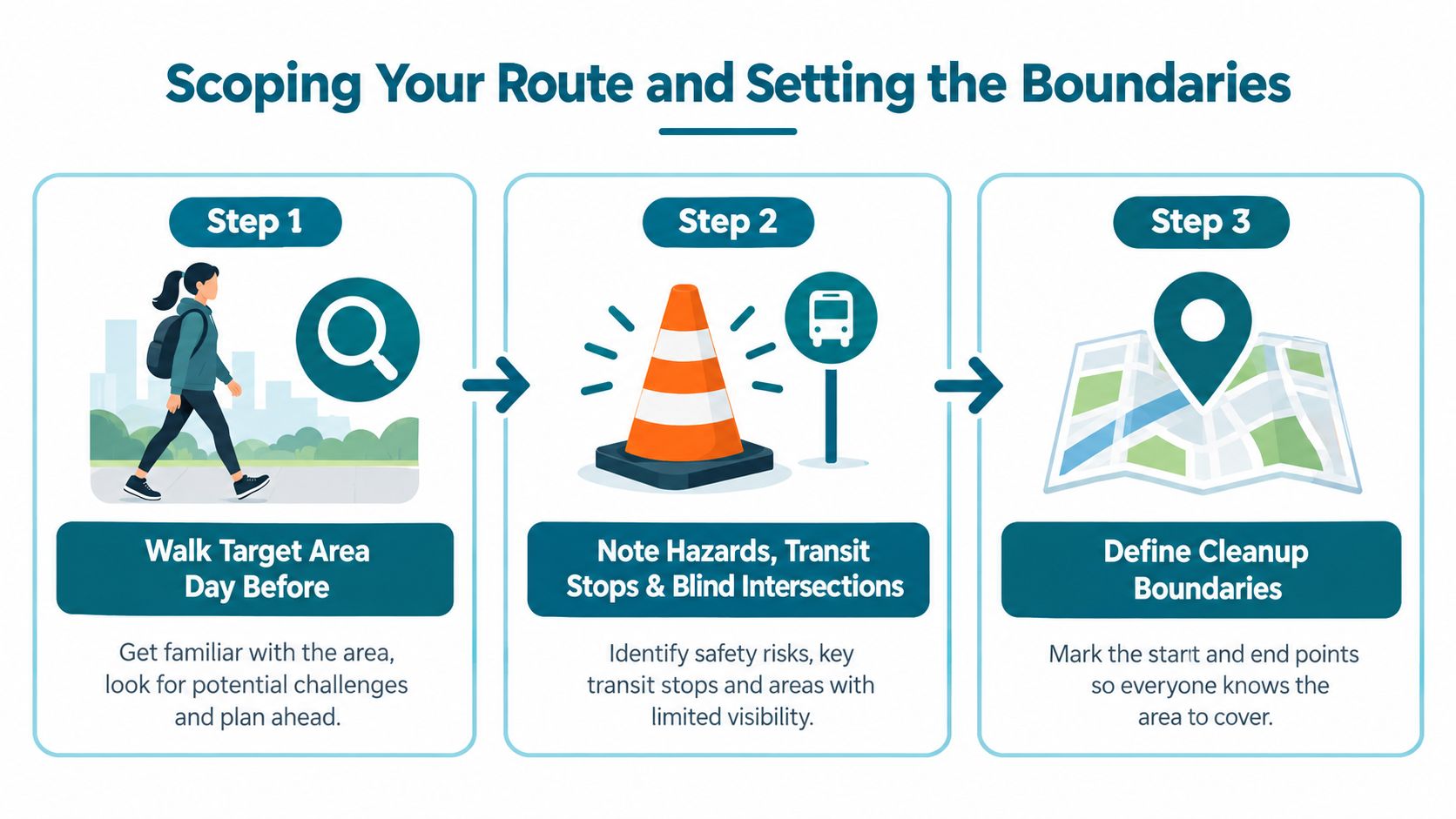
    Walk the target area the day before. I carry my phone, a small notebook, and a pair of work gloves because I want to see the route as a volunteer will see it, not as a map suggests. I note bus stops, alleys, drainage grates, steep curbs, blind intersections, broken pavement, and spots where cars move quickly.

    Choose a meeting point that reduces friction. A library entrance, church lot, park shelter, or corner near legal parking can work. Look for shade in warm weather, shelter during rain, and restroom access when possible. Tell volunteers exactly where to meet, then send a map pin and the nearest cross streets in every announcement.

    An infographic showing three steps to scope a route and set boundaries for a neighborhood cleanup event.

    Build a route people can finish

    A Saturday morning window between 8:00 and 10:00 a.m. gives people a clear commitment. Write the start and end time in the title, not buried in the description. I also divide the route into zones, then give each zone a color, a name, and a leader.

    You can mark zones with colored tape on bags, a shared map, or simple cards:

    • Red zone: the alley behind the apartments
    • Blue zone: the park edge and nearby sidewalk
    • Green zone: the bus stop and drainage line

    A fixed boundary keeps your records useful. The cleanup manual linked above recommends counting items or weighing them, photographing the site, and preventing collected litter from spreading again through wind or animals. You can use a bathroom scale for bag weight, a tally app for item counts, and before-and-after photos from the same camera position.

    Measure what you can repeat

    Pick one measurement system before the event. Record volunteer count, volunteer hours, route length or area, bags, pounds, tires, and the exact boundary when those measures fit your event. Washington State reports about 38 million pounds, or 7 billion pieces, of litter each year, and its funded programs removed more than 5.2 million pounds while cleaning more than 18,000 roadway miles in 2024, according to Washington's litter prevention program. You don't need to copy a state program. You do need a record that lets you compare your own route.

    For help thinking about how clear visual records can attract attention, review this real Instagram growth case study and borrow the discipline of consistent images, locations, and captions. Your cleanup numbers and photos can give city partners a reason to return your call.

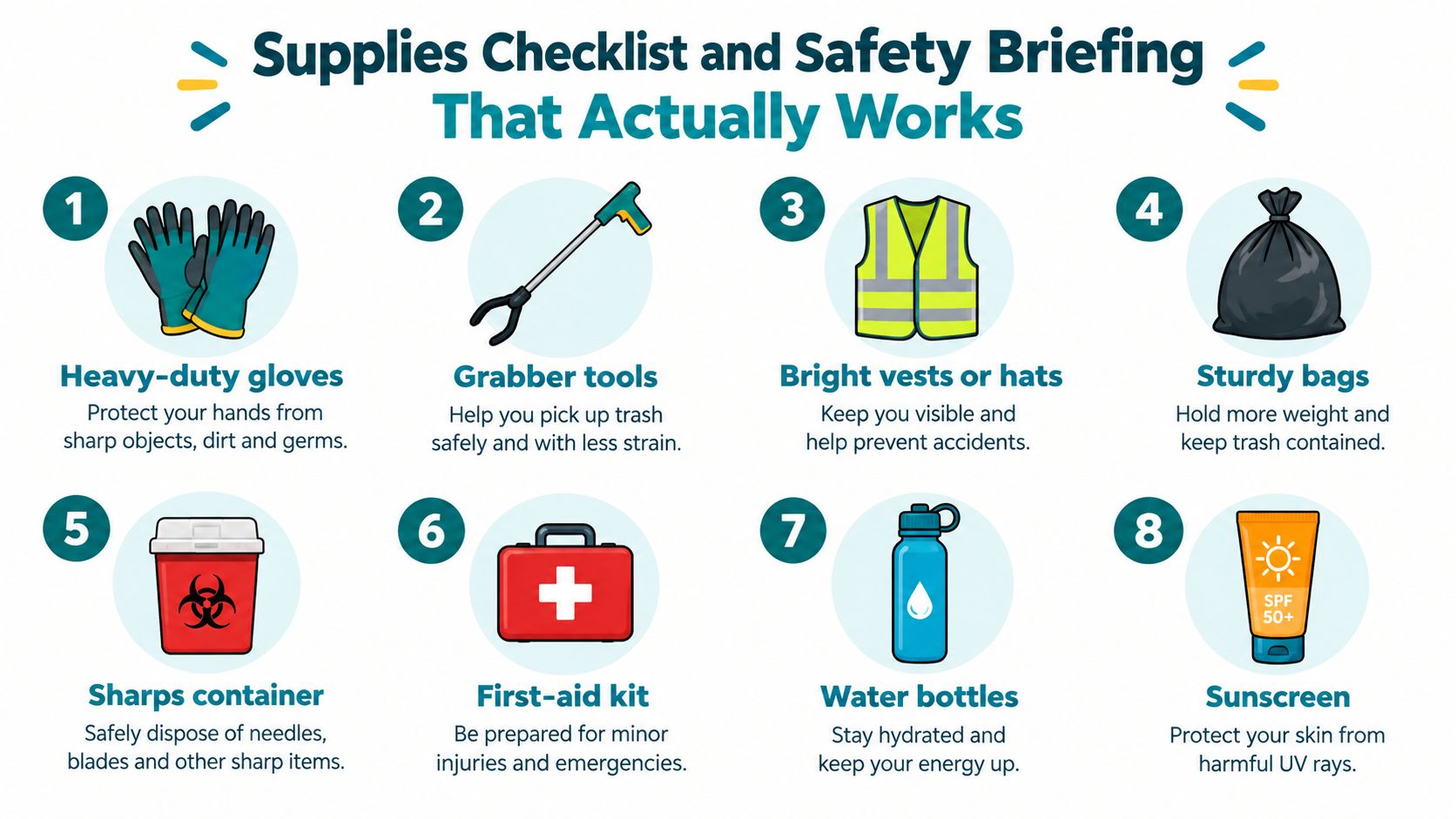
    Supplies Checklist and Safety Briefing That Actually Works

    I've seen a fun cleanup turn tense in seconds because someone reached toward a dark pile without looking. Pack for the strange object, the changing weather, and the volunteer who gets dizzy halfway through the route.

    Bring heavy-duty gloves, grabber tools, bright vests or hats, sturdy bags, a sharps container, a first-aid kit, water, snacks, sunscreen, and a printed safety sheet. I also bring tape or flags for hazards, a marker, hand sanitizer, and a phone charger. If you need dependable stock for a larger event, compare in-stock trash bags before pickup day.

    Keep the supply table where every volunteer can see it. A host guide from the Sanitation Foundation recommends arriving with tools and a first-aid kit, then giving a safety briefing before collection begins. That small pause changes the mood. People start with a shared plan instead of grabbing whatever sits closest.

    An infographic titled Supplies Checklist and Safety Briefing showing essential items for a safe neighborhood trash cleanup.

    Run the same five-minute talk

    I use five plain rules:

    1. Use tools first: Pick up litter with grabbers or gloved hands only when you can see and control it.
    2. Leave danger alone: Don't touch needles, broken glass, propane tanks, leaking containers, odd-colored liquids, sanitary products, dead animals, or anything that may contain hazardous waste.
    3. Mark the location: Flag or photograph dangerous objects, then contact 311 or your local sanitation partner.
    4. Work with a buddy: Stay within sight of another volunteer, especially near traffic, ice, heat, slopes, or isolated lots.
    5. Stop early when needed: Send anyone who feels unwell back to the meeting point, offer water, and keep the first-aid kit there.

    The Cobb County volunteer best practices guide advises safety vests, traffic awareness, grabbers or gloves, keeping hands away from the face, and placing waste in closable bags or containers with secure lids. A neighborhood trash pickup equipment guide can help you fill gaps in your equipment list before you invite people.

    Tell volunteers what to do with bulky items too. They should photograph and flag mattresses, appliances, tires, and dumping piles instead of trying to move them. The briefing may feel repetitive after a few events. Repetition helps people react correctly when they uncover something dangerous.

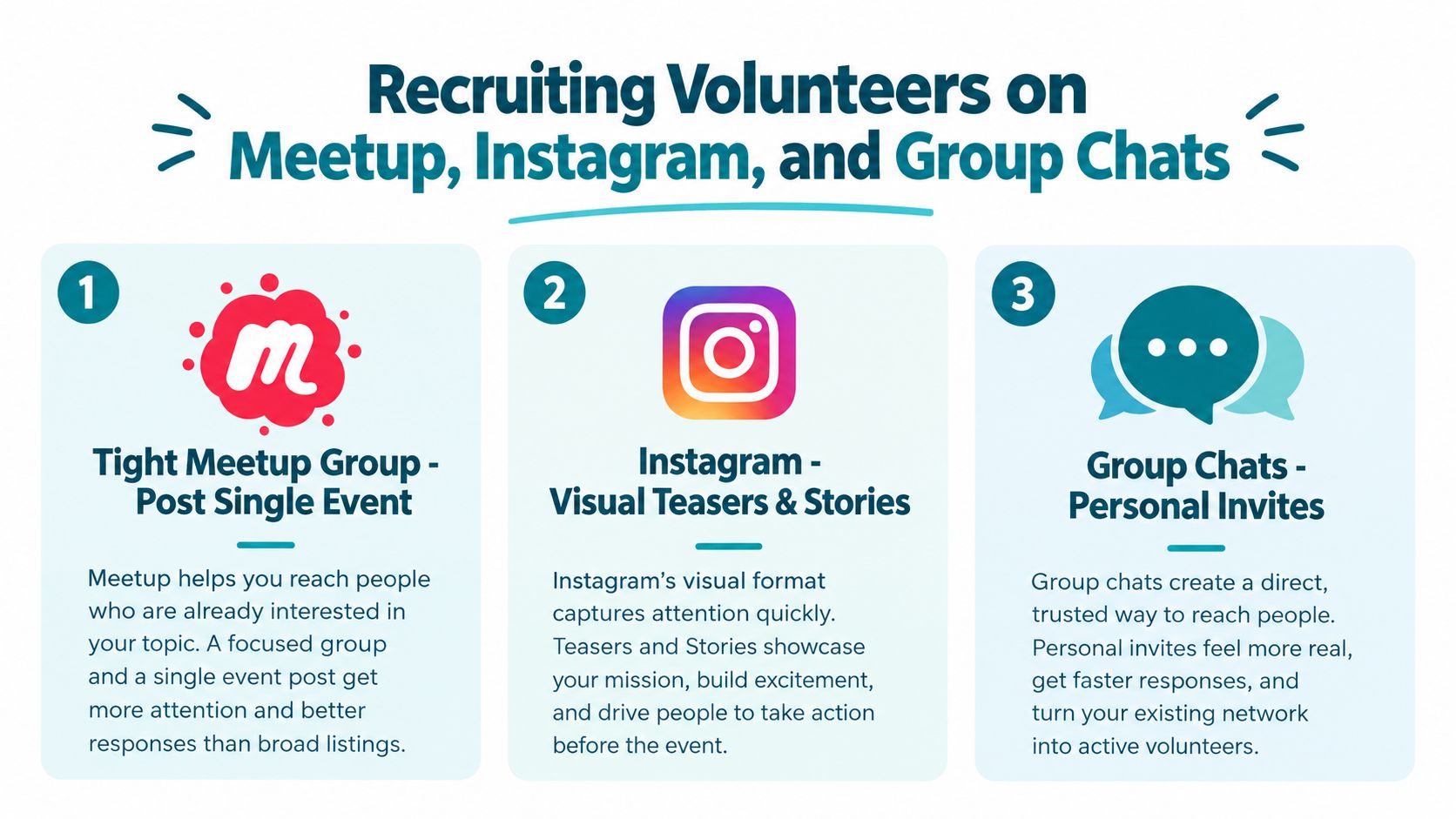
    Recruiting Volunteers on Meetup, Instagram, and Group Chats

    Your recruitment message should feel like a calendar entry from a friend, not a city press release. I use one recurring title, one meeting point, and one short promise. “Saturday 9 a.m. cleanup at 47th and Ashland, two hours, gloves provided” tells people enough to decide.

    Meetup works when you build a tight group around a repeatable event. Keep the title consistent so returning volunteers recognize it immediately. Instagram works through contrast. Post the ugly curb, the half-filled bags, and the clean finish. Use short captions, tag the cross streets, and keep the same cover photo style so the event remains recognizable in a crowded feed.

    Group chats fill the last spots fastest because a personal invitation creates accountability. I send the meeting pin, the weather note, and one direct question: “Can you take the blue zone this Saturday?” People answer faster when they know what you need from them.

    An infographic showing three ways to recruit volunteers: through Meetup events, Instagram posts, and direct group chats.

    Use the start time as a filter

    I schedule weekend mornings because the time attracts people who want to give part of their weekend to the block. A 9:00 a.m. Saturday start also creates a useful rhythm. People can work, see family, or run errands afterward, while the crew gets the cooler air and the first light.

    Ask for two hours, not an entire day. A small promise feels manageable, and volunteers can test the group without giving up every weekend. People who enjoy the work will return because they remember names, routes, and the breakfast stop.

    Use the same details everywhere:

    • Meeting pin: Place it at the exact entrance, not a general neighborhood label.
    • Cross streets: Include them in the first sentence.
    • Route limit: Tell people what you will cover.
    • Weather rule: State whether you postpone or work in light rain.
    • Reply method: Give one way to confirm attendance.

    For more ideas on turning posts into direct volunteer invitations, use this guide to social media for volunteer recruitment. The aim isn't a giant list. You want a dependable group chat with people who answer, arrive, and help welcome the next person.

    Partnering with Local Groups Without Losing Your Voice

    Partnerships can give you supplies, permission, tables, coffee, disposal help, or access to a school and its families. They can also pull a simple Saturday cleanup into meetings, committees, logos, and approval chains. I decide based on the missing piece, not the partner's name.

    A church basement may provide coffee and tables. A hardware store may trade gloves for a logo on your flyer. A city steward may arrange bags and a pickup route. A local nonprofit may help you reach a school. Each offer has a practical use, and each one needs a clear limit.

    Factor Fully Independent Partnered with Local Group
    Decision speed You choose the route and timing You may need shared approval
    Supplies You buy, borrow, or collect them A partner may provide equipment
    Public access You recruit through your own channels A partner may open schools or lots
    Disposal You arrange pickup yourself A city or sanitation partner may coordinate it
    Voice Your tone stays intact Branding rules may shape the message
    Attendance You build the list gradually A partner can bring an existing audience
    Responsibility You carry the planning load You share tasks and expectations

    Use a short decision test

    Partner when you need scale, permission, or disposal support. Stay independent when the work belongs to one block, one group of neighbors, and a weekly rhythm that already runs smoothly.

    I once declined a sponsor that wanted a large logo but no one willing to arrive at 7 a.m. That deal would have added design work without adding hands. A business that supplies gloves, a nonprofit that sends volunteers, or a city contact who confirms pickup gives you something you can use on the curb.

    Before you ask, write one page with the route, date, volunteer target, supplies needed, pickup plan, partner contribution, and recognition you'll provide. Say what you won't change. A partner should know whether you'll use its logo, invite its staff to speak, or just thank it in the recap. These local business support tips can help you frame a request around a real exchange rather than a vague sponsorship pitch. For a deeper planning framework, use this guide to community partnership development.

    Turning Cleanup Day Into a Weekly Crew

    A parent named Maya came to one cleanup because her child found broken glass near a playground. She planned to stay for a short while, finish the dangerous patch, and leave. The following Saturday, one volunteer remembered her name, another saved her a grabber, and someone handed her the coffee thermos before she asked.

    Maya returned. She didn't return because the route got easier. She returned because the group made room for her.

    That small exchange taught me more about retention than any polished flyer. A weekly crew needs rituals that make people feel expected. We start at the same time, gather at the same landmark, and finish with a group photo. Someone brings a speaker. Someone chooses a theme song. Someone posts the haul in the chat like a scoreboard update.

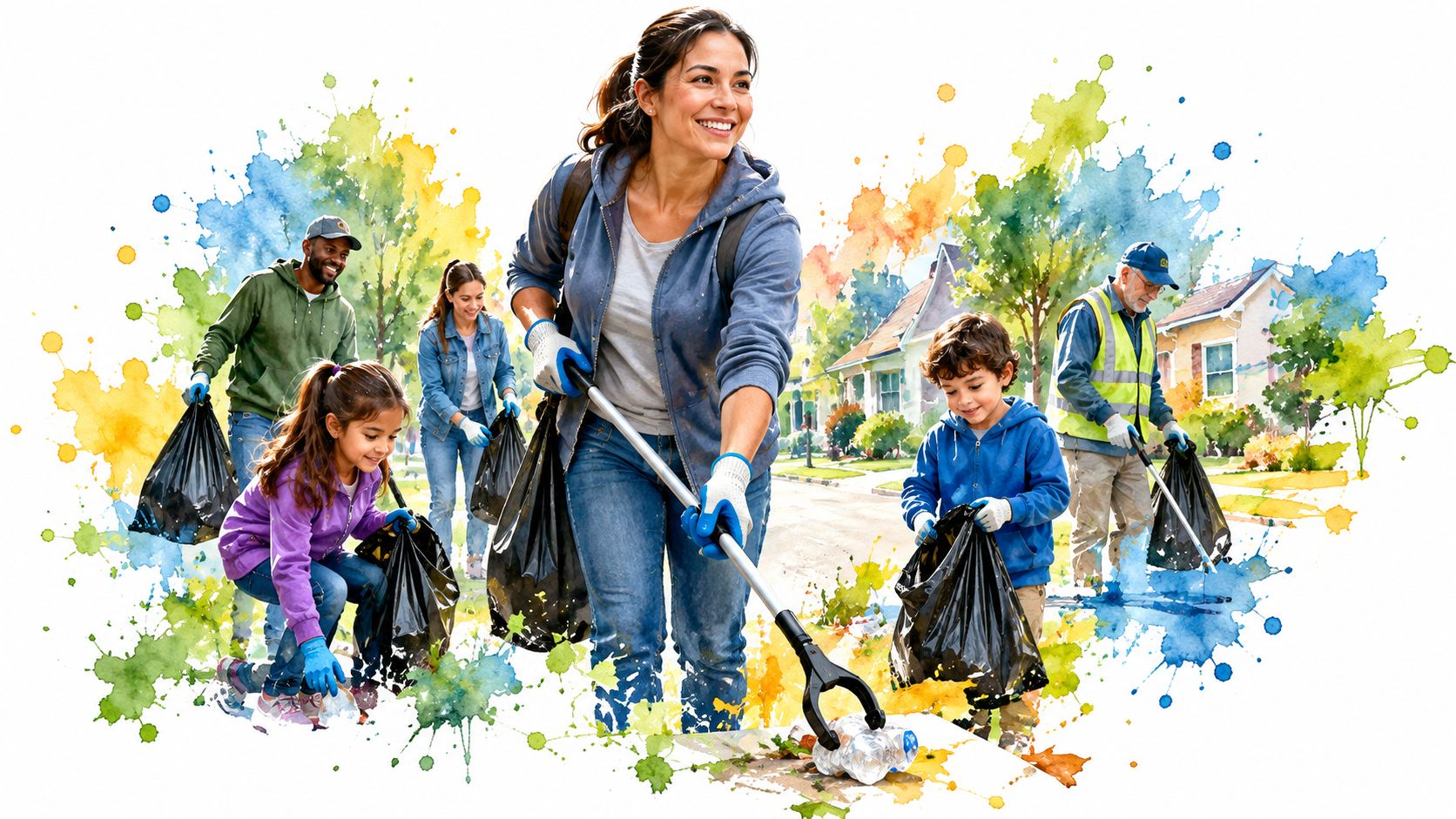
    A diverse group of volunteers, including adults and children, cleaning up trash in a residential neighborhood.

    Design belonging on purpose

    Give the crew a name people can say easily. Use a flag on the pickup truck, matching shirts or armbands, and a shared playlist. These details may look playful, but they help strangers recognize one another when they arrive cold, tired, or unsure.

    Practical rule: Remember one personal detail about every new volunteer, then use it at the next cleanup.

    Choose a post-cleanup breakfast spot and treat it as part of the route. The meal doesn't need ceremony. The point is the conversation after the gloves come off. That's where a newcomer learns who lives nearby, who has a spare grabber, and who will answer the group chat during the next snowstorm.

    The Litter Caterpillars group in Chicago uses weekly weekend cleanups, shared identity, and open communication through Meetup, Instagram, and group chats to help volunteers join neighborhood trash pickup across the city. You can copy the structure without copying the name. Your crew might be the Ashland Sweepers, the Blue Line Brush-Off, or six neighbors who meet beside the same bench every Saturday.

    Friendship keeps people coming when the weather turns harsh. Pride helps them carry the bags when the route feels repetitive. A simple identity gives volunteers a reason to show up through blizzards, heat, and slow Sundays.

    Your First Cleanup Weekend and What Comes Next

    Your first Saturday should feel calm because you've already made the decisions that usually create confusion. Arrive 30 minutes early. Put the supply table at the meeting point, place bags and grabbers where people can reach them, mark the zones, and keep water and the first-aid kit visible.

    The New York City volunteer cleanup guide recommends bagging collected trash and placing it at an intersection or address along the route. Another cleanup workflow asks volunteers to meet at a pre-arranged spot, review safety points, sign a waiver, return with bags, and weigh them before disposal. Use that simple sequence so the event has a clean beginning and finish.

    Run the morning by the clock

    Time Action
    8:00 a.m. Set out supplies, confirm the route, and check the meeting point
    8:10 a.m. Welcome volunteers and collect contact details or waivers
    8:15 a.m. Give the five-minute safety talk
    8:20 a.m. Send zone teams to their assigned areas
    9:20 a.m. Check zones, replace full bags, and flag hazards
    10:00 a.m. Bring bags to the pickup point and weigh or count them
    10:15 a.m. Take the group photo and thank everyone
    10:30 a.m. Wrap up, confirm disposal, and leave the site clear

    Record the number of volunteers, the time they worked, the bags collected, and the weight when you can measure it. Photograph the same landmark before and after. Keep your notes in one shared file so next week's leader can see which zone filled fastest and where litter returned.

    Build the next four Saturdays

    Week one establishes the route and teaches your crew the safety rhythm. Week two invites a local nonprofit to join one zone. Week three asks a coffee shop to sponsor donuts or provide a meeting point. Week four adds a second route only if the first one still feels manageable.

    Keep the rules quiet and consistent. Start at the same time, finish at the same place, credit every volunteer by name when appropriate, and post the recap by evening. Your neighborhood trash cleanup becomes a habit when people know where to stand, who will greet them, and what happens after the last bag closes.


    Litter Caterpillars helps volunteers find and join hands-on trash pickup events across Chicago, with weekend morning cleanups and supplies provided for neighborhood routes. Visit Litter Caterpillars to find the next cleanup, meet a crew, or bring your own block into the weekly rhythm.