

I remember standing on a cracked sidewalk, surrounded by the rumble of the ‘L’ and the distant wail of sirens. A freak hailstorm had me huddled under a lonely tree with two strangers, all of us determined to clear trash from a forgotten lot. That awkward, muddy moment unlocked a different Chicago for me—one where shared effort can transform both land and spirit.
That day planted the seed. An obsession, really. I swapped my digital routine for spades and shovels, and I discovered that these green havens are neighborhood anchors. They’re outdoor living rooms. Even impromptu classrooms. I learned that real change—and real connection—grows best when you get your hands dirty.
In this roundup, I'll walk you through seven top platforms that guide you straight to Chicago’s greenest corners. You'll meet the Chicago Community Gardeners Association, NeighborSpace land trust, Park District plots, Urban Growers Collective, Windy City Harvest, Gethsemane Garden Center, and The Urban Canopy compost hub. Each entry includes screenshots and direct links so you can instantly:
- Browse locations by neighborhood
- Check volunteer and membership details
- RSVP for upcoming events
- Access safety, accessibility, and tool lists
These websites solve the biggest hurdle for newcomers and longtime advocates alike—finding the right plot, the right people, and the right time to step in. You won’t waste hours scrolling generic search results or guessing if a garden needs help. Instead, you’ll dive into clear, actionable info that gets you planting, partnering, or sponsoring. Fast.
Whether you’re a student, a sustainability advocate, a nonprofit seeking a green partner, or just an adventurous soul craving fresh air and community, this guide points you straight to your perfect patch. Let’s dig in and turn pavement into paradise. Your next garden awaits.
1. Your First Friend in the Dirt: Chicago Community Gardeners Association (CCGA)
Imagine you're trying to learn a new language. You could buy a book. Struggle alone. Or you could join a conversation group where everyone is sharing tips, trading vocabulary, and cheering each other on. That's the Chicago Community Gardeners Association (CCGA). They are the city's ultimate conversation group for anyone wanting to get their hands dirty. I remember feeling completely overwhelmed when I first thought about joining one of the many chicago community gardens. Questions just swirled in my head: Where do I get seeds? How do I even build a raised bed?
The CCGA was the answer. They’re not some faceless organization; they're a grassroots network of people just like you and me who have been there. They centralize everything. A friendly librarian for the city's gardeners. Their website is a lifeline that cuts through the noise and gets you straight to the good stuff: the knowledge and the resources you need to get growing, fast. It’s all about making sure no garden feels like an island.
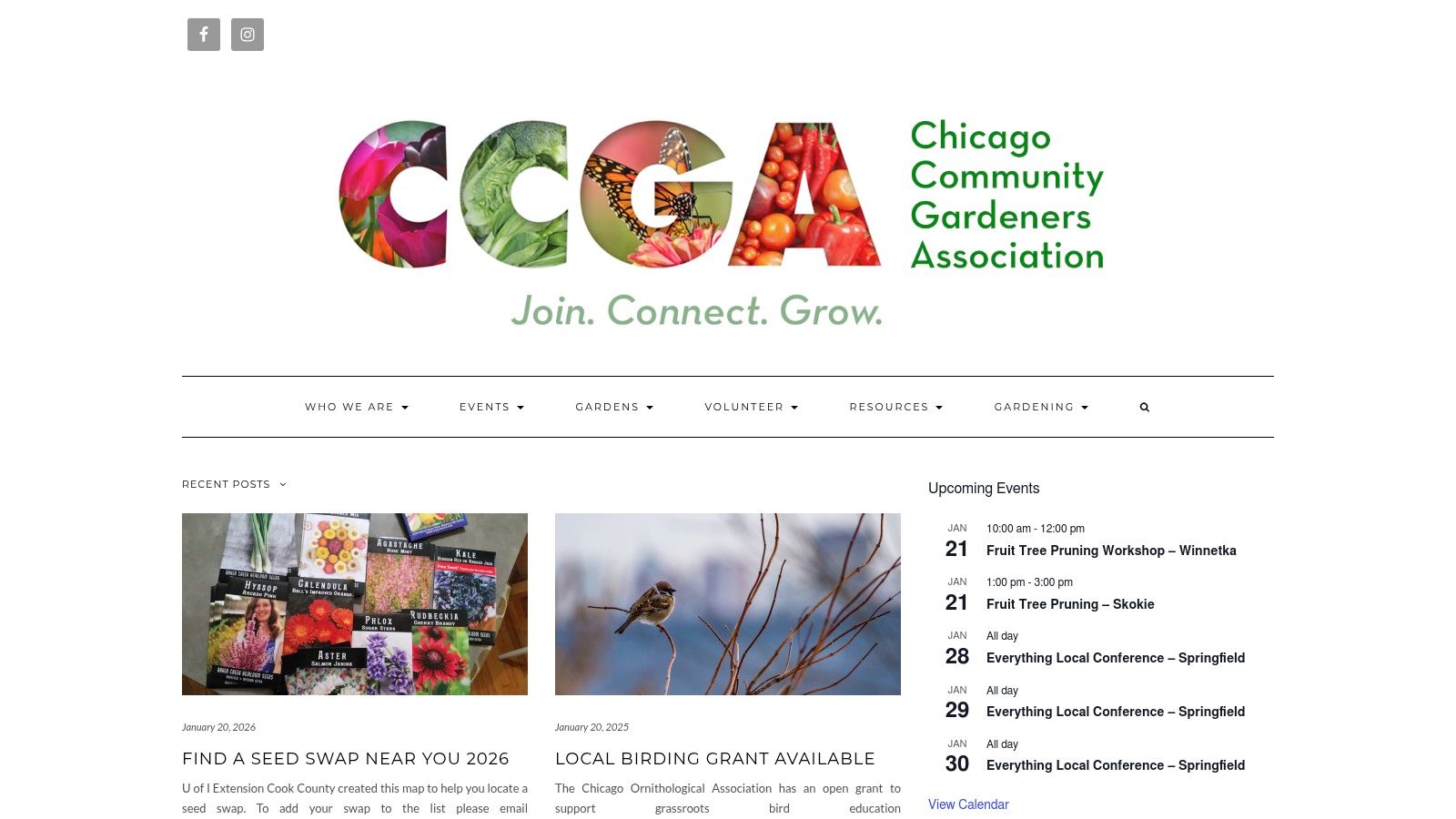
What You'll Find on Their Website
The CCGA website is your command center for all things community gardening in Chicago. It’s a clean, straightforward platform designed to connect you with what you need without a fuss. You can find more information about the organization’s mission and how they support the city's green spaces by checking out this overview of the CCGA.
Here are the key features you should explore immediately:
- Garden Plot Interest Form: If you're looking for a plot, start here. Submitting this form gets you on their list for openings and updates.
- Events Calendar: This is where the magic happens. Find dates for seasonal plant distributions, educational workshops (on topics like composting or seed saving), and resource days where you can get free materials.
- Working Groups: Want to get more deeply involved? You can learn about their volunteer-led committees for Education, Resources, Membership, and Communications.
How to Use CCGA Effectively
To get the most out of the CCGA, think of it as an active resource, not just a static website. You should sign up for their newsletter to get event alerts delivered directly to your inbox. The seasonal plant distributions are a must-attend. They feel like a holiday, with everyone excitedly swapping stories while picking up flats of seedlings. Just remember to RSVP early, as spots and supplies are limited and go quickly. These distributions are typically pick-up only within specific time windows, so plan accordingly.
| Feature Highlights | The Inside Scoop |
|---|---|
| Seasonal Plant Distributions | Free or low-cost seedlings for community gardens. A fantastic way to fill your plot. |
| Citywide Events Calendar | Your one-stop-shop for workshops, seed swaps, and garden workdays across the city. |
| Directly Tailored Content | Everything is focused on the unique needs of community gardeners, not just home gardeners. |
| Resource Connections | They connect gardens with essential resources like compost, wood chips, and tools. |
Website: https://chicagocommunitygardens.org/
2. The Guardians of Green Space: NeighborSpace
If the CCGA is the friendly conversation group, think of NeighborSpace as the wise landlord who ensures you'll always have a place to meet. Ever walked past a vibrant, flourishing community garden and wondered, "What if the owner sells this land for a condo?" That's a real fear. A gut-punching fear for many gardens, and it's the exact problem NeighborSpace was created to solve. They are Chicago's nonprofit urban land trust, the silent guardians who work behind the scenes to protect these precious green oases.
I used to think a community garden was just about plants and people. But there's so much more. Insurance. Water bills. The constant threat of development. NeighborSpace steps in and takes that burden off our shoulders. They acquire the land, lease it back to the garden group for a nominal fee (often just $1 a year), and handle the legal and logistical headaches. This allows us gardeners to do what we do best: build community and grow food, without worrying that our hard work will be bulldozed away. They are the foundation upon which many of the most beautiful chicago community gardens are built.
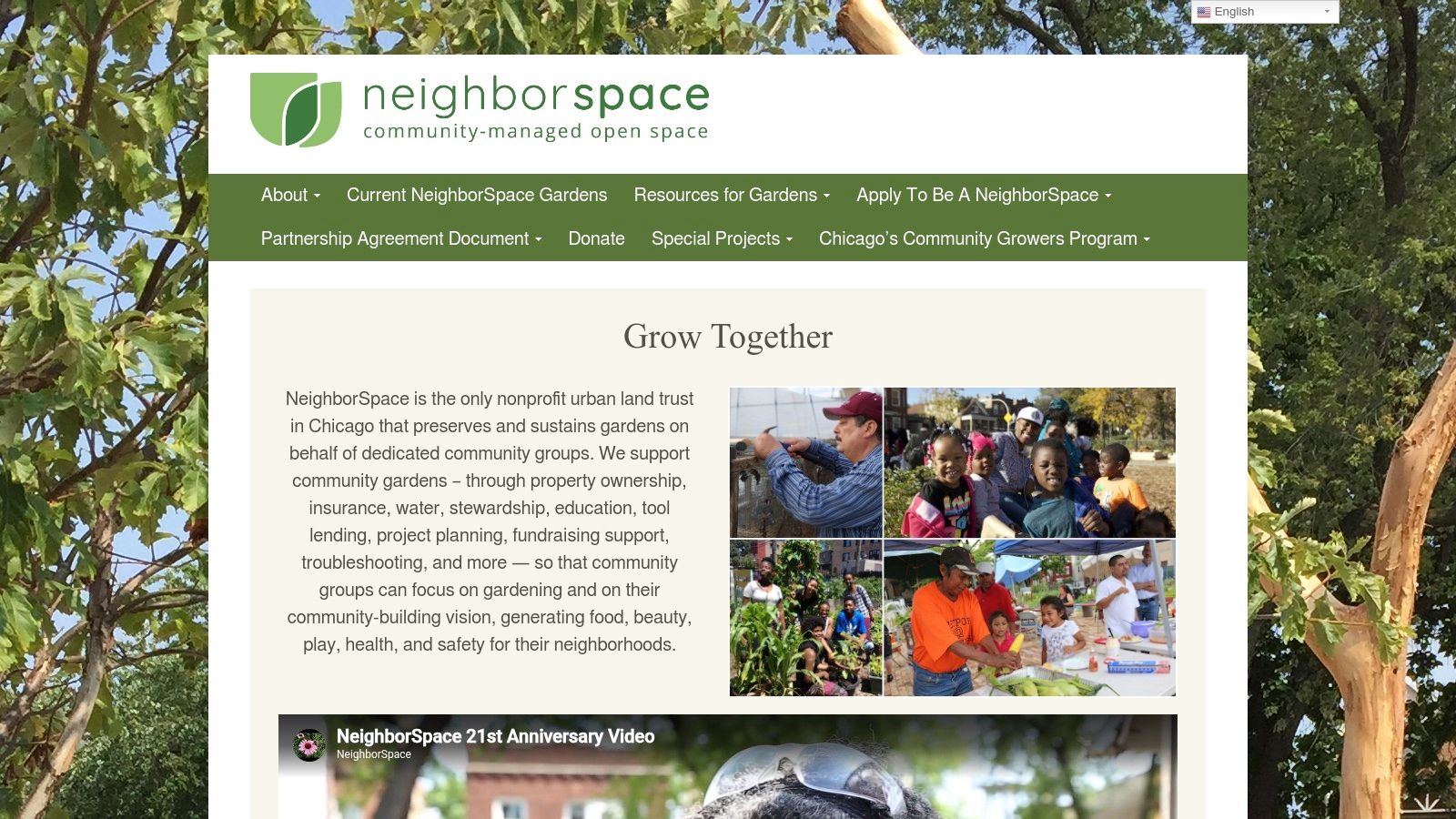
What You'll Find on Their Website
The NeighborSpace website serves as a portfolio of their protected sites and a resource hub for existing and aspiring community garden groups. It’s less about finding an individual plot and more about understanding the framework that keeps these gardens alive for the long haul. You can also explore their effective stewardship models and get inspired by their work; you can learn more about their community engagement best practices here.
Here are the key features you should explore immediately:
- Our Gardens Map: An incredible interactive map showcasing the 100+ sites they protect across the city. It’s a great way to discover gardens in your neighborhood and see the sheer scale of their impact.
- Stewardship Resources: For those already running a garden (or dreaming of starting one), this section is gold. It offers guidance on everything from bylaws and leadership structure to fundraising and conflict resolution.
- Become a NeighborSpace Garden: This outlines the process and eligibility requirements for a community group to have their garden protected. It’s the starting point for securing a garden's future.
How to Use NeighborSpace Effectively
Your primary interaction with NeighborSpace as an individual will likely be through one of their protected gardens. I recommend you use their map to find a garden near you, then visit that garden's specific website or social media to learn about joining. If you are part of a group trying to start a new garden on vacant land, their website is your first and most important stop. Read through their application materials thoroughly to understand what they look for in a partner garden. It’s all about demonstrating long-term community commitment.
| Feature Highlights | The Inside Scoop |
|---|---|
| Permanent Land Protection | The ultimate peace of mind. They ensure a garden site is preserved for community use forever. |
| Liability Insurance & Water Access | They handle the big, scary administrative tasks that can cripple a volunteer-run garden. |
| A Network of Stewards | Joining the NeighborSpace family connects your garden to a citywide support system. |
| Mini-Grants & Support | They offer small grants and direct support to help their gardens thrive and overcome challenges. |
Website: https://neighbor-space.org/
3. Chicago Park District – Community Gardens in the Parks
Think of Chicago's vast network of parks as our shared backyard. Now, imagine having your very own patch within that backyard to grow your own food and flowers. That's precisely the opportunity the Chicago Park District offers through its Community Gardens in the Parks program. When I was first exploring the different chicago community gardens, I was amazed to learn how many were located right inside the public parks I already knew and loved. This felt like the most official, direct route to securing a plot of land.
The Park District’s website isn't just a list. It's the formal gateway. It’s where you go to cross the T's and dot the I's, transforming a dream of gardening into a legitimate, recognized space. They provide the land. The framework. And the rules of engagement, ensuring that these green spaces are well-managed and accessible. It’s a structured path for those of us who want a clear process for starting or joining a garden on public land.
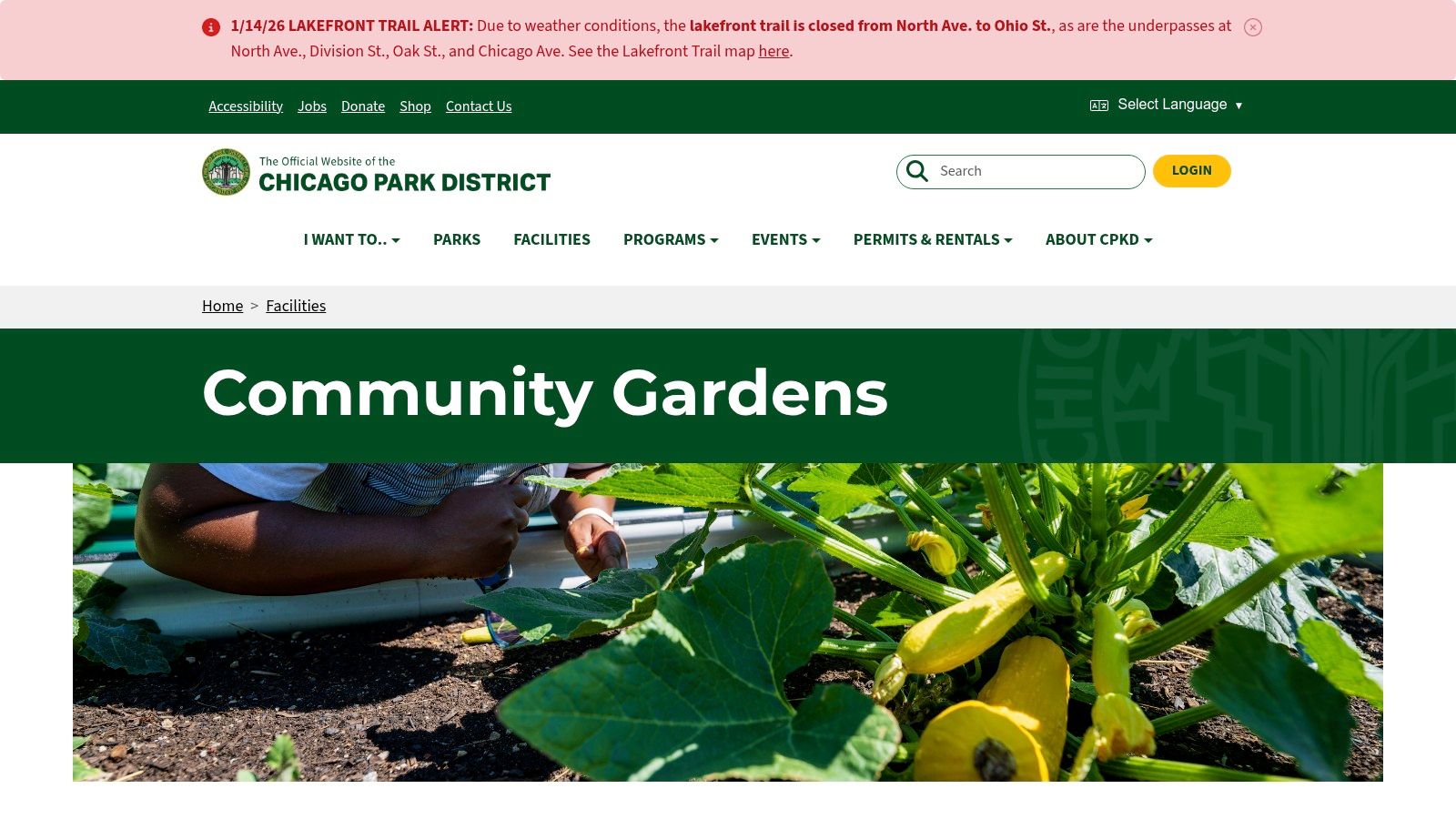
What You'll Find on Their Website
The Park District’s Community Gardens portal is your official application center. It’s designed to be a bureaucratic, yet straightforward, hub for all the paperwork and guidelines you need to garden legally on park property. The interface is clean and government-like, focused entirely on process and information.
Here are the key features you should explore immediately:
- Garden Directory: An interactive map and list that shows you exactly which parks currently host community gardens, helping you find one in your neighborhood.
- Application Forms: This is the core of the site. You'll find downloadable PDF packets to apply for an individual allotment plot or to propose an entirely new community garden.
- Program Guidelines: Essential reading. These documents detail the rules and responsibilities for all park gardeners, covering everything from plot maintenance to approved plant types.
How to Use the Park District Website Effectively
To succeed with the Park District, you have to think like you're applying for a permit. Be thorough. Be patient. The most crucial first step is to use their map to identify a garden near you and then contact the designated garden leader or Park District coordinator to check on plot availability. Waitlists are common, so getting your name in early is key. If you're ambitious and want to start a new garden, be prepared to rally your neighbors; the Park District requires a dedicated group of at least 10 members to approve a new site.
| Feature Highlights | The Inside Scoop |
|---|---|
| Official Plot Access | The most direct and legitimate way to secure a gardening plot on public park land. |
| Clear, Documented Process | No guesswork. The application and renewal processes are spelled out in formal guidelines. |
| Variety of Garden Types | Supports different models, including individual allotment plots and communal pantry gardens. |
| New Garden Proposals | Provides a clear pathway for motivated residents to establish a brand-new garden in a local park. |
Website: https://www.chicagoparkdistrict.com/parks-facilities/community-garden
4. Urban Growers Collective (UGC)
If the CCGA is the city's friendly librarian for gardeners, then Urban Growers Collective (UGC) is the master chef teaching you how to use your harvest. They just get it. UGC takes the idea of community gardening a step further, connecting your little plot to the entire urban food system. I used to think my garden was just about what I could grow for myself, but seeing UGC's work showed me it can be part of something much bigger. Food justice. Community health. Economic empowerment.
UGC operates a network of farms across Chicago, focusing on growing food in and for communities that have historically lacked access to fresh produce. Their website isn't just a resource. It's an invitation to join a movement. It connects your passion for gardening with real-world impact, showing you how your efforts in the soil can help build a more equitable city, one harvest at a time. They prove that chicago community gardens can be powerful engines for change.
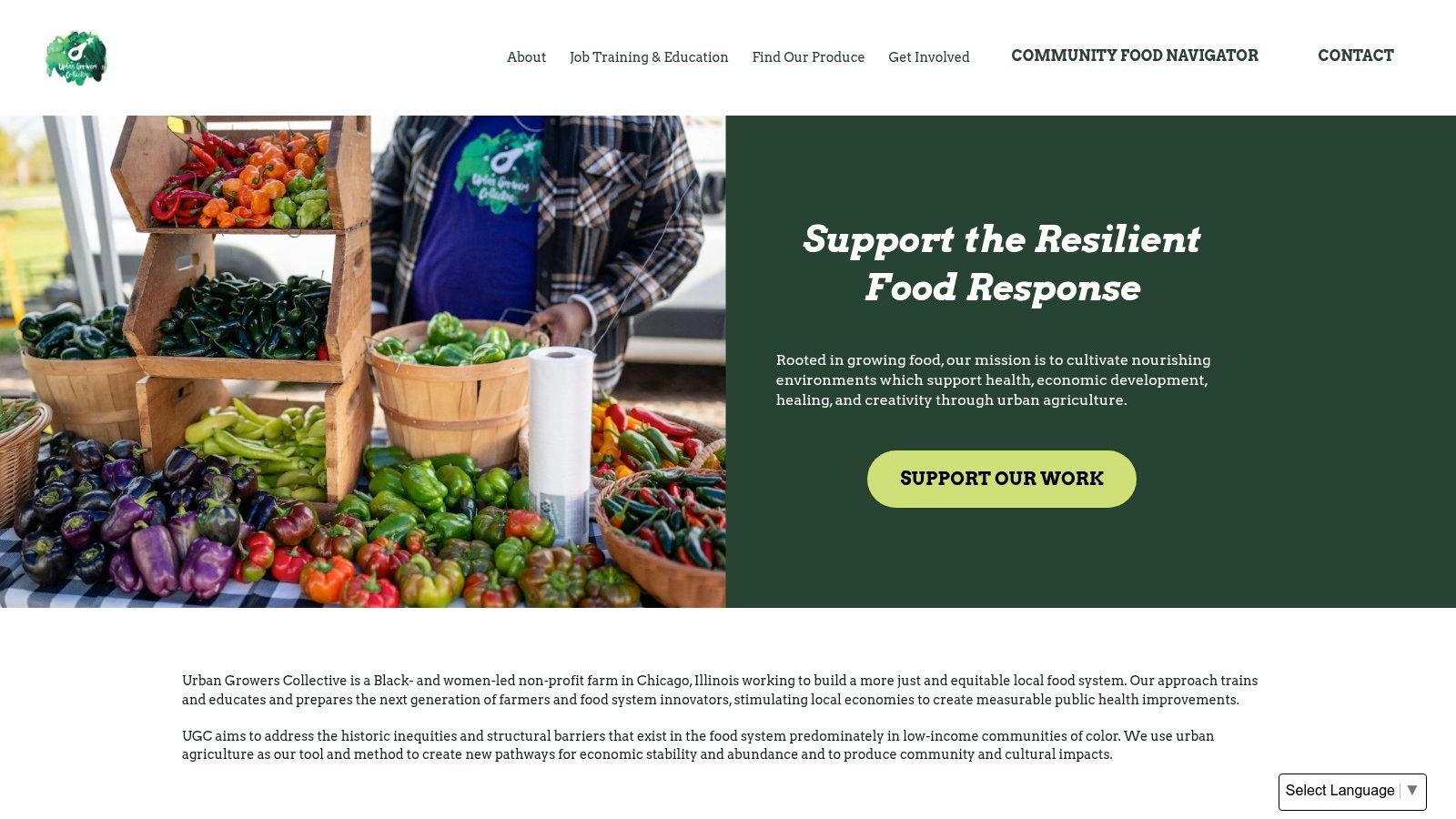
What You'll Find on Their Website
The UGC website is your gateway to participating in Chicago's local food economy. It’s beautifully designed and easy to navigate, with clear pathways to get involved whether you want to buy produce, learn new skills, or volunteer your time. It’s an inspiring platform that showcases the power of urban agriculture. If you're passionate about hands-on work, you can explore volunteer opportunities with UGC and other amazing local organizations.
Here are the key features you should explore immediately:
- CSA & Farm Stands: This is where you can buy directly from their farms. Sign up for a Community Supported Agriculture (CSA) share for a season's worth of fresh veggies, or find the schedule for their farm stands and the Fresh Moves Mobile Market.
- Community Composting: UGC offers a fantastic compost drop-off program. The site gives you all the details on how to join, what you can bring, and when to drop off your food scraps to be turned into rich soil.
- Workshops & Volunteering: Find a schedule of on-farm events, from practical workshops on composting to volunteer days where you can help with planting, weeding, and harvesting.
How to Use UGC Effectively
To really benefit from UGC, you need to think beyond just your own garden plot. Use their resources to close the loop on your gardening journey. For example, I joined their composting program to turn my kitchen scraps into "black gold" for my garden beds. The compost program is seasonal and has limited slots, so sign up early. Attending one of their volunteer days is also a fantastic way to learn farming techniques at a larger scale, which you can then apply back in your own community garden. Their CSA is priced to be accessible, but shares sell out, so keep an eye on their website for registration dates.
| Feature Highlights | The Inside Scoop |
|---|---|
| Community Composting Program | A practical way to recycle food scraps and get high-quality compost. Great for garden groups. |
| Fresh Moves Mobile Market | A "produce aisle on wheels" that brings fresh, affordable food to different neighborhoods. |
| On-Farm Volunteer Days | Get hands-on experience on a working urban farm and connect with like-minded people. |
| Strong Equity Mission | Your support directly contributes to building food sovereignty in Chicago's South and West side communities. |
Website: https://www.urbangrowerscollective.org/
5. The Professional Power-Up: Windy City Harvest (Chicago Botanic Garden)
If the CCGA is your friendly neighborhood conversation group, think of Windy City Harvest as the university program you can enroll in. It’s a different level. This is the Chicago Botanic Garden's urban agriculture arm, and they bring a level of professionalism, deep scientific knowledge, and structured support that can transform a patch of soil into a powerful community engine. I’ve always been amazed by their approach; it’s not just about growing food, it’s about growing skills, jobs, and healthier communities from the ground up.
Windy City Harvest takes the concept of chicago community gardens and elevates it into a comprehensive ecosystem of learning and production. They provide the kind of institutional backing that can feel like a dream for a small garden group, offering everything from formal training programs to vital resources like safe, tested soil. For gardens that are ready to level up their impact and connect to a larger city-wide food system, this is the ultimate partner.
What You'll Find on Their Website
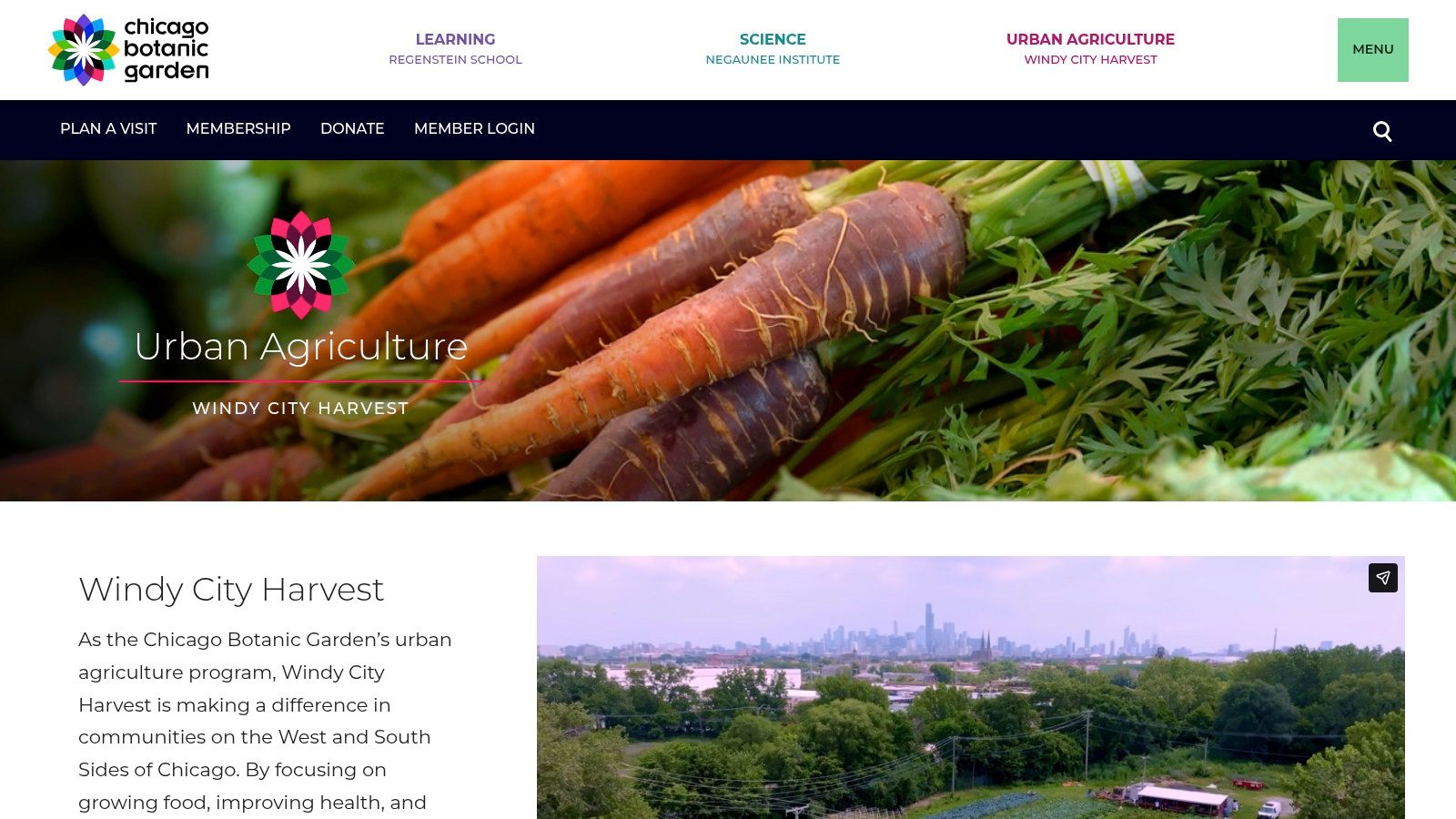
The Windy City Harvest section of the Chicago Botanic Garden website is less of a simple directory and more of a portal into their world of urban agriculture. It's clean, professional, and packed with information about their multi-faceted programs. It showcases their mission to create jobs, improve community health, and strengthen the local food system.
Here are the key features you should explore immediately:
- Training & Jobs: Explore their acclaimed certificate programs like the Urban Farm Training and an Apprenticeship, which provide a direct pipeline to careers in urban agriculture.
- Community Support: Learn how they partner with community organizations to establish gardens, providing essentials like raised beds, safe soil, seeds, and ongoing technical assistance.
- VeggieRx Program: Discover their innovative program that connects fresh produce from the farms directly with healthcare patients to improve health outcomes.
- Farms & Farm Stands: Find locations and hours for their urban farms and seasonal farm stands where you can buy fresh, locally grown produce and support their mission.
How to Use Windy City Harvest Effectively
To truly leverage what Windy City Harvest offers, you need to think in terms of partnership and programs. If you represent a community organization, their support can be a game-changer for starting or sustaining a garden. Explore their partnership criteria to see if your garden qualifies for resources. For individuals, their educational courses are a fantastic way to gain serious skills. These aren't just one-off workshops; they are in-depth training programs that require a commitment but offer incredible rewards. Keep an eye on their site for enrollment periods and information sessions.
| Feature Highlights | The Inside Scoop |
|---|---|
| Formal Training Programs | Go from hobbyist to professional with certificate courses and apprenticeships. |
| Partnership Resources | Provides qualifying gardens with infrastructure like raised beds, soil, and plants. |
| Emphasis on Safe Soil | A huge benefit; they are experts in urban soil safety and remediation. |
| Health-Focused Initiatives | Connects gardening directly to community health through programs like VeggieRx. |
Website: https://www.chicagobotanic.org/urbanagriculture
6. Gethsemane Garden Center (Andersonville)
Every community garden needs a reliable source for its lifeblood. Plants. Soil. Tools. Think of Gethsemane Garden Center as the master library for gardeners, a place where you can find not just the supplies, but the wisdom to make things grow. When I was starting my first plot in one of the local chicago community gardens, I felt like an artist with an empty canvas. Gethsemane was the art supply store that didn't just sell me the paint; the staff taught me how to mix the colors.
This isn't just a big-box store with a few sad-looking tomato plants. No. It's a year-round, independent institution in Andersonville that feels more like a botanical wonderland. Their deep inventory is a huge asset for community gardeners who often need specific, hardy cultivars that can thrive in our unique urban environment. Walking through their aisles, especially during the spring rush, is an experience in itself, filled with the buzz of fellow gardeners sharing tips and inspiration.
What You'll Find on Their Website
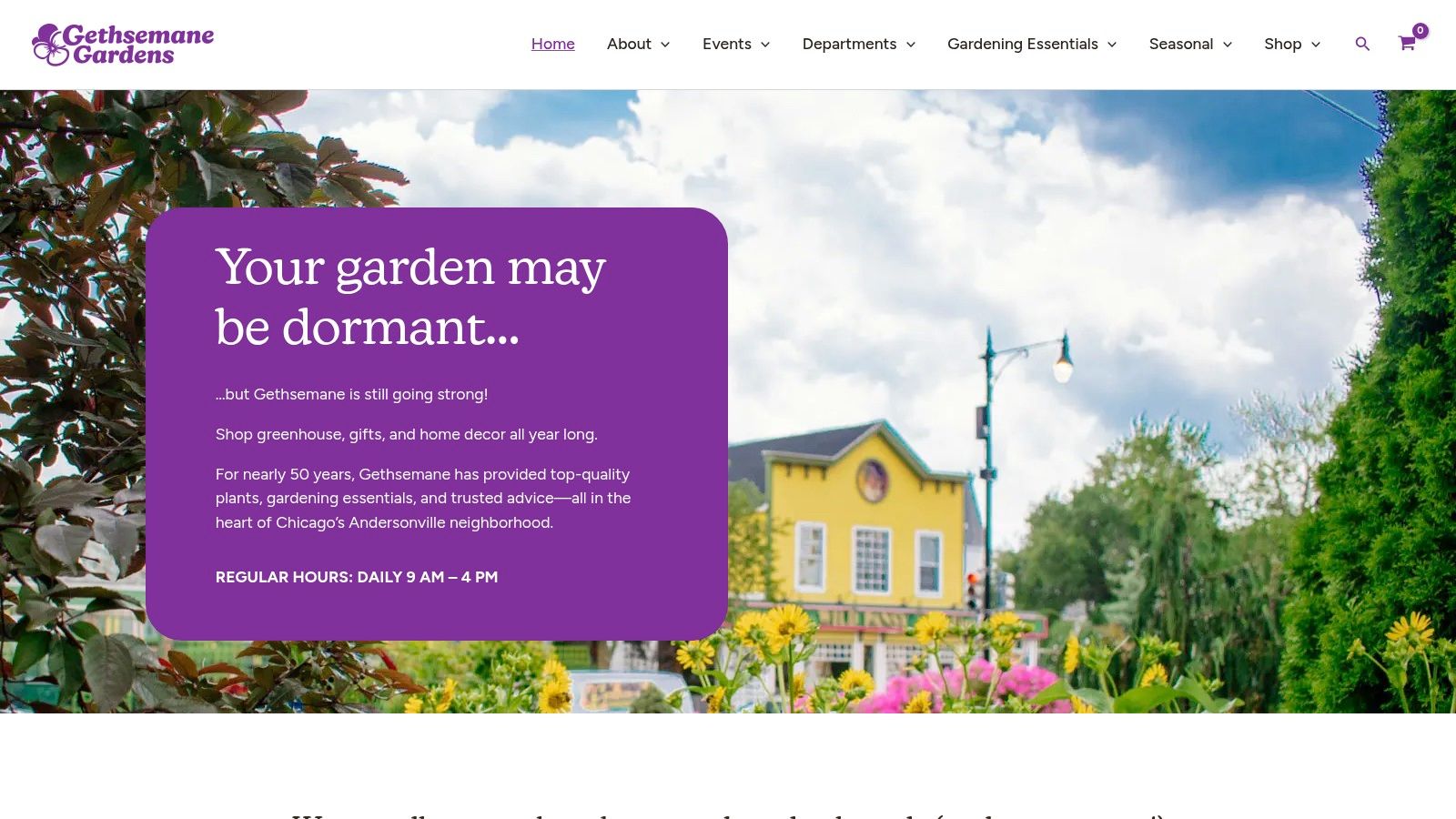
While Gethsemane’s magic is best experienced in person, their website is your go-to guide for planning your visit. It’s a clean, visually appealing site that gives you a preview of their massive selection and keeps you updated on what’s happening at the store. It’s less of an e-commerce platform and more of a digital welcome mat.
Here are the key features you should check out before you go:
- Seasonal Departments: Explore what's currently in stock, from annuals and perennials to vegetables, herbs, and even houseplants for your windowsill.
- Gardening Resources: Find helpful guides, tips, and articles written by their expert staff on topics relevant to Chicago-area growers.
- Events and Workshops: Check for information on seasonal events, sales, and educational opportunities that can help you level up your gardening skills.
How to Use Gethsemane Effectively
The best way to use Gethsemane is to treat its staff as your personal gardening consultants. Don’t be shy. I bring in leaves with strange spots all the time and ask them which tomato variety is best for container gardening. For community garden planning, I recommend visiting during a weekday to avoid the weekend crowds and get more dedicated time with the staff. Follow them on social media for real-time updates on new arrivals; popular and rare plant starts can sell out within a day. Remember, this is a local business deeply invested in the community, so building a relationship here can pay dividends in knowledge and support.
| Feature Highlights | The Inside Scoop |
|---|---|
| Expert On-Site Staff | Invaluable for diagnosing plant problems and getting specific, local advice. |
| Vast Plant Selection | Find everything from heirloom vegetables to native pollinator-friendly plants. |
| Year-Round Availability | Open all year, so you can get supplies for season extension or indoor gardening. |
| Community Focus | They actively support local school and community gardens with donations and resources. |
Website: https://www.gethsemanegardens.com/
7. The Urban Canopy – Healthy Soil Compost
Building a garden is like baking a cake. You can have the best pan and the most beautiful decorations, but if you start with subpar flour and sugar, the result will be disappointing. In gardening, your "flour and sugar" is the soil, and in a city like Chicago, you can't always trust what's already in the ground. That’s where The Urban Canopy’s Healthy Soil Compost becomes your secret ingredient. I’ve seen community gardens struggle with nutrient-poor, compacted urban earth, wondering why their plants are failing to thrive.
The Urban Canopy provides the solution. They offer locally produced, high-quality, finished compost. It’s not just dirt; it's life. This isn't some generic bag from a big-box store; it's a Chicago-born product designed to breathe vitality into our city's green spaces. Their website is a straightforward portal to acquiring this black gold, whether you need a small jar to amend a single container or a massive truckload to build an entire garden from scratch. For the many chicago community gardens built on reclaimed lots, this service isn't just a convenience. It's a necessity.
What You'll Find on Their Website
The Urban Canopy's website for Healthy Soil Compost is clean, focused, and mission-driven. It's built for action, helping you get the compost you need without any fuss. The platform makes it clear that good soil is the foundation of any successful urban farm or community garden.
Here are the key features you should explore immediately:
- Product Options: Clearly displayed choices for finished compost, from small 1/2-gallon jars to 5-gallon buckets perfect for topping off a few raised beds.
- Bulk Order Form: A simple request form for large deliveries ranging from 1 to 30 cubic yards, essential for new garden builds or large-scale soil amending projects.
- Compost Use Guidance: Practical advice on how to use their compost effectively, whether you're filling new beds, top-dressing existing ones, or making container mixes.
How to Use The Urban Canopy Effectively
To get the most from their service, start by assessing your garden's true needs. If you're just refreshing your plots for the season, the 5-gallon buckets are a fantastic, manageable option. Pro-tip: if you're already part of their food scrap composting program, you get a discount on the bucket swap. For new garden projects, coordinating a bulk order is the way to go. I recommend getting your garden members together, pooling your funds, and using the online form to schedule a delivery. Just be sure to plan ahead, as bulk deliveries require coordination and scheduling.
| Feature Highlights | The Inside Scoop |
|---|---|
| Locally Produced Compost | Made right here in Chicago, so you're supporting a local, circular food economy. |
| Flexible Sizing | From tiny jars to massive 30-cubic-yard deliveries, they serve every scale of urban gardener. |
| Certified Quality | Their compost is USCC-certified, ensuring it's a safe, high-quality product for growing food. |
| Bucket Swap Discount | A great perk for existing customers that encourages a closed-loop system of sustainability. |
Website: https://www.theurbancanopy.org/healthy-soil-finished-compost
Chicago Community Gardens — 7-Organization Comparison
| Organization | Implementation complexity 🔄 | Resource requirements ⚡ | Expected outcomes 📊⭐ | Ideal use cases 💡 | Key advantages ⭐ |
|---|---|---|---|---|---|
| Chicago Community Gardeners Association (CCGA) | Low — volunteer-run events and swaps | Low (volunteer time, donated supplies) | ⭐⭐⭐⭐ — improved access to seeds, trainings, peer support | New or existing community gardens needing supplies, trainings, and quick resource sharing | Tailored garden-focused programs; frequent low-cost/free events |
| NeighborSpace (land trust) | Moderate — application/eligibility and stewardship agreements | Moderate (membership coordination, stewardship commitments) | ⭐⭐⭐⭐ — long-term land protection and liability reduction | Gardens seeking legal protection, insurance, and land stewardship | Long-term land security, insurance support, mini-grants |
| Chicago Park District – Community Gardens | Moderate–High — formal applications and site approvals | Moderate (compliance with park rules, staff coordination) | ⭐⭐⭐ — legal access to park plots; formalized operations | Groups wanting to start or secure plots on Park District land | Official pathway to plots, clear documentation and staff contacts |
| Urban Growers Collective (UGC) | Low–Moderate — program sign-up for CSA/compost | Moderate (CSA fees, volunteer time, seasonal limits) | ⭐⭐⭐ — improved composting skills and food access | Gardens needing compost know-how, volunteer programs, local market ties | Community composting, neighborhood-based produce programs |
| Windy City Harvest (Chicago Botanic Garden) | Moderate–High — institutional partnerships and program enrollment | High (program capacity, targeted resources) | ⭐⭐⭐⭐ — technical training, safe-soil practices, health outcomes | Gardens seeking formal training, institutional partnerships, wholesale channels | Deep technical expertise, training/jobs pipeline, emphasis on safe soil |
| Gethsemane Garden Center (Andersonville) | Low — retail purchases and in-person advice | Moderate (budget for plants, tools, amendments) | ⭐⭐⭐⭐ — immediate access to diverse plants, tools, expert guidance | Sourcing starts, tools, soil amendments; in-person diagnosis and support | Extensive inventory, knowledgeable staff, year-round accessibility |
| The Urban Canopy – Healthy Soil Compost | Low — ordering or scheduling bulk deliveries | Moderate (costs for buckets/bulk, delivery coordination) | ⭐⭐⭐⭐ — certified compost for safer raised beds and soil refresh | Raised-bed construction, soil remediation, top-dressing in food gardens | USCC-certified compost, small/bulk options, guidance on use |
Your Turn to Dig In and Transform Our City
So there you have it. We've journeyed from the big-picture networks that protect our green spaces to the very soil itself, the literal foundation of this movement. Seeing these incredible resources laid out, I hope you feel what I feel: a powerful, almost electric sense of possibility.
This city, with all its concrete and steel, isn't just something that happens to us. It's something we can actively shape. Nurture. Transform. Just like we do at Litter Caterpillars, every piece of trash we pick up is a small act of redemption. Every seed you plant in one of these Chicago community gardens is an act of hope.
It's a vote for a greener, kinder, more connected Chicago. I started my own community work because I needed to clean up my own life. I found that cleaning up my city was the best way to do it. It taught me about consistency, bravery, and the strange, wonderful fun that comes from shared effort.
Choosing Your First Step
The list we've explored can feel like a buffet. It's easy to get overwhelmed by all the delicious options. But don't let analysis paralysis stop you. Your path is unique, and the "right" tool is simply the one that gets you started.
Let me break it down for you:
- If you're looking for structure and protection: Start with NeighborSpace or the Chicago Park District. These organizations are like the sturdy trellis for a climbing vine. They provide the land, the legal framework, and the security, giving you the freedom to focus purely on growing.
- If you crave knowledge and skill-building: Your first call should be to the Chicago Community Gardeners Association (CCGA) or Windy City Harvest. Think of them as the wise, experienced gardeners who have seen it all. They'll teach you not just what to do, but why you're doing it, turning your curiosity into genuine expertise.
- If you're driven by social impact and food justice: You belong with the Urban Growers Collective. They are the heart of this movement, connecting the act of gardening directly to the health and well-being of our communities. Working with them means your effort multiplies, feeding not just your soul but your neighbors, too.
- If you're ready to get your hands dirty right now: Head to Gethsemane Garden Center to get your supplies and then look into The Urban Canopy for that rich, life-giving compost. These are your tactical resources, the shovel and seeds that turn intention into action today.
Your own transformation is waiting for you in the soil. It might be in a small pot on a balcony, a shared bed in a park, or a volunteer day at a sprawling city farm. The first step is the hardest. But it's also the most important.
Pick one of these resources. Send an email. Show up for a volunteer day. Get your hands in the dirt. You won't just be growing plants. You'll be growing a better version of yourself and a better, more beautiful version of our shared home.
Let's get to work together.
Ready to take that first step beyond the garden gate? Join us at Litter Caterpillars for a neighborhood cleanup and see how tending to our streets is just as powerful as tending to our soil. Find your next opportunity to make a visible, immediate impact at Litter Caterpillars.