

Cleaning up my life started with a trash bag.
My room used to feel like a museum of stalled decisions. Old jam jars, half-finished snacks, random paper piles. After a messy breakup, I hit a point where even throwing away one useless thing felt heavy. So I tried a strange workaround. I went outside and picked up other people's trash first.
That worked better than I expected. Street litter didn't carry the same emotional weight as the junk in my apartment, but it still asked something from me: consistency, courage, and a willingness to be seen doing awkward work. That's when I started to understand environmental services examples in a very human way. They aren't only contracts, trucks, and policy terms. They're also real acts you and I can do with our hands, our weekends, and our friends.
The phrase itself can confuse people. Sometimes it means ecosystem services, like water purification or flood control in nature, as the U.S. EPA's ecosystem services overview explains. Other times it means operational work like sewage treatment, recycling, landfill management, and remediation. I've learned you usually need the second meaning when you're standing on a block with gloves on, staring at bottles in a storm drain.
Here are 10 environmental services examples that feel real to me because they change streets and people at the same time.
1. Community-Based Litter Cleanup Programs
The simplest example is still my favorite. A few people meet on a sidewalk, grab bags and pickers, and clear a block, a park edge, or a bus stop corridor. It sounds small until you do it. Then you feel how fast one clean stretch of sidewalk changes the mood of a morning.
I've seen how a cleanup becomes a friendship machine when it repeats. Same day, same time, same spirit. That rhythm matters more than fancy branding, though I'll admit that flags, badges, and a goofy team identity help people feel brave enough to come back. If you want one real model, I like the way Litter Caterpillars organizes neighborhood litter cleanups around weekly volunteer action in Chicago.
Why this feels bigger than a trash bag
A cleanup group gives shy people a script. You don't need perfect social skills because the task carries you. You walk, you pick up litter, you talk when you want, and silence never feels strange because everyone is working.
In the broader economy, this kind of work connects to a much larger operational field. The U.S. waste management and remediation services industry grew from $47.8 billion in 2010 to $65.5 billion in 2021, according to the USITC working paper. That helped me realize I wasn't stepping into a quirky hobby. I was touching one visible edge of a real service world.
Practical rule: Start with one block and one recurring time. Consistency recruits better than hype.
- Pick an easy meeting point: A train stop, school corner, or park gate makes first-time volunteers less nervous.
- Keep tools simple: Gloves, bags, grabbers, and a clear route beat overplanning.
- End with something social: Coffee, tacos, or just chatting on the curb helps people attach good memories to the work.
2. Environmental Remediation of Vacant Lots and Public Spaces
Some places don't need a quick cleanup. They need a second life.
I remember the first time I looked at a vacant lot and stopped seeing “empty.” I saw dumped debris, hard soil, weeds, maybe broken fencing. But I also saw a future bench, a few trees, kids cutting across safely, neighbors pausing to talk. That's environmental remediation in a form you can feel with your body.
A cleanup group can grow into land stewardship if it stays patient. Litter Caterpillars has a story like that in Englewood, where an empty lot became a community project. You can read that journey in their vacant lot story. I like examples like this because they show that environmental work isn't only removal. It's repair.
From neglected ground to shared ground
The hard part is staying with the site after the first burst of excitement. A lot can look good for one Saturday and then slide backward if nobody owns the follow-through. I've learned that maintenance is where trust gets built. Watering a tree in July doesn't look glamorous, but it changes whether a place lives or dies.
International policy descriptions also help explain why this work branches into different specialties. ESCAP describes environmental services as a broad mix that commonly includes sewage, refuse disposal, sanitation, and related pollution-control and remediation activities, with infrastructure services often being capital-intensive and non-infrastructure work often more competitive and business-to-business in nature, according to its environmental services and GATS paper. That distinction matches what I see on the ground. Some fixes need a few volunteers. Others need permits, engineering, hauling, and long-term care.
If you want a visual dose of courage for this kind of work, this story helps:
- Start with a site visit: Walk the whole perimeter and notice drainage, dumping patterns, and who already uses the space.
- Ask neighbors what they want: A garden, seating, open play space, or just a cleaner lot can lead to very different choices.
- Plan the boring stuff early: Water access, trash pickup, tools, and mowing schedules matter more than inspirational sketches.
3. Microplastics and Urban Litter Source Identification
One day I picked up the same snack wrapper brand five times near one storm drain and finally thought, “This trash has a route.” That changed how I saw cleanup work. I stopped seeing random mess and started seeing patterns.
That's where source identification comes in. This environmental service asks where litter starts, how it travels, and where it breaks down into smaller fragments. In cities, storm drains, curbs, convenience store corners, bus stops, and construction edges often tell the story better than a speech ever could.
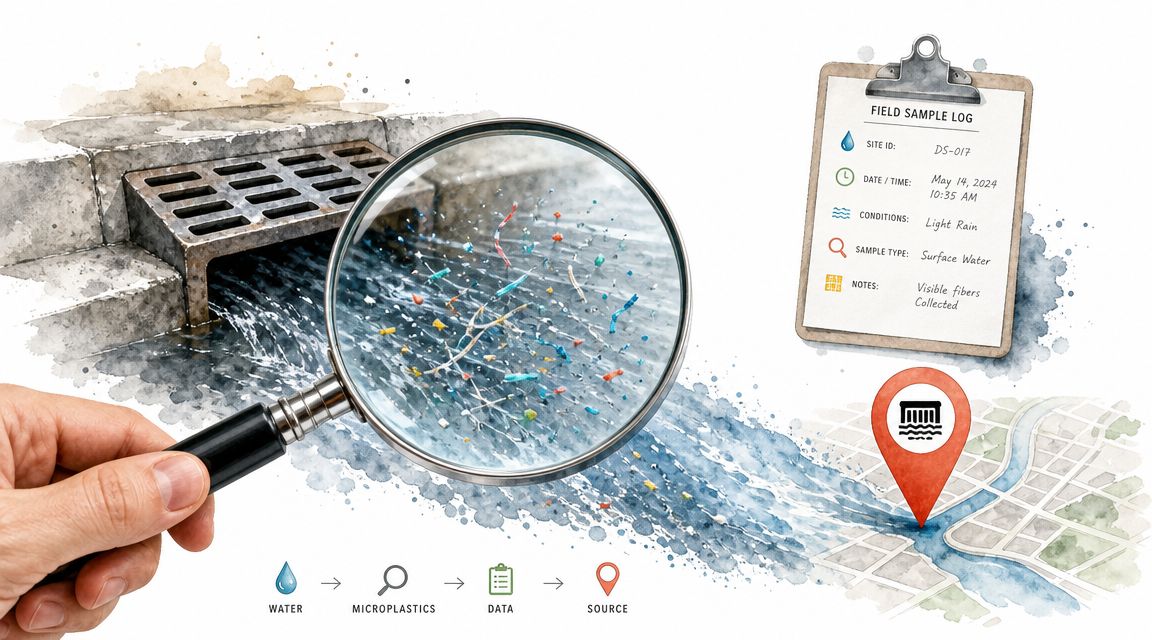
I like pairing cleanup with simple audits. Count cigarette butts, cups, mini liquor bottles, plastic film, and food packaging. Note wind direction, drain location, and nearby businesses. If you want a jumping-off point for thinking about plastic pollution, this Litter Caterpillars page on 5 Gyres is a useful community-facing entry.
What real-time monitoring changes
When groups add sensors and continuous monitoring, they can react faster than manual inspection allows. A case study on IoT environmental monitoring describes how real-time, high-frequency data can replace sporadic sampling and support earlier detection, threshold-based alerts, and better crew prioritization in places where conditions change quickly, as explained in Ignitec's environmental monitoring technology case study.
You don't need a full sensor network to learn from that lesson. The mindset is the gift. Check often. Watch flows. Notice timing. Look for cause, not only aftermath.
Trash usually tells on itself if you return to the same drain after rain.
- Use one shared template: Keep categories short so volunteers fill them out.
- Photograph repeat trouble spots: Visual evidence helps when you talk to local businesses or city staff.
- Track seasons: Leaves, snowmelt, and summer storms move litter in different ways.
4. Neighborhood Beautification Through Strategic Litter Prevention
Cleanup feels good. Prevention feels smarter.
I learned that after clearing the same corner again and again. If a spot looks abandoned, people treat it that way. If it looks cared for, many people hesitate before dropping the first cup. So beautification is a real environmental service example because it changes behavior before the next mess lands.
Small design choices that change the block
Fresh mulch around a tree bed, a painted planter, a maintained fence line, a visible trash can, or a tidy storefront edge can interrupt the feeling of neglect. I've watched one swept sidewalk pull the rest of the block upward like a zipper.
This work blends aesthetic judgment with routine labor. You don't need grand plans. You need repetition and visible care. Community gardens, adopted streets, and local merchant corridors all use this logic.
- Choose a short stretch first: Two or three blocks are enough to prove a concept.
- Make the change obvious: Before-and-after photos help neighbors believe maintenance is possible.
- Give residents a way in: Ask who wants to water flowers, report overflow, or sweep one storefront edge.
A clean block often starts to police itself in a gentle way. Neighbors notice. Kids notice. You notice too. And once you've felt that, it's hard to walk past a collapsing corner without imagining how little it might take to steady it.
5. Social Cohesion Building Through Environmental Volunteerism
This one surprised me the most. I thought I was joining cleanup work to fix streets. Really, I was also learning how to belong to people again.
Environmental volunteerism is one of the few social spaces where nobody has to impress anybody. You don't need polished networking lines. You can meet while doing something useful, which lowers the temperature for everyone. That's why cleanup groups, trail crews, park stewardship teams, and beach volunteers often form fast friendships.
Why hard mornings make better friends
A weekend morning cleanup filters for a certain type of person. You're meeting people who chose service over sleeping in, brunch, or scrolling in bed. I don't mean that in a smug way. I mean it in a practical way. Shared inconvenience creates trust fast.
My favorite moments haven't always been the cleanest ones. Sometimes it's the cold day, the weird weather, or the muddy shoes that make the memory stick. That's the social chemistry. You do uncomfortable work together and leave feeling less alone than when you arrived.
Shared effort is one of the fastest ways I know to turn strangers into teammates.
- Welcome first-timers by name: People come back when they feel expected.
- Build simple rituals: Group photos, coffee after, or a theme song create continuity.
- Protect volunteer energy: Don't make people feel used. Let the experience stay generous.
In healthcare settings, the same human truth appears in a different form. Recent healthcare-focused coverage describes EVS as frontline infection-prevention work that includes disinfecting patient rooms, high-touch surfaces, and biohazard disposal in addition to cleaning tasks, as noted in SoFi's overview of the environmental services sector. Different setting, same lesson. Care work creates bonds because people can feel when others take responsibility for shared space.
6. Environmental Justice and Equitable Neighborhood Coverage
I used to notice how some blocks got cleaned fast while others seemed invisible. Once you see that pattern, you can't unsee it.
Environmental justice in cleanup work means you don't chase only the pretty, central, or easy locations. You go where neglect has piled up and where residents have had to carry too much of the burden for too long. That takes humility. You can't arrive acting like a savior. You have to listen first.
What fairness looks like on the ground
Fair coverage starts with a map and a conscience. Which neighborhoods have overflowing corners, illegal dumping, broken sidewalks, poor trash infrastructure, or chronically littered commercial strips? Which places get volunteer love only when a camera appears?
The answer isn't guilt. The answer is repetition in overlooked places. I've found that when a group returns regularly, people stop reading it as charity and start reading it as respect.
- Talk to local residents first: Ask what cleanup would be most effective instead of guessing.
- Return more than once: One visit can feel like a stunt. Repeated visits feel sincere.
- Share leadership: Let people from the neighborhood shape the route and priorities.
This is one of the clearest environmental services examples because it deals with the lived reality of who gets a clean environment and who doesn't. You don't need a policy paper to understand that. You just need to walk across a few different neighborhoods with your eyes open.
7. Youth and Newcomer Integration Through Environmental Engagement
When you're new to a city, loneliness can make even a crowded street feel empty. I know that feeling. You want a way in, but bars, apps, and random events can feel slippery or performative.
Cleanup gives newcomers and younger people a cleaner entry point. You show up, get a task, learn a neighborhood, and meet people without having to invent a social persona. That's why I think environmental service is one of the best low-pressure ways to get attached to a place.
A city tour with a purpose
Every cleanup is also a geography lesson. You learn which blocks flood, where litter collects, which parks feel loved, and which corners need help. That knowledge makes a city feel less abstract. It becomes yours.
For students and young professionals, that matters a lot. Service work can turn a strange city into a map of memories. “That's the alley we cleared in the rain.” “That's the park where I met my now-best friend.” Those memories root you faster than small talk does.
- Give newcomers a buddy: One friendly face can calm first-day nerves.
- Keep instructions plain: New volunteers shouldn't have to decode jargon.
- Make room for fun: Photos, inside jokes, and post-cleanup snacks help people attach joy to service.
I've seen people arrive unsure and leave with dirt on their gloves, a few names in their phone, and a stronger reason to stay in the city.
8. Seasonal and Weather-Responsive Environmental Cleanup
Some of my favorite cleanup memories are objectively miserable. Cold fingers. Wet socks. Wind that turns a trash bag into a kite. That sounds awful on paper. In real life, it can be weirdly bonding.
Weather-responsive environmental service means you don't treat the outdoors like a fair-weather hobby. You adapt the route, gear, timing, and safety plan to the season. Winter has salt-stained curbs and windblown packaging. Spring has storm drain blockages. Summer has heat, smell, and overgrown lots. Fall has leaves hiding broken glass and litter.
Bravery needs a forecast
I'm not romantic about danger. Safety comes first. But I do think there's something healthy about learning you can function in discomfort without falling apart. A rainy cleanup taught me that better than any self-help book ever did.
The practical side matters too. Gloves change with temperature. Water breaks matter more in heat. Bright gear matters when days are short. A nearby café, field house, or library can save the day if weather turns ugly.
The goal isn't to suffer for style. The goal is to keep showing up without being careless.
- Scale the route to conditions: Shorter routes can be smarter in heat or deep cold.
- Bring backup gear: Extra gloves, hand warmers, ponchos, and water solve small crises fast.
- Offer alternate roles: Some people can sort supplies or greet volunteers even if they can't work the whole route.
Bad weather has a way of stripping away excuses. If you and I can laugh while freezing under a tree, we can probably handle more of life than we thought.
9. Community-Driven Urban Parks and Green Space Development
The first time I watched a bare, tired lot start to feel like a park, it happened before a single bench went in. A few of us were pulling trash from the edges, talking about where shade would matter most, where kids might run, where an older neighbor could sit without feeling exposed to traffic. By the end of that morning, the land looked only slightly cleaner. But it felt different. You could sense that people had started claiming it together.
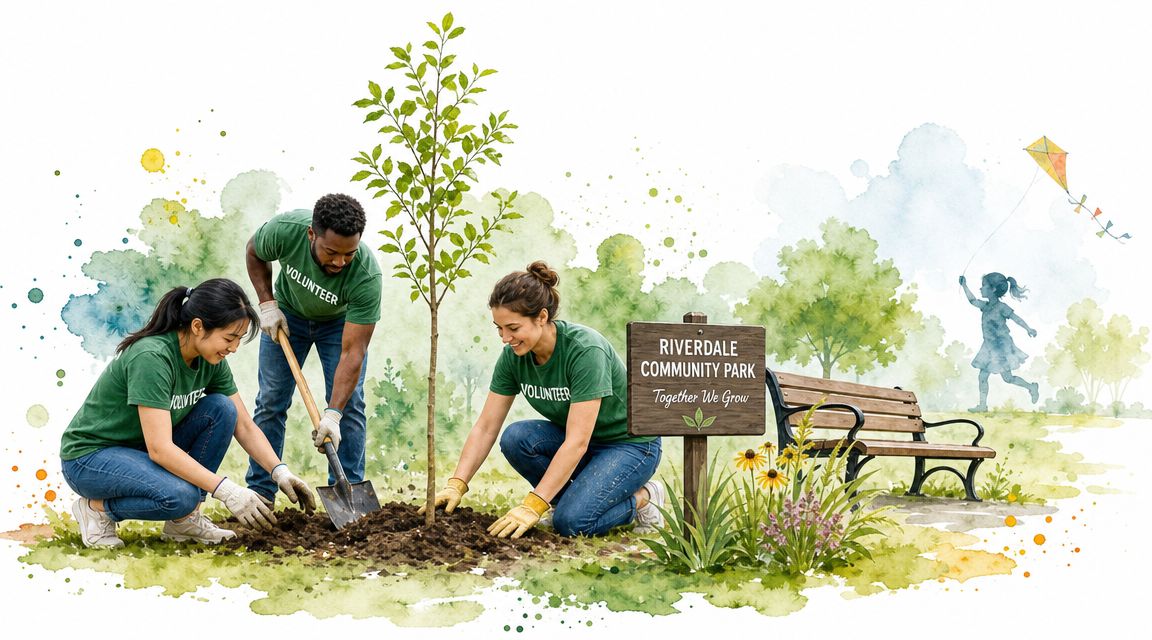
That is why this belongs on a real list of environmental services examples. Community-driven green space work includes clearing neglected land, planting trees, building small paths, adding seating, caring for garden beds, and returning week after week so the place stays alive. It is physical work, yes, but it is also relationship work.
I keep thinking about what groups like the Litter Caterpillars model so well. They do not wait for a polished master plan or a perfect grant cycle to make a place matter. They start with care, with cleanup, with showing up long enough for a forgotten patch of ground to become familiar. Then familiar becomes shared. Shared becomes protected.
A park changes the way people meet
The change I notice first is rarely visual. It is social.
Someone lingers instead of hurrying through. Two neighbors who used to nod from a distance start talking near a planting bed. A child treats the path like it has always been there. Those moments are small, but they are the fundamental infrastructure. The green space starts teaching people that this block can hold more than neglect.
The best community parks grow from local choices. One block may want raised beds for food and flowers. Another may need open grass, shade trees, and a simple bench where grandparents can rest. A space people helped shape carries a different kind of loyalty. You can feel it in how gently people treat it.
- Start with one visible improvement: A planted tree, a cleaned gathering spot, or a bench area gives the project a center of gravity.
- Ask who will care for it in July and November: Watering, litter pickup, and weeding matter more than a flashy launch day.
- Use the space right away: A picnic, reading circle, or kids' nature activity helps the area become part of daily life.
I love this kind of environmental service because it asks for courage without making a speech about courage. You bend down, clear space, plant something, and trust that other people will meet you there. Sometimes they do. Sometimes they surprise you. And sometimes a patch of land changes because a few friends decided the neighborhood deserved somewhere soft to land.
10. Digital Community Organizing and Volunteer Coordination for Environmental Action
A lot of environmental work still starts on a screen. One post, one group chat, one event page, one friend tagging another. I used to dismiss that as shallow. I don't anymore. Digital organizing is often the bridge between caring privately and acting publicly.
This form of environmental service includes recruiting volunteers, sharing route details, posting weather updates, celebrating participants, and documenting changes over time. Meetup, Instagram, WhatsApp, Nextdoor, and text threads all have their place if you use them clearly.
Online tools that lead back to real sidewalks
The best digital organizing doesn't replace in-person community. It feeds it. A good event page tells me where to meet, what to bring, how long we'll be out, and whether I'll feel awkward arriving alone. A good post after the event helps the next shy person believe they can come too.
I also like when groups share the whole texture of the day, not only polished after shots. Muddy gloves, funny moments, weird finds, and ordinary volunteers matter. People join people, not perfect graphics.
- Post clear logistics: Time, meeting point, duration, and gear should be easy to find.
- Show real volunteers: Faces and stories make groups feel reachable.
- Keep the invitation simple: “Come for one hour” works better than giant commitments.
Digital coordination also mirrors what larger environmental service systems do in a more technical way. Sensors, alerting systems, and real-time communication help teams respond faster. At the neighborhood level, your version might be much simpler: a weather text, a route map, and a photo album that proves the work is real.
10-Point Comparison: Community Environmental Services
| Initiative | Complexity 🔄 | Resources ⚡ | Expected outcomes ⭐📊 | Ideal use cases 💡 | Key advantages ⭐ |
|---|---|---|---|---|---|
| Community-Based Litter Cleanup Programs | Low–Moderate: volunteer coordination and scheduling | Low: basic tools, volunteer time, social channels | Immediate visible cleanliness; stronger local social ties | Quick neighborhood cleanups; engaging diverse volunteers | Low cost; scalable; builds social capital |
| Environmental Remediation of Vacant Lots and Public Spaces | High: land acquisition, permitting, remediation planning | High: capital, professional remediation, long-term maintenance | Permanent community assets; higher property values; improved health | Transforming blight into parks/gardens; long-term investment projects | Durable impact; attracts funding and media attention |
| Microplastics and Urban Litter Source Identification | Moderate–High: consistent methodology and analysis | Moderate: sampling tools, apps, research partnerships | Evidence-based prevention strategies; policy recommendations | Informing policy; targeting systemic litter sources | High diagnostic value; supports grants and advocacy |
| Neighborhood Beautification Through Strategic Litter Prevention | Moderate: infrastructure placement and agency coordination | Moderate: receptacles, street furniture, maintenance budgets | Sustained litter reduction; improved perception and safety | High-visibility corridors, BIDs, pilot block interventions | Cost-effective prevention; creates positive feedback loops |
| Social Cohesion Building Through Environmental Volunteerism | Moderate: intentional facilitation and leadership | Low–Moderate: social programming, volunteer support | Strong friendships, reduced isolation, higher retention | Newcomer integration; community resilience efforts | High volunteer retention; mental-health and leadership gains |
| Environmental Justice and Equitable Neighborhood Coverage | High: sustained outreach, cultural humility, trust-building | Moderate–High: targeted investment, partnerships, safety measures | Reduced environmental inequities; local leadership development | Prioritizing underserved areas; justice-driven campaigns | Promotes equity; builds political will for systemic change |
| Youth and Newcomer Integration Through Environmental Engagement | Low–Moderate: onboarding, mentorship, adaptable schedules | Low–Moderate: training, outreach, social events | Faster social integration; youth leadership pipelines | Cities with high newcomer/student populations; campus programs | Attracts diverse volunteers; builds long-term engagement |
| Seasonal and Weather-Responsive Environmental Cleanup | Moderate: season‑specific planning, safety protocols | Moderate: specialized gear, contingency plans, insurance | Year‑round cleanliness; resilient volunteer culture | Regions with extreme seasons; identity‑building groups | Demonstrates commitment; addresses seasonal litter peaks |
| Community-Driven Urban Parks and Green Space Development | High: design, permitting, construction, stewardship | High: capital, design expertise, ongoing maintenance | Multifunctional green spaces; health, stormwater and habitat benefits | Neighborhood revitalization; long-term placemaking | Multiple co‑benefits (health, environment, social) |
| Digital Community Organizing & Volunteer Coordination | Low–Moderate: content, moderation, platform management | Low: platforms, staff time, content tools | Scalable recruitment; higher participation and visibility | Rapid scaling; targeting young/newcomer demographics | Low-cost amplification; easy onboarding; real-time coordination |
Are You Brave Enough to Start?
I learned that cleaning up someone else's mess is way easier than cleaning up your own. It's a strange kind of fun. I also learned that suffering through a hailstorm with new friends adds flavor to life. It advances the plot.
That's why I keep coming back to these environmental services examples. They aren't only about waste streams, public-space maintenance, remediation categories, or volunteer logistics. They're also about what happens inside you when you decide to stop waiting for motivation and just pick up one piece of trash. Then another. Then a whole bag. Then a habit. Then maybe a friendship.
You don't have to be organized to begin. I wasn't. You don't have to be fearless either. Fear is often a good sign. It means you're close to something honest. Maybe you're scared of looking silly with a grabber on a busy street. Maybe you're scared nobody will join you. Maybe you're scared you'll start strong and then disappear. I get all of that.
But I've found that service is a forgiving teacher. It doesn't ask you to arrive polished. It asks you to arrive. If you keep doing that, your confidence changes shape. It stops being loud and starts being dependable. You trust yourself more because you've watched yourself show up in cold weather, on sleepy mornings, on awkward first days, and on blocks that need more love than applause.
If you live in Chicago, Litter Caterpillars is one real option for that kind of practice. If you don't, you can still borrow the blueprint. Pick a block. Pick a park edge. Pick a vacant lot perimeter, a trail segment, a creek bank, or a bus stop corridor. Bring a friend if you can. Go alone if you must. Keep it small enough that you'll do it again.
We are all caterpillars in some way. We're all trying to transform while carrying old messes, old fears, and old stories. Sometimes the first honest step isn't inward. Sometimes it's outward. A trash bag in your hand. Morning air on your face. A tiny act of order in a chaotic week.
So here's my question for you. What are you afraid of?
Good. Start there.
If you want a simple place to begin in Chicago, Litter Caterpillars organizes volunteer trash pickups that make it easy to show up, meet people, and help clean a block.