Your mess is your message.
I used to have trouble cleaning my own room. Old mail, dead batteries, a container in the back of the fridge from some optimistic week when I thought I'd become organized. None of it weighed much, but to me it all felt like it weighed 500 pounds.
Then I learned something strange. Cleaning up other people's messes is easier. On our first outing, there were only three of us. We got trapped in a spring hailstorm, huddled under a tree, freezing, while ride after ride canceled. I remember laughing and thinking, this is fun. The pain gave the day texture. It turned an errand into a story.
That was the birth of Litter Caterpillars.
So when I share outdoor event ideas, I'm not talking about filler activities to kill a Saturday. I'm talking about building a life that pulls you toward courage, discipline, and friendship. I'm talking about using a simple public act, walking outside and doing a hard thing with other people, to become more reliable than you were last month.
That's why I love outdoor events. People are already outside in huge numbers. The Outdoor Industry Association says 175.8 million Americans participated in outdoor recreation in 2023, equal to 57.3% of the U.S. population age 6 and older, up 4.1% from the previous year. You don't have to convince people to care about fresh air, movement, and public space. You have to give them a reason to show up together.
Most lists stop at picnics and lawn games. Fine. Those can be fun. But if you want an outdoor event that actually changes people, build around service. Give people gloves, a route, a flag, a little dignity, and a reason to come back next week.
1. Community Cleanup Walks
Start here. If you only try one of my outdoor event ideas, make it a cleanup walk.
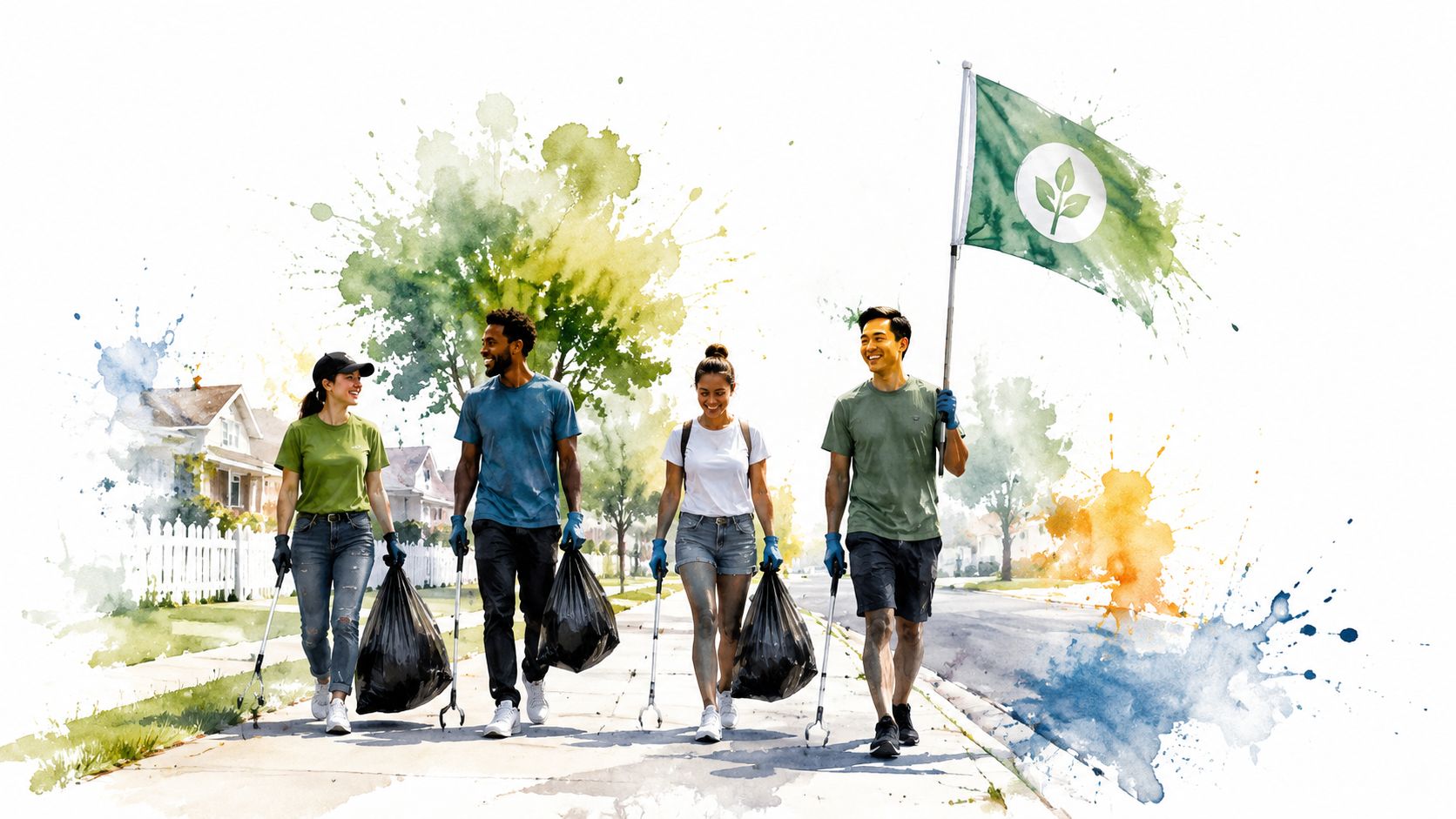
A cleanup walk is simple on purpose. You pick a neighborhood, set a route, hand people bags and grabbers, and start walking. No stage. No complicated schedule. No overproduced nonsense. People talk more easily when their hands are busy and their feet are moving.
I love this format because it removes pressure. New people don't have to perform. They just walk beside you, pick up litter, and settle into the rhythm. By the end, they've had a real conversation and left a street better than they found it.
Make it easy to join
Your first job is to remove friction. If people need to buy supplies, guess where they end up? At home.
- Bring the gear: Carry gloves, bags, sanitizer, and a few extra grabbers.
- Pick one meeting point: Use an easy landmark like a train stop, coffee shop, or park entrance.
- Keep the timing consistent: Same morning, same general length, every week if you can.
- Pair people fast: Put a newcomer beside someone kind and experienced within the first few minutes.
I've learned that consistency beats novelty. Weekend mornings work because they attract people who want to give, not people who want to drift.
Practical rule: Don't make volunteers solve logistics before they've felt the joy of the work.
Chicago gave us this lesson over and over. When we rotated neighborhoods, people kept coming because they weren't only cleaning. They were discovering the city block by block, seeing corners they'd never visit otherwise, and building trust through repetition.
If you want a straightforward playbook for setting one up, use this guide to starting a volunteer trash pickup.
2. Themed Service Events
A theme can rescue a good event from feeling flat.
I'm not talking about fake hype. I'm talking about giving the day a frame people can remember. A spring reset. A river day. A post-festival recovery cleanup. A holiday morning service walk. Same work, different emotional entry point.
Themes help people answer the question, why this week?
Give the event a story
When I've seen service events really click, it's because people could explain them in one sentence. “We're cleaning the highway after the bike event shutdown.” “We're doing a costume cleanup before Halloween.” “We're cleaning this park before the neighborhood picnic.”
That sentence matters. It gives the event shape.
Use themes that connect to real local moments. Earth Day is obvious. A neighborhood fair is obvious. A change in season is obvious. Don't force an elaborate concept when a clear one will do.
Here's what works best for me:
- Name it: Pick a title people can repeat from memory.
- Match the visuals: A small sign, flag, color, or dress code gives people instant cohesion.
- Tie it to a place: Themes feel stronger when the location makes sense.
- Capture the moment: Take one group photo that tells the whole story without explanation.
I've found that themed events also help with return attendance. People who came for the novelty often stay for the people. That's the trick. The theme gets them through the door. The community gets them back.
The business world has noticed that live gatherings still work. Statista reports the U.S. B2B trade show market is forecast to reach $15.8 billion in 2024, and a Cvent-cited survey says 72% of marketers consider events their most effective marketing channel, while HelloEndless reports 63% plan to invest more in live events and 95% agree live events help attendees form valuable in-person connections. I read that and think, of course. People remember what they do together in real life.
3. Neighborhood Transformation Projects
Sometimes a single cleanup is satisfying. Sometimes it isn't enough.
You know the kind of place I mean. The empty lot that keeps collecting trash. The block edge everyone walks past. The patch of ground that suggests to people, nobody cares about this spot. When I see a place like that, I don't want a one-day event. I want a campaign.
That's where neighborhood transformation projects come in.
Adopt one place and stay with it
Pick a site with emotional weight. A neglected lot. A stretch near a school. A corner by a bus stop. Then commit to it long enough that people can watch the place change.
This is a different kind of outdoor event idea because it asks more from you. You need repeat visits, local relationships, and basic patience. But the payoff is deeper. People stop feeling like guests in the neighborhood. They start feeling responsible for it.
A long-term project should have phases.
- Phase one: Clean and clear.
- Phase two: Remove the weird barriers that make the place feel abandoned.
- Phase three: Add signs of care, like planters, seating, art, or regular stewardship.
- Phase four: Hand some ownership to people who already live nearby.
I love this format because it changes volunteer psychology. A one-time event says, “We helped.” A repeated project says, “We belong here.”
You can feel that difference in people's posture.
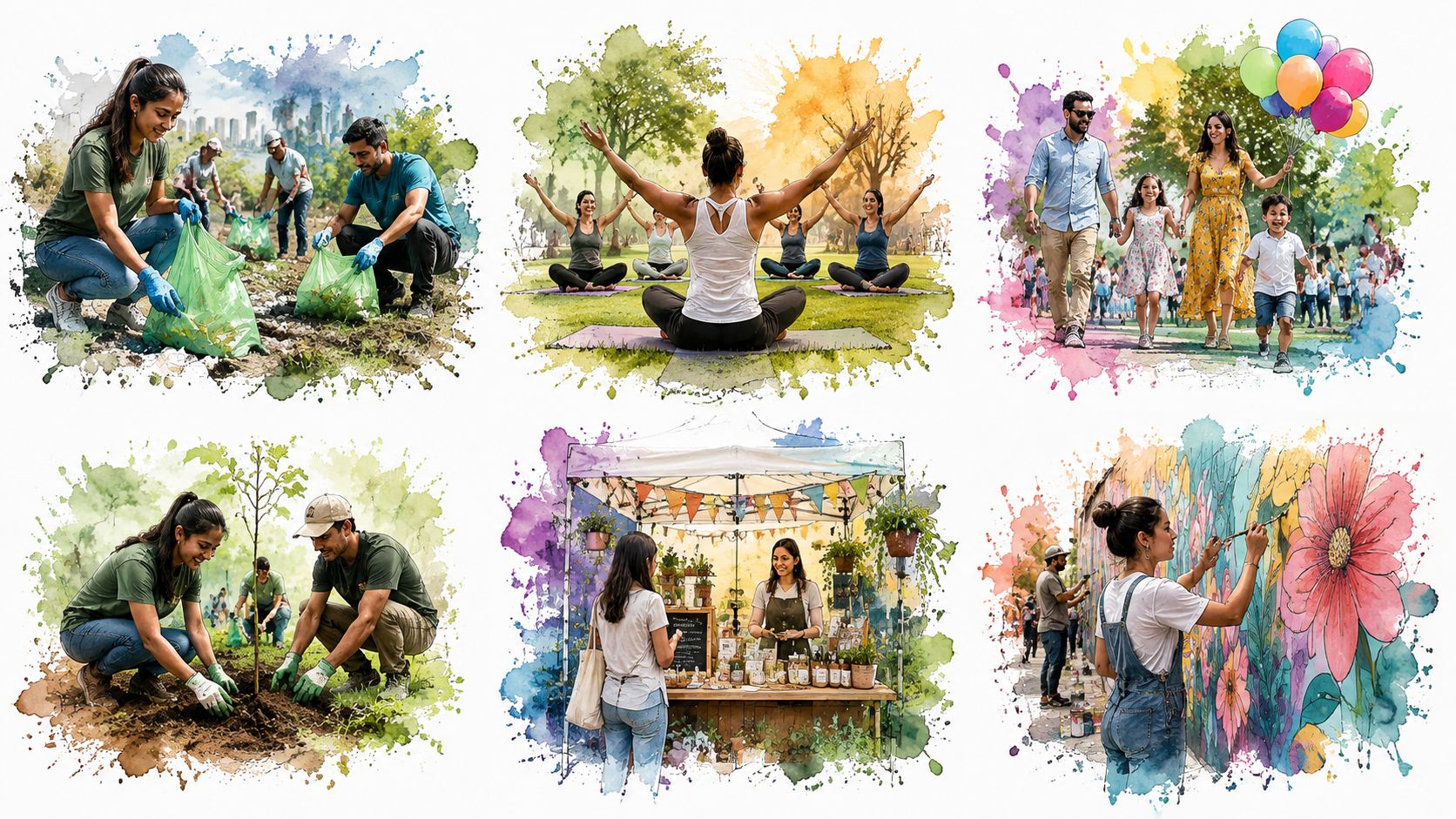
Here's a glimpse of what transformation can look like in practice:
If you're building one of these, start smaller than your ego wants. Don't promise to save a district. Clean one lot so thoroughly and so consistently that nobody can deny the change.
4. Social Service Integration Cleanups
Some outdoor event ideas entertain people. I'd rather help people.
A social service cleanup starts with a harder question. Who is living with the consequences of neglect right now? Once you ask that honestly, your planning changes. You stop chasing the prettiest park and start paying attention to the places where litter, dumping, and disrepair stack onto other burdens.
That shift matters.
Respect the neighborhood first
When you enter an under-resourced neighborhood with volunteers, your attitude matters more than your trash bags. If you show up like a savior, people feel it. If you show up like a guest ready to work, people feel that too.
I've made mistakes here. I've come in too eager, too fast, too convinced that action alone was enough. It isn't. You need local trust. That means talking to residents, local groups, block leaders, churches, mutual aid organizers, and small business owners before the event starts.
Go where the need is. Then listen long enough that your help stops looking like a performance.
A good social service cleanup has roles for residents, not just roles for visitors. Ask local people where the worst dumping is. Ask what time feels respectful. Ask what would make the day useful instead of theatrical.
I also think food matters here. A real meal after cleanup changes the tone. It says, we didn't come to extract a feel-good moment. We came to share a morning.
One thing I appreciate about the usual outdoor event ideas online is how clearly they reveal what's missing. Many lists focus on entertainment and skip service as a repeatable community ritual. That gap is exactly where some of the best events live. Service can become friendship, exercise, and visible neighborhood improvement all at once when you build it with care.
5. Volunteer Badge and Achievement Systems
People like progress. They like symbols. They like knowing their effort counts.
I learned this early. If you give volunteers nothing but a vague thank you, many of them will still return. Good people are generous. But if you give them identity, memory, and a visible path forward, they start carrying the mission inside themselves.
That's where badges come in.
Turn effort into identity
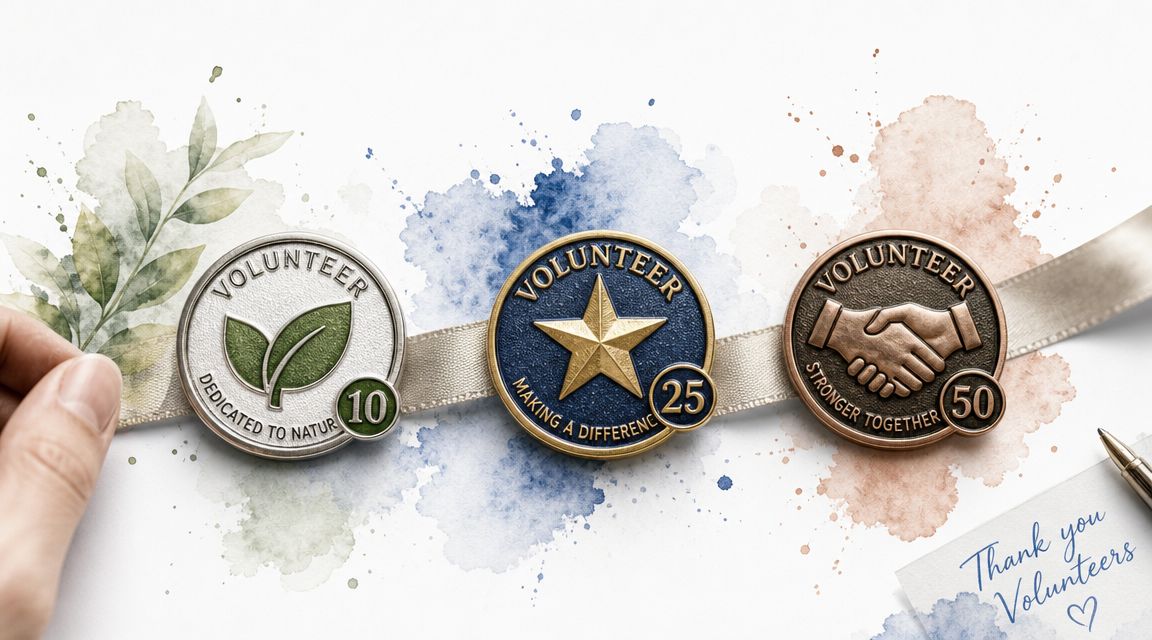
A badge system works because it makes service legible. It tells a volunteer, you've shown up, you've grown, and we can all see it.
I don't mean childish gold stars. I mean thoughtful markers of effort. Milestone badges. Seasonal badges. Leadership badges. Weather badges. Neighborhood badges. If sports teams and scouts understand the power of earned symbols, service groups should too.
Here's how I'd build it:
- Make badges beautiful: If it looks cheap, it feels cheap.
- Reward different kinds of effort: Attendance, leadership, reliability, mentoring, hard routes.
- Announce them publicly: Recognition should happen in front of peers.
- Let people wear them: Bags, jackets, lanyards, Meetup photos. Let pride breathe.
One thing I'd never skip: make recognition visible in the field, not buried in an email later.
If you want inspiration for structuring it, I like this set of volunteer recognition ideas.
There's a practical side too. Grand View Research estimates the global event management software market at $8.40 billion in 2024 and projects it will reach $17.33 billion by 2030, with North America holding over 45% of the market in 2024 and cloud-based deployments accounting for over 63%. That tells me tools for registration, check-in, volunteer tracking, and milestone systems are normal now. Use them. Don't run your community on memory alone.
6. Friendship-First Volunteer Cohorts
The strongest volunteer communities I've built never started with scale. They started with six people who kept showing up long enough to become part of each other's lives.
That lesson changed how I organize outdoor events.
Big turnouts look good in photos. Cohorts build the kind of trust that gets someone out of bed on a cold Saturday, brings them back after a hard week, and turns a cleanup into a real community. That is the whole point. Service should leave the block better and the people braver.
A cohort works because people stop disappearing into the crowd. They get known. Somebody notices if they are late. Somebody remembers they hate soggy gloves. Somebody asks how the interview went. That sounds small. It is not small at all. It is how friendship starts, and friendship is what makes volunteer work durable.
I've seen this happen over and over with Litter Caterpillars. A person joins for a cause. They stay because the same handful of people keep welcoming them back. After a few events, the cleanup is only half the story. The other half is breakfast after, the running jokes, the shared route, and the quiet sense that your absence would matter.
Build cohorts on purpose:
- Keep them small: Around 6 to 12 people is enough for energy and still small enough for memory.
- Keep them stable: Let people serve with the same crew often enough to build rhythm and trust.
- Give them a ritual: Coffee after, a group photo, a stretch circle, a post-route meal. Repetition turns strangers into friends.
- Name the group: A route name, team color, or simple nickname gives people something to belong to.
- Choose a cohort lead: Pick someone warm, reliable, and observant. Their job is to notice people, not manage them like staff.
I care about this because outdoor service should do more than fill bags. It should change a person's relationship to their city and to themselves. A good cohort gives shy people a place to practice courage. It gives new residents a way into neighborhood life. It gives lonely people a reason to leave the house and a circle that expects them.
That is why I recommend friendship-first design so strongly. If you want retention, build belonging. If you want stronger events, build smaller circles inside the larger one. If you want people to find purpose outdoors, give them people first.
7. All-Weather and Extreme Condition Events
Weather is not a side issue. Weather is the event.
Most outdoor event ideas online pretend the sky will cooperate. That's fantasy. Real outdoor organizing means heat, wind, rain, surprise cold, and forecast drama. If you ignore that, you're not planning. You're wishing.
I learned this while shivering under that tree in the hail on our first cleanup.
Build for weather, don't pray against it
Some of my favorite event memories came from rough conditions. But there's a line between invigorating and stupid. You need to know the difference before volunteers arrive.
The National Weather Service keeps warning people about heat and storms during outdoor activity. I take that seriously. I still run all-weather events, but I do it with structure.
Use a simple decision framework:
- Heat: Start earlier, shorten the route, carry more water, add shade stops.
- Cold: Keep people moving, bring hand warmers, plan a warm indoor landing spot after.
- Rain: Expect muddy morale at the start, then watch people get weirdly cheerful once they accept it.
- Wind or storms: Decide in advance what cancels the event and tell everyone clearly.
The weather doesn't ruin the story. Confusion does.
I also think you should name these events clearly. If it's a winter grit cleanup, call it that. If it's a rain-or-shine challenge day, say so. Some people want comfort. Some people want a little hardship because hardship wakes them up.
Chicago taught me that suffering can add flavor. A hard-weather event, done safely, becomes a badge people carry in their chest. They remember who was there. They remember who laughed. They remember they were tougher than they thought.
8. Neighborhood Discovery Tours with Purpose
The first time I led one of these, a new volunteer showed up expecting a cute walk and a couple of photos. Forty minutes later, she was pointing at a storm drain clogged with cups, asking who on this block had to live with that every day. That was the moment the event worked. Curiosity turned into responsibility.
That is the point of a neighborhood discovery tour with purpose.
A city does not become home because you sampled the coffee and found a mural. It becomes home when you pay attention. You notice which sidewalks invite people in, which corners feel forgotten, which storefronts are fighting to stay open, and which public spaces clearly have people who care. Service sharpens your eyes. It also softens your heart.
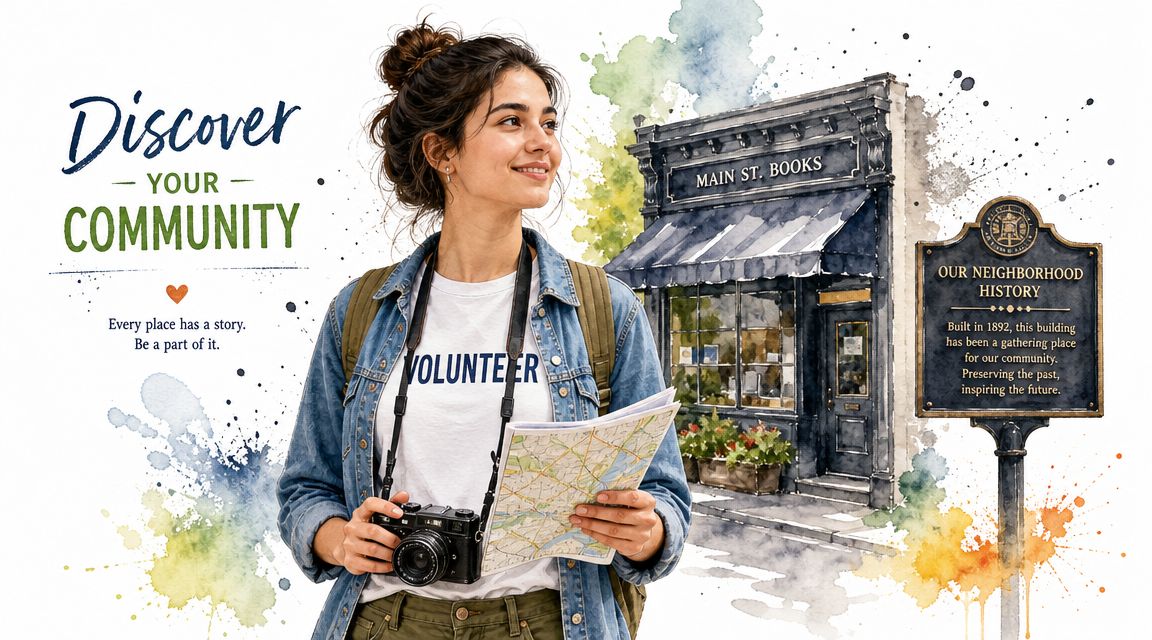
Let the neighborhood teach the group
I build these events around one local thread. Pick one. Architecture. Immigrant business history. A park system. A transit line. A residents' story. The thread gives the walk weight, and weight is what turns a casual outing into a shared memory.
Do not overteach. You are not running a lecture. Give people just enough context to care, then let the street do the rest.
Use a route like this:
- Open with one sharp story: Keep it under two minutes and make it specific to the block.
- Mark a few anchors: A bookstore, church, mural, school, garden, or corner store gives people something to remember.
- Leave room for real conversation: If a resident or shop owner wants to talk, stop and listen.
- Finish close by: A plaza, cafe, or simple stoop debrief helps people turn observations into connection.
I love this format because it builds the kind of community that lasts. People do not only collect litter. They collect context. They start recognizing faces, greeting business owners, remembering street names, and caring what happens next on that block. Friendship grows faster when people are discovering something together and doing something useful with their hands.
That has been a core lesson for me with Litter Caterpillars. Service is not only about cleaner streets. It is about helping people become braver, more rooted, and more available to each other. A purpose-driven neighborhood tour does all three. It gives newcomers a way in. It gives longtime residents a fresh way to love where they live. And it gives the whole group a better question than “What should we do this weekend?” The better question is “Who can we become together if we keep showing up here?”
9. Leadership Development and Mentor Apprenticeships
A volunteer group breaks when everything depends on one charismatic organizer.
I know the temptation. You care the most, so you carry the most. You answer every text, haul every supply bin, explain every route, soothe every confusion. For a while, that feels noble. Then it becomes a bottleneck.
The cure is apprenticeship.
Teach leadership in the field
The best leaders in service groups usually don't emerge from a formal application. They reveal themselves while carrying bags, checking on new people, solving small problems, and staying calm when the plan bends.
When I spot that person, I don't wait. I give them a lane. Maybe they lead check-in next week. Maybe they welcome newcomers. Maybe they handle route pacing or post-event food coordination. Then I stay close enough to help without grabbing the wheel back.
A good mentor system has a few parts:
- Match on temperament: A nervous beginner needs a different mentor than a natural extrovert.
- Give one concrete responsibility at a time: Don't dump the whole event on them.
- Debrief after the event: What felt easy, what felt awkward, what needs practice.
- Promote publicly: Let the group see who is stepping up.
I love apprenticeships because they turn service into a ladder. People don't only attend. They grow. They gain confidence in public speaking, planning, conflict navigation, and emotional steadiness.
That kind of growth is hard to fake. A person who can calmly lead a volunteer team through a messy morning can usually handle a lot more in the rest of life too.
10. Corporate and Group Partnership Events
I used to be suspicious of corporate volunteer days. Too polished. Too many matching shirts. Too much photo-op energy.
Then I saw what happens when you design them well. A company brings a group of people who would never have met your mission otherwise. They work hard, ask real questions, and sometimes a few of them come back on their own. That's worth building for.
Keep the mission intact
If you run partnership events, don't let the partner flatten your culture. You are not a disposable activity vendor. You are inviting a group into your way of doing things.
That means you set the tone. You explain the neighborhood. You make safety and volunteer dignity paramount. You keep the service real.
Here's what I recommend:
- Build one clean package: Clear meeting point, supplies, route, safety talk, and wrap-up.
- Ask for one internal champion: Every company has one person who cares. Find them.
- Mix structure with meaning: Give them a mission, not just a task list.
- Create a return path: Tell people how to join again without their employer.
If you want a starting point, I'd look at these corporate social responsibility program ideas.
There's strong demand for events in the business world, and many teams still want real-life connection. That helps. But your real win isn't landing a one-off group day. Your real win is converting a few people from “my company sent me” to “I'm coming back because this matters to me.”
10-Item Comparison of Outdoor Event Ideas
| Program | Implementation Complexity (🔄) | Resource Requirements (⚡) | Expected Outcomes (📊⭐) | Ideal Use Cases (💡) | Key Advantages (⭐) |
|---|---|---|---|---|---|
| Community Cleanup Walks | 🔄 Moderate, regular scheduling & coordination | ⚡ Low, basic supplies and volunteer coordination | 📊 Consistent litter removal; ⭐ steady volunteer habits | 💡 Neighborhood-scale recurring engagement | ⭐ Easy to replicate; inclusive; visible impact |
| Themed Service Events | 🔄 Medium–High, extra planning and branding | ⚡ Medium, merchandise, partnerships, promo | 📊 Recruitment and media spikes; ⭐ varied volunteer experiences | 💡 Holidays, awareness campaigns, recruitment drives | ⭐ High novelty and shareability; attracts diversity |
| Neighborhood Transformation Projects | 🔄 High, multi‑phase planning & stakeholder agreements | ⚡ High, sustained coordination, legal/maintenance costs | 📊 Long‑term place change; ⭐ compelling before/after narratives | 💡 Deep impact projects, fundraising, major partnerships | ⭐ Systemic impact; strong partnership potential |
| Social Service Integration Cleanups | 🔄 High, cultural competency and relationship building | ⚡ Medium–High, hospitality, transport, partner support | 📊 Equity‑focused improvements; ⭐ authentic community trust | 💡 Environmental justice and underserved neighborhoods | ⭐ Builds trust; addresses social and environmental needs |
| Volunteer Badge & Achievement Systems | 🔄 Low–Medium, tracking and recognition workflows | ⚡ Low, design, admin, occasional production | 📊 Increased retention & social proof; ⭐ motivation & leadership pipeline | 💡 Retention programs, gamification strategies | ⭐ High psychological ROI; cost‑effective recognition |
| Friendship‑First Volunteer Cohorts | 🔄 Medium, facilitation of small stable groups | ⚡ Low–Medium, social event support and facilitation time | 📊 Deep retention and ambassador creation; ⭐ reduced isolation | 💡 Building community, long‑term volunteer loyalty | ⭐ Strong interpersonal bonds; organic recruitment |
| All‑Weather & Extreme Condition Events | 🔄 High, strict safety protocols and contingency plans | ⚡ Medium–High, specialized gear, recovery support | 📊 Memorable narratives and committed core volunteers; ⭐ resilience culture | 💡 Identity‑building, storytelling, committed cohorts | ⭐ Differentiation through shared hardship; strong pride |
| Neighborhood Discovery Tours with Purpose | 🔄 Medium, research and guided content integration | ⚡ Low–Medium, guides, materials, local coordination | 📊 Increased civic knowledge & local ties; ⭐ deeper place attachment | 💡 Newcomer engagement, place‑based education | ⭐ Blends learning with service; local partnership opportunities |
| Leadership Development & Mentor Apprenticeships | 🔄 High, structured curricula and mentor matching | ⚡ Medium–High, training time, materials, supervision | 📊 Sustainable leadership pipeline; ⭐ organizational scalability | 💡 Succession planning, scaling volunteer leadership | ⭐ Builds capacity; reduces founder dependence |
| Corporate & Group Partnership Events | 🔄 Medium, customization and account management | ⚡ High, professional coordination, documentation, sponsorships | 📊 Funding and high‑volume participation; ⭐ corporate visibility | 💡 Fundraising, scaling capacity, CSR partnerships | ⭐ Revenue and resources; access to new volunteer pools |
Find Your People, Find Yourself
I keep coming back to Tom Sawyer.
He was supposed to be miserable. He got punished and had to paint a fence. Instead, he made the thing look desirable. His friends wanted in. They even paid for the privilege. I've always loved that story because it gets at something often overlooked. Hard work can become joy when you wrap it in pride, story, and companionship.
That is the heart of my favorite outdoor event ideas.
I don't care much about making an outdoor event look impressive on paper. I care about whether it changes the people who show up. Did they leave braver? Did they make one new friend? Did they surprise themselves by doing something uncomfortable without retreating into excuses? Did they go home seeing their city, and maybe their own life, a little differently?
That's why service matters so much to me. Entertainment has its place. I'm not against a picnic, a concert, or a scavenger hunt. But service gives people a cleaner mirror. It shows them who they are when the work is unglamorous, when the weather is annoying, when the neighborhood is unfamiliar, when the bags get heavy, when nobody is clapping.
And if they keep showing up, that mirror changes them.
I've seen shy people become organizers. I've seen people arrive guarded and leave with a breakfast crew. I've seen mornings that started with litter and awkwardness end with singing, laughing, and plans for next week. That kind of change doesn't happen because you found the perfect event concept on a content list. It happens because you built a ritual people could trust.
That's my philosophy in one sentence. Build rituals, not spectacles.
A ritual has a heartbeat. Same meeting time. Same spirit. Enough repetition that people can lean their life against it. Enough purpose that they feel proud inviting someone else. Enough challenge that the day means something when it's done.
If you're planning your own event, keep it simple. Pick a place. Pick a time. Bring more gloves than you think you need. Make the first five minutes warm and welcoming. Give people one useful job. End somewhere people can talk. Then do it again next week.
You do not need a perfect brand, a giant budget, or a polished speech. You need courage and follow-through.
If Litter Caterpillars fits what you're looking for, it's one example of a Chicago group built around that idea. Weekly outdoor service can become friendship, consistency, and neighborhood care when people commit to it long enough.
So my only question for you is this.
Are you bold enough to start?
If you want an outdoor event that builds friendship and leaves a block cleaner than you found it, join Litter Caterpillars. Show up on a weekend morning, bring your energy, and let service change you.