
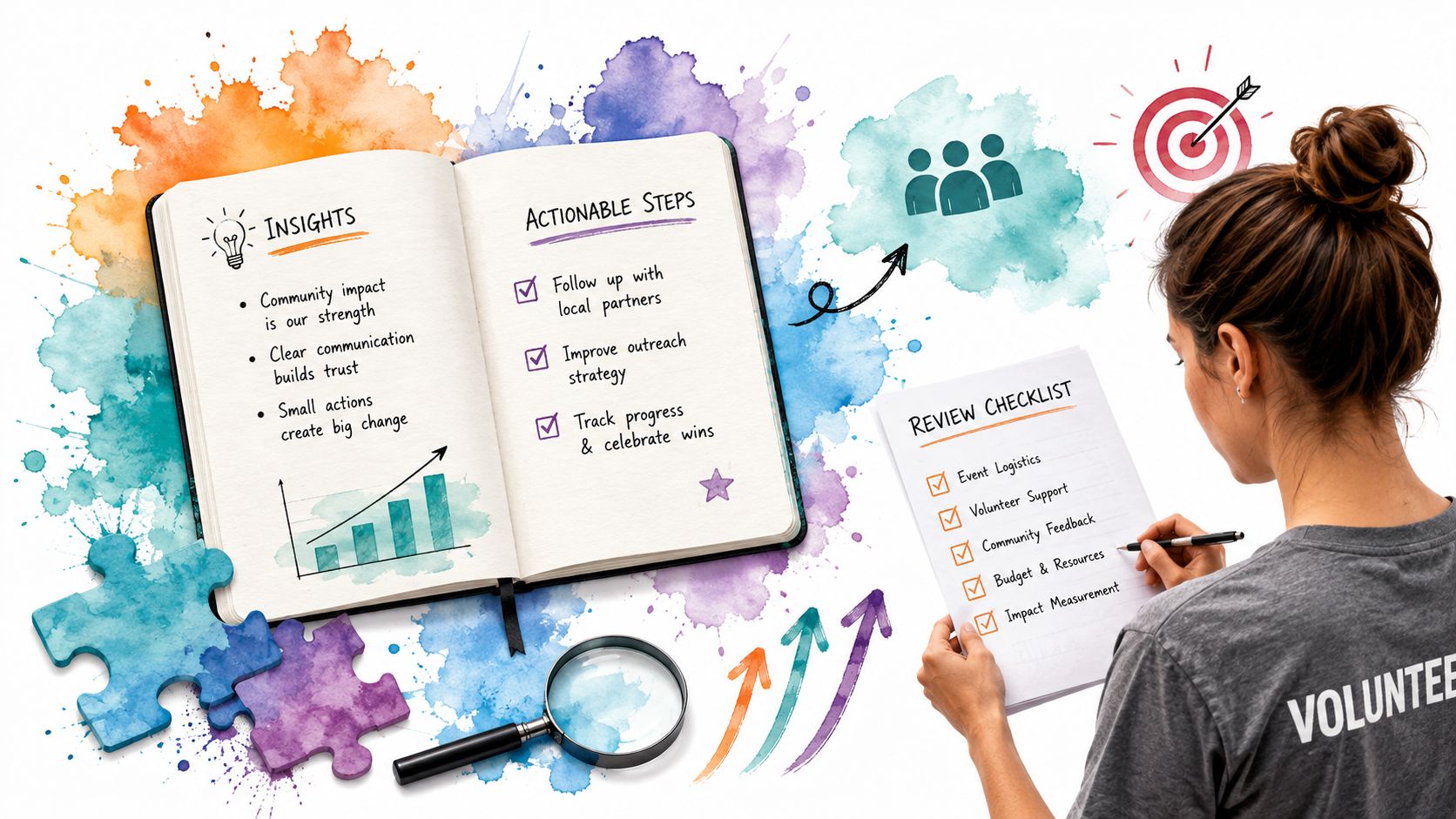
A small task can feel absurdly heavy. I've stared at one old bag on the floor as if it weighed hundreds of pounds, then wondered why a simple cleanup had turned into a test of character. Performance reviews, volunteer feedback, and personal growth often begin in that same place: you notice a pattern, but you need better words and a practical next move.
The strongest area for improvement examples follow a simple shape. Name the observable behavior, explain its effect, and choose one change you can check later. Keep the wording fair. Focus on what happened, not on someone's personality. The examples below use three lenses each time: language for a workplace review, a volunteer or civic-service application, and a personal action plan.
1. Volunteer Retention and Consistency
The first cleanup can feel electric. People arrive curious, take photos, fill bags, and leave with the satisfaction of a visible result. The harder work begins when the next weekend arrives and the excitement has faded.
I learned that people need more than a good cause. They need friendship, identity, and proof that their effort matters. Litter Caterpillars has kept a weekly pickup rhythm across all 50 Chicago wards for about 3 years, according to the group's own account, but consistency comes from deliberate habits, not enthusiasm alone.
Weekend mornings create a clear routine. Group chats keep people connected between events. Badges, theme songs, and shared rituals give volunteers a way to recognize one another. A social gathering after a pickup can turn a task into a relationship.
Turn the pattern into review language
Performance-review wording: “I need to improve how I build repeat engagement. New volunteers often enjoy the first event, but I haven't always created a clear reason for them to return.”
Feedback phrasing: “You create strong first-event energy. A next step would be to follow up with new volunteers, ask what would bring them back, and give them a simple way to join the next pickup.”
Personal action plan: After every event, send a short follow-up, invite people to the next date, and record the reasons volunteers give for returning or leaving. Use volunteer management best practices to make the experience easier to repeat.
- Build belonging: Give members shirts, stickers, badges, or another visible sign of participation.
- Remove friction: Share the meeting point, supplies, expected time, and route before people arrive.
- Recognize progress: Celebrate milestones in the group chat and ask volunteers which neighborhoods need attention.
Practical rule: If you want people to return, make the next step obvious before the current event ends.
2. Expanding Into Neglected Neighborhoods
Cleaning an easy block can make you feel productive. Cleaning the places people avoid asks more of you. You need local trust, honest safety planning, and the patience to return after the first bag of litter leaves the curb.
Litter Caterpillars describes weekly pickups across all 50 Chicago wards, including areas with heavy abandonment. The group also won an empty lot at auction and turned it into Caterpillar Park in Englewood. Those efforts require more than a map and a supply bin. They require conversations with residents who know the block better than any visitor does.
I've learned that bravery doesn't mean ignoring danger. It means naming the risk, planning around it, and deciding whether the work makes sense. A group that arrives once, takes photos, and disappears can leave residents feeling used. A group that listens, returns, and shares visible progress can build a different relationship.
Translate courage into accountable language
Performance-review wording: “I need to improve how I approach difficult service areas. I sometimes choose locations that are easy to organize instead of giving enough attention to neighborhoods with greater logistical and safety challenges.”
Feedback phrasing: “You've handled straightforward routes well. I'd like you to spend more time listening to residents and local groups before planning work in areas that need a different approach.”
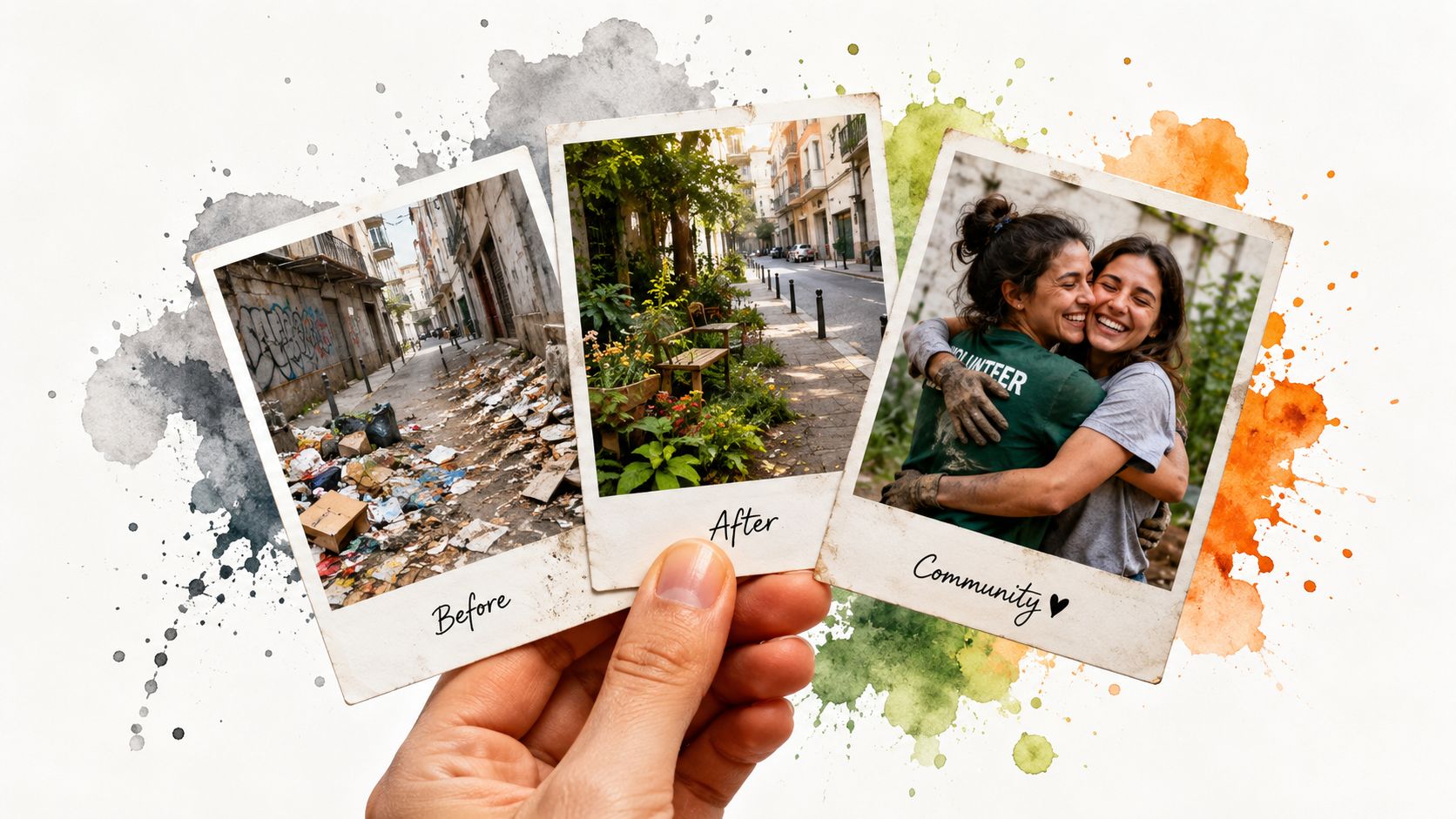
Personal action plan: Speak with long-term residents and local organizations before scheduling a pickup. Scout the route, set a buddy system, define an exit plan, and document changes through before-and-after photos or neighborhood meetings.
- Start with listening: Ask residents what they want cleaned and what problems keep returning.
- Plan for continuity: A single visit rarely changes a place. Set a repeat schedule you can maintain.
- Show the work: Share progress without treating residents as background scenery.
The useful improvement here isn't “be braver.” That phrase sounds noble but tells you little. “Build local relationships before entering unfamiliar service areas” gives you behavior, impact, and a next step you can review.
3. Managing Volunteer Safety Without Scaring People Away
A weather warning can divide a cleanup before anyone picks up a bag. One volunteer wants to continue because the event matters. Another sees dark clouds and decides the risk is too high. A responsible leader makes room for both reactions.
Litter Caterpillars operates in all seasons, including storms, blizzards, and heat, while putting safety before volunteer happiness. Its origin story began with three people caught in a spring hailstorm, sheltering under a tree as rides were repeatedly canceled. The story is funny, but its practical lesson is serious: difficult weather may become memorable, yet nobody should feel trapped by group expectations.
Give volunteers control through plain information. Send a weather update before the event, describe the conditions, identify route hazards, explain the gear you will provide, and state when the group will cancel or leave.
Turn safety into usable choices
Performance-review wording: “I need to improve how I communicate safety information. I sometimes provide logistics without explaining conditions, warning signs, or the choices available to volunteers.”
Feedback phrasing: “You keep events organized and moving. Before the next route, give a clear weather and hazard briefing, then ask volunteers whether they feel comfortable participating.”
Personal action plan: Send an update 24 hours before each event. Scout for broken glass and traffic patterns. Teach volunteers to recognize heat exhaustion, hypothermia, and injury. Use this volunteer safety checklist as a planning reference.
- Offer honest choices: Volunteers can decline conditions they cannot safely handle without defending that decision.
- Prepare visibly: Bring suitable gear, first-aid supplies, water, and clear meeting instructions.
- Invite concerns early: Treat “I'm not comfortable with this” as information that may prevent an injury.
A safety plan works like a guardrail. It cannot remove every risk, but it stops one person's urgency from deciding for everyone else. The improvement to name in a review is specific: communicate hazards clearly, provide an exit option, and respond to concerns before the work begins.
4. Building Identity and Pride in Service Work
A volunteer pins on a badge before the cleanup begins. Someone starts the theme song, another person raises the group flag, and strangers become teammates for the morning. The litter is still there, but the work now has a shared meaning.
Cleanup can look like punishment, charity, or an unpleasant chore. Sports teams build belonging through jerseys, anthems, logos, and rituals. Civic groups can use the same tools without turning service into a performance.
Litter Caterpillars uses flags, badges, a theme song, and consistent visual branding to give volunteers a shared identity. These objects do not collect trash. They can remind people that they belong to a group that shows up, while a familiar song can make a cold morning feel less anonymous.

Give the group a role in shaping its identity. Ask volunteers to suggest a phrase, design a badge, choose a song, or create a simple way to recognize contributions. Keep participation open by avoiding symbols that require people to spend money. Let traditions change as new members join.
Performance-review wording: “I need to improve how I build shared identity in group projects. I focus on completing the task and sometimes leave people without a clear sense of belonging.”
Feedback phrasing: “Your work gets completed, but the group could feel more connected. Invite members to create a ritual, phrase, symbol, or recognition practice that fits the team.”
Personal action plan: Ask volunteers to design one badge or tradition together. Recognize contributions without making symbols expensive, and collect stories about what service has changed for individual members.
“Build team culture” sounds vague in a review. “Create one shared ritual and invite the team to shape it” gives you an observable action and a clear next step.
5. Creating Inclusive Spaces for Diverse Volunteer Types
A weekend cleanup may suit someone who wants a service-first routine, yet exclude a parent managing family care, a worker scheduled that morning, or a volunteer who prefers smaller groups. Inclusion begins before arrival. A newcomer needs the exact meeting point. Someone with a disability may need details about terrain, walking distance, restrooms, and available equipment. An introvert may choose a quiet route or behind-the-scenes task.
Litter Caterpillars uses Meetup, Instagram, and open group chats to reach different volunteers. Those channels widen access, but they do not guarantee welcome. Ask what makes participation easier, then adjust the event where possible.
Performance-review wording: “I need to improve how I design participation for people with different schedules, communication preferences, and access needs.”
Feedback phrasing: “You explain the main plan clearly. Offer options for people who cannot attend the full event or need more information before joining.”
Personal action plan: Ask, “What would make this easier for you to participate?” Publish the start time, exact location, supplies, route, and expected duration. Let volunteers join the full pickup, help provide supplies, or attend one event without treating any choice as lesser.
A useful access check can be short:
- Offer location choices: Rotate neighborhoods so different communities can participate and build ownership.
- State the logistics: Explain what to bring, where to meet, how long the work lasts, and what the route involves.
- Plan for language access: Arrange interpreters or translated materials when local language needs call for them.
- Invite correction: Tell volunteers which parts of the format are still being improved.
The trade-off is practical. More options require clearer coordination, and some requests may exceed the group's resources. Clear limits are better than vague promises.
A strong improvement statement names the design gap without blaming yourself. You connect what volunteers experience to one change you can make, then invite feedback on whether that change works.
6. Avoiding Donor Dependence and Protecting Volunteer-First Energy
A volunteer arrives ready to pick up litter, then receives a message asking for money before the gloves are handed out. Repeated fundraising targets or guilt-laced reminders can change the relationship. People may still give their time, but they begin to wonder whether participation carries a financial obligation.
Litter Caterpillars says it will not pressure volunteers for donations. Its approach protects volunteer energy by seeking support from people who are not volunteering, corporate sponsors, grants, and community supporters. The Caterpillar Park effort in Englewood offers one example, connecting the project with an auction and community backing instead of asking participants to fundraise.
I have seen the same tension in civic-service work. Supplies, permits, and cleanup projects cost money, yet a volunteer invitation should remain about service. Leaders can explain the funding model without making each event feel like a sales request.
Performance-review wording: “I need to improve how I protect volunteer trust while meeting resource needs. I sometimes mention funding concerns in volunteer communications without clearly separating optional support from participation.”
Feedback phrasing: “You explain what the group needs. Keep invitations focused on service, and describe financial support as optional while showing how other funding paths help.”
Personal action plan: Publish a short funding explanation. Approach sponsors that do not require volunteer labor in return, apply for environmental and community grants, and offer a friends-of-the-group donation option for people who prefer giving money to time.
Use three simple safeguards:
- Make requests optional: Never imply that showing up creates a financial debt.
- Report outside support: Share sponsorship and grant wins so volunteers understand the funding mix.
- Protect the invitation: Let “come pick up litter with us” stand on its own.
The trade-off is real. Outside funding can take longer to secure, and leaders may need to explain where supplies come from. In return, volunteers can choose time, money, or neither without questioning whether they still belong. The improvement area is separating fundraising from belonging, so service remains the reason people joined.
7. Scaling Impact Without Losing Community Texture
Three people cleaning in a hail storm can become weekly pickups across all 50 Chicago wards over about 3 years. Litter Caterpillars shows what growth demands: route plans, trained leaders, supply systems, and clear roles. The group also handled highway cleanup during a Chicago bike-event shutdown. Each step calls for coordination, yet volunteers still need friendship, choice, and a voice in local decisions.
A small group may settle plans in a chat thread. A larger one needs defined responsibilities, but a central roster can make people feel interchangeable. Sometimes two groups of 30 preserve connection better than one group of 60, even if the larger arrangement looks simpler on paper.
Performance-review wording: “I need to improve how I scale work without making it impersonal. I add structure quickly, but I do not always protect local decision-making or personal connection.”
Feedback phrasing: “Your systems help people coordinate. Build neighborhood leaders and smaller teams so volunteers can make decisions close to the work.”
Personal action plan: Write down the group's values, train several leaders, create neighborhood subgroups, and keep a few shared rituals consistent. Ask core volunteers what still feels personal, then decline partnerships that pull the group away from those values.
Use the structure to protect the experience:
- Share ownership: Give local leaders authority over routes and neighborhood choices.
- Keep anchors: Retain familiar meeting habits, badges, and group rituals.
- Count local wins: Celebrate a block's progress, not only the combined total.
The trade-off is practical. More local authority can produce different routines, and separate teams may require extra coordination. A single system can look cleaner, while neighborhood groups keep decisions close to the people doing the work.
For ideas about relationship-centered growth, see this guide to community building for e-commerce sites. The setting differs, but the question remains useful: how can you grow a community without reducing people to transactions?
8. Measuring Impact Beyond Trash Bags and Media Coverage
A full bag gives you an immediate answer. You can see what changed, stack the result, and move on. Human change asks different questions.
Did a newcomer make a friend? Does a volunteer trust themselves more? Do long-term residents feel heard? Did the group leave people safer and more connected, or did it arrive briefly, collect images, and disappear? Media coverage and donation totals can be easy to count, but they can't answer every question that matters to a volunteer-led group.
Keep America Beautiful gives cleanup organizers concrete measurement models. Its 2022 Great American Cleanup included 11,191 events, 208,379 volunteers and participants, and 904,069 volunteer hours, with 14,056,280 pounds of litter and debris collected and 2,449,669 pounds of material recycled. The same report records improvements across 29,979 acres and 29,358 miles of streets, roads, and highways. Keep America Beautiful reports these results.
Pair visible measures with human questions
Performance-review wording: “I need to improve how I measure outcomes. I track completed tasks, but I don't consistently record whether people feel connected, respected, and willing to return.”
Feedback phrasing: “Your activity records are clear. Add short volunteer and resident feedback so the group can judge the experience as well as the output.”
Personal action plan: Ask volunteers whether they made friends, feel braver, or trust themselves more. Track why people stay or leave, gather resident feedback, and record stories alongside cleanup totals through this community impact measurement guide.
A 2026 longitudinal U.S. litter study reports that roadway litter fell to 2,204 items per mile in 2025, a 22% reduction compared with 2020, while litter along roads and surface waterways declined overall by 34% and litter per capita reached 96 pieces per person. The study's benchmark supports a practical method: record a baseline by mile or block, then track change after repeated cleanups. Read the litter study's measurement details.
8 Areas for Improvement: Side-by-Side Comparison
| Initiative | Implementation Complexity (🔄) | Resource Requirements (⚡) | Expected Outcomes (📊/⭐) | Ideal Use Cases (💡) | Key Advantages (⭐) |
|---|---|---|---|---|---|
| Volunteer Retention and Consistency | Moderate–High 🔄, ongoing scheduling & community management | Low–Moderate ⚡, time, communication tools, small merch | High impact on retention & team cohesion 📊 ⭐ | Recurring local programs seeking steady volunteer base | Strong relationships, consistent crews, sustained capacity ⭐ |
| Expanding into Neglected Neighborhoods | High 🔄, partnership-building, safety planning, long-term commitment | High ⚡, local partnerships, time, safety resources | Visible neighborhood change over time; slower compounding 📊 ⭐ | Equity-focused outreach; underserved or high-abandonment areas | Real change where need is greatest; stronger resident trust ⭐ |
| Managing Volunteer Safety Without Scaring People Away | Moderate 🔄, protocols, training, clear communication | Moderate ⚡, PPE, first-aid, communication systems | Safer volunteers, higher trust, lower liability 📊 ⭐ | All-weather operations and higher-risk sites | Protects volunteers while maintaining turnout and confidence ⭐ |
| Building Identity and Pride in Service Work | Low–Moderate 🔄, creative work and co-creation | Moderate ⚡, design, music, badges, events | Increased recruitment, visibility, and belonging 📊 ⭐ | Groups wanting strong brand/ritual to boost morale | Transforms perception; boosts pride and social sharing ⭐ |
| Creating Inclusive Spaces for Diverse Volunteer Types | Moderate–High 🔄, deliberate design for accessibility & flexibility | Moderate ⚡, multiple platforms, translations, flexible logistics | Broader demographics, higher retention and richer perspectives 📊 ⭐ | Diverse cities; groups seeking equitable participation | Inclusive community, varied skills and sustained engagement ⭐ |
| Avoiding Donor Dependence and Protecting Volunteer-First Energy | Moderate 🔄, alternative funding strategy & transparency | Moderate–High ⚡, grant-writing, sponsorships, admin capacity | Preserved volunteer motivation; slower budget growth 📊 ⭐ | Groups prioritizing volunteer culture over active fundraising | Authentic participation; reduced volunteer pressure and burnout ⭐ |
| Scaling Impact Without Losing Community Texture | High 🔄, systems, leader development, distributed governance | High ⚡, communication infrastructure, training, documentation | Wider reach with risk of cultural dilution; scalable impact 📊 ⭐ | Organizations expanding geographically or by chapter | Multiplies impact while enabling local autonomy when managed ⭐ |
| Measuring Impact Beyond Trash Bags and Media Coverage | High 🔄, qualitative metrics, surveys, resident feedback loops | Moderate ⚡, survey tools, staff/volunteer time for interviews | Deeper, authentic understanding of transformation; slower visible metrics 📊 ⭐ | Programs focused on long-term social change and accountability | Accountability to real impact; better strategy and volunteer value ⭐ |
Make Your Next Review More Useful
A weak spot becomes useful when you can see it happening. “I need to be better at teamwork” gives you no scene, no consequence, and no way to tell whether anything changed. “I interrupt route planning before others finish sharing safety concerns, which makes quieter volunteers less likely to speak. I'll pause, take notes, and ask for missing views before each planning decision” gives you something you can practice.
Use this compact formula:
- Name one behavior. Describe what you do or what you observe. Keep the language neutral and specific.
- Explain its effect. Show how the behavior affects a teammate, customer, resident, volunteer, deadline, or decision.
- Choose one action. Pick a change you can repeat rather than a personality trait you can only wish for.
- Set a check-in point. Use a date, meeting, event, or review cycle when you'll examine what happened.
The order matters. Start with behavior, then impact, then the fix. If you have a number or date, use it. Avoid “always” and “never,” because those words turn one pattern into a verdict. Keep the improvement area separate from the rating so the conversation can stay focused on development, as guidance on writing performance review comments recommends.
A SMART goal can make the next step testable. One example sets an engagement score target from 68 to at least 75 in the November 2026 cycle, using three quarterly listening sessions and closing the top issue from each session. This SMART goal example shows the useful structure: a starting point, a desired result, actions, and a review period.
You can also use the same formula for community service. A civic group might write, “We announce route hazards too late, which leaves volunteers uncertain about whether to attend. We'll send a weather and safety update 24 hours before each event and review volunteer feedback after the next pickup.” A personal version might say, “I avoid difficult tasks until they feel urgent, which makes small problems feel heavy. I'll choose one five-minute cleanup at the end of each workday and check my consistency at the end of the week.”
Don't copy language that doesn't fit your situation. Borrow the structure, then replace the scene with something real. A manager should describe what they observed. An employee should own what they can change. A volunteer leader should listen to residents and participants before deciding which outcome matters.
Choose one area for improvement today. Write a sentence beginning with “I am working on…” and connect it to one small action you can repeat at work, in your volunteer group, or in daily life. Then choose the next check-in point and let the evidence, not your mood, tell you what changed.
Litter Caterpillars gives Chicago volunteers a weekly way to practice consistency, safety, community building, and visible neighborhood service across all 50 wards. Visit Litter Caterpillars to find an event, meet people, and turn one area for improvement into a habit you can keep.