Tag: volunteer impact

  • Why Is Community Engagement Important

    Why Is Community Engagement Important

    The hail hit so hard that Kevin, two volunteers, and I could barely hear each other under a West Side street tree. We watched ice bounce off our phones while one Uber after another canceled, then laughed, pulled our wet jackets tight, and kept walking.

    The Night Three People Got Caught in a Chicago Hailstorm

    The leaves rattled above us. Water ran down my sleeves. Kevin checked his phone again, shook his head, and showed us another canceled ride. Nobody had planned to become friends under a tree during a Chicago storm, but there we were, three tired people holding grabbers and trash bags while hail knocked against the sidewalk.

    We could've called it a night. Instead, we waited for the worst of it to pass, then finished the route. We picked up what we could, talked between gusts, and learned each other's names. That small choice still explains community engagement better than any poster I've read.

    Community engagement looks like people who show up, do something together, and return after the weather changes. It can happen in a cleanup, a neighborhood meeting, a school project, or a group checking on neighbors after a storm. The activity matters, but the repeated contact matters more. You begin as strangers. Then you recognize the same face. Later, you know who to call.

    That is why I keep thinking about that hailstorm when someone asks, why is community engagement important? The answer starts with a simple scene. Three people showed up anyway, stayed connected when the easy option disappeared, and left the block a little more cared for than they found it.
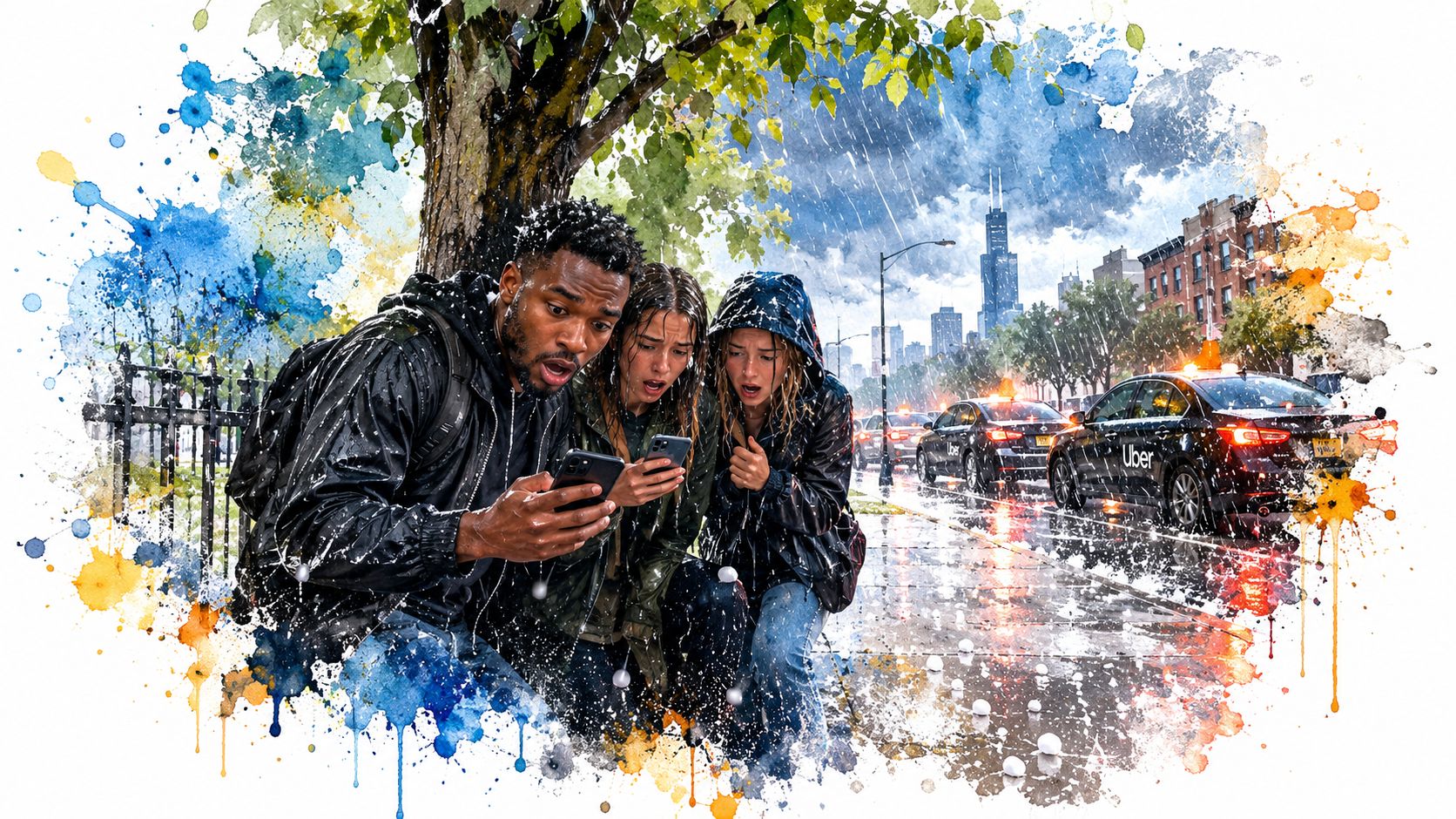
    Three shocked people standing in the rain outside in Chicago while looking at their smartphones together.

    What that storm taught me

    A community doesn't form because people share an address. It forms when people share time, work, attention, and small acts of trust. The story of the vacant lot follows that same pattern. A place changes after people decide to keep returning to it.

    England's 2025/26 Community and Engagement Survey found that 46% of people aged 16 and older took part in civic participation, consultation, or activism during the prior 12 months, compared with 41% in 2024/25. Civic participation alone reached 38%, up from 34% the year before, according to the Community and Engagement Survey report.

    Those figures give a name to what I saw under that tree. When people have a clear local issue and an easy way to act, participation can rise quickly. The rest of the answer lives in the ordinary details, who returns, who feels safe, who gets heard, and what changes on the ground.

    What Community Engagement Really Means in Plain Words

    I explain community engagement this way: show up, do visible work with other people, and come back next week. You don't need a perfect plan, a loud personality, or a special title. You need a reason to step outside and a task that other people can see.

    Living on a block doesn't automatically create a community. You can pass the same apartment doors for years without learning a neighbor's name. You can sign a petition, share a post, or send a donation and still never meet the people facing the same problem.

    I think of it as a block potluck. Every household brings one dish, even if the dish comes from a grocery store. People stand around comparing recipes, asking who lives upstairs, and learning who has a ladder or a spare shovel. A locked apartment door and a takeout menu may feed one person, but they don't help neighbors find one another.
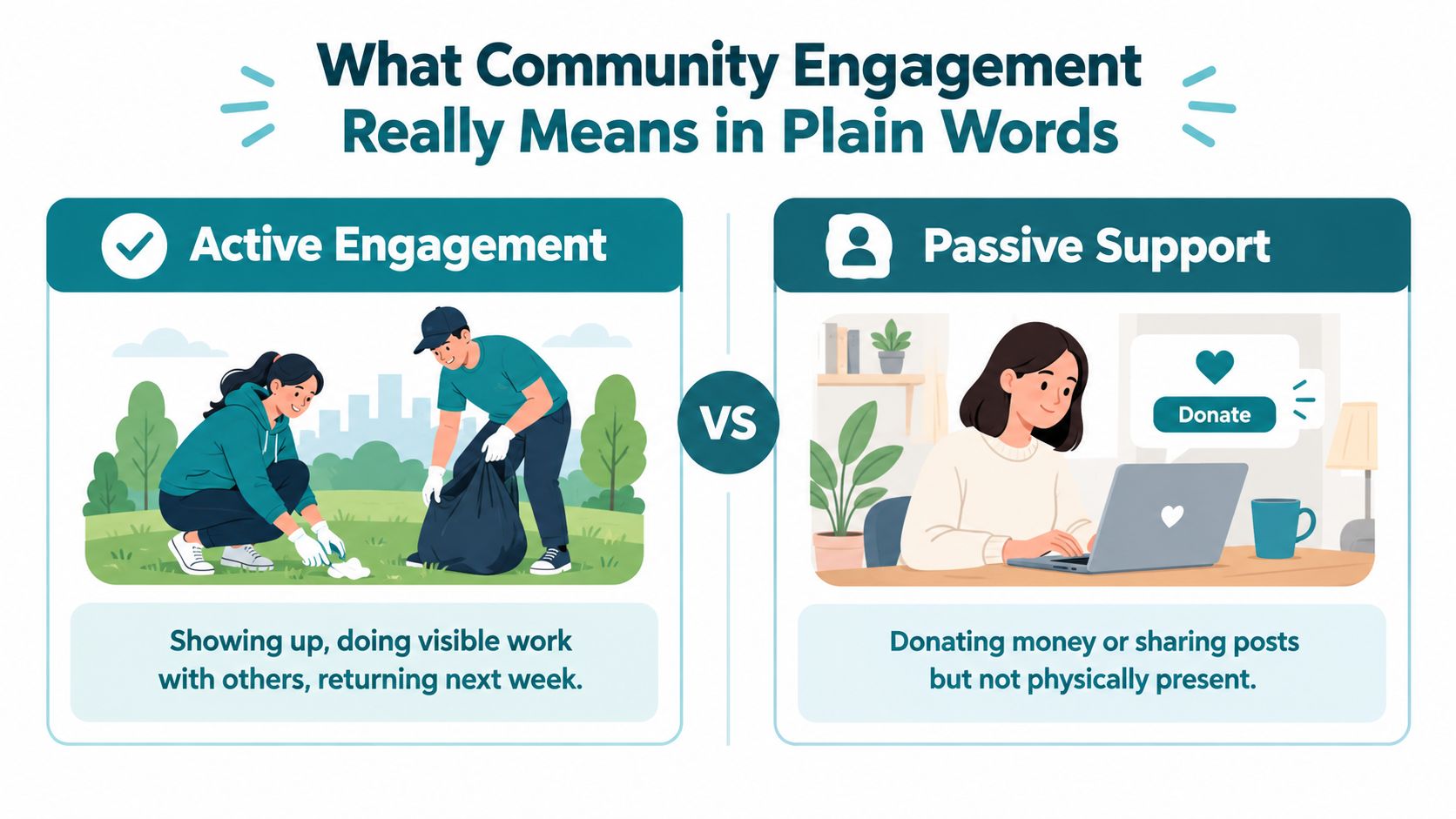
    An infographic comparing active community engagement, showing people cleaning a park, with passive support, such as online donations.

    Five levels of showing up

    A public participation model from the International Association for Public Participation describes five levels:

    • Inform: Give people clear facts and updates.
    • Consult: Ask for views before making a choice.
    • Involve: Keep residents part of the process.
    • Collaborate: Make decisions with the people affected.
    • Enable: Give the community real authority over the result.

    I see those levels on Chicago sidewalks. A group chat can inform volunteers about a cleanup. A neighbor can suggest a dangerous alley, which creates consultation. A regular crew can plan the route together. Residents can collaborate on what happens to a vacant lot. In the strongest version, neighbors help decide how that space will operate.

    People can also turn community into sponsorships when a shared effort grows into a clear local project. The point remains simple. Engagement asks people to take part in a relationship with their neighborhood, not merely react to a message.

    A practical test: If people can see what they did, meet someone new, and find a reason to return, you have created an opening for engagement.

    Four Ways Engagement Changes a Neighborhood

    I've watched one Saturday cleanup produce several results at once. We arrive with bags and grabbers, but we leave with more information, more familiar faces, and a better sense of what the block needs.

    Safety begins with familiar faces

    Kevin can name the block where drivers began slowing down after seeing the same yellow vests each Saturday. The vests didn't replace signs or traffic rules. They made people notice that residents and volunteers watched the street and cared about what happened there.

    That visibility changes the feel of a corner. A person walking home sees faces they recognize. A child sees adults working together. A driver sees people who may speak up when something looks dangerous.

    Resilience grows before the emergency

    The crew that picks up bottles can also notice a blocked drain, a fallen branch, or an older neighbor who needs help carrying something. After a storm, those relationships reduce the time people spend figuring out who can respond.

    We don't need to know everything. We need enough trust to knock on a door, send a message, or ask another volunteer to check a nearby house. A cleanup group can become a small network before anyone calls it one.

    Social ties form during ordinary work

    Two volunteers who met over grabbers in 2022 are now godparents. I've also watched new arrivals to Chicago find a friendly face on their first cleanup. Nobody had to force a bonding exercise. People talked while sorting bottles from cans, carried full bags together, and shared snacks afterward.

    The Census Bureau and AmeriCorps reported that 75.7 million Americans aged 16 and older, or 28.3% of the population, formally volunteered through an organization between September 2022 and September 2023. The Census Bureau account of civic engagement and volunteerism shows how many people already turn concern into action.

    Organized voices reach services more clearly

    Aldermen and city crews can respond more easily when a group sends dated photos, a location, a short description, and one named contact. Scattered complaints can disappear across separate channels. A group can collect the same problem in one place and follow up with a person who knows the details.

    That structure also gives residents a way to ask what happened after they reported an issue. A 2025 survey found that 94% of residents want local governments to report how their input was used, according to the State of Community Engagement survey. People want a response they can see, not only a form they can complete.

    These outcomes stack. The same Saturday morning can make a street feel watched, give neighbors a contact during a storm, create friendships, and produce a cleaner report for city staff.
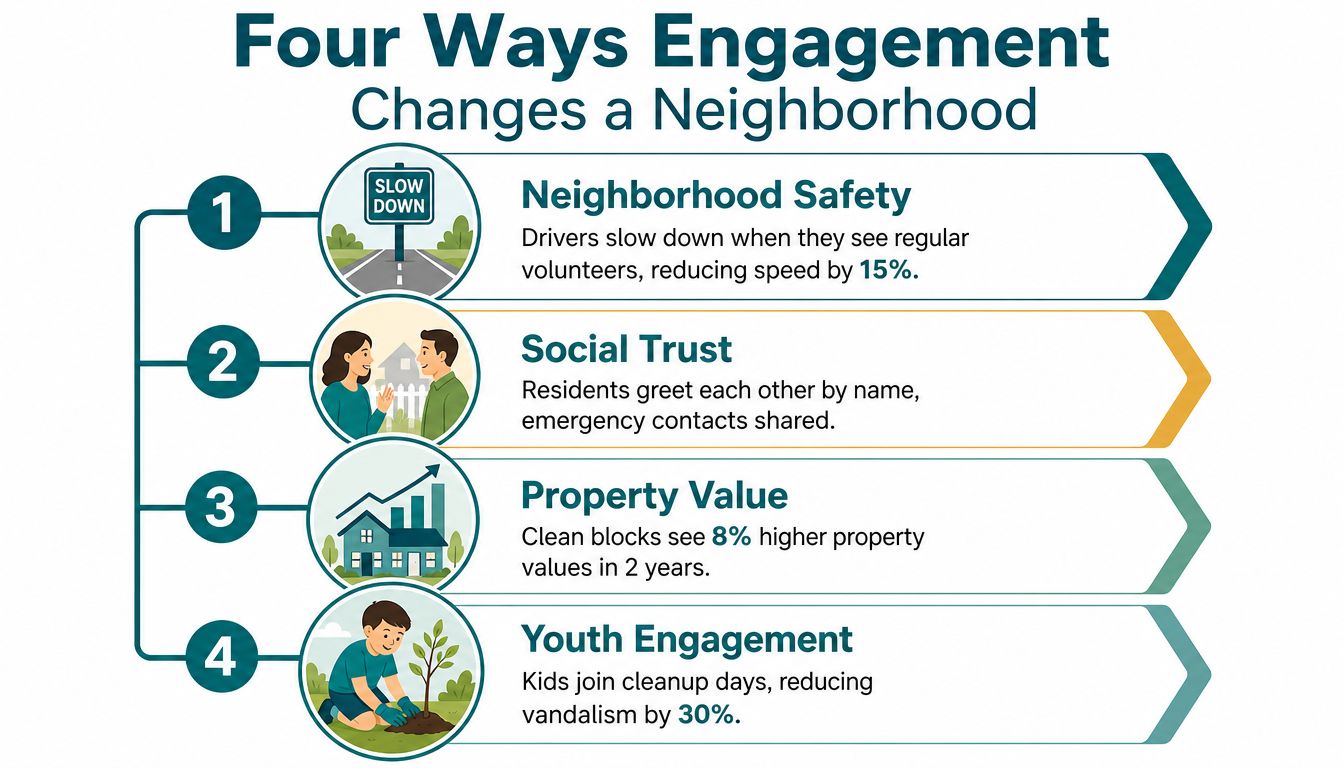
    An infographic titled Four Ways Engagement Changes a Neighborhood, showing safety, social trust, property values, and youth engagement.

    The video below gives another way to see how shared action can bring residents into the same work.

    What Real Impact Looks Like Block by Block

    The first scene happened beside a highway. A mattress sat near the ramp. Shattered glass glittered in the dirt, and fast-food wrappers had collected where the wind pushed them. Volunteers worked through the mess until the asphalt edge looked open again.

    Neighbors watched from nearby. Their surprise said plenty. A road can feel different when people remove the objects that make everyone expect neglect. We didn't need a speech to explain the change. Anyone passing could see the clean stretch.

    Caterpillar Park gave children somewhere to run

    In Englewood, an empty lot once held the usual mix of trash, weeds, and things nobody wanted to touch. The group won the lot at auction and began working on it. People painted murals, planted flowers, and built benches.

    Later, children ran toward the space instead of around it. Neighbors sat on the benches they helped build. The work didn't end when the first bags left the lot. People kept returning because they could see their own hands in the place.

    A warning didn't decide the future

    People told us to stay away from one ward. We listened to the safety concerns, planned carefully, and returned on Saturday mornings with a clear buddy system. At first, strangers watched from windows and doorways. Over time, faces became familiar.

    The trash bags grew smaller. Conversations grew longer. Someone waved from a porch. Someone else asked when we'd return. That kind of change takes repetition, because one cleanup can remove debris while regular visits can change expectations.

    The three scenes share a pattern. People pointed to the result, a cleared ramp, a usable lot, and a cleaner route. Then they pointed to the people who made it happen. That is what impact looks like to me. You can smell the difference near the highway, sit on the bench in Englewood, and recognize the neighbor at the end of the block.

    How to Build Participation Where You Live

    Start with a rhythm people can remember. Litter Caterpillars meets on weekend mornings, often at 9 a.m., so someone can learn the time once and return without searching through a new announcement every week.

    Choose one meeting corner and one small first task. One hour on one block feels possible. A volunteer who thinks, “I can try this once,” may stay when the work ends with a visible result.

    Make the first visit easy

    Bring the gear. Grabbers, gloves, bags, and water remove the awkward question of whether a new person owns the right supplies. Pair a first-timer with someone who knows the route, the safety rules, and what to do with sharp objects.

    Use bright vests and a buddy system. Keep people away from traffic, explain which items require special handling, and stop when the conditions become unsafe. Volunteer safety comes before a full bag.

    Reach people through ordinary places

    Post in a local Facebook group, but don't stop there. Tell people at church, near school pickup, and in the barbershop. A neighbor may ignore a general announcement and respond when someone they recognize invites them directly.

    Finish with a group photo and a shared snack. That small ending gives people a moment to talk after the work, and it helps the event feel like a gathering rather than an unpaid chore.

    A good first event has three parts: a clear meeting place, a short task, and a warm ending.

    Repeat the pattern before changing it. New organizers can also read community engagement strategies from Litter Caterpillars for more practical ideas. If your group relies on a campaign or a fundraising push, planning for post-campaign backer retention can help you keep people connected after the first action ends.

    Measuring Whether Your Effort Is Working

    I don't need fancy software to tell whether a cleanup has momentum. I keep a shared note with the basics, who came, who came for the first time, and who returned later.

    The return matters more than a crowded first event. A person who comes back has learned the route, met someone, and decided the time feels worth protecting. That choice tells me more about trust than a large one-day turnout.

    I also photograph the same alley or sidewalk from the same angle. The picture helps a skeptical neighbor see the change, and it gives a new volunteer a clear reason to join. We count bags or debris, but we read that number carefully. Smaller totals can mean the block needs less cleanup because residents have started treating it with care.

    A simple tracking table

    Metric How to Track Healthy Sign
    Weekly attendance Record names or a headcount after each cleanup Familiar faces return while new people still find the group
    First-time volunteers Mark first visits in the shared note Outreach reaches people beyond the regular crew
    Repeat participation Check who returns during later cleanups More people build the habit of coming back
    Visible condition Photograph the same spot each time The route stays cleaner between visits
    Neighbor response Note waves, conversations, and offers of help Residents approach the crew without an invitation
    Local support Record water, snacks, gear, or space offered by businesses Nearby businesses begin helping with the work

    The community impact measurement guide from Litter Caterpillars can help you turn those notes into a simple routine. Keep the record public enough for volunteers to understand, while protecting private information.

    Engagement can also touch health and confidence. A meta-analysis of 131 studies found statistically meaningful improvements in health behavior, health outcomes, self-efficacy, and perceived social support in programs that included community engagement, with reported effect sizes of δ = 0.16 for health consequences, δ = 0.41 for health behavior self-efficacy, and δ = 0.41 for perceived social support in the review of community engagement interventions. I see the street version when a quiet volunteer takes a harder route because a friend is walking beside them.

    Start Small and Keep Showing Up

    Kevin started by grabbing trash alone on weekends. He didn't wait for a large crew, a perfect budget, or a citywide plan. He picked up what he could, then invited people into a routine that kept going.

    That routine matters because community engagement grows through repetition. A one-time heroic cleanup can fill bags. A weekly habit can teach neighbors who you are, what you do, and when they can find you.

    Pick one action this week:

    • Pick up five pieces of litter on your block and dispose of them safely.
    • Attend one local meeting and introduce yourself to a person sitting nearby.
    • Say hello to two neighbors and ask what they want to improve on the block.

    Then repeat the same action. Walk the same route. Attend the next meeting. Greet those neighbors again. The work may feel small, but repetition gives people a chance to trust the pattern.

    In Chicago parking lots, our weekly meetups at 9 a.m. make that pattern visible. People know where to go, what to bring, and who might be waiting. Rain changes the jackets. Snow changes the pace. The habit remains.

    The answer to why is community engagement important lives there. A lonely street becomes a cared-for place when people keep bringing their names, hands, and attention back to it. Choose one action today, put it on your calendar, and return before the first burst of excitement fades.


    Litter Caterpillars hosts weekly Chicago trash pickups where you can bring friends, meet neighbors, and work safely with shared gear. Visit Litter Caterpillars to find an upcoming cleanup and choose the Saturday when you'll show up.
  • How to Measure Community Impact: Guide for Volunteer Groups

    How to Measure Community Impact: Guide for Volunteer Groups

    You finish a cleanup and your body knows it before your brain does. Your gloves stink. Your back is tight. Your water bottle is empty. You look down the block and see a street that looked defeated three hours ago and now looks like somebody finally cared.

    Then you look at the pile.

    Bags. Broken glass. Fast food cups. Rusted cans. Cigarette packs. Maybe a tire if your day got weird.

    And then the question hits you. Sure, we filled bags. But what did we really change?

    I know that question well. I started cleaning streets during a season when my own life felt cluttered and jammed up. Cleaning other people's messes felt easier than facing my own. Strange but true. Out on the street, with a grabber in my hand and wind in my face, things got simple. Pick it up. Keep moving. Come back next week. Somewhere in that rhythm, I changed.

    That's why I care so much about measurement. Not because I love spreadsheets. I don't. I care because volunteers give you their Saturday morning, their sweat, their safety, and their hope. You owe them a real answer when they ask, “Did this matter?”

    If you want to learn how to measure community impact, start there. Start with respect. Start with honesty. Start with the belief that visible work deserves visible proof.

    More Than Just Bags of Trash

    You already know the first trap. You clean a block, count the bags, post the photo, and call it impact. I get it. A pile of trash is satisfying. It feels like a scoreboard.

    But a cleanup group isn't in the bag business. You're in the change business.

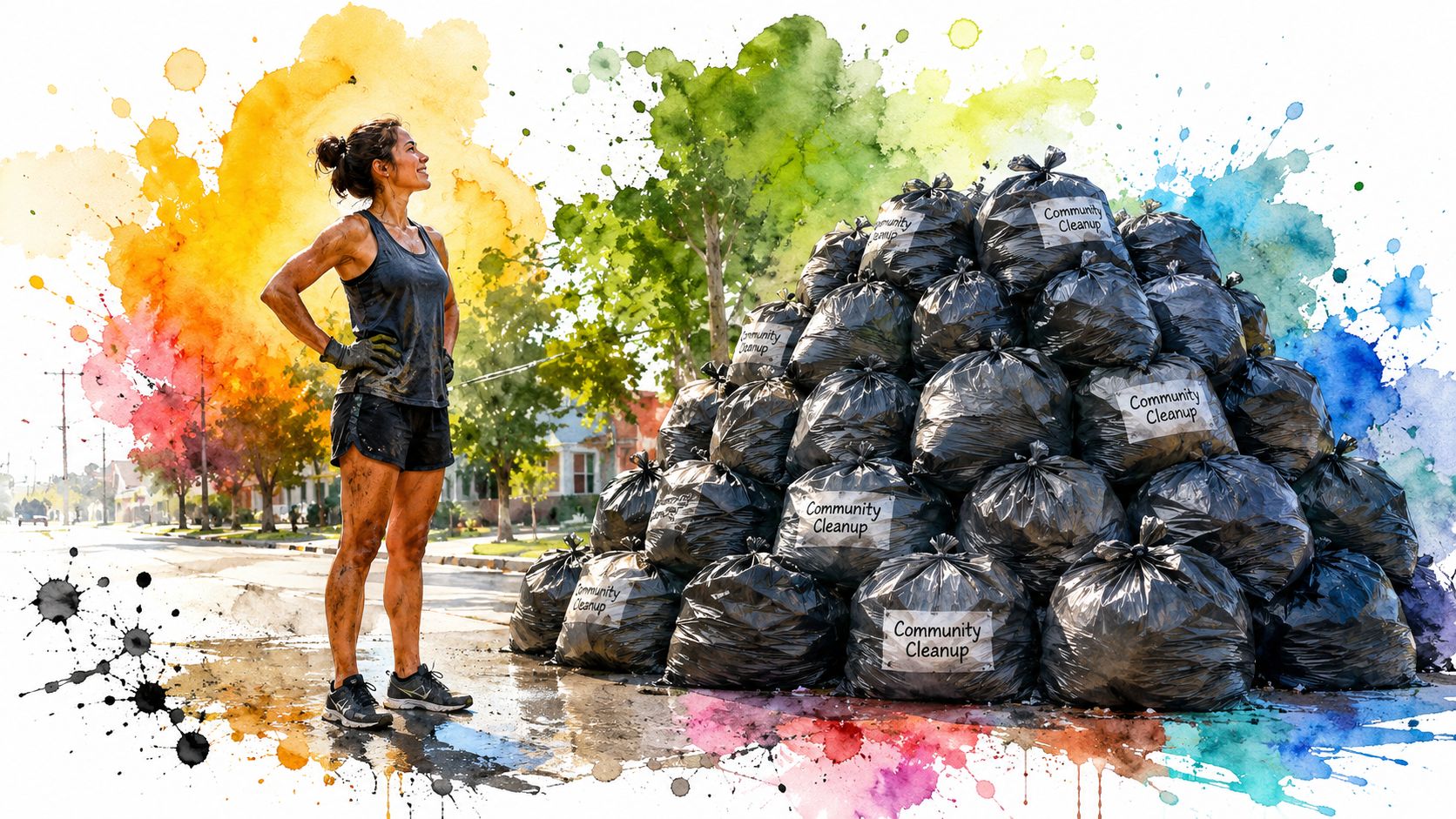
    A woman stands proudly next to a large pile of garbage bags labeled Community Cleanup, symbolizing environmental impact.

    When I first got serious about neighborhood cleanup, I thought hard work would speak for itself. It doesn't. Streets change. People forget. New volunteers show up with no memory of what the block looked like before. Residents notice a difference, but if you never capture it, the story disappears.

    That's why I treat measurement like cleanup's second half. The first half is doing the work. The second half is proving the work changed something.

    What the pile can't tell you

    A pile of bags can't tell you if the same volunteers came back because they felt connected. It can't tell you whether a resident finally stopped to say thanks after ignoring your group for months. It can't tell you if a corner that always felt abandoned now feels watched over.

    That kind of proof takes intention.

    Practical rule: If all you track is what you removed, you miss what you repaired.

    Sometimes the strongest record of your work is simple. A before photo. An after photo. A note that says, “Two residents asked how to join.” A screenshot of the group chat after the event. A quick log of which block got cleaned and who showed up. That's how a cleanup turns into a body of evidence, not a fading memory.

    If you want an example of what visible service looks like in the world, spend a minute looking at trash cleanup work in action. You can feel the difference between activity and proof.

    Measurement is respect

    I've seen groups burn out because they kept asking people to show up without showing them what their effort built. People need fuel. Proof is fuel.

    So yes, count the bags. Then go one step further. Ask what changed on that block, in your crew, and in the people who watched you work. That's where community impact starts to come into focus.

    Start with Your Story Not Your Numbers

    Most volunteer groups mess this up at the beginning. They start with a spreadsheet before they start with a sentence.

    That's backwards.

    If you don't know your story, your numbers will drift. You'll track whatever is easy. Bags collected. Gloves handed out. Posts published. None of that means much if it isn't tied to a living reason for why your group exists.

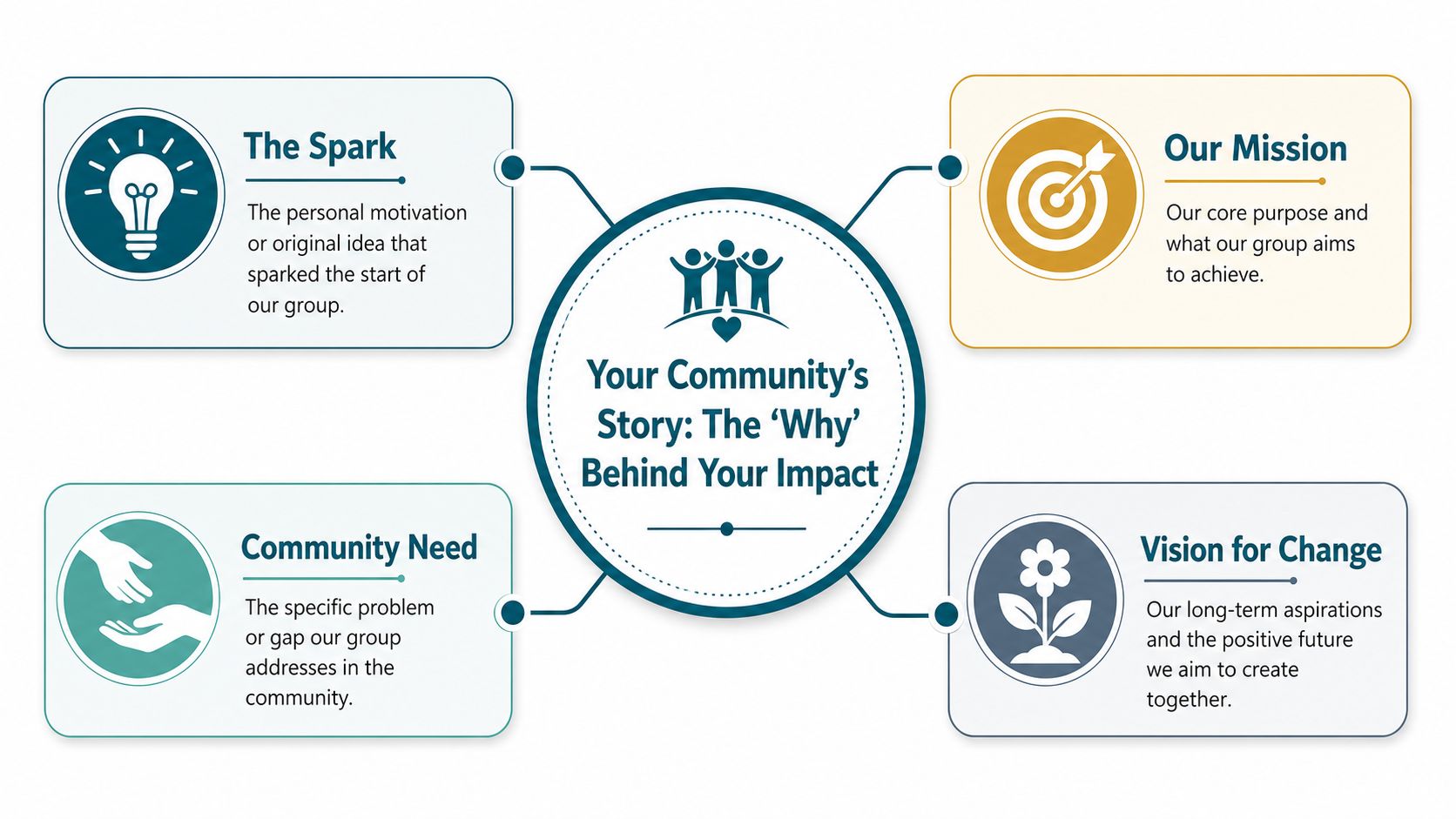
    Find the spark

    My own spark was personal. I had trouble cleaning and organizing my own life. Trash felt heavier than it should have. Tiny things carried emotional weight. Service outside gave me a way to build discipline and bravery inside. That became the engine.

    Your spark may be different. Maybe your block got trashed every Monday after the weekend crowds. Maybe your kids had to walk past broken glass on the way to school. Maybe you moved to a new city and needed friends who cared about more than brunch and talk.

    Write that down in plain language.

    A diagram illustrating the four key components to define a community story and understand its impact.

    Turn the spark into a mission

    A usable mission is short and human. It says who you help, what you do, and what change you expect.

    Try this fill-in-the-blank:

    • Who we show up for
      The residents, volunteers, and small businesses on neglected blocks.

    • What we do
      We clean littered areas consistently and invite people to join us.

    • What we think will change
      Streets look cared for, people build trust, and more neighbors step into service.

    That's enough to guide your measurement. You don't need corporate language. You need clarity.

    One good way to test your mission is this: if a new volunteer reads it in ten seconds, do they understand what they're joining?

    Build goals from the mission

    Once your story is clear, your goals stop being random. They become evidence of your values in motion.

    The best practice is plain. You need a baseline before the work starts, clear goals tied to your mission, people affected by the work helping define the metrics, mixed methods that combine numbers with stories, and honest reporting about what went well and what didn't, as outlined in this guidance on measuring community impact effectively.

    That means you should decide things like:

    1. What your baseline is
      What did the block look like before regular cleanups began? How many volunteers usually showed up? How did residents talk about the area?

    2. What “better” means
      Cleaner sidewalks? Stronger volunteer retention? More conversations with neighbors? Fewer repeat problem spots?

    3. Who helps define success
      Volunteers. Residents. Store owners. School staff. The people near the work usually know what progress looks like.

    If your mission is personal but your metrics are generic, your proof will feel hollow.

    For a good gut check, read a few volunteer testimonials from cleanup experiences. Listen for what people remember. They rarely start with numbers. They start with belonging, courage, routine, pride, and visible change. Your metrics should support that story, not replace it.

    Choose What to Count and What to Ask

    Here's the cleanest way I know to explain measurement. Outputs are the reps. Outcomes are the muscle.

    A cleanup group can do a ton of reps. Bags filled. Blocks covered. Volunteer hours logged. Those matter. But if you stop there, you're mistaking motion for change.

    Outputs tell you what you did

    Outputs are the easiest things to count because they happen right in front of you. You can tally them while still wearing gloves.

    Examples include:

    • Volunteer participation. Who came, how often, and from which neighborhoods or backgrounds.
    • Cleanup activity. Bags filled, blocks covered, sharp objects removed, graffiti reported.
    • Time invested. Start time, end time, volunteer hours, repeat attendance.

    These numbers help you stay organized. They also help you answer simple operational questions. Which locations need more tools? Which dates pull the best turnout? Which team leads keep events moving?

    Outcomes tell you what changed

    Outcomes are tougher. They ask whether your work had an effect beyond the event itself.

    Maybe residents start greeting the team. Maybe a business owner asks you to come back. Maybe volunteers say they feel safer, more connected, or more rooted in the neighborhood. Maybe a stretch of sidewalk stays cleaner longer because people stop treating it like a dumping zone.

    A strong warning from practice is this: many groups over-rely on outputs like trash bags collected and miss outcomes like whether residents feel safer or better about the area. To keep your measurement valid, use 3+ indicators and mix hard secondary data with qualitative input. Also, break your data apart by demographics because that kind of disaggregation reveals participation disparities in 60–70% of community projects, according to Bridgespan's discussion of impact measurement.

    That one habit changes everything. If the same type of person always shows up, your group may be active but still narrow. You won't see that unless you look.

    A simple table for cleanup leaders

    Metric Type What It Measures Example Why It's Useful
    Output Work completed Bags of trash removed from one corridor Shows effort and event scale
    Output Participation Number of volunteers who attended Helps with planning and retention
    Output Coverage Blocks, alleys, or lots cleaned Shows geographic reach
    Outcome Resident response Short comments about how the block feels now Captures lived experience
    Outcome Volunteer experience Group chat poll on pride, connection, or safety Shows whether people want to return
    Outcome Neighborhood condition over time Repeat photos of the same hotspot across weeks Shows whether change sticks

    Pick fewer metrics and ask better questions

    Most volunteer crews don't need a giant dashboard. They need a tight set of indicators they'll track.

    Try a small stack like this:

    • One operational metric
      Attendance by event.

    • One visible condition metric
      Repeat photo of the same corner each visit.

    • One experience metric
      A one-question volunteer poll after each cleanup.

    • One community voice metric
      A short note from a resident, worker, or passerby.

    That's enough to start seeing patterns.

    If you want a practical benchmark for shaping your own system, this kind of volunteer program evaluation approach is a smart model. It keeps measurement tied to real people instead of turning it into paperwork theater.

    Your data should fit in your hands. If tracking it feels heavier than the cleanup itself, you built the wrong system.

    Simple Ways to Gather Your Proof

    You don't need fancy software to measure community impact. You need habits. Your phone already has most of the tools.

    The trick is to collect proof while the day is still alive. If you wait until Sunday night to remember what happened Saturday morning, half the good stuff is gone.

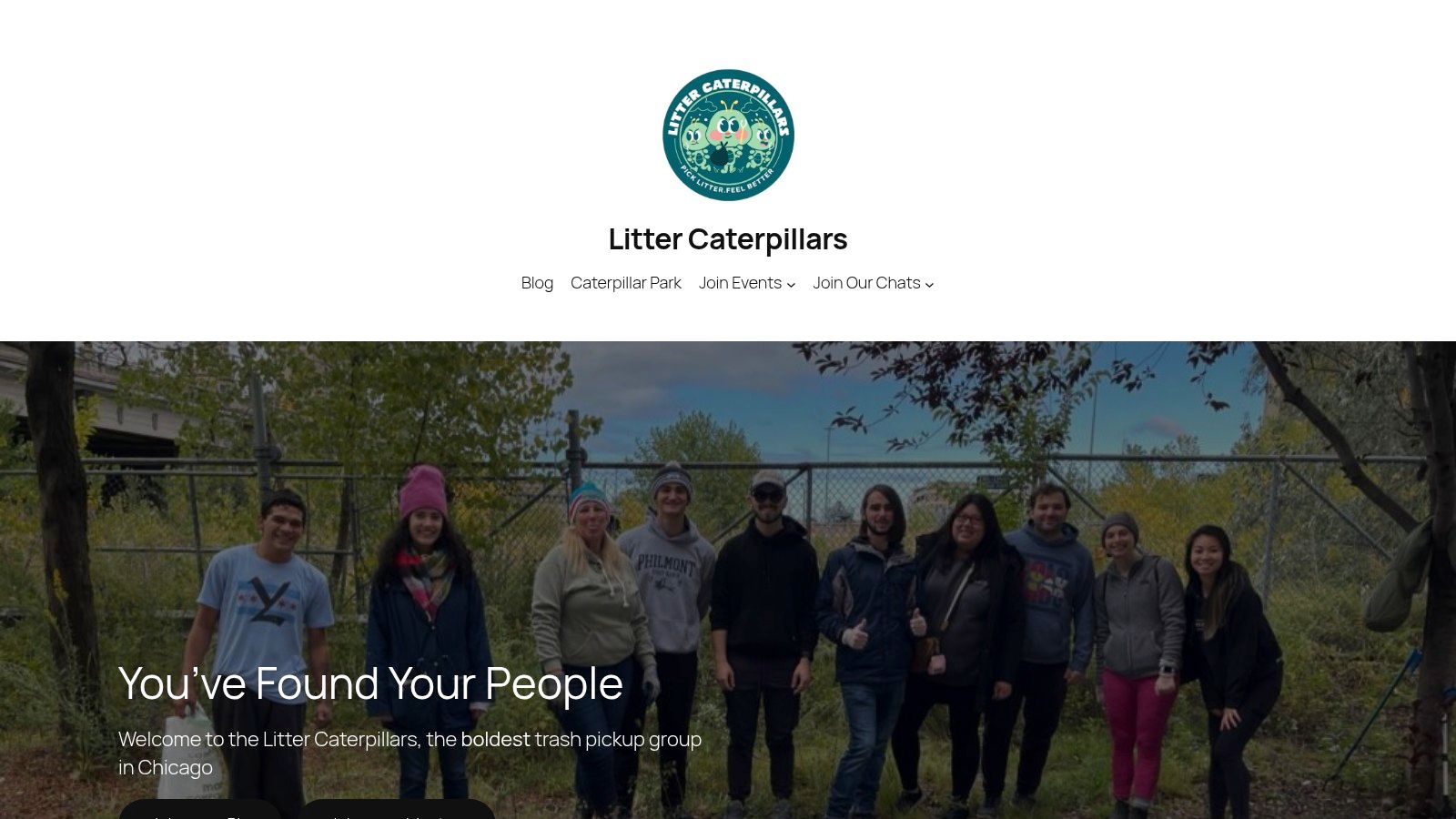
    Screenshot from https://www.littercaterpillars.com

    Use the four-layer street version

    A solid framework breaks impact into four layers: participation, experience, outcome, and return. It also treats measurement as continuous capture instead of a once-a-year survey, as described in Sopact's overview of community impact measurement. I like this because it matches how cleanup groups live. You don't work once a year. You show up again and again.

    Here's the street version of those four layers:

    • Participation
      Track who came, who led, who was new, and who returned.

    • Experience
      Ask how people felt. Safe? Proud? Included? Tired but happy?

    • Outcome
      Record what changed in the place or in the people.

    • Return
      Show the evidence back to your volunteers and neighbors, then ask if it rings true.

    That last part matters. If your report says one thing and the block says another, trust the block and fix your method.

    Scrappy tools that actually work

    I like tools that survive dirt, rain, and low attention spans. Use what your crew will keep using.

    • Before-and-after phone photos
      Stand in the same spot each time. Face the same direction. If you can, save them in a shared Google Drive folder labeled by date and location.

    • Pinned Google Map
      Drop a pin for each cleanup site. Add photos and a one-line note. Over time, you build a visual trail of where your crew has worked.

    • Notes app or Google Form
      One volunteer can log attendance, unusual finds, resident comments, and follow-up needs in under two minutes.

    • Tally counter
      Cheap and effective for counting needles, tires, shopping carts, or illegal dump items.

    • Group chat poll
      Ask one question after the event. “How connected did you feel today?” or “Would you return to this spot next month?”

    Keep it moving while the energy is high

    Your best data often comes in the first ten minutes after cleanup ends. People are still buzzing. Don't waste that window.

    Ask a volunteer to record a quick voice memo. Grab one sentence from a resident. Snap the final photo before the bags get hauled away. Log the location before you drive off and forget the cross street.

    This short clip captures the kind of hands-on energy that numbers alone can't carry:

    Don't make data a second job

    The system should feel light. If your volunteers dread the paperwork, they'll skip it. I'd rather see a group consistently gather five simple data points than attempt a giant form nobody finishes.

    A clean weekly routine might look like this:

    1. Before cleanup
      Take the opening photo and note the location.

    2. During cleanup
      Count a few chosen items and track who joined.

    3. Right after cleanup
      Take the after photo and run one quick poll.

    4. That afternoon
      Save everything in one folder and write three sentences about what stood out.

    That's it. Small proof, gathered often, beats a perfect system you never use.

    Turn Your Data into a Powerful Story

    Raw data is like a pile of bricks. Useful, but nobody wants to live in a pile of bricks. You have to build something with it.

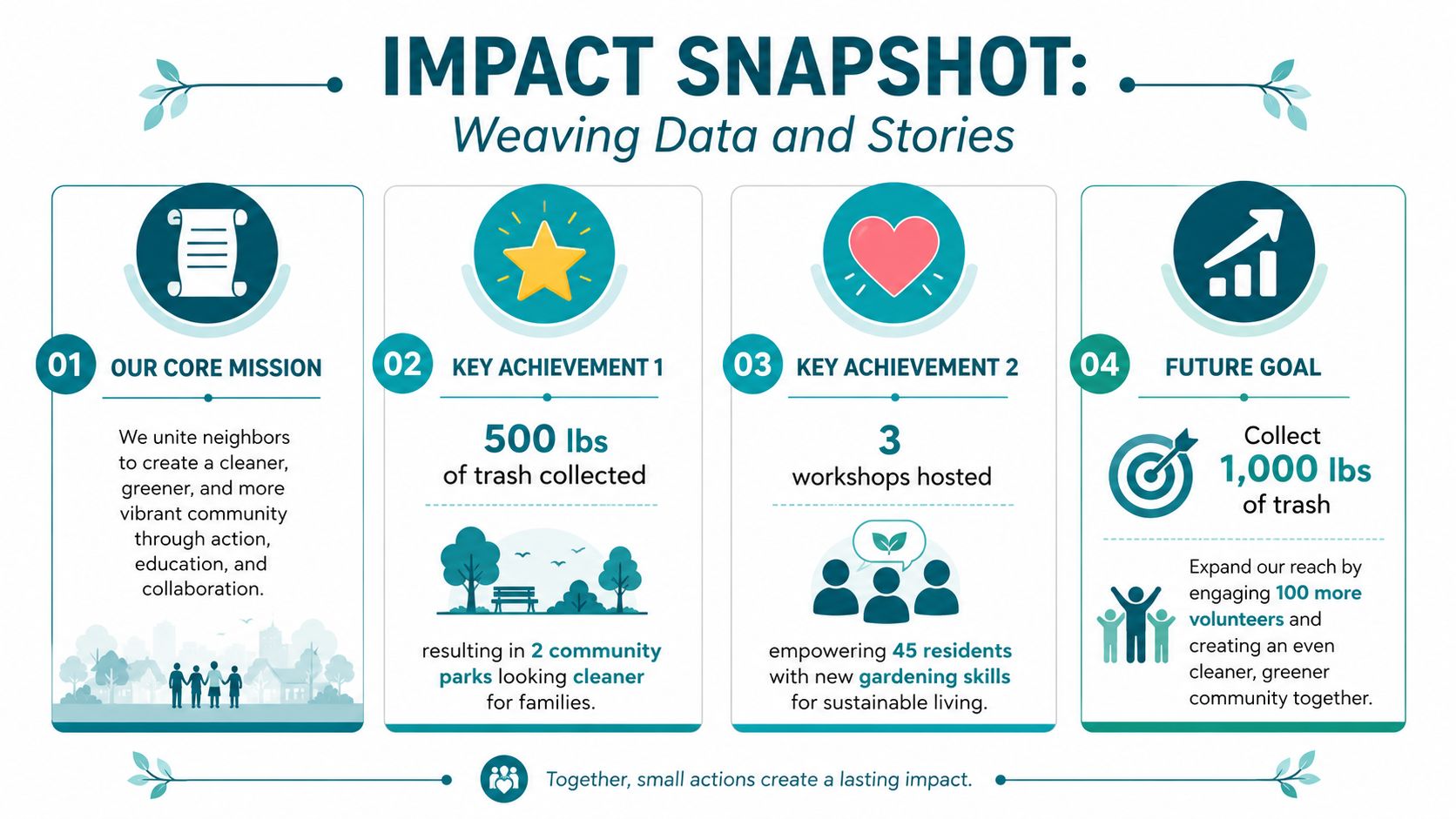
    For cleanup groups, that “something” is an Impact Snapshot. One page. One image. One fast read. People should understand the win before they finish their coffee.

    What goes in the snapshot

    Your snapshot should feel like a movie trailer, not a tax return. It needs just enough structure to be credible and just enough human texture to feel alive.

    An infographic titled Impact Snapshot showing community mission, achievements in trash collection and workshops, and future goals.

    Use this template:

    • Top section
      Your strongest before-and-after photo pair.

    • Middle section
      A few numbers from the event or the month. Keep them tied to the metrics you already decided to track.

    • Bottom section
      One short quote from a volunteer, resident, or local partner.

    • Footer
      The next action. Join us. Partner with us. Follow the next cleanup route.

    Pair evidence with voice

    A number proves activity. A quote proves meaning. Put them together and the story lands.

    A good quote isn't polished. It's real. Something like, “I'd walked past this lot for months and felt defeated. Today it finally looked cared for.” That line gives your numbers a heartbeat.

    When your numbers and your people say the same thing, trust grows fast.

    If you don't have a quote every time, use a short field note. “Two residents thanked the team and asked when we'd return.” Simple works.

    Keep the design rough but clean

    You do not need a designer to make this. Canva is enough. Google Docs is enough. Even an Instagram carousel can work if you keep it consistent.

    Stick to a repeatable layout:

    • same title placement
    • same photo size
    • same metric order
    • same closing invitation

    That consistency builds memory. After a few weeks, people start recognizing your receipts on sight.

    Build a public record

    One snapshot is nice. Ten snapshots become proof. People stop seeing your cleanup group as a one-off burst of energy and start seeing a pattern. Patterns earn trust.

    Many volunteer groups accidentally gain power through consistency. They keep showing up, keep documenting, keep reporting. Then a resident, funder, school, alderman, or store owner can scroll back and see that the work is real. No inflated claims. No fog. Just evidence stacked over time.

    Use Your Proof to Grow Your Army

    Proof changes how people respond to you.

    Without proof, you sound hopeful. With proof, you sound solid.

    That matters when you ask someone to wake up early and spend their weekend picking up litter. It matters when you ask a small business for gloves, trash bags, or water. It matters when you invite a neighbor who feels cynical and tired.

    People join what they can see

    Most volunteers don't join because of a mission statement alone. They join because they can picture themselves inside the work.

    An Impact Snapshot gives them that picture. They see the block. They see the faces. They see the kind of change a small group made in a short stretch of time. Suddenly joining doesn't feel abstract. It feels doable.

    Use your proof in a few direct ways:

    • Recruiting posts
      Share snapshots on Instagram, Meetup, email, or group chats with one clear invite.

    • Partner asks
      Bring a printed snapshot when you talk to a hardware store, coffee shop, school, or church.

    • Volunteer retention
      Send the snapshot to everyone who joined. Let them feel the win again while it's fresh.

    • Neighborhood trust
      Post it where local residents can see what happened on their block.

    Proof also keeps you honest

    This part matters just as much. Measurement doesn't only help you grow. It helps you correct.

    If a site keeps getting trashed again in two days, your method may need to change. If first-time volunteers come once and vanish, your experience may be weak even if the cleanup looked productive. If your demographic breakdown shows the same slice of people every week, your outreach may be narrow.

    That's good news. Honest proof gives you something to fix.

    Brave groups don't hide weak spots. They learn in public and keep moving.

    If you want to know how to measure community impact in a way that helps your crew, this is the answer. Track what you did. Listen for what changed. Show the evidence. Invite more people in. Repeat.

    That's how a cleanup turns into a movement. One block. One morning. One clear receipt at a time.


    If you want to join a crew that cleans hard, builds real friendships, and shows its work, check out Litter Caterpillars. Show up on a weekend morning, grab a picker, and help turn service into something people can see and feel.