
Tag: volunteer leadership

  • Group Decision Making That Keeps Volunteers Moving

    Group Decision Making That Keeps Volunteers Moving

    The rain had turned the vacant lot into brown soup by the time our crew gathered. Ten volunteers stood around a folding table, trying to choose a cleanup site, set safety rules, and pick a Saturday schedule before the coffee went cold.

    Why Group Choices Feel Hard on Volunteer Crews

    A volunteer huddle has a different rhythm from a workplace meeting. Nobody clocks in under one boss. People arrive with different experience, different energy, and sometimes different ideas about what “safe” means. A longtime scout may know which alley floods, while a first-time volunteer may notice a broken fence nobody else saw.

    That mix helps the crew, but it can also jam the gears. One person wants the South Side lot with the worst litter. Another wants a smaller site that beginners can handle. Someone checks the weather. Someone else worries about transit. Meanwhile, the clock keeps moving and the crew still needs gloves, bags, water, and a starting point.

    A diverse group of hikers gathered together in a circle, collaboratively planning their route on a large map.

    Why volunteers need a clear decision path

    Friendship adds another layer. You may hesitate to question a friend's site choice because you don't want to sound difficult. A new volunteer may stay quiet because everyone else seems confident. A safety lead may see a problem but soften the warning until nobody understands how serious it is.

    I've learned to treat group decision making as a crew skill, much like sorting sharp objects or tying a full trash bag. You can practice it. You can give it a simple sequence. You can decide in advance which choices need broad agreement, which choices need a vote, and which choices belong with one trained lead.

    The research gives us a useful reason to care about that structure. In a review of hierarchical team decisions, team informity, staff validity, and hierarchical sensitivity explained between 25% and 65% of the variance in decision accuracy, while one cited study found team informity alone explained 24% (review of team decision accuracy). In plain language, more people won't automatically produce a better call. The right information must reach the right person, someone must turn field observations into sound advice, and the person with final authority must weigh that advice correctly.

    Field rule: Give every decision a method before the discussion gets noisy.

    This guide works as a field manual. You'll find a mental model, a method comparison, warning signs, meeting scripts, and short cleanup examples. Use the parts that fit your crew, then adjust them after the next wet Saturday.

    What Group Decision Making Really Means

    Group decision making means a group gathers information, weighs options, assigns authority, and acts on one choice. That sounds formal, but I see it every time volunteers carry a heavy tarp.

    If one person pulls hard, the tarp twists. If three people lift while two people drag, the load swings. The crew moves well when each person shares what they know, listens to the others, and follows a clear call about direction. A decision works the same way.
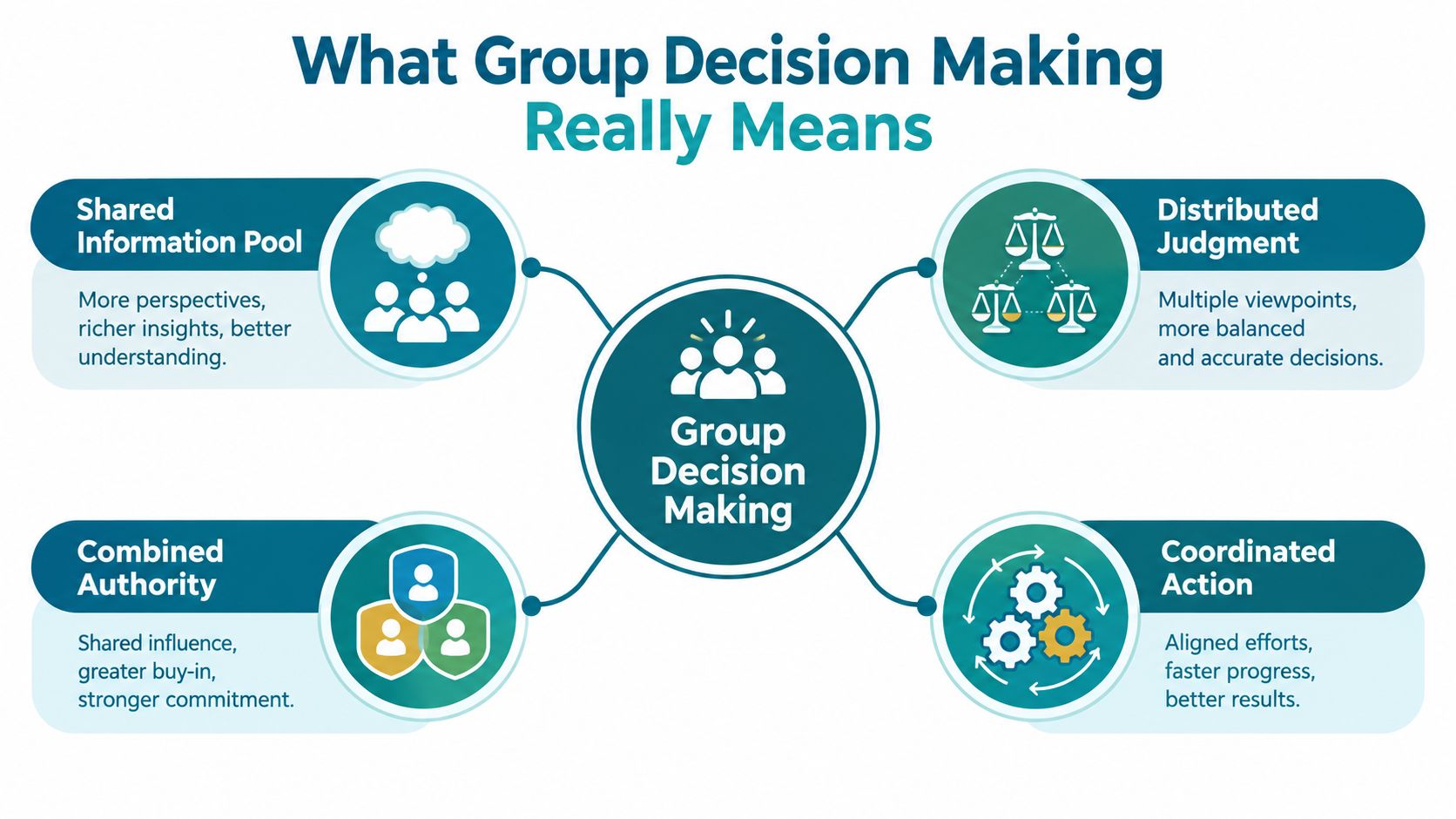
    A diagram illustrating the four key components of group decision making: information, judgment, authority, and coordinated action.

    The information layer

    Start with team informity, which means the decision group has access to the information that matters. A scout might report needles near the fence, standing water behind the shed, or a locked gate at the usual entrance. That report only helps if the group hears it before choosing the site.

    Use role-specific observations instead of general chatter. Ask the site scout about access. Ask the safety lead about hazards. Ask the scheduler about volunteer availability. Each person brings a different piece of the map.

    The judgment layer

    Next comes staff validity, the quality of the recommendations people give after they receive and interpret information. A volunteer may see broken glass but still recommend a route that passes directly through it. Another volunteer may connect the hazard to the right action, such as closing that section or adding a tool restriction.

    You don't need everyone to become a specialist. You do need people to explain the reasoning behind their advice.

    The authority layer

    Finally, hierarchical sensitivity describes how well the final decision-maker weighs the information and recommendations from the group. On a volunteer crew, that person might be the safety lead during a storm call or the event lead during a site choice. Authority doesn't erase participation. It tells everyone who makes the final call when time or risk makes full agreement impractical.

    A practical decision record can use four questions:

    • What do we know? Record direct observations.
    • What do we think it means? State the recommendation and its reason.
    • Who decides? Name the lead or rule.
    • What happens next? Assign the first action.

    That model keeps the crew from confusing more voices with better information flow. A large circle can still miss a hazard if nobody reports it clearly or nobody knows who must act.

    Five Common Methods Compared and When to Use Each

    On a rainy cleanup morning, the crew may need to choose a site, close a path, and set the next workday before anyone has found dry gloves. Each choice calls for a different method. Consensus builds support when local knowledge matters. Majority voting gives a clear result for routine choices. Delegation keeps people safe when waiting would expose them to danger.

    I match the method to the decision. A site choice benefits from shared knowledge about access, hazards, and nearby residents. A sudden lightning warning needs a named safety authority. A schedule ranking can use private votes when volunteers have different availability and may not want to defend it aloud.

    Method How It Works Speed vs Buy-in Best Volunteer Use
    Consensus The group discusses options until members can support or accept one choice. Slower, with strong buy-in. Site selection when access, safety, and neighborhood knowledge need careful discussion.
    Majority vote Members vote, and the option with the most support wins. Faster, with uneven buy-in. Choosing among routine dates or locations when the group needs a clear result.
    Delegated decision The group gives a lead authority to decide within stated limits. Fastest, with buy-in tied to trust and follow-up. Weather calls, hazard closures, equipment limits, and route changes.
    Delphi Members give views separately through repeated rounds, often without direct debate. Slower, with less social pressure. Planning a recurring schedule when volunteers may hesitate to speak in the room.
    Multi-voting Members rank or distribute votes across several options, then the group uses the combined priorities. Moderate speed, with broad input. Narrowing several cleanup sites or ranking possible Saturdays.

    Choosing between consensus and voting

    Consensus needs a clear rule, or the crew can keep circling the same muddy puddle. Unanimity Minus Two, or U-2, lets a proposal pass when up to two members dissent. The Open Group standards guide describes U-2 for groups of about five to nine people, with U-3 suggested for groups of 10 to 14 and U-4 for groups of 15 to 20 (consensus decision rules).

    Majority rule usually moves faster. A comparison of formal decision rules found that majority rule approves proposals more often than unanimity rule within the same group size, while unanimity creates more delay in small and large groups (comparison of majority and unanimity rules). Use the slower agreement process when shared support will affect follow-through. Use a vote when the crew needs a fair, visible result and the stakes allow some members to disagree.

    A simple field match keeps the choice practical:

    • Use consensus for a site with uncertain hazards.
    • Use majority voting for a routine schedule.
    • Use delegation for immediate safety.
    • Use Delphi when quieter volunteers may hold useful information.
    • Use multi-voting when several sites or Saturdays must be narrowed without letting the first loud opinion decide.

    Afterward, record the method and result in one sentence. Volunteers who join later can see how the crew chose, not only what it chose.

    Hidden Dynamics That Pull Groups Off Course

    A friendly huddle can still choose badly. During one rainy cleanup, our crew picked the nearest entrance because a familiar volunteer recommended it. We moved on before checking the flooded gate. A quieter scout already knew the path was blocked, but the discussion ended before that information surfaced.

    Research on 37 student decision groups found that groups using a unanimity rule reached more cognitive consensus than groups using a majority rule. Consensus and satisfaction were connected with behaviors such as asking why someone preferred an option, treating other views as legitimate, and using those views in the group's reasoning (study of information exchange and group consensus). Agreement by itself does not make a choice sound. The crew must examine the reasons beneath each view.
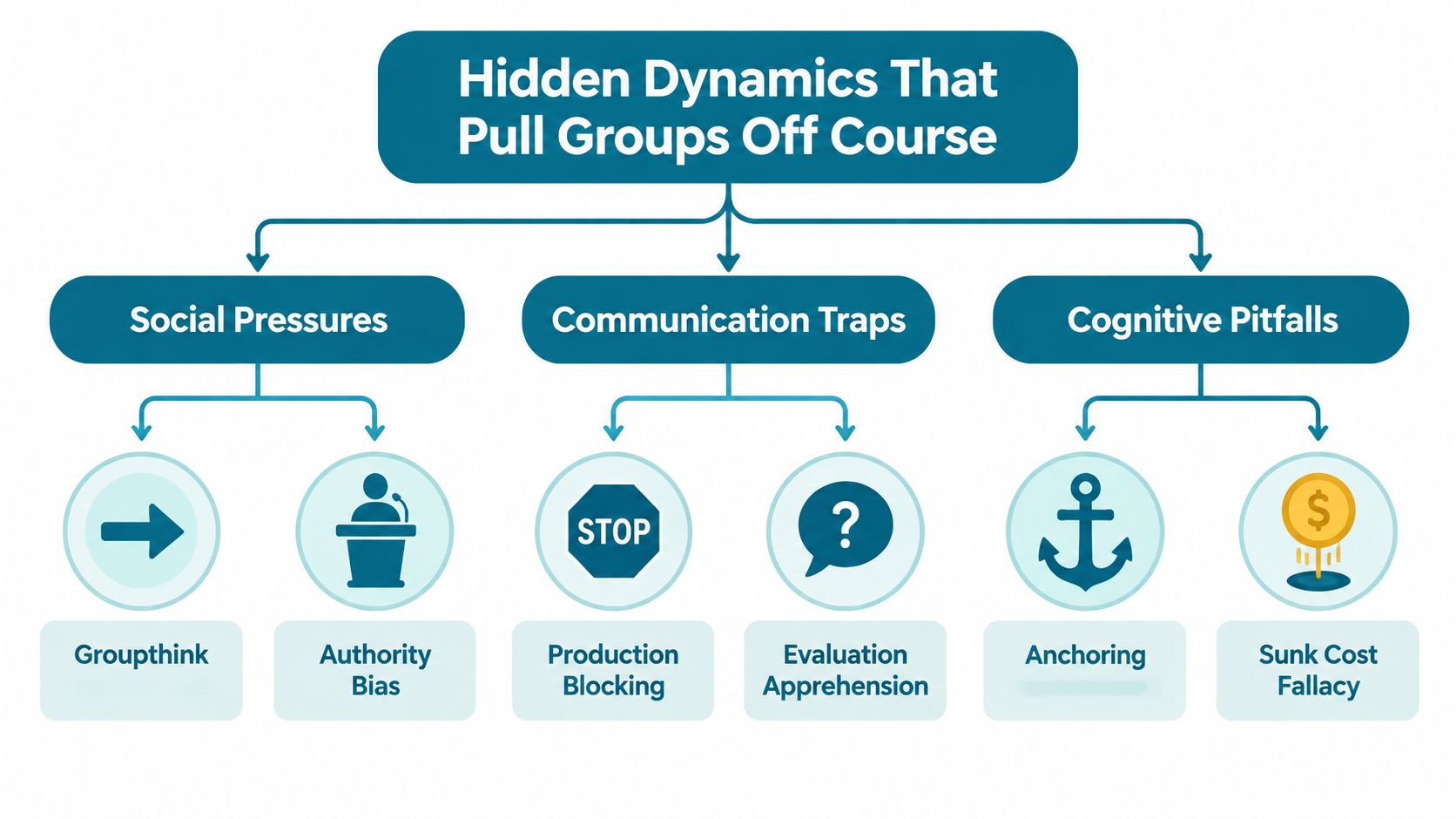
    A chart showing hidden dynamics like social pressures, communication traps, and cognitive pitfalls that hinder group decision making.

    Watch for premature agreement

    Listen for “whatever works,” “we always do that,” or “I'm sure the lead knows.” These phrases can signal comfort, but they can also cover uncertainty. Ask, “What could make this choice fail?”

    Give a dissenting volunteer a reason to explain, not a reason to retreat. Say, “Tell us what you're seeing,” then leave room for an answer. Structured turn-taking helps quieter people contribute because the fastest speaker no longer controls the whole conversation. On a high-turnover crew, that pause may reveal a hazard known only by someone who arrived last week.

    More participation doesn't guarantee a better call

    A 2025 randomized experiment with 1,475 participants in 281 five-person groups found that an LLM facilitator increased information sharing and raised the minimum engagement level, yet did not significantly improve the final decision compared with no facilitation (2025 randomized facilitation experiment). For a volunteer lead, the warning is practical. More airtime can improve the process while leaving the final choice unchanged.

    Before a vote, ask whether the crew has combined the information or merely collected it. Name the strongest argument for each option, then identify the fact that could disprove it. If the decision concerns a flooded route or unstable bank, keep checking until the safety evidence is clear. For a routine snack order, delegation may be enough.

    Diversity can slow the crew

    Different backgrounds and experiences can improve decision quality, while differences in perspective can slow execution and reduce commitment. A 2025 social-science study reported a positive effect of team diversity on decision quality alongside a “social categorization tax” that delayed execution and reduced team commitment. The quality effect was strongest when psychological safety was high (study of diversity, decision quality, and execution).

    On a volunteer crew, match the discussion to the risk. Use consensus for a site hazard or route affecting inexperienced volunteers. Let one person handle a minor supply choice. Use a quick check-in when weather changes, and explain the safety reason behind the call so a rotating crew can accept it.

    If disagreement continues after the practical choice is clear, use this conflict resolution guide for volunteer groups instead of asking a pre-work huddle to settle every relationship issue.

    Here's a short visual reminder before the next discussion:

    Facilitation Frameworks and Meeting Scripts You Can Run

    On a rainy Saturday, I have watched a confident volunteer fill the whiteboard while three quieter people kept their best safety observations to themselves. A fixed process gives every voice a place, especially on crews with high turnover and little formal authority. I often use the Nominal Group Technique when a crew has many ideas or strong personalities. Its five steps are to define the problem, generate ideas without speaking, share them in a round-robin, discuss the list, and vote privately (Nominal Group Technique guide).
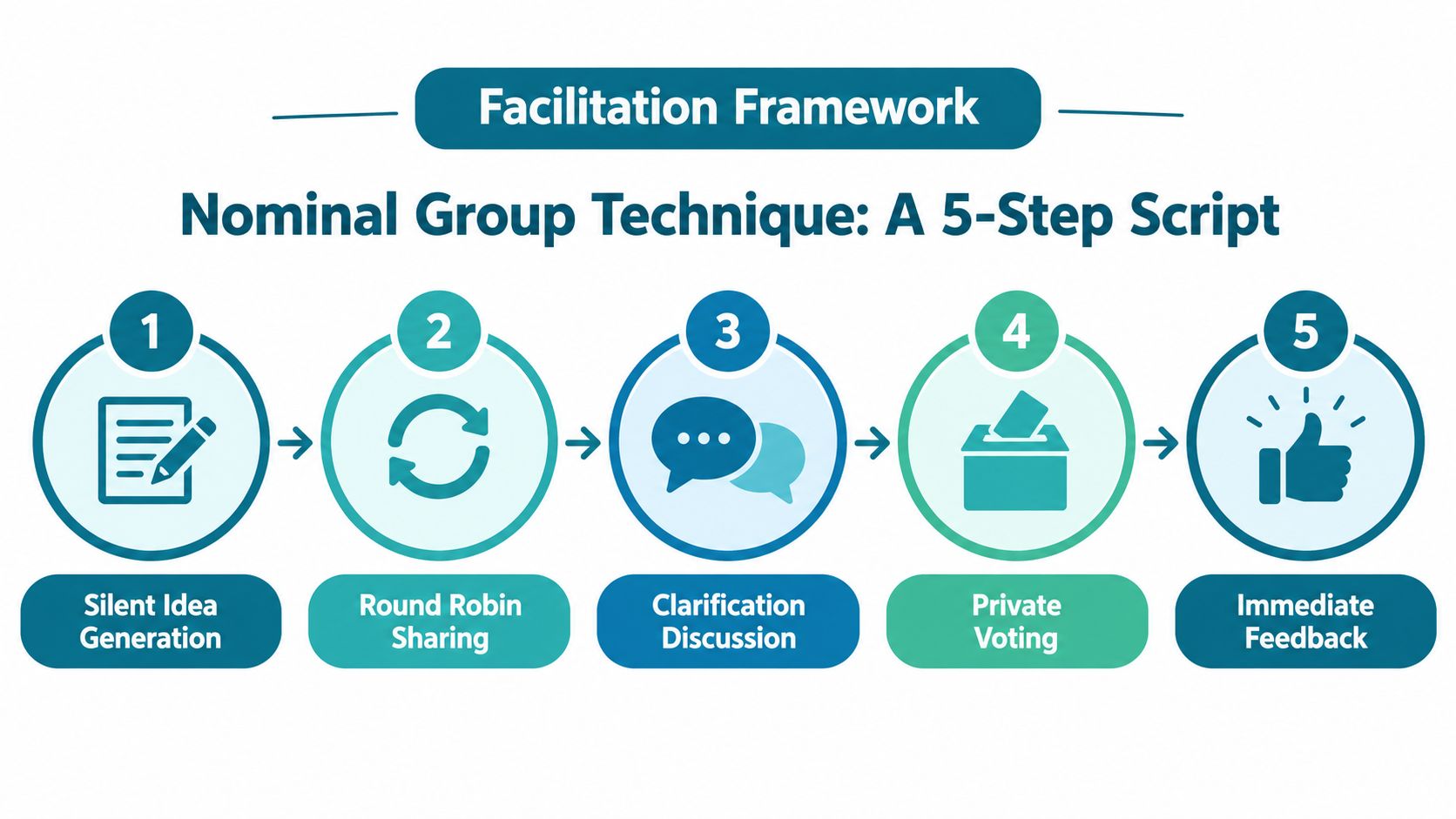
    A five-step flowchart illustrating the Nominal Group Technique process for collaborative decision making and team facilitation.

    The five-step huddle

    1. Define the problem. Say, “We need one cleanup site for Saturday that the crew can reach safely.”
    2. Write in silence. Give everyone paper or a phone note. Allow about 5 to 10 minutes for options and concerns.
    3. Share one idea at a time. Go around the circle. Record each idea without debate.
    4. Discuss for clarity. Ask what an option means and what evidence supports it. Hold criticism until the comparison stage.
    5. Vote privately. Let each person rank or select options, then combine the votes into a group priority list.

    Use clear guardrails. During the first round, people write alone, with no discussion or clarification questions. Each person gives one idea per turn, and the group removes an idea only by unanimous agreement or when it duplicates another (ASQ Nominal Group Technique guidance).

    A 15-minute script

    Set a timer and keep the language plain.

    • Minute 1: “Our decision is ____. The decision-maker is ____. Safety limits are ____.”
    • Minutes 2 to 5: Everyone writes options and concerns without speaking.
    • Minutes 6 to 9: Each person shares one item per turn. Record every distinct option.
    • Minutes 10 to 12: Ask, “What reason supports this option?” and “What risk have we missed?”
    • Minutes 13 to 14: Vote privately or apply the agreed consensus rule.
    • Minute 15: State the result, the reason, the lead, and the first action.

    Match the method to the decision. Use consensus for a site hazard that affects inexperienced volunteers. Use a vote when several workable sites remain and the group needs a fair preference. Delegate a time-sensitive weather or safety call to the assigned lead, then explain the reason and invite relevant facts. That approach protects safety without treating buy-in as permission for everyone to control every decision.

    Do not turn participation into a performance. Ask volunteers to connect information to a choice, rather than rewarding whoever speaks longest.

    A one-page decision note can contain:

    • Decision: What must we choose?
    • Options: What choices did we consider?
    • Facts: What did scouts, safety leads, and schedulers report?
    • Rule: Consensus, vote, delegation, Delphi, or multi-voting?
    • Authority: Who makes the final call?
    • Reason: Why did this option win?
    • Action: Who does what first?
    • Review: What will we check after the cleanup?

    For practice building repeatable huddle habits, see this volunteer coordinator training. If I close a route because of exposed glass, I say, “I made the safety call. Does anyone have information that changes it?” The crew hears the boundary, the reason, and the proper way to add new evidence.

    Short Case Studies From Cleanup Crews in Action

    On a South Side cleanup morning, a crew had three possible lots. One lot had the worst visible litter. Another had easier transit access. The third had a scout's report of a blocked gate, though it sat near a neighborhood that rarely received cleanup attention.

    The lead asked volunteers to write their first choice and their reason. The crew then shared the options in a round-robin and used multi-voting to narrow the list. After discussion, the group used U-2 consensus. Two people still preferred the worst-litter lot, but they accepted the transit-friendly site because more volunteers could arrive safely and the crew could reach the work area without climbing around the blocked gate.

    The process took longer than a quick show of hands, yet it kept the scout's information in the decision. Nobody had to win an argument by speaking the loudest.

    Site choice takeaway: Gather field facts first, rank options second, and set the agreement rule before debate begins.

    A different crew faced a sudden weather call. Rain had started, wind pushed loose branches across the route, and several first-time volunteers waited near the meeting point. The lead had delegated authority for weather safety, so she called off the exposed route rather than asking the whole group to reach agreement in the rain.

    She used a short script: “I'm closing this route because the branches and visibility make it unsafe. We can move to the sheltered block if the safety check passes, or we can end today's event. I'll hear concerns now, then I'll make the final call.” The group moved to the alternate block after a quick check, and two volunteers chose to leave without pressure.

    The lead acted quickly, though she didn't hide the reasoning. That balance protected safety and gave people a fair chance to share information.

    Weather takeaway: Give a trained lead authority for urgent hazards, then explain the call and invite new facts.

    Keep Buy-In Strong After the Decision Is Made

    A decision isn't finished when hands go up. Volunteers need to know what happened, who made the call, and what they should do next.

    I use a simple four-part loop:

    • Announce: State the choice in one sentence.
    • Explain: Name the rule and the reason.
    • Assign: Give each next action to one person.
    • Check: Ask about safety and willingness before work begins.

    For example: “We chose the transit-friendly lot through multi-voting and U-2 consensus. Maya will check the gate, Luis will bring grabbers, and I'll mark the safe route. Does anyone see a safety problem or need a different task?”

    That question gives people a graceful way to speak up. It also prevents the common mistake of treating agreement with the site as agreement with every task.

    Keep a short record after each event. Write down what worked, what surprised you, whether the decision rule fit the situation, and what you'll change next time. A crew that reviews its choices learns faster than a crew that repeats its habits.

    Pride can help people return. Flags, badges, a theme song, and a sincere shout-out can make service feel shared without pressuring volunteers for money. For more practical ideas, use these volunteer retention strategies.

    Before the next huddle, ask yourself:

    Did the right information reach the right person? Did we choose the right decision method? Did the final authority act clearly? Did every volunteer leave knowing the next step?


    Litter Caterpillars uses structured event signups for volunteer trash pickups, including event pages and shift-based participation. Visit Litter Caterpillars to find a cleanup, join the next crew, and practice group decision making block by block.


  • Servant Leadership in Action: My Unlikely Story

    Servant Leadership in Action: My Unlikely Story

    The first time I led a trash pickup, hail bounced off our jackets while three of us huddled under a tree. Every Uber canceled. We were cold, soaked, and laughing, and I realized that cleaning up someone else's mess felt easier than facing my own.

    It All Started With a Mess

    For most of my life, I struggled to clean and organize my things. My apartment collected stories instead of order. An old jar of blueberry jam reminded me of a trip to Michigan. A bag of nuts represented an abandoned attempt to eat better. Each item looked small, but moving it felt impossible.

    As my living space became more chaotic, my life followed. I ended a long relationship with someone selfish and always ready to party. I felt stuck, embarrassed, and tired of repeating the same patterns. I decided to change my social circle and face the things I had avoided for years, cleanliness, consistency, and bravery.

    A distressed young woman sits cross-legged on the floor surrounded by scattered papers and coffee cups.

    Then I tried cleaning a public space. At that first pickup, only three of us showed up. A spring hailstorm rolled in, and we ducked under a tree while ice hit the pavement around us. Our rides kept canceling. We shivered, complained, and laughed because the situation had become too strange to take seriously.

    That day changed my idea of leadership. I didn't give a speech. I didn't have a perfect plan. I stood beside two other people in terrible weather, shared the discomfort, and kept asking what would help us continue safely. That was servant leadership in action before I had language for it.

    Robert K. Greenleaf first named servant leadership in 1970, framing it around listening, persuasion, and foresight, according to the Greenleaf Center's history of servant leadership. The concept has more than five decades of development, yet I discovered it through a trash bag, frozen fingers, and a group of people willing to stay.

    The mess taught me something

    Cleaning my own apartment forced me to face shame. Cleaning a street gave me a shared task. I could focus on the next bottle, wrapper, or food container instead of judging my entire life.

    That work also brought a strange kind of fun. The cold added flavor. The canceled rides became part of the story. Each difficult event advanced the plot.

    I don't lead because I have solved everything. I lead because service gives me a way to move while I'm still becoming the person I want to be.

    Your People Always Come First Period

    I built Litter Caterpillars around one rule: volunteers come first. That rule has two parts. Safety comes first, and happiness comes second.

    Volunteer energy is fragile. You can't spend it carelessly and expect people to return with the same spirit. A leader who ignores fatigue, fear, weather, or confusion asks people to pay for the mission with their bodies and attention.

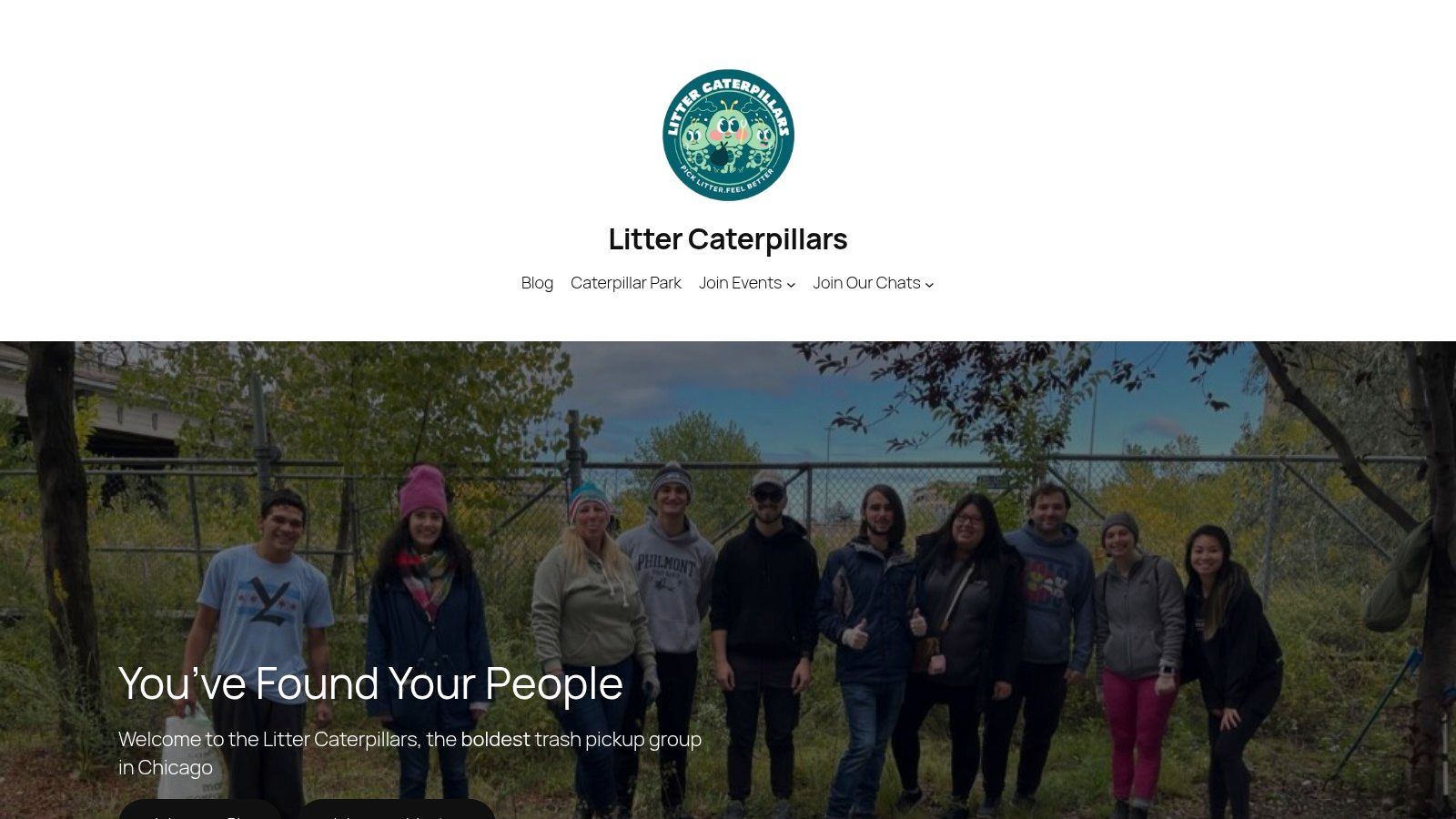
    Screenshot from https://www.littercaterpillars.com

    Before an outdoor event, I check the conditions, the location, the tools, and the people. A basic safety checklist includes:

    • Wear protective clothing: Use gloves, long pants, long sleeves, and thick-soled shoes.
    • Protect against sun: Apply sunscreen and bring water.
    • Avoid preventable injuries: Don't wear open-toed shoes.
    • Respect the weather: Reschedule when conditions are poor.
    • Respect comfort levels: Nobody needs to enter an area or handle an object that feels unsafe.

    These rules come from a volunteer outdoor safety checklist, and I treat them as operating rules rather than suggestions. If the weather turns dangerous, I cancel. A clean street isn't worth a volunteer getting hurt.

    Happiness needs practical care

    Happiness doesn't mean constant excitement. It means people know where to go, what to do, and who will help them. It means a new volunteer can arrive alone without feeling lost. It means nobody gets pressured for money.

    I send clear meeting details, explain parking, name the nearest restroom, and tell people what equipment to bring. I pair newcomers with friendly volunteers instead of leaving them to decode the group. For leaders who need to teach repeatable procedures, this guide to employee training videos can help turn spoken instructions into simple visual reminders.

    Our approach also connects with organizational culture building, because culture appears in the small choices people experience before the work starts.

    Here's the order I follow:

    1. Make the setting physically safe.
    2. Make the instructions easy to understand.
    3. Make the social welcome warm.
    4. Let people stop without guilt.

    Practical rule: If volunteers must choose between protecting themselves and pleasing the leader, the leader has already failed.

    After the briefing, I invite questions and watch faces. Someone may say they're fine while gripping a tool too tightly or standing far from the group. I ask again, privately and without pressure. Service means paying attention to the person in front of me, not merely completing the cleanup.

    Give Your Team an Identity to Be Proud Of

    A trash pickup can feel like a chore, or it can feel like an adventure. The physical work doesn't change. The meaning people attach to it does.

    Tom Sawyer understood this when Aunt Polly punished him by making him paint a fence. Instead of treating the work as punishment, he framed it as a special opportunity. His friends wanted in. The task became desirable because the story around it changed.

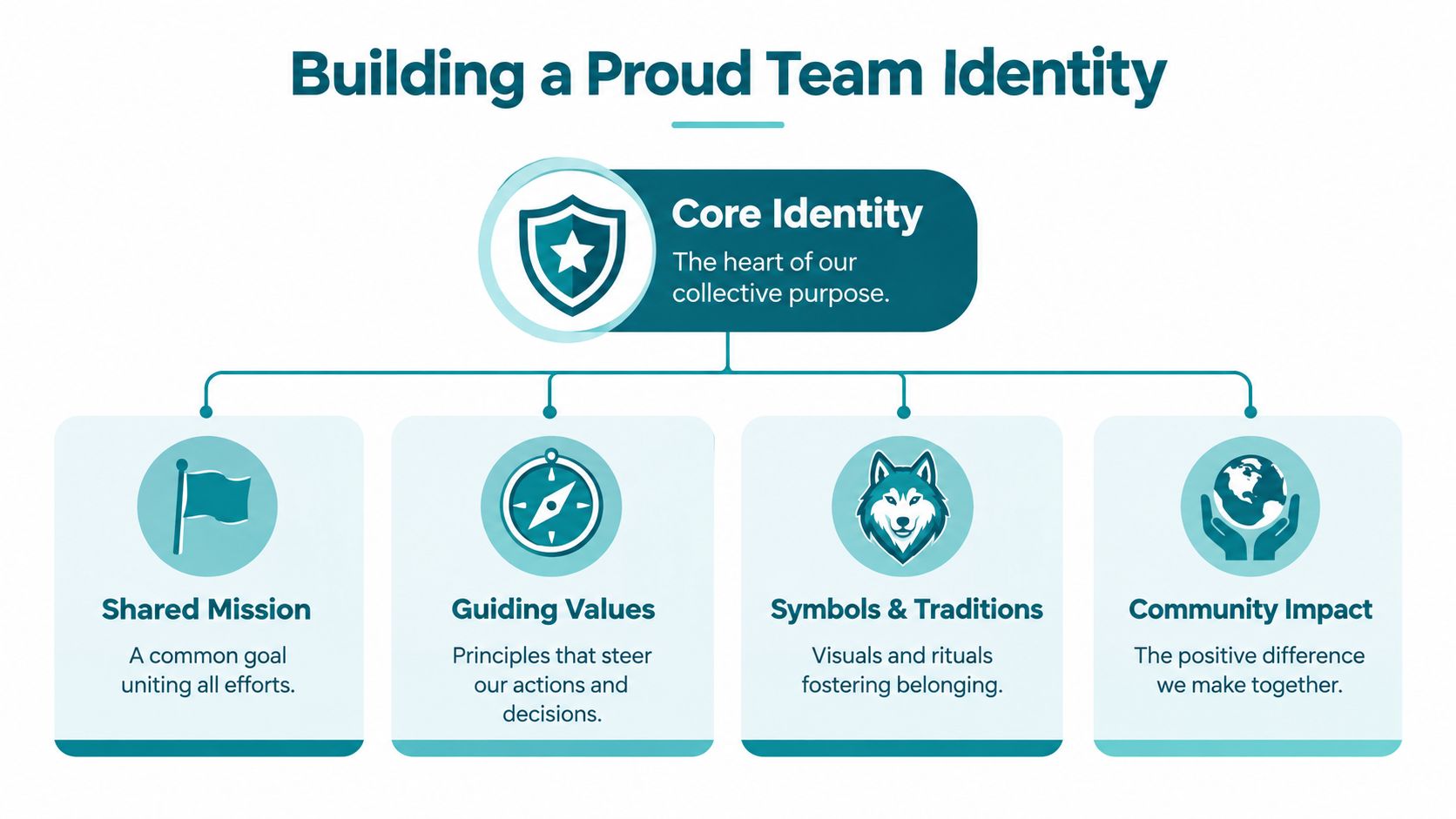
    I use the same idea with Litter Caterpillars, without pretending that dirty work is effortless. We use flags, a theme song, badges, and shared language. These symbols give volunteers something to carry, wear, sing, and remember. Kind people deserve access to pride and identity too.

    A diagram illustrating the four key components for building a proud team identity: mission, values, symbols, and impact.

    Make the story easy to join

    A strong identity answers four simple questions:

    • Why are we here? We clean public spaces and build friendships through service.
    • How do we act? We practice bravery, kindness, and unity.
    • What do we share? We carry symbols, rituals, songs, and badges.
    • What changed because we came? A block looks cleaner, people feel connected, and volunteers leave with a story.

    The symbols don't replace the work. They give the work a shape people can recognize. A flag can help a scattered group find each other. A song can break the awkward silence at the beginning. A badge can remind someone that they showed up when staying home would have felt easier.

    A meta-analytic review covering 85 studies found a strong association between servant leadership and higher organizational commitment and identification with the group, according to this meta-analytic review from the University of Illinois Chicago. I see that connection grow when volunteers recognize one another, remember shared challenges, and feel proud of how they spent their morning.

    Pride should point back to service

    Identity can become empty if it turns into ego. I don't want people wearing a badge merely to feel superior to people who didn't attend. I want the badge to remind them that they took responsibility for a place they share with others.

    Leaders who want to build that kind of group can study practical leadership for a better culture, then adapt the ideas to their own setting. Keep the symbols low-cost and consistent. Let volunteers help choose them. Give people a role in the story.

    When the group feels like a team, a difficult morning becomes easier to enter. People still get tired. They still get wet. They still pick up unpleasant things. But they also laugh, encourage one another, and leave with proof that they can do hard work together.

    The Practical Playbook for a Service Event

    Good intentions disappear quickly when an event feels confusing. I use a repeatable run-sheet so volunteers don't have to guess what happens next. The structure protects their time, reduces uncertainty, and gives me a way to notice problems before they grow.

    The volunteer event planning resources from Litter Caterpillars follow this same practical instinct. A run-sheet doesn't make an event rigid. It gives people enough clarity to participate freely.

    Before people arrive

    I send one message with the meeting point, arrival details, expected conditions, clothing guidance, equipment information, and a contact method. I don't bury the important facts in a long announcement. A person who has never met us should know how to find us and what to expect.

    When volunteers arrive, I greet them by name when I can. I introduce newcomers to at least one other person, then explain the purpose of the cleanup in plain language. The welcome circle creates a shared starting point before everyone spreads across the site.

    During the work

    The safety briefing covers hazards, boundaries, tools, weather, and the signal for stopping. I assign small groups or pairs so nobody works alone or disappears from view. I also make decision rights clear. Volunteers can pause, ask for help, or leave without defending the choice.

    The work period needs rhythm. I check in, rotate tasks when possible, and watch for fatigue. I don't measure leadership by how much trash I personally collect. I measure it by whether people can work safely, ask questions, and return with energy left.

    Time Activity Servant Leadership Goal
    Before arrival Send meeting and gear details Remove uncertainty
    Welcome Greet people and explain the mission Build belonging
    Safety briefing Review hazards, boundaries, and stop signals Protect volunteers
    Cleanup Work in pairs or small groups Support autonomy
    Check-in Ask about comfort, tools, and conditions Practice listening
    Wrap-up Gather bags and review the work Make progress visible
    Social time Share food, conversation, or photos Support friendships

    After the last bag

    The wrap-up matters because people need to see what they did. We gather, count the bags qualitatively as a visible pile, discuss any hazards we found, and thank the people who took unfamiliar or unpleasant tasks. Then we make room for conversation.

    Research on putting servant leadership into practice points toward observable outcomes, including trust in leaders and perceptions of fairness. A clear event playbook makes those principles easier to repeat, as described in this practical servant leadership review.

    People trust a leader who makes the next step clear and stays nearby when the plan changes.

    I write down what worked, what confused people, and what we should change before the next event. That small review turns one cleanup into a better system for the next group.

    You Are Not Perfect But You Are Transforming

    I still have unfinished parts of my life. I still face days when cleaning, organizing, or making a decision feels heavier than it should. The difference is that I no longer wait to become perfect before I act.

    A caterpillar doesn't look like the creature it will become. It moves slowly, eats, rests, and changes inside a process it can't rush. I use that image because I recognize myself in it. Litter Caterpillars grew from a messy apartment, a painful breakup, and a hailstorm that stranded three people under a tree.

    The group now meets weekly across Chicago, in rain, heat, and difficult conditions. I still lead by checking the weather, preparing the run-sheet, listening to volunteers, and accepting that some plans need to change. That work keeps teaching me how to trust myself and forgive myself.

    Transformation has an order

    Research describes servant leadership through a three-step progression: trust and fairness first, follower autonomy and support for growth next, then group performance and service quality. You can read the framework in this review of servant leadership mechanisms.

    I see the same pattern in a cleanup. People first ask whether I will protect them and treat them fairly. Once they believe the answer is yes, they make more decisions on their own. Then the group moves with less direction from me, handles work more smoothly, and gives better care to the place we came to serve.

    Some leaders express identity through shirts, patches, or other DTF custom apparel examples. I care less about the item than the reminder it carries. A symbol can say, “I showed up, and I helped.”

    You don't need a title to begin. You need one person to serve, one problem to face, and one practical promise you can keep. If you want a related leadership framework, explore what transformational leadership means, then bring the idea down to earth with a checklist, a welcome, and a willingness to get dirty.


    Litter Caterpillars organizes volunteer trash pickups across Chicago, with a focus on safety, friendship, and steady service in every ward. Visit Litter Caterpillars to find an upcoming cleanup, meet people who want to help, and take your own first step into servant leadership in action.

  • Conflict Resolution Strategies for Volunteer Groups

    Conflict Resolution Strategies for Volunteer Groups

    The truck was due at nine, the bags were wet, and two longtime volunteers were shouting beside a pile of leaves that smelled like cold mud. One wanted the debris stacked by the street so the driver could load it quickly. The other wanted it hidden behind the fence because an alderman planned to take photos. Nobody had come to fight. They'd come with work gloves, a rake, and a few hours to give away.

    That's how conflict starts in volunteer crews. A small task carries a private meaning. One person hears “move the bags” and thinks efficiency. Another hears it and thinks respect for the neighborhood. Add fatigue, a borrowed trailer, unclear authority, and the fear that disagreement makes someone look selfish. Suddenly, a cleanup has a dispute that needs handling before the next bag hits the pavement.

    The conflict resolution strategies below come from that kind of morning. They're made for low-structure groups where you may be the organizer, the person holding the first-aid kit, and one of the people being corrected.

    Why Volunteer Groups Clash More Than You Expect

    The argument by the fence lasted less than ten minutes, but it gathered fuel quickly. The rake handle leaned against a trash grabber. A box of nitrile gloves sat open on the truck bed. Someone dragged a black bag through wet leaves, and the plastic made that sharp scraping sound that makes everyone feel behind schedule.

    Neither volunteer had a silly point. The street-side stack made pickup easier. The hidden stack looked cleaner for the camera. The trouble came from the fact that nobody had said who owned the decision. The organizer had handed out tools and locations, then stepped into the work. Once the disagreement arrived, everyone acted like the organizer and nobody acted like the organizer.

    Volunteer crews carry built-in friction:

    • No paycheck: People bring personal standards because money doesn't create a shared job description.
    • No hiring filter: A retired teacher, a college student, a contractor, and a first-time volunteer may work beside each other with different ideas about pace and politeness.
    • Blurry authority: The person who made the flyer may not know who can stop unsafe work or settle a deadlock.
    • Shared tools: One missing shovel or overloaded trailer can turn a practical delay into a personal accusation.
    • Mixed histories: Longtime members remember old slights. New people don't know which subjects already carry heat.
    • Moral pressure: Volunteers often believe everyone in the group is trying to be a good person. A disagreement can then feel like betrayal instead of coordination.

    A workplace dispute can also linger because people avoid formal routes. In Great Britain, 45% of workers said they handled workplace conflict by talking to a manager, while 30% spoke directly to the other person. Only 9% filed a formal grievance, and fewer than 0.5% went to tribunal, according to workplace conflict data from the UKMJ report. Informal talks matter, but the same report says 31% of conflicts remained mainly or completely unresolved.

    Practical rule: Conflict isn't proof that your crew is broken. It's what happens when people share work without a clear map for decisions.

    You need a map. The rest of these strategies give you words, roles, and a simple path for moving from heat to action.

    Active Listening When the Heat Is On

    When two volunteers argue beside a trailer, you don't need a speech. You need three moves that slow the exchange enough for each person to hear the room again.

    Pause before you fix

    Take one breath. Put down the tool if you're holding one. Say, “Give me a second. I want to understand what happened before we decide what to do.”

    That pause buys you control over your own voice. You can't ask people to calm down while you point, interrupt, or speak faster than they can answer.

    Then mirror the speaker. Use their words without adding your theory.

    “So you're saying you felt responsible for the gear and nobody checked with you.”

    Don't add, “because you always have to control everything.” Don't turn a mirror into a verdict. You're showing that you heard the complaint as the speaker means it.

    Name what sits underneath

    After the mirror, name the feeling you hear. If a volunteer discovered that someone left the trailer hitch unsecured, try this:

    “It sounds like that scared you.”

    The volunteer may say, “Yes, because the equipment could've gone into traffic.” Or they may correct you: “I wasn't scared. I was angry.” Either answer helps. You now have a real feeling to discuss instead of a loop of blame.

    Use I language when you describe your own part: “I felt worried when I saw the hitch open, so I want us to check it together.” Avoid “You always leave things loose.” The first sentence describes an event and your response. The second attacks a person and invites them to build a defense.

    For more practice with calm, direct group conversations, these tips for church team communication can help organizers build listening habits that transfer well to weekend service crews.

    Practice the missing feeling

    Tonight, replay last week's argument in your head. Write down the feeling word nobody said out loud. Was it embarrassed, ignored, afraid, rushed, or untrusted? The word may not solve the dispute, but it can tell you which question to ask next.

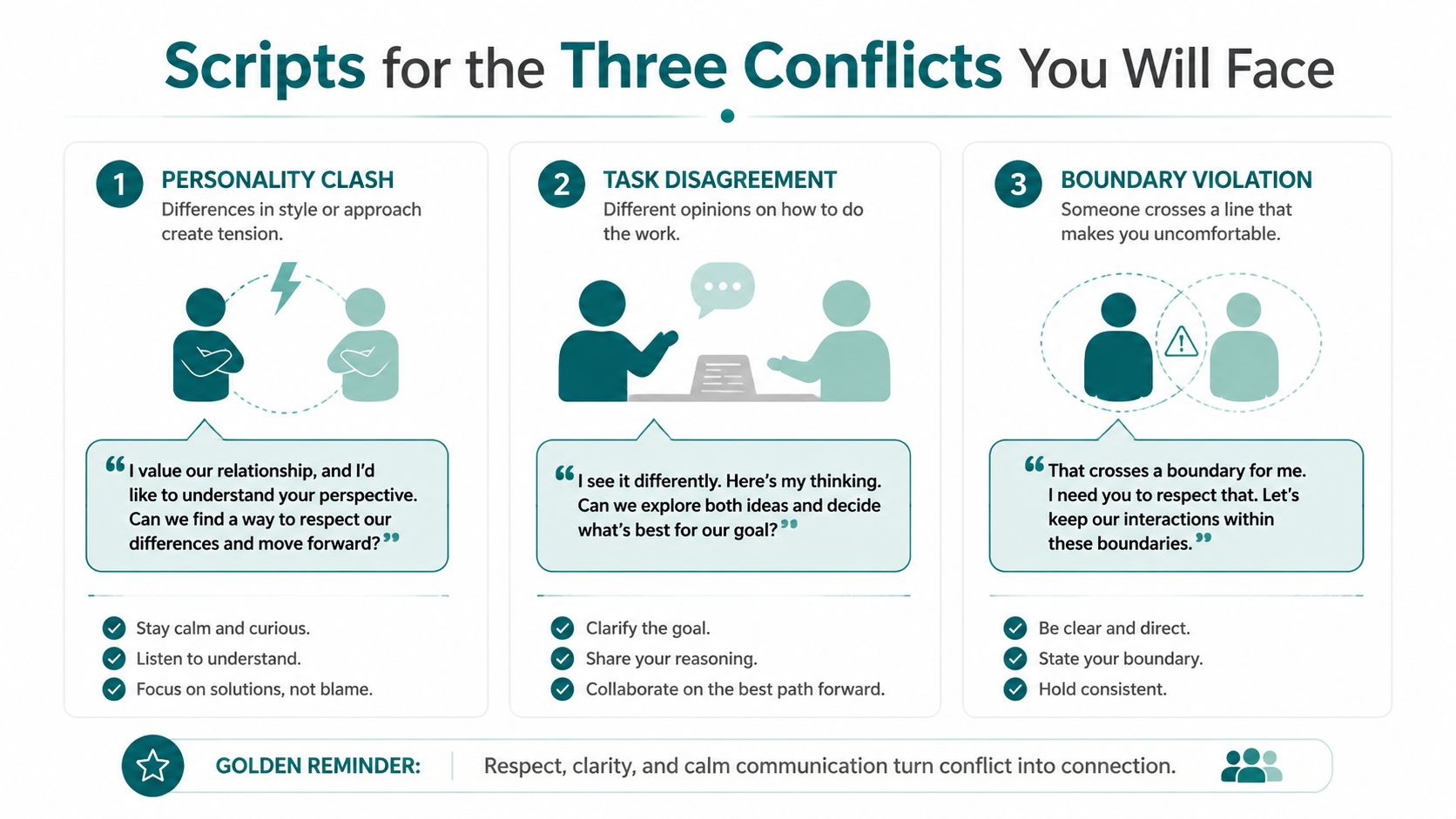
    Scripts for the Three Conflicts You Will Face

    A script won't make a hard conversation painless. It keeps you from reaching for the first sharp sentence that comes to mind.

    An infographic titled Scripts for the Three Conflicts You Will Face, showing communication tips for personality clashes, task disagreements, and boundary violations.

    The personality clash

    Two strong volunteers may circle each other every cleanup. One corrects every sorting decision. The other rolls their eyes, takes over the cart, and complains to anyone within reach. Don't force a public showdown beside the bags.

    Give them a shared side-by-side task for one shift, such as checking the grabbers and sorting glass from general waste. Then say:

    “I want both of you here, so help me see what's getting in the way.”

    Let each person answer while the other listens. Ask, “What do you need from this task?” Finish with one observable agreement: “You'll decide the sorting rule together before the next section, and neither of you will correct the other in front of the full crew.”

    The safety disagreement

    A volunteer refuses gloves or a harness and says they've done this work for years. Lead with concern, not command:

    “I'd hate for you to go home hurt and miss next week.”

    Then point to the written rule. “Our safety policy requires gloves for this area. This isn't my opinion versus yours. It's the condition for joining this task. You can switch to the bag-counting table, or you can use the gloves and stay with the crew.”

    If the person still refuses, stop the task for that volunteer. A safety boundary needs a consequence people can understand before they test it.

    The person sitting on the curb

    Pull the volunteer aside. Keep the conversation private and specific:

    “I noticed you've been sitting by the curb while the rest of the crew hauls the bags. That leaves fewer people on the heavy work. What's going on?”

    Listen before you label them lazy. They may have a bad knee, feel lost, or have misunderstood the assignment. Offer a smaller role, such as sorting, directing the truck, or recording filled bags.

    “Would you take the lighter route with me for the next section?”

    If they refuse every role, explain the limit plainly: “You're welcome to return when you can take an assigned task. Today, I need you to step out of the work area.”

    Some conflicts reach beyond a volunteer crew's skill. Personal patterns may need therapy for relationship issues when the dispute involves an ongoing intimate relationship rather than a single cleanup decision.

    The scripts only work if you keep your own temper in check. If your jaw tightens, ask another organizer to stand beside you while you speak.

    Roles, Escalation, and Who Handles What

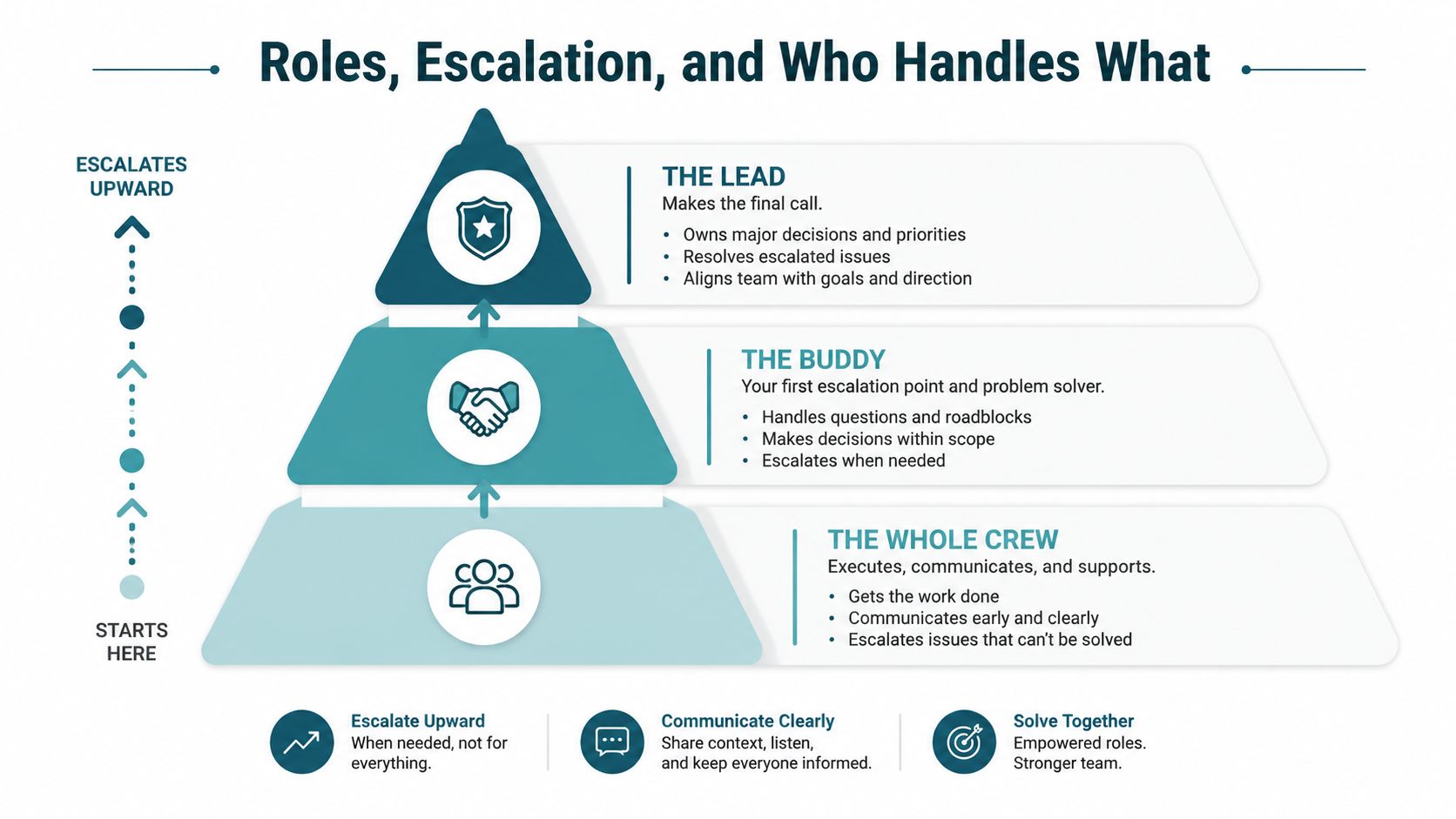
    A crew can handle disagreement quickly when people know who can decide. Assign the roles before anyone grabs a rake.

    The three standing roles

    The Lead decides the plan for the day and breaks deadlocks. The Lead can say, “We're stacking by the street today,” then explain the reason in one sentence.

    The Buddy pairs with each new volunteer for their first three events. The Buddy answers small questions before confusion turns into embarrassment.

    The Safety Person has sole authority to stop unsafe work. They don't need a group vote before asking someone to put on gloves, leave a traffic edge, or switch tasks.

    At the opening huddle, say:

    “I'm the Lead today. Maya is the Buddy for new volunteers. Devon is the Safety Person, and Devon can stop any task without debate. If you disagree with a decision, bring it to me after we move away from traffic.”

    You can use volunteer management best practices to build this kind of simple operating plan before an event.

    The four-step ladder

    1. Direct conversation: The two people speak privately, with a calm request and a specific example.
    2. Lead check-in: The Lead joins if the first conversation stalls.
    3. Neutral mediation: A neutral organizer meets with both people and helps them define the issue, separate interests from positions, generate options, and test each option against practical limits. This workflow appears in reviews of mediation programs, which report settlement rates commonly in the 50% to 85% range, including one study of 449 cases with a 78% settlement rate across court-referred and voluntary cases. The British Columbia mediation review also warns that signed settlements, partial agreements, and participant satisfaction measure different outcomes.
    4. Written warning and removal: If someone keeps violating safety or conduct rules, document the behavior and remove them from the group chat or event roster.

    Use this wording when moving up a step: “I'm not deciding who's right. The first conversation didn't settle the issue, so I'm bringing in the Lead to help us choose a workable next step.”

    A hierarchical pyramid diagram illustrating team roles, escalation paths, and responsibilities for conflict resolution in a workspace.

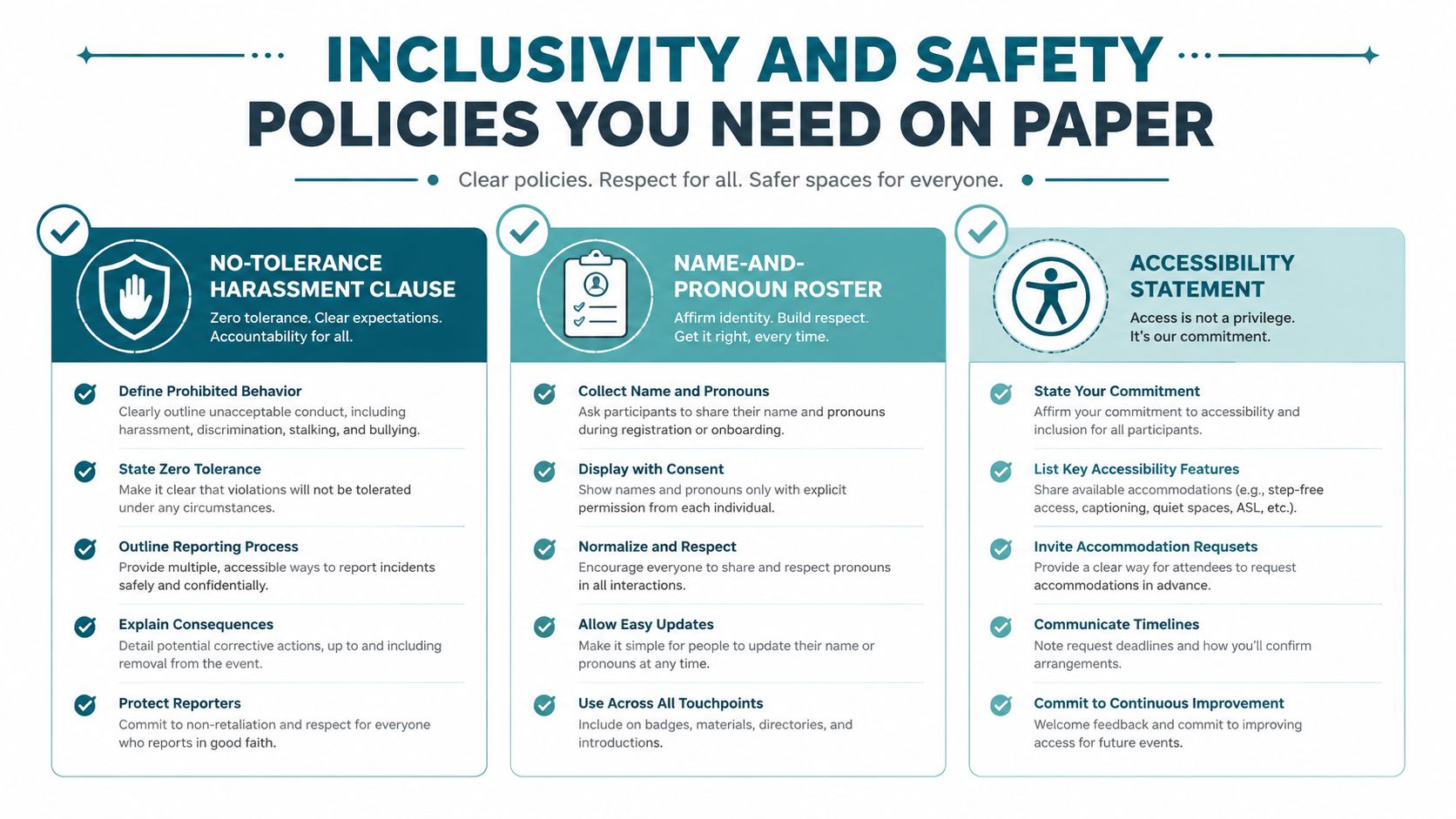
    Inclusivity and Safety Policies You Need on Paper

    Verbal norms disappear when the morning gets cold and everyone wants to finish. A short written policy stays available when memory gets selective.

    Start with a plain harassment rule:

    “We don't tolerate harassment, threats, sexual comments, unwanted contact, slurs, or repeated disrespect. Tell the Lead or Safety Person. We'll separate people while we review what happened, protect the person who reports, and decide whether someone can return.”

    That language gives volunteers a route to use. It doesn't promise legal perfection. It tells them what behavior crosses the line and whom to approach.

    Write down the details people shouldn't have to guess

    Keep a name-and-pronoun roster at check-in, and ask every volunteer to update it at each event. If someone gets misgendered all morning because nobody asked, the group has created avoidable work for that volunteer. A roster lets the organizer correct the mistake without making the person repeatedly teach the crew.

    Add an accessibility statement that covers:

    • Physical tasks: Tell people which sites involve hills, lifting, stairs, or long walks.
    • Communication: Provide a written version of the spoken briefing and a clear contact method.
    • Childcare and timing: State whether children can attend and what supervision the group can or cannot provide.

    A volunteer with a bad knee shouldn't learn about a steep hill after arriving. Offer sorting, route mapping, supply checks, or check-in work before the assignment begins.

    Use two-person contact

    Create a two-person rule for one-on-one interactions between organizers and new volunteers. Meet in an open area or bring another organizer along. A flirtatious organizer cornering a recruit near the truck may claim they were joking, but the recruit experiences the power difference first.

    Give volunteers a short acknowledgment to sign at their third event:

    “I have read the group's conduct and safety rules. I know who handles concerns. I will respect names, pronouns, physical boundaries, and task limits. I understand that the Lead or Safety Person can pause my participation when a rule or safety condition requires it.”

    An infographic titled Inclusivity and Safety Policies detailing guidelines for harassment clauses, pronoun rosters, and accessibility statements.

    Keep the page with your event materials. For questions about protecting the organization, review volunteer liability insurance, then ask a qualified adviser what fits your group.

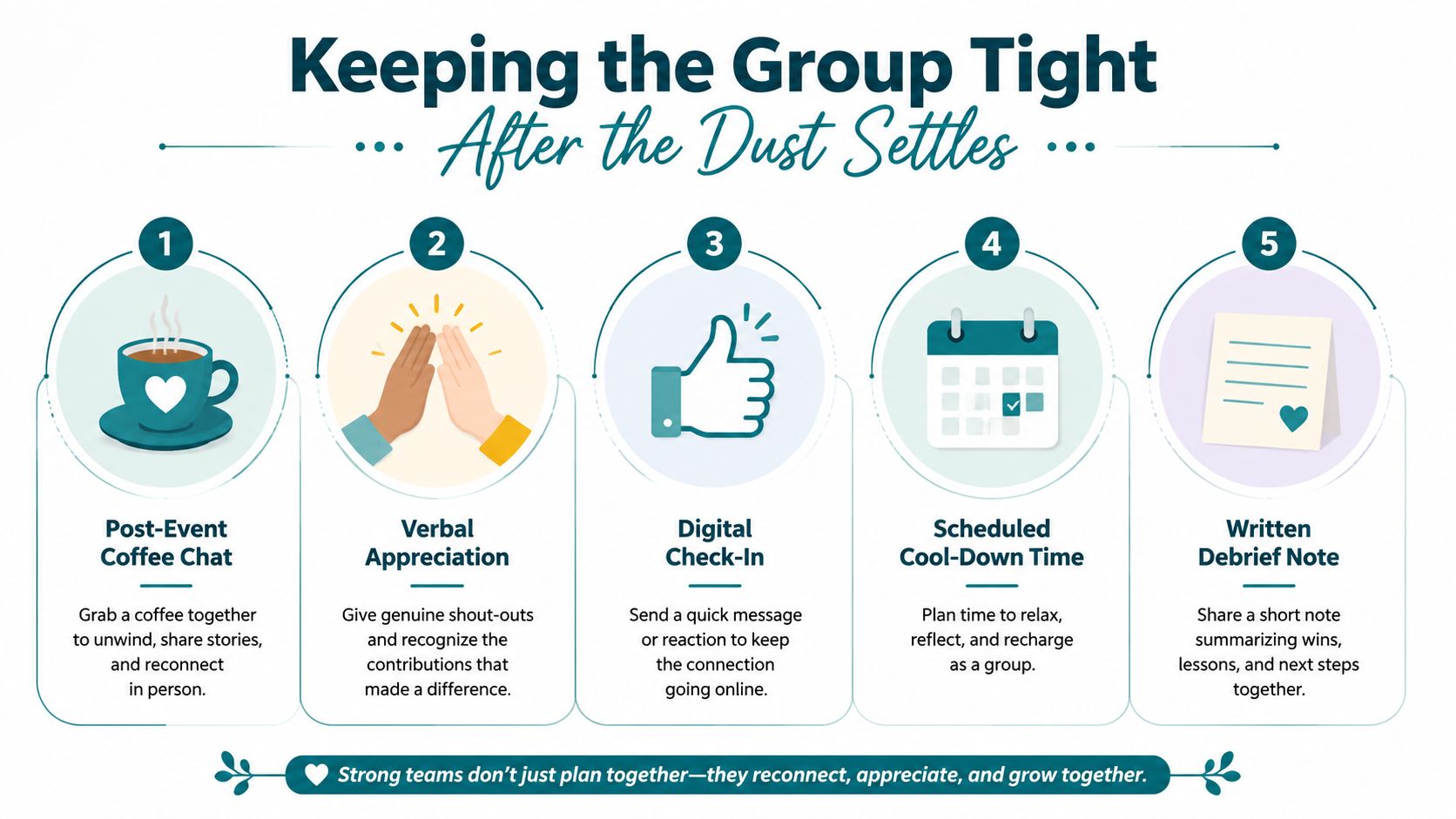
    Keeping the Group Tight After the Dust Settles

    A resolved argument can leave a strange silence. People finish the route, load the truck, and go home, but they still wonder who will speak first next Saturday.

    I've found that small rituals work better than forcing everyone into a feelings circle. After cold lakefront mornings and hot August cleanups, these habits gave people shared memories they could return to:

    • Fifteen-minute debrief: Ask what helped, what caused friction, and what one change would make the next event easier.
    • Rotating group-chat shoutout: Name one concrete act, such as carrying the awkward metal sign or checking the trailer latch.
    • Monthly shared meal: Keep work talk off the table for the first hour. Let people meet as neighbors, not task assignments.
    • Buddy text after tension: Two days after a rough event, send, “How are you feeling about Saturday? Anything you want me to know?”
    • Annual spring review: Rewrite the rules together. Keep what people used, remove what they ignored, and add what the last season taught you.

    A debrief might sound like this:

    “Where did we lose time?”
    “Did anyone feel unsafe or left out?”
    “What should we change before the next route?”

    Those questions create a record without turning the group into a committee. A shared meal creates another kind of record. Someone who argued over the trailer may later remember that the same person saved them a seat and passed the hot coffee.

    You can find more ideas for organizational culture building when you want to turn these habits into a regular rhythm.

    The smallest habit still matters most. Greet every volunteer by name at the start of every event, with no exceptions. People handle correction better when they know they belong in the room.

    An infographic titled Keeping the Group Tight after a project, showing five steps for team building.

    Your First Move This Week

    Stop hoping your crew will escape conflict. Design for the morning when two people disagree beside a full truck, a locked gate, or a pile of broken glass.

    You only need two completed actions this week.

    Write the one-page response sheet

    Use one page, not a binder. Put these lines on it:

    • Who leads the conversation: Name the person who can gather the people involved and decide the next step.
    • Where you meet: Choose a visible but private place away from the work area and the audience.
    • Which scripts you use: Add the lines for the personality clash, the safety refusal, and the person who isn't pulling weight.
    • Who can stop work: Name the Safety Person and state that safety decisions don't wait for a vote.
    • What happens next: List direct conversation, Lead check-in, neutral mediation, then written warning and removal.

    Read the page at the opening huddle. Volunteers can't follow a path they've never heard about.

    Schedule the debrief now

    Choose one upcoming shift and reserve fifteen minutes at the end. Ask three questions:

    1. “Where did communication break down?”
    2. “Did anyone feel unsafe, ignored, or overloaded?”
    3. “What one change should we make before the next event?”

    Write down the answers. Within a week, act on the loudest friction point. If people complain about unclear tools, label the bins. If new volunteers feel lost, assign Buddies. If one person keeps taking over, set the task boundary before the next route.

    Conflict readiness separates a volunteer group that survives its second year from one that falls apart by autumn. Pick the date for your debrief before you close this page, then send the invitation to the crew.


    Litter Caterpillars gives Chicago volunteers a practical place to build service habits, friendships, and calmer cleanup routines through regular weekend events. Visit Litter Caterpillars to join a crew, meet the organizers, and put these conflict resolution strategies to work on your next cleanup.