
Let's be brutally honest. Most advice on volunteer retention strategies feels like trying to trap a butterfly in a jar. It’s sterile, corporate, and misses the entire point. People don't stick around for a better scheduling app or another free t-shirt. They stay for a feeling. They stay because they found a place where showing up, even when it’s hard- especially when it’s hard- makes them feel more alive.
This isn't just about keeping names on a roster; it’s about forging a community so strong that people can't imagine leaving. It’s like the difference between a forced team-building exercise and that one time you and your friends got caught in a freak hailstorm and huddled under a tree, laughing. One is an obligation; the other is a story you’ll tell for the rest of your life. We're here to talk about building the hailstorm moments.
This guide moves beyond generic tips and dives deep into the real, raw, human connections that make volunteering an act of self-transformation, not just a task. You will learn actionable blueprints for fostering true belonging and visible impact, creating a magnetic culture that doesn't just attract volunteers, but turns them into lifelong advocates. You're about to discover that making a massive impact is way easier, and a heck of a lot more fun, than you think. Let's get started.
1. Clear Mission and Values Alignment
Before a single piece of litter is picked up, the most powerful of all volunteer retention strategies is already at work: the why. People don't just show up to clean a street; they show up to transform a neighborhood, to stand for something bigger than themselves. When your mission resonates deeply with a volunteer's personal values, their commitment shifts from a casual activity to a core part of their identity.
Think of it like this: anyone can join a gym to lift weights, but people join a community like CrossFit or a specific yoga studio for the shared philosophy and sense of belonging. Litter Caterpillars isn’t just about trash bags and grabbers. It’s about embodying bravery by tackling neglected spaces, fostering friendship in a disconnected world, and finding personal growth through service. This is the magnetic force that attracts volunteers who are searching not just for an event, but for a purpose.
Putting Your Mission into Action
A mission on a website is just words. A mission lived out in every action is a movement. To make your values the heartbeat of your organization, you must make them tangible.
- Tell Your Origin Story: Share the personal journey that started it all. For Litter Caterpillars, Kevin Tao’s story of finding connection and purpose isn't just history; it’s a constant reminder that one person’s courage can inspire a community. This humanizes the mission and makes it relatable.
- Live Your Values Loudly: Ensure your leadership team consistently embodies the values you preach. If your value is bravery, leaders should be the first to enter the messiest alleys. If it's friendship, they should be the first to welcome a newcomer.
- Create Reinforcing Rituals: Small, consistent actions build a powerful culture. Develop a team theme song, design unique badges for milestones, or create a group flag for events. These symbols are more than just fun; they are anchors for your shared identity.
- Screen for Alignment, Not Just Availability: During your onboarding process, ask questions that reveal a person’s motivations. Instead of just asking "When can you start?" ask "What does making an impact in your community mean to you?" For a deeper dive into connecting with the right people, explore these tips on how to find volunteer work that aligns with your spirit.
When volunteers see their own aspirations reflected in your organization’s DNA, they don't just show up; they belong. This profound sense of belonging is the ultimate foundation for lasting commitment.
2. Recognition, Identity, and Pride-Building Systems
While a shared mission forms the soul of your group, tangible symbols of belonging form its uniform. This isn't about giving away free stuff; it’s about creating a powerful, visible identity that transforms a group of individuals into a unified team. When someone puts on a Litter Caterpillars bandana or earns their first bravery badge, they aren't just a person cleaning a street. They are a Litter Caterpillar, part of a tribe known for its courage and kindness.
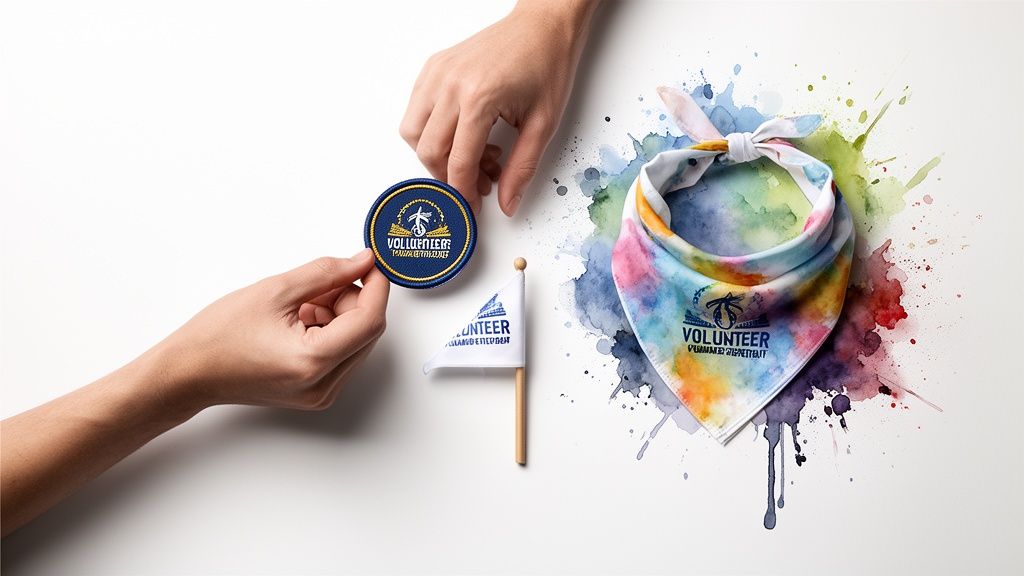
Think of the fierce loyalty inspired by military unit insignia or the lifelong bond created by sorority letters. These symbols are not just decorations; they are anchors of identity. They give people a way to show their pride, to feel ownership over the work, and to signal their commitment to a shared cause. This sense of collective identity is one of the most effective volunteer retention strategies because it taps into our deep human need to belong to something respected and meaningful.
Putting Your Identity into Action
A strong identity must be seen, heard, and felt. It’s built through consistent and creative reinforcement that turns an abstract idea into a concrete reality.
- Create a Visual Uniform: Design simple, distinctive gear that volunteers can wear with pride. Our flag, with its nod to the blizzard that started it all, isn't just a banner; it’s a story. A unique bandana or a patch for a jacket creates an immediate visual bond during events.
- Commission an Anthem: Music connects directly to emotion. When our friend Ella Duke created the Litter Caterpillars theme song, it gave us a voice. Singing it together before a cleanup doesn’t just hype us up; it solidifies our shared purpose in a way words alone cannot.
- Develop a Badge System: Recognize specific achievements with tangible rewards. Earning a "Blizzard Survivor" badge for volunteering in the cold or a "Friendship Ambassador" badge for welcoming new members makes accomplishments visible and celebrated. This gamifies service and encourages continued participation.
- Reframe the Work: Remember Tom Sawyer getting his friends to paint the fence? He didn't offer them a chore; he offered them a chance to be part of something special. Frame your cleanups not as work, but as an opportunity to earn pride, demonstrate bravery, and build a legendary community together.
When volunteers can wear, see, and sing your mission, their connection deepens. They are no longer just participating in an event; they are carrying the banner for a movement.
3. Consistent, Predictable Scheduling and Accessibility
Human beings are creatures of habit. While spontaneity has its magic, commitment is built on rhythm and reliability. One of the most underrated yet powerful volunteer retention strategies is creating a schedule so consistent that it becomes a non-negotiable part of a volunteer’s weekly routine, as natural as their morning coffee or Sunday brunch.
Imagine a lighthouse. Its beam doesn't shine whenever it feels like it; it sweeps across the dark water at a steady, predictable pace. Sailors depend on that rhythm. In the same way, your volunteers need a dependable rhythm to anchor their good intentions. Our consistent weekend morning schedule is that lighthouse beam. It cuts through the fog of a busy week and says, "Here. Here is your chance to make a difference. We are always here." This predictability attracts deeply committed people, making the choice to show up effortless.
Putting Your Schedule into Action
A predictable schedule is more than a calendar entry; it’s a promise to your community. It says, “We will be here, you can count on us.” This reliability is the bedrock upon which habits and deep-seated friendships are built.
- Choose a Time That Filters for Your Ideal Volunteer: Our weekend morning slot wasn't an accident. It was chosen to attract service-minded people who prioritize community impact. Consider who you want to attract and design a schedule that aligns with their lifestyle and values.
- Commit to Consistency, No Matter What: Communicate a 'rain or shine' philosophy. When people see the group out there in less-than-perfect weather, it doesn't deter them; it builds a profound sense of pride and shared resilience. This dedication naturally weeds out casual participants and strengthens the core team.
- Make the Start a Welcoming Ritual: Dedicate the first 15 minutes of every event to a consistent social ritual. This could be a simple greeting, sharing a weekly win, or a quick icebreaker. This buffer transforms the event from a task into a gathering of friends, making people eager to arrive on time.
- Automate to Stay Focused: Use tools like Meetup's recurring event feature or a simple, predictable social media posting schedule. This reduces administrative headaches and ensures your communication is as reliable as your events. Volunteers will learn where and when to look for information without constant reminders.
When your schedule becomes a dependable anchor in the chaos of modern life, volunteers don't just attend an event; they join a movement they can build their lives around. This rhythm transforms participation from an occasional activity into a cherished, identity-affirming habit.
4. Social Connection and Friendship Development
The bags of trash are temporary, but the bonds forged while picking them up can last a lifetime. One of the most overlooked yet powerful volunteer retention strategies is the intentional cultivation of friendship. People may come for the mission, but they stay for the community. When a volunteer event feels less like a shift and more like a meetup with friends, their commitment transforms from a task into a cherished part of their social fabric.
This is the whole secret. The work is just the excuse we use to get together. We’re not a cleanup crew; we’re a friendship factory. The litter is just the raw material. The real product is the connection, the laughter, the feeling that you’ve found your people. That’s the magic that turns a one-time volunteer into a lifelong member of the family.

Putting Friendship into Action
A group of strangers with trash grabbers is just a crew. A group of friends making an impact is a movement. To weave social connection into your organization's DNA, you must design for it.
- Structure Social Time: Don’t let the event end when the last bag is tied. Plan for a casual coffee, pizza, or just a 15-minute hangout session before or after every cleanup. This dedicated time signals that connection is just as important as the work itself.
- Pair Up with Purpose: Intentionally pair new volunteers with seasoned veterans. This "buddy system" not only eases anxiety for newcomers but also creates an immediate personal connection and a familiar face for the next event.
- Create a Digital Campfire: Use a group chat on WhatsApp or a similar platform to keep the conversation going between cleanups. Share photos, celebrate personal wins like birthdays or new jobs, and create a space for the inside jokes and shared memories to flourish.
- Organize Social-Only Events: Plan occasional gatherings that have nothing to do with cleanup, like a picnic, a happy hour, or a game night. For more inspiration, explore our guide to community building activities for adults that can strengthen your team’s bonds.
When volunteers know they have friends waiting for them, showing up becomes the easiest decision they’ll make all week. This deep sense of belonging is a magnetic force that keeps your community strong and growing.
5. Transparent, Volunteer-First Organizational Practices
Many organizations treat volunteers as a resource to be managed, a means to an end. This is the fastest path to burnout and resentment. A truly powerful volunteer retention strategy is to flip this dynamic entirely: place the volunteer's wellbeing, happiness, and safety above all else, even organizational growth or metrics. It's a radical act of trust.
Think of it this way: are you building a machine or growing a garden? A machine uses parts to achieve an output. A garden nurtures living things, knowing that if the plants are healthy, the beautiful blooms will follow naturally. Litter Caterpillars is a garden. We make a public promise to never solicit donations from our volunteers and to always prioritize their safety over picking up one more bag of trash. This creates psychological safety and transforms the relationship from transactional to one built on mutual respect and care.
Putting Your Volunteers First
Making a promise is one thing; living it is everything. This philosophy must be embedded in your operational DNA, visible in every decision you make.
- Create a Volunteer Bill of Rights: Publicly state your commitments. This isn't just a document; it's a social contract. Detail their right to a safe environment, their right to be heard, and their right to never be treated as a fundraising tool. This transparency builds profound trust.
- Default to the Volunteer's Benefit: When a conflict or difficult decision arises, always ask: "What is the best outcome for our volunteers?" Even if it costs more time or means a less "productive" event, prioritizing their experience shows they are truly valued.
- Train Leaders in a Service Mindset: Your event leaders aren't bosses; they are hosts. Train them to actively listen, to shut down any language that feels transactional, and to constantly check in on their team’s well-being. Their primary job is to ensure every volunteer feels seen, safe, and appreciated.
- Tell Stories of Putting People Over Metrics: Did you end an event early because of the heat? Share that story. Did you spend money on better safety gear instead of marketing? Celebrate that decision. These actions communicate your values more powerfully than any mission statement ever could.
When volunteers know, without a doubt, that you have their back, they will give you their heart. They won't just participate; they will become fierce advocates and protectors of the community you’ve built together.
6. Progression Pathways, Leadership Development, and Shared Decision-Making
A volunteer who shows up once is a participant. A volunteer who feels a sense of ownership, growth, and influence becomes a leader, the very backbone of the movement. One of the most powerful volunteer retention strategies is to stop seeing people as just "helpers" and start seeing them as future leaders, giving them a clear path to grow their impact and responsibility.
Think of it like leveling up in a game or earning belts in martial arts. The journey from a first-time caterpillar to a seasoned "Ward Captain" shouldn't be a mystery. It should be an intentional, visible pathway that invites deeper commitment. Litter Caterpillars isn’t just about the work we do on a Saturday morning; it’s about discovering the leader within yourself, the one who can rally a team, organize an event, and truly transform a block from the ground up. This sense of personal progression is what turns a one-time activity into a long-term passion.
Putting Your Mission into Action
A pathway to leadership is built with intention, not assumption. It’s about creating clear steps and opportunities that empower your most committed members to take the wheel.
- Create a Visual Progression Map: Don't just talk about leadership; show what it looks like. Design simple badges or titles for different levels of commitment and skill, such as "Caterpillar Scout," "Team Lead," and "Ward Captain." This makes the journey tangible and aspirational.
- Start with Shared Decisions: True ownership begins with influence. Start small by letting the group vote on the next cleanup location in your group chat. Create a simple "suggestion box" form where volunteers can submit ideas. When you implement a great idea, publicly credit the person who suggested it.
- Define and Delegate Real Responsibility: Formalize leadership roles. A "Ward Captain," for example, could be given autonomy over scouting locations, coordinating with neighbors, and leading events in their specific area. Clear responsibilities give people a tangible sense of purpose and authority.
- Mentor, Don't Just Manage: Pair emerging leaders with experienced ones. A two-month mentorship can provide the guidance and confidence needed to master new skills, from leading a team huddle to organizing logistics. This builds a culture where everyone is invested in each other's growth.
When volunteers see a future for themselves within your organization, one where their voice matters and their skills can grow, they are no longer just volunteering for a cause. They are investing in their own potential and, in doing so, become the sustainable, driving force of your mission.
7. Removal of Logistical Friction and Barriers to Entry
The biggest obstacle standing between a person’s good intentions and their actual participation is often just a handful of small, annoying steps. The most effective volunteer retention strategies recognize that modern life is complicated, and the easier you make it to show up, the more people will. This isn't about coddling; it's about respecting people’s time and energy by making service seamless and joyful.
Think of it like the difference between ordering a pizza with a one-click app versus having to find a phone number, call, get put on hold, and read your credit card details aloud. Both get you pizza, but you will only use one of them again and again. Litter Caterpillars removes every possible barrier. We provide the tools, the bags, the location, and the plan. All a volunteer has to do is bring their heart and show up. This simple act of removing friction is a profound act of welcome.
Putting Friction Removal into Action
Your goal is to make volunteering feel as effortless as meeting a friend for coffee. Scrutinize every step of the journey from a newcomer’s perspective and eliminate anything that feels like a chore.
- Audit the Entire Volunteer Journey: Map out every single touchpoint: How do they find you? What’s the signup like? How do they get information? What happens when they arrive? What happens when they leave? Identify and crush every single point of friction.
- Provide All Necessary Tools: This is non-negotiable. Never ask a volunteer to bring their own gloves, grabbers, or bags. Having everything staged and ready when they arrive sends a powerful message: "We are prepared for you, and we value you."
- Simplify Your Signup Process: Aim for a one-step registration. For Litter Caterpillars, using Meetup's simple RSVP button is ideal. No follow-up confirmation emails, no complex forms, just a single click that means "I'm in."
- Communicate Clearly and Proactively: Send a friendly reminder one day before and one hour before an event. Include crystal-clear information about parking, public transit, and a map pin. Answering questions before they are even asked builds confidence and reduces anxiety. For more on getting the word out, check out our guide on how to organize a community cleanup.
When you treat a volunteer's time and energy as the precious resources they are, they repay you with loyalty and enthusiasm. Making it easy to do good is one of the most powerful forms of respect you can show.
8. Flexible, Judgment-Free Participation and Commitment Expectations
Life is not a perfect, predictable line, and neither is a volunteer’s journey. One of the most compassionate and effective volunteer retention strategies is to build a culture that honors this reality. This means creating an environment where people can show up, step back, and return without an ounce of shame or guilt. It’s the radical idea that any contribution, no matter how small, is a victory.
Think of a yoga studio where the instructor constantly reminds you to “take child’s pose anytime you need it.” That permission doesn't make you weaker; it makes you trust the process and listen to your body, ensuring you’ll come back to the mat again. Litter Caterpillars operates with the same philosophy. Our 'rain or shine, show up when you can' mantra isn't a pass for low commitment; it's a profound statement of trust. It says, "We value you as a whole person, not just as a pair of hands."
Putting Flexibility into Action
A culture of grace isn’t built by accident; it’s built through intentional words and actions that prioritize psychological safety over rigid attendance sheets.
- State Your Philosophy Loud and Clear: From the very first welcome email, make your flexibility explicit. Use language like, “Come when you can, leave when you need to. Whatever you can give is exactly what we need.” This sets the tone and removes the unspoken pressure that drives so many people away.
- Celebrate the Ebb and Flow: When a volunteer needs to step back for a new job, a family matter, or just to rest, announce it as a "sabbatical," not a departure. Publicly wish them well. This transforms a potential moment of shame into a celebrated, normal part of life’s journey.
- Create a "Welcome Back" Ritual: When someone returns after a break, greet them with genuine enthusiasm, not questions. A simple, "It's so great to have you back!" reinforces that the door is always open. This is the essence of the 'keep coming back' principle that makes support groups so powerful.
- Focus on Presence, Not Absence: Instead of tracking who isn’t there, celebrate who is. Never call out absent members or use guilt-inducing language like "we really needed you last week." Instead, reach out with genuine care: "We missed seeing you and hope you're doing well!" This simple shift from accusation to curiosity changes everything.
When you give volunteers the freedom to participate in a way that truly fits their lives, you don't lose them. You earn their loyalty for life.
9. Visible Impact and Measurable Results
Volunteering can feel like shouting into the void unless you can see and feel the echo. The most powerful fuel for a volunteer's spirit isn’t praise or a free t-shirt; it's the undeniable proof that their sweat and time mattered. When a person can point to a once-littered park and say, "I did that," they aren’t just a helper anymore. They are a changemaker, a restorer, a creator of beauty.

This is why Litter Caterpillars documents everything. From the stunning transformation of Caterpillar Park to simple before-and-after photos from a Saturday cleanup, we make the impact tangible. It’s the difference between telling someone they filled ten trash bags and showing them a photo of a sparkling clean playground where children can now play safely. One is a statistic; the other is a story. This visual evidence is a core part of our volunteer retention strategies because it connects effort directly to outcome.
Putting Your Impact into Action
A story of impact is more powerful than any mission statement alone. To turn your volunteers’ work into a visible legacy, you must become a master storyteller with a camera and a spreadsheet as your tools.
- Become Relentless Documentarians: The before-and-after photo is your greatest weapon. Assign one person at every event to be the "documentation lead." Their only job is to capture the "before" shot from a specific angle the moment you arrive and the "after" shot from the exact same spot when you leave.
- Share the Proof Immediately: Don't let the momentum fade. Post those transformation photos to your social media channels and group chats within 24 hours. This instant gratification reinforces the positive feeling of accomplishment and shows everyone what you achieved together.
- Visualize Your Progress: Create a simple map of your city's wards or neighborhoods and color-code the areas you’ve cleaned. This turns your collective effort into a game, showing a tangible march toward a larger goal and inspiring volunteers to help fill in the map.
- Quantify the Collective Effort: Numbers tell a powerful story. At the end of each month, share simple metrics like "This month: 8,200 lbs of trash collected, 12 wards visited, 150 volunteers mobilized!" These figures give volunteers a sense of scale and shared accomplishment. For a closer look at our methods, see our guide on the art of cleaning up trash and making it count.
When people see the world changing right before their eyes because of something they did, they come back. They bring friends. They become the unstoppable force your community has been waiting for.
10. Inclusivity and Belonging for Diverse Participant Types
A community cleanup isn’t just about the trash; it’s about the people who show up to claim their neighborhood. One of the most effective volunteer retention strategies is to intentionally design an experience where every single person, regardless of their background, feels not just welcomed, but truly seen and valued. This is about building more than a team; it’s about creating a "friendship factory."
Imagine your group as a potluck, where every dish adds a unique flavor. Some people bring energy and enthusiasm, others bring quiet dedication. Newcomers to Chicago bring fresh eyes, students bring new ideas, and young professionals bring a drive to connect. Litter Caterpillars isn’t just a cleanup crew; it's an integration point for people seeking a place to belong. When you explicitly create a space for everyone, commitment becomes a natural byproduct of feeling at home.
Putting Inclusivity into Action
A statement of inclusivity is passive. A culture of belonging is active, woven into every part of your operation. You must intentionally build the bridges that connect diverse people.
- Explicitly Invite Everyone In: Use your recruitment messaging to call people in by name. Phrases like, "Newcomers to Chicago, this is YOUR community now!" or "Students, looking for a way to make a real impact?" signal that you are thinking specifically of them. People are more likely to show up if they feel they’ve already been invited.
- Engineer Connection: Don't leave friendship to chance. Implement a buddy system that pairs a first-timer with a seasoned volunteer. Start events with an icebreaker that encourages people to share something beyond their name and occupation. These small acts of structured connection turn strangers into teammates.
- Design for All Abilities: True inclusivity means everyone can participate meaningfully. Ensure your events offer a range of tasks, from heavy lifting to lighter duties like sorting recyclables, managing supplies, or greeting newcomers. This ensures that physical ability is never a barrier to making an impact.
- Show, Don't Just Tell: Your social media, website, and promotional materials should be a mirror reflecting the community you want to build. Feature photos and stories of diverse volunteers in action. When people see someone who looks like them or shares their story, it sends a powerful message: "You belong here, too."
When your organization becomes a place where anyone can find their people and their purpose, you build a volunteer force held together by the powerful glue of genuine human connection.
Volunteer Retention — 10-Point Comparison
| Approach | Implementation Complexity 🔄 | Resource Requirements ⚡ | Expected Outcomes 📊 | Ideal Use Cases 💡 | Key Advantages ⭐ |
|---|---|---|---|---|---|
| Clear Mission and Values Alignment | Moderate 🔄 — needs consistent messaging & leadership modeling | Low–Moderate ⚡ — time for documentation and storytelling | High 📊 — stronger long-term commitment; self-selecting volunteers | Recruiting purpose-driven volunteers; retention focus 💡 | Builds identity & pride; reduces need for incentives ⭐⭐⭐ |
| Recognition, Identity, and Pride-Building Systems | Moderate 🔄 — design assets and ongoing creative upkeep | Low–Moderate ⚡ — merch, badges, audio/media production | High 📊 — increased visibility & social recruitment (+30–40% retention) | Public-facing groups, community events, recruitment campaigns 💡 | Low-cost emotional value; social proof; retention boost ⭐⭐⭐ |
| Consistent, Predictable Scheduling and Accessibility | Low–Moderate 🔄 — scheduling systems and leader consistency | Low ⚡ — calendar tools and coordinator time | High 📊 — habit formation; reliable attendance | Programs seeking routine participation; working professionals 💡 | Reduces decision fatigue; builds accountability ⭐⭐⭐ |
| Social Connection and Friendship Development | Moderate–High 🔄 — intentional facilitation and programming | Moderate ⚡ — time for social activities and community management | Very High 📊 — major retention driver (volunteers stay much longer) | Community integration; retention-first strategies 💡 | Creates deep bonds; generates organic recruitment ⭐⭐⭐⭐ |
| Transparent, Volunteer-First Organizational Practices | Moderate 🔄 — policy changes and cultural reinforcement | Low–Moderate ⚡ — communication, leadership training | High 📊 — trust, psychological safety, volunteer ambassadors | Organizations prioritizing wellbeing over fundraising 💡 | Builds trust; differentiates from transactional models ⭐⭐⭐ |
| Progression Pathways, Leadership Development, and Shared Decision-Making | High 🔄 — program design, governance, training systems | Moderate–High ⚡ — mentorship, documentation, ongoing meetings | Very High 📊 — sustained engagement, leadership pipeline | Scaling organizations; succession and capacity building 💡 | Retains & develops leaders; distributes workload ⭐⭐⭐⭐ |
| Removal of Logistical Friction and Barriers to Entry | Low 🔄 — audit and streamline participant flow | Moderate ⚡ — supplies, platform subscriptions, staging | High 📊 — increased signups and repeat participation | Early-stage growth; spontaneous or walk-up participation 💡 | Lowers barriers; respects volunteer time; easier onboarding ⭐⭐⭐ |
| Flexible, Judgment-Free Participation and Commitment Expectations | Low–Moderate 🔄 — culture-setting and clear communication | Low ⚡ — messaging and leader coaching | High 📊 — longer lifetime participation; reduced burnout | Groups with variable availability; students and busy adults 💡 | Psychological safety; sustainable engagement; reduced churn ⭐⭐⭐ |
| Visible Impact and Measurable Results | Moderate 🔄 — documentation processes and consistency | Moderate ⚡ — photography, tracking tools, dashboarding | Very High 📊 — motivation, recruitment, pride in work | Impact-focused campaigns; reporting to volunteers & communities 💡 | Tangible evidence of change; strong recruitment content ⭐⭐⭐⭐ |
| Inclusivity and Belonging for Diverse Participant Types | Moderate–High 🔄 — training, outreach, accessibility planning | Moderate ⚡ — accommodations, translations, targeted outreach | High 📊 — larger, more resilient volunteer pool | Diverse cities; targeted demographic growth; newcomer integration 💡 | Broader reach; stronger community resilience; diverse perspectives ⭐⭐⭐ |
The Only Strategy That Matters: Make It Mean Something
We’ve journeyed through ten distinct strategies, from the nuts and bolts of scheduling to the high art of building community. We’ve talked about removing friction, celebrating wins, and creating leadership paths. But if you take only one thing away from this comprehensive guide to volunteer retention strategies, let it be this: people don’t show up for trash. They show up for transformation.
Your true work isn’t about logistics or equipment. It's about storytelling. Not just telling stories, but creating a space where people can step into a new story for themselves. A story where they are brave. Where they are connected. Where their small, consistent acts of kindness ripple outward to create visible, undeniable change.
Every strategy we covered is just a different tool to help you build that story.
Weaving the Golden Thread of Meaning
Think of your volunteer program not as a machine with interchangeable parts, but as a living ecosystem. Each element nourishes the others.
- Your Mission (#1) is the sun, the source of all energy and purpose.
- Recognition and Identity (#2) are the vibrant colors of the flowers, giving everyone a unique beauty and a reason to feel proud.
- Consistent Scheduling (#3) is the predictable rhythm of the seasons, creating a reliable foundation people can build their lives around.
- Social Connection (#4) is the complex root system, unseen but essential, linking everyone together in a network of mutual support.
- Transparent Practices (#5) are the clean air and clear water, building the trust necessary for anything to grow.
When you focus on the ecosystem, the individual plants-the volunteers-thrive. They dig their roots deeper. They stay longer. They weather the occasional storm because they are part of something alive and interconnected. They are part of a narrative that is bigger than any single cleanup event.
Beyond Management, Toward Movement-Building
The old model of "volunteer management" is transactional. It’s about filling slots, tracking hours, and preventing churn. It treats people like resources to be managed. But a person is not a spreadsheet entry. A person is a universe of potential waiting for a spark.
Your real job is to be the keeper of that spark. Your most potent volunteer retention strategy is to create a container so compelling, so full of purpose and genuine friendship, that people want to be there. They don’t show up out of obligation; they show up because it’s where they feel most alive, most connected, and most themselves. They show up because it’s where they get to be the hero of their own story, even if it’s just for two hours on a Saturday morning.
Ditch the guilt trips and the complicated sign-up forms. Ask a simpler, more powerful question: What story are we inviting people into? Is it a story of drudgery and obligation, or one of adventure, friendship, and collective power?
This is how you build something that lasts. You stop managing volunteers and start building a movement. A movement isn't held together by schedules and reminders. It's held together by a shared belief that a better world is not only possible, but is being built, right here, right now, by us. By our own two hands. That is the only retention strategy that will ever truly matter.
Ready to see these volunteer retention strategies in action? Join Litter Caterpillars for a neighborhood cleanup and experience firsthand how we build a community of kindness and bravery. We’ve built our entire model around making it fun, easy, and deeply meaningful to make a difference, and we’d love for you to be a part of our story. Litter Caterpillars