
Tag: volunteer safety plan

  • Volunteer Safe Haven: How to Build One That Protects

    Volunteer Safe Haven: How to Build One That Protects

    You've set out your old sneakers, checked the cleanup address, and wondered whether anyone will notice if you arrive alone. Then the forecast changes. You still want to help, but you'd like to know who's in charge, what happens if you get cold, and whether you can leave early without disappointing the group.

    Those are fair questions. A volunteer safe haven starts with clear answers, before you pick up a bag.

    What a Volunteer Safe Haven Really Protects

    Say you're part of a cleanup crew of three, huddling under a tree while hail rattles against the pavement. You look at each other, unsure whether to keep collecting or head home. Nobody wants to seem like the person who gave up.

    That uncertainty matters more than the unfinished route. I'd stop the cleanup and move everyone toward substantial shelter, rather than treat the tree as a safe waiting place.

    Keep that uncomfortable moment in mind as you look at this scene.
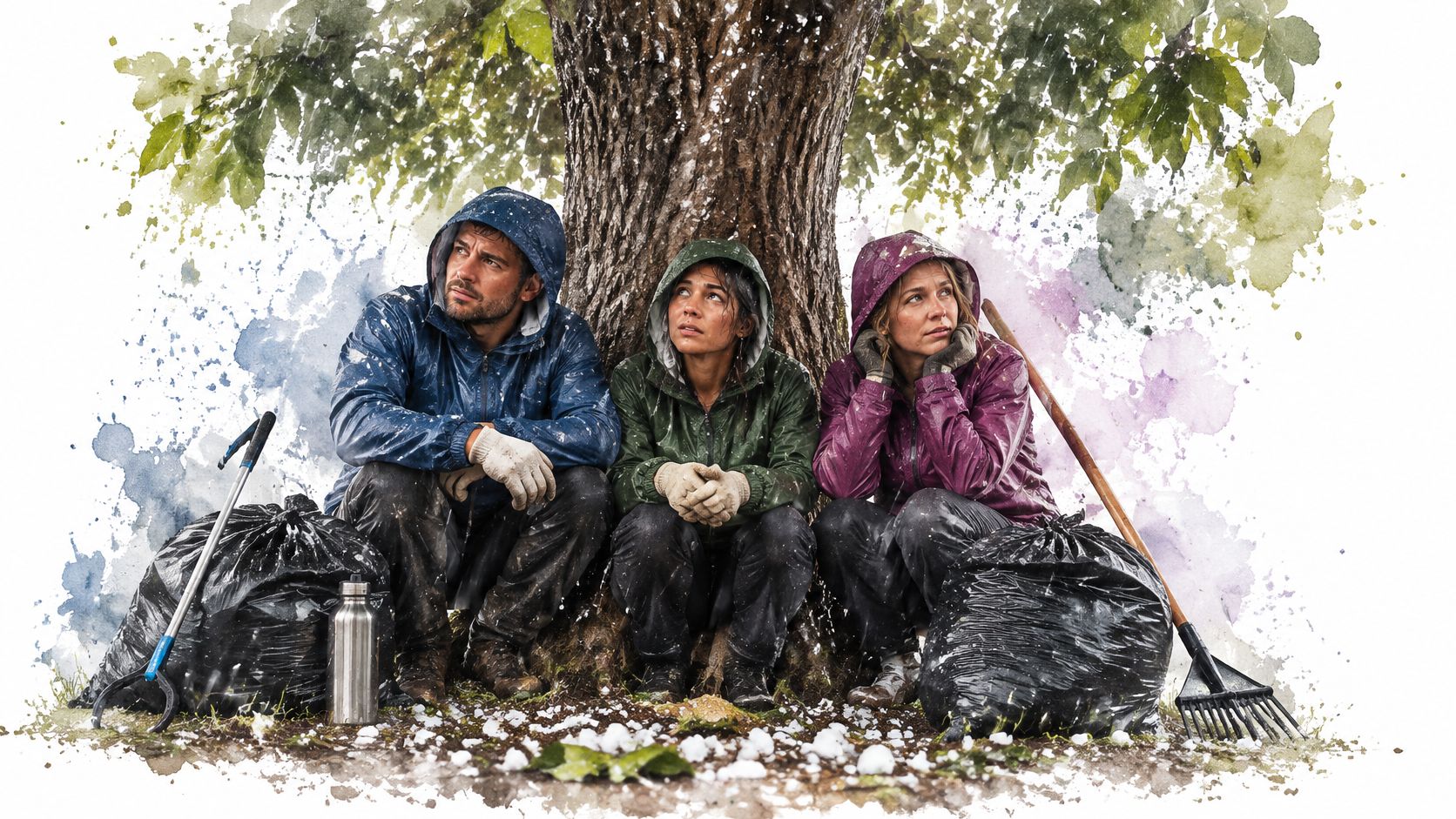
    Three volunteers huddled together under a large tree for shelter during a rainy outdoor cleanup session.

    A safe haven works like a harbor. You can't stop the sea, but you can give boats a clear entrance, somewhere to wait out bad weather, and a way to leave.

    Give people a way in and out

    For your group, that means protecting several parts of the experience:

    • Physical safety: You set boundaries around traffic, weather, sharp objects, and fatigue.
    • Emotional safety: You respect people's limits, respond to harassment, and make breaks ordinary.
    • Social safety: You help newcomers meet someone and find a dependable place to return.

    Say a newcomer gets tired halfway through the route. You can thank them, help them check out, and welcome them back. Or you can joke about their stamina and watch them smile awkwardly. The difference takes seconds.

    Practical rule: Judge the morning by how you treat the person who needs to stop.

    Before your next event, check each layer, name a gap, and choose a fix you can carry out. Maybe you need a shelter location, an introduction at check-in, or a clearer response to unwelcome comments.

    The haven exists to keep people coming back, rather than to remove all risk.

    Build a Pre-Cleanup Safety Plan

    The CDC's analysis of volunteer fatalities recorded 501 U.S. volunteer deaths from 1993 through 2002, with volunteer firefighting accounting for the largest share, a reason to examine the task itself when you assess risk.

    A neighborhood cleanup needs boundaries that match its work. At Litter Caterpillars, volunteer safety always takes first priority, and volunteer happiness takes second priority. I'd put that order directly into the morning's decisions: you can shorten a route; you can't undo an injury by collecting more trash.

    Make responsibility visible

    1. Name a safety lead. Give that person a bright vest or another visible identifier, and introduce them before anyone heads out. A first-timer shouldn't have to guess which person can change the plan.

    2. Prepare the roster. Record names, emergency contacts, arrival times, and team assignments. Keep personal information with the lead rather than on a clipboard that everyone can browse, and leave room for departure times and incident notes.

    3. Walk the route before you deploy. Mark traffic lanes, unstable structures, and loading areas as prohibited zones. Point out the actual boundary, for example, the sidewalk corner where the team turns back, rather than telling people to stay nearby.

    4. Use the start point for check-in and check-out. Ask people to tell the lead when they leave, including when they finish early. That simple exchange separates a normal departure from a missing-person concern.

    Explain the decisions before anyone needs them

    1. Give a short hazard briefing. Show how to use pickup tools and protective equipment, describe no-touch items, and explain how volunteers should raise a concern. Ask someone to repeat the stop signal so you know the message reached the group.

    2. Agree on stop-work triggers. Severe weather, hazardous materials, violence, or a medical emergency should prompt a pause without a debate about finishing the block. Name a fallback meeting place and decide how you'll notify anyone working farther along the route.

    3. Post the escalation route. Keep emergency-service instructions, the property authority's contact details, a first-aid kit, and a charged phone with the lead. Include the site's precise location so a frightened caller doesn't have to work it out under pressure.

    For a useful comparison with coordination beyond a neighborhood event, HeyLocals explains who supports volunteers on trips abroad. Use that context to think through who handles questions, changing conditions, and practical support.

    FEMA's guidance on managing spontaneous volunteers identifies the controls behind this approach: a defined management structure, clear communication, risk awareness, and coordination by authorized local personnel. You don't need a complicated command center. You need people who understand their responsibilities and can act on them.

    Try a thirty-second arrival test: can a newcomer tell you who to call and where to stand within thirty seconds of reaching check-in?

    Hazard Rules for Heat, Cold and Sharp Objects

    Hazard Rule for volunteers When to stop or call
    Heat Screen conditions before the event, shorten work intervals, provide shade and water Stop when a volunteer shows signs of heat illness
    Cold, wet or windy weather Wear waterproof layers and keep a warm space within quick reach Stop during lightning or dangerous wind chill
    Heavy lifting Work in pairs, lift with legs and rest between loads Stop when someone can no longer keep good form
    Broken glass, sharp metal, wire Use tools and gloves that match the debris, never grab by hand Stop and mark the area when sharps cover a wide zone
    Needles or unknown liquids Don't touch, isolate the item and mark its location Notify the lead and contact the municipal service
    Chemicals or pressurized containers Don't touch, step back and mark the location Notify the lead and contact the municipal service
    Dead animals Don't touch, mark the location and tell the lead Contact the appropriate city service

    Change the work when conditions change

    OSHA's heat-stress guidance tells you to assess temperature, humidity, wind, radiant heat, clothing, and workload, then use controls that include water, shade, and work-rest schedules. Gloves and other protective equipment don't replace those controls.

    You might feel comfortable standing at check-in and overheat while repeatedly bending, lifting, and carrying. Shorten those work intervals and put recovery space within easy reach. If someone feels unwell, stop their work rather than asking them to finish the bag.

    In cold rain, plan waterproof layers and quick access to warmth before you leave the meeting point. SunnyBay's winter pain-prevention tips give you another preparation resource; use our injury-prevention strategies when you review movement and task choices.

    Match the equipment to the debris

    The Chicago Park District stewardship handbook directs leaders to inspect the area, supply bags and gloves, and match glove protection to the material. It also requires a guardian or supervisor for participants under 13, with close supervision in designated safe areas.

    Don't treat any glove as permission to handle a needle or unknown substance. Use pickup tools for approved debris, and leave uncertain items alone. For a Park District project, send items beyond the crew's safe scope to the Community Stewardship Program manager.

    A bag you leave empty is better than a hazard you handle without the right preparation.

    Which conditions would make you cancel your event, and who makes that call? Write the answer before you open registration.

    What Volunteers Collect and What They Report

    Item found Volunteer action Who handles it
    Loose litter, paper or bottles Bag and collect Volunteers
    Dumped furniture on a vacant lot Photograph, record the location and leave it in place Property owner or ward office through 311
    Abandoned vehicle Note the location and don't touch it City through 311
    Open raw garbage outside a container Note the address and report it Property owner or city sanitation staff through 311

    Use a collect-or-report rule. You collect loose litter you can safely bag; you report conditions that need city equipment, a property owner, or regulated waste handling.

    Under Chicago's sanitation rules, owners of vacant or unimproved lots must remove litter, debris, and abandoned vehicles and keep weeds below 10 inches. The rules also require tightly closed garbage-container lids and prohibit raw garbage outside containers, while ward superintendents coordinate sanitation enforcement and related services.

    Work the sidewalk, document the larger problem

    Say your crew reaches a vacant lot. You use grabbers to collect loose paper along the sidewalk, then spot a dumped sofa and an abandoned car farther inside.

    You don't climb over the sofa or try the car doors. Take photographs from a safe position, record the location, and send the issue through the ward or city reporting process. Include the nearest address and a plain description of what you found.

    • Collect safely: Keep your work inside the approved route and bag only familiar, manageable litter.
    • Report clearly: Describe the item and location without entering private property or disturbing the scene.

    Check municipal activity before choosing that route, too. Chicago's city-services information describes street sweeping across every ward, generally from April through November; use the ward schedule to avoid active sweepers and associated parking restrictions.

    A useful report gives city staff something they can act on. It also gives your volunteers a sensible endpoint: you've done the safe work available to you.

    Before the next cleanup, write a pocket card with items to collect on one side and items to report on the other. Review unfamiliar discoveries together instead of letting the most enthusiastic person improvise.

    When Something Goes Wrong

    A volunteer calls your name, holds up a bleeding hand, and points toward wire near a bus stop. Or someone becomes dizzy. Or you reach check-out and can't account for a teammate.

    As lead, stop the work, check the person's condition or whereabouts, and decide whether you need emergency services. Don't ask the crew to keep collecting while you sort it out.

    Pause, help, document

    1. Clear the immediate zone. Stop the task and move other volunteers away from the hazard. Keep someone available to guide responders to the location.
    2. Check the person. Give first aid within your training and call emergency services when the injury or illness needs urgent help. For a missing volunteer, check the roster and assigned team, then escalate promptly when you suspect danger.
    3. Record what happened. Write the time, place, names, observed conditions, and actions you took. Separate what you saw from what someone later told you.
    4. Notify the responsible authority. Contact the property owner or city office when the incident involves public property or a regulated item.
    5. Debrief before the next shift. Change the route, tools, briefing, or supervision to address what went wrong.

    In the wire-cut scenario, use the first-aid kit to provide care within your training, seek help for a deep wound, and record the event before anyone returns to the route. Reopen that area only after you've addressed the hazard.

    Prepare supplies and reporting routes

    When you review supplies, you can browse workplace first aid kits from Material Handling USA to compare contents. Choose equipment your designated helpers know how to use, and check your volunteer liability insurance arrangements before an incident tests them.

    Include harassment and exclusion in your response plan. Give volunteers an in-person route to the lead and an anonymous form, then assign a conduct owner who receives reports from the lead the same day.

    Protecting Feelings and Belonging

    You may enjoy a cold, muddy morning and the satisfaction of finishing a difficult block. Someone beside you may hear the same toughness talk as a warning that they'll have to endure discomfort to belong. Don't make either person prove themselves.

    Think about the welcome you'd want after a rough encounter.

    A group of diverse volunteers provide comfort, warmth, and support to a woman wrapped in a blanket.

    The UK government's inclusion guidance for volunteering identifies fear of rejection, low confidence, racism, discrimination, and inaccessible onboarding as barriers. Respond directly to prejudice instead of assuming an open invitation settles the matter.

    Make choices comfortable to use

    • Assign a buddy: Introduce each first-timer to a check-in partner. Use our volunteer peer-support guide to think through that connection.
    • Allow an uncomplicated exit: Let people stop without an explanation. Suggest lower-risk work, such as sorting supplies or observing the route from an approved position.
    • Publish conduct expectations: Explain boundaries around comments, identities, photographs, and unwanted attention, along with how leaders respond to reports.

    Say a first-timer stays silent in the group chat. Their buddy asks how the morning went, and they describe a hostile comment they didn't know how to challenge. Thank them, ask what support they want, and act through the conduct process without demanding a public retelling.

    Keep that kind of personal check-in in mind as you watch.

    The 2025 State of Volunteering Report warns that well-meant safety measures can create gatekeeping and reports that 68.4% of volunteer leaders view retention as a critical organizational challenge. Keep preparation proportional to the task rather than asking every newcomer to clear unnecessary hurdles.

    At Litter Caterpillars, we'll never pressure volunteers for money. Bring that same clarity to your own expectations: this week, write a conduct rule and a reporting route that someone can understand without asking permission.

    Set a Schedule Newcomers Can Keep

    Say you want to help, but you work alternating weekends. A weekly event could still suit you if the organizer welcomes occasional attendance. A demand for perfect consistency would close the door before you even meet anyone.

    A National Academies review of volunteerism describes people volunteering from 1 to 52 weeks per year, across weekdays, evenings, and weekends, in short concentrated periods or longer, less intensive stretches. Give people room to choose their own rhythm.

    At Litter Caterpillars, we hold events on weekend mornings. For a group planning its own calendar, the following example keeps a predictable anchor while leaving other ways in.

    Shift How often Who it suits
    Weekly weekend morning Every week Volunteers who want a steady habit
    Monthly weekday session Once a month People with weekday availability
    One-time first-timer shift Once Newcomers testing the group

    Make the invitation specific

    Treat a single weekend as real participation. If someone carries bags, meets a neighbor, and leaves at the agreed time, thank them without attaching an attendance pledge.

    You can also give busy volunteers a short task with a clear finish: help at check-in, prepare supplies, or join an opening stretch of the route. Don't make early departure feel like sneaking out.

    1. Publish safety basics: Name the lead, explain stop rules, and state your group's money expectations clearly.
    2. Write a first-timer guide: Explain where to meet and how to find a buddy.
    3. Send a brief follow-up: Ask what felt comfortable and what you should change.

    Pick a weekly slot and a shorter participation option, then write both into your event page. People can make a realistic commitment when you give them a realistic invitation.


    We organize weekend-morning Chicago cleanups at Litter Caterpillars, with volunteer safety first and happiness second. Visit Litter Caterpillars to find a cleanup and take your first step toward service, friendship, and a group you can return to at your own pace.
  • How to Build a Severe Weather Safety Plan That Works

    How to Build a Severe Weather Safety Plan That Works

    Say you're halfway through a Saturday cleanup when thunder interrupts the scrape of litter grabbers, and someone asks whether you can finish the block. Your severe weather safety plan should give you an answer before anyone asks.

    Which Hazards Your Plan Must Cover

    Start with the question your crew will ask first: Which hazards can reach this site, and where do we go for each one? Use a lookup table so volunteers can choose a destination without debating under a darkening sky.

    Say you've spread a crew across a commercial strip when the weather turns. Without clear directions, someone heads toward a tree while someone else waits beside the supply cart. Give everyone the same destination before you hand out gloves.

    Hazards, triggers and shelter choices

    Hazard Trigger to act on Safe place Not safe
    Lightning and thunderstorms Any thunder, even with clear skies nearby Substantial enclosed building or enclosed hard-topped metal vehicle Trees, tents, picnic shelters, dugouts
    Tornado Tornado warning or siren Basement or lowest floor, small interior room without windows Vehicles, tents, temporary shelters
    Extreme heat Hot forecast with humid conditions or a heat advisory Air-conditioned building, or shaded rest area with water for preventive breaks Open lot at midday with no water
    Winter cold Wind chill reaching a dangerous level Heated building or warm vehicle Exposed work with bare skin
    Flooding Flash flood warning or water over the route Higher ground away from the water Low areas and floodwater crossings

    Give heat its own row

    You may picture a tornado first, but don't leave heat in the margins. A CDC analysis counted 10,527 U.S. deaths from heat-related conditions during 2004–2018, an average of 702 annually, with approximately 90% occurring from May through September.

    That warm-season concentration matters when you organize outdoor work. Put cooling access, water and an exit route beside the storm shelters on your site sheet.

    During our first pickup, we got caught in a springtime hailstorm and blizzard while every Uber we called cancelled on us. We huddled under a tree, a choice you shouldn't copy as storm protection.

    Practical rule: Choose your refuge before you choose your cleanup boundary.

    Write every site on a single sheet, then add its hazards, nearest substantial building, entrance and walking route. Confirm access with the person who controls the door. A building you can see through a locked gate isn't a usable destination.

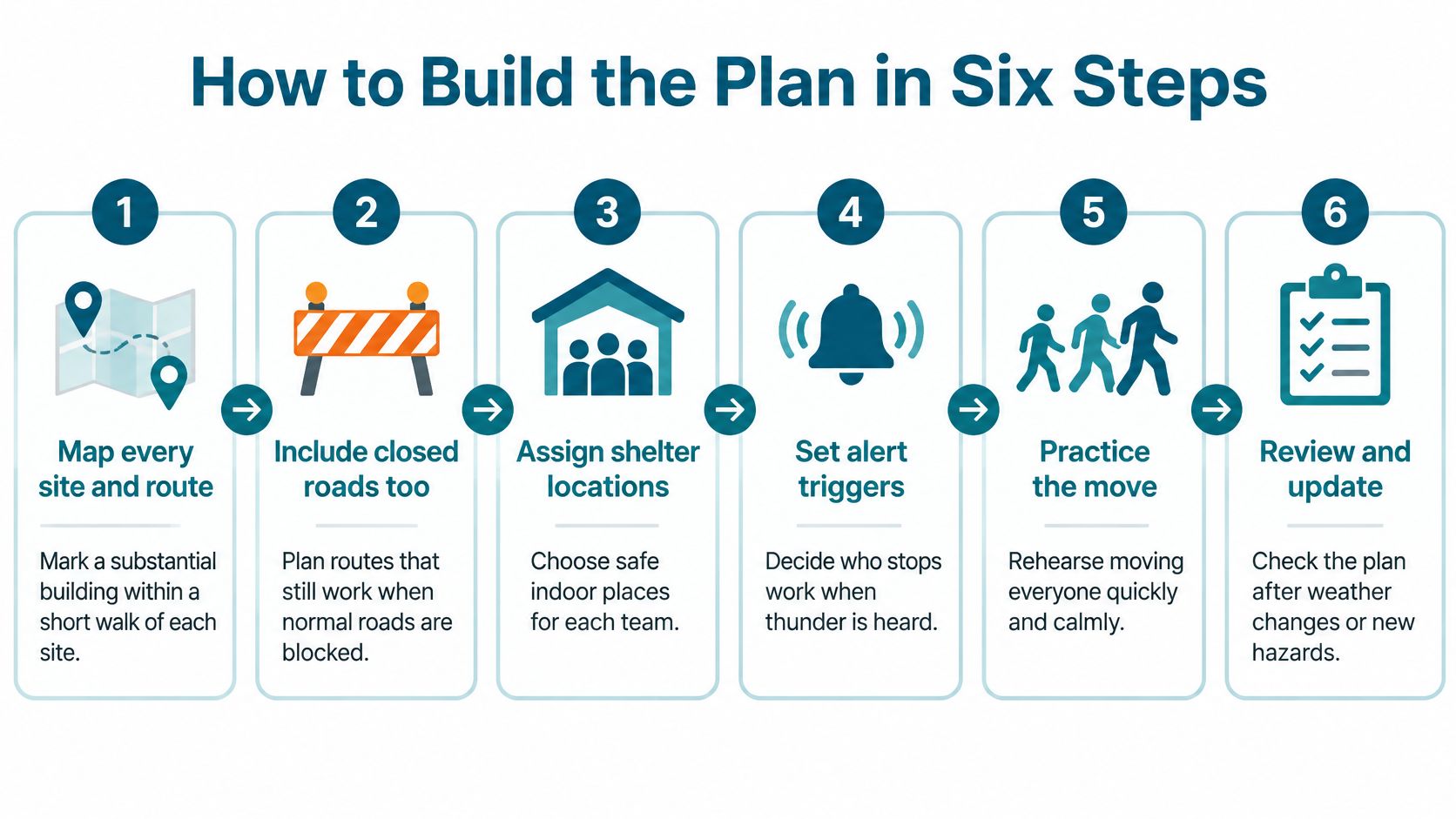
    How to Build the Plan in Six Steps

    Build your severe weather safety plan around decisions you can make with cold hands and a wet phone. At Litter Caterpillars, we always put volunteer safety first and volunteer happiness second. Use that order when you decide what to shorten, move or cancel.

    NOAA's lightning safety guidance supports preassigned stop-work decisions, suitable shelter and a wait of at least 30 minutes after the last thunder before resuming. Treat that wait as a minimum, never a promise that you'll restart.

    Put an owner beside every action

    1. Map every site and route. Mark a substantial building within a short walk, confirm the entrance, and include detours around closed roads. We've cleaned a highway during a bike riding event shutdown, so we know a traffic-free worksite still needs an exit and shelter; watch for the mistake of treating a tree or picnic pavilion as refuge.

    2. Assign a weather lead who can cancel, a route sweeper, a communications lead and a roster keeper, then give each person a backup and each volunteer a buddy. The slip to avoid: leaving all authority with an organizer who also manages supplies, welcomes arrivals and answers messages.

    3. Write your stop triggers before departure. Include thunder, tornado warnings, locally chosen heat and wind chill limits, plus an evening-before cancellation deadline when forecasts justify an early decision. Don't rely on a limit that lives only in your head, and don't make volunteers travel into dangerous weather just to hear you cancel.

    4. Test the alert chain through both a group chat and a phone tree, including a message for people already traveling. Ask everyone to acknowledge the test, because a chat invitation doesn't prove that someone joined or receives notifications.

    5. Arrange transport before you need it. Identify drivers, available seats and a safe waiting place for volunteers without cars, including anyone who needs help after an early finish. Avoid a transport plan that ends with a stranded volunteer refreshing a ride-hailing app.

    6. Write the restart conditions and next review date on the page, with space for the weather lead's decision. The slip to avoid: accepting brighter skies as permission to return while you still have unresolved weather, attendance or route hazards.

    Use this visual as a prompt when you build your route-specific version.

    A six-step infographic illustrating a safety plan for severe weather with clear, actionable instructions and icons.

    Keep the working copy short

    Fit the decision sheet on a page: map, roles, stop triggers, shelter instructions and contact details for the lead and deputy. Carry the current roster alongside it, rather than squeezing private emergency contacts into a public handout.

    Pack the equipment that supports those decisions using the severe weather safety kit checklist. You need both the written decision and the means to carry it out.

    Who Does What and How Alerts Reach People

    Roles, authority and backups

    Role Owns during a warning Can cancel? Backup
    Weather lead Forecasts, cancellation deadline and stop-work call Yes Deputy weather lead with own phone
    Route sweeper Walks the route and confirms everyone reached shelter No Second sweeper on the opposite side
    Communications lead Sends alerts through the group chat and phone tree No Co-lead who holds a copy of the templates
    Roster keeper Attendance list, check-ins and reply tracking No Any leader who holds a printed roster
    Buddy pairs Watch each other for heat, cold or confusion No Team lead assigns a new pair

    Replace role labels with actual names before departure. Anyone can raise a concern or move out of danger; the authority column assigns responsibility for the whole-event decision, not permission to protect yourself.

    We put volunteer safety first and happiness second. That means the weather lead can cancel while enthusiastic volunteers still want to finish their bags.

    Send a message people can act on

    Use this cancellation template, and treat the reply window as an accountability deadline rather than permission to delay shelter:

    [Event] is cancelled. Move to [shelter address] now. Find your buddy and count off. Reply SAFE to [roster keeper name] within 15 minutes.

    The address removes guesswork. The buddy count helps you identify anyone missing, and the roster keeper follows up on unanswered messages immediately rather than assuming silence means safety.

    For a restart message, write:

    Weather lead all-clear for [event]. Restart at [time] from [meeting point]. Check in with [roster keeper] before leaving shelter. Stay sheltered until you receive this instruction.

    Only send that message after you meet the lightning waiting period, complete the headcount and check the route. The National Weather Service's severe-weather safety guidance calls for substantial enclosed shelter or a hard-topped vehicle during lightning, so don't send people outside merely to assemble.

    Keep alerts separate from conversation

    If your workplace already uses Pebb to share photos across your company, keep cleanup pictures separate from urgent weather messages. You don't want volunteers hunting through a photo thread for the shelter address.

    Store phone numbers offline and test the chain on a Saturday morning before the season starts. A cancellation works only when you reach the last person on the route.

    Shelter Rules for Thunder, Tornadoes and Hail

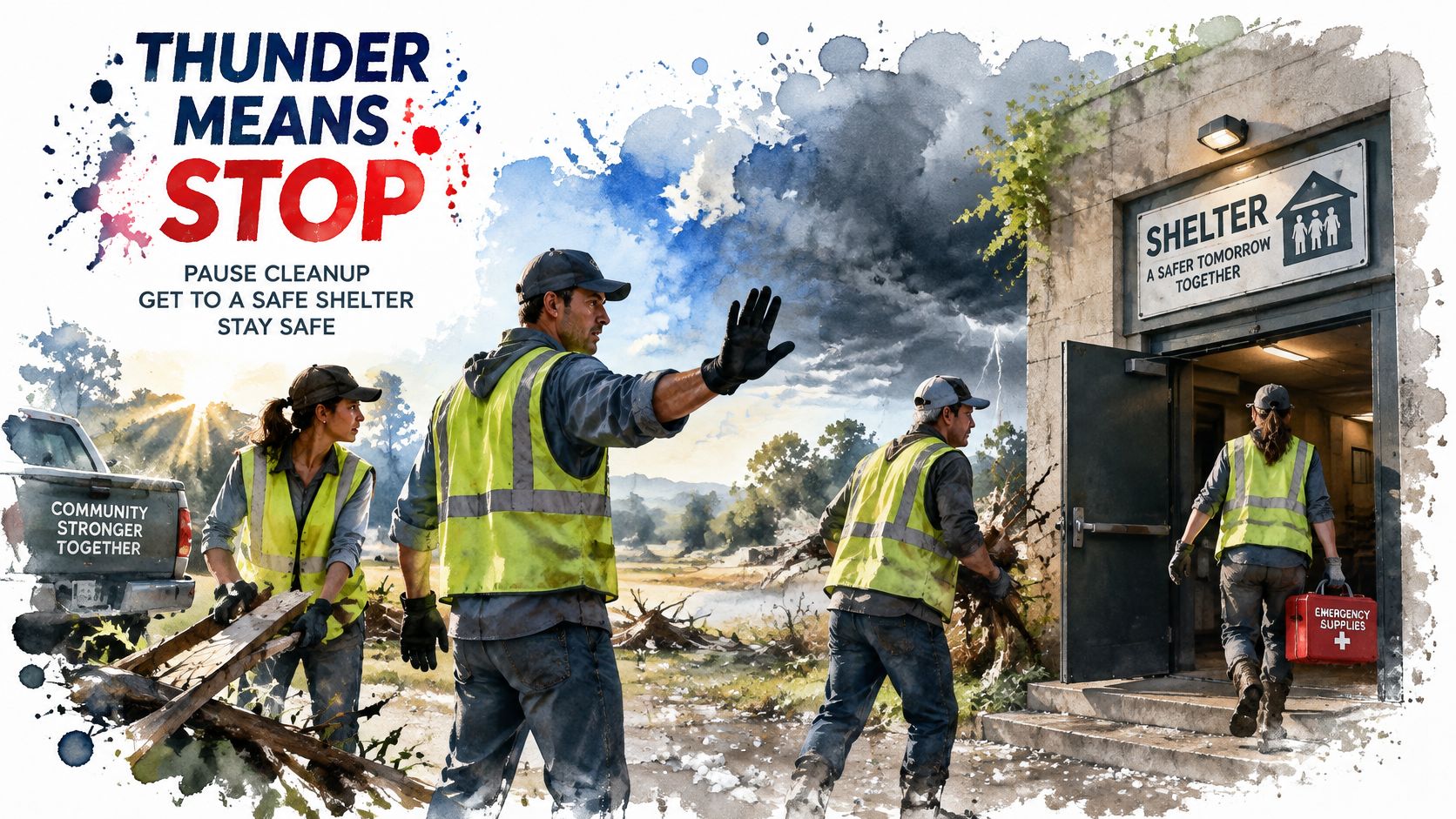
    Thunder means stop. Treat it like a smoke alarm: move when you hear it, even when you can still see blue sky.

    Use the scene below as a reminder to move together toward real shelter, rather than gathering around the equipment.

    Construction workers wearing high-visibility vests move to a safe shelter during a severe thunderstorm.

    Follow the National Weather Service's lightning guidance: enter a substantial enclosed building or enclosed metal-topped vehicle immediately, and stay sheltered for at least 30 minutes after the last thunderclap. Don't substitute a tent, shed, porch, picnic pavilion, dugout or tree.

    Start the clock again whenever you hear more thunder. Keep the crew together inside, and let the weather lead handle the decision instead of sending volunteers out to inspect the sky.

    Change your response for a tornado

    A vehicle can provide lightning shelter, but don't choose it as your main tornado refuge. Follow FEMA's shelter-in-place guidance when you choose and use a tornado shelter:

    1. Go low. Move to a basement or the lowest available floor of a sturdy building.
    2. Choose a small interior room without windows, and put as many walls as possible between you and the outside.
    3. Protect yourself. Crouch low and cover your head and neck with your hands or sturdy cover.

    Locate that building before starting near an open lot or roadway. Don't assume the lightning destination has a suitable tornado room.

    Use this video during your pre-event conversation about moving to safety.

    If you get caught outside, follow the National Weather Service's outdoor storm precautions: move away from hills, water, isolated tall trees and power poles, and protect your head from hail while seeking shelter. No outdoor position provides safe lightning shelter; avoid floodwater as you move.

    Carry a shelter card

    Write the address, walking time, entrance and indoor meeting point on each route's card. Count off at that meeting point so nobody searches neighboring rooms or walks back outside.

    Restart only after the required wait, a matching roster and headcount, and a clear route check. If you can't meet every condition, end the cleanup.

    Heat and Cold Limits for Volunteers

    A thermometer reading doesn't tell you how long you can work comfortably or safely. Wind, sun, clothing, effort and access to recovery all affect the decision you need to make.

    At 0°F with a 15-mph wind, you face a -19°F wind chill, and exposed skin can freeze in about 30 minutes, according to the National Weather Service's winter preparedness guidance. Don't use that example as a safe shift length. Shorten or cancel work before exposure becomes dangerous, cover skin and bring spare warm layers.

    We pick up trash rain or shine, including on the coldest days of winter and the hottest days of summer. You still need permission to stop, warm up or cool down without proving your toughness.

    Make recovery part of the route

    For hot-weather shifts, use these operating rules:

    • Shorten the work. Move strenuous tasks toward cooler morning conditions and reduce afternoon exposure.
    • Place supplies along the route. Put water and shade where volunteers can reach them without abandoning a buddy.
    • Keep people paired. Don't allow solo work when heat or cold could impair someone.
    • Ask directly. Check for dizziness, nausea or unusual fatigue instead of waiting for someone to admit trouble.

    Chicago's heat guidance advises staying indoors when possible during extreme heat. Shade helps with preventive breaks, but choose indoor cooling when outdoor conditions no longer allow safe recovery.

    You don't owe the route another bag when your body needs shelter.

    As a starting task-rotation rule, switch jobs every hour, and rotate sooner whenever conditions or symptoms demand it. Keep a spare hat, gloves, water and phone charger in the sweep kit.

    Plan for someone who feels unwell

    Review heat exhaustion prevention tips before a hot-weather event. Ask whether anyone feels dizzy or nauseous, but don't treat continued sweating as proof that someone is safe.

    Name a cooling location, a hospital route and someone who can help arrange a ride home or recovery space. Call emergency services for suspected heat stroke rather than treating a private ride as medical care.

    Before you approve the site, ask: Can everyone cool off or warm up within a short walk?

    Drills, Reviews and Your First Week

    Think of a weather drill like a fire drill. You don't expect trouble every Saturday, but you need to know the door before you need to use it.

    In a 2023 survey of 1,000 U.S. adults, 47% said they had created an evacuation or family preparedness plan for severe weather, according to Motorola Solutions' report based on Researchscape research. For your crew, take the next practical step: test whether you can carry out what you wrote.

    Rehearse an ordinary Saturday

    Set aside 20 minutes for a tabletop exercise. Use a hypothetical scenario: you hear thunder just after volunteers spread along the route, and a late arrival hasn't checked in.

    Ask the weather lead to announce the stop. Have the communications lead send a clearly labeled drill message, then ask the roster keeper to track replies and identify the missing arrival.

    Next, have the sweeper walk to the assigned entrance while someone checks the shelter card's walking time. If the sweeper can't make it within that time, shorten or change the route instead of stretching the promised time to fit.

    A plan you've walked once beats a perfect one you leave in a folder.

    Try a complication before you finish. Say the usual entrance is locked, the deputy's battery dies, or a volunteer needs help reaching shelter. Give each problem an owner and write the change onto the working copy.

    Drill and review cadence

    Drill or review How often What it checks Result that counts
    Contact roster check Monthly Phone numbers, group chat membership and roster accuracy Every volunteer confirms a working number
    Shelter walk-through Before each season Walking time and door access at every shelter Group reaches shelter within the stated walking time
    Tabletop storm drill Twice a year Who calls the stop and how fast the alert spreads Cancel decision and last reply within the set window
    Plan review Yearly and after any event where you use the plan Roles, sites, contacts and triggers You share the updated plan with every volunteer

    Give yourself a workable first week

    Use the severe weather safety video to open a crew discussion, then move from watching to doing. Keep your first round manageable:

    • Print the working copy. Put it in the sweep kit where the backup lead can find it.
    • Walk the route. Carry the shelter card and check the actual entrance.
    • Confirm authority. Name the weather lead and deputy who can cancel.
    • Share the messages. Let every volunteer see the cancellation and restart templates.
    • Write the next review date. Put it on the plan before you pack away the clipboard.

    After a weather interruption, ask where you hesitated, who missed a message and what transport problem remained. Thank people for naming awkward details, then change the document while everyone remembers them.

    Start with a site today. You can expand a tested routine much more confidently than an untried binder.


    We bring Chicago neighbors together for hands-on cleanups, friendship and service, with volunteer safety first and happiness second. Visit Litter Caterpillars to find a cleanup and explore our weather-safety resources before you head out with your crew.