
Tag: volunteer training

  • Volunteer Peer Support: How to Build a Grassroots System

    Volunteer Peer Support: How to Build a Grassroots System

    Three of us huddled under a Chicago tree while spring hail bounced off our jackets and every Uber canceled. We had come to clean someone else's mess, and I realized that task felt easier than facing the messes inside our own lives.

    Why Volunteer Peer Support Changes Everything

    That storm became part of the Litter Caterpillars story. We were cold, soaked, and annoyed, yet we also laughed. The weather gave the morning a strange flavor, as if the hard part had turned into another page in our shared story. We learned that people often find courage beside someone who understands the same discomfort.
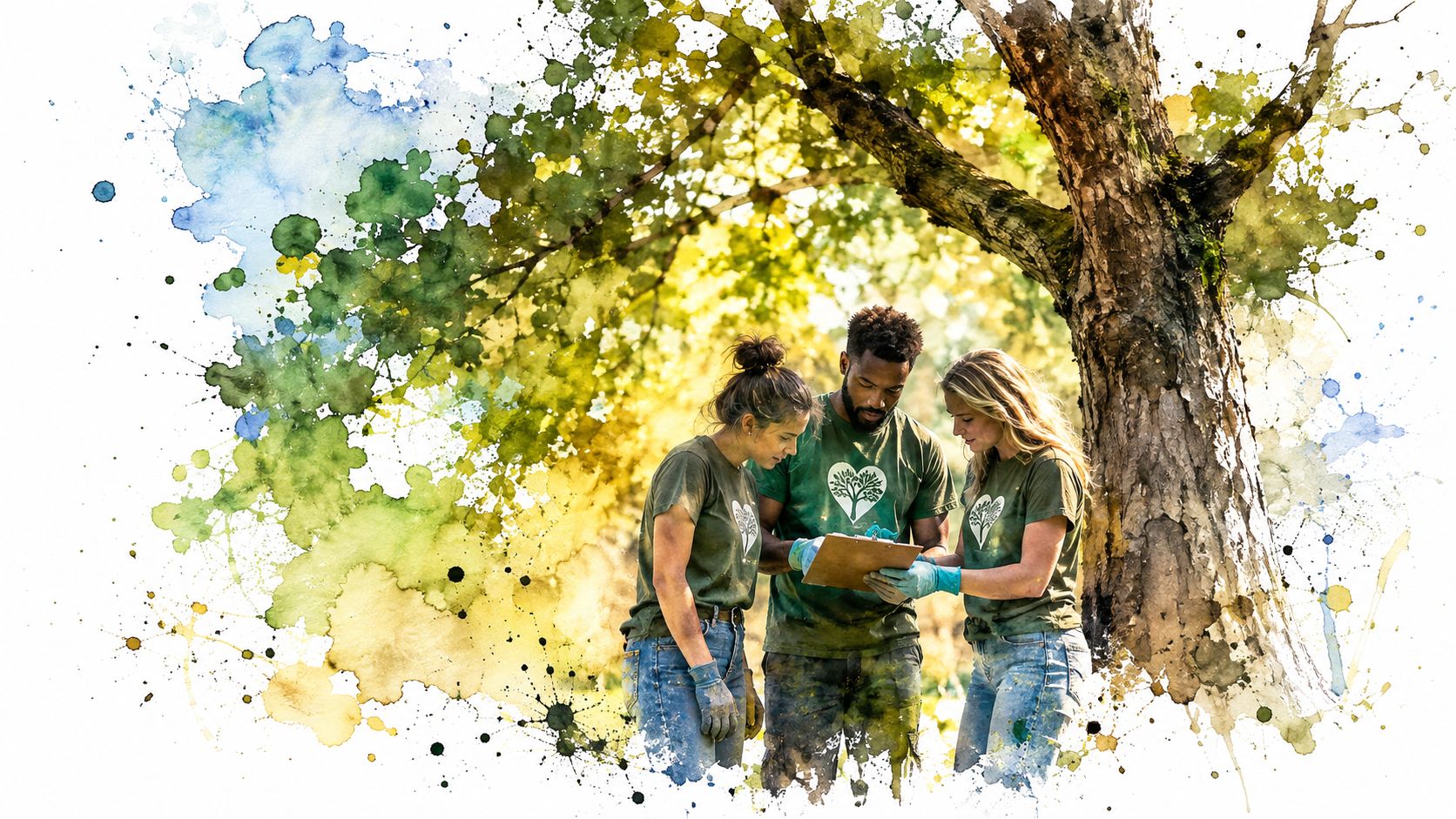
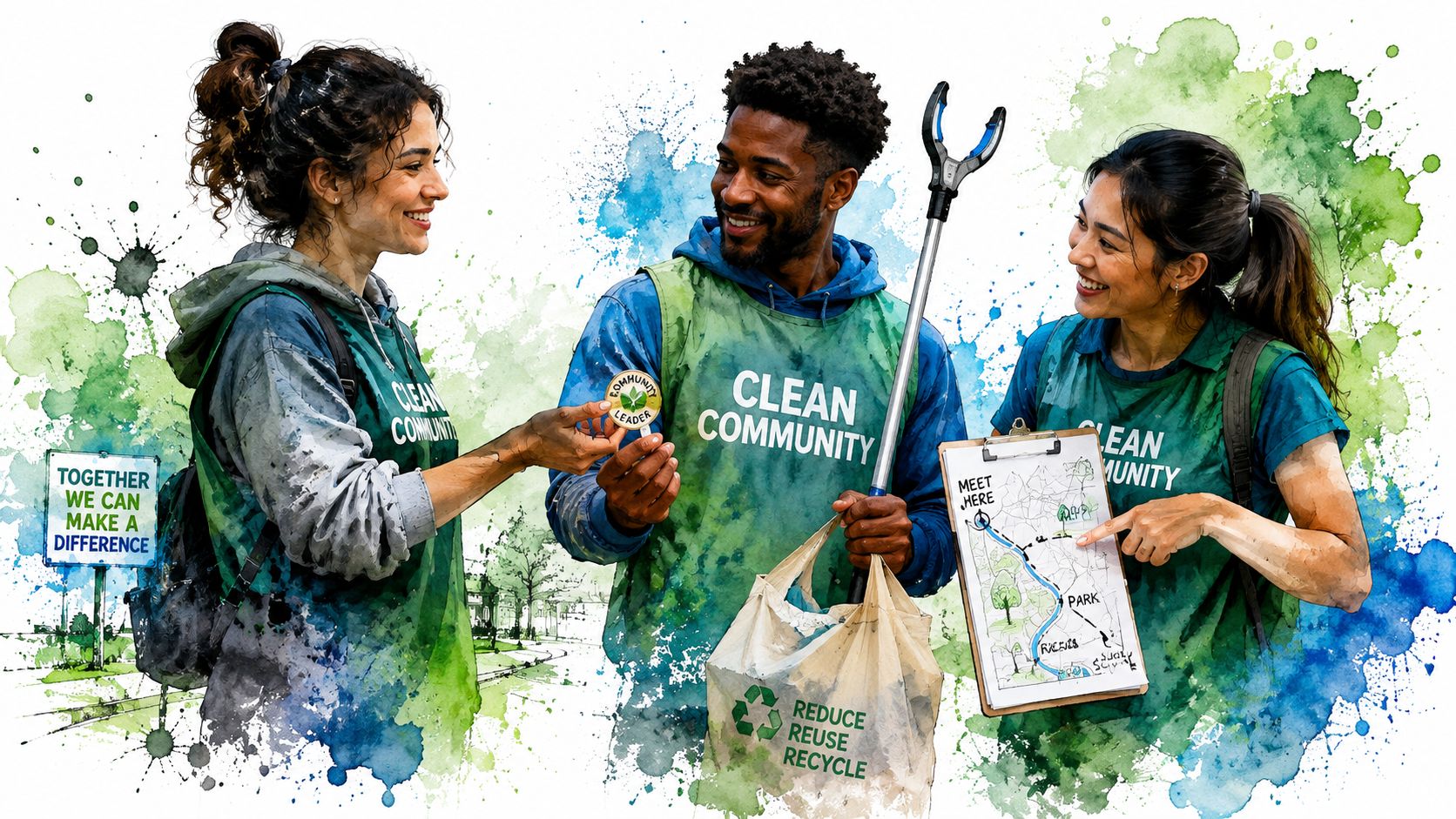
    Three volunteers standing under a tree, collaborating and reviewing project notes on a clipboard outdoors.

    Volunteer peer support starts with that simple exchange. One person brings lived experience, another brings a current struggle, and both people gain a reason to keep showing up. The volunteer doesn't need to pretend to have every answer. They need to listen, share practical knowledge when appropriate, respect boundaries, and stay present.

    The practice has a long history. Reformers Jean-Baptiste Pussin and Philippe Pinel advanced more humane, empathy-based psychiatric care in late eighteenth-century France. Modern peer support later re-emerged through the psychiatric survivor movement in the United States during the 1960s and 1970s. In youth support, Teen Line began in 1980, and its high school volunteers complete more than 65 hours of intensive training before answering calls, texts, and emails. The program says it responds to thousands of contacts each year. (Teen Line history)

    My rule: Protect the person who gives help with the same care you give the person who receives it.

    Format changes the experience. A group can give someone several points of connection, shared language, and a sense that they aren't carrying a problem alone. One-on-one companionship can feel more personal, yet it can also blur expectations if nobody defines the relationship.

    A school-based volunteer peer group ran for a year and gained strong acceptance, even though two-thirds of students felt uncomfortable at first. The study reported improvement across interpersonal, internal, and school outcomes, and two-thirds of alcohol and substance users said they reduced intake or abstained. (School peer-support study)

    I build from the same place every week, whether we're cleaning in rain, heat, or a Chicago blizzard. Safety comes first, happiness comes second, and friendship keeps people connected. That order helps a grassroots system grow without treating volunteers like an endless supply of labor.

    Defining Your Goals and Matching Peers

    Before you recruit anyone, write one sentence that describes the change you want. “Improve wellbeing” sounds kind, but it gives volunteers no clear action and gives coordinators no clean way to learn what works. A narrow target gives everyone a handrail.

    Start with this sentence:

    We pair [specific people] with [specific peer experience] so they can [one behavior or outcome], measured by [one primary metric].

    You might pair new residents with longtime neighbors so they attend community events more consistently. You might pair people managing diabetes with peers who can support a specific self-management habit. You might create a group where participants practice social connection through regular attendance.

    A rapid systematic review of peer-volunteer diabetes interventions found mixed psychosocial results. One of fifteen psychosocial outcomes favored the intervention group, while fourteen showed no difference. Behavioral outcomes looked more encouraging, with six of nine favoring the intervention group. (Rapid systematic review) The lesson feels practical to me. Choose one behavior, teach the same core material, and measure attendance or adherence separately from broad feelings about wellbeing.
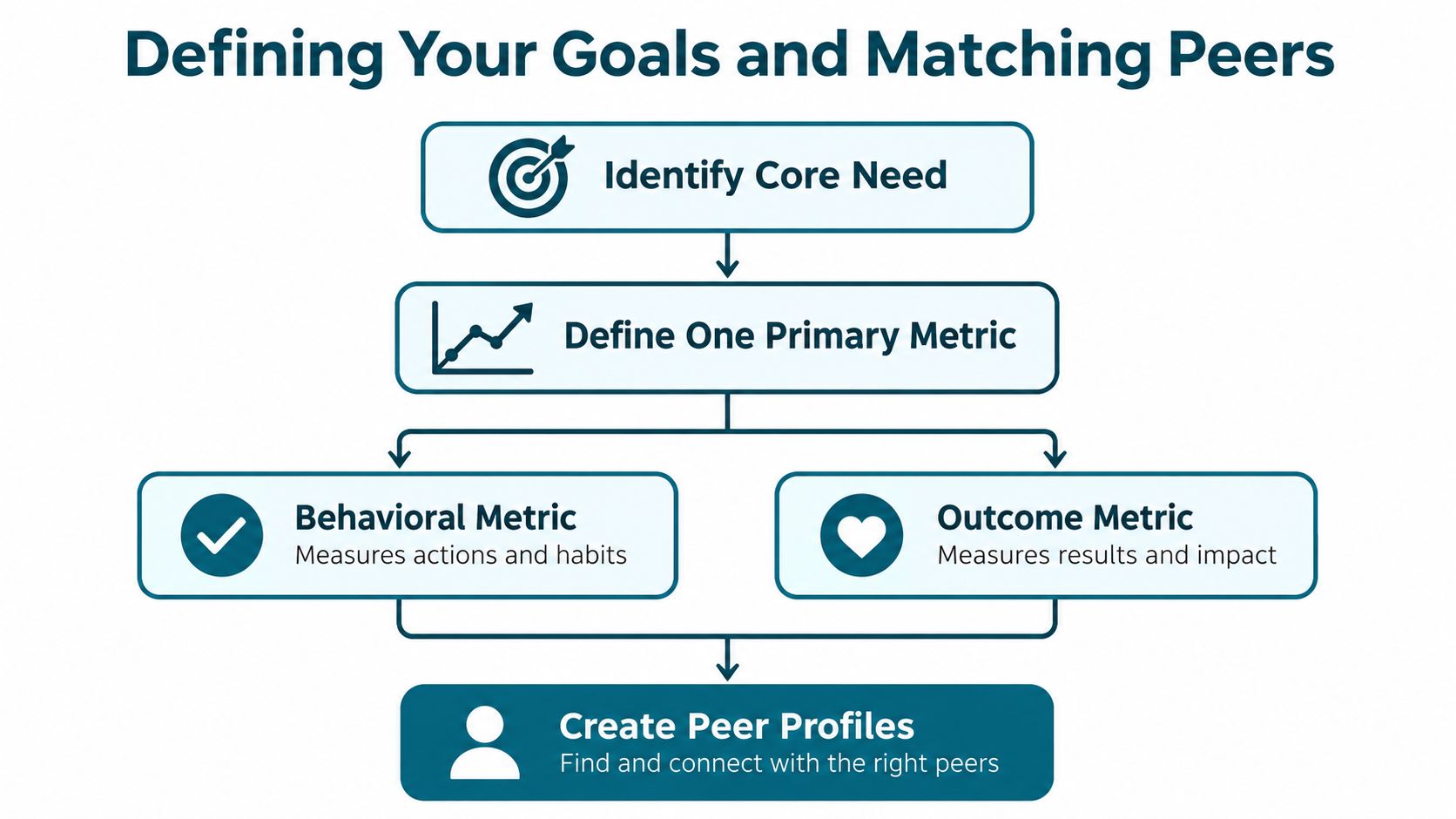
    A flowchart titled Defining Your Goals and Matching Peers, illustrating the process of setting goals and metrics.

    Match experience with care

    Lived experience matters, but it shouldn't become the only criterion. Create a short profile for every volunteer and participant:

    • Relevant experience: What has this person lived through or practiced?
    • Availability: Which days and communication methods can they sustain?
    • Boundaries: What topics, locations, or situations should they avoid?
    • Temperament: Would they prefer a quiet conversation, a small group, or active collaboration?
    • Support needs: What supervision or backup would help them stay steady?

    A systematic review of adult diabetes peer support found benefits in selected domains, including self-efficacy, depression, and perceived social support, while other outcomes showed benefit in only a minority of trials. The review reported improvement in three of fourteen glycaemic-control trials, one of four blood-pressure trials, one of six cholesterol trials, two of seven BMI or weight trials, two of five physical-activity trials, two of three self-efficacy trials, four of six depression trials, and two of two perceived-social-support trials. (Adult diabetes review)

    Use one-on-one support when a person wants privacy, continuity, or companionship around a defined need. Use a group when people can learn from one another and share a common activity. Recent community research says group peer support shows promise, while one-on-one community engagement needs clearer definition and further exploration. (Community peer-support trial paper)

    For practical examples of matching volunteers with structured community roles, review volunteer mentor programs. Then write your goal statement, your matching questions, and the one metric you'll review after every cycle.

    Recruiting and Training Your Peer Buddies

    Good recruitment begins with honesty. I don't write, “Change the world in your spare time.” I write what the work asks people to do, including the awkward weather, emotional conversations, and ordinary follow-up that keeps trust alive.

    Try this:

    “We're looking for volunteers with lived experience who can listen without taking over, respect privacy, attend scheduled sessions, and ask for help when a situation exceeds the role. You won't provide therapy or medical advice. You will practice steady, human support with a trained team.”

    Set the commitment before someone signs up. A UK survey of peer mentors and service users recorded a median volunteering length of two years, a median commitment of 25 hours per month, and more than 9,000 combined volunteer hours in a typical month among respondents. Participants reported between three and more than 100 hours per month, so peer service can range from occasional help to sustained work. (UK peer-volunteering survey)
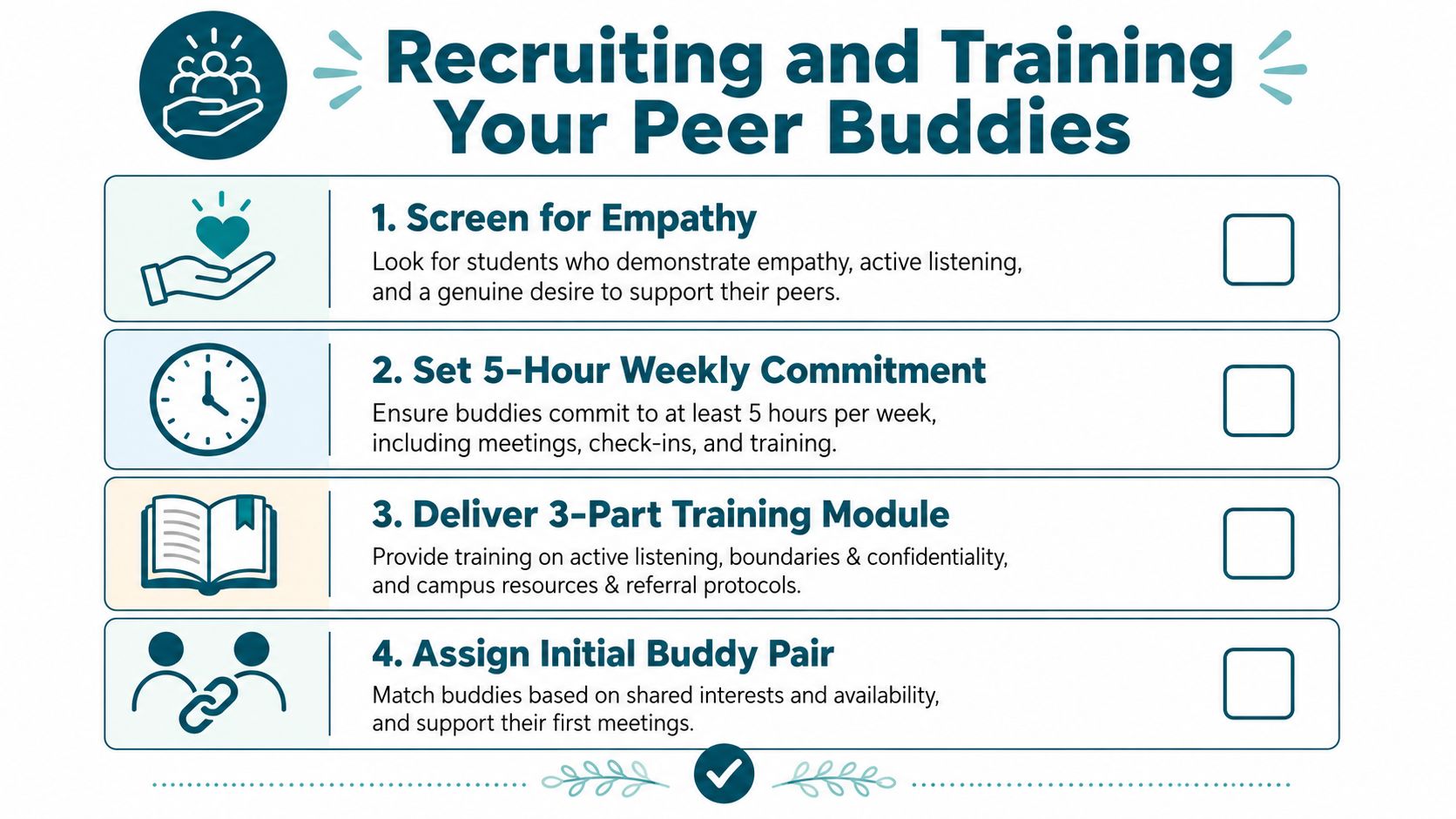
    A four-step infographic guide on how to effectively recruit and train volunteer peer buddies.

    Build training around real moments

    One structured peer-support trial used two volunteer peers to lead a 10-week group course for about 10 participants maximum. Volunteers had to be 18 or older and have lived experience. The program added a training weekend and written material on group rules, adult learning, experiential language, and trauma-informed facilitation. It also allowed individual companionship for up to six months when needed. (Structured peer-support trial)

    I use a training weekend with four practical blocks:

    1. Role and boundaries: Volunteers learn what they can do, what they can't do, and when they must contact a coordinator.
    2. Listening practice: Partners rehearse open questions, reflective listening, pauses, and respectful endings.
    3. Safety scenarios: The group practices responding to distress, privacy concerns, missed meetings, and requests for professional advice.
    4. Session rehearsal: Each volunteer leads a short activity, receives feedback, and writes a personal plan for recovery after difficult conversations.

    Give every volunteer a written boundary sheet. Include the approved referral list, emergency procedure, communication hours, cancellation process, and supervisor contact. Teen Line's requirement for more than 65 hours before first contact shows how seriously some youth programs treat preparation. (Teen Line history)

    I also ask one question before approval: “What will make it easier for you to step away when you need rest?” A volunteer who can answer that question has already started protecting the relationship.

    Protecting Volunteer Mental Health and Safety

    A volunteer can care deeply and still reach a limit. I've watched people leave after carrying too many intense conversations, guessing at their responsibilities, or feeling alone after an interaction went badly. Their dedication didn't fail. The system failed to give that dedication a safe container.

    Research on peer supporters names recurring problems around lack of training and support, role ambiguity, and emotional labour. Another study found that organizational support and supervision improved preparedness, while one-on-one community peer support still needed clearer definition. (Peer-support volunteer challenges)

    Use a check-in before and after

    Before a session, I ask:

    • “Do you have enough energy for this conversation?”
    • “What boundary do you want me to help you protect?”
    • “What will you do if the discussion moves beyond your role?”

    Afterward, I ask:

    • “What stayed with you?”
    • “Did anything feel unsafe or unclear?”
    • “Do you need a break, a supervisor, or a referral?”
    • “What should we change before the next contact?”

    The coordinator records only what the team needs for safety. I don't ask volunteers to write private emotional details into a public chat. I schedule supervision, create a clear escalation path, and make it normal to pause without apology.

    Safety check: A peer supporter should never become the only person holding someone else's crisis.

    A volunteer-run program for socially isolated older adults used older community volunteers. By the end, the intervention group had higher physical-health and general-health scores than the control group, along with better depression, social functioning, and satisfaction with social support. (Older-adult peer-support program) Those outcomes don't erase the work volunteers carry. They make proper support more necessary.

    I keep caseloads limited, rotate difficult assignments, and give volunteers a way to decline a match without explaining their whole history. I also build small rituals of care, such as a shared meal after an event, a private debrief, or a quiet walk. For a gentle example of how objects and stories can help people process difficult feelings, see these Threadies teddy bear stories.

    Building Scheduling and Communication Workflows

    A peer program feels welcoming when a new volunteer can answer three questions quickly: Where do I go? Who will meet me? What happens if plans change?

    I use Meetup for event details, Instagram for public invitations, and an open group chat for live coordination. The tools matter less than the sequence. Publish one clear event page, send one reminder, introduce every newcomer by name, and close with a short reflection.

    A simple event description might say:

    “Meet us Saturday morning at the library entrance. We'll pair up, review the safety plan, work for the agreed session period, and gather afterward for introductions and reflection. Bring water, weather-appropriate clothing, and questions.”

    Weekend mornings create a natural rhythm for service-minded people. They also help volunteers know what they're choosing before they commit. I avoid chat overload by keeping announcements in one channel and casual friendship in another.

    Give every message a job

    Use a welcome message that says who coordinates the group, where safety information lives, how to cancel, and how to ask for a private check-in. Instagram captions should name the neighborhood, the meeting point, the kind of support involved, and the invitation to attend with a friend.

    Keep emergency information separate from ordinary scheduling. A current contact list should include coordinators, venue contacts, and approved escalation resources. Teams that need a practical reference can review how to maintain emergency lists with 3rd-i.

    When a group grows, don't make the chat louder. Add predictable labels, a weekly pinned message, and one named host for each gathering. For a lightweight way to organize recurring volunteer shifts, see free volunteer scheduling software. Consistency gives people room to focus on one another.

    Building Pride Through Flags, Badges, and Identity

    People show up more readily when service has a face, a sound, and a shared story. I learned this from sports teams and national communities, which use colors, songs, and symbols to help strangers recognize one another. A volunteer group can use the same tools without turning service into a performance.

    At Litter Caterpillars, our logo comes from that first storm under the tree. Our theme song came from a community member. Our flags travel to events, and our badges give volunteers a visible way to remember their own progress. A first-event badge says, “I crossed the threshold.” A tenth-event badge says, “I built a habit.” A neighborhood-lead badge says, “I can help someone else begin.”

    Make rituals affordable

    You don't need a large budget. Choose one color, one symbol, one song, and one phrase that volunteers can repeat. Welcome newcomers at the start. Thank people by name at the close. Take a group photo only when everyone agrees. Let volunteers suggest new badge names and tell the origin story behind each design.

    Pride shouldn't pressure people to work through exhaustion. It should make rest compatible with belonging. A volunteer who misses a session remains part of the group.

    For groups that need durable visual materials, premium vinyl Teresa flags can provide one route for creating a recognizable event marker. Keep the design simple enough for someone to draw from memory.

    Identity also helps people face difficult conditions. On a freezing morning, the flag says, “You're with us.” On a hot afternoon, a shared song can break the silence. The symbol doesn't replace safety or supervision. It gives people a small piece of courage they can carry together.

    Measuring Impact and Sustaining Your Program

    I track two kinds of information: what volunteers do and what participants experience. Attendance, completed sessions, retention, and cancellations show whether the system runs. Short surveys can ask about emotional support, practical information, loneliness, social connection, and physical activity.

    A peer-to-peer volunteer model for highly isolated patients reported wellbeing rising by 58%, emotional and informational support improving by 50%, reduced social interaction dropping by 91%, loneliness falling by 70%, and physical activity increasing from 49% to 66% after volunteer visits. (Peer-to-peer volunteer model) Use those findings as examples of measurable questions, not promises for your own program.

    Review the dashboard each quarter:

    • Attendance: Who keeps coming, and where do people drop out?
    • Adherence: Did participants complete the agreed activity?
    • Experience: What felt useful, confusing, or draining?
    • Safety: Did volunteers receive timely supervision?
    • Pride: Which rituals help people return?

    A simple volunteer program evaluation can turn stories into decisions. Celebrate what works, change one weak process at a time, and protect the people who make the work possible.


    Litter Caterpillars brings volunteer-led community service, introductions, partner activities, and reflection into weekly gatherings across Chicago. Visit Litter Caterpillars to find a welcoming way to serve, meet people, and build a peer-support habit that respects volunteer safety and friendship.

  • Community Leadership Development: A Practical Guide for 2026

    Community Leadership Development: A Practical Guide for 2026

    The first Litter Caterpillars cleanup had three people, one Chicago hailstorm, and an Uber app that kept canceling. We huddled under a tree, shivering, and somehow decided this was a good way to spend Saturday morning.

    How a Volunteer Cleanup Group Became a Leadership Lab

    I started with a problem I understood too well. I couldn't clean my own fridge. Every old jar and forgotten bag carried a story, so each piece of clutter felt impossible to move. As my apartment became messier, my life followed.

    Then a long, chaotic relationship ended. I wanted a different circle around me, so I made a decision that sounded simple and felt risky: I would build my social life around people who gave more than they took. I would practice cleanliness, consistency, and bravery in public, with other people watching.

    That first cleanup tested the idea immediately. Three of us picked up litter, then the weather turned violent. Hail came down, Chicago-style. We crouched beneath a tree while every Uber we tried canceled. We were cold, annoyed, and stuck together.

    The first leadership lesson: people learn how to lead while solving the problem in front of them.

    We learned that cleaning another person's mess felt easier than cleaning our own. We also learned that discomfort can give a group a story. The storm became part of our identity, and our logo grew from that first miserable adventure. A name, a flag, a theme song, or a badge can turn a random Saturday into a shared chapter.

    A young volunteer wearing a recycling t-shirt stands amidst trash in a polluted urban environment.

    Since then, the crew has picked up trash every week, through rain, blizzards, wind chills, heat, and ordinary sunny mornings. We've worked across Chicago's 50 wards, cleaned a highway during a bike-event shutdown, and turned an empty lot in Englewood into Caterpillar Park after winning it at auction.

    Those projects mattered because they gave people real jobs to do. Someone checked the route. Someone watched the tools. Someone welcomed newcomers. Someone made sure the last bag reached the pickup point. Community leadership development happened through handoffs, decisions, and small acts of care.

    If you're starting a group, borrow the simple formula. Pick one task people can finish, repeat it at a predictable time, and give the group a small identity marker. When you plan your first gathering, practical ideas to boost guest participation at events can help you turn attendance into connection.

    The curriculum came later. The storm came first.

    Why Identity Beats Curriculum in Community Leadership Development

    Most leadership guides begin with a syllabus. They list communication skills, conflict management, meeting design, and strategic planning. I understand the appeal, but a volunteer usually decides whether to return before they care about any of those topics.

    They return because they felt welcome. They return because the work made sense. They return because someone handed them a grabber, learned their name, and made the morning feel like it belonged to them.

    At Litter Caterpillars, we use flags, songs, stickers, badges, and a weekend ritual. Those objects may look playful, yet they answer a serious question: Who are we when the work gets inconvenient? A shared identity gives volunteers a reason to keep moving when the sidewalk is wet and the trash is gross.

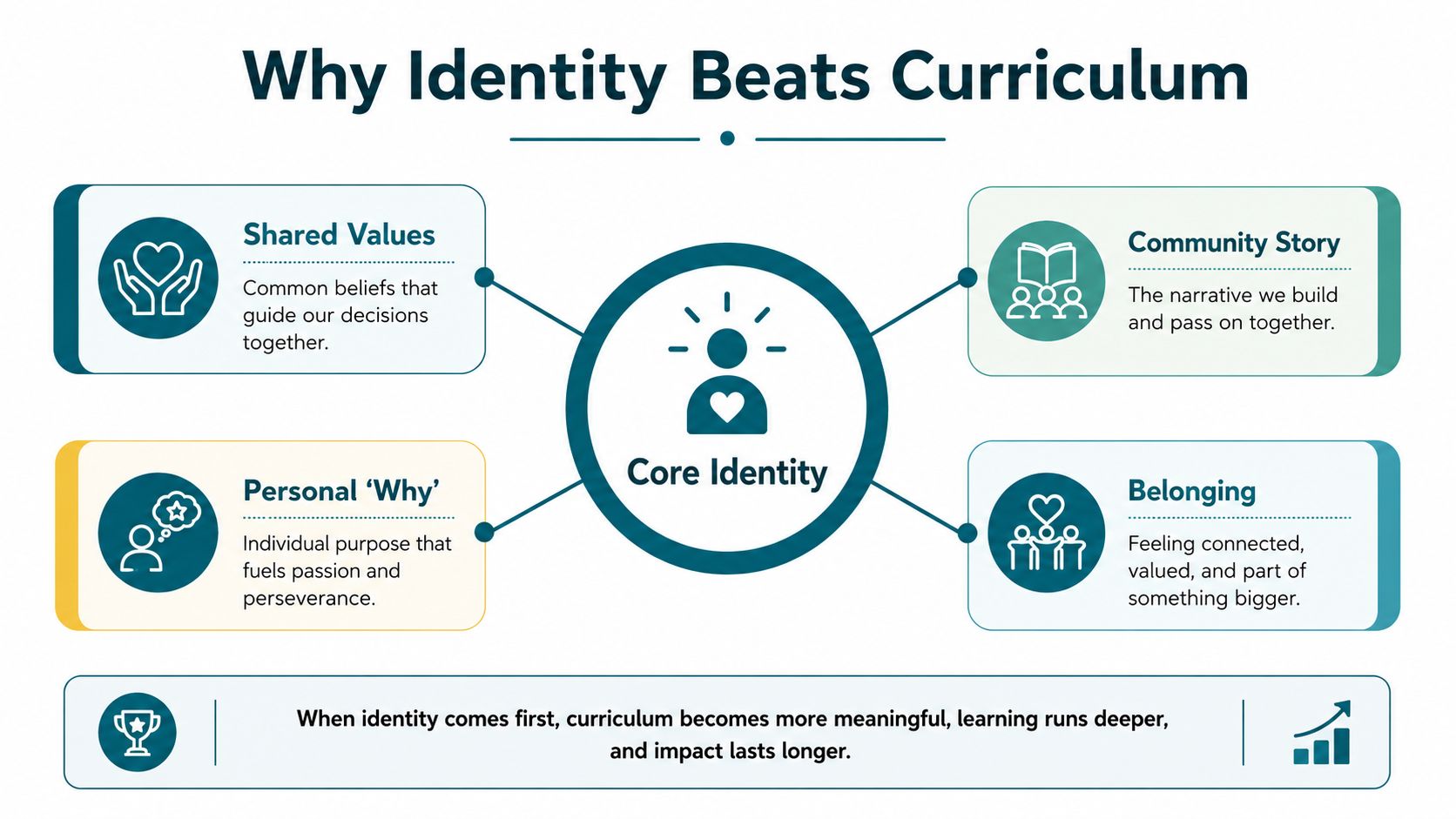
    A diagram explaining why core identity is more impactful than curriculum in community leadership development programs.

    Build the flag before the syllabus

    Start with four pieces:

    • Shared values: Choose words people can act on, like bravery, kindness, and unity.
    • Community story: Tell people why the group exists, using a real beginning rather than polished branding.
    • Personal why: Ask each volunteer what they want to repair, learn, protect, or discover.
    • Belonging: Give people a visible way to say, “I'm part of this.”

    Sports teams have understood this for a long time. A jersey helps strangers recognize one another before they know one another. A volunteer group can use the same basic idea without copying the language or machinery of professional sports.

    The crew model also changes how people learn. A classroom might explain route planning for an hour. A crew captain can teach route planning while three volunteers decide which block to clean first, where to place full bags, and how to avoid splitting the group. The lesson sticks because the decision has consequences in the same moment.

    That approach matches research on volunteer leadership. In one study of professional women who reported leadership growth through volunteering, 83% said volunteering acquired, improved, or developed their leadership skills, while 78% reported communication improvement, 63% reported problem-solving improvement, and 53% reported coaching or mentoring gains (volunteer leadership study).

    The numbers don't prove that a logo can replace training. They show why service work can become a leadership practice when people take responsibility together. Give volunteers a reason to belong, then let the work teach them what belonging requires.

    Designing a Leadership Curriculum That Actually Sticks

    A long training day makes volunteers tired before they get a chance to practice. I prefer short modules, each attached to a task that someone can complete during the same event.

    Use four learning pillars:

    Safety

    Give a brief safety talk before anyone grabs a tool. Cover gloves, sharp objects, traffic, weather, hydration, and the point where a volunteer should stop and ask for help.

    Then assign one person as the safety watcher. That person doesn't become a boss. They scan the work area, remind people about hazards, and speak up early.

    Route planning

    Show the group how to choose a starting point, divide the area, and set a meeting place for full bags. Let a new volunteer draw the route on a phone map or paper sheet while an experienced person asks questions.

    The task teaches judgment. A route that looks short can cross busy streets or leave one person isolated. Volunteers learn to notice those details by making the plan themselves.

    Tool care

    Teach people how to carry grabbers, use bags without overfilling them, and return equipment after the event. A volunteer can lead the tool count at the end, then record anything damaged or missing.

    That small responsibility creates trust. People learn that leadership includes the boring objects everyone needs next week.

    Group care

    Ask captains to welcome newcomers, pair people thoughtfully, and watch for anyone standing alone. Group care includes checking energy, making introductions, and ending on time.

    A 15-minute pre-event briefing can follow this order:

    1. Welcome everyone and name the route.
    2. Explain the safety concern for that location.
    3. Assign tools, pairs, and the first task.
    4. Tell volunteers when and where the group will regroup.
    5. Ask for questions before moving out.

    A post-event debrief can stay just as short. Ask what worked, what created friction, and who handled a responsibility well. Record one adjustment for the next event.

    Once a month, post one reflection prompt in the group chat: “What did you do this month that you couldn't do when you first joined?” Volunteers can answer in a sentence. Captains can respond with a specific observation.

    Research on volunteer leadership training supports this rhythm. Guidance recommends shorter, sequenced instruction rather than one overloaded session, and it describes a four-step evaluation cycle: define behaviors, design and test the instrument, gather feedback in several formats, then analyze and summarize the results for stakeholders (training volunteers and assessing leadership abilities).

    Training should feel like a warm-up before the work. If volunteers practice the skill right away, you can see what they understand and help without turning the morning into school.

    Recruiting, Onboarding, and Badging Your First Crew

    Recruiting people takes a post. Keeping them takes a good first hour.

    We use Meetup, Instagram, and open group chats because each channel lets a newcomer see the group before making a large commitment. The invitation should sound like a person wrote it:

    “We're meeting Saturday morning to clean three blocks near the park. Bring shoes you can get dirty. We'll provide the tools, introduce you around, and finish with coffee.”

    That message answers the questions people often keep to themselves. Where do I go? What should I bring? Will anyone talk to me? What happens if I'm new?

    Make the first hour easy to enter

    Give the newcomer a name tag. Introduce them to one person who already knows the group. Explain the task without assuming they know cleanup vocabulary. Pair them with a patient volunteer, then check in before the group leaves the first block.

    End with a visible completion point. Take a group photo, give the volunteer a sticker or badge, and tell them when the next event happens. A small token can help someone remember that they finished something with you.

    For a fuller recruiting process, use this guide to finding volunteers. Keep the first request modest. You don't need a newcomer to run a route, manage a chat, and recruit friends on day one.

    Create a role ladder so leadership feels earned rather than mysterious:

    • Caterpillar: Learns the tools, route, and group norms.
    • Crew Captain: Leads a small team, gives the briefing, and checks the closeout.
    • Ward Lead: Plans recurring work in a neighborhood and coaches captains.

    A no-show doesn't need a dramatic response. Send a friendly message, leave the door open, and avoid building the whole event around one person's promise. People have jobs, illness, family duties, and bad mornings. A reliable system absorbs absence without turning it into a personal conflict.

    Use inclusion as an operating habit

    Leadership inclusiveness predicts volunteer retention more strongly than leadership integrity or volunteer satisfaction in one mixed-method nonprofit study (study on leadership inclusiveness and retention). That finding matches what I see on a sidewalk. People stay when captains ask what they think, make room for new ideas, and let them take a real turn.

    Volunteers also need communication between events. Research involving nonprofit leaders linked communication practices to 63% of the importance of volunteer retention during the COVID-19 pandemic, based on a survey of 696 nonprofit leaders with a 10.6% response rate (research on volunteer retention and communication). You don't need a complicated platform. A clear reminder, a quick thank-you, and a direct answer can keep the group connected.

    Volunteer-First Policies That Protect Your Group

    Policies look dull until someone slips on broken glass or feels pressured to donate. I write the rules before the group gets busy, then use them when a decision feels awkward.

    Our four rules are simple:

    1. Safety comes first.
    2. Happiness comes second.
    3. Donations are never required.
    4. Friendships deserve active support.

    Safety means canceling or changing an event when heat, ice, hail, traffic, or another hazard makes the work unreasonable. It means carrying first-aid supplies, keeping emergency contacts available, explaining boundaries, and giving volunteers permission to stop.

    Happiness doesn't mean every task feels easy. Cleanup can smell bad, take longer than planned, and leave you muddy. It means leaders notice when the group has had enough, avoid humiliating mistakes, and let people leave without guilt.

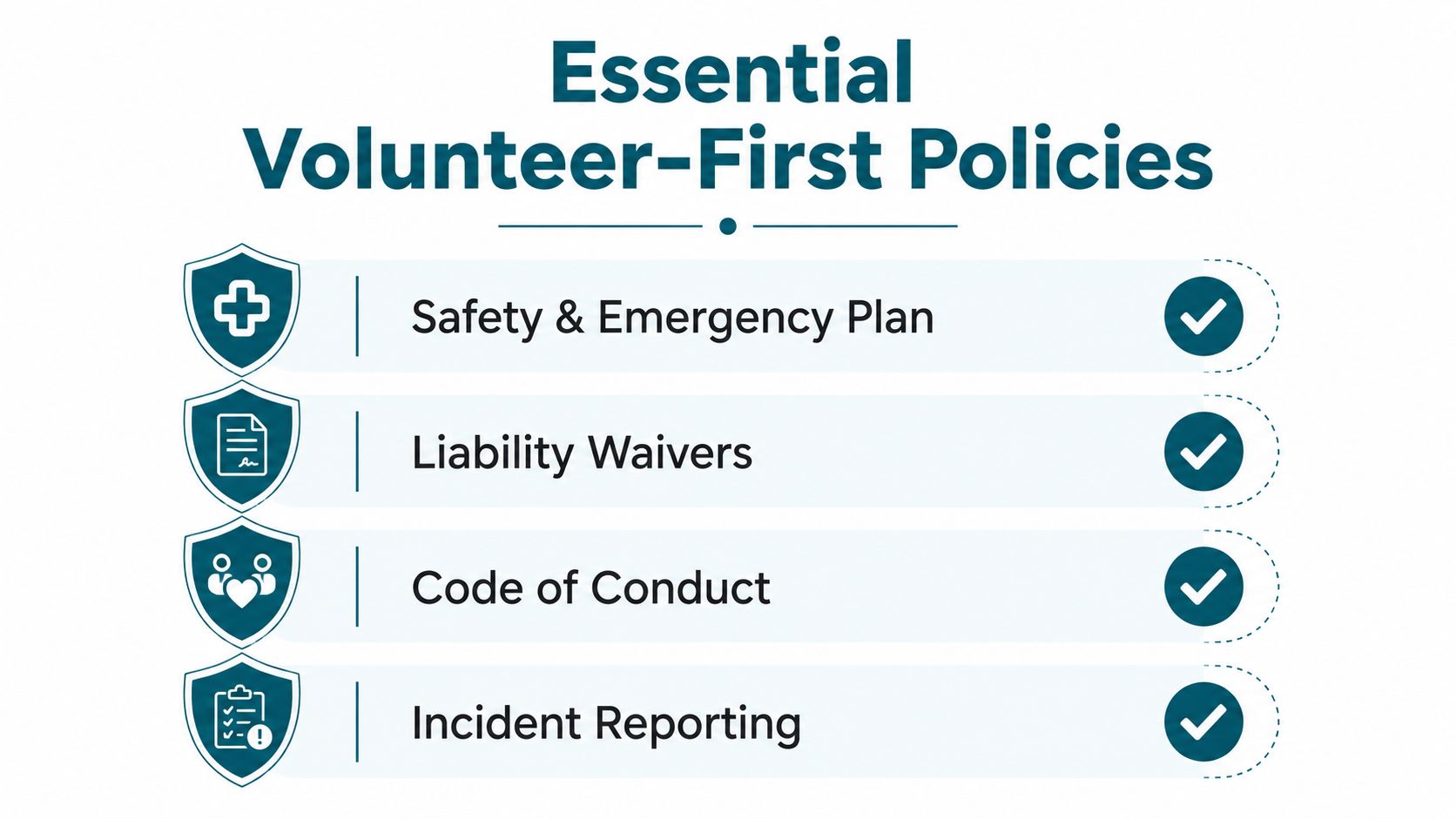
    A graphic titled Essential Volunteer-First Policies listing four key guidelines for volunteer programs with checkmark icons.

    Protect the volunteer relationship

    Never make a volunteer feel like an unpaid donor. A nonprofit can explain its needs, but leaders shouldn't corner people for money during a service event. Don't turn every cleanup into a sponsor parade, either. Too many logos and sales messages can make a neighbor feel like an audience instead of a participant.

    Friendship needs structure. Keep time before and after the cleanup for conversation. Use group chats for practical updates and personal connection. Place people in pairs or small teams so newcomers don't spend the morning alone.

    Volunteer retention research found three practical themes: collaborative relationships, team-based motivation, and strategic, frequent communication (dissertation on volunteer retention). Those habits cost little, yet they shape whether a person sees the group as a place where they belong.

    Keep legal and administrative questions separate from the social promise. Depending on your structure and location, you may need waivers, insurance, incident records, and a clear code of conduct. You can review one practical discussion of volunteer liability insurance before your first public event.

    Avoid common nonprofit traps

    • Pressure for cash: Don't imply that attendance creates a donation obligation.
    • Unclear sponsorships: Tell volunteers what a partner provides and what the partner expects.
    • Missing incident records: Write down what happened, who responded, and what you changed.
    • Loose safety boundaries: Define tasks volunteers shouldn't handle, including dangerous materials or traffic exposure.

    Research on volunteer engagement found the median retention rate rose from 60% in 2019 to 2020 to 70% in 2020 to 2021, which shows how much operating conditions can affect whether volunteers stay (State of Volunteer Engagement report). Your policies won't remove every hard week. They give the group a way to handle one without blaming the people who showed up.

    Measuring Impact Without Killing the Joy

    I don't want a volunteer standing beside a pile of trash, tapping a spreadsheet while the rest of us enjoy the morning. Measurement should help us learn, thank people, and hand responsibility to new leaders.

    Use a 360-degree cycle:

    1. Define the behavior. Choose something visible, like greeting newcomers or checking tools.
    2. Design the instrument. Keep the survey or checklist short, then test it with one captain.
    3. Gather several views. Combine surveys, focus groups, observations, and interviews.
    4. Summarize for the group. Share what you learned and name the next adjustment.

    This method avoids relying on self-report alone. A volunteer may say they felt confident, while an observation shows they still skipped the safety briefing. Both pieces matter.

    Track a small set of useful signals

    For a small crew, I would track bags collected, volunteers retained for 90 days, and new leaders promoted. Those measures connect the physical work to the people system. They also leave room for stories, which numbers can't capture.

    Metric What it measures How to track it
    Bags collected Completed cleanup work Record the count at closeout
    Volunteers retained for 90 days Return and continued participation Review attendance records
    New leaders promoted Movement into greater responsibility Record badge or role changes

    Use a short reflection after events. Ask volunteers what they tried, where they needed help, and what they want to lead next. A captain can observe one behavior during the cleanup and write two sentences afterward.

    At the end of a season, interview a few volunteers. Ask what brought them back, what made them hesitate, and what responsibility they would accept. Keep the conversation human.

    A recognition system can support this work. Research using longitudinal administrative data found that awards tied to recognition of volunteer contributions connected with retention in the following year, while training showed a gender interaction in which trained men were more likely to stay than women (research on recognition, training, and volunteer turnover). Recognition shouldn't become a contest. A handwritten note or a badge for a specific action can tell someone that you saw their effort.

    If you need a broader worksheet for the process, use this guide to measure community impact. You can also borrow ideas from Cobra DTF customer loyalty tips, especially the parts about remembering people's preferences and giving them clear reasons to return. Translate those ideas into volunteer language, then keep the focus on service.

    Succession, Sustainability, and a 90-Day Starter Plan

    For a while, I thought I could lead every cleanup forever. I answered every message, planned every route, carried every supply, and stepped into every awkward conversation. Then I noticed the truth. If the group stopped whenever I was tired, the group depended on my personality instead of its practices.

    Succession begins when someone else can run the morning without asking permission for every small choice. It needs documented roles, shadowing, feedback, and a clear transfer of trust.

    Research on community leadership development points to a gap between graduation and real power. Programs can train participants while failing to connect them with projects, coalitions, mentors, and coordinated community resources (research on connecting leadership graduates to community action). A certificate doesn't clean a block. A person needs a place to practice.

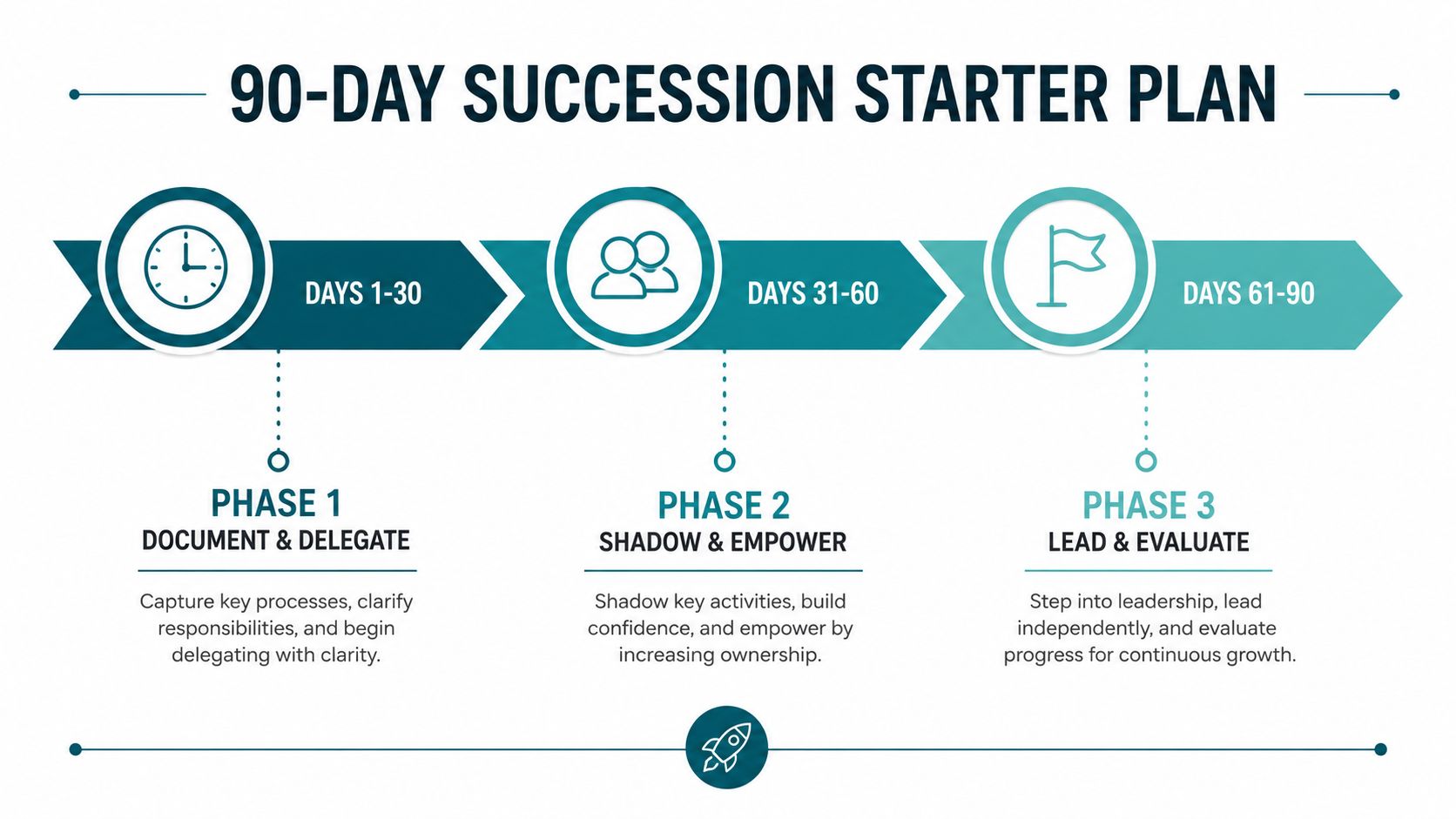
    Days 1 through 30

    Build the identity and write down the basic operating rules.

    • Choose the name, values, meeting time, and first route.
    • Create a group chat and a simple event checklist.
    • Ask every volunteer what responsibility they might try.
    • Give one person ownership of welcome, one of safety, and one of tools.

    Keep the first month small enough that you can notice people. You're watching for care, follow-through, and curiosity.

    Days 31 through 60

    Install the short training modules and let volunteers shadow current leaders.

    • Have a new volunteer lead one part of the safety briefing.
    • Let another volunteer plan the route and explain the choice.
    • Ask a third person to close the event and count tools.
    • Give feedback while the memory remains fresh.

    A community development reflection describes the challenge of replacing founding directors when newer leaders know theory but struggle to translate it into local practice (reflection on succession and local leadership). Local knowledge matters. So does a chance to use it.

    A 90-day succession starter plan timeline illustrating three distinct phases for leadership transition and development.

    Days 61 through 90

    Let new leaders run events while you stay nearby.

    • Choose the first Crew Captain and Ward Lead.
    • Give each person a written responsibility and decision boundary.
    • Watch the event without taking over.
    • Hold a debrief and revise the checklist.

    The U.S. Census and AmeriCorps have estimated that over 30% of American adults volunteered through an organization in a given year, and those hours generated about $167 billion in economic value (research on volunteering and leader development). That scale makes volunteer work a real place for people to practice coordination, accountability, communication, and service leadership outside formal management jobs.

    Ask yourself three questions at the end of the 90 days. Who can welcome a stranger? Who can make a safe decision under pressure? Who can transfer the role without making it about themselves?

    That is the succession test. Your group should leave the founder's hands while keeping its warmth, local memory, and practical rhythm.


    Litter Caterpillars gives Chicago volunteers a recurring way to pick up trash, meet neighbors, and practice leadership through real cleanup roles. Visit Litter Caterpillars to join an event or use the group's volunteer-driven model as a starting point for your own neighborhood crew.

  • Volunteer Coordinator Training: Blueprint for Cleanup

    Volunteer Coordinator Training: Blueprint for Cleanup

    Three of us got caught in a Chicago hailstorm on our first cleanup. We huddled under a tree, shaking, while our rides kept canceling, and I realized a volunteer coordinator isn't there to hold a clipboard. You're there to hold the group together when the day goes sideways.

    Why Your Coordinators Need More Than a Clipboard

    That first cleanup taught me more than any neat classroom slide ever could. Bags were wet. Hands were numb. The city felt bigger than us. Yet that ugly little storm gave us a shared story, and shared stories are what turn a casual volunteer into a teammate.

    A lot of volunteer coordinator training still assumes calm rooms, predictable schedules, and controlled conditions. That works if your volunteers are guiding guests through a museum or staffing a check-in table. It falls apart when your crew is on a roadside shoulder, the weather flips, and somebody finds a needle in the grass.

    The job is leadership under pressure

    In rough outdoor work, the coordinator has to do several things at once. You read the street. You read the people. You decide when to push, when to pause, and when to pull everybody out.

    That's why generic training often feels thin. In hospice settings, coordinators have received live lecture-based training averaging 19 hours or less, according to a peer-reviewed hospice volunteer coordinator survey. If demanding care settings get training that short, you can see the problem for outdoor crews facing traffic, weather, sharp objects, and urban unpredictability.

    Practical rule: If your coordinator training fits neatly into a few lectures, you haven't trained for reality. You've trained for a calm day that probably won't happen.

    A street coordinator needs instincts, not just information. They need to know how to stop a volunteer from grabbing broken glass the wrong way. They need to know how to reset morale when turnout is low. They need to know how to say, “We're leaving now,” before pride turns into recklessness.

    Hardship can build the team if the leader knows what to do

    That hailstorm didn't make us strong by magic. The weather was miserable. What mattered was how we handled it. We laughed. We stayed kind. We looked after each other. We turned a rough day into a story worth repeating.

    That's the difference between administration and leadership. Administration tracks names. Leadership gives people a reason to come back.

    I've found that the best coordinators think like servant leaders in the field. They don't stand above the mess. They step into it first. That example gives volunteers courage.

    Here's what doesn't work:

    • Pure lecture: People nod in training, then freeze in the field.
    • Over-scripted plans: The first surprise breaks the script.
    • Safety as paperwork: Volunteers can tell when a leader treats risk like a form instead of a real human issue.

    Here's what does work:

    • Scenario drills: Let people practice calling off a task, redirecting a volunteer, or changing the route.
    • Field shadowing: New coordinators learn faster when they watch a calm leader handle a messy morning.
    • Clear values: Brave and kind beats loud and tough every time.

    If you train coordinators for chaos, they won't panic when it arrives. They'll steady the group, and the group will remember how that felt.

    Building a Volunteer-First Culture

    Before you teach route planning or supply counts, teach this: volunteer energy is precious. If you waste it, drain it, or exploit it, your program gets hollow fast.

    Some organizations still treat volunteers like future donors with free labor attached. I think that poisons trust. If a person shows up to serve and you keep nudging them toward their wallet, they feel the switch.

    A human hand holds a vibrant, colorful sphere surrounded by an artistic explosion of watercolor paint splatters.

    A source on volunteer management training says 42% of new volunteers quit because they felt pressured to donate, and that same piece argues for a volunteer-first model that rejects donation pressure. You can read that claim in Rosterfy's roundup on volunteer management training programs and resources. That number is ugly, but it matches what many people already know in their gut. Nobody likes feeling used.

    Train coordinators to protect energy

    A coordinator's first cultural job is protection. They protect safety, yes, but they also protect mood, trust, and dignity.

    That means your training should teach them how to notice:

    • The volunteer who goes quiet: They may be cold, overwhelmed, or embarrassed to ask for help.
    • The over-giver: They say yes to every task and burn out in silence.
    • The newcomer on the edge: They need one warm conversation to feel included.

    Volunteers give you their Saturday morning, their body, their attention, and their goodwill. Treat that gift with care.

    I like weekend mornings for a reason. People who show up then usually came to give, not to drift around killing time. That changes the tone. It creates a culture where service is normal and friendship grows around the work.

    Friendship is operational, not extra

    Many coordinators get trained on forms, scheduling, and compliance. Fine. You need that. But if you skip friendship, your team stays fragile.

    Friendship is what gets people through cold wind, missed buses, and hard sites. Friendship is what makes someone come back after the glamorous part wears off. Your coordinator training should include simple habits that make people feel seen.

    Try teaching these moves:

    Habit What the coordinator does Why it matters
    Name recall Learn and use names quickly People relax when they feel remembered
    Buddy pairing Match new people with regulars New volunteers stop feeling adrift
    Warm closing End with conversation, not just dismissal People leave with connection, not exhaustion

    A volunteer-first culture also means your coordinators don't squeeze every ounce of output from a person. They leave some energy in the tank. They invite people into a community that can last.

    What to tell coordinators on day one

    I'd put it this plainly in training:

    • Your people are not ATMs: Don't angle for money when they came to help.
    • Guard morale: A tired volunteer can recover. A used volunteer often doesn't come back.
    • Make room for joy: Service can be serious and still feel fun.
    • Watch for belonging: If one person keeps standing alone, that's your job.

    If your culture gets this right, the rest gets easier. Volunteers forgive a lot when they know you care about them for real.

    The Core Training Modules Blueprint

    Good volunteer coordinator training needs structure. Otherwise you get a pile of advice and no repeatable system. I build the curriculum around a simple six-phase method: set goals, create a warm welcome, use hands-on practice, ensure accessibility, track progress, and ask for feedback. That framework comes from Training magazine's piece on crafting an effective volunteer training program, and it fits outdoor cleanup work well because it pushes training out of theory and into action.

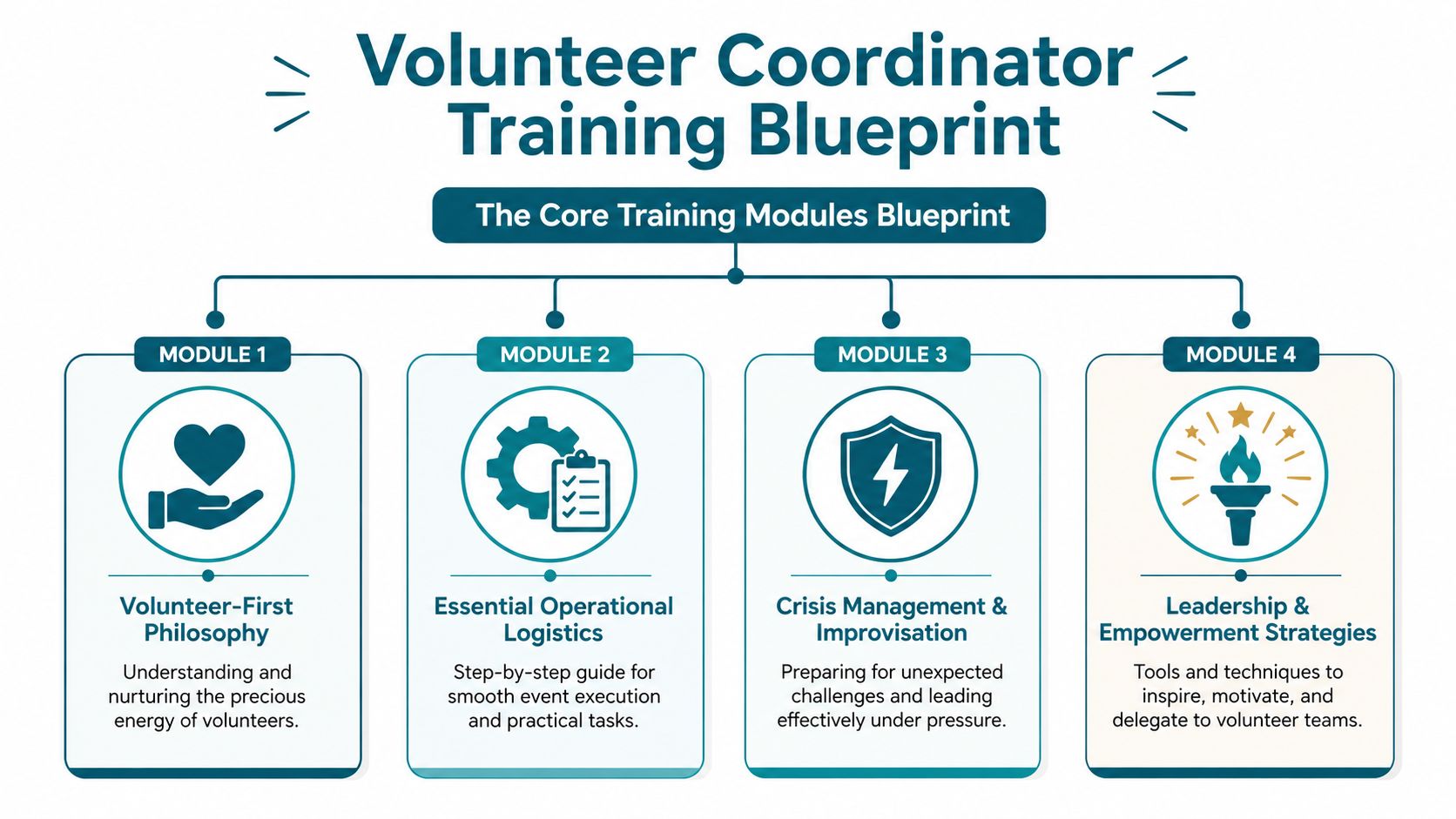
    A diagram titled Volunteer Coordinator Training Blueprint showing four key instructional modules for managing volunteers effectively.

    Module one is philosophy

    Start with the part many groups rush past. Your coordinator needs a moral compass before they need a checklist.

    Teach them how to answer these questions in plain language:

    • Why are we here?
    • What do we do when output conflicts with safety?
    • How do we treat a volunteer who is struggling?
    • What kind of culture are we building when nobody is watching?

    This module should include role-play. One person acts as an eager volunteer who wants to do something unsafe. The trainee has to step in kindly and firmly. If they can't do that in practice, they won't do it in a parking lot with a crowd watching.

    Module two is operational logistics

    At this point, many coordinators either become calm or become frazzled. They need a repeatable system for event flow.

    I train for logistics in sequence:

    1. Scout the site
      Walk access points, traffic risks, likely trash concentration, and safe regroup spots.

    2. Build the morning plan
      Decide where people meet, where supplies go, who watches the edges, and what the exit plan is if conditions change.

    3. Run the huddle
      Keep it short. Cover hazards, roles, boundaries, and how to ask for help.

    4. Close cleanly
      Count people before gear. Debrief before everyone scatters.

    The point isn't perfection. The point is lowering mental clutter so the coordinator can pay attention to humans.

    For practical field systems, I like to compare each trainee's plan against proven volunteer management best practices for organized teams. It helps them see where they're loose, where they're overcomplicating, and where they're forgetting the volunteer experience.

    Module three is crisis management and improvisation

    A cleanup rarely follows the script. Weather changes. A route is blocked. A volunteer gets upset. The wrong training treats these moments like exceptions. Real training treats them like part of the job.

    Field note: Don't ask, “What's the official response to every possible problem?” Ask, “Can this coordinator stay calm, protect the group, and make a decent call fast?”

    Here are scenarios worth drilling:

    • Sharp object discovery: Who approaches, who stays back, who documents, who calls it in if needed.
    • Traffic creep: A site looked safe at scouting, but live conditions feel different.
    • Emotional conflict: Two volunteers are snapping at each other and infecting the group mood.
    • Sudden storm: End early, shelter in place briefly, or relocate.

    Module four is leadership and empowerment

    Some coordinators secretly think leadership means controlling everything. That creates brittle teams. I want leaders who can spread confidence.

    Train them to delegate small ownership fast. Let one volunteer handle sign-in. Let another lead a micro-team. Let a regular welcome newcomers. This has two effects. It lightens the coordinator's load, and it gives volunteers a ladder to grow on.

    A strong coordinator says things like:

    • “You've got a good eye for detail. Can you watch this corner?”
    • “Take our new person with you and show them how we sort this safely.”
    • “I need your judgment on whether this patch is worth the extra time.”

    That language builds leaders. If your volunteer coordinator training never teaches delegation, you're training bottlenecks.

    Training for Chaos with Real Scenarios

    Most training programs miss the mark for groups like ours. They are built for predictable indoor settings and skip the skills needed for blizzards, heatwaves, roadside work, and rough urban zones. A Michigan volunteer training resource page shows how much volunteer management education still centers on general nonprofit operations rather than physical adversity in the field.

    A volunteer coordinator overseeing various aid efforts including sorting donations, construction, and distributing meals to people.

    I learned this the hard way on a cleanup near a highway during a bike-event shutdown. The site looked simple from a distance. Up close, it had fast-moving traffic nearby, debris in ugly places, and the kind of noise that makes communication sloppy. That day wasn't about who could pick up the most trash. It was about who could stay composed and keep the group tight.

    Scenario one is the weather turn

    You start with a normal morning. Then the sky changes. Wind rises. Rain starts hitting sideways.

    A weak coordinator does this:

    • keeps pushing because people already came out
    • mumbles a half-decision
    • waits too long because ending early feels embarrassing

    A trained coordinator does this:

    • regroups everybody fast
    • speaks loudly and clearly
    • chooses shelter, exit, or cancellation without drama
    • counts heads before moving

    That decision needs rehearsal. People don't rise to the occasion in chaos. They fall to the level of their training.

    Scenario two is volunteer conflict

    This one sneaks up on you. One volunteer says another person is working too slowly. The second person fires back. Now half the group can feel the tension.

    I don't train coordinators to act like referees with whistles. I train them to lower the temperature. Pull both people aside. Separate the task from the ego. Give each person something useful to do.

    Try language like this:

    Situation What the coordinator says
    One person feels criticized “I need you with me for a minute. Let's reset this.”
    Two people are escalating “We're not doing this in front of the group. Come talk with me.”
    Group mood is slipping “Quick water break. Then we're splitting into smaller teams.”

    A coordinator should know when an issue is fixable on site and when someone needs to step away. That judgment protects everyone else.

    Before you put someone in charge of people, make sure they understand volunteer liability insurance and risk planning for group service work. Good instincts matter. Clear guardrails matter too.

    Scenario three is morale collapse

    Sometimes the site is just worse than expected. The bags fill slowly. The smell is brutal. People start making jokes that have a tired edge to them.

    Here, your coordinator becomes a storyteller. You don't lie. You don't pretend the work is easy. You help the group frame the hardship as shared effort with meaning.

    “This is a rough one. Stay steady. We'll take it one patch at a time.”

    That kind of line works because it is honest. Honest leadership settles people.

    Here's a quick visual on training volunteers and leaders to coordinate under pressure:

    Role-play these scenarios in training. Then run them outdoors. Let the trainees feel a little confusion while the stakes are still low. That's how they learn to carry confidence into a real event.

    Practical Tools to Equip Your Leaders

    Warm intentions won't carry a coordinator through a messy morning. Tools will. Good tools reduce mental load, standardize judgment, and help a leader stay present with people instead of drowning in little decisions.

    There's also a retention angle here. Volunteers who receive high-quality training are 83% less likely to leave, according to VolunteerHub's guide to nonprofit volunteer management. If you want coordinators to deliver that kind of training experience, give them equipment for the mind, not just gloves for the hands.

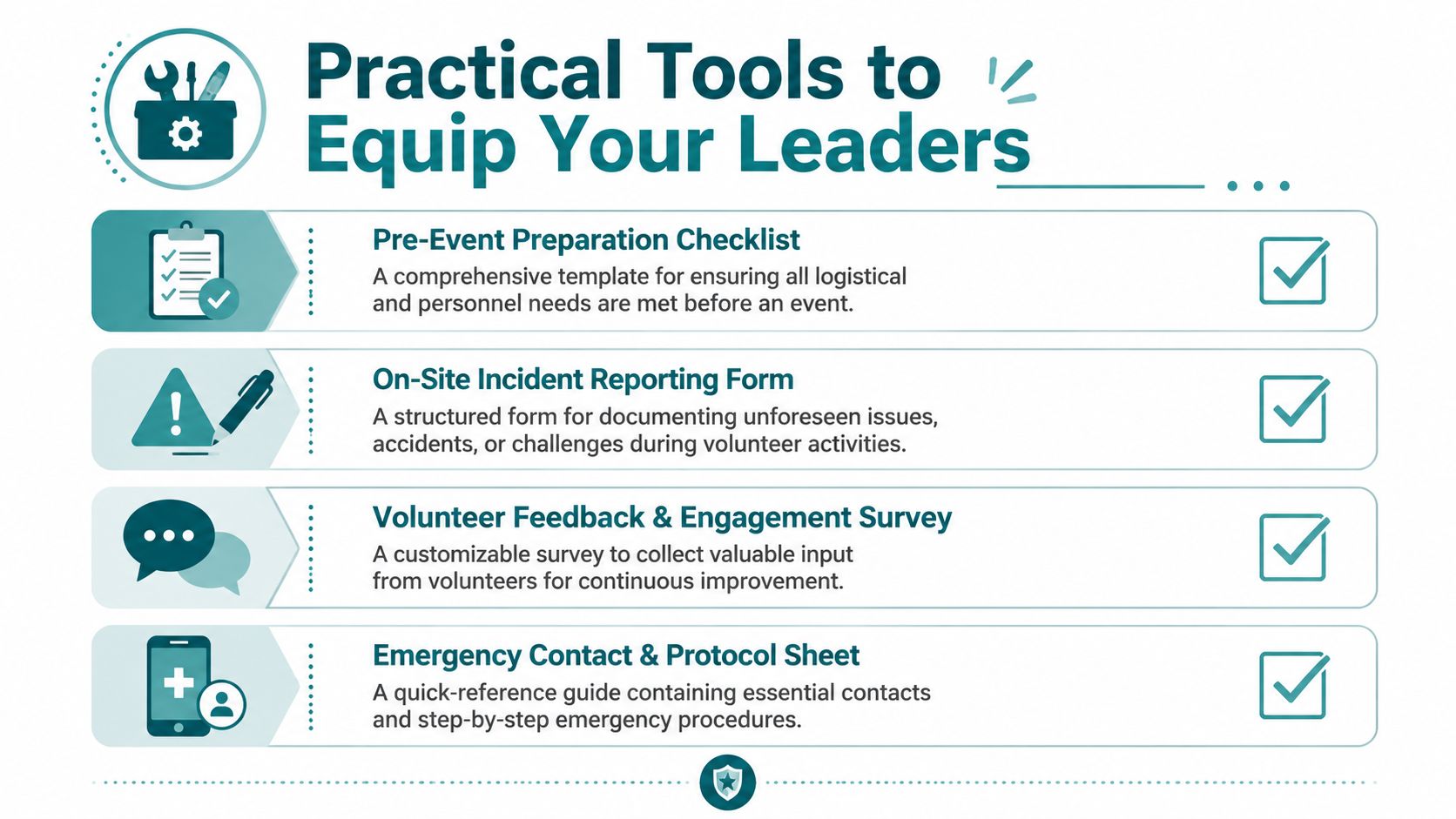
    An infographic titled Practical Tools to Equip Your Leaders listing four essential event management resources for volunteers.

    Four tools I'd hand every new coordinator

    • Pre-event preparation checklist
      Include meeting point, weather review, hazard notes, supply count, team roles, and exit plan. This tool prevents the dumb mistakes that drain a leader before the event starts.

    • On-site incident reporting form
      Keep it simple. Time, place, what happened, who responded, and what changed after. You want clarity, not legal theater.

    • Volunteer feedback and engagement survey
      Ask what felt clear, what felt confusing, and whether the person felt welcomed. Don't bury your coordinators in data. Give them a few questions that lead to action.

    • Emergency contact and protocol sheet
      This should live in every event kit and on every lead coordinator's phone. In a tense moment, nobody wants to dig through old messages.

    What these tools should look like

    I don't like bloated forms. They usually die in a folder. A field tool should be short enough to use with cold hands and a busy brain.

    One hard rule: If a coordinator can't use the form on site in under a minute or two, the form is too fancy.

    Here's a lean setup that works:

    Tool Keep it short by including Leave out
    Checklist top hazards, gear count, roles, weather note long policy text
    Incident form facts, action taken, follow-up needed emotional essays
    Survey welcome, clarity, safety, return interest pages of demographics

    Why tools help people feel safer

    A waiver, for example, isn't just legal paperwork. It's a conversation starter. It tells volunteers, “This work is real. Here are the risks. Here is how we handle them.” That honesty builds trust.

    A shift plan does the same thing. It says nobody is drifting alone. Everybody has a zone, a point person, and a way to ask for help.

    Train your coordinators to carry these tools lightly. They shouldn't hide behind them. They should use them to free up attention for what matters most: reading the room, helping new people settle in, and making good calls while the day moves fast.

    Measuring Success the Caterpillar Way

    A lot of groups judge the day by the pile of bags at the end. I get it. Trash is visible. Weight feels concrete. But if you only measure output, you can miss the health of the team doing the work.

    I'd rather know whether people came back, whether a new volunteer felt included, and whether the group left more steady than they arrived. Those signs tell you if your volunteer coordinator training is working.

    Start with speed into belonging

    One of the easiest ways to lose somebody is to let them linger too long between interest and action. A volunteer management guide warns that a time-to-onboard longer than two months from application to active service drives churn, as explained in VolunteerHub's guide for coordinators reclaiming time and balance. That matches street reality. If people wait too long, life moves on.

    So the first score I care about is simple: how fast does a new person feel like part of the team?

    That doesn't mean rushing safety. It means removing drag. Answer quickly. Give clear instructions. Pair them with a regular. Make the first day easy to understand.

    Use a mixed scorecard

    Don't build your whole dashboard around trash volume. Use a mix of hard signals and human signals.

    • Return rate: Are people showing up again after the first event?
    • Regulars: Do you have a stable core who know the rhythm?
    • Friendship signs: Are people talking after the work instead of vanishing the second it ends?
    • Volunteer-led action: Do people start taking initiative without being pushed?

    Some of this is measurable. Some of it is observational. Both matter.

    If your team leaves with less trash on the block but more strain in their faces, something is off.

    Watch the room after the cleanup

    The best clues usually come after the bags are tied. Do people linger? Do they exchange numbers? Does a first-timer laugh with someone they met an hour ago? Those moments tell you whether your coordinators are building a group people want to belong to.

    I also pay attention to the tone of the debrief. If volunteers feel safe giving honest feedback, your coordinators are doing something right. If everyone is polite but guarded, trust may be thinner than it looks.

    A good training program changes the way leaders see success. They stop asking only, “How much did we collect?” and start asking, “Did we make this a place people want to return to?” That question builds stronger crews.

    Training coordinators for outdoor adversity is really training them to create courage, calm, and connection under strain. When they do that well, the cleanup lasts a morning. The transformation lasts longer.


    If you want to build a tougher, kinder volunteer culture, spend some time with Litter Caterpillars. You'll find a living example of brave, volunteer-first cleanup work in Chicago, plus the kind of energy that turns service into friendship.