Tag: volunteer trash pickup

  • Trash Cleanup Near Me: How to Find and Join Local Pickups

    Trash Cleanup Near Me: How to Find and Join Local Pickups

    You walk past the same corner every morning. You see cups in the gutter, wrappers in the grass, and a bag split open near the curb. You think, I could help with this on Saturday. Then you type trash cleanup near me and you face five listings, three old posts, and no clear answer about safety, weather, or where the bags go. I wrote this guide for that exact moment.

    Why Small Neighborhood Cleanups Add Up

    I remember one sidewalk on a quiet Saturday. I saw bottle caps near a bus stop, food wrappers along a fence, and tiny plastic bits in the cracks. I filled half a bag before I reached the next corner. No single item looked big. Together, they covered the whole block.

    That small scene matches the national picture. Keep America Beautiful's 2020 National Litter Study findings on litter across roadways and waterways estimated nearly 50 billion pieces of litter along U.S. roadways and waterways, or about 152 pieces for every resident. You can picture that number as a trail of small items that never ends.

    Small Pieces Fill Your Bag Fast

    The same study estimated roughly 43.6 billion pieces, or 87.9% of the national total, measured four inches or smaller, and it found cigarette butts ranked as the most frequently observed item. I see that pattern on almost every route. You bend for caps, butts, wrappers, and broken plastic far more often than you lift a big object.

    You also see why steady work beats one big annual push. Wind moves light items into fences and drains. Rain carries light items toward water. You return next week and you catch the new layer before it spreads. One bag looks modest. Ten neighbors with ten bags change how a block feels when you walk home.

    I treat each bag like one cleared shelf in a messy room. You finish one shelf, you see progress, and you want to finish the next one.

    One Morning Gives You a Clear Win

    The study also found 90% of surveyed Americans considered litter a problem in their state. I hear that concern from people who stop and thank our group. Many of them want a cleaner block. They just don't know where to start, who brings gloves, or whether a group welcomes beginners.

    You solve that problem with a short, local pickup. You meet people near home. You learn a route. You fill a bag and you see bare sidewalk behind you. That visible result keeps you coming back, and it turns a search on your phone into a simple Saturday habit.

    Where to Search for Trash Cleanups Near Me

    You find local pickups in more places than one search result shows. I check four channels because each channel answers a different question. You want the date, the meeting point, a feel for the people, and a fast way to ask about weather.
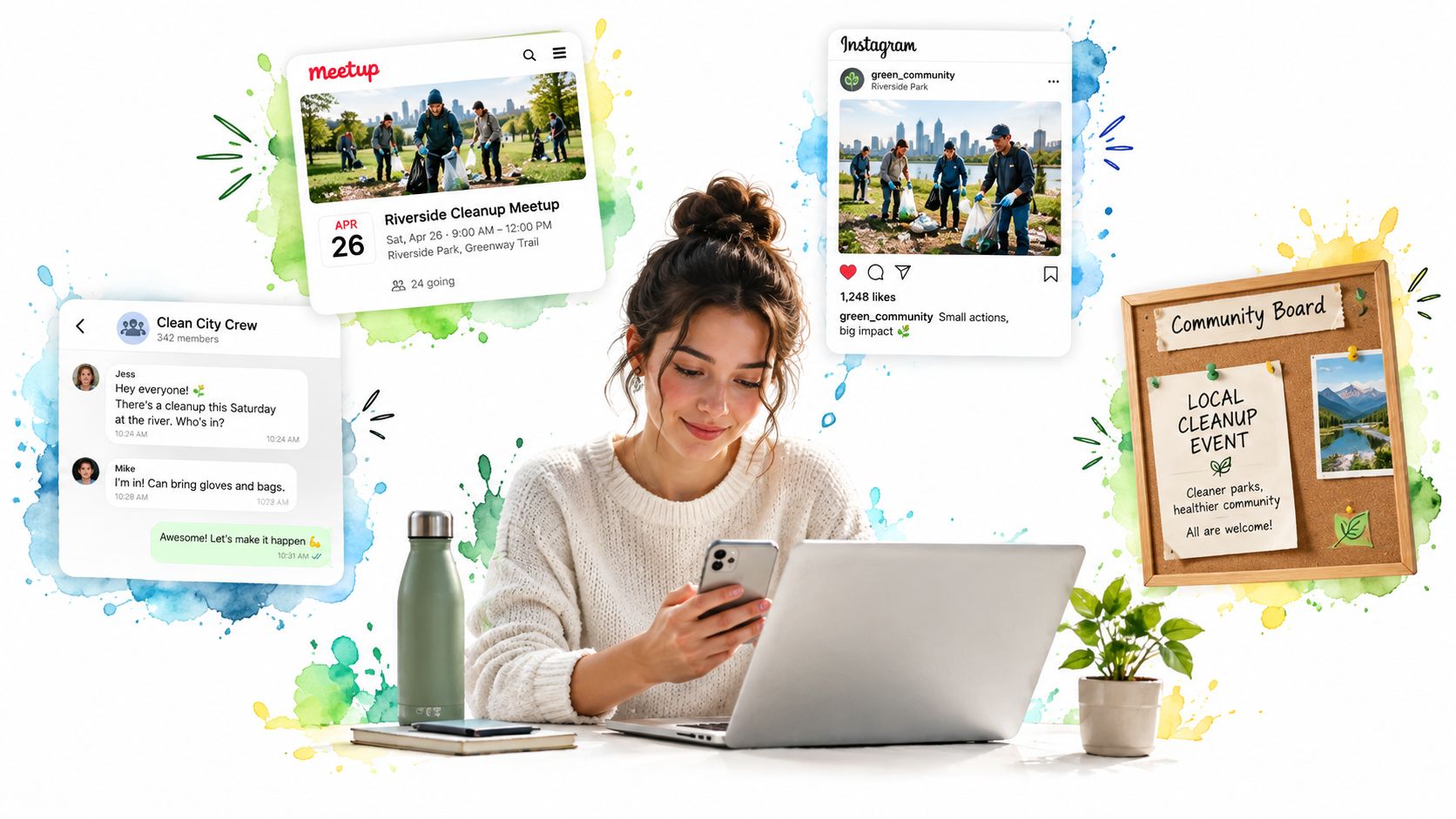
    A woman using her smartphone to coordinate local community park trash cleanup efforts online.

    Compare the Four Places You Will See

    • Meetup listings: You see the date, start time, meeting spot, and RSVP count in one place. I use Meetup when I plan my weekend early.
    • Instagram posts: You see photos from recent pickups, the size of the group, and the mood on the route. I check the post date because old photos can mislead you.
    • Open group chats: You get quick answers about rain, parking, and last minute meeting changes. I read the chat on the morning of the pickup.
    • Community boards: You find one-time park days and block events that never reach big apps. I check library and park boards when I walk my dog.

    Litter Caterpillars gives you one concrete model for this mix. The group runs weekly weekend morning pickups across all 50 Chicago wards, rain or shine, and you can enter through Meetup, Instagram, or open group chats. You can also browse local environmental groups in Chicago when you want options beyond one crew.

    Check the Ward Before You Go

    Chicago has 50 legislative wards, and each ward has an elected alderperson, according to the City of Chicago council and ward information page. I picture the ward system as 50 neighborhood desks. Each desk handles its own district. You use the city's address lookup, you find the ward for a cleanup spot, and you contact that office about local conditions or public way concerns.

    That step saves you guesswork. You confirm the neighborhood. You learn who handles the area. You show up with a real contact in your pocket if you find dumped furniture or a blocked drain.

    Crews who work outside every week also think about matching shirts for visibility and quick head counts. If your own crew plans regular outdoor work, custom uniforms for landscaping crews from Power Print gives you one place to compare workwear options before you order for a team.

    Search by neighborhood name plus the words trash cleanup. Check the date on every listing. I skip any post that hides the meeting point or never names an organizer you can message.

    How to Judge Whether a Cleanup Fits You

    I judge a cleanup before I commit my Saturday. I read the listing like I read a trail sign. You want distance, terrain, gear, and weather rules in plain words. A group that writes those details down respects your time and your body.
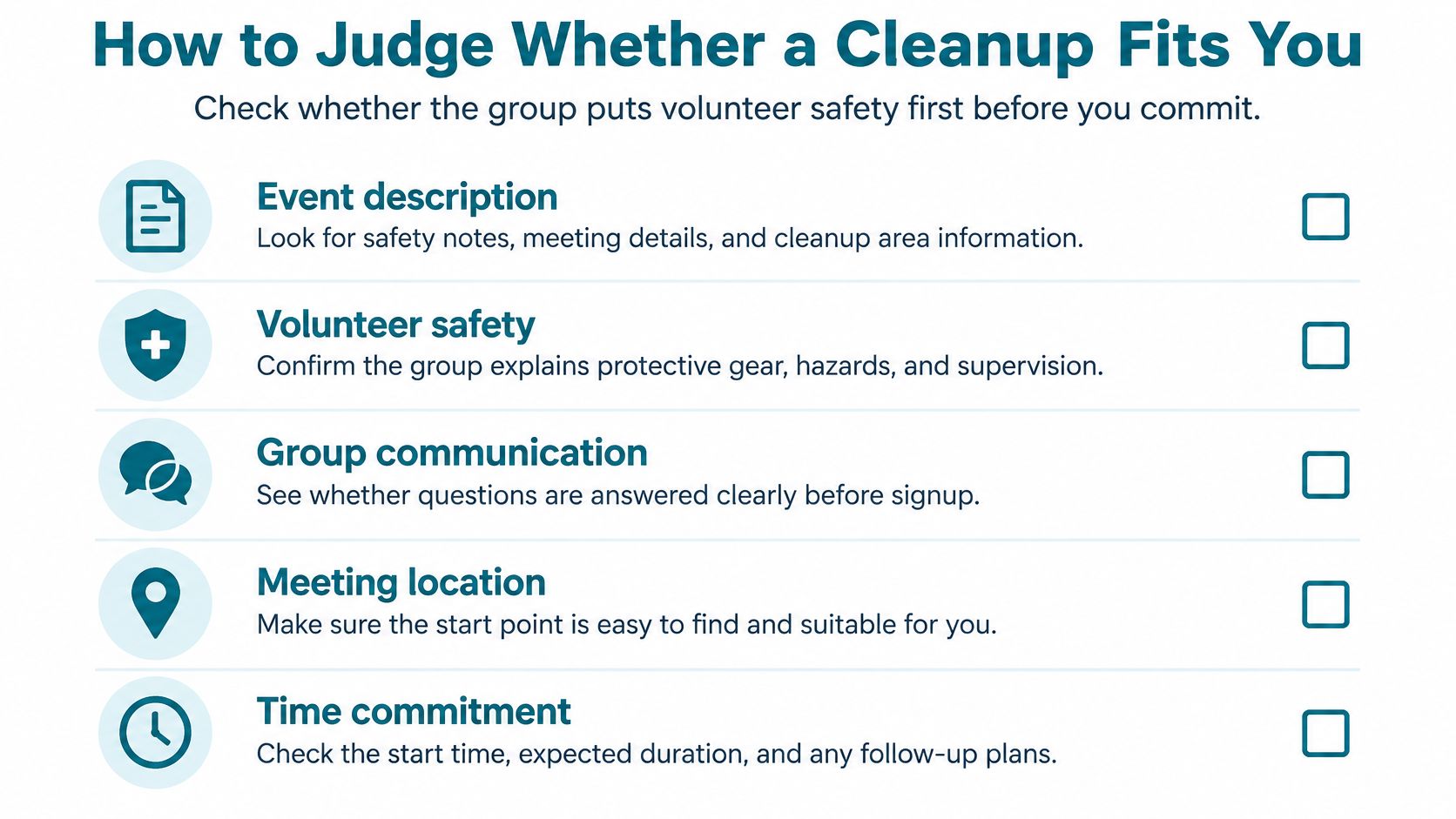
    A checklist infographic titled How to Judge Whether a Cleanup Fits You, outlining five volunteer safety criteria.

    Run This Five Point Check

    • Event description: You look for the meeting point, start time, route area, and end time. I pass on listings that only say "meet downtown."
    • Volunteer safety: You confirm gloves, grabbers, supervision, and hazard rules. I ask who handles needles and broken glass.
    • Group communication: You send one question and you watch the reply. A clear, kind answer tells you a lot.
    • Meeting location: You check transit, parking, and a landmark you can spot from the street.
    • Time commitment: You confirm the length of the route and any plans after the pickup.

    Weekend mornings fit many people who work weekdays. You finish before lunch. You keep the rest of Saturday open. I like that rhythm because service becomes part of my week instead of a fight with my calendar.

    Ask About Weather and Access in Plain Words

    Rain or shine sounds brave. I respect that spirit. I also know heat, cold, ice, and heavy rain hit people in different ways. You may manage a bad knee, a chronic illness, a child at home, or a long bus ride. A good group publishes cancellation thresholds and offers roles for people who can't bend or lift.

    Ask about walking distance and terrain. A flat park path feels different from a steep embankment. Ask about restrooms, shade, water breaks, and a buddy system. Ask whether you can sort bags, carry water, or greet people at check-in. Those jobs keep a cleanup running, and they welcome more neighbors into the morning.

    My rule for beginners: You pick the cleanup that answers your safety questions before signup. You skip the cleanup that treats basic questions as a bother.

    A 2025 study of 547 adult litter-walkers and their motivations found the activity can combine environmental motivation with physical activity, and its sample had an average age of 51 with 86% female participants. I read that as a simple reminder. Volunteers bring different bodies, ages, and needs. You deserve a group that plans for real people.

    What to Bring and What to Expect on Pickup Day

    I pack the night before. I set my shoes by the door and I fill my water bottle. That tiny routine kills most morning excuses. You wake up, you grab your gear, and you walk out.
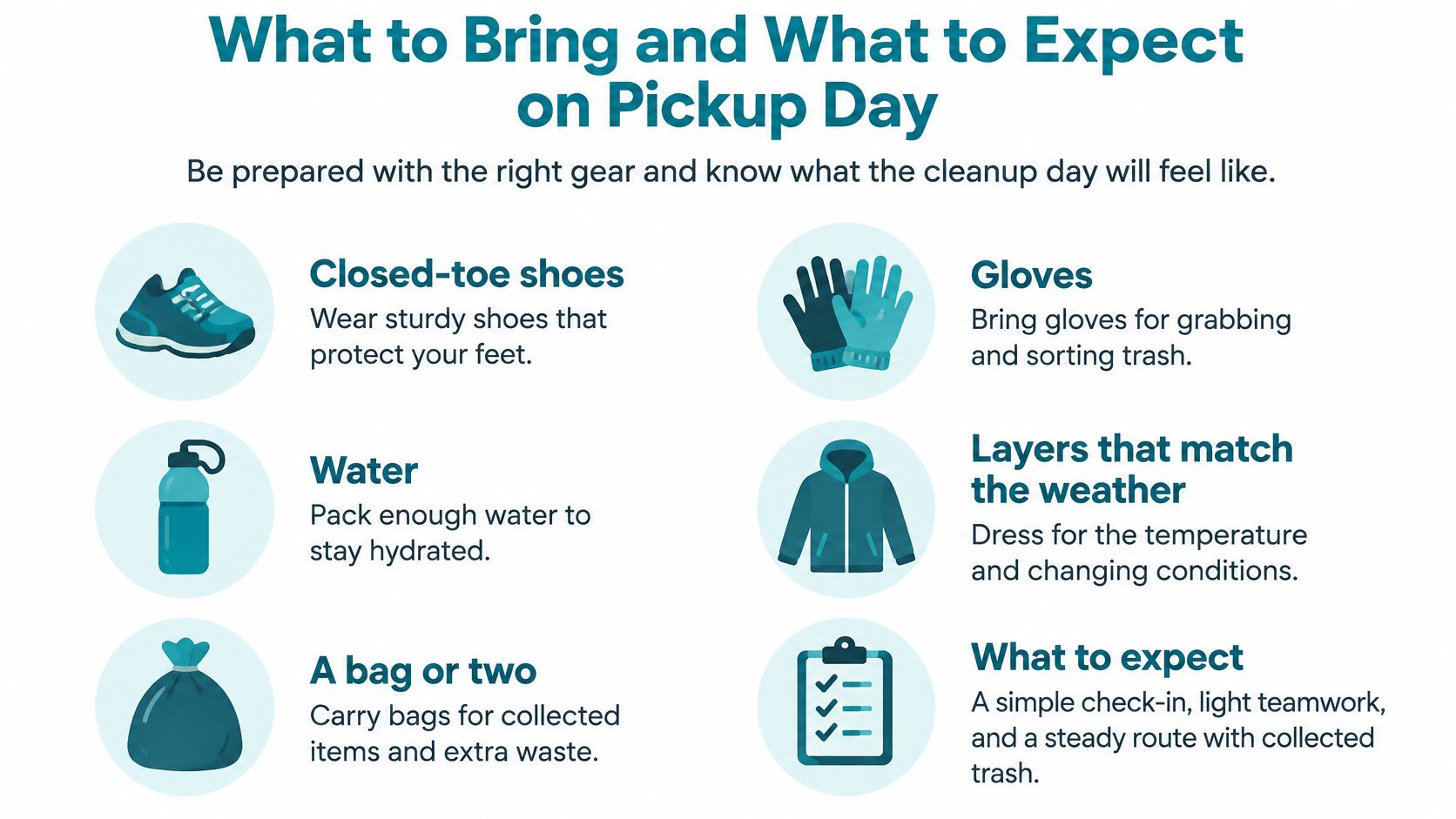
    An infographic titled What to Bring and What to Expect on Pickup Day with trash cleanup tips.

    Pack Light and Dress for the Ground

    • Closed-toe shoes: You protect your feet from glass, metal, and uneven ground.
    • Gloves: You grab and sort items without bare hands.
    • Water: You drink before you feel thirsty, especially in heat.
    • Layers: You match the temperature and you adjust as you warm up.
    • A bag or two: You carry collected items and you keep clean gear separate.

    Many groups supply bags, gloves, and grabbers. You confirm that in the chat before you leave. If you want a deeper gear list, this guide to trash pickup equipment walks you through common tools before your first route.

    At check-in, you give your name and you grab your supplies. Organizers form small teams and point you toward a route. I like teams of three or four. One person holds the bag, two people pick, and one person watches traffic near curbs.

    Sort as You Go and Ask Early

    Chicago gives you a clear sorting line. The city's What Goes Where guidance for recycling and special items says Blue Carts should not receive aerosol cans, lithium-ion batteries, hoses, plastic bags, or other film plastic because those items can create safety hazards and disrupt facility operations. You keep those items out of ordinary recycling.

    Think of your bags like kitchen drawers. You keep forks with forks. You keep ordinary litter in one bag, clean recyclables in another, and odd items aside for an organizer. You ask before you guess. That one question saves a whole bag from the wrong stream.

    You also leave sharp or suspicious items alone. You flag needles, chemicals, leaking paint, and heavy dumped objects for trained crews or city pickup. You take a photo of the spot and you note the address. That record helps the group report repeat dumping instead of hiding the source.

    Connecting With Organizers Through Chats and RSVPs

    I treat my first message like a handshake at a door. I keep it short. I open the conversation and I step back. You can do the same in about two minutes.

    Introduce Yourself in Two Lines

    Join the open group chat and read the last few messages first. You learn the tone and you often find your answer already sitting there. Then you write your name, your neighborhood, and one clear question.

    Try this shape. "Hi, I'm Maya from Logan Square. Do you supply grabbers on Saturday?" That message gives the organizer everything they need. You avoid a long list of questions. You get a fast answer. You save your other questions for check-in.

    I also pin the meeting point in my maps app right after I join. That habit stops the classic Saturday scramble. You know the corner, the train stop, and the walk time before you pour your coffee.

    Use Your RSVP Like a Promise

    RSVP when you plan to come. Update your status when your plans change. Message early when you expect to run late. Organizers count bags, gloves, and grabbers from that list. A yes that turns into a no leaves the group guessing at the curb.

    Your RSVP is a head count for supplies and safety pairs. You change it as soon as you know.

    Life happens. A child wakes up sick. A train stalls. You send one short note and nobody holds a grudge. I have sent that note myself. The group thanked me because they could hand my grabber to a walk-in volunteer.

    At the meeting point, introduce yourself in person. Say your name and mention the chat. People connect the face to the message fast. That tiny moment turns strangers into teammates before you pick up your first wrapper.

    After the route, thank the organizers by name. Tell them one thing you noticed, like a clean stretch near the school or a drain that needs city attention. Specific thanks sticks. It also gives the group useful notes for next week.

    If you want to search trash cleanup near me again for a new neighborhood, you now know the drill. You join the chat, you ask one question, and you RSVP with care.

    Turning One Pickup Into Ongoing Involvement

    My first pickup on a new route felt awkward. I held my grabber like a new kitchen tool. I forgot names by the second block. By my fifth visit to the same weekend route, I knew who liked corner duty, who carried extra bags, and who always brought a joke for cold mornings.

    You can see that kind of morning in motion in the photo below.
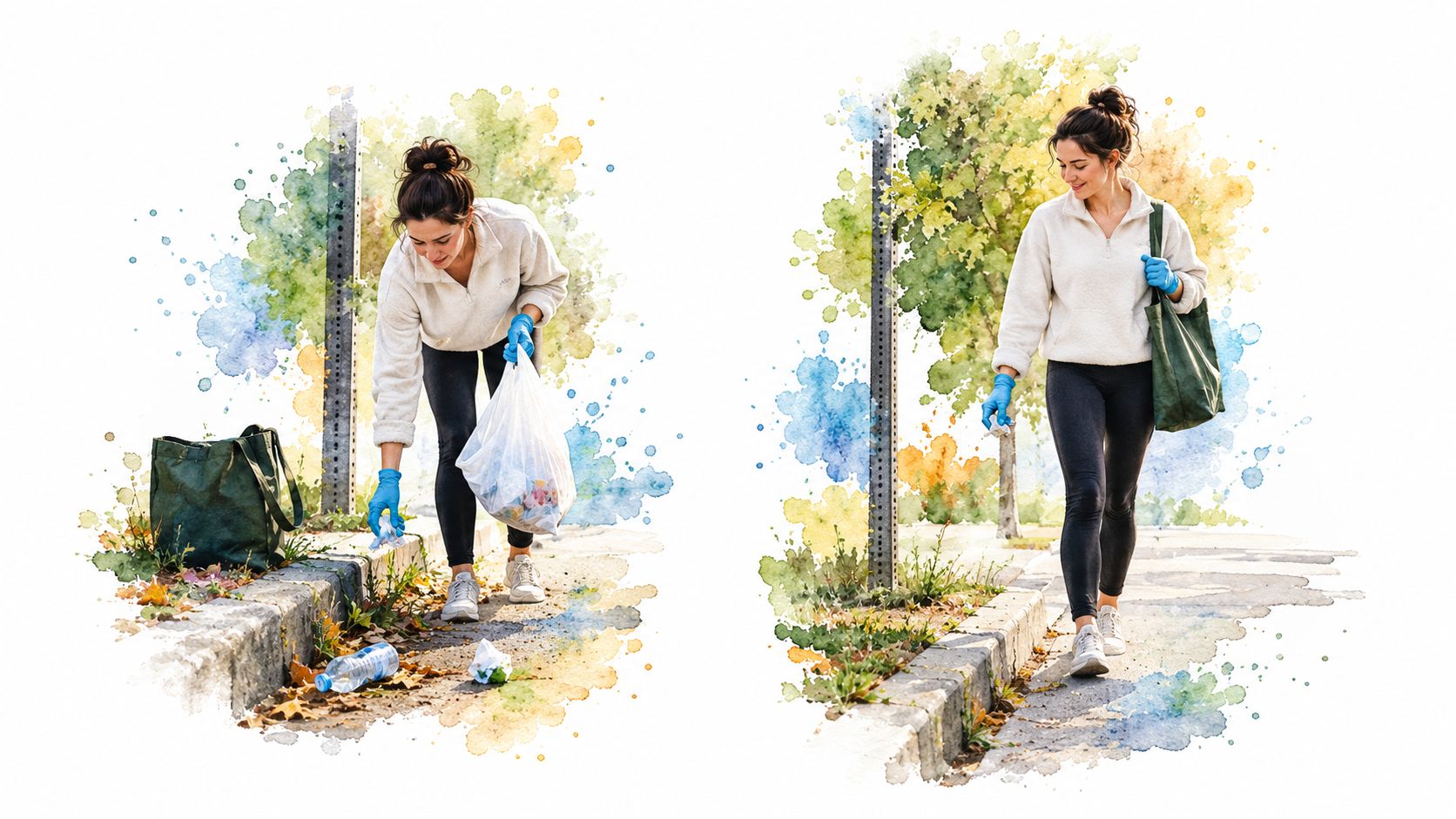
    A woman cleaning up litter along a roadside, picking up plastic bottles and collecting trash in bags.

    Familiar Faces Replace Strangers

    Shared work builds friendship in a plain, steady way. You walk the same blocks. You share the same weather. You learn names because you call out hazards and pass bags back and forth. Conversation comes easy when your hands stay busy.

    I compare it to a weekly pickup basketball game. You arrive for the activity. You stay for the people. Soon someone saves you a grabber. Someone asks about your week. Someone notices when you miss a Saturday and checks in.

    If you want ideas for that social side, these notes on volunteer community connections show how regular service turns into real neighborhood ties.

    Symbols and Long Projects Give You Pride

    Our group uses flags, a theme song, and badges because symbols help people feel part of a team. Sports fans understand this fast. You wear the colors, you sing the song, and you stand a little taller. Our values of bravery, kindness, and unity give those symbols a reason to exist.

    Bravery means you show up in hard weather and in neighborhoods people often avoid. Kindness means you protect volunteer energy and you put safety first. Unity means you walk with people from across the city and you treat every block as your block too.

    Long projects deepen that pride. Caterpillar Park in Englewood gives regular volunteers a place to watch grow over seasons. You clear a lot one month. You return and you see progress with your own eyes. That slow change feels different from a one-time haul, and it pulls you back.

    You can watch a short cleanup clip here and picture your first route.

    Start small this week. RSVP for the next weekend pickup on Meetup. Introduce yourself in the group chat before you arrive. Bring water, wear closed-toe shoes, and give the morning a fair chance. Your second visit will feel easier. Your fifth visit may feel like a standing date with friends.


    Looking for trash cleanup near me in Chicago and a weekly weekend morning group that supplies the gear, puts volunteer safety first, and welcomes you by name? Come walk a route with us. Visit Litter Caterpillars to find the next pickup, RSVP, and introduce yourself in the chat before Saturday.
  • Clean Up Events: How to Join and Make an Impact

    Clean Up Events: How to Join and Make an Impact

    I kept an old jar of blueberry jam in the back of my fridge for four years because it carried the memory of a trip to Michigan. The jar weighed less than a pound, yet I treated it like a five-hundred-pound stone. One morning, after a chaotic relationship finally ended, I walked outside, picked up a crushed cup from the sidewalk, and felt something inside me move.

    The Heavy Weight of Trash and the Freedom of Cleaning

    My apartment had become a museum of unfinished decisions. The jam stayed because of Michigan. A bag of stale nuts stayed because I once tried to eat healthier. Every object came with a story, and every story gave me another reason to leave the mess alone.

    After the relationship ended, I saw the pattern more clearly. I had trouble with cleanliness, consistency, and bravery. I could explain every pile, every drawer, and every old container. Explanation didn't clear a single surface. I needed an action I could finish with my hands.

    Cleaning other people's messes felt easier than cleaning my own. A wrapper on the pavement didn't carry my memories. I could bend down, pick it up, and drop it into a bag. The result appeared immediately. One piece disappeared. Then another.

    A small physical action can interrupt a long mental freeze.

    That first outdoor cleanup gave me a strange kind of fun. I walked from one piece of litter to the next, and the block slowly changed under my feet. I didn't solve my whole life that afternoon. I did prove that I could see a problem, approach it, and do something about it.

    The Litter Caterpillars story about picking up litter comes from that same struggle. A person can feel stuck under clutter, shame, fear, or exhaustion. Then a simple task creates a narrow path forward. Find the bottle. Grab the wrapper. Tie the bag. Keep walking.

    Why public messes feel different

    Public litter gives you a clean boundary. You show up at a park, sidewalk, shoreline, or vacant lot. You choose a patch of ground. You work until the area looks different. Your mind gets a break from vague problems because your hands have a clear job.

    Estonia gave the modern cleanup movement a dramatic example in 2008, when about 50,000 people, roughly 4% of the population, removed more than 10,000 tons of waste in five hours during a nationwide cleanup. World Cleanup Day identifies that effort as the historical anchor for a movement that later became global. By 2018, nearly 18 million people across 157 countries joined the campaign, and participation rose above 21 million across 180 countries in 2019, according to the same source.

    Those numbers matter because they show what people can do when someone gives them a place to start. Still, your own first bag matters for a more personal reason. You get to practice consistency without waiting to feel ready.

    Pick up one piece. Then pick up the next. The pavement won't ask you to explain why you waited so long.

    Finding Your Local Clean Up Events

    You don't need a perfect plan. You need a meeting point, a time, and a group that shows up.

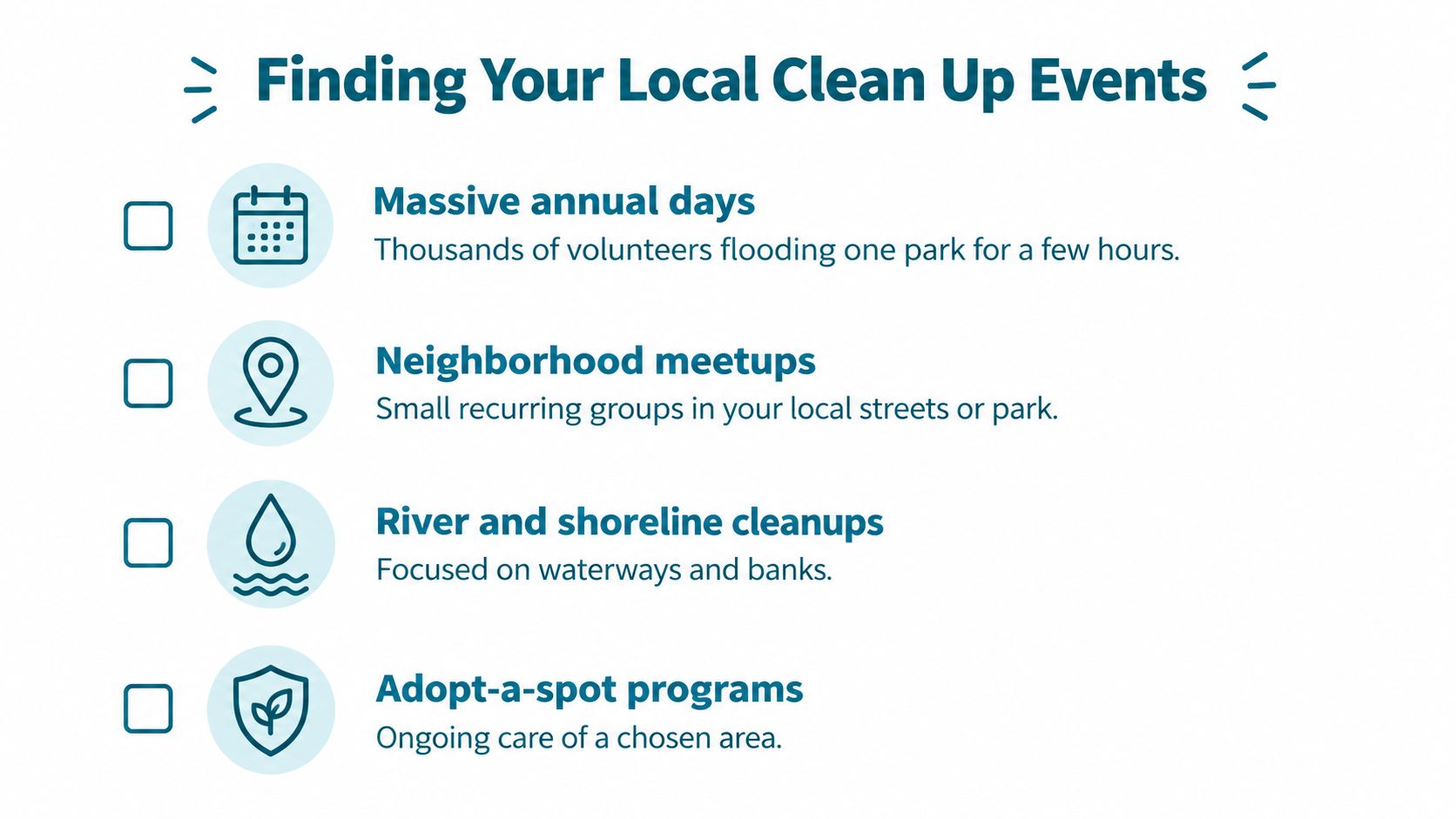
    Clean up events usually fall into a few practical formats. A large annual day may bring a crowd into one park for a short work period. A neighborhood meetup may gather a small crew near local streets. River and shoreline cleanups focus on banks and waterways, while adopt-a-spot programs give volunteers an area to revisit and care for over time.

    A list of four types of local clean up events for community volunteering and environmental care.

    Search where real crews gather

    Start with your city name and a specific place. Search phrases like “clean up events near me,” “neighborhood litter pickup,” “park cleanup this weekend,” “river cleanup volunteer,” and “adopt a street volunteer.” Check Meetup, Instagram, city department pages, park district calendars, community groups, and nonprofit event pages.

    Look for a clear start point and a named organizer. A useful event page tells you what to bring, whether the group supplies bags and gloves, how long the work lasts, and what area volunteers will cover. If the page only says “come help,” send a message before you travel.

    Weekend mornings often suit people who want a steady service habit. I also look for groups that publish events in ordinary weather, because consistency tells you more than a polished one-day announcement. A crew that returns to the same streets gives you a better chance to recognize faces and build trust.

    Some nonprofits manage volunteers across many sites or need help coordinating employee groups. A volunteer employee app for nonprofits can help those teams organize signups and communication in one place.

    Choose your first format

    Pick a large event if you want energy and simple instructions. Choose a recurring neighborhood crew if you want familiar faces. Select an adopt-a-spot program if you enjoy watching one area change across repeated visits. For a nearby starting point, use this guide to find volunteer trash pickup near you.

    Before you leave home, save the organizer's phone number, wear shoes you can walk in, and tell someone where you're going. You don't need to know anyone before you arrive. Introduce yourself at the meeting point, accept the first assignment, and let the work handle the awkward beginning.

    Safety Rules and Gear You Actually Need

    A cleanup can look as harmless as sweeping a kitchen floor. A dark piece of metal under wet leaves can behave more like broken glass in a hallway. You can't treat every object as ordinary litter.

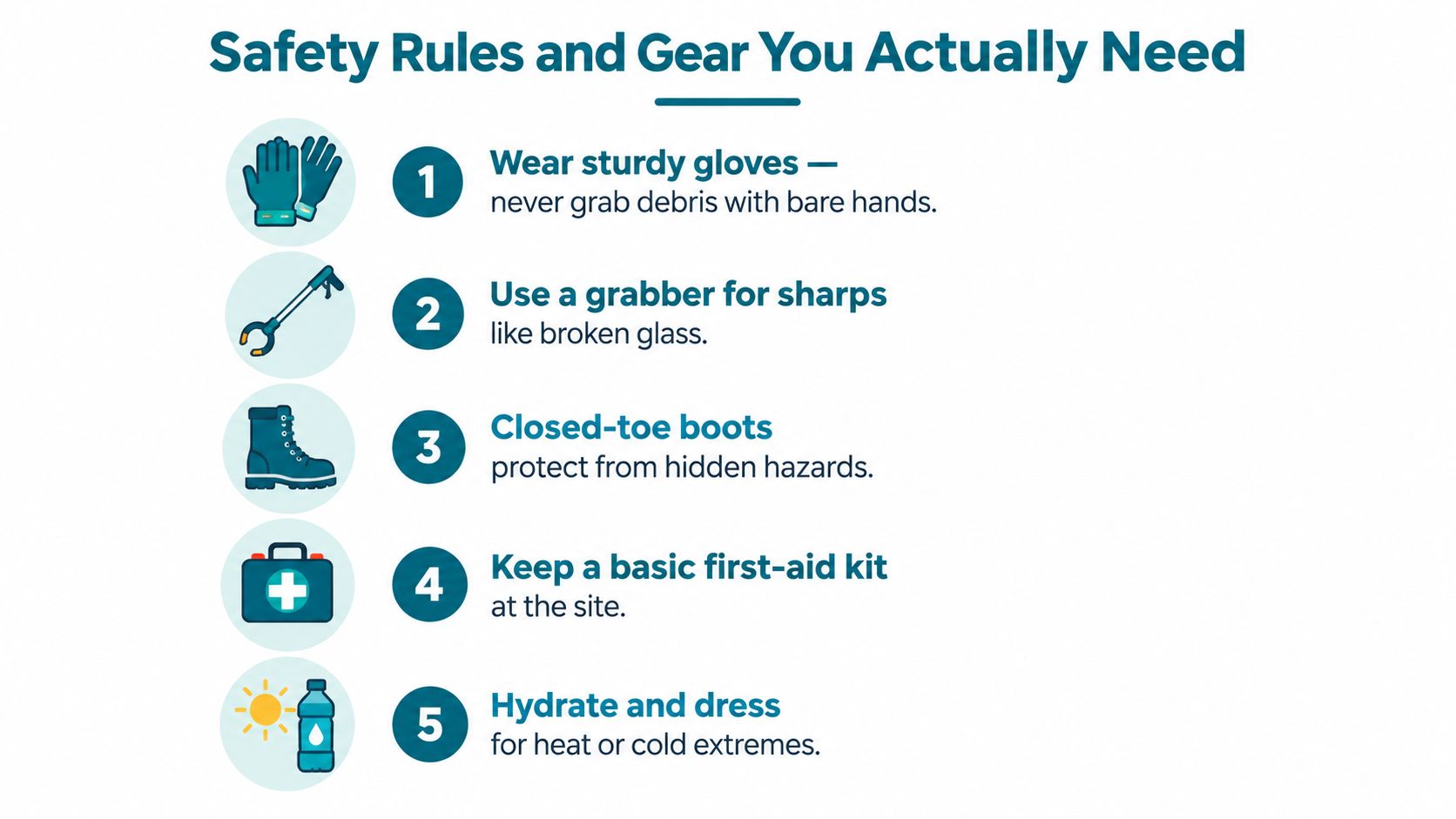
    Wear sturdy gloves, closed-toe shoes, and bright clothing. Bring water, a phone, and clothing that suits the weather. Use a grabber or another tool for sharp, awkward, or hard-to-reach debris. The cleanup guidance from San Mateo County Health recommends buddy teams of at least two, safety briefings, central starting points, and work limited to non-hazardous human-made debris.

    A list of five safety rules and recommended gear for participating in outdoor cleanup events.

    Leave dangerous objects alone

    Never touch needles, broken glass, unknown containers, heavy objects, or debris near recent encampment areas. Don't reach into holes, dense brush, drains, or places where you can't see your hand. Mark the location and tell the team leader or site coordinator. North Central Texas Council of Governments cleanup guidance tells volunteers to report hazardous items rather than pick them up.

    Traffic creates another hard boundary. Stay out of roads, medians, roundabouts, bridges, rocky slopes, guardrails, and concrete walls. Seattle's Adopt-a-Street volunteer handbook gives those limits plainly. Work where the ground stays predictable.

    If your group cleans beside a road, walk facing oncoming traffic and work on one side at a time. Greenville County's volunteer safety guidelines also call for a first aid kit, water, a cell phone, and orange safety vests. Skip horseplay. A joke isn't worth a twisted ankle or a distracted driver.

    Check the site before anyone bends down

    Organizers should inspect the area before volunteers arrive, plan first aid, keep work in daylight, and pause during fog, rain, high winds, or electrical storms. This cleanup event checklist also points organizers toward bright clothing, gloves, closed-toe shoes, hydration, and clear rules for hazards.

    A printed name or logo on a hard hat can help a large crew identify leaders, though you still need to choose equipment suited to the task. This custom printed hard hats guide can help organizers compare options before ordering.

    For a simple pre-event walkthrough, use this volunteer safety checklist. Safe work lets you return next week with your hands, knees, and confidence intact.

    The Litter Caterpillars and the Power of Showing Up

    The first Litter Caterpillars pickup had three people, a spring hailstorm, and a string of canceled rides. We huddled under a tree, shivering while every Uber canceled on us. The weather made the story harder, stranger, and more memorable.

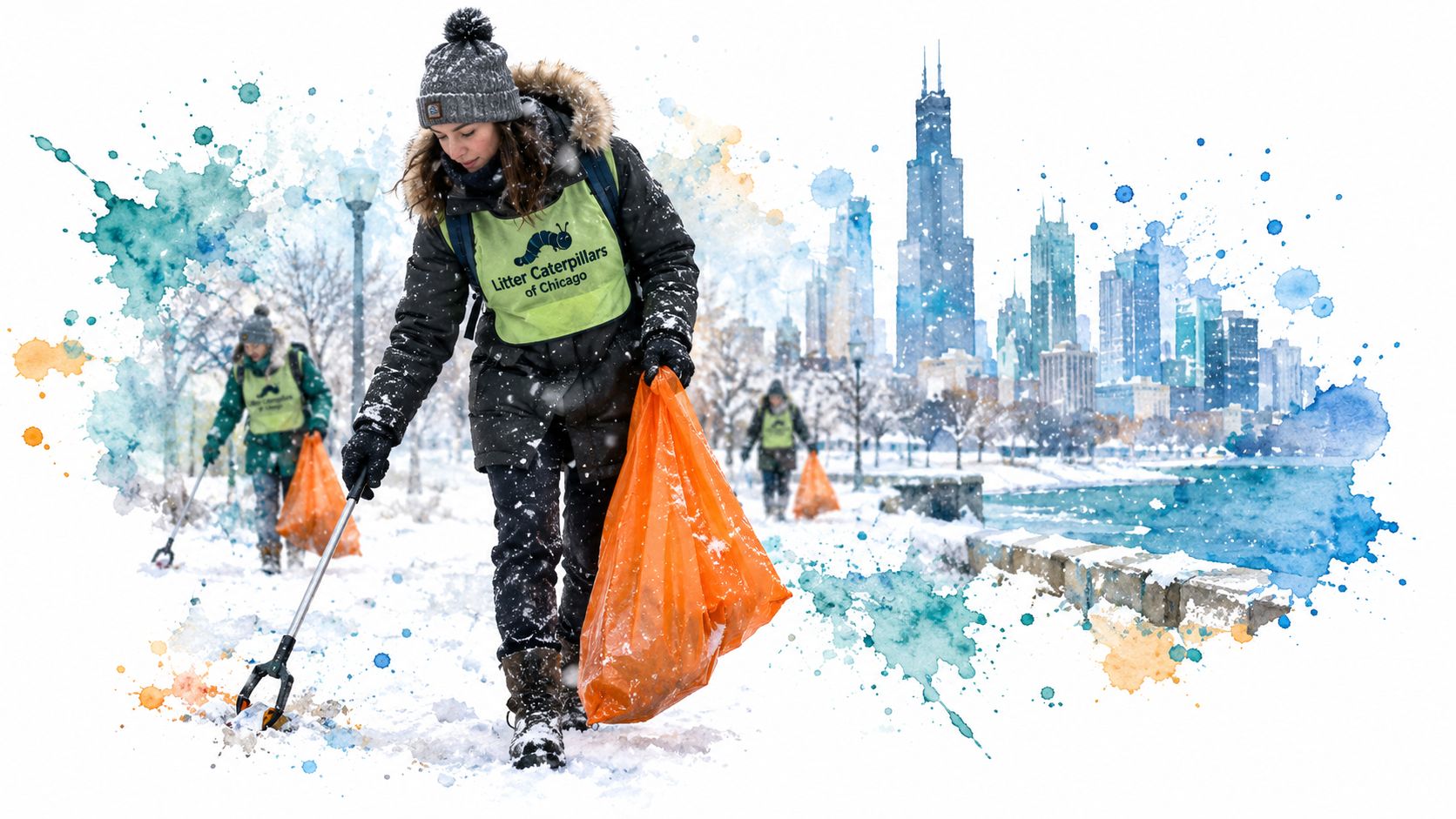
    Volunteers cleaning up litter on a snowy Chicago lakeshore with the city skyline in the background.

    I learned something under that tree. Cleaning another person's mess felt easier than facing my own. The cold didn't make the work comfortable, but it gave the three of us a shared problem. We laughed, waited, and kept moving when the storm eased.

    The group now meets across Chicago, including all 50 wards, and volunteers work through rain, snow, cold, and heat. I don't use bad weather as a badge that excuses unsafe choices. We check conditions, protect volunteers, and choose the work we can handle. The point is to return, again and again, with courage and care.

    Pride gives ordinary work a pulse

    Flags, badges, and a theme song may sound playful until you watch a tired volunteer straighten up after receiving a badge. People want to know that their effort belongs to something. A name can turn a lonely bag of trash into a shared chapter.

    Fear doesn't disqualify you from service. You can feel nervous, miss a piece of litter, or struggle through the first hour and still belong. I believe failure gives you information. You learn where you need help, what tools work, and how to come back with a steadier hand.

    A cleanup group also needs room for people with different bodies and abilities. Stories about seniors with arthritis giving back offer a useful reminder. People can contribute in different ways, from sorting and documenting debris to carrying light bags or helping at the meeting point.

    Caterpillar Park in Englewood began with an empty lot won at auction. Volunteers are building something there through hands-on work and shared responsibility. The work asks for more than a quick photo and a goodbye. It asks you to return, learn names, and take care of the place after the excitement fades.

    See how the work feels in motion before you decide whether the group fits your life.

    Building Friendships and Personal Resilience

    You can arrive at a cleanup knowing nobody and leave with three people you can text next weekend. The work creates an easy opening. You don't need a clever introduction when you can ask, “Which side of the block are you taking?”

    A service-minded group changes the social equation. You meet people who chose a cold morning, a public sidewalk, and a dirty pair of gloves. Their choice tells you something before either of you shares a biography.

    Shared discomfort creates trust

    The first ten minutes may feel awkward. Then someone finds a tire, another person wrestles a tangled cord from a fence, and the group starts talking. You laugh at the absurd objects people abandon. You compare routes. You carry a full bag to the collection point together.

    That small sequence trains you to stay with discomfort. You can't control the weather, the amount of litter, or the behavior of strangers. You can control whether you arrive, whether you follow the safety plan, and whether you help the person beside you.

    The friendship often begins before the conversation. It begins when someone keeps pace with you.

    Weekend mornings create a particular rhythm. People show up before the day scatters them into errands, parties, work, and screens. A group that protects volunteer safety and happiness gives friendships room to grow without turning every gathering into a fundraiser.

    Let service reshape your self-trust

    I used to treat consistency like a personality trait other people possessed. Cleanup taught me to treat it like a practice. I put on shoes, reached the meeting point, and completed the assignment even when I felt tired or distracted.

    You can use the same practice in small ways. Arrive on time. Bring water for someone who forgot. Ask before lifting. Thank the person who sorts the bags. Learn the name of the street you cleaned. Each action makes you a little more dependable to yourself.

    The physical result helps. You can look back at a cleared patch of sidewalk and see evidence that your hands did something useful. That evidence won't fix every private problem, but it can weaken the belief that you never follow through.

    Service also gives you a place to forgive yourself. You don't need a perfect past to join a cleanup. You need the willingness to stand beside other people and do the next decent thing.

    Your First Weekend on the Streets

    Stop waiting for the perfect Saturday. The perfect Saturday keeps moving. A clean up event needs your ordinary body, your ordinary shoes, and your decision to leave the house.

    Choose one event this weekend and save the meeting point. Read the organizer's safety notes. Pack gloves, water, a charged phone, closed-toe shoes, and clothing you can move in. If the organizer hasn't explained what volunteers should avoid, ask before you arrive.

    Use a simple morning checklist

    1. Confirm the plan: Check the start time, location, contact person, weather policy, and expected work area.
    2. Pack for the ground: Bring sturdy gloves, water, a phone, and a tool for debris that you shouldn't touch directly.
    3. Meet your buddy: Work with at least one other person, stay within the assigned area, and tell the leader when you find a hazard.
    4. Introduce yourself: Ask the person beside you what brought them out. You may find your first local friend before the first bag fills.
    5. Leave with a return plan: Thank the crew, note the next gathering, and decide whether you want a recurring group or a different kind of cleanup.

    When you pick up that first wrapper, pay attention to the feeling. The object may weigh almost nothing. Your action carries more weight because you chose it instead of waiting for motivation.

    You don't have to feel brave before you begin. You build bravery by bending down carefully, asking for help, walking through discomfort, and returning after the first event. Consistency grows the same way. One morning becomes another morning, and a stranger becomes a teammate.

    Chicago residents can join neighborhood litter pickups and park work days with Litter Caterpillars, while newcomers, students, workers, and longtime residents can use the group's open gatherings to meet people through service. Visit Litter Caterpillars to find an upcoming cleanup, bring your gloves, and take your first block with the crew.


    Litter Caterpillars hosts volunteer-led cleanups across Chicago, including parks and public spaces, and provides supplies such as gloves, trash bags, and hand sanitizer at its events. Visit Litter Caterpillars this week, choose a cleanup, and show up ready to make a friend and leave the street cleaner.

  • How to Start a Volunteer Trash Pickup in Your Community

    How to Start a Volunteer Trash Pickup in Your Community

    You hear “volunteer trash pickup,” and I bet you’re not picturing the highlight of your weekend. But stick with me. This is way more than tidying up a street corner. I’m talking about building a real community, finding your own grit, and taking direct, powerful action for the planet. It’s about you showing up for your neighborhood and, in a strange way, showing up for yourself.

    This is the real story behind what I do—the incredible personal shift that happens when a simple act of service turns into something that changes you.

    The Unexpected Joy of Picking Up Trash

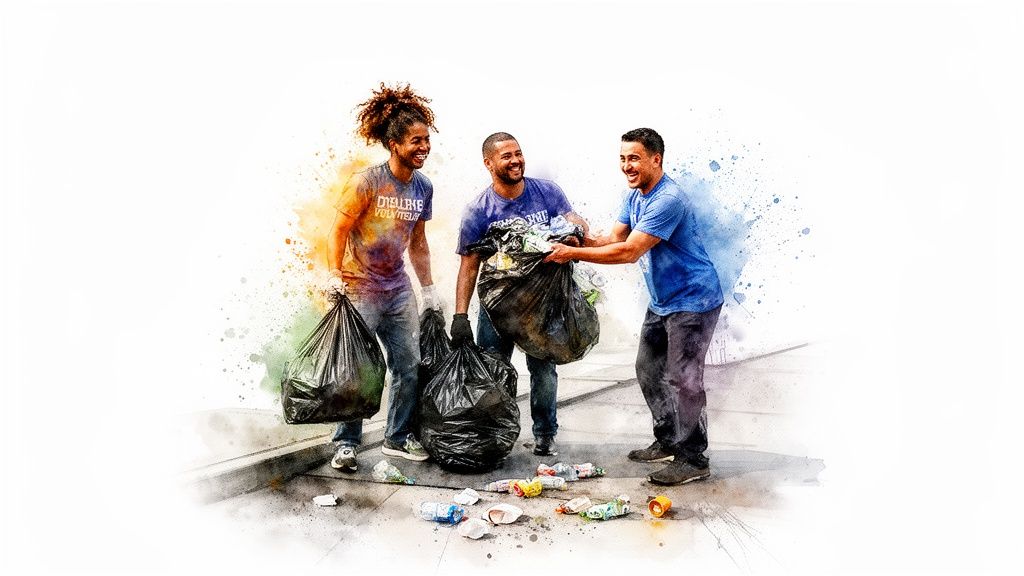
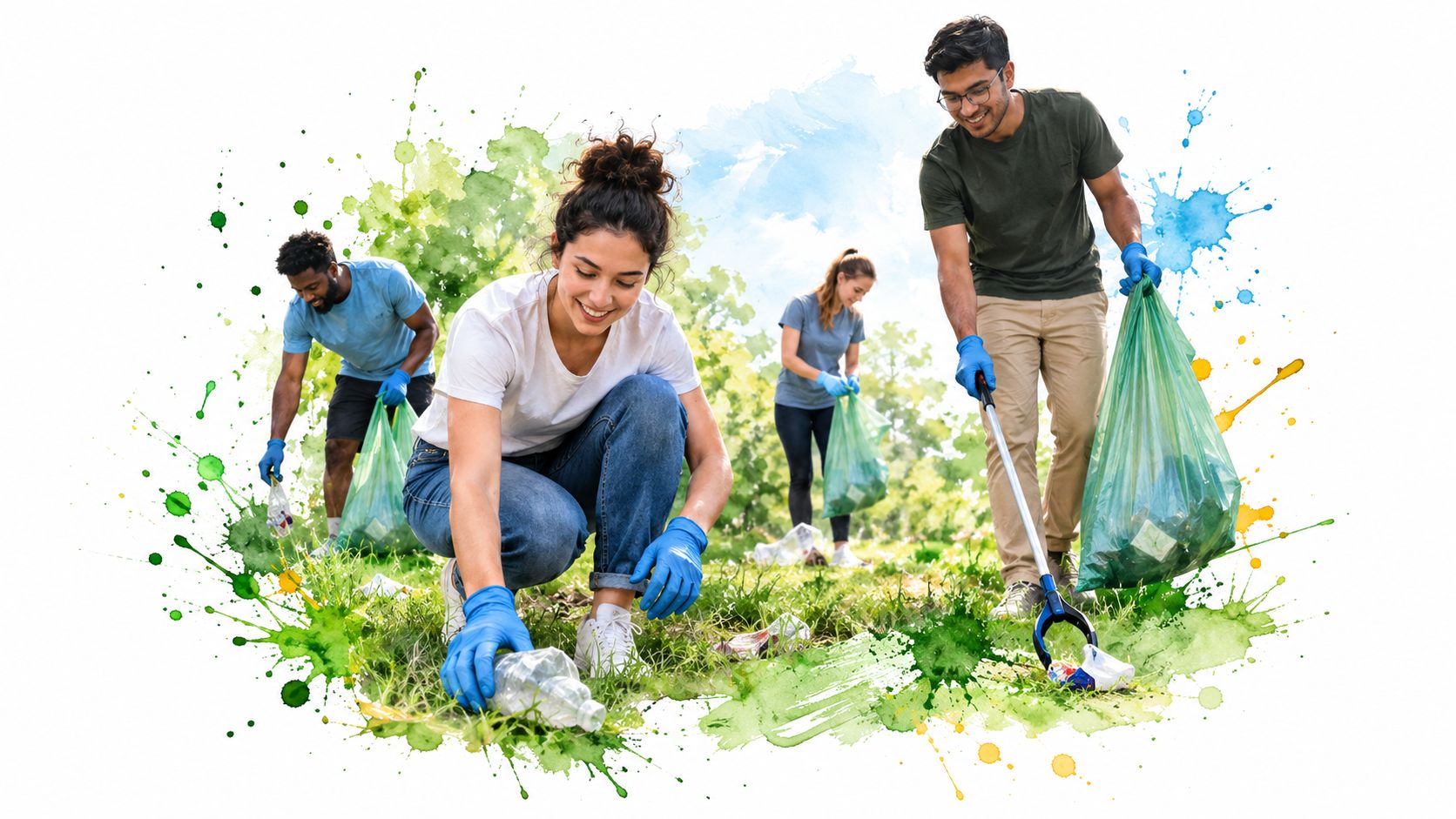
    Three diverse volunteers smiling and happily picking up trash, putting it into black garbage bags.

    I get it. A "volunteer trash pickup" doesn't exactly scream 'fun times.' But what if I told you it could be one of the most fulfilling things you’ll ever do?

    I started Litter Caterpillars when my own life felt like a total mess. And I stumbled upon something wild: cleaning up someone else's discarded junk actually helped me sort through my own. Every bottle cap I grabbed, every plastic bag I stuffed into a sack, it felt like untangling a knot inside of me. It was like a strange, unexpected therapy session with nothing but a sidewalk and a garbage bag.

    More Than Just Cleaning Streets

    This isn't just about making your block look better, though that’s a fantastic perk. It’s about forging real connections. Building resilience. It's you and a few other people, feeling that raw, unfiltered energy of working together for a common cause.

    I’ve learned nothing builds a friendship faster than going through a little bit of hell together. Imagine this: I'm standing with two other people under a flimsy tree, shivering, as a freak Chicago hailstorm turns our very first cleanup into a chaotic blizzard. Every Uber driver cancels on us. You're soaked, you're freezing… but you're also laughing your head off.

    That moment under the tree, I realized something profound. Suffering together, even in a small way, doesn't just create a story—it creates a bond. It advances the plot of your life.

    That hailstorm didn't stop us. If anything, it lit a fire under me. It proved that showing up, especially when it’s hard, is where the real magic happens.

    Finding Yourself in Service

    This work acts like an incredible filter. It weeds out selfishness, plain and simple. When you commit to waking up on a weekend morning to serve your city, you automatically surround yourself with givers. You find people who are brave, kind, and ready to actually do something.

    This is the real story behind Litter Caterpillars and every volunteer trash pickup out there. It’s about the personal transformation that happens when a simple task becomes a powerful purpose. You might show up just wanting to clean a park, but I promise you’ll walk away having discovered a stronger, more connected version of yourself.

    It's all about you showing up for your city as the first step toward showing up for yourself.

    How to Find Your Cleanup Crew

    There’s that old saying: if you want to go fast, go alone. If you want to go far, go together. The real power of a volunteer trash pickup isn’t just about the number of bags you fill—it's about the people you fill them with. It’s like joining a team sport where your only opponent is apathy, and the whole city wins. So, how do you find your team?

    Finding a group is way easier than you might think. Places like Meetup and Instagram are basically the new town squares for communities like ours. A quick search for "trash pickup" or "community cleanup" in your area will probably pop up a few options. I'm always on there connecting with new people who share our passion for service right here in Chicago.

    Finding the Right Vibe

    Look, not every group is going to feel like home, and that’s perfectly fine. Your goal is to find one whose energy just clicks with yours. Ask yourself what you’re really looking for. A flexible schedule? A super-specific mission? Or is it just about the general energy of the people?

    For us at Litter Caterpillars, our weekend morning meetups are very intentional. They tend to attract givers and naturally filter for people who are serious about showing up. We’ve found this consistency builds more than just clean streets—it builds a reliable, supportive community. You can dive deeper into what makes a great volunteer gig in our guide on how to find volunteer work.

    This is about you finding a community where you don't just fit in, but where you actually belong.

    Tapping into a Global Movement

    Sometimes, finding your local crew starts by thinking bigger. It’s powerful to realize you’re part of a massive, worldwide wave of people taking action. Imagine millions of people, just like you, all rolling up their sleeves on the same day to tackle the trash problem—that’s the magic of World Cleanup Day. Between 2018 and 2024, more than 114 million volunteers across 211 countries picked up over 708,000 tonnes of waste. That’s an incredible scale of global unity, and you can learn more about its impact on the World Cleanup Day website.

    This global momentum is built one neighborhood at a time, by people just like you. The same energy that fuels a worldwide event is present every weekend in parks and on sidewalks across your city.

    Keep an eye out for local events tied to these larger movements, like National Public Lands Day or a local river cleanup. These are often awesome entry points for you to find the dedicated groups that are out there year-round. All it takes is showing up once to find your people.

    Gearing Up for Your First Cleanup Day

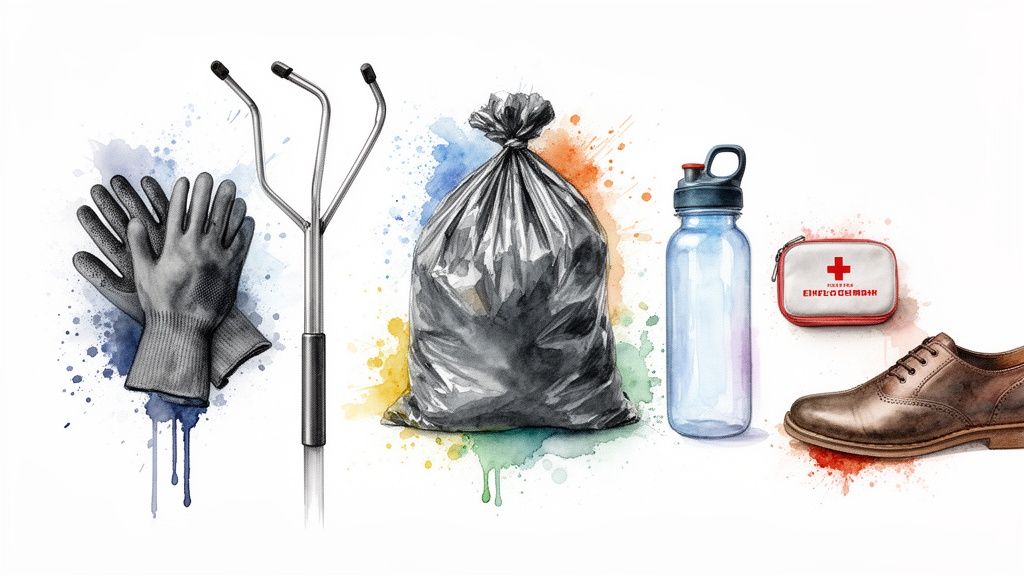
    Various items for a volunteer trash cleanup including gloves, rake, trash bag, water bottle, and first-aid kit.

    Alright, you're fired up and ready to join your first volunteer trash pickup. What do you actually need to bring? I'll give you a hint: not much. Honestly, the most important thing you can bring is yourself. Your willingness to show up and get a little dirty is the real secret weapon.

    Everything else is just about making the job easier and, more importantly, safer.

    Think of it like getting ready for a team sport. You wouldn't play soccer barefoot, right? Same idea here. It's not about you buying a bunch of expensive, high-tech tools. It’s about being smart and prepared so you can focus on the good stuff—cleaning up our neighborhoods and connecting with the awesome people doing it alongside you.

    Your Essential Cleanup Starter Kit

    Here at Litter Caterpillars, volunteer safety is everything. I say it all the time: a prepared volunteer is a happy volunteer, and happy volunteers are the ones who come back and build the movement.

    This is the go-to gear list that I swear by. It’s simple, but it gets the job done.

    Gear Item Why You Need It My Pro-Tip
    Puncture-Resistant Gloves This is your non-negotiable. It's your first line of defense against sharp stuff, germs, and just general grossness. Forget the flimsy disposable ones. You should grab a pair of thick, reusable work gloves from a hardware store. They're worth it.
    Closed-Toe Shoes Protects your feet from all the fun things you can't see hiding in the grass—broken glass, sharp metal, you name it. I find that old hiking boots or sturdy sneakers work perfectly. Comfort is key because you'll be on your feet for a bit.
    Thick Trash Bags You need bags that won't explode the second you shove a soggy pizza box or a gnarly branch inside. I'm a big fan of contractor-grade bags. They’re way tougher than your average kitchen bag and can handle heavy, sharp junk.
    A Trash Grabber (Optional) This simple tool is a lifesaver for your back and keeps you from having to touch anything… questionable. A grabber is awesome, but don't let not having one stop you from coming out. Good gloves are the real must-have.

    Beyond that, just use common sense. You should wear clothes you don’t mind getting dirty, bring a reusable water bottle to stay hydrated, and maybe some sunscreen if you're lucky enough to get a sunny day. That’s really it. You’re ready to roll.

    Getting geared up isn't a barrier to entry; it's the first step of the ritual. It’s you telling yourself, "I'm ready to make an impact today."

    This simple prep work changes everything. You’re not just picking up litter; you’re an urban explorer, a community builder, an environmental steward. Your gear is your uniform, and it shows you’re part of a team that's out here making Chicago shine.

    Organizing Your Own Volunteer Trash Pickup

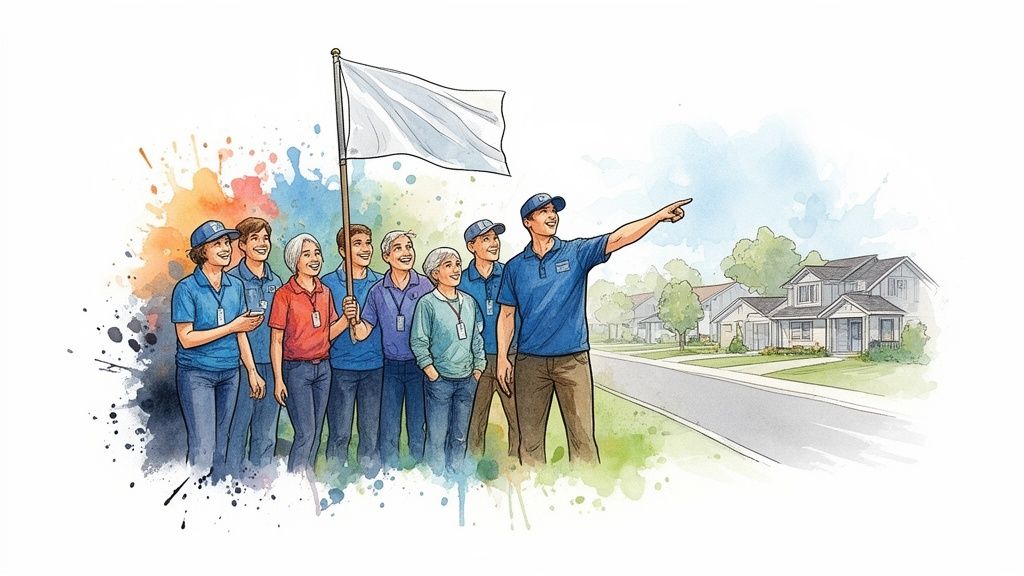
    Smiling team of volunteers with a white flag pointing towards a neighborhood of homes.

    So, you feel that pull? The one that says it's time for you to lead your own volunteer trash pickup? Good. This is where the real adventure begins. It’s a lot like you being Tom Sawyer, convincing your friends that painting a fence isn't a chore, but the coolest thing they could possibly do with their Saturday. Because you genuinely believe it is.

    I'm going to walk you through exactly how to bring your own event to life, based on what I’ve learned from organizing hundreds of cleanups. It’s all about turning a simple task into a community gathering that people actually want to be a part of.

    Find Your Spot And Set The Time

    First things first, you need to go on a trash treasure hunt. Seriously. Scout out a location in your neighborhood that could use some love—a forgotten alleyway, a park that's looking a little rough, or that busy street corner that’s always overflowing.

    Got your location? Now pick a time. I’ve found that weekend mornings are magic. They attract the givers, the people who are ready to start their day with service instead of brunch. And here's the secret sauce: consistency.

    You pick a day and time and stick to it, whether it's every week or every month. This creates a rhythm, a reliable beat that people can count on. It transforms from a one-off event into a community ritual.

    You’re not just cleaning a street; you’re claiming it. You’re sending a message that this place matters and that people are willing to show up for it. This visible action creates a powerful ripple effect.

    Get The Word Out And Make It Fun

    Now you need your crew. Spreading the word is easier than you think. Post in local Facebook groups, tag your neighborhood on Instagram, or just tell your friends. Your key is to be relentlessly positive and inviting.

    But how do you keep them coming back? You make it an experience.

    • Give your group an identity. We have a flag and a theme song. It sounds a little goofy, but it builds real pride and a sense of belonging for me and everyone else.
    • Celebrate your wins. That group photo you take with all the trash bags at the end? That’s your trophy. It’s tangible proof of what you accomplished together.
    • Make it easy. You should have all the supplies ready to go. Don't make people think too hard—just let them show up and start making a difference.

    If you’re scratching your head wondering where to begin, don't worry. I put together a whole guide on how to find volunteers who are just as ready to jump in as you are.

    Embrace The Global Connection

    When you lead a volunteer trash pickup, you're joining a legacy. For 40 years, the International Coastal Cleanup (ICC) has been mobilizing everyday heroes to protect our beaches and waterways. Just last year, over 486,000 volunteers collected more than 7.4 million pounds of trash across the globe.

    Since 1986, this movement has rallied nearly 19 million people who have removed over 400 million pounds of waste. That's about 10,000 garbage trucks full. You can read the whole incredible story of this decades-long effort on the Ocean Conservancy website.

    Your local effort, no matter how small it might feel, is a part of this massive, worldwide current of change. You’re not alone; you’re leading a local chapter in a global story of hope.

    Staying Safe While Making an Impact

    Bravery is one of our core values, but so is kindness—and that starts with you being kind to yourself by staying safe. A volunteer trash pickup can throw some curveballs, from sharp objects hiding in the grass to you navigating busy Chicago streets. This isn’t just about feeling good; it's about doing good, safely.

    I want you to come back every week, full of energy and ready for the next adventure. That can only happen if you feel secure and protected. Think of safety not as a set of restrictive rules, but as the foundation that makes our brave work possible. It's the sturdy ground we stand on so we can reach higher.

    Your Safety Checklist

    Before you even touch your first piece of trash, run through this mental checklist. It becomes second nature after a while. I see our regulars do it without thinking, like a musician tuning their instrument before a show. It’s all about preparation.

    • Scan Your Area: You must always know what’s going on around you. Are you near a busy road? Is the ground uneven? A quick look around can prevent most accidents before they even have a chance to happen.
    • Work with a Buddy: The buddy system isn't just for summer camp. I insist we always work in teams, looking out for each other. It’s way more fun and infinitely safer.
    • Hydrate and Rest: Especially on those surprisingly hot Chicago days, you need to listen to your body. Take breaks when you need them. Being a hero doesn't mean ignoring your own limits.

    What Not To Touch

    This part is simple and non-negotiable. If you see something that makes you pause, even for a second, leave it. Your gut instinct is your best safety guide. We have a clear rule: when in doubt, don't touch it.

    Your goal is to remove everyday litter, not to become a hazardous waste specialist. Leave the dangerous stuff to the professionals. Your well-being is always more important than one extra piece of trash.

    Here’s a quick list of items I absolutely never let anyone touch with their bare hands—and often, we leave them for city services entirely:

    • Anything Sharp: This includes broken glass, needles, or jagged pieces of metal.
    • Medical Waste: You should report syringes or any other medical equipment but never, ever touch them.
    • Suspicious Containers: If you don't know what’s inside a container, leave it sealed. Don't play detective.
    • Heavy Objects: Don't try to be a strongman. I've seen people try. Lifting something too heavy is a quick way to injure yourself and ruin your weekend.

    Remember, my goal isn't just to clean a street; it's to build resilience and trust. And that can only happen when we all look out for one another and put our own safety first.

    The Lasting Impact of Your Efforts

    So, you’ve filled a few bags with other people's garbage. What's the big deal? Think of it like a stone you toss into a pond—the ripples just keep spreading, reaching shores you never even thought about.

    Every single piece of litter you grab is one less plastic shard for a bird to mistake for food, one less chemical-leaching wrapper poisoning our waterways. But the change goes so much deeper than that. It’s about you taking ownership of your community, a defiant act of kindness that declares, "This place matters. I matter."

    A Ripple Effect of Pride

    When people see you out there, week after week, something shifts. Visible action is contagious. I’ve seen it happen. It inspires neighbors to sweep their own sidewalks, encourages local businesses to support the cause, and sparks a powerful sense of community pride that was just waiting for a chance to ignite.

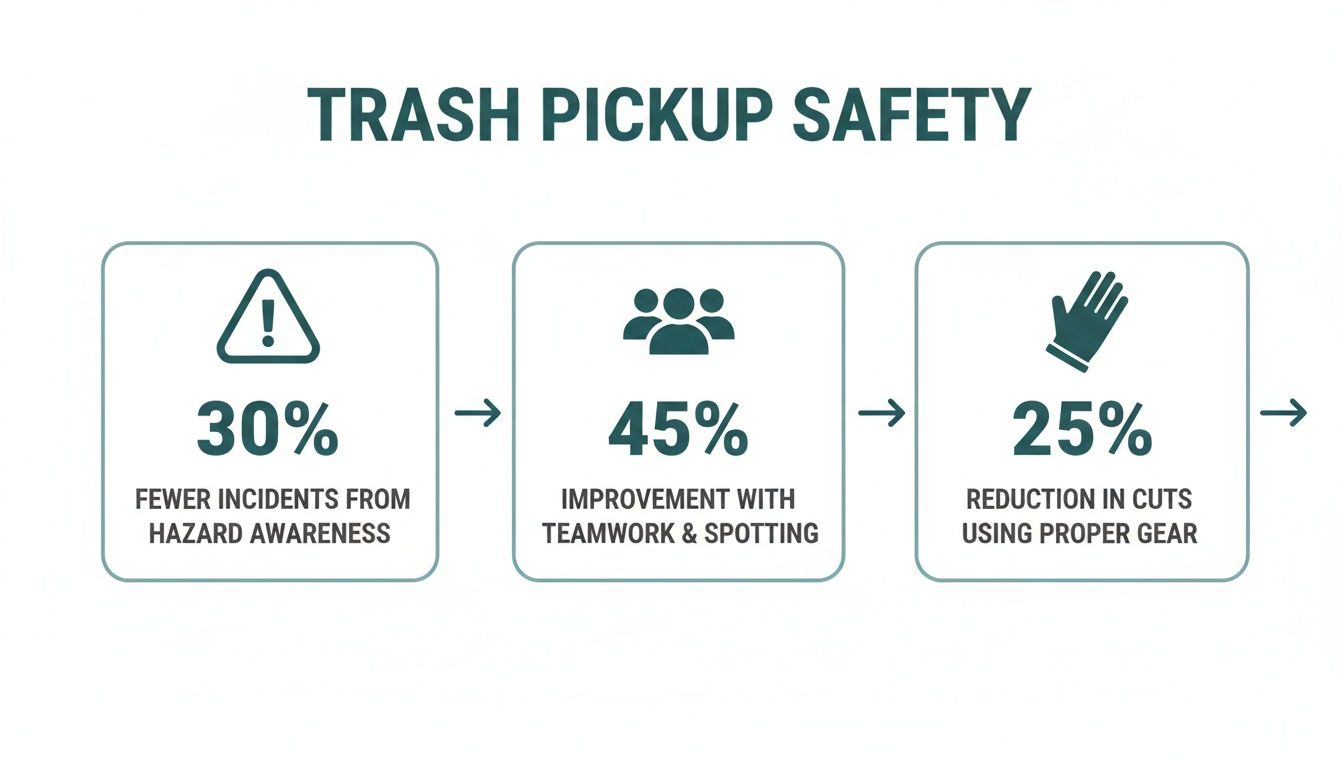
    This infographic shows just how much our focus on safety and teamwork pays off, making our cleanups not just effective, but sustainable.

    Infographic showing trash pickup safety improvements: 30% fewer incidents, 45% teamwork improvement, 25% fewer cuts.

    Drilling down on teamwork, proper gear, and hazard awareness doesn't just keep us safe; it makes every single cleanup stronger and more impactful.

    I’ve seen these small, weekly efforts create massive, lasting change right here in Chicago. It’s the story of how we won an empty lot at auction to create Caterpillar Park, turning a forgotten, trash-strewn space into a community hub. You can read more about how we approach these transformations by checking out our philosophy on cleaning up trash.

    You’re not just picking up someone else’s mess; you’re building a better world, one candy wrapper at a time. It’s an investment in the future of your city and in the collective spirit of its people.

    This local passion can absolutely scale to a planetary level. Just look at the 2025 Global Ocean Cleanup, where 1,984 volunteers across 25 countries united for 54 events. Together, they removed a staggering 47.4 tons of marine debris. These efforts, detailed in these powerful ocean cleanup marketing statistics, prove that what we do on our streets can combat global pollution.

    Your consistent effort is a beacon. It shows what’s possible when you decide to show up for each other and for the place you call home.

    Got Questions? I've Got Answers.

    Jumping into your first cleanup can bring up a few questions. That’s a good thing! It means you're thoughtful and ready to do this right.

    I get asked a lot of the same things by first-timers, so let me clear the air on the most common ones right now.

    What If I Can’t Make It Every Week?

    No problem at all. This isn't your job, and I’m not punching a time clock. We're a volunteer-first crew. That means your energy and your time are precious, and I respect that.

    The whole point is for you to show up when you can. Life is busy. I get it.

    Come when it feels good and sustainable for you. Honestly, even joining us just once a month makes a huge difference on the streets and in our community. You're part of the team, no matter what.

    Do I Need to Bring My Own Supplies?

    Usually, no. I bring the essentials for everyone: bags, gloves, and those super-handy trash grabbers. But it's always smart for you to double-check the event description just in case.

    No matter what, though, always bring these two things for yourself:

    • Closed-toe shoes are a must. They’ll protect your feet from anything unexpected.
    • Clothes you don’t mind getting dirty. Because, let's be real, you're gonna be around trash!

    Is It Safe to Join a Volunteer Trash Pickup?

    Absolutely. Safety is everything to me—it's my priority number one, always. We stick together in groups, stay aware of what's going on around us, and I have clear rules about what to pick up and what to leave for the pros.

    I’m proud that we serve every part of this city, including neighborhoods some people might shy away from. We do it by being smart, by being prepared, and by always looking out for each other. You should think of it as a safe, rewarding adventure.


    Ready to start your own adventure and make a real difference in Chicago? Join Litter Caterpillars and find your crew. Visit us at https://www.littercaterpillars.com to see our next event.