
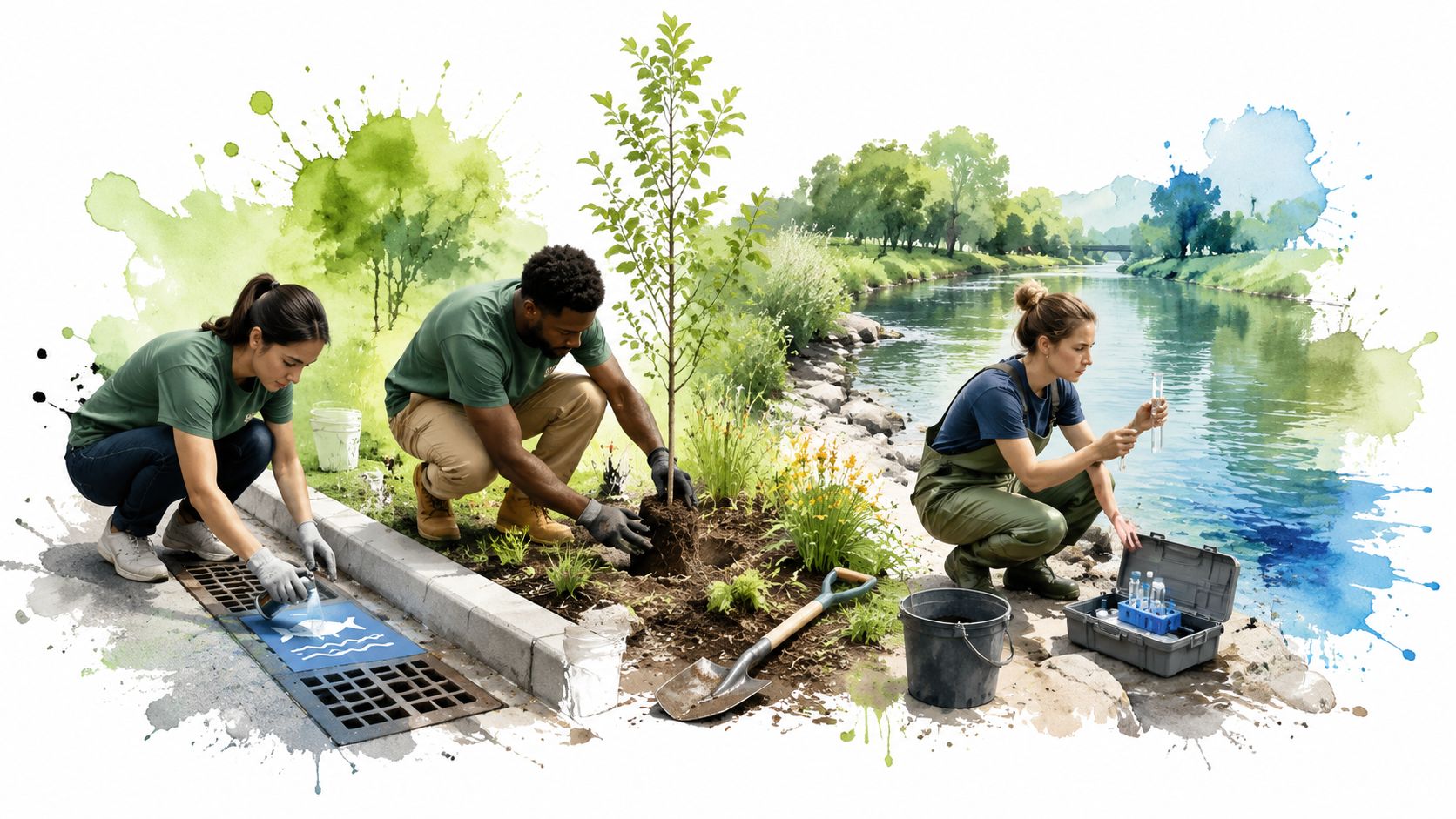
On a Saturday morning beside Chicago's North Branch, I watched a volunteer pull cigarette butts from a wet curb. Two feet away, a storm drain waited for the next hard rain.
Why Litter on Your Curb Is Really a Watershed Story
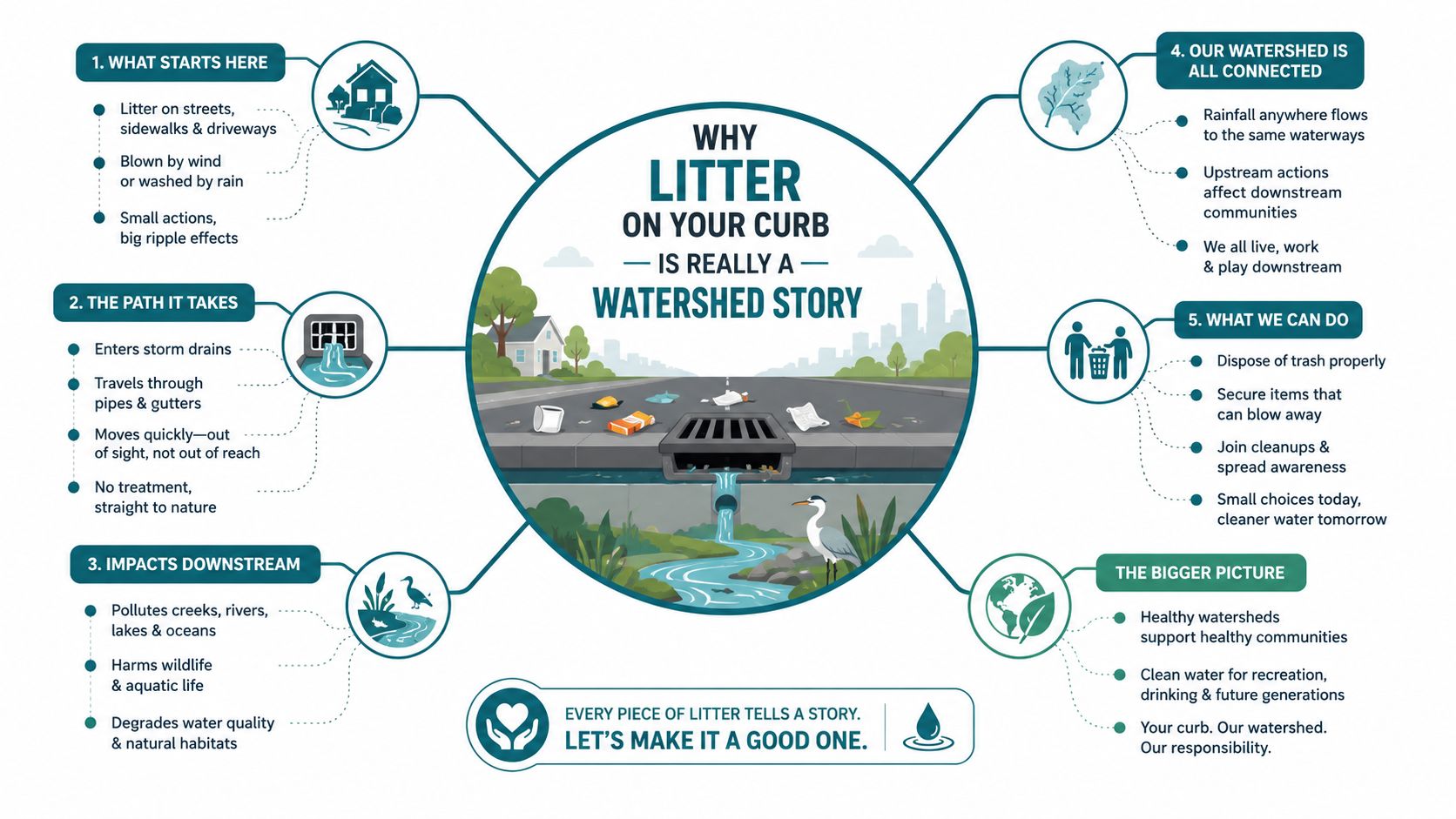
I've learned to treat every block as a small watershed. A watershed is the land area that sends water toward the same creek, river, lake, or wetland. On our street, a raindrop hits a roof, rolls into a gutter, slips through a storm drain, travels through a sewer or channel, and eventually reaches the Chicago River system and Lake Michigan.
That trip gives ordinary trash a route. A wrapper near the curb can move with rainwater. Pet waste can wash from a sidewalk into the same drainage network. Lawn chemicals can leave a yard during a storm. The Environmental Protection Agency's explanation of stormwater runoff describes how rain and snowmelt pick up sediment and contaminants from streets, rooftops, and lawns before reaching surface water or groundwater.
Chicago's combined sewer system adds another layer. During heavy rain, stormwater and wastewater can enter the same system, and that can create overflow problems. A single summer storm can move a day's worth of loose litter off the curb before a crew gets back to it.
Follow the drop
Friends of the Chicago River has reported bacteria and nutrient readings over the years that connect street-level behavior with water quality. I don't need a laboratory result to understand the basic chain. When a crew removes waste before rain reaches the drain, we remove material from the water's path.
Field rule: If you can see trash beside a drain, treat it as a watershed input, not a cosmetic problem.
The same logic applies to soil. The USDA Natural Resources Conservation Service reports that watershed projects across the United States generate more than $2.2 billion in average annual benefits for more than 48 million people, while reducing 92,341,221 tons of soil erosion per year. Those benefits include flood protection and agricultural and non-agricultural gains, so watershed protection reaches beyond cleaner water to the land around it. You can read the USDA watershed benefits fact sheet for the full breakdown.
I keep a bag of curb litter separate from the rest of our haul when possible. It helps volunteers see what they removed from the drainage route. That bag becomes a simple, measurable record of what the next storm didn't carry downstream. For more practical reasons to remove it, see this guide to picking up litter before it travels.
How to Plan a Cleanup That Protects a Watershed
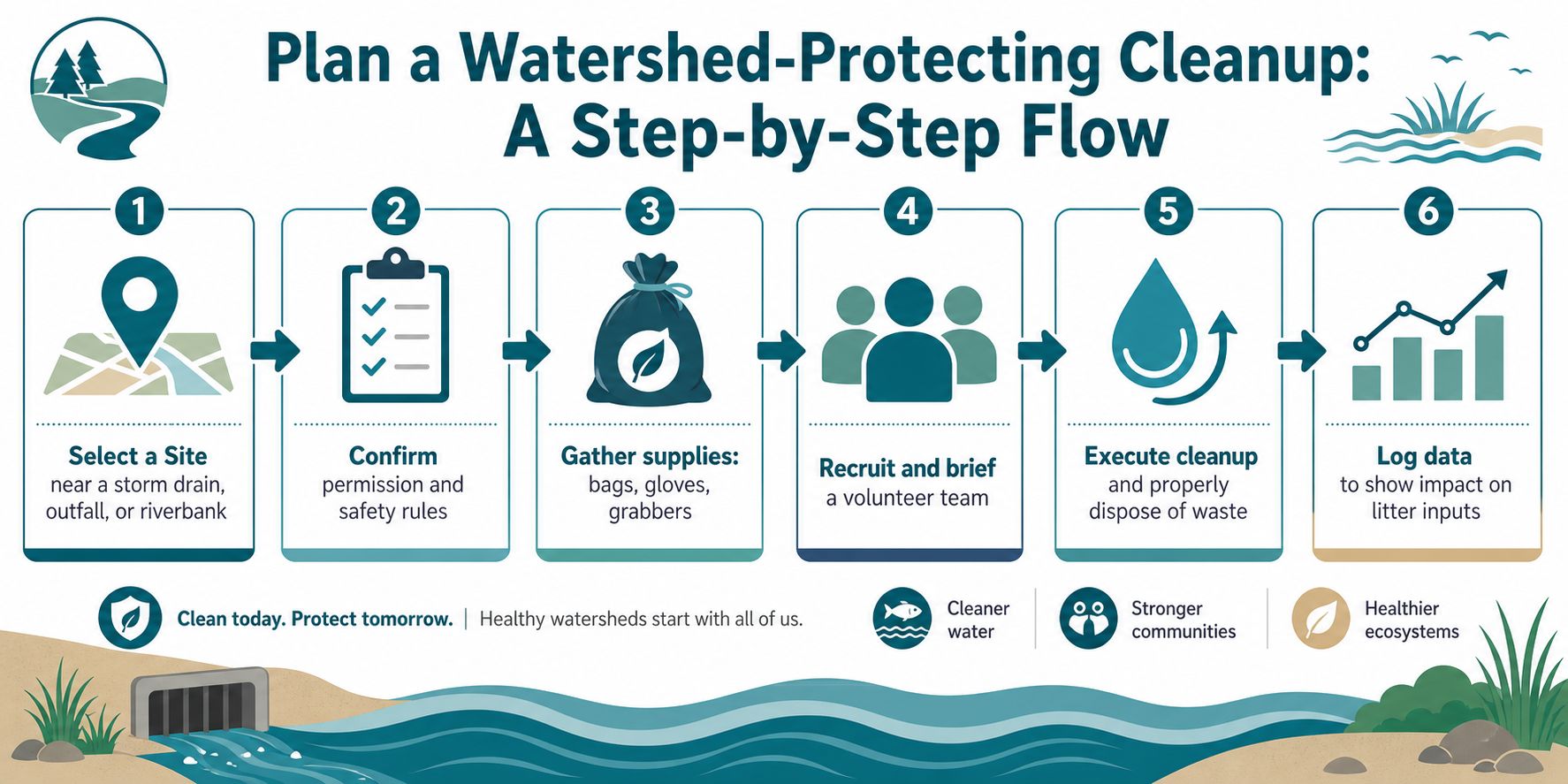
A cleanup protects a watershed when you choose the site, record the waste, and handle disposal with the next storm in mind. I start with a map, not a stack of bags.
Two weeks before the cleanup
Pick a site beside a storm drain, outfall, creek, or riverbank. Walk the route after rain if you can. Look for clogged inlets, low points where wrappers collect, bare soil, and places where people cut across grass toward the water.
Check event calendars from the Chicago Park District and Friends of the Chicago River before you announce anything. Confirm permission, access, disposal rules, and whether the site needs a permit. Notify Chicago Streets and Sanitation, the ward office, nearby property managers, local sponsors, and any park or river partner connected to the location.
Recruit through a school, block club, church, neighborhood group, or alderman's office. Give each person a clear meeting point and a short description of the work. A volunteer who knows the route and safety plan arrives ready to help.
One week before the cleanup
Gather heavy-duty bags, nitrile gloves, work gloves, grabbers, buckets, first-aid supplies, water, reflective vests, sunscreen, hand sanitizer, and a scale. Bring puncture-resistant containers for sharp objects. Arrange transportation for the filled bags and decide who will contact the city if illegal dumping appears.
Create a simple sorting sheet:
- Plastic and food packaging: Record the common items and where you found them.
- Cigarette waste: Keep it separate because it often concentrates along curbs and entrances.
- Glass and sharp objects: Let a trained adult handle them.
- Metal and bulky waste: Photograph unusual items and report them through the proper city channel.
- Pet waste: Use sealed bags and keep it away from other collected material.
Use the Alliance for the Great Lakes Adopt-a-Beach app to log the data. Take photos before work begins and after the route looks clear. Stencil storm drains only with permission and approved materials. The message should tell people where the water goes, not just ask them to keep the street tidy.
Event day and the follow-up
Open with a safety briefing. Review traffic, broken glass, needles, unstable banks, heat, hydration, and the rule that nobody reaches into hidden spaces. Assign one person to supervise children and one person to track bags, weights, categories, and photographs.
After the cleanup, place waste where the city or site partner instructed. Weigh and sort before disposal when conditions allow. Meet for a short debrief, write down blocked drains and recurring litter spots, then upload the record and share it with your partners.
For a practical event model, use this community cleanup planning guide as a starting point. The point of the data isn't to decorate a report. It helps you choose the next drain, the next block, and the next stormwater fix.
Stormwater Moves You Can Run on Your Block
I rank stormwater work by effort, cost, and how close it sits to the runoff source. Start where water leaves your property, then work outward with neighbors.
A roof can send a surprising volume toward the street. One inch of rain on a 1,000-square-foot roof produces about 600 gallons of runoff, according to the National Oceanic and Atmospheric Administration's rain barrel guidance. Check the exact roof area and local rules before choosing a barrel size.
Start with small habits
Redirect downspouts toward a lawn or approved rain barrel. Sweep sidewalks instead of hosing them. Pick up pet waste within a day, and avoid spreading fertilizer before rain. These actions take little equipment, and they keep loose material away from the curb.
Medium-effort projects include a rain barrel, a downspout planter, a small rain garden near a garage or side yard, and native deep-rooted grasses. Disconnect a sump pump from the sewer only where local rules allow it, and confirm the discharge won't send water toward a neighbor's foundation.
At block scale, plant trees through programs such as TreeKeeper or Openlands' Tree Census. A mature oak can intercept thousands of gallons per year, according to Openlands' tree information. Consider permeable pavers for a parking pad and work with neighbors on bioswales near bus stops. Chicago examples include green alleys in Avalon Park and rain gardens at the Chicago Center for Green Technology.
| Move | Effort | Estimated Runoff Benefit |
|---|---|---|
| Sweep instead of hosing | Low | Keeps loose sediment and litter out of drains |
| Redirect a downspout | Low | Sends roof water toward soil instead of pavement |
| Pick up pet waste | Low | Removes a direct contamination source |
| Install a rain barrel | Medium | Stores roof runoff for later garden use |
| Build a small rain garden | Medium | Holds and filters water near the source |
| Plant deep-rooted natives | Medium | Helps soil absorb and hold water |
| Plant a street tree | High | Adds canopy interception and soil uptake |
| Install permeable pavers | High | Lets rainfall enter the ground through the surface |
| Partner on a bioswale | High | Slows and filters runoff across a shared route |
For tree selection and Chicago planting ideas, browse this guide to trees in Illinois. Match the move to the problem. Pooling calls for storage and infiltration. Basement seepage calls for careful grading and downspout control. Hot, dirty runoff calls for shade, soil, and planted filtration.
Green Infrastructure Options From Easiest to Most Ambitious
The right project depends on what your block needs, what your soil can absorb, and who controls the land. Chicago's heavy clay can slow infiltration, so a rain garden may need an underdrain or a different soil mix. Don't dig first and investigate later. Check utilities, property lines, drainage patterns, and approval requirements.
| Option | Cost | Effort | Footprint | Watershed Impact | Permit? |
|---|---|---|---|---|---|
| Rain barrel | Low | Weekend | Small | Stores roof runoff for later use | Check local rules |
| Downspout planter | Low to medium | Weekend | Small | Filters water near the building | Check local rules |
| Rain garden | Medium | Weekend to several days | Small to medium | Holds and filters runoff | Confirm with local office |
| Alley bioswale | Medium to high | Multi-weekend | Medium | Slows shared pavement runoff | Coordinate with city |
| Permeable paver parking pad | High | Several days | Medium | Sends rainfall into a porous surface | Confirm paving rules |
| Tree trench under sidewalk strip | High | Multi-month | Medium to large | Adds soil storage and canopy | Coordinate with city |
| Curb-cut bioswale | High | Multi-month | Large | Captures street runoff at the curb | Coordinate with city and Space to Grow |
Match the tool to the water
A rain barrel works when you need to hold roof water and have a safe overflow route. A downspout planter fits a tight side yard. A rain garden needs a low point, but it shouldn't sit beside a foundation or where standing water creates a hazard.
An alley bioswale makes more sense when several properties send runoff toward the same route. Permeable pavers can help a parking area, but the base must drain properly. A tree trench needs room beneath the sidewalk, cooperation from the city, and a long maintenance plan.
Curb-cut bioswales require the most coordination. Chicago's Space to Grow program can provide a useful partnership model for schoolyards and public sites, though each project still needs site review and approval.
Choose by failure point: Fix the place where water pools, seeps, heats up, or carries sediment. A larger project isn't automatically a better one.
Test the soil before you commit. If water sits in a test hole for too long, ask a qualified designer about underdrains, amended soil, or a different location. Keep overflow away from basements and neighboring lots. Green infrastructure works through placement and maintenance, not appearance alone.
Monitoring Water Quality Without Fancy Lab Gear
I've seen volunteers avoid monitoring because the equipment looks technical. Start with observations and keep your notes consistent. A simple record from the same location can tell you more than a single dramatic sample.
Four field checks
- Visual clarity tube: Fill a clear tube and record what you can see through the water. Note floating trash, foam, oil sheen, unusual color, and sediment.
- Turbidity check: Use a Secchi disk or a simple DIY disk to track cloudiness. More cloudiness can point to suspended sediment or disturbed material.
- Dissolved oxygen: Use a Hach drop kit or another simple chemical kit. The reading helps you understand whether the water holds oxygen for aquatic life.
- Bacteria screening: Use E. coli test strips from a science supply store. Treat the result as a screening signal, follow the kit directions, and avoid contact with the sample.
Record the date, time, weather, recent rainfall, location, water level, smell, color, clarity, and every test result in a shared spreadsheet. Use the same container, method, and sampling spot each time. Add photographs from the same angle so your visual record stays useful.
Avoid the two common traps
Testing immediately after rain can make every result look worse because runoff stirs sediment and carries fresh contaminants. That doesn't make post-rain testing useless, but label the conditions clearly and compare it with dry-weather readings.
The second mistake is waiting for perfect gear. A clear tube, a notebook, photographs, and careful descriptions can establish a baseline. Escalate unusual color, strong odors, fish distress, repeated sewage indicators, or unsafe conditions to Friends of the Chicago River or the Metropolitan Water Reclamation District. Don't handle suspicious material yourself.
Building Partnerships and Telling the Right People
A cleanup that happens twice can disappear from a neighborhood's memory. A cleanup that returns on the same route with the same sponsor creates a habit, a record, and a reason for people to keep the drain clear.
Start with the person who can say yes. For a hardware store donation, ask the store manager instead of sending a message to a corporate office. For an aldermanic support letter, contact the ward office and send a short one-page request. For a school or church base, ask for a recurring weekend meeting place, storage space, or volunteer announcement.
Use a plain pitch
“We're organizing a neighborhood cleanup beside [specific site]. We'll remove and sort litter, record the waste, photograph the route, and share the results. Could you provide [specific supplies, space, volunteers, or letter] for [specific event or recurring schedule]?”
Ask for a concrete in-kind contribution or dollar amount that fits the partner's capacity. Request bags, gloves, grabbers, water, printing, hauling help, or a small project budget. Don't ask for “support” without saying what support means.
Chicago has several useful doors: local watershed groups, the city's Green Stormwater Infrastructure team, neighborhood chambers, schools, park partners, and nearby businesses. Give each partner a job that connects to its reason for participating. A hardware store can supply tools. A school can recruit families. A ward office can help route a report about blocked drains.
Follow up after the event with photos, the sorted waste record, and one sentence about what you'll do next. Send a thank-you soon after the work, then return with a specific year-two request when you have a new date and a clear task. Consistency makes the next ask easier because the partner can see where its help went.
Your 30 Day Watershed Protection Plan
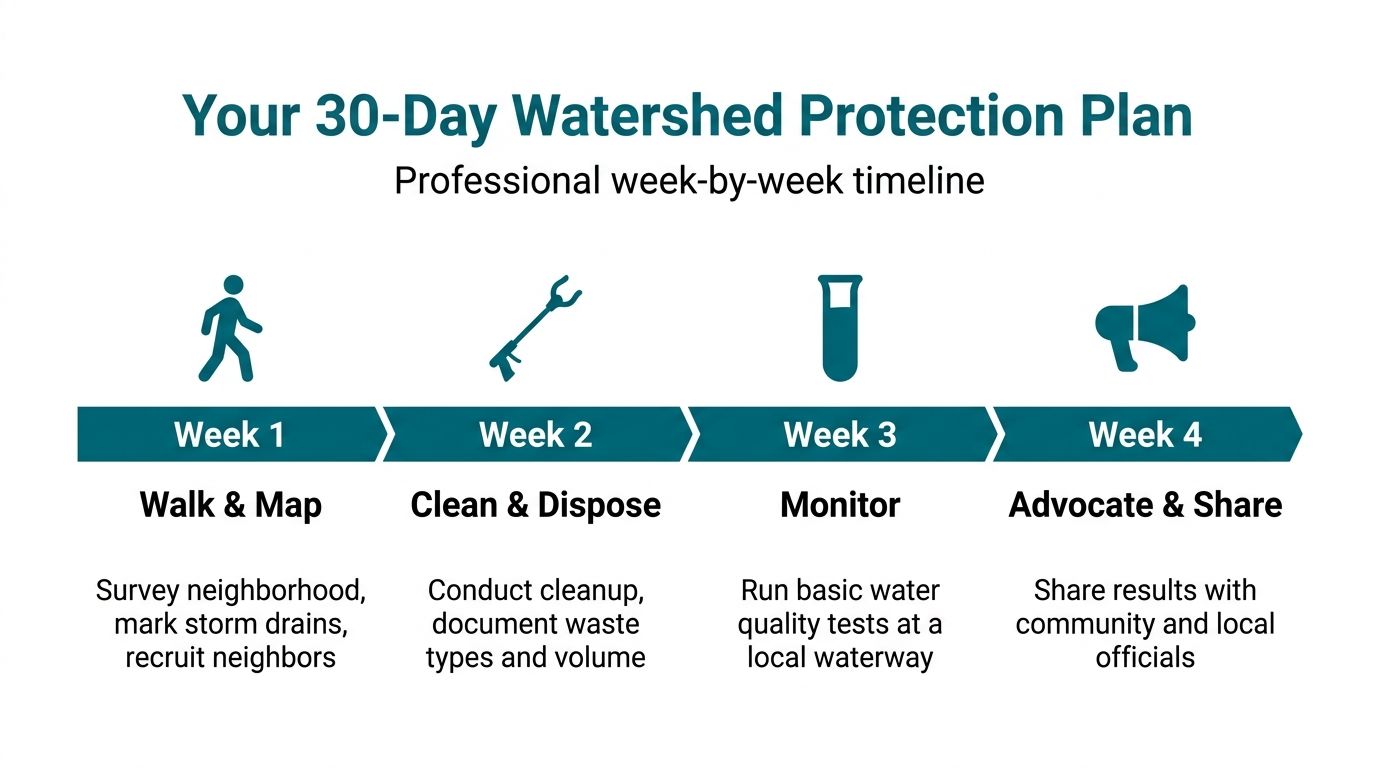
I'd start on Monday with one block, one drainage route, and five neighbors. You don't need to solve the whole river. You need to learn where water moves and keep showing up there.
Week one, walk and map
Walk the neighborhood and mark storm drains, pooling spots, litter traps, downspouts, and access points near the North Branch Chicago River. Recruit five neighbors for a kickoff cleanup. Choose a safe meeting point and contact the relevant site partner before you set the date.
Week two, audit and prepare
Run a household stormwater audit. Trace each downspout, inspect the route from roof to street, look for bare soil, and note where water reaches pavement. Swap a small planting area to native plants, and sign up for monitoring training through Friends of the Chicago River.
Week three, install one move
Choose one project that fits the problem. A rain barrel can handle roof runoff. A downspout planter can help a tight side yard. A curb-cut rain garden on a Logan Square boulevard needs permission, design review, and coordination, so treat it as a shared project rather than a casual weekend dig.
Week four, document and ask
Hold the public cleanup. Photograph the route before and after, sort and record the waste, and run a basic water-quality check before and after under clearly labeled conditions. Send the photo set and results to the local alderman, then write a specific request for a Green Infrastructure Grant.
The first time I ran a cleanup, I wanted a heroic result. I wanted one hard morning to fix the block. The work taught me something plainer. Measurable outcomes follow consistency, not heroics.
Pick one block and show up four Saturdays in a row. Bring a friend, track what you remove, watch what returns, and adjust the next move to the water's path.
Litter Caterpillars brings Chicago volunteers together for recurring, hands-on cleanups built around safety, friendship, and block-by-block service. Visit Litter Caterpillars to find a cleanup, meet the crew, and turn your next Saturday morning into practical watershed protection.