

You've packed the trash bags, someone's bringing grabbers, and a new volunteer has just messaged to ask whether the cleanup will still happen if it rains. You check the forecast again. The harder question isn't whether people will show up. It's whether everyone can get somewhere safe when conditions change.
A severe weather preparedness checklist should answer that question before you leave home. Agree on the limits together, give someone clear authority to stop, and plan a safe exit for the person who doesn't know anyone yet. You can replace a cancelled cleanup. You can't ask volunteers to gamble their safety for another bag of litter.
Weather Limits That Decide Go or Stop
Thunder rolls while the crew is still spread along the fence line. A new volunteer looks toward the road, and the regulars look toward the leader. That moment should only start a sequence everyone already knows; the stop rule needs to exist before the sky changes.
Wind gusts of at least 58 mph, hail at least 1 inch across, or a tornado meet NOAA's definition of a severe thunderstorm. Do not wait to measure those conditions yourself. A severe-thunderstorm warning for your location means you stop and move to shelter.
Set the limits together while the forecast is still a planning detail. Cancellation then becomes a shared instruction rather than an argument beside a pile of collected trash. A volunteer who joined that morning should be able to see the same trigger, follow the named person, and use a backup exit if the first shelter is closed or transport is delayed.
When a stop trigger activates, the leader suspends outdoor work immediately, without a group vote.
Stop triggers and the immediate action for each hazard
| Hazard | Trigger | Immediate action |
|---|---|---|
| Severe thunderstorm | Warning issued for your location, or conditions meeting NOAA's severe criteria | Stop work and move to a substantial building or enclosed metal-topped vehicle |
| Lightning | Any thunder heard | Move to shelter and remain until the full waiting period in your plan has passed |
| Tornado warning | Warning issued for your location | Move to the tornado shelter you chose before the cleanup started |
| Heat | Your written heat-index limit or local heat-alert criteria | Pause exposed work, shorten work intervals, add shade and hydration breaks, and cancel when your limit is reached |
| Cold | Wind chill at or below your set threshold | Pause for warm-up intervals and stop when clothing gets wet or hands lose dexterity |
Use local criteria as the outside boundary, then choose tighter limits whenever shelter, transport, or recovery would take longer. A crew working far from a building needs less exposure than a crew beside an open door.
Make the limits usable on site
Write each trigger on the briefing sheet beside the shelter names. A warning on a phone does not help much if nobody knows which building will let your crew inside.
Give alert monitoring, headcount, and shelter entry to different people. The leader can then watch conditions and gather the crew while someone else confirms everyone has reached the right place.
Check access, opening hours, and the actual entrance before the bags come out. A locked recreation center across the street is not a shelter plan. Neither is a temporary tent, an isolated tree, or a gathering point beside metal tools.
During the briefing, point out the entrance and the person a newcomer should follow. If entry depends on a side door, a code, or a staff member, write that detail beside the trigger.
Practical rule: If your crew can't reach appropriate shelter quickly, postpone the cleanup or choose another site.
Keep thunderstorm shelter and tornado shelter distinct. An enclosed metal-topped vehicle can provide thunderstorm shelter, but don't make it your tornado destination. Choose the protection that matches the hazard before anyone spreads out along the block.
Gear and Kit for Every Cleanup
Pack by location, so you don't leave everything useful in a closet while your crew works across town. Ready.gov's severe-weather toolkit recommends supplies at home, at work, and in the car, and includes winter vehicle equipment that supports both travel and an unexpected stop.
The event bag
Keep the bag with the crew, within reach of the roster keeper rather than buried beneath collected trash.
- Paperwork: Pack a printed site map with shelter entrances and alternate evacuation routes, a headcount sheet, and emergency contacts. Protect the papers from rain.
- Communication: Carry a whistle, charged phones, a compatible power bank, and charging cables. Test the whistle signal during the briefing.
- Immediate care: Add a first-aid kit, drinking water, reflective vests, and weather-appropriate spare clothing.
Use Barrons' DIY camping medical kit checklist to review your outdoor first-aid supplies, then adapt the contents to your crew's training and cleanup hazards. Don't mistake a full bag for medical competence. Know who can provide first aid and who will call emergency services.
Use the severe weather safety kit checklist as a packing cross-check rather than relying on memory.
The team car and home reserve
In the team car, keep seasonal travel supplies: a shovel, windshield scraper, small broom, blankets, hats, gloves, flashlight, radio, spare batteries, jumper cables or a charger, traction material, emergency flares, and a fluorescent distress flag. Keep essential medication accessible to its owner. Don't make access depend on finding a driver who has wandered away.
At home, build the longer-duration reserve. FEMA's emergency supply guidance recommends one gallon of water per person per day for at least three days, plus at least three days of nonperishable food. Add a manual can opener, flashlight and batteries, sanitation supplies, first-aid supplies, a whistle, and a battery-powered or hand-crank radio that receives NOAA Weather Radio tone alerts.
Review the event bag before each cleanup, the vehicle equipment when the season changes, and household supplies on a recurring calendar. Replace expired items, recharge batteries, and replenish whatever you used. A flashlight with dead batteries adds weight, not protection.
How to Run the Stop Sequence When an Alert Hits
A warning should start a practiced action, like a fire alarm. You shouldn't need to negotiate while volunteers stand beside traffic with wet gloves and grabbers.
Keep the sequence visible during your briefing.
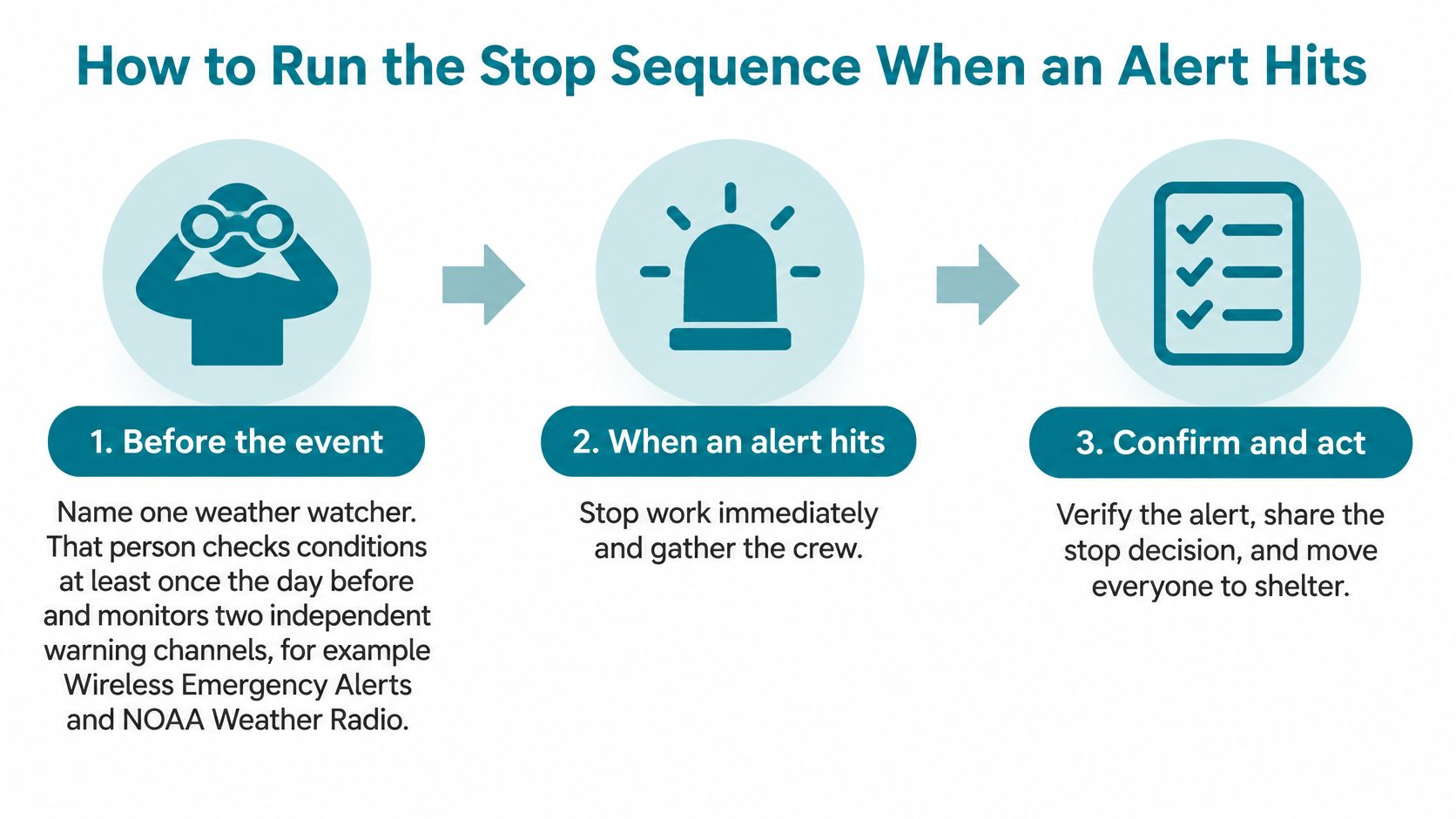
Assign people before you assign cleanup areas
Name the weather watcher. Have that person check conditions the day before and monitor independent warning channels during the event, pairing phone alerts with weather radio or local broadcasts. Give them permission to watch the weather instead of filling trash bags, because divided attention defeats the assignment.
Name the cancellation lead. Tell everyone who can stop or cancel the cleanup without a vote, and name a backup if that person leaves. Agree on the rule together beforehand so nobody has to win an argument during the warning.
Stop work when the warning arrives. Put down the cleanup task and start the shelter movement immediately, because finishing a section of sidewalk can delay everyone. Don't send someone back for a half-filled bag or a forgotten grabber.
Move to the appropriate shelter. For tornadoes, Ready.gov recommends a safe room built to FEMA criteria or a storm shelter built to ICC 500 standards; without those options, choose the strongest available interior location and put as many walls as possible between you and the storm. Walk the route beforehand, account for mobility assistance, and take the emergency kit unless you suspect contamination.
Account for people and communicate
Gather and count against the roster. Ask buddies to confirm each other's location, then have the roster keeper check names rather than accept a rough estimate. Keep volunteers out of the hazard while you resolve missing-person information, and contact emergency services when someone may need rescue.
Send a plain-language update. Use the group chat and phone tree to state the shelter location, stop decision, and next check-in. Verify the alert through an official channel without delaying protective movement, because confirmation shouldn't become an excuse to stand outside.
Hold until conditions meet the restart rule. Apply the lightning waiting period and follow official instructions for other hazards rather than judging safety by the rain. Forecast probability describes a possibility; a warning requires immediate action, sometimes with very little lead time.
Recount before departure. Check everyone against the roster, look for injury or exhaustion, and call emergency services first when someone needs more than first aid. Record the stop time and decision so the next safety lead can understand what happened.
Use this video during a briefing, then practice your own route rather than treating a screen demonstration as the drill.
Run a timed practice each season. Measure the crew's real movement, including the slowest safe pace, rather than the pace you hope everyone can manage.
Heat and Cold Controls for Long Cleanups
A volunteer can feel fine at the meeting point and hit a wall an hour later, after hauling full bags along an exposed roadside with no shade in sight. Set exposure controls before anyone feels ill, and have your weather watcher track the heat index rather than air temperature alone.
The National Weather Service CERT training reference gives an afternoon heat advisory range of 105–110°F for two or more hours and a warning reference of 110°F or higher for two or more hours, while local criteria govern. Cold deserves the same respect. Wind chill drops quickly as wind speed rises, so a windy 20°F day can feel far colder than the thermometer shows, and a body temperature that falls too low calls for immediate medical attention rather than another bag of trash.
Write the heat and cold stop triggers into the same shared rule your crew uses for weather alerts, so the call is made in advance rather than improvised when someone is already shivering or dizzy.
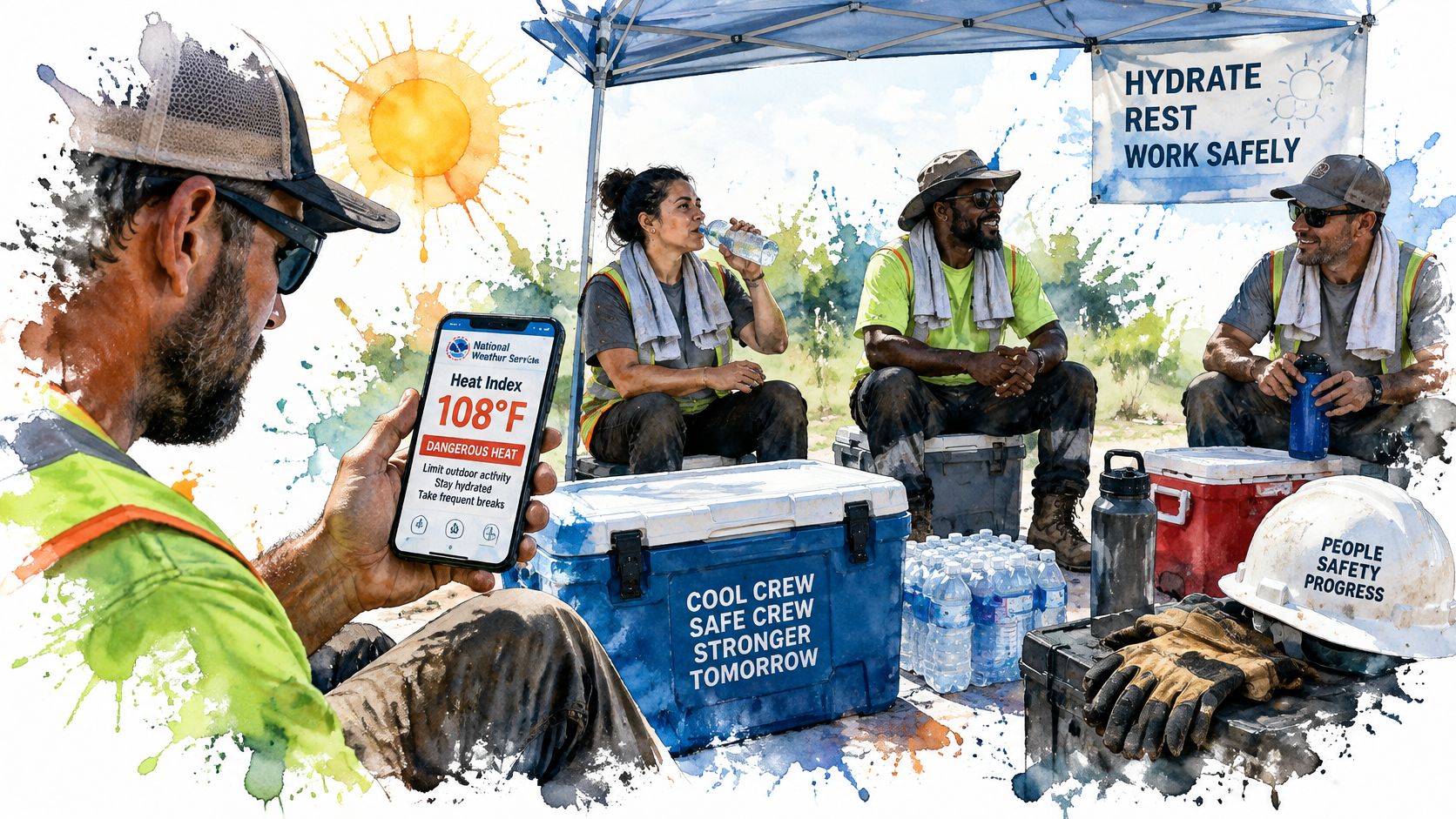
Shorten heat exposure before volunteers struggle
Cut work intervals as the heat index rises. Schedule shaded recovery and hydration breaks for everyone, including the energetic volunteer who insists they don't need one. I recommend assigning buddies rather than relying on self-reporting, because the earliest signs, flushed skin, unusual fatigue, confusion, or a sudden change in behavior, are easier to spot from the outside. Review heat exhaustion prevention tips so you can lead those conversations calmly before the event. If someone starts stumbling or seems confused, stop their work and get appropriate medical help. Finishing the block is never the priority.
Stopping work also requires a recovery destination. A bus stop in full sun doesn't give an overheated volunteer a useful place to wait, so name a shaded or air-conditioned spot before the event starts. For a newcomer who doesn't know the crew well, pair them with a buddy and point out the recovery spot during the briefing. Knowing exactly where to go makes stepping out feel allowed.
Keep cold clothing dry and hands functional
Require loose-fitting layers, dry gloves, face protection, and planned warm-up intervals. Stop when clothing gets wet or dexterity deteriorates. Someone who can't operate a zipper or hold a phone needs warmth, not encouragement to push through.
Ask your buddy how they're doing while they can still answer clearly. Don't wait for them to announce a crisis.
Watch for numbness, lost coordination, confusion, unusual fatigue, or shivering that stops. Arrange a warm destination and transportation before dismissing the crew, and give newcomers a named vehicle or indoor spot so nobody waits outside wondering whether they're allowed to leave.
Log start and stop times, breaks, symptoms, and near misses after every event. If volunteers repeatedly struggle before your written limit, tighten the limit. A plan that keeps failing people isn't a plan worth keeping.
Rain or Shine Is Not a Safety Plan
Showing up matters. We pick up trash rain or shine, including on the coldest days of winter and the hottest days of summer. That determination can bring people together, but it doesn't give anyone permission to ignore a warning.
For context, Climate Central counted 14 U.S. billion-dollar weather and climate disasters in the first half of 2025, including 13 severe-weather events. You don't need a disaster-scale event to endanger a small crew beside a busy road.
Make the safety agreement visible before people spread out.
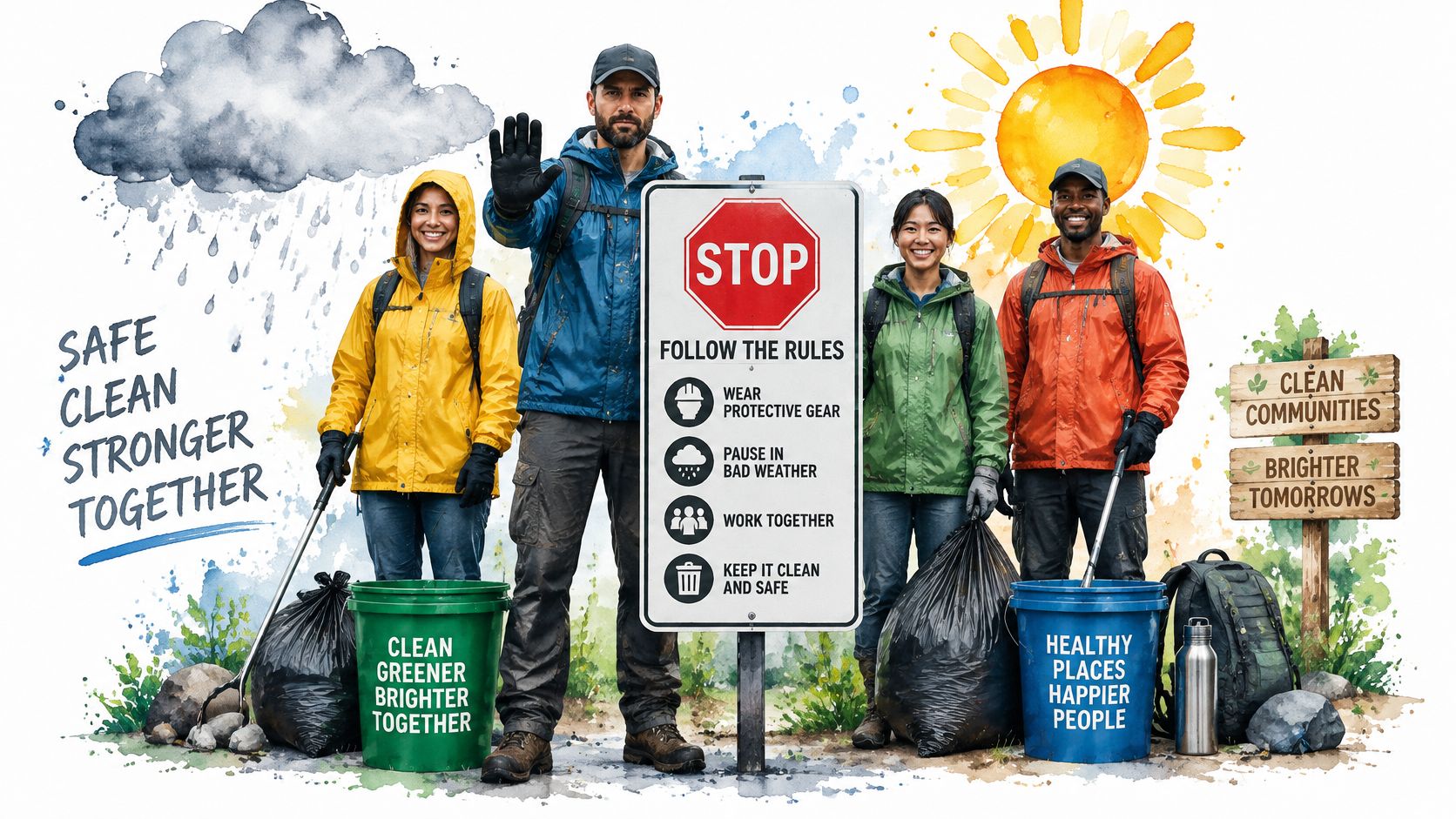
Separate inconvenience from danger
- Manageable inconvenience: Drizzle, muddy shoes, a messy trash bag, or chilly hands that recover promptly with dry gloves and warmth.
- Stop conditions: Lightning, a severe-weather warning affecting the site, a flooded exit, dangerous wind, or wet clothing in freezing conditions.
Write your shared rule plainly: When a stop condition occurs, we stop cleanup work and move to the planned safe location.
A newcomer may hear experienced volunteers joke about bad weather and assume leaving would disappoint the group. Remove that pressure at the briefing. Tell people they can step away without explaining a private health concern or proving they're tough enough.
For newcomers: You don't owe the group another block, another bag, or an explanation before asking for help.
Ask your regulars which conditions they wouldn't accept for their own family. Use that answer to test the plan. Praise the person who speaks up early, and help them leave safely. You teach the group's real priorities through that response.
Transport and Check-Ins for Every Volunteer
During our first pickup, we got caught in a springtime hailstorm and blizzard while every Uber we called cancelled on us. That experience gives us a direct lesson: a ride app isn't a guaranteed exit.
Put transportation arrangements in the event bag before the crew arrives.
Copy these exits and check-in rules
- Team car: Reserve available seats for volunteers with the longest or hardest journey home, while accounting for anyone who needs accessible transportation.
- Named backup driver: Confirm a volunteer with spare seats before work starts. Record who they can take and where they will meet.
- Mapped alternative: Mark a transit stop or a walking route to a safe building. Don't send people walking through the hazard because the route looks short.
- Buddy check-in: Exchange phone numbers and confirm how each person will get home. Set check-in times during a disruption.
- Missed contact: Have the buddy call first, then the roster keeper. Give the safety lead responsibility for deciding whether to request help.
- Reunification: Name the person who keeps the roster and the person who helps separated volunteers reconnect.
Make every message reachable
Drexel's severe-weather community report calls for accessible, multilingual warnings and localized information. Apply that directly: pair an official alert channel with a named human confirmation, use plain language, and provide translations, spoken instructions, and visual information when volunteers need them.
Walk mobility-safe shelter routes. Privately arrange medication, medical-device, and service-animal needs, plus access to cooling or warmth. Let someone send I need help with their location without posting medical details to the group.
Name the official local alert authority and record when you receive its warning. Don't substitute a viral post for an official instruction. Add these assignments to your volunteer safety checklist so the next organizer can use them too.
Confirm Your Plan Before the Next Cleanup
Start this week, while you still have time to change the location or recruit a backup driver. You don't need a polished manual. You need named people, reachable shelter, working supplies, and a decision everyone understands.
Turn the checklist into a rehearsal
- Write down the leaders. Name the safety lead and the person who can cancel, and attach their names to the event bag.
- Walk to shelter together. Time the route with the whole team and check the entrance, crossings, and accessibility.
- Inspect the supplies. Open the event bag and team car kit. Test equipment rather than ticking boxes from memory.
- Read the stop rule aloud. Ask volunteers to explain what they'll do when it activates, especially if they're working away from the meeting point.
- Book the next practice. Put the drill on the calendar and assign someone to organize it.
In FEMA's 2023 National Household Survey, 37% of U.S. adults reported making a disaster plan, while 12% reported planning with neighbors, according to Disabled World's summary. A personal plan helps, but your crew also needs to practice together.
A completed checklist isn't the finish. You finish preparing when people can carry out the plan.
Set your next cleanup date and name the weather watcher before you post the event. Tell volunteers where they'll receive cancellation updates and whom they can contact privately for help. Schedule the rehearsal today, with the same care you give the pickup.
We bring Chicago neighbors together through volunteer trash pickups, friendship, and hands-on service. Visit Litter Caterpillars to find a cleanup, then ask about the weather plan and bring your readiness to look out for the people beside you.