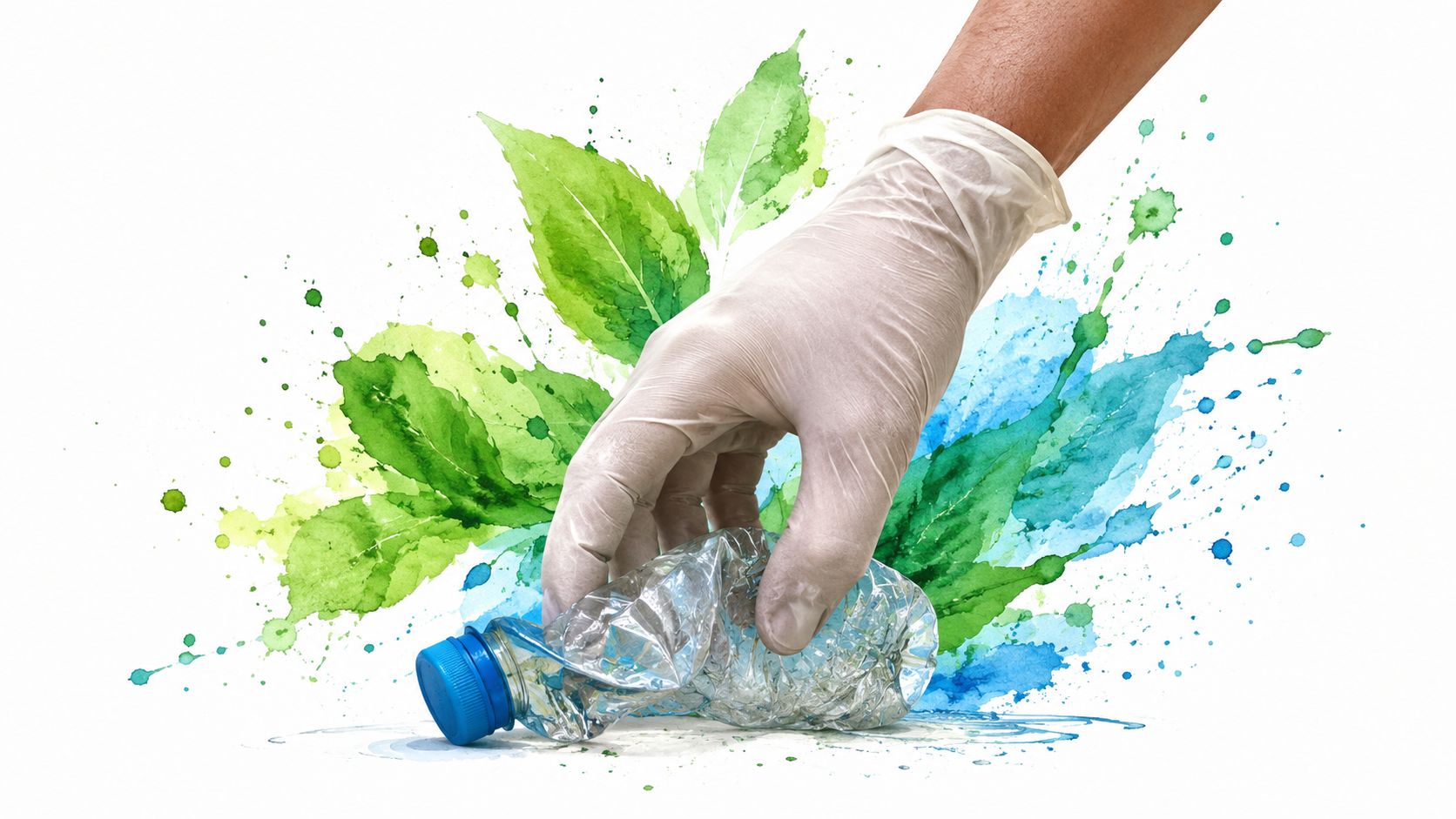
Three of us stood under a tree in a Chicago hailstorm, laughing like fools while Uber kept canceling. My gloves were soaked, the chips bags were stuck to the curb, and somehow I felt better than I had in weeks.
The First Time I Picked Up Litter in a Chicago Hailstorm
That first night with Litter Caterpillars changed how I think about a Saturday. We started with three people, a spring storm, and the kind of cold that makes you hunch your shoulders and question your own ideas. We were huddled under a tree, watching ride after ride disappear from our phones, and I remember thinking that cleaning up other people's messes felt strangely easier than cleaning up my own life.
The weird part was the fun
Nobody told me pickup would feel this alive. I expected duty, maybe a little pride, then a trip home with numb fingers. Instead I got the simple rush that comes when you and two other people decide to stay outside anyway, even when the sky turns mean.
The work was small and obvious. A wrapper in the grass, a bottle cap by the curb, a paper cup flattened in a puddle. Each piece made the block look a little less abandoned, and each bend to the ground made me feel a little less stuck in my own head.
Practical rule: if a job makes you notice your hands, your breath, and the people beside you, it's doing more than cleaning a street.
That night gave me the core answer to why pick up litter. It's not because I woke up one day and turned into a saint. It's because the act itself changes the person holding the bag. You feel agency again. You stop waiting for perfect weather, perfect neighbors, or perfect motivation.
The rest of this piece is just the reasoning behind that feeling.
Why Litter Is Really a Source-Control Problem
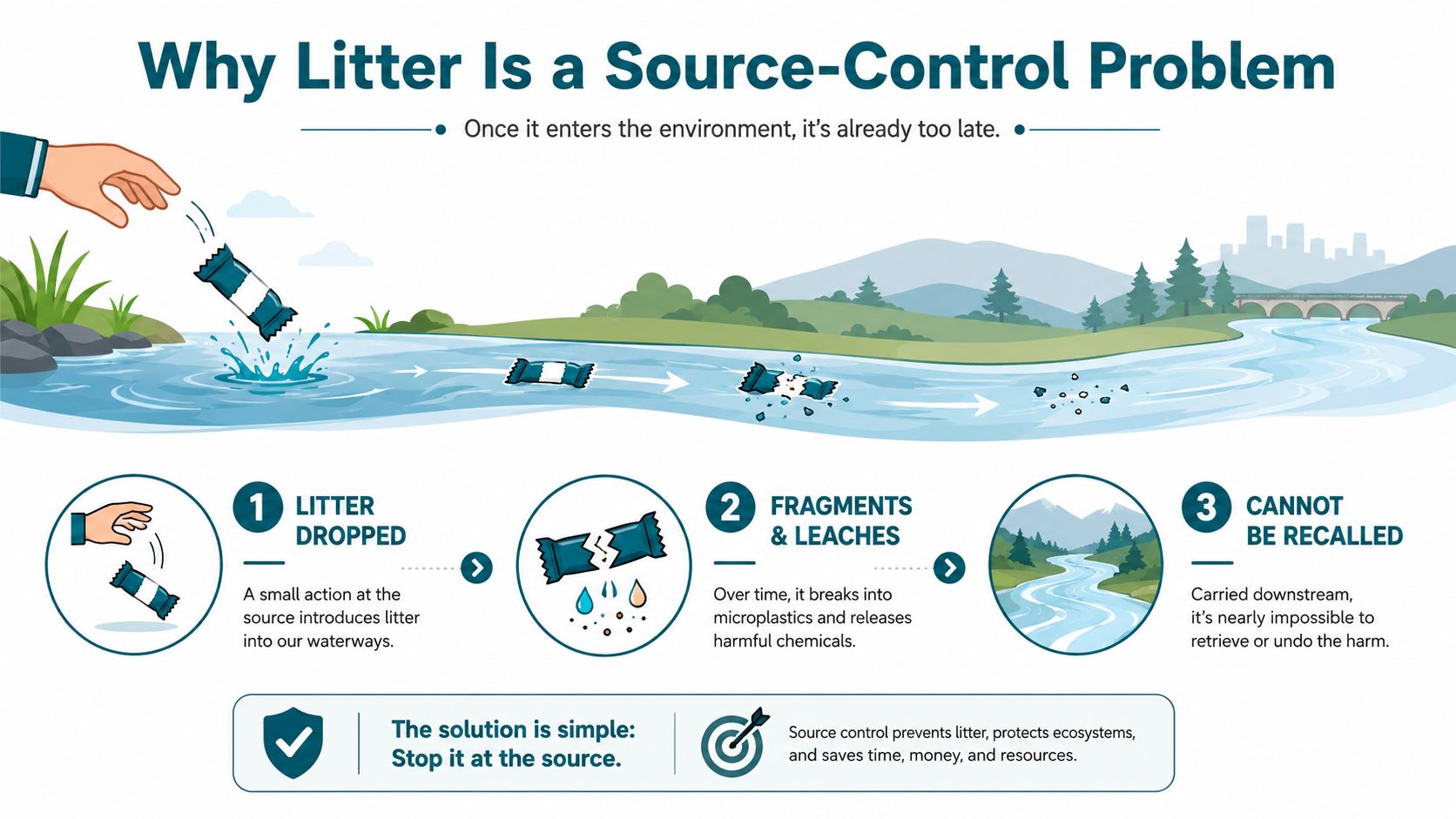
A candy wrapper in a gutter is like a dropped receipt in a river. Once it leaves your hand and starts moving, you can't call it back. That's the part people miss when they treat pickup like sidewalk decoration.
Once trash moves, it gets harder to stop
A chip bag on a parking lot doesn't stay a chip bag forever. Wind tears it, rain pushes it, and the pieces slide toward a storm drain. From there, the mess can move downstream, break apart, and keep going. That's why I think of litter pickup as source control, not cleanup for show.
If I see a bottle cap near a curb, I don't see one cap. I see something that can bounce, roll, and end up where a dog drinks or a drain catches debris. If I see glass by a bike path, I know the risk goes up the longer I leave it there. The best move is simple, remove the trash before it disperses.
The highest-value habit is early removal
That's why I care so much about crews who hit the same blocks, drains, and edges again and again. A wrapper near a storm drain is the kind of thing you can grab in two seconds. If you wait, it becomes fragments, mess, and then a harder problem for the next rain.
I use the same logic when I talk with new volunteers about litter prevention programs. Start where trash collects. Pick up the loose stuff before it travels. Do it before the block gets another round of weather.
The point isn't to pretend cleanup solves everything. The point is that pickup can stop a small problem from becoming a spread-out one. That's a real job, and it's one a person can do with gloves and a bag.
What Pickup Actually Saves Wildlife, Water, and Public Money
When I walk a block in Chicago, I'm looking at more than a messy corner. I'm looking at where birds peck, where rain runs, and where city crews come back again and again. Litter doesn't sit still, and the bill for it doesn't stay small.
The mess is bigger than the block in front of you
Keep America Beautiful's 2020 National Litter Study estimated about 49.6 billion pieces of litter near U.S. roadways and waterways, including 25.9 billion near waterways and 23.7 billion near roadways, or 152 littered items per U.S. resident and more than 2,000 pieces per mile. The same study said if everyone in the U.S. picked up just 152 pieces of litter, the country would effectively clear the existing load until new litter showed up. A later update said litter was down 34%, yet 35 billion pieces still remained in parks, waterways, and public spaces. Keep America Beautiful's litter study summary
That's why a small crew can do something visible fast. A few bags of trash taken off one stretch of sidewalk can feel tiny in the hand and huge to the block. The ratio matters.
The old numbers still tell a useful story
A 2009 Keep America Beautiful study found more than 51 billion pieces of litter on U.S. roadways each year, or 6,729 items per mile annually, with 91% smaller than 4 inches. It also estimated cleanup costs of more than $11 billion per year and found 38% of roadway litter was tobacco-related, with paper at 21.9% and plastic at 19.3%. Keep America Beautiful litter research summary
That mix matters on the ground. If most of what I'm picking up is small, then a gloved hand, a grabber, and a bucket can remove a lot of it without fancy gear. If tobacco bits keep showing up, I know where to look. If plastic and paper keep collecting in the same gutter, I know the wind and the curb are doing predictable work.
On a Saturday route, I'm not solving the whole city. I'm taking away the pieces that would have kept moving.
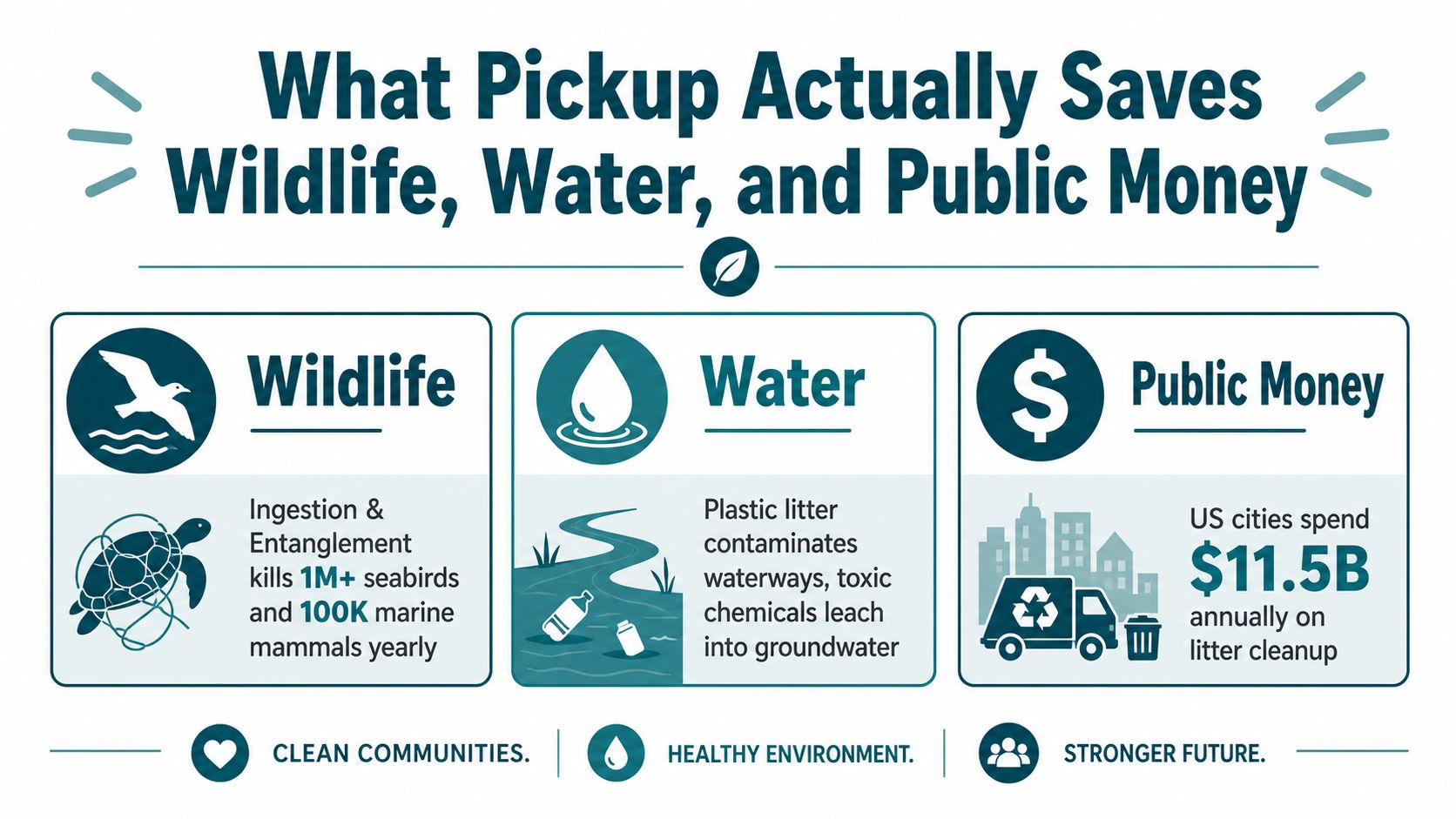
If you want the blunt version, pickup saves wildlife from ingestion and entanglement, keeps trash from leaching into soil and water, and cuts down on repeated cleanup work. I like that kind of math because it's plain. You can see the bag fill up, and you can see the block improve.
The cleanup side of this is also why I keep sending people to cleaning up a river. Water carries everything farther than people think.
Why Cleanup Is Only One Piece of the Puzzle
I hear the objection all the time. If trash keeps coming back, why bother? That question is fair. I'd ask it too if I hadn't spent years watching the same blocks fill up again after a storm or a busy weekend.
Cleanup helps now, prevention helps later
Pickup gives immediate relief. It protects a bird from one plastic scrap, keeps a drain from clogging, and makes a corner feel cared for. But the long game is prevention, better packaging, fewer escape points from waste systems, and a city where people don't treat the sidewalk like a bin.
A clean block also changes the mood of a place. When a street looks cared for, people notice. They're less likely to toss the next wrapper. I've seen that happen on blocks where volunteers return often, because care is visible before a single word gets said.
The British litter guidance from Keep Britain Tidy puts this plainly, cleanup matters, but it should sit inside a broader prevention effort. Why do we need to pick litter
I don't ask people to pick up litter because it fixes everything
I ask because it fixes something real, right now. It removes a mess that would otherwise spread. It shows your block that someone is paying attention. It gives you a job you can finish on a Saturday morning.
That's enough for me. It should be enough for you, too, if you want to do the part that belongs to a regular person.
The Real Reasons People Don't Pick Up Litter and How to Get Past Them
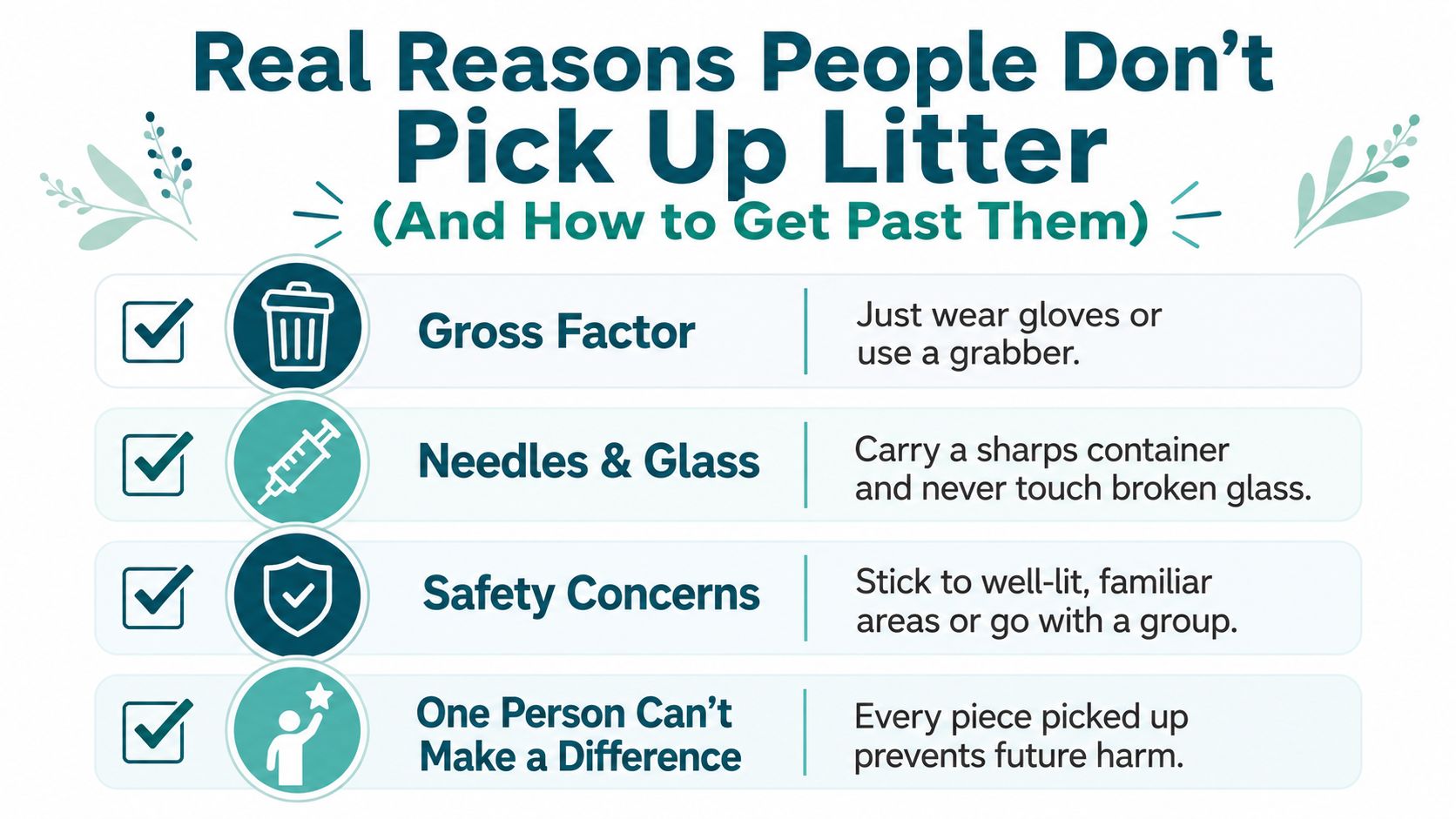
People don't avoid pickup because they're lazy. They avoid it because the task feels gross, risky, or pointless. I respect all three of those reactions, because I've had them myself.
The gross factor is real
Nobody enjoys reaching toward mystery sludge with bare hands. That's why I never go out without thick gloves and a grabber. If something looks slimy, sharp, or weird, I leave it alone and move on.
Needles, broken glass, and other unsafe items need a different response. I teach people to carry a sharps container when it makes sense, and to skip anything they shouldn't touch. I'd rather someone pick up ten safe items than hurt themselves on one dangerous one.
Safety and futility need simple rules
If you're worried about safety, stay in familiar, well-lit spots or go with a group. I like the buddy system because it lowers stress and makes the hour feel lighter. You talk, you work, you keep an eye on each other.
If you think one person can't make a difference, use a smaller target. One block. One bag. One curb line. I've seen the mood on a street change after one clean sweep.
Practical rule: make the goal small enough that you can finish it before your brain starts negotiating.
The second half of this comes from the people who keep showing up. Keep Nature Wild says that if every person picked up just one piece of trash today, the world would have over 300 million fewer pieces of litter, and if every person picked up 10 pieces, that would mean 3 billion fewer pieces. That's a simple mechanic, not a pep talk.
The point is not that everyone should love trash pickup. The point is that the common objections all have workarounds. Once you name the barrier, the job gets less mysterious.
What Weekly Cleanup Actually Does to a Neighborhood and Its People
I think about one cold Saturday on a Chicago block where the trash had been building for weeks. Nothing looked dramatic at first. A few cups near a fence, wrappers in the grass, bottles by the curb, the usual stuff you stop seeing until someone points at it.
Before, during, after
Before the cleanup, people walked fast and kept their eyes forward. During the cleanup, strangers started talking while they bent down for the same pile of debris. After an hour, the block looked open again, and people who had never met were joking like they'd known each other for months.
That's the part I didn't expect when I started. The work brings people together because it gives everyone a simple shared task. Nobody needs a speech. Nobody needs to agree on politics or style or anything else. You just fill bags and keep moving.
The regular-participation research on litter walking says 80% of participants did it regularly at least 1 to 3 times per week, and regular participation was significantly associated with previous cleanup experience, physical-activity motivation, and middle age. Litter walking research
That matches what I see in Chicago. People stick with the habit when it feels like a walk they already know how to do. They come back because the work fits into life instead of taking over life.
The friendships are part of the outcome
I've watched people start with a bag in one hand and leave with a new group chat. I've watched shy first-timers relax after the first curb. I've watched regulars become the people who notice who's missing and text them before the next event.
That matters to me as much as the cleaner block. A neighborhood that lets strangers become helpers gets stronger in ways you can feel right away. The trash leaves, sure. The bigger change is that people stop acting alone.
How to Plug In If You Live in Chicago
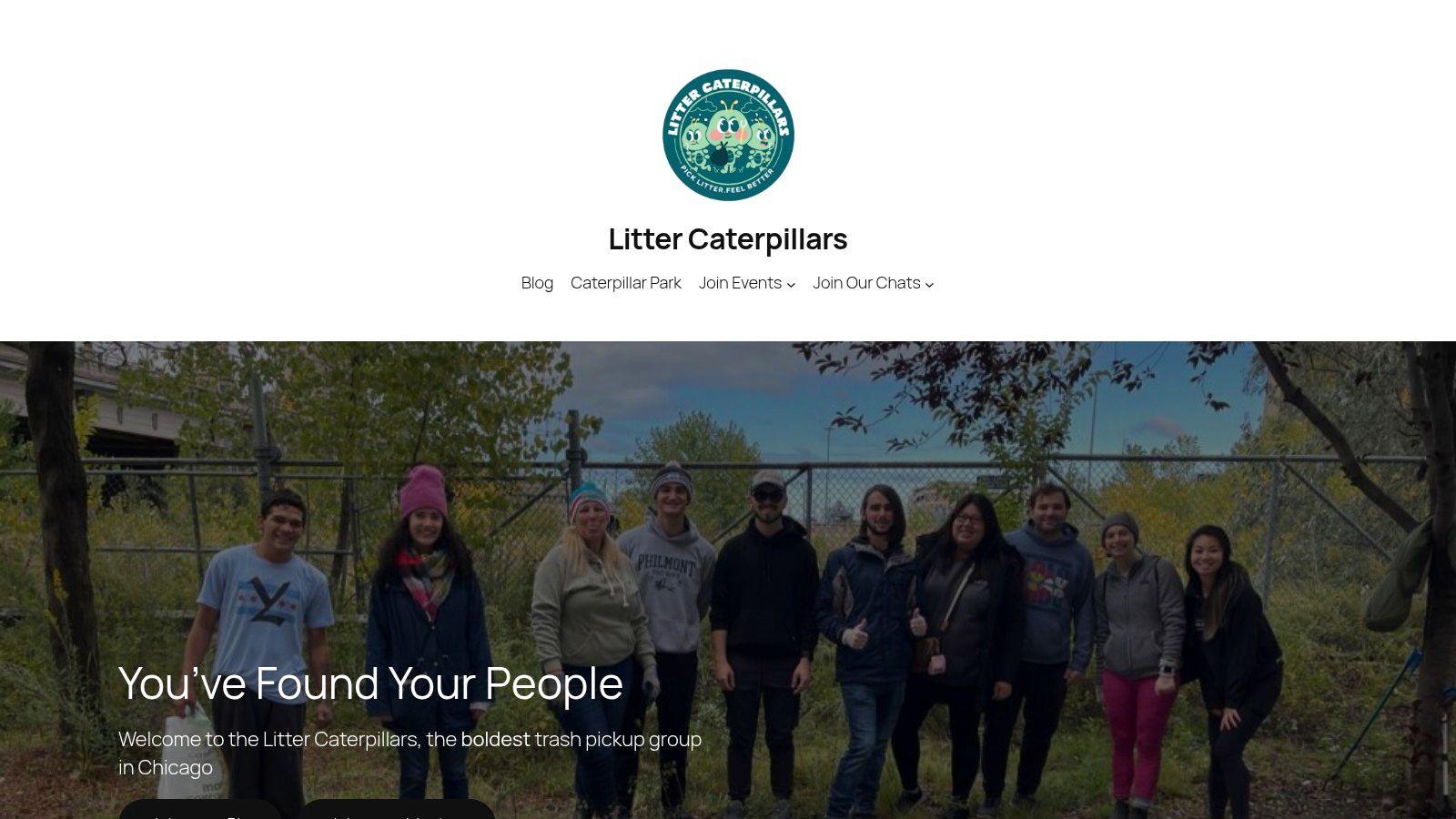
If you're in the city and you want to try it, keep it simple. Litter Caterpillars runs weekend mornings, in all 50 wards, rain or shine. The group uses Meetup and Instagram as the main doors in, and nobody gets pushed for money when they show up.
What a first event looks like
Wear shoes you don't mind dirtying. Bring water, gloves if you have them, and a jacket if the forecast looks ugly. Show up early enough to hear the route plan, then stick with the group until the bags are done.
I'd also say this. Don't wait until you feel like a seasoned volunteer. The first time is enough. People come back because the work is direct and the mood stays human.
What grew from one pickup
Caterpillar Park in Englewood is proof that a first cleanup can lead somewhere bigger for a neighborhood. I like that story because it starts with ordinary hands and ends with people taking ownership of a place they used to pass by.
If you want the direct route, check the trash pickup volunteer page and pick a Saturday morning that works for you. That's all it takes to find out whether this kind of work fits you.
The Question Behind the Question
The question isn't whether one wrapper matters. It's what kind of person you want to be on a Saturday morning when nobody's grading you and nobody's forcing your hand.
I go back to that hailstorm a lot. Three of us under a tree, cold, half-laughing, watching Uber cancel again and again. We stayed anyway, and that choice taught me more than any lecture ever could.
So when people ask me why pick up litter, I give them the honest answer. Because it's good for the block. Because it's good for the water. Because it's good for the person who bends down and decides to care in public.
Litter Caterpillars runs Chicago trash pickup events that put you on a real block with real people, and the whole point is to make the work feel doable, social, and steady. If you want to try one Saturday morning, visit Litter Caterpillars, see what's coming up, and come find out what it feels like to leave a place better than you found it.