I found a four-year-old jar of blueberry jam in the back of my fridge and stared at it like it was a family heirloom. It was sticky, expired, ridiculous, and somehow harder to move than a couch.
That Thing You Can't Throw Away
My apartment used to tell on me.
You could walk in and see every abandoned version of myself sitting out in the open. A bag of nuts from the month I tried to become healthy. Old receipts from days I swore I was going to get my money together. A shirt I never wore but kept because I wanted to be the kind of guy who would wear it. Then there was the jam. Michigan trip. Good memory. Dead relationship. Better time. I kept the jar because I thought I was keeping the story.
I wasn't keeping the story. The story was keeping me.

Every piece of trash had some weird emotional gravity. It weighed less than a pound, but to me it felt like 500 pounds because of what it meant. I know that feeling sounds irrational. I also know a lot of you know exactly what I mean.
The mess wasn't random
My life got messier as my room got messier. I stayed in a chaotic relationship too long. I made excuses too long. I let clutter become a museum of hesitation.
Then things broke. That part hurt. It also helped.
I made a few rules for myself. They were blunt. They had to be.
- Forgive yourself first: Shame makes people freeze. Forgiveness gets your hands moving.
- Touch the hard thing early: If the grossest item is the jam jar, start there.
- Stop worshipping old versions of you: You don't owe shelf space to a failed phase.
- Trade sentiment for action: Keep one photo if you need it. Then let the object go.
Some things look like stuff, but they're really unfinished emotions wearing plastic and dust.
That was the start of my own Don't Trash It mindset. People hear that phrase and think it means "save everything." I mean the opposite. I mean don't trash your chance to become lighter. Don't trash useful things by letting them rot in a closet. Don't trash your block by pretending the mess outside has nothing to do with the mess inside.
When I finally started clearing my place, I needed simple answers, not more guilt. That's why I leaned on practical guides like this one on where you can recycle different materials. When you're overwhelmed, one clear next step is better than ten beautiful intentions.
Start with the one item that annoys you most
Don't begin with your whole apartment. That's how people lose steam.
Begin with one object that makes you feel weak every time you see it. The moldy container. The broken lamp. The drawer full of cables from ancient devices. Pick the thing that has been defeating you in small ways. Throw it out, fix it, donate it, or repurpose it. Just don't walk past it again like you're powerless.
You're not.
How to Assess Your Stuff Without Getting Stuck
Individuals often get trapped by a bad question. They ask, "Should I keep this or throw it away?"
That's too blunt. That's why you freeze.
I use a different chain of questions. It turns drama into triage. You stop acting like every object is sacred and start treating each one like a small assignment.
The five-question filter
Pick up one item. Then ask:
Practical rule: Is it broken? Can I fix it in 15 minutes? If I won't fix it this week, can someone else use it? If nobody can use it, can the material become something else? If not, where does it go safely?
That sequence matters. It keeps you from jumping straight to the blue bin and hoping the system sorts it out for you.
That hope is shaky. Globally, only about 9% of plastic waste has ever been recycled, and in the U.S. residential recyclable-material recovery is just 21%, which is why alternatives to the bin matter so much, as noted in this recycling facts summary.
So when you're staring at a pile of old hangers, cracked storage bins, tangled cords, half-used notebooks, and chipped mugs, don't ask one giant emotional question. Ask a series of small practical ones.
A fast way to sort a messy pile
I like four zones on the floor:
- Fix now: Things that need glue, a screw, a wash, a battery, or a stitch.
- Pass along: Things you don't want but another person can use today.
- Rebuild into something else: Materials with a second life.
- Last stop: Items that are ruined, unsafe, or done.
That floor method is simple because your body needs movement when your brain is spiraling. Standing there holding an object too long is how clutter wins.
| Item | Quick Fix Potential | Upcycle Idea | Best Donation Route |
|---|---|---|---|
| T-shirt with small stain | Wash or cut around stain | Cleaning rag or tote bag | Friend, textile reuse box |
| Glass jar | Remove label and clean | Pantry storage or pencil cup | Neighbor, teacher, community pantry |
| Wooden chair with loose leg | Tighten screw or glue joint | Plant stand | Buy Nothing group or local reuse shop |
| Plastic container | Match with lid and wash | Planter or drawer organizer | Local school, craft group |
| Lamp with dead bulb | Replace bulb, test cord | Desk light in garage or workshop | Thrift store if working |
| Mug with chip | Don't donate for drinking use | Pen holder | Keep as storage or repurpose at home |
Sentiment needs a boundary
A lot of us lie to ourselves with the phrase "I might need it."
Sometimes that's true. A lot of the time, it means "I don't want to feel the feeling that comes with deciding." If the item has emotional value, give it a container and a limit. One memory bin. One shelf. One folder for photos of things you let go.
You don't need a giant house to honor your past. You need honesty.
Quick Fixes and Creative Projects
I love repair because it changes your posture. Five minutes earlier, you were the person avoiding the mess. Then you tighten one screw, cut one shirt, wash one jar, and suddenly you're a builder.
That shift matters.
When Tom Sawyer got stuck painting a fence, he changed the mood of the job. That's part of bravery. You don't wait for work to become fun. You put some pride into it and make it fun with your own hands.
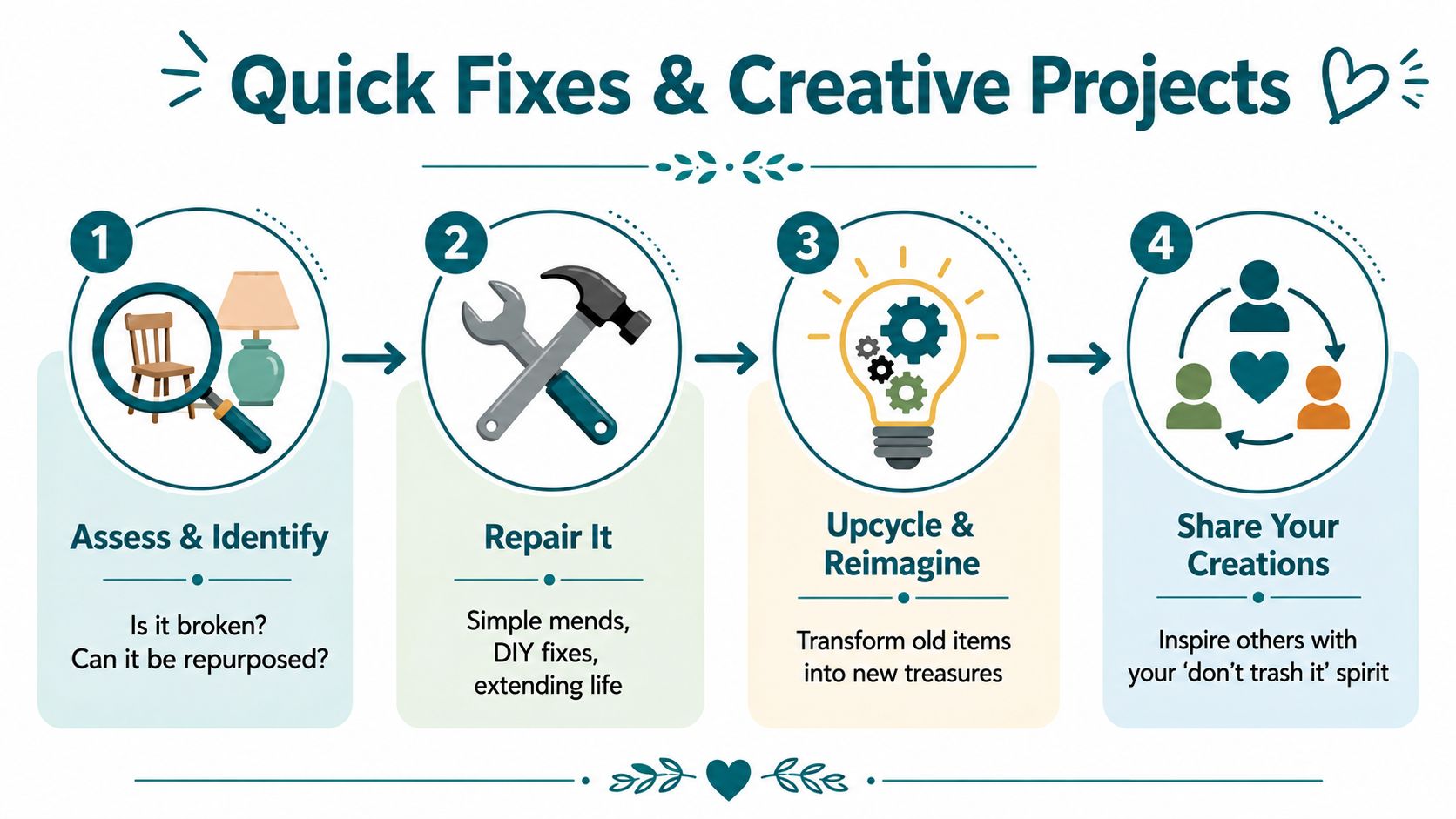
Old T-shirts into rags or a tote
You probably have at least one shirt that lost its social life. Good. It can still work.
For cleaning rags, lay the shirt flat, cut off the seams, then cut squares or rectangles. Toss them in a basket under the sink. Now you have wipe cloths for mirrors, shoes, spills, and bike grease.
For a no-sew tote, cut off the sleeves, widen the neck hole, turn the shirt inside out, and cut fringe strips at the bottom. Tie the strips together in knots. Turn it right side out. Done. It's ugly in a charming way and great for groceries or carrying cleanup supplies.
Plastic containers into planters
This works with yogurt tubs, takeout containers, and sturdy bottles.
- Wash the container.
- Poke drainage holes in the bottom.
- Add a little gravel or broken ceramic piece if you have it.
- Fill with soil.
- Plant herbs, flowers, or a cutting from another plant.
If the container looks rough, wrap it with twine, paint it, or slide it into a nicer outer pot. I like keeping these on windowsills because they remind me that second chances can look good.
Repair doesn't have to be elegant. It just has to keep something useful in motion.
Glass jars into actual storage you'll use
Jars are the easiest win in the house.
Peel off labels with warm water and soap. If the glue fights back, keep scrubbing or soak longer. Then use the jars for rice, screws, coins, pens, rubber bands, tea bags, or bathroom items.
If you want them to look cleaner, keep the lids one color. Black, white, whatever. Suddenly the shelf feels intentional instead of random. You didn't buy "storage solutions." You cleaned a jar.
A few rules for beginner upcyclers
- Start small: One shirt, one jar, one tub. Don't launch twelve projects.
- Use basic tools: Scissors, glue, soap, needle and thread, a marker.
- Choose useful over pretty: If it solves a daily annoyance, you'll keep doing it.
- Quit while you're ahead: Stop after one finished object and enjoy the win.
That last one matters. People trash momentum by turning one project into a whole personality. Just make the tote.
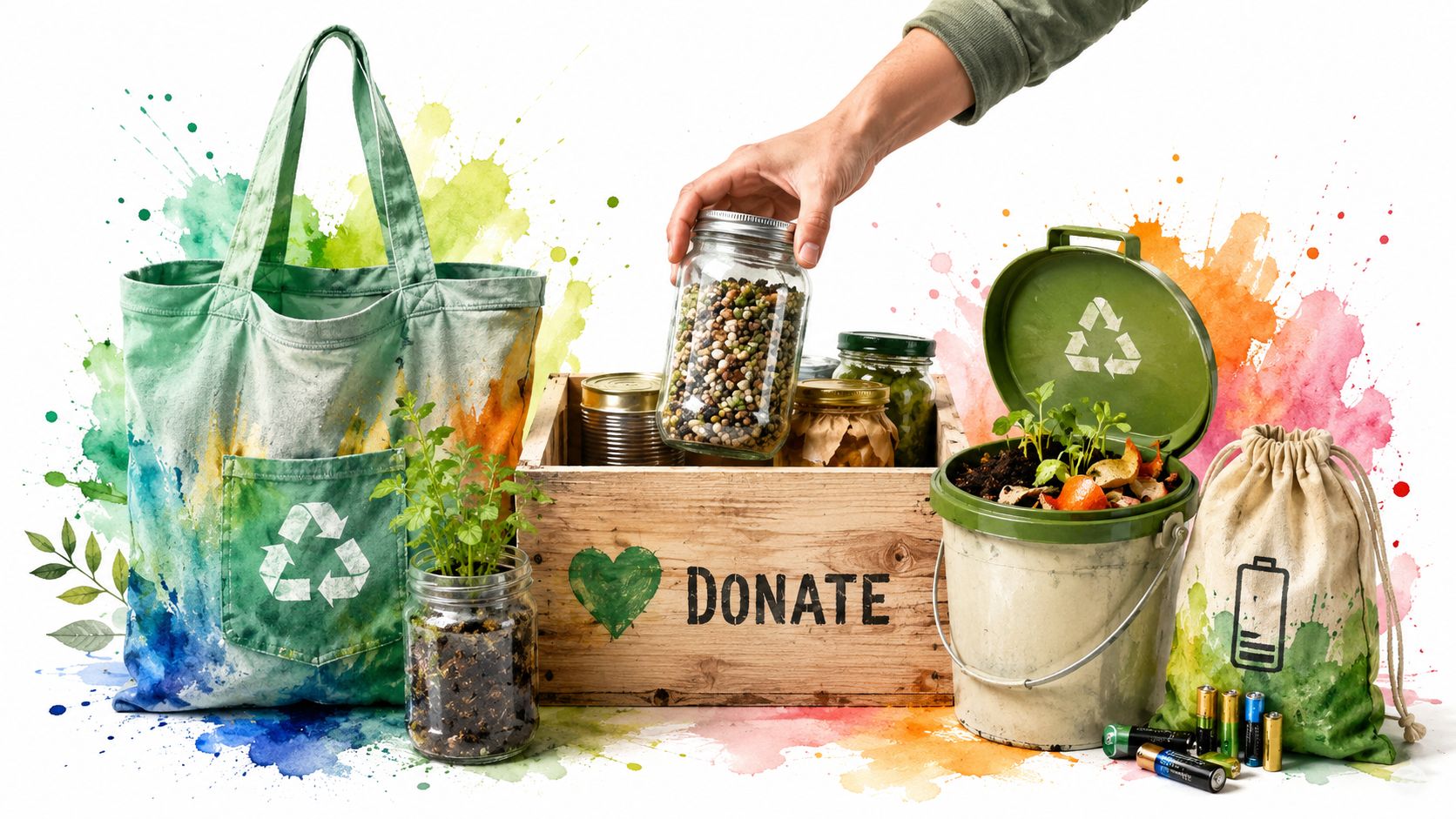
Donate Swap and Sell It Forward
A lot of your stuff still has life in it. It just doesn't have life with you.
That difference is everything.
I've seen people try to "donate" stained pillows, broken toys, and kitchen junk with missing parts. That's not generosity. That's outsourcing guilt. If you wouldn't hand it to a friend face to face, don't drop it in a donation box and call yourself noble.
Donate like you respect the next person
Before you pass anything along, do three things.
- Clean it: Wipe it down, wash it, fold it, pair the parts.
- Test it: Plug in the lamp. Zip the jacket. Make sure the game box has the pieces.
- Label the weird stuff: If a bag has hardware, cords, or manuals, keep them together.
That little bit of effort changes the whole exchange. A usable item feels like care. A half-broken item feels like a burden.
Run a swap before you donate
My favorite move is a tiny swap party. It doesn't need a permit, a banner, or some fake corporate energy. Text a few friends, neighbors, or people in your building. Tell them to bring clean items they no longer want. Clothes, mugs, books, tools, storage bins, unopened toiletries, extra plants.
Put things on tables or blankets. Let people browse. Make tea. Talk.
You'd be shocked how often one person's "why do I still own this?" becomes another person's perfect find. A colander. A side table. A jacket that never fit you right but somehow fits your neighbor like it was made for them.
Give away dignity, not chores.
If you want to sell, keep it simple
Some items are worth listing. A working desk chair, a decent lamp, unopened supplies, hobby gear you never touched. Take clear photos in daylight. Be honest about flaws. Price it to move, not to avenge your original purchase.
A quick sale feels better than a month of haggling with strangers while the item still blocks your hallway.
If nobody wants it after a fair try, that's information. Pass it on another way or move on.
Good places to send useful things
- Friends and family: Start close. Direct handoff is easiest.
- Neighbors: Building chats and local groups move everyday items fast.
- Schools and teachers: Storage containers, jars, supplies, and furniture can help.
- Mutual aid and community fridges: Household basics often find a home quickly.
- Thrift and reuse shops: Good for clean, functional items in solid shape.
Stuff gets lighter when it starts moving. So do people.
Handle Hazardous Waste Responsibly
Some items don't belong in your home, your curbside bin, or your donation pile. They need a clean exit.
Creativity stops. Safety wins.
What needs special handling
Watch for items like these:
- Batteries: Loose batteries can leak or create fire risk.
- Old paint and chemicals: Keep lids sealed. Don't dump contents.
- Electronics: Phones, cords, laptops, printers, and small devices need dedicated handling.
- Light bulbs and similar items: Some need more care than regular trash.
- Cleaning products and automotive fluids: Keep them in original containers if you can.
If you're in Chicago, use city guidance instead of guessing. This page on Chicago hazardous waste disposal options is the kind of practical lookup I want people to use before they toss something dangerous in a cart or alley bin.
The rule I follow
Don't mix chemicals. Don't pour mystery liquids down drains. Don't leave old batteries rolling around in drawers for another year because "I'll deal with it later."
Later is how people create bigger problems in tiny apartments.
If you aren't sure what an item is, keep it contained and look it up before moving it. Gloves help. Common sense helps more. The right disposal route might take a little extra time, but the wrong route can hurt sanitation workers, neighbors, pets, and your own block.
Start Your Own 'Don't Trash It' Movement
If you can clear one shelf, you can organize one corner of a block. The jump isn't as big as it looks.
People think a movement starts with a giant crowd. It usually starts with one person getting tired of stepping around the same problem. A trash-strewn alley. A lobby stacked with abandoned junk. A basement full of mystery items nobody claims. You don't need a nonprofit mood board. You need a mission small enough to finish.
Begin with a baseline
The smartest cleanup work starts by paying attention. A practical zero-waste method begins with a baseline audit, then uses what people find in the trash to identify the biggest problem materials and improve the system over time, as explained in this Zero Waste Europe methodology guide.
For a neighborhood effort, your audit can stay simple:
- Walk the area: One block, one alley, one building.
- Write down repeats: Bottles by the bus stop. Food wrappers near the corner store. Dumped furniture near the garage.
- Notice patterns: Is the problem overflow, bad habits, missing bins, or a neglected lot?
- Pick one target: Don't solve the whole city on day one.
That loop matters. If you never measure what keeps coming back, you'll rely on slogans and frustration.
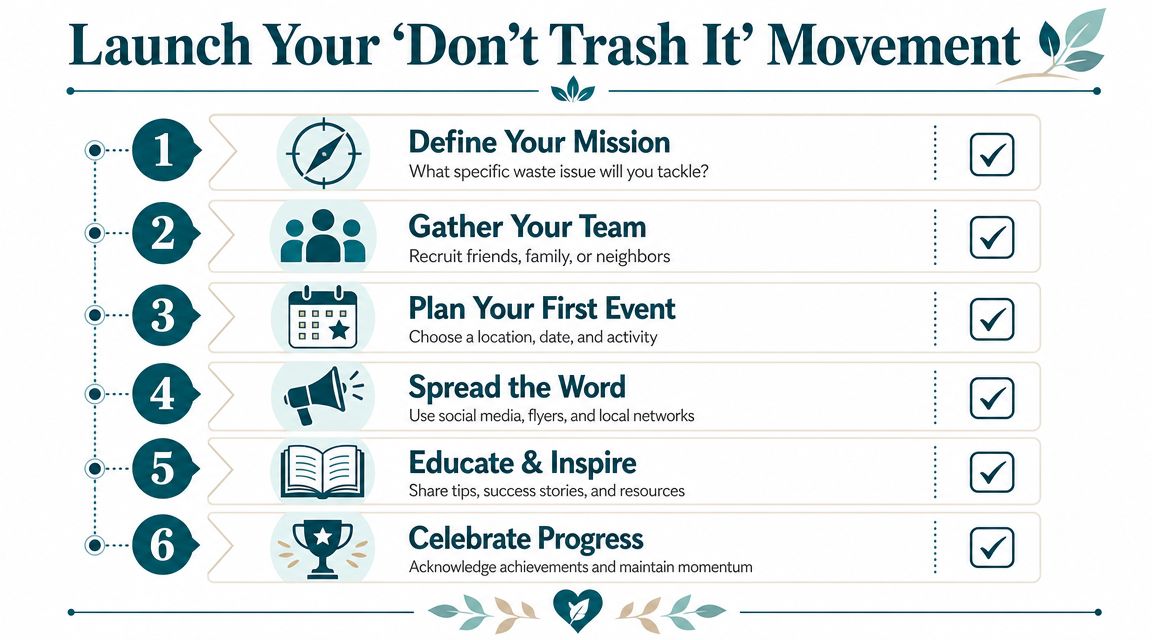
Make it social and visible
People join energy before they join plans.
Give your action a name. Pick a time people can remember. Bring extra gloves and bags. Put one person in charge of photos, one in charge of supplies, one in charge of talking to newcomers. Keep the first event short enough that people leave feeling strong instead of drained.
If you want a model for the logistics, this guide on how to start a volunteer trash pickup is one practical option.
Try this format for a first event:
- Meet in one obvious spot: Corner, lobby, courtyard, park entrance.
- Explain the mission in one minute: "We're clearing this alley and sorting reusable items from trash."
- Give people tiny jobs: Pickup, sorting, donation runner, photo taker.
- End with a visible pile of progress: People need to see what changed.
Let bravery be contagious
A lot of neighbors want permission more than instruction. They want to know someone else is willing to care out loud.
When you host a swap table, clean a problem corner, or remove litter from the same stretch every week, you give people a way in. A shy person can carry one bag. A busy person can bring coffee. A skeptical person can watch for a while and join next time.
You don't need to be polished. You need to be consistent.
Join the Transformation with Litter Caterpillars
Three of us got caught in a spring hailstorm on one of our first trash pickups. We huddled under a tree, freezing, while ride after ride canceled on us. It was awful. It was funny. It was one of the clearest moments of my life.
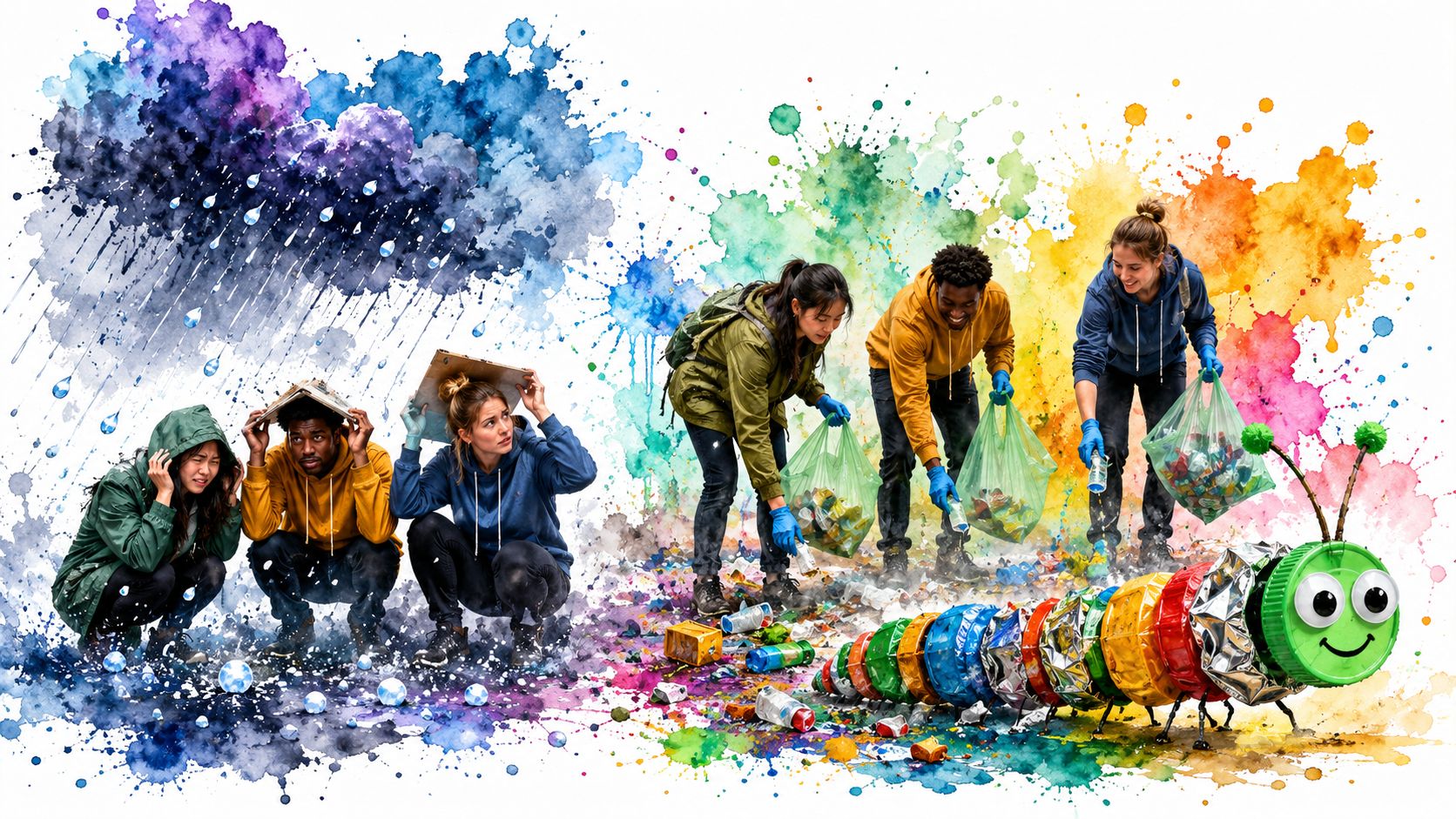
Standing there, shivering, I realized something that changed me. Cleaning up other people's messes was way easier than cleaning up my own. It also had a strange kind of fun to it. The cold, the chaos, the canceled rides, the absurdity of being out there in bad weather with grabbers and bags. It gave the day flavor. It moved the plot forward.
So we kept going.
Weekend after weekend, rain or shine, people showed up. Some came because they cared about litter. Some came because they needed friends. Some came because they were trying to rebuild themselves and didn't want to do it alone. Those are my favorite people, because I know that feeling in my bones.
Service changes the person doing it
I've always believed bravery grows through use. You don't wait to become confident and then act. You act while feeling awkward, uncertain, underprepared, and maybe a little embarrassed. Then your nervous system learns that you can survive service. More than that, you can enjoy it.
That's part of why weekend mornings matter to me. They attract a certain kind of spirit. People who are willing to wake up and do something useful. People who want sunlight, effort, and honest company more than another night of drifting.
The work also changes how you see a city. A vacant lot stops being "just an empty lot." A neglected corner stops being "someone else's problem." The conversation about waste often misses underused space. A Don't Waste Buildings way of thinking argues for reusing neglected assets, not just materials, and treats waste as a land-use problem too, as described on the Don't Waste Buildings about page.
That idea hits home for me because cleanup can grow into stewardship. If a group keeps showing up for a place, that place starts to answer back.
From picking up trash to building a place
That's part of the story behind Caterpillar Park. You pick up enough litter, meet enough neighbors, and spend enough mornings caring for places other people ignore, and your standards rise. You stop asking, "How do we clean this?" and start asking, "What should this become?"
That second question changes everything.
A cleanup group can become a friend group. A friend group can become a force. A force can take a neglected patch of land and imagine benches, plants, paths, gatherings, and shared pride instead of broken glass and dumping.
Here's a look at that spirit in motion.
I started with a jam jar I couldn't throw away. Now I believe the same courage it takes to clear a fridge shelf can help clear a block, reclaim a lot, and build trust between strangers. That, to me, is the Don't Trash It idea. Don't trash your chance to become someone stronger through service. Don't trash useful things. Don't trash places that still have a future. Don't trash yourself by staying stuck in the same old mess.
If you want a place to practice that kind of bravery, join Litter Caterpillars. Show up on a weekend morning. Bring gloves if you have them. If you don't, come anyway. You'll meet people, do real work, and leave lighter than you arrived.