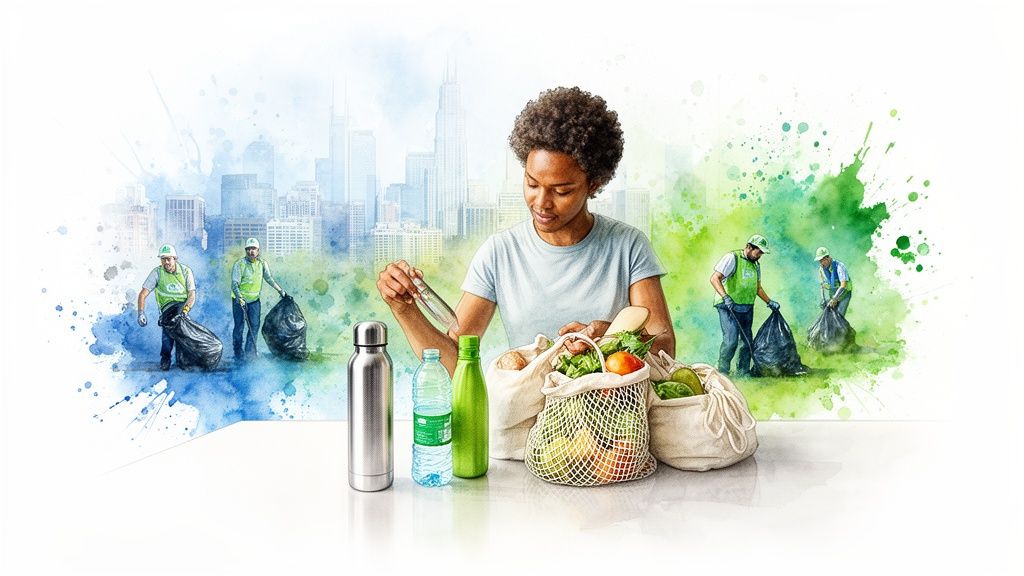
I know what it’s like to feel stuck. My apartment used to be a fortress of things I couldn't let go of. A four-year-old jar of jam wasn't just old food; it was a trip to Michigan, a ghost of a past me. The jar weighed less than a pound, but emotionally, it was a 500-pound anchor. My life was a landfill of my own making, an impossible mess. I felt completely overwhelmed.
The change came after a brutal breakup. I decided I had to tackle the hardest things first: cleanliness, consistency, bravery. It’s like learning to swim by jumping into the deep end. I figured if cleaning my own mess felt impossible, maybe cleaning someone else's would be easier. That simple, desperate idea became Litter Caterpillars. What started with three of us shivering in a Chicago hailstorm has grown into a weekly mission. We found a strange, powerful joy in just showing up, facing the elements, and doing something hard together.
That’s the secret. It’s the secret to transformation, and it’s also the secret to reducing plastic usage in a way that actually sticks. You aren't just swapping a bottle or a bag. You're facing the mess, one piece at a time, and discovering you have the strength to change things, starting with yourself. This guide is your map for that journey. You'll find real strategies here, from personal swaps to community action, that will empower you to tackle plastic waste and, in the process, transform a lot more than just your trash can.
1. Switch to Reusable Shopping Bags and Containers
Imagine you're building a new habit. Swapping out flimsy, single-use plastic bags for durable, reusable ones is your cornerstone. It's one of the most powerful first steps you can take in reducing plastic usage. Think of it as your gateway to a more sustainable life. A simple change with a massive ripple effect. You’ll prevent thousands of plastic bags from polluting our streets, our parks, our waterways. When my Litter Caterpillars crew and I head out for a neighborhood cleanup, guess what we find tangled in bushes and fences? Those exact plastic bags. It’s a constant, ugly reminder.
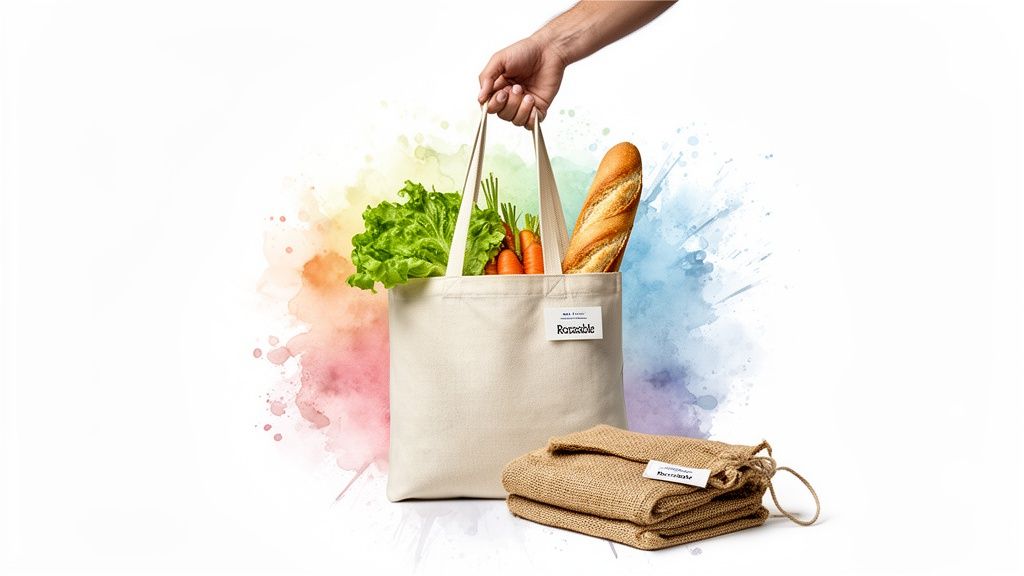
This isn't just you. It's a movement. San Francisco banned plastic bags way back in 2007, and even our own Chicago has seen dramatic decreases in litter after similar policies. Retailers like Trader Joe's and Whole Foods now reward you for bringing your own bags. Each time you shop with a reusable bag, you're casting a vote for a cleaner, healthier planet. You’re telling them what you want.
Key Insight: Bringing your own bag isn't just about avoiding a single piece of plastic. It's a message. You’re sending a clear signal to retailers and policymakers that you demand sustainable options.
How to Make It a Habit
Making the switch permanent is all about building a system that works for you. The biggest hurdle? Forgetting. You can beat it.
- Stash Them Everywhere: I keep a few foldable bags in my car's glove compartment, my work backpack, and my purse. I have a designated "bag hook" right by my front door next to my keys. You can’t miss it.
- Set Digital Nudges: Create a recurring reminder on your phone. If you usually shop on Saturdays, set an alert: "Got your bags?" It makes all the difference.
- Think Beyond the Grocery Store: Don't just bring them to the supermarket. Use them for trips to the pharmacy, the library, or the farmer's market. Every single plastic bag you avoid is a win.
- Lead by Example: When you show up to a Litter Caterpillars event with your snacks in a reusable tote, you inspire others. Your actions are contagious, but in the best way.
2. Eliminate Single-Use Water Bottles with a Refillable Alternative
Ditching single-use water bottles is like breaking up with a toxic friend. It’s a commitment to cleaner communities. Each plastic bottle you refuse is one less that could end up on the shores of Lake Michigan or rotting in a landfill for centuries. When my Litter Caterpillars volunteers and I comb through Chicago parks after a hot summer weekend, what do we find? A sea of these disposable bottles. A landscape of unnecessary waste. It’s heartbreaking.
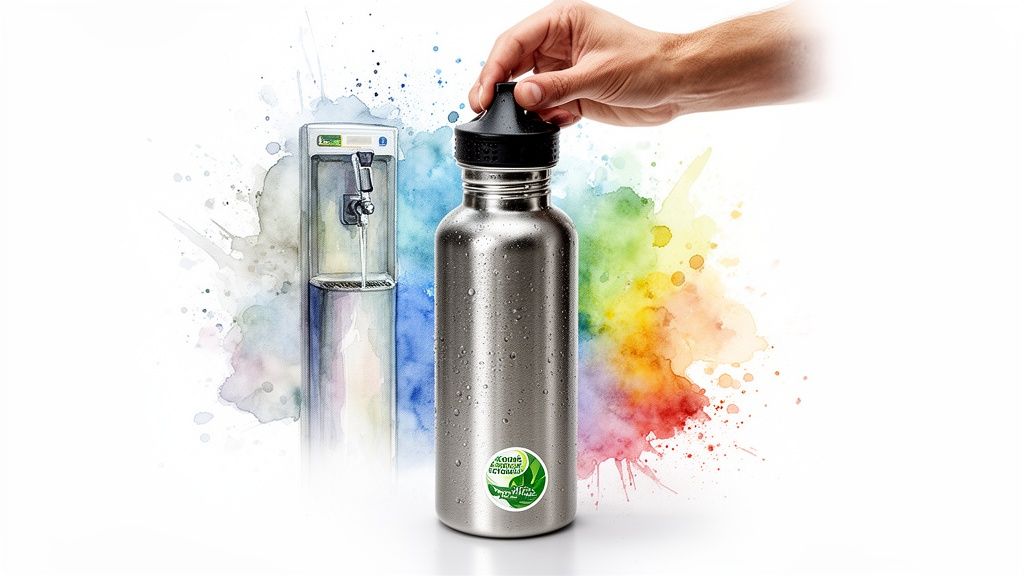
This idea is gaining powerful momentum. Programs like Chicago's "Drink Tap" and the explosion of refill stations at universities like Northwestern and UIC make it easier than ever to stay hydrated without the waste. This simple act of reducing plastic usage has a compounding effect. You save resources, cut pollution, and inspire others to join a culture of reuse. Every refill you make is a small act of defiance against our throwaway world.
Key Insight: Carrying a reusable bottle is a visible statement. It shows everyone around you that there is a better, more responsible way to live. You're normalizing sustainability.
How to Make It a Habit
The key to never buying a plastic water bottle again is making your reusable bottle feel as essential as your phone or keys. You have to weave it into your routine.
- Invest in Your Perfect Bottle: Find one you love. For me, an insulated bottle from Hydro Flask or S'well is a game-changer. It keeps my water cold on a scorching Chicago summer day, making it a joy to use.
- Find Your Refill Spots: I use a fountain-finder app to locate free water sources when I’m out exploring the city. You'd be surprised how many public refill stations are hiding in plain sight.
- Make It Your Cleanup Companion: I bring my reusable bottle to every Litter Caterpillars event. It keeps me hydrated while I work and serves as a powerful, practical example for fellow volunteers.
- Create a "Hydration Station": I set up a dedicated spot at home with my clean bottle, ready to grab and go. I also keep one at my desk at work so it's always within reach.
3. Refuse Plastic Straws and Use Alternatives
Saying "no straw, please" is one of the simplest yet most symbolic things you can do. It's a small phrase with a huge impact. You make a daily choice that prevents a piece of plastic from potentially harming wildlife for centuries. When my Litter Caterpillars team cleans along the Chicago Riverwalk, we find countless plastic straws. They were used for a few minutes, but they'll pollute our water for generations. This is a classic story of how a tiny habit can cause a massive problem. But it also shows how a tiny change can be part of the solution.

This idea has caught fire globally. It went from a niche activist plea to mainstream policy. Seattle's 2018 ban sparked a nationwide movement. Big chains like Starbucks are phasing them out, and many Chicago restaurants now offer paper or reusable options. This proves that when you demand less plastic, it works. Every time you politely refuse a straw or pull out your own reusable one, you're not just sipping a drink. You’re making a statement that convenience shouldn't cost our planet its health.
Key Insight: Refusing a plastic straw is more than a personal win. It’s a powerful public signal. It drives corporate and legislative change and makes sustainable choices normal for everyone.
How to Make It a Habit
Making the switch from disposable to durable is about being prepared. You have to make your reusable straw just as convenient as the plastic one you’re refusing.
- Carry It Everywhere: I invested in a compact, collapsible straw set with a cleaning brush and case. I keep it in my purse so I'm never caught without it. You can even find ones that fit on your keychain.
- Be Proactive When Ordering: Don't wait for the straw to arrive. I always say, "No straw, please," as I order my drink. This prevents the server from bringing one out of habit.
- Normalize It for Others: When I’m out with friends, I use my reusable straw proudly. My simple action can spark conversations and inspire them to make the switch, too.
- Gift the Change: I think reusable straw sets make fantastic, affordable gifts. It's a thoughtful way to introduce friends and family to a more sustainable lifestyle and grow the movement for reducing plastic usage.
4. Choose Plastic-Free Packaging When Shopping
Your real power isn't just the shopping bag. It's the choices you make down every single aisle. You can actively prioritize products sold in glass, aluminum, or cardboard over plastic. It's a crucial strategy for reducing plastic usage right at the source. Imagine you're voting with your wallet. You're choosing a future where our shelves aren't lined with disposable plastic that clogs our landfills and our beautiful Chicago parks. When my team and I sort through the litter we collect, we see the story of our consumption written in branded plastic wrappers and bottles.
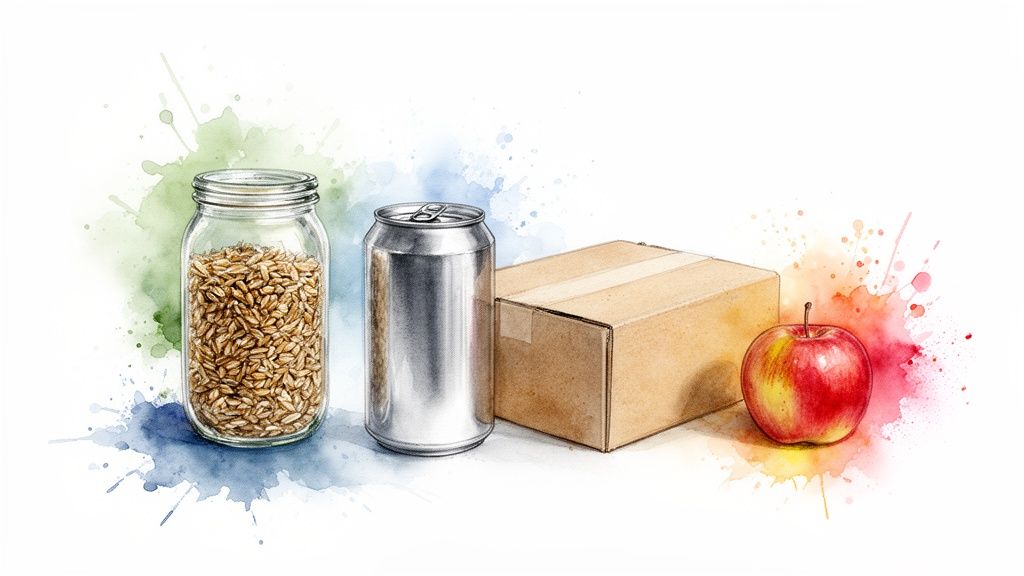
This shift is happening everywhere. You see it in zero-waste pioneers like Package Free Shop and in the expanding bulk bin sections at stores like Whole Foods. Brands are even getting creative with services like Loop, which partners with major companies to offer products in durable, returnable containers. When you choose these alternatives, you’re not just buying a product. You’re fueling a market revolution that demands more responsible options for everyone.
Key Insight: Every time you pick pasta in a cardboard box over a plastic bag, or salsa in a glass jar over a plastic tub, you're directly shaping supply and demand. You’re helping build a less plastic-dependent world.
How to Make It a Habit
Turning this into an everyday practice is like going on a treasure hunt. You train your eyes to spot the better alternatives. The prize is a cleaner planet.
- Go for Glass, Cans, and Cardboard: When you have a choice, pick the option in more easily recyclable materials. I always choose the glass bottle of juice, the canned tomatoes, or the oats in a paper canister. Understanding the basics helps you make better decisions. You can learn more about Chicago's recycling guidelines to see what’s most effective where you live.
- Embrace the Bulk Bins: I bring my own jars and bags to stores with bulk sections for things like rice, nuts, spices, and grains. It feels incredibly satisfying to walk away with groceries that have absolutely no new packaging.
- Shop the Perimeter: I focus my shopping on the outer edges of the grocery store. That's where you'll usually find fresh, unpackaged produce, meat, and bakery items.
- Support Local Markets: You should visit your neighborhood farmers market. I find that produce there often comes with zero packaging, and I get the bonus of supporting local growers directly.
5. Practice Mindful Consumption and Buy Less
Here it is. The most effective way to reduce plastic waste is to attack its source: our own consumption habits. When you practice mindful consumption and simply buy less, you cut off the demand for new plastic products before they're even made. This isn't about depriving yourself. It's about being intentional. It's choosing quality over quantity, a philosophy that directly fights the throwaway culture responsible for so much pollution. When I'm picking up litter along the Chicago River, it’s not just bottles and bags I find. It's countless broken toys and cheap plastic junk that were used once and tossed.
This shift in mindset is gaining ground. You see it in movements like minimalism and with advocates like The Minimalists and Marie Kondo. You also see it in the rise of thrift culture and programs like Patagonia's "Worn Wear," which celebrate durability and repair. In Chicago, local "Buy Nothing" groups in neighborhoods from Lincoln Park to Hyde Park are powerful examples of this. My neighbors and I share and gift items instead of buying new. Each time you borrow a tool or find a treasure secondhand, you prevent a new plastic-packaged item from ever entering the waste stream.
Key Insight: Reducing plastic usage starts before you even walk into a store. The most sustainable product is the one you don't buy. The second most sustainable is the one that already exists.
How to Make It a Habit
Embracing mindful consumption is a gradual process. You learn to question what you need and discover the joy of having just enough. It’s about being a conscious consumer, not an automatic one.
- Implement the 30-Day Rule: Before I make a non-essential purchase, I wait 30 days. If I still feel I truly need it after a month, I go for it. This simple pause helps me distinguish between a fleeting want and a genuine need.
- Shop Secondhand First: Make thrift stores, Facebook Marketplace, and local consignment shops your first stop. I look there first for everything from clothing to furniture. You’ll save money, find unique items, and give existing goods a second life.
- Join a Sharing Community: You can tap into your local Chicago Buy Nothing Project group or community swap events. Need a power drill for a weekend project? A serving dish for a party? Someone nearby is probably happy to lend you one.
- Embrace Repair: Instead of tossing a broken item, learn a new skill. I’ve learned to mend a torn shirt. You can take your shoes to a cobbler or visit a local repair cafe. Repairing what you own deepens your connection to your belongings and keeps them out of the landfill.
6. Transition to Plastic-Free Personal Care and Household Products
Your bathroom and kitchen sink might be the sneakiest sources of single-use plastic in your entire home. It’s a battlefield. Shampoo bottles, liquid soap dispensers, tubes of toothpaste, spray cleaners. These areas are often overflowing with plastic containers that are destined for the landfill. If you make the switch to plastic-free alternatives, it's a game-changer for reducing plastic usage right where you live. You can transform your daily routines into powerful acts of sustainability.
This isn't about giving up quality. It’s about discovering innovative, effective products that are kinder to the planet. Brands like Lush and Ethique have perfected solid shampoo and conditioner bars that work wonders for your hair without the plastic bottle. Just think about the countless plastic pump bottles my Litter Caterpillars crew and I pick up from the banks of the Chicago River. When you choose a simple bar of soap, you help eliminate that exact type of waste, one household at a time.
Key Insight: Your daily self-care and cleaning routines are a major frontier in the fight against plastic. By choosing solid, refillable, or package-free options, you directly reduce the flow of plastic waste from your home.
How to Make It a Habit
Transitioning your personal and household products doesn't have to be an expensive or overwhelming overhaul. The key is to start small. You just replace items as you run out. You make the change gradual and sustainable for your lifestyle and your budget.
- Start with One Swap: Don't try to replace everything at once. When your current toothbrush wears out, buy a bamboo one. When your liquid soap is gone, try a classic bar of soap. I use this “one-in, one-out” method. It makes reducing plastic usage feel effortless.
- Explore Refill Options: You can look for local Chicago stores that offer refill stations for products like laundry detergent, dish soap, and hand soap. Bringing your own container is a fantastic way to eliminate packaging entirely.
- Embrace DIY Cleaners: For a simple, effective, and plastic-free all-purpose cleaner, I mix equal parts white vinegar and water in a reusable glass spray bottle. It’s a trick many of us at Litter Caterpillars use in our own homes.
- Share Your Finds: Found a brand of toothpaste tablets or a deodorant bar you absolutely love? You should share your recommendation in the Litter Caterpillars community forum. Your experience can inspire and help someone else make a successful switch.
7. Reduce Food Packaging Waste Through Strategic Meal Planning
Your kitchen can be a plastic minefield, but it doesn't have to be. Strategic meal planning is your secret weapon. It will transform how you shop, cook, and eat, and it will significantly cut down on plastic packaging. You stop grabbing pre-packaged meals and plastic-wrapped produce. Instead, you're making conscious choices that reduce waste and often lead to healthier, more delicious meals. It’s about being intentional with your food. That's a powerful way of reducing plastic usage in your daily life.
This approach connects you more deeply with your food and your community. When you plan your meals around what's available at a Chicago farmers market, like the one in Logan Square on a Sunday morning, you're not just avoiding plastic. You're supporting local farmers. I love that. Similarly, joining a Community Supported Agriculture (CSA) program delivers a weekly box of fresh, seasonal produce with minimal to no packaging. It turns your grocery routine into a sustainable adventure.
Key Insight: Meal planning isn’t just about organization. It's a proactive strategy. You design plastic out of your diet and support a more local, sustainable food system.
How to Make It a Habit
Integrating meal planning is about creating a new weekly rhythm. A little forethought goes a long way. It will stop plastic from ever entering your home.
- Plan Your Plate: Before I even think about shopping, I sketch out my meals for the week. Knowing exactly what I need prevents me from making impulse buys of over-packaged convenience foods.
- Embrace the Bulk Bins: You should seek out stores with bulk sections for items like grains, nuts, and spices. I bring my own jars and containers to create a truly zero-waste shopping experience for my pantry staples.
- Shop the Perimeter (and the Market): I focus my shopping on whole foods like loose fruits and vegetables. You can make a weekly trip to a local farmers market your new ritual. Just don't forget your reusable produce bags.
- Rethink Your Storage: You have to ditch the plastic wrap and single-use sandwich bags. I invested in a set of glass containers, beeswax wraps, and silicone pouches for storing leftovers and packing lunches. My food stays fresher, and my conscience is clearer.
8. Support and Advocate for Plastic Reduction Policies and Legislation
Your individual actions are the foundation of change. But to create lasting impact in reducing plastic usage, you have to think bigger. Supporting and advocating for policies that tackle plastic pollution at its source is how we turn our personal habits into community-wide standards. It's the difference between you picking up a single plastic bottle and you preventing millions of them from ever being produced in the first place. When my Litter Caterpillars volunteers and I find the same branded wrappers week after week, it’s a clear signal. The problem needs a systemic solution, not just a cleanup crew.
This is about using your voice to create a ripple effect that benefits everyone. Policies like plastic bag bans, Extended Producer Responsibility (EPR) programs, and restrictions on single-use foam containers are game-changers. Seattle's comprehensive ordinances and California's bold EPR program prove that when communities demand change, governments listen. These laws shift the responsibility from you, the consumer, back to the corporations that profit from single-use plastics.
Key Insight: Your individual actions are powerful, but your voice as a citizen is your superpower. Advocacy turns your personal passion into public policy. It creates a cleaner future for an entire city, not just for your household.
How to Make It a Habit
Becoming an advocate might sound intimidating. It's more accessible than you think. You can integrate it into your life just like any other sustainable practice.
- Start Local and Stay Informed: Your local alderperson's office is your most direct line to change in Chicago. I signed up for their newsletter to stay informed about environmental proposals and town halls. A five-minute phone call or a short, personal email can have a huge impact.
- Amplify Your Efforts: You can join forces with established environmental groups like the Sierra Club or local Chicago organizations. They provide scripts, petitions, and organized advocacy days, making it easy for you to participate effectively.
- Use Your Cleanup as Evidence: The next time you're at a Litter Caterpillars event, snap a photo of the litter you collect. Share it on social media and tag your local representatives. For me, a picture of a park fence tangled with plastic bags is powerful evidence they can't ignore.
- Show Up and Speak Up: Attending a city council meeting or a public hearing is one of the most direct ways to be heard. Even if you don't speak, your presence shows officials that their constituents care deeply about reducing plastic usage.
9. Community Engagement: Education, Visible Modeling, and Organized Cleanups
Reducing plastic usage becomes exponentially more powerful when it transforms from your personal habit into a community movement. This is about making sustainability visible. It’s about making it educational and collaborative. When you share your journey, organize cleanups, and educate others, you create a powerful feedback loop. You inspire widespread change. You move beyond your own actions to shift cultural norms and even policy. This is how you and I turn personal conviction into collective impact.
When you join a Litter Caterpillars cleanup, you’re doing more than just picking up trash. You’re becoming a visible advocate for a cleaner Chicago. You’re showing your neighbors that you care. This tangible action, combined with sharing your experiences online or with friends, creates social proof. It shows this is a cause worth fighting for. Organizations like Ocean Cleanup document the massive scale of the problem. Grassroots groups like mine bring the reality of it right to our own doorsteps. We generate data that can drive real change.
Key Insight: Visible action is the most powerful form of education. When people see you making a difference, they are far more likely to believe they can make a difference, too.
How to Make It a Habit
Engaging your community doesn't require a bullhorn. It starts with authentic connection and you leading by example. Your personal story is your most powerful tool for inspiring others.
- Share Your Swaps: I post pictures of my reusable coffee cup or my new solid shampoo bar on social media. You never know who you’ll inspire to make their first switch.
- Start a Conversation: When a friend compliments your reusable produce bags, share why you made the change. I frame it as a positive choice, not a judgment.
- Invite, Don't Preach: The best way to show someone the impact of plastic litter is to let them see it firsthand. You should invite a friend to a weekend cleanup. The experience will speak for itself. You can find everything you need to know about how to start a volunteer trash pickup and lead your own event.
- Celebrate Others: When you see a local coffee shop offer a discount for reusable cups or a neighbor composting, celebrate it! Positive reinforcement builds a stronger, more motivated community.
10. Challenge the Convenience Culture and Embrace Intentional Living
This might be the most profound step. Shifting your entire mindset. Modern culture screams at us to value convenience above all else. This message directly fuels the demand for single-use plastics. You can embrace intentional living. That means you consciously reject that script. You choose durability over disposability. You find joy in the process, not just the instant result. When you stop chasing the fastest, easiest option, you naturally sidestep the plastic traps that come with it.
This philosophy is the heart of movements like Slow Food and Minimalism. It's also at the core of what we do at Litter Caterpillars. I started this organization from a place of personal chaos. The consistent, sometimes difficult, act of showing up to clean our Chicago neighborhoods transformed me. The real change wasn't just cleaner streets. I found profound meaning in the deliberate effort itself. This is the essence of environmental stewardship: a commitment that goes deeper than a simple action.
Key Insight: Reducing plastic isn't about adding inconvenient tasks to your life. It's about discovering a more meaningful and connected way of living. A life where your daily actions align with your deepest values.
How to Make It a Habit
Rewiring your brain to prioritize intention over convenience is a practice. It's not a perfect science. It’s about you building resilience and finding fulfillment in the journey.
- Reframe the "Inconvenience": Instead of groaning about washing a reusable container, I see it as a two-minute mindful practice. Instead of viewing meal prep as a chore, I see it as an act of self-care that nourishes me all week.
- Practice Gratitude: You should take a moment to appreciate the durable items you already own. Your favorite coffee mug. Your sturdy water bottle. Your well-loved tote bag. Commit to using them fully and caring for them. It builds a stronger connection to your belongings.
- Embrace the Power of "No": I politely decline the free plastic pen, the single-use sample, and the unnecessary bag for a single item. Every "no" from you is a quiet vote for a world with less waste.
- Celebrate the Process: Find joy in making your own coffee, packing your own lunch, or carrying your own bags. These small rituals are powerful anchors to a more intentional, plastic-free life. They remind you that you are in control of your consumption.
10-Point Plastic Reduction Strategy Comparison
| Item | Implementation Complexity 🔄 | Resource Requirements ⚡ | Expected Outcomes 📊 | Ideal Use Cases ⭐ | Key Advantages 💡 |
|---|---|---|---|---|---|
| Switch to Reusable Shopping Bags and Containers | Low — habit change and storage management | Low — one‑time purchase, occasional washing | Medium–High — noticeably reduces plastic bag litter | Grocery trips, everyday shopping, city with bag bans | Cost-effective long-term; visible sustainability; keep bags in car/near door |
| Eliminate Single‑Use Water Bottles with a Refillable Alternative | Low — buy bottle and adopt refill habit | Low–Medium — initial purchase, access to clean water | High — removes a top littered item type | Commuting, outdoor activities, cleanup events | Large cost savings and hydration benefits; use insulated bottles |
| Refuse Plastic Straws and Use Alternatives | Very Low — decline or carry reusable straw | Very Low — inexpensive sets, small carry case | Medium — prevents iconic, long‑lasting litter pieces | Restaurants, cafes, bars, events | Conversation‑starting action; carry collapsible straw in pouch |
| Choose Plastic‑Free Packaging When Shopping | Medium — requires planning and product choice | Medium — possible higher prices and travel to bulk/eco stores | High — reduces packaging entering homes and streets | Grocery shopping, pantry restocking, bulk shoppers | Supports circular economy; favor glass/aluminum/bulk bins |
| Practice Mindful Consumption and Buy Less | High — sustained mindset and behavioral change | Low–Medium — time to source secondhand and plan purchases | Very High — reduces waste at source and production impacts | Major purchases, wardrobe, household goods | Saves money and waste; try 30‑day rule and cost‑per‑use analysis |
| Transition to Plastic‑Free Personal Care & Household Products | Medium — product testing and gradual swaps | Medium — research and sometimes higher prices | High — eliminates many common single‑use containers | Daily personal care routines, travel, household cleaning | Longer‑lasting formats and less chemical runoff; transition gradually |
| Reduce Food Packaging Waste Through Strategic Meal Planning | Medium — weekly planning and prep required | Medium — time for meal prep; upfront container cost | High — cuts food packaging and spoilage, saves money | Families, weekly shoppers, CSA/bulk buyers | Supports local food systems; use glass containers and compost |
| Support and Advocate for Plastic Reduction Policies & Legislation | High — organize, lobby, and sustain campaigns | Low–Medium — volunteer time, coalition building | Very High — systemic, long‑term reduction of plastic use | Community organizers, civic groups, long‑term strategy | Scales impact beyond individuals; document litter to support policy |
| Community Engagement: Education, Modeling & Organized Cleanups | Medium — coordination and ongoing outreach | Medium — volunteers, equipment, communication channels | High — immediate litter removal plus behavior and policy influence | Neighborhoods, schools, nonprofits, public events | Builds social proof and data for advocacy; share authentic stories |
| Challenge the Convenience Culture and Embrace Intentional Living | High — deep cultural and personal transformation | Low — mostly time and practice, social support helpful | High — addresses root causes of overconsumption | Individuals, community leaders, cultural change efforts | Fosters resilience and meaning; join supportive groups and celebrate progress |
From Caterpillar to Something More
We’ve walked through a whole landscape of possibilities together in this guide. We went from the simple swap of a reusable bag to the more profound challenge of reshaping our daily habits and advocating for systemic change. I know it can feel like a lot. When you look at the sheer scale of the plastic problem, it's easy to feel like you, a single person with a single canvas tote bag, are just a tiny, insignificant drop in a vast, polluted ocean. But I want to tell you something my friends and I learned on a stormy Saturday morning in Chicago.
We were just a handful of volunteers. We huddled under a big oak tree as a freak hail storm came out of nowhere. We were soaked. Cold. And honestly, we were wondering if we had made a huge mistake showing up. But as we stood there, laughing at how absurd it all was, a weird kind of magic happened. Doing something difficult, something that mattered, with other people who cared… it forged a bond. It built a trust not just in each other, but in our own ability to show up and do the hard thing.
The Practice of Transformation
That’s what this journey of reducing plastic usage is really about. It's not a quest for perfection. You're not trying to meet some impossible standard. You don't have to beat yourself up when you forget your reusable cup or have to grab a plastic-wrapped snack. It's a practice.
This isn't about guilt. It's about grace. It's about you choosing, again and again, to align your actions with your values. It’s about forgiving yourself when you fall short. Each small choice you make is like a workout, strengthening your resolve.
Think of it like this: every single time you refuse a plastic straw, you’re not just saving one piece of plastic. You are casting a vote for a different kind of world. You are sending a signal to businesses that you demand better options. You are reminding yourself that you have power. When you plan your meals to avoid takeout containers or choose the apples that aren't shrink-wrapped, you are practicing bravery over convenience. You are choosing connection to your food and your planet over the hollow ease of just consuming.
From Individual Acts to Collective Impact
This is the very heart of the Caterpillar philosophy. We start small, like a caterpillar inching along a leaf. We focus on one piece of litter, one plastic bottle, one small, consistent act.
- You start with your own choices: The reusable water bottle, the bamboo toothbrush, the bulk bin shopping. These are your foundational steps.
- You inspire your circle: Your friends see your cool travel mug. Your family gets used to the cloth napkins. Your actions become a quiet, powerful form of advocacy.
- You join a larger movement: You sign a petition. You show up for a community cleanup. You realize you are not alone in this fight.
This progression, from your personal habits to community action, is where the real transformation happens. It’s where you and I move from feeling helpless to feeling hopeful. We learn to trust ourselves. We start to believe in our own capacity for change. We see how our individual efforts ripple outward, creating waves we could never have imagined. We start as one, but we become part of something so much bigger, something powerful enough to reshape the world around us. Your own transformation is waiting for you, right inside these small, intentional choices.
Ready to turn your intention into action and connect with a community that gets it? Join Litter Caterpillars for a neighborhood cleanup event in Chicago and see for yourself how small acts create massive change. Find your next opportunity to make a difference and meet incredible people at Litter Caterpillars.