Month: May 2026

  • 10 Group Service Project Ideas to Transform Your City

    10 Group Service Project Ideas to Transform Your City

    I started Litter Caterpillars when my own life felt impossible to clean. My apartment had turned into a museum of stuck memories. An old jar of jam from a trip years earlier, a bag of nuts from a health kick I never kept, and all of it felt like it weighed 500 pounds even though it barely weighed anything.

    After a chaotic relationship ended, I hit a wall. I decided I had to train three muscles I'd avoided for years: cleanliness, consistency, and bravery. I also decided I wanted a social circle made of givers, not takers.

    Then I learned something funny. Cleaning up someone else's mess is way easier than cleaning up your own, and somehow it's more fun too. On our first cleanup, there were only three of us, and we got trapped in a spring hailstorm, hiding under a tree while rides kept canceling. I remember shivering and thinking, this is awful, and also, this is a great story.

    That's still how I think about service. Hardship adds flavor. It advances the plot. You show up, do something simple with other people, and suddenly your Saturday has meaning. You stop circling your own problems for a minute. You move your body. You laugh. You help.

    If you're looking for group service project ideas, I don't want to hand you a sterile list. I want to give you ideas that feel alive. Ideas you can start with friends, coworkers, classmates, or neighbors. Ideas that can grow into ritual, pride, and real community. These are the kinds of projects that taught me how to build something outside myself, and in the process, rebuild myself too.

    1. Neighborhood Cleanup Blitzes with Geographic Rotation

    For instant clarity in a project, I would begin here. Pick one neighborhood this week. Pick a different one next week. Keep rotating.

    That rhythm kept me interested because every area had its own personality. One block had fast-food wrappers everywhere. Another had dumped furniture. Another looked clean at first until you checked the curbs, alleys, and fence lines. Rotating keeps your eyes fresh, and it keeps the city from feeling like a blur.

    A cleanup format like this also fits a model people already understand. Key Club International says its members give more than 13.5 million hours of service each year, and its own project ideas include recurring group formats like park cleanups, roadway adoption, tutoring, drives, and car washes in its service project flyer.

    How I'd run it

    Weekend mornings work. People are calmer, more generous, and less distracted. Post the location in advance, keep the meeting point simple, and give everyone a small zone so nobody wanders around confused.

    If you want a real example of what that looks like, our Chicago litter cleanup events follow that basic logic. You don't need a giant operation to copy the pattern. You need consistency more than complexity.

    Practical rule: Give every event a clear start point, a clear route, and a clear ending photo.

    A few things make this stick:

    • Use a map people can follow: Mark where you've already cleaned so volunteers can feel progress.
    • Keep supplies boring and reliable: Gloves, bags, grabbers, water, done.
    • Name the day clearly: “West Side Sweep” is easier to remember than “Saturday volunteer event.”
    • Celebrate small wins: Finishing one block well beats vaguely “helping the city.”

    The best part is the visible before-and-after. People love seeing the proof. You can talk about service all day, but a clean sidewalk speaks faster.

    2. Vacant Lot Transformation Projects

    A vacant lot hits different. A sidewalk cleanup feels like a haircut. A lot transformation feels like surgery.

    I've stood in neglected spaces where the grass was wild, trash was tangled into the weeds, and the whole place felt like the city had given up on it. Then a few people show up with gloves, shovels, and stubbornness, and the story starts to change.
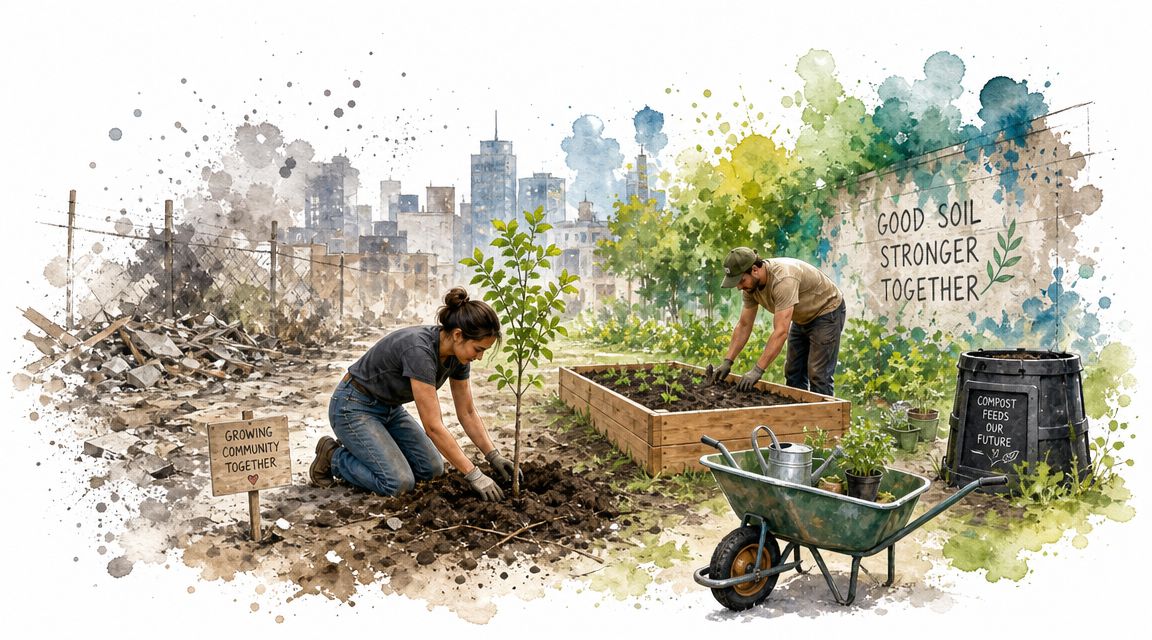
    A diverse group of volunteers planting a tree and gardening in an urban community vegetable garden.

    That's why this is one of my favorite group service project ideas. It asks more from you, but it gives more back. People don't just bag trash and leave. They imagine. They argue. They make plans. They come back.

    Start with the ugly stage

    The desire often is to skip to the garden sketch. Don't. First, learn to love the ugly stage. Take photos. Walk the perimeter. Ask neighbors what they want there. One person wants flowers. Another wants seating. Another wants a place where kids won't step on broken glass.

    That early listening matters. If you want a volunteer group to keep showing up, they need to feel that the place belongs to them.

    My own experience with lot work is part of why I think this way. If you want to see how a rough space can become something else, our story about transforming a vacant lot into Caterpillar Park gives the flavor of that journey.

    A simple phase plan helps:

    • Clear first: Remove litter, sharp debris, and obvious hazards.
    • Define edges: Paths, borders, or simple zones make a space feel intentional fast.
    • Add one visible living thing: A tree, flowers, or raised beds tell people this place has a future.

    Later, when the work starts to feel real, I like to show people examples of what steady outdoor labor can lead to.

    A vacant lot project is slower than a cleanup blitz. Good. Slow projects teach loyalty.

    3. Corporate-Community Partnership Cleanup Days

    I used to be suspicious of corporate volunteer days. Sometimes they feel too polished, like everyone showed up for a photo and a branded T-shirt. But I changed my mind when I saw what happens if you set the culture first.

    A business team can bring serious energy. You get people who might never join a neighborhood cleanup on their own, but once they're there, sweating and laughing and filling bags, a few of them catch the bug. Some come back without their company. That's when you know it was real.

    Keep the community in charge

    The biggest mistake is letting the company become the star. The block is the star. The residents are the star. The cleanup is the star.

    So I'd keep the structure simple. Give the company a defined task, a short briefing on how your group works, and a way to plug into the same rules as everyone else. If they want to help, great. They don't need to reinvent your process.

    If you want a practical model for that kind of collaboration, our page on corporate social responsibility cleanup partnerships shows the kind of local fit I like.

    The best company volunteer day feels less like a marketing activation and more like a neighbor showing up with extra hands.

    Try a few guardrails:

    • Set expectations early: Tell them what to wear, what the work is, and what respect looks like.
    • Choose visible routes: A park edge, business corridor, or commuter path gives quick proof of effort.
    • End with conversation: Don't let people scatter the second the bags are tied. Let them meet residents or regular volunteers.

    This kind of project works because it lowers the barrier for busy people. Someone says yes to one work-sponsored cleanup, then maybe yes to a second one on their own time. That's how a one-day event can turn into a habit.

    4. Environmental Education and Youth Engagement Programs

    Young people don't need another lecture about caring for the planet. They need gloves, a bag, a weird story, and a reason to feel proud.

    I've watched students show up shy and detached, then completely change once the task becomes concrete. Hand them a grabber and tell them, “Your team has this stretch of fence line.” Suddenly they're scanning the ground like detectives.
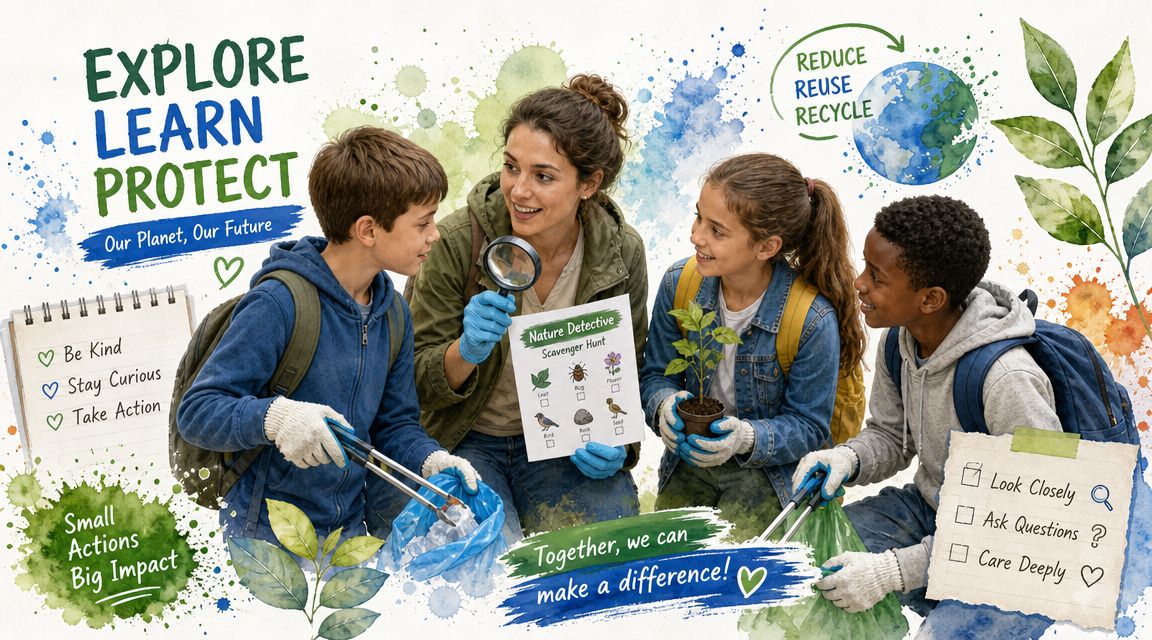
    A diverse group of children and a teacher participating in an outdoor nature cleanup service project.

    That's why youth programs work best when the education rides inside the action. Talk for a minute, work for an hour, reflect for ten minutes. Kids remember the dead batteries they found in the grass more than they remember a slideshow.

    Give them a ladder to climb

    A lot of youth volunteering feels flat. You show up once, get a service form signed, and disappear. I think that's a waste.

    Build a small ladder instead. First cleanup. Then team helper. Then route leader. Then the person who welcomes new students. People stay when they can grow.

    Rosterfy's roundup of community service project ideas for groups lists 99 ideas, and many of the repeat categories are the same ones that work well with young volunteers, including school supply collection, park cleanups, food drives, elder support, and thank-you card projects. I take that as proof that simple, team-based projects travel well.

    A youth service day gets stronger when you add a few pieces:

    • Give service-hour documentation: Students care about that, and that's fine.
    • Pair teens with adults who respect them: Nobody likes being talked down to.
    • Use group identity: A badge, a color, a team name, a chant. It sounds silly until it works.

    When a student starts saying “our block” or “our park,” something has clicked. That's the moment I look for.

    5. Themed Seasonal Cleanup Events with Community Celebration

    Some people join for the cause. Some join because their friend invited them. A lot of people join because the event sounds fun.

    I learned early that service needs some theater. Not fake theater. Human theater. A flag. A playlist. Matching shirts. A goofy tradition. Something that tells people, “You're part of this now.”
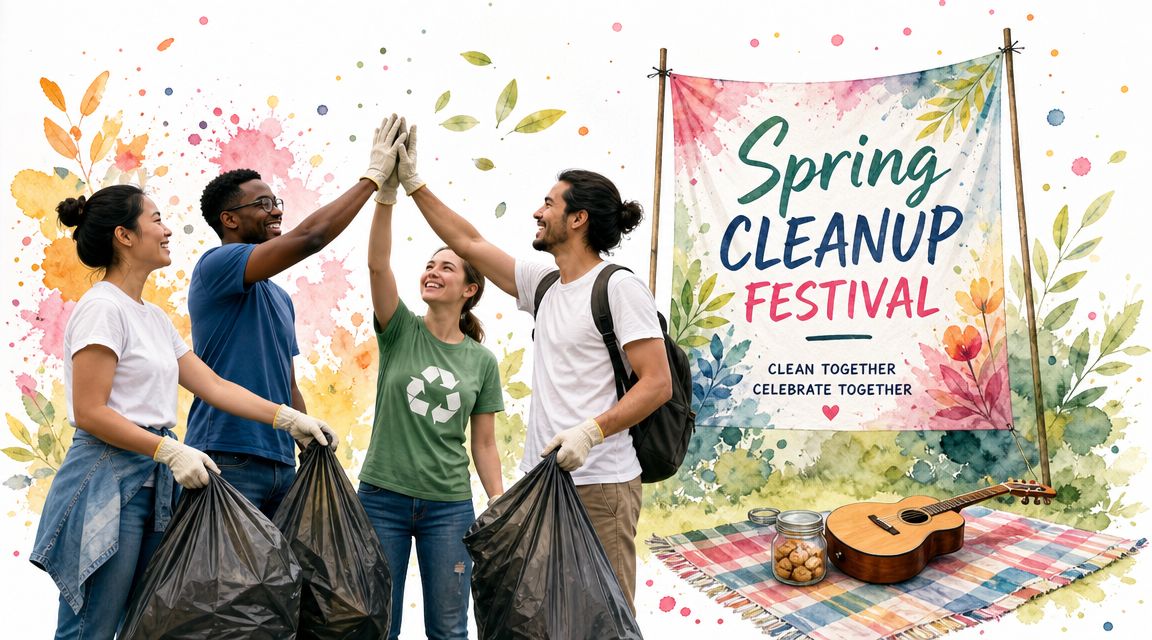
    A diverse group of volunteers celebrating after a community service spring cleaning event with trash bags.

    That's why seasonal events are so strong. Spring cleanup. Summer alley sweep. Fall neighborhood beautification day. Holiday donation and litter pickup combo. People like recurring rituals. They give the year shape.

    Make the hard work feel memorable

    Tom Sawyer understood something real. If you can frame hard work as a thing worth being proud of, people lean in. They stop acting like they're sacrificing. They start acting like they belong to a team.

    I'd build a seasonal event around one simple cleanup plus one social moment after. Maybe hot coffee before the route. Maybe music and snacks after. Maybe a group photo with a handmade sign and a ridiculous award for “strangest item found.”

    One thing I've noticed is that most lists of volunteer ideas stop at the activity itself. They don't say much about how to turn that activity into repeat participation. A group volunteer ideas article from Visions Service Adventures points to that gap by focusing on options more than retention. In real life, people come back for rhythm, identity, and friendship.

    One sentence test: If your event would still make sense without the cleanup, you've made a party. If it would still work without the people, you've made a chore. You need both.

    Try themes that fit the season and the neighborhood. Keep them light. Pride grows from repetition, not from grand speeches.

    6. Adopt-a-Neighborhood Program with Long-term Stewardship

    A rotating cleanup is great for exploration. An adopt-a-neighborhood setup is better for loyalty.

    When you return to the same area again and again, people start recognizing you. A store owner waves. A resident points out a dumping spot behind the alley. A kid asks if you're coming back next week. That changes the feeling of the work. You stop being random volunteers and start being familiar faces.

    Stay long enough to be known

    This kind of service is less exciting at first. It doesn't have the novelty of a new part of town every Saturday. But it has depth.

    If I were starting this from scratch, I'd assign small teams to a park, a corridor, or a few connected blocks. Let them learn the rhythm of the place. Which corner always collects windblown trash. Which bus stop needs attention. Which lot spills debris after storms.

    The nice thing about this model is that it matches patterns that keep showing up across service catalogs. Group project lists often circle back to neighborhood cleanups, food distribution, youth support, elder care, and advocacy because those are easy to repeat and easy to explain in a team setting. That repeatability matters more than novelty.

    You can strengthen stewardship with a few habits:

    • Name a neighborhood captain: One person who knows the route and says hello first.
    • Keep resident feedback informal: Short sidewalk conversations beat complicated surveys.
    • Track visible change by place: Before-and-after photos by block tell a story people remember.

    I love this format because it turns strangers into regulars. And regulars become the bones of your community.

    7. Innovative Technology and Documentation Tools

    Technology can help a volunteer group. It can also subtly kill one.

    I've seen people build systems so complicated that the project starts feeling like office work. Nobody wants to attend a cleanup that requires a training seminar just to sign a waiver and find the meeting point.

    Use tools that disappear into the background

    For volunteer groups, the best tech is almost invisible. A mobile sign-up page. A simple map. A reminder message. An easy place to post photos after the event.

    That matters because adoption problems often start with usability. In a BI and analytics benchmark, only about 25% of employees actively use analytics tools on average, and the barriers named most often were lack of proper training at 50%, lack of quality data at 41%, budget issues at 36%, and ease of use at 33% in BARC's adoption infographic. Different field, same lesson. If your tool is annoying, people stop using it.

    For a cleanup group, I'd keep the stack lean:

    • Use Meetup for event scheduling: People already know how to RSVP there.
    • Use Instagram for before-and-after storytelling: Visual proof recruits better than jargon.
    • Use Google My Maps for route planning: A volunteer should know where to stand within seconds.

    You do not need a dashboard that feels like an air traffic control room. You need a system your least technical volunteer can use while standing on a windy sidewalk.

    Documentation matters, but I'd always put the human layer first. A warm welcome does more for retention than a perfect app ever will.

    8. Skill-Building and Professional Development Workshops

    A lot of adults want to help, but they also want their time to shape them. I get that. Service can clean a block and still teach you something.

    That's why I like pairing practical workshops with hands-on events. After a cleanup, you can host a short session on community organizing, public speaking, environmental careers, safety basics, or even how to lead a volunteer team without sounding bossy.

    Let people leave stronger than they arrived

    The workshop doesn't need to feel corporate. In fact, please don't make it feel corporate. Keep it grounded in what the group does.

    If someone just spent the morning cleaning an alley, a short talk on route planning or community outreach suddenly matters. It isn't abstract anymore. It plugs into something they felt in their body.

    I'd keep the workshop cadence light. Quarterly is enough for most groups. Bring in a nonprofit organizer, a local gardener, a teacher, a city worker, or a volunteer who's grown into leadership.

    A strong workshop track might include:

    • Leadership basics: How to greet, guide, and encourage a group.
    • Neighborhood communication: How to talk with residents with respect and confidence.
    • Environmental pathways: Jobs and volunteer roles tied to parks, waste, or public space.

    This idea works well because it rewards commitment without turning volunteering into homework. A person comes for service and leaves with skills, confidence, and maybe a new direction.

    9. Accessibility and Inclusive Volunteer Pathways

    If your service project only works for athletic people with free weekends, cars, and endless energy, you've built a very small door.

    I care about this one a lot because group service gets better when more kinds of people can join. Some people can walk long routes. Some can sort supplies, take photos, check people in, translate, welcome newcomers, or manage snacks and water. That still counts. It all counts.

    Build more than one way to help

    The easiest mistake is assuming inclusion without designing for it. You have to say what the route is like. Is there seating? Is there parking nearby? How long will people stand? Is there a bathroom? Can someone join for just part of the event?

    When you answer those questions clearly, more people trust you enough to show up.

    I'd create multiple volunteer lanes from the start:

    • Low-mobility roles: Check-in table, photo documentation, sorting, data entry.
    • Short-shift roles: Thirty-minute or one-hour options for busy people.
    • Buddy roles: Pair first-timers with regulars so nobody feels lost.

    This kind of openness matters for culture too. When people feel welcomed for what they can do, not judged for what they can't do, they stay. They invite others. The group becomes less brittle and more human.

    A cleanup crew with mixed abilities can still run beautifully. Sometimes it runs better, because people communicate more and take care of each other.

    10. Restorative Justice and Community Healing Initiatives

    This one is the closest to my heart.

    I didn't start cleaning because I had some polished theory about civic engagement. I started because I was hurting and needed a way to move that pain through my body without drowning in it. Picking up litter gave me a simple job. See mess. Lift mess. Bag mess. Keep walking.

    That sequence calmed me down. It also gave me other people to stand beside.

    Let service hold the feelings without pretending to be therapy

    A group can become a place where people heal, but only if you're honest about what it is and what it isn't. A cleanup isn't therapy. It is a steady, practical act that can make room for connection, trust, and self-respect.

    That's why I like building in small rituals. A welcome circle. A quick safety talk. A moment after the route where people can share one thing they noticed. Those tiny repeated actions create safety.

    Some service catalogs keep the focus on the task itself. Bonterra's project library lists 63 community service ideas in its community service roundup, and that variety is useful, but the deeper challenge is cultural. How do you turn a one-time volunteer activity into a place where people feel known enough to come back?

    I think the answer is simple, even if it isn't easy:

    • Tell the truth: Say the work can be hard, awkward, and worth it.
    • Honor vulnerability: Let people be beginners.
    • Protect the group: Safety first, then joy, then growth.

    There's something comforting about fixing a visible problem with your hands while standing near other people who are trying too. That's more than cleanup. That's repair.

    10-Point Comparison of Group Service Project Ideas

    Initiative 🔄 Implementation Complexity ⚡ Resource Requirements & Speed 📊 Expected Outcomes 💡 Ideal Use Cases ⭐ Key Advantages
    Neighborhood Cleanup Blitzes with Geographic Rotation Moderate, weekly coordination and route planning Low–moderate (supplies, volunteer coordination; travel slows pace) Regular city-wide visible trash removal, broad coverage metrics City-wide equity efforts, short-time volunteers, consistent presence Ensures equitable coverage, predictable schedule, wide reach
    Vacant Lot Transformation Projects High, legal, remediation, phased development High (capital, specialists, permits, long-term maintenance) Permanent community assets, increased property values, lasting neighborhood change Long-term revitalization, grant-funded legacy projects Creates lasting impact, attracts investment, builds neighborhood pride
    Corporate-Community Partnership Cleanup Days Moderate, corporate contracts and scheduling Low (companies often fund supplies) but needs detailed coordination Large volunteer turnout, media exposure, measurable PR-ready metrics Team-building, corporate CSR, high-visibility campaigns Access to funding, equipment, and expanded volunteer pool
    Environmental Education and Youth Engagement Programs Moderate, curriculum design and school coordination Moderate (materials, staff time, supervision) Long-term behavior change, youth leadership pipeline, service-hour fulfillment Schools, after-school programs, youth recruitment initiatives Builds future volunteers, develops leadership and environmental literacy
    Themed Seasonal Cleanup Events with Community Celebration Moderate–high, event planning, permits, entertainment logistics Moderate (food, entertainment, permits; higher one-off costs) Spike participation, social cohesion, strong social-media content Family-friendly outreach, cultural festivals, awareness days Makes service festive, draws casual volunteers, builds traditions
    Adopt-a-Neighborhood Program with Long-term Stewardship Low–moderate, sustained coordination and resident engagement Low (supplies, coordinator time) with emphasis on retention Deep community trust, consistent visible improvement, neighborhood accountability Hyper-local stewardship, trust-building, focused problem-solving Fosters ownership, efficient logistics, strong resident relationships
    Innovative Technology and Documentation Tools Moderate, setup, integration, data governance Low–moderate (software subscriptions, content time) Improved coordination, data-driven decisions, compelling impact storytelling Scaling operations, funder reporting, tech-savvy volunteer bases Reduces admin burden, enhances visibility, enables scaling
    Skill-Building and Professional Development Workshops Moderate, curriculum and facilitator management Low–moderate (facilitators, venues, materials) Higher retention, trained volunteers, pathways to leadership Young professionals, capacity-building, volunteer development programs Attracts career-minded volunteers, builds internal capacity
    Accessibility and Inclusive Volunteer Pathways Moderate–high, accommodations, training, varied roles Moderate (transport, childcare, translation, accessibility) Broader, more diverse volunteer base, equitable participation Organizations prioritizing equity, family-friendly or disability-inclusive programs Expands reach, fosters inclusion, brings diverse skills and perspectives
    Restorative Justice and Community Healing Initiatives High, trauma-informed facilitation and ongoing support Low–moderate (training, professional consultation, facilitation time) Deep relational bonds, community healing, transformative volunteer experiences Communities with trauma histories, relationship-focused engagement Creates meaningful, trust-based relationships and mutual transformation

    Now, It's Your Turn to Build Something

    Remember Tom Sawyer painting the fence. He got punished, got handed an annoying job, and somehow turned it into the most desirable activity in town. His friends wanted in. They even paid for the privilege. I've always loved that story because it gets at something real. Bravery isn't always loud. Sometimes bravery is learning how to enjoy hard work enough that other people want to join you.

    That idea changed my life. When I started Litter Caterpillars, I wasn't trying to build some perfect organization. I was trying to survive my own mess by doing something useful with other people. I wanted a cleaner city, sure. But I also wanted better friends, stronger habits, and proof that I could keep showing up for something.

    That's why I care so much about these group service project ideas. They aren't random activities to me. They're doors. One door leads to a Saturday cleanup. Another leads to a neighborhood team. Another leads to a garden, a corporate partnership, a youth crew, a new friend, a new version of yourself.

    If you're stuck, start with the simplest version. Pick one block. Pick one park edge. Pick one neglected corner that annoys you every time you walk by. Bring two people. Bring trash bags. Start there. If it's awkward, good. If the weather is bad, fine. If only a few people come, that's still a beginning.

    The world runs on volunteer energy more than is commonly understood. It's fragile. You have to protect it. Keep the work easy to understand. Keep the culture kind. Keep the invitations open. Give people pride in showing up. A flag, a badge, a team name, a recurring time slot. Those things matter because they help people feel that they belong to something.

    And please don't wait until you feel fully prepared. I didn't. It's common not to. You learn by doing the work badly at first, then a little better, then better again. You learn by walking in the cold, getting rained on, laughing at the wrong moment, and coming back next week anyway.

    If you're in Chicago, Litter Caterpillars is one real option for that kind of rhythm. If you're somewhere else, build your own version. Find your own fence to paint. Find the hard thing that becomes fun when you do it together. Start small, stay consistent, and be brave enough to let service change you while you're trying to change your block.


    If you want a place to start, join Litter Caterpillars and come clean up Chicago with us. You'll meet people, do real work, and see what happens when a simple Saturday habit turns into a shared story.
  • My 10 Outdoor Event Ideas for 2026

    My 10 Outdoor Event Ideas for 2026

    Your mess is your message.

    I used to have trouble cleaning my own room. Old mail, dead batteries, a container in the back of the fridge from some optimistic week when I thought I'd become organized. None of it weighed much, but to me it all felt like it weighed 500 pounds.

    Then I learned something strange. Cleaning up other people's messes is easier. On our first outing, there were only three of us. We got trapped in a spring hailstorm, huddled under a tree, freezing, while ride after ride canceled. I remember laughing and thinking, this is fun. The pain gave the day texture. It turned an errand into a story.
    That was the birth of Litter Caterpillars.

    So when I share outdoor event ideas, I'm not talking about filler activities to kill a Saturday. I'm talking about building a life that pulls you toward courage, discipline, and friendship. I'm talking about using a simple public act, walking outside and doing a hard thing with other people, to become more reliable than you were last month.

    That's why I love outdoor events. People are already outside in huge numbers. The Outdoor Industry Association says 175.8 million Americans participated in outdoor recreation in 2023, equal to 57.3% of the U.S. population age 6 and older, up 4.1% from the previous year. You don't have to convince people to care about fresh air, movement, and public space. You have to give them a reason to show up together.

    Most lists stop at picnics and lawn games. Fine. Those can be fun. But if you want an outdoor event that actually changes people, build around service. Give people gloves, a route, a flag, a little dignity, and a reason to come back next week.

    1. Community Cleanup Walks

    Start here. If you only try one of my outdoor event ideas, make it a cleanup walk.

    A cleanup walk is simple on purpose. You pick a neighborhood, set a route, hand people bags and grabbers, and start walking. No stage. No complicated schedule. No overproduced nonsense. People talk more easily when their hands are busy and their feet are moving.

    I love this format because it removes pressure. New people don't have to perform. They just walk beside you, pick up litter, and settle into the rhythm. By the end, they've had a real conversation and left a street better than they found it.

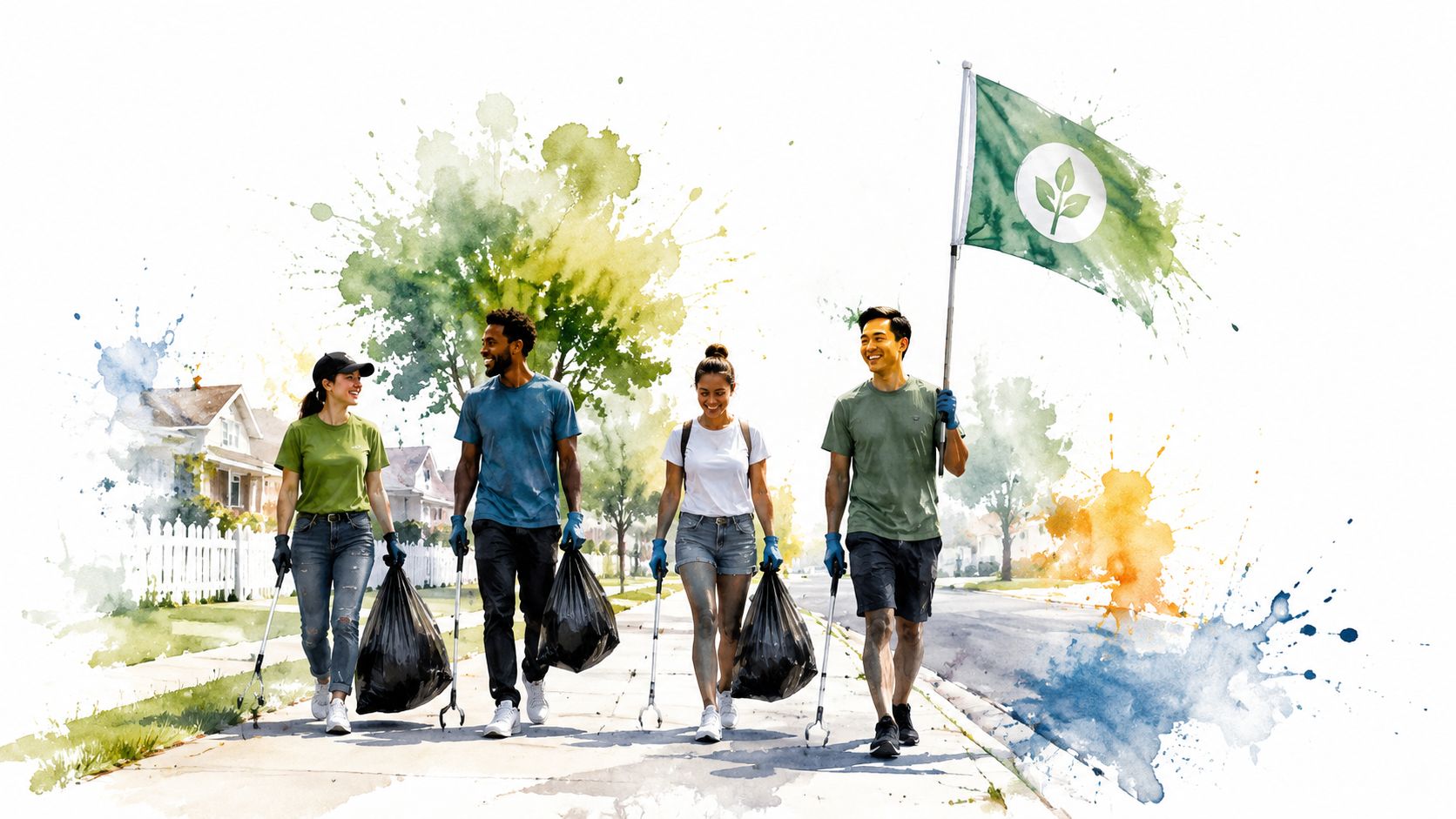
    A diverse group of volunteers walking down a street carrying trash bags and an environmental cleanup flag.

    Make it easy to join

    Your first job is to remove friction. If people need to buy supplies, guess where they end up? At home.

    • Bring the gear: Carry gloves, bags, sanitizer, and a few extra grabbers.
    • Pick one meeting point: Use an easy landmark like a train stop, coffee shop, or park entrance.
    • Keep the timing consistent: Same morning, same general length, every week if you can.
    • Pair people fast: Put a newcomer beside someone kind and experienced within the first few minutes.

    I've learned that consistency beats novelty. Weekend mornings work because they attract people who want to give, not people who want to drift.

    Practical rule: Don't make volunteers solve logistics before they've felt the joy of the work.

    Chicago gave us this lesson over and over. When we rotated neighborhoods, people kept coming because they weren't only cleaning. They were discovering the city block by block, seeing corners they'd never visit otherwise, and building trust through repetition.

    If you want a straightforward playbook for setting one up, use this guide to starting a volunteer trash pickup.

    2. Themed Service Events

    A theme can rescue a good event from feeling flat.

    I'm not talking about fake hype. I'm talking about giving the day a frame people can remember. A spring reset. A river day. A post-festival recovery cleanup. A holiday morning service walk. Same work, different emotional entry point.

    Themes help people answer the question, why this week?

    Give the event a story

    When I've seen service events really click, it's because people could explain them in one sentence. “We're cleaning the highway after the bike event shutdown.” “We're doing a costume cleanup before Halloween.” “We're cleaning this park before the neighborhood picnic.”

    That sentence matters. It gives the event shape.

    Use themes that connect to real local moments. Earth Day is obvious. A neighborhood fair is obvious. A change in season is obvious. Don't force an elaborate concept when a clear one will do.

    Here's what works best for me:

    • Name it: Pick a title people can repeat from memory.
    • Match the visuals: A small sign, flag, color, or dress code gives people instant cohesion.
    • Tie it to a place: Themes feel stronger when the location makes sense.
    • Capture the moment: Take one group photo that tells the whole story without explanation.

    I've found that themed events also help with return attendance. People who came for the novelty often stay for the people. That's the trick. The theme gets them through the door. The community gets them back.

    The business world has noticed that live gatherings still work. Statista reports the U.S. B2B trade show market is forecast to reach $15.8 billion in 2024, and a Cvent-cited survey says 72% of marketers consider events their most effective marketing channel, while HelloEndless reports 63% plan to invest more in live events and 95% agree live events help attendees form valuable in-person connections. I read that and think, of course. People remember what they do together in real life.

    3. Neighborhood Transformation Projects

    Sometimes a single cleanup is satisfying. Sometimes it isn't enough.

    You know the kind of place I mean. The empty lot that keeps collecting trash. The block edge everyone walks past. The patch of ground that suggests to people, nobody cares about this spot. When I see a place like that, I don't want a one-day event. I want a campaign.

    That's where neighborhood transformation projects come in.

    Adopt one place and stay with it

    Pick a site with emotional weight. A neglected lot. A stretch near a school. A corner by a bus stop. Then commit to it long enough that people can watch the place change.

    This is a different kind of outdoor event idea because it asks more from you. You need repeat visits, local relationships, and basic patience. But the payoff is deeper. People stop feeling like guests in the neighborhood. They start feeling responsible for it.

    A long-term project should have phases.

    • Phase one: Clean and clear.
    • Phase two: Remove the weird barriers that make the place feel abandoned.
    • Phase three: Add signs of care, like planters, seating, art, or regular stewardship.
    • Phase four: Hand some ownership to people who already live nearby.

    I love this format because it changes volunteer psychology. A one-time event says, “We helped.” A repeated project says, “We belong here.”

    You can feel that difference in people's posture.

    Here's a glimpse of what transformation can look like in practice:

    If you're building one of these, start smaller than your ego wants. Don't promise to save a district. Clean one lot so thoroughly and so consistently that nobody can deny the change.

    4. Social Service Integration Cleanups

    Some outdoor event ideas entertain people. I'd rather help people.

    A social service cleanup starts with a harder question. Who is living with the consequences of neglect right now? Once you ask that honestly, your planning changes. You stop chasing the prettiest park and start paying attention to the places where litter, dumping, and disrepair stack onto other burdens.

    That shift matters.

    Respect the neighborhood first

    When you enter an under-resourced neighborhood with volunteers, your attitude matters more than your trash bags. If you show up like a savior, people feel it. If you show up like a guest ready to work, people feel that too.

    I've made mistakes here. I've come in too eager, too fast, too convinced that action alone was enough. It isn't. You need local trust. That means talking to residents, local groups, block leaders, churches, mutual aid organizers, and small business owners before the event starts.

    Go where the need is. Then listen long enough that your help stops looking like a performance.

    A good social service cleanup has roles for residents, not just roles for visitors. Ask local people where the worst dumping is. Ask what time feels respectful. Ask what would make the day useful instead of theatrical.

    I also think food matters here. A real meal after cleanup changes the tone. It says, we didn't come to extract a feel-good moment. We came to share a morning.

    One thing I appreciate about the usual outdoor event ideas online is how clearly they reveal what's missing. Many lists focus on entertainment and skip service as a repeatable community ritual. That gap is exactly where some of the best events live. Service can become friendship, exercise, and visible neighborhood improvement all at once when you build it with care.

    5. Volunteer Badge and Achievement Systems

    People like progress. They like symbols. They like knowing their effort counts.

    I learned this early. If you give volunteers nothing but a vague thank you, many of them will still return. Good people are generous. But if you give them identity, memory, and a visible path forward, they start carrying the mission inside themselves.

    That's where badges come in.

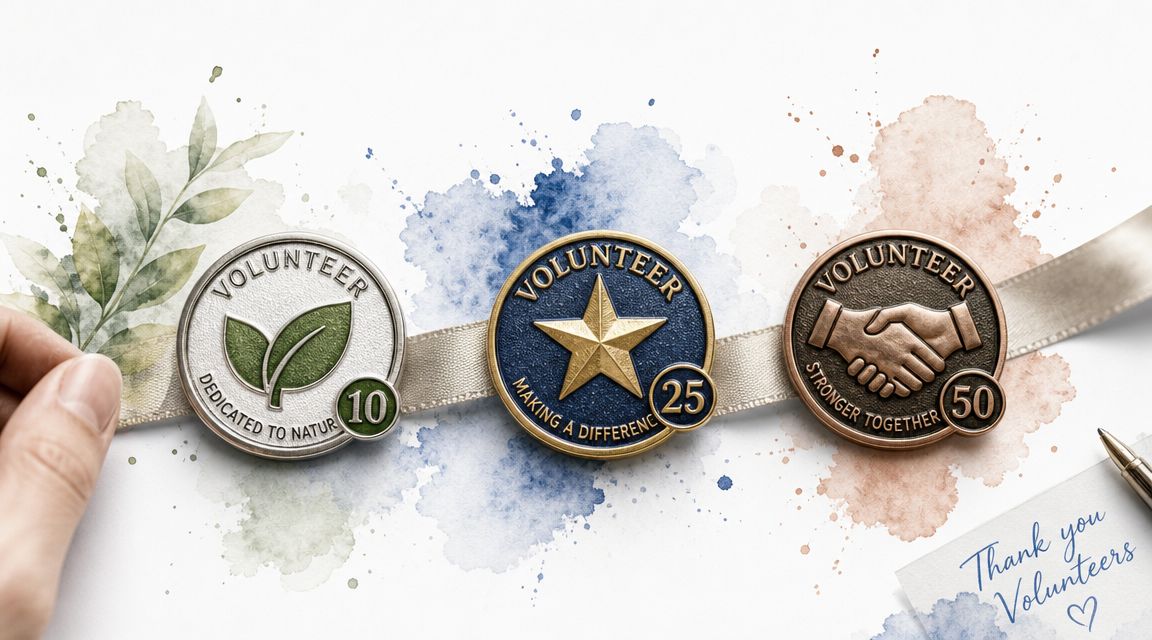
    Three volunteer milestone medals displayed on a ribbon with watercolor accents and a thank you note.

    Turn effort into identity

    A badge system works because it makes service legible. It tells a volunteer, you've shown up, you've grown, and we can all see it.

    I don't mean childish gold stars. I mean thoughtful markers of effort. Milestone badges. Seasonal badges. Leadership badges. Weather badges. Neighborhood badges. If sports teams and scouts understand the power of earned symbols, service groups should too.

    Here's how I'd build it:

    • Make badges beautiful: If it looks cheap, it feels cheap.
    • Reward different kinds of effort: Attendance, leadership, reliability, mentoring, hard routes.
    • Announce them publicly: Recognition should happen in front of peers.
    • Let people wear them: Bags, jackets, lanyards, Meetup photos. Let pride breathe.

    One thing I'd never skip: make recognition visible in the field, not buried in an email later.

    If you want inspiration for structuring it, I like this set of volunteer recognition ideas.

    There's a practical side too. Grand View Research estimates the global event management software market at $8.40 billion in 2024 and projects it will reach $17.33 billion by 2030, with North America holding over 45% of the market in 2024 and cloud-based deployments accounting for over 63%. That tells me tools for registration, check-in, volunteer tracking, and milestone systems are normal now. Use them. Don't run your community on memory alone.

    6. Friendship-First Volunteer Cohorts

    The strongest volunteer communities I've built never started with scale. They started with six people who kept showing up long enough to become part of each other's lives.

    That lesson changed how I organize outdoor events.

    Big turnouts look good in photos. Cohorts build the kind of trust that gets someone out of bed on a cold Saturday, brings them back after a hard week, and turns a cleanup into a real community. That is the whole point. Service should leave the block better and the people braver.

    A cohort works because people stop disappearing into the crowd. They get known. Somebody notices if they are late. Somebody remembers they hate soggy gloves. Somebody asks how the interview went. That sounds small. It is not small at all. It is how friendship starts, and friendship is what makes volunteer work durable.

    I've seen this happen over and over with Litter Caterpillars. A person joins for a cause. They stay because the same handful of people keep welcoming them back. After a few events, the cleanup is only half the story. The other half is breakfast after, the running jokes, the shared route, and the quiet sense that your absence would matter.
    Build cohorts on purpose:

    • Keep them small: Around 6 to 12 people is enough for energy and still small enough for memory.
    • Keep them stable: Let people serve with the same crew often enough to build rhythm and trust.
    • Give them a ritual: Coffee after, a group photo, a stretch circle, a post-route meal. Repetition turns strangers into friends.
    • Name the group: A route name, team color, or simple nickname gives people something to belong to.
    • Choose a cohort lead: Pick someone warm, reliable, and observant. Their job is to notice people, not manage them like staff.

    I care about this because outdoor service should do more than fill bags. It should change a person's relationship to their city and to themselves. A good cohort gives shy people a place to practice courage. It gives new residents a way into neighborhood life. It gives lonely people a reason to leave the house and a circle that expects them.

    That is why I recommend friendship-first design so strongly. If you want retention, build belonging. If you want stronger events, build smaller circles inside the larger one. If you want people to find purpose outdoors, give them people first.

    7. All-Weather and Extreme Condition Events

    Weather is not a side issue. Weather is the event.

    Most outdoor event ideas online pretend the sky will cooperate. That's fantasy. Real outdoor organizing means heat, wind, rain, surprise cold, and forecast drama. If you ignore that, you're not planning. You're wishing.

    I learned this while shivering under that tree in the hail on our first cleanup.

    Build for weather, don't pray against it

    Some of my favorite event memories came from rough conditions. But there's a line between invigorating and stupid. You need to know the difference before volunteers arrive.

    The National Weather Service keeps warning people about heat and storms during outdoor activity. I take that seriously. I still run all-weather events, but I do it with structure.

    Use a simple decision framework:

    • Heat: Start earlier, shorten the route, carry more water, add shade stops.
    • Cold: Keep people moving, bring hand warmers, plan a warm indoor landing spot after.
    • Rain: Expect muddy morale at the start, then watch people get weirdly cheerful once they accept it.
    • Wind or storms: Decide in advance what cancels the event and tell everyone clearly.

    The weather doesn't ruin the story. Confusion does.
    I also think you should name these events clearly. If it's a winter grit cleanup, call it that. If it's a rain-or-shine challenge day, say so. Some people want comfort. Some people want a little hardship because hardship wakes them up.

    Chicago taught me that suffering can add flavor. A hard-weather event, done safely, becomes a badge people carry in their chest. They remember who was there. They remember who laughed. They remember they were tougher than they thought.

    8. Neighborhood Discovery Tours with Purpose

    The first time I led one of these, a new volunteer showed up expecting a cute walk and a couple of photos. Forty minutes later, she was pointing at a storm drain clogged with cups, asking who on this block had to live with that every day. That was the moment the event worked. Curiosity turned into responsibility.

    That is the point of a neighborhood discovery tour with purpose.

    A city does not become home because you sampled the coffee and found a mural. It becomes home when you pay attention. You notice which sidewalks invite people in, which corners feel forgotten, which storefronts are fighting to stay open, and which public spaces clearly have people who care. Service sharpens your eyes. It also softens your heart.

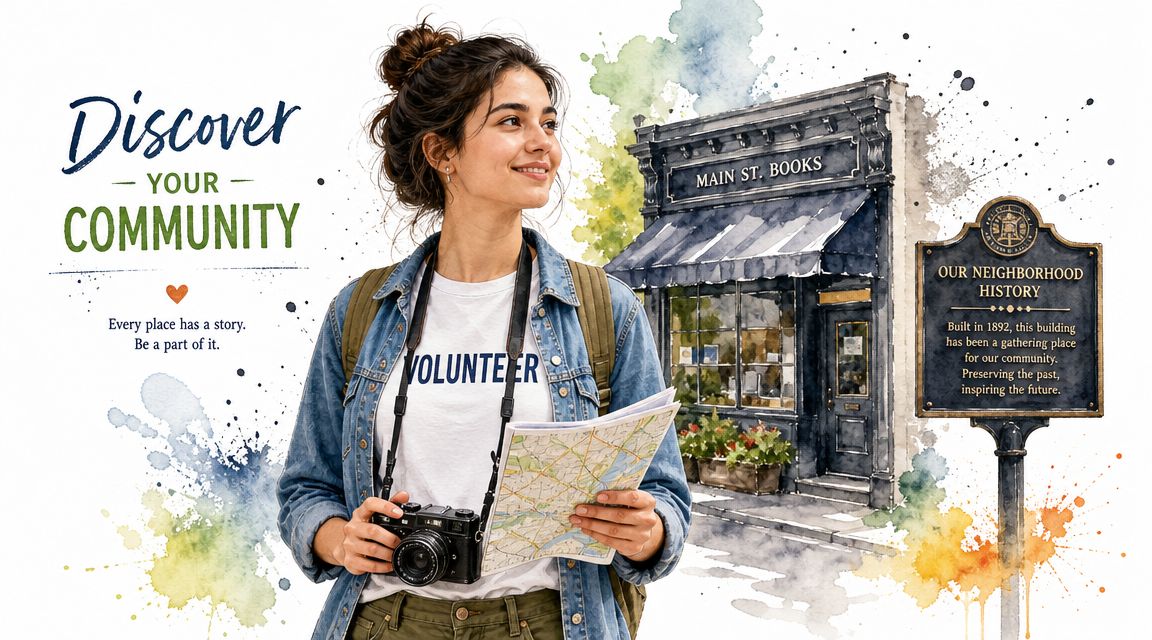
    A smiling young female volunteer holding a camera and map in front of a bookstore and plaque.

    Let the neighborhood teach the group

    I build these events around one local thread. Pick one. Architecture. Immigrant business history. A park system. A transit line. A residents' story. The thread gives the walk weight, and weight is what turns a casual outing into a shared memory.

    Do not overteach. You are not running a lecture. Give people just enough context to care, then let the street do the rest.
    Use a route like this:

    • Open with one sharp story: Keep it under two minutes and make it specific to the block.
    • Mark a few anchors: A bookstore, church, mural, school, garden, or corner store gives people something to remember.
    • Leave room for real conversation: If a resident or shop owner wants to talk, stop and listen.
    • Finish close by: A plaza, cafe, or simple stoop debrief helps people turn observations into connection.

    I love this format because it builds the kind of community that lasts. People do not only collect litter. They collect context. They start recognizing faces, greeting business owners, remembering street names, and caring what happens next on that block. Friendship grows faster when people are discovering something together and doing something useful with their hands.

    That has been a core lesson for me with Litter Caterpillars. Service is not only about cleaner streets. It is about helping people become braver, more rooted, and more available to each other. A purpose-driven neighborhood tour does all three. It gives newcomers a way in. It gives longtime residents a fresh way to love where they live. And it gives the whole group a better question than “What should we do this weekend?” The better question is “Who can we become together if we keep showing up here?”

    9. Leadership Development and Mentor Apprenticeships

    A volunteer group breaks when everything depends on one charismatic organizer.

    I know the temptation. You care the most, so you carry the most. You answer every text, haul every supply bin, explain every route, soothe every confusion. For a while, that feels noble. Then it becomes a bottleneck.

    The cure is apprenticeship.

    Teach leadership in the field

    The best leaders in service groups usually don't emerge from a formal application. They reveal themselves while carrying bags, checking on new people, solving small problems, and staying calm when the plan bends.

    When I spot that person, I don't wait. I give them a lane. Maybe they lead check-in next week. Maybe they welcome newcomers. Maybe they handle route pacing or post-event food coordination. Then I stay close enough to help without grabbing the wheel back.

    A good mentor system has a few parts:

    • Match on temperament: A nervous beginner needs a different mentor than a natural extrovert.
    • Give one concrete responsibility at a time: Don't dump the whole event on them.
    • Debrief after the event: What felt easy, what felt awkward, what needs practice.
    • Promote publicly: Let the group see who is stepping up.

    I love apprenticeships because they turn service into a ladder. People don't only attend. They grow. They gain confidence in public speaking, planning, conflict navigation, and emotional steadiness.

    That kind of growth is hard to fake. A person who can calmly lead a volunteer team through a messy morning can usually handle a lot more in the rest of life too.

    10. Corporate and Group Partnership Events

    I used to be suspicious of corporate volunteer days. Too polished. Too many matching shirts. Too much photo-op energy.

    Then I saw what happens when you design them well. A company brings a group of people who would never have met your mission otherwise. They work hard, ask real questions, and sometimes a few of them come back on their own. That's worth building for.

    Keep the mission intact

    If you run partnership events, don't let the partner flatten your culture. You are not a disposable activity vendor. You are inviting a group into your way of doing things.

    That means you set the tone. You explain the neighborhood. You make safety and volunteer dignity paramount. You keep the service real.

    Here's what I recommend:

    • Build one clean package: Clear meeting point, supplies, route, safety talk, and wrap-up.
    • Ask for one internal champion: Every company has one person who cares. Find them.
    • Mix structure with meaning: Give them a mission, not just a task list.
    • Create a return path: Tell people how to join again without their employer.

    If you want a starting point, I'd look at these corporate social responsibility program ideas.

    There's strong demand for events in the business world, and many teams still want real-life connection. That helps. But your real win isn't landing a one-off group day. Your real win is converting a few people from “my company sent me” to “I'm coming back because this matters to me.”

    10-Item Comparison of Outdoor Event Ideas

    Program Implementation Complexity (🔄) Resource Requirements (⚡) Expected Outcomes (📊⭐) Ideal Use Cases (💡) Key Advantages (⭐)
    Community Cleanup Walks 🔄 Moderate, regular scheduling & coordination ⚡ Low, basic supplies and volunteer coordination 📊 Consistent litter removal; ⭐ steady volunteer habits 💡 Neighborhood-scale recurring engagement ⭐ Easy to replicate; inclusive; visible impact
    Themed Service Events 🔄 Medium–High, extra planning and branding ⚡ Medium, merchandise, partnerships, promo 📊 Recruitment and media spikes; ⭐ varied volunteer experiences 💡 Holidays, awareness campaigns, recruitment drives ⭐ High novelty and shareability; attracts diversity
    Neighborhood Transformation Projects 🔄 High, multi‑phase planning & stakeholder agreements ⚡ High, sustained coordination, legal/maintenance costs 📊 Long‑term place change; ⭐ compelling before/after narratives 💡 Deep impact projects, fundraising, major partnerships ⭐ Systemic impact; strong partnership potential
    Social Service Integration Cleanups 🔄 High, cultural competency and relationship building ⚡ Medium–High, hospitality, transport, partner support 📊 Equity‑focused improvements; ⭐ authentic community trust 💡 Environmental justice and underserved neighborhoods ⭐ Builds trust; addresses social and environmental needs
    Volunteer Badge & Achievement Systems 🔄 Low–Medium, tracking and recognition workflows ⚡ Low, design, admin, occasional production 📊 Increased retention & social proof; ⭐ motivation & leadership pipeline 💡 Retention programs, gamification strategies ⭐ High psychological ROI; cost‑effective recognition
    Friendship‑First Volunteer Cohorts 🔄 Medium, facilitation of small stable groups ⚡ Low–Medium, social event support and facilitation time 📊 Deep retention and ambassador creation; ⭐ reduced isolation 💡 Building community, long‑term volunteer loyalty ⭐ Strong interpersonal bonds; organic recruitment
    All‑Weather & Extreme Condition Events 🔄 High, strict safety protocols and contingency plans ⚡ Medium–High, specialized gear, recovery support 📊 Memorable narratives and committed core volunteers; ⭐ resilience culture 💡 Identity‑building, storytelling, committed cohorts ⭐ Differentiation through shared hardship; strong pride
    Neighborhood Discovery Tours with Purpose 🔄 Medium, research and guided content integration ⚡ Low–Medium, guides, materials, local coordination 📊 Increased civic knowledge & local ties; ⭐ deeper place attachment 💡 Newcomer engagement, place‑based education ⭐ Blends learning with service; local partnership opportunities
    Leadership Development & Mentor Apprenticeships 🔄 High, structured curricula and mentor matching ⚡ Medium–High, training time, materials, supervision 📊 Sustainable leadership pipeline; ⭐ organizational scalability 💡 Succession planning, scaling volunteer leadership ⭐ Builds capacity; reduces founder dependence
    Corporate & Group Partnership Events 🔄 Medium, customization and account management ⚡ High, professional coordination, documentation, sponsorships 📊 Funding and high‑volume participation; ⭐ corporate visibility 💡 Fundraising, scaling capacity, CSR partnerships ⭐ Revenue and resources; access to new volunteer pools

    Find Your People, Find Yourself

    I keep coming back to Tom Sawyer.

    He was supposed to be miserable. He got punished and had to paint a fence. Instead, he made the thing look desirable. His friends wanted in. They even paid for the privilege. I've always loved that story because it gets at something often overlooked. Hard work can become joy when you wrap it in pride, story, and companionship.

    That is the heart of my favorite outdoor event ideas.

    I don't care much about making an outdoor event look impressive on paper. I care about whether it changes the people who show up. Did they leave braver? Did they make one new friend? Did they surprise themselves by doing something uncomfortable without retreating into excuses? Did they go home seeing their city, and maybe their own life, a little differently?

    That's why service matters so much to me. Entertainment has its place. I'm not against a picnic, a concert, or a scavenger hunt. But service gives people a cleaner mirror. It shows them who they are when the work is unglamorous, when the weather is annoying, when the neighborhood is unfamiliar, when the bags get heavy, when nobody is clapping.

    And if they keep showing up, that mirror changes them.

    I've seen shy people become organizers. I've seen people arrive guarded and leave with a breakfast crew. I've seen mornings that started with litter and awkwardness end with singing, laughing, and plans for next week. That kind of change doesn't happen because you found the perfect event concept on a content list. It happens because you built a ritual people could trust.

    That's my philosophy in one sentence. Build rituals, not spectacles.

    A ritual has a heartbeat. Same meeting time. Same spirit. Enough repetition that people can lean their life against it. Enough purpose that they feel proud inviting someone else. Enough challenge that the day means something when it's done.

    If you're planning your own event, keep it simple. Pick a place. Pick a time. Bring more gloves than you think you need. Make the first five minutes warm and welcoming. Give people one useful job. End somewhere people can talk. Then do it again next week.

    You do not need a perfect brand, a giant budget, or a polished speech. You need courage and follow-through.

    If Litter Caterpillars fits what you're looking for, it's one example of a Chicago group built around that idea. Weekly outdoor service can become friendship, consistency, and neighborhood care when people commit to it long enough.

    So my only question for you is this.

    Are you bold enough to start?


    If you want an outdoor event that builds friendship and leaves a block cleaner than you found it, join Litter Caterpillars. Show up on a weekend morning, bring your energy, and let service change you.

  • Possum Hollow Woods Your Guide to a Chicago Escape

    Possum Hollow Woods Your Guide to a Chicago Escape

    The first time I went to possum hollow woods, I was trying to escape my phone for an hour. I parked, started walking, and within a few minutes the noise in my head dropped from a shout to a murmur.

    My First Walk in Possum Hollow Woods

    I didn't go there chasing some grand outdoor breakthrough. I just needed a place where my thoughts could stop bumping into traffic, screens, and unfinished tasks. Possum hollow woods gave me that almost right away.

    The feeling reminded me of our first cleanup in a hailstorm. Three of us stood under a tree, freezing, while ride after ride got canceled. It was miserable in the normal sense, but it was also weirdly clarifying. Real weather does that. Real places do that. They strip away the fake urgency and leave you with something simple. You're cold. You're alive. You're doing something that matters to you.

    That first walk in the woods hit me in the same way, just quieter. Leaves moved. Gravel crunched. A bird called from somewhere I couldn't see. Nothing dramatic happened, and that was the point. Sometimes growth doesn't arrive like a movie scene. Sometimes it comes like a trail that keeps going when your mind finally stops racing.

    Why this place got under my skin

    I've spent a lot of time in Chicago parks and preserves. Some places are good for exercise. Some are good for meeting friends. Some are good for proving to yourself that you can get out the door on a hard day. Possum hollow woods is one of those places that lets you do all three without demanding a lot from you first.

    If you've ever walked into a preserve and felt like you needed special gear, special knowledge, or a big plan, this isn't that kind of place. It feels approachable. Human-sized. You can show up carrying stress and leave carrying less of it.

    Practical rule: If a place makes it easy to start, you'll come back more often.

    That matters more than people admit. A perfect outdoor plan that never happens is useless. A simple walk you take can change the whole tone of your week.

    I've felt that same kind of reset at other preserves too, including MacArthur Woods Forest Preserve, but possum hollow woods has a certain steadiness to it. It doesn't try too hard. It just lets you arrive.

    And if you let it, it'll tell you a small truth that has helped me a lot. Showing up is half the battle. The trail handles the rest.

    Finding Your Way to the Woods

    The best arrivals are the ones that lower your heart rate instead of raising it. Possum Hollow Woods has that kind of entry. You are not fighting downtown traffic patterns or guessing which lot belongs to the preserve. You head toward West 31st Street, watch for the entrance west of South La Grange Road near La Grange Park, and start your day with your attention still intact.

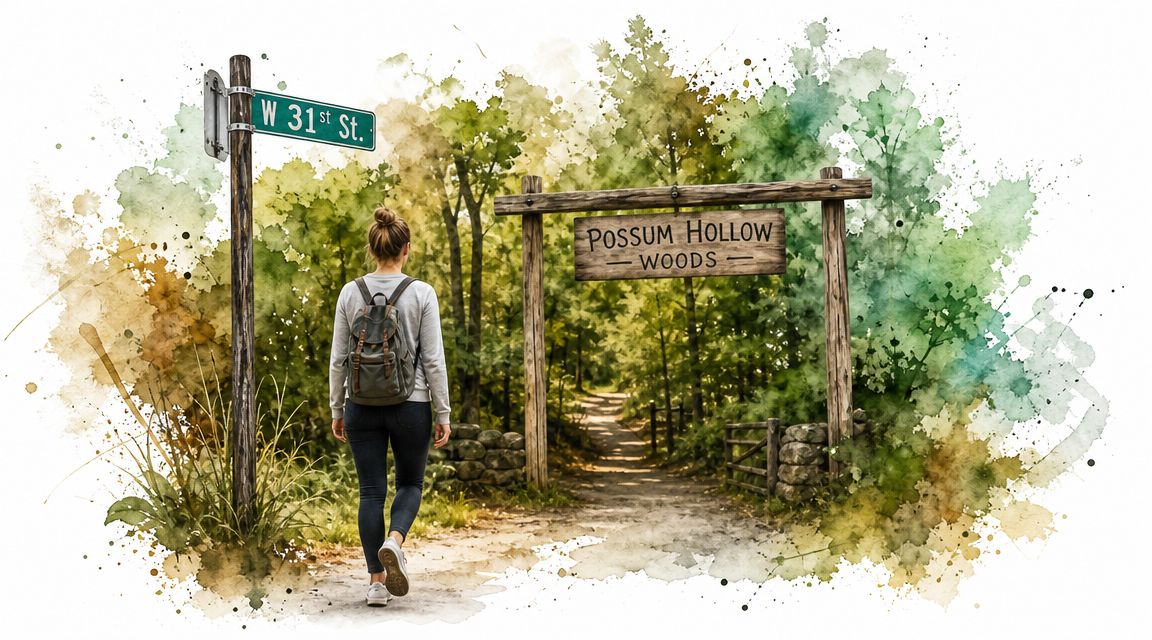
    A woman with a backpack walking toward the entrance of Possum Hollow Woods on a path.

    I care about that more than people expect. A preserve can be beautiful and still lose you at the parking lot if the approach feels confusing. Places that are easy to reach get revisited. Places that ask too much before the first step usually do not.

    If you're driving, set your route before you leave and pay attention as you get close to 31st Street. The roads around the preserve are manageable, which makes this a good pick for first-time visitors, families, or anyone bringing a friend who wants a calm start. The trade-off is predictable. Easy access attracts people, especially on good-weather weekends, so earlier arrivals usually make the whole outing smoother.

    Transit takes a little more effort here. That does not make the trip unrealistic. It just means the visit rewards a quick check of your route, your timing, and your walk from the nearest stop before you head out.

    Group plans need a bit more structure. Grove #1 gives you a clear home base with a shelter, and seasonal restroom access can make a real difference if you're organizing a cleanup, picnic, or community walk. I've learned this through Litter Caterpillars events across Chicago. People relax when they know exactly where to meet, where to return, and who is carrying the extra bags or water.

    Use this setup if you want the day to run cleanly:

    • Solo visit: Bring water, wear shoes you do not mind getting dusty, and keep your plan loose.
    • Meeting a friend: Pick one specific meeting point before anyone leaves home.
    • Bringing a group: Start at Grove #1, set a regroup time, and say it out loud twice.

    That last part sounds basic. It saves headaches.

    For people building a regular outdoor habit, I keep coming back to the same rule. Choose places that are easy enough to visit on an ordinary day, not just on your most organized day. If you want more ideas in that category, this guide to forest preserve spots around Chicago is a useful place to start.

    Possum Hollow Woods is good at meeting you where you are. Show up tired, curious, alone, or with a few neighbors. The place gives you a fair shot at settling in, and that is often what turns one visit into a relationship with the land.

    Exploring the Trails and Sights

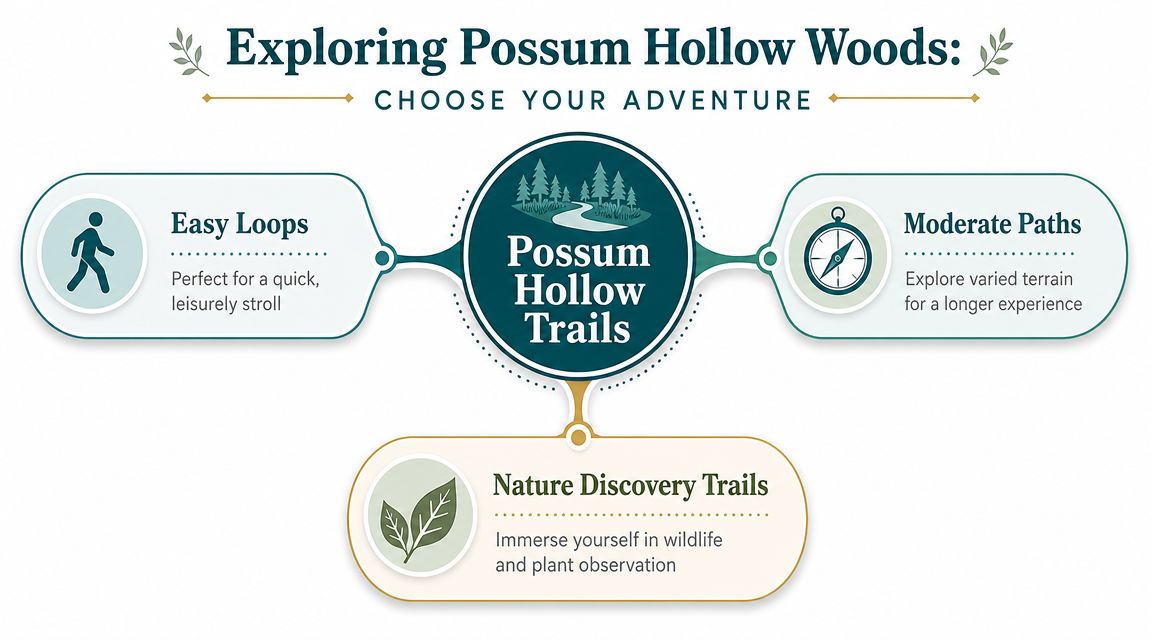
    The part I like most about Possum Hollow Woods is that it does not force a single kind of day on you. You can treat it like a quick walk, a longer ride, or the kind of place where you stop more than you move because something in the trees keeps pulling your attention.

    An infographic titled Exploring Possum Hollow Woods with three hiking trail options for nature enthusiasts.

    That flexibility matters.

    A lot of green spaces are enjoyable only if you arrive with a plan, the right gear, and enough time to make the trip feel justified. This one is more forgiving. I have a soft spot for places like that because they help people build a real relationship with nature instead of turning every visit into a production.

    The first stretch helps you settle

    The opening part of a walk here feels approachable right away. The paths let you find your pace without much fuss, which is good for new walkers, families, and anyone whose brain is still running on city speed.

    I do not mean "calm" in some vague wellness way. I mean you stop checking your phone every thirty seconds. Your breathing evens out. You start noticing the shape of the canopy, the light on the path, the sound of your own steps.

    That shift is small, but it is the whole point.

    I have seen the same pattern during cleanup days with Litter Caterpillars. People arrive carrying stress, schedules, and a little skepticism. Ten minutes into steady outdoor work, they are more present. A trail can do that too, if you let it.

    The trails give you options without overcomplicating things

    Possum Hollow Woods connects to the Salt Creek Greenway Trail system, so a simple walk does not have to stay small. You can keep the outing local and easy, or you can stretch it into a longer trip on foot or by bike if the day opens up.

    That is a real advantage. Some preserves are best for one clear purpose. Possum Hollow Woods gives you range.

    Here is how I would size up the experience:

    Trail mood Best for What it feels like
    Short and easy Clearing your head without committing half a day A reset that asks very little from you
    Unhurried wandering Walking with a friend or walking alone to think Enough structure to keep moving, enough room to notice things
    Longer connected movement Biking or extending the day on foot A neighborhood walk that turns into a real outing

    That middle option is where the place shines for me. You are not marching toward a destination. You are letting the woods set the pace for a while, and that is rarer than it should be.

    Some walks help you cover distance. Some help you pay attention.

    If you like building a regular outdoor routine, this roundup of Chicago-area trails for walking, riding, and repeat visits is a useful next list to keep on hand.

    The main trade-off here is simple. If you rush through, you will get exercise but miss the place. Possum Hollow Woods gives more to people who slow down, look around, and treat the visit like the start of a relationship, not a box to check.

    The Wildlife and Natural World You'll Meet

    The woods aren't silent. They only seem silent when you're still carrying city noise inside your head.

    A cute squirrel peeking out from behind a textured tree trunk with artistic watercolor autumn leaves nearby.

    Give yourself a few minutes, and the cast of characters starts showing up. Squirrels act like tiny managers checking whether you're authorized to be there. Blue jays sound like they own the building. Cardinals cut through the background with bright flashes and sharp calls. If you slow down enough, the place stops looking like "trees" and starts feeling like a neighborhood.

    I love that shift. It humbles you fast. You realize you're not entering an empty space built for your convenience. You're visiting a place where life was already happening before you got there.

    The animals teach you how to move

    I've had mornings where a deer appeared almost by accident, stepping through the trees with the kind of calm that makes you lower your own volume. Deer don't stomp around demanding attention. They move like they know the world doesn't owe them a spotlight.

    That's a useful lesson. When we do cleanups, the best volunteers often work the same way. Steady. Alert. No drama. Just care in motion.

    You probably won't see an opossum in broad daylight, and that fits. They're the night-shift cleanup crew. I respect that. They do their work offstage.

    Here are the things I tell people to notice first:

    • Listen before you scan: Birds usually announce themselves before you spot them.
    • Watch the edges: Wildlife often appears where trail, brush, and open space meet.
    • Pause near water or damp ground: Frogs and other small life often reveal themselves by sound before sight.

    What patience gives you

    A woodpecker tapping on a trunk can change the whole tempo of a walk. Spring frogs can turn a quiet patch into a chorus. Even the ordinary creatures matter. A squirrel freezing mid-climb can be as memorable as a rare sighting if you are paying attention.

    Here's a short look at the mood of the place in motion:

    You're a guest here. Act like one.

    That rule covers almost everything. Stay on the path when you can. Don't chase animals for a photo. Keep your snacks to yourself. Pack out what you bring in.

    What works in possum hollow woods is patience. What doesn't work is trying to force a perfect nature moment. The woods don't perform on command. They reveal themselves to people who are willing to be quiet enough to notice.

    A Story of People and the Land

    On my first few walks through Possum Hollow Woods, I paid attention to the usual things first. The curve of the trail. The wet patches that hold sound. The way the trees create a little distance from the road and the week you just had.

    Then I started noticing the human fingerprints.

    A preserve like this does not stay usable, quiet, and alive on good intentions alone. Someone planned access. Someone maintained trails. Someone showed up after storms, after busy weekends, after the small careless choices that pile up in public places. That part matters to me because I spend a lot of my life picking litter out of parks and streets around Chicago. Clean ground is rarely an accident.

    Possum Hollow Woods sits within a larger corridor of paths and preserved land, part of a system that links neighborhoods to nature in a practical way. That connection changes who gets to build a relationship with a place like this. A preserve hidden behind complexity serves fewer people. A preserve you can reach, walk, return to, and care for becomes part of community life.

    Care shows up in visible ways

    You can read stewardship on the ground.

    A trail that is still passable after a wet stretch. A spot that feels visited but not trashed. Signs that people use the place without grinding it down. Those are results. They come from agencies doing maintenance, volunteers doing unglamorous work, and regular visitors deciding not to act like the woods are someone else's problem.

    That last group matters more than people think.

    Public land holds up best when visitors treat it like a shared responsibility. That can mean joining a workday. It can also mean taking the simple jobs seriously, carrying out your bottle, keeping to the trail, picking up the snack wrapper that is not yours. None of that is flashy. It works.

    Your story belongs here too

    I do not see Possum Hollow Woods as a backdrop for a quick photo and a coffee walk. I see it as the kind of place that asks something from you. Attention first. Respect next. Action if you are ready for it.

    Here is the trade-off. If you move through a preserve like a consumer, you get a short visit. If you move through it like a steward, you get a relationship.

    That relationship can start small:

    • Leave with more than you brought in: If you spot litter and can remove it safely, do it.
    • Learn one recurring feature: A bend in the trail, a stand of trees, a wet area that changes by season. Familiarity builds care.
    • Show up more than once: The second and third visit are when a place starts becoming part of your life.

    Public land stays healthy when regular people treat it like a trust, not a service.

    That is the story here. The land shapes people who spend time with it, and people return the favor by protecting what they have learned to value. I have seen that pattern in cleanup work across Chicago, and I feel it in Possum Hollow Woods too. Visit for the walk if you want. Come back if you want a deeper reason.

    Organize Your Own Cleanup A Step-by-Step Guide

    If possum hollow woods wakes something up in you, don't ignore it. Use it.

    Cleaning up a park sounds small until you've done it. Then you realize it's one of the fastest ways to turn vague care into visible action. A bag fills up. A path looks better. Your group starts joking around. The whole thing becomes more fun than it has any right to be.

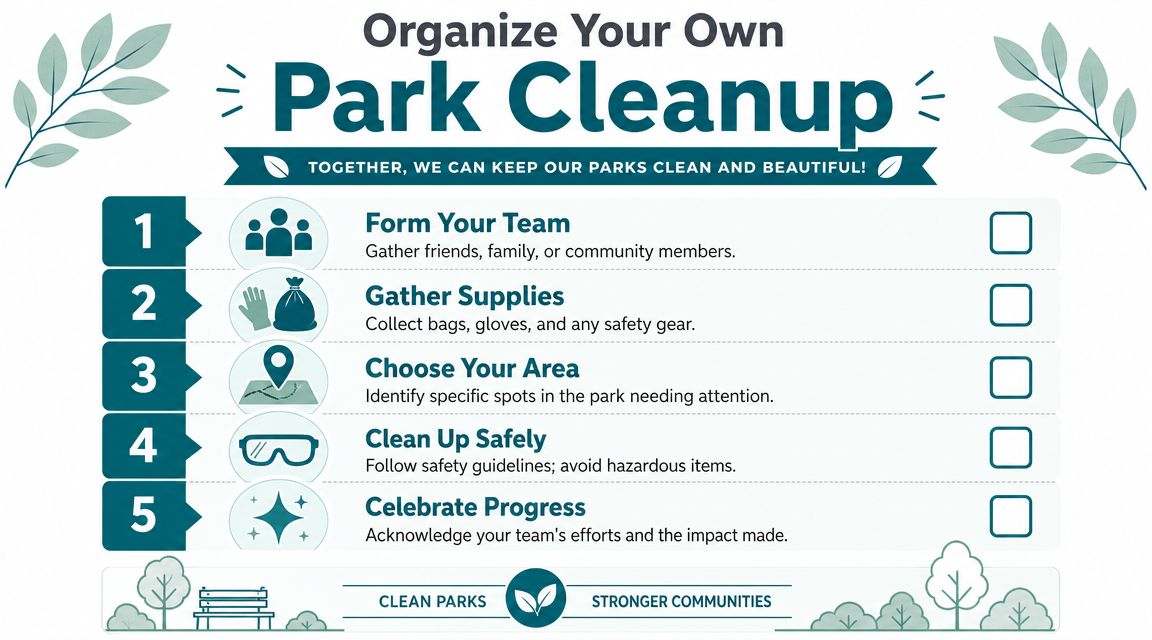
    A checklist infographic titled Organize Your Own Park Cleanup, guiding users through five steps for community service.

    I've learned that the biggest mistake people make is overcomplicating the plan. They act like they need a committee, matching shirts, and a month of preparation. You don't. You need a date, some people, and enough structure to keep everyone safe.

    Step one and step two

    1. Pick a date you can defend
      Weekend mornings work well because they attract people who are ready to give real effort. Choose a start time that's clear and realistic. Early enough to feel fresh. Not so early that everyone bails.

    2. Invite a small crew first
      Start with friends who answer texts. Don't build your plan around flaky enthusiasm. A cleanup with three committed people beats a cleanup with fifteen maybes.

    A sample text works fine:

    "I'm doing a cleanup at possum hollow woods on Saturday morning. Gloves, bags, and good energy. Want in?"

    Short beats fancy. People decide faster when the ask is simple.

    Step three and step four

    1. Get basic supplies
      You can start with work gloves and trash bags. That's enough for many casual cleanups. Bring water. Wear closed-toe shoes. If you're the organizer, keep a few extra supplies because somebody always forgets something.

    2. Choose your zone before anyone starts
      Don't let a group scatter with no plan. Pick a meeting point and give people a rough area to cover. Trails, edges near parking, and spots where litter gathers are easier to manage when everyone knows the boundaries.

    This is also a good time to decide how you'll handle trash collection at the end. Don't save that question for the last minute.

    Step five and the safety talk

    1. Give a quick safety briefing
      The safety briefing determines whether many volunteer events feel solid or sloppy. Keep it direct.
    • Watch your footing: Uneven ground and hidden roots trip people up.
    • Skip hazardous items: If something looks sharp, leaking, or unsafe, don't play hero.
    • Stay aware of each other: Buddy energy beats lone-wolf energy.
    • Know the regroup time: People relax when they know the plan.

    Safety isn't boring. Safety is what makes the event feel trustworthy. If you're organizing repeatedly, that trust is everything.

    Step six and step seven

    1. Clean first, optimize later
      Start moving. Momentum matters more than perfection in the first few minutes. Once people get into rhythm, they'll naturally spread out and find their flow.

    2. End with proof and gratitude
      Take a group photo. Look at the filled bags. Thank people by name if the group is small enough. Celebration locks the experience into memory.

    Here's the trade-off I see all the time:

    Approach What happens
    Too much planning The cleanup never happens
    Too little structure People feel confused or unsafe
    Simple plan, clear roles People enjoy themselves and come back

    If you want an existing volunteer option instead of organizing from scratch, groups like Litter Caterpillars run Chicago-area trash pickups and make it easy to join a cleanup with a set meeting plan.

    The deeper reason to do this is personal. Cleaning someone else's mess can unearth something within you. It sounds odd, but it's true. The act is concrete. The result is visible. Your mind likes that. Your spirit does too.

    Tom Sawyer got people excited about painting a fence because he made effort feel meaningful. A cleanup works the same way, except this time the trick is honest. Picking up litter with friends is satisfying. It builds trust. It gives the day shape.

    And if you're nervous about leading, remember this. Leadership at a cleanup isn't a speech. It's showing up ten minutes early with extra gloves and a calm tone.

    Your Adventure Is Waiting

    Possum hollow woods isn't asking you to become a different person before you arrive. That's one reason I keep thinking about it. You can come tired, distracted, restless, or unsure. The place still meets you where you are.

    I think that's part of why outdoor service works so well for me. A trail doesn't care about your image. A cleanup doesn't care whether you had a perfect week. You show up, take a few steps, do one useful thing, and suddenly the day has traction.

    If you're craving a reset, go walk there. If you're feeling brave, bring a friend. If you see a piece of trash on the trail and pick it up, good. That's a start. Most changes worth making begin that way. Small, visible, real.

    Bravery isn't always dramatic. Sometimes it's driving to a preserve on a cold morning. Sometimes it's putting your phone away. Sometimes it's being the person who says, "Let's clean this up," and meaning it.

    Your story at possum hollow woods doesn't need to look like mine. That's the whole point. You get to find your own version of quiet, your own pace, your own reason to come back.


    If you want a practical way to turn that spark into action, check out Litter Caterpillars. We organize volunteer cleanups around Chicago, and it's an easy place to start if you want fresh air, real community, and a reason to leave a place better than you found it.

  • Green City Project: A Practical Guide to Local Success

    Green City Project: A Practical Guide to Local Success

    The first time I went out to pick up trash, there were three of us, cold hands, cheap gloves, and sky that looked like trouble. Then Chicago threw hail at us, every Uber canceled, and I remember thinking, weirdly, that this was the most alive I'd felt in a long time.

    That's where a green city project can begin. Not with a grant. Not with a board meeting. With one ugly corner, one honest reason, and one day when you decide you're tired of walking past the mess.

    Finding Your 'Why' Behind the Project

    I didn't start outside because I had my life together. I started outside because I didn't.

    My apartment was a museum of stalled decisions. Old jars in the fridge. Half-used bags of food from failed health kicks. Random objects with sentimental stories attached to them like little anchors. Any normal piece of trash weighed almost nothing, but to me it felt like it weighed a truckload. I could see the mess. I hated the mess. I still couldn't move it.

    Then one relationship in my life blew up in the way bad relationships do. Chaos, selfishness, too much noise, too little honesty. After that, I made a promise to myself. I'd build a life around cleanliness, consistency, and bravery, even if I had to do it in a crooked, awkward way at first.

    So I tried something sideways. If I couldn't clean my own mess, maybe I could clean up someone else's.

    A young woman reflecting on a green city project with sustainable home and business ideas sketched around her.

    Start with the pain you can feel

    That first reason matters more than people think. If your reason is thin, your project dies the first time it rains. If your reason is personal, you'll keep going when it gets annoying, lonely, or embarrassing.

    Maybe your why is simple:

    • Your block embarrasses you: You're tired of guests stepping around fast-food wrappers.
    • Your kid noticed the litter: That kind of comment gets under your skin.
    • You need better friends: You want to meet people who wake up to give, not just to consume.
    • You need a reset: Service is sometimes the fastest way to stop obsessing over yourself.

    A lot of people wait for a polished mission statement. I think that's backward. Your first why can be rough. It can be selfish in the healthiest sense. You want to feel stronger. You want to trust yourself again. Good. Use that.

    Practical rule: Don't start by asking, “What citywide plan should I create?” Start by asking, “What corner am I willing to care about every week?”

    Big institutions usually think about green cities from high above. The term itself has often been used in large benchmark projects. The Siemens Green City Index summary evaluated over 120 cities worldwide, and the North American edition rated 27 cities across the U.S. and Canada using indicators like CO2 emissions, water, waste, transport, and energy use.

    That kind of work is useful. It helps cities compare real systems instead of just slapping a green label on themselves.

    Your small start is an advantage

    But you and I don't need to begin at that altitude.

    You can begin with a bus stop full of cups. An alley behind your building. A vacant lot everyone has given up on. Large systems matter, but local courage matters too. You can move faster than a committee because your project has a heartbeat.

    If you need a push because you're still circling the idea, look at this guide on how to find volunteer work that actually fits your life. Don't overthink your identity before you act. Action is what reveals identity.

    I've learned that a good green city project doesn't begin when you feel ready. It begins when your discomfort finally gets a direction.

    From Idea to Your First Cleanup

    Our first cleanup was half joke, half dare, half spiritual experiment. Yes, that's three halves. That's what it felt like.

    There were only three of us. We picked a spot, showed up, and then got hit by a freak spring hailstorm. We hid under a tree, shaking, laughing, checking our phones while ride after ride disappeared. It was miserable in the way a camping trip can be miserable. You're wet, your plans are broken, and later it becomes the only story anyone wants to hear.

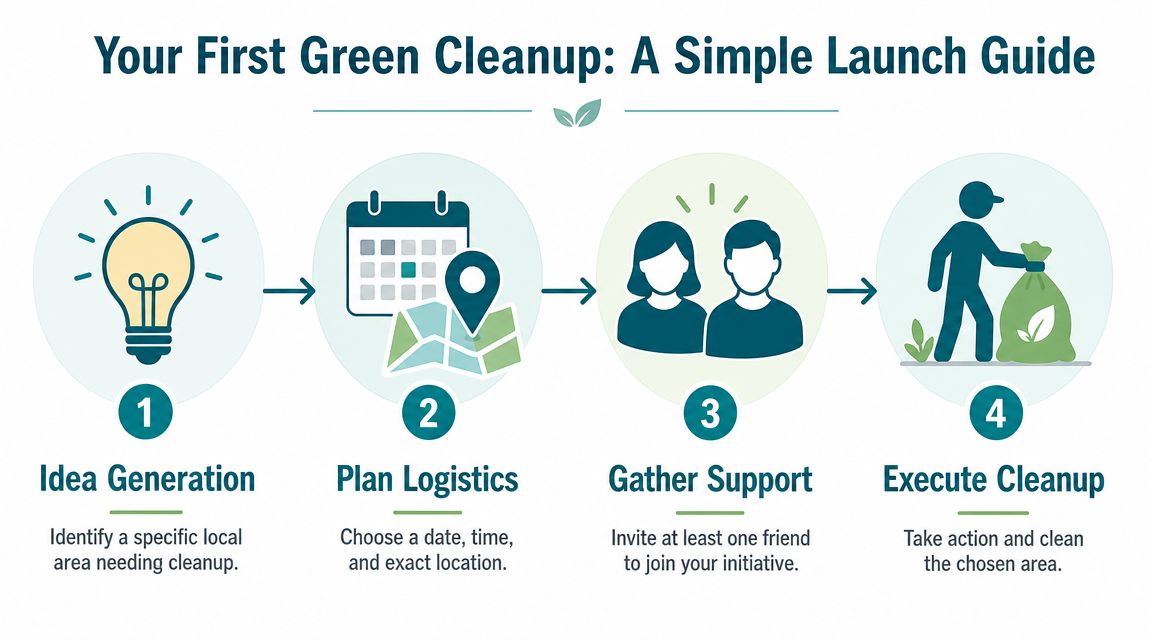
    That day taught me something useful. You don't need an elegant launch. You need a start.

    A four-step infographic illustrating a simple guide for launching a local green cleanup project.

    Pick a target you can finish

    Your first cleanup should be almost embarrassingly manageable. Don't announce a mission to transform your entire city. Pick one place where success is visible.

    I like spots with a clear border:

    1. A single block
    2. One park edge
    3. One alley
    4. A bus stop corridor
    5. A lot line near a fence

    When you finish a defined area, people feel the win in their body. They can see before and after without needing a chart.

    The logic here matches how bigger planning methods often work. The Cambodian Green City Strategic Planning Methodology starts by defining goals and priority actions before trying to tackle everything at once. That's not city-hall-only advice. That's street-level advice too.

    Use the ugly simple plan

    You can launch your first cleanup inside a week if you do this:

    • Choose the place: Walk it first. Make sure you know where people can meet.
    • Set a date: Weekend mornings work well because people show up fresh and less distracted.
    • Invite one friend: One reliable person beats ten vague maybes.
    • Bring basic gear: Gloves, trash bags, hand sanitizer, water.
    • Decide your finish line: One hour, ninety minutes, or “until this block is clear.”

    That's enough.

    I've seen people spend more time designing a logo than choosing a corner. Don't do that. A green city project lives or dies on repeated action, not on branding at the start.

    If you can put a date on a calendar and a pin on a map, you're already farther along than most people with “big ideas.”

    Make the first event easy to join

    Your invitation should sound like a human wrote it.

    Try something like this:

    What to say Why it works
    “I'm cleaning this block Saturday morning. Want to join?” It's direct and casual.
    “No experience needed. I'll bring supplies.” It removes friction.
    “We're only out for an hour.” It respects people's time.
    “Come even if you're shy.” It gives nervous people permission.

    You don't need to impress people. You need to lower the emotional cost of showing up.

    If you want a model for organizing a first event in a simple, public way, look at a live example of a volunteer trash pickup listing. Notice what matters. Date. place. expectation. That's the skeleton.

    Let the first cleanup be a little imperfect

    Rain might come. Someone might cancel. You might bring the wrong gloves or forget water or realize the lot is nastier than you thought.

    Good.

    Your first event should leave you with three things:

    • A visible result
    • A story
    • A reason to do it again

    The hailstorm gave us all three. It was cold and ridiculous, but it proved the idea had teeth. If people are willing to freeze a little and still laugh, then you've found something stronger than convenience.

    Building Your Crew and Keeping Them Safe

    A cleanup group is only as healthy as the people inside it. If volunteers feel unsafe, confused, or used, they won't come back. If they feel protected and welcomed, they bring their friends.

    I learned early that I had to treat volunteer energy like a flame in high wind. It can light a whole block. It can also go out fast.

    A group of diverse volunteers in high-visibility vests picking up litter in a green city park.

    Safety first means real scouting

    Before I ask anyone to join me at a site, I try to walk it myself. I'm looking for the obvious stuff and the annoying stuff.

    Here's what I check:

    • Traffic risk: Fast corners, blind turns, bad shoulders, aggressive merging.
    • Ground risk: Broken glass, needles, metal, deep mud, unstable surfaces.
    • Weather exposure: Not just rain, but heat, wind, icy patches, and poor shade.
    • Exit options: Where can people stop, rest, or leave if something goes wrong?

    Formal green city planning often uses broad criteria like water, waste, transport, climate impacts, and disaster frequency. The Global Green Growth Institute guidelines frame green city work through systems and local risk awareness. At our scale, I translate that into one basic rule. Know the environment you're bringing people into.

    That means you don't just ask, “Is there trash there?” You ask, “Can I bring people here and keep them safe?”

    Protect people before you try to inspire them

    I keep my volunteer-first philosophy simple.

    Priority What it means on the ground
    Safety I won't run a cleanup in conditions that feel reckless.
    Happiness I want people to leave lighter than they arrived.
    Dignity I don't pressure volunteers for money or guilt them into more.

    Many groups inadvertently burn out the very people they depend on. They ask too much, communicate poorly, and act like sacrifice is endless. It isn't.

    If you're building your own crew, read through these volunteer management best practices. Even if your group is tiny, habits form early.

    Build a crew, not a roster

    A list of names isn't a community. A community is what happens when people remember each other's stories.

    I like weekend mornings for a reason. The people who come out then are usually ready to give something of themselves. That creates a different kind of group chemistry. Less flaky. Less performative. More grounded.

    Ways to turn strangers into teammates:

    • Use a group chat: It keeps momentum between events.
    • Learn names fast: Nothing warms a group quicker.
    • Give people jobs: One person hands out gloves. One tracks bags. One watches traffic.
    • End with a small ritual: Coffee, snacks, a group photo, even a goofy cheer.

    Here's a look at the kind of spirit that helps a crew stick together over time.

    Field note: People return when the work feels meaningful and the atmosphere feels safe. They don't return because your signup form was impressive.

    You also need to be honest about your limits. If a site feels sketchy, skip it or redesign the event. If the weather is nasty in a dangerous way, cancel. Bravery is real. So is common sense.

    I'd rather have a group that lasts than one dramatic day that scares everyone off.

    Creating an Identity People Are Proud Of

    Trash pickup can feel like punishment if you frame it badly. That's why identity matters.

    I think about Tom Sawyer and the fence all the time. He turned boring labor into something people wanted to join. I'm not interested in tricking anybody, but I am interested in the same human truth. People want to belong to something that feels honorable, brave, and alive.

    Give the work a flag

    Most volunteer groups stop at logistics. Date, time, supplies, done. That gets bodies to a site, but it doesn't always build pride.

    Pride is useful when it's tied to service.

    A strong green city project has cultural signals. Maybe that's a flag. Maybe it's a phrase you repeat. Maybe it's a shared playlist on the drive home. In our case, flags, badges, and a theme song helped turn “I picked up trash once” into “I'm part of something.”

    That sounds small until the work gets hard. Identity is what gets people out of bed when novelty has worn off.

    Use symbols honestly

    You don't need to fake intensity. You just need to make goodness feel bold.

    Try a few things:

    • A name people can wear proudly: It should feel alive in conversation.
    • A simple visual marker: Pins, patches, stickers, gloves in one color.
    • A repeatable ritual: Group photo, chant, snack stop, post-cleanup walk.
    • Language with backbone: Words like bravery, kindness, unity, grit.

    Sports teams do this. Countries do this. Clubs do this. Human beings like banners. We like songs. We like the feeling that our effort belongs to a story bigger than one Saturday morning.

    A broom in your hand feels different when you think, “I'm helping out,” versus “This is who I am.”

    Make service feel like a privilege

    At this point, a lot of leaders get squeamish. They worry that making volunteer work feel special somehow cheapens it.

    I think the opposite is true.

    If your group treats cleanup like a sad obligation, people will feel that. If your group treats service like a proud act of courage, people rise to it. They stand taller. They invite friends. They wear the shirt.

    You don't need hype. You need meaning that people can feel in their chest.

    And the best part is that identity doesn't cost much. A handwritten sign, a shared joke, a song on someone's phone, a nickname for your regulars. Those things create glue. Once your group has glue, the work stops feeling like random labor and starts feeling like a mission people chose with open eyes.

    Expanding Your Impact Beyond Trash Pickup

    At some point, the cleanup ends and you keep staring at the space.

    That's when your project starts changing shape.

    I've felt that shift on blocks where we came back again and again. At first you notice the litter. Then you notice the busted fence, the dead corner, the empty lot, the way everybody walks past like the place is already lost. If you keep showing up, your eyes change. You stop asking, “How do we clean this?” and start asking, “What could this become?”

    Consistency earns bigger chances

    We grew by doing the unglamorous thing over and over. Weekly cleanups. Rain. Heat. Bitter cold. The city started to feel less like a set of separate neighborhoods and more like one giant body with sore spots.

    Then odd opportunities appeared.

    A bigger event needed cleanup help along a major route. We said yes. Later, an empty lot became more than an eyesore in our minds. It became a possible future park. That kind of leap sounds huge when you say it fast, but it doesn't feel huge when it grows out of regular work. It feels like the next honest step.

    An infographic showing four steps for expanding green impact: litter cleanups, community gardens, tree planting, and policy advocacy.

    Think in layers, not in leaps

    A local green city project often grows best in this order:

    Layer What it looks like
    Cleanup Repeated litter removal in one area
    Stewardship Returning, monitoring, reporting, caring
    Transformation Planting, beautifying, repairing, reusing land
    Partnership Working with neighbors, businesses, event organizers, or city staff

    People get stuck because they jump from “one cleanup” to “citywide movement” in their head. That gap is too wide. Layers are easier.

    One lot. Then repeated care. Then a small physical improvement. Then a larger ask.

    Ask for the next thing, not the final thing

    When you approach a partner, don't pitch a fantasy. Pitch the next visible step.

    That might mean:

    • Borrowing tools
    • Getting permission to access a site
    • Finding a place for bag disposal
    • Asking a nearby business for water or storage
    • Raising support for one specific lot improvement

    Many projects often drift into vague mission language. I try to avoid that. Many green initiatives have big ideals but weak outcome reporting. The current Green City Project site leaves a real opening for clearer, tangible results, and that's the lesson I take from it. If you want people to believe in you, show them a changed place they can point to.

    One solid lot transformed beats a thousand dreamy sentences about change.

    That's how you expand without getting fake. You let the ground itself make the argument.

    If you want examples of different cleanup formats, neighborhood actions, and recurring volunteer work, Litter Caterpillars is one group that organizes public trash pickup events in Chicago through open signups and recurring meetups. That kind of repeated public action is one workable model. It isn't the only model, but it shows how consistency can build enough trust for bigger projects later.

    Measuring What Matters and Sustaining Momentum

    People love asking for one clean metric. How many bags? How many pounds? How many blocks? I understand the urge. Numbers feel solid.

    But if you run a green city project long enough, you learn that one metric can lie to you.

    A rough site can produce lots of trash one week and less the next. A smaller cleanup can be harder and more useful than a big easy one. A volunteer who comes once and then changes their whole weekend routine has experienced a real victory, even if your spreadsheet barely notices.

    Don't worship a single score

    Project success is slippery because local conditions change everything. Culture changes it. Money changes it. Weather changes it. Capacity changes it. One commentary on project outcomes says it is almost impossible to measure success accurately with a single global metric because local conditions shape results so heavily. The same piece points to a smart-sustainable-cities report where 60% of surveyed initiatives focused on planning, while 25% emphasized Smart Living and 21% Smart Environment, and it also notes bottlenecks like interoperability, mixed data sources, and low capacity to connect data to analytical models in implementation work, as discussed in this project success commentary.

    That lands with me because I've seen groups become obsessed with planning and image while the ground stays dirty.

    Track what keeps the project alive

    I care about a different set of questions.

    • Did we show up again?
    • Did people feel safe?
    • Did anyone make a friend?
    • Did someone become braver because they came?
    • Did we leave the place better than we found it?

    Those aren't soft questions to me. They are survival questions.

    The project lasts when it gives people energy back. If every cleanup drains your crew, the calendar will eventually go blank.

    You can still keep simple records. Attendance notes. Photos. Repeated locations. Specific site changes. Those things help. But don't confuse easy-to-count with most important.

    Momentum comes from rhythm

    Burnout usually doesn't arrive with a trumpet. It creeps in subtly. One skipped week. Then two. Then the group chat gets stale. Then the project becomes a memory everyone still “cares about.”

    Rhythm fights that.

    A few ways I protect momentum:

    1. Keep the schedule predictable. Same general time pattern beats constant rescheduling.
    2. Make the events finite. Leave people wanting a little more.
    3. Let people rest without shame. Guilt is a bad fuel source.
    4. Celebrate tiny wins. Clean curb line. New regular. A volunteer who smiled all morning.

    The true measure of a green city project is whether it keeps changing both the place and the people. If the street gets cleaner while your volunteers get steadier, kinder, and more connected, that's success I can trust.


    If you want a real-world place to plug in, Litter Caterpillars runs volunteer-driven Chicago cleanups built around bravery, kindness, unity, and a volunteer-first approach. Join an event, meet good people, and start building your own version of a green city project one block at a time.

  • Chicago Environmental Issues: A Guide to Fixing Our City

    Chicago Environmental Issues: A Guide to Fixing Our City

    A few years ago, I stared at a jar of blueberry jam in my fridge and couldn't throw it away. Then I walked outside, saw trash stuck in a gutter after rain, and felt the same paralysis.

    Your Mess Is The City's Mess

    My room used to look like a stalled negotiation between who I was and who I kept pretending I'd become. Old bags of nuts from my healthy phase. Tangled cords from gadgets I swore I'd use again. Receipts, wrappers, clothes on chairs, memories disguised as junk.

    I didn't just have a mess. I had a loyalty problem.

    I stayed loyal to objects long after they stopped serving me. I did the same with people. I held onto bad relationships because throwing things away, whether a moldy container or a selfish person, felt violent. That sounds dramatic until you've tried to toss a four-year-old jar of jam and felt your chest tighten like you're betraying a former version of yourself.

    A distressed person sitting amidst tangled wires and debris before a stylized Chicago city skyline backdrop.

    The day I stopped separating my life from the sidewalk

    After a long chaotic relationship ended, I made a simple promise to myself. I would stop building my life around avoidance. I would practice cleanliness, consistency, and bravery, even if I had to do it badly at first.

    Cleaning my own space still felt heavy. Weirdly, cleaning the street didn't.

    That's part of how this started. Picking up a bottle from a curb felt easier than facing the pile in my bedroom. Someone else's mess didn't carry my history. It didn't argue with me. It didn't ask me to revisit my mistakes. I could just bend down, grab it, and keep moving.

    Practical rule: If your own life feels too tangled to fix, start with one corner of the world you can touch.

    That rule changed me. It also changed how I see chicago environmental issues. People talk about pollution, waste, and environmental justice like they're giant policy topics floating over our heads. I don't experience them that way. I experience them as a sticky can in the grass, a blocked drain before a storm, a sidewalk that tells you nobody has cared for this block in a while.

    Why bravery starts small

    The first cleanup that became our origin story had only three of us. We got caught in a spring hailstorm and huddled under a tree while every Uber seemed to cancel. We were cold, annoyed, laughing, and slightly miserable.

    And I remember thinking three things:

    • Other people's mess is easier: I could pick up street trash faster than I could sort my own emotional junk.
    • Service creates a strange kind of fun: Suffering a little with good people makes a story.
    • Action beats rumination: A full trash bag quiets your mind in a way endless thinking never does.

    If you live here, your city probably feels personal already. The block where you walk your dog. The alley behind your apartment. The recycling confusion in your building. If you want a practical place to start sorting that part out, I like using local guides such as Chicago recycling centers.

    I started with trash because I needed a battle I could win. A lot of people do.

    The Invisible Problems Air and Water

    You can ignore bad air because you can't hold it in your hand. That's what makes it slippery. It slips past your attention and goes straight into your lungs.

    Think of Chicago like one giant shared room. We all breathe inside it. Some people are near the open window. Some people are sleeping next to the machine that's coughing smoke.

    A woman wearing a face mask looks toward a stylized watercolor Chicago skyline and polluted river landscape.

    What a bad air day really means

    When people say the air feels off, they're often talking about something real, even if they don't have the language for it. The Chicago-Naperville metro area ranked 15th worst in the nation for ozone pollution, with 20.3 unhealthy ozone days per year in the American Lung Association's 2025 State of the Air report. That same report said the metro area ranked 13th worst in the nation for year-round particle pollution, and it noted a worsening from the previous year. It also said 156 million people, nearly half of Americans, live in places with unhealthy air, which puts Chicago inside a much bigger public health problem, not outside it. You can read that in the American Lung Association's Illinois release on the 2025 State of the Air report.

    That matters because "bad air" isn't an aesthetic complaint. It isn't just haze over the skyline. It's the stuff your body has to process while you bike to work, wait for the bus, or crack a window at night because your apartment is too hot.

    Air pollution feels democratic because the sky covers everybody. It isn't democratic in how it lands.

    Air is shared. Exposure isn't.

    I think about air the same way I think about roommates. If one roommate smokes in the kitchen, everyone deals with it. But the person sleeping closest to the kitchen gets the worst of it.

    That's why citywide averages can fool you. They smooth out the rough edges. They turn somebody's daily burden into a bland sentence.

    Here's the simple version:

    What you notice What might be happening
    Burning smell, haze, irritated throat Ozone and particles may be high
    Dust near heavy industry or trucking routes Localized particulate exposure may be worse
    Fine layer of grime on windowsills or cars Material handling and traffic may be nearby contributors

    Our water is our shared glass

    Now think about water. Lake Michigan is our giant drinking glass. Most of us don't wake up thinking about intake pipes or sewer systems. We turn the faucet and expect trust.

    That trust is fragile.

    Water has a complex hidden life in a city. It gets pulled, treated, pushed through old pipes, used in kitchens and bathrooms, then sent back through another buried network that is rarely seen. When rain hits hard, all that hidden infrastructure gets stress-tested at once. So does our illusion that flushing means "gone."

    A lot of chicago environmental issues work like that. The problem disappears from view, then comes back in another form. Air enters your chest. Water moves through old systems. You don't need a chemistry degree to care. You just need to realize you're already inside the system.

    The Problems You Can See and Feel

    I can show you two blocks that feel like two different cities.

    On one block, somebody swept the storefront, the bins weren't spilling over, and a tree threw enough shade to make you slow down. On the next block, a plastic bag whipped around a fence, cups sat in the gutter, and the sidewalk radiated heat back into your shins.

    That's not theory. That's mood. That's blood pressure. That's whether you walk with your shoulders relaxed or tight.

    A person walks past an overflowing blue recycling bin in a polluted Chicago city landscape.

    What one dirty corner does to your brain

    Trash multiplies socially. One cup on the ground gives the next person permission. An overflowing bin tells you the system has already given up for the week. Illegal dumping says something even harsher. It says this place is where unwanted things go.

    People feel that message in their body before they put it into words.

    I think that's why cleanups affect volunteers so quickly. We don't just remove objects. We interrupt a script. We tell the block, "No, this isn't where garbage belongs. People belong here."

    A cleaner street changes what people expect from each other.

    Heat makes neglect feel physical

    Then there's the summer version of the same problem. Streets with more asphalt and fewer trees can feel punishing. You wait at a light and the heat bounces off the road, the cars, the brick, your own face.

    A shaded block changes everything. It changes how long elders can sit outside. It changes whether kids run around or retreat indoors. It changes whether a walk to the store feels normal or draining.

    Here are the differences I notice right away when I move from one block to another:

    • Shade: Trees lower the emotional aggression of a hot day. A block without shade feels sharper.
    • Surface temperature: Blacktop and concrete hold heat and throw it back at you.
    • Street care: Overflowing trash and neglected lots make heat feel worse because the whole place reads as abandoned.

    I don't call these small annoyances. I call them daily conditions. If you live with them long enough, they shape your habits. You go outside less. You trust your neighbors less. You stop expecting beauty from the place where you live.

    That is why visible chicago environmental issues matter. You don't need a report to know when a block feels hostile. Your legs, lungs, eyes, and patience already know.

    Where The Burden Falls Hardest

    Some neighborhoods carry the city's dirtier bargain.

    If you want honesty about chicago environmental issues, you have to stop pretending the burden lands evenly. It doesn't. The city has areas where pollution is a topic, and areas where pollution is a routine neighbor.

    An infographic titled Unequal Environmental Burden in Chicago, illustrating issues affecting marginalized neighborhoods in the city.

    What the map tells you

    A 2025 factsheet on limited pollution exposure found that Latine Chicagoans are 30% of the citywide population but 37% of the people living in areas with the highest overall pollution exposure. The same report said estimated PM2.5 levels across Chicago range from about 9 to 12 μg/m3, which is above the 2024 U.S. EPA long-term public health standard of 9 μg/m3. You can read that in the CMAP limited pollution exposure factsheet.

    That isn't abstract to me. It means some families live in the part of the shared room where the air is worse, more often, for longer. It means "city average" can hide a street-level truth.

    The Southeast Side problem

    The Southeast Side hits hard because it's not one cleanly isolated source. It's a multi-source industrial exposure zone. Steel production, metal recycling, petroleum handling, and petcoke storage can all add to particulate and metals burdens in the air. EPA notes tied to the area say petroleum coke in southeast Chicago has generated fugitive dust complaints, actions have been taken against petroleum handlers along the Calumet River, and high airborne metals, especially manganese, have been identified there.

    That complexity matters. If several operations can produce overlapping dust and metals, then finger-pointing gets easy and solving the problem gets harder.

    I view it this way:

    • If you measure citywide averages only, you can miss the block that is taking the hit.
    • If sources overlap, one company can shrug and say the dust came from somewhere else.
    • If monitoring is too coarse, residents keep living with uncertainty while officials debate attribution.

    The practical answer is local. Dust suppression. Enclosed conveyance. Paved and cleaned haul roads. Real-time monitoring near active bulk-material handling sites. That kind of targeted work fits the problem better than broad city averages.

    Justice has to be local or it isn't real

    I don't use the phrase environmental justice because it sounds polished. I use it because when one part of the city breathes more grime, drinks through older riskier systems, and gets less day-to-day relief, the issue is moral before it is technical.

    If you want a clearer grounding in that idea, I like this plain-language explainer on what environmental justice means.

    Below is a simple way to think about unequal burden across neighborhoods:

    Burden on the ground What residents may face
    Nearby industrial emissions and dust More daily concern about breathing and outdoor activity
    Older infrastructure and neglected basics More stress around water, housing, and health
    Less tree cover and fewer buffers Hotter blocks and fewer places to recover outside
    Illegal dumping and weaker upkeep Constant signals that care arrives late, if at all

    When people say "the environment," I think that's too vague. I think about who gets the dirty truck route, who gets the dust, who gets the hotter block, who gets told to wait.

    The City's Promises Versus Reality

    The city has plans. Cities always have plans.

    The harder question is whether a parent on the South Side or West Side can feel those plans in daily life. Can they drink from the tap without worrying about old pipes? Can they open a window without bringing in the smell of industrial activity? Can they see a pace that matches the urgency?

    Budget lines don't clean a sink by themselves

    Recent reporting noted that Chicago has made larger investments, including a nearly $200 million FY2022 climate and environmental justice budget, while many households on the South and West Sides still face burdens tied to lead-contaminated drinking water pipes and concentrated industrial pollution. That same reporting frames the issue well. Progress is uneven, and the practical question is whether money is closing gaps fast enough where people need relief most. You can read that in this look at Chicago's environmental justice battles, impacts, and solutions.

    I don't say that to sneer at public spending. Budgets matter. Plans matter. But if a block still lives with the old problem, then the plan hasn't finished the job.

    Reality check: A promise feels real only when a resident can point to a changed pipe, cleaner air, cooler street, or cleaner lot.

    The pace problem

    Disillusionment sets in, leading to burnout. They hear that money has been allocated. They hear that a department has a strategy. They hear language about justice and investment. Then they go outside and the same basics still feel stuck.

    The system has habits that make delay look normal:

    • Slow rules: Agencies move at government speed, even when residents live at body speed.
    • Competing priorities: The neighborhood with the loudest political protection often gets faster attention.
    • Patchwork fixes: One grant, one pilot, one announcement. Meanwhile daily life keeps arriving every morning.

    I don't need every city effort to fail before I criticize the gap. I just need to compare the promise to the pace. If a household still deals with old lead service lines and concentrated pollution after years of speeches, the criticism writes itself.

    What I listen for now

    When officials talk, I try to translate their language into street language.

    Official language Street translation
    Investment Did anything get fixed on the block
    Equity Did the hardest-hit area move first
    Environmental justice Did the burden actually get lighter
    Climate plan Can people feel the change in summer, at the tap, or in the air

    That may sound blunt. Good. Blunt is useful when people have waited too long.

    Finding Your People and Your Power

    I don't think people need more guilt. I think they need a crew.

    When my life felt scrambled, I did not improve because somebody won an argument online about systems. I improved because I started showing up outdoors with other people and doing one useful thing with my hands.

    The first cleanup that changed me

    Our first real cleanup felt ridiculous. Three people. Cold weather snapping at our fingers. Hail coming down. We hid under a tree and watched ride requests vanish. It was inconvenient and kind of funny.

    That day taught me that service gives you structure when your inner life doesn't have much. Pick up. Bag it. Tie it. Move forward. Repeat.

    And something else happened. Friendship got simpler. You don't need perfect small talk when you're dragging soaked trash bags together in bad weather. Shared effort breaks the ice faster than cleverness ever will.

    What people can actually do

    A lot of environmental talk stays stuck at the level of opinion. I care more about motion.

    If you're serious, your options look more like this:

    • Join a cleanup group: A local volunteer group such as Litter Caterpillars organizes regular trash pickups in Chicago, which gives people a direct way to work on visible waste problems with others.
    • Adopt a block habit: Bring a bag on your walk. Clear one stretch over and over until your body knows the route.
    • Pay attention to hotspots: The Southeast Side industrial corridor has overlapping sources tied to airborne metals like manganese and particulate dust from petcoke piles, which means local solutions have to match local conditions rather than rely on citywide averages, as described by Chicago CHEC's overview of issues in Chicago.
    • Stay human: If you recruit friends, make it social. Food after. Coffee after. A group photo. People return when the work has warmth.

    You don't need to feel pure before you start serving. You start serving, and some of the mess inside you begins to loosen.

    Why community action changes the person doing it

    We talk a lot about fixing neighborhoods. I care about that. I also care about what happens to the volunteer.

    Service teaches a stubborn kind of self-respect. You say you'll wake up on a weekend morning and go. Then you go. You endure weather. You do something mildly uncomfortable on purpose. That pattern spills into the rest of your life.

    I've seen people arrive unsure, shy, scattered, hungover from a bad month, and leave steadier. Not healed forever. Just steadier. Sometimes that's enough to start.

    Our values came out of that reality. Bravery because fear and discomfort are part of growth. Kindness because nobody sticks around in a cold moralizing club. Unity because service is easier to sustain when people laugh together.

    I care about policy. I care about monitoring and budgets and all the hard public stuff. But if you ask me where power starts, I won't point first to a document. I'll point to a few people on a sidewalk doing the job in front of them.

    Take Your First Brave Step

    You do not have to solve Chicago.

    You probably shouldn't try. That's one fast way to get overwhelmed and stay home.

    Start smaller. Start with a bag, gloves, one morning, one corner. Start with the piece of trash that annoys you every time you pass it. Start with the block you secretly wish felt different. Start with one act that turns you from spectator into participant.

    A first move that is small enough to do

    If you want your first step to be concrete, use a rule like this:

    1. Pick one recurring place you already pass.
    2. Bring one simple tool such as a bag or grabber.
    3. Work for a short window so you build consistency instead of drama.
    4. Come back again before your brain can turn it into a grand impossible mission.

    That pattern matters. It teaches your body that care is a habit, not a mood.

    Why this changes more than the street

    The strange gift of environmental service is that it cleans two places at once. You clear a sidewalk, and something in you clears too. Shame gets a little quieter. Isolation loosens. You start trusting yourself because you did what you said you'd do.

    If water and air feel too large, begin with what your hands can reach. If you want an outdoor version of that first brave step, one option is joining efforts that clean up rivers and nearby public spaces.

    I think a lot of people are hungry for a more honorable weekend. Less scrolling. Less hiding. More sun, more movement, more usefulness, more people who mean well.

    You don't become brave by waiting to feel ready. You become brave by doing one slightly uncomfortable good thing, then doing another.


    If you want that kind of weekend, take a look at Litter Caterpillars. It's a simple way to meet people, pick up trash, and practice the kind of service that can change a block and steady a life.

  • Your Guide to 2026 Chicago Community Events

    Your Guide to 2026 Chicago Community Events

    I remember moving to Chicago and feeling lonely in a way that surprised me. I could ride the train with a hundred people, walk past a street festival, grab food on a packed block, and still feel like I was watching someone else's city. The place was huge. I was tiny inside it.

    Then I learned something simple. Chicago doesn't become yours because you consume it. It becomes yours when you help build it with other people. That's when strangers turn into your crew, and a Saturday turns into a story you want to keep living.

    If you're searching for chicago community events, I want to save you time. This isn't just a pile of calendars. It's a list of tools and groups that can help you find your people, get outside, and become part of the city instead of circling around it.

    1. Litter Caterpillars

    Litter Caterpillars

    One Saturday morning, I watched a few strangers turn into a crew over a pile of trash bags and coffee. Someone cracked a joke. Someone handed over gloves. An alley that looked ignored started looking cared for. That is why I start with Litter Caterpillars. It shows what a community event can do when it gives people a job, a rhythm, and a reason to come back.

    The group meets on weekend mornings and cleans Chicago block by block. The work is simple, physical, and public. You feel the city under your shoes, and by the end of the cleanup, you can point to a corner and say, we changed that together.

    What stays with me is the deeper shift. Founder Kevin Tao has spoken openly about struggle, consistency, and how small acts of care can change a life from the inside out. That spirit gives the group its pull. You arrive to pick up litter. You leave with names, faces, and the feeling that you belong somewhere.

    If you want a practical place to start, their guide to volunteer opportunities in Chicago gives you a feel for the kind of action-first community they've built.

    Practical rule: Belonging grows faster in groups that meet often enough for people to recognize you.

    Litter Caterpillars also has a real identity. There are flags, badges, recurring rituals, and enough humor to help shy people relax. That matters. A lot of event roundups focus on what is happening. I care just as much about whether anyone will notice if you come back next week. Here, they probably will.

    • Best for belonging: Familiar faces show up again, which makes friendship easier.
    • Best for visible impact: The result is right in front of you. Cleaner sidewalks, fuller bags, better blocks.
    • Best for people who want action: You are not standing around making small talk for an hour before anything happens.

    It is not for everyone. Weekend mornings are real. Weather is real. The work can be messy. If you want polished programming and lots of structure, another option on this list may fit you better. But if you want service with grit, repetition, and heart, Litter Caterpillars is a strong first example of what chicago community events can become. They can help you find your people while you help rebuild a place.

    2. Choose Chicago Citywide Events Calendar

    Choose Chicago – Citywide Events Calendar

    Sometimes you don't need a deep philosophy. You need to know what's happening this weekend and where to start. That's where the Choose Chicago events calendar helps.

    I think of it as the wide-angle lens. If Litter Caterpillars is the friend who texts, “Come help us clean this block at 9 a.m.,” Choose Chicago is the giant city bulletin board. It's good for scanning neighborhood festivals, parades, cultural events, and recurring public happenings without hopping between a dozen sites.

    When I'd use it

    Use this one when you're in exploration mode. Maybe you just moved here. Maybe your family is visiting. Maybe you want chicago community events that feel public, easy to join, and spread across the city.

    Chicago's Department of Cultural Affairs and Special Events said it served all 77 neighborhoods in 2023, awarded more than $23.5 million in grants, and distributed 749 grants, which was the most in the department's history, according to the DCASE annual report. When I browse citywide calendars, I keep that scale in mind. Chicago has real neighborhood reach. You can feel it in how many different corners of the city keep generating public events.

    • Best for broad discovery: Great for seeing a lot quickly.
    • Best for newcomers: You can scan by neighborhood and get your bearings.
    • Watch for one gap: Smaller volunteer meetups and hyperlocal cleanups won't always appear.

    If you like the bigger public calendar but want a more hands-on service angle, I'd pair it with this guide to volunteer opportunities in Chicago. That combination works well. One tool helps you scan the city. The other helps you step into it.

    3. Chicago Park District Event Finder

    Chicago Park District – Event Finder

    I've learned that parks are where a city relaxes enough to tell the truth about itself. You see parents with snacks, teens pretending not to have fun, aunties in folding chairs, pickup games, summer movie nights, and volunteers trying to keep a corner of the world in decent shape.

    That's why the Chicago Park District event finder is one of my favorite tools for chicago community events. It pulls you away from giant downtown gravity and into neighborhood life.

    Why parks work so well

    This calendar has date, location, and category filters. You can search for park-centered programs, family activities, local gatherings, and seasonal events. I like it because park events feel less performative. People often arrive in a more open mood.

    The interface is plain, and that's fine. I'm not asking a community calendar to charm me. I'm asking it to tell me where the people are.

    If you want community fast, start where people already bring their kids, chairs, and snacks.

    The Park District is also useful if you're trying to connect cleanup work with longer-term neighborhood life. A litter pickup, garden day, or outdoor program can pull you into the same local ecosystem. If that's your lane, this piece on community gardens in Chicago, IL is a strong companion read.

    One limitation is detail. Some event pages tell a fuller story than others. And if you want a volunteer-only filter, you may need extra clicking. Still, when I want something grounded, local, and outdoors, this is the place I look.

    4. Chicago Public Library Citywide Events Calendar

    Chicago Public Library – Citywide Events Calendar (BiblioCommons)

    Libraries are one of the few places left where you can walk in without being asked to buy something. That alone makes the Chicago Public Library events calendar worth your time.

    If parks are where the city exhales, libraries are where it gathers itself. You'll find workshops, clubs, talks, resource fairs, practical help, and neighborhood programs across branches all over the city. It's a good pick if you want chicago community events that are quieter, more welcoming for first-timers, and often free.

    For people who want low-pressure entry

    I recommend this one to people who feel nervous about jumping into a loud festival or a physically demanding volunteer shift. A library event gives you an easy on-ramp. You can sit, listen, join a conversation, or attend something useful without needing to “perform community” on day one.

    That matters because resident input has shaped Chicago's arts and public programming for a long time. The report The Arts in Chicago A Report to the Community described a process where members of the cultural community spoke for themselves through focus groups and named recurring concerns like financial support, audience growth, cultural diversity, management training, and freedom of expression. I love library calendars partly because they still feel close to that spirit. They feel like places where people can speak, ask, and return.

    • Best for free access: Great if cost is a concern.
    • Best for inclusive programming: Useful filters by age group, date, and branch.
    • Less ideal for outdoor action: You won't get the same volume of cleanup or festival listings.

    If your first step into community needs to be calm and human-sized, the library is a strong choice.

    5. My Block My Hood My City

    My Block My Hood My City feels like the friend who wants you to care about Chicago on purpose. Their events and programs center neighborhood connection, service, and getting people to cross lines they usually don't cross.

    I like this platform when I'm tired of browsing giant directories. Instead of drowning you in random listings, it points you toward a tighter set of mission-driven opportunities. That can be a relief.

    Good for people who want direction

    My Block My Hood My City has a live events area and recognizable initiatives tied to neighborhood improvement, youth experiences, seniors, and city connection. If your brain shuts down when it sees too many options, this one is easier to act on. You can look at what's coming up and decide, “Yes, I'm doing that.”

    There's also something healthy about joining a group with a clear point of view. You're not just attending. You're stepping into work that already has a heartbeat.

    You don't always need more options. Sometimes you need one clear invitation.

    The tradeoff is volume. You won't get the same giant stream of listings you'd get from an aggregator. Events are tied to the organization's own initiatives, and some programs fit certain audiences more than others. Still, if you want purpose and neighborhood connection in the same room, this is a strong bet.

    6. Meetup Chicago Community and Social Categories

    Meetup – Chicago Community & Social Categories

    Meetup is messy. I mean that kindly. It's messy the way a neighborhood bulletin board is messy. Some flyers are gold. Some are weird. Some lead nowhere. But if you know what you're looking for, Meetup in Chicago can help you find your people fast.

    I especially like it for recurring groups. One cleanup is nice. A repeating event with the same rough time, same organizer, and same cluster of regulars is where friendship starts.

    Best for recurring connection

    Meetup has built-in RSVPs, group organization, recurring events, and neighborhood discovery. If you're searching chicago community events with a grassroots feel, it has real range. Volunteer crews, social circles, civic groups, outdoor folks, hobby weirdos. They're all in there.

    That said, you need judgment. Quality depends on the organizer. Safety practices differ. Some groups say “community” when they really mean “let's drink somewhere loud.”

    Chicago also has a giant event culture behind all this. In a localized Arts Alliance Illinois study, 466 nonprofit arts and cultural organizations reported 36.3 million aggregate attendances in 2015, and surveyed attendees spent an average of $50.56 per person per event, with event-related spending totaling $1.84 billion in the city, according to the Arts Alliance Illinois customized report. I don't read that and think, “Wow, big market.” I read it and think, “No wonder discovery feels crowded.” In a city with that much activity, Meetup helps smaller recurring groups stay visible.

    • Best for hyperlocal groups: Strong for neighborhood-based connection.
    • Best for repeat attendance: Recurring schedules help people bond.
    • Use filters carefully: Service and social often sit side by side.

    If you want ideas for gatherings that create real connection, this guide to community building activities for adults pairs well with Meetup.

    7. Eventbrite Chicago Community Category

    Eventbrite – Chicago Community Category

    Eventbrite is where I go when I want momentum. I don't want to think too hard. I want to filter by date, neighborhood, and price, then pick something before I talk myself out of leaving the house. The Eventbrite Chicago community category is good for that.

    It has a mixed-bag energy. You'll see volunteer listings, resource fairs, local gatherings, and community-oriented events next to stuff that's more commercial or niche. That's not a flaw if you use the filters with intention.

    Good for last-minute action

    This is one of the easiest places to answer a practical weekend question. What's happening soon? Is it free? Is it nearby? Can I reserve a spot now?

    That matters because event discovery in Chicago is fragmented. The search results themselves show the problem. Broad directories and organization-specific calendars often leave people doing extra sorting in their heads. The Eventbrite community-engagement search in Chicago makes that gap obvious. People aren't always asking for more events. They're asking for better curation.

    CMAP's Community Data Snapshots can also help if you're organizing rather than browsing. The tool gives neighborhood-level context across demographics, employment, transportation, housing, land use, revenue, and water indicators. I like that because turnout is practical. Transit access matters. Density matters. If you want people to show up, you need to think about where they live and how they move.

    Better event discovery starts with a simple question. What fits my actual Saturday?

    Eventbrite's weakness is uneven quality control. Read listings carefully. Still, for fast discovery and easy sign-up, it does the job.

    Chicago Community Events: 7-Source Comparison

    The first time I watched a Litter Caterpillars cleanup roll down a block, it changed how I judge a community event. I did not see a calendar listing. I saw neighbors waving from porches, kids grabbing gloves, and strangers finishing the morning with inside jokes and plans to come back. That is the bar for this table. Which source helps you find people, not just fill time?

    Item What it feels like in real life What it asks from you What you're likely to get back Best fit Why it stands out
    Litter Caterpillars A cleanup that turns a stretch of sidewalk into common ground Show up, work with your hands, talk to people Visible change, repeat faces, a reason to return Anyone who wants belonging through action Volunteer-led, neighborhood-based, easy to join
    Choose Chicago – Citywide Events Calendar Big city energy, polished listings, lots of options Sort for what matches your neighborhood and mood Broad awareness of festivals, parades, and public happenings Visitors, explorers, people planning around major events Official citywide coverage and dependable updates
    Chicago Park District – Event Finder Programs tied to real places where families already gather Search by park, date, or activity Steady neighborhood events with a familiar local feel Parents, regulars, residents who want something close to home Year-round reach across the city's parks
    Chicago Public Library – BiblioCommons Rooms where people learn together without pressure to spend money Pick a branch or topic and walk in Free workshops, civic programs, and welcoming public space Anyone easing into community life Inclusive programming and strong branch-level variety
    My Block My Hood My City (MBMHMC) Service with a clear mission and visible neighborhood care Join organized efforts and follow the nonprofit's lead Shared purpose, volunteer momentum, local impact People who want structured service opportunities Strong community trust and partnership-driven work
    Meetup – Chicago Community & Social Small groups built around recurring connection Try a group, then decide if the vibe fits New friendships, regular meetups, mixed quality by organizer People looking for “my people” energy Easy RSVPs and recurring grassroots gatherings
    Eventbrite – Chicago Community Category Fast browsing for what is happening soon Filter carefully and read listings closely Quick sign-up options and broad event discovery Last-minute planners and larger public events Useful registration tools and wide visibility

    What I like about this comparison is how clearly the tradeoff shows up. Some sources are better at breadth. Some are better at trust. A few can change your week because they put you shoulder to shoulder with people who care about the same block you do.

    If your real goal is transformation, not entertainment, start with the places that ask something from you. A cleanup, a service day, a branch workshop, a recurring neighborhood group. We become part of a city by contributing to it.

    That is why Litter Caterpillars stays with me. It is a simple idea carried out in public, with other people, on a schedule you can return to. If you want one place to begin, start there: Litter Caterpillars

    Your Turn to Paint the Fence

    I keep thinking about Tom Sawyer and the fence. He got handed a chore and turned it into a story people wanted to join. That's what good community work feels like to me. You arrive expecting effort, and you leave with a memory, a new friend, dirt on your gloves, and a reason to come back next week.

    That's why I care about chicago community events in the first place. I'm not chasing a packed calendar for the sake of being busy. I'm chasing that moment when the city stops feeling like a backdrop and starts feeling like a shared project. A cleanup can do that. A library workshop can do that. A park event can do that. A neighborhood volunteer day can do that too.

    And people want more than a random listing now. They want to know what kind of event this is, who it's for, and whether anything real comes from it. That hunger for visible, local change is part of why service-based events hit so hard. The Center for Community Health Equity events page points to ongoing community healing and support work, and I think that gets at something important. People want participation that means something in their own block, their own weekend, their own life.

    You don't need to solve Chicago. You just need to show up somewhere small and real.

    Pick one thing from this list. Go to the cleanup. Join the park event. Sit in the library room. RSVP to the Meetup. Walk into the thing that feels slightly outside your comfort zone. That feeling is often the doorway.

    Your people probably aren't going to appear because you stayed home and kept scrolling. They're waiting in a park fieldhouse, on a library calendar, at a volunteer check-in table, or on a windy sidewalk with a trash picker in hand.

    Go meet them.


    If you want the fastest path from “I should get involved” to “I know these people now,” join Litter Caterpillars. Show up on a weekend morning, do something useful with your hands, and let the city change you while you help change a block.

  • DuPage River Greenway Trail: Your Guide to Adventure

    DuPage River Greenway Trail: Your Guide to Adventure

    I stepped onto the dupage river greenway trail on a cold March morning with fingers already going numb. A paper cup rattled in the reeds beside the path, and by the time I reached the next bend, I understood that this trail asks for more from you than a casual stroll.

    Finding Your Way by Getting a Little Lost

    The first time I really met this trail, the sky had that flat gray color that makes every sensible person stay in bed. I had a hat pulled low, mud on my shoes within minutes, and that tiny inner voice that says, why am I doing this today?

    Then the trail started doing what good trails do. It stopped arguing with me and let me walk.

    Bare branches leaned over the corridor. Wet ground held the smell of thawing earth. The river flowed gently off to the side like it had all day to wait for me to catch up. That kind of morning strips away the fantasy version of outdoor life. No postcard light. No perfect temperature. Just you, your breath, the path, and whatever mood you brought with you.

    I like days like that because they tell the truth.

    The trail gets more honest in rough weather

    On a warm blue-sky Saturday, almost any path can charm you. A windy day in early spring is different. You notice puddles. You notice the slick leaves pressed into the edge of the pavement. You notice the branch hanging low enough to make you duck. You notice that a chip bag trapped in brush can bother you more than it should.

    That's when the dupage river greenway trail starts to feel alive instead of staged.

    I've learned that a little discomfort often sharpens the memory. A cold headwind wakes you up. A surprise drizzle gives the day some plot. Even a wrong turn or a muddy shoulder becomes part of the story you tell later. Easy outings blur together. The awkward ones stay with you.

    Practical rule: If the weather is safe, go anyway. You'll remember the day better, and you'll pay closer attention to the trail under your feet.

    Small hardship changes how you see the place

    I've walked paths in perfect conditions and forgotten them by dinner. I still remember that gray morning because I had to earn it a little. When you show up on a day that isn't begging for visitors, you notice the work a trail needs. You see where litter snags in grass. You see where runoff carries debris toward the river. You see the gap between a place being open and a place being cared for.

    That shift matters.

    The dupage river greenway trail isn't just a route from one point to another. It's a corridor that changes with season, rain, wind, and human use. Some days it feels generous. Some days it feels blunt. Both are good. Both teach you something.

    So if you arrive and the wind bites your ears or the clouds look unfriendly, don't turn around too fast. Walk a little farther than you planned. Let the day be imperfect. Getting a little lost, in weather or in thought, is often how you start finding your way.

    Mapping the DuPage River Greenway Trail

    The first time I helped organize a cleanup on a river trail, the map mattered less than the pinch point. We found it where a bend in the path narrowed near the water and wind-blown cups collected in the weeds. Ten volunteers with grabbers and contractor bags could clear that stretch in under an hour, but only because we knew how the route fit together before we showed up.

    That is how I read the DuPage River Greenway Trail now. Part outing, part working map.

    A map showing the DuPage River Greenway trail network including the North Branch, Main Stem, and West Branch.

    Start with one segment you can remember

    Bolingbrook gives you a clear mental picture. The local stretch runs along the East Branch of the DuPage River, linking Royce Road near Route 53, Hidden Lakes Historic Trout Farm, and Indian Boundary Park. It is paved and built for shared use, so you can picture walkers, runners, bikes, strollers, and cleanup crews all using the same corridor with a little courtesy.

    That kind of route is easy to hold in your head because it has landmarks with names, not just a line on a screen. Road. River. Trout farm. Park.

    Once you can repeat those anchors from memory, the trail stops feeling vague. It becomes a place you can use and care for.

    The greenway works like a chain of local stories

    Regional trails rarely make sense all at once. You learn them in pieces. One town shows you a riverside path that feels friendly for a first walk. Another gives you a longer connector that makes more sense on a bike. Soon the whole system starts to click because each segment teaches you the next one.

    That is also how service grows. A person who picks up litter on one reliable mile often comes back with a friend, then a bucket, then a simple plan.

    If you have walked a larger corridor such as the Des Plaines River Trail near Chicago, you already know the pattern. You do not memorize every turn on day one. You learn the backbone, then your favorite access points, then the spots that need attention after a windy weekend.

    Map it with a volunteer's eye

    A recreational map asks where you can go. A cleanup map asks where help will matter most.

    I use three checks before I invite anyone out:

    Question What to look for Why it matters
    Where does the group gather? A named park, visible trailhead, easy parking People arrive calm, not frustrated and late
    Where will trash collect? River bends, fence lines, bridge edges, low spots after rain You spend your energy where debris actually piles up
    Where can people pause or turn back? Restrooms, benches, short out-and-back options New volunteers stay comfortable and are more likely to return

    That small shift changes the whole outing. You are no longer tracing a path just to finish it. You are reading the corridor like a steward.

    For the DuPage River Greenway Trail, the river is the constant reference point. Follow that, remember the named anchors, and mark a few likely cleanup zones on your phone or a printed map. After one visit, you will know enough to come back with purpose.

    How to Access Your Trail Adventure

    The first cleanup I ever led on a river trail started with six people standing around a trunk full of grabbers, asking the least glamorous question in outdoor life. Where do we park so nobody begins the morning annoyed?

    That question matters here too. Access shapes the whole day. If the first five minutes feel calm, people stay open to the place. If the start feels confusing, they rush, miss the river, and head home before the trail can do its work.

    A hiker holding a map points toward a trailhead sign in a beautiful watercolor forest landscape.

    Two smart starting points

    For a first visit, I would start with Hidden Lakes Historic Trout Farm or Indian Boundary Park. Both are the kind of access points that lower the friction of a first outing. You can arrive, get oriented, use the restroom, and step onto the trail without turning the morning into a scavenger hunt.

    They serve different moods.

    Hidden Lakes feels like the better choice for a slower outing, especially if you want time to look around, notice where the river pulls your attention, and spot the edges where litter tends to gather after a windy day. Indian Boundary Park suits an out and back with cleaner rhythm. If I were bringing a new volunteer, a teenager earning service hours, or a friend who says they are "just coming to help for one hour," I would probably choose the start that feels easiest to read at a glance.

    That first impression carries weight. People are more likely to come back when the trail greets them kindly.

    How I choose a trailhead for recreation or service

    I do not pick an access point by name alone. I picture the end of the outing.

    If I am walking for quiet, I want the start that settles me down fast. If I am running, I want an access point that lets me find a steady rhythm without constant stops. If I am showing the trail to someone new, I want the lot, the path, and the first decision point to be obvious.

    Cleanup days need one more layer of thought. Bags get heavier on the way back. Mud clings to gloves. Someone always finds something awkward, a tire scrap, a soggy bundle of cans, a length of plastic fencing, and suddenly the distance from trail to car matters more than scenery.

    So I use a short filter:

    • For a solo walk: choose the access point that feels easiest to read on arrival.
    • For a run or bike outing: choose the one that gives you a clean out and back.
    • For first-time visitors: choose restrooms, visible parking, and a simple path from lot to trail.
    • For a cleanup: choose the place that makes unloading and hauling filled bags back to the car less miserable.

    Simple choices save energy for the trail itself.

    A first visit that actually teaches you something

    On your first trip to the dupage river greenway trail, skip the urge to cover a huge stretch. Start at one known access point. Walk far enough to learn the feel of the corridor, notice where people naturally slow down, and mark any spots where debris collects near edges, bridge approaches, or low ground. Then turn back while the day still feels fresh.

    That is how a casual visit turns into stewardship.

    I have watched this happen over and over. Someone comes out for "just a walk," notices bottles tucked into grass at a bend, comes back next week with one grocery bag, and a month later is texting friends about a cleanup date. The trail gives you a job if you pay attention.

    If you like building a day around nearby preserves and practical service, this Aurora forest preserve outing guide with the same stewardship mindset fits well with that approach.

    Bring less than you want to bring. Bring better shoes than you think you need.

    Coming without a car

    Getting here without a car takes planning, but it can be done with patience and a willingness to piece the trip together. I would treat it like a small expedition. Handle the train or bus segment first, then decide whether the final stretch works best on foot or by rideshare.

    For cleanup volunteers, that usually means packing lighter and planning a shorter route. One bucket, gloves, water, and a firm turnaround time beat overcommitting and dragging too much gear across a long approach.

    There is something good in that extra effort. You arrive with intention. You notice more. And if you spend even one hour leaving a small stretch cleaner than you found it, the trip home feels different.

    The Trail Under Your Feet

    The first time I brought a cleanup bucket onto this stretch, I noticed the pavement before I noticed the river. My wheels did not rattle. My ankles did not hunt for stable ground. I could carry gloves, a grabber, and a half-full bag without feeling like the trail was fighting me for every step.

    That matters more than people think.

    On this section, the path feels broad, paved, and forgiving. You can settle into a walking rhythm fast. A bike rolls cleanly. Two friends can talk side by side without drifting into that awkward shoulder-to-shoulder shuffle. For a volunteer morning, that kind of surface changes the whole tone. You spend less energy dealing with footing and more energy paying attention to what the edges are holding.

    What pavement changes

    I have seen this play out with new volunteers. Put someone on rough ground with a trash bag, and their focus narrows to roots, mud, and balance. Put that same person on a paved shared-use trail, and their eyes lift. They start spotting fishing line near brush, bottles caught where grass meets asphalt, and snack wrappers pinned against a bridge approach.

    Pavement also makes stops easier. You can set down a bucket, sort recyclables from trash, tie off a bag, and keep moving. If a child joins for part of the route, or an older neighbor wants to help for thirty minutes, the trail gives them a fair shot at contributing without turning the outing into a test of agility.

    Runners and walkers will feel that predictability in different ways. Walkers get steadier footing and easier conversation. Runners get a consistent cadence, though long efforts still ask you to pay attention to your legs. Cyclists get flow. Cleanup crews get a practical work surface.

    Matching surface to activity

    Here is how this ground tends to behave in real use:

    Activity How the surface feels Best use on this trail
    Walking Steady and low-stress Good for scouting litter pockets and talking while you move
    Running Consistent underfoot Good for shorter training efforts or run-walk outings
    Biking Smooth and efficient Good for covering more ground and checking several access points
    Cleanup walks Easy for tools, bags, and frequent stops Good for small groups, families, and first-time volunteers

    The width helps too. On a narrow path, every bag pickup becomes a traffic problem. Here, people can pass, pause, and work around each other with less fuss. Courtesy gets easier when the trail gives you enough room to practice it.

    Read the path like a volunteer

    I do not judge this kind of trail by mileage first. I judge it by how well it holds a morning's purpose.

    A short outing works well if you are carrying tools, checking conditions, or bringing someone who is new to cleanup work. A medium outing gives you enough time to notice patterns. Where cans collect after a windy week. Where flooded edges leave debris behind. Which bend looks clean from a distance but tells a different story when you slow down. Long outings have their place, but they ask for more planning, more water, and a more honest read on your energy.

    That is one of the quiet gifts of the dupage river greenway trail. The surface lowers the barrier to entry, then leaves the deeper part up to you. You can come here for a smooth walk and leave with a fuller bag than you expected. You can show up to get exercise and end up feeling responsible for a half mile of river corridor. Sometimes purpose starts with something as ordinary as good footing.

    Sights and Seasons Along the River

    One April morning, I stepped off the trail with a trash bag and came back twenty minutes later with three water bottles, a rusted bait tin, and a kid's blue sandal that had wintered in the reeds. The river smelled like thawed mud and leaf mold. Red-winged blackbirds were already staking claims in the cattails. Nothing about it looked polished, but the place felt awake, and so did I.

    A scenic watercolor painting of a man sitting by a tranquil river with ducks and falling leaves.

    That is part of the trail's hold on people. You do not get one fixed version of the dupage river greenway trail. You get a corridor that shifts from wetland hush to open river light, from green abundance to bare winter structure. Come often enough and you start recognizing not just scenery, but patterns. Where floodwater leaves a line of plastic. Where ducks gather when the current slows. Which patch of prairie looks ordinary in July and catches low gold light in October.

    Spring and summer on the trail

    Spring has loose edges. Water slips out of its usual lines. The soil gives off that cold, rich smell that says the ground is working again. Trees have not leafed out enough to hide everything, so you can watch the river and the brush at the same time.

    For cleanup walks, spring is honest. Winter exposes what people dropped and what water carried in. A volunteer group can cover a short stretch and come away with a clear result, lighter banks, cleaner shoulders, one less mess working its way downstream. That kind of morning changes people. A teenager who showed up because a parent made them starts asking for a second bag. A neighbor who came for exercise starts noticing the same problem spot every week.

    Summer tells a different story. Shade starts to matter. The trail grows louder with tires, footfalls, bird calls, and families moving toward the next bend. Hidden Lakes Historic Trout Farm adds another layer to the experience. You feel the age of human use here, not as a museum lesson, but as a reminder that this corridor has always been shaped by hands, choices, and care.

    I like summer evenings best. The heat backs off. Swallows cut across the water. Someone up ahead slows at the river and points something out to a child. If you are carrying gloves and a few spare bags, that is often when a casual walk turns into a small act of service.

    Fall and winter change what you notice

    Autumn sharpens attention. Leaves scrape over the pavement. Gaps open in the greenery, and the river shows itself again. Seed heads dry out, grasses fade, and the whole corridor starts speaking in texture instead of lush color.

    It is a good season for people who want to train their eyes.

    You can spot the places where wind gathers cups and wrappers. You can see where a recent rain pushed debris into brushy corners. You can also see beauty with less competition around it. A heron at the edge of dark water. Sunlight on reeds. One yellow cottonwood leaf stuck to wet pavement like it was placed there on purpose.

    Winter strips the trail down even further. Branches draw clean lines against the sky. Wetlands go quiet. Snow, when it comes, turns every tossed object into a bright accusation. A red glove, an aluminum can, a torn snack wrapper. If you have ever wanted to show a new volunteer why stewardship matters, take them out after a snowfall. The river corridor makes the lesson plain.

    This video catches some of that river-trail feeling in motion.

    What I tell people to notice

    The people who build a real bond with this trail usually start by paying attention in specific ways.

    • Listen for seasonal sound shifts: Bare branches rattle differently than full summer canopy, and wetlands carry bird calls farther on cold mornings.
    • Study the margins: Reeds, muddy edges, brush piles, and grassy shoulders hold wildlife sign, flood debris, and the litter that cleanup crews can remove in one outing.
    • Pause where habitats meet: Open water beside woodland or prairie beside wet ground changes the feel of the trail fast. Those transition points often become the most memorable stops.
    • Read ordinary objects closely: A cluster of drifted cans, a line of seed heads bent one direction, duck tracks in soft mud. They show how wind, water, and people move through the corridor.

    Some of my strongest days on this trail started under a flat gray sky. A cold afternoon can make one patch of sunlight feel like a reward. A quiet winter walk with a half-full trash bag can do more for your mood than a perfect-weather stroll where you notice nothing.

    That is why I keep coming back with both curiosity and work gloves. The dupage river greenway trail gives you beauty, but it also gives you a chance to leave a stretch of river better than you found it. For a lot of us, that is where the deeper part begins.

    Planning Your Hike Bike or Run

    People get stuck because they ask the wrong question. They ask, what's the best way to do the dupage river greenway trail? There isn't one best way. There's only the best fit for the day you have.

    I like to plan by energy, company, and purpose. That keeps the route honest.

    Three outing blueprints

    The easy family walk

    Start from a known access point with restrooms. Keep the distance short enough that curiosity stays ahead of complaints. Let kids stop at bridges, water edges, or open views. If they want to pick up a stray wrapper with gloves on, even better. They'll remember doing something, not just being taken somewhere.

    The steady run

    Use a clean out-and-back from a simple trailhead. Don't make your training run a navigation challenge. A paved path helps you lock into rhythm, and a river corridor gives your mind something to follow when your legs start bargaining with you.

    The bike spin

    This works best when you want flow rather than technical riding. Check your tires, bring water, and ride with enough patience to share the trail well. River trails reward people who can soften their speed now and then and see where they are.

    A simple decision table

    If your day looks like this Choose this style
    You have under two hours Short out-and-back from a known parking area
    You want low stress Walk or easy ride on a paved segment
    You need training structure Repeatable run with a clear turnaround
    You're bringing new people Start where restrooms and parking are easy
    You want more meaning Bring gloves and carry out a little litter

    The plan I use most often

    My favorite trail plan is humble. I arrive with water, one extra layer, and enough time to not rush. I walk first, because walking teaches me the day. If the trail feels lively and my body feels good, I stretch the outing. If wind, mud, or crowds make the path feel off, I keep it shorter and enjoy what's there.

    That approach almost always beats overplanning.

    Field note: Leave room for the trail to make one decision for you. Maybe you stop longer by the river. Maybe you turn around early. Maybe you bring home a bag of trash instead of chasing distance.

    That flexibility is what turns a route into a practice. You stop trying to conquer the trail and start learning how to return to it well.

    Become a Guardian of the Greenway

    The shift from user to caretaker is small on paper. In real life, it changes everything.

    You walk a trail one day and notice a bottle in the reeds. The next time, you bring gloves. After that, you start carrying an extra bag in your car. Soon the trail is no longer just a place you visit. It's a place you help.

    A volunteer wearing a work glove picks up litter from a painted watercolor greenway trail path.

    The practical case is clear. Trail guides usually focus on scenery and recreation, but the DuPage River Greenway overview on Komoot notes a gap in public information about litter patterns and seasonal cleanup needs, even though the route is described there as an expanding 42-mile regional corridor. That means ordinary volunteers can do useful work by noticing what glossy guides skip.

    Why cleanup work changes you

    I've seen this happen again and again. Someone shows up thinking they're doing a small good deed, and halfway through the morning they look different. More alert. Less self-absorbed. More rooted.

    Cleanup work is physical and simple. Bend. Grab. Sort. Bag. Repeat. That rhythm can quiet a noisy mind. It also gives you fast proof that your effort mattered. A patch of trail that looked ignored now looks cared for because you were there.

    There's something else too. Picking up trash strips away the fantasy that caring for public space is somebody else's job. It becomes your job, at least for an hour.

    A clean stretch of trail feels good. Being one of the people who made it clean feels better.

    How to run a small cleanup well

    You don't need a giant operation to do this. A tiny, well-run outing beats a messy big one.

    Here's the setup I trust:

    • Bring the right gear: Work gloves, sturdy trash bags, water, closed-toe shoes, and a grabber if you have one. A five-gallon bucket can help with glass or awkward items.
    • Keep the group small at first: Two to six people is easy to manage. You can communicate clearly and stay aware of each other.
    • Work one short segment: Don't spread out across the whole trail. Pick a manageable stretch and do it thoroughly.
    • Stay visible and cautious: Watch for bikes, runners, slick shoulders, and any trash near water or roads. Skip anything that feels unsafe to retrieve.
    • Sort your ending before you start: Know where bags will go after pickup. Nothing kills momentum like a full trunk and no disposal plan.

    The mindset matters as much as the bags

    If you treat cleanup like punishment, people feel it. If you treat it like a mission with a little pride and a little play in it, people come alive. I always think of Tom Sawyer and the fence. Energy is contagious. So is reluctance.

    You want bravery, but not recklessness. Kindness, but not chaos.

    A good cleanup leader does four things well:

    1. Names a meeting point clearly
    2. Brings extra gloves
    3. Keeps people away from risky spots
    4. Ends while everyone still feels good

    That last one matters. Finish with a win, not exhaustion.

    If you want ideas for making river cleanups safer and more organized, this practical guide on how to clean up rivers is a useful companion mindset. Keep the plan simple. Respect the water. Protect volunteer energy.

    What to expect from your first one

    Your first cleanup probably won't feel cinematic. It may feel awkward. Someone will ask where to put cigarette butts. Somebody else will find something weird. You might spend more time talking than collecting. That's okay.

    The point isn't perfection. The point is beginning.

    A trail doesn't need your grand theory. It needs your hands, your time, and your willingness to care for one small piece of it today.


    If this kind of work calls to you, Litter Caterpillars is a good place to find people who treat cleanup as adventure, friendship, and real service. Join a weekend effort, bring your gloves, and see what happens when you leave a place better than you found it.

  • 7 Volunteer Opportunities for 17 Year Olds

    7 Volunteer Opportunities for 17 Year Olds

    When I was 17, I felt like my life was a messy room I couldn't clean. Every choice felt huge, and finding friends who cared about the same things I did seemed impossible. I just wanted to do something real.

    It turned out that cleaning up someone else's mess was way easier than cleaning up my own. That was my back door into purpose. I showed up, grabbed a trash bag, and met the kind of people who didn't just talk about caring. They woke up early and proved it.

    If you're looking for volunteer opportunities for 17 year olds, I want to make this simple. You do not need a perfect résumé, a polished speech, or some grand life mission. You need one place to start.

    The good news is that teens already show strong interest in volunteering. In the American Red Cross State of Gen Z Volunteerism Study, 13 to 17 year olds were substantially more likely to be actively volunteering than 18 to 25 year olds, and 62% reported weekly or monthly participation.

    That tracks with what I've seen. Seventeen is an age where you're old enough to care strongly and young enough to still jump in before cynicism hardens. So let's skip the school-counselor pamphlet voice and get to what's important.

    1. Litter Caterpillars

    Litter Caterpillars

    One Sunday morning, I watched a teenager in work gloves drag a bag of cans and fast-food wrappers to the curb, step back, and grin at a sidewalk that looked human again. Nobody handed out a certificate. Nobody made a speech. The reward was right there on the ground. A block people had given up on looked cared for again.

    That feeling is why Litter Caterpillars stands out for 17-year-olds. You do the work yourself, you see the difference right away, and you meet people who would rather show up than posture online.

    Why this one feels different

    Litter Caterpillars is a volunteer trash pickup group in Chicago. Kevin Tao started it from a personal low point and turned that energy into weekly cleanup work across all 50 wards. Weekend after weekend, the group goes into places many people pass by without seeing, or see and avoid.

    A lot of teen volunteering keeps you close to the edges. You check people in, stack papers, or help from a safe distance. Here, you are on the block holding the bag, picking up the bottle, and leaving a place better than you found it. That changes how service feels. It stops being a résumé line and starts feeling like ownership.

    Such a great way to kick off a Sunday!

    The group also has a personality, and that matters more than adults sometimes admit. Flags, badges, meetup posts, group chats, even a theme song. On paper, that can sound silly. In real life, it gives people something to belong to. You are not just doing a task. You are joining a crew.

    What you get from showing up

    The barrier to entry is low. You do not need experience. You do not need to be the loudest person there. You just need to come ready to work.

    For a 17-year-old, a few things stand out:

    • You can see the result: One hour of effort can change a sidewalk, alley, lot, or bus stop in a way you can point to.
    • The routine helps: Weekend morning cleanups make volunteering part of your life instead of a one-off thing you forget by Tuesday.
    • Friendships form faster: Walking, hauling, and joking around over a gross pile of trash is a more natural way to connect than forced icebreakers.
    • You build grit: Cold mornings, wet gloves, heavy bags. You learn you can do harder things than you thought.

    They have also pulled off projects that feel bigger than a typical service club outing. The group cleaned a highway during a bike-event shutdown. It also won an empty lot at auction, which became Caterpillar Park in Englewood. That is what I mean by real civic action. You are not helping from far away. You are changing the shape of a place.

    If you want a fuller picture of how service work can affect school, confidence, and direction, this guide on the benefits of volunteering for students is worth reading.

    Practical rule: Pick volunteer work with a clear before and after. It is easier to stay committed when you can see what your effort did.

    The tradeoff is pretty simple. This is outdoor, physical volunteering, and the schedule is built around weekend mornings. Litter Caterpillars is also not a formal 501(c)(3), so that may matter if you need a very traditional setup for paperwork. If you want service that feels real in your body, your neighborhood, and your friend group, this one is hard to forget.

    2. American Red Cross Youth and Young Adult Volunteers

    American Red Cross, Youth & Young Adult Volunteers

    Some people want a clear system. Sign up, train, get placed, learn the ropes. If that sounds like you, American Red Cross Youth Opportunities is a strong fit.

    I think of Red Cross as the friend who's always early and always brings a plan. You know where to go, what to do, and who you're helping.

    Best for teens who like structure

    At 17, you can get involved through local chapters, school-based Red Cross Clubs, and youth leadership tracks. A lot of teen-friendly roles revolve around blood drive support, preparedness education, and chapter projects.

    That structure can feel good when life already has enough chaos. You log into the volunteer portal, see openings, and move forward without guessing what the next step is.

    Here are the parts I like most:

    • Training is built in: You don't have to fake confidence on day one.
    • Leadership paths are real: Clubs and youth councils can keep you involved longer than one event.
    • School-friendly credibility: Service hours from a familiar organization are usually easy to document.

    Some roles do have age limits. Field disaster roles and some positions with extra screening often begin at 18, and minors usually need parent or guardian consent. So if your dream is jumping straight into emergency deployment, this probably won't scratch that itch yet.

    If you're nervous about starting, a structured volunteer system can be a gift. You don't need to invent your own path on day one.

    This is a good choice for a 17-year-old who wants people skills, consistency, and a recognizable organization without having to build everything from scratch.

    3. Habitat for Humanity local affiliates

    I still remember the first time I helped carry supplies on a workday like this. I wasn't some natural builder. I mostly worried I'd hold the wrong thing, stand in the wrong place, or look clueless. Then someone handed me a task, showed me how to do it, and five minutes later I felt useful.

    That's the magic of Habitat for Humanity volunteer opportunities. You walk onto a site unsure of yourself, and by the end of the shift you're talking like part of the crew.

    If you like team projects and tangible work

    Local Habitat affiliates often let teens ages 16 and 17 volunteer on build sites with safety restrictions. If the construction side isn't open to you at your location, many affiliates also have ReStore, garden, or office support roles. Parent or guardian waivers are usually part of the process.

    I like Habitat because the work has weight to it. You're not guessing whether your time mattered. Walls go up. Spaces get cleaned. Materials get sorted. Something physical moves forward because people showed up.

    A few things make this one especially good:

    • Hands-on learning: You can build practical confidence even if you've never touched a jobsite before.
    • Strong teamwork: It's hard to stay shy when you're solving small problems together.
    • Different entry points: ReStore and support roles help if your local site has stricter age rules.

    If you're still looking around and comparing options, this guide on how to find volunteer work is useful. It helps you think beyond whatever your school happened to mention.

    The tradeoff

    Age restrictions are real here. Teens usually can't do every task. Roofing, some ladder heights, and power tools may be off-limits. Build schedules also vary by affiliate, and some shifts may land on school days.

    That said, if you want your volunteer work to feel like joining a jobsite with a purpose, Habitat is one of the strongest picks on this list.

    4. Feeding America food banks and pantries network

    Feeding America, Food Banks and Pantries Network

    Food bank volunteering has a rhythm to it. Open box. Sort cans. Pack produce. Slide the next crate over. Talk while your hands keep moving. I love that kind of work because awkwardness burns off fast when everyone is focused on the same simple task.

    That's why Feeding America volunteer options are great for teens who want a straightforward way in.

    Good for busy schedules

    Feeding America's network connects you with local food banks and pantries. A lot of sites run short shifts that fit around school, sports, or a part-time job. Common roles include sorting food, repacking items, assembling boxes, and helping with distribution.

    This one is especially useful if your week already feels packed. You can often find shorter volunteer blocks instead of making a huge commitment right away.

    What I like:

    • Easy to learn: Most shifts don't need much training.
    • Quick sense of momentum: You can process a lot of food in one session.
    • Group friendly: This is an easy one to do with classmates, siblings, or teammates.

    The main catch is local variation. Some food banks let 16 and 17 year olds volunteer independently, while others have different rules. Mobile distributions and special events may also have stricter age requirements.

    My advice: Call or check the local calendar before you get attached to a shift. National networks are helpful, but local rules decide your actual experience.

    If you want volunteer opportunities for 17 year olds that are practical, steady, and easy to start, food banks are hard to argue with.

    5. Special Olympics event and season support

    This one has heart in a very direct way. You don't need to make a speech about inclusion to feel it. You feel it when you hand someone a medal, keep score, cheer from the sideline, or help an event run smoothly so athletes can have their moment.

    Special Olympics volunteer roles are great if you like sports, high-energy events, and being around people who are there to support each other.

    A social option that doesn't feel fake

    Depending on the state program, teens can often help with scorekeeping, escorting, awards, health support, and season roles. Unified Champion Schools can also give high school students a way to volunteer and participate alongside athletes.

    I like this option for teens who want people-centered service without having to force conversation. The event gives you a job. The job gives you a reason to connect. That makes everything easier.

    A few reasons this one works well:

    • You can start small: One-day events are perfect if you're testing the waters.
    • You can stay longer: Season support can turn a one-time experience into a real commitment.
    • The energy is high: If you hate quiet, formal volunteer settings, this is a breath of fresh air.

    What to watch for

    Some roles and major events require volunteers to be 18 or older, and some teen volunteers need an adult chaperone depending on the event. Always check the state chapter page before signing up.

    If you're the kind of person who comes alive around games, teamwork, and loud encouragement, this one can feel less like volunteering and more like joining a community event that needs you.

    6. National Park Service Volunteers in Parks

    National Park Service, Volunteers-In-Parks (VIP)

    Some volunteer work happens under fluorescent lights. Some happens with dirt on your shoes and sap on your hands. If you need air, sunlight, and a reason to get off your phone for a few hours, look at the National Park Service volunteer program.

    I think outdoor service has a special kind of honesty. A trail either got cleared or it didn't. The weeds either came out or they didn't. You don't leave wondering if you helped.

    For teens who want outside work

    The National Park Service places volunteers across more than 400 parks and sites. Roles can include trail work, habitat restoration, visitor services, and historic site support. Many parks accept minors with written parent or guardian consent, though age rules change by park and project.

    That variety is the big draw here. Maybe you want to restore habitat. Maybe you want to help visitors at a historic site. Maybe you just want to spend a Saturday doing physical work somewhere beautiful and quiet.

    Why I like it:

    • You get outside: That alone can reset your whole mood.
    • The work sticks in your memory: Trail and restoration days usually feel more vivid than indoor paperwork.
    • There are different commitment levels: Some projects are one-day cleanups, while others are ongoing.

    The downside is inconsistency. Each park has its own rules, forms, and task limits for volunteers under 18. Some equipment and duties are restricted.

    If your ideal volunteer day includes gloves, fresh air, and coming home pleasantly tired, this belongs high on your list.

    7. DoSomething.org online and local teen campaigns

    DoSomething.org, Online and Local Teen Campaigns

    Sometimes you want to help, but transportation is messy, your schedule is weird, or you're not ready to walk into a room full of strangers yet. I get that. Starting small still counts.

    That's where DoSomething.org comes in. It builds campaigns for young people ages 13 to 25 that you can do from home, at school, or in your local area.

    Best when you need flexibility

    DoSomething.org runs mobile-friendly campaigns around issues like climate action, mental health, civic engagement, and cleanup work. You can complete actions on your own or with friends, then document your work through the platform. Some campaigns also come with scholarship opportunities for participants who complete the required submissions.

    I like this option because it lowers the pressure. You don't need a ride across town. You don't need to commit to every Saturday morning. You can begin where you are.

    Here are the upsides:

    • Very easy to start: Great for shy teens or overloaded schedules.
    • Self-paced: You work around school, sports, or family obligations.
    • Good as a bridge: Online action can build confidence before you join in-person volunteering.

    If you're trying to move from intention to action, this guide on how to start volunteering is a good companion. It helps if you've been stuck in the "I should do something" phase.

    Where it falls short

    This usually won't replace the feeling of showing up in person with a crew and doing physical work side by side. A lot depends on your own follow-through and whether you complete the documentation process.

    Still, for volunteer opportunities for 17 year olds, this is one of the easiest entry points on the internet. Sometimes the smallest open door is the one you walk through.

    7 Volunteer Opportunities for 17-Year-Olds, Quick Comparison

    Program Implementation complexity 🔄 Resource requirements ⚡ Expected outcomes 📊 Ideal use cases 💡 Key advantages ⭐
    Litter Caterpillars Low formal complexity; ongoing volunteer coordination (weekly) 🔄 Minimal funding; volunteer time, basic cleanup supplies ⚡ Visible neighborhood cleanup, community projects like parks 📊 Hands-on local cleanup, community-building in Chicago Strong volunteer culture, consistent grassroots impact ⭐
    American Red Cross, Youth & Young Adult Volunteers Moderate; structured onboarding, training, and policies 🔄 Chapter staff, training materials, background checks for some roles ⚡ Skill development, recognized service hours, leadership pathways 📊 Teens seeking structured roles, resumes, school service credit Nationwide network, standardized curricula, high credibility ⭐
    Habitat for Humanity (local affiliates) Moderate; site safety protocols, waivers, supervised builds 🔄 Tools, safety gear, affiliate staff; non-construction roles require less equipment ⚡ Tangible housing contributions, practical skills, service hours 📊 Group builds, students wanting hands-on construction experience Hands-on builds with lasting community impact ⭐
    Feeding America, Food Banks and Pantries Network Low; short shifts with brief orientation 🔄 Minimal equipment; space for sorting/packing and volunteer coordination ⚡ High-throughput food distribution; measurable meals/boxes processed 📊 Flexible, short shifts for students and families Low barrier to entry, frequent opportunities, clear impact ⭐
    Special Olympics, Event and Season Support, Unified Sports Low–moderate; role-specific briefings and occasional clearances 🔄 Event materials, volunteer training, possible chaperones for teens ⚡ Inclusive sports support, social inclusion, event success metrics 📊 Sport-minded volunteers, one-day events or season commitments Inclusive environment, mix of one-off and recurring roles ⭐
    National Park Service, Volunteers-In-Parks (VIP) Moderate; park-specific rules, permits, and consent forms 🔄 Outdoor tools, supervision, travel/logistics to park sites ⚡ Environmental stewardship, hands-on conservation learning 📊 Trail work, habitat restoration, visitor services, family days Wide variety of roles across many parks; strong stewardship focus ⭐
    DoSomething.org, Online and Local Teen Campaigns Low; online campaigns and self-directed actions 🔄 Minimal, internet access and participant time; optional materials ⚡ Youth engagement, awareness campaigns, possible scholarship recognition 📊 Remote or flexible volunteering, campaign-based activism Very low barrier, youth-focused, scalable digital reach ⭐

    Your First Step Is the Best Step

    Look, fear and failure are good. They push you forward. Showing up to a new place with new people is scary, and I don't want to pretend otherwise. I still feel that weird flutter before I join anything new.

    But that's where the best stories begin. You step onto a sidewalk with a trash grabber. You walk into a food bank warehouse and don't know anyone. You arrive at a build site, a park project, or a sports event, and for the first ten minutes you wonder if you made a mistake. Then someone hands you a task. Then you help. Then the day starts moving.

    The Bureau of Labor Statistics data discussed in Tobi Johnson's write-up on recruiting young volunteers noted that 16 to 19 year olds had a 26.4% volunteer rate in 2015, compared with 18.4% for ages 20 to 24. That feels believable to me. At 17, you're at this strange, powerful age where you're still open enough to jump in and old enough to matter right away.

    I also like one point from that same write-up. It notes that 44% of adult volunteers began in adolescence, and they were twice as likely to continue if they started young. I wouldn't use that as pressure. I'd use it as permission. You do not need to have your whole life figured out. You just need to start practicing being the kind of person who shows up.

    Tom Sawyer got punished and had to paint a fence. He could've sulked. Instead, he made it look fun enough that other people wanted in. That's closer to real volunteering than is often acknowledged. The trick is finding pride in the work and fun in the effort.

    So pick one. Join the cleanup. Pack the boxes. Show up for the athletes. Clear the trail. Build the wall. Run the campaign. Send the email today, not next week.

    Your story is waiting for the next page. Are you bold enough?


    If you want the kind of volunteering that gets you outside, gets you moving, and helps you find your people fast, join Litter Caterpillars. Show up on a weekend morning, grab a bag, and watch how quickly a stranger can become a teammate.

  • Where Can I Recycle? 10 Places for Almost Everything

    Where Can I Recycle? 10 Places for Almost Everything

    That bag in the corner can feel heavier than furniture. I know, because I've stared at a dead phone, a bag of tangled cords, and a mystery jar from the back of the fridge like they were emotional landmines. I started cleaning up streets with Litter Caterpillars before I got good at cleaning up my own life, because picking up somebody else's mess was the first honest thing I could do.

    If you've been typing where can i recycle into your phone while standing over a bin, this is for you. I'm going to keep it practical, human, and specific, because sometimes the first crack of light comes from finally knowing where the broken thing goes.

    1. Earth911 Recycling Search

    I used Earth911 Recycling Search on a rainy Tuesday with a cracked smoke detector in one hand and a coffee mug in the other. The detector had been riding around in my trunk for weeks because I knew it should not go in the trash, but I also did not know where it belonged. That little plastic brick started to feel bigger than it was. Funny how clutter does that. It turns into guilt, then guilt turns into delay.

    Earth911 Recycling Search

    Earth911 helped because it starts with the item, not a maze of city departments. I typed in the material, added my ZIP code, and got a list of nearby options with details that answered the question I had. Could they take it? How far away were they? Did I need to prep it first?

    That last part matters more than it sounds. When your house feels messy, your mind usually does too. One clear answer can create a little momentum. That was true for me with Litter Caterpillars, too. Picking up litter taught me that small acts of cleanup change the mood of a block, and sometimes the mood of a person. Looking up one hard-to-place item can do the same thing at home.

    Why I start here

    Earth911 works well for the awkward stuff that stalls a cleanup session. You can search for materials that do not fit neatly into curbside rules, then filter by distance and program type so you are not guessing.

    Here's where it earns a spot in my bookmarks:

    • Item-first search: Helpful for odd materials like foam packaging, propane tanks, mattresses, and unusual plastics.
    • ZIP code results: You get local options instead of broad advice that may not apply where you live.
    • Preparation notes: Many listings explain whether an item needs to be cleaned, separated, or handled a certain way.

    Practical rule: Start with Earth911 when the item is bulky, unfamiliar, or the kind of thing you have been stepping around for months.

    One warning from experience. Call before you load the car. Hours change, accepted materials change, and a quick phone call can save you a wasted trip and a fresh wave of frustration.

    2. RecycleNation

    I used RecycleNation on a Saturday when I had three things by the door that had been bothering me all week. An old printer. A bundle of cords. A lamp I kept meaning to deal with. None of them were dramatic on their own, but together they felt like a little pile of unfinished business.

    RecycleNation

    RecycleNation helped because it gave me a quick way to search by item and place, then pointed me toward drop-off and reuse options without sending me through five layers of city PDFs. On days when the mess in your house starts to feel tied to the mess in your head, that kind of speed matters. You get an answer, you make a plan, and the pile gets smaller.

    What makes it different from the tool I use first is the feel of it. Earth911 is the one I open for weird, stubborn stuff. RecycleNation is the one I open when I want to keep a cleanup session going and do not want to lose steam.

    It works well for a few common situations:

    • Fast item searches: Helpful for everyday household objects and electronics.
    • Reuse suggestions: Some items make more sense as donations or second-life goods than as trash.
    • Plain-language guidance: Useful when you want a simple starting point instead of municipal jargon.

    That reuse piece matters more than people admit. A lot of clutter is delayed decision-making in physical form. Keeping something forever because you are unsure what to do with it can weigh on you the same way an unanswered text does. Litter Caterpillars taught me that cleanup is rarely only about the object on the ground. It is also about the relief that comes after you finally act.

    RecycleNation is not perfect in every ZIP code, and I still verify details before I drive anywhere. Still, if you are standing in your kitchen asking, “Can this go somewhere better than the trash?” it is a solid second check. If the item turns out to be battery-related, use a battery-specific Chicago guide instead, like this one on where to recycle batteries in Chicago.

    3. Call2Recycle

    Batteries are sneaky. They're small enough to disappear into a drawer, dangerous enough to cause problems, and annoying enough that people keep them for years. I've done that. Maybe you have too.

    Call2Recycle is the tool I use when I want a clean answer for batteries and old cellphones.

    Call2Recycle

    The drawer full of guilt problem

    A battery drawer is like a paused argument with yourself. You know you need to deal with it. You keep not dealing with it. Then one day the drawer won't close.

    Call2Recycle cuts through that loop. Its locator helps you find drop-offs for many consumer batteries and phones, and it gives safety guidance for damaged or swollen batteries. That last part matters. A battery isn't a soda can. If it's bulging or leaking, you need instructions, not guesswork.

    Take battery safety seriously. If a battery looks damaged, check the listing details and handling guidance before you move it around.

    What I like most:

    • Battery-specific guidance: It tells you more than a general recycling locator will.
    • Retail drop-offs: Many collection points are places you already visit.
    • Useful acceptance details: Not every location takes every battery type, so the fine print helps.

    If you're in Chicago, I'd pair this with the local advice in Litter Caterpillars' battery recycling guide for Chicago. That mix works well: broad locator first, local reality second.

    4. Best Buy Electronics & Appliances Recycling

    My old laptop once sat in a closet like a time capsule from a harder year. Dead charger. Sticky keys. Too many memories on the hard drive. Getting rid of it felt less like throwing something away and more like closing a chapter I hadn't finished reading.

    That's why I like Best Buy's electronics recycling program. It gives you a familiar place to bring phones, cables, computers, printers, and other electronics that don't belong in household trash.

    Best Buy Electronics & Appliances Recycling

    Good for the pile of old tech

    Best Buy works well when your problem isn't one item. It's a whole plastic tote of old tech. You can check accepted items online, look at state-specific details, and plan one trip instead of five.

    A few practical upsides:

    • Many small electronics are accepted in-store: That makes it easier to clear out drawers and shelves.
    • State rules are posted online: Useful if you're dealing with items that may have limits or fees.
    • Haul-away and mail-in options exist: Helpful for larger appliances or when you want less hassle.

    There are limits, and some categories have special rules. That's normal with e-waste. The point is that Best Buy makes the process visible enough that you can act instead of procrastinate.

    I always tell friends this. Before you recycle a computer or phone, back up what you want, sign out, and wipe it if the program asks you to. Recycling is easier when you're not also carrying fear about your personal data.

    5. Lowe's In-Store Recycling Centers

    One Saturday, I went to Lowe's for furnace filters and came home feeling lighter for a completely different reason. I had finally carried in the small junk that had been following me around the house for months. Two dead rechargeable batteries from a drill. An old cellphone from a breakup I didn't want to think about. A wad of plastic bags crammed under the sink.

    Lowe's In-Store Recycling Centers

    Lowe's works for that kind of cleanup. Many stores have front-of-store recycling centers for items such as rechargeable batteries, cellphones, CFL bulbs, and plastic shopping bags, though acceptance can vary by location. That matters because the hardest part of recycling is often not the item. It's the extra trip, the extra decision, the extra little burden you keep postponing.

    Good for routine errands

    Lowe's is useful for the stuff that breeds in corners and drawers. The battery that no longer holds a charge. The retired phone. The plastic bag pile that starts small and turns into its own weather system.

    A few reasons it helps:

    • Front-area bins are easy to find: You can usually deal with items before the rest of your shopping starts.
    • It fits real life: Drop-offs work well when you are already out buying home supplies.
    • Many accepted items are free to recycle: That removes one more excuse.

    I like programs like this because they turn cleanup into a habit instead of a project. You do one errand, and while you are there, you clear one more little patch of mental clutter too.

    If your garage mess also includes half-used paint, this Chicago paint disposal guide from Litter Caterpillars can help you sort that part out separately.

    Call before you go. Store policies differ, and a quick check can save you a wasted trip.

    6. The Home Depot CFL bulb recycling

    A burned-out CFL has a strange energy. It looks harmless. It isn't something you want rolling around in a kitchen drawer. It asks for one more errand, and sometimes one more errand feels like the last straw.

    The Home Depot's CFL recycling information gives people a simple option for intact household CFL bulbs at many stores.

    A good answer for one specific annoying item

    I respect focused tools. They don't try to solve everything. They solve the thing in your hand.

    Home Depot is useful because:

    • CFL collection is familiar: Many people already know where the store is.
    • It's straightforward: Household CFLs are the main use case.
    • It keeps risky items out of the trash: That's the whole point.

    If you're also sorting through paint cans and other weird garage leftovers, pair this with Litter Caterpillars' Chicago paint disposal guide. Bulbs and paint tend to show up in the same “I'll deal with it later” zone of the house.

    A lot of cleaning up is deciding that “later” has already cost you enough peace.

    One note. Don't assume the store takes every lamp type. CFLs are the safest bet here. Check locally if you have tubes, LEDs, or broken bulbs.

    7. TerraCycle Zero Waste Box

    I once had a paper bag under the sink that felt like a confession. Used coffee pods. Foil snack pouches. Empty lip balm tubes. The odd little scraps of modern life that pile up when you're trying to do better and still can't find a place for the stuff nobody wants. Every time I saw that bag, I felt the same thing I've felt looking at a cluttered room after a hard month. I wasn't lazy. I was stuck.

    That's why TerraCycle Zero Waste Box makes sense to me.

    TerraCycle Zero Waste Box

    A paid fix for the leftovers that keep haunting the drawer

    TerraCycle sells mail-in boxes for specific waste categories. You choose the type, fill the box with the accepted items, and send it back. It costs money, so this usually makes the most sense after you've already checked your local options and come up empty.

    The value is clarity.

    Curbside programs handle the obvious things. TerraCycle handles the stubborn leftovers, the mixed-material pieces that turn one junk drawer into three. If cleaning up your home is partly about getting your head back, a contained system like this can help because it gives the mess an endpoint instead of letting it keep breeding in corners.

    I'd use it for situations like these:

    • Recurring niche waste: Offices, shared kitchens, or busy households that go through the same hard-to-recycle items again and again
    • Small items that scatter easily: Packaging pieces that would otherwise drift between countertops, tote bags, and random bins
    • People who need a clear boundary: One labeled box can be easier to stick with than a vague promise to “figure it out later”

    It works like paying for a specialist when the general fix failed. You probably would not use it for everyday bottles and cans. You use it for the category that keeps following you around the house, asking for a decision.

    That matters more than it sounds. Sometimes the first sign that your life is turning around is simple. You stop stepping over the same mess. You give the hard stuff a place to go, and in the process, you prove to yourself that stuck is not the same as helpless.

    8. Dell Reconnect with Goodwill

    A few years ago, I found an old laptop under a stack of papers in a closet. Dead charger. Dust in the ports. A sticky note on top with a password I no longer used. It felt less like a device and more like a time capsule from a season when everything in my life was half-finished. My first instinct was simple. Get rid of it fast.

    Then I remembered that computers are the kind of clutter that carry two kinds of weight. Physical mess on your shelf. Mental mess in your head.

    Dell's electronics recycling page points people toward its Goodwill partnership in participating areas. I like that because it leaves room for reuse before recycling. That small shift matters. The Litter Caterpillars story is built on the same idea. Change starts when you stop treating every leftover thing as worthless and start handling it with purpose.

    Better when donation is still possible

    Dell Reconnect makes the most sense for computer equipment and related electronics that might still be useful, or at least deserve responsible handling. A Goodwill drop-off can feel more approachable than hunting down a specialty recycler across town, especially when you are already tired of looking at the box by the door.

    Here's where it helps:

    • Familiar drop-off locations: Goodwill is a place many people already know, which lowers the friction.
    • Reuse before teardown: Working devices may get a second life instead of going straight to material recovery.
    • A better pause point for old tech: Computers often hold personal files, old accounts, and forgotten to-do lists. Taking them to a program built around this category encourages more careful handling.

    I'd still check local participation before loading up your trunk. Accepted items can vary by site, and not every location takes every piece of equipment.

    That little bit of checking is part of the cleanup, too. You stop tossing things blindly. You make one clear decision, then another. A room gets lighter that way. So do you.

    9. Ridwell

    Convenience changes behavior. I know that about myself. If the right thing is too hard, I start negotiating with myself like a tired lawyer. “Maybe this plastic film is fine in the bin.” It usually isn't.

    That's why Ridwell is interesting. In places where pickup is active, it gives people regular doorstep collection for some hard-to-recycle items. It also has some mail-in options for certain categories.

    Ridwell

    For people who need the path of least resistance

    Ridwell is for the person who means well and misses drop-off day anyway. I say that with love, because I know that person. Doorstep pickup can turn a vague intention into a routine.

    What I like here:

    • Pickup removes the last-mile headache: You don't need to drive somewhere every time.
    • Some transparency about partners: That helps people trust the process.
    • Mail-in options expand access a bit: Useful if full service isn't in your area.

    Chicago has a real access problem around recycling drop-offs. Some areas have public options, but many neighborhoods don't show up clearly in common search results, and far-away facilities can be hard for car-free residents to reach, as described in Recycle By City Chicago's drop-off locations notebook. That's why convenience matters so much. If recycling only works for people with time, money, and a trunk, it doesn't really work.

    As of May 13, 2026, Ridwell pickup isn't active in Chicago. For readers elsewhere, though, it's worth checking.

    10. City of Chicago HCCRF and Blue Cart drop-offs

    If you live in Chicago, this is the one I want you to bookmark today. The City of Chicago Household Chemicals and Computer Recycling Facility page is where I'd send anyone dealing with household hazardous waste, e-waste, or that pile of “I don't think this belongs in the alley” items.

    Chicago's city guidance also connects you to Blue Cart rules and local drop-off information. When you want the official answer for your own city, start there.

    The Chicago answer when the item is risky

    This is the place for chemicals, electronics, and messy household leftovers that retailers may not accept. I like city-run information for these items because guessing can go wrong fast.

    Use it when you need:

    • Local rules that match your address: City programs differ.
    • Posted accepted-item guidance: Good for paint-related items, chemicals, and electronics.
    • A real destination for problem waste: Better than letting dangerous stuff pile up.

    The city-specific route matters because household access to recycling is uneven. One research gap summary on Chicago recycling access points out a “last-mile” problem. People may know recycling matters but still struggle to figure out which site takes which material, how to get there, or what to do if a drop-off is closed, as described by Chicago Environmentalists' recycling page analysis.

    If you want a simpler local starting point, Litter Caterpillars' guide to recycling in Chicago pairs well with the city facility page.

    Top 10 Recycling Resources Comparison

    Service Core features ✨ Accessibility/coverage 👥 Safety & Quality ★ Cost/value 💰
    Earth911 Recycling Search Massive item+ZIP database; material-specific prep; ✨ broad search filters 🏆 U.S.-wide; great for unusual items; good Chicago matches ★★★★☆, clear contamination guidance 💰 Free directory; call ahead advised
    RecycleNation Item-based locator; retailer integrations; ✨ fast interface National backup to Earth911; solid for electronics ★★★★☆, useful guides for tricky materials 💰 Free
    Call2Recycle Battery-focused locator; safety for lithium & damaged cells ✨ 🏆 Nationwide retail partners; common drop-offs ★★★★★, strong safety & acceptance rules 💰 Mostly free for consumers
    Best Buy Electronics & Appliances Recycling In-store drop-off, haul-away, prepaid boxes; ✨ one-stop tech option Large U.S. retail footprint; state rules vary ★★★★☆, industry-standard partners 💰 Free for many small items; fees/limits for TVs
    Lowe's In-Store Recycling Centers Front-of-store bins for batteries, CFLs, bags; ✨ errands-friendly Many stores; acceptance varies by location (call) ★★★★☆, convenient but store-dependent 💰 Usually free
    The Home Depot – CFL Bulb Recycling CFL collection bins; handling guidance; ✨ reduces mercury risk Widely available where offered; other bulbs vary ★★★★☆, focused safe handling for CFLs 💰 Free for CFLs (check store)
    TerraCycle Zero Waste Box Prepaid, material-specific mail-in boxes; ✨ accepts very hard-to-recycle items 🏆 Nationwide mail-in, ideal when local options fail ★★★★☆, documented processing & partners 💰 Paid service; box cost + shipping included
    Dell Reconnect with Goodwill Goodwill drop-offs for computers; reuse-first approach; ✨ data-security focus Participating Goodwill locations nationwide ★★★★☆, promotes reuse & secure handling 💰 Typically free; supports Goodwill mission
    Ridwell Subscription doorstep pickups + mail-in bags; ✨ transparent partner reporting Service areas limited; mail-in available nationwide; not active in Chicago 🛈 ★★★★☆, clear end-destination reporting 💰 Subscription-based (moderate–high)
    City of Chicago – HCCRF & Blue Cart/Drop-offs Official HHW & e-waste facility; city rules & maps; ✨ seasonal events 🏆 Chicago residents: permanent HCCRF + neighborhood drop-offs ★★★★★, official handling for hazardous items 💰 Free for residents (proof may be required)

    Find Your Fence to Paint

    A few years ago, I had a dead phone in one drawer, leaking batteries in another, and a half-used paint can in the garage that I kept pretending I would deal with "someday." The mess was small enough to ignore and loud enough to follow me around anyway. The day I finally sorted it, taped the battery terminals, and loaded the car, nothing dramatic happened. I just came home feeling lighter, like I had cleared more than a shelf.

    That is what this whole where can i recycle question has come to mean for me. It starts with an object, but it usually points to a habit. One bottle on the curb. One charger in a junk drawer. One bin in the kitchen that keeps overflowing because you have not decided what belongs there. Cleaning up the world around you gives your mind somewhere solid to stand.

    The hard part is not always caring. The hard part is figuring out where things go, especially when the system changes from one store, one city, or one item to the next. As noted earlier, recycling in the U.S. is uneven, and the gaps are real. A battery cannot go where a soup can goes. A paint can needs a different path than a laptop. Confusion is part of the situation, not proof that you are failing.

    That is why the tools in this guide matter. Earth911 helps with the oddball items that never seem to fit anywhere. Call2Recycle gives the battery drawer a clear destination. Best Buy and Dell Reconnect with Goodwill help with old electronics that have been gathering dust because data, cords, and guilt got tangled together. If you live in Chicago, the HCCRF and Blue Cart drop-offs give the garage and under-sink cabinet a way back to order.

    One honest next step is enough.

    I keep thinking about the Litter Caterpillars story here. People do not transform because they found the perfect spreadsheet or memorized every local rule. They change because they start showing up for one patch of ground, one block, one Saturday morning, one bag of trash at a time. Service gives shape to effort. Repetition turns that effort into steadiness.

    The wider problem is bigger than any one household. Circle Economy's 2025 report says only 6.9% of annual material throughput comes from recycled sources. That number can make the whole thing feel impossibly large. I read it a different way. It means your choice to sort, drop off, return, or safely handle one item is not trivial. It is one real act inside a real mess.

    So pick your fence.

    Rinse the jar. Bag the cables. Drop off the bulbs. Stop saving the broken thing out of vague optimism and send it where it can be handled well. You do not need a new identity before you begin. You need one task you can finish this week.

    If you are in Chicago and want company while you build that habit, Litter Caterpillars is one local group doing that work in public, one cleanup at a time. Sometimes picking up litter on your block is how you remember you can bring order back to your room, your week, and your life.

  • 10 Volunteer Recruitment Strategies for Your Group

    10 Volunteer Recruitment Strategies for Your Group

    The first cleanup I ever organized felt half noble, half ridiculous. Three of us showed up in Chicago, a spring hailstorm rolled through, every Uber canceled, and we ended up huddled under a tree with trash bags in our hands, cold enough to question our judgment.

    Two things happened that morning. We picked up a lot less trash than I hoped. We built the kind of memory people talk about later.

    That was the day I stopped treating volunteer recruitment like a numbers problem. A signup form can fill a shift. It cannot build the kind of crew that jokes through sleet, notices when a new person is nervous, and comes back the next weekend with a neighbor. If you're trying to grow something real, that difference matters.

    I learned this the hard way while building a community that asks people to do a strange thing on purpose. Wake up early. Meet outdoors. Walk into alleys, curbs, vacant lots, and icy sidewalks. Pick up trash with strangers. Then do it again next week. The people who say yes to that are not responding to a generic call for volunteers. They're responding to identity, challenge, belonging, and the feeling that they just found their people.

    That is why my best volunteer recruitment strategies have never started with, "How do I fill more slots?" They start with a different question. Who would be proud to be part of this?

    A lot of organizations struggle to recruit and keep volunteers. I found some relief in that, but not because it made the problem smaller. It just confirmed what I was already living. This work is hard for almost everyone, especially at the beginning, when the group is tiny and the weather is bad and nobody knows if this thing will last.

    Still, it is learnable.

    You can build a team with a pulse, a personality, and a reason to return. You can make service feel less like an obligation and more like joining a tribe. That shift changed everything for us, and the rest of this guide comes from doing exactly that on Chicago streets, in heat, in rain, and yes, in blizzards.

    1. Social Media Community Building

    One February morning, I posted a photo of six volunteers standing around a mountain of black trash bags with snow blowing sideways into their faces. Nobody looked polished. One guy was holding a grabber like a victory sword. Another had a coffee in one hand and a frozen smile that said, I cannot believe I got out of bed for this. That post brought in more real volunteers than a stack of clean flyers ever did.

    People were not joining because we wrote a clever mission statement. They were joining because they could see the scene. They could tell we were alive, active, and weird in a good way.

    Show the scene people are joining

    That was the shift for me. Social media worked once I stopped treating it like a bulletin board and started treating it like a window. If someone is considering spending their Saturday picking up trash in Chicago cold, they want to know what that feels like. They want faces. They want the weather. They want the full bags, the muddy boots, the group photo, the little joke in the caption, and the proof that they will not arrive to a lonely corner wondering if they got tricked.

    Instagram helped us because cleanup is visual. Meetup helped because it removed friction. A person could see the energy on one platform, then find the date, time, and meeting point on the other without sending three awkward messages.

    That matters because people increasingly find volunteer opportunities online. In its Volunteering and Civic Life in America research, AmeriCorps reports that about 28 percent of Americans formally volunteered between September 2022 and September 2023, and many organizations now compete for attention in the same digital spaces where people decide how to spend their time. If your group is hard to find, looks inactive, or feels generic, you lose people before they ever give you a chance.

    A few things consistently worked for us:

    • Post real volunteers, not graphics: Faces in gloves and winter hats recruited better than polished quote cards ever did.
    • Show before and after results: A filthy alley becoming a clean block gives people a fast emotional payoff.
    • Name the neighborhood clearly: Logan Square, Austin, Hyde Park, Englewood. Local pride is powerful.
    • Make the event page easy: Date, time, exact meeting point, what to wear, what to expect.
    • Capture the mood: The laughs, the grit, the absurd weather, the hot coffee afterward. That is the tribe people are joining.

    Here's a good example of the kind of visual storytelling that helps people picture themselves joining:

    Make posting part of the ritual

    I stopped seeing social media as something you do after the event. For us, it became part of the event. We took the group photo. We filmed the ridiculous wind. We grabbed a short quote from the new volunteer who said, "I thought this would be miserable, and it was fun." That gave us next week's invitation while everyone was still buzzing from the work.

    The best posts never sounded like announcements. They sounded like an open door.

    Practical rule: Post like you're inviting a friend to join a crew, not asking the internet to admire your organization.

    2. Identity And Pride-Based Recruitment

    One of the strangest things I've learned is that people join causes, but they stay for identity.

    If you give volunteers a plain task, some will come once. If you give them a symbol, a story, a name, a flag, a badge, or even a silly song they secretly love, now they have something to belong to. That changes the emotional weight of showing up.

    A hand placing a badge with the letter U onto a background featuring a Dominican flag.

    Give people something to wear in their heart

    Our group identity came from a rough morning. Three of us, freezing, hiding from hail, trying to get home after picking up trash. That day became our logo story. It wasn't polished. It was real. And because it was real, people could feel it.

    I think a lot of groups skip this because it seems extra. It isn't. Sports teams know this. So do service groups, schools, and every community with staying power. People like being part of a thing with inside meaning.

    Try a few simple identity markers:

    • Name your people: “Volunteers” is fine. A distinct name is better.
    • Create visible symbols: Shirts, stickers, flags, badges, patches, or even color themes help people feel they belong.
    • Celebrate lore: Your weird first day, your funniest mistake, your hardest event. That's your mythology.

    People want to feel proud of doing good. Help them feel it.

    Pride makes effort easier

    I used to think pride was shallow. Now I think healthy pride is fuel. When someone feels proud to be seen with your group, early wakeups become easier. Bad weather becomes more bearable. Inviting a friend becomes less awkward.

    This kind of recruitment doesn't look like recruitment at first. It looks like culture. That's why it works.

    3. Strategic Scheduling

    The first time I noticed scheduling could recruit people, it was a freezing Chicago morning. The kind where the wind makes you question your life choices before 8 a.m. I figured we might get two people. Instead, a small crew showed up in gloves, boots, and ridiculous determination, ready to pick up trash before the rest of the city had finished breakfast.

    That morning taught me something I still use. The schedule is part of the message. It tells people who this group is for.

    We meet on weekend mornings on purpose. That time attracts a certain kind of person. People who like structure. People who want to do something hard before lunch. People who feel good starting the day outside with a bag in one hand and coffee in the other. It also filters out the crowd looking for vague, maybe-I'll-come social plans, and that filtering has helped us more than any clever recruitment copy ever did.

    I learned this by getting it wrong first. Random times felt flexible and friendly, but they created a weak center. People had to keep deciding whether to come. The event felt optional because the schedule felt optional. Once we got consistent, the group got stronger fast.

    A recurring time builds ritual. Saturday morning stops being another calendar invite and starts becoming part of someone's identity. They don't just attend. They become the kind of person who shows up.

    That matters more than people admit. Volunteer recruitment strategies often focus on how to get a yes once. Scheduling shapes who keeps saying yes.

    Make the event easy to trust

    Dependability has carried us through snow, heat, drizzle, and those gray mornings when everyone would rather stay under a blanket. We adjust for safety, but we do not drift all over the calendar. People know where we'll be and when we'll be there. That reliability creates trust long before anyone grabs a litter picker.

    Here's what a dependable schedule does:

    • Builds habit: Recurring times are easier to remember than scattered events.
    • Sets the tone: An early, consistent start says this group takes itself seriously.
    • Sharpens culture: The same rhythm brings back the same kind of committed people, and that gives the group a clear personality.

    A good comparison is a running club that meets at the same hour every week. People join for the activity, then stay because the ritual changes them. Our cleanup schedule works the same way. It helps us fill bags, yes. Beyond the task, it helps us build a tribe people are proud to belong to.

    4. Story-Driven Personal Transformation Narrative

    I didn't start this group because I had my life together. I started it because I didn't.

    My apartment had become a museum of unfinished intentions. Old food in the fridge. Random junk with sentimental weight. Tiny pieces of trash that somehow felt emotionally unliftable. I could clean other people's messes more easily than my own, and once I noticed that, something clicked.

    Tell the story underneath the service

    A lot of volunteer recruitment strategies sound like job descriptions. I think that's a mistake. People don't just join tasks. They join emotional arcs.

    For me, the true narrative was this: I was attempting to transform into a person who was more courageous, organized, reliable, and less inclined to center my existence on disorder. Collecting litter served as the external expression of an internal restoration process. When I began voicing that realization, the appropriate individuals began to seek me out.

    You probably have a version of this too. Maybe your group began after burnout, grief, a neighborhood problem that made you mad, or a moment when you got tired of waiting for someone else to care. That's your recruiting story. Use it.

    Let people join for their own reasons

    The beauty of a personal story is that other people hear their own life inside it. Someone joins because they want to make friends. Someone else joins because they're new to the city. Someone joins because they're recovering from a rough year and need a reason to get out of bed on a Saturday.

    I don't try to flatten those motives into one neat message. I tell the truth and let people connect where they connect.

    If your story makes you feel a little exposed, you're probably getting close to the real thing.

    5. Neighborhood And Ward-Based Geographic Expansion

    One winter morning, we posted a cleanup for a specific ward instead of another vague call to “help clean Chicago.” The response felt different right away. People wrote back with things like, “I live two blocks from there,” and “I pass that corner every day.”

    That was the lesson. Citywide missions can inspire people, but neighborhood names get them out the door.

    A pair of casual sneakers resting on a hand-drawn map with colorful watercolor park sections.

    Make the map part of the mission

    Chicago is huge. If you tell people you clean “the city,” the idea can feel blurry. If you tell them you're heading to the 25th Ward, or cleaning a stretch in Rogers Park, or meeting by a park in Austin after fresh snow, they can place themselves in the story fast.

    Our goal of cleaning all 50 wards changed everything because it gave the mission a visible shape. People could watch the map fill in. They could claim a home base. They could also join us in parts of the city they had never explored before, which turned cleanup days into little expeditions instead of another calendar obligation.

    I kept noticing that volunteers usually joined through one of three local reasons:

    • They wanted to care for the neighborhood they already loved
    • They wanted to represent their ward
    • They wanted an excuse to discover a new part of Chicago

    Those motives are simple, but they are strong.

    Use neighborhood names people actually recognize

    If I'm inviting people to a cleanup in Pilsen, I say Pilsen. If we're working along the river, I say that. If the problem spot is a vacant lot behind a strip mall, I describe the lot behind the strip mall.

    Messaging for specific neighborhoods works better because it sounds like real life. Real places carry memory. People remember the alley where they walk their dog, the station entrance covered in trash, the park edge that looks rough after the snow melts.

    That specificity also helps your group feel grounded. You stop sounding like an organization trying to fill volunteer slots anywhere. You sound like a crew with boots on the ground, showing up block by block, ward by ward, building a tribe tough enough to pick up trash in a Chicago blizzard and proud enough to say, “This is our corner. We take care of it.”

    6. Friendship And Relationship-First Culture

    One January morning, the wind was sharp enough to make the grabbers sting through gloves. We were scraping frozen cups out of a curb lane on the Northwest Side, and I watched two volunteers who had met only twenty minutes earlier start talking like old friends. By the end of the cleanup, they were teasing each other in the group photo and making plans to grab coffee nearby.

    That pattern showed up again and again. People signed up because they cared about the city. They came back because they started recognizing names, faces, and inside jokes.

    Three happy friends laughing together while wearing orange winter scarves against a festive artistic background.

    Make it easy for strangers to become friends

    A cleanup can feel awkward at first. Someone shows up alone, looks around, and wonders whether everybody else already knows each other. If you miss that moment, you can lose them before the first trash bag opens.

    I learned to treat the first five minutes like part of the work. I greet people fast. I introduce them by name. I point out one thing they already have in common with someone else. “You both came from the South Side.” “You're both on your first cleanup.” “He was crazy enough to come out in this weather too.”

    Researchers at the Corporation for National and Community Service found that people who volunteer with friends or in groups are more likely to keep volunteering than people who serve alone. That matches what I saw on the ground. Social roots hold better than good intentions.

    A few habits helped us:

    • Name people out loud early. New volunteers stop feeling invisible.
    • Pair people while walking routes. Side-by-side work starts conversations faster than a big circle does.
    • Leave a little unstructured time after cleanup. Photos, coffee, or a few extra minutes on the sidewalk matter.
    • Keep the group chat human. Not just logistics. Memes, weather jokes, muddy boot photos, and “great seeing you” messages.

    Friendship is part of what people are joining

    I used to talk about friendship like it was a nice bonus. It is not a bonus. It is part of the offer.

    We pick up trash, yes. We also give people a way to belong to a tough, cheerful crew that will show up in slush, lake wind, and those gray Chicago mornings when staying home would be easier. That identity gets stronger every time someone hears, “You coming Saturday?” and knows the question is real.

    Useful work gets attention. Friendship gets return visits.

    If you want a group that lasts, build the kind of culture where someone who misses a cleanup gets a text, someone new gets folded in fast, and the mission feels a little more like a team than a shift.

    7. Diverse Demographic Targeting With Tailored Messaging

    One winter, two new volunteers showed up for the same cleanup. One was a DePaul student in sneakers that were absolutely not made for snow. The other was a guy in his thirties who had just moved to Chicago for work and looked like he had spent the week talking to nobody. By the end of the morning, the student was asking about our next cleanup because it sounded more fun than another brunch. The new guy stayed after to ask which neighborhoods he should explore next.

    Same cleanup. Different reasons for saying yes.

    I used to think speaking differently to different people meant being fake. What changed my mind was recruiting in real life. If you invite everyone with the same flat line about “making a difference,” you miss what pulls them out of bed on a cold Saturday. People join for their own reasons. Your job is to notice them.

    Say the same truth in different ways

    I do not change who we are. I change which part of the story I put first.

    For someone new to the city, I talk about learning Chicago block by block and meeting solid people fast. For a young professional who spends all week behind a screen, I talk about doing something physical and useful with a morning. For the person who misses being on a team, I talk about showing up, getting counted on, and earning that post-cleanup coffee. For the person who lights up when the forecast looks ugly, I talk about lake wind, snowbanks, and the strange pride of doing hard things with other cheerful weirdos.

    That last group is more important than it sounds.

    We are not recruiting for a quiet library shift. We are asking people to join a crew that hauls bags through alleys, vacant lots, and slushy curbs in Chicago weather. The invitation should sound like the actual experience. The people who respond to that version usually stick.

    A 2023 report from the U.S. Census Bureau and AmeriCorps found that formal volunteering was highest among younger adults when they were connected through organizations, schools, and community groups. That matches what I saw. Younger volunteers rarely needed a polished pitch. They needed language that felt native to their stage of life and an invitation that sounded human.

    Focus on motive first

    Age, job title, and neighborhood can help. Motive helps more.

    Here are the motives I kept seeing:

    • Looking for people: “I just got here and want to meet good humans.”
    • Looking for rhythm: “I need one healthy thing that gets me out every week.”
    • Looking for proof: “I want to do something real, not just repost it.”
    • Looking for a test: “This sounds kind of intense. I'm in.”

    When I started writing event posts with one clear person in mind, response got better. Not because the copy was clever. Because it sounded like it came from someone who understood why that person might care.

    That is the whole trick. Keep the mission the same. Change the doorway. If you want a tribe instead of a signup list, talk to the reasons people are searching for one.

    8. Volunteer-First Philosophy And No-Pressure Fundraising

    The rule got tested fast.

    A new volunteer showed up to a cleanup on a freezing morning, worked hard for two hours, then pulled me aside like she was about to confess something. She said, "I should tell you now, I can't donate." I laughed because the thought had not even crossed my mind. I told her we were glad she came, and that hauling soaked trash bags through snow counted for plenty.

    She came back the next week. Then she brought a friend.

    That moment taught me more about recruitment than any fundraising playbook ever did. A lot of people have been trained to expect the hidden ask. They sign up to help and wait for the pivot into ticket sales, donation tiers, sponsorship pitches, or guilt. If your group wants real trust, you have to remove that feeling completely.

    Say the quiet part out loud

    I started being blunt about it. Come volunteer. Do the work. Meet people. Go home. If you never give us a dollar, you are still fully welcome here.

    That clarity changes the room.

    People stop scanning for strings attached. They stop wondering what happens after they hand over their email. They relax, and relaxed volunteers do something guarded volunteers rarely do. They invite friends without adding a warning label.

    For a group like ours, that matters. We are asking people to show up in gloves and boots, sometimes in rough weather, sometimes before the city feels awake. The whole pitch only works if people believe the mission is real and the community is clean. No bait. No funnel. No emotional invoice waiting at the end.

    Protect volunteer energy

    I learned to treat volunteer goodwill like a campfire in winter. Useful, warm, and easy to kill if you smother it.

    So we keep fundraising in its place. Separate from the volunteer invitation. Separate from the thank-you. Separate from the culture. If someone asks how to support financially, great. We answer. If they do not ask, we do not chase them down.

    We still pay attention behind the scenes. I track who comes back, which event descriptions attract the right people, and where new volunteers heard about us. But I do not let that tracking leak into the human experience. Nobody wants to feel like they joined a neighborhood cleanup and got turned into a metric with gloves on.

    Your volunteers should feel appreciated, not extracted from.

    9. Challenge And Adventure-Based Framing

    Some people light up when you promise convenience. Other people light up when you promise a story.

    I recruit the second kind. Not only them, but definitely them. The people who grin when you say the weather might be ugly. The people who like doing something physical and good before most of the city wakes up. The people who want more from a Saturday than brunch and vague regret.

    Make difficulty part of the appeal

    I learned this in bad weather. Every time we cleaned in conditions that looked mildly ridiculous, the day became memorable. People told stories about it later. Those stories brought people back.

    A lot of mainstream volunteer advice leans hard toward flexibility and ease. I get why. It helps many people participate. But some groups need another lane too. The gap write-up from VolunteerHub's recruitment strategies article points out that common guidance often ignores high-commitment, adverse-weather outdoor cleanups. That's exactly where I live. If your group works in hard conditions, don't hide that. Recruit for it.

    Adventure creates its own gravity

    This doesn't mean being reckless. Safety still comes first. It means naming the appeal clearly. You're outside. You're moving. You're doing real work. You're seeing corners of the city many individuals ignore. You're building a slightly tougher version of yourself.

    I like language that feels alive:

    • Brave the cold
    • Help us clean a rough stretch nobody else wants
    • Come earn your coffee
    • See a hidden part of the city and leave it cleaner

    People who want comfort won't come. That's fine. You're not trying to recruit everyone. You're trying to recruit your people.

    10. Partnership And Institutional Collaboration

    One winter, a cleanup got a lot bigger because a coffee shop owner said yes.

    We were already going out in the cold. Gloves on, grabbers in hand, snow piled at the curb. The difference was that this time, thirty people had a warm place to meet, use the restroom, and thaw out afterward. A neighborhood group shared the event. A school counselor passed it to students who needed service hours. The morning felt less like a random volunteer shift and more like a real civic ritual.

    That is what good partnerships do. They do not just fill spots. They make your group easier to trust, easier to join, and easier to remember.

    I learned early that institutions can lend you things that take years to build on your own. A school can lend credibility. A business can lend a staging area, supplies, or free coffee. A block club can lend local context, which matters a lot when you are asking strangers to care about one ugly stretch of sidewalk in February.

    The best version of collaboration feels local and specific. A park advisory council helps you pick the right site. A church gets the word out to people who already show up for their neighborhood. A university club brings a crew of friends instead of one disconnected signup at a time. That last part matters more than people think. Groups join faster than individuals, and they stay longer too.

    But there is a trap here.

    A partner can send you bodies and still weaken the thing you are building if the fit is wrong. I have seen cleanups get flattened into generic service hours, where people arrive late, leave early, and never learn the group's name. If you want a tribe, not a revolving door, you have to protect the culture every time you collaborate.

    So I keep a few rules.

    • Pick partners with real alignment: I would rather work with a small neighborhood org that cares than a big institution that treats us like a box to check.
    • State the culture plainly: We start early. We work hard. We respect the block. We make it social. We leave the place better than we found it.
    • Keep your identity visible: Your signs, shirts, language, and rituals should still feel like you.
    • Give the partner a clear role: Promotion, check-in space, supplies, volunteer referrals, route selection. People help more when the ask is specific.

    Digital matching can help too, especially when institutions want a simple way to route interested volunteers toward real-world events. I would not build the whole operation around a platform. I would use one if it saves time and gets the right people to the right cleanup.

    The point is not scale for its own sake. The point is getting more of your people into the work. If your group is the kind that will pick up trash in a Chicago blizzard, choose partners who respect that spirit and make it stronger.

    Volunteer Recruitment Strategies: 10-Point Comparison

    Strategy 🔄 Implementation Complexity ⚡ Resource Requirements 📊 Expected Outcomes & Ideal Use Cases ⭐ Key Advantages 💡 Quick Tips
    Social Media Community Building (Instagram & Meetup) Moderate, requires continuous content cadence and platform management Low–Medium, time for content creation, basic tools, occasional ad spend Increased visibility and casual signups; ideal for recruiting digitally-native volunteers and promoting events Wide reach, low cost, strong visual storytelling and event discovery Post weekend mornings; use location tags, consistent hashtags, encourage volunteer shares
    Identity & Pride-Based Recruitment Medium–High, branding, merchandise, and cultural design work Medium, design, production of flags/badges, some upfront cost Higher retention and repeat participation; ideal for creating a movement and loyal members Strong emotional connection, organic word-of-mouth, increased retention Develop an authentic origin story; invest in visible symbols and inclusive branding
    Strategic Scheduling (Weekend Morning Events) Low, policy and scheduling discipline Low, basic coordination and communication Self-selection for committed volunteers and habit formation; ideal for reliable weekly participation Predictability, higher commitment, easier habit building Keep schedule non‑negotiable (rain-or-shine); aim for consistent 8–9am starts
    Story-Driven Personal Transformation Narrative Moderate, requires authentic, ongoing storytelling Low–Medium, content production and curation of volunteer stories Deep emotional engagement and differentiation; ideal for people seeking personal growth Powerful recruitment gravity, strong word-of-mouth, vulnerability welcomes seekers Share founder & volunteer transformations; maintain authenticity and variety of stories
    Neighborhood & Ward-Based Geographic Expansion High, logistics, rotation planning, local coordination High, volunteer capacity, transport, local partnerships Visible, measurable citywide impact; ideal for hyperlocal engagement and civic partnerships Tangible impact per area, geographic targeting, local credibility Publish a public map, promote ward-specific events, partner with local leaders
    Friendship & Relationship-First Culture Medium, culture-building and small-group facilitation Low–Medium, time for socials, communication channels Exceptional retention and consistent turnout; ideal for newcomer integration and community-first groups Intrinsic motivation, strong volunteer loyalty, social retention mechanisms Prioritize informal social time, active onboarding, and group chats
    Diverse Demographic Targeting with Tailored Messaging High, segmentation, tailored content, and channel management Medium, multiple channels, targeted creatives, research Broader and more inclusive volunteer base; ideal for expanding to underrepresented groups Increases diversity and relevance across segments Use testimonials per demographic, choose channels that match audiences
    Volunteer-First Philosophy & No-Pressure Fundraising Low–Medium, policy setting and funding strategy alignment Medium, requires alternative funding (grants, partners) Deep trust and volunteer longevity; ideal for mission-driven, ethical organizations Builds loyalty, reduces burnout, preserves intrinsic motivation Make no-pressure policy explicit; seek diversified funding and transparency
    Challenge & Adventure-Based Framing Low–Moderate, messaging and milestone design Low, storytelling, modest gear/recognition costs Attracts adventurous, growth-minded volunteers; ideal for younger demographics seeking challenge Memorable experiences, strong bonding, differentiates recruitment Celebrate extreme-weather stories, create challenge milestones (e.g., 50 wards)
    Partnership & Institutional Collaboration High, partnership negotiation and management Medium–High, coordination, shared resources, possible sponsorships Scales reach and resources quickly; ideal for big events, schools, and corporate volunteers Access to volunteers, credibility, pooled resources Align values before partnering; protect volunteer-first culture and clear roles

    Your Turn to Build Something That Lasts

    One January morning in Chicago, a new volunteer showed up wearing sneakers in slush. He looked around at the gray sky, the half-frozen alley, the five of us clutching grabbers with red hands, and said, “People really do this?”

    We did. We filled bags, joked about whose fingers were going numb first, and found a strange amount of joy in a block nobody else wanted to think about. That guy came back the next week. Then he brought a friend. That is how this kind of group grows.

    I learned all of this the slow way with Litter Caterpillars. Through wet gloves, missed trains, awkward first events, quiet group chats, and the long work of noticing who returned and why. Recruitment looked a lot less like marketing once I was living it. It looked more like tending a small fire in bad weather. You start with whoever is willing to crouch down with you. You protect the spark. You feed what catches.

    The biggest change came when I stopped trying to make volunteering sound easy for everyone. I started describing it the way it felt. We wake up early. We clean places that smell bad. We go out when the forecast looks rude. We laugh a lot. We care about guts, kindness, and being the kind of person who shows up for a neighborhood that cannot pay you back.

    That kind of honesty does the sorting for you.

    If you are building from scratch, start with one move that people can feel. Post the story of why you began. Set one dependable event time and keep it. Show real faces, not stock smiles. Pick one symbol, phrase, or ritual that makes people feel like they are joining a tribe instead of filling a shift. Choose one block, one park, one ward, and talk about it with affection.

    You do not need a crowd.

    Five people is enough to build a culture if those five people like being there. Three returners can become the spine of a team. Small groups let you notice things big organizations miss, who stays after cleanup to talk, who starts welcoming newcomers without being asked, who sends the photo to a friend and says, “Come with me next time.”

    Those are the signals I trust. A signup is interest. A second appearance is momentum. A volunteer who feels proud to be associated with your group is the beginning of something durable.

    If this has felt harder lately, you are not imagining it. A lot of organizations are competing for thinner attention, busier weekends, and people who are tired. I do not find that discouraging. I find it clarifying. You cannot coast on generic appeals anymore. People want a reason, a crew, and a story they can step into.

    Your job is to make your group easy to find and easy to feel.

    Start before your systems are polished. Stay honest about what the work is. Build for the kind of people you would want beside you in a Chicago blizzard, laughing while they pick up trash.

    If you want to see these volunteer recruitment strategies in real life, join Litter Caterpillars. Come pick up trash with us in Chicago, meet good people, and help us clean every corner of the city, rain or shine.