
Month: June 2026

  • Launch Powerful Environmental Education Programs: Your 2026

    Launch Powerful Environmental Education Programs: Your 2026

    Three of us stood under a tree in Chicago, getting pelted by spring hail with trash grabbers in our hands and no ride home. Every Uber canceled. I was freezing, miserable, and weirdly happy, because for the first time in a long time, I was doing something that made my life feel cleaner.

    Your Mess Is Your Message

    For years, my room looked like a losing fight.

    An old jar in the fridge. A ripped bag in the corner. Random objects I kept because each one came with a memory I couldn't let go of. If you've ever stared at your own mess and felt your chest tighten, you know what I mean. The stuff isn't heavy in your hands. It's heavy in your mind.

    I hit a point where I knew I had to change something. I had just gotten out of a chaotic relationship. My routines were shot. My space looked like proof that I couldn't get it together. I kept trying to fix my own life head-on, and I kept stalling.

    Then I learned a strange trick. It was easier to clean up someone else's mess than my own.

    That sounds backward, but it's true. When I bent down to pick up a bottle on the sidewalk, there was no sentimental story attached to it. No guilt. No old identity. It was just trash. I could act. I could move. I could finish one small thing.

    Cleaning one block gave me a kind of courage that cleaning my room never gave me.

    That was the doorway into environmental education programs for me. Not the polished version with clipboards and matching shirts. The rough version. The one where you show up on a cold morning with gloves, bags, and a little shame, and somehow leave with pride.

    Why public mess can wake you up

    Street trash is honest. It doesn't pretend.

    A block tells you what people ignore. An alley tells you what systems miss. A vacant lot tells you where care has gone missing for a long time. When you clean those places, you learn fast. You learn where water pools. You learn which businesses sweep and which don't. You learn where people dump because they think nobody's watching.

    You also learn about yourself.

    I started seeing that bravery isn't a personality trait. It's a habit. You build it by doing slightly uncomfortable things on purpose. Going outside early. Meeting strangers. Picking up gross stuff. Coming back next week.

    A different kind of self-help

    A lot of self-improvement advice tells you to fix your inner life first. I think service can lead.

    When you spend a morning making a street better, your mind gets quieter. You stop circling your own problems for a while. Your body moves. You get sun. You talk to people. You do one clear, useful thing. That matters.

    If your life feels cluttered, start there. Don't wait until you feel organized enough, confident enough, or qualified enough. Your mess might be the very thing that makes you good at this. You know what overwhelm feels like. That means you'll recognize it in a neighborhood too.

    What These Programs Are Really About

    The first time a teenager at one of our cleanups stopped mid-grab and asked, "Why is all the trash stuck on this side of the fence?" I knew we had the right kind of program.

    Nobody had handed him a worksheet. Nobody had opened with definitions. He had spent twenty minutes pulling plastic cups out of wet grass, noticed a pattern, and gotten curious. That is the heartbeat of environmental education. Repeated action that trains people to see what they used to walk past.
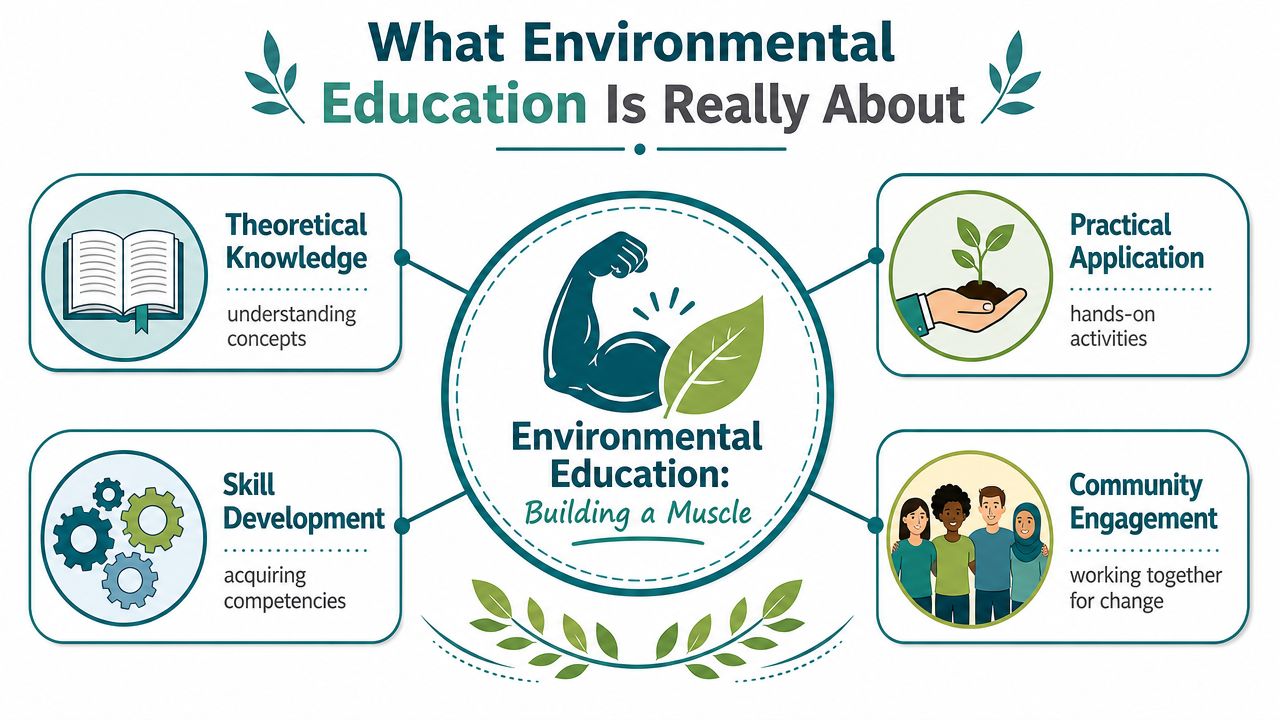
    A diagram explaining environmental education through theoretical knowledge, practical application, skill development, and community engagement.

    Action gives the lesson weight

    The strongest programs I have seen start with a job that matters to a real place. Pick up litter along a storm drain. Test creek water after rain. Pull invasive vines off a trail sign. Walk an alley and mark where illegal dumping keeps returning. Plant a tree, then come back in August and see what survived the heat.

    People learn faster when their hands are busy.

    A volunteer who spends an hour clearing bottles from a curb starts noticing slope, wind, foot traffic, and which businesses keep their sidewalks clean. A parent helping a child water seedlings starts asking better questions about soil, shade, and neglect. The lesson has weight because it is attached to effort.

    I learned my city that way. Bent over, gloves dirty, eyes open. One block taught me how wrappers collect where the curb dips. Another taught me that a bus stop without a trash can becomes a dumping zone by Friday. You remember what your body had to work for.

    Questions rise out of the work

    Good programs do not force curiosity. They give it something solid to grab onto.

    Once people have done the task, the questions come on their own. Why does this corner flood every time it rains? Why do cigarette butts collect outside one storefront and not the next? Why did the tomatoes in the school garden fail on one side of the bed? Why does one street get care and the next one get excuses?

    That is the kind of learning that sticks. It belongs to a place. It has a smell, a texture, and usually a little frustration in it too.

    The programs that keep people coming back usually include three parts:

    • A real task people can finish and feel in their shoulders afterward
    • A useful explanation tied to what they just saw
    • A group experience that makes the work feel shared, not lonely

    You do not need a fancy curriculum to create that. Litter Caterpillars grew because we kept putting people in front of honest work, then talking about what the work revealed.

    Community changes people too

    One wet cleanup taught me more about program design than a stack of planning notes ever did. Half the volunteers showed up late because the weather looked miserable. The ones who came stayed longer than usual. By the end, a retired neighbor was trading stories with a college student, and a kid who barely spoke at the start was calling out every recyclables mistake the adults made.

    Shared effort speeds up trust.

    Cold hands, heavy bags, muddy shoes. Those things strip away performance fast. People stop worrying about sounding smart and start helping each other. That is part of the education too. Environmental care becomes a lived experience instead of an opinion.

    Practical rule: If your program feels forgettable, add more real work and cut some talking.

    A strong cleanup, garden shift, or creek walk teaches more than facts about waste or habitat. It teaches attention. It teaches follow-through. It teaches people that they can face a worn-down place and leave it better than they found it.

    That is what these programs are really about. They help ordinary people practice care until care becomes part of who they are.

    Four Paths You Can Take

    When people hear environmental education programs, they often imagine one model. A teacher in front of a room. A nature center trail. A workshop with a handout. Those are real paths, but they aren't the only ones.

    I think of this work like four roads that all head toward the same town.
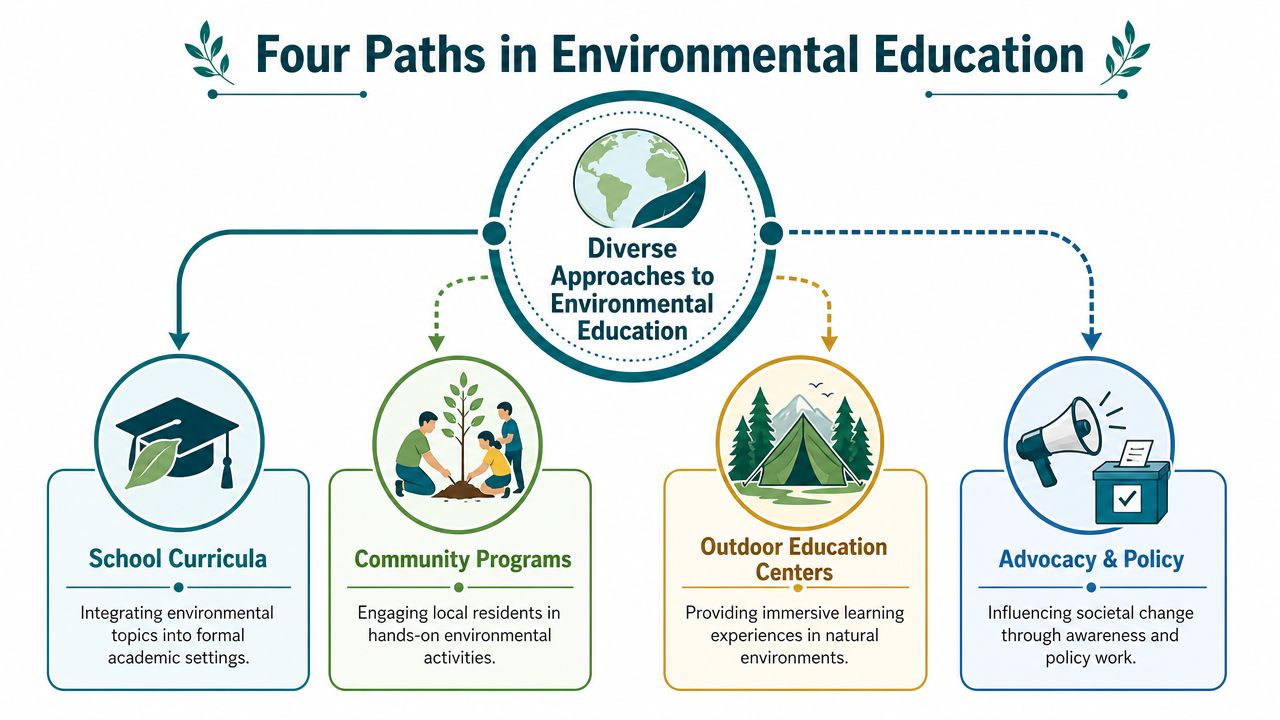
    A diagram illustrating four different approaches to environmental education, including schools, community programs, outdoor centers, and advocacy.

    A quick look side by side

    Path What it feels like Best for Hard part
    School curricula Structured and repeatable Reaching students consistently Slow approvals
    Community workshops Flexible and local Adults, families, neighbors Attendance can swing
    Outdoor centers and field experiences Immersive and memorable Deep place-based learning Access and transport
    Stewardship cleanups Direct and visible Starting fast with little money Weather, morale, consistency

    School and workshop paths

    School-based work has reach. It can put environmental ideas into a student's week again and again. Community workshops have a different energy. They're looser, more conversational, and often easier to tailor to one neighborhood problem.

    I respect both. There's real institutional support behind this field too. Since 1992, the EPA has awarded 3,960 environmental education grants nationwide for a cumulative $95,104,287, according to EPA environmental education grant statistics. That tells you organized programs have had backing for a long time.

    But a lot of people reading this don't need a grant history lesson. You need a path you can start before your courage cools off.

    Outdoor centers and advocacy

    Outdoor education centers can change a person fast because they remove people from routine. Trails, farms, rivers, and forests have a way of making lessons stick. Advocacy and policy work matter too. Some people are built for public comment, coalition building, and pushing systems to change.

    If that's you, go there.

    But if you want the fastest route from intention to impact, I still come back to stewardship.

    Why I love the stewardship path

    Stewardship is simple. You see a mess. You bring people. You clean it.

    I spent the most time there because it gives beginners a clean starting line. You don't need a formal curriculum on day one. The curb is the curriculum. The alley is the lesson plan. The conversation happens while you work.

    With a volunteer-first cleanup, people learn by contact. They handle the problem. They notice patterns. They talk to residents. They see before and after with their own eyes. That visible change matters. It keeps people from drifting into abstract guilt.

    If you want a program that teaches fast, start with a place where the result is visible by noon.

    That's why our group kept returning to this path. Bags, gloves, grabbers, a meeting spot, and a brave mood. That's enough to begin. You can always layer in workshops, youth training, or advocacy later. First, give people a win they can carry home.

    The Core Ingredients of Your Program

    One Saturday, a new volunteer showed up in clean white sneakers. By the end of the morning, they were muddy, scuffed, and streaked with something from the gutter none of us could identify. She looked down, laughed, and said, "I get it now."

    That sentence has stayed with me. A good program gives people a moment like that. Something shifts. The work stops being a nice idea and becomes part of their body.

    I learned to build around three questions. Who are you calling in. What change are you trying to grow. What will people practice together. Get those right, and your program can survive bad weather, low turnout, and the thousand small problems that kill fragile projects.

    Ingredient one is your audience

    I do not mean a tidy profile in a grant application. I mean the actual people who will stand with you on a curb at 9 a.m.

    For us, the time of day did a lot of the sorting. Weekend mornings brought people who wanted structure, service, and a reason to get out of bed. That shaped everything. The pace was steadier. Parents brought kids for an hour. Students came looking for purpose. Neighbors came because they were tired of seeing the same corner trashed every week.

    Choose with that level of honesty.

    • Families need short wins, clear boundaries, and a rhythm children can follow.
    • Students often want a role they can grow into, not just a bag to hold.
    • Neighbors usually care about one place they pass every day.
    • Hardy volunteers will come back for rough weather, awkward jobs, and repeat effort.

    The wrong audience fit can wear a group out fast. I learned that the hard way. If people arrive wanting a festival and you built a work crew, everyone leaves a little disappointed.

    Ingredient two is your goal

    Trash bags are not a goal. They are evidence.

    The central question is what kind of person your program is helping to form. In our case, I cared about courage, reliability, and fellowship. I wanted people to become the sort of neighbors who do useful things without being begged, praised, or paid.

    That changed how I led. A rainy cleanup was no longer a failed sunny event. It was training. A shy volunteer giving the welcome talk was no longer filler. It was growth happening in public.

    Aim wider than facts. A cleanup can teach attention. A garden can teach patience. A creek walk can teach reverence. If all people take home is information, they may nod and forget it. If they leave with a stronger spine, they come back different.

    Ingredient three is your curriculum

    The word scares people because it sounds expensive. Ours was built from habits.

    We greeted each person by name. We started on time. We noticed what kept showing up on the ground. We compared one street to the next. We let different volunteers speak. We ended with a short circle so people could say what surprised them. Over time, those repeated actions became a culture people could feel.

    That people side matters as much as the litter side. If you want a practical model for running a steady crew, these volunteer management best practices are useful.

    A small-budget curriculum can include:

    • Observation practice by asking what people notice first and what they missed at the start
    • Pattern reading by comparing litter hotspots, foot traffic, and neglect from block to block
    • Leadership reps by rotating the welcome, safety talk, or photo check-in
    • Reflection through one closing question that helps people connect the work to their own lives

    Keep it plain. Keep it repeatable. The best programs are built from actions volunteers can do again next week.

    How to Start When You Have Nothing

    We started with almost nothing.

    No office. No fancy setup. No giant budget. Just three people, a rough patch of weather, and enough stubbornness to go outside anyway.
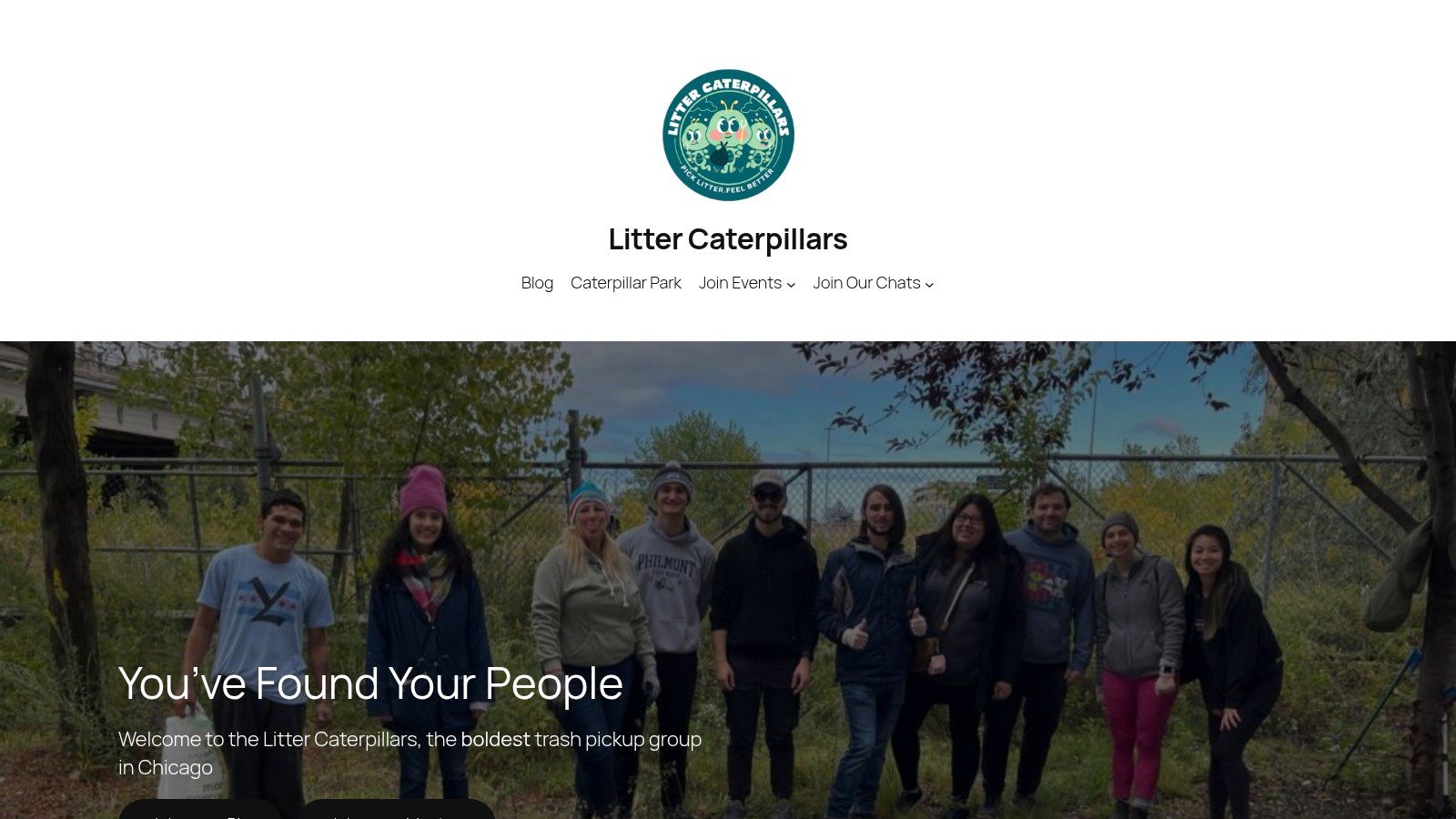
    Screenshot from https://www.littercaterpillars.com

    That first cleanup still lives in my body. I remember the sting of the hail. I remember us huddling under a tree. I remember thinking, this is ridiculous, and then realizing I wanted to do it again. There was a sharp kind of joy in it. We were doing something useful, and the hard conditions made the story better.

    If you're waiting for perfect conditions, you'll wait forever.

    Pick one place and one time

    Don't launch with a citywide vision. Launch with one block.

    Choose a place that bothers you. Maybe it's the bus stop with bottles in the weeds. Maybe it's the dead-end street everyone ignores. Maybe it's the edge of a park where the wrappers collect after every weekend. The place should create an emotional reaction in you. That's what will get you out of bed.

    Then choose a time that fits the kind of culture you want. I like weekend mornings because they pull in steady people. Early hours create a certain seriousness.

    Start with this short checklist:

    1. Choose a compact zone you can improve in one session.
    2. Set a simple meeting point like a corner, gate, or storefront.
    3. Bring basic gear such as gloves, bags, and grabbers if you have them.
    4. Tell people how long you'll stay so the event feels manageable.
    5. End on time so volunteers trust you.

    Go where the need is obvious

    A lot of new organizers think they should begin in the most polished, visible place. I don't.

    I think there's power in starting where care has gone thin. Research on access to informal learning found 48 U.S. counties with no informal learning institutions at all, leaving more than 327,000 people without adequate access, according to Colorado State University reporting on underserved communities and STEM access. I read that as a practical challenge. Don't only build programs where people already have easy options.

    The same principle works at the block level. Go where people assume nobody will bother.

    That choice tells volunteers something. It says this isn't about performing goodness in a pretty place. It's about showing up where help is thin.

    Make your first event easy to join

    Your early problem isn't scale. It's friction.

    People need a clear invitation. Tell them what to wear. Tell them whether you'll supply bags. Tell them whether they can arrive late. Tell them what kind of work they'll do. Ambiguity scares people more than hard labor.

    A simple format works best:

    • Short welcome
    • Safety note
    • Work in pairs or trios
    • Quick group photo if people want it
    • Close with thanks and a casual hangout option

    If you want a real example of a hands-on local model, the Green City Project shows how a place-based cleanup effort can be framed around visible neighborhood care.

    Here is a glimpse of the kind of energy that keeps a volunteer cleanup alive over time.

    Protect the mood at all costs

    People come back because of how the event feels.

    That doesn't mean fake cheerfulness. It means you take volunteer energy seriously. Keep people safe. Don't guilt them. Don't spring surprise obligations on them. Thank them like you mean it. If someone only stays a short time, treat that as a win.

    A volunteer who leaves feeling proud is more useful than a volunteer who leaves exhausted and resentful.

    That's one reason I care so much about culture. A trash bag is cheap. A good volunteer is not. If your group creates friendship, courage, and a little bit of adventure, people will start inviting other people.

    And then your tiny thing isn't tiny anymore.

    Knowing if You Are Making a Difference

    A lot of people measure success by the bag count. I get it. Bags are visible. You can stack them up, take a photo, and feel that the morning meant something.

    But if that's your only scorecard, you'll miss half the story.

    What I look for first

    I watch for human signs.

    Do people come back in bad weather? Do they start bringing friends? Do they talk more easily with strangers by the end of the event than at the start? Does someone who looked nervous begin leading a small group a month later? Those are serious indicators. They tell you the program is changing behavior and identity, not just removing debris.

    One simple way to track that is with a notebook or shared sheet after each event. Write down who came, who returned, who took initiative, what conversations kept coming up, and whether the group energy rose or sagged.

    On-the-ground test: If people start acting like caretakers between events, your program is working.

    If you want cleaner data

    You don't need a giant evaluation system, but you do need honesty.

    Penn State Extension recommends collecting data from at least half of participants when the total population is under 500, notes that a 50% sample rate is often estimated to yield a 95% confidence interval with a 5% margin of error, and advises at least 30 observations for each key subgroup so your claims aren't skewed toward the easiest volunteers to reach, according to Penn State Extension guidance on measuring impact in environmental education and outreach.

    That's useful because grassroots groups often overread a few enthusiastic voices. If you want to say your program changed people, ask enough people, and ask consistently.

    A simple post-event form can ask:

    • What did you notice about the site today
    • What did you learn that you didn't know before
    • Would you return and why
    • Do you feel more confident doing this work again

    Tangible change still matters

    I also believe in physical proof.

    An empty lot can become a community space. A neglected corner can become a spot people respect again. Those bigger wins usually grow out of boring consistency. One cleanup, then another, then another. People start trusting that you're serious. The neighborhood notices. Doors open.

    That kind of change is easier to believe when you've already seen small victories stack up.

    And don't ignore wellbeing. A study of nature-based environmental education with low-income Black and Hispanic youth found significantly higher scores in health-related quality-of-life and STEM capacity after the intervention, as reported by Children and Nature Network's research summary. I think that's a big clue. Sometimes the deepest impact is that people feel better, stronger, and more capable after spending time outdoors doing purposeful work.

    If you want a grounded way to think about those outcomes in service settings, this page on community service impact is worth reading.

    The World Is Changed by Your Example

    I don't think individuals need more guilt. I think they need a first brave act.

    That's why I care about environmental education programs that start with service. You don't have to wait until you're polished. You don't have to become an expert first. You can grab a bag, walk outside, and let the work teach you who you are.

    I've seen what happens when people do that. They become steadier. They laugh more. They trust themselves more. A street gets cleaner, yes, but a person also gets less afraid of effort, weather, awkwardness, and failure.

    That's a good trade.

    Start smaller than your fear

    You do not need to save the whole city.

    Clean one block. Invite one friend. Show up one morning when you'd rather stay in bed. If the event is messy, good. If only a few people come, good. If it rains, that might become the part of the story you remember most.

    Your example gives other people permission to begin before they feel ready.

    I like the caterpillar idea because it keeps me humble. We aren't finished creatures. We are trying. We are changing through repeated acts of service, sunlight, and friendship. That's enough.

    If you feel the pull to begin, trust it. Don't wait for a grant, a logo, a committee, or the perfect plan. Start with a place that hurts your heart a little. Clean it. Come back. Teach by doing.

    The world changes that way. Subtly at first. Then all at once, because people saw you go first.


    If you want a real-world example of a volunteer-first cleanup group in motion, take a look at Litter Caterpillars. You can use their model to study how consistent neighborhood service, simple rituals, and low-budget organizing turn ordinary weekend mornings into environmental education in action.
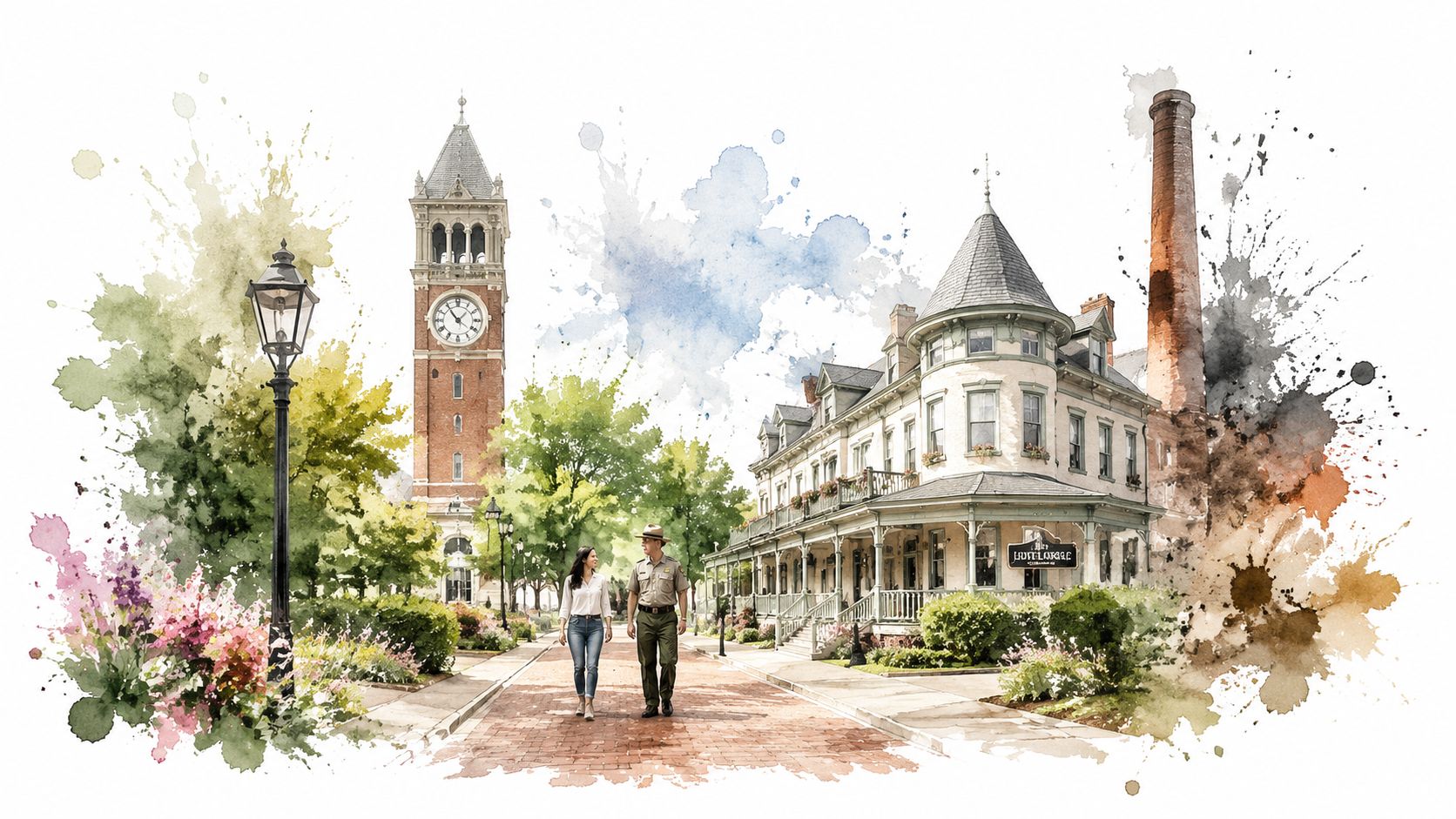

  • Pullman National Historical Park: A Visitor’s Guide

    Pullman National Historical Park: A Visitor’s Guide

    I turned a corner near 111th Street and felt that strange Chicago feeling where a block starts talking back to you. Brick rows, old factory bones, and quiet streets made me slow down and pay attention.

    More Than a Monument It Is a Chicago Story

    A few Saturdays ago, I watched a first-time visitor stop in the middle of Pullman and go quiet. Kids were riding bikes past red-brick homes. A neighbor was sweeping a front walk. The old industrial buildings stood in the background like they still had something to say. That mix is what gets me every time. Pullman does not sit in Chicago like a relic under glass. It lives as a neighborhood where history keeps bumping into ordinary life.

    That is why Pullman grabbed me so hard the first time I came through with a coffee in one hand and cleanup gloves in the other. The National Park Service recognizes it as Chicago's national historical park, but the title only gets you so far. The full story shows up on the street, in the preserved architecture, in the homes that are still occupied, and in the long shadow of work, power, and organizing that shaped this part of the South Side.

    A vintage Pullman passenger train sits at a station with a stylized watercolor Chicago city skyline backdrop.

    I run a volunteer group that spends time in places people too often pass by. We pick up litter, talk to neighbors, and learn a block by walking it slowly. Pullman fits that ethic perfectly. You can come for the history and leave with a sharper sense of what community care looks like when real people keep showing up for a place.

    That is what makes this park feel personal to me. The streets raise questions Chicago has been asking for generations.

    • Who gets to shape a neighborhood
    • What happens when too much control sits with too few people
    • How a community protects its story while still living its daily life

    I often tell friends to pair Pullman with other Chicago neighborhoods to explore, because the comparison teaches you something. In one part of the city, the story sits in a mural or a corner store. In Pullman, it sits in the bricks, the rail legacy, the worker housing, and the community memory that still holds the whole place together.

    Pullman changed the way I think about public history. A monument asks for your attention. This neighborhood asks for your participation. Walk it, listen well, and you start to see that the lesson is not only about the past. It is about what kind of city we want to care for right now.

    The Story of the Town Pullman Built

    The first time I walked these blocks with the company-town history in mind, one detail stayed with me. The homes are handsome. The streets feel orderly. You can still sense why a working family in the late 1800s might have looked around and thought, at least on day one, that this place offered dignity.

    Then you learn who held the reins.

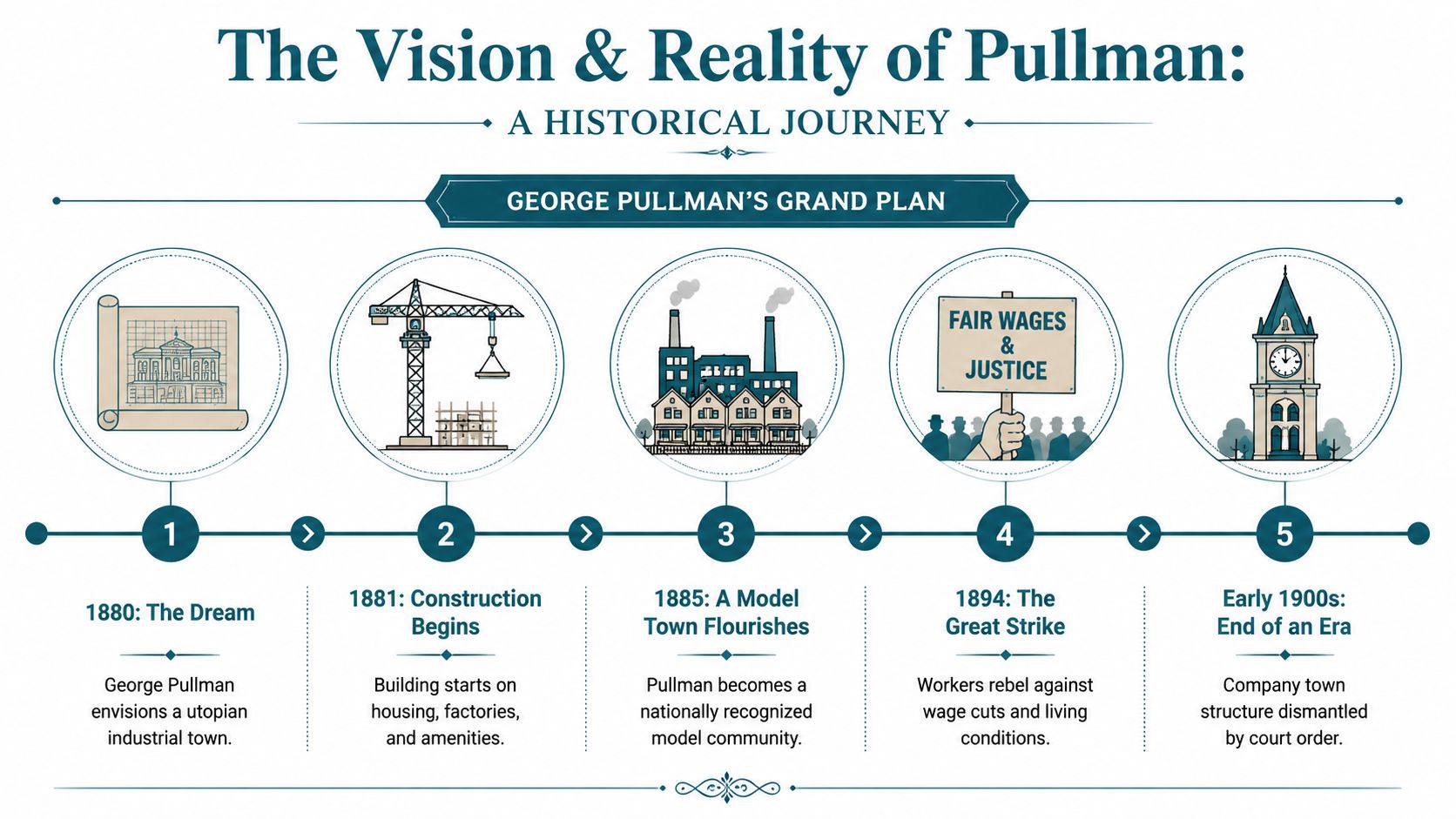
    A timeline infographic illustrating the historical rise and fall of the industrial company town of Pullman.

    George Pullman built the neighborhood around his railcar business with a clear vision of how workers should live. Brick row houses, shared green space, civic buildings, and factory life were tied together in one planned community. From the outside, it could look generous, even enlightened compared with the rougher industrial districts of its time.

    On the ground, the story gets more complicated.

    A beautiful block does not automatically mean a fair one. Workers lived in a town shaped by company priorities, company rules, and company power. The same design that made Pullman feel orderly also limited how much control residents had over daily life. That tension is part of what makes a walk here feel alive. You are not just looking at architecture. You are standing inside a debate about work, housing, and who gets to decide what a good community looks like.

    I often picture an ordinary evening here. Someone comes home tired from the factory, steps onto a clean street, then sits at the table to make hard choices about rent, food, and family needs. That is the part of Pullman that stays with me. History is not only in the grand plans of industrialists. It is in the private math of households trying to hold themselves together.

    The conflict that followed gave Pullman its sharpest lesson. Workers resisted the imbalance built into the system, and the Pullman strike turned this neighborhood into one of the defining labor stories in the country. When I stand near the old industrial spaces, I do not think first about dates in a textbook. I think about people gathering, arguing, risking income, and asking for a measure of dignity that the town's design could not provide on its own.

    That is why Pullman matters as more than a preserved historic district. It shows how a neighborhood can be carefully built and still fail its people if power only runs one way.

    It also shows something hopeful. Residents, preservationists, organizers, and neighbors kept this story from being flattened into a neat company legend. They protected the buildings, yes, but they also protected the harder questions. That part means a lot to me as someone who believes places improve when regular people care for them together, the same spirit that drives groups like Litter Caterpillars to treat streets and public spaces as shared responsibilities.

    Three questions from Pullman still feel close to home:

    Question raised here Why it still matters
    Who has power at work People still fight for fair pay, stability, and respect on the job
    What makes housing just Neighborhood change still tests who gets security and who gets pushed aside
    How do neighbors act together Communities still rely on solidarity when formal systems fall short

    Pullman stays with you because it never resolves into a simple moral. It is a story about vision, control, resistance, and community memory, all on the same set of blocks. Walk slowly enough, and the lesson becomes clear. A neighborhood is not defined only by what gets built. It is defined by whether people who live there can shape its future together.

    Your First Visit to Pullman National Historical Park

    The best way to start is simple. Go to the visitor center at 610 E. 111th Street, Chicago, IL 60628, which is open daily from 9:00 a.m. to 5:00 p.m., according to the Pullman visitor center listing.

    I like starting there because a neighborhood park can feel confusing at first. If you expect one big gate and one obvious route, Pullman may throw you off. The visitor center helps you get your footing.

    What to do when you arrive

    Walk in, slow down, and let yourself orient. You don't need a perfect plan before you step through the door. That's the whole point of beginning here.

    A first visit works well when you do these things:

    1. Check the exhibits first. They help you connect the buildings outside to the people who lived and worked here.
    2. Ask for self-guided materials. That gives you a path once you step back outside.
    3. Look at the district as a neighborhood, not a single attraction. You're not done when you leave the building. You're just ready to start.

    How I'd handle a first hour

    If I brought you with me for your first visit, I wouldn't rush. I'd spend a little time inside, get the basic story straight, then head back outdoors with a loose plan. Pullman works best when you mix orientation with wandering.

    Practical rule: Start indoors so the streets make sense later.

    You don't need to memorize every detail. You just need enough context that the brick row houses, factory remains, and nearby institutions stop being anonymous. Once that clicks, the whole district opens up.

    A good first-timer mindset

    Treat your visit like meeting a person for coffee, not like cramming for an exam. Stay curious. Let a few buildings pull your attention. Read some signs. Skip others. Sit for a minute if you need to.

    Here's the part many guides miss. You're not just visiting a building with historic objects inside. You're entering a public place where the story spreads across streets, corners, and everyday life. That shift matters. Once you understand it, Pullman gets much easier and much more rewarding.

    Planning Your Trip Itineraries and Tips

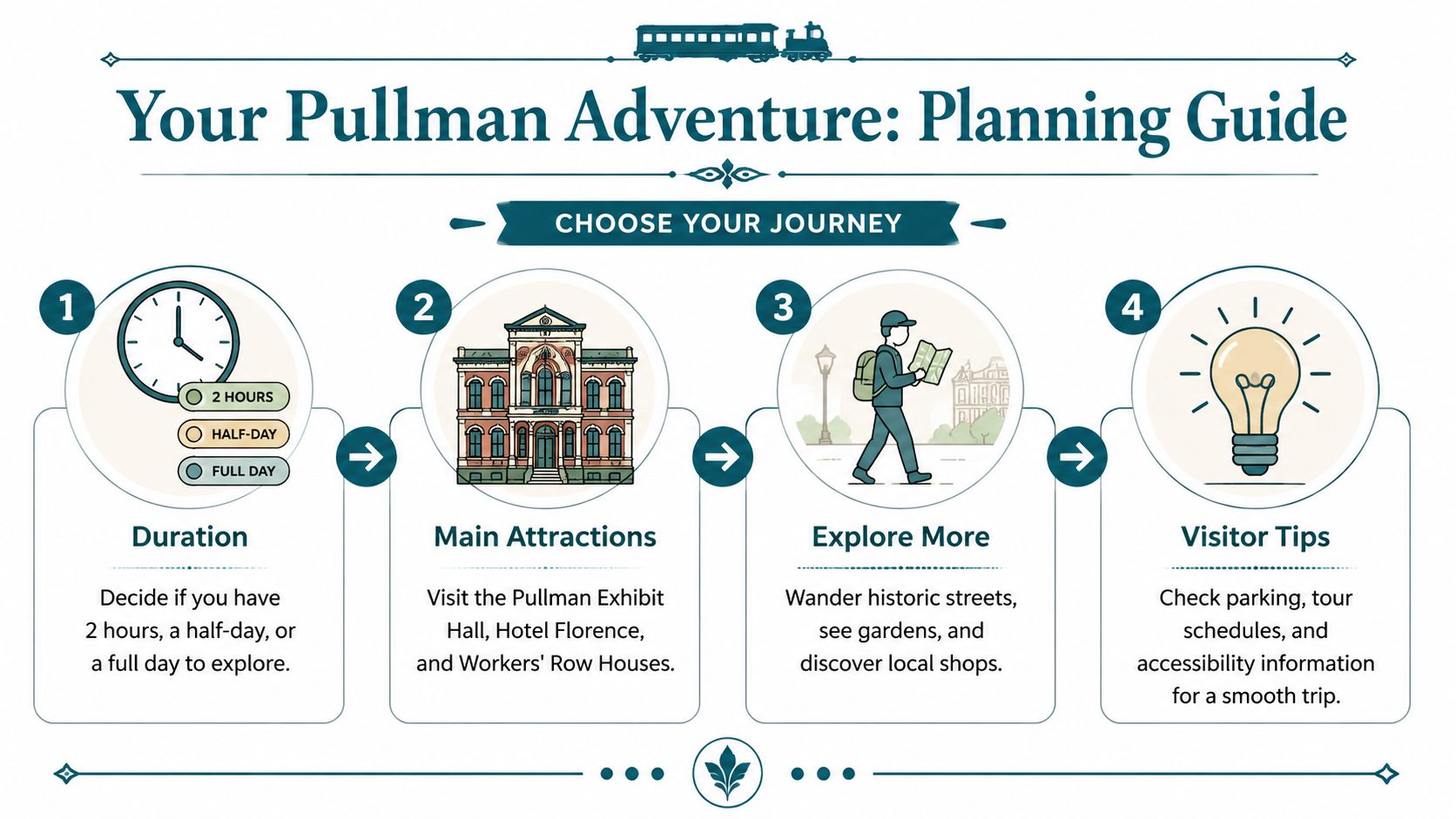
    One thing I like about Pullman is that you can shape the day around your energy. If you have a short window, you can still get a real feel for the place. If you have a relaxed afternoon, the neighborhood gives you room to wander.

    The park grounds are open dawn to dusk, which means you can explore the historic area as public space even outside visitor center hours, according to the National Park Foundation park page. That changes how I plan a trip. I don't think of Pullman as a single timed attraction. I think of it as a walkable field trip.

    A planning guide infographic for Pullman National Historical Park showing four numbered steps to design your visit.

    If you only have a short visit

    A shorter outing works well if you want a clean, focused experience.

    • Start at the visitor center. Ground yourself before you roam.
    • Walk a few nearby blocks. Let the neighborhood scale sink in.
    • Pick two or three stops, not everything. Pullman gets better when you move slowly enough to notice details.

    I've found that a compressed visit still feels satisfying if you avoid checklist mode. This isn't the kind of place where speed makes you feel accomplished. Speed makes you miss the point.

    If you have a half day

    A half day is my favorite rhythm for Pullman. You can settle in without turning it into a marathon.

    Here's a simple way to do it:

    Time shape What I'd do
    Early part Begin at the visitor center and get oriented
    Middle stretch Walk the historic streets and stop at the major sites that catch your eye
    Final stretch Sit, reflect, grab food nearby, and take one more pass through the neighborhood

    If you enjoy city walking, you might also like these self-guided Chicago walking tours. Pullman fits that style well because the streets themselves carry so much of the experience.

    Local mindset for getting there

    I like using transit when I can because it changes the pace of the day. You arrive on the city's terms, not in a sealed bubble. But driving can make sense too, especially if you're visiting with family or anyone who wants fewer transitions.

    A few practical tips help:

    • Wear walking shoes. The best part of Pullman happens on foot.
    • Bring water. Historic curiosity doesn't cancel out basic comfort.
    • Plan food loosely. I'd rather leave space to notice a local option than lock myself into a rigid schedule.

    Pullman rewards the visitor who leaves room for one extra block, one extra corner, one extra pause.

    That's how I'd do it. Give yourself structure, then let the place interrupt you a little.

    Walk Through History Key Sites to See

    The visitor center gives you the map. The streets give you the feeling. Pullman's essence comes to life.

    I always tell friends to stop trying to “cover” Pullman and instead let each site act like a chapter. Some chapters are about work. Some are about class. Some are about Black labor history. Together they make the district feel layered, not flat.

    The factory grounds and the clock tower

    The factory area hits me first because it makes labor feel physical. You don't have to stretch your imagination very far. You can almost hear the churn of production and the movement of workers coming and going.

    The clock tower pulls your eye because clocks always do that in old industrial places. They remind you that work once ruled the day down to the minute. I stand there and think about how different time feels depending on who controls it. For an owner, time can look like efficiency. For a worker, time can feel like pressure.

    Hotel Florence

    Hotel Florence tells a different kind of story. This building lets you think about status, taste, and the social rules of the town. I like places like this because they show that power isn't only in the factory. It's also in the spaces where respectability gets performed.

    Walk around it and you can feel that Pullman wasn't built only to produce railcars. It was built to project an idea of order. That idea reached into daily life. It touched how people lived, where they gathered, and what kind of behavior fit the town's image.

    Some buildings tell you what happened. Others tell you what people wanted the world to look like.

    Hotel Florence does both.

    The A. Philip Randolph Museum

    Then there's the A. Philip Randolph Museum, which changes the emotional temperature of the visit. If the factory grounds make you think about labor under pressure, this site makes you think about labor organizing, dignity, and Black workers refusing to stay invisible.

    I always slow down here.

    The museum adds a chapter that many first-time visitors need. Pullman is not only about one strike in one year. It's also about the lives of Black railroad workers and the push for fair treatment. That part of the story gives the neighborhood a different voice. More determined. More personal.

    How I'd walk it

    If you want a simple field route, I'd do it this way:

    • Begin with the clock tower area so the scale of the industrial site clicks.
    • Move to the residential streets and pay attention to repetition, design, and how the homes sit together.
    • Pause at Hotel Florence and think about who the town was meant to impress.
    • End with the A. Philip Randolph Museum when you're ready for the labor story to deepen.

    That order works for me because it moves from structure to people. From the company's view of the town to the people who had to live and work inside it.

    From History to Action Get Involved in the Community

    The thing I love most about Pullman is that it doesn't leave me in spectator mode for very long. After a while, standing around and admiring old brick starts to feel incomplete. A place with this much history pushes me toward a simple question. What am I going to do for the neighborhoods I care about now?

    Screenshot from https://www.littercaterpillars.com

    That's where service comes in. Pullman is still a lived-in area. Since becoming a national park, the area has seen hundreds of millions of dollars in investment, according to a Pullman House Project video about the neighborhood today. I don't hear that and think, great, problem solved. I think, then this is exactly when ordinary people need to stay involved.

    Small acts change how a place feels

    If you care about Pullman, you don't need to arrive with a grand theory. Start small and stay consistent.

    • Join a cleanup if one is happening nearby. A public place feels different when people care for it with their hands.
    • Support preservation-minded community work. Attention matters. Presence matters.
    • Walk respectfully and spend locally when you visit. Neighborhood care isn't abstract.

    I believe service is one of the best ways to understand a place. You can read about labor solidarity all day, but picking up litter with other people teaches a related lesson fast. Shared effort changes strangers into teammates.

    One option is to look at community engagement strategies that turn good intentions into regular action. Another is to join a local volunteer event when one is scheduled. For example, Litter Caterpillars has done cleanup activity at the Pullman National Historical Park Visitor Center with the National Park Service's Trash Trekkers program.
    Care is a way of reading the city

    I want to show you a piece of that spirit in motion.

    When people sweep, plant, pick up trash, or help maintain public space, they aren't doing side work beneath the “real” story. They are writing the current chapter. That matters in Pullman because the neighborhood has always been about how people live together under shared conditions.

    My rule for any historic district: leave it a little better than you found it, even if all you can give is attention, respect, and one hour of work.

    That's the bridge for me. History becomes action when you stop asking only what happened here and start asking what care looks like here now.

    Your City Is Waiting for You

    Pullman stays with me because it asks for more than curiosity. It asks for honesty. When you walk those streets, you start thinking about work, fairness, housing, memory, and what neighbors owe each other. Then you leave and those questions follow you home.

    I think that's a gift.

    You don't need to become a historian to feel something at Pullman National Historical Park. You just need to show up ready to notice. Notice the brickwork. Notice the scale of the old company town. Notice how a neighborhood can carry conflict and care at the same time. Then notice your own block with that same level of attention.

    Chicago gets better when more of us do that.

    I've learned this through cleanup mornings, long walks, and conversations with people who love their neighborhoods in practical ways. The city opens up when you stop waiting for polished invitations. You pick a place. You go. You listen. Maybe you help. Then you come back different.

    Pullman is a good place to begin that habit.

    Go for the history if that's what pulls you in. Go for the architecture. Go because you want a thoughtful afternoon on the South Side. But once you're there, let the visit push you one step further. Join something. Care for something. Learn one neighborhood thoroughly enough that it stops being “somewhere else.”

    Your city isn't finished. That's the exciting part. It still needs hands, eyes, patience, and people who are willing to love it in public.


    If you want a hands-on way to explore Chicago while caring for it, take a look at Litter Caterpillars. It's a volunteer group that organizes neighborhood cleanups across the city and gives people a simple way to show up, meet others, and do real work together.

  • Kayak Fox River: Ultimate Guide to Planning Your 2026

    Kayak Fox River: Ultimate Guide to Planning Your 2026

    I slid my kayak into the Fox just after sunrise, and within minutes I was steering around a floating bottle pinned against a branch. I picked it up, tucked it behind my seat, and felt the whole trip change shape.

    More Than Just a River Paddle

    The first time I really understood the Fox River, I wasn't chasing speed or distance. I was drifting through a quiet stretch, listening to the blade drip after each stroke, when the river kept handing me small choices. Go left around the snag. Slide into the slower water. Pull one piece of trash. Keep moving.

    That mix is what keeps pulling me back. A Fox River paddle can feel easy and loose, but it can also feel like a real outing with a beginning, middle, and finish. The river itself explains why. The Fox River of Illinois is 202 miles (325 km) long and flows from southeastern Wisconsin to Ottawa, Illinois, which is why one trip can pass through very different towns and moods of water as noted in this Fox River overview).

    A person kayaking on the calm Fox River during a beautiful, vibrant sunset near a stone building.

    Why the Fox feels bigger than an afternoon float

    Some rivers feel like park amenities. The Fox feels more like a long road with water on it.

    You launch in one town, pass under bridges, drift by islands, and pull out somewhere else with wet sleeves and a better appetite than when you started. Even a short route can give you that little expedition feeling. You aren't circling a pond. You're traveling.

    I also like that the river has history in its bones. People once looked at this water as a route for movement and trade, not just a pretty place to spend a Saturday. You can still feel that practical side when you plan a shuttle, read a current seam, or choose a take-out before dark.

    Practical rule: A good kayak Fox River trip gets better when you treat it like a journey, not a random splash around.

    Adventure gets better when it has a job

    On a normal paddle, I notice birds, current, bridge shadows, and the sound of my hull touching gravel. On a cleanup paddle, I notice all that plus the stuff that doesn't belong there. A foam cup jammed into reeds. Fishing line wrapped on wood. A plastic bottle spinning in an eddy like it has nowhere else to go.

    That doesn't ruin the trip for me. It deepens it.

    When I paddle with a cleanup mindset, I come home with more than tired shoulders. I remember the cove I left cleaner. I remember the little puzzle of carrying litter without making my kayak unstable. I remember making a place look more like itself again.

    Regarding kayak Fox River advice, that's the angle I think matters most. Go for the paddle, yes. Go for the quiet. Go for the workout. But leave room for purpose, because purpose gives the day a sharper edge. It turns a float into a story you'll retell on the drive home.

    Charting Your Course on the Fox

    A good plan starts with honesty. Are you here to glide for a while and clear your head, or do you want a longer point-to-point outing with lunch, route decisions, and tired arms by the end?

    The Fox gives you both. In the Aurora area, paddlers have organized access points, a 1,100-foot bypass chute around the Glen D. chain of barriers, shuttle-backed route options through Howling Wolfe Canoe & Kayak between Batavia, North Aurora, and Aurora, and the Marge Cline Whitewater Course in Yorkville. The same regional guide also notes that the Fabulous Fox! Water Trail is a National Park Service Water Trail, which you can see in the Aurora outdoor guide to the Fox River.

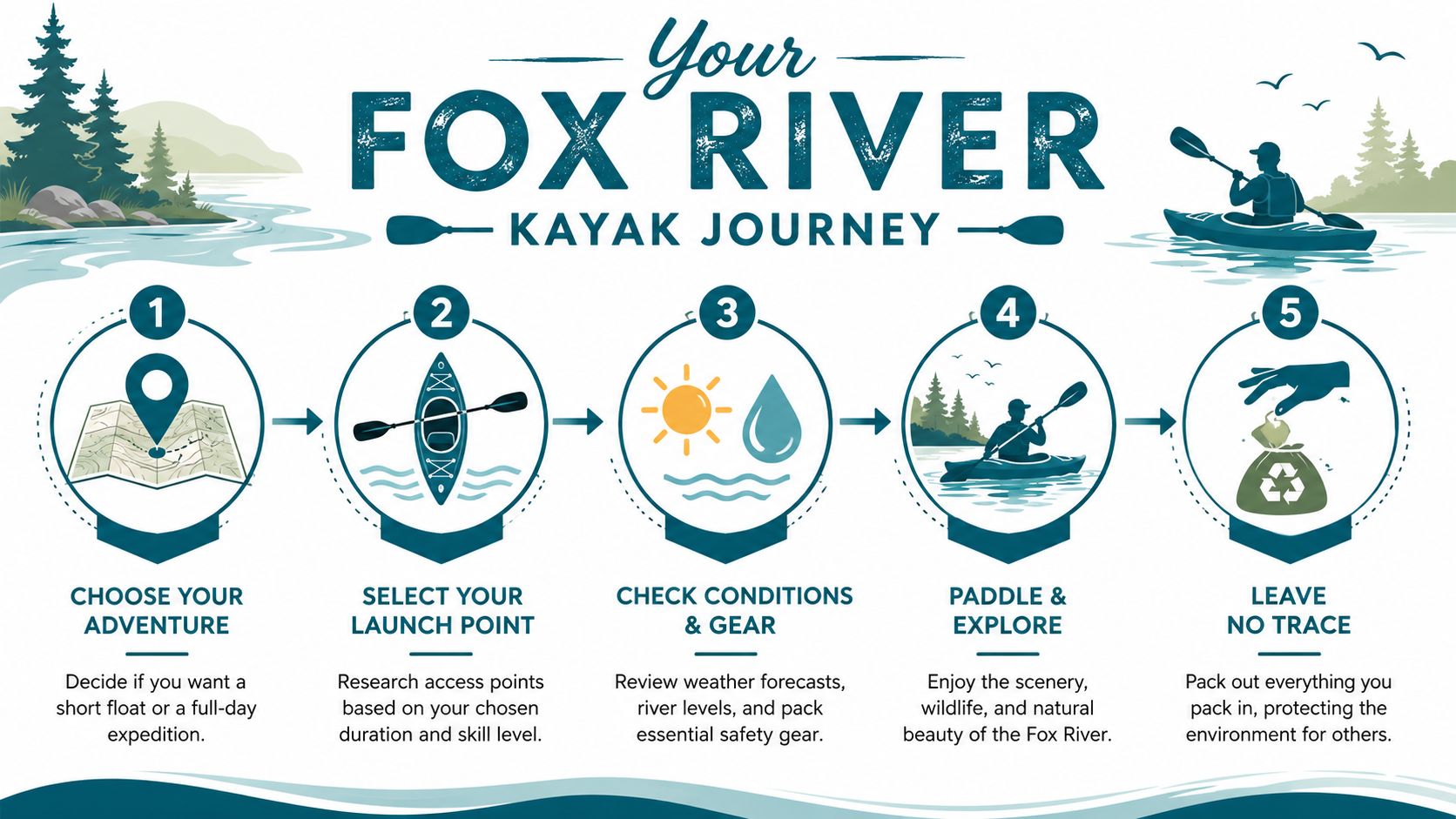
    An infographic showing five numbered steps for planning a safe and enjoyable Fox River kayak journey.

    Pick the day you actually want

    I like to sort Fox outings into three simple stories.

    Trip style Best fit What it feels like
    Short float Newer paddlers or relaxed mornings Easy pace, fewer decisions, more looking around
    Town-to-town paddle People who want movement and variety A real journey with a launch and a different take-out
    Sport run Paddlers who want technical water More attention, more excitement, less drifting

    A short float works well when you don't want logistics to eat half the day. You launch, settle in, paddle a calm stretch, and get off the water before fatigue starts making sloppy decisions for you.

    A town-to-town route is where the Fox gets fun in a different way. Batavia to Aurora, or North Aurora toward Aurora, feels like travel. Shuttle support helps because your car doesn't have to be at both ends of the story.

    If you want something punchier, Yorkville changes the mood. The whitewater course asks for sharper attention and better boat control. That's not where I'd send someone on their first outing with a half-zipped life jacket and a coffee in the cup holder.

    Build around logistics, not wishful thinking

    I've seen plenty of paddlers make the same mistake. They choose a route because it sounds good, then try to force parking, timing, and pickup to match. Do it in the reverse order.

    Start with these questions:

    • Who is in your group. If one person is brand new, plan for their comfort, not the strongest paddler's ego.
    • How will you finish. A one-way trip needs a shuttle or two cars.
    • What will you do with cleanup bags. If you're collecting litter, your take-out matters even more.
    • Where are the barriers. A bypass chute or a known portage changes the whole day.

    If you want route ideas tied to community-minded paddling days, I like the local context gathered on the Fox River Valley page.

    Some days, the smartest route is the one that leaves you wanting one more mile instead of begging for shore.

    Match the route to your energy

    Morning calm doesn't mean the whole group will stay fresh, patient, or focused for hours. I keep that in mind every time I plan a paddle. A shorter route with a clean shuttle can beat a grand plan that falls apart at the take-out.

    When you search for a kayak Fox River trip, don't ask only, "Where can I launch?" Ask, "What kind of day do I want to have when I get back to the car?" That answer usually picks the route for you.

    Gearing Up and Staying Safe

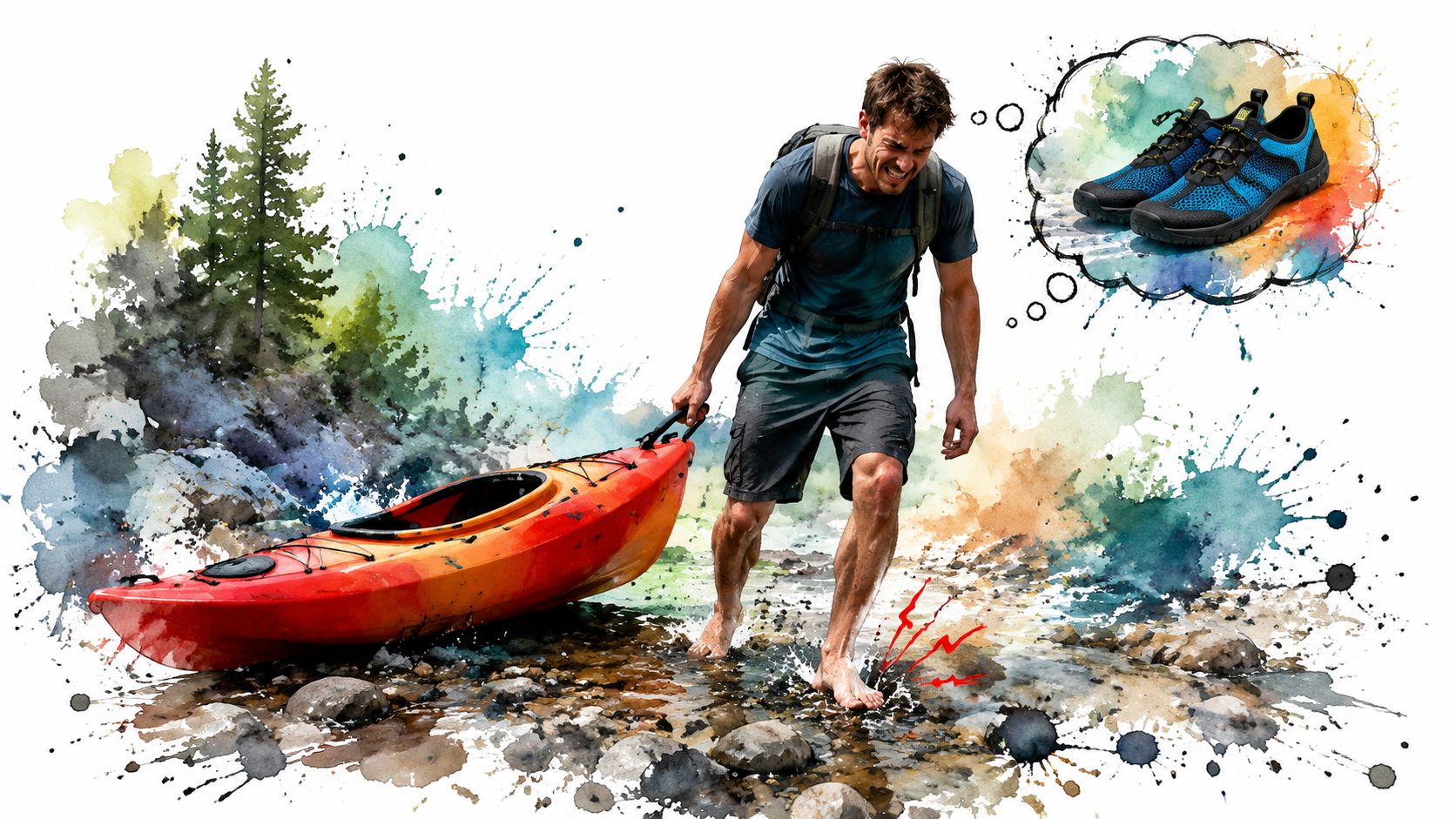
    I once skipped water shoes because the river "looked deep enough." Later, I was out of the boat, ankle-deep on a rocky patch, pulling my kayak forward and trying not to think about what my bare feet were stepping on.

    That was dumb. Small mistakes on a river become long, annoying lessons.

    A man dragging a red kayak through shallow water, wishing he had sturdy water shoes for protection.

    The safety habits that matter aren't glamorous. They're the boring, repeatable ones you do every time. The Fabulous Fox Water Trail safety guidance says paddlers should always wear a U.S. Coast Guard-approved life jacket, go with a companion or group, carry a spare paddle and first-aid kit, and tell a trusted person the route, launch point, take-out point, and estimated timing. That same guidance indicates a typical paddling speed of 2 to 3 river miles per hour, notes that water levels can change quickly after rain, and warns that low bridges, dams, and cold water can turn a casual plan into a bad one.

    Wear the gear you brought

    A life jacket strapped to the boat is decoration. Wear it.

    The Fox can look forgiving right up until you hit a weird current line, a low bridge approach, or a shallow walkout where you lose footing beside the boat. If you flip, you won't have time for a neat, thoughtful equipment discussion with yourself.

    My basic list stays simple:

    • Life jacket on your body. Not under a bungee cord.
    • Durable water shoes. You may need to walk the boat.
    • Dry storage. Phone, keys, and anything you really need should stay dry.
    • Drinking water and food that won't fall apart. Wet granola mush is a morale killer.
    • Spare paddle and first-aid kit. The river doesn't care that you planned a short trip.

    I also keep my deck clean. Loose gear slides, catches, and distracts you when you need attention most.

    Float plan first, confidence second

    I trust skilled paddlers who plan conservatively more than bold paddlers who wing it. A float plan isn't overkill. It's what separates a smooth day from a guessing game if somebody is late.

    Tell one person where you launch, where you expect to exit, and roughly when they should hear from you. Then follow through after the paddle.

    If you're building confidence on moving water before trying the Fox or adding cleanup work to the mix, I like resources that talk plainly about urban paddling habits, such as this look at urban kayaks in Chicago, IL.

    Here's a useful visual break before you head out:

    The little mistakes that drain a whole day

    Most rough paddles don't start with drama. They start with friction.

    You launch late. Someone forgot water. Somebody else assumed the bridge clearance was fine. Then the group gets tired, slower, less patient, and more likely to make a bad call. Add a muddy portage or a stretch of shallow water and the day starts chewing on everybody's mood.

    Cold water can be "extremely dangerous," and the right call on some days is simply not to launch.

    I think of safety as buying myself freedom. The better I pack and plan, the more mental room I have to enjoy the river. That's true whether I'm chasing a peaceful morning or trying to haul out a bag of trash with me at the end.

    Reading the River Like a Pro

    A river talks in hints. It doesn't hand you labels.

    You learn by watching the surface the way you'd watch traffic from an overpass. Some lanes move cleanly. Some bunch up. Some look open until you get close and realize they're trouble.

    Look for texture before color

    When I approach a new stretch, I stop treating the river like flat water and start reading its skin. Tiny standing ripples often mean the bottom is coming up to meet you. They look playful from a distance, but they're really a warning sign.

    The deeper route often looks calmer. On the Fox, a river expert notes that a practical paddling benchmark is about 1.5 to 2 mph in a good flow, and that "ripples" often indicate shallow water while the deeper thread is usually marked by calmer, dark-green water, as described in this Fox Valley paddling tip sheet.

    That matches what I look for in real time:

    • Ripples over a broad patch. Likely shallow. Approach carefully.
    • Darker, smoother lane. Often the better channel.
    • Bubble lines or a clean seam. Water is organizing itself. Follow the logic.
    • Sudden fuss near wood or bridge structure. Slow down and inspect before you commit.

    Stage changes matter more than your map

    Mileage can fool you. The river you paddled last month is not exactly the river in front of you today.

    A low stage can turn a neat little route into a drag-and-walk chore. A higher stage can speed the day up, tighten lines near obstacles, and change where you can safely peel out. That's why I check current conditions first and let the route answer to the water, not the other way around.

    River lesson: Distance is only half the plan. Water level decides how that distance behaves.

    Read ahead, not at your bow

    New paddlers often stare too close. They react late because they're reading the water one boat length at a time.

    I try to look downstream in layers. First, I scan the broad shape of the river. Then I pick the lane I want. Then I check the surface details inside that lane. It feels a lot like reading a sentence instead of sounding out one letter at a time.

    That habit saves energy. It also helps when you add cleanup work, because a paddler who can read water well has more spare attention for the extra task of spotting and collecting litter without drifting into trouble.

    The Caterpillars' Call Paddling with Purpose

    I once slid into a side cove off the main current because the water looked quiet and inviting. It was quiet. It was also full of bottles, food wrappers, and beat-up foam pinned against branches like the river had been forced to keep a pile of everybody else's laziness.

    That spot changed how I pack for a paddle. Now I leave room for cleanup.

    Screenshot from https://www.littercaterpillars.com

    The hard part isn't deciding to help. The hard part is doing it without making your kayak unstable, blocking your cockpit, or getting stranded with a heavy bag and nowhere legal to leave it. That's a real gap in Fox River guidance. Safety material warns about obstructions that trap litter, but there isn't a clear playbook for carrying trash on the water, and 90% of shorelands are privately owned, which means you can't just dump your bag on shore and call it a good deed.

    A simple cleanup setup that actually works

    I keep the system plain.

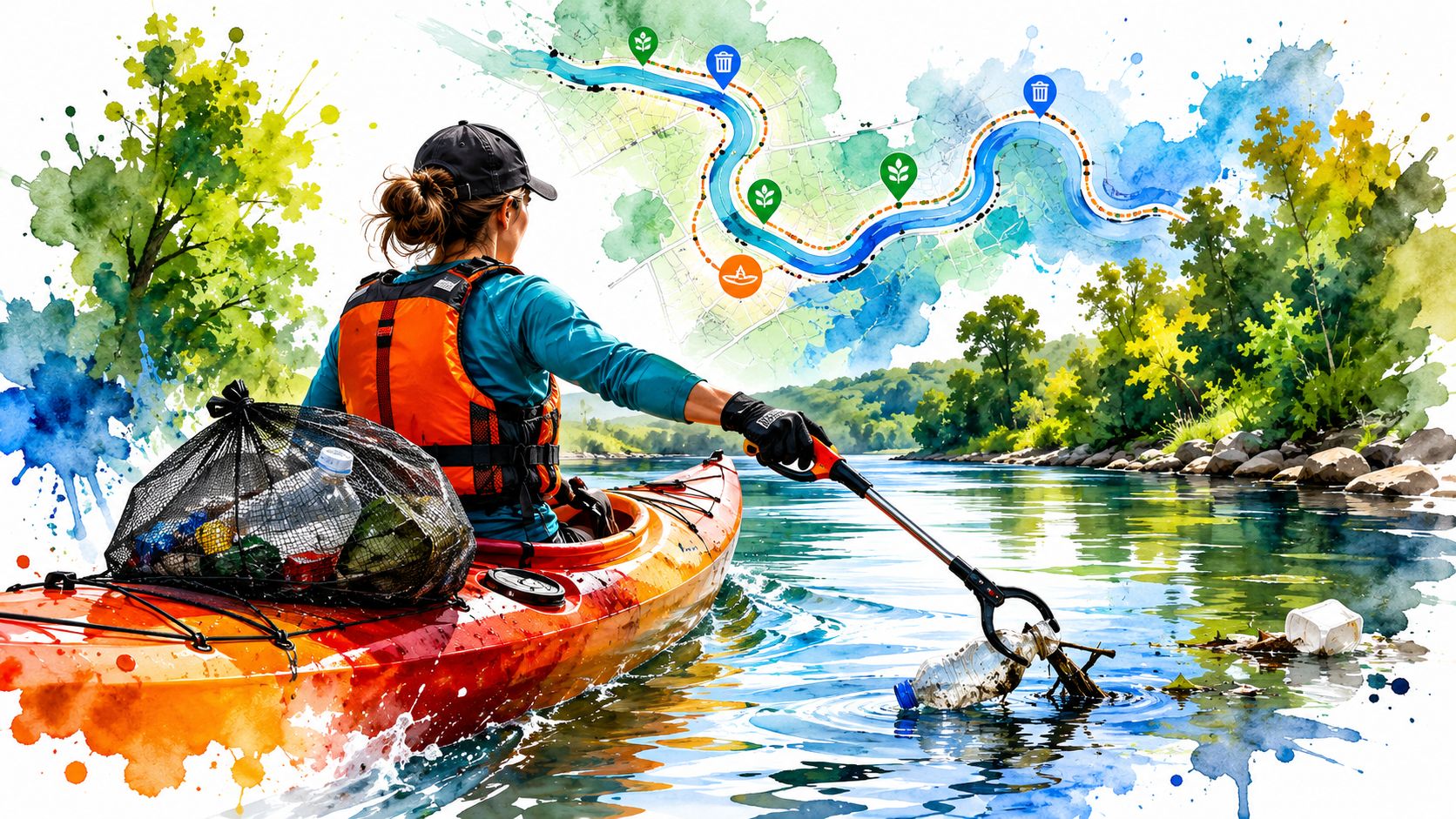
    Bring work gloves, a grabber if you have one, and tough bags. I prefer securing an empty bag where I can reach it without twisting hard in the seat. Once the bag starts filling, I stop collecting bulky items before the load gets sloppy or top-heavy.

    A few habits help a lot:

    • Start small. Your first goal is one manageable bag, not a heroic mountain of trash.
    • Favor easy grabs. Floating bottles near shore, cups caught in reeds, and loose cans are worth taking. Don't wrestle dangerous tangles.
    • Keep weight low. A bag piled high behind your shoulders changes the way the kayak feels.
    • Leave the danger piles alone. If litter is jammed into wood near fast current or bridge structure, your safety wins.

    Carry it out without turning your kayak into a barge

    A kayak loaded with trash can paddle like a shopping cart with one bad wheel. You feel every shift.

    I like to think of cleanup load in three categories.

    Trash type Best move on the water Why
    Small loose items Bag them as you go Easy to stow, low drama
    Awkward bulky pieces Take only if they secure flat Big items catch wind and shift
    Hazard-zone litter Leave it for a safer day or bigger team Retrieval can put you in bad water

    If I collect enough to notice the boat handling differently, I stop cleaning and start heading toward the take-out. That's discipline, not laziness.

    For paddlers who want to make this kind of outing part of a bigger habit of river stewardship, I like the practical spirit behind cleaning up rivers with a volunteer mindset.

    The goal isn't to clean the whole Fox in one day. The goal is to leave one stretch better and get home safely enough to come back.

    Respect the shore, finish the mission

    Private shorelines change the rules. You can't assume that a patch of bank is your drop zone. That means your cleanup plan starts at the end. Choose a take-out where you can legally remove and dispose of what you collected.

    That one decision changes everything. It shapes how much you pick up, where you store it, and when you turn around.

    I also think cleanup paddling changes your relationship with the river in a good way. You stop consuming a place and start caring for it. Your strokes still count the same. The sun still feels good on your shoulders. But the day has a cleaner finish to it, in every sense.

    Your First Adventure Awaits

    Tom Sawyer made fence painting sound like a prize because he understood something funny about people. A task changes when you frame it as an adventure.

    A cleanup paddle works the same way. You're still out on the water. You're still reading current, choosing lines, and enjoying the motion of the boat. You just give your day one extra mission.

    Why your first trip should include one small act of service

    You don't need a grand plan for your first Fox outing. You need a route that fits your energy, basic safety habits that you won't negotiate with, and enough attention to read the water instead of fighting it.

    Then add one more promise. Pick up one thing.

    That keeps the mission human-sized. It also keeps you from drifting into the trap of treating cleanup like a dramatic performance. It's simpler than that. If a bottle is within reach and safe to grab, take it. If a can is lodged in a shallow, calm edge, bag it. If a trash pile sits in dangerous current, leave it and keep your judgment intact.

    We are still making the map

    One thing about the Fox is plain. There isn't a unified litter risk map that ties water changes to the places where trash piles up most, so volunteer effort is scattered and paddlers often learn those spots only by meeting them in person.

    That can feel frustrating, but I think it also gives everyday paddlers a job. We notice things. We remember where wood trapped bottles after rain. We remember which access point made it easy to carry out a cleanup bag. We become better route planners because we pay attention.

    Go paddle for fun. Bring back one story, one observation, and one less piece of trash than the river had before you launched.

    If you're waiting for the perfect day, the perfect route, or the perfect setup, you'll wait too long. Start with a modest trip. Keep your gear simple. Respect the water. Bring curiosity with you.

    The Fox is long enough for ambition, calm enough in the right places for beginners, and interesting enough that one trip usually leads to another. That's more than enough reason to get your boat wet.


    If you want a group that treats cleanup like real adventure, join Litter Caterpillars. You can show up, meet good people, and turn a simple outing into a day that leaves both you and the place in better shape.

  • 7 Best Spots for Water Tubing Illinois: 2026 Guide

    7 Best Spots for Water Tubing Illinois: 2026 Guide

    I learned something useful while picking up trash in a Chicago hailstorm. The best stories usually start when the day stops going according to plan.

    A perfect blue-sky float is great, sure. But the afternoon when you drift into a surprise shower, tuck your snacks under your shirt, and laugh with your friends under a bridge for ten minutes? That day sticks. Summer is short, and I don't want to spend it scrolling, waiting for a better plan.

    If you're looking for water tubing in Illinois, I think the core question is simpler. What kind of story do you want to live? Do you want the easy one, where somebody hands you the tube and tells you where to stand? Do you want the social one, with a cooler tube and a long lazy ride? Do you want the rougher, more DIY version where you feel a little more like you earned the sunset?

    I like all of them for different reasons. Some days I want clean logistics and obvious parking. Other days I want the river to feel a little scrappier. Either way, the point is the same. Get outside. Get on the water. Come home tired, sun-warmed, and carrying one more memory than you had that morning.

    1. Plainfield River Tubing

    The first time I plan a river day for a mixed group, I do not chase the wildest option. I pick the one that gets everybody in the water before the texts about parking, carpools, and "wait, where are we meeting?" start flying. That is the story Plainfield River Tubing fits.

    At Plainfield River Tubing, the appeal is simple. You show up, check in, grab your tube, and let the operation handle the logistics that usually eat up the first hour of a DIY float. I have a soft spot for that kind of day. Sometimes the memory you want is not heroic survival of a messy plan. It is your friend laughing five minutes after arrival because nobody had to play shuttle driver.

    Their posted season runs from May 23 to September 7, 2026, with half-hour departures from 10:00 a.m. to 2:30 p.m. on weekends and select holiday dates. That kind of structure helps when you are organizing first-timers, parents with kids, or a group that wants river time without turning the morning into project management.

    The Story This Spot Fits

    Plainfield works for the easy summer chapter.

    You are close enough to the southwest suburbs to make it feel like a real outing, but not such a production that the day needs military planning. The float is marketed as a 3-mile ride on the DuPage River, which gives the trip a nice shape. Long enough to settle in, short enough that beginners usually stay excited the whole way.

    I would send a first-date group here. I would send the cousin who says they want "outdoorsy" but still wants clear instructions. I would send the friends who are free at the last minute and need a plan that feels fun, not fussy.

    A few things stand out:

    • Easy start: Clear check-in and scheduled departures remove a lot of guesswork.
    • Good fit for beginners: Staff support and a defined route make the day feel approachable.
    • Convenient day-trip option: It is reachable from the Chicago area without making the trip feel like a haul.

    There is also something nice about choosing the lighter, easier version of adventure on purpose. Not every good river story has to involve a chaotic launch or a lost flip-flop hunt in knee-deep mud. Sometimes the win is that everybody relaxes fast enough to notice the trees, the current, and the way a summer afternoon opens up once the planning stops. If that part matters to you too, I like pairing a float with stories about cleaning up a river after the fun is over.

    The tradeoff is straightforward. You are floating on their schedule, not building your own. Pricing also tends to show up during the booking process instead of in one clean public list, so you may need a few extra clicks before you decide.

    2. C&M Canoe Rental

    Some tubing spots feel like a neatly packed picnic. C&M feels more like an old summer habit. You call, reserve your tube, throw a towel in the car, and head toward the Fox River with the kind of energy that says the day doesn't need to be fancy to be good.

    C&M Canoe Rental

    At C&M Canoe Rental, the appeal is straightforward. Tube rentals are on the menu. Cooler tubes are too. The whole thing leans social in the best way, like somebody turned a lazy Saturday into a tradition years ago and never saw a reason to complicate it.

    Why I Like the Fox River Mood

    The Fox River has a classic float-trip personality. It feels easygoing. You can picture a group of friends tying tubes together, arguing about snacks, then drifting into one of those slow conversations that only seem to happen on water.

    That mood is why C&M works so well if you're planning a broader outdoor day around the area. A tubing trip here can pair naturally with a hike, a roadside lunch, or a wander near Starved Rock country. If you're curious about that corridor, I like this read on canoeing the Illinois River, because it captures that same "get out and see where the day goes" feeling.

    C&M is better for people who don't mind a little old-school friction. You may need to call instead of relying on a polished online booking flow. That's not a flaw to me. It just means the day starts with a phone conversation instead of an app.

    Bring cash, confirm your reservation by phone, and expect company on peak summer weekends.

    A few reasons people tend to like it:

    • Social-day setup: Cooler tube rentals make the float feel built for groups.
    • Simple process: You can make a plan without learning a complicated system.
    • Good pairing with a weekend trip: It fits naturally into a bigger outdoor day.

    The downside is the same thing that gives it charm. It's less polished. If you want a highly structured experience, you'll probably like Plainfield more. If you want a float that feels like a summer ritual, C&M has that energy.

    3. Fox Hollow River Tubing

    Some days you don't need bells and whistles. You just need a tube, a river, and a reservation that holds. That's the lane Fox Hollow River Tubing stays in, and I respect that.

    Fox Hollow River Tubing

    This spot is tubing-focused, which I think is part of its appeal. It doesn't feel like tubing got squeezed into the edge of another business. It feels like the main event.

    Best for a Budget-Friendly River Day

    Fox Hollow works well when you want choices but don't want the plan to sprawl. A shorter float can fit into a half-day. A longer float gives you more room to drift, stop talking, then start talking again. That's a useful split for mixed groups, especially when one friend wants "quick and easy" and another wants "let's stay out all afternoon."

    The Fox River setting helps too. Earlier, I talked about that relaxed Fox River mood. Here, you get another version of it, a little leaner and more practical. If you like river towns and that broader region, this guide to the Fox River Valley pairs well with the kind of day Fox Hollow tends to create.

    What I especially like is the honesty of the setup. Reservations are required. Water shoes matter. Safety rules are stated clearly. That tells me you're not showing up to guess your way through the basics.

    "The simpler the website, the more I double-check by phone." That's a good rule for summer outfitters in general.

    Here is where Fox Hollow fits best:

    • Short-window planners: Good if you want a float without giving up the whole day.
    • Price-conscious groups: It has a reputation for being straightforward and accessible.
    • People who like sandbar energy: You get that laid-back, stop-and-soak-it-in kind of river mood.

    The trade-off is polish. The website is basic, and cash-only policies can catch people off guard if they're used to tapping a card for everything. But if you care more about getting on the water than looking at a fancy booking page, that's easy to live with.

    4. Tube On!! Outfitters

    Tube On!! Outfitters feels like the friend who says, "I know a spot," and they do. If you want a more local, less manicured tubing day, Tube On!! Outfitters is worth a look.

    Tube On!! Outfitters

    This one leans into the Kishwaukee River, and I like that because the story changes when the setup gets a little less packaged. You still have shuttle support available, but the vibe is more flexible. It feels closer to building your own day than joining a preset one.

    For the Person Who Likes a Little More Freedom

    I think of Tube On!! as the "choose your own chapter" option. Maybe your group wants a longer lazy drift. Maybe you want to piece together a route with a bit more input from the outfitter. Maybe you just like the idea of heading northwest of Chicago and doing something that feels more local than trendy.

    That freedom has a cost. You need to pay more attention. Water conditions matter. Availability may be less obvious online, so calling or texting first is the smart move. But that little bit of effort is part of the charm for the right person.

    A few reasons this place can win people over:

    • Flexible trip planning: Good for groups that don't all want the exact same day.
    • Kishwaukee focus: The river itself gives the outing a different flavor from the more common Fox River picks.
    • Value mindset: It appeals to people who want a solid float without a lot of extra packaging.

    If your ideal summer memory includes a little uncertainty, a little improvising, and a lot of water time, this is a strong fit. It reminds me of cleanup mornings when the weather looks questionable and somebody says, "Let's go anyway." Those are often the best ones.

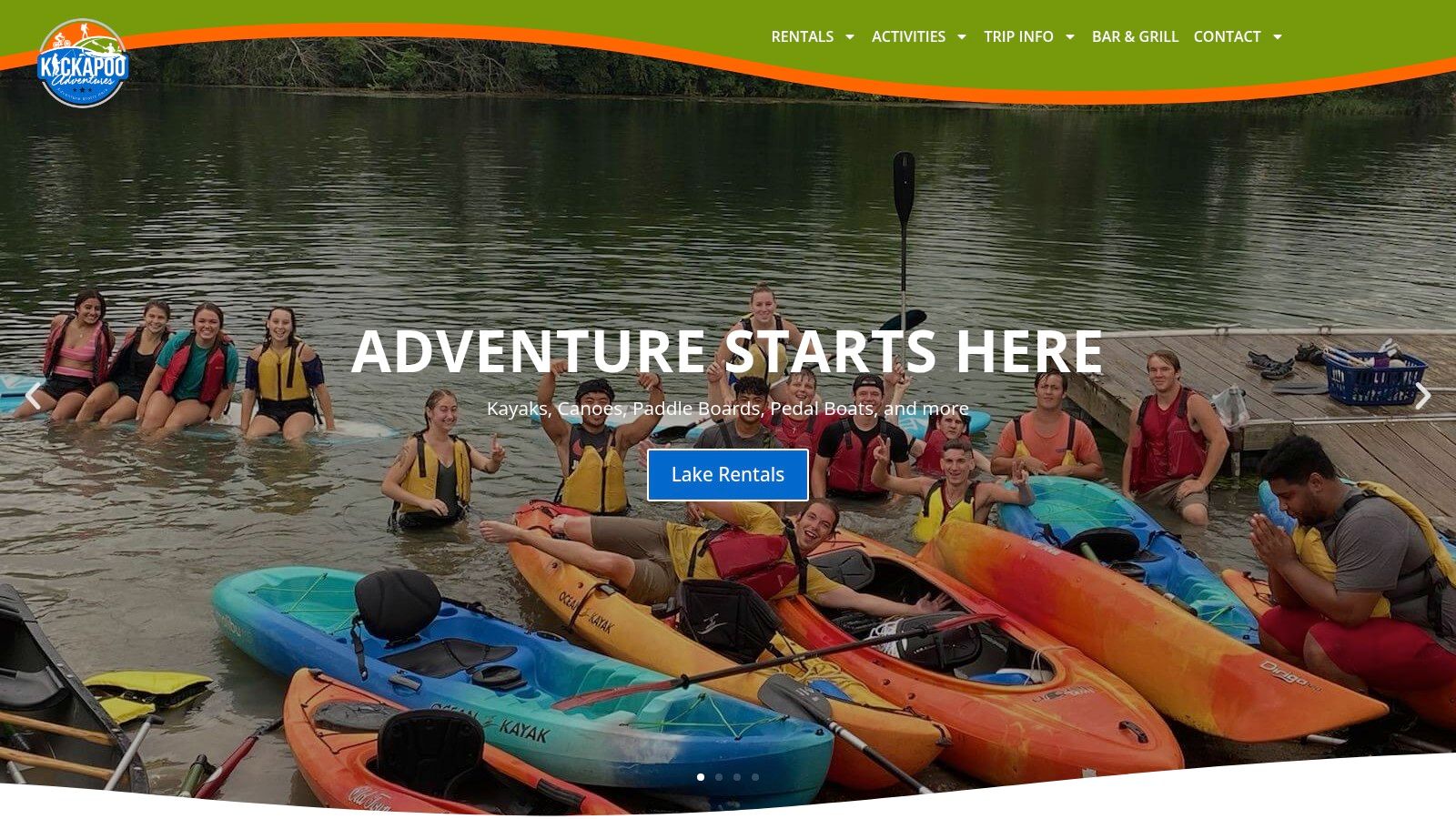
    5. Kickapoo Adventures

    Sometimes I don't want the tubing day to feel like a party. I want it to feel like a long exhale. That's where Kickapoo Adventures comes in.

    Kickapoo Adventures

    Set in Kickapoo State Recreation Area, this pick is better for the person who wants a quieter day. The tubing is still fun, still social, still very much a summer outing. But the mood shifts. You notice trees more. You notice the water more. You talk less for stretches, and somehow that feels good.

    When You Want Nature to Do Some of the Work

    This is the place I'd suggest if your perfect tubing day includes hiking shoes in the trunk and a picnic that isn't rushed. You can build a slower day around it. Float first. Eat after. Walk a trail. Sit around longer than you planned.

    I also like this spot for people who get tired of making every summer outing perform. You don't need the loudest soundtrack or the biggest crew to enjoy it. You just need a little openness.

    Water tubing in Illinois doesn't always have to feel like a group event. Sometimes the best version is quiet and simple.

    What makes Kickapoo stand out for me:

    • Calmer atmosphere: Better for conversation, nature, and a slower rhythm.
    • Multi-activity day: Easy to pair with hiking, picnics, or just hanging around outdoors.
    • Scenic setting: The route feels more tucked away from suburban routine.

    The obvious drawback is distance if you're coming from Chicago. It asks more of your morning. Weather and water conditions also shape the feel of the float. Still, if you want tubing to feel restorative instead of busy, the extra drive can be worth it.

    6. Ayers Landing Canoe Rental

    Ayers Landing has the kind of name that sounds inherited, like somebody's family kept showing up to the river long enough that the place took on their rhythm. That's part of why Ayers Landing Canoe Rental works for me.

    This is a good pick for mixed groups. One person wants a tube. Another wants a kayak. Somebody else wants to make the whole thing into an overnight with camping. Ayers Landing leaves room for that without making the plan feel scattered.

    Best for a Float That Turns Into a Weekend

    I think of Ayers Landing as a "don't rush home" option. You can build more than one kind of memory here. Maybe the float is the main event. Maybe it's the thing you do before camp chairs come out and the evening slows down.

    That flexibility matters because not every group travels the same way. Some people want a tube and a shuttle and that's it. Some people want to make a whole trip out of one stretch of river. Ayers Landing is good at meeting that second type of energy.

    A few reasons I'd put it on the shortlist:

    • Mixed-rental appeal: Easier when tubers and paddlers want to stay in one plan.
    • Camping tie-in: Great if the story you want includes sleeping nearby and stretching the day into night.
    • Fox River familiarity: Comfortable for people who like established river-trip territory.

    The downside is practical. Payment policies can feel a little behind the times, and busy weekends can fill fast. If you're the least organized person in your group, this is the moment to prove everybody wrong and reserve early.

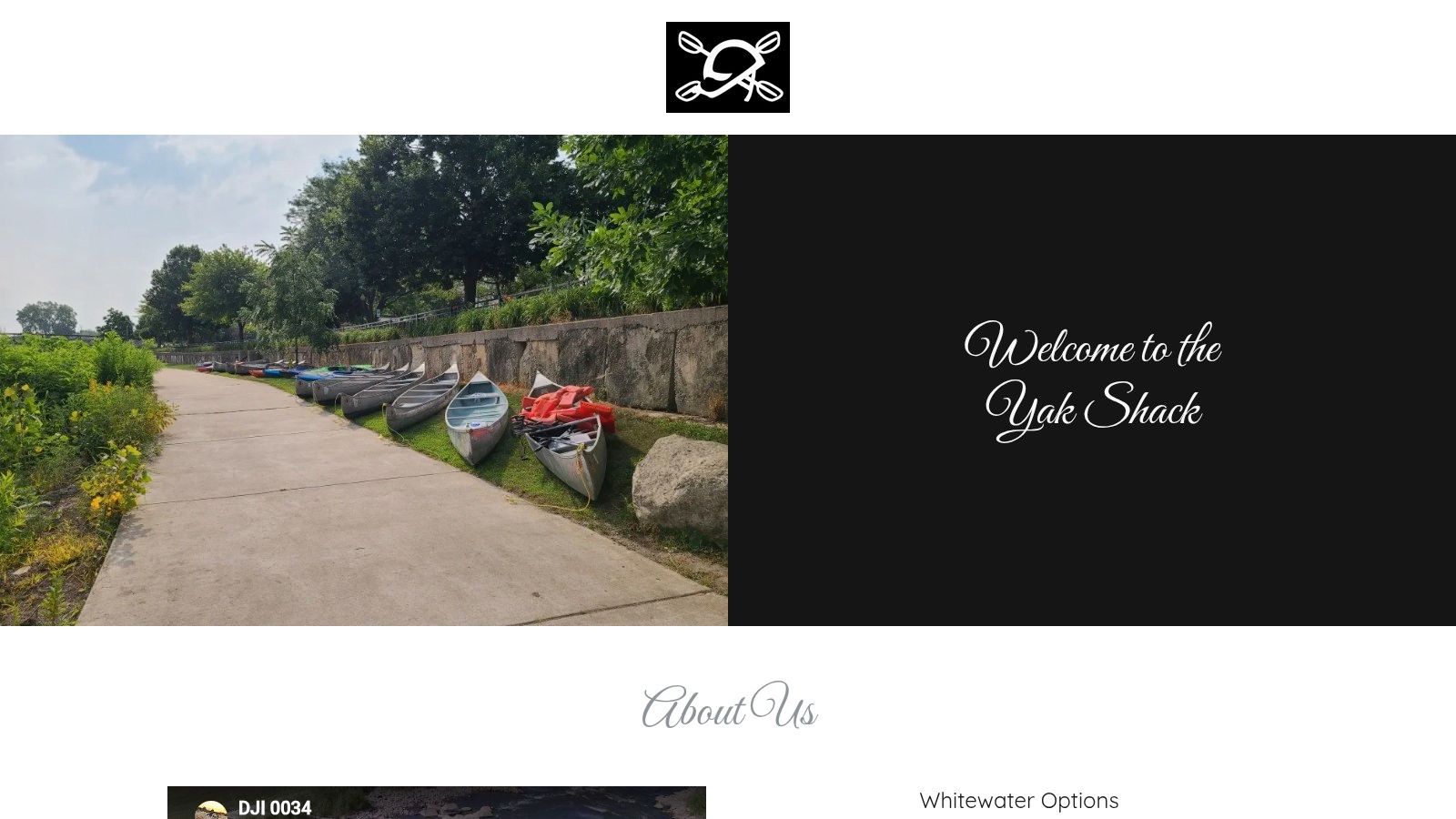
    7. Yak Shack at the Marge Cline Whitewater Course

    The first time I looked at Yak Shack, I knew it was a different kind of summer story. I wasn't picturing a cooler drifting beside me for three quiet hours. I was picturing a shorter, splashier session where the fun starts fast and keeps resetting every time you go again.

    Yak Shack (Marge Cline Whitewater Course)

    Yak Shack works for the group that wants action without turning the whole day into a long river expedition. The setup at the Marge Cline Whitewater Course in Yorkville gives you a more active outing, built around shorter runs and repeat laps instead of one downstream float. That changes the mood right away. You show up ready to play, not just drift.

    The Best Pick for a Short, Energetic Session

    I like this spot for people who want tubing in Illinois to feel a little more hands-on. You rent the right gear for the course, get on the water, and spend your time chasing the lively part of the day instead of waiting for it.

    Illinois Paddle notes on its DuPage River overview that the DuPage River is a 28.3-mile tributary of the Des Plaines River, that water on the trip moves at roughly 1 to 4 mph and averages about 2 mph, and that Yorkville's Marge Cline Whitewater Course includes a 1,100-foot bypass chute. I like having that context in mind because it gives the place shape. You're not picking a random rental. You're choosing a very specific backdrop for a summer story that feels more playful than peaceful.

    A few reasons I'd keep Yak Shack on the list:

    • Fast payoff: Good for people who want the fun part early and don't need a long float to feel like the trip was worth it.
    • Western suburb convenience: Easier to pull off when your group wants an adventure but still has dinner plans later.
    • Built-for-the-course gear: Helpful if you want an active water day without sorting out your own setup.

    The trade-off is simple. Yak Shack fits the friend who comes back laughing and soaked, not the one hoping to zone out on a lazy current. If the story you want includes quick runs, repeat tries, and a little chaos in the best way, this is your spot.

    7 Illinois Water Tubing Outfitters Compared

    I've found that picking a tubing spot in Illinois feels a lot like picking the kind of story you want to come home with.

    Some days call for the easy version. You want a place where the parking makes sense, the check-in is clear, the tube is waiting, and the group spends its energy joking around instead of figuring out logistics. Plainfield River Tubing fits that mood. It feels like the friend who already made the plan and texted everyone the details. Fox Hollow can land in that lane too, especially if you want a shorter float and a price that keeps the day light.

    Other days feel looser. You want a cooler, river shoes, a little patience, and a group that does not mind cash-only counters or a less polished rhythm. C&M Canoe Rental and Tube On!! Outfitters suit that version well. Those trips feel more local, more improvised, and a little more likely to produce the story about the wrong snack bag, the extra-long float, or the stop afterward that turns into the best part of the afternoon.

    Kickapoo Adventures and Ayers Landing Canoe Rental fit the longer-memory kind of day. I'd choose those when tubing is only part of the plan and the primary goal is to give the whole day room to breathe. You float, you hang around, maybe you pair it with camping, hiking, or a slow dinner on the way home. Those are the places that make the trip feel bigger than a rental window.

    Then there's Yak Shack at the Marge Cline Whitewater Course.

    That one changes the script.

    Instead of drifting into a lazy afternoon, you get a shorter, more active session that leaves people wet, laughing, and ready to go again. It works best for the group that wants quick energy and repeat runs, not the group hoping to disappear into a long, quiet float.

    So if I were choosing by story, I'd put them this way: Plainfield for the easiest group win, C&M for a social river day, Fox Hollow for a budget-friendly float with options, Tube On!! for the more DIY crowd, Kickapoo for scenery, Ayers Landing for a float that can grow into a weekend, and Yak Shack for a short burst of splashy fun. None of them is the single right answer. The right pick is the one that matches the day you want to remember.

    Now, Go Write Your Story

    Last summer, the part I remember best was not the clean launch, the perfect weather, or the moment we finally got on the water. It was watching a friend climb out at the end of the float with one sandal, wet hair plastered to his forehead, laughing about how the missing sandal had somehow made the day better. That is how these trips usually work. You plan the route, pack the cooler, pick the outfitter, and then the river adds the details you could not have scripted.

    So I'd choose your tubing day the same way I'd choose any good story. Start with the ending you want.

    If you want the easy group photo, the low-stress check-in, and the kind of day that still leaves room for dinner after, go with the polished version. If you want a little more drift in the plan, a few rough edges, and the chance that the best moment happens somewhere you did not expect, pick one of the looser, more local-feeling trips. If you want the float to be only one chapter in a longer day, choose the spot that gives you room to linger.

    That is the part I like most. Water tubing in Illinois can be simple, but it rarely feels empty. A day on the river has texture. Someone forgets sunscreen. Someone overpacks. A tube gets bumped sideways. The quiet stretch turns into a shouting match over whose speaker has the worst playlist. You come home sun-tired, slightly scraped up, hungry, and happier than you were that morning.

    I know that feeling from cleanup days with Litter Caterpillars, too. You show up expecting a task. Then the day grows into something else because people start talking, helping, joking, and making memories out of small inconveniences. Tubing works the same way. The plan gets you there. The little messes give the day its personality.

    There is also a bigger story under all of this. In the same Current water cluster report, analysts valued Illinois's water cluster at $16.7 billion and estimated 186,000 jobs in 2020. I bring that up because every float depends on real people doing real work behind the scenes, from maintaining access points to running outfitters and caring for the waterways that make these trips possible.

    Pick your backdrop. Pack the snacks. Accept that something small will go wrong.

    Then go make the kind of summer story you'll still be telling when the towels are finally dry.

  • 7 Best Sources for Ocean Pollution Images in 2026

    7 Best Sources for Ocean Pollution Images in 2026

    More Than Just a Sad Picture

    I used to think my old jam jars and bags of nuts were just trash. But they felt heavy, like they weighed 500 pounds. Each one carried a little memory, a failed promise, a version of me I didn't know how to let go of.

    Cleaning up my own mess felt impossible. Then I found something strange and freeing. Cleaning up other people's messes was easier, and somehow it helped me start cleaning up my own life. A strong image works the same way. The right ocean pollution images don't only show damage. They give you a before photo that makes someone want to help build the after. If you're trying to move people from sadness to action, the source you choose matters.

    1. NOAA Marine Debris Program Photo Gallery

    When I need an image that feels grounded, I usually start with NOAA's Marine Debris Program photo gallery. It feels like walking into a file cabinet run by people who care about evidence, not drama. You can move from plastics to fishing gear to microplastics to wildlife impact without getting lost in random stock-photo noise.

    That matters because the most dramatic ocean pollution images can distort the story. As The Ocean Agency's plastic image archive notes, the most shareable visuals often overrepresent surface trash and underrepresent microplastics, fisheries gear, and sewage-linked pollution. I like NOAA here because the captions usually push me back toward the actual source of the mess.

    Why I trust it for real campaigns

    For a volunteer flyer, a school slideshow, or a neighborhood cleanup page, rights simplicity saves time and stress. Many NOAA-credited images are public domain, which is great when you don't want to spend your Saturday decoding license terms instead of making posters.

    A few things I like right away:

    • Public-domain potential: Many NOAA-credited photos are free to use, which is a gift for nonprofits, classrooms, and local groups.
    • Strong topic grouping: You can browse by debris type, impact, research, and prevention instead of scrolling forever.
    • Useful U.S. relevance: If you're telling a Chicago-to-Great-Lakes-to-ocean story, NOAA's framing fits naturally.

    Practical rule: Always check the credit line on each NOAA image. Some partner photos have different rights.

    This gallery isn't glossy. That's part of the appeal. It feels more like a field notebook than an ad campaign, and sometimes that honesty is exactly what your story needs.

    2. NOAA Office of Response and Restoration Image Collections

    Some days you don't need a perfect hero image. You need proof. You need shoreline mess, field boots, removal work, and the kind of before-and-after documentation that says, "People showed up and did something." That's when I turn to the NOAA Office of Response and Restoration marine debris image collections.

    NOAA Office of Response & Restoration – Image Collections (Marine Debris)

    This archive has a different mood from the first NOAA library. It feels closer to response work. Storm aftermath, debris on shorelines, crews in the field. If your story is about action after impact, these images do the job.

    Best for documenting the work itself

    I think of this collection like work gloves. Not fancy. Very useful.

    You can use it well when you need:

    • Clear response scenes: Debris removal, restoration, and field conditions.
    • Before-and-after framing: Good for explainers, grants, and volunteer recaps.
    • Public-domain guidance: NOAA states that most images are public domain and free to use, though you still need to check details.

    There's another reason these images matter. Roughly 80% of ocean pollution comes from land-based sources, according to The Ocean Cleanup's explainer. So if your photo shows trash caught in a shoreline, canal edge, or storm-battered coast, it may tell a more honest story than a generic "floating island of trash" visual.

    A cleanup story gets stronger when the photo shows where the waste came from, not only where it ended up.

    The downside is style. Some files feel older, some are mixed in quality, and you may need to hunt for the right resolution. Still, if you want images with dirt under the fingernails, this is a good place to dig.

    3. Wikimedia Commons Marine Debris Category

    Wikimedia Commons is where I go when I want range. The Marine debris category on Wikimedia Commons feels a bit like a giant community garage. You can find excellent stuff, odd stuff, very specific stuff, and a few things that need patience.

    Wikimedia Commons – Marine Debris category

    I like it because every file page forces me to slow down. Who took this? What year? What license? What am I allowed to do with it? That pause is healthy. Ocean pollution images are easy to recycle until they become generic symbols with no place, no time, and no specific problem attached.

    Best when you need global variety

    This is where Wikimedia shines. You can look beyond one country and one visual style. Beach litter, entanglement, cleanup work, close-up debris, wide shoreline shots. You often get mirrored institutional images too, including public-domain material from government sources.

    Keep these habits in mind:

    • Read each file page: Wikimedia tells you the exact license and the attribution terms.
    • Curate hard: Quality varies a lot, so don't grab the first thing you see.
    • Use the details: Author names, dates, and descriptions make your caption stronger.

    Adobe Stock's ocean pollution search pages point to a real problem with visual repetition. Big image libraries can flatten very different problems into one vague category of "trash in water." Wikimedia helps you fight that because it pushes specificity. Plastic on a beach is not ghost gear. Ghost gear is not oil contamination. Those are different stories, and they need different solutions.

    If you care about context as much as aesthetics, Wikimedia is a strong free option.

    4. Unsplash Ocean Pollution Search

    Last spring, I was building a cleanup sign-up page after a long beach walk that left me angry and oddly hopeful at the same time. The page needed one image. Not ten. One. I opened Unsplash's ocean pollution search, found a sharp photo of plastic scattered along a shoreline, and felt the whole message click into place. Suddenly the event was not a vague good deed. It was a response to a mess people could see.

    That is why I keep Unsplash in the mix. It helps when you need an image that grabs attention fast and still feels human. The library leans polished, which can be a strength if you are making a campaign page, event header, slide deck, or social graphic that needs people to stop scrolling.

    Best for clean, modern visuals that pull people in

    Unsplash works well at the start of the story. You are not always trying to document every detail of the problem. Sometimes you are trying to get one neighbor, one teacher, or one tired volunteer to care enough to take the next step.

    What I like most:

    • Strong visual style: High-resolution images with a modern look that fits websites, presentations, and social posts.
    • Easy reuse: The Unsplash License is simple for many common nonprofit and community uses.
    • Good emotional range: You can find stark litter scenes, cleanup moments, and more symbolic images that set a mood.

    I still slow down before I choose. Some Unsplash photos are closer to visual metaphor than field evidence. A bottle drifting underwater can be striking, but it may not help someone understand what is piling up on their local beach, where it came from, or what kind of cleanup is needed.

    That gap matters.

    A strong ocean pollution image should do more than signal sadness. It should give your audience a foothold. If you are working in the spirit of Litter Caterpillars, the goal is transformation. Mess into mission. Spectator into participant. The right Unsplash image can open that door, especially if you pair it with a caption that names the scene clearly and points to action.
    I use Unsplash for the first spark. Then I make sure the story gets specific.

    5. Pexels Ocean Pollution Search

    Last spring, I was helping put together a beach cleanup flyer for a small neighborhood event. We did not need a polished campaign image. We needed a photo that would still make sense on a phone screen, on a printer at the library, and on a poster taped beside the coffee shop register. That is the kind of moment when I open Pexels' ocean pollution search.

    Pexels is practical. It gives you a wide mix of free images, and I often find vertical shots, tighter crops, or simpler compositions that work better for grassroots outreach than a beautiful image that falls apart the second you resize it.

    That choice shapes the story.

    A cleanup poster with the wrong photo can feel distant or generic. The right one can make a local problem feel local. A bottle half-buried in sand, a volunteer lifting a bag from the shoreline, a tangle of trash caught in rocks. Those scenes give people somewhere to stand emotionally. They can see the mess, and they can see what action looks like.

    Good for flyers, posts, and quick local outreach

    I reach for Pexels when I need fast options and enough variety to match the format, not just the theme.

    What I look for:

    • Orientation variety: Strong mix of horizontal and vertical images for posters, stories, and handouts.
    • Easy reuse: The Pexels License works well for many community and nonprofit projects.
    • Useful range: You can find gritty cleanup photos, beach litter shots, and more composed images for simple awareness pieces.

    The limit is context. Pexels usually will not give you the deeper captioning or institutional detail you would get from a scientific archive, so I treat every image as raw material for a story, not the full story itself. If a photo includes wildlife, people, logos, or branded packaging, I pause and check whether the image supports the message accurately and fits the intended use.

    That matters a lot with ocean pollution work. Wildlife photos can hit hard, but shock alone rarely builds commitment. If you are working in the spirit of Litter Caterpillars, the goal is transformation. Show the harm, yes, then help people see the next step. Add a caption that names what is happening, where action is possible, and how a person can join in.

    Pexels works well when your mission needs motion. It helps you get a real, usable image into the world fast, then turn that image into an invitation to act.

    6. Shutterstock Ocean Plastic Pollution Search

    Last spring, I helped a volunteer group pull together a sponsor deck after a muddy shoreline cleanup. We had strong photos from the day, but they did not fit together. One was raw and grey, another looked like a vacation ad with a stray bottle in the corner, and a third could not be cleared for broader campaign use. We needed visuals that felt consistent, legally usable, and strong enough to carry the story from local mess to public action. That is the moment I open Shutterstock's ocean plastic pollution results.
    Shutterstock helps when the image has to do more than shock. It has to work across a banner, a slide, a paid ad, and a printed handout without sending mixed signals. The filters are a significant advantage. You can sort for commercial use, isolate illustrations from photos, choose horizontal or vertical frames, and build a set that looks like one campaign instead of a pile of unrelated downloads.

    Best for polished campaigns with outside approval

    I use Shutterstock when the audience includes sponsors, schools, local officials, or brand reviewers. Those projects usually need cleaner licensing terms and a more controlled visual style.

    What I look for:

    • Matched image sets: Easier to build a campaign that feels unified across web, print, and social.
    • Commercial-friendly options: Better fit for ads, partner materials, and branded outreach.
    • Precise search control: Useful when you need a specific scene, subject, or composition fast.

    There is a tradeoff. Shutterstock costs money, and the license choice still matters. You have to read the usage terms and make sure the file matches the job.

    I also stay alert for stock-photo drift. A polished image can look convincing while saying almost nothing. Ocean pollution storytelling breaks down fast when every visual is just a lone bottle floating in blue water. The issue gets flattened into a cliché, and people stop seeing the systems, habits, and cleanup work behind the scene.

    That is where the Litter Caterpillars mindset helps me. I do not ask only, "Does this image look professional?" I ask, "Does it move the story from mess to mission?" The right Shutterstock image can do that well. A gloved hand lifting tangled line from rocks. Volunteers sorting plastic by type. A shoreline before cleanup, then after. Those images give people a way in. They show harm, but they also show change.

    If your project needs polish, consistency, and fewer licensing surprises, Shutterstock earns its place. Use it to choose images that do more than decorate the message. Choose ones that help people believe cleanup is possible, and worth joining.

    7. Getty Images Ocean Pollution Collection

    A city council packet lands on your desk at 9 p.m. The meeting is in the morning. You need one image that can survive scrutiny from reporters, staff, and residents who will ask the hard question fast: where did this photo come from? That is when I open Getty Images' ocean pollution collection.

    Getty helps when the image has to carry more than emotion. It often gives you editorial photos tied to real events, with captions that name the place, date, and situation. That context matters. A turtle wrapped in netting can stop a reader for a second. A documented photo from a harbor cleanup, a protest, or a shoreline survey can hold attention longer because it feels anchored to real life.

    I learned to treat Getty like a reporting tool, not just a gallery. If I am building a policy brief, a press page, or a sponsor-facing report, I want visuals that can stand beside serious copy without feeling staged. That is where Getty earns the price.

    Getty is strongest for:

    • Editorial provenance: Useful for news, public affairs, and issue reporting where source details matter.
    • Licensing precision: Helpful when placement, region, and usage terms need close review.
    • High production quality: Good for print layouts, presentation decks, and formal publications.

    The main challenge is still storytelling. A dramatic frame can pull people in, but it cannot prove every claim you make. One shoreline photo shows one shoreline. One cleanup scene shows one moment. If your copy speaks about a neighborhood, choose an image that feels rooted in a neighborhood. If your message is about systems, policy, or consumption habits, say that in the caption and supporting text.

    That is the Litter Caterpillars test I come back to. Does this image leave people stranded in the mess, or does it help them see a path from mess to mission? Getty can do that well when you choose photos with human stakes and traceable context. A fisher hauling plastic from a net. Students cataloging debris after a beach survey. Residents standing beside bags of trash they removed by hand.

    Those images do more than look credible. They help people believe their own work can become part of the story.

    Comparison of 7 Ocean Pollution Image Sources

    Source Complexity 🔄 Resources ⚡ Expected outcomes 📊 Ideal use cases ⭐ Key advantages 💡
    NOAA Marine Debris Program – Photo Gallery Low, curated browsing; check credits per image Low, public domain images; free to download Credible, science‑based visuals for outreach and education Nonprofits, classrooms, local storytelling (U.S. & Great Lakes) Rights‑simple NOAA images with trusted captions; check partner credits
    NOAA Office of Response & Restoration – Image Collections (Marine Debris) Low–Medium, searchable taxonomy; review usage notes Low, many images public domain; some high‑res requests possible Documentary before/after and event imagery useful for explainers Restoration reports, shoreline documentation, field response stories Clear usage notes and response/restoration focus; good for real‑world documentation
    Wikimedia Commons – Marine Debris category Medium, license varies per file; must confirm each file page Low, free but may require CC attribution or SA compliance Wide geographic and topical coverage; variable image quality Research, global examples, supplementary imagery Large repository with explicit license metadata on each file page
    Unsplash – Ocean Pollution collection Low, simple search and license terms Low, free, high‑resolution modern visuals Visually consistent, campaign‑ready hero images Web, slides, social campaigns, marketing Designer‑forward aesthetic and permissive license; vet releases for endorsements
    Pexels – Ocean Pollution searches Low, straightforward UX and filtering Low, free with generous license Flexible assets in many orientations for layouts Social posts, flyers, alternative to Unsplash Rights‑simple alternative with varied orientations; check images with identifiable people
    Shutterstock – Ocean Plastic/Pollution stock Medium, select correct license (Standard/Enhanced) High, subscription or per‑asset costs High‑resolution, cohesive series suitable for campaigns Advertising, sponsorships, high‑print quality campaigns Reliable model/property releases, advanced filters, brand‑safety tools
    Getty Images – Ocean Pollution collection High, rights‑managed vs RF choices; licensing controls needed High, premium per‑asset pricing and plans High‑impact editorial visuals with documented provenance Press, policy reporting, high‑visibility placements Authoritative captions, detailed licensing options, strong editorial coverage

    Start Your Story, Start the Cleanup

    Three volunteers. Wet gloves. A tree that barely blocked the hail.

    That was one of our first cleanup mornings with Litter Caterpillars. We were cold, annoyed, and laughing anyway, watching the weather try to shut the day down. We still picked up trash. We still left with a story. That memory changed how I look at ocean pollution images, because the photo that matters most is rarely the one that only says, "things are bad." The one people remember carries grit, place, and the next step.
    A gull tangled in fishing line can stop a scroll. A child holding a full trash bag on a local beach can start a plan. Both images matter. One shows the wound. The other shows what healing looks like when ordinary people show up.

    That choice is the core work.

    Picking a photo from NOAA, Wikimedia Commons, Unsplash, Pexels, Shutterstock, or Getty is not just filling space on a page. You are deciding what story your reader enters. Do they see a disaster so big it feels hopeless? Or do they see one shoreline, one cleanup crew, one honest mess that a community can face together?

    I keep coming back to transformation. Trash on the sand is the before picture. A volunteer with muddy shoes and a tired grin is the middle. A cleaner shoreline, or even one small cleared patch, is the proof that change has started. That is the spirit behind Litter Caterpillars too. Mess can become mission, and a strong image can help someone believe that before they ever grab a bucket.

    If you are building outreach for a cleanup, keep your visual story simple. Choose one image with real stakes. Add one plain sentence about where the litter comes from. Follow it with one direct invitation people can act on this week.

    Make the image carry more than sadness. Let it carry momentum.

    Go pick the photo that tells the truth and leaves room for courage. That is how a stranger becomes a volunteer. That is how a hard image becomes the start of a cleaner block, beach, or harbor.

  • Raven Glen Forest Preserve: A Guide to Your Next Adventure

    Raven Glen Forest Preserve: A Guide to Your Next Adventure

    I pulled into Raven Glen with a trash bag in my glove box and too much static in my head. Ten minutes into the trail, the noise started to break apart.

    An Invitation to a Different Kind of Place

    I want to walk you into Raven Glen Forest Preserve the way I'd walk a friend into it. No dramatic speech. No fake wilderness mystique. Just, “Come on, let's go. I think this place might help.”

    Some days your life feels like a junk drawer someone shook upside down. You've got half-finished thoughts, old stress, weird guilt, too many tabs open in your brain. I know that feeling well. I've had days where even a simple walk felt like too much effort, where my mind kept circling the same stale problems like a shopping cart with one bad wheel.

    Then I found places like Raven Glen.

    What got me wasn't some single perfect view. It was the way the preserve let me settle down in pieces. First the parking lot. Then the first stretch of trail. Then the quiet around the water. Then the moment where I stopped checking my phone because I didn't want to.

    You don't always need a breakthrough. Sometimes you need a place that lets your mind unclench.

    That's what this preserve feels like to me. It feels usable. That matters. Some outdoor places are beautiful but intimidating. Raven Glen Forest Preserve feels like a place where you can arrive exactly as you are. Tired. Distracted. Irritable. Hopeful. All of that is fine.

    What I think happens here

    When I walk through a place with a real history, I stop pretending change has to be clean and immediate. Raven Glen doesn't feel polished in that artificial way. It feels worked on. Lived through. Recovered.

    That's part of why I keep coming back.

    If you've ever looked at your own life and thought, “This is messier than I wanted,” this preserve has something to say to you without speaking. Land can change. Water can be redirected. Old uses can end. New care can begin.

    Come here for more than exercise

    Yes, you can come here for a walk. You can come for a bike ride. You can come to get outside for an hour because your week went sideways.

    But if you let it, Raven Glen Forest Preserve becomes something else.

    • A reset button: You step onto the trail one version of yourself and come back a little less tangled.
    • A quiet teacher: The land doesn't rush, and it doesn't perform for you.
    • A mirror: If a used-up place can be repaired, maybe you can too.

    I'm not trying to sell you a fantasy. I'm saying I've walked into Raven Glen feeling cluttered and walked out with one clear thought I could act on. Sometimes that's enough to change a day. Sometimes it changes more than that.

    The Story of a Place Re-Made

    Raven Glen makes more sense when you know what it used to be.

    Before it became the preserve you and I can walk today, Lake-Cook Audubon says the site was once a campground and daily farm, and it now holds a large glacial lake and scattered wetlands in the same setting, which you can read on the Lake-Cook Audubon event page about Raven Glen. I love that combination because it feels honest. This wasn't some untouched fantasy world waiting for us. People used it. Worked it. Moved through it. And under all that human activity, older forces had already shaped it.

    You can feel that when you're there.

    The place has the energy of a site with layers. The farm story is one layer. The campground story is another. The glacial water and wetlands are older layers still. Put them together and you get a preserve that feels less like a postcard and more like a recovery story.

    A timeline illustration showing the five stages of transformation for the Raven Glen nature preserve site.

    The land didn't “bounce back” by accident

    I think people sometimes talk about restoration as if nature heals itself the minute we step aside. Sometimes it does part of that work. But at Raven Glen, people are also doing real physical work on the site.

    A Daily Herald report on the Raven Glen restoration project says the plan covers 429 acres and involves $11 million, with the aim of easing flooding by changing how water moves through the preserve. I like that detail because it's concrete. This isn't decorative cleanup. This is the hard kind of repair. Dirt-moving, water-shaping, system-thinking repair.

    That idea hits me personally.

    A messy life usually doesn't improve because you bought a notebook and had one good Sunday. Real change is often more like water management. You look for the places where things keep overflowing. You find the weak spots. You stop pretending the same pattern will somehow fix itself. Then you start redirecting the flow.

    Why this story stays with me

    I've spent a lot of time thinking about trash, not in an abstract way, but with my hands. Picking it up. Bagging it. Looking at the weird stuff people leave behind. When you do that long enough, you stop seeing waste as a final state. You start seeing it as a call for intervention.

    Raven Glen gives me that same feeling.

    • It was used hard before: Farm and campground use leave marks.
    • It still carries old shapes: Glacial water, wetlands, uneven ground, all of that remains part of the place.
    • People chose to repair it: Large-scale restoration means someone looked at the site and decided it was worth the effort.

    Practical rule: When a place has been through a lot, don't ask why it isn't pristine. Ask what kind of care helps it recover.

    That applies to land. It applies to people too.

    When I walk here, I don't think, “Wow, what a perfect place.” I think, “This place got worked over, and it's still becoming itself.” That's a much better kind of hope. It's sturdier. It has dirt on it. It makes room for anyone who is still in progress.

    Finding Your Path at Raven Glen

    Raven Glen Forest Preserve is friendly in the way I like best. It doesn't demand a big production from you. You can show up, park, pick a direction, and move.

    The Lake County Forest Preserves page for Raven Glen says the preserve has 6.8 miles of trails overall. It also says Raven Glen East includes 4.5 miles for hiking and cross-country skiing and 2.8 miles for biking. You also get two entrances: a main entrance on Route 45 south of Route 173 and north of Miller Road, plus another entrance with parking and trail access on Route 173 just west of Route 45.

    That setup matters more than people think. A preserve gets easier to love when access is simple.

    Pick the entrance that matches your mood

    If I want a straightforward start, I like the idea of choosing my entrance based on energy.

    • Route 45 entrance: Good when I want the classic arrival. Park, breathe, begin.
    • Route 173 entrance: Good when I want to get moving fast and skip overthinking.

    That second option matters on low-motivation days. If you're waiting to feel perfectly inspired before you go outside, you'll lose half your best walks. Better to make the start easy.

    Raven Glen Trail Summary

    Trail Section Length (miles) Use Notes
    Total trail network 6.8 Mixed preserve use Good for choosing a longer outing or combining segments
    Hiking and cross-country ski trails 4.5 Hiking, winter skiing Best fit for slower walks, quiet loops, and winter visits
    Biking trails 2.8 Biking Gravel riding for a quicker, more rhythmic outing

    How I'd choose a route

    I don't think in terms of “best trail.” I think in terms of “best trail for the version of me that showed up today.”

    If my mind is busy and snagged on too many things, I walk. Walking lets me notice details in the water, the edges of the trail, the way the preserve opens and closes around me. If I'm carrying stress in my body and I need to physically shake it loose, I bring a bike and let repetition do the work.

    Here's the simple filter I use:

    1. Need calm? Choose the hiking trail.
    2. Need motion? Choose the biking route.
    3. Need to make the outing happen fast? Use the entrance that gets you moving with the least resistance.

    Start before you feel ready. Most of the value comes after the first few minutes.

    A few on-the-ground tips

    You don't need much, but a little preparation changes the whole experience.

    • Wear shoes you trust: The point is to pay attention to the preserve, not your sore feet.
    • Bring water: Even short outings go better when you're not running dry.
    • Keep your phone charged: Safety first. Then tuck it away when you can.
    • Decide your outing before you arrive: “I'm here to walk for a while” is enough of a plan.

    I'd also give you one mental instruction: don't chase completion. You do not need to conquer Raven Glen Forest Preserve. You do not need to optimize every mile. You just need to begin and stay present long enough for the place to work on you a little.

    That's the actual path. The trail only helps you find it.

    The Preserve Through the Seasons

    I don't trust the “perfect weather only” approach to nature. It turns the outdoors into a product review. Sunny enough? Mild enough? Convenient enough? That mindset misses most of what a place is trying to show you.

    Raven Glen Forest Preserve changes its face all year. If you keep returning, you stop asking the preserve to entertain you and start learning how to meet it where it is.

    A hiker walking through a forest path depicting all four seasons transitioning from spring to winter.

    Spring is messy in the best way

    Spring at Raven Glen feels like a room being reopened after a long winter. The ground softens. Water speaks louder. The preserve smells alive again.

    I like spring because it doesn't pretend renewal is neat. There's mud. There's dampness. There are sections where your shoes might come home carrying half the trail. Good. That's part of it. Growth usually starts ugly.

    When I'm out in early green-up, I think about how people want transformation without inconvenience. Nature never agrees to that bargain.

    Summer asks you to slow down

    Summer can feel full and noisy. The green closes in. The air gets thick. Everything seems to hum.

    That's when I like going early. The preserve feels gentler then. You hear more than you see, and that changes how you move. You stop charging ahead and start listening.

    If trees are part of what draws you out, this guide to trees in Illinois adds another layer to the walk. Once you start noticing tree shapes, bark, shade, and spacing, even a familiar trail feels fresh.

    Fall gives you the obvious beauty

    Yes, fall is the easy season to love. Crisp air helps. The color helps too.

    But even then, I try not to rush into “look how pretty” mode and leave it there. Fall at Raven Glen has a stripping-down quality I really like. The preserve feels honest. Things are letting go. The year is showing its wear. That can feel comforting if your own life is in a shedding season.

    • Go longer in fall: The cooler air invites a slower, deeper walk.
    • Pause more often: This is a good season for standing still near the water.
    • Notice what's thinning out: The preserve starts revealing its structure.

    Bad weather and changing weather often give you the most memorable day.

    Winter is where the place gets quiet enough to hear yourself

    Winter is my favorite season to test whether I really mean what I say about loving the outdoors. Snow, cold air, gray sky, empty stretches. That's where a place either becomes boring to you or becomes real.

    At Raven Glen, winter clears visual clutter. You start seeing lines, shape, distance, tracks, openings. The preserve gets simpler, and your thoughts often do too.

    I've learned a lot about myself in rough weather. Cold exposes your attitude fast. So does wind. So does the moment when comfort leaves and you have to decide whether you're still glad you came. I think everybody needs a few days like that. They teach you that toughness isn't loud. Sometimes it's just quietly continuing down the trail.

    Three Perfect Days at Raven Glen

    Some people freeze up because they think they need the ideal plan. You don't. You need a plan that matches your energy and gets you out the door.

    Here are three ways I'd spend time at Raven Glen Forest Preserve, depending on what kind of day I needed.

    The solo re-charge

    Start at the Route 173 entrance if you want the day to begin with very little friction. Park, silence your phone, and walk with no ambition beyond staying outside long enough for your breathing to settle.

    Bring a water bottle and a snack that won't turn into mush in your bag. Then give yourself permission to stop often. Look at the water. Look at the trail edge. Listen for the shift in your own mind when it stops producing fake emergencies every five seconds.

    This outing works best if you follow a few rules:

    • Don't track your performance: Leave the stats obsession at home.
    • Don't fill the silence: Skip the podcast for once.
    • Do one honest check-in: Ask yourself what's bothering you.

    By the time I finish a walk like this, I usually don't have every answer. I do have more room inside my head. That's enough.

    The family adventure

    For a family day, I'd begin at the main entrance on Route 45 and keep the pace loose. Kids don't need a lecture about ecology. They need a mission.

    Turn the outing into a scavenger hunt. Look for a cool rock, a strange leaf, a bird sound, a bend in the trail that feels secret even if it isn't. Let younger hikers stop and stare at small things. That's not wasted time. That is the day.

    A simple family rhythm works well here:

    1. Walk a while.
    2. Pause before anyone gets cranky.
    3. Eat a snack.
    4. Let curiosity set the next direction.

    A good family outing feels like discovery, not enforcement.

    If you're bringing kids, pack more patience than gear. The memory won't come from how far you went. It'll come from the odd little moments they decide matter.

    The after-work ride

    Some days you don't need serenity first. You need to burn the static off. That's what the bike day is for.

    Bring your bike, hit the gravel route, and let repetition clean out the mental junk. Pedal, breathe, corner, repeat. If the day at work left you annoyed, don't overanalyze it on the trail. Let your body process it through effort.

    I love this kind of outing because it's simple. You don't need a personal breakthrough speech. You need movement.

    Pack like someone who respects the basics:

    • Sturdy shoes or riding gear: Comfort keeps your focus where it belongs.
    • Water: Small oversight, big difference.
    • Charged phone: Practical, boring, necessary.
    • A small spare bag: If you see trash, you can carry it out.

    That last item changes your posture. The moment you're willing to leave a place better than you found it, you stop acting like a customer and start acting like a participant. I think that's a better way to move through any preserve.

    Keep the Adventure Going Nearby

    When I drive out to a preserve, I like letting the day stretch a little. A good outdoor trip doesn't have to end the second you leave the lot.

    If you want a totally different texture after Raven Glen Forest Preserve, head toward the northern unit of Illinois Beach State Park. Raven Glen gives you woods, trails, water, and that inland quiet. Illinois Beach gives you sand, open shoreline, and a very different mood. Doing both in one day can make the whole outing feel bigger without making it complicated.

    Make Antioch part of the trip

    After time outside, food tastes better. That's just true.

    Downtown Antioch has the kind of easy small-town stop that works after a hike or ride. Grab a burger. Get pizza. Sit down somewhere casual and let the dirt on your shoes be part of the story. You don't need a curated experience. You need something satisfying.

    A simple way to build a full day

    If you like structure, this is the format I'd use:

    • Start with Raven Glen: Let the preserve set your pace.
    • Add a second stop: Choose shoreline if you want contrast.
    • End with food nearby: Reward helps habits stick.

    If you enjoy planning preserve visits as a recurring habit, this roundup of Waterfall Glen forest content is another good rabbit hole to go down. I like collecting ideas this way because one walk usually leads to the next.

    Why I like spending locally

    There's also something nice about not treating a preserve like a sealed-off destination. You go outside, then you re-enter ordinary community life a little lighter. You support a local restaurant, maybe wander a bit, maybe stay out longer than you planned.

    That's my favorite kind of adventure anyway. Not the flashy kind. The kind that starts with a trail, picks up momentum, and sends you home more awake than when you left.

    Your Adventure in Service

    A place changes when you care for it with your hands.

    That's the thought I keep coming back to after a walk at Raven Glen Forest Preserve. It's one thing to admire a trail, enjoy the quiet, and head home with a clearer mind. I'm for all of that. But there's another step available, and I think it changes you faster.

    Bring a small bag.

    That's it. Nothing grand. Nothing ceremonial. Just make yourself available to pick up the bottle by the edge of the path, the wrapper caught in brush, the random bit of litter that would otherwise become part of the background. The act is small, but your relationship to the place changes right away.

    Screenshot from https://www.littercaterpillars.com

    Why service feels different

    When you care for a shared space, you stop consuming it. You join it.

    That's a big shift. A visitor asks, “What did I get from this place?” A steward asks, “What can I do while I'm here?” I think that second question is better for the soul. It gets you out of your own head. It gives your body something clear and good to do.

    I've found that service works like a powerful catalyst. If your life feels messy, helping with a visible mess can restart your sense of agency. You may not know how to solve everything at home, at work, or inside your own mind. But you can pick up one piece of trash. Then another. Then another.

    Start small and stay consistent

    You don't need a perfect environmental identity. You don't need special gear. You need willingness.

    Here's the version I believe in:

    • Carry one small bag: Easy to bring, easy to use.
    • Pick up what you safely can: No heroics. Just care.
    • Leave the place a little cleaner: Small wins matter because they are real.
    • Repeat the habit elsewhere: One preserve can teach you how to notice every public space differently.

    If the service side of outdoor life speaks to you, you might enjoy learning more about environmental stewardship programs. I think the best programs don't just clean places. They train people to become the kind of person who notices, returns, and helps.

    The moment you help care for a place, it starts living in you differently.

    Raven Glen is a great place to practice that. Walk it. Breathe there. Reset there. Then do one thing that makes the place better after you've passed through it.


    If that idea hits something in you, take the next step with Litter Caterpillars. It's a simple, brave way to turn time outdoors into service, friendship, and the kind of personal change you can feel.

  • Your Guide to Crooked Creek Woods and How to Help It Thrive

    Your Guide to Crooked Creek Woods and How to Help It Thrive

    I bent down to grab a crushed bottle near the edge of the trees, and for a second I forgot the rest of my life. The noise in my head got quiet. That's what happened to me the first time I really paid attention in Crooked Creek Woods.

    Finding Your Path in Crooked Creek Woods

    I didn't come to the woods because I had myself figured out. I came because I was tired, scrambled, and carrying the kind of inner mess that follows you from room to room. Cleaning my own life felt impossible. Picking up one piece of litter on a trail felt doable.

    That's still one of the strangest truths I know. Sometimes it's easier to lift someone else's mess than your own. You reach down for a bottle, an old can, a wrapper snagged in brush, and somewhere in that simple motion, your shoulders drop. You breathe deeper. You remember you can act.

    Crooked Creek Woods gave me that feeling.

    I've walked into a lot of green spaces hoping for some kind of reset. Some places are pretty but distant, like they don't need you. Crooked Creek Woods doesn't feel like that to me. It feels approachable. Human-sized. A place where you can arrive restless and leave steadier.

    The first walk that changed me

    I remember one visit when I didn't even mean to stay long. I thought I'd walk a little, clear my head, then head back to the car. Instead, I kept going. The trees made a kind of shelter that didn't ask anything from me except attention. I started noticing small things. Bent grass. Bird calls I couldn't name. Mud at the creek edge. Sun through branches.

    That was enough.

    Practical rule: If your mind feels loud, don't wait for the perfect plan. Start with one short walk.

    You might come here because you want exercise. You might come because your kids need room to run. You might come because you're lonely and need to be somewhere alive. All of those reasons are good reasons.

    Why I want you to go

    I want you to think of Crooked Creek Woods as more than a place to pass through. I want you to treat it like a trailhead for your own next chapter. Maybe that sounds dramatic, but I mean it in a plain, everyday way. The same way a sink full of dishes can break your spirit, a quiet walk can put it back together a little.

    Here's what I love about starting here:

    • You can keep it simple. Show up, walk, breathe, notice.
    • You can come as you are. Tired, hopeful, annoyed, curious. The woods can handle all of it.
    • You can leave with momentum. One good hour outside can change the rest of your day.

    If you've been waiting to feel ready before you visit, don't. Read this like a note from a friend who wants to meet you at the trailhead and say, come on, let's go.

    Getting to Know the Woods and Its Creek

    The first time I crouched beside Crooked Creek, I saw a bluegill flash near the bank and a plastic wrapper snagged in roots a few feet away. That is Crooked Creek Woods in one frame. Life holding on, and people being asked to choose what kind of neighbors we want to be.

    Crooked Creek runs through a chain of wooded preserve corridors, including Country Lane Woods, Cranberry Slough, and Pioneer Woods, and it belongs to the larger Chicago River system. According to a Chicago River story on Crooked Creek, the waterway supports fish such as largemouth bass, bluegill, and pumpkinseed, and a restoration project was anticipated to begin in May 2017 to improve hydrologic processes and aquatic habitat.

    An infographic titled Crooked Creek Woods: A Living Story, detailing its ecosystem, creek journey, biodiversity, and community connection.

    The creek teaches by example

    I come here for that lesson as much as the scenery.

    Crooked Creek bends, slows, gathers itself, and keeps going. After a hard season in my own life, that mattered to me more than any brochure language ever could. You may feel it too when you stand at the edge and watch the current work around a fallen branch instead of fighting it head-on.

    That shape of persistence is part of why this place stays with people. The creek is not background. It is the organizing force of the woods. Trees cluster around it. Wildlife depends on it. Walkers keep drifting back toward it, even when they start out thinking they are only here for a short stretch under the canopy.

    A woods with an old foundation

    The ground here carries a much older story than any single visit. Crooked Creek Woods sits in the Palos and Sag Valley division, which the Forest Preserves of Cook County describes as mostly hilly and forested, with roots in glacial and geologic history. You can feel that history in the rises under your feet and the way the land folds around water instead of flattening it into something generic.

    I love that about this place. It asks you to pay attention to shape, slope, and time.

    For me, that attention changes behavior. Once you notice how a creek bank crumbles, how roots hold soil in place, or how a bottle can wash downstream after one rain, care stops being abstract. It becomes practical. You pick up the can. You step more lightly. You start reading the woods as a living system instead of a backdrop for exercise.

    That is the heart of the Litter Caterpillars philosophy. We do not only visit natural places. We build a relationship with them through small acts of service, steady observation, and shared responsibility. If you want to bring that spirit with you here, our guide to cleaning rivers and waterways is a good place to start.

    You do not need expert training to care for a creek. You need attention, respect, and the willingness to leave the bank better than you found it.

    When you get to know Crooked Creek Woods this way, the place gives you more than a pleasant walk. It gives you practice in noticing what matters, and then doing something about it.

    Your Guide to the Trails

    When you first arrive at Crooked Creek Woods, don't worry about doing it the “right” way. You don't need elite hiking gear or some secret route. You need decent shoes, enough water, and permission to wander a little.

    I like to think of trail choices the way I think of conversations. Some are easy and social. Some are quiet and long. Some are best when you bring kids along and let the pace stay loose.

    How to choose your walk

    If you're coming with family, I'd keep your first visit simple. Pick the path of least resistance. Let the day be about curiosity, not distance. If you're coming alone and need room to think, give yourself more time and take the route that lets the sounds of the road fade.

    Since trail conditions can shift and on-the-ground route patterns can vary, I'd treat the woods like a place to explore rather than a place to conquer. For nearby route ideas across the region, I often browse Chicago trail guides before heading out.

    Here's a planning table I'd use with a friend before we go.

    Trail Name Approx. Length (Miles) Difficulty Best For
    Creekside Start Short Easy First-time visitors, kids, slow walks
    Grove Connector Walk Moderate Easy to Moderate Families, casual conversation, picnic day add-on
    Quiet Woods Loop Moderate Moderate Solo walkers, birdwatching, decompression
    Extended Wandering Route Longer Moderate People who want more solitude and time outdoors

    If you're bringing kids

    Kids don't usually need a perfect trail. They need discoveries close together. A stick bridge. A patch of mud. A sudden bird call. Space to ask questions that don't have answers.

    I'd keep a family visit focused on rhythm instead of mileage:

    • Start early enough to go slow. Rushing turns every root and puddle into a problem.
    • Let children lead for stretches. They notice mushrooms, feathers, and odd-shaped leaves adults walk right past.
    • Stop before anyone melts down. The best ending is one that makes your kids want to come back.

    If you want quiet

    I know the difference between taking a walk and going somewhere to hear yourself think. If that's what you need, arrive with your phone on silent and resist the urge to track every turn. Walk until your thoughts stop performing for you.

    Look for the moments when the trees seem to close around the path and the outside world loosens its grip. That's where Crooked Creek Woods gets especially good.

    Go slower than you think you need to. The woods open up when you stop trying to win at walking.

    A few things I'd watch for

    I won't pretend nature works on cue, but some patterns repeat. If you come at the softer edges of the day, the whole place feels more alert. If you pause near openings in the trees, you may catch better views through the canopy. If you stay quiet near the creek, you'll notice more than if you stomp through like you're late.

    My own trail method is simple:

    1. Walk the first part without taking photos.
    2. Stop at the first place that makes you exhale.
    3. Turn around only after your pace changes on its own.

    That last one matters. Your body usually knows before your mind does. At some point your stride gets easier, and that's when the walk begins to do its real work.

    The Woods Through the Seasons

    My relationship with Crooked Creek Woods changed when I stopped treating it like a one-season place. I used to think a preserve had one best moment. Now I think that's like saying a friend has one best mood. You get a different truth each time you return.

    A hiker walks along a scenic river in the crooked creek woods, featuring lush trees and blooming flowers.

    Spring wakes the place up fast

    Spring in the woods always feels a little reckless to me. Everything starts speaking at once. Birds get loud. The ground shifts from dull to alive. You smell damp soil and fresh growth before you can explain it.

    I like spring because it gives me hope without asking whether I earned it. You step onto the path carrying winter heaviness, and the woods answer with motion.

    Summer teaches you how to slow down

    Summer here is deep green shade and longer pauses. The air feels fuller. The trees create that cool cover that makes you want to stay out longer than planned.

    When I walk in summer, I stop expecting speed from myself. I let the day stretch. I pay attention to the smell of leaves warming in the sun and the places where the creek draws your eye even when you can't fully see it.

    A summer visit works well if you bring:

    • Water you'll want to drink
    • Shoes you trust on uneven ground
    • Patience for a slower pace

    Autumn is my favorite for thinking

    Autumn doesn't need much salesmanship. You know what leaves can do. But what gets me is the sound. That dry crunch underfoot makes every step feel counted.

    This is when I come to sort things out.

    A hard conversation. A decision I've delayed. A season of life that's ending before I'm ready. Fall gives me room for all of that. The woods feel honest then. Nothing hidden. Nothing rushed.

    Some days the best thing you can do is walk through leaves until your thoughts stop knotting themselves.

    Winter clears the noise

    A lot of people skip winter woods, and I think they miss something special. Without thick cover, you can read the shape of the land more clearly. You notice trunks, branches, slope, sky. The place feels stripped down to its lines.

    Winter doesn't flatter. It steadies.

    If there's snow, I look for tracks and follow them with my eyes until they disappear. If the air bites, I walk anyway because the silence feels clean. It's the season that reminds me strength doesn't always look cheerful.

    Come back in every season if you can. Let the place meet you in all your moods.

    Plan Your Visit the Smart Way

    The first time I brought a small volunteer crew here, one friend showed up in slick-soled shoes, another forgot water, and all of us had different ideas about where to meet. We still had a good day, but we spent the first half hour fixing preventable problems. Since then, I've learned that a better visit often starts before you leave home.

    According to the Forest Preserves of Cook County page for Crooked Creek Woods, the preserve is open sunrise to sunset year-round, has four groves with capacities of 100, 350, 100, and 200 people, and portable bathrooms are typically available from Memorial Day through Labor Day, weather permitting.

    Know the setup before you go

    Those details matter more than they sound like they should.

    If you are planning a birthday meal, a family reunion, or a quiet meetup after a walk, knowing the grove sizes helps you choose a gathering that fits the day instead of forcing the day to fit your plan. The larger groves with shelters can make a group visit feel calmer from the start.

    I also like knowing the hours before I arrive. Sunset comes faster than you think when conversation gets good and the creek keeps pulling you farther down the path.

    My simple visit checklist

    I pack for Crooked Creek Woods the same way I pack for a cleanup or a community walk. Light, useful, and honest.

    • Water you will drink
    • Shoes with grip for dirt, roots, and damp patches
    • A charged phone for maps and timing
    • A small bag for snacks, tissues, and hand sanitizer
    • An extra layer if the weather looks uncertain

    If you want to add one more thing, bring a spare bag or gloves so you can leave with a few pieces of trash if you spot them. That small habit changes the whole feeling of a visit. It turns a walk into participation, which is a big part of the spirit behind the Litter Caterpillars environmental stewardship programs.

    If you're meeting other people

    Group outings get better when someone claims the unglamorous job.

    Send the meeting point. Send the arrival time. Tell people what kind of walk this is going to be. A short wander? A picnic with kids? A longer afternoon with time to sit and talk? Clear plans make room for everyone to relax once they get there.

    I've also learned to arrive early if a grove is part of the plan. A few quiet minutes at the beginning can set the tone for the whole day.

    A few safety habits I always keep

    These are simple, and they work.

    1. Tell someone where you are going.
    2. Keep an eye on the time so you are heading out well before dark.
    3. Walk at a pace that lets you notice the ground and your own energy.
    4. Turn back if weather, footing, or your gut says it is time.

    I want you to have the kind of visit that leaves you steadier than when you arrived. Good planning helps with that. It gives you more room to listen, notice, and care for the woods while they care for you.

    Become a Guardian of the Woods

    There's a moment that happens after you visit a place enough times. It stops feeling like scenery. It starts feeling personal.

    You notice the bottle near the creek bank. The wrapper caught in low branches. The can half-hidden in leaves. And then you get to choose what kind of person you're going to be in that moment.

    A watercolor illustration shows a hand touching a tree trunk next to a forest stream with plastic pollution.

    Museum mindset or garden mindset

    I think a lot of people move through public land like they're walking through a museum. Look, admire, move on. Don't touch anything. Don't get involved. Keep your role small.

    I don't think that mindset helps us much.

    A better analogy is a community garden. In a garden, you don't own the place, but you still care for it. You pull a weed. You water what's thirsty. You leave it better than you found it. That's how I want you to think about Crooked Creek Woods.

    Small acts change the relationship

    The first time you pick up trash in a place you love, something shifts. You stop being only a visitor. You become a participant. Your walk gets a new layer to it.

    That change matters because action builds attachment. Attachment builds care. Care makes you come back.

    Here are a few easy ways to practice that:

    • Pick up one thing. You don't need a grand cleanup. Start with one bottle or one bag.
    • Carry a glove or grabber if you like structure. Tools make action easier when hesitation shows up.
    • Leave room for joy. Stewardship isn't punishment. It can be light, social, and even funny.

    Caring for a place is one way of practicing care for yourself.

    Service works on you too

    This is the part I learned the hard way. I used to think service was mainly about output. Bags filled. Ground cleared. Mess removed. But service changes the person doing it.

    When I started cleaning outdoor spaces, I got stronger in ways that had nothing to do with muscle. I got more consistent. Less afraid of starting small. Less trapped by perfection.

    That's why I care about environmental stewardship programs. They give people a simple doorway into responsibility. You show up, do one concrete thing, and your identity starts to shift around it.

    If you love Crooked Creek Woods, care for it in a visible way. Don't wait for someone else to be the kind of person who helps. You can be that person today.

    Join the Litter Caterpillars Adventure

    One Saturday at Crooked Creek Woods, I watched a teenager pull a crushed soda can from the creek bank while his grandmother held the trash bag open beside him. Ten minutes earlier, they had been quiet. By the time we reached the bend in the trail, they were trading stories about other parks they loved and arguing, happily, about who had found the strangest piece of litter. That is the kind of morning that stays with you.

    The Litter Caterpillars bring people together for cleanup events around Chicago, and the work has a way of turning a simple outing into something larger. You show up for a few hours outside, and you leave with muddy shoes, new names in your phone, and a stronger sense that public land belongs to all of us.

    Screenshot from https://www.littercaterpillars.com

    I love that nobody has to arrive with a perfect résumé in environmental service. You can come tired, curious, shy, or brand new. What matters is your willingness to pick up one piece of trash, walk one stretch of trail, and care for a place with other people who are learning the same habit.

    That is part of the Litter Caterpillars philosophy that changed me. Service is not only about removing litter. It is a practice of belonging. When you kneel to clear a bottle from the leaves or carry out a bag someone else ignored, you start seeing yourself differently. You are no longer passing through the woods. You are helping shape what kind of place it will be for the next child, dog walker, bird watcher, or exhausted neighbor who comes here to breathe.

    I have seen strangers become a crew in less than an hour. Gloves on, eyes scanning the ground, someone calls out a rusted can by the roots, someone else laughs at an ancient fast food cup, and the whole morning loosens up. If Crooked Creek Woods stirred something in you, follow it with your hands. Join a cleanup, bring a friend, and let your next walk become an act of care.

  • The 7 Best Parks in Des Plaines, IL: Your 2026 Guide

    The 7 Best Parks in Des Plaines, IL: Your 2026 Guide

    I remember one afternoon by the water when I almost stayed in my car. I was tired, my head was noisy, and I only meant to walk for ten minutes. Then I saw a crumpled bottle near the path, picked it up, kept walking, and somehow the whole day felt less heavy.

    I used to think a park was just a patch of grass. A place to kill an hour. But when my life felt as cluttered as my apartment, I started using parks as a reset button, and the parks in Des Plaines, IL gave me more than a change of scenery. They gave me small jobs I could do. Walk farther. Sit still for once. Say hi to a stranger. Carry out one piece of litter.

    Des Plaines is a good city for that kind of reset because it has a lot of park access woven into daily life. The Des Plaines Park District says it owns or maintains 56 parks, facilities, and green spaces, and the city notes that residents may be served by three different park districts depending on where they live. That setup feels real once you start moving around town. You notice that one park is built for a quick neighborhood break, another is built for a full family day, and another is where you go when you want your thoughts to stretch out a bit.

    1. Lake Park (Lake Opeka)

    If you only try one park first, I'd send you to Lake Park. Water changes the mood fast. Even on a day when I feel stubborn and shut down, the shoreline at Lake Opeka gets me moving because there's something to look at every few steps.

    The city points to Des Plaines as a place for fishing, sailing, boating, canoeing and kayaking, walking and biking trails, golf, aquatic centers, and more, and Lake Park is where that whole idea clicks for me. It feels like the place where Des Plaines shows its hand. This city doesn't treat parks like leftover land. It treats them like places where you can do something.

    Why I keep coming back

    I like Lake Park when I want options without a lot of planning. I can walk the paved path, stop near the shoreline, watch people fish, or sit on the grass and pretend I meant to have a thoughtful afternoon all along. If you've got kids, a date, visiting relatives, or just your own restless brain, that flexibility matters.

    A few things make this park easy to recommend:

    • Water changes the whole experience: The lake gives you fishing, boating energy, and a wider sky than you usually get in suburb parks.
    • You can build your own day: Walk first, picnic second, then watch the marina area wake up.
    • It works for action-minded people: Open, visible spaces make cleanup walks and community meetups feel natural.

    Practical rule: Bring a small bag and gloves. Lakefront parks collect windblown trash in sneaky corners, and picking up even a few pieces feels useful right away.

    There's also a memorial pavilion on site, picnic shelters, and a marina area with seasonal boat activity. Seasonal is the catch here. If you're going for rentals or launches, check the park first so you don't arrive with movie-scene expectations on a gray, windy day.

    My honest take

    Lake Park is best when you want one place to hold a whole mood. It can handle a lazy picnic, a serious walk, or a quiet reset after a hard week. If you like trail cleanups too, pair your visit with the spirit of a Des Plaines River Trail cleanup in Chicago and treat the shoreline like a place you're responsible for, not just a place you pass through.

    You can check hours, amenities, and seasonal details on the Lake Park page from the Des Plaines Park District.

    2. Rand Park (home of Mystic Waters)

    Rand Park feels like the friend who always has a plan. You don't go there for mystery. You go because you want a day that keeps moving.

    I've walked into Rand Park on hot afternoons and immediately understood why families like it. There's enough going on that nobody has to force fun. Some people head to the fields, some drift toward the playground, and in summer the whole place bends toward Mystic Waters.

    Best for families and people who get bored fast

    I'd recommend Rand Park for a mixed group. If one person wants to shoot hoops, another wants a bench in the shade, and somebody else wants pool-day energy, Rand Park makes that easier than most parks do.

    What sticks with me here is the balance:

    • Sports are built in: Baseball and softball fields, basketball space, and tennis give the park structure.
    • Kids have a real destination: The playground helps, and Mystic Waters turns a regular park trip into an event.
    • Meeting up is simple: Central parks remove the usual “where do we all gather?” problem.

    I also like Rand Park because it invites you to show up with a purpose. You can bring a glove, a ball, a picnic, or just a trash bag and a half hour. It's the kind of place where visible effort matters because lots of people will use whatever you leave cleaner than you found it.

    A cleanup doesn't have to be dramatic. Ten minutes near a playground entrance counts.

    The downside is obvious. Summer crowds are real, and Mystic Waters is seasonal and paid admission. If your dream day is quiet, meditative, and full of birdsong, this probably isn't your first pick. But if you want a park that feels alive and useful, Rand Park does that well.

    What I'd do here

    I'd start with one lap around the park, then choose my lane. If the courts are busy, I'd lean into the energy. If not, I'd grab a shady edge and reset. And if you want your park visit to turn into a small act of service, I'd borrow ideas from a simple park cleanup approach from Litter Caterpillars and keep it casual.

    For current details, use the Rand Park page from the Des Plaines Park District.

    3. Prairie Lakes Park

    Prairie Lakes Park is where I go when I want room to think without feeling isolated. It has that campus-style layout where one part of your visit can be outdoors and another can slide indoors if the weather changes or your mood changes.

    Des Plaines has about 15 square miles of mixed residential, commercial, and industrial land uses, and Prairie Lakes makes sense in that kind of city. It feels practical. It gives you paths, open fields, ponds, and nearby indoor spaces in one cluster, which is exactly what I want in a place that has to work for regular life.

    The park for flexible days

    I like this park when I don't want to commit to one activity. Maybe I'll walk the loop. Maybe I'll stop by the ponds. Maybe I'll just sit near the open fields and let my brain settle down.

    Prairie Lakes has a few strengths that show up fast:

    • The path is easy to use: Walking and biking feel natural here, even if you only have a short window.
    • The open fields give you freedom: Soccer, frisbee, tossing a football, or doing nothing much at all all feel right.
    • The nearby buildings help: The Community Center, Fitness Center, Aquatic Center, and theater make the area feel active year-round.

    The ponds don't have the same dramatic pull as a bigger lake. That's true. But I like that on certain days. Prairie Lakes feels less like a destination you have to “do right” and more like a dependable place to return to.

    One thing I've learned: Quiet parks are often better for starting a new habit because they don't ask much from you.

    My mission-plan version of Prairie Lakes

    I'd visit this spot to practice consistency. Walk one loop. Pick up three pieces of trash. Sit for five minutes without checking your phone. Repeat next week. That's how change usually happens for me anyway. Not with fireworks. With repetition.

    The surrounding Des Plaines area also has natural spaces that can deepen that instinct. If you like pairing neighborhood park time with ecological curiosity, the Des Plaines Dolomite Prairies Land and Water Reserve is a good mental companion to a Prairie Lakes visit.

    You can see amenities and updates on the Prairie Lakes Park page from the Des Plaines Park District.

    4. West Park

    West Park feels built for people who don't want the weather to boss them around. I respect that. Some parks shine in one season and disappear from your life the rest of the year. West Park keeps raising its hand.

    The first time I really noticed it, I was thinking about cold-weather routines. It's often assumed that getting outside is a spring promise and a winter excuse. West Park pushes back on that with an ADA-accessible playground, picnic shelters, sports space, and a seasonal outdoor ice rink that changes the whole personality of the park.

    Four-season park energy

    If you're planning a group event, West Park makes your life easier. The fieldhouse and shelters give you staging space. Restrooms and gathering spots matter more than people admit until they're trying to coordinate actual humans.

    What I like most:

    • It has shelter infrastructure: Great for birthdays, meetups, and cleanup crews that need a rally point.
    • It works across seasons: Warm day picnic, fall walk, winter skating mood. Different park, same address.
    • It welcomes different abilities: The accessible playground matters because parks should be easier to use, not harder.

    My warning is simple. Seasonal ice depends on weather, and rentals can cost money. So I wouldn't promise your friends a perfect winter scene without checking first. I've learned that lesson the annoying way.

    Still, West Park is one of those places I trust. It's not trying to charm you with one dramatic trick. It just keeps being useful, which is often better.

    Where action fits here

    West Park is good for community habits. A family picnic can become a quick litter sweep before lunch. A skating trip can become a reminder to clear the area around the benches. A meetup can include one shared bag for trash and nobody has to make it weird.

    That's why I think it belongs on any real list of parks in Des Plaines, IL. It meets you where you are. Tired parent, weekend athlete, organizer, bored teenager, person trying to get their life together. There's room for all of that.

    For amenities and rental details, go to the West Park page from the Des Plaines Park District.

    5. Chippewa Park

    The first time I went to Chippewa Park, I heard it before I really saw it. Paddle pops from the pickleball courts. A kid yelling from the playground. Someone in flip-flops hustling toward the pool because they were already late. The whole place felt awake, and on a sluggish afternoon, that was exactly what I needed.

    Chippewa works best for days when you do not want to wander around trying to invent motivation. You show up here with a racket, a water bottle, or just the willingness to join the energy already in motion, and the park does the rest.

    Where movement turns into connection

    I keep coming back to Chippewa because it gives outdoor time a clear shape. You can play, cool off, sit for a minute, then play again. If you are with kids, that matters. If you are trying to drag yourself out of a funk, that matters too.

    A few things stand out:

    • The courts give the park its identity: Chippewa has a real sports-and-social rhythm, especially if pickleball or tennis gets you out the door faster than a walking trail does.
    • Families can build a full afternoon here: Playground areas, pool access, seating, and concessions make it easier to stay longer without turning the outing into a logistics problem.
    • People interact here: This is the kind of park where strangers keep score for each other, trade a quick joke, and make the space feel shared.

    That same energy can wear on you if you picked the wrong time. Busy courts are fun until you wanted quiet and forgot it was peak hour. The pool can feel the same way in summer. I would go earlier in the day if you want room to breathe.

    I have a small personal rule at Chippewa. If I come here to move, I leave having done one useful thing besides exercise. Sometimes that means picking up a few cups near the benches. Sometimes it means clearing snack wrappers around the fence line before I head out. It is nothing dramatic. That is the point. A park like this reminds me that caring for a shared place can be built into ordinary fun, which is very much in the spirit of Litter Caterpillars.

    My honest use case

    I like Chippewa on restless days. The kind where sitting at home makes everything feel heavier. A couple of games, ten minutes watching the flow of the courts, one slow lap to cool down, and I usually leave steadier than I arrived.

    There is a neighborhood angle here too. Redfin describes the Des Plaines housing market as very competitive, with a median sale price trend and competitiveness details listed on its Des Plaines housing market page. I do not read that as trivia. I read it as a reminder that everyday places count. A park like Chippewa helps shape whether a neighborhood feels alive, connected, and worth showing up for.

    For courts, pool info, and park details, use the Chippewa Park page from the Des Plaines Park District.

    6. Arndt Park

    Arndt Park feels refreshed in the best way. You can tell when a place has been cared for recently because people settle into it differently. They don't hover. They use it.

    I like Arndt when I want a neighborhood park that still feels like a full outing. There's a pool complex, a fieldhouse, picnic shelters, a walking path, courts, and in winter even sled hills. That mix gives you a lot of ways to build a day without overcomplicating it.

    Good for families, good for routines

    Arndt has the kind of setup that works if you're trying to make outdoor time normal again. Not special occasion. Not “maybe someday.” Just regular.

    A few strengths jump out:

    • Fresh amenities help: Newer-feeling play and pool spaces make it easier to say yes to going.
    • The fieldhouse adds backup: If your group needs a home base, this matters.
    • Winter still counts: Sled hills mean the park doesn't disappear when the temperature drops.

    This isn't the park I'd choose for a huge scenic wow moment. It's the park I'd choose for real life. Birthday party. Saturday walk. Quick basketball run. Sledding with kids who need to burn off energy before everyone starts arguing in the car.

    The limitations are pretty normal. Pools are seasonal. Some rentals cost money. Weather still gets a vote. But none of that changes the basic point. Arndt is useful and welcoming, and that combo goes a long way.

    What I'd do here on a hard week

    I'd keep it simple. Walk the path once. Sit near the playground if I wanted the sound of life around me. If I had friends or family with me, I'd grab a shelter and make the goal easy. Eat, talk, clean up our area, leave.

    That's one of my favorite park lessons. You don't need a dramatic transformation. You need a setting where better choices feel doable. Arndt does that.

    For current amenities and seasonal updates, check the Arndt Park page from the Des Plaines Park District.

    7. Friendship Park Conservatory (Argus Friendship Park)

    The first time I came here, it was one of those gray suburban afternoons that can flatten your mood before you even get out of the car. Then I stepped inside the conservatory and the whole day changed. Warm air. Green leaves. That quiet, damp greenhouse smell that makes you slow down without anyone telling you to.

    Friendship Park Conservatory feels different from the rest of the Des Plaines area parks on this list because the visit is less about covering ground and more about paying attention. You notice the curve of a fern, a seasonal flower display, a bench that gives you a few minutes to think clearly again. I've gone here when I didn't want a big outing. I just needed a place that could soften the edges of the week.

    It sits on the south side of Des Plaines and is operated by the Mt. Prospect Park District. That detail matters more than it sounds. Real park life around Des Plaines crosses district lines, and this is one of those places worth claiming as part of your routine if you live nearby.

    A park for quiet action

    I would not come here for a loud, high-energy afternoon. I'd come here with one friend who needs to talk, a parent who wants an easy outing, or a kid who gets curious when a place feels alive. The conservatory gives you cover from bad weather, but it also gives you a different kind of mission.

    Here, the Litter Caterpillars mindset looks smaller and more personal. Hold the door. Leave every bench and table cleaner than you found it. Show a child how to look closely at a plant instead of rushing past it. Public spaces stay meaningful when people treat them with care.

    A few things stand out once you've been here more than once:

    • Indoor gardens make winter and rain less of a barrier: You can still get out of the house when the weather turns ugly.
    • The setting works well for calm gatherings: Showers, memorial events, meetings, and low-key celebrations fit the mood here.
    • The visit rewards patience: The more slowly you move, the more the place gives back.

    I also like that this stop corrects a common mistake people make with park lists. They only count the biggest or busiest places. I don't. A conservatory belongs in the same conversation as playgrounds, trails, and ball fields because reconnecting with the outdoors does not always look active or dramatic. Sometimes it looks like ten quiet minutes near plants while your breathing finally settles.

    If you're trying to match a park to a specific outing, that matters with dogs too. BringFido's Des Plaines parks page shows the city's off-leash options are limited, which helps explain why people often look carefully for the right fit before heading out: BringFido's Des Plaines park listings. Friendship Park is not the place for a dog to sprint. It is the place I'd choose when I want stillness, color, and a reminder that taking care of a shared space can be its own small act of service.

    For event and visit info, use the Friendship Park Conservatory page from the Mt. Prospect Park District.

    7-Park Comparison: Des Plaines, IL

    Park Implementation Complexity 🔄 Resource Requirements ⚡ Expected Outcomes 📊 Ideal Use Cases 💡 Key Advantages ⭐
    Lake Park (Lake Opeka) Moderate, seasonal marina ops and shoreline maintenance Boats/kayaks, marina staff, path and shoreline upkeep Scenic visits, boating and regulated fishing activity Scenic walks, family picnics, boating days, volunteer cleanups Unique waterfront access and diverse on‑site activities
    Rand Park (home of Mystic Waters) Moderate, pool operations plus sports field scheduling Aquatic center staff/lifeguards, field maintenance, admissions systems High family attendance in summer; organized sports use Family outings, swim/waterpark visits, youth leagues Combines full aquatic center with multi‑sport amenities
    Prairie Lakes Park (Prairie Lakes campus) Moderate‑high, multi‑facility coordination year‑round Indoor aquatic/community centers, theater staffing, park maintenance Year‑round programming and larger event capacity Mixed indoor/outdoor events, group sports, performances Indoor facilities and theater support all‑season use
    West Park Low‑moderate, rentals and seasonal rink setup Rentable fieldhouse staff, shelter upkeep, rink equipment seasonally Four‑season community recreation and hosted events Community gatherings, winter skating, fieldhouse rentals Strong shelter/restroom infrastructure and fieldhouse availability
    Chippewa Park Low, court scheduling and peak‑time management Multiple courts (pickleball/tennis), pool staff, concessions High court utilization; local leagues and clinics Pickleball/tennis play, courtsport tournaments, family pool days High court density; local hub for pickleball and courtsports
    Arndt Park Low‑moderate, pool and recently upgraded amenities New pool, renovated fieldhouse, sled hill maintenance Refreshed neighborhood recreation with seasonal highlights Neighborhood gatherings, pool use, winter sledding Recent upgrades across play, aquatics and gathering spaces
    Friendship Park Conservatory (Argus) Moderate, horticultural operations and event management Greenhouse staff, climate control, event rental coordination Weather‑proof small events, educational displays, year‑round greenery Small weddings/meetings, horticulture education, quiet visits Year‑round conservatory backdrop and horticultural programming

    Your Turn to Explore and Transform

    The last time I went to Lake Opeka, I told myself I was just going for a quick walk. Forty minutes later, I was still there, watching a kid drag a stick through the dirt near the path while his dad picked up a plastic cup that had blown into the grass. Nobody made a speech. Nobody needed a plan. The place felt better because two people decided to care.

    That is my real pitch for Des Plaines parks in Des Plaines, IL. Pick the park that fits your day, then give something back while you are there.

    If you want space to breathe, go to Lake Park and take the longer loop. If your family needs a place that gets everybody moving without much debate, Rand Park usually makes that easy. Prairie Lakes works well on ordinary weekdays when you want a steady routine instead of a big outing. West Park is the one I keep in mind when the weather turns cold and I still want to get outside. Chippewa brings energy. Arndt makes it easy to keep things simple and repeatable. Friendship Park Conservatory is where I go when I need green around me and the sky is not cooperating.

    I like that Des Plaines gives you options without making the whole thing feel complicated. You do not need to conquer every park on this list. You need one visit that turns into a habit. One bench. One path. One patch of shade where you stop treating the park like a backdrop and start treating it like a shared space you belong to.

    Start small.

    Notice the bottle near the curb. Pick it up. See the snack wrapper under the bench. Toss it out. If mulch has spilled across the sidewalk by the playground, kick a little back where it belongs. If you are with kids, hand them the easy job and let them feel useful. If you came alone, that counts too. Some of my favorite park visits in Des Plaines have been quiet ones where the only thing I changed was leaving one corner cleaner than I found it.

    That is how this kind of change usually happens for me. One ordinary visit. One ordinary act of care. Then another.

    Litter Caterpillars follows that same idea in a simple, practical way. It is a Chicago-based volunteer cleanup group focused on showing up outdoors and caring for shared spaces together. If you want your park visits to become real neighborhood action, take a look at Litter Caterpillars.

    So yes, go explore. Then do one small thing that proves you were really there.

  • Get Wic Chicago Illinois Easily: Your 2026 Guide

    Get Wic Chicago Illinois Easily: Your 2026 Guide

    You're probably here because grocery money feels tight, your phone already has too many tabs open, and every official website seems written for someone with a quiet house and free time. That's not real life in Chicago. Real life is rushing from work to pickup, trying to keep your kid fed, and wondering if asking for help will turn into a three-hour paperwork headache.

    I get it. WIC can look like one more bureaucratic maze. It isn't simple, but it is manageable when someone explains it like a neighbor would.

    You Are Not Alone Navigating Support in Chicago

    I think about the parent on the bus with a stroller, a backpack, and two grocery bags cutting into their hands. Their coffee is cold. Their kid is fussy. Rent is due soon. They're doing the math in their head, trying to figure out milk, cereal, fruit, diapers, everything. That person is not failing. That person is carrying too much.

    A stressed mother carrying a baby, laptop, coffee, and groceries against a Chicago cityscape background.

    That's why I want to talk plainly about WIC in Chicago, Illinois. WIC is food help for pregnant people, new parents, babies, and young kids. It also comes with nutrition support. I don't see it as charity. I see it like finally using a coat that was hanging in your closet the whole time while you were freezing outside.

    And too many families still don't get it. In Illinois, only 36.3% of the 419,107 people eligible for WIC participated in 2021, leaving an estimated $164 million in benefits unused each year, according to the Illinois WIC access analysis from the Greater Chicago Food Depository.

    That number tells me something simple. A lot of people who need help either don't know they qualify or get stuck halfway through the process.

    Why this matters on a regular Tuesday

    You don't need another lecture. You need a path.

    If your pantry is low this week, use every support system you can. WIC is one lane. Community food help is another. If you need a nearby meal option while you sort things out, this Chicago soup kitchen guide can help you find somewhere to start.

    Practical rule: If you think you might qualify, act like you do until a clinic tells you otherwise.

    A lot of parents talk themselves out of help before they ever make the call. Don't do that. I've seen people assume WIC is only for someone else, then find out they were eligible all along.

    My opinion

    The hardest part of WIC in Chicago usually isn't the benefit itself. It's the mental weight. The forms. The waiting. The feeling that you have to prove you deserve groceries for your own child.

    You do deserve to ask. Start there.

    Who Can Get WIC Support in Chicago

    Let's strip this down. WIC eligibility usually comes down to who you are, your child's age, and household income. That's it.

    An infographic detailing WIC program eligibility in Chicago, including who qualifies and income requirements.

    The life stage part

    You should check WIC if any of these fit you or your child:

    • Pregnant and trying to keep food on the table
    • Breastfeeding after birth, up to your baby's first birthday
    • Not breastfeeding after birth, within the first six months
    • An infant, from birth to age one
    • A child under five

    That's the first gate. If none of those apply, WIC probably isn't the program you need. If one does, keep going.

    The income part

    It's common for people to quit too early. Don't.

    The infographic uses the familiar WIC guideline of at or below 185% of the Federal Poverty Level, which is the usual way people talk about the income screen. But my real advice is simpler. Don't try to self-reject from memory. Working families qualify all the time.

    Think of income eligibility like a bouncer with a guest list. You might assume your name isn't on it because you have a job. Then you get to the door and find out you were invited the whole time.

    Here's the shortcut many families miss:

    • If you already get SNAP
    • If you already get Medicaid
    • If you already get TANF

    …you're often automatically income-eligible for WIC. That can save you time and stress because those programs already show your household falls within income rules.

    What Illinois numbers tell me

    Illinois has a much lower WIC take-up rate than the country overall. An average month in 2021 showed only 37.9% of eligible Illinois children ages 0 to 4 receiving WIC, compared with 52.2% nationally, and common barriers include misunderstanding rules, time away from work, language barriers, and transportation difficulties, as shown on the Illinois WIC coverage page from America's Health Rankings.

    If the rules feel confusing, that doesn't mean you're ineligible. It usually means the system is clunky.

    My straight advice

    Don't sit at your kitchen table trying to solve this like a tax problem. Call a clinic and ask, “I'm pregnant,” or “I have a child under five,” or “I'm postpartum. Should I apply?” Let the clinic tell you no. Don't do their job for them.

    How to Find Your Neighborhood WIC Office

    The search for a WIC office in Chicago can feel weirdly harder than it should be. You know the city. A place can be ten minutes away on the map and still be a whole journey with traffic, trains, kids, and weather. So don't look for “the” Chicago office like there's one giant front desk downtown. That's not how this works.

    A hand holds a smartphone displaying a map for a WIC office in Chicago, Illinois.

    Start with your phone

    Open Google Maps and search:

    • WIC office near me
    • WIC Chicago
    • Illinois WIC clinic
    • Catholic Charities WIC Chicago
    • WIC grocery center Chicago

    Save the top few that make sense for your route. Don't pick only by distance. Pick by your real life. Near your bus line is better than technically closer. Near your child's daycare is better than on the other side of the city.

    Use referral help if you're stuck

    A lot of families hit the same wall. They don't know where to go. The Greater Chicago Food Depository says it helps determine eligibility and refer families to a local WIC office, and Catholic Charities has 14 WIC grocery centers in Chicago, which tells you access is spread across neighborhoods instead of one central spot, as explained on the Greater Chicago Food Depository WIC help page.

    That's why I tell people to stop searching for a perfect answer and start building a short list.

    My three-call method

    Call up to three places. Ask the same questions every time.

    1. Are you taking new WIC appointments right now?
    2. What documents should I bring?
    3. Do you have language help if I need it?
    4. What are your hours?
    5. Can I start anything by phone or online before I come in?

    Write the answers in your Notes app. You do not need a fancy system. You need something you can read later when your kid spills juice on the counter and you forget everything.

    Neighborhood rule: The best WIC office is the one you can actually get to without wrecking your whole day.

    Think block by block, not citywide

    Chicago is patchwork. One neighborhood can have easier access than the next. If you're new to the city or still figuring out what's nearby, this guide to Chicago neighborhoods to explore can help you get your bearings while you look for support close to home.

    A lot of websites give broad program info. Fine. But if you're trying to handle WIC Chicago Illinois in real life, location beats theory every time.

    What to Bring to Your WIC Appointment

    Paperwork scares people off. I hate that, because the document list is simpler than it sounds once you sort it into piles. You usually need proof of who you are, where you live, and how much money comes into your household.

    Consider packing for a day trip. If you have your wallet, your keys, and your phone, you're covered. Same idea here.

    Your WIC Appointment Checklist

    What It's For Examples of What to Bring
    Proof of identity Driver's license, state ID, child's birth certificate, hospital paperwork for a newborn
    Proof of address Utility bill, lease, rent receipt, official mail with your name and address
    Proof of income Recent pay stubs, employer statement, benefit letter
    Proof of program participation if you already get benefits SNAP approval letter, Medicaid card or approval notice, TANF paperwork
    For children applying Birth certificate, medical card, or other record that shows the child's identity
    For a newborn or pregnancy Hospital papers, pregnancy confirmation from a clinic if the office asks for it

    Don't overpack

    You do not need to drag your whole filing cabinet across town.

    Bring one solid document for each category. If more than one person in the household works, gather income proof for each worker if the clinic asks for household income. Put it all in one folder or large envelope. I like a cheap plastic folder because coffee spills happen and Chicago weather is rude.

    Before you leave home

    Run this quick check:

    • Check names and address so they match your current household info
    • Check dates so your mail or pay stubs look recent
    • Check your phone battery because you may need to pull up records
    • Check your child's bag because a hungry toddler can turn a short visit into a wrestling match

    Bring more than you think you need, but organize it so you can find it fast.

    My honest advice

    If you're missing one document, call anyway. Don't disappear because your lease is buried somewhere or your printer is broken. Clinics deal with this every day. Ask, “I have these papers. Is that enough to start?” That one phone call can keep a small problem from becoming a missed month of benefits.

    What Happens at the Clinic and Using Your eWIC Card

    Walking into a WIC clinic for the first time can make your stomach tighten. You may expect a cold room, clipped voices, and a bunch of rules thrown at you. My experience is that it usually feels more human than that. Busy, yes. A little worn down sometimes, yes. But human.

    A step-by-step infographic illustrating the WIC clinic visit process from check-in to receiving benefits and shopping.

    You'll usually check in, hand over your paperwork, and wait your turn. Then someone will talk with you about your household, your pregnancy or your child, and your food needs. They may measure height and weight and do a simple health screening, including a finger prick to check things like iron. It's quick. It's not there to shame you.

    The appointment usually feels like this

    A receptionist calls your name. You pull snacks out of your bag to buy peace. Your kid wants to touch everything. Then you meet with a staff member or nutrition professional who asks normal questions about what you eat, what your child eats, and what you need help with.

    That conversation matters more than people think. If your baby needs a specialty formula, say it clearly. If you don't drink cow's milk, say that too. If your family shops at a certain store because that's what's near you, mention it. Speak up early instead of trying to “be easy.”

    USDA says WIC food packages now include soy-based beverages, tofu, more fruits and vegetables, baby foods, and whole-grain options, and Chicago providers such as Catholic Charities also talk about access to specialty formulas, as noted in the USDA WIC FAQ page.

    Your eWIC card is the tool you'll actually use

    Once you're approved, you'll get an eWIC card. Treat it like a debit card with food benefits loaded onto it. That card is what turns all the paperwork into groceries.

    A lot of people get approved and then hit a second problem at the store. They don't know which items are approved, they're rushed, the kid is tired, and suddenly buying cereal feels like taking a licensing exam.

    This short video gives a useful visual before your first visit.

    Make your first shopping trip easier

    I strongly recommend this routine:

    • Go once when you're not in a huge rush
    • Use the WIC-approved food list from your clinic
    • Ask a store employee if the shelf tags are confusing
    • Separate WIC items in your cart so checkout is cleaner
    • Keep your receipt so you can see what benefits remain

    Your first WIC shopping trip may feel awkward. That's normal. By the second or third trip, it gets much easier.

    The biggest mistake I see is staying quiet when something doesn't work. If a food item should qualify but won't scan right, ask. If your child needs a formula change, call the clinic. WIC works best when you treat it like an active tool, not a one-time approval letter.

    Tips for Success and Finding More Help

    Getting approved is great. Staying on WIC without chaos is the real win.

    A lot of families fall off because life gets crowded. A child gets sick. Work changes. Transportation falls apart. Someone misses a letter. Then benefits stop and the whole process feels heavier the second time around. I want you to avoid that mess.

    Protect your spot before problems start

    Illinois has only 37.9% participation among eligible children, and families commonly run into barriers like misunderstanding rules, time away from work, language barriers, and transportation difficulty, according to the same Illinois WIC coverage analysis. That tells me one thing. You need a system, even a tiny one.

    My version is simple:

    • Set a phone reminder for recertification well before your benefits need renewal
    • Keep one WIC folder for every letter, card, and clinic note
    • Save the clinic number in your phone so you don't have to hunt for it later
    • Ask for interpreter help early if English isn't your first language
    • Call fast when your schedule changes instead of missing the appointment

    Ask for accommodations like you mean it

    If taking time off work is hard, say so. If the bus ride is rough with small kids, say so. If you need language help, say it when you book.

    You are not being difficult. You are giving the clinic the information they need to help you show up and stay enrolled.

    Build a backup plan for food

    WIC is one piece. Use the rest of the support around you too. If you need nearby pantry help while you're getting settled, this page about Casa Catalina Food Pantry in Chicago may point you toward another layer of support.

    Some weeks are smooth. Some weeks are a flat tire, a school email, a missed bus, and a broken stroller all stacked together. That's exactly when backup matters.

    Missing one step doesn't mean you failed. It means you need to call, reset, and keep going.

    My closing advice

    Don't wait for the perfect morning, the perfect folder, or the perfect amount of confidence. WIC in Chicago, Illinois gets easier once you move. Call the clinic. Ask the dumb question. Bring the papers you have. Fix the rest after.

    The system can be clumsy. You don't have to be.


    If you care about making Chicago feel more supported, more connected, and more human, take a look at Litter Caterpillars. They bring neighbors together to do real good, make friends, and show up for the city block by block.

  • Create Nonprofit Sponsorship Packages for Your Small Group

    Create Nonprofit Sponsorship Packages for Your Small Group

    The first time someone told me to get sponsors for our cleanup group, I almost laughed them out of the conversation. I pictured trash bags covered in logos, weird corporate slogans, and the whole soul of the thing getting flattened into a sales deck.

    I was wrong.

    What changed my mind was simple. A sponsor isn't always buying you. Sometimes they're joining you. That's a very different posture, and if you build your nonprofit sponsorship packages the right way, you can bring in money, gear, food, printing, and real long-term allies without turning your group into a billboard.

    Your Sponsorship Journey Starts Here

    A few years ago, I was standing in a parking lot after a cleanup, sweaty, tired, and half-annoyed that we were already out of gloves again. One of the volunteers said, “Why don't you get a sponsor?”

    I rolled my eyes.

    At the time, “sponsorship” sounded like code for selling out. I pictured a slick company wanting their logo bigger than the mission, a bunch of fake smiles for photos, and a volunteer group slowly turning into somebody else's marketing project. Small groups tell themselves that story all the time, especially when they have no staff, no budget, and no patience for corporate theater.

    I told myself the same thing. I was wrong.

    What changed my mind was watching how people behaved. A shop owner offered drinks. A local company asked if they could cover supplies. Someone else wanted to feed volunteers after a cleanup. They were already raising their hands. The problem was not lack of interest. The problem was that I had framed every offer as charity instead of partnership.

    That mindset will keep a scrappy group small for longer than necessary.

    You are not asking people to rescue your mission. You are giving the right business a chance to stand beside something real.

    That difference matters, especially for volunteer-led groups. If you walk in acting grateful for scraps, you get scraps. If you walk in clear about who you are, what you do, and what kind of support fits, you sound like a group worth backing.

    Small organizations have an advantage here. You do not need polished language, a gala, or a development department. You need a story people can repeat, visible work in the community, and enough self-respect to say no to bad-fit money. Big nonprofits can drown in their own branding. Small groups can move faster, feel more human, and build trust face to face.

    Start there.

    What small groups get wrong

    Volunteer-run groups often make the same mistake at the start. They assume sponsorship begins with a PDF, a rate card, or a fancy list of benefits. It begins earlier than that.

    It begins with knowing what you stand for.

    If your identity is fuzzy, your package will be fuzzy. If your mission sounds borrowed, your ask will sound borrowed. And if you will say yes to anyone with a check, good partners will smell that from a mile away.

    I learned this the hard way. Early on, I was tempted to make our group sound bigger and shinier than it was. That instinct is poison. Small groups do better when they sound honest, local, and specific. “We clean this corridor every week and people know us by name” is stronger than a bunch of puffed-up language about impact.

    Ask yourself the questions that actually matter

    Before you draft a single sponsorship tier, answer these:

    • What do you do that people remember?
    • What part of your work makes locals trust you?
    • What kind of support helps without hijacking the mission?
    • What will you refuse, even if the money is good?

    That last question saves a lot of pain. Boundaries make you easier to trust. A sponsor worth having does not need to be tricked into respecting your values. They either respect them or they do not.

    Get that straight first, and the rest of the process gets much easier.

    Find Your Real Value Before Asking for Money

    A sponsor once asked me a simple question I was not ready for.

    What are we backing here?

    If your answer is a pile of logo placements, you are in trouble. Small volunteer-run groups lose deals right here because they describe surface-level benefits instead of the thing that makes people care. Nobody writes a check because their logo might end up on a flyer. They write a check because your group stands for something specific, shows up consistently, and has earned trust the hard way.

    We learned that on a highway cleanup during a bike event shutdown. It was dirty, inconvenient, and easy to ignore. We did it anyway. That gave us something stronger than ad space. It gave us proof. A sponsor connected to that story gets to stand next to visible effort, local credibility, and people who do the work without waiting for permission.

    A woman holding a wooden heart symbol with a background collage representing community, volunteerism, and social impact.

    Audit the value you already have

    Start with what your community would miss if your group disappeared for six months.

    That answer gets you much closer to your real sponsorship value than any template ever will. For a scrappy group, value usually comes from reputation, relationships, and repeated presence. You know the block. People know your volunteers. You keep showing up after the photo-op crowd goes home. That matters.

    Write down assets like these:

    • Local trust: Neighbors recognize your team and believe you will follow through.
    • Consistency: You show up on a schedule, not just when it is convenient.
    • Specific place knowledge: You understand one park, route, school, or corridor better than outsiders do.
    • Volunteer culture: People stick around because your group feels real, warm, and useful.
    • Visible proof: Photos, cleaner spaces, repaired areas, grateful residents, repeat turnout.
    • Community bridge-building: You can connect businesses with residents in a way that feels respectful instead of extractive.

    If a company wants to support community work through local corporate social responsibility programs, this is the kind of value they care about. Real presence. Real trust. Real outcomes people can see.

    Describe your audience without pretending to be bigger than you are

    Small groups get weirdly insecure here. They think they need polished market research, perfect demographics, and shiny charts to sound credible.

    You do not.

    You need an honest picture of who pays attention to your work and why that audience matters. If your volunteers are mostly neighborhood residents, say that. If local parents share your events, say that. If small business owners know your name because they see you in the same corridor every month, say that. Specific beats inflated every time.

    A plain table works well:

    What you know Why a sponsor should care
    Your supporters live nearby The sponsor reaches people in the exact community it wants to serve
    Your volunteers return regularly The sponsor gets repeat visibility, not a one-day cameo
    Your work happens in named neighborhoods The sponsor gains relevance in a real place, not a vague region
    Residents interact with your team face to face The sponsor is tied to trust, not just impressions

    That is enough to start.

    Stop treating your story like decoration

    Your story is part of the offer. For small groups, it may be the strongest part.

    Corporate-sounding groups blur together. Scrappy groups win by being unmistakable. If your origin story started with three volunteers, borrowed trash grabbers, and a block everybody else ignored, say that. If your people worked through rain, complaints, and burnout before the community noticed, say that too. Sponsors remember honest effort because honest effort is rare.

    I made the mistake early on of sanding off the rough edges so we would sound more professional. Bad move. We got more traction when we told the truth plainly. We were small. We were stubborn. We knew our area better than anyone. The right partners respected that. The wrong ones drifted away, which saved us time.

    Good sponsorships start when you can answer this in one clean sentence: why does your group matter to this community, and why would a business be proud to stand next to that work?

    Get that sentence right first. Everything else gets easier.

    Design Sponsorship Tiers That People Understand

    The first sponsorship sheet I made looked polished and useless.

    It had Gold, Silver, and Bronze across the top. Nice spacing. Clean logos. Zero clarity. One business owner looked at it and asked, "What am I buying here?" That was the right question, and I had done a bad job answering it.

    Small groups cannot afford vague tiers. You do not have a sales department to clean up confusion later. Your package has to make sense in one skim.

    A four-tier pyramid chart illustrating sponsorship levels for nonprofits, ranging from Visionary Partner to Friend of the Mission.

    Name the levels after the work, the role, or the result. A cleanup group could use Cleanup Crewmate, Block Captain, Route Builder, and Neighborhood Champion. A tutoring nonprofit could use Reading Buddy, Classroom Backer, Family Partner, and Learning Builder. Plain language wins because it tells a sponsor where they fit without making them decode your jargon.

    Keep the ladder short. Three or four tiers is enough for almost every volunteer-led group. More than that and your one-pager starts looking like a catering menu.

    Each tier should answer one question fast: what changes at this level?

    Here's the structure I recommend:

    • Entry tier: Simple recognition, thank-you visibility, maybe a logo on one item
    • Middle tier: Support tied to one event, one program day, or one recurring activity
    • Upper tier: Named support for a route, project, neighborhood, or program area
    • Top tier: Limited partnership tied to a major initiative or a year-round commitment

    The jump between levels should feel real. Do not add five tiny perks just to make the chart look full. Add one meaningful difference. Maybe the sponsor moves from logo placement to named support of a volunteer day. Maybe they move from one shoutout to recurring recognition tied to a visible neighborhood project. Clear progression beats clutter.

    I also like making the middle option the easiest yes. That is usually where a local business gets enough visibility to care, and your team can still deliver without turning volunteers into unpaid account managers.

    Show the choices side by side

    Sponsors compare fast, so help them do it.

    Tier Best for What they get
    Friend of the Mission First-time local supporters Simple recognition and thank-you visibility
    Catalyst Supporter Project-focused businesses Tied to a specific cleanup, outreach push, or volunteer day
    Community Builder Businesses that want repeated visibility Ongoing recognition and stronger community connection
    Visionary Partner A small set of anchor backers High-touch partnership and custom activation

    That table works because it explains fit, not just benefits. A sponsor should be able to point at one row and say, "Yep, that's us."

    If you want a real-world example of how mission-driven groups frame business relationships beyond a generic ask, look at these corporate social responsibility programs.

    A short video can help you think through how to present levels clearly without drowning people in text.

    Don't cram junk into every tier

    Volunteer-led groups get in trouble here. They start promising extra posts, extra signage, extra mentions, extra everything. Then the event arrives, the team is tired, and fulfillment turns into a scramble.

    Keep each benefit concrete and easy to deliver. If you cannot explain it in one line, track it in a simple checklist, and fulfill it without chasing three volunteers for favors, cut it.

    A clean package beats a bloated package every time.

    Save some requests for add-ons instead of stuffing them into the base tiers. Gloves, snack tables, route signage, shirts, or a one-off beautification push can sit outside the main package. That keeps your tier sheet simple and gives you room to shape a partnership around what a sponsor values.

    Put a Price on Your Passion Without Underselling

    The first time we priced a sponsorship, we lowballed it so hard it hurt. We were scared to ask for real money, so we built a package that looked generous on paper and miserable in practice. The sponsor was happy. Our team was exhausted. We spent weeks delivering extras that should never have been included for that price.

    That mistake taught me something fast. If your package is cheap because you feel guilty asking, your mission ends up subsidizing the sponsor.

    An infographic titled Pricing Your Impact outlining Cost-Plus and Value-Based strategies for valuing nonprofit sponsorship packages.

    Price the work first

    Start with the plain math.

    List every real delivery cost tied to the package. Shirts. Signs. Printing. Food. Video. Setup. Cleanup. Staff time. Volunteer coordination. Follow-up photos. If three volunteers have to spend two hours making a sponsor look good, that time belongs in the price.

    Small groups skip this because the labor feels invisible. It is not invisible. You are paying for it with nights, weekends, and goodwill.

    Then price the outcome

    Sponsors are not buying a banner by itself. They are buying association with a credible local effort that people care about.

    For a scrappy community group, that value often has nothing to do with polished branding. It comes from trust. It comes from being the organization people see in the park, on the block, or at the school, doing the work instead of talking about it. A local business may support you because they want their team involved, because neighbors will notice, or because your mission fits how they want to show up in town.

    Price for that.

    If you only charge based on materials, you train sponsors to treat you like a discount print shop with a cause attached.

    Use a three-part gut check

    Before I send a number, I ask three questions:

    1. What will this cost us to deliver without chaos?
    2. What are comparable opportunities going for in our area?
    3. What is this worth to the sponsor if we do it well?

    You need all three.

    If you only know your costs, you will probably ask for too little. If you only focus on sponsor upside, you will drift into fantasy pricing and disappoint people. Good pricing sits in the middle. It protects your team and still makes business sense.

    Stop apologizing for your ask

    Volunteer-led groups do this all the time. They soften the number. They offer to throw in extra posts. They say, "We know this isn't much."

    Cut that out.

    If your group brings out families, residents, volunteers, local press, or trusted word of mouth, that has value. If you can organize people and get something done in public, that has value. If your community would notice if you disappeared, that has value.

    Ask like you believe it.

    Keep in-kind sponsorships on the table

    Cash solves plenty. So do donated goods and services.

    A print shop that covers flyers and banners can save your budget. A restaurant that feeds volunteers can remove a real expense. A hardware store that provides gloves, grabbers, or storage bins can make an event possible without cash changing hands.

    Just be careful. In-kind support still needs a price tag on your side. If a sponsor wants the same recognition as a cash partner, assign a fair value to what they are providing and write it down clearly.

    My take: Price with backbone. Deliver with discipline.

    That is how small groups punch above their weight. You do not need slick corporate language or a giant staff. You need honest numbers, a clear sense of your worth, and enough nerve to stop giving away the store.

    Write a Proposal That Gets Read

    Most sponsorship proposals are dead on arrival because they read like insurance paperwork. Nobody wants that. Your proposal should feel like a real invitation from a real group doing real work.

    I like short proposals. Two or three pages is plenty for a small organization. If somebody needs more detail, you can send it after the conversation starts.

    Keep the structure simple

    Your proposal only needs a few pieces:

    • Your story: Why you exist and what kind of people you bring together
    • Your audience snapshot: Who you reach, where they live, and why they care
    • Your sponsorship menu: Tiers or modular options, shown clearly
    • Your deliverables: What you'll do, when you'll do it, and what exclusivity exists
    • Your next step: A direct ask for a call, reply, or meeting

    One of the biggest mistakes I see is trying to make one static package work for everybody. I don't buy that for scrappy groups. Sponsor behavior is shifting toward year-round recognition models instead of purely event-based exposure, and smaller nonprofits may do better with modular assets like cleanup route sponsorship, volunteer gear underwriting, or park-transformation funding, as discussed in Banking Crowded's sponsorship package article.

    Use plain English

    Don't write “integrated activation opportunity.” Write “your team can join the cleanup and we'll thank you in our recap post.”

    Don't write “brand exposure across multiple touchpoints.” Write “we'll put your name on volunteer gear, mention you in our email, and tag you in event photos.”

    That kind of language gets read because normal people can understand it in one pass.

    Leave room for custom deals

    I like having a standard package sheet ready. I also like ignoring it when the right custom idea shows up.

    A hardware store may not care about Instagram. They may love being the official glove and grabber sponsor. A coffee shop may care less about logos and more about fueling volunteers at one monthly cleanup. A neighborhood developer may want to back a specific block transformation.

    So I keep a section at the bottom called “Build Your Own Partnership.” That line opens doors.

    If your proposal answers every question except “why this sponsor,” it still isn't finished.

    Make the close easy

    End with one clean next step. Not five.

    Ask them to book a call. Ask them to reply with the tier they want. Ask if they want a custom version. That's enough. The proposal should start a conversation, not trap them in homework.

    Go Find Partners and Keep Your Promises

    The first sponsorships I ever chased the wrong way went nowhere.

    I sent polished emails to people who did not know us, used language no real person says out loud, and waited for replies that never came. Meanwhile, the businesses two blocks from our cleanup route already knew our volunteers by name. They had watched us drag trash bags past their storefronts for months. I was looking for “sponsors” when I should have been talking to neighbors with budgets.

    That lesson matters if your group is small, volunteer-led, and stretched thin. You do not need a fancy pipeline. You need a short list of local businesses that already trust what they can see.

    Make the first ask human

    Start close.

    Go to the coffee shop that sees your volunteers every month. Talk to the hardware store that sells gloves, buckets, or grabbers. Walk into the small business whose owner has already thanked you for cleaning up the block. Those conversations are warmer, faster, and more honest than chasing a giant company that will bury your email.

    Some of our best sponsor conversations started with a normal visit. I bought a drink, introduced myself, explained what we were doing in plain English, and asked one simple question: would you be open to seeing a one-page partnership sheet? That works because it respects their time and keeps the pressure low.

    If you need help building a prospect list that is grounded in reality, use this guide on how to find corporate sponsors for a small community group.

    Sponsorship is a real budget line for many businesses, as noted earlier in the article. Treat it that way. Stop sounding grateful for the chance to ask. Sound prepared to show value.

    Follow-through decides whether you get renewed

    Getting the first yes feels great. Keeping your word is what turns one check into a relationship.

    Small groups lose renewals for stupid reasons. They forget the thank-you post. They misspell the sponsor's name. They promise photos and never send them. They wait three weeks to recap an event that people barely remember by then. None of that is a strategy problem. It is a discipline problem.

    I have watched groups do good work on the ground and still lose easy sponsor renewals because they got sloppy after the money came in. Do not do that. If you are the scrappy group trying to punch above your weight, reliability is your advantage.

    Use a simple fulfillment routine:

    • Before the event: confirm logo files, business name, contact person, and every promised deliverable
    • During the event: take clear photos, capture signage, and keep quick notes on turnout and outcomes
    • Within 48 hours: send a thank-you with a few strong photos and a short recap
    • After everything is delivered: send one clean summary that shows what happened and what their support made possible

    That last piece matters more than people think. Sponsors want proof that their support did something real. Give them photos, a short result summary, and one or two specific moments from the day. “We removed 40 bags of litter and had 27 volunteers” is good. “Your support helped us clean the bus stop block that parents walk every morning” is better.

    Keep the relationship warm between events

    Do not disappear after the event.

    Send a quick update when the next cleanup happens. Tag them when it fits. Share a win that connects to what they funded. If they backed volunteer water, show the volunteers. If they funded a block cleanup, show the block. Keep it tied to the story they said yes to in the first place.

    The best sponsor relationships feel steady and personal. A volunteer-led group can do this better than a big organization because you are closer to the work and closer to the people around it.

    That is your edge. Use it.

    Your Most Common Sponsorship Questions Answered

    People usually don't struggle with the package itself. They struggle with the fear wrapped around it. Fair enough. Here are the questions I hear most.

    What if they say no

    Then they say no.

    That's all. It doesn't mean your mission is weak. It may mean the timing is bad, the fit is wrong, or the owner is buried. Thank them, keep the relationship warm, and move on. A clean no is better than a vague maybe that drags for months.

    What if a sponsor wants to change our mission

    Don't bend.

    If somebody wants to support you only after you soften your voice, change your values, hide your people, or chase optics over substance, walk away. Money that twists your group out of shape is expensive money.

    Do I need a formal contract

    For a very small local arrangement, a clear written agreement in email can be enough if both sides are straightforward and the deliverables are simple. For bigger commitments, exclusive deals, naming rights, or anything that carries risk, get a proper agreement and legal help if needed.

    What if we're too small to make a package

    Small is fine. Confusing is the problem.

    A tiny group with a clear story, consistent activity, and honest follow-through can beat a larger group with a bloated packet and weak execution. Your size isn't the issue. Your clarity is.

    How do I keep volunteers from feeling used

    Protect them on purpose. Don't promise sponsor perks that make the volunteer experience worse. Keep your people first. If you need a better system for that side of the work, these volunteer management best practices are a useful starting point.

    Should I customize every proposal

    No. That becomes chaos.

    Build one core package. Then adjust around the edges for fit, timing, and sponsor goals. Think modular, not random. You want flexibility with guardrails.

    Good sponsorships should make your mission easier to do, not harder to recognize.


    If you want more direct advice on building grassroots partnerships without turning your group into corporate wallpaper, check out Litter Caterpillars. We share what's worked for a volunteer-led cleanup group trying to punch above its weight, stay brave, and keep the soul intact.