The first time someone told me to get sponsors for our cleanup group, I almost laughed them out of the conversation. I pictured trash bags covered in logos, weird corporate slogans, and the whole soul of the thing getting flattened into a sales deck.
I was wrong.
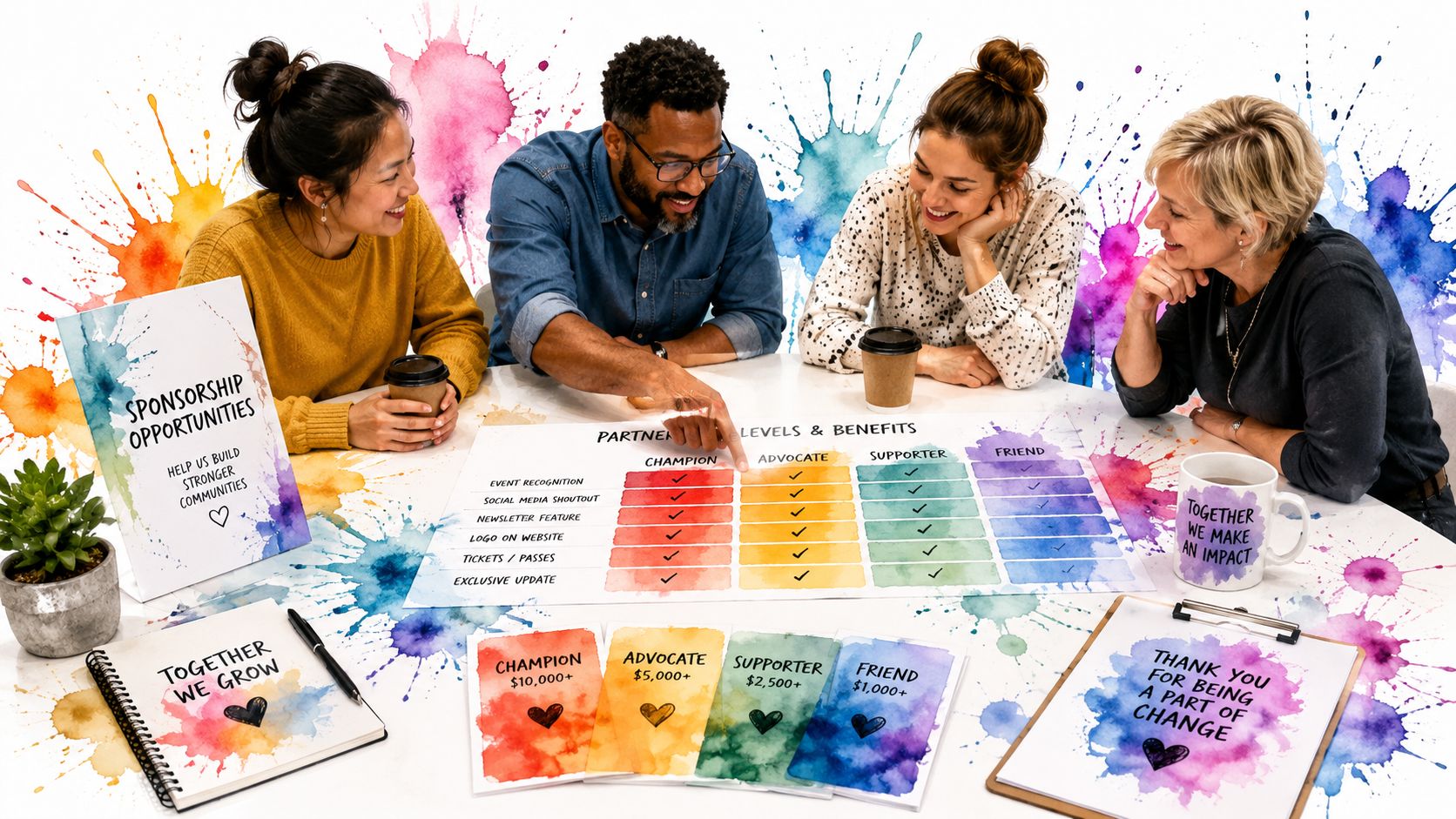
What changed my mind was simple. A sponsor isn't always buying you. Sometimes they're joining you. That's a very different posture, and if you build your nonprofit sponsorship packages the right way, you can bring in money, gear, food, printing, and real long-term allies without turning your group into a billboard.
Your Sponsorship Journey Starts Here
A few years ago, I was standing in a parking lot after a cleanup, sweaty, tired, and half-annoyed that we were already out of gloves again. One of the volunteers said, “Why don't you get a sponsor?”
I rolled my eyes.
At the time, “sponsorship” sounded like code for selling out. I pictured a slick company wanting their logo bigger than the mission, a bunch of fake smiles for photos, and a volunteer group slowly turning into somebody else's marketing project. Small groups tell themselves that story all the time, especially when they have no staff, no budget, and no patience for corporate theater.
I told myself the same thing. I was wrong.
What changed my mind was watching how people behaved. A shop owner offered drinks. A local company asked if they could cover supplies. Someone else wanted to feed volunteers after a cleanup. They were already raising their hands. The problem was not lack of interest. The problem was that I had framed every offer as charity instead of partnership.
That mindset will keep a scrappy group small for longer than necessary.
You are not asking people to rescue your mission. You are giving the right business a chance to stand beside something real.
That difference matters, especially for volunteer-led groups. If you walk in acting grateful for scraps, you get scraps. If you walk in clear about who you are, what you do, and what kind of support fits, you sound like a group worth backing.
Small organizations have an advantage here. You do not need polished language, a gala, or a development department. You need a story people can repeat, visible work in the community, and enough self-respect to say no to bad-fit money. Big nonprofits can drown in their own branding. Small groups can move faster, feel more human, and build trust face to face.
Start there.
What small groups get wrong
Volunteer-run groups often make the same mistake at the start. They assume sponsorship begins with a PDF, a rate card, or a fancy list of benefits. It begins earlier than that.
It begins with knowing what you stand for.
If your identity is fuzzy, your package will be fuzzy. If your mission sounds borrowed, your ask will sound borrowed. And if you will say yes to anyone with a check, good partners will smell that from a mile away.
I learned this the hard way. Early on, I was tempted to make our group sound bigger and shinier than it was. That instinct is poison. Small groups do better when they sound honest, local, and specific. “We clean this corridor every week and people know us by name” is stronger than a bunch of puffed-up language about impact.
Ask yourself the questions that actually matter
Before you draft a single sponsorship tier, answer these:
- What do you do that people remember?
- What part of your work makes locals trust you?
- What kind of support helps without hijacking the mission?
- What will you refuse, even if the money is good?
That last question saves a lot of pain. Boundaries make you easier to trust. A sponsor worth having does not need to be tricked into respecting your values. They either respect them or they do not.
Get that straight first, and the rest of the process gets much easier.
Find Your Real Value Before Asking for Money
A sponsor once asked me a simple question I was not ready for.
What are we backing here?
If your answer is a pile of logo placements, you are in trouble. Small volunteer-run groups lose deals right here because they describe surface-level benefits instead of the thing that makes people care. Nobody writes a check because their logo might end up on a flyer. They write a check because your group stands for something specific, shows up consistently, and has earned trust the hard way.
We learned that on a highway cleanup during a bike event shutdown. It was dirty, inconvenient, and easy to ignore. We did it anyway. That gave us something stronger than ad space. It gave us proof. A sponsor connected to that story gets to stand next to visible effort, local credibility, and people who do the work without waiting for permission.

Audit the value you already have
Start with what your community would miss if your group disappeared for six months.
That answer gets you much closer to your real sponsorship value than any template ever will. For a scrappy group, value usually comes from reputation, relationships, and repeated presence. You know the block. People know your volunteers. You keep showing up after the photo-op crowd goes home. That matters.
Write down assets like these:
- Local trust: Neighbors recognize your team and believe you will follow through.
- Consistency: You show up on a schedule, not just when it is convenient.
- Specific place knowledge: You understand one park, route, school, or corridor better than outsiders do.
- Volunteer culture: People stick around because your group feels real, warm, and useful.
- Visible proof: Photos, cleaner spaces, repaired areas, grateful residents, repeat turnout.
- Community bridge-building: You can connect businesses with residents in a way that feels respectful instead of extractive.
If a company wants to support community work through local corporate social responsibility programs, this is the kind of value they care about. Real presence. Real trust. Real outcomes people can see.
Describe your audience without pretending to be bigger than you are
Small groups get weirdly insecure here. They think they need polished market research, perfect demographics, and shiny charts to sound credible.
You do not.
You need an honest picture of who pays attention to your work and why that audience matters. If your volunteers are mostly neighborhood residents, say that. If local parents share your events, say that. If small business owners know your name because they see you in the same corridor every month, say that. Specific beats inflated every time.
A plain table works well:
| What you know | Why a sponsor should care |
|---|---|
| Your supporters live nearby | The sponsor reaches people in the exact community it wants to serve |
| Your volunteers return regularly | The sponsor gets repeat visibility, not a one-day cameo |
| Your work happens in named neighborhoods | The sponsor gains relevance in a real place, not a vague region |
| Residents interact with your team face to face | The sponsor is tied to trust, not just impressions |
That is enough to start.
Stop treating your story like decoration
Your story is part of the offer. For small groups, it may be the strongest part.
Corporate-sounding groups blur together. Scrappy groups win by being unmistakable. If your origin story started with three volunteers, borrowed trash grabbers, and a block everybody else ignored, say that. If your people worked through rain, complaints, and burnout before the community noticed, say that too. Sponsors remember honest effort because honest effort is rare.
I made the mistake early on of sanding off the rough edges so we would sound more professional. Bad move. We got more traction when we told the truth plainly. We were small. We were stubborn. We knew our area better than anyone. The right partners respected that. The wrong ones drifted away, which saved us time.
Good sponsorships start when you can answer this in one clean sentence: why does your group matter to this community, and why would a business be proud to stand next to that work?
Get that sentence right first. Everything else gets easier.
Design Sponsorship Tiers That People Understand
The first sponsorship sheet I made looked polished and useless.
It had Gold, Silver, and Bronze across the top. Nice spacing. Clean logos. Zero clarity. One business owner looked at it and asked, "What am I buying here?" That was the right question, and I had done a bad job answering it.
Small groups cannot afford vague tiers. You do not have a sales department to clean up confusion later. Your package has to make sense in one skim.
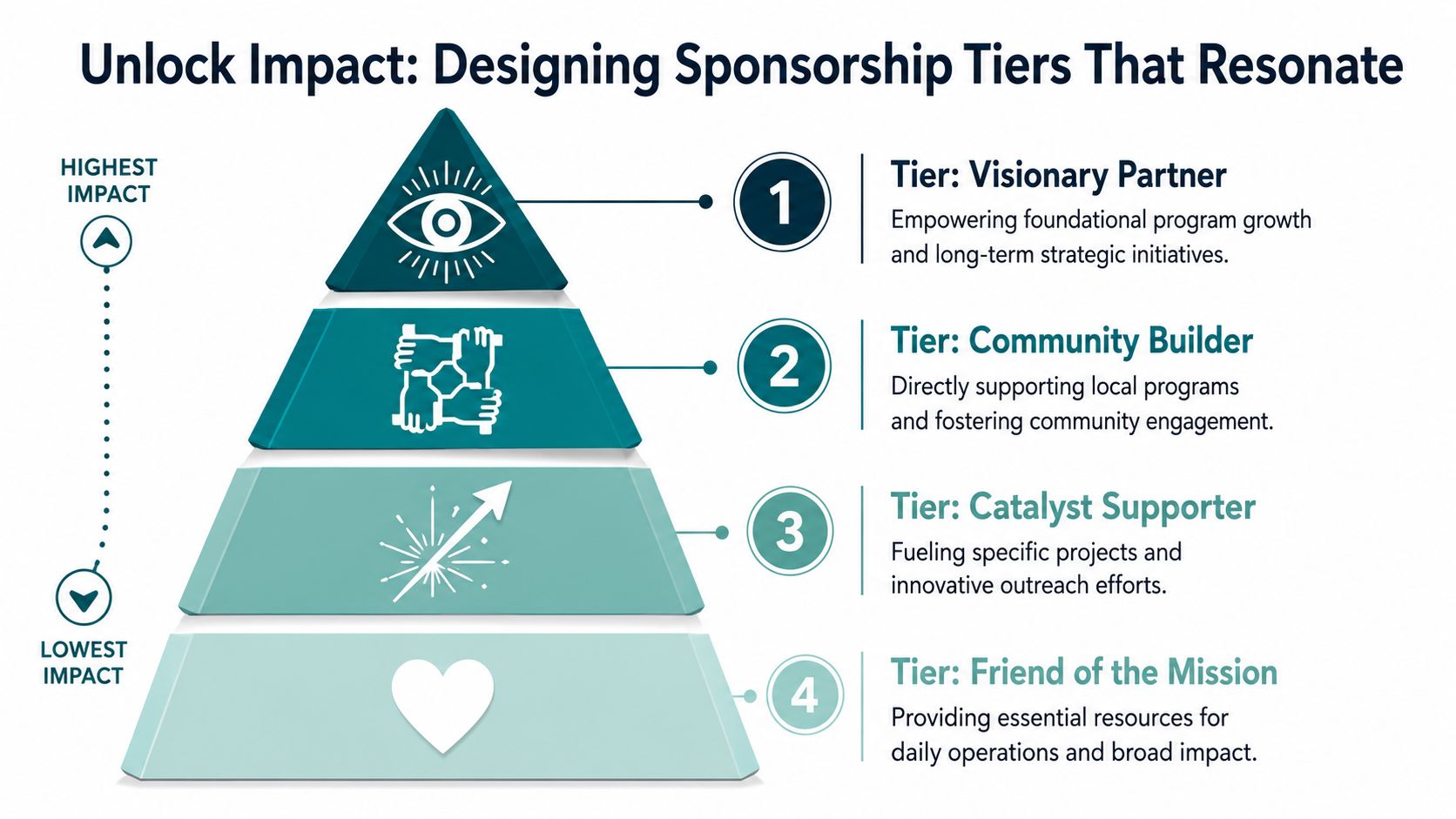
Name the levels after the work, the role, or the result. A cleanup group could use Cleanup Crewmate, Block Captain, Route Builder, and Neighborhood Champion. A tutoring nonprofit could use Reading Buddy, Classroom Backer, Family Partner, and Learning Builder. Plain language wins because it tells a sponsor where they fit without making them decode your jargon.
Keep the ladder short. Three or four tiers is enough for almost every volunteer-led group. More than that and your one-pager starts looking like a catering menu.
Each tier should answer one question fast: what changes at this level?
Here's the structure I recommend:
- Entry tier: Simple recognition, thank-you visibility, maybe a logo on one item
- Middle tier: Support tied to one event, one program day, or one recurring activity
- Upper tier: Named support for a route, project, neighborhood, or program area
- Top tier: Limited partnership tied to a major initiative or a year-round commitment
The jump between levels should feel real. Do not add five tiny perks just to make the chart look full. Add one meaningful difference. Maybe the sponsor moves from logo placement to named support of a volunteer day. Maybe they move from one shoutout to recurring recognition tied to a visible neighborhood project. Clear progression beats clutter.
I also like making the middle option the easiest yes. That is usually where a local business gets enough visibility to care, and your team can still deliver without turning volunteers into unpaid account managers.
Show the choices side by side
Sponsors compare fast, so help them do it.
| Tier | Best for | What they get |
|---|---|---|
| Friend of the Mission | First-time local supporters | Simple recognition and thank-you visibility |
| Catalyst Supporter | Project-focused businesses | Tied to a specific cleanup, outreach push, or volunteer day |
| Community Builder | Businesses that want repeated visibility | Ongoing recognition and stronger community connection |
| Visionary Partner | A small set of anchor backers | High-touch partnership and custom activation |
That table works because it explains fit, not just benefits. A sponsor should be able to point at one row and say, "Yep, that's us."
If you want a real-world example of how mission-driven groups frame business relationships beyond a generic ask, look at these corporate social responsibility programs.
A short video can help you think through how to present levels clearly without drowning people in text.
Don't cram junk into every tier
Volunteer-led groups get in trouble here. They start promising extra posts, extra signage, extra mentions, extra everything. Then the event arrives, the team is tired, and fulfillment turns into a scramble.
Keep each benefit concrete and easy to deliver. If you cannot explain it in one line, track it in a simple checklist, and fulfill it without chasing three volunteers for favors, cut it.
A clean package beats a bloated package every time.
Save some requests for add-ons instead of stuffing them into the base tiers. Gloves, snack tables, route signage, shirts, or a one-off beautification push can sit outside the main package. That keeps your tier sheet simple and gives you room to shape a partnership around what a sponsor values.
Put a Price on Your Passion Without Underselling
The first time we priced a sponsorship, we lowballed it so hard it hurt. We were scared to ask for real money, so we built a package that looked generous on paper and miserable in practice. The sponsor was happy. Our team was exhausted. We spent weeks delivering extras that should never have been included for that price.
That mistake taught me something fast. If your package is cheap because you feel guilty asking, your mission ends up subsidizing the sponsor.
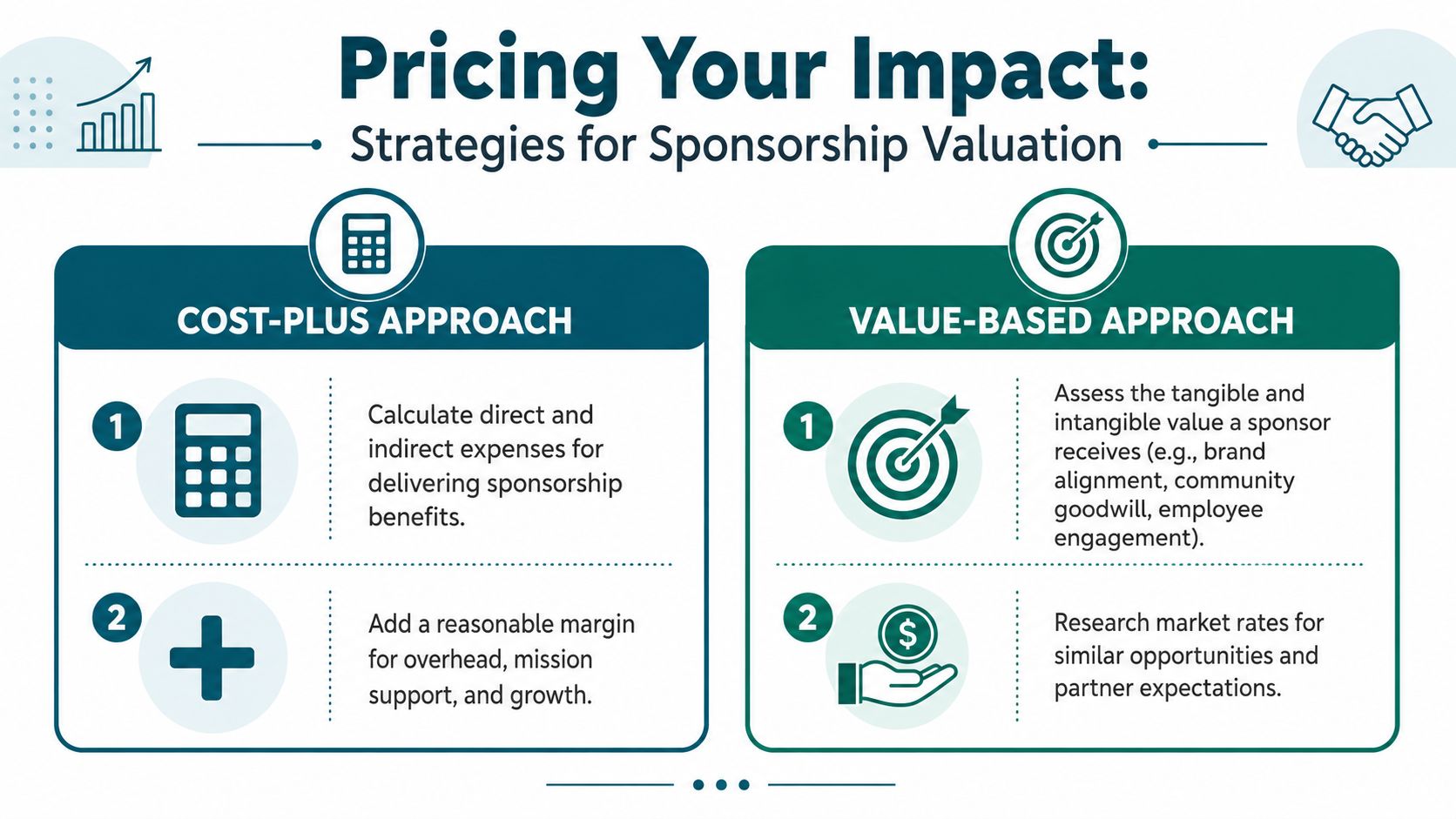
Price the work first
Start with the plain math.
List every real delivery cost tied to the package. Shirts. Signs. Printing. Food. Video. Setup. Cleanup. Staff time. Volunteer coordination. Follow-up photos. If three volunteers have to spend two hours making a sponsor look good, that time belongs in the price.
Small groups skip this because the labor feels invisible. It is not invisible. You are paying for it with nights, weekends, and goodwill.
Then price the outcome
Sponsors are not buying a banner by itself. They are buying association with a credible local effort that people care about.
For a scrappy community group, that value often has nothing to do with polished branding. It comes from trust. It comes from being the organization people see in the park, on the block, or at the school, doing the work instead of talking about it. A local business may support you because they want their team involved, because neighbors will notice, or because your mission fits how they want to show up in town.
Price for that.
If you only charge based on materials, you train sponsors to treat you like a discount print shop with a cause attached.
Use a three-part gut check
Before I send a number, I ask three questions:
- What will this cost us to deliver without chaos?
- What are comparable opportunities going for in our area?
- What is this worth to the sponsor if we do it well?
You need all three.
If you only know your costs, you will probably ask for too little. If you only focus on sponsor upside, you will drift into fantasy pricing and disappoint people. Good pricing sits in the middle. It protects your team and still makes business sense.
Stop apologizing for your ask
Volunteer-led groups do this all the time. They soften the number. They offer to throw in extra posts. They say, "We know this isn't much."
Cut that out.
If your group brings out families, residents, volunteers, local press, or trusted word of mouth, that has value. If you can organize people and get something done in public, that has value. If your community would notice if you disappeared, that has value.
Ask like you believe it.
Keep in-kind sponsorships on the table
Cash solves plenty. So do donated goods and services.
A print shop that covers flyers and banners can save your budget. A restaurant that feeds volunteers can remove a real expense. A hardware store that provides gloves, grabbers, or storage bins can make an event possible without cash changing hands.
Just be careful. In-kind support still needs a price tag on your side. If a sponsor wants the same recognition as a cash partner, assign a fair value to what they are providing and write it down clearly.
My take: Price with backbone. Deliver with discipline.
That is how small groups punch above their weight. You do not need slick corporate language or a giant staff. You need honest numbers, a clear sense of your worth, and enough nerve to stop giving away the store.
Write a Proposal That Gets Read
Most sponsorship proposals are dead on arrival because they read like insurance paperwork. Nobody wants that. Your proposal should feel like a real invitation from a real group doing real work.
I like short proposals. Two or three pages is plenty for a small organization. If somebody needs more detail, you can send it after the conversation starts.
Keep the structure simple
Your proposal only needs a few pieces:
- Your story: Why you exist and what kind of people you bring together
- Your audience snapshot: Who you reach, where they live, and why they care
- Your sponsorship menu: Tiers or modular options, shown clearly
- Your deliverables: What you'll do, when you'll do it, and what exclusivity exists
- Your next step: A direct ask for a call, reply, or meeting
One of the biggest mistakes I see is trying to make one static package work for everybody. I don't buy that for scrappy groups. Sponsor behavior is shifting toward year-round recognition models instead of purely event-based exposure, and smaller nonprofits may do better with modular assets like cleanup route sponsorship, volunteer gear underwriting, or park-transformation funding, as discussed in Banking Crowded's sponsorship package article.
Use plain English
Don't write “integrated activation opportunity.” Write “your team can join the cleanup and we'll thank you in our recap post.”
Don't write “brand exposure across multiple touchpoints.” Write “we'll put your name on volunteer gear, mention you in our email, and tag you in event photos.”
That kind of language gets read because normal people can understand it in one pass.
Leave room for custom deals
I like having a standard package sheet ready. I also like ignoring it when the right custom idea shows up.
A hardware store may not care about Instagram. They may love being the official glove and grabber sponsor. A coffee shop may care less about logos and more about fueling volunteers at one monthly cleanup. A neighborhood developer may want to back a specific block transformation.
So I keep a section at the bottom called “Build Your Own Partnership.” That line opens doors.
If your proposal answers every question except “why this sponsor,” it still isn't finished.
Make the close easy
End with one clean next step. Not five.
Ask them to book a call. Ask them to reply with the tier they want. Ask if they want a custom version. That's enough. The proposal should start a conversation, not trap them in homework.
Go Find Partners and Keep Your Promises
The first sponsorships I ever chased the wrong way went nowhere.
I sent polished emails to people who did not know us, used language no real person says out loud, and waited for replies that never came. Meanwhile, the businesses two blocks from our cleanup route already knew our volunteers by name. They had watched us drag trash bags past their storefronts for months. I was looking for “sponsors” when I should have been talking to neighbors with budgets.
That lesson matters if your group is small, volunteer-led, and stretched thin. You do not need a fancy pipeline. You need a short list of local businesses that already trust what they can see.
Make the first ask human
Start close.
Go to the coffee shop that sees your volunteers every month. Talk to the hardware store that sells gloves, buckets, or grabbers. Walk into the small business whose owner has already thanked you for cleaning up the block. Those conversations are warmer, faster, and more honest than chasing a giant company that will bury your email.
Some of our best sponsor conversations started with a normal visit. I bought a drink, introduced myself, explained what we were doing in plain English, and asked one simple question: would you be open to seeing a one-page partnership sheet? That works because it respects their time and keeps the pressure low.
If you need help building a prospect list that is grounded in reality, use this guide on how to find corporate sponsors for a small community group.
Sponsorship is a real budget line for many businesses, as noted earlier in the article. Treat it that way. Stop sounding grateful for the chance to ask. Sound prepared to show value.
Follow-through decides whether you get renewed
Getting the first yes feels great. Keeping your word is what turns one check into a relationship.
Small groups lose renewals for stupid reasons. They forget the thank-you post. They misspell the sponsor's name. They promise photos and never send them. They wait three weeks to recap an event that people barely remember by then. None of that is a strategy problem. It is a discipline problem.
I have watched groups do good work on the ground and still lose easy sponsor renewals because they got sloppy after the money came in. Do not do that. If you are the scrappy group trying to punch above your weight, reliability is your advantage.
Use a simple fulfillment routine:
- Before the event: confirm logo files, business name, contact person, and every promised deliverable
- During the event: take clear photos, capture signage, and keep quick notes on turnout and outcomes
- Within 48 hours: send a thank-you with a few strong photos and a short recap
- After everything is delivered: send one clean summary that shows what happened and what their support made possible
That last piece matters more than people think. Sponsors want proof that their support did something real. Give them photos, a short result summary, and one or two specific moments from the day. “We removed 40 bags of litter and had 27 volunteers” is good. “Your support helped us clean the bus stop block that parents walk every morning” is better.
Keep the relationship warm between events
Do not disappear after the event.
Send a quick update when the next cleanup happens. Tag them when it fits. Share a win that connects to what they funded. If they backed volunteer water, show the volunteers. If they funded a block cleanup, show the block. Keep it tied to the story they said yes to in the first place.
The best sponsor relationships feel steady and personal. A volunteer-led group can do this better than a big organization because you are closer to the work and closer to the people around it.
That is your edge. Use it.
Your Most Common Sponsorship Questions Answered
People usually don't struggle with the package itself. They struggle with the fear wrapped around it. Fair enough. Here are the questions I hear most.
What if they say no
Then they say no.
That's all. It doesn't mean your mission is weak. It may mean the timing is bad, the fit is wrong, or the owner is buried. Thank them, keep the relationship warm, and move on. A clean no is better than a vague maybe that drags for months.
What if a sponsor wants to change our mission
Don't bend.
If somebody wants to support you only after you soften your voice, change your values, hide your people, or chase optics over substance, walk away. Money that twists your group out of shape is expensive money.
Do I need a formal contract
For a very small local arrangement, a clear written agreement in email can be enough if both sides are straightforward and the deliverables are simple. For bigger commitments, exclusive deals, naming rights, or anything that carries risk, get a proper agreement and legal help if needed.
What if we're too small to make a package
Small is fine. Confusing is the problem.
A tiny group with a clear story, consistent activity, and honest follow-through can beat a larger group with a bloated packet and weak execution. Your size isn't the issue. Your clarity is.
How do I keep volunteers from feeling used
Protect them on purpose. Don't promise sponsor perks that make the volunteer experience worse. Keep your people first. If you need a better system for that side of the work, these volunteer management best practices are a useful starting point.
Should I customize every proposal
No. That becomes chaos.
Build one core package. Then adjust around the edges for fit, timing, and sponsor goals. Think modular, not random. You want flexibility with guardrails.
Good sponsorships should make your mission easier to do, not harder to recognize.
If you want more direct advice on building grassroots partnerships without turning your group into corporate wallpaper, check out Litter Caterpillars. We share what's worked for a volunteer-led cleanup group trying to punch above its weight, stay brave, and keep the soul intact.
Leave a Reply