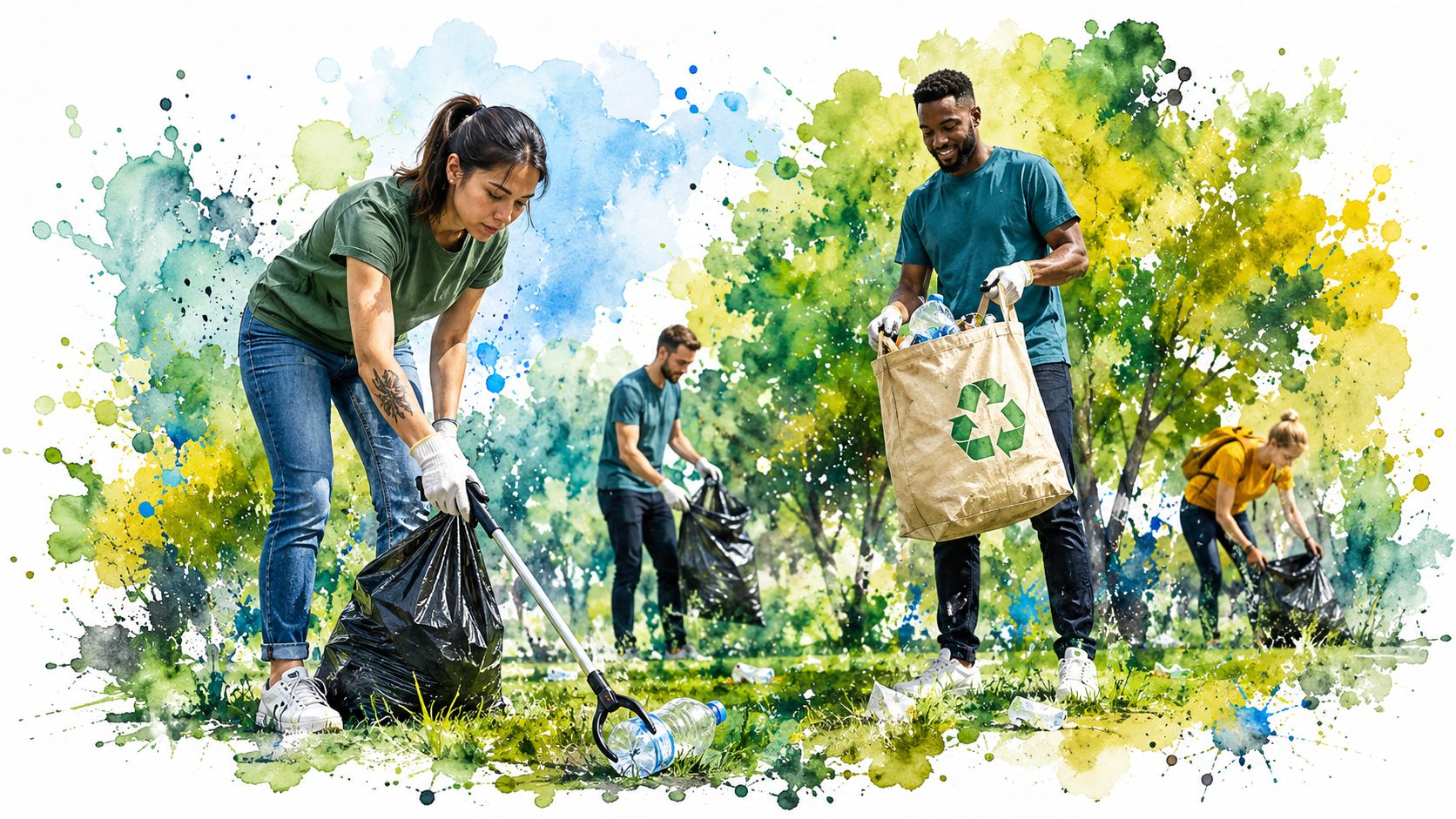
The first time I picked up litter with friends, hail hit us so hard we had to hide under a tree. Our rides kept canceling, our hands went numb, and somehow that miserable little cleanup became one of my favorite memories.
Start Where You Are With What You Have
I'll tell you something awkward. Cleaning up a sidewalk was easier for me than cleaning my own apartment.
For years, I let junk pile up around me. An old jar in the fridge had a memory attached to it. A broken bag had a story. Every useless object felt heavy. Not physically heavy. Soul heavy. I could step over the mess for months and still not move it.
Then my life cracked open. I got out of a chaotic relationship, looked around at the room I had built around myself, and realized I couldn't keep living like that. I needed practice doing hard things. I needed to train consistency the way some people train for a marathon. I needed one simple act I could repeat.
So I picked up one piece of trash outside.
That sounds tiny because it is tiny. But tiny actions are like the first tooth on a zipper. Once it catches, the whole thing can move.

Your first cleanup is personal
Litter prevention programs are often discussed as if they start with a plan, a committee, or a grant. Mine started with shame, then stubbornness, then a trash bag.
You don't need a polished origin story. You need a corner that bothers you enough to act. Maybe it's the bus stop with fast-food wrappers pinned against the curb. Maybe it's the alley behind your building where the wind keeps making the same joke with the same plastic bag. Maybe it's the park path you walk every morning and complain about every morning.
Pick that spot.
Then do something so small your excuses look silly next to it. Fill one bag. Walk one block. Spend twenty minutes.
Practical rule: Start before you feel ready. Motivation usually arrives after your hands start moving.
There's another reason I like this beginning. It changes the shape of the problem in your mind. A giant issue can freeze you. A single cup in the gutter can't.
According to the Keep America Beautiful 2026 National Litter Study, approximately 35 billion pieces of litter still remain across public spaces in the United States, and the country spends about $11.5 billion annually dealing with it. That number is huge, but I take comfort from it too. Every piece you pick up is part of a real collective effort, even if nobody claps for you.
Inertia is the real enemy
Trash looks like the obstacle. It usually isn't.
A significant obstacle is that sticky feeling in your chest that says, “Someone else should handle this.” Or, “It's too far gone.” Or, “One person can't do much.” I've heard every version because I've said every version.
Litter prevention programs work best when they break that spell. The first win is not a clean block. The first win is proving to yourself that you're a person who shows up.
I've seen this happen in weird little flashes. Someone bends down for one bottle and then notices five more. A person who felt useless all week goes home sweaty, tired, and proud. A street that looked abandoned starts to look claimed.
That's how it begins. Not with perfection. With contact.
A simple first-day playbook
If you're stuck, do this:
- Choose one visible spot: Pick a place you already pass often. Repetition matters more than drama.
- Bring basic gear: Gloves, a bag, and closed-toe shoes are enough for day one.
- Set a short timer: Twenty or thirty minutes keeps the task from turning into a mental monster.
- Leave one note for yourself: Take a photo, or write down how you felt before and after. You're building proof.
I didn't know any of this would change my life when I started. I just knew I needed to stop waiting for a different personality to arrive and save me.
You might be waiting for that too. Don't. Start where you are. Use what you have. Grab the first piece.
Find Your First Three People
My first group was tiny. Three people, a bad weather forecast, and the kind of optimism that looks a lot like poor planning.
We got caught in a spring hailstorm. We huddled under a tree, laughing and shivering while our phones lit up with canceled rides. I remember thinking that this should feel like failure. Instead it felt like the beginning of a team. Shared discomfort has a way of cutting through small talk fast. You find out who can laugh. You find out who stays calm. You find out who says, “Same time next week?”
That's what your first cleanup is really for.
Look for givers, not spectators
You don't need a crowd. A crowd can make the first day worse. Too many strangers, too much drift, too much pressure to perform.
You need your first three people. I like three because it has balance. If one person cancels, the cleanup still happens. If one person is shy, two others can carry the conversation. Three people can make a rough morning feel alive.
Find them in places where people already lean toward service and curiosity. Community chats. School groups. Neighborhood forums. Weekend clubs. Friends of friends who always say yes to helping someone move a couch.
When I want to explain how to do this clearly, I point people to a practical guide on how to find volunteers for neighborhood cleanup work.
Don't recruit with polish. Recruit with honesty. “I'm cleaning this block Saturday morning. Want to join me?” beats a fancy pitch most of the time.
Make the first ask small and clear
People say yes when the shape of the ask is obvious.
Compare these two invitations:
- “I'm starting a citywide anti-litter initiative.”
- “I'll be at the corner of Ashland and 18th at 9 a.m. Saturday with gloves and bags. We'll clean for an hour.”
The first one sounds like homework. The second one sounds real.
A strong first invite has a few simple parts:
- Time: Weekend mornings work well because they attract people who want to give part of their day.
- Place: Choose somewhere easy to find.
- Length: Keep it short enough that people don't fear getting trapped.
- Tone: Make it human. “Come help” is better than “Join our mission-driven engagement effort.”
Let the story do the recruiting
After that first stormy cleanup, I didn't have to sell the experience very hard. The story did the work.
“Three of us got stuck in hail, picked up trash anyway, and laughed the whole time.”
That kind of story has a pulse. People can feel it. It tells them this isn't a sterile volunteer shift where everyone signs a form, poses for a photo, and vanishes. It tells them there's room for grit, humor, and a little absurdity.
Litter prevention programs live or die on repeat attendance. Repeat attendance grows when the first day gives people a memory, not just a task.
So if something goes wrong on day one, don't panic. Rain starts. Fine. Someone's late. Fine. The route is rougher than expected. Fine. If the group stays kind and keeps moving, the mess-up becomes flavor. People remember flavor.
Your Simple Plan for Safety and Supplies
The fastest way I ever lost a volunteer was not boredom. It was a blackberry thorn.
We were cleaning an alley behind a row of garages, the kind with busted fencing, dumped fast-food bags, and weeds tall enough to hide trouble. A new guy reached into the brush with bare hands before I could stop him. He came back with a scratched wrist and a look that said, "You people do this for fun?" He never returned.
That morning taught me something plain. Safety is how you prove this group takes care of its own.
Pack like you're taking care of friends
I stopped treating supplies like extras after that. Now I pack for the person who showed up eager, underprepared, and trusting me more than they should.
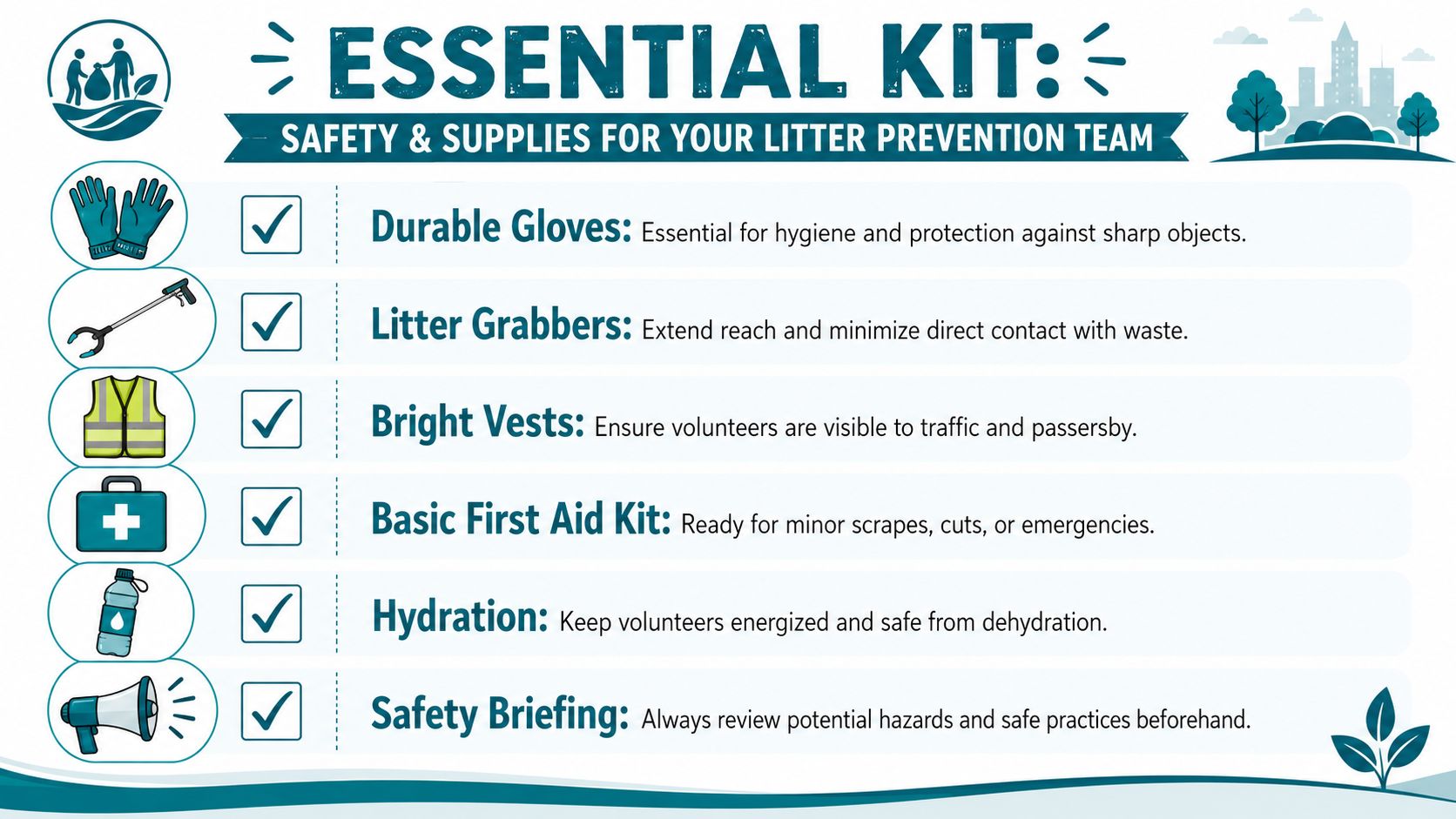
My kit stays simple. Sturdy gloves. Litter grabbers. Bright vests. Contractor bags. Hand sanitizer. Sunscreen. Water. A basic first aid kit. Closed-toe shoes are required, and if we are anywhere near traffic, I hand out vests before the first bag comes open.
None of that is glamorous. That is the point.
Cheap gloves tear. Thin bags split at the bottom and baptize somebody's shins in old coffee. Short grabbers turn a one-hour cleanup into a lesson in lower-back pain. Good gear changes the mood of the day because people stop bracing for irritation and start paying attention to each other, the street, and the small wins.
Give the same safety talk every time
I keep the briefing short enough that nobody zones out and clear enough that nobody has to guess.
Here's the version I use:
- Watch for cars, bikes, loose gravel, and broken pavement.
- Do not touch needles, broken glass, or anything suspicious with bare hands.
- Stay where someone can see you.
- Drink water early, not after you feel lousy.
- If a spot feels wrong, leave it and call me over.
The talk takes about a minute. The effect lasts all morning. It tells people they are not disposable labor. They are teammates.
If you run public cleanups often, insurance matters too. This guide to volunteer liability insurance for cleanup groups is a good place to sort out the practical side before your group grows.
A cleanup should send people home tired, proud, and ready to return.
Pick routes with your eyes open
I learned route planning from a bad Saturday on a four-lane road.
On paper, the block looked perfect. Heavy litter, easy parking, visible impact. In real life, it had speeding traffic, no shoulder, nowhere safe to stack full bags, and a bus stop that kept spilling people into our work zone. We spent more energy watching our backs than cleaning. The volunteers were polite about it, but I could feel the trust drain out of the group.
Now I scout with three questions in mind.
- Can people enter and leave the area without playing frogger
- Where do full bags go before pickup
- What hazards are waiting for us before we even start
Those questions do more than prevent a rough day. They help match the route to the crew. Families and first-timers get parks, sidewalks, trailheads, and quiet side streets. Experienced volunteers can handle the ugly corners with steeper banks, illegal dumping, or heavier traffic.
You also start to see the deeper story of a place. A block with constant litter and no working trash can does not have a volunteer problem. It has an infrastructure problem.
A simple field checklist
Before I leave home, I run through the same checklist every time:
| Item | Why I bring it |
|---|---|
| Gloves | Protect hands from grime and sharp edges |
| Grabbers | Save backs and reduce direct contact |
| Bright vests | Help drivers and cyclists see us |
| Water | Keeps energy steady |
| First aid kit | Handles small scrapes fast |
| Extra bags | Gives the route breathing room |
That list looks almost too plain to matter. Plain works.
People come back when the day feels cared for. They remember that somebody had extra water. Somebody noticed the blind corner before they stepped into it. Somebody brought enough gloves for the friend who showed up empty-handed. That is how a cleanup stops being a one-off good deed and starts becoming a place where people trust each other.
Make It an Adventure Not a Chore
Tom Sawyer understood something a lot of organizers miss. If work feels like punishment, people flee. If work feels like a game with pride attached to it, people lean in.
That's how I think about retention. You can hand people a grabber and a trash bag, but that alone won't build a team. A team needs flavor. It needs a little theater. It needs something people can belong to.
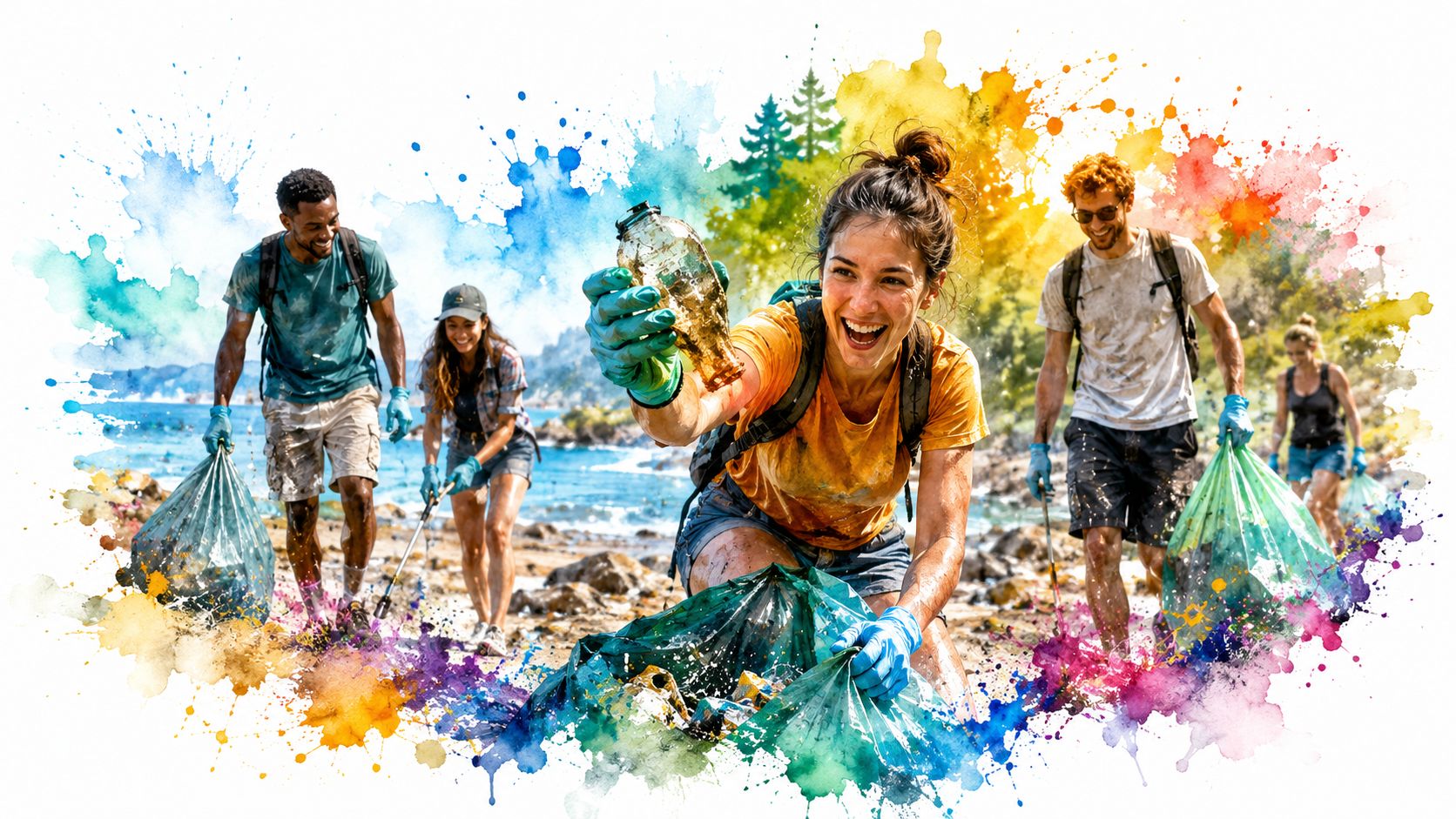
Pride keeps people coming back
I've watched the same basic cleanup feel dead in one group and electric in another. The difference usually isn't the amount of trash. It's the mood.
When people have symbols, rituals, and inside jokes, they stop feeling like random individuals doing civic homework. They start feeling like they're on a mission together. That can be as simple as a group photo pose, a running joke about the weirdest item found that day, or a song you always play after the last bag is tied.
Texas A&M found that sustained educational campaigns can reduce litter by up to 50%, according to its review of litter control programs and regulations. I take that personally. Culture is education with a pulse. When you build a cleanup group people want to join, you aren't only removing trash. You're teaching a different way to move through public space.
People return for the feeling. The bags of trash are proof that the feeling had somewhere to go.
Give the group a personality
This part is fun, and it matters.
You can create identity without spending much money. Pick a color. Make a goofy tradition. Give out homemade badges. Name your routes. Celebrate ridiculous wins. “We cleared the wind tunnel block again.” “We found the cursed alley spoon.” That stuff sounds silly until you watch it work.
Here are a few ideas that tend to stick:
- Route names: A cleanup with a nickname is easier to remember than one with only an address.
- Micro-awards: Best attitude. Sharpest eyes. Strongest hill climb. Keep it light.
- After-action ritual: Tea, coffee, tacos, or just a ten-minute sidewalk debrief.
- Weather pride: Cold day? Hot day? Let people feel they did something a little hard together.
For more ideas, I like practical roundups of volunteer team building activities because they remind you that morale doesn't happen by accident.
A short video can help spark the right energy before a cleanup:
Fun is not fluff
Some people get suspicious when service becomes playful. They think seriousness proves sincerity. I don't buy that.
If you want people to come back through heat, wind, awkward mornings, and blocks that look rough, you need joy in the engine. Adventure is what makes hard things repeatable. It turns “I have to” into “I was there.”
Litter prevention programs that feel cold and dutiful often stall out. The ones with personality have legs. People bring friends. They wear the same hat every week. They tell stories afterward. That's the fuel.
Build Bridges and Find Treasure
Once you start showing up regularly, the city starts talking back.
I don't mean that in a mystical way. I mean the cashier notices your gloves. The store owner asks why you're carrying bags at 8 a.m. A neighbor points at an illegal dump site behind a fence. A parks worker tells you when the bins overflow. A person who ignored you for three weeks suddenly waves.
That's how bridges start. You don't build them with a pitch deck first. You build them by becoming familiar.
Ask for help in ways people can say yes to
A lot of groups ask for support too vaguely. “Can you sponsor us?” is a big, mushy request. People freeze when they don't know the shape of the favor.
I prefer smaller asks. “Can your hardware store knock a little off gloves?” “Can your café save cardboard boxes for sorting supplies?” “Can the alderman's office tell us where bagged trash should go after a cleanup?” Those are answerable.
When you've been visible for a while, those conversations get easier. People trust movement more than ideas. If they've seen you out there week after week, they know you're not daydreaming. You're already in motion.
Consistency is social proof in work boots.
Treasure doesn't always look like money
One of the best things that can happen to a cleanup group is learning that support has many forms. A business might hand over extra bags. A neighbor might provide a hose. A city worker might explain the pickup schedule. Someone might introduce you to someone else, and that second introduction changes everything.
I've seen an empty lot stop looking like a liability and start looking like possibility. Places the city had mentally written off can change when a few stubborn people keep returning. Sometimes treasure is literal land. Sometimes it's access. Sometimes it's one brave person inside a system saying, “I can help you with that.”
Protect volunteer energy from money stress
I'm stubborn on this point. I don't like putting financial pressure on volunteers.
Research tied to grant-dependent community models notes that volunteer retention can drop by 40% when financial pressure is introduced, and it also points to a real gap in long-term data on purely volunteer-driven groups, as shown in the Georgia rules tied to clean community funding structures. That tracks with what I've felt on the ground. The second people start worrying that showing up means getting squeezed for cash, the emotional temperature changes.
So I treat volunteer energy like a rare fuel. I want people to bring their time, their jokes, their muscles, their courage. That's already a lot. I'd rather build external partnerships than pass the burden back onto the people doing the work.
If you stay open-eyed, your city has hidden doors everywhere. The trick is to keep knocking without sounding desperate, and to remember that your group's reliability is a form of currency all its own.
Measure What Matters and Keep Going
One Saturday, we cleaned a block that had beaten us before.
Wind kept dragging fast-food wrappers out of a busted hedge. A guy across the street watched us like we were wasting our time. One volunteer, brand new, barely said a word for the first half hour. Then she found a child's red scooter half-buried behind a fence, laughed, and called three people over like she had discovered pirate gold. By the end of the morning, the man across the street had brought out his own broom, and the quiet volunteer was trading numbers with two strangers she had met in gloves and safety glasses.
I still count the bags. I still take before-and-after photos. You need proof of work, especially on the days when the street looks rough again by Tuesday.
But the score I trust most lives in moments like that one.
The signs I look for after the bags are tied
As noted earlier, formal litter programs usually track a baseline, make a plan, and check results. That matters. A volunteer-first group needs that discipline too. I just keep a second scorecard in my head, because a true win is not only a cleaner curb. It is a stronger crew.
I watch for the person who showed up anxious and leaves standing taller.
I watch for the first-timer who says, “I didn't know this part of town was like this,” and means it in a good way.
I watch for the shop owner who starts picking up around their own door because our presence changed the mood of the block.
Those are not soft extras. Those are signs the cleanup is taking root.
My favorite scorecard
After a cleanup, I usually ask myself a handful of plain questions:
- Did people feel safe? If they did not, that gets fixed first.
- Did anyone connect with someone new? Friendship keeps people coming back.
- Did the block feel more settled? Cleaner is good. Cared for is better.
- Did a new volunteer gain confidence? That person may become your future route leader.
- Did we return when we said we would? Reliability changes how a neighborhood reads you.
A neighborhood notices patterns before it trusts promises.
Staying power beats the big heroic day
I love a dramatic haul as much as anyone. A mountain of tires or a truck bed full of dumped debris makes for a great photo. It also fades fast if nobody comes back.
What changes a place is rhythm. Saturday at nine. Gloves on. Quick safety talk. One block, then the next, then the next again a month later. Repetition turns strangers into teammates and teammates into the kind of friends who will help each other move a couch, find a job lead, or talk through a hard week after cleanup is over.
That part surprised me when I first started. I thought we were building a trash crew. We were really building people who keep promises in public.
So yes, measure the bags. Measure the hot spots that stay cleaner longer. Measure turnout if that helps you plan. Then ask the harder questions too. Are people becoming steadier? Are they braver than they were last season? Does the street feel less abandoned when your group is around?
If the answer is yes, keep showing up.
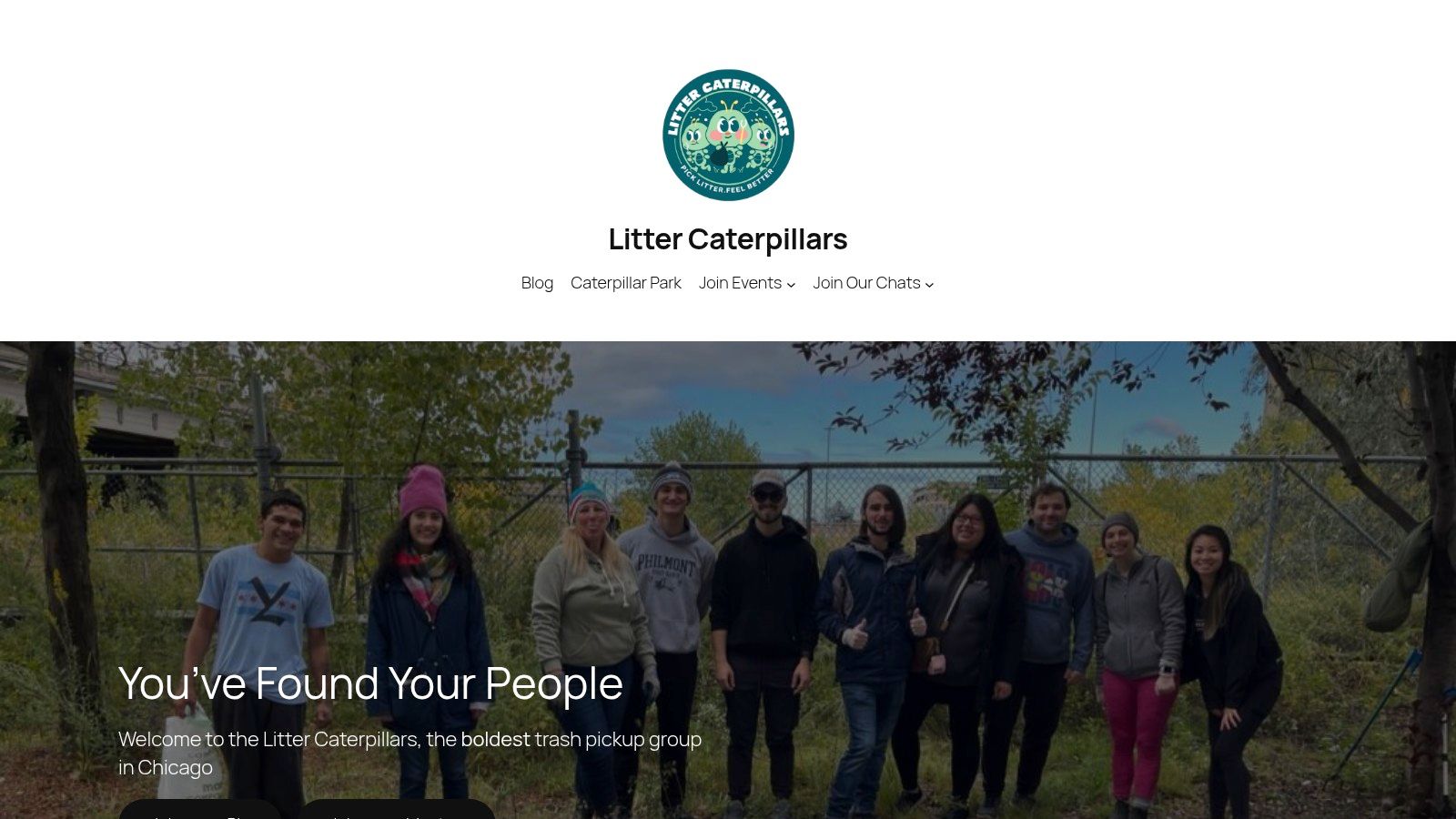
If you want a real-world example of a volunteer-first cleanup group that mixes grit, friendship, and weekly action, take a look at Litter Caterpillars. It's a Chicago group built around brave mornings, safer cleanups, and the idea that picking up trash can also help people rebuild trust in themselves and each other.