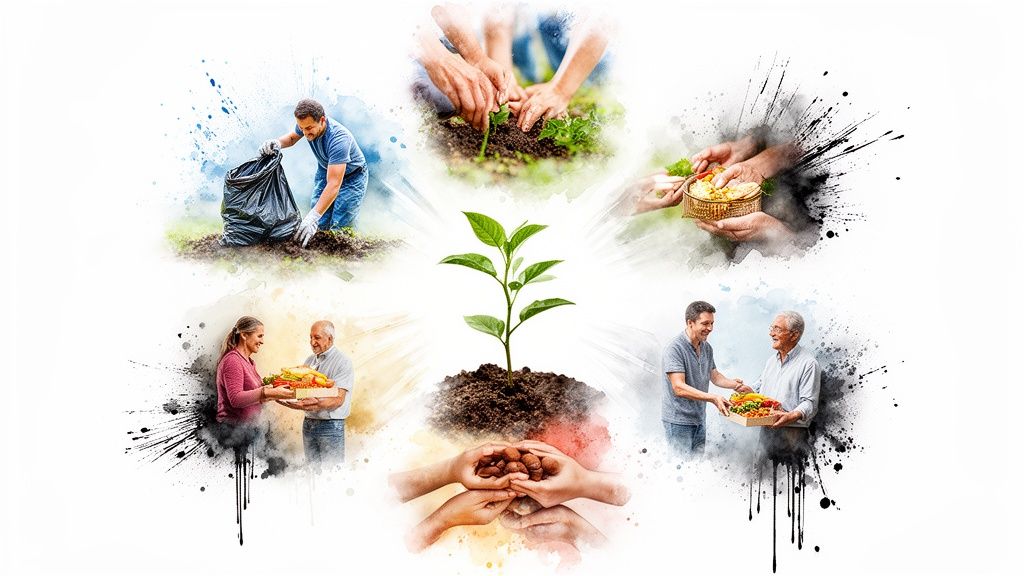
I’ll let you in on a secret. My life used to be a wreck. A total mess. My apartment was a disaster, and if I'm being honest, so was my head. Every piece of trash had a story, a weight I just couldn't seem to lift. I felt stuck, completely paralyzed. Then, one day, something inside me just snapped. I decided I had to change. I needed to find people who were givers, not takers. So I started by cleaning up someone else's mess—the litter scattered across Chicago's streets.
Huddled under a tree during a freak hailstorm with two new friends, shivering and laughing hysterically, I had an epiphany. Facing a little hardship together wasn't just fun; it was electric. It was transformative. That’s how my group, Litter Caterpillars, was born. You see, the most powerful ways to give back to community aren't just about changing the world out there; they're about rewiring the world inside you. It's about finding your strength. Your people. Your purpose. One small, brave act at a time.
This guide is for you, for anyone who feels that same pull. We're going to skip the vague, fluffy advice and dive straight into things you can do today. This weekend. This year. Whether you have 30 minutes or want to lead a movement, I promise there’s a place for you here. Let’s find it together.
1. Neighborhood Litter Cleanup Drives
Imagine walking down your street and seeing it completely clean. No discarded wrappers. No bottles. No debris. This isn't a fantasy. It’s what happens when you organize a neighborhood litter cleanup, one of the most direct ways you can give back to your community. It’s a grassroots lightning strike. This effort pulls neighbors together, transforming shared spaces through pure collective action. You don't just clean up trash; you build relationships and shout from the rooftops that you care about your home.
How It Works & Why It Matters
A litter cleanup is simple yet profound. You and a group of volunteers gather on a specific day, armed with bags, gloves, and grabbers, and you systematically clear an area. The impact is immediate. It’s inspiring. You are reclaiming your environment, one block at a time. The real magic happens when people see you out there. They get inspired. Maybe they join in, or maybe they just think twice before dropping something. That ripple effect strengthens community pride and weaves a culture of shared responsibility.
Getting Started: Actionable Tips
- Rally Your Troops: I use tools like Meetup or Instagram to get the word out. Schedule your cleanups for weekend mornings; that's when you'll get the most people.
- Equip for Success: You should provide all the necessary supplies, like gloves and trash bags, so anyone can join without a second thought. I've found that partnerships with local waste management can help with getting rid of the trash afterward.
- Build a Brand: My group, Chicago's own Litter Caterpillars, created a strong identity that now spans all 50 city wards. Think about a fun name. A flag. Even team T-shirts. You need something that builds camaraderie.
- Celebrate Your Impact: You should always track how many bags of trash you collect and share those numbers with your volunteers. Celebrating these wins builds momentum and keeps everyone fired up.
Ready to make a visible difference in your neighborhood? Starting your own group is easier than you think. For a step-by-step guide, check out this fantastic resource on how to start a volunteer trash pickup and bring this incredible community-building activity to your own streets.
2. Community Garden and Green Space Development
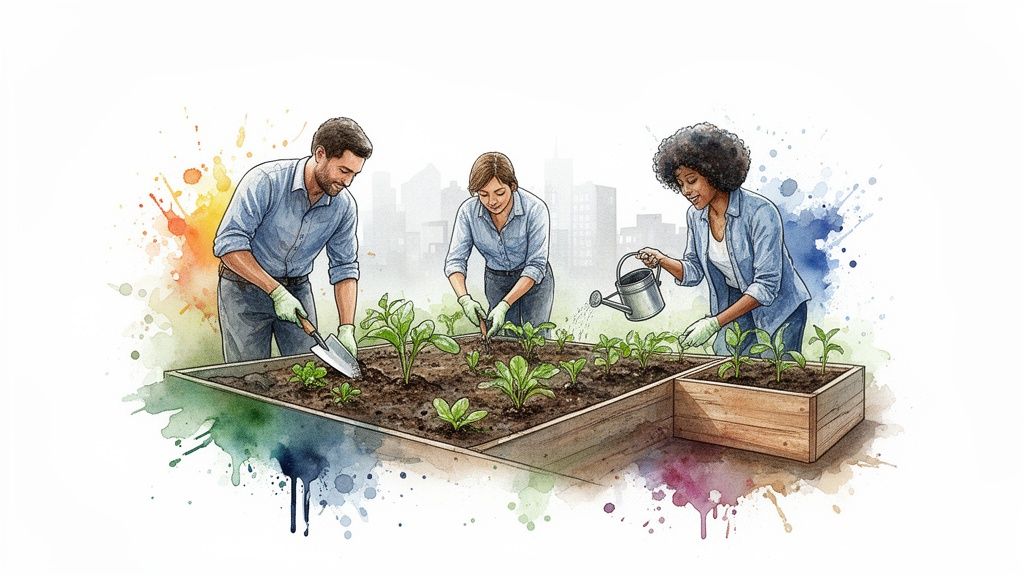
Picture this: an overgrown, forgotten lot in your neighborhood transforms into a vibrant hub of life. I'm talking raised garden beds overflowing with vegetables and neighbors laughing together. This is the reality of community gardening, one of the most powerful ways you can give back to your community. You aren't just planting seeds in the ground; you're planting seeds of connection, improving local food access, and creating beautiful, shared spaces where friendships can bloom. It's like building a living room for your entire neighborhood.
How It Works & Why It Matters
A community garden is a metamorphosis. It takes underused land and turns it into a productive green space where you and your neighbors can grow your own food or simply enjoy nature. The process builds a deep sense of ownership and pride. By working the soil side-by-side, you create more than just a garden; you weave a stronger social fabric. This effort directly tackles issues like food deserts, beautifies the neighborhood, and provides a peaceful sanctuary for everyone to enjoy. It’s a living testament to what you and your neighbors can achieve together.
Getting Started: Actionable Tips
- Build Your Team: Before you even touch a shovel, you need to gather neighbors who share your vision. I suggest using social media or flyers to host an initial interest meeting.
- Secure the Land: You'll have to identify a vacant lot and work with your local government or the landowners to get permission. Organizations like the Trust for Public Land can be invaluable partners in this process.
- Create a Plan: Sketch out your garden layout and create a sustainable maintenance plan. You should establish volunteer rotations for watering and weeding to ensure it succeeds long-term.
- Engage Everyone: Host workshops, potlucks, and planting days in the garden. This keeps the community involved. And make sure you celebrate your first harvest together to build momentum.
Ready to bring a green oasis to your block? Learn from pioneers like Ron Finley and see how you can start your own urban gardening movement. This is more than just a project; it's a legacy of health and community.
3. Youth and Student Volunteer Programs
Imagine taking the raw energy and idealism of students and aiming it directly at your community's challenges. That's the heart of youth and student volunteer programs, one of the most potent ways to give back to community. These initiatives create structured pathways for you and other young people to contribute your skills, learn about civic responsibility, and build a lifelong habit of service. It’s not just about getting a task done. It's about investing in the next generation of leaders and seeing your city through their fresh, determined eyes.
How It Works & Why It Matters
Think of it like a matchmaking service. Youth volunteer programs connect students with vetted opportunities that fit their schedules and interests. They often partner with schools, universities, and local nonprofits to address real community needs, from mentoring younger kids to restoring local parks. This matters because it provides a crucial doorway into civic life. For many of us, it's our first taste of meaningful community work, building confidence, leadership skills, and a network of peers who believe in making a difference.
Getting Started: Actionable Tips
- Connect with Campuses: If you want to recruit passionate students, partner with local high schools and university service centers, like those at Northwestern or the University of Chicago.
- Offer Flexibility: You have to provide evening and weekend opportunities to accommodate academic schedules. Be ready to document service hours for school requirements or resumes.
- Create Peer Leadership: Empower dedicated student volunteers with leadership roles. Let them help manage events and recruit friends. This fosters a deeper sense of ownership.
- Build Community: You should host social events after service projects to help volunteers connect and build friendships. This transforms a one-time activity into a lasting community.
- Leverage Social Media: I use platforms like Instagram to share our stories, post opportunities, and celebrate the impact my young volunteers are making.
Ready to engage the next generation? Look into programs like Chicago ServiceCorps for inspiration on how structured service can empower young adults and transform neighborhoods.
4. Environmental Education and Awareness Campaigns
Picking up trash is powerful, I know. But what if you could stop it from ever being dropped in the first place? This is where education becomes one of the most transformative ways to give back to community. When you create awareness campaigns, you move beyond treating the symptoms and start attacking the cause. You’re not just cleaning a park; you’re planting seeds of consciousness that grow into lasting, sustainable change for everyone. You're changing hearts and minds.
How It Works & Why It Matters
An awareness campaign is like translating passion into knowledge. You use storytelling, data, and compelling visuals to inform your neighbors about environmental issues and inspire them to act. The goal is to shift mindsets from passive coexistence to active stewardship. When I understand why a plastic bottle harms local wildlife or how my actions contribute to a larger problem, my behavior changes. This creates a powerful, self-sustaining cycle of care that multiplies the impact of every single cleanup event.
Getting Started: Actionable Tips
- Tell a Visual Story: You should use social media platforms like Instagram to share dramatic before-and-after photos of cleaned areas. I create short, engaging Reels that show the process and the impact.
- Partner with Schools: Connect with your local schools to develop simple, age-appropriate presentations or activities. If you educate the next generation, you build a foundation for a cleaner future.
- Share Shocking Stats: You can create simple, shareable infographics about local environmental data. Something like, "Did you know our neighborhood produces X tons of single-use plastic waste each month?" can be a real eye-opener.
- Host Community Workshops: Try organizing monthly info sessions at a local library or community center on topics like composting, recycling best practices, or reducing household waste.
Ready to inspire your neighbors and create a ripple effect of change? You can learn from the masters of environmental storytelling at organizations like the Ocean Conservancy and adapt their powerful techniques to your own local campaigns.
5. Neighborhood Friendship and Social Connection Networks
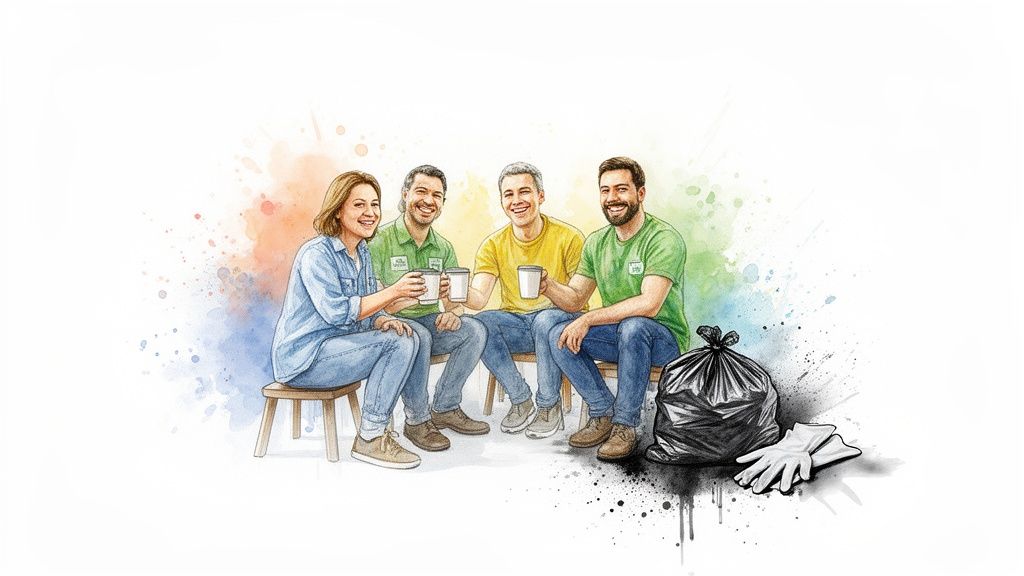
What if volunteering wasn’t just about the task, but about the people I do it with? Giving back to the community can be the most powerful antidote to loneliness. You can create genuine friendships and social bonds that last long after the work is done. This approach recognizes that when we serve together, we don't just transform our environment; we transform ourselves. We build resilience, a sense of belonging, and real, human connections. It's like finding your tribe while changing the world.
How It Works & Why It Matters
A friendship network built on service intentionally carves out space for connection beyond the task at hand. Your goal becomes twofold: make a tangible impact and build a supportive "tribe." It's about seeing the same faces each week, learning their stories, and celebrating shared accomplishments. The magic here is simple but profound: a shared purpose forges unbreakable bonds. Organizations like Rotary Clubs and my own Litter Caterpillars prove that when you put people first, the mission becomes even more meaningful and sustainable.
Getting Started: Actionable Tips
- Create Social Rituals: Don't let the event end with the cleanup. I always schedule a post-service coffee or meal to let people unwind and connect on a personal level.
- Build a Buddy System: You should pair new volunteers with experienced members. This mentorship helps newcomers feel welcome and integrated from day one.
- Celebrate People, Not Just Stats: I make a point to acknowledge volunteer anniversaries and personal milestones. You have to make everyone feel seen and valued as an individual, not just a helper.
- Foster Group Identity: Create a fun name, a group chat for non-event chatter, or even team T-shirts. This builds a shared sense of pride and belonging.
Ready to find your community while making a difference? Explore some proven community building activities for adults to see how service and friendship can create an unstoppable force for good in your neighborhood.
6. Corporate and Business Partnership Programs
Imagine your grassroots volunteer group suddenly having the resources of a local company behind it. That's the power of corporate and business partnerships. It’s a strategic way for you to amplify your impact. Think of it as a collaboration where businesses offer support—funding, supplies, or employee volunteers—and in return, they boost their community presence and engage their teams. You’re not just asking for a handout; you’re building a symbiotic relationship that fuels positive change for everyone involved.
How It Works & Why It Matters
A corporate partnership is like a perfect marriage. You align your community initiative with a business that shares your values. The company might sponsor your cleanup event, provide professional services, or offer matching grants for employee donations. This collaboration gives your project credibility and provides the resources you need to scale up. The magic is in finding that perfect match, where a business’s brand mission and your community goals overlap, creating a powerful story of shared purpose. It’s one of the most effective ways to give back to your community.
Getting Started: Actionable Tips
- Find Your Match: You should look for businesses whose mission aligns with yours. For my environmental group, a partnership with a company like Patagonia or Seventh Generation makes perfect sense.
- Create a Clear Proposal: Outline exactly what you need and what the business gets in return, such as brand visibility or structured volunteer events for their staff. You have to make it a win-win.
- Offer Turnkey Opportunities: Businesses are busy. You should design volunteer-ready projects that are easy for their employees to join, like a pre-organized park cleanup or a donation sorting day.
- Showcase the Impact: I always share success stories, photos, and metrics with my partners. Host appreciation events to celebrate your joint achievements and strengthen the relationship.
Ready to find a business ally for your cause? Building these connections can be a game-changer. For inspiration on how companies integrate giving back, explore how B Corporations are redefining business success to include social and environmental performance.
7. Accessibility and Inclusive Volunteering Models
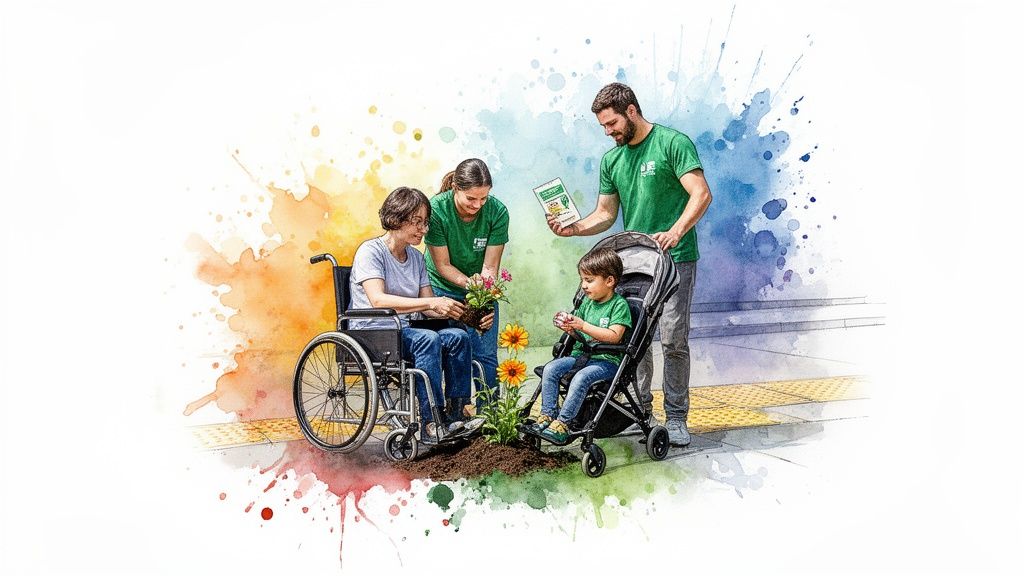
What if everyone who wanted to help their community actually could? This powerful idea is the heart of inclusive volunteering. It’s a model that intentionally designs opportunities to welcome people of all abilities, backgrounds, and life circumstances. It’s about you moving beyond a one-size-fits-all approach and asking, "How can we remove the barriers?" When we do this, we don't just expand our volunteer pool; we create a richer, more representative, and truly unified community effort.
How It Works & Why It Matters
Inclusive volunteering means you build flexibility into your program from the ground up. It could look like offering virtual roles for me if I have mobility challenges, providing childcare so parents can participate, or ensuring event instructions are available in multiple languages. This isn't just about being nice; it’s about recognizing that diverse life experiences are a community's greatest asset. By making volunteering accessible, you unlock untapped potential and ensure that the solutions you create are truly for everyone.
Getting Started: Actionable Tips
- Audit Your Events: Before you plan, think about accessibility. Is the location wheelchair accessible? Are there clear paths? Is it near public transportation?
- Offer Flexible Roles: You should create both in-person and virtual tasks. Not everyone can show up on a Saturday morning, but they might be able to help with online outreach or data entry from home.
- Provide Support: Consider offering childcare or a quiet space for volunteers who may need a sensory break. You should ask volunteers what they need to succeed when they sign up.
- Use Inclusive Language: Ensure your recruitment materials speak to everyone. A simple phrase like, "We are committed to creating an accessible event; please let us know your needs," makes a huge difference.
Making your volunteer efforts more inclusive is one of the most powerful ways to give back to your community because it multiplies your impact. To learn more about universal design principles that can guide you, explore the resources from the National Center on Accessibility.
8. Neighborhood Exploration and City Discovery Initiatives
Imagine giving back to your community not just in one place, but across every single unique corner of your city. This is the soul of neighborhood exploration initiatives. It's a powerful model that combines volunteer service with intentional city discovery. You get to help clean, build, or support different neighborhoods while connecting with the diverse cultures and people that make your city vibrant. You break out of your bubble, build city-wide relationships, and truly understand the fabric of your home. It’s like being a tourist in your own town, but with a purpose.
How It Works & Why It Matters
These initiatives are about purposeful movement. Instead of focusing on a single location, you and your volunteer group systematically plan events in different neighborhoods, often with a goal to visit every single one. This approach turns giving back into an adventure. It combats the geographic and social divisions that can exist in a large city. It’s a profound way to foster a sense of shared identity and responsibility, showing that every community, from the quietest residential street to the busiest downtown corridor, matters equally.
Getting Started: Actionable Tips
- Map Your Mission: You should set a clear goal, like visiting all 50 of Chicago’s wards, as we did with the Litter Caterpillars. I use a map to track our progress and build excitement around the journey.
- Partner with Locals: Before you visit a new neighborhood, connect with local community organizations or long-time residents. Ask them to share stories or highlight specific areas of need.
- Create Discovery Guides: Develop simple "neighborhood cards" with interesting historical facts, local landmarks, or fun trivia. You can share these with your volunteers and deepen their connection to the area.
- Document and Share: I use photos and social media to chronicle our journey through the city. This not only celebrates our impact but also inspires others to explore and appreciate the diversity of their own city.
Ready to see your city in a whole new light while making a tangible difference? For inspiration on city-wide exploration, check out local groups like Chicago Detours to see how they bring neighborhood stories to life.
9. Resilience Building and Personal Transformation Through Service
What if giving back to your community could also be a profound journey of self-discovery? This approach to service isn't just about the outcome; it's about what you become in the process. It's you, volunteering with the intentional goal of building your own resilience, courage, and self-compassion by embracing challenges. Whether that’s facing harsh weather, navigating difficult tasks, or overcoming personal fears. This is where service transforms you as much as you transform your community.
How It Works & Why It Matters
This isn't your average volunteer gig. It's a framework where I see challenges as opportunities for growth. Think of my Litter Caterpillars crew showing up in a blizzard, not just to clean, but to prove we can. It’s the same transformative spirit you find in military service or Outward Bound programs. When you intentionally step into discomfort for a greater cause, you rewire your brain. You build mental toughness. You discover a strength you never knew you had. It’s a powerful way to give back that also gives you an unshakable sense of purpose.
Getting Started: Actionable Tips
- Frame the Challenge: Don't just announce a cleanup; frame it as an opportunity. “Let’s show this heatwave what we’re made of!” I use storytelling to reframe difficulty as an adventure.
- Create Rituals: You should start with a team huddle or end with a moment of reflection. Celebrate perseverance with group photos, or even create unique team badges for conquering tough conditions.
- Embrace Vulnerability: Create a safe space where you and other volunteers can share your struggles and triumphs. Brené Brown's research taught me that vulnerability is the birthplace of courage and connection.
- Build Peer Support: Encourage mentorship and a strong team bond. Knowing you’re facing a challenge together makes it far less daunting and builds lasting friendships.
Ready to see what you're made of while improving your neighborhood? Explore how groups like the Litter Caterpillars turn tough days into transformative experiences and join a movement that builds stronger communities and stronger people.
10. Volunteer-Led Advocacy and Policy Change Initiatives
Picking up a piece of litter is a powerful act, but what if you could stop it from ever hitting the ground? This is where your volunteer efforts can evolve into something even bigger: advocacy. By using the data, stories, and networks from your service work, you can influence systemic change at the city level. This approach transforms you from a volunteer into a community organizer. You start tackling the root causes of problems and not just the symptoms. You become the change.
How It Works & Why It Matters
Volunteer-led advocacy turns your on-the-ground experience into a powerful weapon for change. When my cleanup group documents that a certain intersection is always full of trash from an overflowing public can, we have evidence. When I share that evidence with a local alderperson, I’m no longer just cleaning; I’m advocating for better waste management services. This is one of the most impactful ways to give back to your community because it creates lasting solutions that benefit everyone, long after a cleanup event ends.
Getting Started: Actionable Tips
- Document Everything: You must take photos and notes during your volunteer activities. Track the types and sources of litter you find. Data is your most persuasive ally.
- Collect and Share Stories: The human element is powerful. I share my volunteers' firsthand accounts of what they see and how it affects them. You can use these stories on social media and in meetings with officials.
- Build Relationships: Get to know your city council members and their staff. I attend local meetings and introduce myself. A familiar face is more likely to be heard.
- Create Clear Asks: Don't just present a problem; you have to propose a solution. Advocate for specific policy changes, like more public bins, better recycling programs, or stronger anti-littering enforcement.
Ready to take your community service to the next level? You can multiply your impact by organizing for policy change. To get started, learn more about the fundamentals with this great overview of what community organizing is and how you can use its principles to create a better neighborhood.
10 Ways to Give Back — Comparison
| 🔄 Implementation complexity | ⚡ Resource requirements & speed | 📊 Expected outcomes & ⭐ | Ideal use cases | 💡 Key advantages / Tips |
|---|---|---|---|---|
| Neighborhood Litter Cleanup Drives — Low to Moderate (volunteer coordination, scheduling) | ⚡ Low cost; basic supplies; rapid visible results | Improved streetscape, recurring volunteer habits — ⭐⭐⭐⭐ | Urban blocks, quick wins, community engagement | 💡 Weekend mornings; supply provision; partner with waste services |
| Community Garden & Green Space Development — High (land, legal, long-term maintenance) | ⚡ High upfront capital and labor; slow-to-mature benefits | Long-term assets, food access, property value uplift — ⭐⭐⭐⭐ | Vacant lots, food-security projects, neighborhood revitalization | 💡 Partner with city, clear maintenance plan, diversify funding |
| Youth & Student Volunteer Programs — Moderate (supervision, calendar alignment) | ⚡ Moderate resources; fast mobilization during term times | Leadership development, energetic turnout, networks — ⭐⭐⭐⭐ | Universities, high schools, recruitment and skill-building | 💡 Offer service-hour docs, peer leaders, social events |
| Environmental Education & Awareness Campaigns — Low to Moderate (content, outreach) | ⚡ Low cost and highly scalable; behavior change is gradual | Increased knowledge and motivation; broader reach — ⭐⭐⭐ | Schools, city-wide outreach, digital audiences | 💡 Use compelling visuals, school partnerships, shareable infographics |
| Neighborhood Friendship & Social Connection Networks — Moderate (facilitation, inclusion) | ⚡ Low–medium cost; impact on retention builds over time | Strong social cohesion and volunteer retention — ⭐⭐⭐⭐ | Newcomer integration, loneliness reduction, retention-focused efforts | 💡 Host post-service socials, assign buddies, celebrate milestones |
| Corporate & Business Partnership Programs — Moderate to High (relationship mgmt, agreements) | ⚡ High resource potential (funding, skills); can scale rapidly | Major resource boost, professional expertise; expanded capacity — ⭐⭐⭐⭐ | Scaling initiatives, sponsorship needs, skilled pro support | 💡 Align missions, clear agreements, protect volunteer-first ethos |
| Accessibility & Inclusive Volunteering Models — Moderate to High (accommodations, training) | ⚡ Medium resources to implement accommodations; expands pool quickly | More diverse participation and equitable access — ⭐⭐⭐⭐ | Programs serving diverse abilities, parents, multilingual communities | 💡 Audit accessibility, offer multiple roles, provide childcare/transport |
| Neighborhood Exploration & City Discovery Initiatives — Moderate (logistics, routing) | ⚡ Medium resources (transport, coordination); novelty drives quick engagement | Broadened city knowledge and cross-neighborhood ties — ⭐⭐⭐ | New residents, adventurous volunteers, city-wide coverage goals | 💡 Plan routes, partner with local groups, document stories/photos |
| Resilience Building & Personal Transformation — High (skilled facilitation, support) | ⚡ Medium–high resources for training and mentorship; outcomes long-term | Deep personal growth, resilience, mental-health benefits — ⭐⭐⭐⭐ | Cohort programs, leadership development, healing-through-service | 💡 Frame challenges as growth, build peer support, share transformation stories |
| Volunteer-Led Advocacy & Policy Change Initiatives — High (data, coalition building) | ⚡ Medium resources; slower timeline but systemic impact | Policy and structural change; scalable long-term improvements — ⭐⭐⭐⭐ | Addressing root causes, municipal budget/policy influence | 💡 Collect systematic data, train citizen advocates, build official relationships |
Go Far, Go Together
We've walked through so many different avenues in this guide. We've seen everything from quick, impactful acts of kindness to deep, recurring commitments that reshape our neighborhoods. You've seen how a simple litter cleanup can blossom into a city-wide movement. How a community garden can nourish more than just our bodies. How your voice can spark real policy change. The core lesson isn't just about the what or the how, but the who you become along the way.
Finding ways to give back to community is like planting a tree. You might not see the full-grown oak overnight, but every single act, every bag of trash I collect, every seed you plant, is a commitment to a future you believe in. It’s a declaration. A statement that you see the potential in your surroundings and, more importantly, in yourself. The journey we've explored is about transforming passive hope into active participation.
Your Path is Your Own, But You Don't Have to Walk It Alone
Think about the paths we've covered:
- The Spark of Connection: You can build friendship networks and simply check on a neighbor.
- The Power of Green: We can nurture community gardens and reclaim public spaces.
- The Voice of Change: You can engage in advocacy and shape a more inclusive, accessible community.
Each of these isn't a separate, isolated task. They are threads in a larger tapestry. When you pick up litter, you're not just cleaning; you're making a space more welcoming for a community gathering. When I teach a child about recycling, I'm not just sharing facts; I'm investing in a more sustainable future. Every action you take creates ripples that you may never fully see, but their effects are undeniable.
The most crucial takeaway is this: you don't need a grand plan or a perfect moment to start. You just need to take a single step. The old saying is true: if you want to go fast, go alone, but if you want to go far, go together. Finding ways to give back to community is never just about the task. It's about the 'together.' It’s about realizing you’re not the only one who cares.
It's about building the kind of friendships that can withstand a hailstorm and showing up for each other, week after week. We are Caterpillars because we know we're not perfect, but we are all trying to transform.
Through service, sunlight, and friendship, you learn to trust and forgive yourself. You find your pride. So find your people, grab a flag, and start your own story. The community, and the person you're becoming, is waiting for you.
If you're ready to take that first step and find your people in Chicago, join us at Litter Caterpillars. We make giving back to the community fun, social, and deeply rewarding, exploring a new neighborhood every weekend. Find your next adventure and your new friends at Litter Caterpillars.
Leave a Reply