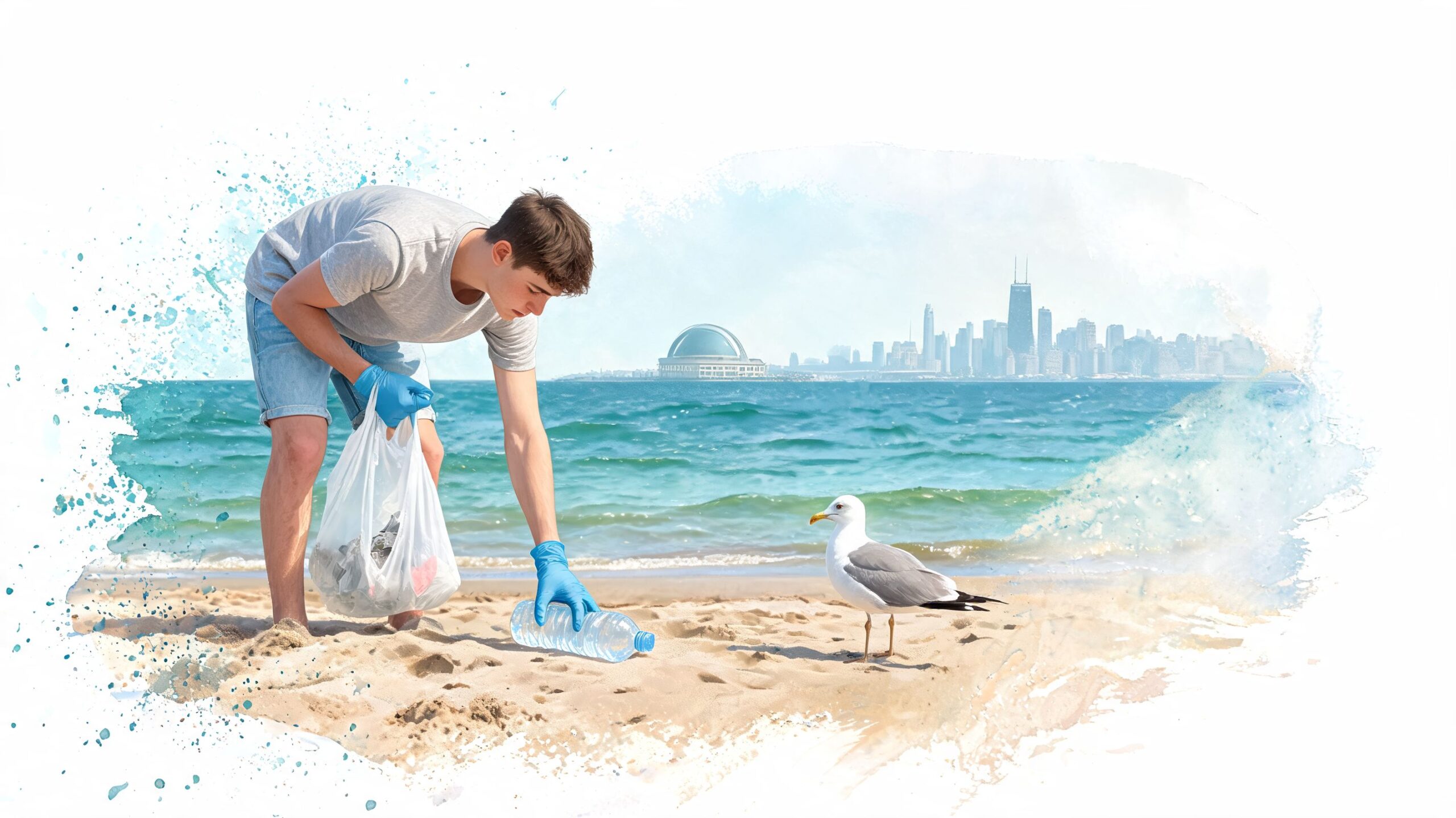
I once stood at 12th street beach with a trash bag in one hand and a knot in my chest. The sand was cleaner than my apartment, and somehow picking up a stranger's bottle cap felt easier than throwing away my own old junk at home.
Discovering 12th Street Beach Through New Eyes
I didn't come to 12th street beach as a polished beach person. I came as someone who had let too many little messes pile up. Old receipts. Half-dead plans. The kind of clutter that starts on a desk and then creeps into your habits, your friendships, your courage.
Then I learned something strange. Cleaning up someone else's mess can loosen your grip on your own.
That first time, I bent down for a tangled scrap of plastic near the shore and felt a small click in my head. The task was simple. See trash. Pick it up. Keep moving. No old memory attached to it. No story. No guilt. Just action.

Why this beach feels different
At first glance, 12th street beach is easy to read. Sand. Water. Skyline. People spread out on towels, kids darting in and out of the edge of Lake Michigan, cyclists rolling by. You can come here for an easy afternoon and leave happy.
But if you slow down, the place changes.
You start noticing the way a public beach asks something from you. Not much. Just attention. A little care. The willingness to leave it better than you found it. That tiny shift changes the whole day. You're not only visiting. You're participating.
Practical rule: Bring one small bag. If you see a few pieces of litter on your way out, pick them up. That single habit changes how you experience the place.
A different kind of beach guide
Most guides tell you where to park, where to sit, and where to buy a snack. I like those guides. I use them too. But 12th street beach gave me something more useful than convenience.
It gave me a way back into myself.
When your life feels jammed up, service is like opening a stuck window. The room doesn't become perfect. You just get some air. A beach cleanup can do that. A swim can do that. A quiet walk along the edge of Northerly Island can do that too.
If you've been here before, I want you to see it again. If you've never been, I want your first trip to mean more than a checklist. Come for the skyline, sure. Come for the sand. But also come because this is a good place to practice being the kind of person who notices things and helps.
The Story of a Man-Made Oasis
The first time I helped clean here, a volunteer held up a bottle cap and said, "Somebody had a whole summer day around this." I looked out at the curve of sand, the calm pocket of water, the skyline rising behind it, and remembered that this place did not appear by accident. People argued for it. People built it. People kept coming back until it became part of Chicago's memory.
12th Street Beach sits on Northerly Island, a man-made piece of the lakefront born from Daniel H. Burnham's 1909 Plan of Chicago. Construction began in 1920, and by 1925 workers had formed the island with a sheet iron wall, landfill, and dredged material. It was the only island from Burnham's chain-of-islands vision that was fully completed, as noted in the 12th Street history project.
What moves me most is how early Chicagoans fought over what this shoreline should become.
Some people wanted a landing strip. Women's organizations pushed for a public bathing beach instead, and the beach was established in the early 1920s. That choice still shapes the feeling of the place today. Families got shoreline access. Swimmers got a protected stretch of lake. Ordinary people got room to rest, gather, and belong.
By the 1930s and 1940s, the island had grown into more than a strip of engineered land. It had paths, grassy areas, trees, and beach space, and later it changed again as the area developed around the World's Fair era and the Adler Planetarium. Then came another chapter. Meigs Field operated here for decades before closing in 2003, and a new beach house followed in 2004.
So the ground under your towel carries a strange and beautiful history. Public recreation, aviation, civic planning, and reinvention all meet here.
The beach also holds family memory. A historical image record of Black families enjoying summer at 12th Street Beach ties the shoreline to multigenerational gathering in the 1960s and 1970s, a reminder that this was not only a place to cool off. It was a place to be seen, to celebrate, to claim joy in public, documented in this archival Alamy image listing.
I think about that whenever our Litter Caterpillars crew heads out with buckets and grabbers. We are not caring for an empty backdrop. We are caring for a place that generations shaped with pressure, presence, and love.
That is why even the trip here matters. Choosing a lighter-footprint route to the lakefront can be part of the practice. Our guide to eco-friendly ways to get to the beach helps you arrive with that spirit already switched on.
A man-made oasis sounds like a planning term. Here, it feels personal. Every cleanup, every picnic, every child racing into the shallows adds another layer. The story of 12th Street Beach is still being written, and if you show up with care, you become part of it.
How to Get to 12th Street Beach
The first time a new volunteer joined our cleanup at 12th Street Beach, she arrived on a bike with a small backpack, a water bottle clipped to the side, and no idea what to expect. She told me later that the ride down the lakefront had already changed her mood. By the time she rolled past Northerly Island and saw the sand open up beside the skyline, she felt less like she was rushing to an attraction and more like she was arriving for something that mattered.
That is still how I like to guide people here. Getting to 12th Street Beach is part of the experience. You are heading toward the Museum Campus edge, just south of Adler Planetarium, then following the path toward Northerly Island and the beach.
The simple way to choose your route
Pick the route that fits the kind of day you want.
| Method | Details | Best For |
|---|---|---|
| Walking | Walk south from the Museum Campus area toward Northerly Island and follow the path to the beach. | Anyone already visiting the lakefront or nearby museums |
| Bike | Ride the Lakefront Trail, then turn off toward Northerly Island. | Solo visitors, couples, and anyone who wants a calm trip along the water |
| Car | Drive toward the Adler Planetarium and Northerly Island area, then look for nearby parking if available. | Families carrying chairs, snacks, and beach gear |
| Rideshare or taxi | Set your drop-off near Adler Planetarium or Northerly Island. | Visitors who want the shortest walk-in |
| Bus and train plus walk | Take CTA service toward the Loop or Museum Campus area, then finish the trip on foot. | Visitors who want a lower-stress city outing |
Driving works best when you are hauling a lot. On bright summer weekends, though, the last stretch can test your patience. Parking fills up fast, and the walk from your spot can still be longer than expected.
If you are packing light, biking, walking, or transit usually makes the day feel easier from the start. Our guide to eco-friendly ways to get to the beach can help you choose a route that leaves less trash, less traffic, and less stress behind.
Walking or biking in changes the whole tone.
You hear the gulls before you hit the sand. The air shifts. The city stays beside you, but it loosens its grip. For a lot of us in Litter Caterpillars, that approach has become a small ritual. We show up more grounded, more observant, and more ready to care for the place once we arrive.
A few practical habits help:
- Travel light: A towel, sunscreen, water, and sandals cover most visits.
- Secure loose items: Lakefront wind grabs hats, wrappers, and napkins in seconds.
- Give yourself extra time: The final walk can feel longer when you are carrying gear or guiding kids.
What you'll find when you arrive
Once you reach the beach, you will find the basic supports that make it easier to stay awhile, regroup, and settle in for a full day. That matters more than people expect. A restroom, a place to rinse off, a spot to pause with older relatives, or a moment out of the sun can be the difference between a rushed visit and one that feels generous.
I have seen that play out during cleanup days too. Someone comes for an hour, stays for three, then ends up sharing lunch on the sand with people who were strangers that morning. Access and comfort shape whether a beach feels welcoming enough for community to grow.
If accessibility is part of your planning, check current Chicago Park District conditions before you leave home. Paths, beach equipment, and seasonal operations can change, so a quick check can save you a hard trip.
Our Lakefront Environment and Its Challenges
The first time I watched someone pull a handful of chip bags and sticky drink lids from the sand at 12th Street Beach, the water was sparkling. Kids were laughing. The skyline looked polished enough for a postcard. Then one of our Litter Caterpillars volunteers pointed to the gulls circling the snack debris and said, "That is how a beautiful beach starts slipping."
That moment changed me. I stopped seeing cleanup as cosmetic work. I started seeing cause and effect.

What the water tests are checking
At 12th Street Beach, summer water quality checks track Enterococci bacteria, and advisories are posted when levels rise above the safety threshold. The Swim Guide page for 12th Street Beach also notes that the beach often meets standards during peak season, while still facing periodic warnings tied to birds, runoff, and changing conditions.
For visitors, the lesson is simple. Check the daily status before you swim. A clear, sunny morning can still come with a warning, especially after rough weather or heavy bird activity.
I treat that habit the same way I treat sunscreen. Part of the trip.
Why the beach sometimes gets a warning
The two troublemakers show up again and again. Gull droppings. Stormwater runoff.
Gulls gather where food scraps and litter collect. Rain washes pollutants from streets and walkways toward the lake. Put those together, and a beach that looked perfect at breakfast can become a poor choice for swimming by noon.
That is one reason our cleanup work feels personal. Every bottle cap, sandwich wrapper, and abandoned snack bag changes the beach a little. If you want a clearer picture of that chain reaction, this guide to how littering on the beach affects wildlife and cleanup efforts connects the small stuff people leave behind with the bigger problems everyone else has to live with.
A quick visual can make all of this easier to picture:
The beach is built, not natural in the simple sense
I love telling people this because it changes how they stand on the shore. 12th Street Beach is a perched beach, held in place by engineered protection below the waterline. It is public space, yes, but it is also maintained infrastructure, shaped and defended so Chicago can keep a swimmable beach along a hard-working urban lakefront, as reported by WTTW's Ask Geoffrey on the seawall and rail tracks.
So caring for this beach means caring for something built with intention and kept alive through attention. Sand, water, wildlife, weather, and city use all meet here in one narrow band.
I have seen people arrive for a cleanup thinking they are just picking up trash. An hour later, they are asking better questions. Where does runoff come from? Why are the gulls clustering here? Who maintains the shore after storms? That shift matters. A beach visit becomes stewardship.
And that is the invitation 12th Street Beach keeps offering. Come for the swim, the skyline, the soft sand under your feet. Stay long enough to notice what the place needs. A tiny act on shore can ripple outward.
How to Join a Beach Cleanup
The first cleanup I ever joined felt less like volunteer work and more like the opening scene of a weird little adventure film. There were only three of us. Then Chicago did what Chicago does. The sky cracked open, hail started flying, and we huddled under a tree while ride after ride canceled on us.
I was freezing. I was laughing. I also had a thought I still trust. Shared discomfort is strangely good at turning strangers into teammates.
Why cleanup feels better than you think
A lot of people hear "beach cleanup" and imagine scolding, drudgery, or a school requirement with bad snacks. My experience is the opposite. Cleanup has a little Tom Sawyer energy in it. The job looks plain from a distance, but once you're in it, the thing changes shape.
You start spotting weird objects. You trade stories. Someone finds an impossible item half-buried in sand and everybody crowds around. A task becomes a game of attention. Then, after an hour or two, the place looks better because you were there. That feeling is hard to fake.
Work gets lighter when people do it together and treat it like an outing instead of a punishment.
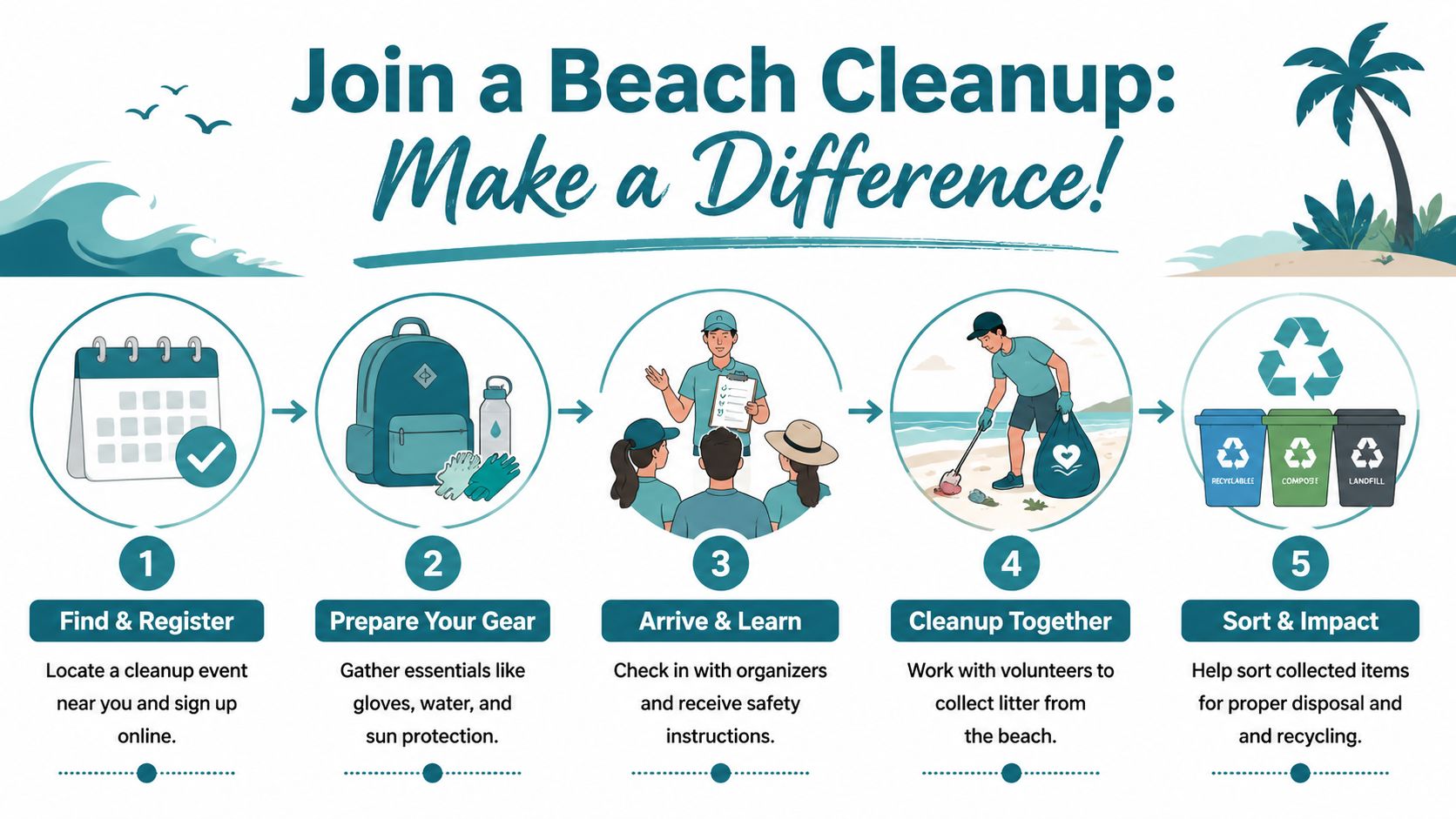
What your first cleanup day usually looks like
The practical side is simple. Most beach cleanups follow a rhythm that is easy to learn on the spot.
- You sign up ahead of time. Look for the event listing, RSVP, and read the notes so you know the meeting point.
- You show up in clothes you don't mind getting sandy. Closed-toe shoes help if the cleanup covers paths as well as sand.
- You check in and listen. Organizers usually explain the route, the boundaries, and basic safety.
- You collect litter with the group. Some people like grabbers. Some just use gloves and bags.
- You wrap up together. This is when people compare strange finds, sort what they can, and usually chat longer than expected.
If you're looking for the setting many volunteers care about most, this page on a public beach on Lake Michigan captures why shoreline cleanups feel different from a random errand.
How to actually find one
This part stops a lot of people, even when they want to help. They assume there must be a secret process. There isn't.
Try this:
- Search Meetup first: Many volunteer groups post cleanups there because RSVP tools are simple.
- Check Instagram: Stories and recent posts often have the freshest meeting details.
- Read the event notes: Look for start time, exact meeting point, and whether supplies are provided.
- Message if unsure: Organizers usually want you to ask. It helps everyone arrive ready.
I like weekend morning cleanups best. The mood is better. People come because they mean to come. There is a generous, clear-headed energy to a morning group that you can feel within minutes.
If you want to organize one yourself
You don't need to become a superhero. You need a date, a meeting point, bags, gloves, and enough nerve to invite a few people.
Start small. Three friends is enough. Pick a visible area. Keep the time short. Make safety the first rule and morale the second. If weather turns rough, adjust. Courage isn't acting reckless. Courage is showing up, paying attention, and making good calls.
A cleanup works a lot like exercise. The hardest part is not the activity itself. It's crossing the distance between "I should" and "I'm here."
Tips for Your Perfect Beach Day
The best beach days I have seen at 12th Street Beach did not begin with a perfect forecast. They began with attention.
One Saturday, a woman joined one of our Litter Caterpillars cleanups with a coffee in one hand and a look that said she had almost talked herself out of coming. We spent an hour picking bottle caps from the sand and snack wrappers from the rocks. Afterward, she stayed. Shoes off. Phone away. She sat near the water longer than anyone else in our group. Before she left, she told me, "I came here tense. I am leaving like my chest finally opened up."
That is my favorite kind of beach day. You enjoy the place more because you helped care for it.
What to bring and why
I have learned to pack for ease, not for a grand production. The people who look most at peace out there are usually carrying a towel, water, and a small bag, not half their apartment.
Bring a few things that earn their spot:
- Water and sunscreen: The sun off the lake can sneak up on you.
- A towel and one extra layer: Even warm afternoons can turn cool when the wind shifts.
- Snacks in reusable containers: You eat better, and you create less trash that can blow into the water.
- A small bag for your own waste: It takes almost no effort, and it changes how you leave a place.
That last one matters more than people think. A good beach setup is not only about comfort. It is about leaving your patch of sand cleaner than you found it.
Best timing for a calmer visit
Early hours feel different here. The water looks steadier. The path is quieter. You hear gulls, bike wheels, and the soft slap of waves against the rocks before the bigger crowds arrive.
Late afternoon has its own kind of magic. The skyline starts to glow, people settle down, and the beach feels less like a rush and more like a long exhale.
If swimming is the heart of your day, check conditions before you go. If your plan is to read, talk, walk, or sit near the water, you still have plenty of room for a beautiful visit even when the lake is not inviting you in.

Make the day mean more
One reason I keep returning to 12th Street Beach is that it can hold two truths at once. It is easy fun. It is also a place that asks something small and good of us.
You can swim, stretch out on the sand, then wander toward Museum Campus and keep the day going on foot. You can come for the skyline, the water, and the relief of being outdoors in the middle of the city. You can also notice the corners where litter gathers after a busy weekend, pick up a few stray pieces on your way out, and leave the shoreline a little better for the next family, the next solo swimmer, the next tired person who comes looking for peace.
My rule for a perfect beach day is simple.
Leave with less than you brought. Less stress, less trash, less hurry.
That is how a visit becomes something larger than a visit. It becomes practice for the kind of city we want to live in.
Your Questions Answered
Do I need to bring supplies for a cleanup
Usually, no. Many cleanup groups provide bags, gloves, and grabbers. Still, read the event listing before you go. If you already own work gloves or a reusable water bottle, bring them.
What if the weather turns bad
Chicago weather likes drama. A little rain doesn't always stop a cleanup, but safety comes first. If conditions become risky, organizers usually adjust, pause, or cancel. Check the event page the morning of.
Can I come alone
Yes. In fact, coming alone is often the easiest way to meet people. You already have a built-in activity, which removes a lot of the awkwardness. You don't need a partner to belong there.
Do I have to stay the whole time
Usually not. Many groups appreciate any time you can give. If you can only stay for part of the event, say so at check-in and help for the time you have.
What should I wear
Wear clothes you can move in and don't mind getting dirty. Closed-toe shoes are a smart choice when the cleanup reaches paths, rocks, or hidden debris.
If this stirred something in you, come meet the Litter Caterpillars. We're a Chicago volunteer group that picks up trash, builds friendships, and turns ordinary mornings into small adventures. If you want a way to care for the city while changing your own habits from the outside in, you'll fit right in.
Leave a Reply