I still remember the first time I walked up to Rainbow Park and Beach and heard the city fade behind me. One minute I was in street noise and traffic hum, the next I was looking at water, sand, and a skyline that made me slow down without trying.
Introduction
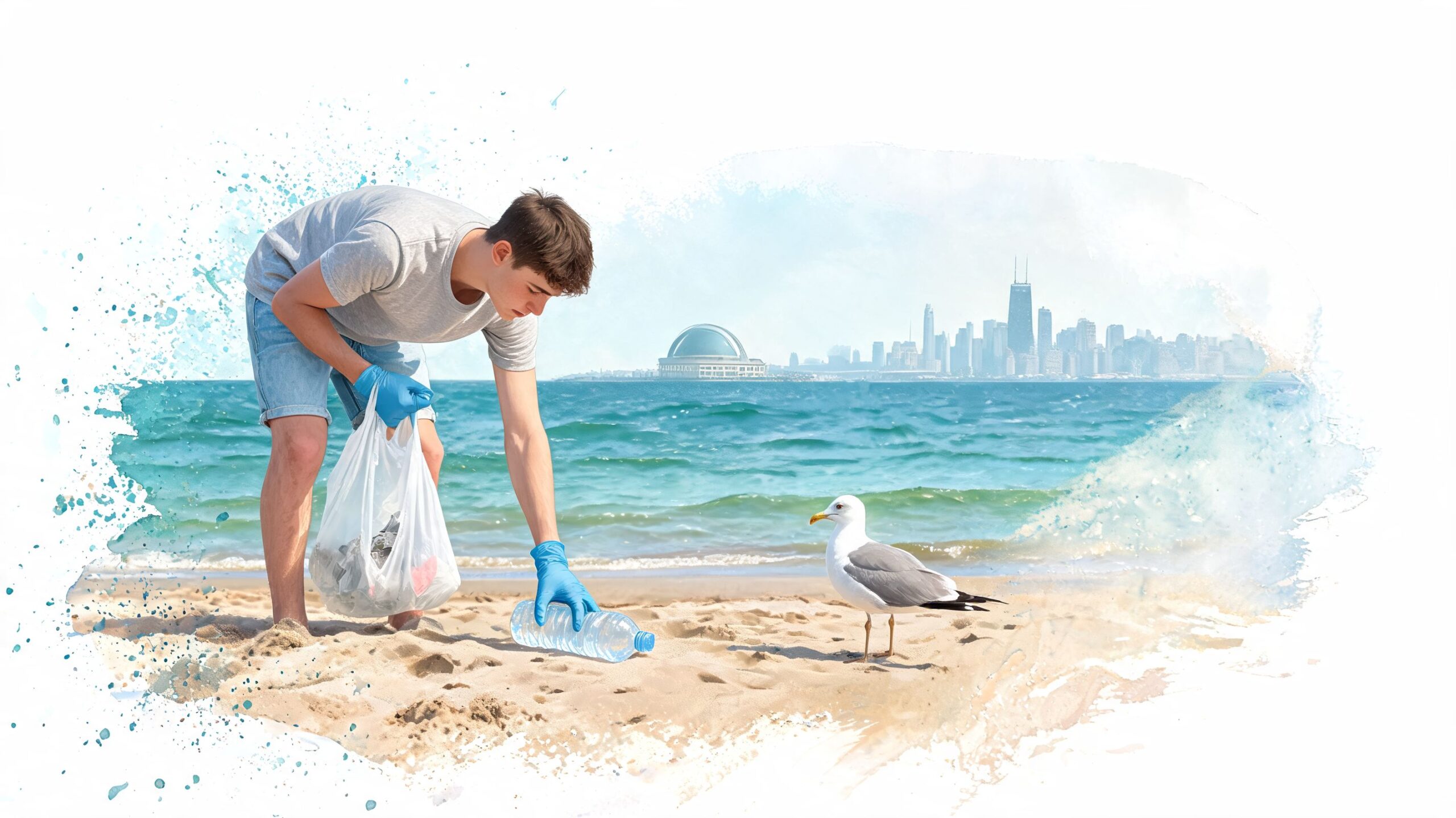
That first visit hooked me because the place felt lived-in, not staged. I could see people arriving with towels, runners moving along the edge of the lakefront, and a few volunteers already bending down to pick up stray cups and wrappers before they got blown farther along the shore.
Rainbow Park and Beach in Chicago has that kind of pull. It gives you a place to swim, sit, walk, and pitch in, all in one stop. If you want a lakeshore day that feels easy but still has a little motion in it, this is the stretch I'd point you to first. The practical part matters too, because a good beach day starts with the address, the hours, and a plan that doesn't leave you guessing.
Understanding Rainbow Park and Beach
One of the first things you notice at Rainbow Beach is how much room the place gives you to settle in. It sits in the South Chicago neighborhood as a 60.98-acre lakefront park, so the shoreline does not feel cramped or boxed in. You can spread out, find a quieter patch, or move toward a livelier corner without feeling like the whole day is pinned to one small stretch of sand. The park district also notes a gymnasium, fitness center, multipurpose rooms, handball courts, and one of the oldest community gardens in Chicago on the property, which makes the place feel bigger than a beach stop and more like a full neighborhood hangout.
How the space feels on the ground
The first time I walked through, I kept noticing how easy it was to shift from one mood to another without leaving the park. A friend can head for the water, someone else can sit on the grass with lunch, and another person can drift toward the courts or the garden and still feel part of the same outing. That kind of setup matters because a lakeshore day is rarely about just one thing.
Rainbow Park and Beach works because it gives you options without making the day feel scattered. You can start with sand, move to open lawn, then follow your curiosity toward the garden or the indoor facilities if the weather or your energy changes. The community garden adds a different texture too, since it pulls the visit beyond the usual beach routine and gives you something living and local to watch besides the waves.
The best shoreline spots let you change pace without changing the place.
That is the part I keep coming back to here. I can stay for a short visit and still end up making a small loop, beach, path, lawn, garden, then back toward the water again. It keeps the whole outing relaxed.
Why the layout matters for a visit
The size of the park also changes how groups use it. Bigger lakefront spaces need a little more coordination because one person may want to stay near the water while someone else is looking for shade, a walk, or a game of catch. Rainbow Beach handles that well enough that splitting up does not feel like a hassle.
I like telling friends to treat it like a layered outing. Bring a blanket, but keep your shoes close. Pack a snack, but do not plan to sit in one place the whole time. If you want a local example of that same easy mix of sand, room to move, and community energy, the setting around 12th Street Beach and its cleanup scene shows how a lakeshore can feel active without getting crowded. Rainbow Park gives you enough variety to make the day slower, longer, or more active, depending on who shows up with you.
Planning Your Visit
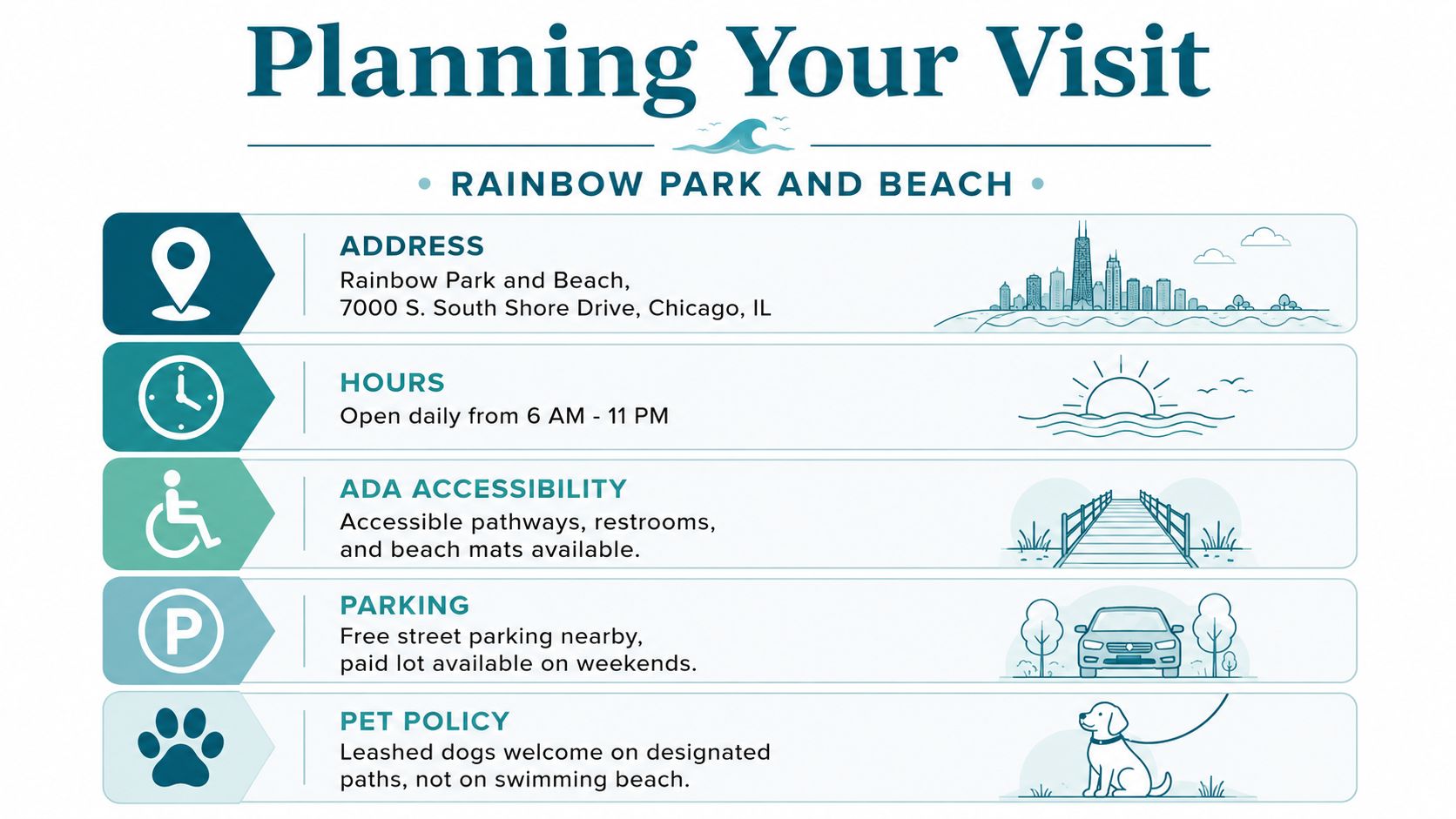
The first time I tried to meet someone at Rainbow Beach, I almost went to the wrong spot because I trusted memory more than the map. Don't do that. Use the address, check the hours, and keep one eye on the cross street so you don't wander around South Shore with a cooler in your hand and no clear target.
The basics I'd keep on your phone
Address: Rainbow Beach sits at 3111 E 77th St in Chicago, with South Shore Drive listed as the cross street in one listing (Time Out Chicago).
Hours: Choose Chicago lists public hours of 11 a.m. to 7 p.m. (Choose Chicago).
Natural area note: The Chicago Park District page for Rainbow Beach Natural Area lists the area as open from dawn to dusk, which is one reason visitors sometimes find official pages a little out of sync (Chicago Park District natural area listing).
Route check: If you're meeting friends, share the exact street address before you leave. A beach day feels much smoother when everyone lands at the same entrance.
I'd also open the internal cleanup guide before you go, especially if you're planning to join a volunteer morning later or you want to compare what a South Side cleanup looks like in practice: 12th Street Beach cleanup guide.
How I'd plan the timing
I like to arrive earlier than I think I need to. That gives me time to find the right path, settle my stuff, and take a slow lap before the crowd builds. If I'm going for a short visit, I treat the hours like a hard boundary and leave myself a cushion on the back end. If I'm meeting a group, I pick one landmark, one entrance, and one fallback place to wait.
Bring the exact address with you. Lakeshore parking and curbside drop-offs get messy fast when you rely on memory.
If you're trying to make the day easy, keep your plan simple. Know where you're going. Know when the park listing says you can be there. Know whether you're using the beach, the garden, or the paths first. That small bit of prep saves more friction than any beach bag trick I know.
Activities and Highlights
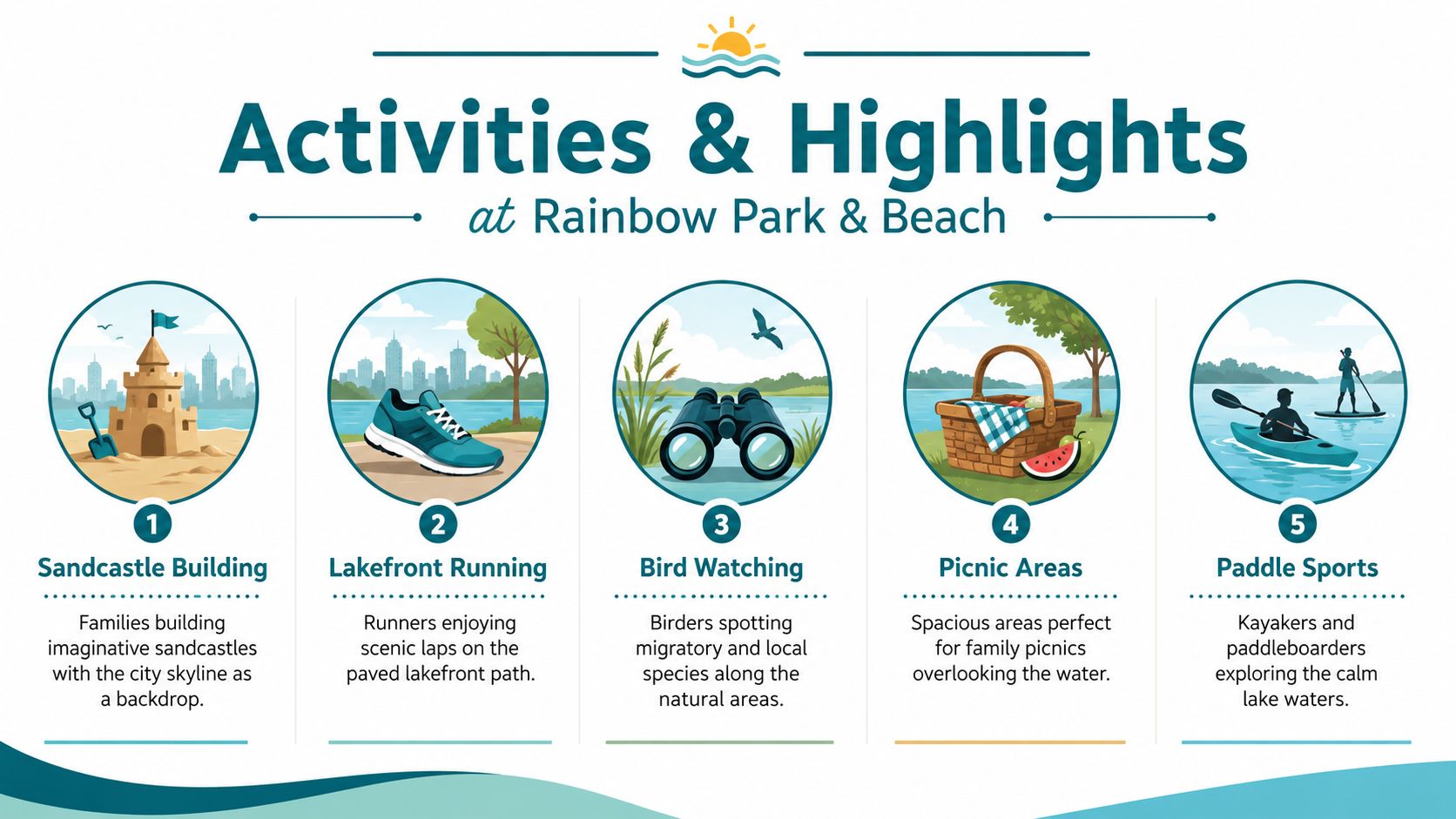
I've seen Rainbow Park and Beach work for three very different moods in one afternoon. One friend came for a sand nap and never left the towel. Another laced up for a run and treated the lakefront like a moving meditation. I spent part of one evening just watching the light change on the water, and that alone felt like enough.
Sand, grass, and easy company
Families tend to spread out fast here. Kids build sandcastles, then wander back to the grass with wet feet and a snack in hand. I like the way the place gives you a little buffer between the shoreline and the rest of the park, so a blanket can become a lunch spot, then a reading spot, then a people-watching spot without much effort.
When I'm with a group, I keep one simple rule. I pick a base spot with a view of the water and the path. That way, nobody feels trapped in one lane. Someone can run to the restroom or jog a quick loop, and the rest of us still know where to land when it's time to regroup.
Running, watching, and staying still
The lakefront path is what I notice when I want motion. Runners can move through the park without the day getting crowded in on them, and that rhythm changes the whole feel of the visit. I've also seen birders set themselves up early and stay patient, which is a skill I admire because it asks for the opposite of hurry.
If I bring a camera, I look for low angles near benches and open stretches of shoreline. Water shots work best when I don't force them. I wait for a calm patch, then frame the lake and sky together. At sunset, the surface gets soft enough that even an ordinary phone photo can feel better than expected.
Water time and casual play
Paddle sports fit the mood when the lake settles down. If I'm not on the water, I still like watching kayaks and paddleboards move across it because they add a steady line to the view. That's also why I tell people to pack light enough to change plans. You may come for one activity and end up doing a different one because the weather, the crowd, or your own energy shifts halfway through.
If you're carrying a tripod or a bag with camera gear, keep a towel handy. Sand gets everywhere, and it doesn't care how careful you are.
For a quick detour into more active shoreline outings, I'd also check this guide to urban kayak outings in Chicago: urban kayaks Chicago guide. It pairs well with a lakeshore day like this because the vibe is the same, easy movement, open air, and a lot of room to wander.
Seasonal Conditions and Safety
One thing I've learned on Lake Michigan beaches is that the water can feel completely different from one week to the next. That's why I don't treat a beach visit like a fixed script. I check conditions, I pack for cooler air than I expect, and I pay attention to whether I'm there to swim or just to sit near the water.
What the water-quality note tells me
A beach-quality source for Rainbow Park Beach says it passed water quality tests at least 95% of the time (Swim Guide). I take that as a useful threshold, not a promise for every single day. It tells me the water checks have often gone well enough to give swimmers a clearer read than a vague “looks clean” guess.
That still leaves room for common sense. I keep an eye on the sky, the wind, and the water itself. If the lake looks rough or the day turns chilly, I switch from swim mode to walk-and-sit mode. That way, the visit still works even if I never step in.
Gear I'd actually bring
I dress for change, not for the first five minutes of the forecast. A hoodie, a towel, sunscreen, and shoes that can handle sand all make the day easier. If I'm planning to stay past midday, I want something dry to pull on later, because lake air can turn cool faster than people expect.
I also pay attention to my own pace. Summer beach days can look lazy from the outside, but they go better when you manage energy the same way you manage gear. Drink water before you feel behind. Give yourself a break before you need one. Leave enough room in the plan to sit down and do nothing for a while.
If the lake looks unsettled, I stay on shore and enjoy the park anyway. I'd rather have a slow day than a stressful one.
That's the balance I use here. The best beach trip isn't the one where you force every activity. It's the one where the weather, the water, and your plan can all stay in the same conversation.
Nearby Attractions and History
One of the reasons I like Rainbow Beach is that it never feels isolated from the rest of South Shore. You can stand near the water, look inland, and feel how the beach fits into a neighborhood that has always lived close to the lake. It feels like part of a larger shoreline routine, with the same easy rhythm you see at other South Side beaches.
The setting gives the beach its character. South Shore brings a residential feel, tree-lined streets, and a lakefront that opens up quickly once you get close enough to the water. That mix makes the visit feel local right away. You are still in the city, but the pace shifts the moment the lake comes into view.
The shoreline around it
I like starting with the shoreline itself, because that is where the history feels easiest to read. The beach sits within a stretch of public lakefront that has long shaped how people on the South Side spend summer days. Families spread out with coolers, walkers follow the path, and regulars treat the water like part of their own backyard.
That continuity matters. The beach does not stand apart from nearby habits, it carries them forward. A short walk along the edge shows the same mix of recreation and routine that gives Chicago's lakefront so much of its appeal.
The area also works well for a slower wander after you leave the sand. A few blocks in South Shore can tell you a lot, with neighborhood houses, local corners, and the kind of everyday street life that makes the beach feel connected to the city instead of separated from it. When I bring friends here, that is usually the part they remember most, the way the view opens to the lake while the neighborhood stays close enough to feel present.
Why I keep coming back
I keep coming back because the place stays practical without losing its charm. I can sit for a while, walk the edge, or swim if the day feels right. I can stay for a quick reset or stretch the visit into a full afternoon.
The area gives me room to choose my own pace. Some visits are nothing more than a shoreline walk and a bench stop. Other times I pair the beach with a longer loop through the neighborhood, and the outing feels fuller without needing a long list of stops.
For a closer look at how the beach fits into broader community care, the volunteer side matters too. A local beach can look relaxed from a distance, but it stays that way because people keep showing up for it, including groups like Litter Caterpillars' public beach cleanup efforts.
Volunteer Cleanups and Community
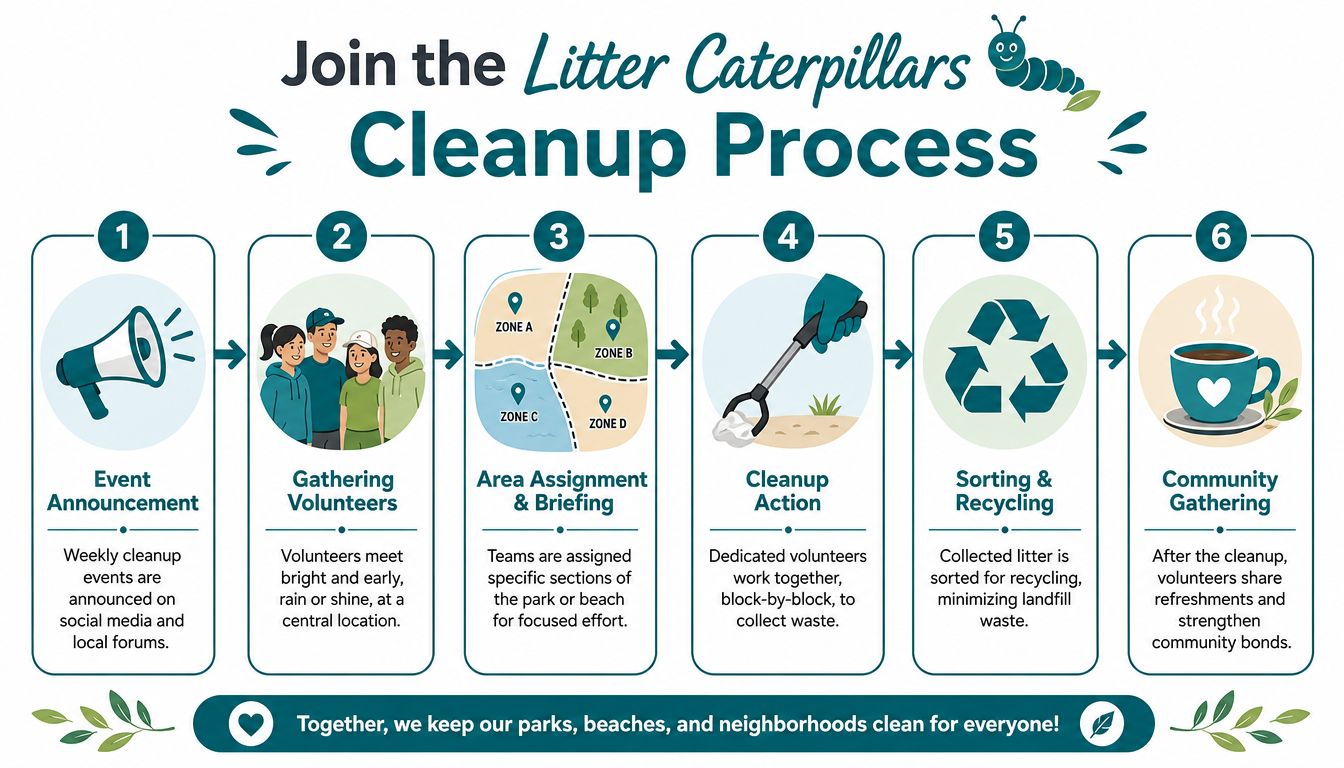
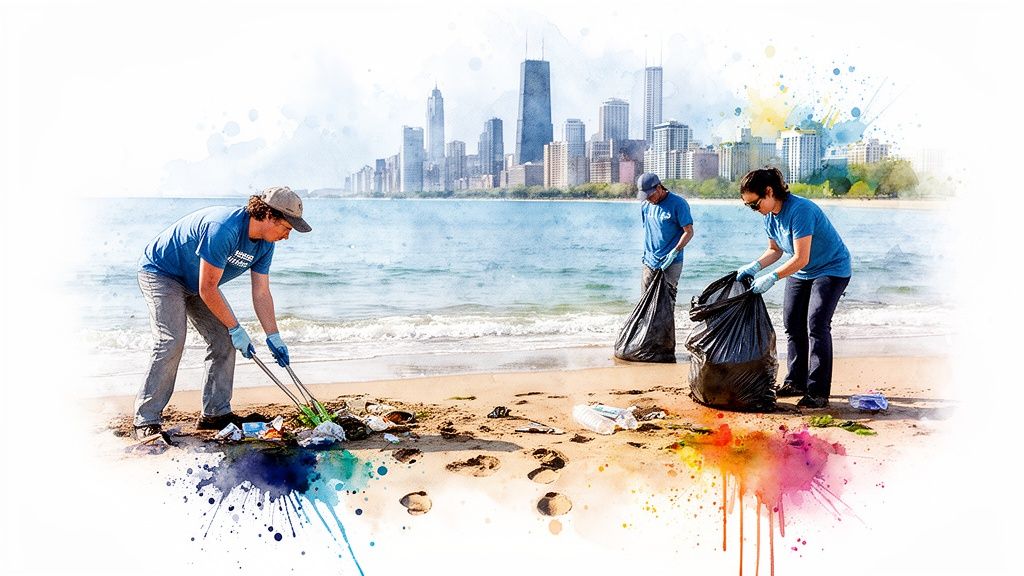
I first noticed a cleanup crew here when I was still half in beach mode and half in “maybe I should leave already” mode. Then I watched people fan out with bags, grabbers, and a clear sense of where they were headed, and the whole place changed in front of me. Trash stopped feeling like background noise and started feeling like something real people could deal with together.
How the cleanup rhythm works
The strongest thing about a good cleanup crew is that nobody has to guess what to do next. A clear start time, a meeting point, and a simple split of the site make the whole effort calmer. The process matters because Rainbow Beach has a lot going on, and the park district listing shows it's more than a single sand strip, which means a cleanup works better when people divide the area by section instead of treating it like one giant pile of litter (Chicago Park District).
That's the approach I'd use anywhere along the beach. One person handles the edge near the sand. Another takes the grass. Another checks the path and the garden perimeter. When everyone knows their section, the job gets less messy and more human.
A simple way to join in
If you want to show up for a cleanup, keep it straightforward.
Check the event notice. Look for the meeting time and location before you leave.
Bring basic gear. Gloves, closed-toe shoes, and water go a long way.
Listen to the briefing. Ask which zones need attention first.
Work the area in pieces. Move slowly, bag by bag, instead of rushing.
Sort what you collect. Recyclables and trash shouldn't go into the same pile if you can help it.
Stay for the closing chat. That's where people trade notes and meet each other.
I like cleanups because they turn a visit into a shared task. If you want the deeper background on that kind of volunteer habit around the lakefront, this page is a good companion read: public beach lake Michigan cleanup guide. It helps when you want to think through the people side of shoreline care, not just the logistics.
Conclusion
Rainbow Park and Beach gives you an easy lakeshore day with room to move, rest, and pitch in. I'd go for the water, stay for the skyline, and leave time for a cleanup if you want the visit to feel even more grounded. Pack light, check the hours, and give yourself space to wander. If you're ready for a shoreline day that feels like yours, go now, bring a friend, and make the first stop.
I once stood at 12th street beach with a trash bag in one hand and a knot in my chest. The sand was cleaner than my apartment, and somehow picking up a stranger's bottle cap felt easier than throwing away my own old junk at home.
Discovering 12th Street Beach Through New Eyes
I didn't come to 12th street beach as a polished beach person. I came as someone who had let too many little messes pile up. Old receipts. Half-dead plans. The kind of clutter that starts on a desk and then creeps into your habits, your friendships, your courage.
Then I learned something strange. Cleaning up someone else's mess can loosen your grip on your own.
That first time, I bent down for a tangled scrap of plastic near the shore and felt a small click in my head. The task was simple. See trash. Pick it up. Keep moving. No old memory attached to it. No story. No guilt. Just action.
Why this beach feels different
At first glance, 12th street beach is easy to read. Sand. Water. Skyline. People spread out on towels, kids darting in and out of the edge of Lake Michigan, cyclists rolling by. You can come here for an easy afternoon and leave happy.
But if you slow down, the place changes.
You start noticing the way a public beach asks something from you. Not much. Just attention. A little care. The willingness to leave it better than you found it. That tiny shift changes the whole day. You're not only visiting. You're participating.
Practical rule: Bring one small bag. If you see a few pieces of litter on your way out, pick them up. That single habit changes how you experience the place.
A different kind of beach guide
Most guides tell you where to park, where to sit, and where to buy a snack. I like those guides. I use them too. But 12th street beach gave me something more useful than convenience.
It gave me a way back into myself.
When your life feels jammed up, service is like opening a stuck window. The room doesn't become perfect. You just get some air. A beach cleanup can do that. A swim can do that. A quiet walk along the edge of Northerly Island can do that too.
If you've been here before, I want you to see it again. If you've never been, I want your first trip to mean more than a checklist. Come for the skyline, sure. Come for the sand. But also come because this is a good place to practice being the kind of person who notices things and helps.
The Story of a Man-Made Oasis
The first time I helped clean here, a volunteer held up a bottle cap and said, "Somebody had a whole summer day around this." I looked out at the curve of sand, the calm pocket of water, the skyline rising behind it, and remembered that this place did not appear by accident. People argued for it. People built it. People kept coming back until it became part of Chicago's memory.
12th Street Beach sits on Northerly Island, a man-made piece of the lakefront born from Daniel H. Burnham's 1909 Plan of Chicago. Construction began in 1920, and by 1925 workers had formed the island with a sheet iron wall, landfill, and dredged material. It was the only island from Burnham's chain-of-islands vision that was fully completed, as noted in the 12th Street history project.
What moves me most is how early Chicagoans fought over what this shoreline should become.
Some people wanted a landing strip. Women's organizations pushed for a public bathing beach instead, and the beach was established in the early 1920s. That choice still shapes the feeling of the place today. Families got shoreline access. Swimmers got a protected stretch of lake. Ordinary people got room to rest, gather, and belong.
By the 1930s and 1940s, the island had grown into more than a strip of engineered land. It had paths, grassy areas, trees, and beach space, and later it changed again as the area developed around the World's Fair era and the Adler Planetarium. Then came another chapter. Meigs Field operated here for decades before closing in 2003, and a new beach house followed in 2004.
So the ground under your towel carries a strange and beautiful history. Public recreation, aviation, civic planning, and reinvention all meet here.
The beach also holds family memory. A historical image record of Black families enjoying summer at 12th Street Beach ties the shoreline to multigenerational gathering in the 1960s and 1970s, a reminder that this was not only a place to cool off. It was a place to be seen, to celebrate, to claim joy in public, documented in this archival Alamy image listing.
I think about that whenever our Litter Caterpillars crew heads out with buckets and grabbers. We are not caring for an empty backdrop. We are caring for a place that generations shaped with pressure, presence, and love.
That is why even the trip here matters. Choosing a lighter-footprint route to the lakefront can be part of the practice. Our guide to eco-friendly ways to get to the beach helps you arrive with that spirit already switched on.
A man-made oasis sounds like a planning term. Here, it feels personal. Every cleanup, every picnic, every child racing into the shallows adds another layer. The story of 12th Street Beach is still being written, and if you show up with care, you become part of it.
How to Get to 12th Street Beach
The first time a new volunteer joined our cleanup at 12th Street Beach, she arrived on a bike with a small backpack, a water bottle clipped to the side, and no idea what to expect. She told me later that the ride down the lakefront had already changed her mood. By the time she rolled past Northerly Island and saw the sand open up beside the skyline, she felt less like she was rushing to an attraction and more like she was arriving for something that mattered.
That is still how I like to guide people here. Getting to 12th Street Beach is part of the experience. You are heading toward the Museum Campus edge, just south of Adler Planetarium, then following the path toward Northerly Island and the beach.
The simple way to choose your route
Pick the route that fits the kind of day you want.
Method
Details
Best For
Walking
Walk south from the Museum Campus area toward Northerly Island and follow the path to the beach.
Anyone already visiting the lakefront or nearby museums
Bike
Ride the Lakefront Trail, then turn off toward Northerly Island.
Solo visitors, couples, and anyone who wants a calm trip along the water
Car
Drive toward the Adler Planetarium and Northerly Island area, then look for nearby parking if available.
Families carrying chairs, snacks, and beach gear
Rideshare or taxi
Set your drop-off near Adler Planetarium or Northerly Island.
Visitors who want the shortest walk-in
Bus and train plus walk
Take CTA service toward the Loop or Museum Campus area, then finish the trip on foot.
Visitors who want a lower-stress city outing
Driving works best when you are hauling a lot. On bright summer weekends, though, the last stretch can test your patience. Parking fills up fast, and the walk from your spot can still be longer than expected.
If you are packing light, biking, walking, or transit usually makes the day feel easier from the start. Our guide to eco-friendly ways to get to the beach can help you choose a route that leaves less trash, less traffic, and less stress behind.
Walking or biking in changes the whole tone.
You hear the gulls before you hit the sand. The air shifts. The city stays beside you, but it loosens its grip. For a lot of us in Litter Caterpillars, that approach has become a small ritual. We show up more grounded, more observant, and more ready to care for the place once we arrive.
A few practical habits help:
Travel light: A towel, sunscreen, water, and sandals cover most visits.
Secure loose items: Lakefront wind grabs hats, wrappers, and napkins in seconds.
Give yourself extra time: The final walk can feel longer when you are carrying gear or guiding kids.
What you'll find when you arrive
Once you reach the beach, you will find the basic supports that make it easier to stay awhile, regroup, and settle in for a full day. That matters more than people expect. A restroom, a place to rinse off, a spot to pause with older relatives, or a moment out of the sun can be the difference between a rushed visit and one that feels generous.
I have seen that play out during cleanup days too. Someone comes for an hour, stays for three, then ends up sharing lunch on the sand with people who were strangers that morning. Access and comfort shape whether a beach feels welcoming enough for community to grow.
If accessibility is part of your planning, check current Chicago Park District conditions before you leave home. Paths, beach equipment, and seasonal operations can change, so a quick check can save you a hard trip.
Our Lakefront Environment and Its Challenges
The first time I watched someone pull a handful of chip bags and sticky drink lids from the sand at 12th Street Beach, the water was sparkling. Kids were laughing. The skyline looked polished enough for a postcard. Then one of our Litter Caterpillars volunteers pointed to the gulls circling the snack debris and said, "That is how a beautiful beach starts slipping."
That moment changed me. I stopped seeing cleanup as cosmetic work. I started seeing cause and effect.
What the water tests are checking
At 12th Street Beach, summer water quality checks track Enterococci bacteria, and advisories are posted when levels rise above the safety threshold. The Swim Guide page for 12th Street Beach also notes that the beach often meets standards during peak season, while still facing periodic warnings tied to birds, runoff, and changing conditions.
For visitors, the lesson is simple. Check the daily status before you swim. A clear, sunny morning can still come with a warning, especially after rough weather or heavy bird activity.
I treat that habit the same way I treat sunscreen. Part of the trip.
Why the beach sometimes gets a warning
The two troublemakers show up again and again. Gull droppings. Stormwater runoff.
Gulls gather where food scraps and litter collect. Rain washes pollutants from streets and walkways toward the lake. Put those together, and a beach that looked perfect at breakfast can become a poor choice for swimming by noon.
That is one reason our cleanup work feels personal. Every bottle cap, sandwich wrapper, and abandoned snack bag changes the beach a little. If you want a clearer picture of that chain reaction, this guide to how littering on the beach affects wildlife and cleanup efforts connects the small stuff people leave behind with the bigger problems everyone else has to live with.
A quick visual can make all of this easier to picture:
The beach is built, not natural in the simple sense
I love telling people this because it changes how they stand on the shore. 12th Street Beach is a perched beach, held in place by engineered protection below the waterline. It is public space, yes, but it is also maintained infrastructure, shaped and defended so Chicago can keep a swimmable beach along a hard-working urban lakefront, as reported by WTTW's Ask Geoffrey on the seawall and rail tracks.
So caring for this beach means caring for something built with intention and kept alive through attention. Sand, water, wildlife, weather, and city use all meet here in one narrow band.
I have seen people arrive for a cleanup thinking they are just picking up trash. An hour later, they are asking better questions. Where does runoff come from? Why are the gulls clustering here? Who maintains the shore after storms? That shift matters. A beach visit becomes stewardship.
And that is the invitation 12th Street Beach keeps offering. Come for the swim, the skyline, the soft sand under your feet. Stay long enough to notice what the place needs. A tiny act on shore can ripple outward.
How to Join a Beach Cleanup
The first cleanup I ever joined felt less like volunteer work and more like the opening scene of a weird little adventure film. There were only three of us. Then Chicago did what Chicago does. The sky cracked open, hail started flying, and we huddled under a tree while ride after ride canceled on us.
I was freezing. I was laughing. I also had a thought I still trust. Shared discomfort is strangely good at turning strangers into teammates.
Why cleanup feels better than you think
A lot of people hear "beach cleanup" and imagine scolding, drudgery, or a school requirement with bad snacks. My experience is the opposite. Cleanup has a little Tom Sawyer energy in it. The job looks plain from a distance, but once you're in it, the thing changes shape.
You start spotting weird objects. You trade stories. Someone finds an impossible item half-buried in sand and everybody crowds around. A task becomes a game of attention. Then, after an hour or two, the place looks better because you were there. That feeling is hard to fake.
Work gets lighter when people do it together and treat it like an outing instead of a punishment.
What your first cleanup day usually looks like
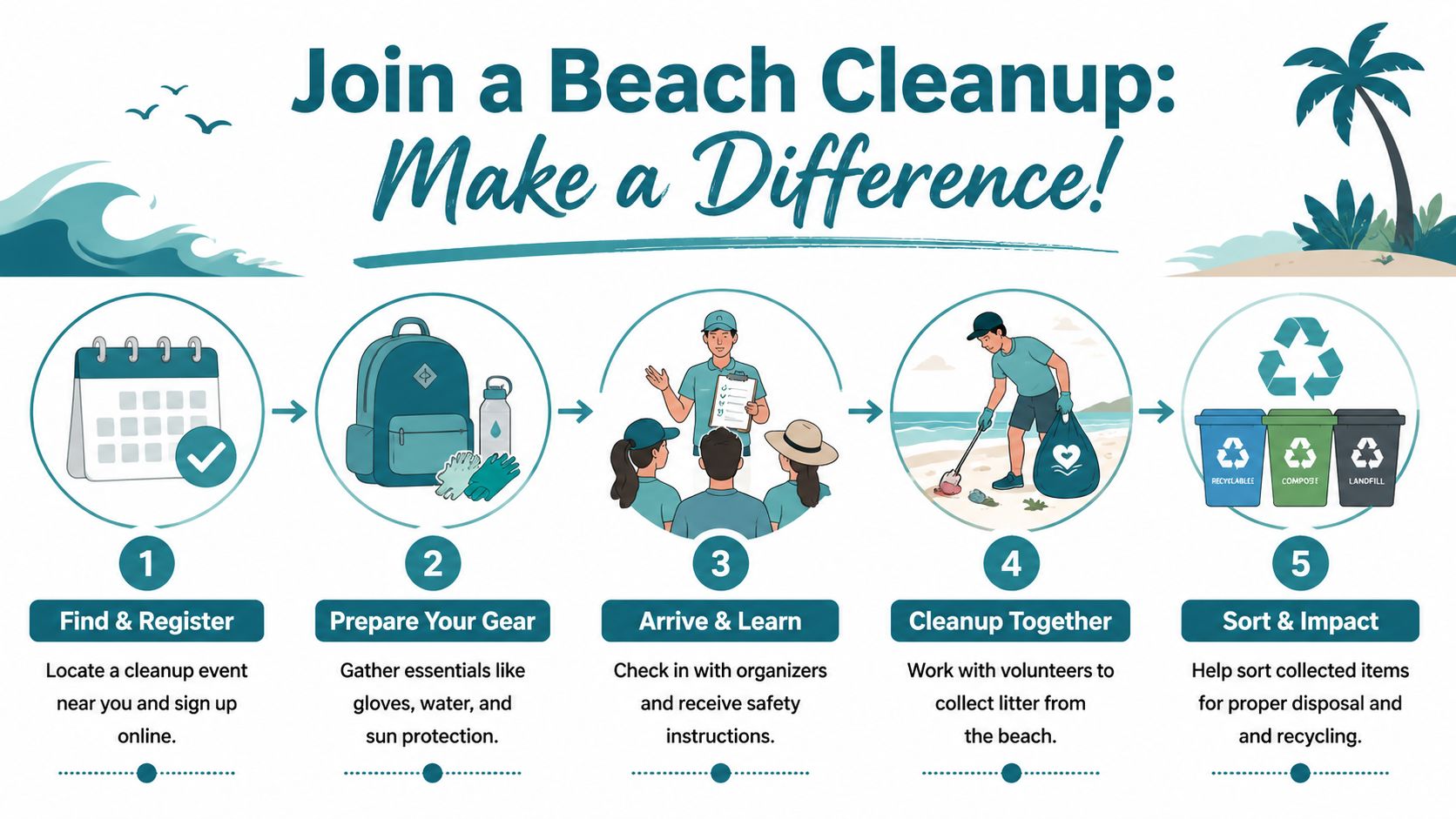
The practical side is simple. Most beach cleanups follow a rhythm that is easy to learn on the spot.
You sign up ahead of time. Look for the event listing, RSVP, and read the notes so you know the meeting point.
You show up in clothes you don't mind getting sandy. Closed-toe shoes help if the cleanup covers paths as well as sand.
You check in and listen. Organizers usually explain the route, the boundaries, and basic safety.
You collect litter with the group. Some people like grabbers. Some just use gloves and bags.
You wrap up together. This is when people compare strange finds, sort what they can, and usually chat longer than expected.
If you're looking for the setting many volunteers care about most, this page on a public beach on Lake Michigan captures why shoreline cleanups feel different from a random errand.
How to actually find one
This part stops a lot of people, even when they want to help. They assume there must be a secret process. There isn't.
Try this:
Search Meetup first: Many volunteer groups post cleanups there because RSVP tools are simple.
Check Instagram: Stories and recent posts often have the freshest meeting details.
Read the event notes: Look for start time, exact meeting point, and whether supplies are provided.
Message if unsure: Organizers usually want you to ask. It helps everyone arrive ready.
I like weekend morning cleanups best. The mood is better. People come because they mean to come. There is a generous, clear-headed energy to a morning group that you can feel within minutes.
If you want to organize one yourself
You don't need to become a superhero. You need a date, a meeting point, bags, gloves, and enough nerve to invite a few people.
Start small. Three friends is enough. Pick a visible area. Keep the time short. Make safety the first rule and morale the second. If weather turns rough, adjust. Courage isn't acting reckless. Courage is showing up, paying attention, and making good calls.
A cleanup works a lot like exercise. The hardest part is not the activity itself. It's crossing the distance between "I should" and "I'm here."
Tips for Your Perfect Beach Day
The best beach days I have seen at 12th Street Beach did not begin with a perfect forecast. They began with attention.
One Saturday, a woman joined one of our Litter Caterpillars cleanups with a coffee in one hand and a look that said she had almost talked herself out of coming. We spent an hour picking bottle caps from the sand and snack wrappers from the rocks. Afterward, she stayed. Shoes off. Phone away. She sat near the water longer than anyone else in our group. Before she left, she told me, "I came here tense. I am leaving like my chest finally opened up."
That is my favorite kind of beach day. You enjoy the place more because you helped care for it.
What to bring and why
I have learned to pack for ease, not for a grand production. The people who look most at peace out there are usually carrying a towel, water, and a small bag, not half their apartment.
Bring a few things that earn their spot:
Water and sunscreen: The sun off the lake can sneak up on you.
A towel and one extra layer: Even warm afternoons can turn cool when the wind shifts.
Snacks in reusable containers: You eat better, and you create less trash that can blow into the water.
A small bag for your own waste: It takes almost no effort, and it changes how you leave a place.
That last one matters more than people think. A good beach setup is not only about comfort. It is about leaving your patch of sand cleaner than you found it.
Best timing for a calmer visit
Early hours feel different here. The water looks steadier. The path is quieter. You hear gulls, bike wheels, and the soft slap of waves against the rocks before the bigger crowds arrive.
Late afternoon has its own kind of magic. The skyline starts to glow, people settle down, and the beach feels less like a rush and more like a long exhale.
If swimming is the heart of your day, check conditions before you go. If your plan is to read, talk, walk, or sit near the water, you still have plenty of room for a beautiful visit even when the lake is not inviting you in.
Make the day mean more
One reason I keep returning to 12th Street Beach is that it can hold two truths at once. It is easy fun. It is also a place that asks something small and good of us.
You can swim, stretch out on the sand, then wander toward Museum Campus and keep the day going on foot. You can come for the skyline, the water, and the relief of being outdoors in the middle of the city. You can also notice the corners where litter gathers after a busy weekend, pick up a few stray pieces on your way out, and leave the shoreline a little better for the next family, the next solo swimmer, the next tired person who comes looking for peace.
My rule for a perfect beach day is simple.
Leave with less than you brought. Less stress, less trash, less hurry.
That is how a visit becomes something larger than a visit. It becomes practice for the kind of city we want to live in.
Your Questions Answered
Do I need to bring supplies for a cleanup
Usually, no. Many cleanup groups provide bags, gloves, and grabbers. Still, read the event listing before you go. If you already own work gloves or a reusable water bottle, bring them.
What if the weather turns bad
Chicago weather likes drama. A little rain doesn't always stop a cleanup, but safety comes first. If conditions become risky, organizers usually adjust, pause, or cancel. Check the event page the morning of.
Can I come alone
Yes. In fact, coming alone is often the easiest way to meet people. You already have a built-in activity, which removes a lot of the awkwardness. You don't need a partner to belong there.
Do I have to stay the whole time
Usually not. Many groups appreciate any time you can give. If you can only stay for part of the event, say so at check-in and help for the time you have.
What should I wear
Wear clothes you can move in and don't mind getting dirty. Closed-toe shoes are a smart choice when the cleanup reaches paths, rocks, or hidden debris.
If this stirred something in you, come meet the Litter Caterpillars. We're a Chicago volunteer group that picks up trash, builds friendships, and turns ordinary mornings into small adventures. If you want a way to care for the city while changing your own habits from the outside in, you'll fit right in.
Imagine the Chicago skyline shimmering across the water. A postcard view, for sure. But look down. At the tideline. The real story isn't just the grand vista, but the tiny details—the plastic bottle caps, the forgotten snack wrappers, the ghosts of yesterday's picnics. My life felt like that once. A collection of forgotten things, a jumble of messes I couldn't face. A chaotic relationship. A messy apartment. A deep, sinking feeling of being stuck. Strangely, tackling other people's messes, sorting through the city's forgotten bits, became the key that unlocked my own. It taught me something profound: cleaning up isn’t a chore; it’s a metamorphosis.
It's like being Tom Sawyer, tricking his friends into painting a fence. The task itself is mundane, but through shared effort, it becomes an adventure, a source of pride, a point of connection. So this guide? It’s more than a list of the best public beach Lake Michigan spots. It's an invitation to find that same transformation, to see the shoreline not just as a place to relax, but as a stage for action. Each beach is a different act in the play, a unique opportunity to connect, to serve, and to grow. For our volunteer group, the Litter Caterpillars, these shores are our dojo—a training ground for bravery, kindness, and building a city we can all be proud of. This article won’t just show you where to lay your towel. It reveals where you can make a tangible difference, find your tribe, and maybe even discover a new version of yourself. Let's find your beach.
1. North Avenue Beach
Step onto the sands of North Avenue Beach, and you feel the city's heartbeat. It’s right there, pulsing against the glittering Gold Coast skyline. This iconic public beach on Lake Michigan is a living thing, a vibrant hub of city life more than just a place for a tan. Its sprawling shoreline, a battlefield of volleyball nets dominated by the unique, ocean-liner-shaped beach house, draws thousands, creating an energy that is pure, uncut Chicago. And that very popularity, that immense human gravity, makes it a place of incredible opportunity for community action.
The high foot traffic is a double-edged sword. It means that, inevitably, litter accumulates like snow in a blizzard, dimming the sparkle of this urban oasis. This is where the story changes. This is where the magic of community effort shines brightest. For volunteer groups like the Litter Caterpillars, North Avenue Beach isn't a mess; it's a canvas. It’s a chance to paint a powerful, visible picture about our shared responsibility for these beautiful public spaces.
Making an Impact on an Iconic Shoreline
Picture a Saturday morning. The sun is just climbing over the lake, casting a golden glow on the Hancock Tower. A small group gathers, armed with gloves and bags, ready to restore the beach to its pristine state before the city truly wakes. This is the golden hour to act. Focusing on high-traffic zones—the volleyball courts, the picnic areas—yields the most dramatic results, transforming the landscape from chaotic to calm in just a couple of hours.
"Cleaning North Avenue Beach is like polishing a diamond. The beauty is already there; we're just helping it shine its brightest for everyone to see. The immediate transformation is incredibly rewarding and shows what a handful of dedicated people can accomplish."
This high-profile stage is a powerful recruitment tool. A successful cleanup here, captured in before-and-after photos against that stunning backdrop, tells a compelling story on social media. It’s a story of action, of community, of a deep love for our city. It’s an open invitation, inspiring others to join the movement and become stewards of their favorite public beach on Lake Michigan.
2. Montrose Beach
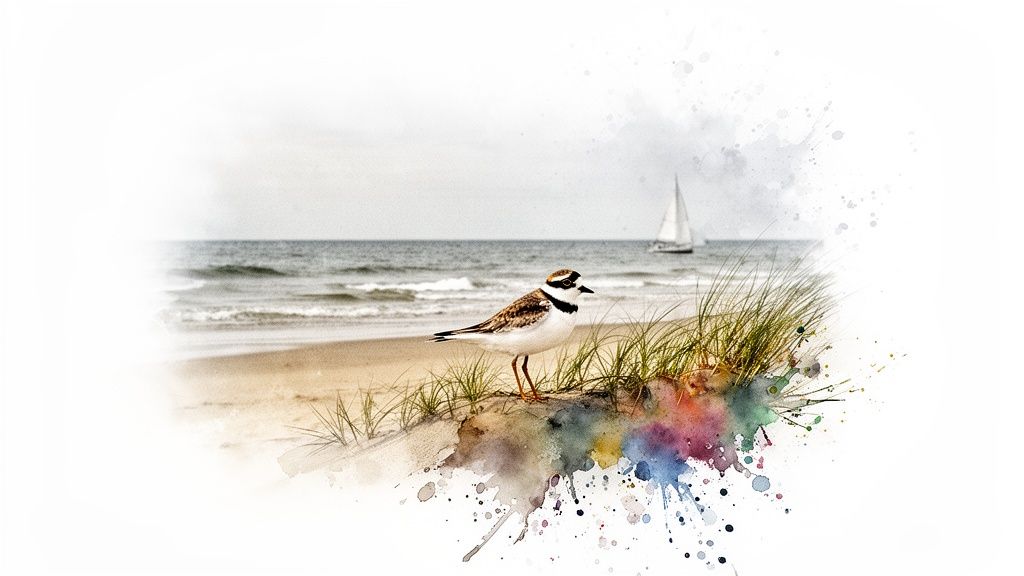
Venture north of the downtown hustle, and you'll find it. Montrose Beach. A serene and sprawling public beach on Lake Michigan that feels like another country. As Chicago's largest beach, its mile-long shoreline is a patchwork quilt of sandy expanses, a chaotic dog-friendly area, and, most uniquely, a designated natural habitat. This isn't just a playground; it's a vital sanctuary for wildlife, including the federally endangered Great Lakes Piping Plover. It's a place with two souls.
The unique dual-purpose nature of Montrose Beach presents a special calling, a higher purpose for community volunteers. Litter here isn’t just an eyesore; it's a landmine in a fragile ecosystem. For groups like the Litter Caterpillars, a cleanup at Montrose is an act of conservation, a chance to guard a rare piece of wild nature nestled within our concrete city. Here, community action becomes habitat stewardship. This is where we protect the vulnerable.
Making an Impact on a Living Shoreline
Imagine a crisp autumn morning. The beachgoers have thinned, and the migratory birds are packing their bags for a long journey south. This is the prime time for a focused cleanup, carefully scheduled outside the plovers' sensitive nesting season (typically April-August). Volunteers can become detectives, combing the tide line and the delicate dune areas, removing the plastic villains and debris that could harm nesting birds and other wildlife.
"Cleaning Montrose Beach feels different. You're not just picking up trash; you're protecting a home. When you see a tiny plover chick, you understand that a bottle cap isn't just a piece of litter—it's a real danger. Our work here is a promise to share our shoreline responsibly."
This powerful conservation narrative makes for an incredibly compelling volunteer story. It's not just about cleaning; it's about protecting life. Partnering with organizations like the Audubon Society for an educational cleanup event amplifies the impact, transforming participants from helpers into passionate advocates. Documenting these efforts, especially with the story of the plovers as the central character, creates a powerful recruitment tool, inviting others to join one of the most meaningful environmental volunteer opportunities in Chicago and help preserve this precious public beach on Lake Michigan.
3. Rainbow Beach
Journey to the South Side, and you’ll discover Rainbow Beach, a public beach on Lake Michigan with a story etched into its very shoreline. This isn't the slick downtown scene; this is a place with deep community roots and a rugged, industrial beauty. Its name comes from the colorful rocks, a ghost of nearby steel mills, that line the water's edge, creating a mosaic of history and resilience. For a group like the Litter Caterpillars, Rainbow Beach represents a profound opportunity to live out a core value: that every Chicago neighborhood deserves care. Every single one.
This is where commitment is tested. This is where it's proven. The work here goes beyond a simple cleanup; it's about building trust, about demonstrating that our mission extends to all 50 wards, not just the ones with the best views. Showing up, consistently, in areas that are often overlooked sends a powerful message of unity and equity. It’s a chance to partner with the proud, hardworking community that calls this place home and amplify their efforts.
Forging Bonds and Building Trust
Picture a consistent, dedicated cleanup, the first Saturday of every month, rain or shine. This is how you build something that lasts. Not with grand gestures, but with reliability. By establishing a dependable presence, Litter Caterpillars can transform from an outside group into a familiar, welcome part of the neighborhood fabric. Partnering with local community centers and South Side nonprofits for recruitment doesn't just bring in more hands; it fosters genuine local ownership. It builds pride.
"Working at Rainbow Beach is about more than just trash. It’s about showing up. It’s about listening. When a local resident joins us and tells us stories about this beach, we're not just cleaning a space; we are honoring a community's history and its future."
This location is a testament to the Litter Caterpillars' city-wide promise. Documenting the transformation here, showcasing the restored beauty of the colorful shoreline, powerfully illustrates the organization's dedication. This story, shared far and wide, isn't just about cleaning up a public beach on Lake Michigan; it's about bridging divides and proving that a united effort can make every single shore a cherished community asset. To get involved with these essential city-wide efforts, you can Learn more about cleaning up trash on littercaterpillars.com.
4. Olive Park / Ping Tom Beach
Venture beyond the downtown bustle to Olive Park, a sprawling natural sanctuary on the far South Side. This isn't just another stretch of sand; it's a vibrant ecosystem, a place where wetlands kiss the shores of Lake Michigan. This hidden gem provides a unique opportunity to expand our impact, to graduate from simple beach cleaning to holistic habitat restoration. It offers a profound connection to the nature thriving within our city's limits.
The diverse landscape here, a tapestry of beach and wetland, calls for a more ambitious kind of stewardship. It’s a challenge. For Litter Caterpillars, this public beach on Lake Michigan is a living laboratory. It’s a chance to host transformative events that combine the simple satisfaction of a cleanup with the deep-seated reward of healing a vital local habitat, engaging volunteers on a whole new, much deeper level.
Making an Impact on a Living Shoreline
Picture a full-day adventure. The morning is a blitz, clearing the shoreline of debris. But the afternoon is dedicated to something more subtle, removing invasive species from the precious wetlands alongside partners like Friends of the Chicago Parks. This isn't just a cleanup; it's an immersive educational experience. By adding elements like water quality testing or workshops on local ecology, we turn a volunteer day into a powerful lesson in environmental science. The focus here shifts from just picking up what’s visible to understanding the root causes of pollution and its invisible effects. To learn how individual actions can prevent this kind of pollution, check out our guide on reducing plastic use.
"Working in Olive Park is like helping a wild garden grow. You're not just weeding; you're nurturing an entire ecosystem. It connects you to the lake's wild heart in a way no other beach can, and it builds a team spirit that lasts long after the day is done."
This type of destination event is a forge, perfect for creating deeper bonds within our volunteer community. We can market it as an "urban eco-adventure," a call to arms for those who crave a more hands-on, exploratory experience. By emphasizing discovery and education, we inspire a dedicated group of advocates who understand that protecting Lake Michigan means caring for every part of its diverse and beautiful shoreline.
5. Juneway Beach / Rogers Beach
Travel to Chicago's Far North Side, and you’ll discover the quiet charm of Juneway Terrace and Rogers Beach. These are not the sprawling, chaotic shorelines of downtown. They are intimate, neighborhood gems where the city feels a world away. Flanked by residential streets and local parks, these beaches are the living heart of the Rogers Park community, offering a peaceful retreat and a unique opportunity to build something lasting.
This strong neighborhood identity makes these smaller beaches the perfect ground for cultivating a dedicated community of caretakers. It's like tending a small garden instead of a massive farm. Unlike a one-off event at a major tourist spot, efforts here are about building relationships, about fostering a deep sense of local ownership. For a group like the Litter Caterpillars, this public beach on Lake Michigan is an ideal place to plant seeds of change that can grow into a permanent, self-sustaining movement, nurtured by the very people who call this shoreline home.
Cultivating Community Ownership, One Block at a Time
Picture a small team of neighbors. They gather every other Saturday morning, not as strangers, but as friends united by a common purpose. This isn't just a cleanup; it's a neighborhood ritual. Focusing on a regular, predictable schedule, like the second and fourth Saturday of each month, builds powerful habits. It makes volunteering a natural part of community life. The goal is to make caring for their beach as routine as walking the dog or grabbing coffee.
"At Rogers Beach, we're not just picking up litter; we're building a family. When you clean alongside the same people week after week, you create bonds. The beach becomes 'our' beach, and protecting it becomes personal. It’s amazing to see that pride take hold."
The impact here is measured in relationships as much as in bags of trash. Partnering with the local alderman's office or Rogers Park community associations amplifies the message, weaving the cleanup effort into the very fabric of the neighborhood. By framing the work through the lens of Rogers Park pride, you transform a simple task into a powerful act of community love, inspiring a lasting legacy of stewardship on this beloved public beach on Lake Michigan.
6. Loyola Beach / Sheridan Beach Area
Where the vibrant energy of Rogers Park and Edgewater meets the serene shoreline of Lake Michigan, you'll find Loyola Beach. This long, curving stretch of sand is a backyard for thousands of residents and the students of nearby Loyola University. It creates a unique blend of quiet neighborhood charm and youthful dynamism. It's a place where families build sandcastles, students unwind between classes, and the community comes together.
This constant, diverse flow of visitors makes Loyola Beach an ideal ground for nurturing the next generation of environmental stewards. The proximity to a major university presents an incredible opportunity for Litter Caterpillars to tap into a wellspring of passion, idealism, and a structured desire to give back. For us, this isn't just another public beach on Lake Michigan; it's a living classroom for community engagement.
Cultivating the Next Generation of Stewards
Imagine a cleanup event that’s more than just picking up litter. It’s a partnership. By collaborating with Loyola University's student organizations and community engagement office, a simple beach cleanup can become a credited service-learning project or a fulfilling weekend activity for students eager to make a difference. Scheduling events to align with the academic calendar—maybe as a welcome week activity or a pre-finals stress reliever—ensures maximum participation.
"Working with students at Loyola Beach is like planting a forest. You're not just cleaning up for a day; you're cultivating a mindset of stewardship that these young leaders will carry with them for a lifetime. Their energy is infectious and brings a whole new level of purpose to our work."
This location is perfect for building a sustainable volunteer base. A self-renewing resource. By creating specific leadership roles for students and offering formal documentation for their service hours, we can establish a powerful pipeline of committed advocates. A cleanup here becomes a story of intergenerational collaboration, showing how a community and its university can unite to protect a shared and cherished natural resource.
7. 31st Street Beach
Just south of the city's bustling center lies 31st Street Beach, a gem nestled in the historic Kenwood neighborhood. This isn't just another stretch of sand; it's a shoreline with a story, deeply woven into the fabric of one of Chicago’s most culturally rich and diverse communities. For a volunteer group, this public beach on Lake Michigan offers a unique opportunity to connect with history and support a vibrant, community-focused neighborhood.
The energy here is different. It’s not the tourist-heavy downtown beaches. It's more intimate, more rooted, reflecting the strong spirit of the South Side. This provides a chance for Litter Caterpillars to move beyond simple cleanup and engage in meaningful community building. Our efforts here aren't just about removing litter; they are about honoring a legacy and contributing to the ongoing revitalization of a proud and historic area.
Making an Impact on a Historic Shoreline
Imagine a crisp autumn morning. Volunteers from the Litter Caterpillars partner with the Kenwood Community Association. Together, they don't just clean the sand; they share stories about the neighborhood's past and discuss its future, forging genuine connections over shared work. This is the perfect setting for education-focused events that highlight environmental stewardship as an act of community pride and social justice.
"Working at 31st Street Beach feels like we're tending to a community garden. We're not just pulling weeds; we're nurturing the soil, connecting with the history of the place, and ensuring it continues to be a beautiful, welcoming space for generations to come."
By aligning our cleanups with neighborhood events, by partnering with local institutions, our impact multiplies. Documenting our work here tells a powerful story of South Side revitalization and environmental stewardship. It's a narrative that resonates deeply, attracting a civically-engaged audience and inspiring a new wave of volunteers dedicated to preserving the unique character of this essential public beach on Lake Michigan.
8. Garfield Park Beach / 61st Street Beach
Step onto the sands of 61st Street Beach, and you'll find a different kind of urban energy. Tucked away on the South Side, adjacent to the vital Burnham Wildlife Corridor, this public beach on Lake Michigan feels less like a city hotspot and more like a meeting point. A borderland. A place where the urban landscape and a resilient natural world shake hands. It’s a place of quiet beauty, where the focus shifts from skyscrapers to the subtle rustle of native grasses.
This unique setting offers a profound opportunity. Community action here goes beyond simple litter removal. The beach's proximity to a major ecological restoration site means that every piece of trash collected has a direct, measurable impact on the health of local wildlife and plant communities. For volunteer groups like the Litter Caterpillars, 61st Street Beach is a classroom and a sanctuary, a place to connect community cleanup with the larger, more hopeful story of Chicago's habitat recovery.
Making an Impact on a Living Shoreline
Picture a crisp autumn morning, with migrating birds passing overhead like a whispered secret. A group of volunteers gathers not just with bags, but with a shared purpose: to protect this fragile ecosystem. The work here is strategic, focusing on the boundary where the sandy beach meets the restored dunes and grasslands of the Burnham Wildlife Corridor. This is the frontline, where urban debris most threatens the native habitats that organizations like the Audubon Society work so hard to protect.
"Cleaning 61st Street Beach feels like tending a garden for the whole city. We’re not just picking up trash; we're protecting a home for birds and pollinators. It's a powerful reminder that our small actions support a vast, interconnected web of life."
This location is a perfect ground for creating a deeper connection. A cleanup here, paired with an educational walk led by a local naturalist, transforms a volunteer event into an inspiring lesson on urban ecology. Documenting this work with photos of volunteers against the backdrop of the restored prairie tells a story of stewardship and environmental justice, motivating others to join the effort to preserve this vital public beach on Lake Michigan.
9. Foster Avenue Beach / Edgewater Beach
Step onto the sands of Foster Avenue Beach, and you feel the vibrant, diverse heartbeat of Chicago's Edgewater neighborhood. This expansive public beach on Lake Michigan is a cultural crossroads. It's a place where families from dozens of backgrounds come together to enjoy the sun and waves. Its unique character, shaped by a strong neighborhood identity and a rich tapestry of communities, makes it more than just sand and water; it’s a living celebration of the city's diversity.
This cultural mosaic presents a beautiful opportunity for community action that goes beyond a simple cleanup. The presence of so many distinct groups means that litter can sometimes become a byproduct of joyful gatherings. A sign of life. For volunteer groups like the Litter Caterpillars, Foster Avenue Beach is a chance to build bridges, fostering connection and shared ownership across different cultures through the common goal of protecting this cherished space.
Making an Impact by Building Community Bridges
Picture an early Saturday morning. The sun is just beginning to warm the shore. Volunteers gather, not just with bags and gloves, but with greetings in multiple languages. This is the perfect time to act, restoring the beach's natural beauty before the daily crowds arrive. Focusing on the high-use picnic groves and the shoreline near the pier allows a small team to make a significant, visible difference. Quickly.
"Cleaning Foster Beach is like weaving a community quilt. Each person brings a different thread, a different story, and together we create something warm and beautiful. It's about more than just picking up trash; it's about showing that we all care for this shared home, no matter where we come from."
This location is a powerful incubator for inclusive action. A cleanup event here, promoted with bilingual flyers and shared through local community centers, tells a story of unity. By aligning events with neighborhood festivals or creating family-focused cleanups, we can transform a simple volunteer effort into a multigenerational cultural celebration, inspiring a deeper, more personal connection to this incredible public beach on Lake Michigan.
10. Osterman Beach (Hollywood Beach)
Step onto the fine sands of Osterman Beach, and you'll find a different kind of energy. Known affectionately to locals as Hollywood Beach, this Uptown gem offers a more relaxed, community-focused atmosphere compared to its larger, more chaotic neighbors. It's a place where families gather and neighbors connect, creating a close-knit vibe that feels like a shared backyard. This intimate setting makes it the perfect public beach on Lake Michigan to cultivate deep, lasting community engagement.
The smaller scale and strong neighborhood feel of Osterman Beach mean that volunteer efforts here aren't just about cleaning; they're about building relationships. It's a long-term investment. For Litter Caterpillars, this beach is fertile ground for growing a dedicated, recurring volunteer group. It’s an opportunity to move beyond one-off events and create a sustainable tradition of stewardship, woven directly into the fabric of the Uptown community.
Building a Legacy of Local Stewardship
Imagine a "Hollywood Sunday." A weekly ritual where neighbors meet, not just as volunteers, but as friends. They arrive with coffee in hand, sharing stories as they walk the shoreline, collecting the stray litter left behind from the week. This isn't a massive, impersonal event; it's a habit, a cherished routine that deepens their connection to both the place and each other. The focus shifts from the scale of the cleanup to the consistency of the commitment.
"At Osterman, we're not just picking up trash; we're building a family. Each week, we see the same faces, and new ones become regulars. It's like a neighborhood watch for our beach, powered by pride and a shared desire to protect this beautiful public space."
This consistent presence fosters a powerful 'neighbors helping neighbors' dynamic. Partnering with a local Uptown community center or business can provide a home base and amplify the message. By cultivating local volunteer leaders and celebrating milestones—like a family’s tenth cleanup—the effort becomes a multi-generational tradition. It’s a testament to how small, consistent actions on a beloved public beach on Lake Michigan can create a powerful and enduring legacy of community care.
10 Lake Michigan Public Beaches Comparison
Beach
🔄 Implementation Complexity
⚡ Resource Requirements
📊 Expected Outcomes
💡 Ideal Use Cases
⭐ Key Advantages
North Avenue Beach
🔄 Moderate — crowd management; Park District coordination
⚡ High — large volunteer teams, early starts, limited parking
📊 High visibility; large trash volume collected; strong recruitment
💡 Flagship events, community awareness, high-profile campaigns
💡 Signature weekly events; core volunteer development
⭐ Consistency, strong neighborhood relationships, repeatable program
Join the Transformation: Your First Cleanup Awaits
We’ve journeyed together along the shimmering coastline of Lake Michigan. We've explored ten distinct slices of urban paradise. From the iconic energy of North Avenue Beach to the serene, community-focused shores of Loyola Beach, each location tells a unique story. You now have the ultimate guide to every public beach Lake Michigan has to offer in Chicago, complete with details on parking, accessibility, and the best times to visit. You’re equipped. You have the knowledge to find your perfect patch of sand, whether you’re seeking a volleyball match, a quiet sunrise, or a family picnic.
But this guide is more than just a list of places. It's an invitation. It’s a map to the heart of the city, and the heart of a community dedicated to protecting these precious spaces. The real story isn't just about finding a beach; it's about what you do when you get there. It’s about leaving a place better than you found it. And in the process, transforming a piece of yourself.
More Than a Shoreline: It's Our Story
Each of these beaches tells a story. The laughter echoing from the playground at 31st Street Beach. The quiet dignity of Rainbow Beach's vast expanse. The dedicated birdwatchers at Montrose. They all contribute to the soul of our city. But this story isn't finished. You are the next chapter.
I remember my first cleanup. Three of us, huddled under a small tree during a freak hailstorm, watching our Uber drivers cancel on us one by one. We were drenched, cold, and a little defeated. It was miserable. And it was perfect. That struggle, that completely unexpected adventure, was the 'flavor' that made the memory powerful. It’s in those moments of shared challenge that real connection is forged. We believe that fear, failure, and even a little suffering are good. They're the essential ingredients of transformation. They are the friction that polishes the stone.
"By cleaning up messes that aren't ours, we learn to forgive ourselves for our own."
That’s why we are Caterpillars. We aren’t perfect. But we show up, rain or shine, to become something more. We embrace the messy, the imperfect, and the difficult because that’s where growth happens. When you bend down to pick up a piece of forgotten trash on a public beach in Lake Michigan, you’re doing more than cleaning. You are casting a vote for the kind of city you want to live in. You’re performing a small act of radical care, an act that ripples outward.
Your Invitation to Become a Part of It
This article has given you the 'where' and the 'how' for enjoying Chicago's beaches. Now, we want to give you the 'why'. Why show up for a shoreline you don’t own? Why spend a Saturday morning with strangers and a garbage bag? Because it’s how we build community. It’s how we turn a collection of individuals into a unified force for good. It's how we write our chapter in the ongoing story of this great lake and this great city.
You don't need to be an expert environmentalist. You just need to be willing to show up. We have the gloves, the bags, and maybe even a cheesy theme song ready to go. All we need is you. Are you ready to add your page to the story?
Ready to turn your love for a public beach Lake Michigan into meaningful action? Join Litter Caterpillars for a cleanup event where we combine community, purpose, and a bit of adventure. Find our next event and become part of the transformation at Litter Caterpillars.