

I still remember the first time I walked up to Rainbow Park and Beach and heard the city fade behind me. One minute I was in street noise and traffic hum, the next I was looking at water, sand, and a skyline that made me slow down without trying.
Introduction
That first visit hooked me because the place felt lived-in, not staged. I could see people arriving with towels, runners moving along the edge of the lakefront, and a few volunteers already bending down to pick up stray cups and wrappers before they got blown farther along the shore.
Rainbow Park and Beach in Chicago has that kind of pull. It gives you a place to swim, sit, walk, and pitch in, all in one stop. If you want a lakeshore day that feels easy but still has a little motion in it, this is the stretch I'd point you to first. The practical part matters too, because a good beach day starts with the address, the hours, and a plan that doesn't leave you guessing.
Understanding Rainbow Park and Beach
One of the first things you notice at Rainbow Beach is how much room the place gives you to settle in. It sits in the South Chicago neighborhood as a 60.98-acre lakefront park, so the shoreline does not feel cramped or boxed in. You can spread out, find a quieter patch, or move toward a livelier corner without feeling like the whole day is pinned to one small stretch of sand. The park district also notes a gymnasium, fitness center, multipurpose rooms, handball courts, and one of the oldest community gardens in Chicago on the property, which makes the place feel bigger than a beach stop and more like a full neighborhood hangout.
How the space feels on the ground
The first time I walked through, I kept noticing how easy it was to shift from one mood to another without leaving the park. A friend can head for the water, someone else can sit on the grass with lunch, and another person can drift toward the courts or the garden and still feel part of the same outing. That kind of setup matters because a lakeshore day is rarely about just one thing.
Rainbow Park and Beach works because it gives you options without making the day feel scattered. You can start with sand, move to open lawn, then follow your curiosity toward the garden or the indoor facilities if the weather or your energy changes. The community garden adds a different texture too, since it pulls the visit beyond the usual beach routine and gives you something living and local to watch besides the waves.
The best shoreline spots let you change pace without changing the place.
That is the part I keep coming back to here. I can stay for a short visit and still end up making a small loop, beach, path, lawn, garden, then back toward the water again. It keeps the whole outing relaxed.
Why the layout matters for a visit
The size of the park also changes how groups use it. Bigger lakefront spaces need a little more coordination because one person may want to stay near the water while someone else is looking for shade, a walk, or a game of catch. Rainbow Beach handles that well enough that splitting up does not feel like a hassle.
I like telling friends to treat it like a layered outing. Bring a blanket, but keep your shoes close. Pack a snack, but do not plan to sit in one place the whole time. If you want a local example of that same easy mix of sand, room to move, and community energy, the setting around 12th Street Beach and its cleanup scene shows how a lakeshore can feel active without getting crowded. Rainbow Park gives you enough variety to make the day slower, longer, or more active, depending on who shows up with you.
Planning Your Visit
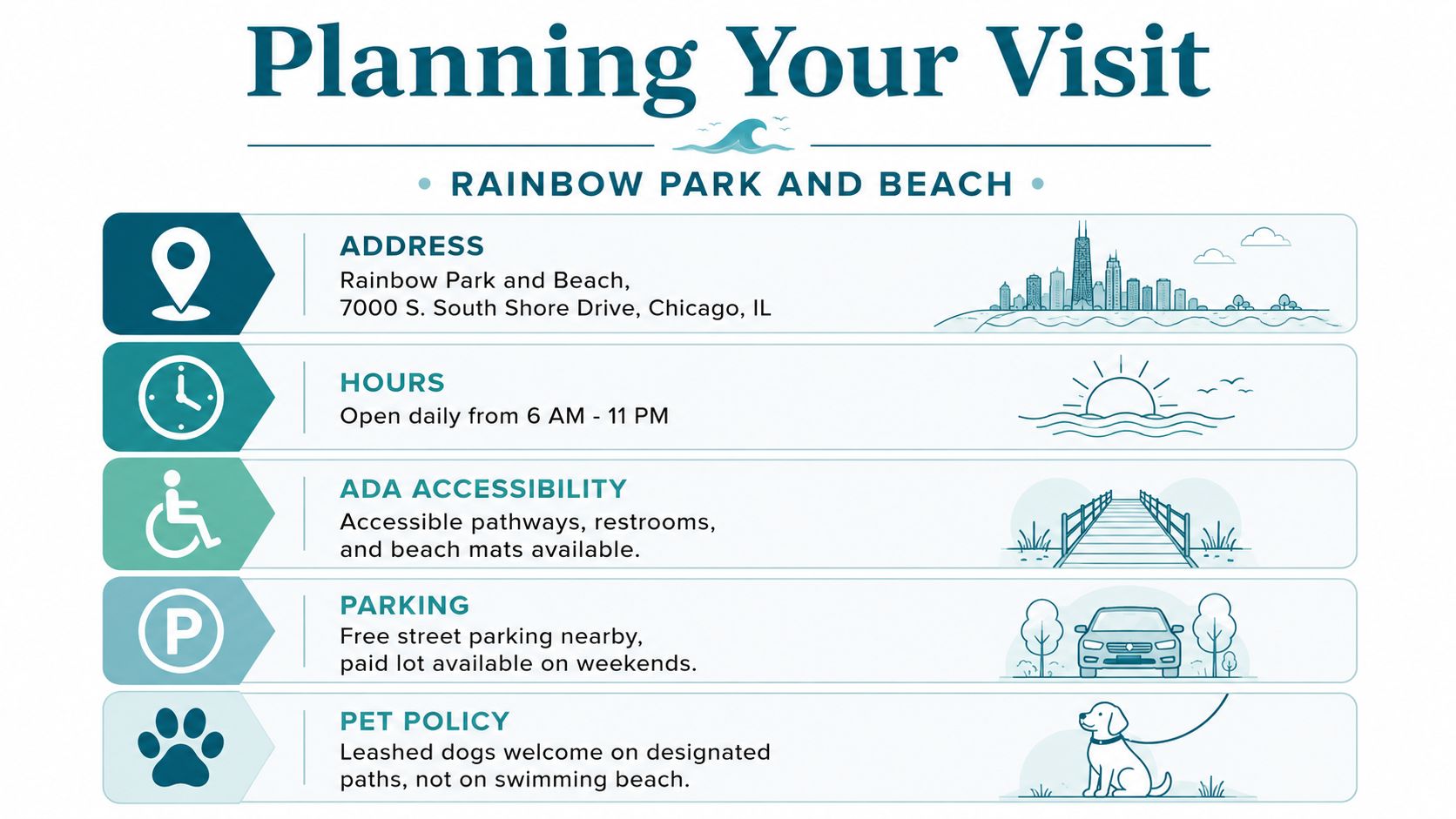
The first time I tried to meet someone at Rainbow Beach, I almost went to the wrong spot because I trusted memory more than the map. Don't do that. Use the address, check the hours, and keep one eye on the cross street so you don't wander around South Shore with a cooler in your hand and no clear target.
The basics I'd keep on your phone
- Address: Rainbow Beach sits at 3111 E 77th St in Chicago, with South Shore Drive listed as the cross street in one listing (Time Out Chicago).
- Hours: Choose Chicago lists public hours of 11 a.m. to 7 p.m. (Choose Chicago).
- Natural area note: The Chicago Park District page for Rainbow Beach Natural Area lists the area as open from dawn to dusk, which is one reason visitors sometimes find official pages a little out of sync (Chicago Park District natural area listing).
- Route check: If you're meeting friends, share the exact street address before you leave. A beach day feels much smoother when everyone lands at the same entrance.
I'd also open the internal cleanup guide before you go, especially if you're planning to join a volunteer morning later or you want to compare what a South Side cleanup looks like in practice: 12th Street Beach cleanup guide.
How I'd plan the timing
I like to arrive earlier than I think I need to. That gives me time to find the right path, settle my stuff, and take a slow lap before the crowd builds. If I'm going for a short visit, I treat the hours like a hard boundary and leave myself a cushion on the back end. If I'm meeting a group, I pick one landmark, one entrance, and one fallback place to wait.
Bring the exact address with you. Lakeshore parking and curbside drop-offs get messy fast when you rely on memory.
If you're trying to make the day easy, keep your plan simple. Know where you're going. Know when the park listing says you can be there. Know whether you're using the beach, the garden, or the paths first. That small bit of prep saves more friction than any beach bag trick I know.
Activities and Highlights
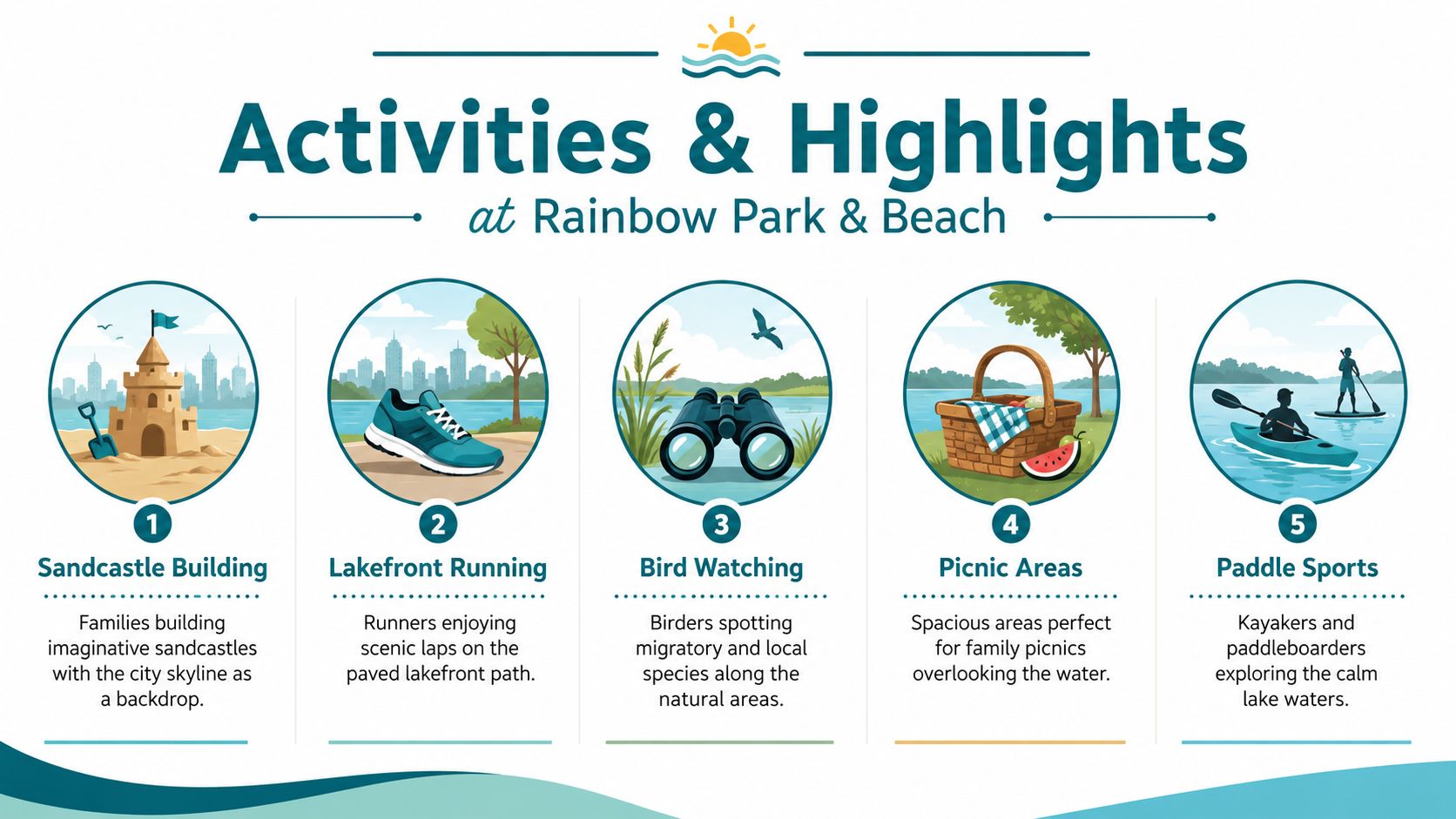
I've seen Rainbow Park and Beach work for three very different moods in one afternoon. One friend came for a sand nap and never left the towel. Another laced up for a run and treated the lakefront like a moving meditation. I spent part of one evening just watching the light change on the water, and that alone felt like enough.
Sand, grass, and easy company
Families tend to spread out fast here. Kids build sandcastles, then wander back to the grass with wet feet and a snack in hand. I like the way the place gives you a little buffer between the shoreline and the rest of the park, so a blanket can become a lunch spot, then a reading spot, then a people-watching spot without much effort.
When I'm with a group, I keep one simple rule. I pick a base spot with a view of the water and the path. That way, nobody feels trapped in one lane. Someone can run to the restroom or jog a quick loop, and the rest of us still know where to land when it's time to regroup.
Running, watching, and staying still
The lakefront path is what I notice when I want motion. Runners can move through the park without the day getting crowded in on them, and that rhythm changes the whole feel of the visit. I've also seen birders set themselves up early and stay patient, which is a skill I admire because it asks for the opposite of hurry.
If I bring a camera, I look for low angles near benches and open stretches of shoreline. Water shots work best when I don't force them. I wait for a calm patch, then frame the lake and sky together. At sunset, the surface gets soft enough that even an ordinary phone photo can feel better than expected.
Water time and casual play
Paddle sports fit the mood when the lake settles down. If I'm not on the water, I still like watching kayaks and paddleboards move across it because they add a steady line to the view. That's also why I tell people to pack light enough to change plans. You may come for one activity and end up doing a different one because the weather, the crowd, or your own energy shifts halfway through.
If you're carrying a tripod or a bag with camera gear, keep a towel handy. Sand gets everywhere, and it doesn't care how careful you are.
For a quick detour into more active shoreline outings, I'd also check this guide to urban kayak outings in Chicago: urban kayaks Chicago guide. It pairs well with a lakeshore day like this because the vibe is the same, easy movement, open air, and a lot of room to wander.
Seasonal Conditions and Safety
One thing I've learned on Lake Michigan beaches is that the water can feel completely different from one week to the next. That's why I don't treat a beach visit like a fixed script. I check conditions, I pack for cooler air than I expect, and I pay attention to whether I'm there to swim or just to sit near the water.
What the water-quality note tells me
A beach-quality source for Rainbow Park Beach says it passed water quality tests at least 95% of the time (Swim Guide). I take that as a useful threshold, not a promise for every single day. It tells me the water checks have often gone well enough to give swimmers a clearer read than a vague “looks clean” guess.
That still leaves room for common sense. I keep an eye on the sky, the wind, and the water itself. If the lake looks rough or the day turns chilly, I switch from swim mode to walk-and-sit mode. That way, the visit still works even if I never step in.
Gear I'd actually bring
I dress for change, not for the first five minutes of the forecast. A hoodie, a towel, sunscreen, and shoes that can handle sand all make the day easier. If I'm planning to stay past midday, I want something dry to pull on later, because lake air can turn cool faster than people expect.
I also pay attention to my own pace. Summer beach days can look lazy from the outside, but they go better when you manage energy the same way you manage gear. Drink water before you feel behind. Give yourself a break before you need one. Leave enough room in the plan to sit down and do nothing for a while.
If the lake looks unsettled, I stay on shore and enjoy the park anyway. I'd rather have a slow day than a stressful one.
That's the balance I use here. The best beach trip isn't the one where you force every activity. It's the one where the weather, the water, and your plan can all stay in the same conversation.
Nearby Attractions and History
One of the reasons I like Rainbow Beach is that it never feels isolated from the rest of South Shore. You can stand near the water, look inland, and feel how the beach fits into a neighborhood that has always lived close to the lake. It feels like part of a larger shoreline routine, with the same easy rhythm you see at other South Side beaches.
The setting gives the beach its character. South Shore brings a residential feel, tree-lined streets, and a lakefront that opens up quickly once you get close enough to the water. That mix makes the visit feel local right away. You are still in the city, but the pace shifts the moment the lake comes into view.
The shoreline around it
I like starting with the shoreline itself, because that is where the history feels easiest to read. The beach sits within a stretch of public lakefront that has long shaped how people on the South Side spend summer days. Families spread out with coolers, walkers follow the path, and regulars treat the water like part of their own backyard.
That continuity matters. The beach does not stand apart from nearby habits, it carries them forward. A short walk along the edge shows the same mix of recreation and routine that gives Chicago's lakefront so much of its appeal.
The area also works well for a slower wander after you leave the sand. A few blocks in South Shore can tell you a lot, with neighborhood houses, local corners, and the kind of everyday street life that makes the beach feel connected to the city instead of separated from it. When I bring friends here, that is usually the part they remember most, the way the view opens to the lake while the neighborhood stays close enough to feel present.
Why I keep coming back
I keep coming back because the place stays practical without losing its charm. I can sit for a while, walk the edge, or swim if the day feels right. I can stay for a quick reset or stretch the visit into a full afternoon.
The area gives me room to choose my own pace. Some visits are nothing more than a shoreline walk and a bench stop. Other times I pair the beach with a longer loop through the neighborhood, and the outing feels fuller without needing a long list of stops.
For a closer look at how the beach fits into broader community care, the volunteer side matters too. A local beach can look relaxed from a distance, but it stays that way because people keep showing up for it, including groups like Litter Caterpillars' public beach cleanup efforts.
Volunteer Cleanups and Community
I first noticed a cleanup crew here when I was still half in beach mode and half in “maybe I should leave already” mode. Then I watched people fan out with bags, grabbers, and a clear sense of where they were headed, and the whole place changed in front of me. Trash stopped feeling like background noise and started feeling like something real people could deal with together.
How the cleanup rhythm works
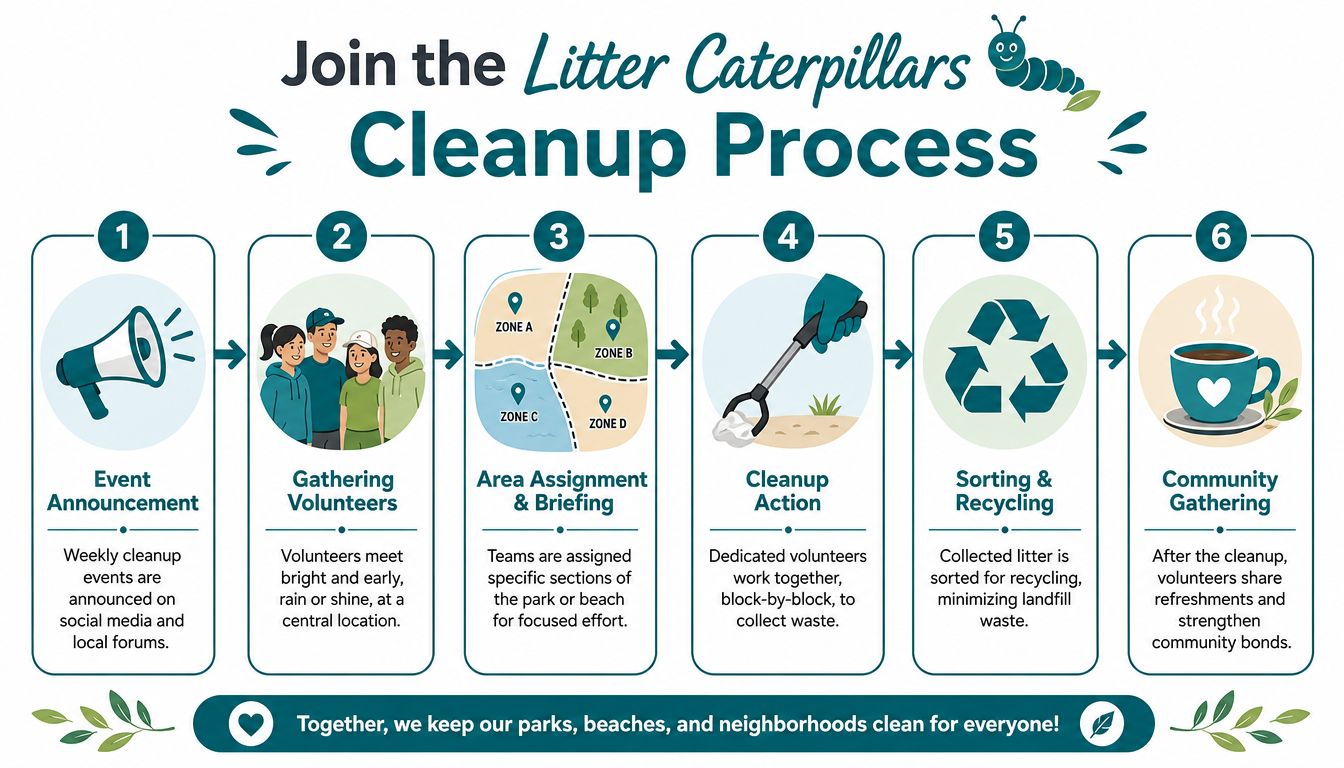
The strongest thing about a good cleanup crew is that nobody has to guess what to do next. A clear start time, a meeting point, and a simple split of the site make the whole effort calmer. The process matters because Rainbow Beach has a lot going on, and the park district listing shows it's more than a single sand strip, which means a cleanup works better when people divide the area by section instead of treating it like one giant pile of litter (Chicago Park District).
That's the approach I'd use anywhere along the beach. One person handles the edge near the sand. Another takes the grass. Another checks the path and the garden perimeter. When everyone knows their section, the job gets less messy and more human.
A simple way to join in
If you want to show up for a cleanup, keep it straightforward.
- Check the event notice. Look for the meeting time and location before you leave.
- Bring basic gear. Gloves, closed-toe shoes, and water go a long way.
- Listen to the briefing. Ask which zones need attention first.
- Work the area in pieces. Move slowly, bag by bag, instead of rushing.
- Sort what you collect. Recyclables and trash shouldn't go into the same pile if you can help it.
- Stay for the closing chat. That's where people trade notes and meet each other.
I like cleanups because they turn a visit into a shared task. If you want the deeper background on that kind of volunteer habit around the lakefront, this page is a good companion read: public beach lake Michigan cleanup guide. It helps when you want to think through the people side of shoreline care, not just the logistics.
Conclusion
Rainbow Park and Beach gives you an easy lakeshore day with room to move, rest, and pitch in. I'd go for the water, stay for the skyline, and leave time for a cleanup if you want the visit to feel even more grounded. Pack light, check the hours, and give yourself space to wander. If you're ready for a shoreline day that feels like yours, go now, bring a friend, and make the first stop.
A CTA for Litter Caterpillars.
Leave a Reply