

I once missed trash day by ten minutes, then spent the whole week staring at one swollen black bin and a raccoon-torn bag by the alley gate. By Friday, it felt less like garbage and more like a running commentary on my life.
Your Trash Tells a Story What's Yours
I know how dramatic that sounds. But if you've ever stood in your kitchen holding an old jar of blueberry jam you should've thrown out years ago, you know what I mean.
I used to look at ordinary trash and feel stuck. The jam jar wasn't just a jam jar. It was a memory from a trip. A bag of stale nuts wasn't just stale nuts. It was evidence of one more health kick I didn't keep. Each item weighed almost nothing in my hand, but in my mind it felt like a brick.
That feeling spilled outward. My room got cluttered. Then my routines got loose. Then even simple chores started to feel like moral exams I was failing. Taking out the trash wasn't about taking out the trash anymore. It was about whether I could face one small mess without flinching.
Trash is strange like that. It sits quietly until it starts talking back.
Then I started noticing the same thing outside. A broken bag in the alley. A mattress leaning by a fence. Loose cups skittering down the curb after a windy night. A messy block can make you feel helpless fast. You tell yourself someone should do something, then you walk inside and carry that low-grade irritation with you.
The Smallest Move Counts
What changed for me wasn't a grand life reset. It was smaller and less glamorous.
I learned that order starts with one unheroic act. Tie the bag. Roll the cart out. Put the lid down. Learn your pickup day. Do it again next week.
The funny part is that a city chore can act like a handrail. When life feels slippery, a handrail matters. You grab it, and for a second you stop sliding.
So if your alley feels chaotic, or your building always has one corner that looks defeated, you're not weird for feeling bothered by it. You're reading a story written in wrappers, bins, and missed routines. The good news is that stories can change. Sometimes the first edit is as plain as figuring out the Chicago trash pickup schedule and trusting yourself to follow it.
How to Find Your Official Pickup Day
The week I finally stopped missing trash day, nothing dramatic happened. No marching band. No perfect sunrise over the alley. I just stood in my kitchen, coffee in one hand, phone in the other, and looked up my address instead of trusting my tired brain. By that night, the cart was out on time, the back steps were clear, and one small corner of life felt steadier.
That kind of steadiness matters on a Chicago block. One missed pickup can turn into split bags, extra clutter by the fence, and the quiet neighborhood shrug of "someone else will deal with it." Learning your day is a small act of self-respect. It is also a small act of respect for everybody sharing the alley with you.
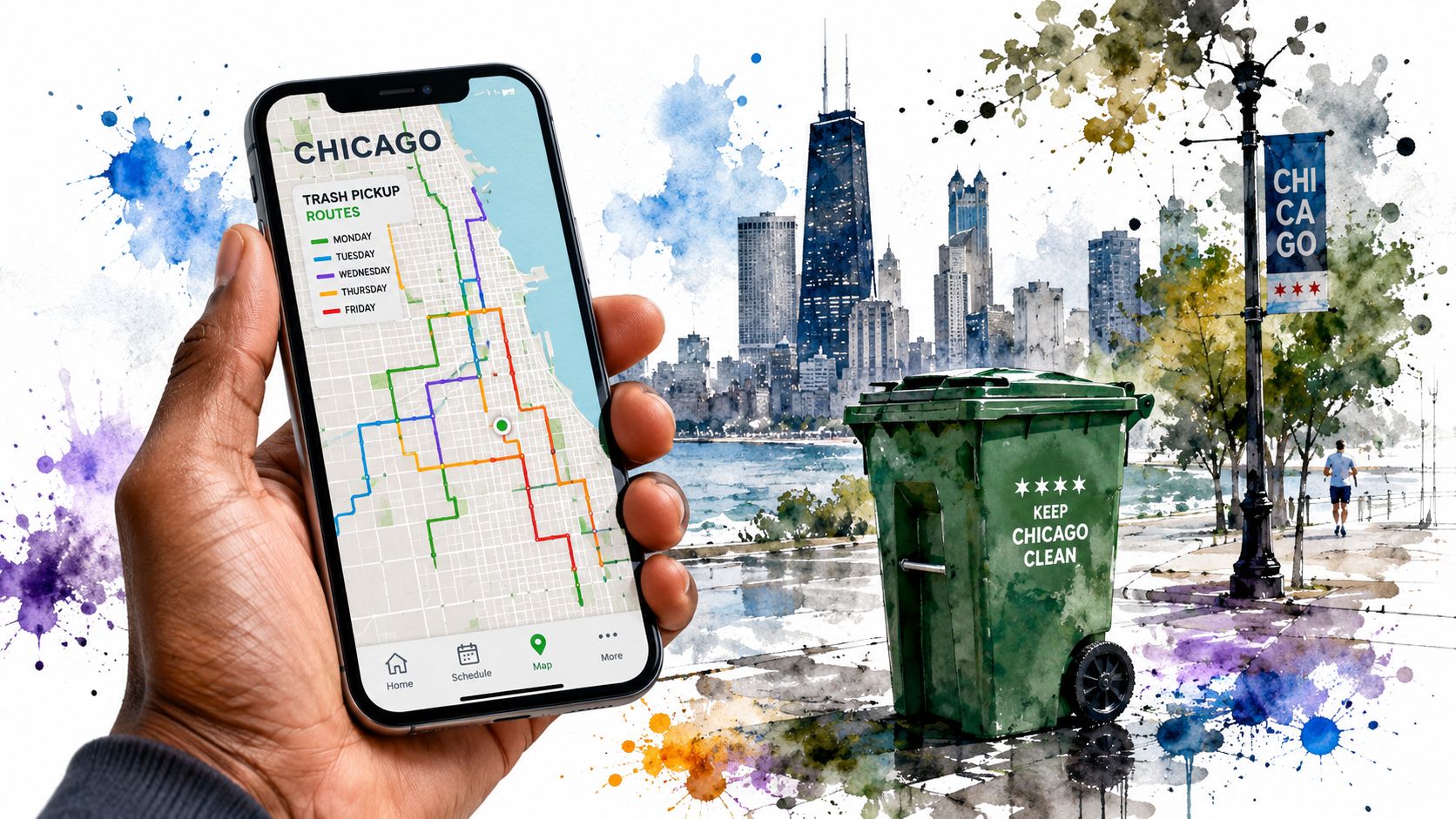
Chicago's recycling rate is still low, and confusion about pickup timing does not help. The city offers online schedule tools, and WTTW reported that only 35% of residents use the digital reminder system in its coverage of Chicago's online garbage and recycling schedules: https://news.wttw.com/2018/01/04/chicago-recycling-garbage-pickup-schedules-now-available-online.
Start with the address lookup
Use the city's schedule lookup tool tied to the collection system described by Chicago trash schedule guidance. Enter your full street address carefully. The result shows your collection day for trash, recycling, and organics where that service applies, plus upcoming pickup dates.
I always save a screenshot right away.
Your future self will appreciate that move when it is cold, late, and you cannot remember whether pickup is Thursday or Friday.
A few habits make the lookup more useful:
- Enter the complete address so the route matches the right building.
- Check trash and recycling separately because the schedule may differ.
- Save the result somewhere visible like your phone, fridge, or calendar.
The city schedule information also notes that you can add service dates to your calendar with an .ics file download, and residents who need to start service can call 312-744-4420 between 8:30 AM and 4:30 PM, Monday through Friday, according to the 2026 Citywide Collection notice. For missed pickups or general city service help, call 311.
Keep a backup when life gets loud
Phones die. Weeks blur together. Rain hits sideways. The alley light flickers and suddenly a simple chore feels harder than it should.
So give yourself a backup. Put the day on the fridge. Set a recurring reminder. Text it to the group chat for your building if that helps. Pride in a block rarely starts with grand speeches. It starts with ordinary people remembering the ordinary thing.
If you want help with the next step after pickup day, this guide on how to recycle in Chicago makes the sorting part much easier.
Decoding the Rules of the Curb
One Tuesday night, I watched a neighbor stand in the alley holding three things like they were trick questions on a test. A pizza box with one greasy corner. A dead battery from a toy truck. A clear plastic berry container. Her kid asked, "Which one goes in blue?" and that is the moment this whole system becomes real. Not on a city webpage. In the cold, beside a cart, with raccoons somewhere nearby and tomorrow's pickup hanging over your head.
That little pause matters more than people think. A clean cart says somebody on this block is paying attention. A sloppy one invites spills, smells, and one more excuse for the alley to look neglected.
What your bins want
I keep it simple at home.
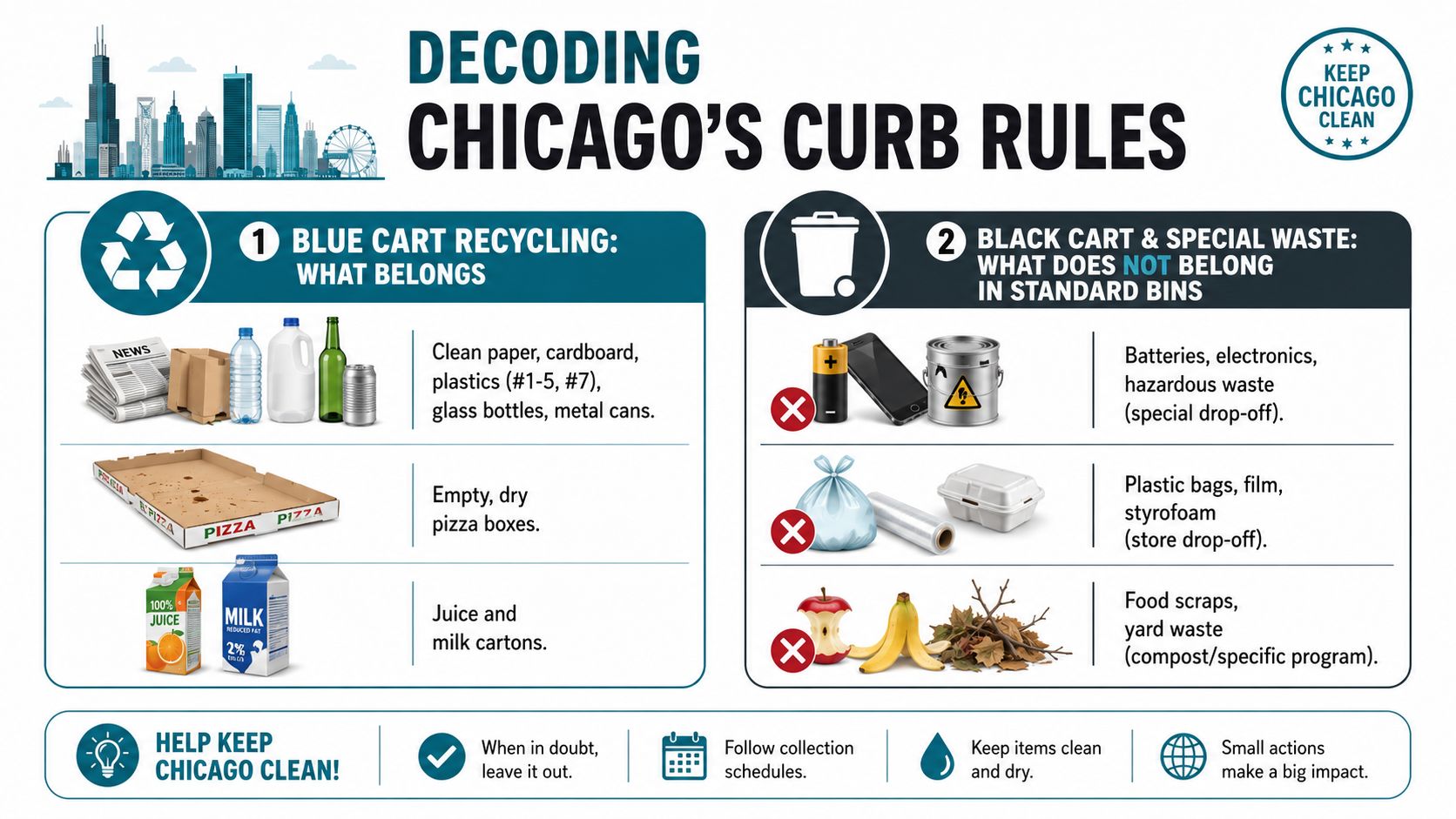
The blue cart takes the everyday recyclables that are empty and reasonably clean. Paper, cardboard, bottles, cans, cartons, and accepted plastic containers usually belong there. The black cart takes the regular leftovers of life, the stuff that does not fit the standard recycling stream. Batteries, electronics, paint, and household chemicals belong in neither one.
A pizza box is a perfect Chicago argument. If it is dry and mostly clean, recycle it. If the bottom looks like it survived a cheese flood, toss it in the trash. The same goes for yogurt cups and takeout containers. Empty and rinse them first. Plastic bags are another common alley mistake. They do not belong in the blue cart, even when everything else in your hand does.
Ten extra seconds at the bin can save a whole load from getting dirtier than it needs to be.
For the oddball items, use a real drop-off option instead of guessing. This guide to City of Chicago hazardous waste disposal helps with the items that need special handling.
The curb has rules too
Sorting is only half the job. Placement and timing shape whether pickup goes smoothly or your cart sits there all day like a missed cue.
As noted earlier, city service follows a regular pattern for eligible homes, with trash collected weekly and recycling on alternating weeks. On pickup morning, get carts out early, keep the lid closed, and face the cart the right way for collection. Leave enough space so crews can grab it without wrestling it away from a fence, garage, or another cart. Then bring it back in that evening instead of letting it live at the curb for two more days.
Holiday weeks are where solid routines wobble. One city holiday can push the remaining pickups later that week, and that single shift is enough to leave bags stacking up behind a three-flat by Friday night. I have seen one missed adjustment turn a tidy alley into a string of overfilled cans by the weekend.
That is the bigger lesson here. The curb is not just a drop zone. It is one of the smallest places where pride shows up first.
The System's Blind Spots and Your Alley
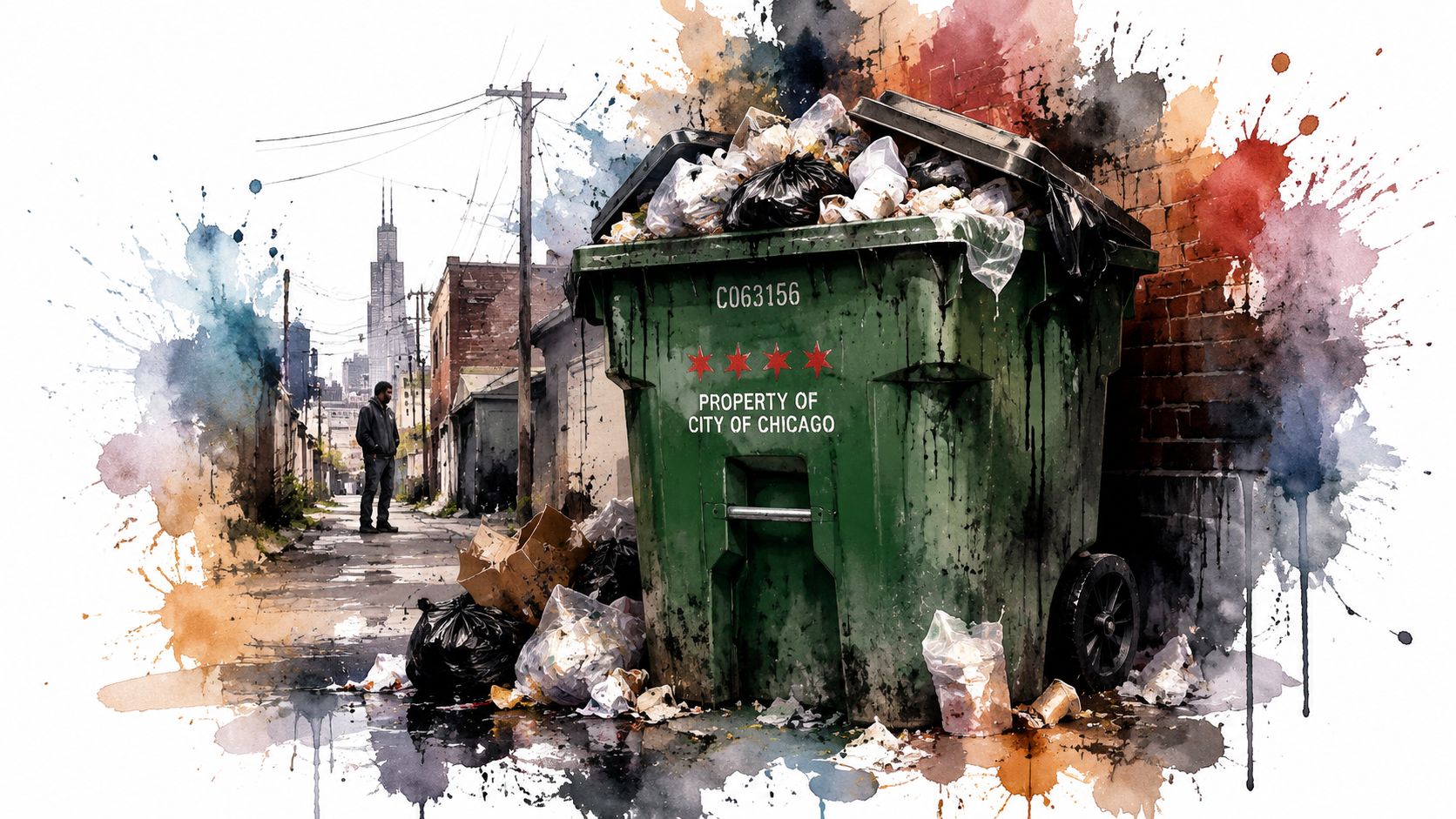
One Tuesday morning, my own cart was perfect and the alley still looked wrecked. Tied bags. Closed lid. Nothing loose on my side. Twenty feet away, a dumpster behind a larger building was coughing trash into the lane, and by noon the wind had carried napkins, takeout lids, and one lonely pizza box halfway down the block.
That was the morning I stopped treating every mess like a personal moral failure.
The four-unit line nobody talks about enough
Official Chicago collection is for single-family homes and buildings with four units or less, according to Recycle by City's explanation of Chicago trash and recycling collection. Cross that line, and the routine often changes completely.
You can feel that split in the alley before you ever read a rule. A two-flat puts carts out and waits for the city truck. A bigger building depends on private hauling, a landlord's contract, a maintenance routine, or sometimes a system so loose that no one really knows who is supposed to fix what. When pickup slips, the alley pays first.
That is the trash gap official guides tend to glide past. A resident in a six-unit building can follow every household habit perfectly and still live beside an overflowing dumpster that belongs to a setup they do not control.
I have seen neighbors blame themselves for conditions that were bigger than one household. Then one person talks to the building manager, another files a complaint, somebody else starts picking up the spillover, and the problem finally gets named for what it is. Shared neglect. Shared responsibility too.
What to do when pickup goes wrong
If your home qualifies for city service and your trash is missed, report it quickly through 311 or Chi311, as noted earlier. Fast reporting matters more than angry guessing from the back porch.
A simple response works best:
- Snap a photo if the missed pickup or overflow is visible.
- Check your own setup so you know whether placement or timing played a part.
- File the complaint right away through 311 or Chi311.
- Talk to the landlord or building manager if the mess is tied to a larger building or private dumpster.
One clean cart cannot fix an alley shaped by bad contracts, absent management, or too few hands. People can.
If your block keeps fighting the same mess, join neighbors who already treat cleanup as an act of pride. Our Chicago trash pickup volunteer crew was built for exactly that kind of alley. Bold enough to show up, brave enough to care, and kind enough to keep going when the system leaves a gap.
Join a Crew That Cleans with Pride
The first time I joined a block cleanup, I almost stayed home.
My alley had worn me down that week. Overflow near the bins. Loose trash skating along the curb. The kind of mess that makes you feel like nobody is in charge, so why bother. Then I spent one Saturday morning with a few neighbors, a pair of gloves, and a trash bag, and the whole block felt different by noon. Cleaner, yes. Lighter too. People waved. Somebody brought coffee. A kid pointed at a cleared corner like we had fixed something much bigger than litter.

Why group cleanup feels different
Inside your apartment, a pile of junk can carry old stress with it. Out on the sidewalk, the work gets simpler. A bottle goes in the bag. Broken cardboard gets stacked. The alley starts to look like a place people still believe in.
That shift matters.
The official pickup day handles part of the job. A proud block finishes the rest. This is especially true in the four-unit gap, where one property may follow the rules and still sit beside a mess created by a larger building, a private hauler, or weak management. In those spots, cleanup becomes more than tidying up. It becomes a way to say, we see the problem clearly, and we are not leaving it here.
I have watched rough mornings turn into good ones fast. Neighbors who never spoke before start swapping stories over full bags. Someone points out a trouble spot behind the garage. Someone else knows who to call. By the end, you have cleaner pavement and a few more people who care what happens on your block.
If you're tired of stepping around the same mess
A cleanup crew changes your role. You stop being the person who winces at the litter from across the street. You become the person who showed up, did the work, and helped your alley feel claimed again.
If that sounds like your kind of Saturday, check out trash pickup volunteer opportunities with Litter Caterpillars.
People keep coming back for a few simple reasons:
- You get a visible win. One full bag proves the morning counted.
- You build a steadier routine. Showing up for your block can steady other parts of life too.
- You meet neighbors who act with care. That changes the feel of a street faster than complaints alone.
Cleaning up with other people can feel easier than cleaning up alone. Sometimes that is how pride comes back.
Frequently Asked Questions
What if I have paint, chemicals, or old electronics
Don't put them in your regular bins. Those items need special disposal, not curbside guessing. If something feels like it could leak, spark, or poison, stop and look up the proper drop-off route before you touch the cart.
How do I know if city pickup even applies to my address
If you live in a single-family home or a building with up to four units, city collection may apply. If you live in a larger building, ask your landlord or building manager who handles hauling and what the pickup routine is.
What if my bin didn't get picked up
Move fast. If your household is covered by city service, report the missed pickup through 311 or Chi311 within the required window rather than waiting a few days and hoping it fixes itself.
Can I get reminders so I don't forget again
Yes. If you use the city schedule lookup, save a screenshot and use the calendar file if that works for you. A phone reminder the night before helps too, especially on holiday weeks when normal rhythm gets weird.
What about large items that don't fit the usual week
Watch for special collection events and city notices. Those limited windows can save you a lot of alley frustration.
If you're ready to turn one small act into a better Saturday, visit Litter Caterpillars. You'll find a crew that picks up trash with guts, kindness, and a little swagger. Show up, grab a bag, and help make your block feel like somebody loves it.
Leave a Reply