Tag: chicago recycling

  • Chicago Trash Pickup Schedule: Your Guide to a Cleaner Alley

    Chicago Trash Pickup Schedule: Your Guide to a Cleaner Alley

    I once missed trash day by ten minutes, then spent the whole week staring at one swollen black bin and a raccoon-torn bag by the alley gate. By Friday, it felt less like garbage and more like a running commentary on my life.

    Your Trash Tells a Story What's Yours

    I know how dramatic that sounds. But if you've ever stood in your kitchen holding an old jar of blueberry jam you should've thrown out years ago, you know what I mean.

    I used to look at ordinary trash and feel stuck. The jam jar wasn't just a jam jar. It was a memory from a trip. A bag of stale nuts wasn't just stale nuts. It was evidence of one more health kick I didn't keep. Each item weighed almost nothing in my hand, but in my mind it felt like a brick.

    That feeling spilled outward. My room got cluttered. Then my routines got loose. Then even simple chores started to feel like moral exams I was failing. Taking out the trash wasn't about taking out the trash anymore. It was about whether I could face one small mess without flinching.

    Trash is strange like that. It sits quietly until it starts talking back.

    Then I started noticing the same thing outside. A broken bag in the alley. A mattress leaning by a fence. Loose cups skittering down the curb after a windy night. A messy block can make you feel helpless fast. You tell yourself someone should do something, then you walk inside and carry that low-grade irritation with you.

    The Smallest Move Counts

    What changed for me wasn't a grand life reset. It was smaller and less glamorous.

    I learned that order starts with one unheroic act. Tie the bag. Roll the cart out. Put the lid down. Learn your pickup day. Do it again next week.

    The funny part is that a city chore can act like a handrail. When life feels slippery, a handrail matters. You grab it, and for a second you stop sliding.

    So if your alley feels chaotic, or your building always has one corner that looks defeated, you're not weird for feeling bothered by it. You're reading a story written in wrappers, bins, and missed routines. The good news is that stories can change. Sometimes the first edit is as plain as figuring out the Chicago trash pickup schedule and trusting yourself to follow it.

    How to Find Your Official Pickup Day

    The week I finally stopped missing trash day, nothing dramatic happened. No marching band. No perfect sunrise over the alley. I just stood in my kitchen, coffee in one hand, phone in the other, and looked up my address instead of trusting my tired brain. By that night, the cart was out on time, the back steps were clear, and one small corner of life felt steadier.

    That kind of steadiness matters on a Chicago block. One missed pickup can turn into split bags, extra clutter by the fence, and the quiet neighborhood shrug of "someone else will deal with it." Learning your day is a small act of self-respect. It is also a small act of respect for everybody sharing the alley with you.

    A person holding a smartphone displaying a Chicago trash pickup schedule map with a green trash bin nearby.

    Chicago's recycling rate is still low, and confusion about pickup timing does not help. The city offers online schedule tools, and WTTW reported that only 35% of residents use the digital reminder system in its coverage of Chicago's online garbage and recycling schedules: https://news.wttw.com/2018/01/04/chicago-recycling-garbage-pickup-schedules-now-available-online.

    Start with the address lookup

    Use the city's schedule lookup tool tied to the collection system described by Chicago trash schedule guidance. Enter your full street address carefully. The result shows your collection day for trash, recycling, and organics where that service applies, plus upcoming pickup dates.

    I always save a screenshot right away.

    Your future self will appreciate that move when it is cold, late, and you cannot remember whether pickup is Thursday or Friday.

    A few habits make the lookup more useful:

    1. Enter the complete address so the route matches the right building.
    2. Check trash and recycling separately because the schedule may differ.
    3. Save the result somewhere visible like your phone, fridge, or calendar.

    The city schedule information also notes that you can add service dates to your calendar with an .ics file download, and residents who need to start service can call 312-744-4420 between 8:30 AM and 4:30 PM, Monday through Friday, according to the 2026 Citywide Collection notice. For missed pickups or general city service help, call 311.

    Keep a backup when life gets loud

    Phones die. Weeks blur together. Rain hits sideways. The alley light flickers and suddenly a simple chore feels harder than it should.

    So give yourself a backup. Put the day on the fridge. Set a recurring reminder. Text it to the group chat for your building if that helps. Pride in a block rarely starts with grand speeches. It starts with ordinary people remembering the ordinary thing.

    If you want help with the next step after pickup day, this guide on how to recycle in Chicago makes the sorting part much easier.

    Decoding the Rules of the Curb

    One Tuesday night, I watched a neighbor stand in the alley holding three things like they were trick questions on a test. A pizza box with one greasy corner. A dead battery from a toy truck. A clear plastic berry container. Her kid asked, "Which one goes in blue?" and that is the moment this whole system becomes real. Not on a city webpage. In the cold, beside a cart, with raccoons somewhere nearby and tomorrow's pickup hanging over your head.

    That little pause matters more than people think. A clean cart says somebody on this block is paying attention. A sloppy one invites spills, smells, and one more excuse for the alley to look neglected.
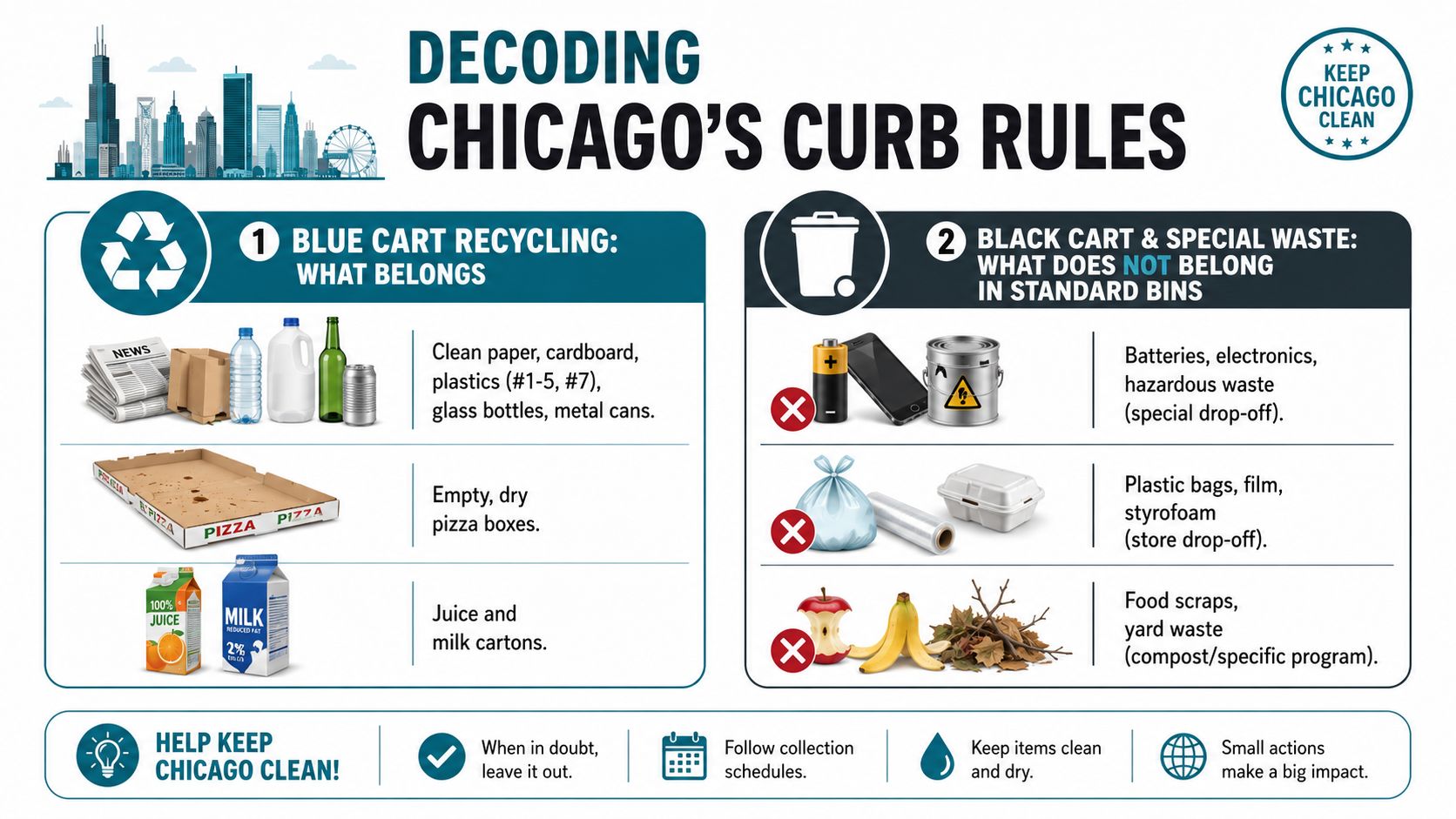
    An infographic titled Decoding Chicago's Curb Rules, showing items that belong in blue recycling carts versus black bins.

    What your bins want

    I keep it simple at home.

    The blue cart takes the everyday recyclables that are empty and reasonably clean. Paper, cardboard, bottles, cans, cartons, and accepted plastic containers usually belong there. The black cart takes the regular leftovers of life, the stuff that does not fit the standard recycling stream. Batteries, electronics, paint, and household chemicals belong in neither one.

    A pizza box is a perfect Chicago argument. If it is dry and mostly clean, recycle it. If the bottom looks like it survived a cheese flood, toss it in the trash. The same goes for yogurt cups and takeout containers. Empty and rinse them first. Plastic bags are another common alley mistake. They do not belong in the blue cart, even when everything else in your hand does.

    Ten extra seconds at the bin can save a whole load from getting dirtier than it needs to be.

    For the oddball items, use a real drop-off option instead of guessing. This guide to City of Chicago hazardous waste disposal helps with the items that need special handling.

    The curb has rules too

    Sorting is only half the job. Placement and timing shape whether pickup goes smoothly or your cart sits there all day like a missed cue.

    As noted earlier, city service follows a regular pattern for eligible homes, with trash collected weekly and recycling on alternating weeks. On pickup morning, get carts out early, keep the lid closed, and face the cart the right way for collection. Leave enough space so crews can grab it without wrestling it away from a fence, garage, or another cart. Then bring it back in that evening instead of letting it live at the curb for two more days.

    Holiday weeks are where solid routines wobble. One city holiday can push the remaining pickups later that week, and that single shift is enough to leave bags stacking up behind a three-flat by Friday night. I have seen one missed adjustment turn a tidy alley into a string of overfilled cans by the weekend.

    That is the bigger lesson here. The curb is not just a drop zone. It is one of the smallest places where pride shows up first.

    The System's Blind Spots and Your Alley

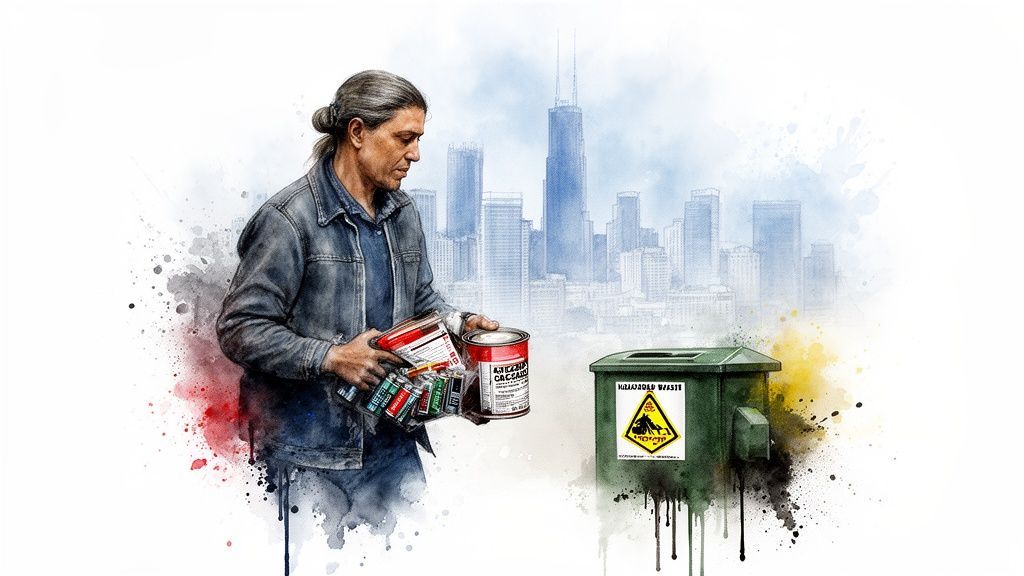
    One Tuesday morning, my own cart was perfect and the alley still looked wrecked. Tied bags. Closed lid. Nothing loose on my side. Twenty feet away, a dumpster behind a larger building was coughing trash into the lane, and by noon the wind had carried napkins, takeout lids, and one lonely pizza box halfway down the block.

    That was the morning I stopped treating every mess like a personal moral failure.
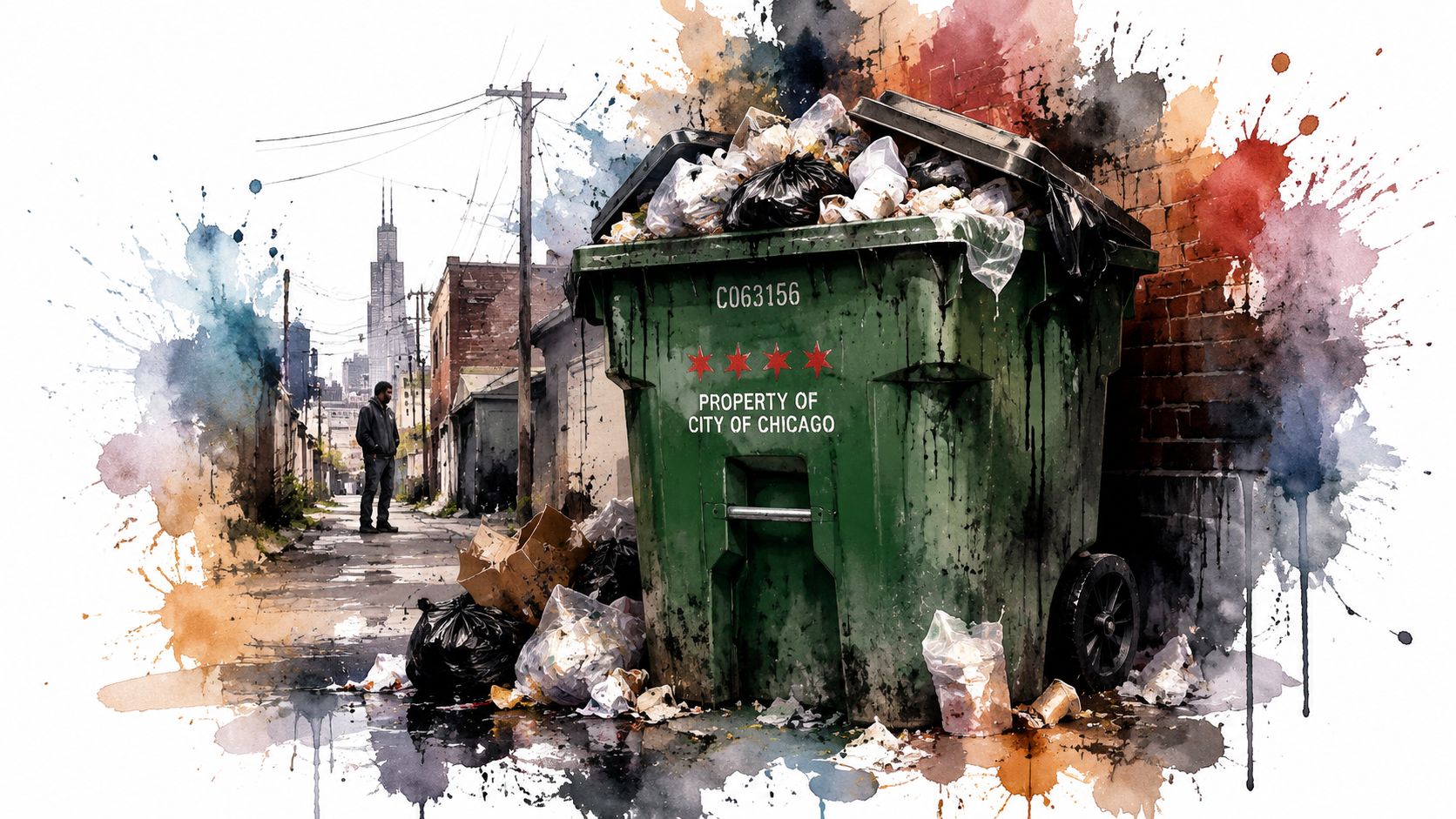
    A green City of Chicago dumpster overflowing with trash in an urban alleyway with city skyline background.

    The four-unit line nobody talks about enough

    Official Chicago collection is for single-family homes and buildings with four units or less, according to Recycle by City's explanation of Chicago trash and recycling collection. Cross that line, and the routine often changes completely.

    You can feel that split in the alley before you ever read a rule. A two-flat puts carts out and waits for the city truck. A bigger building depends on private hauling, a landlord's contract, a maintenance routine, or sometimes a system so loose that no one really knows who is supposed to fix what. When pickup slips, the alley pays first.

    That is the trash gap official guides tend to glide past. A resident in a six-unit building can follow every household habit perfectly and still live beside an overflowing dumpster that belongs to a setup they do not control.

    I have seen neighbors blame themselves for conditions that were bigger than one household. Then one person talks to the building manager, another files a complaint, somebody else starts picking up the spillover, and the problem finally gets named for what it is. Shared neglect. Shared responsibility too.

    What to do when pickup goes wrong

    If your home qualifies for city service and your trash is missed, report it quickly through 311 or Chi311, as noted earlier. Fast reporting matters more than angry guessing from the back porch.

    A simple response works best:

    • Snap a photo if the missed pickup or overflow is visible.
    • Check your own setup so you know whether placement or timing played a part.
    • File the complaint right away through 311 or Chi311.
    • Talk to the landlord or building manager if the mess is tied to a larger building or private dumpster.

    One clean cart cannot fix an alley shaped by bad contracts, absent management, or too few hands. People can.

    If your block keeps fighting the same mess, join neighbors who already treat cleanup as an act of pride. Our Chicago trash pickup volunteer crew was built for exactly that kind of alley. Bold enough to show up, brave enough to care, and kind enough to keep going when the system leaves a gap.

    Join a Crew That Cleans with Pride

    The first time I joined a block cleanup, I almost stayed home.

    My alley had worn me down that week. Overflow near the bins. Loose trash skating along the curb. The kind of mess that makes you feel like nobody is in charge, so why bother. Then I spent one Saturday morning with a few neighbors, a pair of gloves, and a trash bag, and the whole block felt different by noon. Cleaner, yes. Lighter too. People waved. Somebody brought coffee. A kid pointed at a cleared corner like we had fixed something much bigger than litter.
    Screenshot from https://www.littercaterpillars.com

    Why group cleanup feels different

    Inside your apartment, a pile of junk can carry old stress with it. Out on the sidewalk, the work gets simpler. A bottle goes in the bag. Broken cardboard gets stacked. The alley starts to look like a place people still believe in.

    That shift matters.

    The official pickup day handles part of the job. A proud block finishes the rest. This is especially true in the four-unit gap, where one property may follow the rules and still sit beside a mess created by a larger building, a private hauler, or weak management. In those spots, cleanup becomes more than tidying up. It becomes a way to say, we see the problem clearly, and we are not leaving it here.

    I have watched rough mornings turn into good ones fast. Neighbors who never spoke before start swapping stories over full bags. Someone points out a trouble spot behind the garage. Someone else knows who to call. By the end, you have cleaner pavement and a few more people who care what happens on your block.

    If you're tired of stepping around the same mess

    A cleanup crew changes your role. You stop being the person who winces at the litter from across the street. You become the person who showed up, did the work, and helped your alley feel claimed again.

    If that sounds like your kind of Saturday, check out trash pickup volunteer opportunities with Litter Caterpillars.

    People keep coming back for a few simple reasons:

    • You get a visible win. One full bag proves the morning counted.
    • You build a steadier routine. Showing up for your block can steady other parts of life too.
    • You meet neighbors who act with care. That changes the feel of a street faster than complaints alone.

    Cleaning up with other people can feel easier than cleaning up alone. Sometimes that is how pride comes back.

    Frequently Asked Questions

    What if I have paint, chemicals, or old electronics

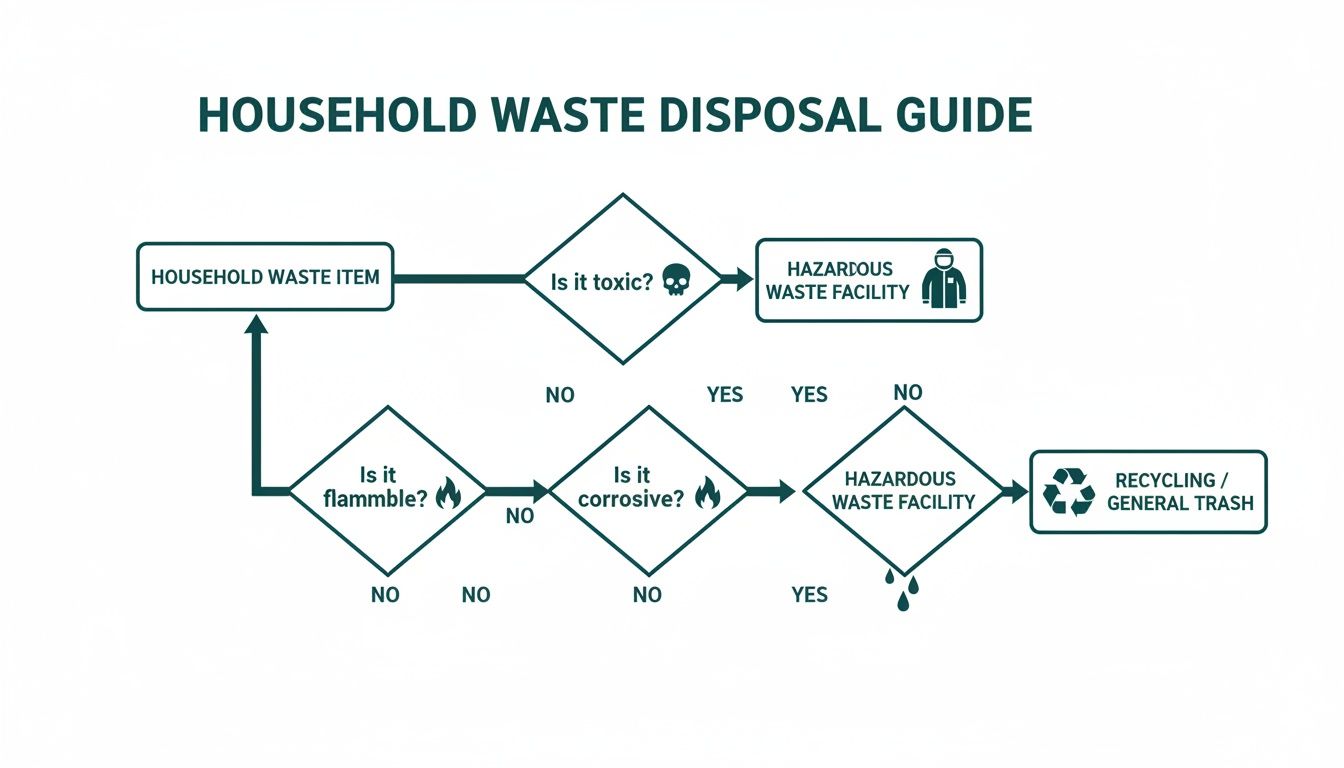
    Don't put them in your regular bins. Those items need special disposal, not curbside guessing. If something feels like it could leak, spark, or poison, stop and look up the proper drop-off route before you touch the cart.

    How do I know if city pickup even applies to my address

    If you live in a single-family home or a building with up to four units, city collection may apply. If you live in a larger building, ask your landlord or building manager who handles hauling and what the pickup routine is.

    What if my bin didn't get picked up

    Move fast. If your household is covered by city service, report the missed pickup through 311 or Chi311 within the required window rather than waiting a few days and hoping it fixes itself.

    Can I get reminders so I don't forget again

    Yes. If you use the city schedule lookup, save a screenshot and use the calendar file if that works for you. A phone reminder the night before helps too, especially on holiday weeks when normal rhythm gets weird.

    What about large items that don't fit the usual week

    Watch for special collection events and city notices. Those limited windows can save you a lot of alley frustration.


    If you're ready to turn one small act into a better Saturday, visit Litter Caterpillars. You'll find a crew that picks up trash with guts, kindness, and a little swagger. Show up, grab a bag, and help make your block feel like somebody loves it.
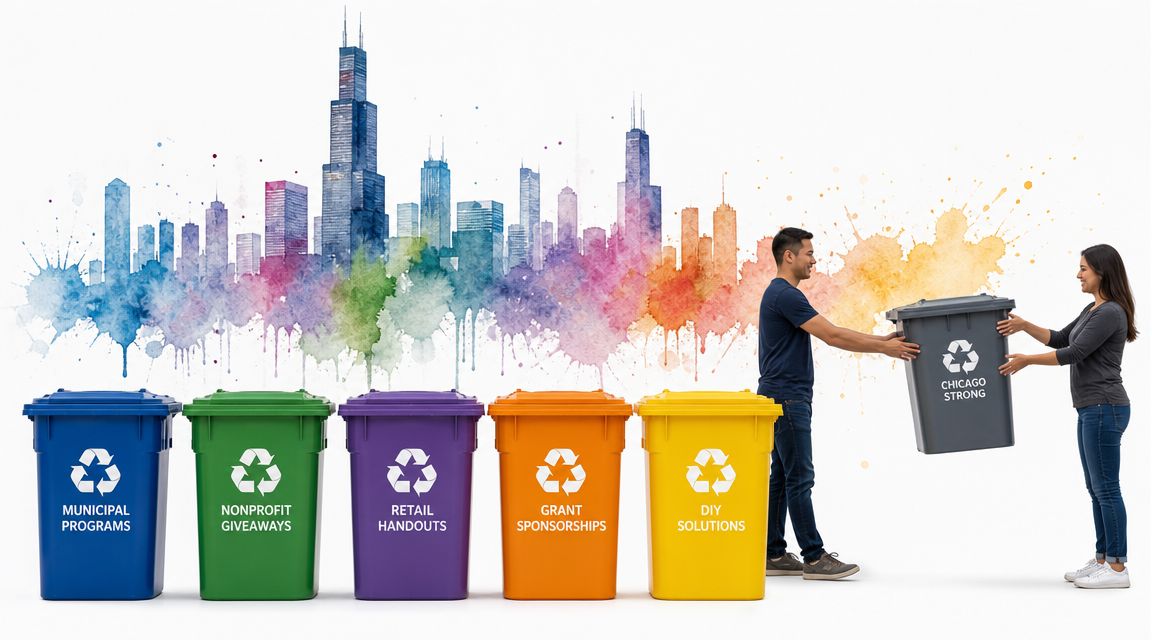
  • How to Get Free Recycle Bins: A 2026 Field Guide

    How to Get Free Recycle Bins: A 2026 Field Guide

    I still remember staring at a trash bag in my apartment like it had a biography. The old jar, the takeout container, the paper bag from a better week. When I started cleaning up my own life, I learned that every piece of trash had a story, and if I could organize my room, I could start organizing my head too.

    That same lesson followed me onto the sidewalk when we started Litter Caterpillars. A recycling bin looks simple, but in real life it changes how people act. It gives your hands somewhere to put the bottle you just picked up. It gives volunteers a clear target. It tells a neighbor, “someone expects this block to do better.” Getting free recycle bins for your home, cleanup, school, or event can feel bigger than it is. I've spent enough mornings making those calls, dragging carts, and explaining labels to volunteers that I can save you some time.

    1. City of Chicago Blue Cart

    City of Chicago Blue Cart (311 request for eligible homes)

    If you live in Chicago, this is the first place I'd check. I've had neighbors assume they need to buy a bin, hunt Facebook Marketplace, or ask their alderman, when the answer was sitting in the City system the whole time.

    The City of Chicago 311 service portal is where eligible residents can request a Blue Cart or deal with a damaged or missing one. For a cleanup organizer like me, this matters because home recycling works better when people already have the cart before you start preaching good habits on the block.

    What I like about it

    Chicago's Blue Cart setup is straightforward for the homes that qualify. Single-family houses and small buildings have a clear lane, and that makes it easier to recruit people into neighborhood cleanup work because they already have a place to bring the material after the event.

    • Best fit for houses and small buildings: It works for eligible one-to-four-unit homes served by the City.
    • Good replacement path: If a cart gets damaged or disappears, 311 gives you a clean way to ask for another one.
    • Useful for block-level organizing: When I help people recycle in Chicago, I always start with what they can get through their own address.

    Practical rule: Before you ask where to get free recycle bins, ask whether your address is eligible for the City service. That one question saves a lot of dead-end searching.

    The catch is simple. Bigger buildings have to look elsewhere, and bi-weekly pickup can feel slow if your household flies through cardboard. Still, for eligible Chicago homes, this is the cleanest free option I know.

    2. Recycle By City Chicago

    Recycle By City Chicago

    A bin with bad instructions is like a toolbox with no labels. People guess. Then they guess wrong.

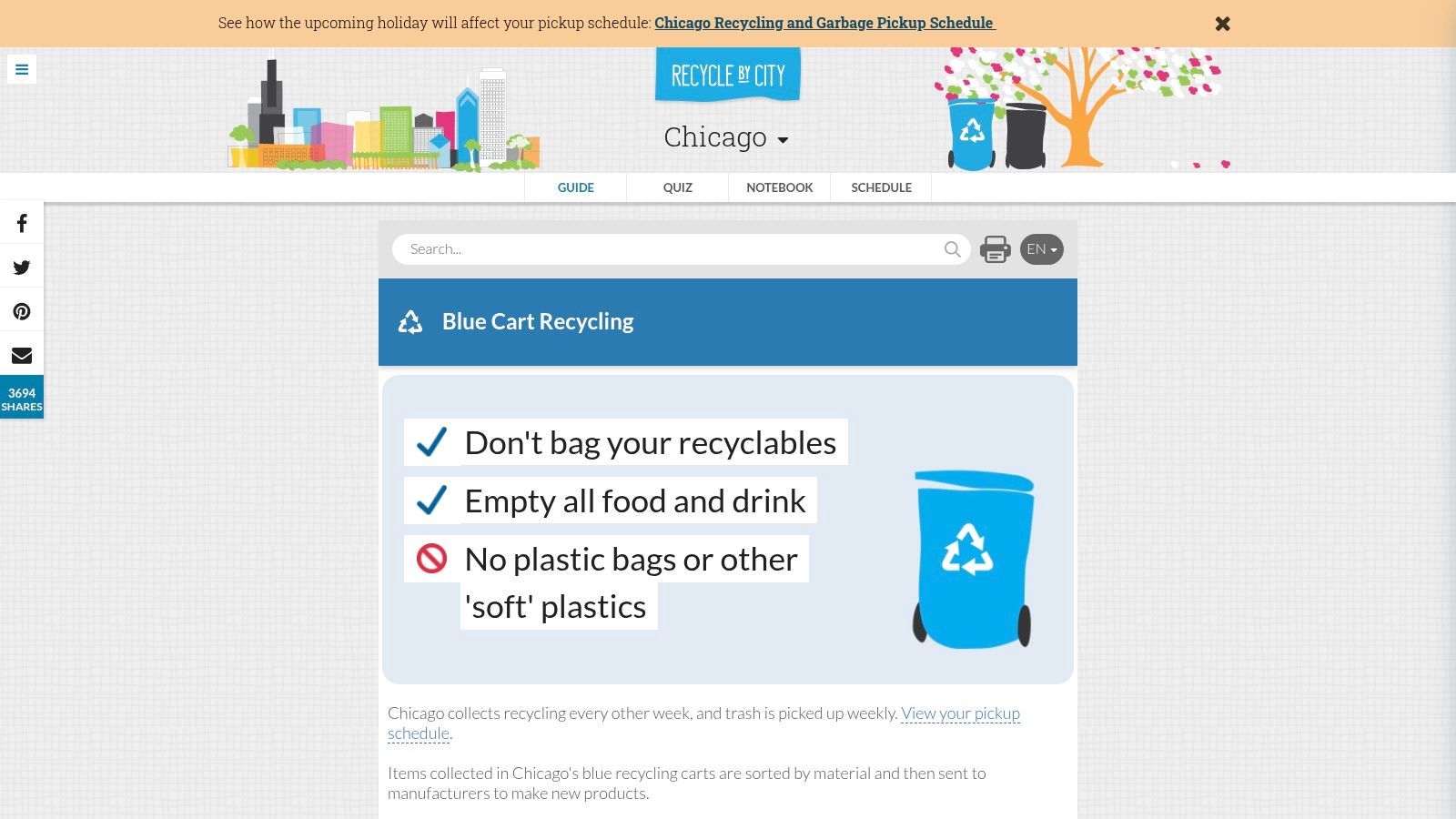
    That's why I keep Recycle By City Chicago bookmarked. It doesn't hand you a cart itself, but it does something I care about just as much during a cleanup. It tells people what belongs in the cart.

    Why I send volunteers here

    When I'm running a cleanup, I don't need twenty speeches about sustainability. I need one person to stop putting random trash into the recycling stream. This guide helps with that because it gives a clear visual “what goes in” reference and points people toward the right City request forms.

    I've learned that free recycle bins don't fix confusion by themselves. In a controlled recycling study, moving bins closer to where people used bottles pushed recycling rates to 64%, 47%, and 71% in three buildings, while adding more bins to common areas led to 40%, 12%, and 33% in those same settings, and the researchers found people placed more than twice as many plastic bottles in recycling receptacles when bins were closer to the point of consumption (controlled recycling bin placement study). That matches what I see in the field. Close bin, clear label, better result.

    • Best use: Train new volunteers before an event.
    • Big win: Cut down contamination arguments on the spot.
    • Limitation: You still need the City or a hauler to provide the actual cart.

    I treat this site like the map and the Blue Cart like the vehicle. You need both.

    3. Lakeshore Recycling Systems

    Lakeshore Recycling Systems (LRS)

    I've had this conversation a lot in Chicago. Someone says, “The City won't give us a Blue Cart.” Then I ask one question. “How many units are in your building?” That's usually when we find out they were aiming at the wrong door.

    Lakeshore Recycling Systems is the kind of option I think about for buildings that sit outside the City Blue Cart lane. If your property is in an LRS-served town or under an LRS contract, the recycling cart is often folded into the service itself.

    Where LRS makes sense

    For cleanup work, LRS matters because neighborhood action doesn't stop at single-family homes. We pick up trash around apartment corridors, courtyards, alleys, and condo blocks too. If those residents can't use the City system, they still need a practical path.

    Here's my no-nonsense read:

    • Strong fit for multi-unit properties: For such properties, City-run home programs often stop helping.
    • Direct replacement path: If service crews damage a cart, the hauler usually handles the fix.
    • Less useful for random one-off seekers: If you're not in an LRS service area or contract, this won't feel free.

    What I like is the scale. LRS thinks in terms of routes, buildings, and municipal systems, which is exactly how cleanup organizers have to think when one block has three kinds of housing on it. It's not a universal free recycle bin source. It's a service-based one. That distinction matters.

    4. Republic Services

    Republic Services

    Republic is the option I put in the “check your account before you buy anything” category. I've seen people spend money on spare bins because they assumed the hauler wouldn't help, when the answer was already inside their service setup.

    If Republic serves your area, the Republic Services recycling page is the place to start. For many customers, the cart comes with the residential service package, and account tools make it easier to request or manage carts.

    My field note on Republic

    This one is less romantic than a nonprofit grant. It's more practical. If you already pay for service, or your town does through a contract, then the “free” part often means no separate line item for the cart itself.

    I like Republic for a few reasons:

    • Standardized carts: That helps curbside pickup run smoothly.
    • Online account tools: Good when you're helping a resident solve the problem fast.
    • Broad reach: Handy if your cleanup crew has volunteers outside Chicago asking for advice.

    Put the house number, service address, and account status together before you call the hauler. Most delays happen because people start with “I need a bin” instead of “I'm at this address and already in your service area.”

    The weakness is local variation. One town handles extras one way, another town handles them another way. So I don't treat Republic as a universal source of free recycle bins. I treat it like a utility. First check whether you're already in the system.

    5. Waste Management

    Waste Management is another one people forget to check because the trucks become background scenery. You see the brand so often that you stop thinking of it as a place to solve a specific problem.

    The WM residential recycling page is useful if WM handles service where you live. In many communities, the cart comes with residential service, and some local contracts allow extra recycling capacity or handle replacements through customer service.

    How I use WM in real conversations

    When someone from outside Chicago asks me where to get free recycle bins, I usually ask three things. Who picks up your trash? Are you in a house or a larger building? Did you already ask your hauler for the base cart or a replacement?

    WM often makes sense in that sequence because its footprint is broad and the process is legible. The details still depend on the local contract, but at least you know where to start. And if you're sorting more than you can fit at home, it helps to pair the curbside answer with a bigger picture on where you can recycle near you.

    • Best for: Residents already under WM service.
    • Good backup question: Ask whether your municipality allows an additional recycling cart.
    • Chicago note: For single-family City recycling, Chicago runs its own setup, so don't assume WM is your path if your address is under the City program.

    I think of WM like a hardware store clerk. It may not solve every problem, but it usually tells you which aisle to walk down next.

    6. The Recycling Partnership Cart Grants

    This one isn't for the person who wants one bin by Friday. It's for the person who's tired of seeing an entire city limp along with weak recycling access.

    The Residential Curbside Recycling Cart Grant program from The Recycling Partnership is where I'd look if I were pushing change through a municipality, county, or public partner. I care about this kind of program because local cleanup work teaches you fast that people can't recycle what their system never captures.

    The Partnership reported that only 21% of residential recyclables were recycled in the United States, and 76% of recyclables were lost to trash in homes. The same report said seven out of ten cardboard boxes, three out of four milk jugs, and four out of five steel cans were still discarded instead of captured for recycling (The Recycling Partnership report on residential recyclables capture).

    Why I respect this route

    Those numbers line up with what a cleanup organizer sees on the ground. People don't need more lectures. They need a system that gives them the cart, the outreach, and the follow-through.

    • Best fit: Cities, counties, and public partners.
    • Big strength: It pairs cart funding with education support.
    • Big weakness: Individuals can't just apply and get a household bin.

    If you're a resident, this won't feel immediate. If you're an organizer with a city contact, it can be the lever that moves the whole block instead of one porch.

    7. Can'd Aid Crush It Crusade

    Can'd Aid – Crush It Crusade

    I like this one because it thinks like an event organizer. A lot of programs assume you want a household cart. Sometimes you don't. Sometimes you're trying to stop a park cleanup or summer festival from becoming a sea of crushed cans and sticky cups.

    Can'd Aid's Crush It Crusade is built for community groups, nonprofits, and public events that want visible collection bins and a simple beverage-container program. That's much closer to the way I work on the ground.

    Why it clicks for cleanup groups

    When we run a cleanup, volunteers don't need a graduate seminar in waste policy. They need clear stations and a short script. Can'd Aid leans into that. Bins, support, training, and a narrow material focus make life easier.

    That narrow focus is also the tradeoff. If you want one program that handles every messy material stream, this isn't it. If you want to collect cans at a cleanup, concert, or community day without reinventing the wheel, it's a smart route.

    A focused bin stream usually beats an “everything goes here” setup. Volunteers make fewer mistakes when the target is obvious.

    I'd use Can'd Aid when I want quick, visible wins in public spaces. It's the recycling version of setting out a basketball hoop instead of asking people to build a gym.

    8. Keep America Beautiful Public Space Grants

    Keep America Beautiful – Public Space Recycling Grants

    Some bins are for the kitchen. Some are for the curb. Some are for the place where everyone drops the bottle because there's nowhere else to put it.

    That last problem is where Keep America Beautiful has often been useful. Its public-space recycling grants have historically helped place outdoor bins in parks, campuses, and downtown areas, depending on funding rounds and partners.

    When public-space bins are the right answer

    I've cleaned enough sidewalks to know that a resident can do everything right at home and still walk into a trash-only public space the second they leave the house. That's why I don't treat free recycle bins as just a household issue.

    This route works best when you have a shared place with constant foot traffic and a group ready to maintain it. A public bin nobody empties is just a future headache.

    • Good fit: Nonprofits, municipalities, schools, campuses.
    • What I like: Outdoor-oriented infrastructure for places people already gather.
    • Watch out for: Grant timing. Some rounds open, some don't, and competition is real.

    If your neighborhood has a park fieldhouse, plaza, or event strip that always ends up littered after busy weekends, this is the kind of lead I'd chase.

    9. SWACO Recycling Cart Grants

    SWACO – Recycling Cart Grants (Franklin County, OH model)

    I'm based in Chicago, but I pay attention to programs in other places because good ideas travel. SWACO is one of those examples I keep in my back pocket when someone asks, “Could our county build something like this?”

    The SWACO grants page shows a regional model where public support helps communities roll out carts and education. I don't recommend it because every reader can use it directly. I recommend it because it gives local advocates a real template.

    Why a model matters

    If you're trying to convince a town, ward office, or county board to think bigger, examples help. They give your pitch some bones. You can point to a live program and say, “This is the kind of structure I mean.”

    The market backdrop also tells me these systems aren't niche anymore. The global recycling bins market was valued at USD 1.9 billion in 2023 and is projected to reach about USD 3.8 billion by 2033, with a projected 7.3% CAGR from 2024 to 2033 (global recycling bins market projection). I read that less as trivia and more as proof that procurement and replacement are ongoing, normal parts of public systems.

    For a resident, SWACO may be too far away to matter directly. For an organizer pushing policy or local funding, it's a useful example of how free-to-resident carts can happen through municipal backing.

    10. Community Reuse Platforms

    Community Reuse Platforms (Freecycle, Buy Nothing, Craigslist Free)

    Sometimes the best free recycle bins are sitting in a garage five blocks away.

    I've found extra bins, office containers, and weirdly sturdy event tubs through neighbor-to-neighbor channels long before a formal program came through. That's why I still check Freecycle and similar local reuse spaces when I need fast backup.

    My scrappy method

    This route is messier than a city portal. You have to watch listings, message people, and move quickly. But for a cleanup crew, that can be fine. We're used to improvising.

    Here's how I do it:

    • Search with multiple terms: Try “recycle bin,” “recycling cart,” “blue bin,” and “office recycling bin.”
    • Ask about condition early: Cracked lids and broken wheels matter more than faded paint.
    • Think in event terms: Small office bins are great for volunteer stations, pop-ups, and sorting tables.

    I also like that this keeps material in use. If you're trying to build cleaner habits, reuse should stay in the conversation, and don't trash it if someone nearby can still use it.

    One warning. A free bin from a neighbor won't change weak local service. Washington County, Utah leans hard on 24/7 “binnie” drop-off access across more than 20 locations, and Nevada's recycling guidance shows that some communities have curbside service, some have drop-off, and some have only limited access or material acceptance (Washington County recycling access page). I've learned the same lesson over and over. The container matters, but the collection system matters too.

    Top 10 Free Recycling Bin Resources

    Provider Core offering ✨ Accessibility & cost 💰 Best for 👥 Reliability & impact ★🏆
    City of Chicago Blue Cart (311) Free blue recycling cart + bi‑weekly curbside pickup; 311 requests 💰 Free for eligible 1–4 unit homes; 5+ units ineligible 👥 Single‑family & small multi‑unit residents, neighborhood cleanups in eligible wards ★★★★ Municipal service with published schedules; reliable within eligibility
    Recycle By City Chicago "What goes in" visual guide + direct 311 links and schedules 💰 Free resource (no bins provided) 👥 Volunteers, residents & educators reducing contamination ★★★★ Strong education tool; lowers rejected loads
    Lakeshore Recycling Systems (LRS) Hauler‑provided carts via municipal contracts; local replacements by crews 💰 Included with service/contract; not free for non‑customers 👥 Multi‑unit buildings & neighborhoods served by LRS ★★★★ Local responsiveness; scalable for buildings
    Republic Services Standardized curbside carts; online account/cart requests 💰 Part of paid service or municipal contract; policies vary 👥 Residents in Republic territories; property managers ★★★★ Convenient online tools; consistent bin standards
    Waste Management (WM) Carts with residential service; customer service replacements; extra cart options in some areas 💰 Contract‑based; city specifics determine cost/availability 👥 Communities with WM contracts; advocates for extra capacity ★★★★ Wide footprint; local terms drive outcomes
    The Recycling Partnership (Grants) Grants & technical assistance to fund citywide carts + education 💰 Grant‑funded (no resident cost) but requires municipal applicant 👥 Municipalities, counties, nonprofit partners pursuing large rollouts ★★★★★ High‑impact city programs when awarded 🏆
    Can'd Aid – Crush It Crusade Donated bins, event equipment & training focused on aluminum containers 💰 Free to selected nonprofits; competitive application 👥 Community clean‑up groups & event organizers collecting cans ★★★★ Rapid event setup; excellent for beverage‑container streams
    Keep America Beautiful (Public Space Grants) Grants for outdoor‑rated public bins + best‑practice guidance 💰 Competitive grants; awarded bin infrastructure at no cost to recipients 👥 Nonprofits, municipalities, campuses seeking public‑space bins ★★★★ Durable public infrastructure; raises program visibility
    SWACO (Model Grants) Discounted/free carts + TA as a municipal model for rollouts 💰 Grant/discount model for member communities; requires municipal buy‑in 👥 Municipal planners & advocates seeking funding templates ★★★★ Proven scalable approach; geographic limits to model
    Community Reuse Platforms (Freecycle, Buy Nothing) Hyperlocal free listings for used carts & office/event bins; pickup coordination 💰 Free but availability is hit‑or‑miss 👥 Grassroots organizers, volunteers needing spare/event bins quickly ★★★ Variable condition & supply; great free option when available ✨

    Now, Go Make a Difference

    Getting a bin is the easy part. Using it well is where the story starts.

    That's true in my apartment, and it's true on a Chicago sidewalk at eight in the morning when the wind is rude and half the group is still waking up. Back when we started Litter Caterpillars, we got caught in a spring hailstorm and huddled under a tree while rides kept canceling. We were cold, annoyed, and laughing anyway. That day taught me something I still believe. Cleaning up a mess, even in bad conditions, changes you.

    A free recycle bin won't save a neighborhood by itself. It won't fix bad pickup schedules. It won't solve confusion about what goes where. It won't magically make people care. But it gives caring people a tool they can use, and that matters.

    I've also learned that “free” is slippery. Sometimes it means your address qualifies. Sometimes it means your building doesn't. Sometimes it means the bin costs nothing but the service rules themselves are the obstacle. Los Angeles County says its free bins go to County departments based on availability and funds, with different request paths for facilities, businesses, and schools in unincorporated areas, and that's the kind of detail people usually find out too late (Los Angeles County department bins information). The same thing happens all over. Eligibility decides a lot.

    Service quality decides a lot too. The commercial recycling bins market is estimated at USD 1.5 billion in 2025 and projected to reach USD 2.7 billion by 2035 at a 5.9% CAGR, with growth tied to mandatory waste segregation rules and newer deployments using RFID monitoring and sensor-based fill-level alerts (commercial recycling bins market outlook). That tells me systems are getting smarter, but smarter equipment still has to meet real people where they live, walk, and throw things away.

    So start small, but start. Request the Blue Cart. Ask your hauler. Apply for a grant. Borrow office bins for a cleanup. Pull a used bin off a neighborhood reuse platform. Put one at your block party. Put one at your church picnic. Put one where the bottles always pile up after the game.

    You don't need a perfect plan. You need one next move.


    If you want more than a bin, come join Litter Caterpillars. We clean Chicago block by block, make friends while doing it, and prove to ourselves that service can change a day, a street, and sometimes a whole season of your life.

  • Where Can I Recycle? 10 Places for Almost Everything

    Where Can I Recycle? 10 Places for Almost Everything

    That bag in the corner can feel heavier than furniture. I know, because I've stared at a dead phone, a bag of tangled cords, and a mystery jar from the back of the fridge like they were emotional landmines. I started cleaning up streets with Litter Caterpillars before I got good at cleaning up my own life, because picking up somebody else's mess was the first honest thing I could do.

    If you've been typing where can i recycle into your phone while standing over a bin, this is for you. I'm going to keep it practical, human, and specific, because sometimes the first crack of light comes from finally knowing where the broken thing goes.

    1. Earth911 Recycling Search

    I used Earth911 Recycling Search on a rainy Tuesday with a cracked smoke detector in one hand and a coffee mug in the other. The detector had been riding around in my trunk for weeks because I knew it should not go in the trash, but I also did not know where it belonged. That little plastic brick started to feel bigger than it was. Funny how clutter does that. It turns into guilt, then guilt turns into delay.

    Earth911 Recycling Search

    Earth911 helped because it starts with the item, not a maze of city departments. I typed in the material, added my ZIP code, and got a list of nearby options with details that answered the question I had. Could they take it? How far away were they? Did I need to prep it first?

    That last part matters more than it sounds. When your house feels messy, your mind usually does too. One clear answer can create a little momentum. That was true for me with Litter Caterpillars, too. Picking up litter taught me that small acts of cleanup change the mood of a block, and sometimes the mood of a person. Looking up one hard-to-place item can do the same thing at home.

    Why I start here

    Earth911 works well for the awkward stuff that stalls a cleanup session. You can search for materials that do not fit neatly into curbside rules, then filter by distance and program type so you are not guessing.

    Here's where it earns a spot in my bookmarks:

    • Item-first search: Helpful for odd materials like foam packaging, propane tanks, mattresses, and unusual plastics.
    • ZIP code results: You get local options instead of broad advice that may not apply where you live.
    • Preparation notes: Many listings explain whether an item needs to be cleaned, separated, or handled a certain way.

    Practical rule: Start with Earth911 when the item is bulky, unfamiliar, or the kind of thing you have been stepping around for months.

    One warning from experience. Call before you load the car. Hours change, accepted materials change, and a quick phone call can save you a wasted trip and a fresh wave of frustration.

    2. RecycleNation

    I used RecycleNation on a Saturday when I had three things by the door that had been bothering me all week. An old printer. A bundle of cords. A lamp I kept meaning to deal with. None of them were dramatic on their own, but together they felt like a little pile of unfinished business.

    RecycleNation

    RecycleNation helped because it gave me a quick way to search by item and place, then pointed me toward drop-off and reuse options without sending me through five layers of city PDFs. On days when the mess in your house starts to feel tied to the mess in your head, that kind of speed matters. You get an answer, you make a plan, and the pile gets smaller.

    What makes it different from the tool I use first is the feel of it. Earth911 is the one I open for weird, stubborn stuff. RecycleNation is the one I open when I want to keep a cleanup session going and do not want to lose steam.

    It works well for a few common situations:

    • Fast item searches: Helpful for everyday household objects and electronics.
    • Reuse suggestions: Some items make more sense as donations or second-life goods than as trash.
    • Plain-language guidance: Useful when you want a simple starting point instead of municipal jargon.

    That reuse piece matters more than people admit. A lot of clutter is delayed decision-making in physical form. Keeping something forever because you are unsure what to do with it can weigh on you the same way an unanswered text does. Litter Caterpillars taught me that cleanup is rarely only about the object on the ground. It is also about the relief that comes after you finally act.

    RecycleNation is not perfect in every ZIP code, and I still verify details before I drive anywhere. Still, if you are standing in your kitchen asking, “Can this go somewhere better than the trash?” it is a solid second check. If the item turns out to be battery-related, use a battery-specific Chicago guide instead, like this one on where to recycle batteries in Chicago.

    3. Call2Recycle

    Batteries are sneaky. They're small enough to disappear into a drawer, dangerous enough to cause problems, and annoying enough that people keep them for years. I've done that. Maybe you have too.

    Call2Recycle is the tool I use when I want a clean answer for batteries and old cellphones.

    Call2Recycle

    The drawer full of guilt problem

    A battery drawer is like a paused argument with yourself. You know you need to deal with it. You keep not dealing with it. Then one day the drawer won't close.

    Call2Recycle cuts through that loop. Its locator helps you find drop-offs for many consumer batteries and phones, and it gives safety guidance for damaged or swollen batteries. That last part matters. A battery isn't a soda can. If it's bulging or leaking, you need instructions, not guesswork.

    Take battery safety seriously. If a battery looks damaged, check the listing details and handling guidance before you move it around.

    What I like most:

    • Battery-specific guidance: It tells you more than a general recycling locator will.
    • Retail drop-offs: Many collection points are places you already visit.
    • Useful acceptance details: Not every location takes every battery type, so the fine print helps.

    If you're in Chicago, I'd pair this with the local advice in Litter Caterpillars' battery recycling guide for Chicago. That mix works well: broad locator first, local reality second.

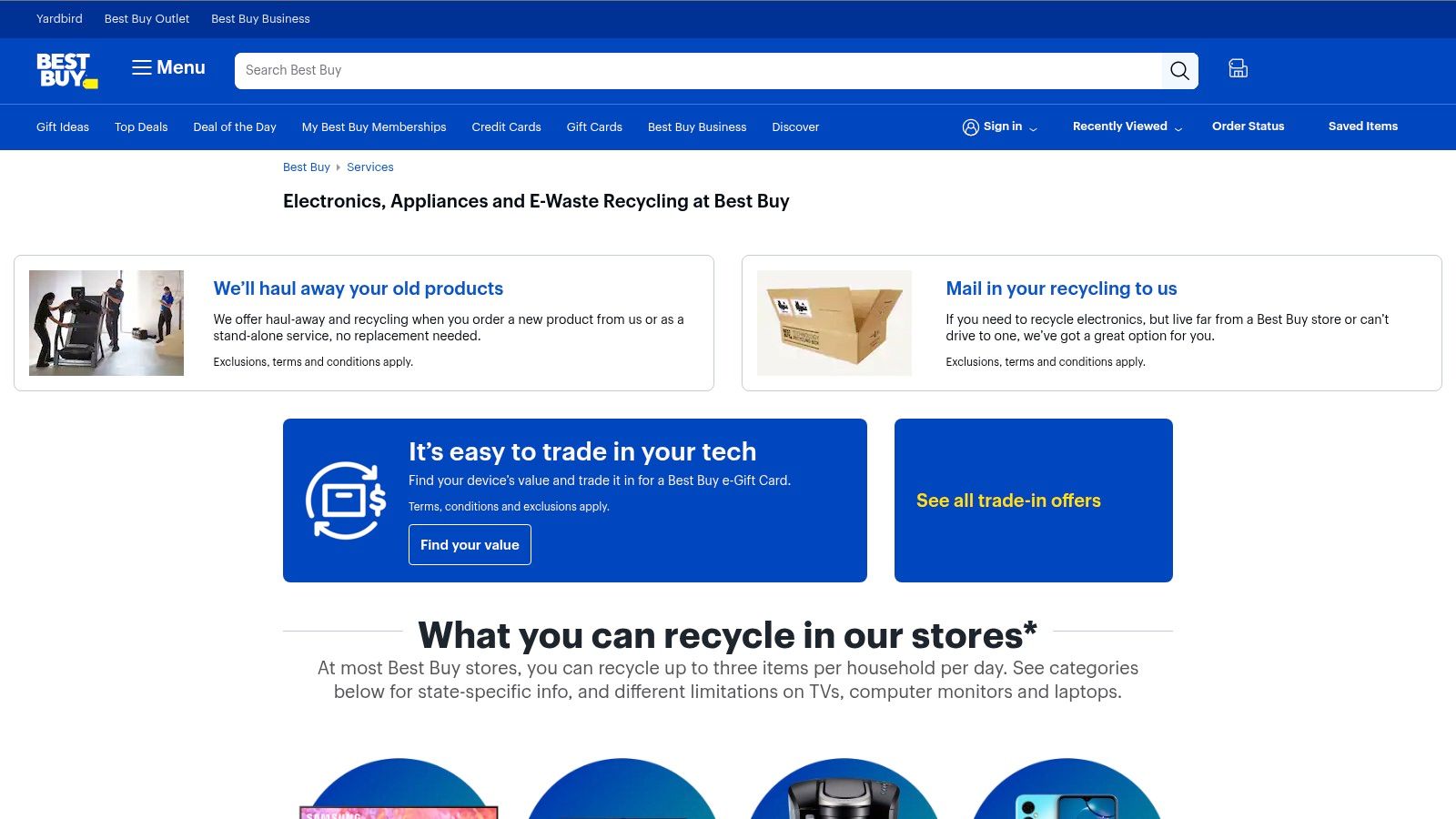
    4. Best Buy Electronics & Appliances Recycling

    My old laptop once sat in a closet like a time capsule from a harder year. Dead charger. Sticky keys. Too many memories on the hard drive. Getting rid of it felt less like throwing something away and more like closing a chapter I hadn't finished reading.

    That's why I like Best Buy's electronics recycling program. It gives you a familiar place to bring phones, cables, computers, printers, and other electronics that don't belong in household trash.

    Best Buy Electronics & Appliances Recycling

    Good for the pile of old tech

    Best Buy works well when your problem isn't one item. It's a whole plastic tote of old tech. You can check accepted items online, look at state-specific details, and plan one trip instead of five.

    A few practical upsides:

    • Many small electronics are accepted in-store: That makes it easier to clear out drawers and shelves.
    • State rules are posted online: Useful if you're dealing with items that may have limits or fees.
    • Haul-away and mail-in options exist: Helpful for larger appliances or when you want less hassle.

    There are limits, and some categories have special rules. That's normal with e-waste. The point is that Best Buy makes the process visible enough that you can act instead of procrastinate.

    I always tell friends this. Before you recycle a computer or phone, back up what you want, sign out, and wipe it if the program asks you to. Recycling is easier when you're not also carrying fear about your personal data.

    5. Lowe's In-Store Recycling Centers

    One Saturday, I went to Lowe's for furnace filters and came home feeling lighter for a completely different reason. I had finally carried in the small junk that had been following me around the house for months. Two dead rechargeable batteries from a drill. An old cellphone from a breakup I didn't want to think about. A wad of plastic bags crammed under the sink.

    Lowe's In-Store Recycling Centers

    Lowe's works for that kind of cleanup. Many stores have front-of-store recycling centers for items such as rechargeable batteries, cellphones, CFL bulbs, and plastic shopping bags, though acceptance can vary by location. That matters because the hardest part of recycling is often not the item. It's the extra trip, the extra decision, the extra little burden you keep postponing.

    Good for routine errands

    Lowe's is useful for the stuff that breeds in corners and drawers. The battery that no longer holds a charge. The retired phone. The plastic bag pile that starts small and turns into its own weather system.

    A few reasons it helps:

    • Front-area bins are easy to find: You can usually deal with items before the rest of your shopping starts.
    • It fits real life: Drop-offs work well when you are already out buying home supplies.
    • Many accepted items are free to recycle: That removes one more excuse.

    I like programs like this because they turn cleanup into a habit instead of a project. You do one errand, and while you are there, you clear one more little patch of mental clutter too.

    If your garage mess also includes half-used paint, this Chicago paint disposal guide from Litter Caterpillars can help you sort that part out separately.

    Call before you go. Store policies differ, and a quick check can save you a wasted trip.

    6. The Home Depot CFL bulb recycling

    A burned-out CFL has a strange energy. It looks harmless. It isn't something you want rolling around in a kitchen drawer. It asks for one more errand, and sometimes one more errand feels like the last straw.

    The Home Depot's CFL recycling information gives people a simple option for intact household CFL bulbs at many stores.

    A good answer for one specific annoying item

    I respect focused tools. They don't try to solve everything. They solve the thing in your hand.

    Home Depot is useful because:

    • CFL collection is familiar: Many people already know where the store is.
    • It's straightforward: Household CFLs are the main use case.
    • It keeps risky items out of the trash: That's the whole point.

    If you're also sorting through paint cans and other weird garage leftovers, pair this with Litter Caterpillars' Chicago paint disposal guide. Bulbs and paint tend to show up in the same “I'll deal with it later” zone of the house.

    A lot of cleaning up is deciding that “later” has already cost you enough peace.

    One note. Don't assume the store takes every lamp type. CFLs are the safest bet here. Check locally if you have tubes, LEDs, or broken bulbs.

    7. TerraCycle Zero Waste Box

    I once had a paper bag under the sink that felt like a confession. Used coffee pods. Foil snack pouches. Empty lip balm tubes. The odd little scraps of modern life that pile up when you're trying to do better and still can't find a place for the stuff nobody wants. Every time I saw that bag, I felt the same thing I've felt looking at a cluttered room after a hard month. I wasn't lazy. I was stuck.

    That's why TerraCycle Zero Waste Box makes sense to me.

    TerraCycle Zero Waste Box

    A paid fix for the leftovers that keep haunting the drawer

    TerraCycle sells mail-in boxes for specific waste categories. You choose the type, fill the box with the accepted items, and send it back. It costs money, so this usually makes the most sense after you've already checked your local options and come up empty.

    The value is clarity.

    Curbside programs handle the obvious things. TerraCycle handles the stubborn leftovers, the mixed-material pieces that turn one junk drawer into three. If cleaning up your home is partly about getting your head back, a contained system like this can help because it gives the mess an endpoint instead of letting it keep breeding in corners.

    I'd use it for situations like these:

    • Recurring niche waste: Offices, shared kitchens, or busy households that go through the same hard-to-recycle items again and again
    • Small items that scatter easily: Packaging pieces that would otherwise drift between countertops, tote bags, and random bins
    • People who need a clear boundary: One labeled box can be easier to stick with than a vague promise to “figure it out later”

    It works like paying for a specialist when the general fix failed. You probably would not use it for everyday bottles and cans. You use it for the category that keeps following you around the house, asking for a decision.

    That matters more than it sounds. Sometimes the first sign that your life is turning around is simple. You stop stepping over the same mess. You give the hard stuff a place to go, and in the process, you prove to yourself that stuck is not the same as helpless.

    8. Dell Reconnect with Goodwill

    A few years ago, I found an old laptop under a stack of papers in a closet. Dead charger. Dust in the ports. A sticky note on top with a password I no longer used. It felt less like a device and more like a time capsule from a season when everything in my life was half-finished. My first instinct was simple. Get rid of it fast.

    Then I remembered that computers are the kind of clutter that carry two kinds of weight. Physical mess on your shelf. Mental mess in your head.

    Dell's electronics recycling page points people toward its Goodwill partnership in participating areas. I like that because it leaves room for reuse before recycling. That small shift matters. The Litter Caterpillars story is built on the same idea. Change starts when you stop treating every leftover thing as worthless and start handling it with purpose.

    Better when donation is still possible

    Dell Reconnect makes the most sense for computer equipment and related electronics that might still be useful, or at least deserve responsible handling. A Goodwill drop-off can feel more approachable than hunting down a specialty recycler across town, especially when you are already tired of looking at the box by the door.

    Here's where it helps:

    • Familiar drop-off locations: Goodwill is a place many people already know, which lowers the friction.
    • Reuse before teardown: Working devices may get a second life instead of going straight to material recovery.
    • A better pause point for old tech: Computers often hold personal files, old accounts, and forgotten to-do lists. Taking them to a program built around this category encourages more careful handling.

    I'd still check local participation before loading up your trunk. Accepted items can vary by site, and not every location takes every piece of equipment.

    That little bit of checking is part of the cleanup, too. You stop tossing things blindly. You make one clear decision, then another. A room gets lighter that way. So do you.

    9. Ridwell

    Convenience changes behavior. I know that about myself. If the right thing is too hard, I start negotiating with myself like a tired lawyer. “Maybe this plastic film is fine in the bin.” It usually isn't.

    That's why Ridwell is interesting. In places where pickup is active, it gives people regular doorstep collection for some hard-to-recycle items. It also has some mail-in options for certain categories.

    Ridwell

    For people who need the path of least resistance

    Ridwell is for the person who means well and misses drop-off day anyway. I say that with love, because I know that person. Doorstep pickup can turn a vague intention into a routine.

    What I like here:

    • Pickup removes the last-mile headache: You don't need to drive somewhere every time.
    • Some transparency about partners: That helps people trust the process.
    • Mail-in options expand access a bit: Useful if full service isn't in your area.

    Chicago has a real access problem around recycling drop-offs. Some areas have public options, but many neighborhoods don't show up clearly in common search results, and far-away facilities can be hard for car-free residents to reach, as described in Recycle By City Chicago's drop-off locations notebook. That's why convenience matters so much. If recycling only works for people with time, money, and a trunk, it doesn't really work.

    As of May 13, 2026, Ridwell pickup isn't active in Chicago. For readers elsewhere, though, it's worth checking.

    10. City of Chicago HCCRF and Blue Cart drop-offs

    If you live in Chicago, this is the one I want you to bookmark today. The City of Chicago Household Chemicals and Computer Recycling Facility page is where I'd send anyone dealing with household hazardous waste, e-waste, or that pile of “I don't think this belongs in the alley” items.

    Chicago's city guidance also connects you to Blue Cart rules and local drop-off information. When you want the official answer for your own city, start there.

    The Chicago answer when the item is risky

    This is the place for chemicals, electronics, and messy household leftovers that retailers may not accept. I like city-run information for these items because guessing can go wrong fast.

    Use it when you need:

    • Local rules that match your address: City programs differ.
    • Posted accepted-item guidance: Good for paint-related items, chemicals, and electronics.
    • A real destination for problem waste: Better than letting dangerous stuff pile up.

    The city-specific route matters because household access to recycling is uneven. One research gap summary on Chicago recycling access points out a “last-mile” problem. People may know recycling matters but still struggle to figure out which site takes which material, how to get there, or what to do if a drop-off is closed, as described by Chicago Environmentalists' recycling page analysis.

    If you want a simpler local starting point, Litter Caterpillars' guide to recycling in Chicago pairs well with the city facility page.

    Top 10 Recycling Resources Comparison

    Service Core features ✨ Accessibility/coverage 👥 Safety & Quality ★ Cost/value 💰
    Earth911 Recycling Search Massive item+ZIP database; material-specific prep; ✨ broad search filters 🏆 U.S.-wide; great for unusual items; good Chicago matches ★★★★☆, clear contamination guidance 💰 Free directory; call ahead advised
    RecycleNation Item-based locator; retailer integrations; ✨ fast interface National backup to Earth911; solid for electronics ★★★★☆, useful guides for tricky materials 💰 Free
    Call2Recycle Battery-focused locator; safety for lithium & damaged cells ✨ 🏆 Nationwide retail partners; common drop-offs ★★★★★, strong safety & acceptance rules 💰 Mostly free for consumers
    Best Buy Electronics & Appliances Recycling In-store drop-off, haul-away, prepaid boxes; ✨ one-stop tech option Large U.S. retail footprint; state rules vary ★★★★☆, industry-standard partners 💰 Free for many small items; fees/limits for TVs
    Lowe's In-Store Recycling Centers Front-of-store bins for batteries, CFLs, bags; ✨ errands-friendly Many stores; acceptance varies by location (call) ★★★★☆, convenient but store-dependent 💰 Usually free
    The Home Depot – CFL Bulb Recycling CFL collection bins; handling guidance; ✨ reduces mercury risk Widely available where offered; other bulbs vary ★★★★☆, focused safe handling for CFLs 💰 Free for CFLs (check store)
    TerraCycle Zero Waste Box Prepaid, material-specific mail-in boxes; ✨ accepts very hard-to-recycle items 🏆 Nationwide mail-in, ideal when local options fail ★★★★☆, documented processing & partners 💰 Paid service; box cost + shipping included
    Dell Reconnect with Goodwill Goodwill drop-offs for computers; reuse-first approach; ✨ data-security focus Participating Goodwill locations nationwide ★★★★☆, promotes reuse & secure handling 💰 Typically free; supports Goodwill mission
    Ridwell Subscription doorstep pickups + mail-in bags; ✨ transparent partner reporting Service areas limited; mail-in available nationwide; not active in Chicago 🛈 ★★★★☆, clear end-destination reporting 💰 Subscription-based (moderate–high)
    City of Chicago – HCCRF & Blue Cart/Drop-offs Official HHW & e-waste facility; city rules & maps; ✨ seasonal events 🏆 Chicago residents: permanent HCCRF + neighborhood drop-offs ★★★★★, official handling for hazardous items 💰 Free for residents (proof may be required)

    Find Your Fence to Paint

    A few years ago, I had a dead phone in one drawer, leaking batteries in another, and a half-used paint can in the garage that I kept pretending I would deal with "someday." The mess was small enough to ignore and loud enough to follow me around anyway. The day I finally sorted it, taped the battery terminals, and loaded the car, nothing dramatic happened. I just came home feeling lighter, like I had cleared more than a shelf.

    That is what this whole where can i recycle question has come to mean for me. It starts with an object, but it usually points to a habit. One bottle on the curb. One charger in a junk drawer. One bin in the kitchen that keeps overflowing because you have not decided what belongs there. Cleaning up the world around you gives your mind somewhere solid to stand.

    The hard part is not always caring. The hard part is figuring out where things go, especially when the system changes from one store, one city, or one item to the next. As noted earlier, recycling in the U.S. is uneven, and the gaps are real. A battery cannot go where a soup can goes. A paint can needs a different path than a laptop. Confusion is part of the situation, not proof that you are failing.

    That is why the tools in this guide matter. Earth911 helps with the oddball items that never seem to fit anywhere. Call2Recycle gives the battery drawer a clear destination. Best Buy and Dell Reconnect with Goodwill help with old electronics that have been gathering dust because data, cords, and guilt got tangled together. If you live in Chicago, the HCCRF and Blue Cart drop-offs give the garage and under-sink cabinet a way back to order.

    One honest next step is enough.

    I keep thinking about the Litter Caterpillars story here. People do not transform because they found the perfect spreadsheet or memorized every local rule. They change because they start showing up for one patch of ground, one block, one Saturday morning, one bag of trash at a time. Service gives shape to effort. Repetition turns that effort into steadiness.

    The wider problem is bigger than any one household. Circle Economy's 2025 report says only 6.9% of annual material throughput comes from recycled sources. That number can make the whole thing feel impossibly large. I read it a different way. It means your choice to sort, drop off, return, or safely handle one item is not trivial. It is one real act inside a real mess.

    So pick your fence.

    Rinse the jar. Bag the cables. Drop off the bulbs. Stop saving the broken thing out of vague optimism and send it where it can be handled well. You do not need a new identity before you begin. You need one task you can finish this week.

    If you are in Chicago and want company while you build that habit, Litter Caterpillars is one local group doing that work in public, one cleanup at a time. Sometimes picking up litter on your block is how you remember you can bring order back to your room, your week, and your life.

  • 7 Places to Donate Cardboard Boxes in Chicago

    7 Places to Donate Cardboard Boxes in Chicago

    The move is over, but the test now is sitting by the wall in a lopsided stack of cardboard. A neighbor of mine in Chicago once kept hers for so long that her toddler started using the biggest box as a reading chair. Funny for a week. Depressing by month two.

    I know that feeling. I started Litter Caterpillars when my own mess felt bigger than my energy, and every pile seemed to say something about who I was. What changed me was not some perfect cleaning routine. It was realizing that giving useful stuff away can break the spell. A box stops being evidence of chaos the minute it helps somebody else pack up a studio apartment, ship donated clothes, or move out of a bad situation.

    So here’s the tough-love version. Those boxes are making a decision for you if you let them stay. Act today, and they become useful again. People need boxes, and they keep needing them.

    That is the part I love most. Donating cardboard boxes in Chicago is not just a tidy little errand. It is one of those ordinary acts that ties a city together. Your leftovers become someone else’s fresh start. Your post-move clutter becomes a small favor for a student, a family, a reseller, a nonprofit, or a neighbor trying to get through a hard week without buying one more thing.

    Chicago gives you plenty of ways to do it, from hyperlocal swap groups to reuse programs that put boxes straight back into circulation. Some options are fast. Some take a little coordination. One gives your box one last useful job before it leaves your life. All of them beat letting that stack slump in the corner while you keep calling it temporary.

    1. U-Haul Take a Box, Leave a Box plus U-Haul Exchange

    A friend of mine finished a move in Lakeview at 9 p.m., sat on the floor, looked at the wall of empty boxes, and almost left them there for another month. Instead, she tossed the clean ones in her trunk the next morning, stopped at a U-Haul on the way to work, and was done with the whole thing before her coffee got cold. Somebody else picked them up for a move that same week. That is the kind of win I trust.

    You do not need a perfect system here. You need a practical one. U-Haul gives you two paths. You can bring reusable boxes to a participating location with a Take a Box, Leave a Box shelf, or post them through the U-Haul website so someone nearby can claim them.

    U-Haul “Take a Box, Leave a Box” + U-Haul Exchange

    I like this option because it meets you where you usually are after a move. Tired. Busy. A little sick of making choices. Boxes go back to a place where people already need them, and that cuts out a lot of friction.

    Why it works when your energy is gone

    The best donation habits are the ones you will follow through on. U-Haul works well for that.

    A few reasons:

    • Simple drop-off: Many locations accept clean, sturdy boxes without turning it into a long back-and-forth.
    • Right audience: The people coming through the door are already packing, moving, or hunting for supplies.
    • Another option online: If the shelf is full or your nearest store does not participate, the Exchange listing gives your boxes another shot at reuse.

    Practical rule: Call before you load the car. Some locations run out of room fast, and a 60-second call can save you a wasted trip.

    I have a soft spot for systems like this because they remind me what service often looks like in real life. It is rarely dramatic. It is a useful thing left in the right place at the right time. That same idea sits at the heart of community engagement through repeated small actions. One person clears a corner of their apartment. Another person gets through move-in day without spending extra money. A city gets a little more connected.

    Best fit

    Choose U-Haul if your boxes are still in good shape, you want them gone fast, and you would rather avoid a flood of messages from strangers.

    The tradeoff is consistency. One location may have an active reuse shelf, while another has no space that day. Still, if you want a direct way to donate cardboard boxes to people who will use them soon, U-Haul is one of the strongest first stops in Chicago.

    2. The Freecycle Network

    Freecycle feels like a neighborhood corkboard that never got replaced by something worse.

    You post an Offer. Somebody nearby says, “I’ll take them.” Your boxes move a few blocks instead of drifting into a vague recycling future. If you care about local reuse, that’s a good feeling, and you can start on the Freecycle website.

    The Freecycle Network

    When I think about service, I don’t think only about big organized acts. I think about small transfers of effort. You saved someone time, they saved money, and a decent box stayed in use. That’s real community. It’s the same logic behind community engagement that grows through repeated small actions.

    The local gift-economy angle

    Freecycle is good when you want your boxes to stay close to home. The groups are local and moderated, so the exchange feels more neighborly than random.

    What I like most:

    • Local reach: Your boxes usually go to someone nearby, which keeps pickup simple.
    • Clear intent: People search Freecycle because they want free useful stuff, not because they want to browse.
    • Easy porch pickup: You can set a time window and keep the whole thing low-stress.

    Put the box sizes and count in the post title if you can. “Small and medium moving boxes, flattened, porch pickup” gets better replies than “free boxes.”

    Here’s the honest part. Some neighborhood groups are lively. Some feel half asleep. If your first post doesn’t move, repost it at a better time and use a cleaner photo. Boxes are common, but common things still need a little packaging to leave your house.

    Best fit

    Choose Freecycle if you like the idea of helping a nearby stranger and you don’t mind coordinating one pickup window.

    I’d use it for clean moving boxes, packing paper, and odd extras like wardrobe boxes or bubble wrap. It feels less like disposal and more like passing the baton.

    3. Buy Nothing Project App plus Facebook Groups

    Buy Nothing is where cardboard stops being cardboard for a second and becomes a human story.

    You post a photo of your stack in the Buy Nothing Project, or in your local Buy Nothing Facebook group, and suddenly the person picking it up isn’t abstract anymore. It might be a new tenant around the corner. It might be someone helping a sibling move. It might be a neighbor trying to leave a rough situation and start over without spending extra money.

    Buy Nothing Project (App + Facebook Groups)

    That’s why I like this one. It has more heart.

    Where speed meets connection

    In active neighborhoods, boxes can disappear quickly. The app and local groups make photos, comments, and pickup details easy to manage.

    This setup has a few strengths:

    • Hyperlocal focus: You’re usually dealing with neighbors, not someone across town.
    • Fast visibility: Photo posts help people claim boxes quickly.
    • Reuse-first culture: People come there to give and receive, not flip everything for cash.

    I’ve seen this kind of exchange change the mood of a block. You stop feeling like a stranger in your own building. That matters more than people admit.

    “I’ve got moving boxes, clean and flattened, and I’d love them to help someone else.” That kind of post gets better energy than a cold one-liner.

    The downside is the same thing that makes it personal. If your neighborhood group is busy, your phone may light up fast. You need a simple pickup rule. First confirmed pickup gets them. Porch pickup only. No holds till next week unless you really mean it.

    Best fit

    Use Buy Nothing if you want to donate cardboard boxes and feel like you connected directly with your neighborhood instead of just posting into the void.

    It’s less transactional than Craigslist and often warmer than a general marketplace. Sometimes that extra bit of humanity is exactly what helps you let go of clutter you’ve been weirdly attached to.

    4. Nextdoor Free Finds

    Nextdoor is practical in the way a sturdy pair of boots is practical. It isn’t romantic. It just gets you there.

    If you already have a neighborhood-based account, the Nextdoor website and its Free Finds section give you a direct line to people close enough for an easy pickup. That distance matters when you’re trying to clear space before your patience runs out.

    Good for quick neighborhood handoff

    I’d use Nextdoor when I want the boxes gone without inviting the whole city into the process. Posts stay tied to your area, and in-app messaging makes pickup coordination simple.

    Why people like it:

    • Neighborhood visibility: Your post reaches nearby residents first.
    • Free-only browsing: People can search specifically for items that cost nothing.
    • Built-in messaging: You can sort out porch pickup details without sharing much.

    This one works well for the classic move-aftershock moment. You’ve unpacked enough to function, but your entryway still looks like a warehouse. Nextdoor helps because the person who wants your boxes may be on your block, not across Chicago.

    A little caution goes a long way

    You still need boundaries. Keep your listing clear. Say whether the boxes are flattened, whether they’re clean, and whether you’ll leave them outside.

    Leave pickup instructions only after you confirm a time. That one habit cuts down on confusion.

    The weak spot is familiar. Busy feeds bury posts. Some people reply and vanish. That’s not a moral crisis. That’s just the internet being the internet. If someone flakes, move to the next person and keep going.

    For people who just moved and want their first useful connection in a new neighborhood, Nextdoor is solid. It’s close, quick, and usually low drama.

    5. Craigslist Free Section

    A friend of mine in Logan Square once had moving boxes stacked to his ceiling like a second rent payment. He posted one blurry photo on Craigslist, wrote "free boxes, porch pickup," and by dinner the pile was gone. No speeches. No complicated app. Just one Chicago stranger helping another person get ready for a move.

    The Craigslist website still does that job well. It is plain, a little rough around the edges, and surprisingly effective when you want to donate cardboard boxes fast.

    Craigslist “Free” Section

    I respect tools that let you act before your motivation fades. Take a clear photo. Write a title that says what you have. Mention your neighborhood. Tell people if the boxes are flattened and whether pickup is from the porch or lobby.

    Why this old workhorse still matters

    Craigslist reaches beyond your immediate block, which helps when your boxes need to leave today and your own circle has already said no. People still search there for moving supplies because paying for boxes feels painful when free ones are sitting in someone else's hallway.

    A useful post usually includes:

    • Condition first: Clean, dry, sturdy, flattened if possible
    • Box types: Small, medium, large, banker boxes, wardrobe boxes
    • Pickup details: Neighborhood in the listing, full address only after you confirm

    What I like most about Craigslist is the attitude it encourages. You stop treating the boxes like trash and start treating them like something with one more job to do. That small shift matters. It is part of environmental stewardship in everyday life. A used box can still carry books into a first apartment, winter coats into storage, or pantry items into a community food drive.

    Best fit

    Use Craigslist when reach matters more than polish. It works well for bigger batches, odd-size boxes, or those moments when you want the stack gone before it starts taking over the room again.

    Use normal caution. Keep your public post light on personal details. Choose porch pickup if you can. If one person disappears, post stays up, someone else usually comes along, and the boxes keep moving through the city instead of stopping in your apartment.

    6. Give Back Box

    Give Back Box is different, and that’s why I wanted it here.

    You’re not handing off empty boxes to another mover. You’re giving those boxes one last assignment. You fill them with clothes or household goods you don’t need, follow the instructions on the Give Back Box website, and send them on to charity partners using an available label option.

    I love this because it turns one annoying pile into two solved problems. The box leaves, and extra stuff leaves with it.

    Your box gets a final mission

    This route makes sense when your move revealed more than cardboard. Maybe you also found kitchen tools you never use, shirts you don’t wear, or decor that never really belonged in your life.

    That’s where Give Back Box helps:

    • Home-based process: You can act without setting up a stranger meetup.
    • Charitable direction: The used box becomes a container for donated goods.
    • Clear guidelines: The platform explains what items are acceptable.

    There’s a mindset shift here that matters to me. Environmental stewardship isn’t only about picking up litter or sorting recycling correctly. It’s also about using what you already have to move useful things to useful places.

    If the box is clean and sturdy, ask yourself one more question before recycling it. “Can this carry help?”

    The limitation is obvious. This option is less about donating empty moving boxes to the next mover. It’s about repurposing your used boxes into shipping containers for other donated items. Also, some label options may involve a fee depending on the partner setup, so check before you commit.

    Best fit

    Choose Give Back Box if your apartment cleanout turned into a bigger honesty session. If you’re already donating clothes or household goods, your cardboard can help finish the job.

    7. EcoShip Chicago

    A friend in Avondale once stacked moving boxes in her hallway for three weeks, telling herself she would deal with them later. Then she found EcoShip Chicago, loaded the clean ones into her car, and dropped them off on a rainy Saturday. What changed was small on paper. A pile disappeared. What changed in her head was bigger. She stopped treating leftover materials like dead weight and started treating them like supplies someone else could still use.

    EcoShip Chicago works for that kind of handoff. They collect clean, reusable shipping materials and keep them in circulation around the city, including boxes that still have solid corners and good seams. In a place like Chicago, where packages, moves, side hustles, and small businesses all churn through cardboard, a local reuse hub makes practical sense.

    A local route with standards

    Groups that know the difference between help and dumping save everyone time.

    EcoShip has collection points around the city and a headquarters drop-off in Avondale. They screen for condition, size, and whether a box is usable again. That matters. If you show up with soggy, greasy, half-collapsed cardboard, you are not donating. You are passing your cleanup job to someone else.

    Here’s the quick gut check before you go:

    • Clean only: No food stains, water damage, or smoke smell.
    • Still sturdy: Good seams, intact flaps, no crushed corners.
    • Worth reusing: Bring boxes you would hand to a neighbor who runs an online shop.

    That last point is the primary standard I come back to. If a box would embarrass you in a direct handoff, it does not belong in a reuse stream.

    I like EcoShip because it keeps the act local. Your boxes do not just vanish into a vague system. They stay in Chicago, where another resident, seller, or organization can put them back to work. That is the part people miss when they rush to clear clutter. Giving something away well builds a habit. You get better at sorting what is useful, better at respecting other people’s time, and better at seeing waste as a chance to serve.

    If your boxes are too worn for reuse, send them to recycling instead of forcing a bad donation. For a local look at that route, this guide to Mid America Paper Recycling Co. in Chicago helps explain what happens next.

    Best fit

    Use EcoShip Chicago if you want your boxes to stay in a neighborhood reuse loop and you do not mind following clear rules.

    The tradeoff is simple. This only works for Chicago-area drop-offs, and their details can change, so check before you head out. But if your boxes are clean and sturdy, EcoShip is one of the strongest local options for donating cardboard boxes without turning your good intention into somebody else’s burden.

    Cardboard Box Donation: 7-Option Comparison

    Option 🔄 Complexity ⚡ Resources required ⭐📊 Expected outcomes 💡 Ideal use cases Key advantages
    U-Haul “Take a Box, Leave a Box” + U-Haul Exchange Low, walk-in drop-off + simple listing Minimal, drive to location or post online ⭐⭐⭐, high chance boxes are picked up by movers/local users Donors near U-Haul centers or during moving season Built-in audience for moving boxes; combines physical and online channels
    The Freecycle Network Low, post and coordinate pickup Minimal, create offer, arrange pickup ⭐⭐, good local reuse; activity varies by neighborhood Keeping materials local; neighborhoods with active groups Nonprofit, locally moderated groups; keeps items in neighborhood loops
    Buy Nothing Project (App + Facebook Groups) Low, app or group posting; quick replies Minimal, smartphone + photos; manage notifications ⭐⭐⭐⭐, very fast pickups in active communities Hyperlocal gifting and community-building; urgent pickups Extremely fast claims in active areas; builds neighbor connections
    Nextdoor “Free Finds” Low, account + post in neighborhood feed Minimal, Nextdoor account; in-app coordination ⭐⭐⭐, strong neighborhood visibility and quick responses Neighborhood-specific offers where users are verified Verified neighborhood members; integrated messaging for coordination
    Craigslist “Free” Section Low, create listing with photos Minimal, post online; arrange safe meetup ⭐⭐⭐, wide reach; often same-day pickups but variable trust Quick clearance when you want many potential takers Very large local audience; simple, no-frills process
    Give Back Box Medium, pack donations and print/mail label Moderate, fill box, label, possible fee, postal drop-off ⭐⭐, repurposes boxes into charitable shipments (not empty-box reuse) Donors who want to donate goods and reuse boxes as mailers Convenient home-based option; supports charities and reduces waste
    EcoShip Chicago Medium, meet cleanliness/size standards; drop-off Low–Moderate, transport to drop-off point; follow guidelines ⭐⭐⭐⭐, high likelihood of true reuse; supports local small biz Chicago residents wanting mission-aligned, circular reuse Local nonprofit pipeline; ensures boxes are reused (not downcycled)

    From Clutter to Connection

    The last time I moved in Chicago, I left a tower of flattened boxes by the radiator for nine days.

    Every morning I stepped around them like they were part of the apartment now. The move was done, the lease was signed, the bed was built, and still those boxes kept whispering the same thing. You are not finished. It had nothing to do with cardboard. It had everything to do with whether I was going to close the loop on a hard season or keep living in the mess of it.

    That is why this matters more than it should.

    Useful boxes carry a choice. You can let them sag in a corner until they turn into clutter, or you can send them back into the city to help the next person pack a studio in Rogers Park, ship donations, stock a small business, or survive a move they did not fully budget for. In a place like Chicago, that second life is not abstract. It looks like a porch pickup before sunset. It looks like a neighbor replying in five minutes. It looks like a reuse nonprofit stacking clean boxes for somebody who needs them tomorrow.

    I learned this the hard way. Letting go of things was never about the lifting for me. It was about the stories attached to every object, the little excuses that made me wait another day. Giving away something useful broke that habit. It taught me I could finish a task, even when it felt boring, emotional, or weirdly heavy for such a small job.

    That lesson sticks.

    As noted earlier, cardboard is one of the rare materials with a strong reuse and recovery story when people take the time to pass it along. You're moving a valuable resource in the right direction. That sounds small until you realize how many acts of community care work exactly like this. One person decides not to waste what could still help someone else.

    So be honest about your pile. Save the sturdy boxes you will use soon. Recycle the ripped, damp, or food-stained ones. Give the clean ones to U-Haul, Freecycle, Buy Nothing, Nextdoor, Craigslist, Give Back Box, or EcoShip Chicago, based on what you can handle today. Pick the option that matches your real energy, not the imaginary version of you who has a free afternoon and perfect follow-through.

    Your boxes need a next use.

    And you need proof that you can turn leftovers into service.

    If that kind of gritty, ordinary generosity means something to you, come meet Litter Caterpillars. We are a Chicago volunteer group that picks up trash, makes friends, and builds courage one weekend morning at a time. Giving away boxes is a quiet start. Cleaning a block with other people who care takes that same instinct and makes it visible.

  • A Guide to Partnering with Mid America Paper Recycling Co

    A Guide to Partnering with Mid America Paper Recycling Co

    Let me tell you how I started Litter Caterpillars. It wasn't just about cleaning Chicago's parks. It was about cleaning up my own life. I wrote this guide for you—all the other groups out there like ours, people driven by a need to see real, tangible change.

    Turning Our Passion into a Partnership

    Three smiling men in blue shirts hold trash bags under a tree, cleaning a park with a city skyline.

    I’ll never forget our first cleanup. Just three of us. We got caught in one of those wild Chicago hailstorms, huddled under a tree, but we felt completely united. I learned something profound that day: cleaning up other people's messes is way easier than cleaning up our own, and it's how you begin to transform yourself and the world around you.

    So, you've done the hard part. You've rallied your friends. You've gotten out there and picked up the trash. But what happens next?

    This is where you can take all that effort and make it mean even more. It’s time to team up with a big-hitter like Mid America Paper Recycling Co.

    Think about it like this. Those bags of paper and cardboard you collect aren't just trash anymore; they're a resource. When you partner up, every piece you pick up gets a second life, fueling a bigger cycle of sustainability. This is how you take your small acts of service and turn them into something massive.

    Who Is Mid America Paper Recycling Co

    You’ve definitely seen their big blue trucks rumbling around the city. So, what’s the real story behind Mid America Paper Recycling Co? I think of them as the unsung heavy lifters in Chicago’s recycling world. They're not just another company. They're a true Chicago legacy.

    They’ve been at this since 1926. Imagine that—a family business that started way back when and has grown into one of the most serious recycling operations in the entire country.

    From their massive, modern facility right here in Chicago, they tackle an insane 51 different grades of paper. They know this stuff inside and out. You can get a real sense of their scale by checking out the story behind their impressive numbers on midamericapaper.com.

    When a company has been around that long, it tells you something. It tells me they’re reliable, they know exactly what they’re doing, and they’ve survived by being absolute experts. They're the ones who take all the raw materials we collect and turn them into something new.

    Alright, this part is critical. If you get this wrong, all your hard work on a cleanup goes straight to a landfill. This is where you separate the rookies from the pros.

    Knowing exactly what Mid America Paper Recycling takes is the difference between a successful haul and a completely wasted effort. So, what's on their "approved" list?

    The good news is, it’s a lot of the stuff you find most often. They are hungry for what the industry calls Old Corrugated Containers (OCC)—that’s just the fancy term for all those cardboard boxes you pull out of alleys and parks. They also take mixed paper, office paper, and newspapers. For a group like yours, this is a huge win. It means the mountains of paper and cardboard you collect actually have a place to go.

    Following these rules is about respecting the work. It makes sure our effort isn't for nothing and that the stuff we collect actually gets a second chance.

    I put together a simple table to make it even easier for you. Think of this as your cheat sheet for sorting on the fly during a cleanup.

    Accepted Materials Guide for Volunteer Groups

    This table breaks down the common paper and cardboard items we find and tells you exactly how to prep them for Mid America. Keep it simple. Keep it clean.

    Material Type Common Examples Simple Prep Instructions
    Old Corrugated Containers (OCC) Amazon boxes, shipping cartons, moving boxes Flatten them completely. Remove any plastic wrap, styrofoam, or excessive tape.
    Mixed Paper Junk mail, magazines, catalogs, paperboard (cereal boxes, tissue boxes) Keep it loose in the collection bag. Make sure it's dry.
    Office Paper Printer paper, letters, envelopes (even with windows!) No need to shred. Just keep it clean and separate from food waste.
    Newspapers Daily and weekly newspapers, including the inserts Keep them flat and dry. Don't bundle with string.

    Basically, if it's paper or cardboard and it's clean and dry, you're probably in good shape. A little bit of food grease on a pizza box is a no-go. A water-logged newspaper is just trash.

    Of course, some things are a definite "no." You can't recycle anything that's been soaked in oil, chemicals, or other nasty stuff. For those items, you need a different game plan. Be sure to check out our guide on what to do with things contaminated by hazardous waste in Chicago.

    Navigating Logistics for Your Volunteer Group

    You’ve just finished a massive cleanup and now you’re staring at a mountain of perfectly sorted cardboard. What’s next? Getting all that good stuff to a commercial facility like Mid America Paper Recycling Co can feel like a whole new battle. Believe me, I’ve been there.

    It’s one thing to pick up the trash; it’s another to get it where it needs to go. Think of it like this: you’ve gathered your army, now you need a battle plan. For a volunteer group like yours, the two most powerful weapons you have are volume and communication.

    These big recycling plants are used to dealing with businesses, not weekend warriors like us. But a huge, well-organized haul from a community cleanup? That’s a different story. The best approach I've found is to combine materials from a few different cleanups into one massive load. Show them you mean business.

    This is how you get your paper and cardboard ready for the big leagues.

    A three-step flowchart illustrates recycling preparation for cardboard, paper, and newspaper materials.

    When you keep your materials clean, dry, and neatly sorted, you’re not just dropping off trash—you’re delivering a valuable resource. It shows respect and turns you into a professional partner. This kind of planning builds relationships that help everyone, and it’s a good habit to build with all the other Chicago recycling centers out there, too.

    So Where Does All Our Hard Work Go?

    Men sort and recycle paper and cardboard bales on a conveyor into a large recycling bin.

    Have you ever wondered what actually happens after you’ve bagged everything up and called it a day? It’s not the end of the story—it’s where your hard work starts a whole new journey. All that paper and cardboard you collect gets sent to a massive facility run by Mid America Paper Recycling Co, and from there, it’s a wild ride.

    Think of it like a giant, high-tech kitchen. The paper gets sorted, cleaned of any gunk, and then squished into massive, dense bales. These aren’t just blocks of old paper; they're the raw ingredients that paper mills all over the world are waiting for. They’ll get transformed into brand new boxes, paper towels, and all sorts of other paper goods.

    This is what people call the "circular economy," and it’s a pretty big deal. It means your effort isn't just about cleaning up a block; it's about plugging your neighborhood directly into a global supply chain that gives our trash a second, third, and fourth life.

    And partnering with a big, established player like Mid America matters. Even when the economy gets weird, they keep the whole process chugging along. In 2023, for example, cardboard prices totally crashed, but the company reported that their volumes were actually surging. That’s a testament to their stability. You can even nerd out on their market report on midamericapaper.com to see how it all works.

    By linking up with them, every cleanup you do becomes part of something so much bigger.

    Building a Stronger Future Together

    The world of recycling never sits still, and something big just happened that makes our potential partnership with Mid America Paper Recycling Co. even more exciting. You might be wondering, "What does this mean for a small volunteer group like us?" I see it as a huge vote of confidence.

    Think of it like two of your favorite bands merging to form an absolute supergroup. In October 2025, FV Recycling acquired the Chicago firm, creating a powerhouse that now handles over 900,000 tons of recyclables every single year. That's a massive operation. You can read more about this game-changing acquisition on resource-recycling.com.

    For us on the ground, this means our partner has greater resources, a more resilient network, and a wider reach.

    This inspires me. It means our local efforts in Chicago are now feeding into an even stronger national mission. Your work just became part of a bigger story, showing how our weekend cleanups can support larger corporate social responsibility programs. Our small actions just got a whole lot bigger.

    Questions You're Probably Asking

    I get it. The idea of a small, scrappy group like ours teaming up with a massive industrial recycler like Mid America Paper Recycling Co feels… unlikely. It definitely brings up a lot of questions. Let me walk you through some of the stuff I had to figure out when we first started down this path.

    Can a Small Volunteer Group Really Work With a Giant Like Mid America?

    Yeah, you can. Look, their bread and butter is huge commercial accounts, not a few bags from somebody's apartment. But a partnership isn't impossible. It all comes down to two things you can actually control: volume and organization.

    When your whole crew pools together everything from a massive park cleanup, you suddenly have the kind of volume that makes them pick up the phone. My advice? Don't just show up. Call them with a real plan. Tell them you're the Litter Caterpillars, you have an estimated mountain of clean, sorted cardboard, and you have a smart way to get it to them. Your professionalism is your key.

    How Is This Different From Just Using the City's Blue Carts?

    Think of it this way: the city's blue cart is your kitchen fridge. It’s perfect for handling a little bit of everything from your house each week—a yogurt cup here, a junk mail flyer there.

    A partner like Mid America Paper Recycling Co is a professional, commercial-grade kitchen. They're built to process enormous amounts of very specific ingredients. For them, that's paper and cardboard from businesses. When you collect hundreds of pounds of cardboard at a single cleanup, taking it to a specialist is just way more powerful and efficient.

    You can dramatically increase the value of your collected materials with two simple steps: keep it clean and keep it sorted.

    How Do We Make Our Trash Valuable to Them?

    This is the secret sauce. A greasy pizza box is just trash. It's not a recyclable material. But a clean, dry, flattened stack of cardboard? That's a different story.

    When you show up with clean, sorted material in a significant quantity, you completely change the conversation. You’re no longer just dropping off "waste." You become a partner bringing them a valuable "commodity." That simple shift in your approach is the golden ticket to building a real, lasting relationship.


    At Litter Caterpillars, we believe in the power of service to transform ourselves and our city. Join us on our next cleanup and become part of the change.

  • Hazardous Waste Recycling Chicago: Your Guide to a Cleaner Home and City

    Hazardous Waste Recycling Chicago: Your Guide to a Cleaner Home and City

    My apartment used to be a graveyard for things I meant to deal with… eventually. I'm talking about expired supplements, half-empty paint cans from a project I bailed on, and old electronics that felt like souvenirs from a past life. I know that figuring out hazardous waste recycling in Chicago feels like a huge, complicated mess. But trust me, it’s one of the best first steps you can take to reclaim your space and help me build a cleaner city.

    Tackling Your Toughest Clutter in Chicago

    Woman holds paint bucket and device, with Chicago skyline and household hazardous waste at her feet.

    Honestly, every one of those things in my old apartment was an anchor. A chain. That ancient laptop held forgotten projects, sure. The nearly-empty cleaning bottles were just monuments to chores I’d started and never finished, a constant reminder of failure. Each one weighed less than a pound, but emotionally, you know this, they might as well have been 500 pounds apiece. The weight crushes you.

    It wasn't until I started cleaning up other people's messes on the streets of Chicago that I finally figured out how to deal with my own. That’s how my group, Litter Caterpillars, was born. I discovered a weird truth: tackling a stranger’s discarded junk was way easier than facing the junk in my own closet. This small act of service for the city started a ripple effect, a cascade, a revolution in my own life.

    From Personal Mess to Public Mission

    That feeling of being crushed by clutter is just a small-scale version of the city’s much bigger challenge with waste. It's a mirror. Chicago has a messy, toxic history here, with over 240 historical Superfund sites. A lot of these are the direct result of people improperly dumping stuff for decades. This isn't just a history lesson; it’s a powerful reminder of why what you and I do today matters so much.

    When you and I handle our waste correctly, we aren't just cleaning our homes. We are actively preventing our neighborhoods from becoming the toxic legacies of tomorrow. I see it as a small act with huge, profound implications for environmental justice.

    The Power of One Small Victory

    I need you to see that managing your household hazardous waste isn't just another chore to add to your list. No. It’s a powerful first step in taking back control. It’s a single, decisive action. Think of it like a domino.

    • It Declutters Your Mind: Getting rid of that old paint can or bag of dead batteries frees up mental space you didn't even realize was occupied. Suddenly, you can breathe.
    • It Protects Our Community: You're making sure that nasty chemicals don't end up in our water or soil, which protects the health of every single Chicagoan. Me. Your neighbors.
    • It Builds Momentum: Success breeds more success. Once you conquer this task, you’ll feel that surge, that power. You'll feel ready to take on the next one, and the one after that.

    Starting small is a huge win—for you and for our city. In this guide, I'm going to show you exactly how to do it. I will turn that "I don't even know where to begin" feeling into a clear, confident plan. You'll see that hazardous waste recycling in Chicago is something you can absolutely, definitely do.

    Figuring Out What's Hazardous in Your House

    A cabinet holds household hazardous waste like bleach, batteries, a laptop, and a light bulb.

    Okay, let's be real. Cleaning our own space is sometimes the hardest battle. I know for me, my life got messy when my apartment got messy. It's a reflection. It's so easy to let things pile up under the sink or in the back of a closet—that can of mystery paint, those old dead batteries, the half-used bottle of something powerful and smelly.

    This isn’t just about tidying up. This is about taking control. You and I are going on a hunt. An expedition into the forgotten corners of your home to make your space—and our city—safer.

    The Secret Language of Warning Labels

    Here's my go-to rule: if you pick up a bottle and it screams "DANGER," "POISON," "WARNING," or "CAUTION" at you, you must listen to it. Those aren't just suggestions. They're telling you this stuff is serious business, not a toy.

    Pouring it down the drain is a direct pipeline to Lake Michigan, where we all get our drinking water. Tossing it in the trash means it could leak, hurt a sanitation worker, or poison the ground. It doesn't just disappear. It’s like a ghost that comes back to haunt you.

    It’s a bit like our philosophy at Litter Caterpillars. What you do in your own space has a ripple effect on the world outside. I truly believe that taking on hazardous waste recycling in Chicago is just another way we prove that small, brave actions create huge, positive change.

    The Usual Suspects Lurking Around

    You'll be shocked at what you find. I promise. That old laptop shoved in a closet? That crusty can of antifreeze in the garage? All of it is considered household hazardous waste (HHW). It’s wild to think that globally, only about 22.3% of e-waste ever gets recycled properly. So when you find and sort yours, it's a massive win. You are an exception.

    To help you sort things out before you head to a drop-off, I’ve put together a quick cheat sheet for you.

    Accepted vs Not Accepted at Chicago HHW Facilities

    This table is your quick reference guide. It'll help you separate what the city's facilities will take from what you need to leave behind or handle differently. I don’t want you to get to the drop-off spot only to be turned away! That’s a real punch to the gut.

    Accepted Items (Bring These!) Not Accepted (Leave These at Home!)
    Aerosol cans (even if they feel empty) Explosives or ammunition
    All types of batteries (alkaline, rechargeable, lithium-ion, etc.) Fireworks
    Automotive fluids (antifreeze, motor oil, gasoline) Medical waste (including needles/syringes)
    Cleaning products (bleach, drain cleaners, oven cleaners) Propane tanks (small camping-style are sometimes okay, but check first!)
    Compact Fluorescent Light Bulbs (CFLs) & other fluorescent tubes Smoke detectors (many can be mailed back to the manufacturer)
    Old electronics (laptops, cell phones, VCRs, etc.) Business or industrial waste (this is for residential stuff only!)
    Hobby chemicals & paint (oil-based and latex-based paints, thinners) Fire extinguishers (contact your local fire department for disposal)
    Lawn and garden chemicals (pesticides, herbicides, fertilizers) Latex-based paint is often accepted, but the city prefers you dry it out and dispose of it in your regular trash. However, they will take it if you bring it in.
    Mercury-containing items (thermometers, thermostats) Tires

    This list makes it way less intimidating, right? Now you know exactly what to grab.

    So, where should you look?

    • Garage & Basement: This is the jackpot. Look for old paint cans, weed killer, motor oil, and antifreeze. The forgotten soldiers of projects past.
    • Under Sinks: The classic spot for harsh cleaners, drain openers, and corrosive chemicals. A dark kingdom of grime.
    • Closets & Bathrooms: Nail polish remover, old-school mercury thermometers, and even some hair treatments. Who knew?
    • Your "Junk" Drawer or Office: This is where electronics, old phones, and all those batteries hide out. Waiting.

    Speaking of batteries, those little button cells and the ones in your power tools are especially nasty if they end up in a landfill. We have a whole guide on how to recycle batteries in Chicago if you want to dive deeper on that.

    Sorting this stuff isn’t just a chore. It’s an act of taking responsibility. It's you deciding that these powerful chemicals belong in the hands of professionals, not in our water or soil. You are turning a boring task into an act of service. And that’s what we’re all about.

    How to Prepare and Transport Hazardous Waste Safely

    Alright, you’ve done the hard part. You’ve hunted down and gathered up all those sketchy, half-used chemicals from the shadows of your home. A true warrior. So, what’s next? Getting this stuff ready for its final ride is all about simple, safe preparation. I’m going to share some real-world tips we’ve picked up at our Litter Caterpillars cleanups, where we handle every kind of forgotten, leaky mess you can possibly imagine.

    Think of it like you're packing for a road trip, but your passengers are a bunch of grumpy chemicals. Your main job is to make sure nothing spills, breaks, or throws a tantrum in the back of your car. It’s not complicated; it’s just about being mindful.

    Secure Your Cargo Before You Go

    First things first, you need to keep products in their original, labeled containers whenever you can. This is a huge help to the recycling staff because it tells them exactly what they’re dealing with. If the original container is leaking, just place the whole thing inside a second, bigger container that you can seal up, like a sturdy plastic tub or even a heavy-duty trash bag. Think of it as putting a troublemaker in a timeout.

    I’ll never forget one cleanup where we found a can of old paint thinner that had rusted clean through the bottom. The moment we moved it, this small, stinky stream started running down the curb. A toxic little river. We had to double-bag it and stick it in a bucket just to move it safely—a perfect little lesson in always planning for the worst-case scenario.

    Before you even think about loading up, give every bottle and jar a quick check. Make sure you screw all the lids on as tight as they’ll go. It's such a tiny step, I know, but it prevents some seriously massive, car-ruining messes.

    Loading Up and Hitting the Road

    Once everything is sealed up and secure, it's time to load your vehicle. Here’s a simple checklist to make sure your trip to the Chicago hazardous waste facility is a smooth and safe one.

    • Keep It Upright: Place bottles and cans snugly in a box or bin so they can’t tip over when you take a turn. I usually just grab a cardboard box or a laundry basket. Simple.
    • Use Your Trunk: If you can, transport everything in your trunk or the bed of your truck. This is a big one—it keeps any potential fumes away from you while you’re driving and contains any surprise spills. It’s a firewall.
    • No Passengers Allowed: Never, ever transport hazardous waste right next to people or pets. If you absolutely have to carry something in the main cabin, you must keep the car well-ventilated by cracking a window.

    This whole process is really just an exercise in mindfulness, a skill we practice every single week at our cleanups. For a full breakdown of the city's rules and all the drop-off locations, you can find more information in our complete guide to Chicago's hazardous waste disposal. Following these simple steps makes sure you, the sanitation workers, and our environment all stay safe.

    Where to Take Your Hazardous Waste in Chicago

    Alright, you’ve done the hard part. You’ve gone through your closets and garage, wrangled all those weird chemical containers, and packed them up safely. Now for the satisfying finale: getting it all out of your house for good. Let me tell you where to take this stuff so it’s handled right.

    This is one of those city services that actually works, and works well. You have two solid, free options for disposing of your household hazardous waste. There are no excuses.

    The Permanent Drop-Off on Goose Island

    The city’s main hub for this is the Household Hazardous Waste (HHW) facility at 1150 N. North Branch Street. I’ve been there plenty of times, and I can tell you, it’s a smooth operation. It’s a simple drive-through, so you don’t even have to get out of your car. It's a beautiful thing.

    Here’s how it usually goes down when I pull up:

    • You’ll see the signs and get directed into a line. It moves pretty quick.
    • When it's your turn, a crew of trained staff comes right to your car to unload the items from your trunk or back seat. You just pop the trunk and they handle the rest. You are the hero, and they are your pit crew.
    • Best of all, it costs absolutely nothing. Zero fees for Chicago residents. It's a resource you and I should all be using.

    The folks working there are pros—they know how to handle this stuff safely. You can drive away knowing you did the right thing for our sanitation workers and the environment. I recommend you do a quick check on the city’s website for their current hours before you head over, because they can change.

    Community Recycling Events

    If getting to Goose Island is a haul for you, you need to keep an eye out for the Community Recycling Events. The city sets these up in different neighborhoods throughout the year, bringing the drop-off point right to your corner of Chicago. They bring the mountain to you.

    I love these events. It's a powerful thing to see your neighbors lined up with their old paint cans and used batteries. It’s a real, visible sign that people care and that we're all in this together. You can find the schedule for these pop-ups on the Department of Streets and Sanitation website.

    Using these dedicated drop-offs is non-negotiable if you want to make a real impact. This is how we fight back against lazy, wishful recycling and make sure our efforts aren't wasted.

    This matters so much, especially when you remember Chicago's history. The old Blue Bag program back in the 90s was a disaster, a complete and utter failure, recovering only about 10% of recyclables because everything was contaminated. That failure taught us a hard lesson: separating our waste properly and using the right facilities is the only way to guarantee materials are handled correctly.

    These drop-off sites are our best allies in this fight. If you’ve got other stuff to get rid of, you can also check out our guide on other Chicago recycling centers. Now you know exactly where to go. No more excuses—let's get it done.

    Beyond the Bin: Why We Clean the Streets

    Let's get real for a minute. Complaining about how bad recycling is in Chicago doesn't get us anywhere. I get it, it feels good to vent. But it doesn't stop a single plastic bottle from ending up in the lake. It doesn’t stop another bin from being tagged as "contaminated" and dumped in a landfill.

    This is where you and I come in. This is where we stop waiting for someone else to fix things. It’s the entire reason I started Litter Caterpillars in the first place. When the system fails you, you build your own.

    Forget the Blue Bins. We’re Building a New System.

    The hard truth? Chicago’s recycling rate is a disaster. For years, it’s been stuck at a pathetic 9%. That’s one of the worst in the whole country. We’ve all heard the stories of private contractors marking whole truckloads as ‘contaminated,’ trashing public trust and sending perfectly good recyclables to a landfill grave.

    This is exactly why relying on the blue bins is a losing game. A bet you can't win. I decided we had to change the rules of the game.

    Our approach is different. What if we stop the problem before it even starts? By picking up litter directly off the streets and sorting it ourselves, we make sure it never has a chance to contaminate someone's blue bin. It’s a direct strike against a broken system.

    We are the quality control the city can’t—or won’t—provide. Every piece of trash we pick up is a small victory. It's an act of defiance that says to me, and to you, "This block will be clean. This part of our city will be cared for."

    The Power of Just Showing Up

    This was never just about trash. It’s about what happens when you decide to act. When we first started our weekly cleanups, there were only a few of us. A tiny army. But then something amazing happened. Consistency creates its own kind of gravity. It pulls people in.

    People saw us out there. Week after week. In the freezing cold and the summer heat. They saw us making friends, having a weird kind of fun, and making a difference you could actually see. It’s proof that a small, determined crew can build something real where top-down systems have failed. It is the story of David and Goliath, retold on the city streets.

    This Is About More Than Just Trash

    This work changes you. I’ve seen it in myself and in every person who joins us. You find a strength you didn't know you had.

    • You find your grit. There’s nothing like picking up trash in a Chicago winter to teach you how tough you really are. You become forged in that cold.
    • You find your people. You connect with others who actually give a damn. People who show up. Your tribe.
    • You feel that pride. Seriously, there's no feeling like looking back at a block that was covered in filth an hour ago and seeing it clean. That’s your work. You did that.

    This is so much bigger than just hazardous waste recycling in Chicago. It’s about building a culture where we take care of our own home. It’s proving that we—the people who live here—are the most powerful force for change in this city. Every can you sort, every battery you drop off, every piece of litter you pick up is a vote for the Chicago you actually want to live in.

    If dealing with all this hazardous waste has you fired up about building a better, cleaner Chicago, then I have an invitation for you. A challenge, really.

    This is about way more than just picking up trash. It’s about forging real friendships, testing your own limits, and completely transforming yourself through the simple, gritty act of service.

    Come grow with us.


    At Litter Caterpillars, I believe service can transform you and our city. Join our next cleanup event and become part of the movement.

  • A Practical Guide to Chicago Mattress Recycling

    A Practical Guide to Chicago Mattress Recycling

    You can absolutely recycle that old mattress in Chicago. Yes, you can. It’s a choice, really. It's a fork in the road between two very different destinations. You have the city’s bulk pickup, which I've seen far too often just means a sad, lonely trip to the landfill. Or, you can choose the path less traveled—a private recycler, someone who will actually dismantle it and give its bones and guts a brand new life. This guide is your map, your compass, to navigate chicago mattress recycling the way it was meant to be.

    Your Mattress Is More Than Just Junk

    A man operates a mattress cleaning machine next to an old mattress with a city skyline.

    I know that feeling. It’s a gnawing presence in the back of your mind. That old mattress, propped awkwardly against the wall, isn't just an eyesore; it's a heavyweight problem you keep pushing to "tomorrow." It feels immovable, like a forgotten boulder in your guest room, a task that might as well weigh 500 pounds.

    For me, dealing with my own clutter has always been the hardest part of any project. It's as if every single item whispers its own sentimental story, a tiny ghost making it impossible for me to let go. But I stumbled upon something truly powerful through my work with Litter Caterpillars and our community cleanups here in Chicago.

    Turning a Burden Into a Community Win

    Cleaning up someone else's mess—like a mattress heartlessly dumped on a sidewalk—is surprisingly, profoundly empowering. It's a clean, visible, undeniable act that transforms a neighborhood problem into a shared point of pride. That single action sends a ripple of care, a silent message, through the whole community.

    You can harness that same energy to finally tackle your own mattress. This isn't just about hauling junk to the curb. It’s about you, consciously choosing to do better for our city and for the ground beneath our feet.

    Think of this as your first step toward a cleaner Chicago. By choosing recycling over the landfill, you're not just getting rid of an old item; you're actively becoming part of the solution.

    This guide will show you exactly how to handle that mattress, transforming it from your personal burden into a community win. It just feels good, deep in your bones, knowing you’re doing the right thing.

    Why Chicago Mattress Recycling Matters

    The sheer volume of mattress waste is insane. Americans, you and I, throw away roughly 20 million mattresses every single year. It’s a staggering number. That breaks down to over 50,000 of them hitting landfills every single day. This creates a colossal environmental problem, but it’s a story we can change, right here in Chicago. You can read the full research about these mattress waste statistics and see for yourself why this matters so damn much.

    Recycling isn’t just about dodging the landfill; it's about giving valuable materials a second act. When you use a proper recycling service, you make sure that:

    • Steel springs are melted down, reborn as scrap metal for new creations.
    • Foam padding gets shredded and re-spun into soft carpet padding or warm insulation.
    • Wood frames are chipped into fragrant mulch for our city's landscaping.
    • Fibers and fabrics find a new life in other industrial products, continuing their journey.

    Up to 80-90% of a mattress can be recycled. We'll walk through the real-world options for Chicago mattress recycling, turning a chore into an act of profound change for our city.

    So, Why Has Recycling in Chicago Been So Messy?

    Let's be real for a minute. Trying to figure out recycling in Chicago can feel like you've been dropped into a labyrinth with no map. I've been there, standing in front of that blue cart, second-guessing everything, wondering if I'm actually helping or just making things worse. It’s a feeling a lot of us share, a quiet frustration.

    For years, the whole system has made us skeptical, and honestly, we had every right to be. It’s felt a bit like being on a team that keeps telling you they’re winning, but the scoreboard says something completely different. After a while, you just start to lose faith.

    I remember the old 'Blue Bag' program from the 90s. We all did our part, didn't we? We dutifully bagged our recyclables, only to find out so much of it ended up in a landfill anyway. That kind of history sticks with you. It leaves a mark.

    A History of Broken Trust

    The 'Blue Cart' system that came next didn't exactly have a smooth start either. A gigantic part of the problem was a classic, almost storybook conflict of interest. For the longest time, the very company hired to manage our city’s recycling also owned the landfills. It's like asking a fox to guard the henhouse—you can pretty much guess how that story ends, can't you?

    When the company that gets paid to recycle also gets paid to dump, the entire incentive to do the right thing gets twisted and warped. This isn't just a random fact; it's the core reason why our own personal actions matter so, so much.

    This long history of shady dealings is a massive hurdle we’re still trying to clear. In fact, records show that the 1995 'Blue Bag' program only hit about one-third of its reported recycling rates. That little detail, uncovered years later, only poured more fuel on the fire of public distrust. Thankfully, recent reforms are finally starting to rebuild some of that confidence. You can get a clearer picture of Chicago's rocky recycling journey by exploring the challenges and improvements our city has faced.

    Your Mattress Matters More Than You Think

    This history is exactly why figuring out what to do with a big, bulky item like a mattress is so incredibly important. It's our chance to sidestep a system that has failed us and make sure we get a win. Instead of just tossing it into a program with a sketchy track record, you can take control of its destiny.

    Choosing a dedicated Chicago mattress recycling service is a direct, personal action. It's you, with your own two hands, ensuring that your old mattress doesn't become another landfill statistic. You're creating a small, personal victory for the environment where the larger system has dropped the ball for so long.

    This is your chance to write a different story. If you're fired up to learn more, you can also check out our guide on how to recycle more effectively in Chicago. Every small piece of knowledge gives us the power to do better.

    Exploring Your Mattress Disposal Options

    Alright, you’re ready. You're ready to get that mattress out of your space for good. I get it. Let's break down your real options here in Chicago so you can make a choice that actually feels right to you. The path you pick is a big deal—it decides whether your mattress gets a second life or just takes up space in a landfill for the next hundred years.

    First up, you've got the city's bulk pickup service. You can request this by calling 311 or firing up the CHI311 app. It sounds easy, and honestly, it is. But here's the unvarnished truth I've learned from seeing this process up close, again and again: this is a disposal service, not a recycling program. Your mattress will almost certainly be hauled away with regular trash and sent straight to a landfill.

    If you’re just trying to get it gone, that's one route. But if you’re reading this article, I have a feeling you want something better for it.

    Finding True Mattress Recycling Heroes

    This brings us to the real stars of this story: private mattress recyclers. These are the companies doing the hard, dusty, often thankless work of dismantling your old mattress piece by piece. They're the ones who make sure the steel, foam, and wood are actually turned into new materials instead of just becoming more garbage.

    Finding a good one takes a little bit of homework, but believe me, it’s worth the effort. It's like finding a mechanic you trust; once you find them, you stick with them because you know they do the job right.

    • Ask About Their Process: A legitimate recycler will be proud to tell you exactly what they do. You should ask them straight up: "Where do the mattresses go?" and "How are they broken down?"
    • Check for Fees: Real recycling costs money. I know, it stings. But there's labor and transportation involved. Expect a fee, usually somewhere between $70 to $200. If a service sounds too cheap to be true, it probably is.
    • Read Reviews: See what your fellow Chicagoans have said. You should look for comments about punctuality, professionalism, and whether they seemed truly committed to recycling.

    The Donation Dilemma

    What about donation? I get this question all the time. It feels like the kindest option, but it's also the trickiest, like navigating a minefield. Because of strict health and hygiene laws, most big charities like Goodwill or The Salvation Army simply can't accept used mattresses. It’s a huge liability for them.

    It's not completely impossible, though. A few specialized, local organizations like the Chicago Furniture Bank sometimes accept mattresses, but their standards are incredibly high.

    Your mattress would need to be in nearly pristine, stain-free, and structurally perfect condition. You absolutely must call them beforehand to confirm they're even accepting donations and that your mattress meets their strict, non-negotiable criteria.

    This quick decision tree can help you see the paths for responsible Chicago mattress recycling.

    Flowchart detailing Chicago mattress disposal options: donate, recycle, or bulk trash pickup.

    As you can see, the path to true recycling or donation requires a more deliberate choice from you than just dragging it to the curb. To find a drop-off location that might be a good fit, you can check out our guide on Chicago recycling centers. It’s all about giving you real choices for a solution you can actually be proud of.

    Preparing Your Mattress for Pickup

    A smiling couple moves a mattress using a hand truck, with stairs and watercolor splashes.

    So you've scheduled your pickup. Awesome! That’s a huge step. Now for the real work: wrestling that beast from your bedroom to its next destination. I want you to think of it like prepping a fragile package for an important delivery—a little effort now makes all the difference in the world.

    First things first: keeping it clean and dry is non-negotiable. This is especially true if you’re using a chicago mattress recycling service or attempting a donation. A wet, grimy mattress will almost certainly be rejected, and all your careful planning goes right down the drain.

    It's like dressing for a Chicago blizzard. You wouldn’t step outside without a coat, right? Your mattress needs that same level of protection against the elements.

    Wrap It Right

    Your new best friend is a humble plastic mattress bag. You can snag one for just a few bucks at any hardware store or online. Sliding your mattress into one of these is the single most important thing you can do.

    This bag is your mattress's armor. It's a shield against rain, snow, dirt, and any potential pests looking for a new, cozy home. It's a simple step that ensures recyclers can actually work with the materials inside. It shows you care. It shows you respect the process.

    A clean, dry mattress is a recyclable mattress. A wet, forgotten one left in the alley becomes a public health problem and a heavy burden for our city crews.

    This small act of wrapping it properly makes a massive difference for everyone, from your neighbors to the collection team who has to pick it up. It’s a sign of respect for the process and for the people who make it all happen.

    The Safety Dance

    Now, let's talk about the move itself. I can't stress this enough: hauling a king-size mattress down three flights of a narrow Logan Square walk-up is a team sport. Please, please don’t try to be a hero and do it alone.

    Grab a friend. A roommate. A neighbor. It’s not just about the weight; it's the sheer awkwardness and the complete lack of good handholds. It’s way too easy to lose your grip, stumble, or punch a hole in the wall. You'll move faster, you'll move safer, and you'll probably share a few laughs along the way.

    Finally, a critical point on timing. Never, ever leave your wrapped mattress on the curb or in the alley until the morning of your scheduled pickup. Leaving it out for days is basically an open invitation for scavengers, pests, and bad weather to undo all your careful prep work.

    And while you're getting your disposal game in order, it's a good time to think about other tricky items. You can check out our guide on how to handle City of Chicago hazardous waste disposal to keep our city even cleaner.

    Thinking Bigger Than Your Own Four Walls

    Okay, so you've figured out how to get rid of your own mattress. That’s a fantastic win. I mean that. Seriously. But what happens when you start looking past your own front door? What if you could take that same energy and wipe out the mattress problem for your entire block, maybe even your whole neighborhood?

    This is where things get really exciting for me. It's where we shift from thinking "my problem" to "our project." I've seen it happen time and again: one person, with just a bit of drive, can spark something huge, turning a dozen separate headaches into one big, collective solution.

    Rally the Neighborhood for a Collection Day

    Picture it: one Saturday morning, everyone on your street drags out that old, dusty mattress they’ve been hiding in the basement. You could organize a neighborhood-wide mattress collection day. It's an incredible way to solve a bunch of problems at once, forge some real community bonds, and see a tangible, visible difference on your block.

    I want you to think of it like a block party, but instead of a potluck where everyone brings a dish, everyone brings an old mattress. The outcome is the same—a cleaner, stronger, more connected neighborhood.

    This isn't just about hauling away junk. It’s an act of collective pride in the places we share. It shows that a few determined people can build a better Chicago, one mattress at a time.

    How to Pull It Off

    The idea might sound massive, I know, but the steps are surprisingly simple. And you don't have to go it alone—in fact, it’s way better if you don’t.

    • Find Your Crew: You should link up with a local community group, your neighborhood association, or even your alderperson's office. They have the megaphone (and often the resources) to get the word out.
    • Team Up with a Recycler: Give one of the private chicago mattress recycling companies we've mentioned a call. A lot of them are eager to partner on community events and might even cut you a deal for a bulk pickup from one single spot.
    • Pick a Time and Place: Grab a weekend day and find a central, easy-to-access location. A church or school parking lot, or a corner of a local park (with permission, of course!) can work perfectly.
    • Spread the Word: You have to use every tool you have. Plaster it on neighborhood Facebook groups, hang flyers in local coffee shops, and just talk to people. Build the hype!

    This kind of volunteer-powered effort is exactly what our city and state need. It’s grassroots action that delivers real, visible results that no policy alone can achieve.

    Illinois has some ambitious goals: a 40% waste diversion rate by 2025 and 50% by 2035. We don't have a state-mandated mattress recycling program like California or Connecticut yet, so these volunteer events are what bridge the gap and push us toward those targets. You can see for yourself how your work fits into Illinois's materials management plan and the bigger picture.

    Taking this on transforms you from someone just handling their own stuff into a true community leader. It’s an inspiring way to show up for your city and your neighbors, proving that real change starts right here on our streets, with us.

    Your Mattress Recycling Questions, Answered

    Getting rid of a mattress in Chicago can feel like a huge headache. I get it. I’ve heard all the questions from people just like you, trying to do the right thing but not knowing where to start. After years of dealing with this stuff, I’ve collected the most common questions to give you the straight-up answers you need.

    Think of me as your guide who’s already been down this road a hundred times. I know the shortcuts, I know the dead ends, and I know how to get it done right.

    Can I Just Leave My Mattress in the Alley?

    I wish it were that simple, but absolutely not. Just dumping your mattress in the alley without scheduling a pickup is asking for a hefty fine and, frankly, making our neighborhood look terrible. You must schedule a bulk item pickup first. You can do this by calling 311 or, even better, by using the CHI311 app.

    But here’s the thing—and it’s a big one—this is a disposal service, not recycling. More often than not, that mattress is taking a one-way trip to a landfill. If you want true Chicago mattress recycling, you need to call a private service that actually breaks these things down.

    Are There Free Mattress Recycling Services in Chicago?

    This is a tough one. A truly free service that promises your mattress gets recycled is pretty much a myth here in the city. Private junk removal and recycling companies are your best bet, but they’ll charge a fee, usually somewhere between $70 and $200.

    I tell people to think of this fee as an investment, not a cost. It’s you doing your part to make sure up to 90% of your mattress gets a new life instead of just sitting in a landfill for a century.

    The city's 311 bulk pickup is technically "free"—in the sense that you already pay for it with your taxes—but again, it's not a recycling program. It’s the difference between tossing a plastic bottle in the trash versus putting it in the blue cart. One is easy, the other is right.

    What Actually Happens When a Mattress Is Recycled?

    It's actually a pretty cool process, like watching a skilled butcher break down an animal, making sure every single part is used. Workers at a recycling facility literally dismantle the mattress by hand, layer by layer, with incredible efficiency.

    • Steel Springs: They pull these out and sell them as scrap metal. They get melted down and forged into something entirely new.
    • Foam & Padding: This stuff gets shredded and is reborn as carpet padding or home insulation. A super practical second life.
    • Wood Frame: The wooden skeleton of the mattress gets chipped into mulch for landscaping or burned for fuel.
    • Fabrics & Fibers: Even the outer fabric can be reused for different industrial things, continuing its useful journey.

    It’s a perfect, beautiful example of turning what we see as "waste" into a whole collection of valuable materials.

    Can I Donate My Mattress if It Is in Good Condition?

    Donating is really, really tricky. Because of strict health rules, big places like Goodwill and The Salvation Army won't touch used mattresses. No exceptions. It's just not worth the risk for them.

    Your best shot might be a smaller, local place like the Chicago Furniture Bank. They might take a mattress, but only if it’s in almost perfect shape—absolutely no stains and it must meet their super high standards. You must call them first to see what their policy is before you even think about hauling it over there.


    I hope these answers clear things up and make you feel ready to take the next step. If doing this one small thing makes you want to build a bigger habit of service, come join us at Litter Caterpillars. We’re a volunteer group dedicated to cleaning up our city and making friends while we do it. Find out more and join an event at https://www.littercaterpillars.com.

  • A Real-Life Guide to Composting in Chicago

    A Real-Life Guide to Composting in Chicago

    Composting in Chicago isn't just about shrinking your landfill pile or making nice soil. It’s a way for you to take back a little bit of control, to make a real, tangible dent in our city’s waste problem. Whether you have a sprawling backyard, a tiny balcony, or just a sliver of space under your kitchen sink, I can show you how you can join in.

    My Journey Into Composting in Chicago

    My story starts with a feeling I bet a lot of you know: being completely, utterly overwhelmed by my own stuff. My apartment felt choked with clutter. The trash can was this ever-growing monument to my own procrastination. Every item, every scrap, felt like it held a story, a memory, and it was all just sitting there, weighing me down.

    This heavy feeling of being stuck pushed me. I had to do something, anything. I started with the kitchen trash, which was overflowing as usual. As I found myself sorting through old coffee grounds and slimy vegetable peels, a strange thought hit me. What if this "trash" wasn't trash at all? What if this was a beginning, not an end?

    That one question kicked off my entire journey into composting in Chicago. I stopped seeing food scraps as gross, smelly waste and started seeing them as pure potential. That little mental flip was surprisingly, powerfully freeing.

    Turning Waste Into a Weapon for Good

    I quickly learned something surprising. Cleaning up messes—not just in my own apartment, but the city's messes too—felt incredible. It’s this weird kind of fun, a way for you to connect with your community and maybe even find a tougher, more resilient version of yourself. Composting stopped being some eco-friendly chore and turned into something that was actively changing me.

    This simple act of turning food scraps into something useful gave me the courage to tackle bigger things. It was undeniable proof that your small, consistent actions really could lead to huge changes. I started to see the deep, unbreakable link between my own growth and the health of my community. This is the very idea that fuels everything I do with Litter Caterpillars.

    Composting is an act of hope. You're taking something that would otherwise rot and stink in a landfill and giving it a new purpose, turning decay into vibrant life. It's your small rebellion against a throwaway culture.

    Why It Matters for Our City

    And let me tell you, we need this kind of rebellion right now. I was floored when I found out that food scraps make up about 20% of Chicago's total waste stream. All of that stuff—your fruit peels, your eggshells, your coffee grounds—gets dumped in landfills where it rots and releases methane, a really nasty greenhouse gas. For a city our size, that adds up to hundreds of thousands of tons of pollution we could be preventing every single year. You can discover more insights about Chicago's waste challenges and what we're doing to fix them.

    Composting is our chance to flip that script. When you decide to compost, you're not just making some dirt for a garden. You are actively becoming part of the solution. You are taking a stand and joining a growing movement of Chicagoans building a healthier, tougher city from the ground up.

    Finding Your Perfect Chicago Composting Method

    Figuring out how you can start composting in Chicago is a lot like choosing how you want to get around the city. You wouldn't take the L if you were only going two blocks, right? It’s all about picking the method that fits your life, your space, and honestly, your personality. Let's figure out what works for you.

    When I first started, I jumped straight into worm composting—vermicomposting—thinking it was the only real option for my tiny apartment. It was a spectacular, slimy failure. My first bin became a science experiment gone horribly wrong because I just kept dumping food in without balancing it. But I learned a ton from that mess, and that’s what this is all about: I’m here to share the simple, practical advice that makes this stuff easy.

    From Big Yards to Balconies

    If you’re lucky enough to have a backyard, say in a neighborhood like Beverly or Sauganash, an open-air pile is your best friend. Think of it as a slow-cooker for your soil. You just layer your "greens" (kitchen scraps) and "browns" (leaves, cardboard) and let nature do most of the work. I find it’s super low-effort and perfect for handling a lot of yard waste along with your food scraps.

    For those of us with smaller yards or a bit of patio space—like what you might find in Lincoln Square or Andersonville—a compost tumbler is a game-changer. Imagine a personal cement mixer for your scraps. It’s a sealed barrel you turn every few days. This keeps pests out and, even better, speeds up the process like crazy. You can get finished compost in a matter of weeks, not months.

    The most important step you can take is just to start. Don't let yourself get paralyzed trying to pick the "perfect" method. Choose one that seems doable and adjust as you learn. Your first batch of compost is a teacher, not a test.

    And for my fellow apartment dwellers in the Loop, Logan Square, or anywhere else where space is tight, vermicomposting is pure magic. It’s a compact bin filled with special red wiggler worms that eat your food scraps and turn them into some of the richest fertilizer you’ll ever find. My early disaster taught me the key: go slow, don't overfeed them, and keep a good balance of bedding. Once you get the hang of it, it's odorless and incredibly efficient.

    This little chart really nails that first moment of decision. It's about you turning that feeling of being overwhelmed into action.

    A decision tree flowchart for waste reduction, asking 'Is your trash overwhelming?'. Yes leads to 'Try Composting', No leads to 'Learn More'.

    When your trash feels like too much, composting is a direct, empowering way for you to take back control.

    Chicago Composting Methods at a Glance

    Choosing isn't just about space; it's also about the time and effort you want to put in. Each approach has its own rhythm. To make it a little clearer for you, here’s a quick breakdown of the options we just talked about.

    Composting Method Best for… Space Needed Effort Level
    Open-Air Pile Single-family homes with yards A corner of the yard Low
    Compost Tumbler Small yards, patios, decks A few square feet Medium
    Worm Bin Apartments, condos, balconies Under the sink, a closet Medium

    No matter where you live in this incredible city, there's a way for you to turn your waste into something wonderful. You just have to pick one and start.

    What to Compost: A Chicago Cheatsheet

    A hand adds a banana peel to a vibrant, layered compost pile with soil, green waste, and cardboard.

    I’ve been there. You're standing over your kitchen bin, soggy banana peel in hand, completely frozen. Does this go in? That hesitation is real, but I’m here to give you the confidence to never second-guess your scraps again.

    I want you to think of building a healthy compost pile like making a perfect lasagna. It’s all about the layers. You need the right balance of two key things: Greens and Browns. If you get this ratio right, you're well on your way to creating that beautiful, soil-enriching "black gold" right here in your Chicago home.

    The Greens: Nitrogen Powerhouses

    "Greens" are the fresh, wet materials that add nitrogen to your pile. This is the fuel that gets the microscopic organisms fired up and working their magic. These are the items that you generate directly from your kitchen prep.

    You're probably creating a ton of these already:

    • All your fruit and vegetable scraps (banana peels, apple cores, carrot tops)
    • Coffee grounds and paper filters
    • Tea bags (just make sure you remove any staples)
    • Crushed eggshells
    • Stale bread, pasta, and grains (use these in moderation)

    These items break down fast and heat up the pile, kickstarting the whole decomposition process. They're like the zesty tomato sauce and rich ricotta in our compost lasagna. And if you're looking for more ways to cut down on waste, you might want to check out my guide on how to properly recycle in Chicago, which tackles a whole different set of materials.

    The Browns: Carbon Builders

    "Browns," on the other hand, are the dry, woody materials that provide carbon. These are crucial for structure and airflow, preventing your compost from becoming a smelly, slimy mess. I think of browns as the sturdy pasta layers in our lasagna, giving it substance.

    The secret to happy, odor-free composting in Chicago is a simple ratio: I aim for roughly two to three parts "Browns" for every one part "Greens." This balance keeps air flowing and stops the pile from getting too wet.

    You can find browns all around your home and yard:

    • Dried leaves, twigs, and grass clippings
    • Shredded newspaper and non-glossy cardboard (like toilet paper rolls and pizza boxes)
    • Wood chips and sawdust (from untreated wood only)
    • Napkins and paper towels

    And yes, you can even compost that leftover deep-dish pizza crust! Just tear it into small pieces to help it break down faster.

    A final, crucial tip is knowing what you should leave out. To avoid attracting unwanted city critters like rats and raccoons, you should never add meat, fish, bones, or dairy products to your home compost pile. Oily or greasy foods are also a no-go. You just stick to the greens and browns, and you'll create a clean, effective system that works for you and our city.

    How to Join Chicago's Composting Movement

    Look, you don’t have to do this all on your own. I get it. Starting to compost can feel like you're the only one on your block doing it, but I promise you, there’s a whole network of support growing right here in our city. Joining the composting in Chicago movement is about finding your people and your place, whether that’s a city-run program or a neighborhood garden.

    It’s like finding a new favorite coffee shop. Once you know where to go, it becomes part of your routine—a simple, rewarding stop that plugs you into your community. Chicago is finally building the infrastructure to make composting a real option for everyone, and you’re getting in at the perfect time.

    Chicago's Food Scrap Drop-Off Program

    The city has officially stepped up its game by launching its own food scrap drop-off program. I remember the excitement when this was first announced. For so long, we apartment dwellers and folks without yards felt left out of the composting game. This program is your official invitation.

    Think of it as a special recycling bin just for your food waste. You collect your scraps at home in a little container, and then you bring them to a designated spot when it’s full.

    A few things I learned for my first trip:

    • Find Your Spot: The city has a bunch of drop-off locations, so you can find one that’s easy to hit on your commute or during weekend errands.
    • Know What's Accepted: They usually take all the "greens" we talked about—fruit and veggie scraps, coffee grounds, eggshells. But it’s always a good idea for you to double-check the city's specific list before you go.
    • It’s Simple: The bins are clearly marked and super easy to use. You just dump your scraps and go! It’s a small step that makes a massive difference.

    The Power of Community Gardens

    Long before the city program existed, community gardens were the unsung heroes of composting in Chicago. These were our pioneers, the trailblazers who saw the value in turning neighborhood food scraps into life-giving soil for their vegetable beds. These gardens aren't just drop-off points; they are vibrant hubs of knowledge, connection, and grassroots action.

    These local efforts were more than just a convenience; they were a statement. Research from DePaul University's Harvest Study found that between 2016 and 2018, an incredible 57% of community gardens studied were already composting on-site. I saw this happen even when city laws made it a pain, proving that the drive to build healthier communities was unstoppable. This powerful grassroots movement showed me that composting worked on a local level, paving the way for the city-wide programs we have today.

    When you join a community garden's compost program, you're doing more than just diverting waste. You're plugging into a network of givers, learners, and doers who have been nurturing our city's soil for years.

    Many of these gardens accept food scraps from their neighbors. It’s a beautiful, circular system where your kitchen waste directly helps grow food for your community. It’s an inspiring reminder that when we work together, we can reshape our city for the better, one bucket of scraps at a time. If you’re inspired by their work, you can check out our guide on how to get more involved with community gardens across Chicago.

    How Composting Fuels Our Mission for a Better Chicago

    Three men planting green seedlings in an urban garden with a watercolor city skyline.

    For me at Litter Caterpillars, picking up trash and turning food scraps into soil are two sides of the same coin. It might seem strange—one is about getting rid of decay, the other is about creating new life from it—but I believe they both come from the exact same place.

    An act of service.

    When you decide to show up for your city, whether that’s by bagging up litter or separating your coffee grounds, you’re making a powerful choice. You’re choosing to give. This is where I find we build character, bravery, and a real, tangible sense of community that you can feel in your bones.

    Service Builds Stronger People

    I’ve learned that the only way to grow is to face a challenge head-on. Picking up trash in a Chicago blizzard, with hail stinging your face, isn’t something you forget. It teaches you what you're made of.

    Tending a compost pile has its own quiet tests. Is it too wet? Too dry? Does it have enough "browns" to balance the "greens"? Just like cleaning up a neglected street corner, composting asks you to pay attention, to be consistent, and to care for something outside of yourself.

    These acts strengthen you. They teach you that you’re capable of more than you think. You learn to embrace the discomfort because you know it's the price of transformation—for you and for the world around you. This is the heart of my ethos at Litter Caterpillars.

    From Empty Lot to Caterpillar Park

    My big dream is to take an empty, forgotten lot in Englewood and turn it into Caterpillar Park. This isn't just some fantasy; it's a plan I am actively building. And how are we going to nourish the soil for this new green space? With the very compost we create.

    This vision makes the whole process intensely personal. Every banana peel and eggshell you save is a direct contribution to that future park. It’s the literal fuel for our mission, turning what was once thrown away into the foundation for a place where kids can play and neighbors can connect.

    Composting in Chicago is my way of proving that nothing is truly lost. It’s a promise that even from decay and neglect, we can cultivate beauty, nourishment, and a stronger community.

    This is kindness and unity in action. It’s the belief that every small, positive effort you make ripples outward. When you separate your kitchen scraps, you're not just diverting waste. You are actively participating in a cycle of renewal that will physically reshape a piece of our city for the better.

    You Are Part of a Movement

    So, when you start composting in Chicago, you’re doing so much more than just making dirt. You are joining a movement of givers. You are aligning yourself with a community of people who show up, who aren't afraid of a little hard work, and who believe in the future of this city.

    This isn’t about you being perfect. It's about you being willing to try, to learn, and to contribute in whatever way you can. Your compost bucket is a symbol. It’s a declaration that you believe in building a better Chicago from the ground up, one handful of rich, dark earth at a time.

    Your Chicago Composting Questions Answered

    I get a ton of questions about the real-deal, nitty-gritty of composting in Chicago. The "what ifs" and "is this actually possible for me?" moments are totally normal. So let's just get right into the ones I hear the most. For every single worry you have, I promise there’s a simple, real-world answer.

    First up, the big one: "What if my compost starts to smell?" I hear you. Nobody wants a stinky mess, especially not in a city apartment or a crowded three-flat. That smell is almost always a sign that your compost lasagna is out of whack. It means you’ve got too many "greens" (your wet food scraps) and not nearly enough "browns" (dry carbon stuff like cardboard or dead leaves).

    Think of it this way: your greens are the party, but your browns are the chaperones. You need about two to three times more chaperones to keep things from getting smelly and out of control. Just tear up some newspaper or a cardboard box, toss it in, give it a good mix, and that smell will disappear.

    City Life and Composting Challenges

    Another question I get all the time is, "I live in a high-rise, is composting really for me?" Absolutely. Vermicomposting—that's a worm bin—is your secret weapon here. When you keep it under a sink or in a closet, a well-managed worm bin is totally odorless and out of the way. My best tip for you? Don't overfeed your worms. Just give them small amounts of food every few days and always, always cover the new scraps with plenty of bedding.

    Then there’s the whole "city drop-off vs. private service" debate. City drop-offs are free, which is a massive plus, but you're the one schlepping your scraps across town. Private services are super convenient with their curbside pickup, but they come with a fee. It really just boils down to your budget and what you've got time for. There's no wrong answer here, only the answer that works for you. You can even learn more about handling other types of waste in our guide to hazardous waste disposal in Chicago.

    Learning From Our City's Past

    Finally, people ask me how Chicago's recycling history plays into all this. It's a fair question, and the truth is, our city has struggled. Hard. With a waste diversion rate of just 9%, we're lagging way behind other big cities. Part of that is the ghost of failed programs like the old "Blue Bag" system, which just didn't work.

    But that history is exactly why composting is so important right now. It gives us a direct, hands-on way to pull our own waste out of the system. We're learning from the past to build a better future, as you can see in reports about our city's waste programs. You can read the full story on Chicago's recycling challenges.

    Composting gives you control. While the city-wide systems slowly get better, your compost bucket is a direct line from your kitchen to a healthier planet. It's an immediate, tangible impact that you can see and feel every single day.


    Jumping into composting is one of the most powerful things you can do for a cleaner, tougher city. At Litter Caterpillars, we turn that spirit into action every single week. If you're ready to make new friends, build your own resilience, and help us transform Chicago, I'd love for you to join our crew. Find your next event and become part of the story at https://www.littercaterpillars.com.

  • Your Guide to Chicago Hazardous Waste Disposal

    Your Guide to Chicago Hazardous Waste Disposal

    Figuring out Chicago hazardous waste disposal is about way more than just making room under the sink. It's about taking care of our neighborhoods, our city. I'm here to turn that dreaded cleaning task into something you can actually feel good about, showing you exactly how to get rid of that stuff safely. You've got the power to protect our city, one old bottle of cleaner at a time.

    Confronting the Hazardous Waste Hiding in Your Home

    A man carefully examines a can labeled "HAZARDOUS" with a Chicago flag under a sink, surrounded by household chemicals.

    I get it. That cabinet crammed with old paint cans, half-used batteries, and mystery chemicals feels like a problem for another day. It’s like those nagging tasks we all put off. For me, as the founder of Litter Caterpillars, that feeling of being swamped by a mess became a turning point.

    My own apartment felt impossible to keep clean. But I learned something profound while picking up trash in Chicago's wildest weather: cleaning up a shared space is far more empowering than staring down your own clutter alone. It gives you a story.

    This guide is the start of your story. I'll walk you through exactly how to handle that hazardous waste—not as a burden, but as an act of personal responsibility and community care.

    A Legacy We Can Change

    This isn't a new problem for our city. In fact, what you and I are dealing with now is a small echo of a much bigger issue from our past. Picture this: back in the early 20th century, Chicago was literally drowning in its own trash, and hazardous waste was just part of the massive, stinking pileup.

    By 1905, the city was churning out a staggering 1,614 tons of refuse every single day, much of it hazardous from industrial runoff and household ashes. Fast forward to the year 2000, and the Chicago area had over 240 Superfund sites, with about one-third right here in the city—hotspots of buried toxins from decades of lazy disposal. You can dig deeper into Chicago's waste history and see how it’s scarred our neighborhoods.

    That history lives beneath our feet. Every battery I recycle, every can of paint you take to a collection site, is a deliberate choice to write a different future for Chicago—one where our water is cleaner and our communities are safer.

    Your Role in a Cleaner Chicago

    So, what does that mean for you and that cabinet of chemicals? It means your small actions are connected to a much bigger mission. You’re not just decluttering; you’re actively participating in reversing a century-old problem.

    Think of it like this:

    • You become a guardian of our water: Preventing a single container of motor oil from going down a storm drain protects Lake Michigan from contamination. Simple.
    • You protect sanitation workers: When you properly dispose of sharps or corrosive chemicals, you're keeping the people who handle our city’s waste safe from injury. It’s about looking out for each other.
    • You inspire others: When you take the time to do things right, it creates a ripple effect. You’re setting a standard for your family, friends, and neighbors.

    Together, we’ll demystify what's 'hazardous,' I’ll show you where to take it, and explain how to do it safely. This isn’t just about following rules. It’s about building a better, healthier city, one responsible choice at a time.

    Identifying Common Household Hazardous Materials

    Okay, let's talk about what’s lurking under your sink or in the back of your garage. I know it can feel overwhelming when you see all those bottles with crazy warning labels and chemical names you can't pronounce. Forget all that for a minute.

    Think of it like sorting your recycling—you just need a few simple categories to make sense of it all. At our cleanups across Chicago, we see everything, and I promise you, almost all of it falls into one of four groups. This is about knowing what you’re dealing with so you can handle it safely.

    The Big Four Categories of Hazardous Waste

    Just remember these four words: Ignitable, Corrosive, Reactive, and Toxic. That’s it. These are the "Big Four," and they cover pretty much every hazardous thing you'll find in your home. I'll break down what they actually mean.
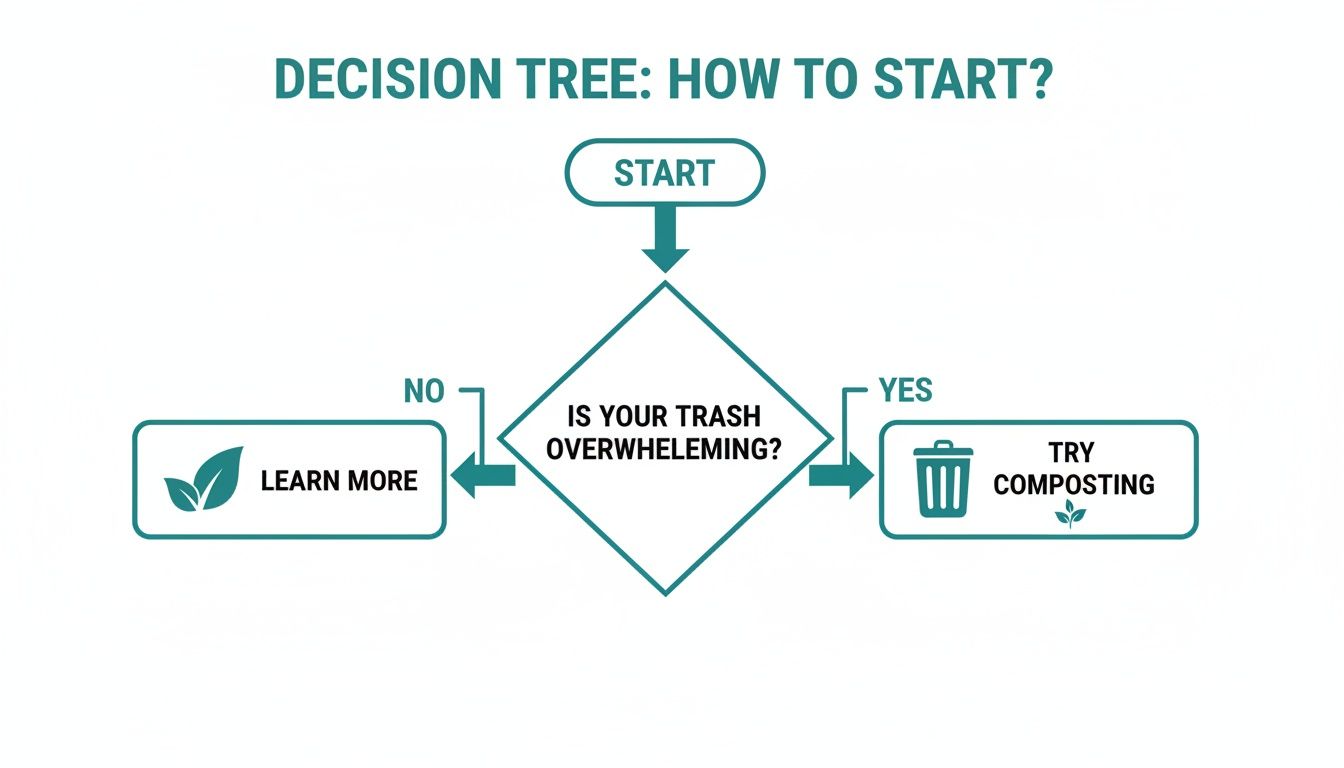
    • Ignitable Items
      This one's simple: these are things that can easily catch fire. You’ve got the obvious stuff like lighter fluid and gasoline, but don't forget about rubbing alcohol, nail polish remover, and a ton of aerosol cans. I remember one cleanup we did near an old garage in West Pullman. We found this rusted can of what looked like old paint. The fumes were so strong and flammable that we had to clear the area immediately. It’s a powerful reminder that even old, forgotten stuff can still be dangerous.

    • Corrosive Substances
      These are the materials that can literally eat through other things, including metal and even your skin. The most common examples are drain cleaners, oven cleaners, and car battery acid. This stuff is powerful, which is exactly why you can't just pour it down the drain or toss it in the regular trash.

    • Reactive Chemicals
      This category is a little trickier. These are chemicals that are fine on their own but become dangerous when they touch something else—like air, water, or other chemicals. The classic example I always use is bleach. Mix it with an ammonia-based cleaner, and suddenly you’ve created toxic chloramine gas. It’s a chemical monster. Many pool chemicals also fall into this group.

    • Toxic Substances
      This is the catch-all category for anything poisonous if you breathe it in, swallow it, or get it on your skin. We're talking pesticides, antifreeze, rat poison, and old paints that might contain lead. These chemicals are designed to be harmful to pests, but they're just as bad for us, our pets, and the local environment.

    You don’t need a chemistry degree to get this right. Just be a detective. Look for signal words on the label like “Danger,” “Warning,” “Poison,” or “Caution.” Those are your clues that an item needs special handling for Chicago hazardous waste disposal.

    A Quick Guide for Spotting These Items

    To make it even easier, I put together a simple reference table. Use this to quickly spot some of the most common things around your house that need a special trip to a disposal facility here in Chicago.

    Your Quick Guide to Identifying Hazardous Waste

    Hazardous Waste Category What It Means Common Household Examples
    Ignitable Can easily catch fire or explode. Lighter fluid, aerosol cans, rubbing alcohol, gasoline, paint thinners.
    Corrosive Can "eat" or burn through materials. Drain cleaners, oven cleaners, car batteries, strong household acids.
    Reactive Can cause explosions or toxic fumes if mixed. Bleach (when mixed with ammonia), pool chemicals, certain fertilizers.
    Toxic Poisonous to people, pets, and the environment. Pesticides, antifreeze, mercury thermometers, lead-based paints.

    Looking at this list, it’s pretty clear why proper Chicago hazardous waste disposal is so important. These aren't just regular trash items; they’re potent materials that you have to manage with care. By taking a few minutes to identify them, you're doing a huge part to protect our city.

    Your Action Plan for Safe Disposal in Chicago

    Okay, you've gone through the garage, the basement, and under the sink. You’ve identified the culprits—the old paint, the mystery cleaners, the dead batteries. Now for the most critical part: getting it out of your house safely and responsibly. This is where we turn that pile of "what-do-I-do-with-this?" into a solid game plan for chicago hazardous waste disposal.

    For us regular Chicago residents, the city has thankfully given us a couple of solid lifelines. You’ve got a permanent drop-off spot and a series of mobile collection events that pop up around town. These are your two best friends in this mission.

    But it’s not as simple as just tossing everything in the trunk and hoping for the best. A little prep work is key. Think of it like packing for a road trip—you want everything sealed up and secure so the journey is safe for you and everyone else.

    Getting Your Hazardous Waste Ready for the Trip

    Before you even think about loading up the car, you need to get everything prepped and ready to go. I've seen some sketchy situations at collection events—leaky bottles, weird chemical cocktails—and it’s all so easily avoided. Let’s not be that person.

    First things first: keep everything in its original container if you can. Those labels have important info. If you have something leaking, don't panic. Just pop the whole container into a bigger, sturdier, leak-proof one. A plastic tub with a lid works perfectly.

    Here's my quick checklist of absolute must-dos:

    • Never, ever mix chemicals. This is the number one rule, and I can't say it enough. Mixing the wrong stuff—like that bleach and ammonia combo we talked about—can create toxic fumes or even start a fire. It’s no joke.
    • Seal it up tight. Double-check that all the lids are screwed on securely. If you’ve got open bags of things like old fertilizer, seal them inside another plastic bag to be safe.
    • Label anything that’s been re-homed. If you put old motor oil in a milk jug (we've all seen it), please grab a permanent marker and label it clearly. It helps the pros at the facility know exactly what they're dealing with.

    This little decision tree can help you visualize the process and figure out what needs special treatment versus what can go in your regular bins.

    A flowchart diagram for household waste disposal, guiding users to hazardous waste facilities or recycling based on toxicity, flammability, and corrosiveness.

    As the chart shows, once you flag something as toxic, flammable, or corrosive, it's on a one-way trip to a specialized facility, far away from your everyday trash and recycling.

    Navigating Chicago's Disposal Options for Residents

    For household hazardous waste, you've got two main choices here in the city. The big one is the permanent Household Chemicals & Computer Recycling Facility. It's an incredible resource and takes a massive range of stuff.

    Then there are the mobile collection events. The city sets these up in different neighborhoods throughout the year, which is a lifesaver if you can't easily trek to the permanent site. Just keep an eye on the city's schedule to see when one is coming your way.

    My Personal Tip: Get there early! These events can get swamped. I always pack my car the night before so I can just get up and go. A little planning can save you a ton of time sitting in line.

    Let's walk through a real-life scenario. Say you just finished a bathroom reno. You're left with two half-empty cans of paint thinner, some old corrosive tile cleaner, and a few cans of spray paint. Your plan is simple:

    1. Check that every container is sealed up tight.
    2. Stick them upright in a cardboard box in your trunk so they won't tip over.
    3. Look up the hours for the permanent facility or find the date for the next mobile event.
    4. Drive over, and the experts will take it from there.

    It’s really that easy. Of course, not everything is considered hazardous waste. For all your normal plastics, paper, and glass, you'll need to know your local recycling rules.

    A Different Path for Local Businesses

    Now, if you’re a business owner, listen up, because the rules are completely different for you. The city's residential programs are strictly for residents. Any commercial business, even a tiny one, has to follow a separate set of regulations.

    Why the split? It all comes down to volume and liability. Businesses tend to produce way more waste, and federal laws like the Resource Conservation and Recovery Act (RCRA) demand a strict "cradle-to-grave" tracking system for any commercial hazardous materials.

    This means you can't just drop your shop's old chemicals off at a community collection day. You’ll need to hire a permitted hazardous waste hauler. These are state-licensed companies that specialize in safely transporting and disposing of this stuff. A quick search for "Illinois permitted hazardous waste haulers" will point you to the right people who can help you stay compliant. It’s an extra step, but it’s a crucial one for keeping our city safe and clean.

    Handling Electronics, Paint, and Medications

    Illustrates e-waste like smartphones and batteries, and hands disposing items into a paint-splattered can, symbolizing different waste types.

    Some stuff just doesn't fit the normal recycling bin or trash can. I'm talking about the junk drawer full of old phones, the half-used paint cans in the garage, or the expired prescriptions in your medicine cabinet. These things need their own special game plan because they carry unique risks if you just toss them.

    This is your guide for those tricky items. I'll get into why the heavy metals in your old electronics (e-waste) are so nasty for landfills. I'll also clear up the confusion around latex paint and why you often have to dry it out first.

    Most importantly, we’ll cover the safest ways to get rid of sharps and unused prescription drugs. This isn't just about following rules; it's about being mindful. Proper disposal prevents unseen harm and makes sure our trash doesn't become someone else's problem down the line.

    The Problem with E-Waste and Batteries

    Think about that old laptop or phone you’ve got stashed away. It's not just plastic and glass—it’s a tiny vault of valuable materials mixed with some seriously toxic stuff. I'm talking lead, mercury, and cadmium, heavy metals you absolutely do not want seeping into our soil and groundwater.

    When e-waste gets dumped in a landfill, those metals can leach out, creating a long-term pollution headache that's a nightmare to clean up. This is exactly why Illinois law bans electronics from landfills. It’s on all of us to keep this stuff out of the regular trash.

    So, what’s the right move for you?

    • City Recycling Programs: The Household Chemicals & Computer Recycling Facility is your best bet for most e-waste, from old computers and TVs to printers and mice.
    • Retailer Take-Back Programs: Big stores like Best Buy and Staples often have their own recycling programs. They’ll usually take a wide range of electronics, even if you didn't buy them there.
    • Specialized Recyclers: For things like batteries, you need to find specific drop-off spots. Lucky for you, we’ve already done the legwork. You can find everything you need in our guide on how to recycle batteries in Chicago.

    Navigating Paint Disposal

    Paint is one of the things people ask me about most. For Chicago hazardous waste disposal, the rules are different depending on what kind of paint you have, so I'll break it down.

    Oil-based paints (also called alkyd) are always hazardous waste. They're full of flammable and toxic solvents, so they must go to a hazardous waste collection site. No exceptions.

    Latex (water-based) paint is a different animal. Because it’s not technically hazardous, you have another option. If the can is less than a quarter full, you can just dry it out and toss it in your regular trash. Just pop the lid off and leave it in a well-ventilated spot away from kids and pets. Pro-tip: add some kitty litter or shredded newspaper to speed things up.

    My personal rule of thumb is simple: If you can't or don't want to deal with drying it out, just take it to the hazardous waste facility. It's the safest, most foolproof way to handle any kind of paint, and you'll know you did the right thing.

    Safely Handling Medications and Sharps

    This is where our personal responsibility really hits home, directly impacting public health and the safety of sanitation workers. Flushing old pills seems easy, but it pumps pharmaceuticals into our water supply—stuff that treatment plants aren't designed to filter out.

    For any unused or expired meds (prescription or over-the-counter), your best bet is a designated drop-box. You can find them at many police stations and pharmacies around Chicago. This keeps them secure and ensures they’re destroyed properly.

    Sharps—needles, syringes, and lancets—are a serious physical threat. They can puncture sanitation workers, spreading disease. Never, ever throw loose sharps in the trash.

    Here’s how you do it right:

    1. Put used sharps in a strong, puncture-proof plastic container with a secure lid. An old laundry detergent bottle or coffee can works great.
    2. Clearly label the container: "SHARPS – DO NOT RECYCLE."
    3. Once the container is about three-quarters full, seal it up with heavy-duty tape.
    4. You can then take this sealed container to a designated sharps collection site, often found at hospitals, clinics, or some fire stations.

    Cutting corners on waste disposal has a dark history in Chicago. The old Northwest Waste-to-Energy plant, for example, failed toxicity tests 29 out of 32 times, yet the city still dumped its ash in regular landfills. That 23,000 tons of potentially toxic ash would have cost an extra $4.6 million a year to handle correctly—a decision that sparked a landmark lawsuit. You can learn more about Chicago's long battle with its trash by reading this historical overview. By taking these extra steps, you're choosing a better, safer path for our city.

    From Personal Action to Community Transformation

    You actually did it. You stared down that messy cabinet, wrangled all those mystery chemicals, and got that hazardous waste out of your life for good.
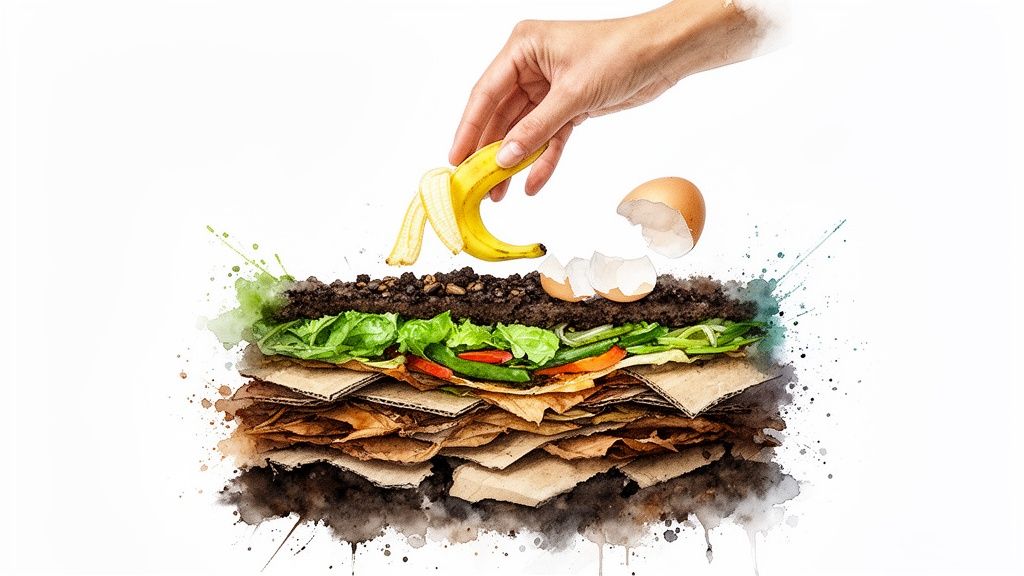
    Take a second and hold onto that feeling. That shift from having a problem you didn’t know how to solve to feeling empowered and in control? That’s exactly what drives us at Litter Caterpillars.

    Your personal act of cleaning up a single space is the spark. It's the same fire that transforms an entire neighborhood.

    The Power of Showing Up

    When you show up for your neighborhood, week after week, rain or shine, you build more than just clean streets. You build consistency. You build bravery. You build real connections with people who care just as much as you do.

    It’s one thing to handle your own mess. It's something else entirely to reclaim a shared space that everyone had given up on.

    Think about the feeling you got solving your own chicago hazardous waste disposal problem. Now, imagine multiplying that by a dozen neighbors, all working together on a neglected block. That’s where the real magic happens.

    From Empty Lot to Caterpillar Park

    Let me tell you a story. There was this forgotten, empty lot in Englewood. You know the type—a place people just walk past without a second glance, another sad symbol of neglect. We saw something different. We saw potential.

    So we did something a little crazy. As a group of volunteers armed with trash grabbers and a shared vision, we decided to buy it. We pooled our efforts, figured out the city auction process, and we won. We actually bought an empty lot.


    Today, we're turning that patch of dirt into Caterpillar Park. This isn't just about planting flowers. It’s living proof that small, dedicated actions, repeated over and over, lead to incredible, tangible change. A park is literally growing from the same spirit it took for you to clean out your garage.
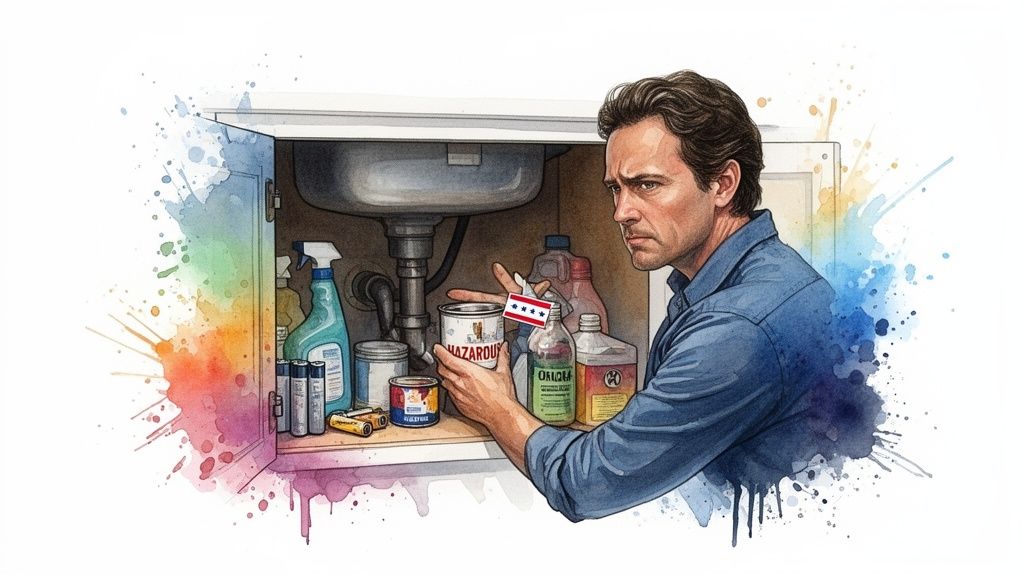
    This is our invitation to you. If you felt good taking care of your own space, just imagine what you can accomplish with a team. Imagine the pride in looking at a vibrant community park and knowing you helped build it from the ground up.

    Cleaning with a Deeper Purpose

    Our mission to clean every corner of Chicago is also about confronting a hard truth. Hazardous waste in our city has always carried a heavy legacy of racial and social inequity. An analysis from the University of Chicago showed that non-White majority zip codes have shouldered a disproportionate burden of toxic releases since 1990.

    This history was fueled by hazardous landfills crammed onto the Southeast Side. We counter this by showing up for all 50 wards, cleaning every neighborhood with a three-year track record of weekly consistency—building unity among all Chicagoans. You can read more about the research into Chicago's environmental justice challenges.

    This is why our work matters so damn much. We don't just pick up litter; we work to heal divides and bring care to the places that need it most. We show every community that they are seen, valued, and that we are all in this together.

    Each cleanup is a statement. It says that every block deserves to be clean and safe, and that we, the residents, have the power to make it happen. You can see the impact for yourself and learn more about our approach to cleaning up trash throughout Chicago.

    Your journey started with a single decision to handle your waste responsibly. Now, you have a choice. Take that incredible momentum and join a larger movement. Turn your personal victory into a shared triumph for our entire city. We’re out there every weekend, and I'd love for you to be a part of it.

    Your Chicago Hazardous Waste Disposal Questions Answered

    Got questions? Good. It means you’re taking this seriously. I see it every week at our cleanups—people start picking up litter, then they get curious about the really nasty stuff and how to handle it right. These are the details that matter.

    Based on all the questions I get, I've put together the ones that come up most often about chicago hazardous waste disposal. My goal is simple: give you straight answers so you can handle this stuff with total confidence.

    Can I Put Small Amounts of Hazardous Waste in My Regular Trash?

    I get this one a lot. It’s so tempting to think, "It's just a few old batteries," or "This bottle of drain cleaner is almost empty, what's the harm?" But let me put it this way: it’s like adding one drop of poison to a huge glass of water.

    One drop doesn't seem like much, but when thousands of us add our own "one drop," it becomes a massive problem. That toxic sludge builds up in our landfills and seeps into the groundwater we all depend on. It’s a group effort; every single battery and bottle you keep out of the regular trash makes a real difference.

    What Happens If I Get Caught Disposing Waste Improperly?

    Honestly? The chances of the trash police knocking on your door for tossing a bottle of bleach are pretty slim. But that’s not the point. The real consequence isn't some fine you have to pay.

    The real cost is the damage we don't see. It's the sanitation worker who gets a chemical burn, the fluorescent bulb that shatters and releases mercury vapor, or the slow poisoning of Lake Michigan.

    The true cost is paid by our environment and our community. Following the rules for Chicago hazardous waste disposal isn’t about avoiding a slap on the wrist; it’s about actively protecting the city we all call home.

    Why Can’t Businesses Use Residential Drop-Off Sites?

    This is a huge point of confusion. The city's free drop-off sites are funded and built to handle the kind of waste a family produces, not the volume that comes from even a small business. The laws for businesses, like the Resource Conservation and Recovery Act (RCRA), are way stricter.

    Businesses have to follow what's called a "cradle-to-grave" system. Think of it like a chain of custody for evidence in a crime scene. It tracks that hazardous material from the moment it leaves your shop to its final, safe disposal. This process is tough for a reason—it prevents illegal dumping and makes sure everyone is accountable.

    What Is the Single Most Dangerous Item I Might Have?

    If I had to pick just one thing that gives me the chills, it’s mercury. You find it in old-school thermometers, some thermostats, and those curly fluorescent light bulbs. Just one gram of mercury—about the amount in an old thermometer—can contaminate a 20-acre lake and make the fish toxic to eat.

    This stuff is a powerful neurotoxin. It’s so dangerous that if you break something with mercury in it, the EPA has a whole emergency protocol for cleanup. You have to air out the room, and you can never use a vacuum. If you find anything with mercury, treat it like the poison it is and get it to a proper facility. It’s that serious.

    How Can I Stay Updated on Mobile Collection Events?

    The most reliable source is the official City of Chicago website. They post the schedule for mobile drop-off days there first.

    But here are a couple of other tricks I use to stay in the loop:

    • Follow local community pages: Neighborhood Facebook groups are gold for this. People are always sharing reminders. Our group does, too!
    • Sign up for your alderperson's newsletter: This is the best way to get super local info, including ward-specific cleanup days and events.

    A little bit of planning makes it so much easier to do the right thing. Your effort is what builds a cleaner, safer Chicago for everyone.


    Ready to turn that personal effort into something bigger? Join Litter Caterpillars this weekend. We're out there every single week, making a real difference one block at a time. It’s the best way I know to meet people who actually care and feel the power of what we can do together. Find our next event and sign up at https://www.littercaterpillars.com.

  • City of Chicago Hazardous Waste Disposal: A Fearless Guide

    City of Chicago Hazardous Waste Disposal: A Fearless Guide

    Getting rid of that old can of paint or those dead batteries isn't just another chore. It's a quiet act of bravery. In Chicago, the city makes it free to drop off household chemicals and old electronics at their permanent facility or mobile collection events. It’s a surprisingly simple way to protect our shared home, and honestly, it’s one of the kindest things you can do for the whole city.

    Turn Your Clutter into a Crusade

    A woman kneels, taking a paint can and bleach bottle from a cardboard box, surrounded by paint splatters.

    You know the stuff I’m talking about—the forgotten bottle of bleach under the sink, the half-used paint cans from that project five years ago. They feel like small, nagging problems. But what if they were actually clues on a map to a better you and a healthier Chicago? This isn't just a guide about trash; it’s about transformation. We’re going to show you how tackling the hidden gunk in your home is a powerful act of courage.

    I started Litter Caterpillars from this exact feeling. My apartment was a disaster, a perfect mirror for the chaos I felt inside. Cleaning it up wasn't about tidying; it was an act of choosing bravery over avoidance. I learned that by properly managing the mess in our homes, we clean up our inner worlds, too. This is your invitation to an adventure, where every item you dispose of correctly is a heroic step.

    The Scale of Our Shared Challenge

    It's easy to feel like one can of old paint thinner doesn't matter. But our individual clutter adds up to a massive, city-wide problem.

    In 2020 alone, Chicago produced a staggering 4.13 million tons of waste. Imagine the weight of that. And a huge chunk of it—over 1.4 million tons—came from commercial and industrial sources, which are prime generators of hazardous stuff. When you see those numbers, it's clear our small actions are part of a much bigger story. You can dig deeper into Chicago's waste strategy and its findings to get the full picture.

    This is where personal growth slams right into community impact. The story of Litter Caterpillars began when I hit a personal breaking point. My messy apartment mirrored a messy life. The decision to finally clean up wasn't just about throwing things away; it was an act of taking control. It was about choosing bravery over avoidance.

    That's the secret we discovered: cleaning someone else’s mess is often easier than cleaning our own. It builds a muscle. It teaches you consistency and gives you a strange, new kind of fun—the kind that comes from doing something hard with friends.

    That’s the exact spirit we bring to our weekly cleanups, rain or shine. For three years, we’ve shown up. We've cleaned highways and are even turning an auctioned lot into a park, all fueled by the simple idea that service can redeem and transform us.

    Why Your Small Act of Sorting Matters

    Disposing of your hazardous waste correctly is an act of kindness to thousands of people you’ll never meet. It protects the sanitation workers who handle our trash every day and the water we all drink from Lake Michigan. It's a quiet, heroic choice that ripples outward.

    Think of it like this: every single item has a story. That old bottle of weed killer is a potential threat to the soil in a local park. Those expired batteries could leach heavy metals into the ground. When you choose to take them to a proper disposal site, you’re not just getting rid of clutter. You are rewriting the end of that item's story from a harmful one to a helpful one.

    This guide is here to make that choice easy. We believe making an impact is a lot easier than you think, and it can even be fun. It’s about building new habits, one brave decision at a time. The same focus it takes to sort your hazardous waste is the focus you can bring to other parts of your life. This isn't just a cleanup; it's a crusade.

    Recognize the Hidden Hazards in Your Home

    Before you can tackle a problem, you have to know what you're looking at. This part is your field guide for a brave mission: finding the common household hazardous waste (HHW) hiding in your own home. Forget boring lists. We’re going on a scavenger hunt, and the prize is a safer home and a healthier Chicago.

    This isn’t about making you paranoid; it’s about making you powerful. Think of yourself as a detective and your home as the scene. The clues are usually hiding in plain sight—the old can of paint thinner, the half-used bottle of drain cleaner, the expired pills in the medicine cabinet. By learning to see your space with new eyes, you’re taking the first, most important step.

    Meet the Garage Goblins

    The garage is often the main hideout for some of the nastiest stuff we own. We call them "Garage Goblins" because they're usually out of sight, but they can cause some serious trouble.

    I'm talking about things like used motor oil, antifreeze, and old gasoline. When these liquids get tossed in the regular trash, they can seep into the ground at the landfill, contaminating soil and our groundwater. That’s a direct threat to Lake Michigan, our drinking water source.

    Then you've got the pesticides, herbicides, and fertilizers. These chemicals are designed to be powerful, and that power doesn't just vanish when you throw them away. Spotting these goblins is the first move in getting them out of your life for good.

    Unmasking the Kitchen Gremlins

    Your kitchen might seem innocent, but it’s a favorite hiding place for its own tricky creatures. These "Kitchen Gremlins" often come in bottles and cans, promising a sparkling clean home.

    We're talking about items like:

    • Caustic Cleaners: Oven cleaners and drain openers are no joke. They often contain lye or strong acids that can cause severe burns and eat right through stuff.
    • Aerosol Cans: Even if they seem empty, cans for cooking spray or air fresheners can still explode under pressure in a garbage truck.
    • Cooking Oils: While it’s not toxic like a chemical, pouring old cooking oil down the drain is a fast way to clog up the city's sewer lines. Throwing it in the trash just makes a greasy mess and attracts pests.

    The real danger here is how normal these things are. We use them all the time, so we forget how potent they can be. Treating them with respect by disposing of them properly is a small act of kindness to our city's workers and our environment.

    To make this even clearer, here’s a quick reference table to help you spot these creatures around your house and understand the "why" behind handling them carefully.

    Common Household Hazardous Waste and Its Dangers

    Item Category (The 'Creature') Common Examples The Hidden Danger (Why it's hazardous)
    Garage Goblins Motor oil, antifreeze, gasoline, paint thinner, pesticides, herbicides Can contaminate soil and groundwater, posing a risk to drinking water and wildlife. Flammable.
    Kitchen Gremlins Oven cleaner, drain opener, aerosol cans, polishing agents Corrosive chemicals can cause severe burns. Aerosols can explode. Fumes can be toxic.
    Bathroom Bogeymen Expired medications, mercury thermometers, nail polish remover, button batteries Pharmaceuticals pollute waterways. Heavy metals (like mercury) are highly toxic. Flammable.

    Spotting these items is half the battle. Once you know what you have, you can make a plan to get rid of it the right way.

    Battling the Bathroom Bogeymen

    The bathroom cabinet is another prime spot for what we call the "Bathroom Bogeymen." This is where you'll find expired pharmaceuticals, old-school mercury thermometers, and nail polish remover.

    Flushing old pills was once common advice, but now we know better. It just sends those chemicals straight into our water system, and treatment plants aren't built to filter them all out. This stuff can mess with aquatic life and eventually circle back into our environment.

    Even something tiny like a button battery from a hearing aid or a watch is packed with heavy metals like mercury, cadmium, or lithium. If you’re looking to tackle this specific challenge, our guide on how to properly recycle batteries in Chicago gives you clear, actionable steps. Every single battery you keep out of a landfill is a small but heroic victory against pollution.

    Your Guide to Official Chicago Disposal Programs

    Alright, you’ve bravely hunted down the hazardous goblins and gremlins lurking in your home. Now what? You’re holding a box of powerful, potentially messy stuff. Don't worry. This next part isn't some bureaucratic chore; it's a simple mission. It’s all about getting these items into the right hands, and the City of Chicago has made it surprisingly easy.

    Think of yourself as a secret agent on a delivery mission. Your package is sensitive, and your job is to get it to the drop-off point safely and securely. The city provides the secure location; you just need to handle the transport. This isn't about navigating red tape; it's about being part of a city-wide effort to do the right thing, together.

    The Main Hub: The Permanent Drop-Off Facility

    Chicago has one central, permanent location dedicated to this mission: the Household Chemicals & Computer Recycling Facility at 1150 N. North Branch Street. This is your go-to headquarters for safe disposal. It’s a place built specifically to handle the tricky items you’ve gathered.

    The best part? It's completely free for Chicago residents. No appointment needed. You just show up with your items, and a trained crew takes them off your hands. It feels good, like completing a quest. You drive in with a problem and drive out with a solution, leaving your community a little bit safer.

    So, what can you bring? The list is long, but here are the highlights:

    • Garage & Garden Chemicals: Think paint thinners, lawn chemicals, antifreeze, and used motor oil.
    • Cleaning Supplies: Bleach, ammonia, drain cleaners, and all those old household cleaners under the sink.
    • Electronics: This is a big one. Computers, monitors, printers, cell phones, and televisions.
    • Miscellaneous Hazards: Fluorescent light bulbs (CFLs), thermostats, old batteries, and expired medications.

    Just a heads-up, they do not accept things like latex-based paint (which you can just dry out and toss in the regular trash), explosives, fireworks, or smoke detectors. Knowing what they take beforehand is key to a smooth drop-off.

    Mobile Missions: Pop-Up Collection Events

    What if the permanent facility on North Branch feels like a journey? This is where the city’s kindness really shows up. Throughout the year, they host mobile collection events in different neighborhoods.

    These events are like a traveling roadshow for responsible disposal. They bring the solution closer to your doorstep, making it even easier to participate. It’s a powerful reminder that you’re not alone in this. When you see your neighbors also dropping off their old electronics and chemicals, you realize you're part of a movement.

    This is community in action. Each person showing up to a mobile event is casting a vote for a cleaner Chicago. It’s a shared moment of responsibility, proving that when we make good choices accessible, people will bravely make them.

    Keep an eye on the city's official website for the schedule. These events are fantastic opportunities to clear out your clutter and feel connected to a larger purpose.

    Your Pre-Mission Checklist: Safe and Simple Transport

    Getting your items to the drop-off site safely is the final, crucial step. It’s not complicated, but it requires a little mindfulness.

    Think of it this way: you wouldn't carry a leaky water bottle in your backpack, right? The same principle applies here. Your goal is to make sure everything stays contained.

    Start by checking that all your containers have tight, secure lids. If a product is in its original container, leave it there—that label has important info. If you have something in a leaky container, place the entire thing inside a larger, sealed plastic tub or a heavy-duty bag.

    The visual below breaks down the typical hunt for these items in your home, from the garage to the bathroom.

    Flowchart illustrating a three-step hazard identification process for garage, kitchen, and bathroom areas.

    This simple flow highlights the key areas where these hidden dangers often reside, making your search more focused and effective.

    When you're ready to drive, place the items in your trunk or the bed of your truck, away from the main passenger area. This prevents fumes from building up and keeps everyone safe in case of a spill. It’s a small act of kindness to yourself and anyone riding with you.

    And once you've made your drop-off, you'll find there are many other ways to continue your journey. For those items that aren't hazardous but still need a new home, our guide to Chicago recycling centers can help you find the right place for everything else.

    Why Your Small Action Creates a Big Impact

    It’s easy to look at that one can of old paint or your little box of dead batteries and think, "what difference does it really make?" Chicago is a massive city with problems that feel way too big for one person to solve. But trust me, your small, brave choice to do the right thing sends ripples out farther than you can see.

    Think of our recycling system as a giant river. When it’s clean, everything flows perfectly. But toss in one wrong thing—like a leaky can of bug spray—and you poison everything downstream. This isn't just an analogy; it's the hard reality of Chicago's waste problem.

    The Contamination Nightmare

    When you toss a bottle of bleach into your blue bin, you're not just making a tiny mistake. That single item can get an entire truckload of good, clean recyclables rejected and sent straight to a landfill. It's a heartbreaking domino effect. The system is more fragile than people realize, and one person's choice holds a shocking amount of power.

    This is what we call contamination, and it’s a monster of a problem. It’s why proper city of chicago hazardous waste disposal isn’t just a nice-to-do. It’s a critical mission. Your one correct decision literally protects the good work of hundreds of your neighbors.

    The numbers don't lie. Chicago's household waste diversion rate—the stuff we actually keep out of landfills—is only 9.4%. That’s embarrassingly low compared to other big cities. Contamination makes that bad number even worse. With our local landfills having less than 10 years of space left, every single choice matters more than ever. You can read more about Chicago's recycling mess and what you can do to help.

    Your Quiet Act of Bravery Echoes Through the City

    This isn't about shaming anyone. It’s about empowerment. It’s about understanding the real power you hold in your hands.

    Let's tell a different story. Imagine you have that half-used can of pesticide. Instead of just tossing it, you take a brave step. You look up the city's drop-off site, you seal the can, and you make the trip. What did you just accomplish?

    • You Protected Our Water: You stopped toxic junk from seeping into the ground and maybe even into Lake Michigan, where we get our drinking water.
    • You Saved Landfill Space: You made sure a whole truck full of recycling didn't get contaminated and dumped into a landfill that's about to burst.
    • You Became a Good Neighbor: You did something that helps millions of people you will never, ever meet. It’s a quiet, powerful act of kindness.

    Every time you correctly dispose of a hazardous item, you are casting a vote. You’re voting for a healthier lake, cleaner parks, and a city that values its resources. Your small act is a massive contribution to our shared community challenge.

    This is the exact same spirit we live by at Litter Caterpillars. We know that cleaning up trash is about more than just making a block look pretty; it's about taking pride in our home and inspiring others to do the same. Each piece of litter we grab feels small, but together, we've transformed entire neighborhoods.

    Your personal decision to handle hazardous waste with care is no different. It’s a quiet, heroic act that builds a stronger, kinder, and more resilient Chicago for all of us.

    Creative Solutions and Community Power

    Two smiling volunteers sort paint cans into a recycling bin near a community garden and mural.

    Tackling hazardous waste doesn't have to be a lonely trip to a drop-off site. The journey you started by finally cleaning out that scary garage corner can be the start of something bigger—an act of connection and real community power. This is where it gets fun. This is where you see your own personal growth start to ripple out and inspire other people.

    Think of it like this: your house is your personal ecosystem, but the city is our shared one. When you find a smarter way to handle waste, you're not just cleaning a shelf; you're healing a tiny piece of Chicago. It’s about looking at "waste" and seeing potential instead of just an ending.

    Give Your Stuff a Second Act

    Before you tape up that box and haul it to the city's hazardous waste facility, take one last brave look inside. Is every single thing in there truly "waste"? Sometimes, what we see as a problem is actually a solution that's just waiting for a new home.

    This is especially true for things like leftover latex paint. Now, oil-based paints are a different story, but latex paint? If it’s still good, it's a resource! That half-full can could be exactly what a local theater group needs for their next set design, or what a community garden needs to finally paint those planters.

    This tiny shift in mindset is powerful. It turns a chore into an act of kindness. Here’s how you can find a new home for your usable stuff:

    • Hit up local arts and theater groups. Most of them are running on shoestring budgets and would be thrilled to get usable materials like paint.
    • Check with schools and community centers. You never know, their art or maintenance departments might be looking for exactly what you have.
    • Post on neighborhood groups. Platforms like Facebook or the Buy Nothing Project are incredible for connecting your "clutter" with a neighbor's need.

    Every single item you can keep out of the waste stream is a victory. It’s a creative act that saves resources, supports local groups, and weaves our community a little bit tighter. It’s you, looking at a can of paint and choosing to see a possibility instead of a problem.

    This same logic works for other items, too. That old laptop you replaced isn’t just e-waste; it could be a lifeline for a student who doesn’t have one. Finding a proper electronics recycler or refurbisher gives it a second life.

    The Power of Collective Action

    This is how we go from personal growth to community transformation. One person making a trip to the disposal facility is good. A whole neighborhood organizing together? That’s unstoppable. This is the heart of what we do at Litter Caterpillars. We know that when kind, brave people join forces, they can literally change the landscape of our city.

    The Chicago Metropolitan Region is facing a landfill crisis that makes our work even more urgent. As of early 2025, our region's main landfills have an average of just 23.6 years of capacity left, and some have less than a decade. With budgets being cut, volunteer groups are the ones stepping up. You can learn more about the critical state of Illinois's landfill capacity and see for yourself.

    This is where community groups shine. Imagine a block club organizing a "Hazardous Waste Carpool Day," where a few neighbors with cars help others get their stuff to the city’s facility. Or picture a group pushing for more pop-up collection events in their area. This is kindness in action—seeing a shared problem and tackling it together.

    At Litter Caterpillars, we saw this happen firsthand. We found a trashed-out vacant lot in Englewood and saw a park. So we rallied, we cleaned, we bid, and we won it at auction. That lot is now becoming Caterpillar Park. A small team with a brave vision is turning a forgotten space into something beautiful.

    That’s the kind of power you tap into when you join a group or even just start a conversation with your neighbor. Your personal mission to handle your city of chicago hazardous waste disposal can be the spark that ignites a block-wide, a neighborhood-wide, or even a city-wide movement. Together, our small, brave acts are truly unstoppable.

    Your Questions Answered Fearlessly

    Look, every big adventure starts with a few nagging questions. It’s that last little bit of doubt that tries to trip you up before you even take the first step. Let's tackle those common worries about city of chicago hazardous waste disposal head-on. No fluff, just clear, kind answers.

    This isn't some official manual. Think of it as a chat with a friend who’s already figured this stuff out. These are the real-world problems people worry about but feel weird asking. Let's get into it.

    What Happens If I Mess Up?

    "Okay, real talk. What if I accidentally toss something hazardous in my regular trash?"

    First off, don't beat yourself up. It happens. We’re not aiming for perfection overnight; we’re building new habits.

    The real risk is that the item could leak, maybe harming a sanitation worker or, down the line, seeping into the soil and water at the landfill. So, forgive yourself for the mistake. Then, use that "oops" moment as fuel. Set up a little "hazard box" in your garage or under the sink. Now you have a designated spot for the next time you find an old can of paint thinner. Every small change adds up.

    Solving the Transportation Challenge

    "I don't have a car. How am I supposed to get this stuff to a drop-off site?"

    This is a huge, very real problem for a lot of Chicagoans. And honestly, it’s where the power of community really kicks in. This is your chance to be brave in a different way: by asking for help.

    Your first move should be to check the city’s website for any mobile collection events that might pop up in your neighborhood. But don’t stop there. Reach out! Post in your local Facebook or Nextdoor group. Ask a friend who drives. You could even organize a little carpool with a few neighbors. You’ll be shocked how many people are happy to help when they know it’s for a good cause.

    Is My Small Effort Really Worth It?

    "Seriously, is it worth all this trouble for just a few batteries and one can of paint?"

    Yes. A thousand times, yes. Think about it like our cleanups. At Litter Caterpillars, every single piece of trash we pick up is small. A bottle cap, a chip bag. But when we work together, we’ve cleared literal tons of it from our city. Your "small" effort is part of a giant, city-wide movement.

    That one can of paint you dispose of correctly keeps gnarly pollutants out of Lake Michigan. Those few batteries prevent heavy metals from poisoning the ground our food grows in. Your single action is a vote for a healthier Chicago. It’s not just worth it; it’s everything.

    Can My Community Group Host a Collection Event?

    "Can my block club or community group host our own hazardous waste collection event?"

    This is a great idea, but organizing an official event is a beast. It means partnering with licensed waste handlers and getting city permits to make sure everything is safe and legal. It’s a mountain of liability and logistics.

    But that doesn’t mean your group can't lead the charge! Instead of collecting the waste yourselves, host a "Hazardous Waste Awareness Day." You can be the neighborhood experts.

    • Hand out flyers with the official drop-off locations and hours.
    • Educate neighbors on what counts as hazardous waste.
    • Organize a carpool to the city's permanent facility on North Branch Street.

    This way, you create a massive impact and build community spirit without taking on the legal and safety risks. You become the guide, the helper, the spark.


    Ready to turn your personal mission into a community movement? Join Litter Caterpillars and see how a few hours of kindness each week can transform our city and you. Find your next adventure at https://www.littercaterpillars.com.