
Tired of your own mess? Clean up someone else's. I used to look at my apartment, my calendar, and my headspace and feel like I'd lost the plot. Then I found out something I didn't expect. Picking up trash with other people can feel easier than fixing your own life alone, and it can pull you into a circle of people who show up. If you want a cleaner block, a steadier habit, and a few new friends who don't flake, these civic engagement opportunities can get you moving today.
1. Litter Caterpillars
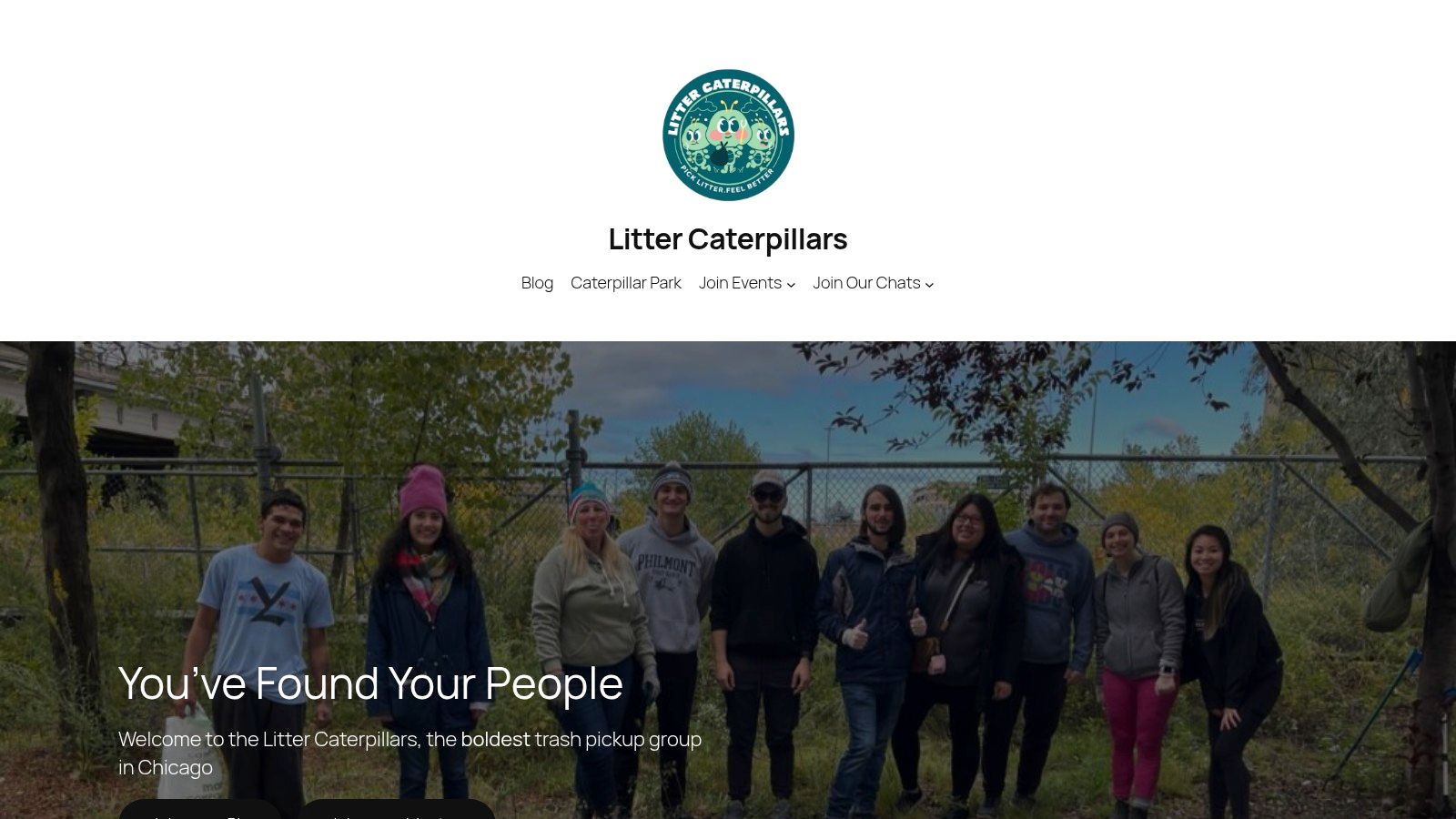
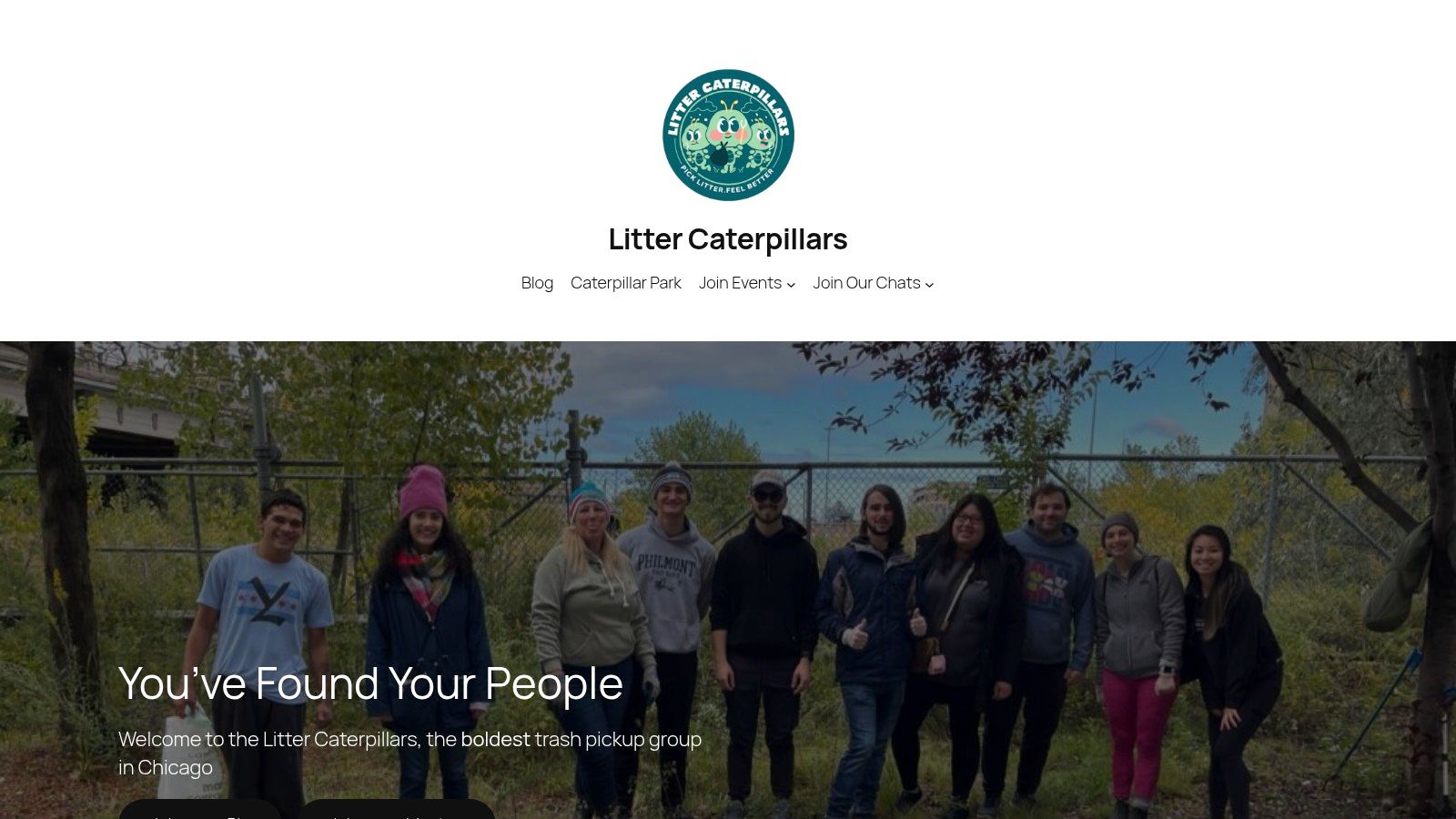
The first time I watched a trash bag go from empty to full in a few minutes, something in me finally loosened. That's the pull of Litter Caterpillars, a Chicago cleanup crew that turns a weekend morning into a sweaty reset with other people who show up. If you've been feeling stuck, there's something grounding about putting on gloves, grabbing a bag, and making one ugly corner look cared for again.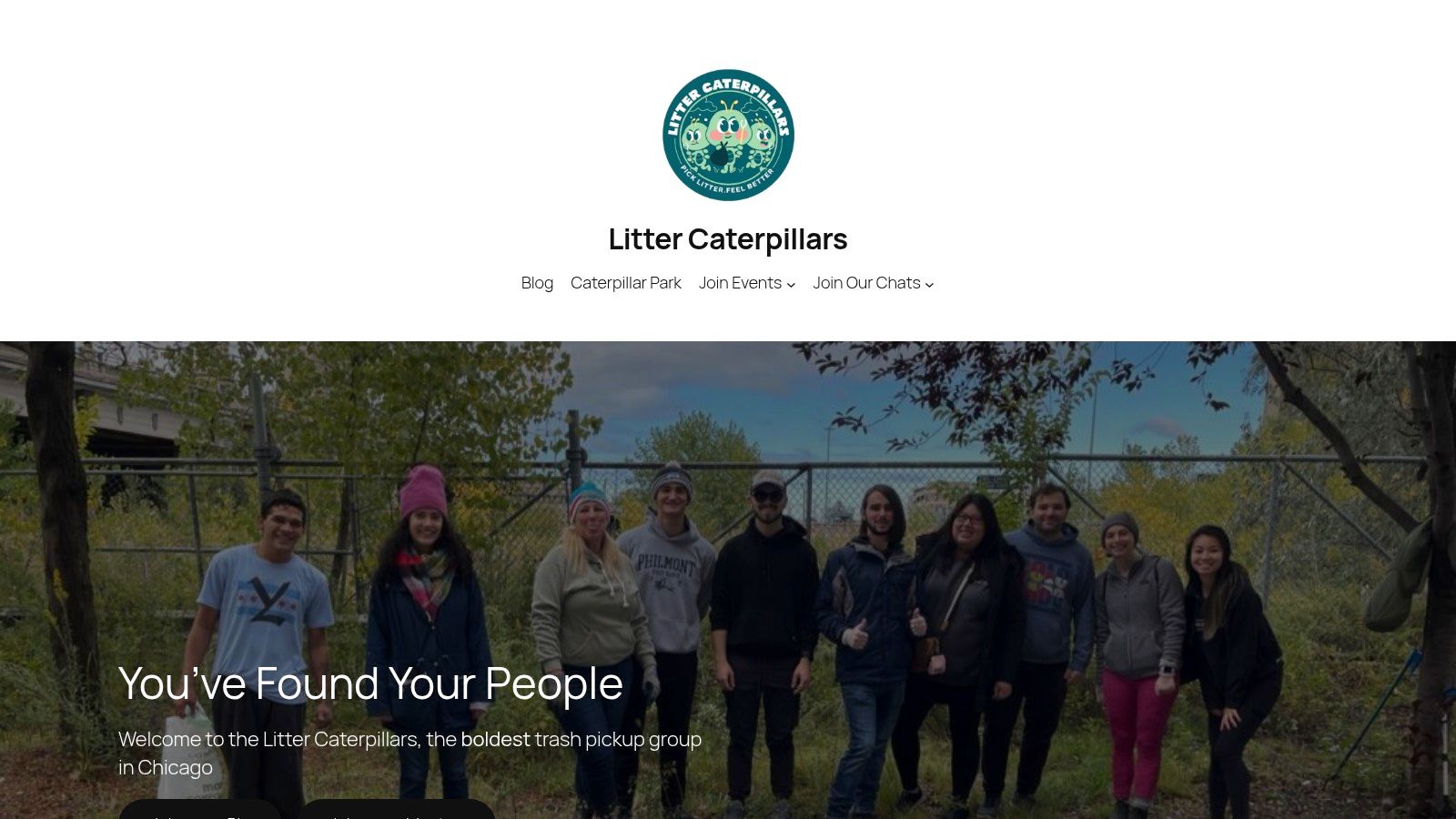
The group's rhythm is part of what makes it stick. It meets every weekend, rain or shine, and the vibe stays light without turning the work into a joke. If you want to try a trash pickup with people who already know the routine, the cleanest place to start is the volunteer trash pickup sign-up.
Why it hits so hard
I've seen a lot of volunteer spaces that feel stiff, like you need the right clothes, the right references, and a perfectly polished story before anybody will let you in. This one feels looser and more human. People find it through Meetup, Pie, Instagram, and open group chats, and the whole thing is built around friendship that grows out of doing the work side by side.
Practical rule: if you want service to turn into a habit, pick a group that meets at the same time every week. Repetition turns strangers into regulars.
There's also a real comfort in knowing what you're walking into. Volunteers get safety first and happiness second, and nobody gets pushed into donations. If you've ever left a volunteer role because it started to feel like a fundraising funnel instead of a place to help, that matters. Litter Caterpillars adds a playful layer with flags, badges, and a theme song, which can sound cheesy until you're muddy, tired, and laughing with people you met an hour ago.
It's not a formal nonprofit in the traditional sense, and that tradeoff may matter to some people. But if you want something gritty, social, and very local, this feels less like joining a mailing list and more like stepping into a moving crew.
2. AmeriCorps
My life got better when I stopped pretending all service had to be casual. Some people need a structure that tells them where to go, what to do, and how long to stay. AmeriCorps does that through State and National programs, VISTA, NCCC, and AmeriCorps Seniors, which place people with nonprofits, schools, and public agencies across the country.
That setup works well if you want service to feel like a season of your life, not a one-off errand. You can serve part-time or full-time for set terms, and many roles include a living allowance. When you finish successfully, some roles also include the Segal Education Award, which makes the commitment feel concrete instead of vague.
When structure helps you stay in the game
I know people who want to help but freeze when nobody gives them a next step. This is a good fit for that kind of stuck. AmeriCorps roles can put you in education, environment, disaster response, public health, and other local need areas, so you're not just showing up, you're showing up with a lane.
- Pick the pace you can hold: full-time service if you want immersion, or part-time if you need more room in your week.
- Use the age 55+ path if that's you: AmeriCorps Seniors includes Foster Grandparents, RSVP, and Senior Companions.
- Treat the application like a job search: the process takes more than a quick sign-up, so give yourself time.
The upside is simple. You get a clear role, a known term, and work that can translate into future opportunities. The downside is just as clear. If you only want an occasional Saturday cleanup, this will feel like too much. For people who want a serious reset, though, it can be the right kind of hard.
3. Points of Light Engage
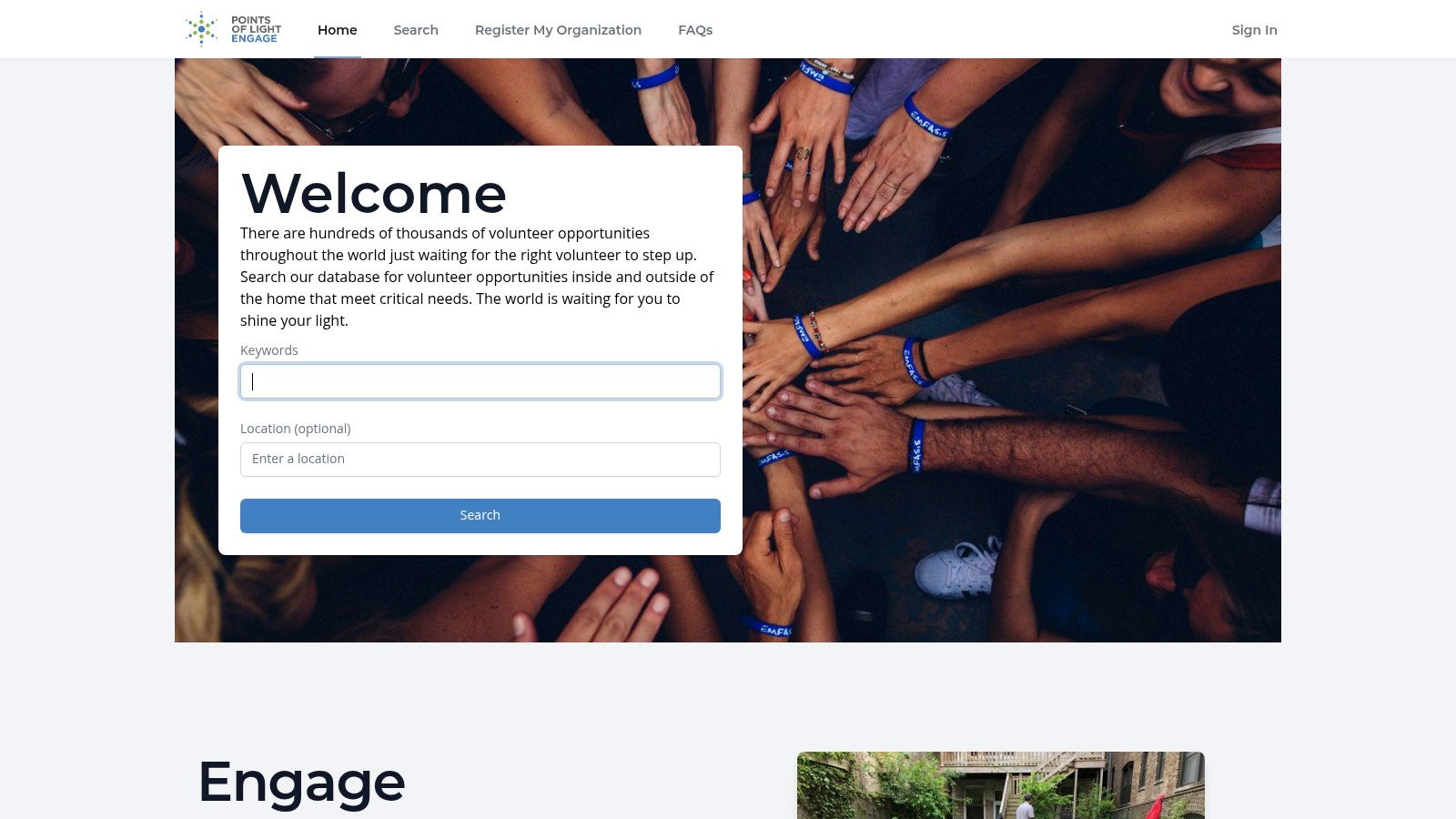
Some days I don't want a big speech about service. I want a map, a filter, and a list I can trust. Points of Light Engage gives you that. It pulls volunteer listings from organizations around the web, then lets you sort by location, skills, and whether you want something in person or virtual.
That makes it useful when you're hunting for a one-time cleanup, a recurring neighborhood role, or a skills-based project that doesn't feel like a forever promise. It also has DIY service project guides, which helps if you want to gather a couple of friends and build your own Saturday.
You can also use it as a bridge back into the city when life has made you weirdly isolated. I've had stretches where I wanted to help but didn't want to spend an hour hunting across random websites. This cuts the scavenger hunt down to one place.
The cleanest way to use an aggregator
Aggregators can feel messy if the listings go stale, so I'd use this one like a scout, not a final destination. Find the opportunity, then check the original organization's details before you commit. That small extra step keeps you from showing up to the wrong park at the wrong time.
The platform also connects to local volunteer centers, which helps if you want something nearby and practical. If you're in Chicago and you like cleanup work, pair this search with the city-facing route through environmental volunteering near me and compare what shows up.
What I like here is the speed. You don't have to know your cause before you start. You can just know your schedule and your willingness to pitch in.
4. VolunteerMatch
I've used search tools that felt like they were built by people who never volunteered. VolunteerMatch feels more useful than that. You can search by ZIP code or cause, set custom alerts, and contact nonprofits directly when something looks good.
That matters because life rarely gives you a perfect schedule. Some weeks you've got a Sunday morning. Other weeks you can only spare one evening. VolunteerMatch lets you move through those options without pretending every good act has to look the same.
A good place to test your taste
This is a strong choice if you're still figuring out what kind of service fits your personality. You can try one-time events, recurring roles, on-site opportunities, or virtual work. I like that mix because it lets you test the waters without locking yourself into something you'll dread.
- Use ZIP searches first: that keeps you from falling into roles that sound great but sit too far away.
- Turn on alerts: if your schedule is random, new matches can land in your inbox without extra hunting.
- Try two different causes: one practical, one personal, so you can see what pulls you back.
There's a catch, though. Listing quality can vary, and some postings go stale when organizations stop updating them. So I'd treat the site like a matchmaker, then verify the details before you head out. When it works, it gives you a wide field of choices without making you build the whole map yourself.
5. Keep America Beautiful Volunteer Portal
Some people want to help and get their hands dirty in the oldest sense. They want bags, gloves, litter grabbers, and a street that looks better when they leave than when they arrived. Keep America Beautiful fits that mood. Its volunteer portal helps you find local cleanups and events tied to litter abatement, recycling, and community beautification.
That's the kind of service that gives you instant feedback. You can see the work in the bag count, the cleared sidewalk, the better-looking corner. That visible result can be a relief if you've spent too long staring at abstract problems.
Good for people who need motion, not meetings
The portal ties into national campaigns like Great American Cleanup and America Recycles Day, so it gives you a path into organized work without making you invent the project yourself. Local affiliates also matter here because they make the experience feel grounded in your own neighborhood instead of some distant brand.
The downside is practical. Event cadence depends on local affiliate capacity, so some places will have more going on than others. Supplies can also run out, which means you may need to bring your own basics or sign up early when kits are limited.
I'd use this when I want an easy entry into environmental volunteering and a low-drama way to spend a few hours outside. It's a good match for people who like clear before-and-after work and don't mind a little grit on their shoes.
6. Chicago Cares
I've met people who want service, but only if it's organized enough that they don't have to guess what's happening. Chicago Cares is built for that person. It connects residents with projects across education, environment, housing support, and seniors, and it keeps a searchable calendar with both in-person and virtual opportunities.
That setup helps if you want a morning shift that feels planned instead of improvised. It also works if you're bringing friends, because the group experience feels coordinated rather than scattered. I know how much easier it is to recruit one friend when you can say, “Show up here at this time, and the rest is handled.”
For people who like a clean sign-up path
The citywide footprint matters because it gives you room to pick the neighborhood and cause that fit your week. Some projects are drop-in, some repeat, and some tie into big mobilizations like Serve-a-thon. The platform keeps the logistics in one place, which saves you from three tabs, two emails, and a headache.
Use this one if you want a steadier volunteer habit but still want variety. It's also a solid option for corporate groups or friends who want a shared service day without spending half the morning figuring out where to stand.
If Chicago cleanup is your lane, I'd also look at the Chicago volunteer opportunities page and compare the vibe. Sometimes the right group is the one that feels a little less polished and a little more human.
7. My Block, My Hood, My City
Some volunteer work feels broad and distant. This one feels like knocking on your neighbor's door and actually meaning it. My Block, My Hood, My City has cleanups, snow shoveling for seniors, block walks, resource drops, and youth programming, all with a very local pulse.
I like this for the same reason I like a good block party. You meet people where they are, and the work happens at street level. That can make service feel less like charity and more like mutual care.
Local work that pulls people together
The volunteer calendar changes with neighborhood needs and seasons, so you get a mix of one-off events and recurring efforts. That flexibility helps if you want to bring friends, coworkers, or family members along without forcing everybody into the same mold.
The best volunteer work often feels small while you're doing it and bigger when you leave.
The obvious limit is geography. This is Chicago-specific, so it won't help you if you live elsewhere. But for anyone in the city who wants tangible impact and a chance to know the people they're helping, it's a strong option. It has the kind of block-by-block feel that can make service feel personal fast.
Comparison of 7 Civic Engagement Opportunities
| Program | Implementation complexity 🔄 | Resource requirements ⚡ | Expected outcomes 📊 | Ideal use cases 💡 | Key advantages ⭐ |
|---|---|---|---|---|---|
| Litter Caterpillars | Low, volunteer-run weekly meetups with simple logistics and safety plans | Minimal funding; volunteer time, basic cleanup gear, strong social coordination | Visible neighborhood cleanups, community-building, park development (ward-level impact) | Chicago residents/newcomers seeking social, hands-on weekend service | High local impact and cohesion; accessible (no fees); consistent, transformational volunteer experience |
| AmeriCorps | High, formal application, onboarding, and fixed-term placements | Program funding, living allowances, partner sites; member time commitment | Skill development, measurable community outcomes, Segal Education Award | People seeking structured, career-relevant, full- or part-time service | Clear benefits and supports; nationwide placements; sustained impact |
| Points of Light, Engage | Low, user-facing aggregator; platform use is straightforward though listings vary | Internet access; little personal resource beyond search and sign-up | Broad discovery of vetted local and virtual opportunities; variable follow-through | Users who want to quickly find diverse volunteer options across locations | Large aggregated inventory; trusted nonprofit backing and DIY guides |
| VolunteerMatch | Low, searchable platform with easy inquiries and alerts | Internet access; flexibility to follow up with organizations | Wide range of matches from one-off to recurring; quality depends on posters | Students, young professionals, or anyone exploring causes or flexible schedules | Deep metro inventory; custom alerts and direct contact with nonprofits |
| Keep America Beautiful (Volunteer Portal) | Low–Medium, portal registration plus coordination with local affiliates | Moderate, volunteer time, possible need for supplies/kits (limited availability) | Hands-on environmental cleanups and coordinated national campaigns | Environmental volunteers seeking structured cleanups and neighborhood beautification | National campaigns, toolkits, and affiliate support for consistent cleanup experiences |
| Chicago Cares | Medium, curated projects with organized logistics, group support, and registrations | Moderate, staff coordination; peak events may require advance registration | Consistent, organized volunteer experiences; large citywide mobilizations | Chicagoans seeking reliable weekend/group service or recurring roles | Citywide footprint and dependable programming for individuals and groups |
| My Block, My Hood, My City (MBMHMC) | Low–Medium, local nonprofit operations with varied event types and scheduling | Minimal to moderate, volunteer time, community coordination; flexible roles | Tangible block-level improvements, neighbor connections, recurring supports | Volunteers wanting tangible neighborhood impact and flexible involvement | Inclusive, block-by-block impact; strong local credibility (501(c)(3)) |
Find Your People, Find Your Purpose
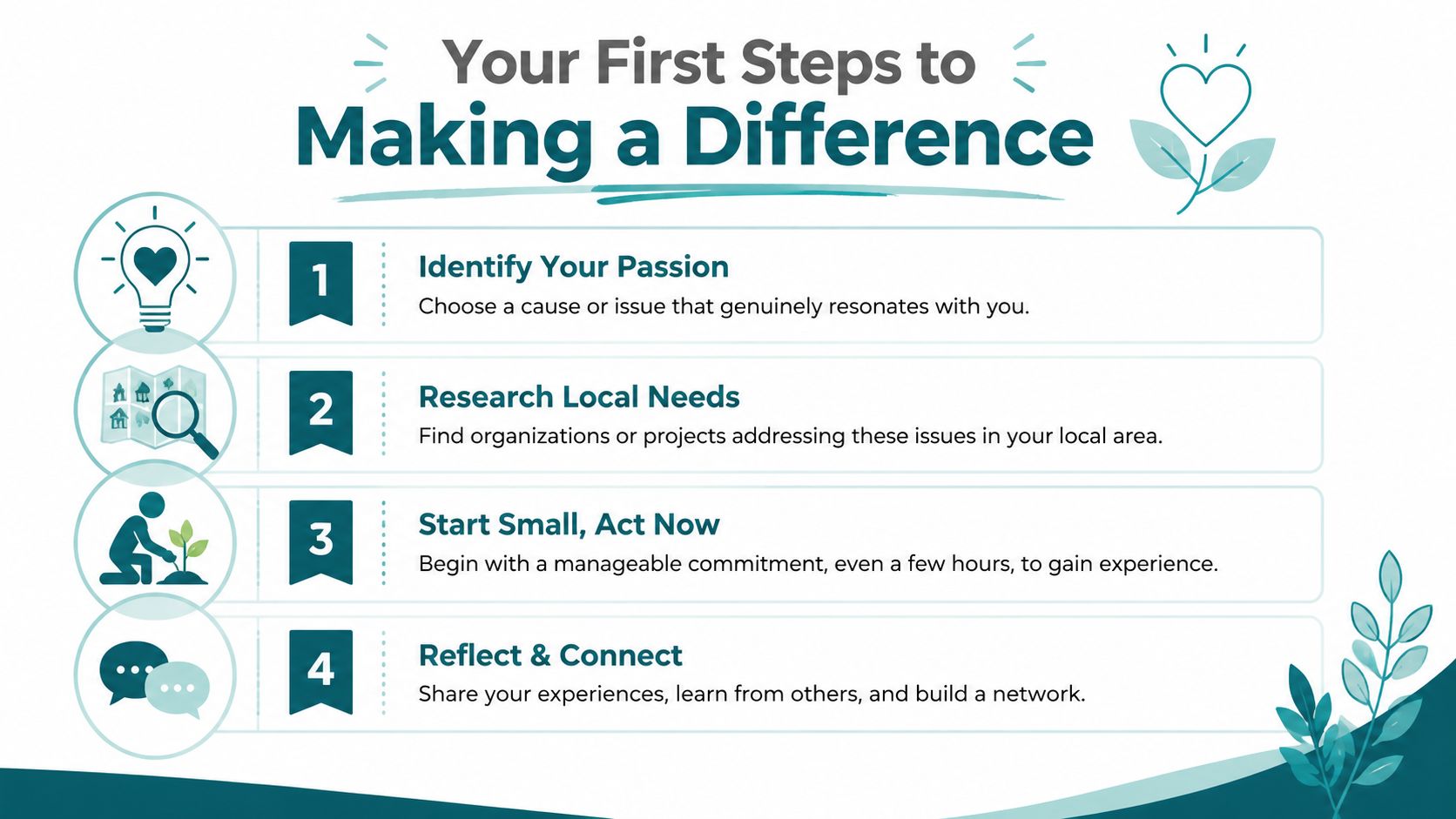
You don't need a grand plan to start. You just need to show up. Pick one thing from this list. Go to one event. See how it feels. The goal isn't just to clean a park or serve a meal. It's to build a habit of showing up for your neighbors and, in the process, showing up for yourself.
I've learned that helping other people can unknot you in ways self-help never does. You carry one bag of trash, then another, and somewhere in the middle you stop feeling like your life is too broken to touch. You talk to a stranger, then a regular, then a friend, and suddenly the work has more shape than your old loneliness ever did.
That's why I keep coming back to service. It gives you a place to stand, a job to do, and people who know how to sweat beside you. If you want the cleanest entry point, start with the group that already lives this way and make your first move there.
If you want a place where trash pickup turns into friendship, routine, and a better block, visit Litter Caterpillars. You'll find weekly Chicago cleanup events, a volunteer-first culture, and a crew that makes it easy to show up and belong. Start there if you're ready to trade stuck energy for real-world service.