

My apartment used to look like a museum of stalled intentions. A jam jar from an old trip, a half-empty bag of nuts from a health kick I dropped, receipts I couldn't throw away. After a chaotic relationship ended, I got tired of living inside my own mental junk drawer, so I tried something odd: I started picking up trash outside.
It felt easier to lift a stranger's bottle off the sidewalk than to face the stories in my own kitchen. But that small act gave me three things I'd been missing for years: cleanliness, consistency, and bravery. If you've ever wanted free volunteer opportunities that don't feel stiff or transactional, I want to show you the ones I'd tell a friend to try.
1. Litter Caterpillars
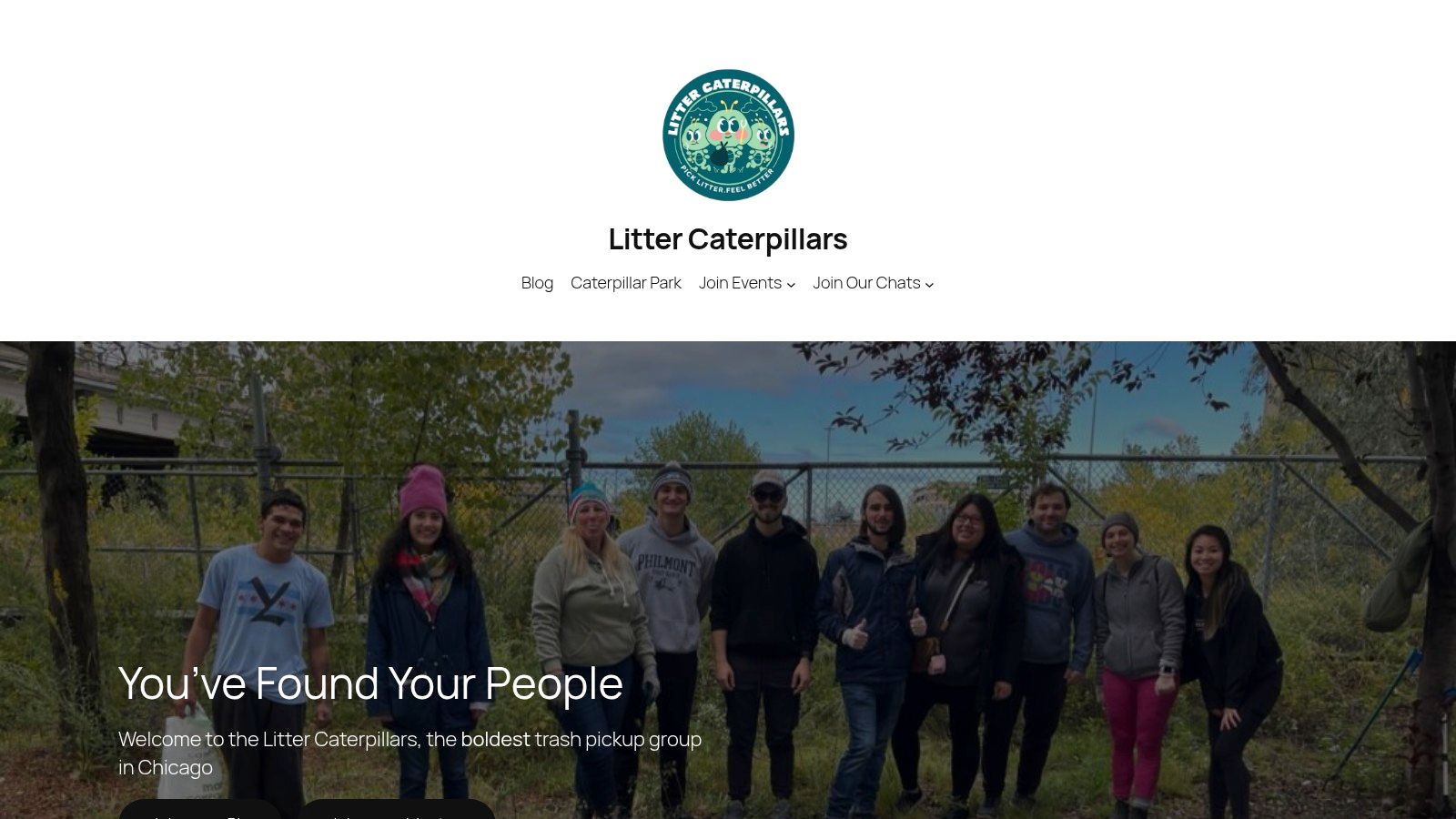
The first time I joined a Litter Caterpillars cleanup, I was carrying more than a grabber and a trash bag. I was carrying the stale sadness of a life that felt cluttered from the inside out. For two hours, I stopped replaying old conversations and started noticing broken glass in the grass, fast-food wrappers snagged in a fence, and a neighbor who smiled and said thanks from her porch.
That morning changed the scale of my problems. A whole block looked lighter by noon, and so did I.
Litter Caterpillars is where I send you first if you want free volunteer opportunities that feel human, physical, and real. You show up, get the supplies you need, and spend a morning doing work you can see with your own eyes. There is something grounding about leaving a street cleaner than you found it. No résumé glow-up. No complicated onboarding. Just a clear task and a shared purpose.
Why this one feels different
What grabbed me was the group's attitude. They have cleaned in every ward of Chicago, as noted on the group's Meetup page. That told me they were serious about the whole city, not just the easy or photogenic corners.
Their work has also stretched beyond curbside pickups. A Chicago Tribune report on Caterpillar Park in Englewood describes how the group helped turn an empty lot into a community park with gardens and native plants. I love that arc. Pick up one bottle. Return next week. Keep showing up. Eventually a neglected space starts to look cared for, and people do too.
That is the hidden gift of a group like this. You come for trash pickup, but you leave with rhythm.
What you'll like and what might bug you
- Best fit: You want outdoor service, casual conversation, and visible results by the end of the shift.
- Why people stay: Regular weekend meetups make it easier to build a habit and recognize familiar faces.
- Possible downside: Early mornings, weather, and messy cleanup sites can be a tough match for some people.
- Easy next step: If you want help choosing your first event, this guide on how to find volunteer work that fits your life makes the decision easier.
I also appreciate the social contract here. Your time counts. You are useful the minute you arrive.
If you're in Chicago and you want a starting point that feels bold, scrappy, and unexpectedly healing, Litter Caterpillars is a strong first yes.
2. Idealist
When I don't know exactly what kind of service I want, I use a big directory. Idealist is that kind of tool. It helps when your mood is vague but sincere, like, "I want to help this month, but I don't yet know if that means tutoring, cleanup, or remote work."
Idealist now pulls from a bigger pool because it merged with VolunteerMatch in early 2025. That makes it a strong place to search if you want both skills-based roles and boots-on-the-ground options.
When to use it
I like Idealist when I want filters. You can search by location, remote or in-person work, cause area, and time commitment. You can also save searches and watch for new openings instead of starting from scratch every week.
If you're still figuring out your lane, I'd pair it with this guide on how to find volunteer work. It helps turn "I should volunteer sometime" into "I'm signing up today."
- What it does well: It has a huge range of listings.
- What to watch for: Some postings get stale, and some groups want you to create an account before applying.
- Best for: People who want options more than a single community.
You can browse it at Idealist.
3. Points of Light Engage
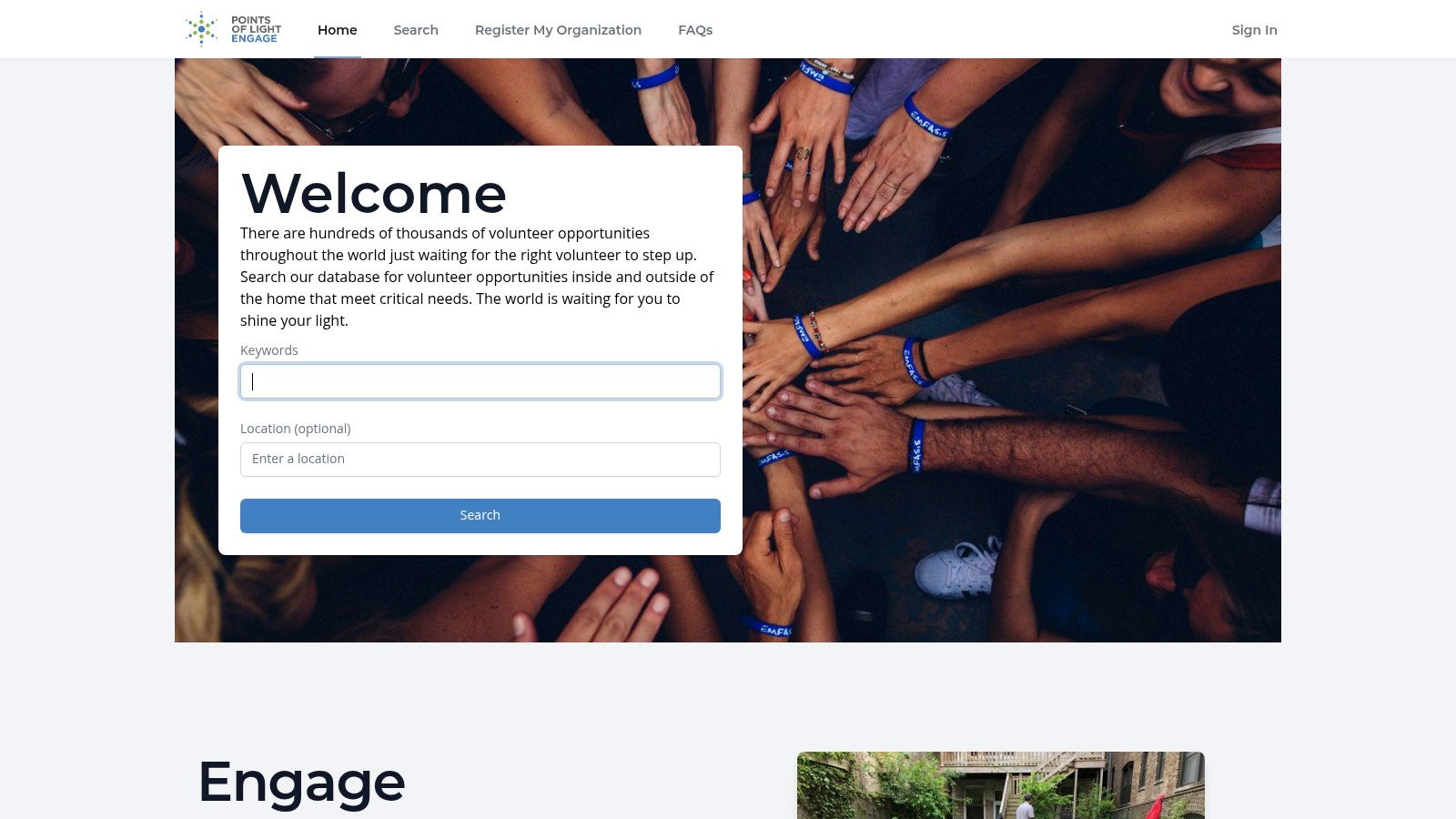
Points of Light Engage feels like the big train station of volunteer search. Lots of routes, lots of causes, lots of partner listings moving through one place. When I want to cast a wide net without opening ten tabs, I use Points of Light Engage.
That broad view matters because formal volunteering got harder for many groups to sustain. The Council of Nonprofits summary on new volunteer data says the U.S. formal volunteering rate fell by over 23 percent, from 30 percent in 2019 to 23.2 percent in 2021, and nearly half of nonprofit respondents called volunteer recruitment a big problem.
Why it's useful
Points of Light Engage pulls listings from partner organizations and platforms, so you may find opportunities there that don't show up on a single local site. I also like it for comparing virtual and in-person roles side by side.
Volunteer energy is fragile. A search tool should lower friction, not add more of it.
That said, aggregator sites can get messy. You may hit duplicate listings, and some sign-ups send you to partner portals.
- Good pick if: You want breadth and don't mind a little clicking.
- Less ideal if: You hate redirects or repeated listings.
- Best use: Search broadly first, then narrow by cause and distance.
You can search at Points of Light Engage.
4. United Way
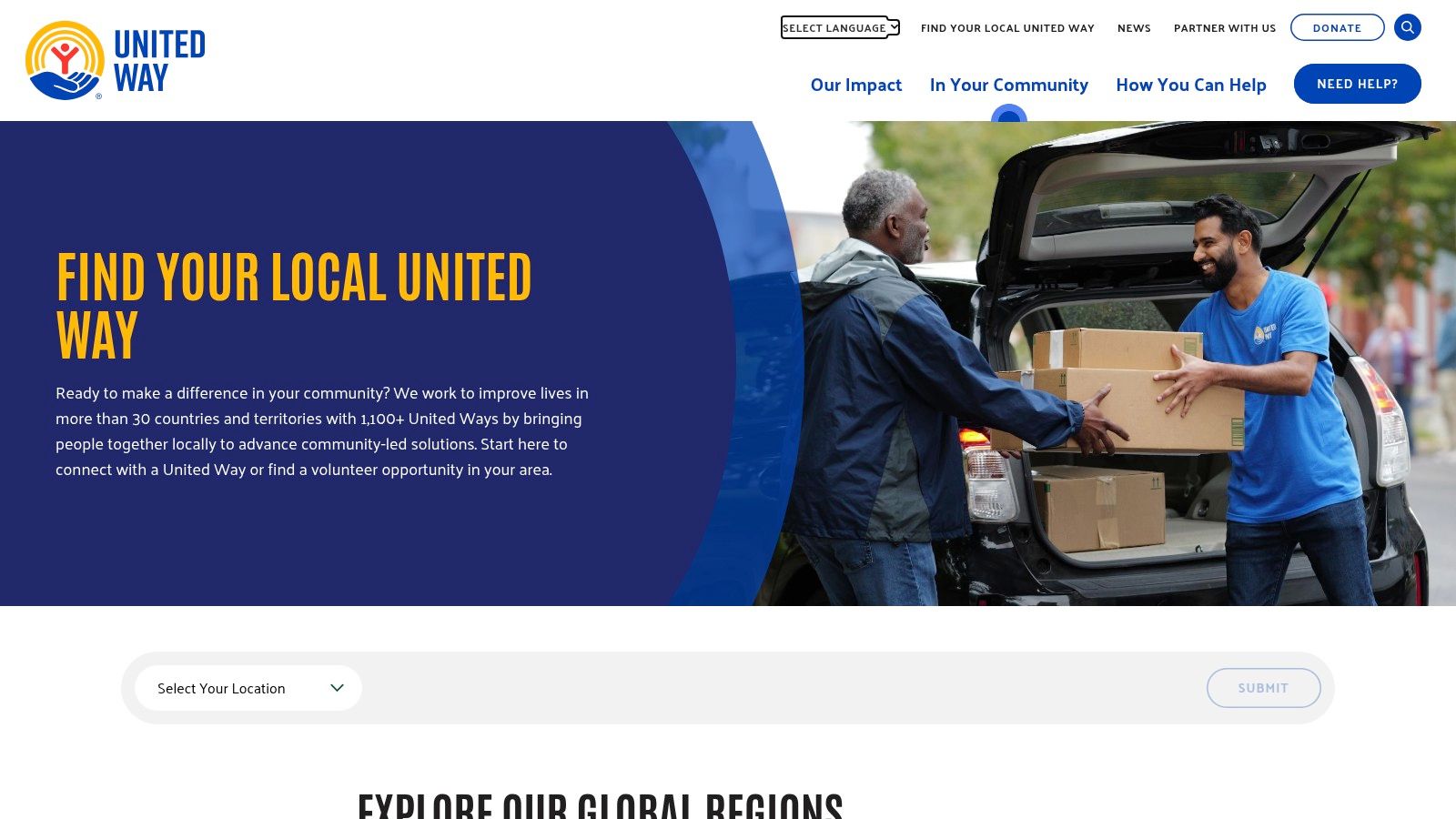
United Way is the friend I'd send to someone who says, "I want something reliable near me." Its local portals usually feel less chaotic than giant directories. You search, find a shift, and the role often sounds concrete: pantry sorting, event help, tutoring, admin support.
I like that structure. Some weekends, I want the wild-card energy of a street cleanup. Other weekends, I want something scheduled and clear, like a shift with a start time, a room number, and a person expecting me.
Where it shines
United Way has local hubs, and those hubs often include short-shift options for individuals, families, and work groups. If you're trying to volunteer with a roommate, partner, or office team, that's handy.
The trade-off is that local inventory changes by city and season. Some roles also need a background check or short orientation before you start.
- Best fit: You want nearby roles with some structure.
- Good for groups: Family volunteering and company volunteer days.
- Watch for: Popular shifts can fill fast.
Start at United Way's local finder.
5. Keep America Beautiful
If picking up litter gave me my footing back, then Keep America Beautiful speaks my language. This network focuses on cleanup and beautification, and that makes it one of the easiest entries into free volunteer opportunities if you like visible results.
I always tell people this: some service feels like planting seeds you'll never see. Cleanup is different. You see the before and after with your own eyes. That's satisfying in a very direct way.
Why cleanup people love it
Keep America Beautiful connects volunteers to local affiliate events across the country. During seasonal pushes like the Great American Cleanup, it can be especially easy to find a date, sign up, and join a group.
The catch is local variation. In some places, you'll find a full calendar. In others, the schedule thins out outside the busier season.
If you struggle with motivation, choose work with an obvious finish line. A full trash bag is a finish line.
I also like cleanup work because it changes how you consume. The Litter Free Chicago-Calumet River initiative recommends avoiding single-use plastics like water bottles, straws, and bags because they require enormous energy to produce and add to climate change. Once you pick those items up off the ground enough times, you stop seeing them as disposable.
Find events through Keep America Beautiful's volunteer portal.
6. National Park Service Volunteers-In-Parks
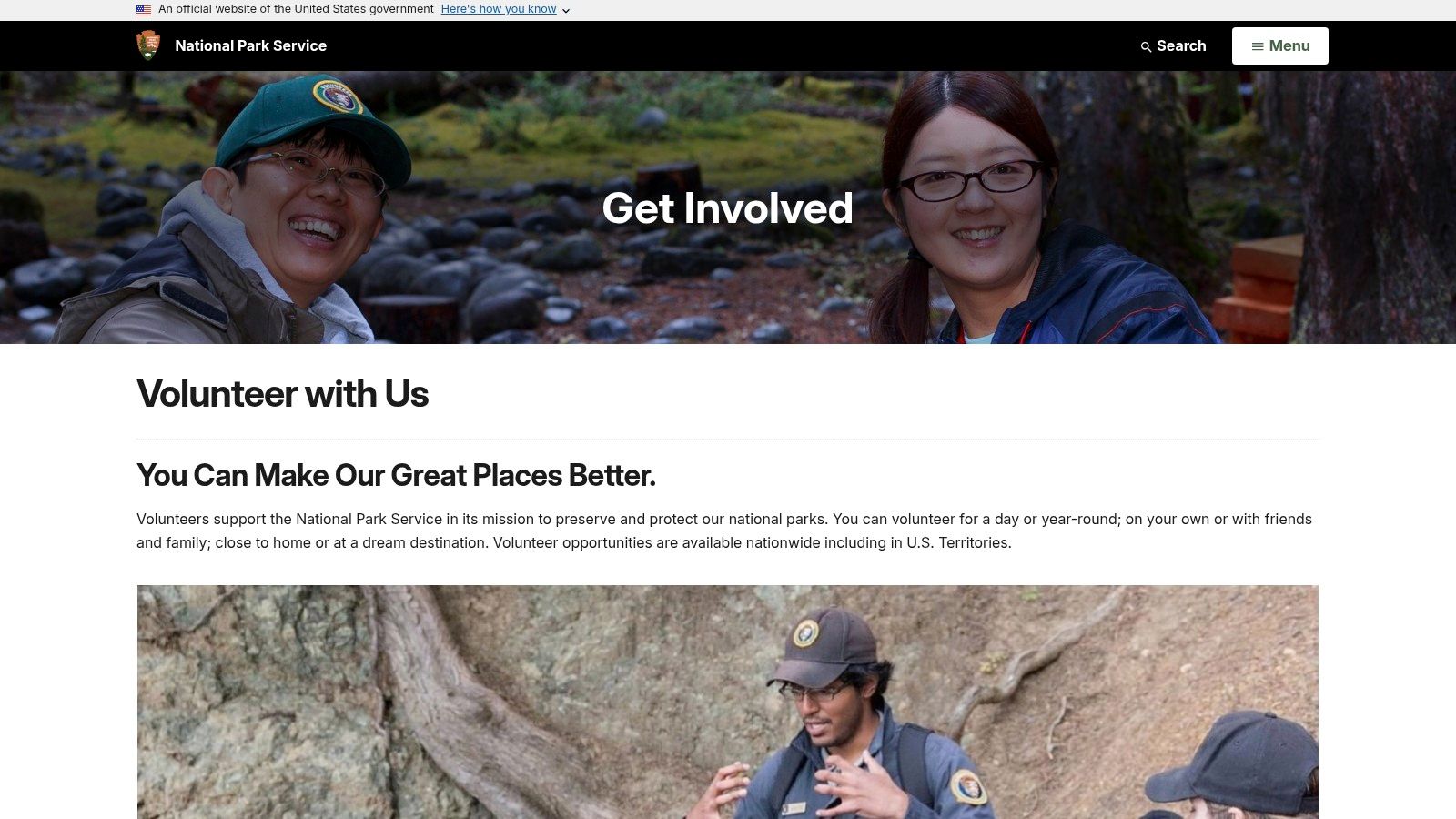
The National Park Service Volunteers-In-Parks program is for the part of you that wants your service to feel like a field journal. Trails, habitat work, historic sites, visitor help, citizen science. It has the feeling of doing something useful while also stepping into a bigger physical world.
I turn to this kind of volunteering when city life starts making me feel boxed in. A park shift changes the scale of the day. You stop staring at your phone and start paying attention to dirt, weather, and time.
What to expect
The range is wide. Some roles are beginner-friendly. Others need advance applications, training, or a set schedule. Travel can also be part of the equation, and lodging is usually on you.
That makes this less spontaneous than a neighborhood cleanup, but more immersive if you're ready for it.
- Great for: Outdoor people, history lovers, and anyone who wants structured conservation work.
- Harder part: Planning ahead.
- Best mindset: Treat it like a trip with a purpose.
You can search openings through the National Park Service volunteer page.
7. Habitat for Humanity
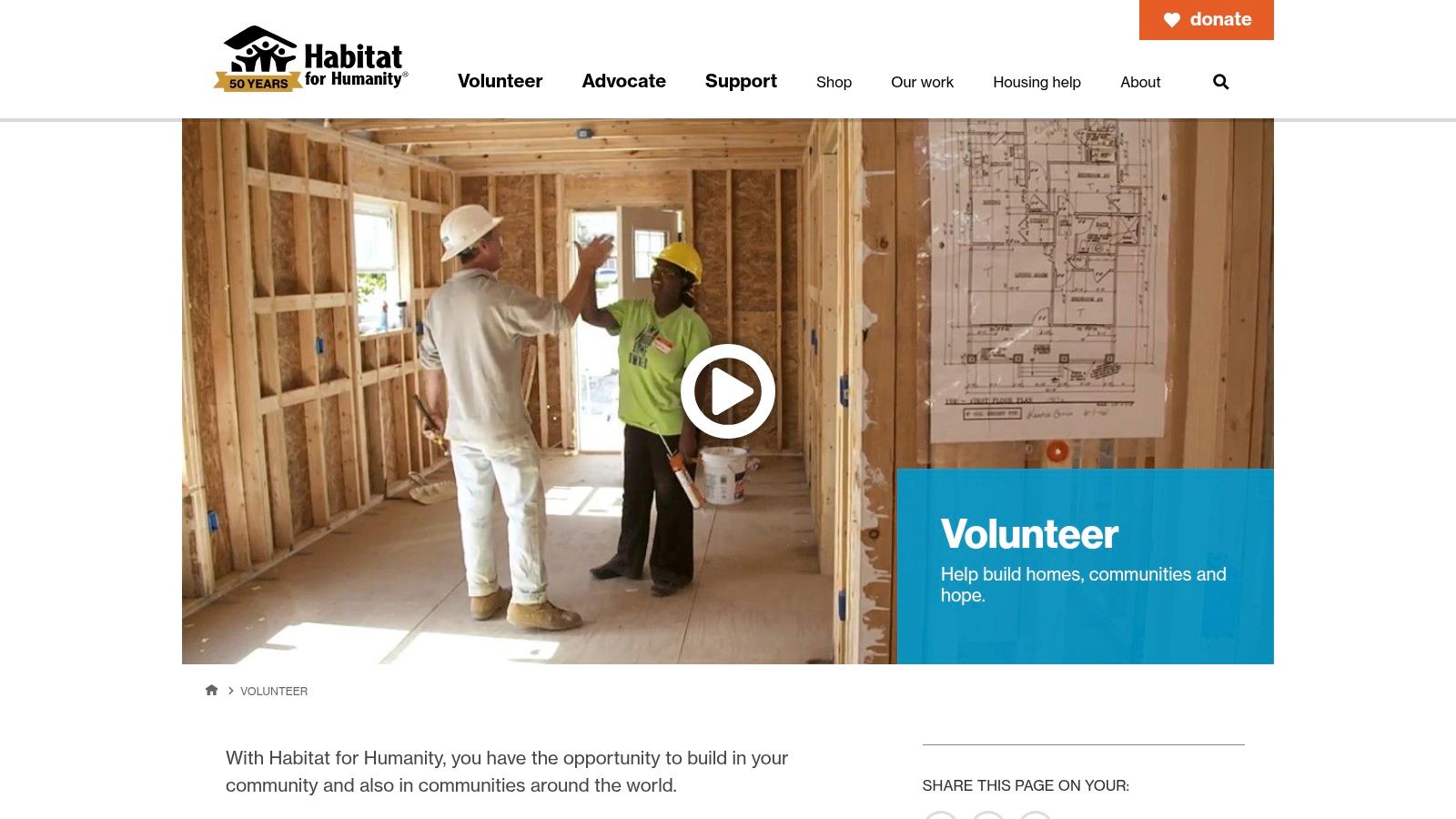
Habitat for Humanity is for people who want to point at a wall, a window, or a repaired room and say, "I helped do that." I love that kind of service because it leaves behind a tangible memory. You're not guessing whether your effort mattered. You can plainly see the frame.
You also don't need to arrive as a construction pro. Habitat trains volunteers on site and gives supervision and safety briefings through local affiliates.
Why people keep coming back
There's something sticky about shared labor. The Independent Sector page on the value of volunteer time says the presence of a regular volunteer raises the probability of a volunteer returning by 15 percent, moving from an average 10% return probability to 11%. I read that and nodded because it matches real life. Familiar faces pull you back.
If you're helping a group recruit and keep people engaged, this page on volunteer recruitment strategies is worth your time too.
- Best fit: You want a team environment and visible progress.
- Know before you go: Some tasks are physical, and some shifts have age or safety limits.
- Why it works: The site crew usually makes the day feel organized and social.
Sign up through Habitat for Humanity.
8. Feeding America
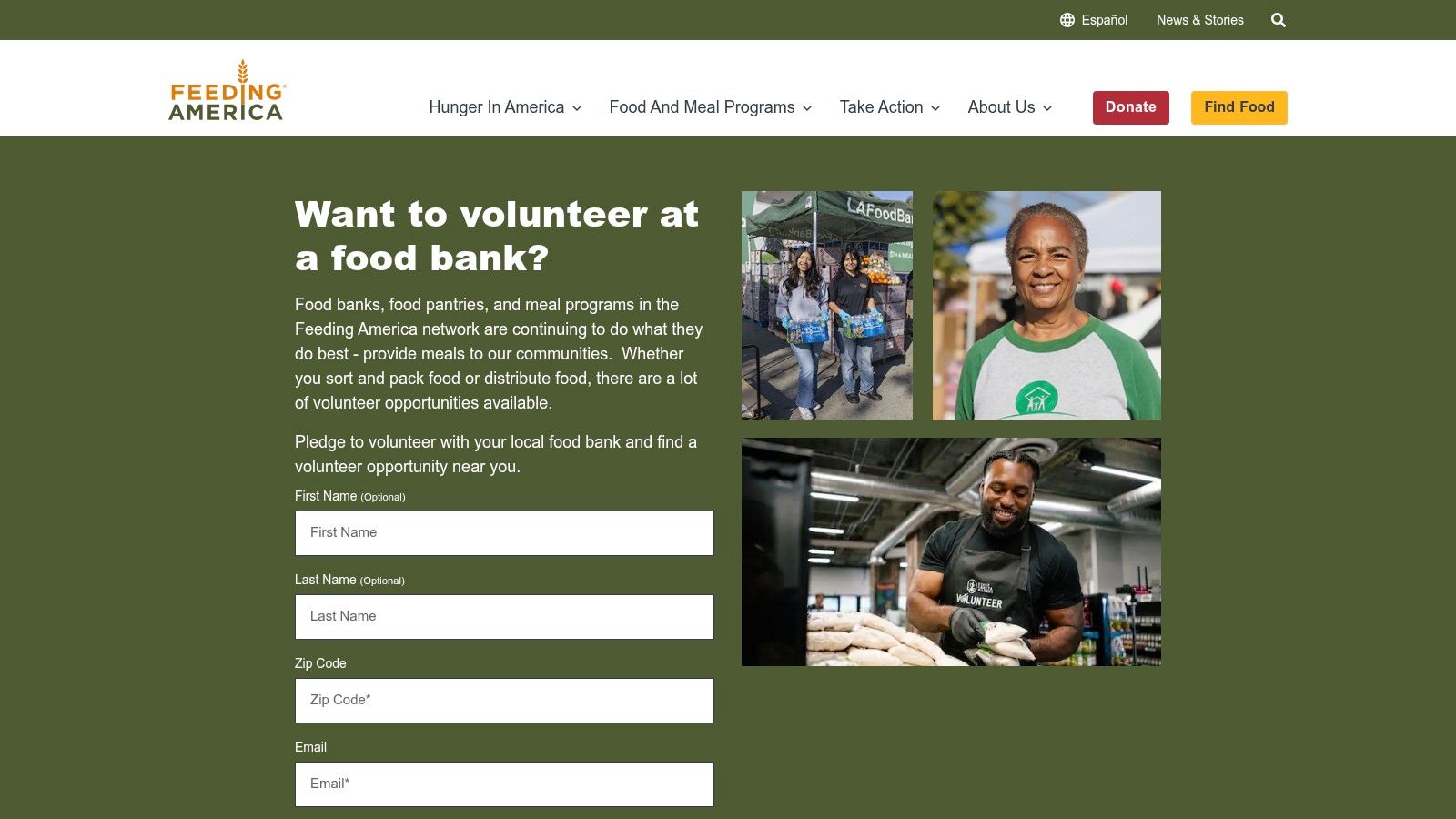
Feeding America is what I suggest when someone wants a practical first step. Food bank shifts are often easier to book than more specialized roles, and the work is easy to understand. Sort, pack, move, organize, distribute.
That kind of rhythm is good for anxious brains. Your hands know what to do, so your mind gets a break.
Why it's easy to start
Feeding America lets you use your ZIP code to find nearby food banks and their volunteer calendars. A lot of local sites have short shifts, evening options, and weekend slots, which helps if you work standard hours.
The work can be repetitive. That isn't always a downside. Repetition can calm you down, the way sweeping a floor can calm you down.
- Great first volunteer stop: Simple tasks and low friction.
- Good for groups: Friends, families, work teams.
- Small catch: Some sites want a brief orientation and closed-toe shoes.
Search near you at Feeding America volunteer opportunities.
9. Team Rubicon
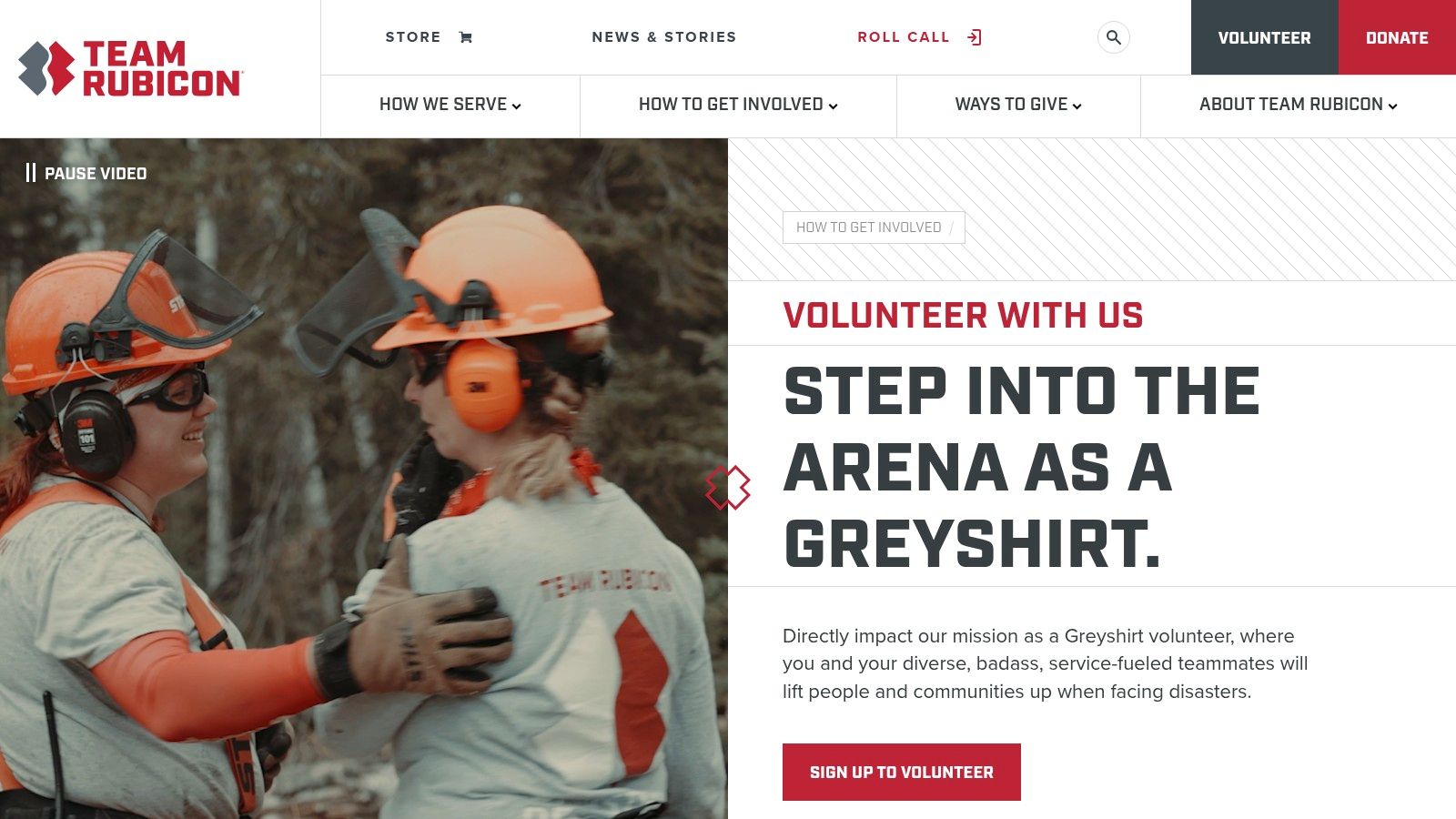
Team Rubicon is for the person who wants service with urgency. Disaster response has a different emotional texture from weekly neighborhood volunteering. It asks for readiness, training, and patience, then suddenly asks you to move.
I admire that model because it respects preparation. You don't just drift into a serious field operation. You onboard, learn the basics, and wait for the right moment.
Who should join
If you like clear roles, field training, and strong camaraderie, Team Rubicon has that pull. Volunteers can get alerts for deployments and local events after onboarding and safety training.
This path is less predictable than a weekly cleanup or pantry shift. Disasters don't run on your calendar. Some roles are also physically demanding and may require background checks and more training.
Some people need a weekly routine. Other people need a mission that calls them when it's time.
Visit Team Rubicon volunteer information.
10. DoSomething.org
DoSomething.org is the easiest recommendation on this list for younger volunteers, students, and people who want to start from home. If traditional volunteering feels like too many forms, too much logistics, or too much pressure, this is a softer runway.
I like it because momentum matters more than drama at the beginning. A quick action you perform beats a grand plan you keep postponing.
Best for building the habit
DoSomething.org has campaigns, toolkits, and checklists around issues like the environment, mental health, civic engagement, and equity. Many actions are remote or DIY, so you can start from school, your room, or a local hangout spot.
That flexibility can turn intention into routine. In the United States, nearly 51% of people age 16 and older engaged in civic help between September 2020 and 2021 when informal volunteering was included, according to the U.S. Census Bureau's civic life report. I think that's part of the appeal here. Help doesn't always begin with a formal badge or a clipboard.
- Best fit: Teens, students, and young adults.
- Why it works: Fast start, no cost, easy to share with friends.
- Possible mismatch: If you only want traditional in-person shifts, the site may feel too campaign-driven.
You can start at DoSomething.org.
Top 10 Free Volunteer Resources Comparison
The first time I tried to choose a place to volunteer, I did what a lot of us do. I opened too many tabs, compared too many options, and nearly talked myself out of starting.
What helped was a simpler question. What kind of change did I need most right then?
If you want what helped me at the beginning, start with Litter Caterpillars. It is local, visible, physical, and hard to romanticize. You show up, pick up trash, talk to strangers, and leave with a cleaner block and a quieter mind. That kind of service changed me because it was immediate. I could see the bag filling up while I was clearing out some mess in myself too.
If you want a wider search, use the rest of this list by fit instead of by rank:
- Choose Litter Caterpillars if you want direct, outdoor, community-level action and a group with personality.
- Choose Idealist if you want the biggest range of searchable opportunities across causes.
- Choose Points of Light Engage if you want one starting point that pulls together many partner options.
- Choose United Way if you want trusted local coordination and shorter, organized shifts.
- Choose Keep America Beautiful if litter cleanup and beautification are what pull you in.
- Choose National Park Service Volunteers-In-Parks if you want conservation work in outdoor settings.
- Choose Habitat for Humanity if you want to build or repair something tangible with your hands.
- Choose Feeding America if you want repeatable shifts with immediate help for local families.
- Choose Team Rubicon if you want structured disaster response and the commitment that comes with it.
- Choose DoSomething.org if you want a low-pressure start, especially if you're young or beginning from home.
That is the true comparison I wish someone had given me earlier. Less spreadsheet, more honest match.
You do not need the perfect option. You need the one you will show up for.
Your Turn to Start the Story
My story started with one piece of trash and one decision. I didn't wake up transformed. I just got tired of waiting to feel ready, and I learned that action can come before clarity.
That lesson is why I care about free volunteer opportunities so much. They remove one excuse. You don't need to buy your way into purpose. Around the world, informal volunteering is already the bigger share of service. The State of the World's Volunteerism Report 2022 says about 14.3% of the working-age population engages in informal volunteering, compared with 6.5% in formal volunteering, and that volunteer work adds up to about 61 million full-time equivalent workers. A lot of people are already helping in ordinary, direct ways.
I also think people stay with service for human reasons, not abstract ones. The same U.S. Census Bureau page noted earlier says 35% of volunteers cite socializing as a primary motivation. That tracks with my own experience. I started because I needed to clean up my life, but I kept going because other people showed up too.
Sometimes the first step is tiny. You sign up for a Saturday cleanup. You sort canned goods for two hours. You pack a toolkit from your laptop and do one action before bed. Those steps look small from the outside, but they can change the story you're telling yourself about who you are.
I wouldn't overthink the perfect choice. Pick the one that matches your energy right now. If you're restless, choose a cleanup. If you want structure, choose United Way or Feeding America. If you want to build something with your hands, choose Habitat. If you want adventure, choose the parks or Team Rubicon. If you want a low-pressure start, choose DoSomething.org.
Tom Sawyer made fence painting feel like a prize because he changed the frame around the work. Volunteering can do that too. What looked like a chore to me became an adventure, then a rhythm, then a lifeline.
Start with one shift. Put it on your calendar. Let the story begin.
If you want the kind of free volunteer opportunity that gets you outside, introduces you to good people, and lets you see the difference you made before lunch, join Litter Caterpillars. Show up on a weekend morning, pick up a bag, and give yourself a better story to live inside.
Leave a Reply