
Tag: volunteer in chicago

  • 10 Best Free Volunteer Opportunities to Join in 2026

    10 Best Free Volunteer Opportunities to Join in 2026

    My apartment used to look like a museum of stalled intentions. A jam jar from an old trip, a half-empty bag of nuts from a health kick I dropped, receipts I couldn't throw away. After a chaotic relationship ended, I got tired of living inside my own mental junk drawer, so I tried something odd: I started picking up trash outside.

    It felt easier to lift a stranger's bottle off the sidewalk than to face the stories in my own kitchen. But that small act gave me three things I'd been missing for years: cleanliness, consistency, and bravery. If you've ever wanted free volunteer opportunities that don't feel stiff or transactional, I want to show you the ones I'd tell a friend to try.

    1. Litter Caterpillars
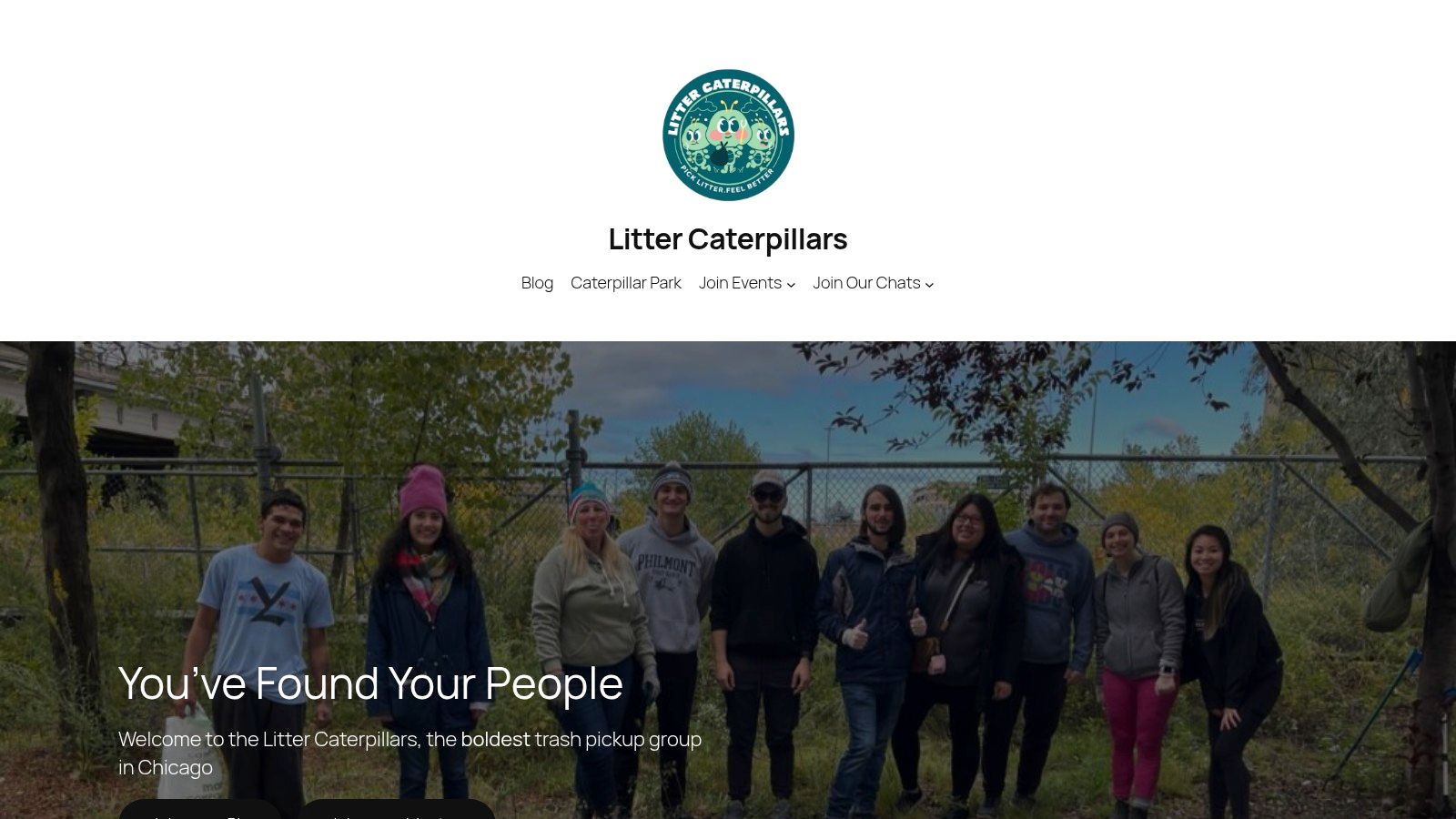
    Litter Caterpillars

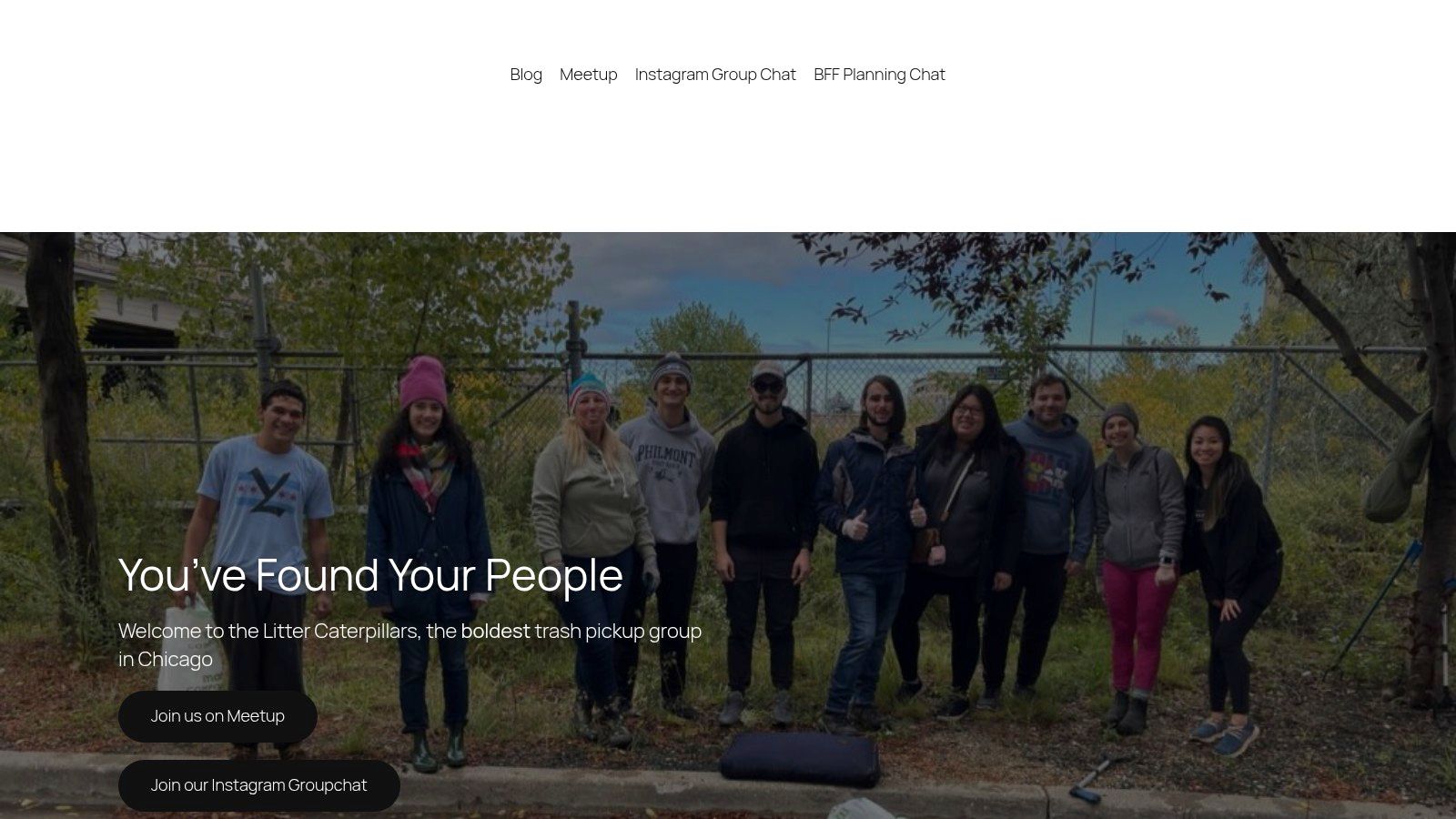
    The first time I joined a Litter Caterpillars cleanup, I was carrying more than a grabber and a trash bag. I was carrying the stale sadness of a life that felt cluttered from the inside out. For two hours, I stopped replaying old conversations and started noticing broken glass in the grass, fast-food wrappers snagged in a fence, and a neighbor who smiled and said thanks from her porch.

    That morning changed the scale of my problems. A whole block looked lighter by noon, and so did I.

    Litter Caterpillars is where I send you first if you want free volunteer opportunities that feel human, physical, and real. You show up, get the supplies you need, and spend a morning doing work you can see with your own eyes. There is something grounding about leaving a street cleaner than you found it. No résumé glow-up. No complicated onboarding. Just a clear task and a shared purpose.

    Why this one feels different

    What grabbed me was the group's attitude. They have cleaned in every ward of Chicago, as noted on the group's Meetup page. That told me they were serious about the whole city, not just the easy or photogenic corners.

    Their work has also stretched beyond curbside pickups. A Chicago Tribune report on Caterpillar Park in Englewood describes how the group helped turn an empty lot into a community park with gardens and native plants. I love that arc. Pick up one bottle. Return next week. Keep showing up. Eventually a neglected space starts to look cared for, and people do too.

    That is the hidden gift of a group like this. You come for trash pickup, but you leave with rhythm.

    What you'll like and what might bug you

    • Best fit: You want outdoor service, casual conversation, and visible results by the end of the shift.
    • Why people stay: Regular weekend meetups make it easier to build a habit and recognize familiar faces.
    • Possible downside: Early mornings, weather, and messy cleanup sites can be a tough match for some people.
    • Easy next step: If you want help choosing your first event, this guide on how to find volunteer work that fits your life makes the decision easier.

    I also appreciate the social contract here. Your time counts. You are useful the minute you arrive.

    If you're in Chicago and you want a starting point that feels bold, scrappy, and unexpectedly healing, Litter Caterpillars is a strong first yes.

    2. Idealist

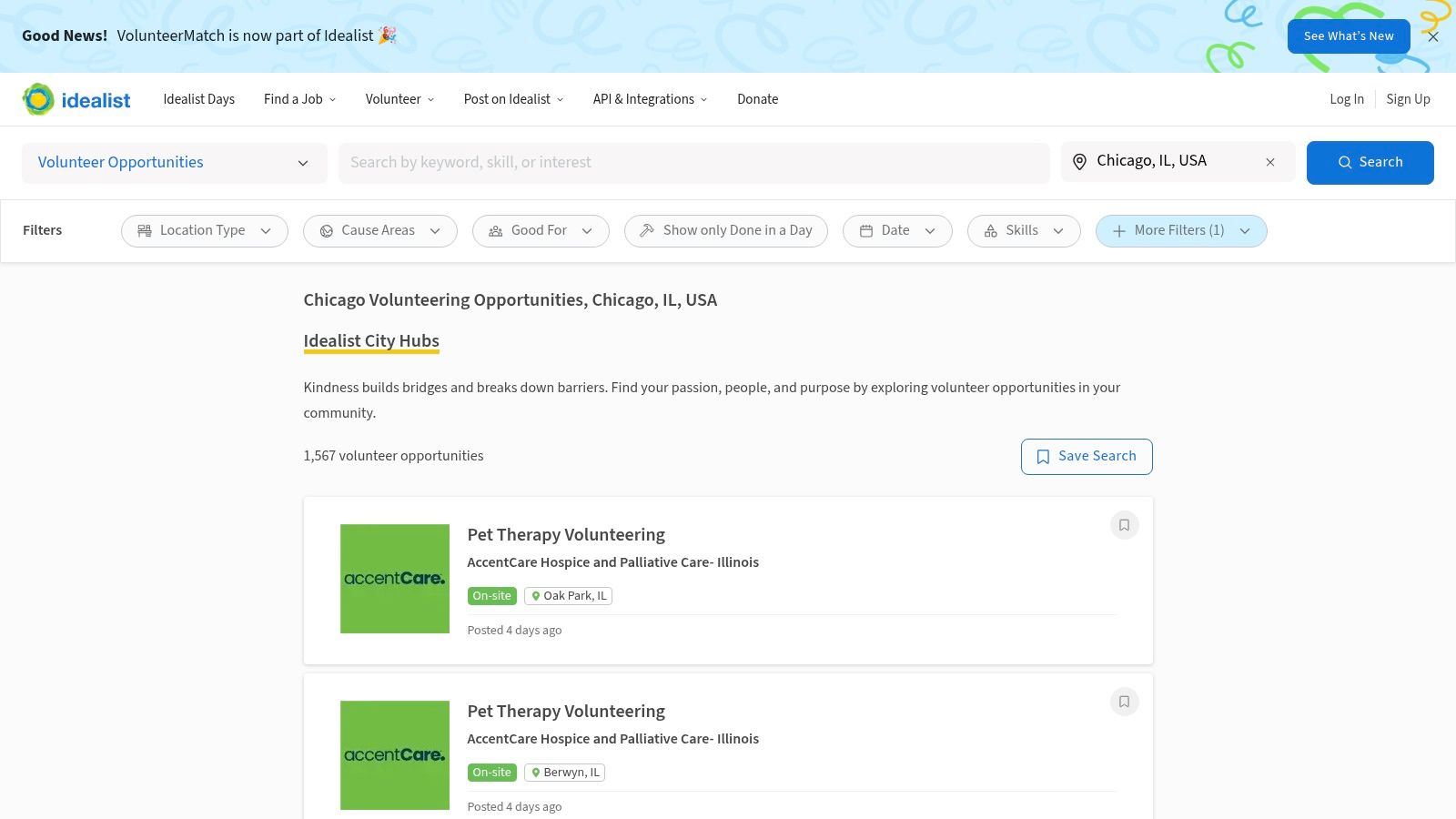
    When I don't know exactly what kind of service I want, I use a big directory. Idealist is that kind of tool. It helps when your mood is vague but sincere, like, "I want to help this month, but I don't yet know if that means tutoring, cleanup, or remote work."

    Idealist now pulls from a bigger pool because it merged with VolunteerMatch in early 2025. That makes it a strong place to search if you want both skills-based roles and boots-on-the-ground options.

    When to use it

    I like Idealist when I want filters. You can search by location, remote or in-person work, cause area, and time commitment. You can also save searches and watch for new openings instead of starting from scratch every week.

    If you're still figuring out your lane, I'd pair it with this guide on how to find volunteer work. It helps turn "I should volunteer sometime" into "I'm signing up today."

    • What it does well: It has a huge range of listings.
    • What to watch for: Some postings get stale, and some groups want you to create an account before applying.
    • Best for: People who want options more than a single community.

    You can browse it at Idealist.

    3. Points of Light Engage
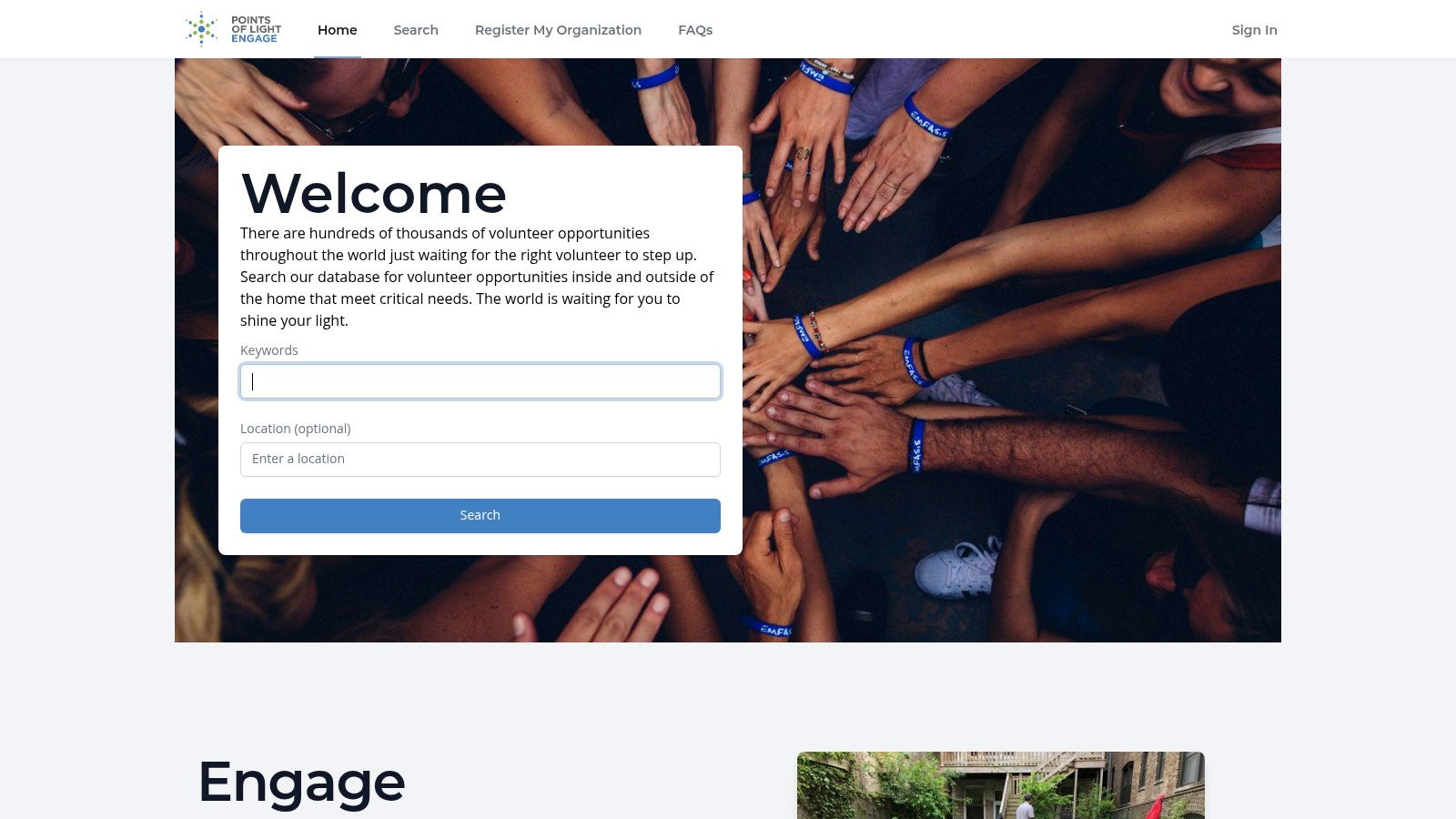
    Points of Light Engage (formerly All for Good)

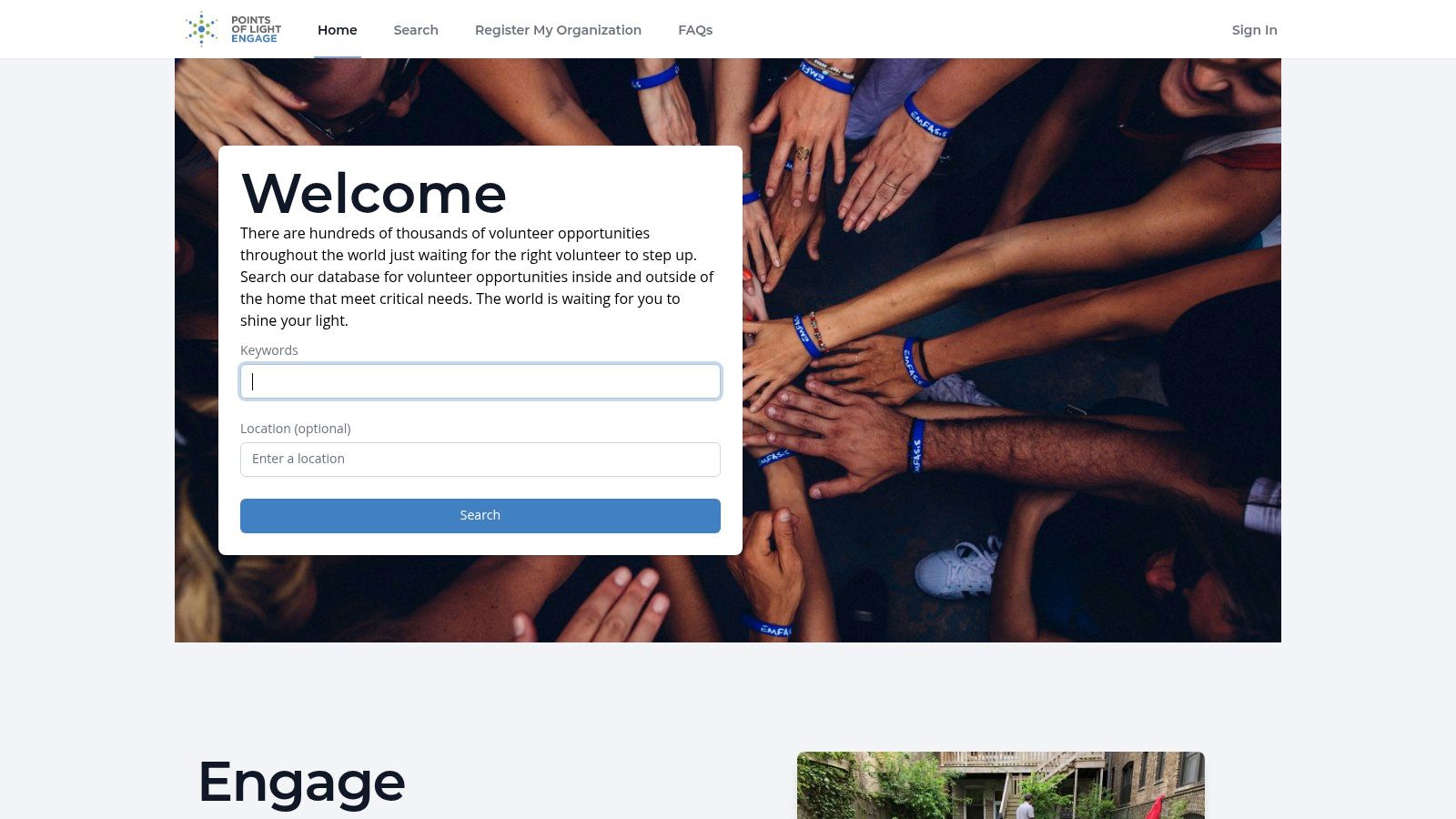
    Points of Light Engage feels like the big train station of volunteer search. Lots of routes, lots of causes, lots of partner listings moving through one place. When I want to cast a wide net without opening ten tabs, I use Points of Light Engage.

    That broad view matters because formal volunteering got harder for many groups to sustain. The Council of Nonprofits summary on new volunteer data says the U.S. formal volunteering rate fell by over 23 percent, from 30 percent in 2019 to 23.2 percent in 2021, and nearly half of nonprofit respondents called volunteer recruitment a big problem.

    Why it's useful

    Points of Light Engage pulls listings from partner organizations and platforms, so you may find opportunities there that don't show up on a single local site. I also like it for comparing virtual and in-person roles side by side.

    Volunteer energy is fragile. A search tool should lower friction, not add more of it.

    That said, aggregator sites can get messy. You may hit duplicate listings, and some sign-ups send you to partner portals.

    • Good pick if: You want breadth and don't mind a little clicking.
    • Less ideal if: You hate redirects or repeated listings.
    • Best use: Search broadly first, then narrow by cause and distance.

    You can search at Points of Light Engage.

    4. United Way
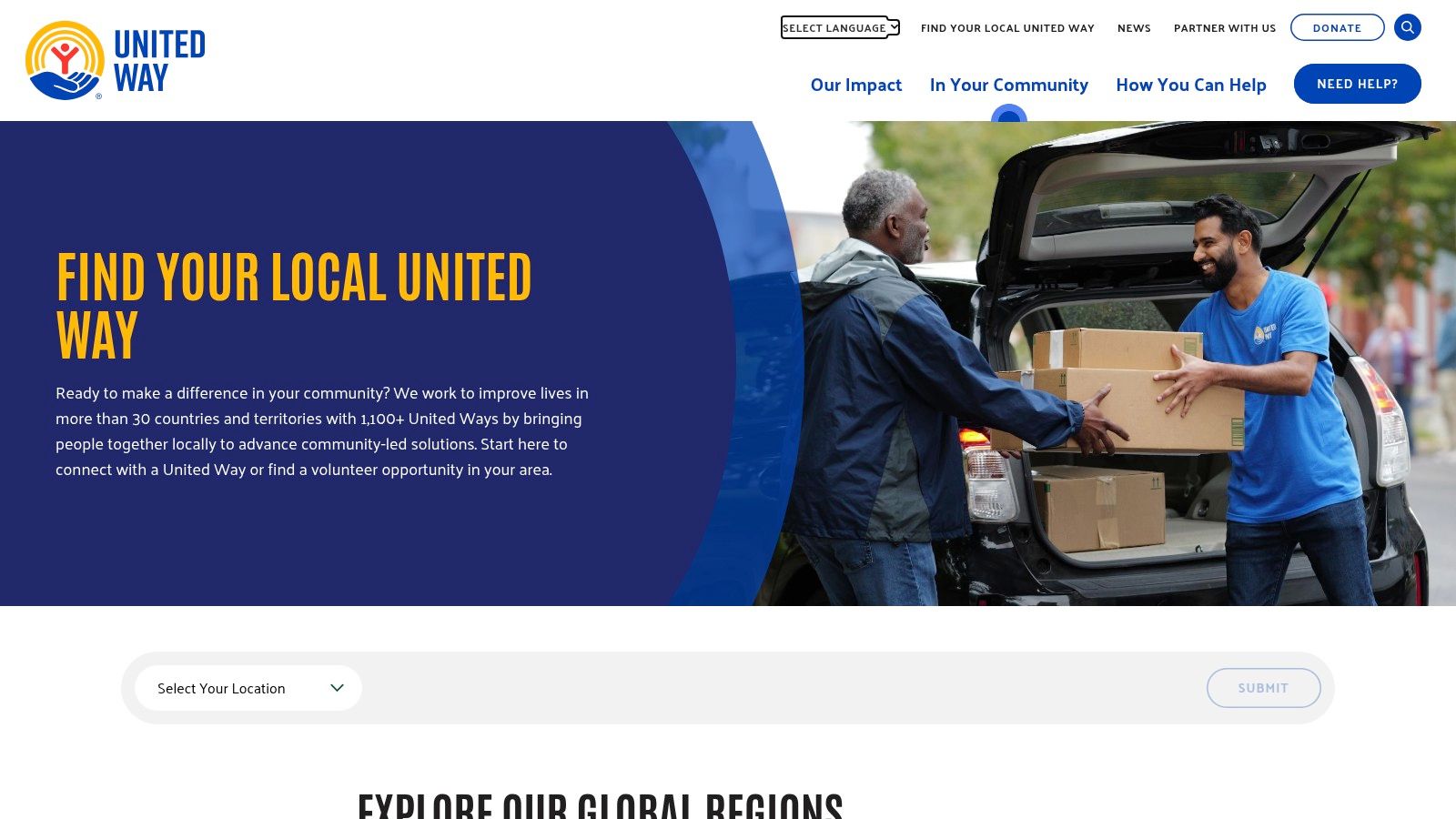
    United Way (local volunteer portals)

    United Way is the friend I'd send to someone who says, "I want something reliable near me." Its local portals usually feel less chaotic than giant directories. You search, find a shift, and the role often sounds concrete: pantry sorting, event help, tutoring, admin support.

    I like that structure. Some weekends, I want the wild-card energy of a street cleanup. Other weekends, I want something scheduled and clear, like a shift with a start time, a room number, and a person expecting me.

    Where it shines

    United Way has local hubs, and those hubs often include short-shift options for individuals, families, and work groups. If you're trying to volunteer with a roommate, partner, or office team, that's handy.

    The trade-off is that local inventory changes by city and season. Some roles also need a background check or short orientation before you start.

    • Best fit: You want nearby roles with some structure.
    • Good for groups: Family volunteering and company volunteer days.
    • Watch for: Popular shifts can fill fast.

    Start at United Way's local finder.

    5. Keep America Beautiful

    If picking up litter gave me my footing back, then Keep America Beautiful speaks my language. This network focuses on cleanup and beautification, and that makes it one of the easiest entries into free volunteer opportunities if you like visible results.

    I always tell people this: some service feels like planting seeds you'll never see. Cleanup is different. You see the before and after with your own eyes. That's satisfying in a very direct way.

    Why cleanup people love it

    Keep America Beautiful connects volunteers to local affiliate events across the country. During seasonal pushes like the Great American Cleanup, it can be especially easy to find a date, sign up, and join a group.

    The catch is local variation. In some places, you'll find a full calendar. In others, the schedule thins out outside the busier season.

    If you struggle with motivation, choose work with an obvious finish line. A full trash bag is a finish line.

    I also like cleanup work because it changes how you consume. The Litter Free Chicago-Calumet River initiative recommends avoiding single-use plastics like water bottles, straws, and bags because they require enormous energy to produce and add to climate change. Once you pick those items up off the ground enough times, you stop seeing them as disposable.

    Find events through Keep America Beautiful's volunteer portal.

    6. National Park Service Volunteers-In-Parks
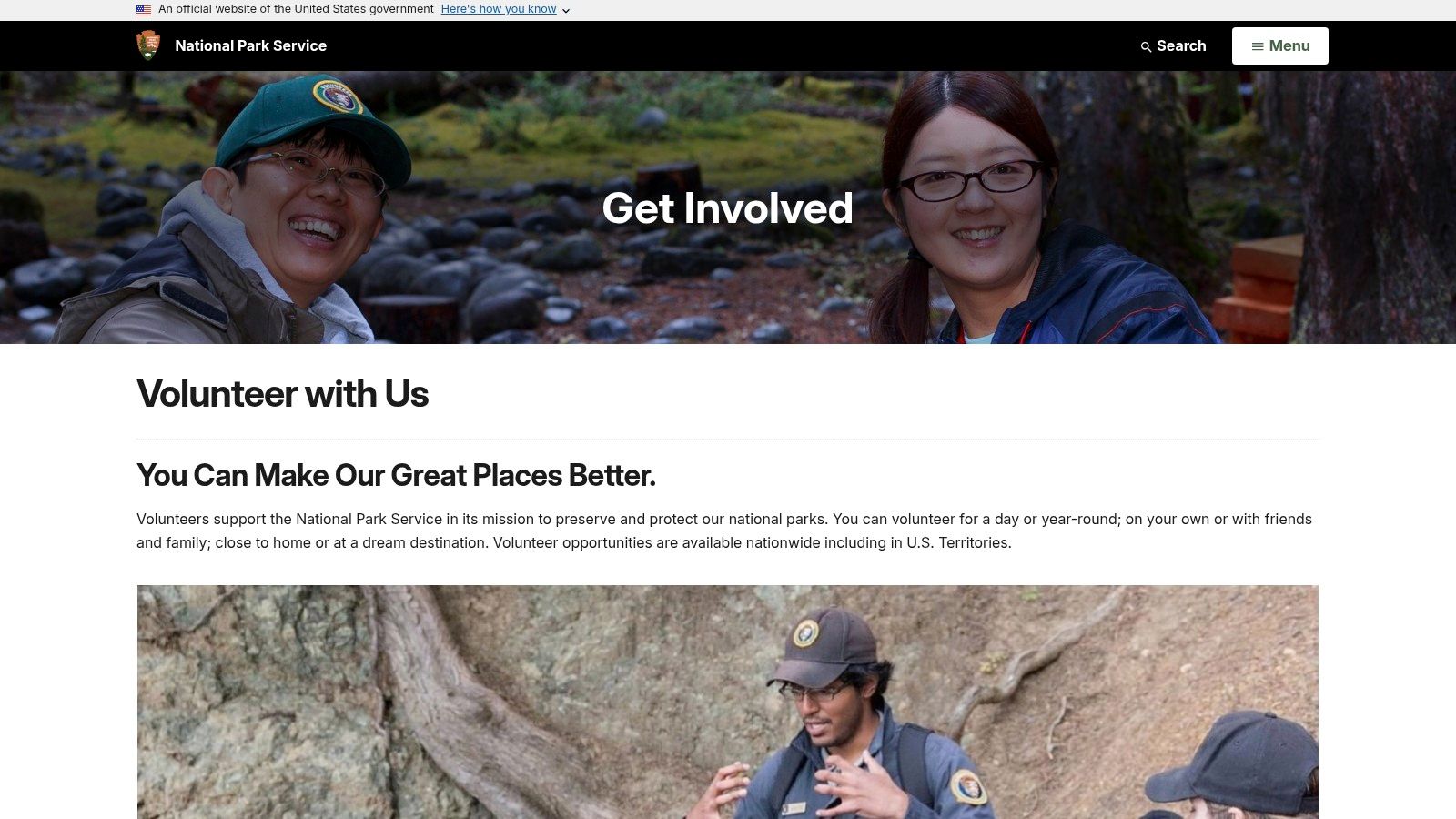
    National Park Service – Volunteers‑In‑Parks (VIP)

    The National Park Service Volunteers-In-Parks program is for the part of you that wants your service to feel like a field journal. Trails, habitat work, historic sites, visitor help, citizen science. It has the feeling of doing something useful while also stepping into a bigger physical world.

    I turn to this kind of volunteering when city life starts making me feel boxed in. A park shift changes the scale of the day. You stop staring at your phone and start paying attention to dirt, weather, and time.

    What to expect

    The range is wide. Some roles are beginner-friendly. Others need advance applications, training, or a set schedule. Travel can also be part of the equation, and lodging is usually on you.

    That makes this less spontaneous than a neighborhood cleanup, but more immersive if you're ready for it.

    • Great for: Outdoor people, history lovers, and anyone who wants structured conservation work.
    • Harder part: Planning ahead.
    • Best mindset: Treat it like a trip with a purpose.

    You can search openings through the National Park Service volunteer page.

    7. Habitat for Humanity
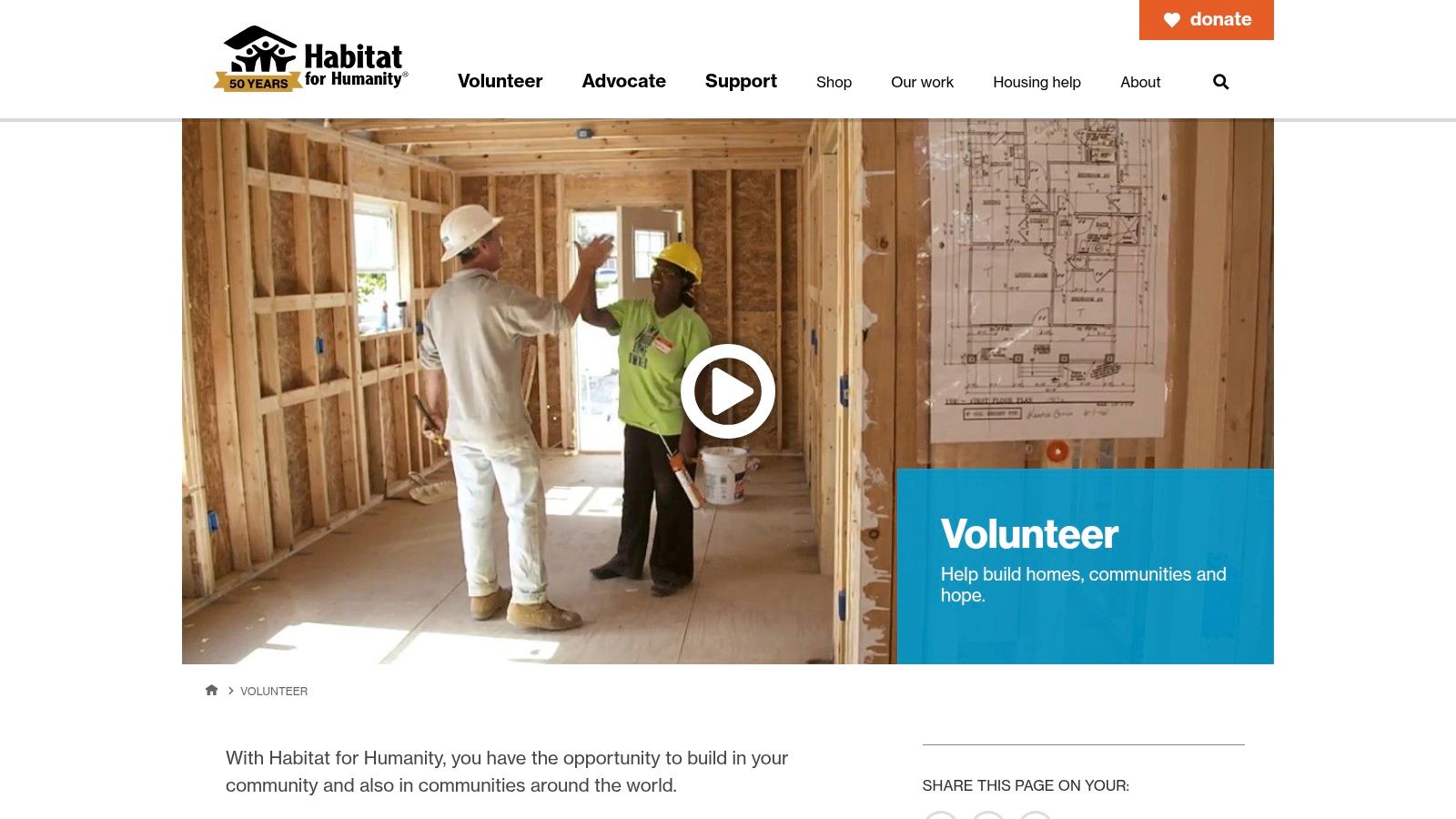
    Habitat for Humanity

    Habitat for Humanity is for people who want to point at a wall, a window, or a repaired room and say, "I helped do that." I love that kind of service because it leaves behind a tangible memory. You're not guessing whether your effort mattered. You can plainly see the frame.

    You also don't need to arrive as a construction pro. Habitat trains volunteers on site and gives supervision and safety briefings through local affiliates.

    Why people keep coming back

    There's something sticky about shared labor. The Independent Sector page on the value of volunteer time says the presence of a regular volunteer raises the probability of a volunteer returning by 15 percent, moving from an average 10% return probability to 11%. I read that and nodded because it matches real life. Familiar faces pull you back.

    If you're helping a group recruit and keep people engaged, this page on volunteer recruitment strategies is worth your time too.

    • Best fit: You want a team environment and visible progress.
    • Know before you go: Some tasks are physical, and some shifts have age or safety limits.
    • Why it works: The site crew usually makes the day feel organized and social.

    Sign up through Habitat for Humanity.

    8. Feeding America
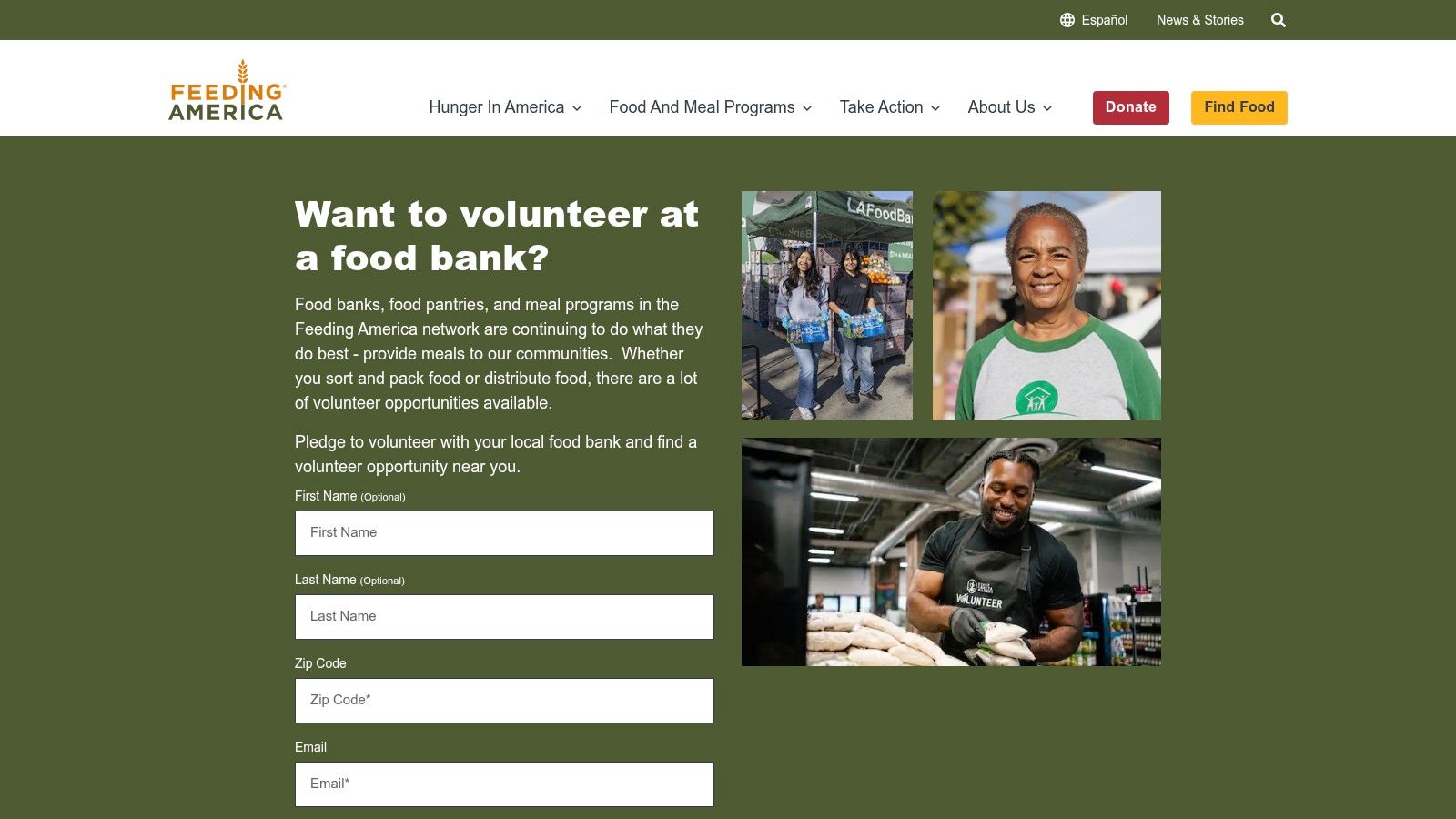
    Feeding America (food bank network)

    Feeding America is what I suggest when someone wants a practical first step. Food bank shifts are often easier to book than more specialized roles, and the work is easy to understand. Sort, pack, move, organize, distribute.

    That kind of rhythm is good for anxious brains. Your hands know what to do, so your mind gets a break.

    Why it's easy to start

    Feeding America lets you use your ZIP code to find nearby food banks and their volunteer calendars. A lot of local sites have short shifts, evening options, and weekend slots, which helps if you work standard hours.

    The work can be repetitive. That isn't always a downside. Repetition can calm you down, the way sweeping a floor can calm you down.

    • Great first volunteer stop: Simple tasks and low friction.
    • Good for groups: Friends, families, work teams.
    • Small catch: Some sites want a brief orientation and closed-toe shoes.

    Search near you at Feeding America volunteer opportunities.

    9. Team Rubicon
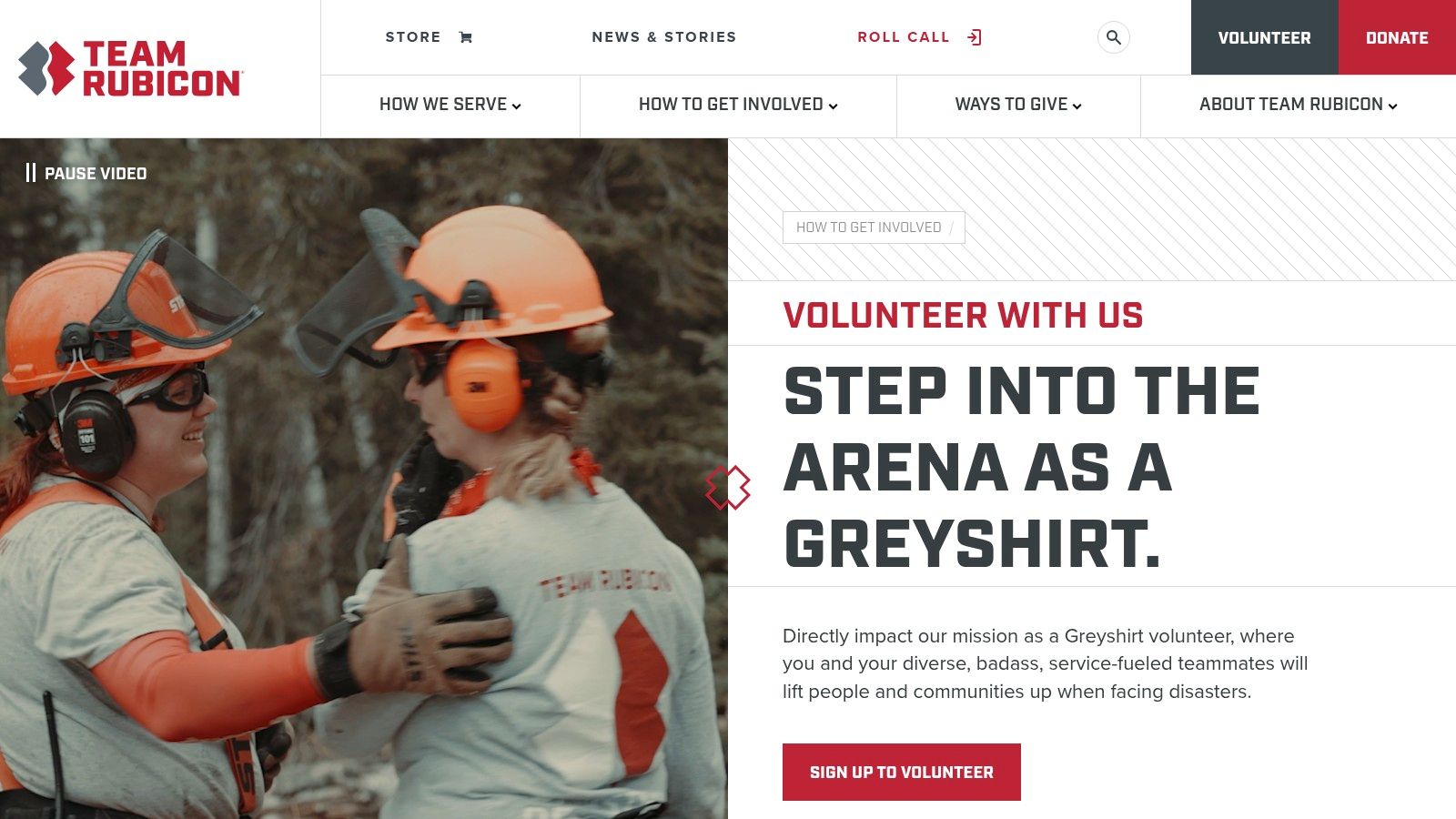
    Team Rubicon

    Team Rubicon is for the person who wants service with urgency. Disaster response has a different emotional texture from weekly neighborhood volunteering. It asks for readiness, training, and patience, then suddenly asks you to move.

    I admire that model because it respects preparation. You don't just drift into a serious field operation. You onboard, learn the basics, and wait for the right moment.

    Who should join

    If you like clear roles, field training, and strong camaraderie, Team Rubicon has that pull. Volunteers can get alerts for deployments and local events after onboarding and safety training.

    This path is less predictable than a weekly cleanup or pantry shift. Disasters don't run on your calendar. Some roles are also physically demanding and may require background checks and more training.

    Some people need a weekly routine. Other people need a mission that calls them when it's time.

    Visit Team Rubicon volunteer information.

    10. DoSomething.org

    DoSomething.org is the easiest recommendation on this list for younger volunteers, students, and people who want to start from home. If traditional volunteering feels like too many forms, too much logistics, or too much pressure, this is a softer runway.

    I like it because momentum matters more than drama at the beginning. A quick action you perform beats a grand plan you keep postponing.

    Best for building the habit

    DoSomething.org has campaigns, toolkits, and checklists around issues like the environment, mental health, civic engagement, and equity. Many actions are remote or DIY, so you can start from school, your room, or a local hangout spot.

    That flexibility can turn intention into routine. In the United States, nearly 51% of people age 16 and older engaged in civic help between September 2020 and 2021 when informal volunteering was included, according to the U.S. Census Bureau's civic life report. I think that's part of the appeal here. Help doesn't always begin with a formal badge or a clipboard.

    • Best fit: Teens, students, and young adults.
    • Why it works: Fast start, no cost, easy to share with friends.
    • Possible mismatch: If you only want traditional in-person shifts, the site may feel too campaign-driven.

    You can start at DoSomething.org.

    Top 10 Free Volunteer Resources Comparison

    The first time I tried to choose a place to volunteer, I did what a lot of us do. I opened too many tabs, compared too many options, and nearly talked myself out of starting.

    What helped was a simpler question. What kind of change did I need most right then?

    If you want what helped me at the beginning, start with Litter Caterpillars. It is local, visible, physical, and hard to romanticize. You show up, pick up trash, talk to strangers, and leave with a cleaner block and a quieter mind. That kind of service changed me because it was immediate. I could see the bag filling up while I was clearing out some mess in myself too.

    If you want a wider search, use the rest of this list by fit instead of by rank:

    • Choose Litter Caterpillars if you want direct, outdoor, community-level action and a group with personality.
    • Choose Idealist if you want the biggest range of searchable opportunities across causes.
    • Choose Points of Light Engage if you want one starting point that pulls together many partner options.
    • Choose United Way if you want trusted local coordination and shorter, organized shifts.
    • Choose Keep America Beautiful if litter cleanup and beautification are what pull you in.
    • Choose National Park Service Volunteers-In-Parks if you want conservation work in outdoor settings.
    • Choose Habitat for Humanity if you want to build or repair something tangible with your hands.
    • Choose Feeding America if you want repeatable shifts with immediate help for local families.
    • Choose Team Rubicon if you want structured disaster response and the commitment that comes with it.
    • Choose DoSomething.org if you want a low-pressure start, especially if you're young or beginning from home.

    That is the true comparison I wish someone had given me earlier. Less spreadsheet, more honest match.

    You do not need the perfect option. You need the one you will show up for.

    Your Turn to Start the Story

    My story started with one piece of trash and one decision. I didn't wake up transformed. I just got tired of waiting to feel ready, and I learned that action can come before clarity.

    That lesson is why I care about free volunteer opportunities so much. They remove one excuse. You don't need to buy your way into purpose. Around the world, informal volunteering is already the bigger share of service. The State of the World's Volunteerism Report 2022 says about 14.3% of the working-age population engages in informal volunteering, compared with 6.5% in formal volunteering, and that volunteer work adds up to about 61 million full-time equivalent workers. A lot of people are already helping in ordinary, direct ways.

    I also think people stay with service for human reasons, not abstract ones. The same U.S. Census Bureau page noted earlier says 35% of volunteers cite socializing as a primary motivation. That tracks with my own experience. I started because I needed to clean up my life, but I kept going because other people showed up too.

    Sometimes the first step is tiny. You sign up for a Saturday cleanup. You sort canned goods for two hours. You pack a toolkit from your laptop and do one action before bed. Those steps look small from the outside, but they can change the story you're telling yourself about who you are.

    I wouldn't overthink the perfect choice. Pick the one that matches your energy right now. If you're restless, choose a cleanup. If you want structure, choose United Way or Feeding America. If you want to build something with your hands, choose Habitat. If you want adventure, choose the parks or Team Rubicon. If you want a low-pressure start, choose DoSomething.org.

    Tom Sawyer made fence painting feel like a prize because he changed the frame around the work. Volunteering can do that too. What looked like a chore to me became an adventure, then a rhythm, then a lifeline.

    Start with one shift. Put it on your calendar. Let the story begin.


    If you want the kind of free volunteer opportunity that gets you outside, introduces you to good people, and lets you see the difference you made before lunch, join Litter Caterpillars. Show up on a weekend morning, pick up a bag, and give yourself a better story to live inside.

  • Lakeview Pantry Chicago: A Guide to Getting and Giving Help

    Lakeview Pantry Chicago: A Guide to Getting and Giving Help

    Last winter, I watched a woman steady an older man's grocery bags on a slushy corner while another neighbor held the door. Nobody made a speech. They just saw a need and moved.

    A Story of Neighbors in Our City

    That's the feeling I associate with Lakeview Pantry Chicago. They're often looking for an address, hours, or a way to volunteer. What they're really circling is something more basic. They want to know where people in this city still show up for each other.

    Lakeview Pantry, now called Nourishing Hope, began in 1970 and in 2025 it served 50,000 neighbors and distributed more than 6 million pounds of food, according to Nourishing Hope's official site. I don't read that like a cold number. I read it like thousands of grocery bags lifted, carts rolled, doors opened, and kitchen tables made less stressful for one more week.

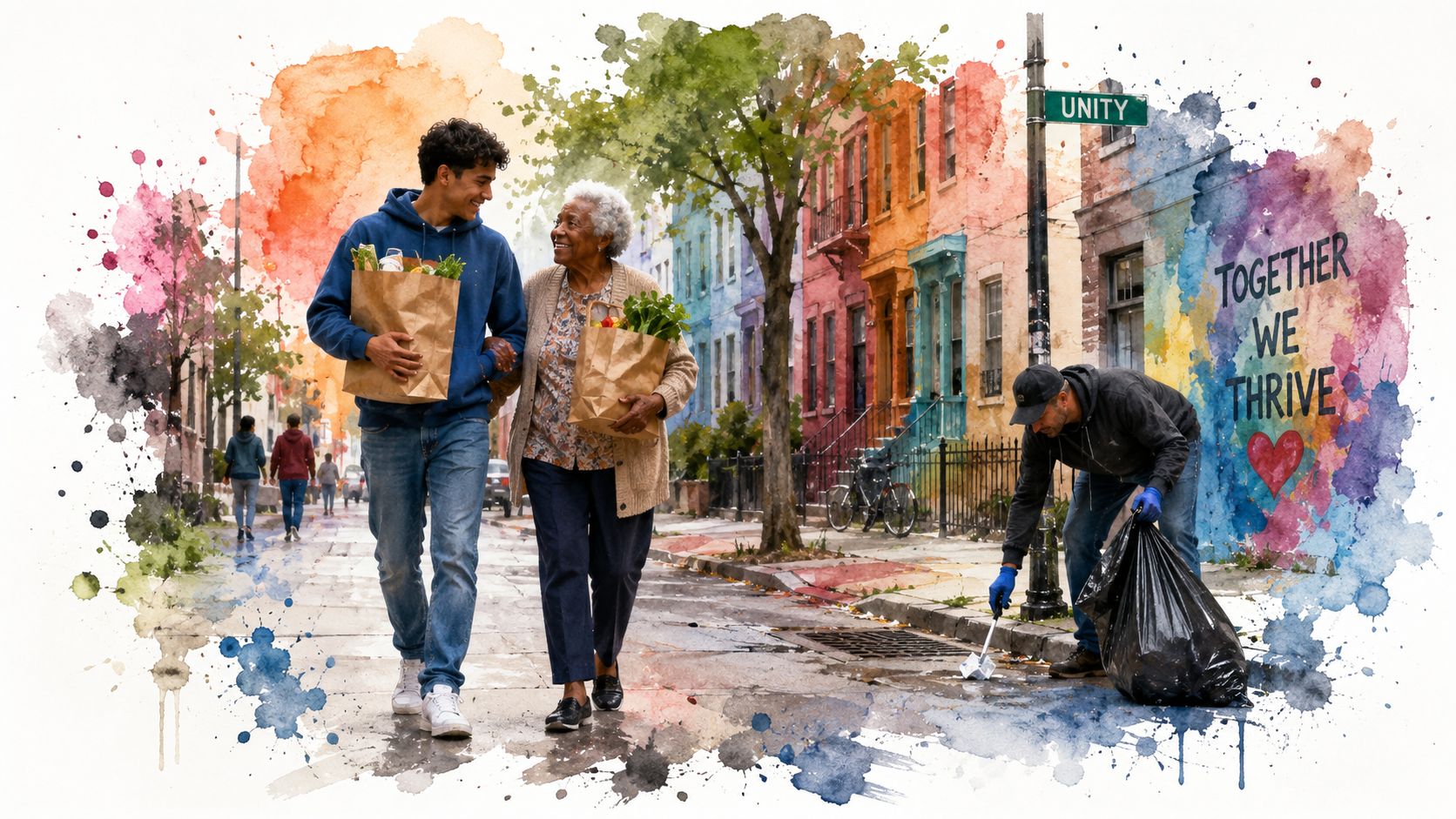
    A young man and an elderly woman walk down a vibrant street carrying grocery bags while a volunteer cleans.

    If you've ever joined a cleanup, you know how this works. One person picks up one bottle. Another grabs a bag. Then a whole block starts to change. A pantry works in that same rhythm. One volunteer sorts food. One staff member greets a guest. One family gets enough groceries to breathe a little easier. By the end of the day, what started small feels like a city moving together.

    What the name still carries

    A lot of Chicagoans still call it Lakeview Pantry, and that makes sense. Names stick when they're tied to memory. Maybe you donated there years ago. Maybe a friend told you about it. Maybe you passed the building and wondered what happened inside.

    Now the name is Nourishing Hope, but the heartbeat is still local and neighborly. The work has grown wider.

    Chicago runs on these everyday exchanges. A hand on the door. A bag passed over. A stranger who decides not to stay a stranger.

    For people looking for other ways neighbors support neighbors across the city, this roundup of charities in Chicago is a good place to keep reading.

    Why people keep coming back

    Some people come because they need food. Some come because they need a place to help. Some come because they've been on both sides of that line in different years of their lives.

    That's what makes this place easy to understand. It isn't a machine. It's a habit of care.

    More Than a Meal What Nourishing Hope Means

    Food gets you through tonight. Stability helps you get through next month.

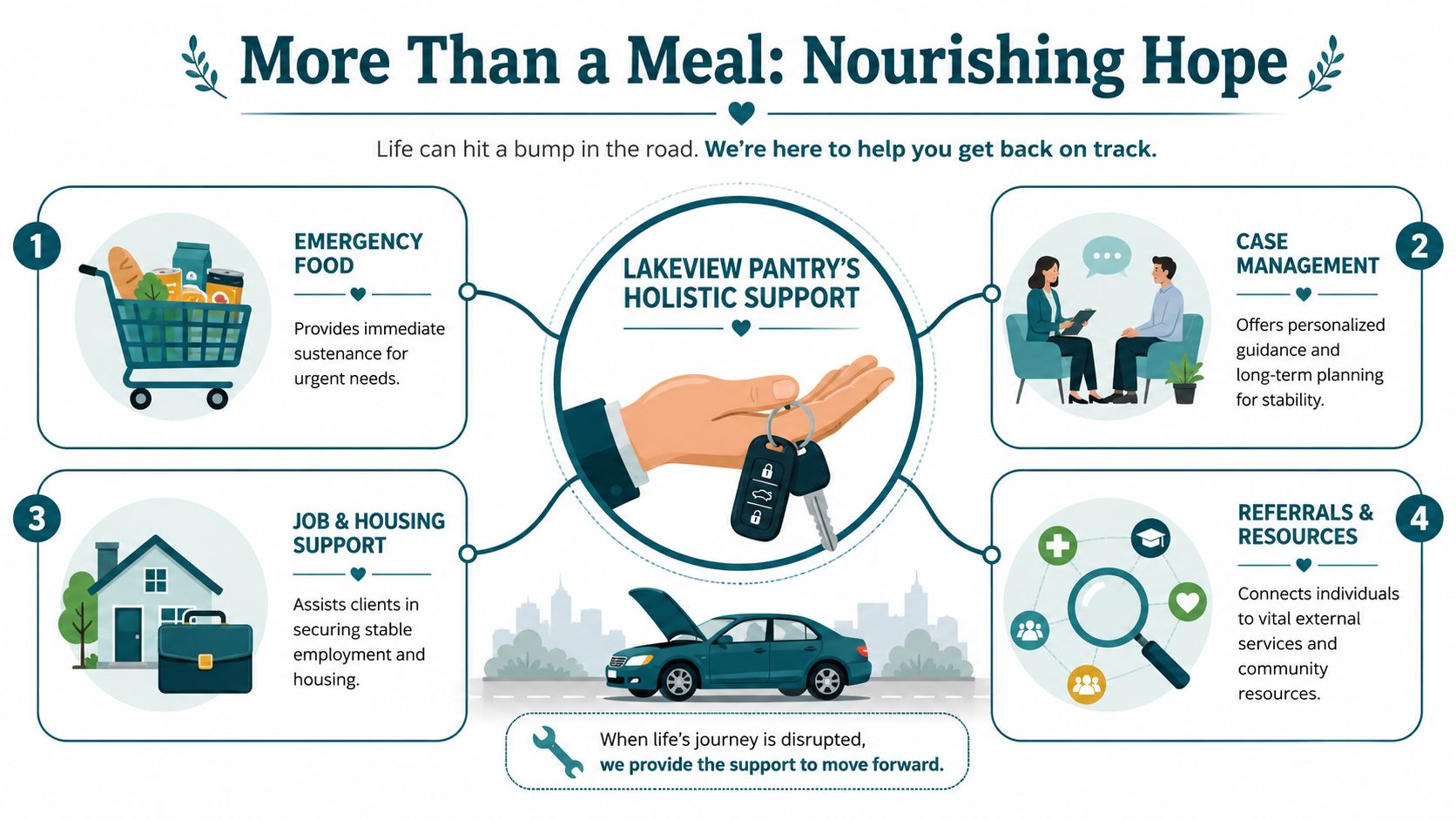
    That's the cleanest way I can explain the change from Lakeview Pantry to Nourishing Hope. If your car breaks down, a sandwich helps if you're hungry, but you still need the engine fixed, a ride to work, and someone who knows which shop to call. Hunger works like that too. A bag of groceries matters right away. But a lot of people also need help with stress, housing, work, and the tangle of problems that pile up around an empty fridge.

    The shift to Nourishing Hope points to that wider mission. The organization says the rebrand includes mental health counseling, job assistance, and housing support through its broader social service model, as noted by the Lakeview Roscoe Village Chamber listing for Nourishing Hope.

    An infographic detailing Lakeview Pantry's holistic support programs, including emergency food, case management, and job resources.

    Food is one tool in the toolbox

    I like to think of Nourishing Hope as a workbench instead of a shelf. On that bench, food is one tool. It's the first one you reach for. It solves the immediate problem. Then you look around and see other tools nearby.

    • Emergency food helps when the cabinet is bare and payday is still far off.
    • Case management gives people a real conversation and a plan, not just a quick handoff.
    • Job and housing help gets at the pressure points that make food insecurity keep coming back.
    • Referrals and outside resources connect people to support that one organization alone can't cover.

    That changes the experience. You don't walk away with only groceries. You walk away with more options.

    What that feels like in real life

    Say your rent jumps, your hours get cut, and the stress starts crawling into your sleep. Food help keeps the week from falling apart. A conversation about work or housing can keep the next few months from doing the same. If the strain has gotten heavy, mental health counseling matters too.

    Practical rule: When a pantry also helps with the problems around hunger, asking for food can become the first step instead of the last resort.

    That's why the name change matters in a practical way. It tells you the door opens to more than one kind of help.

    How to Get Help A Friendly Walkthrough

    Asking for help can feel awkward the first time. Individuals typically don't want to explain their situation to a room full of strangers. They want to walk in, get oriented, and leave with dignity intact.

    From what I've seen, Nourishing Hope tries to make that first step less tense. The building itself was designed with that in mind. Its permanent home, designed by Wheeler Kearns Architects, includes a dedicated entrance desk so every guest is greeted by a volunteer, which helps create a more welcoming arrival, according to the Chicago Neighborhood Development Awards project page.

    What to expect when you arrive

    Think of your first visit like walking into a well-run library instead of a chaotic giveaway line. You're not supposed to guess what happens next. Somebody is there to orient you.

    A friendly walkthrough usually looks like this:

    1. Start with the website or a phone call if you can. Check current details before heading over.
    2. Look at location options so you know which site makes the most sense for your trip.
    3. Prepare for a brief intake or check-in. Keep it simple. Bring what the organization asks for.
    4. Expect a greeting at the door. That part matters more than people realize.
    5. Ask about other support if food isn't the only issue on your mind.

    Some people need one visit. Others need a steadier rhythm for a while. Either way, it helps to know that the space was built to feel human.

    A few things I'd tell a friend

    If you're going for the first time, give yourself a little extra time and don't rush in flustered if you can avoid it. If English isn't your first language, or if forms make you nervous, bring a calm friend if the organization allows that kind of support.

    And if you want another example of how neighborhood food support works in Chicago, this piece on Casa Catalina Food Pantry in Chicago, IL gives a useful local comparison.

    Walk in like you belong there, because you do if you need the help.

    Questions worth asking on site

    A first visit gets easier when you ask direct questions.

    Question Why it helps
    What do I need for my next visit? You leave with a clear plan.
    How does scheduling work? You avoid confusion later.
    Can someone tell me about social services? You learn whether more support fits your situation.
    What if I have trouble with online steps? You find out what help is available before it becomes a barrier.

    That last question matters a lot right now, and I'll come back to it in a minute.

    Join the Crew How You Can Help

    Volunteering here feels a lot like any good group project in Chicago. People show up half-awake, grab a task, joke a little, then lock in. Before long, the room has a rhythm. Boxes move. Lists shrink. Somebody learns a name they didn't know an hour ago.

    Nourishing Hope has more than 5,000 volunteers, including adults, children, and families, supporting work like on-site distribution and home delivery, according to Lakeview Pantry's volunteer page.

    Screenshot from https://nourishinghopechi.org/get-involved/volunteer/

    That number tells me something simple. You do not need to be a superhero to join in. Plenty of regular people already have.

    What helping can look like

    Some folks like direct contact. They want to greet guests, pack groceries, or make deliveries. Others prefer behind-the-scenes tasks that keep the day from wobbling.

    Here are a few ways people usually plug in:

    • Hands-on pantry work means sorting, packing, stocking, and keeping food moving where it needs to go.
    • Guest-facing support fits people who are warm, patient, and good at making others feel at ease.
    • Home delivery help works well for volunteers who like a clear route and a clear purpose.
    • Material or financial donations help when your schedule is packed but you still want to contribute.

    None of those roles are glamorous. That's part of the beauty of it. Real care often looks ordinary up close.

    Why volunteering changes the volunteer too

    A lot of us sign up thinking we're only going to help someone else. Then we leave steadier ourselves. We meet people outside our routine. We remember our city is full of generosity that rarely makes noise.

    If you want another route into food-focused service, this guide to Chicago food bank volunteer opportunities can help you compare options and find the right fit.

    A short look at the volunteer side helps make it real:

    Some people donate because they have money. Some volunteer because they have time. Many do both in different seasons of life.

    If you're on the fence

    Go once. That's my advice.

    You don't need a lifelong plan. You need one morning, one shift, one honest try. Places like this run because enough people keep saying yes to one doable act at a time.

    Tips for Your First Visit or Partnership

    The hardest part is often the tiny practical stuff. Which door do I use. What should I bring. Do I need to book online. What if my neighbor doesn't use a smartphone. Those details decide whether help feels easy or far away.

    One issue deserves plain language. Nourishing Hope's system now leans heavily on online bookings, and there is a real access gap for the 40% of food pantry users in the area who do not use smartphones, especially seniors and disabled neighbors. That means convenience for one person can become a wall for another.

    If you're visiting for help

    Start simple and stay organized.

    • Check booking steps early if you use a phone or computer comfortably. Don't wait until the last minute.
    • Write down details on paper if that feels safer than keeping everything on a screen.
    • Bring a support person when possible if technology, forms, or travel feel stressful.
    • Ask staff what the backup plan is if you miss an online step or can't complete it at home.

    If you're helping an older neighbor, don't just send them a link and hope for the best. Sit down with them. Make the appointment together. Write the time clearly. Ask if they need a ride or a reminder call.

    If you're a community group

    Partnership starts with one practical question. What problem can your group reliably solve?

    Maybe your team can help people use digital booking. Maybe you can organize a volunteer day. Maybe you can collect items the pantry needs most. The best partnerships aren't flashy. They remove friction.

    A good first outreach note usually includes:

    What to include Why it matters
    Who you are Staff can place your group quickly
    What kind of help you can repeat Reliability beats a one-time burst
    How many people may join It helps with planning
    What dates or times work It moves the conversation forward

    Keep the human part in view

    When systems move online, some neighbors fall quiet. They don't complain. They just disappear from the process. That's why I think the best support people in Chicago do one extra thing. They notice who isn't in the room.

    If you're comfortable online, use that comfort for somebody else too.

    From a Pantry to a Partnership

    When I think about Lakeview Pantry Chicago, I don't think first about a building or a brand name. I think about motion. A volunteer greeting someone at the desk. A delivery heading out. A person walking in tense and walking out with a little more steadiness.

    That's why this story feels familiar to anyone who has ever done local service. You pick up what someone else couldn't carry alone. Sometimes that's a grocery bag. Sometimes it's a hard week.

    Chicago gets better when more of us treat care like participation instead of applause. If you need help, step toward it. If you can give help, step toward that too. Both acts belong to the same city.


    If you want one more way to put that spirit into motion, join Litter Caterpillars. We clean blocks, build friendships, and practice the same simple habit that keeps pantries, parks, and neighborhoods going. Show up, do one useful thing, and let that small act pull you into a bigger community.

  • A Guide to Garfield Park Chicago A Neighborhood Reborn

    A Guide to Garfield Park Chicago A Neighborhood Reborn

    Garfield Park isn't just a dot on a Chicago map. Not for me. It’s a place with a pulse, a living, breathing community on the West Side, anchored by its incredible historic park and the jaw-dropping Garfield Park Conservatory. But this guide? It's about more than just landmarks. This is my invitation for you to see past the noise, past the headlines, and get to know its real heart. I want you to see what I see.

    Welcome to Garfield Park: A Neighborhood of Heart and History

    Let me show you the Garfield Park I’ve come to know. The one I’ve come to love through our weekly cleanups. This isn’t just another neighborhood guide. No. Think of it as a personal tour, a story I'm telling you about what makes this place so special.

    It’s like finding a classic novel on a dusty shelf. You know the kind. The cover might be a little worn, a bit frayed at the edges, but the story inside is powerful. It's inspiring. It is bursting with life. That’s Garfield Park to me. A story you have to open to understand.

    I'm writing this for anyone who believes in the power of showing up. It’s for you, the person who sees potential where others see problems. For you, the one who knows that real change, real connection, happens when you're willing to roll up your sleeves and get your hands a little dirty.

    Discovering the Soul of the Community

    Together, we're going to explore its incredible green spaces, like the world-famous Garfield Park Conservatory. But we're not going to shy away from its tough history either. You can't appreciate the neighborhood's deep resilience, its profound strength, without understanding both the beauty and the struggle. My goal is to introduce you to the soul of this community—a spirit I’ve seen up close, a fire I've felt every single weekend, at our Litter Caterpillars cleanups.

    The real character of a place isn't just in its famous buildings. It's in the people who call it home. It's in the sweat and the work they put into building its future, day in and day out.

    Your Role in the Next Chapter

    I wrote this to do more than just inform you; I want it to spark something in you. I need you to see how your own story can become part of Garfield Park's next chapter. In this guide, you’ll discover:

    • The rich, complicated history that shaped this community.
    • The iconic spots just waiting for you to explore.
    • The incredible, unbreakable strength of the people who live here.
    • How your simple acts of service can make a real, lasting impact.

    Let's explore the heart of this incredible West Side community. Together.

    A Living History of Chicago's West Side

    To really get Garfield Park, you have to feel its story. This isn't just a list of dates. It's not a dry timeline. It's a real-life saga of incredible highs, gut-wrenching lows, and a tough-as-nails spirit you can still feel today, right under your feet.

    It's a story I think about every single time our Litter Caterpillars crew gets together here. We're not just cleaning up. We're trying to live up to the legacy of this place. We're trying to be worthy of it.

    Picture it. Imagine the neighborhood back in the early 20th century. It was a big deal. A vibrant, bustling cornerstone of Chicago life where families laid down roots and businesses boomed. It was the absolute picture of a proud, strong community building its own damn future.

    But history, just like life, has its breaking points.

    From Prosperity to Pain

    The soul of Garfield Park was tested. It was tested in ways that most communities never have to face. When Dr. Martin Luther King Jr. was assassinated on April 4, 1968, a fuse was lit. The civil unrest that followed left deep, permanent scars on the West Side. This wasn't just a riot; it was a profound trauma that fractured the very foundation of the neighborhood. It was a wound that cut to the bone.

    What came next was a mass exodus. A hemorrhage. Over the following decades, the area saw a huge population drop. East Garfield Park alone shrank by a jaw-dropping 67.5% between 1930 and 2010. The worst of it happened in the years right after the riots, a time of disinvestment that left behind scars you can still see. You can still feel them. You can dig deeper into the neighborhood's demographic story and its historical context on Wikipedia.

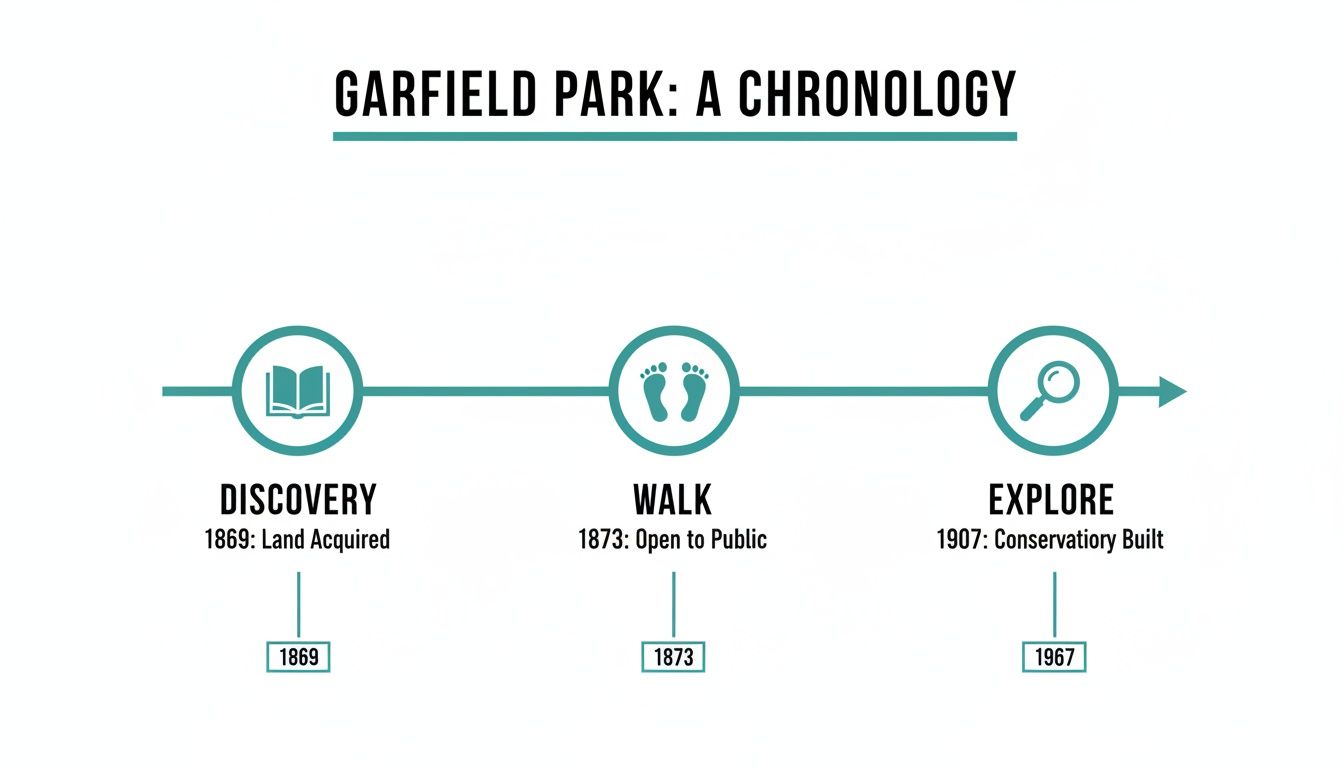
    This timeline gives you a snapshot of Garfield Park's story, from its founding to its early boom years.

    Timeline illustrates Garfield Park's chronology, highlighting key events from 1869 to 1907.

    Seeing how ambitious its foundations were makes the challenges that followed feel even more powerful. It hits you harder.

    The Art of Mending

    But this story? It isn't about looking back in sadness. No. It’s about understanding the incredible strength that was forged in that fire.

    I often think of it like the Japanese art of Kintsugi. That's where you mend broken pottery with gold. Instead of hiding the cracks, you highlight them. You make them beautiful. The repairs become part of the object’s story, making it even stronger and more precious than it was before it broke.

    Garfield Park’s story isn’t defined by its fractures, but by the golden resilience used to piece itself back together, stronger than ever.

    That's the spirit that fuels our work. That's what drives me. When the Litter Caterpillars are out here picking up trash, we’re doing more than just cleaning the streets. We're tracing the golden lines of that Kintsugi bowl. We're honoring a legacy of endurance. We're helping this incredible community shine. We are showing up to be part of the mending.

    Exploring the Treasures of Garfield Park

    A woman stands in a vibrant greenhouse with palm trees, ferns, and orange flowers.

    Ready for an adventure? Garfield Park isn't just a patch of grass. It's a massive 184-acre green space just begging you to explore it. It’s packed with hidden gems and iconic Chicago landmarks that, believe it or not, a lot of people miss entirely.

    The undisputed crown jewel is the Garfield Park Conservatory. I’ll never forget the first time I walked into the Palm House. The city, the noise, everything just vanished. Poof. I felt like I'd been instantly zapped to some lush, tropical paradise. A lost world. It's a true urban oasis on the West Side, and that feeling of awe never, ever gets old.

    Your Treasure Map to the Park

    Consider me your personal guide. I'll take you by the hand. We're going to wander through its eight stunning gardens under glass—from the ancient, prehistoric-looking plants in the Fern Room to the wild, ever-changing colors of the Show House. Each room is its own universe.

    But the journey doesn't stop there. Oh no. The park has so much more soul than just its plants. We'll check out the Golden Dome Fieldhouse, a historic gem that just feels grand and elegant. I'll point you to the quietest spots by the fishing lagoon, the perfect place to just sit and breathe for a minute. We'll follow the paths that snake through this incredible landscape, each one whispering a different piece of Chicago's story.

    This is your treasure map. It's filled with my personal tips for finding that perfect photo or just a quiet bench for yourself.

    Your Garfield Park Adventure Planner

    To get you started, I've put together a quick guide to my absolute must-see spots. Think of this as your cheat sheet. Your insider's guide.

    Attraction Why It’s a Must-See My Personal Tip
    The Conservatory It’s one of the largest and most breathtaking botanical conservatories in the entire country. A living museum. A temple of plants. Go on a weekday morning. You’ll practically have the place to yourself. The quiet hum of the gardens is pure magic. Trust me.
    Golden Dome Fieldhouse This building is a stunning piece of Chicago history, with its beautiful gold dome and classic architecture. A real stunner. If you can, peek inside! The interior architecture is just as impressive as the outside. It's a trip back in time.
    Fishing Lagoon It’s a peaceful little escape right in the middle of the park, offering lovely water views and a heavy dose of nature. This is one of the best spots for fall colors. The trees around the lagoon turn these brilliant shades of gold and red. Unforgettable.

    This table is just a starting point, of course. The real fun is in finding your own favorite corners. Your own secret spots.

    Garfield Park isn't a checklist of sights; it's an experience. It’s a place that asks you to slow down. It begs you to look a little closer, and to feel like you're part of something bigger.

    If you find yourself inspired by all this green space, you might want to check out our guide on how to dig into community gardens in Chicago and grow with your city.

    Walking through Garfield Park is like flipping through the pages of a beloved storybook. Each path, each garden, and each building reveals a new chapter of Chicago’s soul.

    My real hope is that you use this map not just to see the park, but to feel it. Go find your own favorite spot. Make your own memories. Let the magic of Garfield Park work its charm on you. It will.

    Understanding the Challenges and Seeing the Opportunity

    To really get to know a place, you have to see the whole picture. The good, the bad, everything in between. Let’s be real: Garfield Park is up against some serious economic hurdles. It’s like a friend you know who is tougher than anyone, but is also going through a really hard time. You can’t just ignore that part of their story. You wouldn't.

    Looking at the numbers isn’t about judging. It’s about understanding why showing up matters so damn much. When our Litter Caterpillars crew hits the streets every weekend, we’re doing a lot more than just picking up trash. We are a bright, visible sign that people still care. A lighthouse. We're a sign of investment and hope.

    The Story Behind the Numbers

    The stats tell a story of struggle, but they also reveal a deep-seated strength. A powerful one. Garfield Park is dealing with major economic hardship, with poverty rates way higher than Chicago’s average. For example, more than 50% of households in the neighborhood earn less than $25,000 a year. That single fact has a ripple effect on everything else, from health outcomes to education, where graduation rates trail the rest of the city. You can dig into the data yourself to see the full picture of what the Garfield Park community navigates.

    These aren't just figures on a spreadsheet. They represent real people, real families. They show us exactly why a consistent, positive presence can feel like a lifeline in a place that’s been overlooked for way too long.

    When a community has been overlooked, the simple act of consistently showing up becomes a powerful statement. It says, 'You are seen. You are valued. You are not forgotten.'

    And this is where the real opportunity starts—for people like you and me. The challenges aren't a reason to look away. They are the reason to lean in. Every single bag of litter we haul away, every friendly wave we exchange with a resident walking by, chips away at that old, tired narrative of neglect.

    Turning Presence into Hope

    This is where you find the seeds of genuine change. The work isn't glamorous. Not even close. But its impact is huge. It’s about laying a foundation of care, one small act at a time. This steady, reliable effort is a core piece of what we call community resilience. (If you're curious, you can read more about what community resilience means and why it's so powerful on our blog).

    Our presence is an act of solidarity. We’re not here to "fix" anything from the outside, because that’s not our place. We’re here to stand with the community. To add our energy to the incredible work residents are already doing themselves. This is your chance to help turn tough statistics into new stories of hope and action.

    How You Can Be Part of the Solution

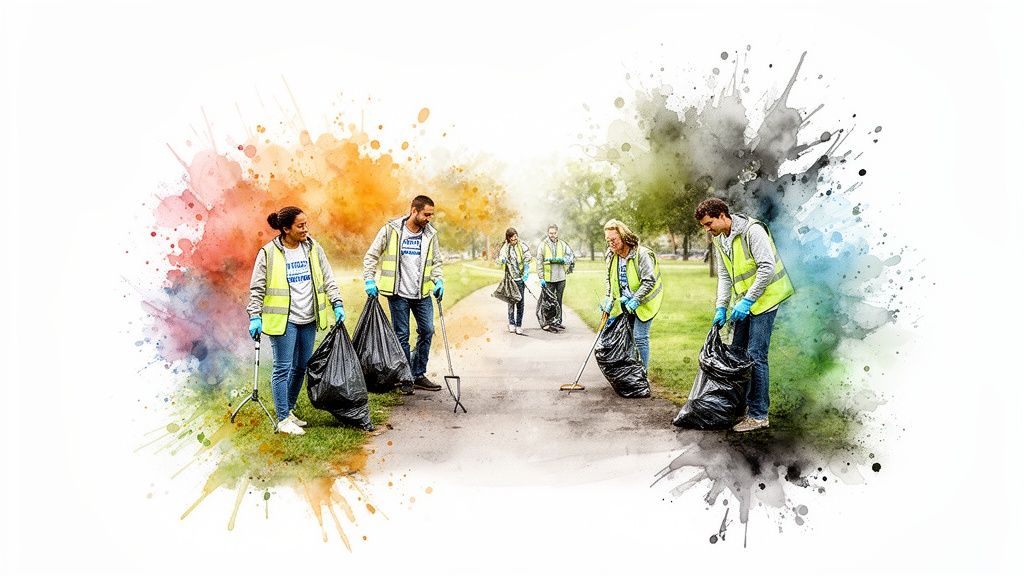
    Group of volunteers wearing high-visibility vests picking up trash in a park with watercolor effects.

    I started Litter Caterpillars because my own life was a mess. It's funny. I found that cleaning up someone else’s mess—the literal trash on the street—was the only thing that helped me clear my own head. It’s a strange kind of magic. You tackle a problem outside yourself, and you suddenly find the strength to fix what’s inside.

    This is exactly what I want you to feel with us in Garfield Park, Chicago.

    This isn't some corporate, check-the-box volunteer day. We find real meaning in this work. We build real friendships. We share a weird kind of joy you can only find when you’re freezing together in a Chicago hailstorm, laughing your butts off at how ridiculous it all is. That's us.

    Joining the Litter Caterpillars

    Let me be clear: joining us is ridiculously easy. You don't need any special skills. You don't need experience. All you need is a willingness to help. An open mind.

    It all starts with just showing up.

    • Find an Event: Keep an eye on our Meetup page or Instagram for the next cleanup. We’re all over the city every weekend, but we have a real soft spot for Garfield Park.
    • Just Show Up: I’m serious, that's it. We’ve got everything you need—gloves, bags, and those cool trash grabber things. Just wear some comfy, closed-toe shoes, and you're set.
    • Connect and Clean: You’ll instantly become part of a crew of the kindest, most hardcore people you’ll ever meet. We work, we talk, we laugh, and we leave the place way better than we found it.

    The most rewarding things in life often start with the simplest actions. Showing up for a community cleanup can be the first step in completely transforming your own world.

    More Than Just Picking Up Trash

    What we’re really doing out here is practicing bravery and kindness. We're proving that small, consistent acts of good can create massive ripples of change. There’s no feeling quite like looking back at a park or a street and seeing it completely transformed by the work your hands just did. It's powerful.

    I’ve seen it happen over and over. Someone joins us feeling a little lost. A little disconnected. By the end of the morning, they’re smiling, full of energy, and already asking about next weekend. This work is a shortcut to finding your purpose. A huge part of our mission is figuring out how to bring people together for a shared goal; you can read more about our community engagement strategies on our site.

    So, if you’re looking for a way to connect with Chicago, make some new friends, and be part of something genuinely good, come join us. Let me show you how something as simple as picking up litter can be the start of a beautiful journey—for you and for Garfield Park.

    Planning Your Perfect Day in Garfield Park

    Romantic couple enjoying a fall picnic by a scenic lake with a bicycle nearby.

    Alright, you're armed with all this info, so what now? Let's turn that inspiration into a real plan. Think of these ideas less like a strict schedule and more like a jumping-off point for your own adventure. Your story.

    I've sketched out a couple of different ways to experience the park, depending on what you're looking for. Your perfect day is out there waiting for you.

    For the Urban Naturalist

    Start your day on a quiet weekday morning. Slip into the Garfield Park Conservatory before the crowds arrive. This is your chance to really get lost in it all. Wander from the misty Fern Room to the dry heat of the Cactus House. You'll feel a million miles from the city buzz. I promise.

    After you've had your fill of green energy, grab that picnic you packed. Find a quiet spot by the lagoon. Maybe under one of the big willows that leans toward the water. Now's the time to just be. Watch the birds. Feel the breeze. Let the park's rhythm slow everything down. Simple, but powerful.

    For the Community Champion

    Your day starts with us, the Litter Caterpillars. Show up early, grab some coffee, and get ready to feel that incredible energy that comes from working alongside people who get it. People who know that just showing up makes all the difference in the world.

    Once we’ve left our little corner of the world better than we found it, keep that momentum going. Grab a coffee from a local spot. Throw some support to a small business. Then, spend the afternoon just walking the neighborhood. Check out the powerful murals that tell the story of this community's strength.

    These aren't just itineraries; they're invitations. An invitation to connect. My deepest hope is that you don't just feel like a tourist passing through. I hope you leave feeling like you've become a small, but real, part of this place's living, breathing story.

    Pick a path, or mix it up and create your own. The most important thing is to show up with an open heart. Be ready to see the beauty and resilience of this incredible community.

    Your Questions Answered

    I get a lot of the same questions about visiting Garfield Park and what it’s really like to join one of our cleanups. If you're new to the area or our group, you probably have them too. Let’s just get them out of the way. I want you to feel good about showing up.

    Is Garfield Park a Safe Place to Visit?

    Yes, it is. But like any spot in a massive city like Chicago, the key is just being smart. Be aware of your surroundings. My advice? Stick to the park and Conservatory during daylight hours. That’s when everything is bustling with people and activity, and it’s truly at its best.

    When you come out for a Litter Caterpillars event, your safety is my number one concern. We’re never out there alone. We stick together in groups. We stay in the main areas. We always have experienced leaders with us. Honestly, joining a positive group of people trying to do some good is one of the safest and most rewarding ways you can get to know this neighborhood. The community here is amazing.

    What Is the Best Way to Get There?

    Getting here is almost laughably easy. The CTA Green Line has a “Conservatory-Central Park Drive” stop that practically drops you on the Conservatory’s front steps. It’s perfect. It's like a red carpet.

    You’ve also got several bus routes, like the #20 Madison, that cut right through the park. Taking the 'L' or the bus is a fantastic way to go—no circling for parking, no stress. You just get to watch the city’s neighborhoods roll by your window.

    The real journey isn’t just arriving at a destination, but how you get there. Taking public transit is a great way to see the city's neighborhoods unfold, one stop at a time.

    What Should I Bring to a Litter Caterpillars Event?

    Just bring yourself. And a good attitude. That’s it. Seriously, we’ve got everything else you’ll need to make a difference: gloves, bags, and those super-handy trash grabbers.

    But if you want my personal pro-tips, here’s what I’d recommend:

    • Wear comfortable, closed-toe shoes you don’t mind getting a little dusty.
    • Dress in layers. This is Chicago. The weather loves to keep us guessing, so it’s always smart to be ready for anything.
    • Bring a reusable water bottle so you can stay hydrated.

    I've set things up to be as simple as possible. My goal is for you to just show up, feel instantly welcome, and become part of the solution.


    Are you ready to see the real Chicago and make a tangible difference? Join Litter Caterpillars for a weekend cleanup and discover the power of showing up. Find your next event and be part of our story at https://www.littercaterpillars.com.

  • My Top 7 Picks for the Best Volunteer Opportunities in Chicago for 2026

    My Top 7 Picks for the Best Volunteer Opportunities in Chicago for 2026

    I know what it’s like to feel stuck. My own life felt like a room I couldn’t clean. Every little piece of clutter, every old jar in the fridge, was a monument to a past I couldn't move. It weighed me down, like a 500-pound weight on my chest. It wasn’t until I hit a breaking point, ending a chaotic relationship and facing my own mess, that I decided to change.

    I resolved to build a new life, one based on cleanliness, consistency, and bravery. The funny thing is, I found that path not by cleaning my own space, but by cleaning Chicago's. Picking up trash for someone else was… easy. Liberating, even. It taught me that sometimes the way to fix what's broken inside you is to start by fixing something outside of you.

    If you’re feeling that pull to do more, to connect with your city and maybe even reconnect with yourself, you're in the right place. I’ve walked this path, and I've found some truly incredible ways to give back. I’ve put everything I learned into this guide to the best volunteer opportunities in Chicago.

    This isn't just a generic list. It’s a curated collection of platforms and organizations that solve the problem of finding meaningful, actionable volunteer work. I'll walk you through exactly what each one offers, who it's best for, and the real-world impact you can make. Let's explore the best volunteer opportunities in Chicago together, and I'll show you how you can find your own transformation.

    1. Litter Caterpillars

    If you’re looking for a way to create immediate, visible change in Chicago while making genuine friendships, look no further than Litter Caterpillars. I see this group as more than just a cleanup crew; it’s a citywide movement built on grit, consistency, and a powerful sense of community. This isn't your average, once-a-year volunteer event. This is a weekly commitment to making our city better, one block at a time, side-by-side with people who quickly start to feel like family.

    Kevin Tao, the founder, built this on a simple but profound idea: show up and clean up. They meet every single weekend morning, no matter what. I'm talking blizzards, rain, or sweltering heat. This relentless dedication has led them to clean in all 50 of Chicago's wards, including neighborhoods often overlooked by other organizations. It's a testament to their belief that every corner of our city deserves care and pride.

    A group of Litter Caterpillars volunteers smiling and holding trash bags after a neighborhood cleanup event in Chicago.

    Why It Stands Out: A Movement You Can Join

    What truly makes Litter Caterpillars one of the best volunteer opportunities in Chicago is its "volunteer-first" culture. You don't have to donate money. Your time and energy are what matter. I've always felt that safety and happiness are the top priorities, creating a welcoming space where you can just show up and contribute.

    Their story is incredibly inspiring. It started with just three people in a hailstorm and has grown into a powerful force for good. They've made headlines for their bold actions, like cleaning a highway during a shutdown and, most impressively, winning an empty-lot auction to create Caterpillar Park in Englewood. This isn't just picking up trash; this is reclaiming and transforming public spaces for the community.

    The culture is vibrant and engaging. Think of it like a team, complete with flags, a theme song, and even achievement badges. I find the open group chats and regular social meetups make it easy to connect, so you're not just volunteering, you're building a real social circle. Their social media on Instagram and TikTok is filled with authentic clips of volunteers having a great time, which has helped their community grow exponentially. For more details, explore the various environmental volunteer opportunities in Chicago with Litter Caterpillars.

    Getting Involved: Your First Cleanup

    Joining is refreshingly simple and low-friction. You don't need to fill out lengthy applications or sit through formal orientations. You just find an upcoming event and show up.

    • Who It’s Best For: Anyone who wants hands-on, tangible impact. It's perfect if you're new to Chicago and want to make friends, or if you're a longtime resident looking to explore different neighborhoods and foster local pride.
    • Time Commitment: Events are consistently held on weekend mornings. This structure helps you build a positive, consistent habit of service.
    • How & Where to Sign Up: The easiest way is through their official website or by joining their group on the Meetup app. You can also follow their Instagram for event announcements.
    • Eligibility & Safety: All you need is a positive attitude. The group provides all the necessary equipment (gloves, bags, grabbers) and starts each event with a safety briefing.

    Quick Tip for Your First Time: Don't be shy! Introduce yourself to the event leader and a few other volunteers. The community is incredibly welcoming, and people are eager to connect. Wear comfortable, closed-toe shoes, and just be ready to have a surprisingly fun time making a difference.

    2. Idealist – Chicago Volunteer Opportunities

    If you’re ready to find your perfect match in the world of volunteering, think of Idealist as your ultimate connector. Imagine a massive, bustling city square where every nonprofit, mutual aid group, and community organization in Chicago has set up a booth. That’s what Idealist feels like to me—an incredible, one-stop hub teeming with possibilities to make a difference. After joining forces with VolunteerMatch, it has become one of the most comprehensive platforms available, aggregating thousands of the best volunteer opportunities in Chicago into one dynamic, searchable feed.

    Idealist – Chicago Volunteer Opportunities

    This platform shines because it puts the power of choice directly in your hands. You aren’t just scrolling endlessly; you're actively filtering for what truly matters to you.

    What It's Best For

    I think Idealist is for the volunteer who wants options—lots of them. It’s perfect if you're exploring different causes, from animal welfare in Lincoln Park to food justice initiatives in Englewood. Whether you have one afternoon to spare or are looking for a long-term commitment, the platform’s powerful filters help you narrow down the search. You can sort by on-site or remote work, find opportunities that are family-friendly, or even search for skills-based roles where you can lend your professional expertise.

    How to Get Started

    Getting involved is straightforward. You can browse listings without an account, but I recommend creating a free profile to unlock the platform’s best features.

    1. Visit the Website: Go to Idealist.org/en/volunteer-in-chicago.
    2. Use the Filters: On the left-hand side, start tailoring your search. Filter by cause area (like "Children & Youth" or "Environment"), date, or type of work.
    3. Find an Opportunity: Click on a listing to get the full details, including responsibilities, time commitment, and location.
    4. Apply: Follow the instructions to sign up. Some organizations let you apply directly on Idealist, while others may link you to their own volunteer portal.

    First-Time Volunteer Tip: Create an account and "follow" a few organizations that catch your eye. You'll get email alerts when they post new opportunities, so you never miss a chance to contribute to a cause you care about.

    Pros and Cons

    Pros Cons
    Massive Selection: The sheer volume of listings from across Chicago is unmatched. Varying Quality: Since anyone can post, some listings are more detailed and professional than others.
    Powerful Filters: Easily find exactly what you’re looking for, from one-day events to recurring roles. Redirects: You might have to leave Idealist to complete your application on an organization's site.
    Organization Alerts: Following your favorite nonprofits keeps you in the loop about their latest needs. Can Be Overwhelming: The number of options can feel like a lot to sort through at first.

    Idealist empowers you to be the architect of your own volunteer journey. It’s a tool for discovering the incredible work being done in every corner of our city and finding precisely where your unique spark can make the biggest impact. If you want to dive deeper into navigating these large platforms, you can find more tips on how to find the perfect volunteer work.

    3. Points of Light Engage

    If you've ever wanted a global perspective on local impact, I see Points of Light Engage as your window to the world of service, right here in Chicago. Think of it as a satellite view of volunteering; it doesn't just show you one city block, it reveals the entire landscape. It pulls in opportunities from a vast network of partner sites and local affiliates, presenting a rich, diverse collection of ways to give back. I’ve found it connects you to both well-known and hidden-gem nonprofits across the city and its suburbs.

    Points of Light Engage

    This platform excels by casting a wide net. You'll discover chances to contribute that you might have otherwise missed. It’s a powerful tool for seeing the full spectrum of need and opportunity in our community.

    What It's Best For

    Points of Light Engage is ideal for the curious volunteer who wants to explore beyond the usual suspects. You’ll find it particularly useful if you're looking for unique roles or want to find opportunities in Chicago's surrounding suburbs. Because it aggregates from so many sources, you might find a posting for a small, local food pantry in Rogers Park right next to a virtual mentorship program with a national organization. I appreciate how it clearly labels opportunities as "recruiting" or "ongoing," so you know exactly which needs are most current. It’s also great for finding group-friendly projects and at-home volunteer work.

    How to Get Started

    Diving in and finding your next role is simple and intuitive. The platform is designed to get you connected to a cause quickly.

    1. Visit the Website: Navigate to the Chicago-specific portal at engage.pointsoflight.org/.
    2. Filter Your Search: Use the search bar and filters to look for keywords (like "environment" or "animals"), specify your location, and choose between in-person or virtual roles.
    3. Explore the Listings: Each post gives you a snapshot of the organization and the role. Look for the green "Recruiting" tag to see active needs.
    4. Express Interest: Click on an opportunity to read the full details. From there, you will be guided on how to sign up, which often involves being redirected to the partner organization’s website.

    First-Time Volunteer Tip: Use the "Virtual" filter to find at-home opportunities. This is a great way to ease into volunteering by lending your skills- like writing, graphic design, or data entry- on your own schedule.

    Pros and Cons

    Pros Cons
    Discover Hidden Gems: Excellent for finding lesser-known nonprofits and suburban organizations. Occasional Duplicates: The aggregated feed can sometimes show the same opportunity more than once.
    Aggregated Listings: Pulls opportunities from multiple networks into one convenient place. External Sign-Ups: You'll often need to complete your application on an external partner's website.
    Clear Status Labels: Easily see which organizations are actively seeking help right now. Interface Can Be Basic: The design is functional but less modern than some other platforms.

    Points of Light Engage acts as your trusted guide, helping you navigate the vast ecosystem of service to find where you belong. It broadens your horizons, connecting your desire to help with the countless organizations working to build a better Chicago, one act of service at a time.

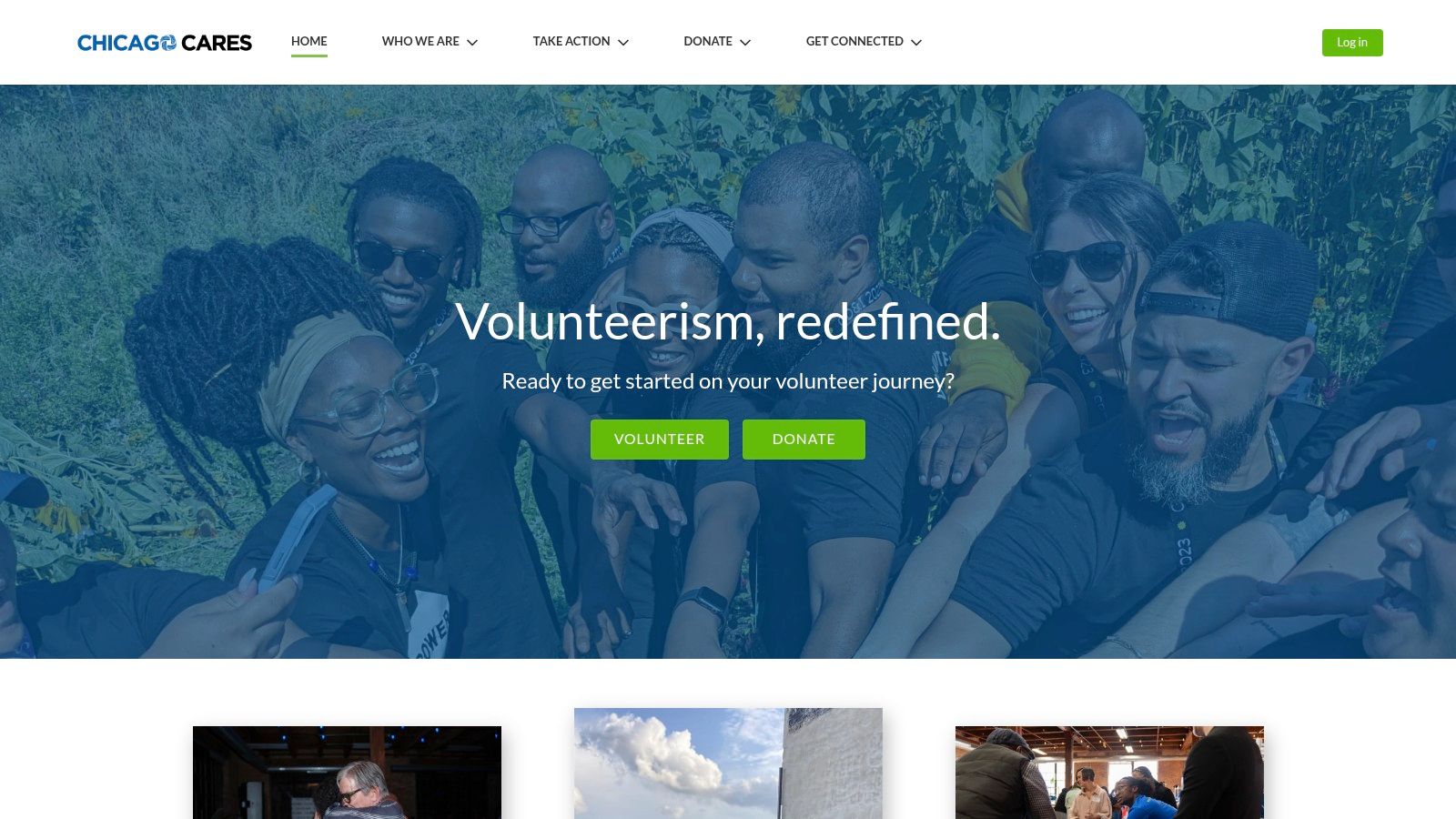
    4. Chicago Cares

    If larger platforms like Idealist are the massive city squares of volunteering, think of Chicago Cares as your friendly neighborhood block party. It’s a deeply local, hands-on platform that feels like it was built by Chicagoans, for Chicagoans. For decades, they have been the city's premier matchmaker, connecting energetic volunteers like you with impactful, on-the-ground projects, particularly on the South and West Sides. They don’t just list opportunities; they curate and often lead them, ensuring every event is organized, meaningful, and ready for you to make a real difference.

    Chicago Cares

    This platform stands out because it removes the guesswork. You show up, and the project is ready to go, complete with a trained leader and all the supplies you need. It’s pure, direct action.

    What It's Best For

    Chicago Cares is perfect for the volunteer who wants to just show up and get to work. I think it's ideal if you’re looking for well-structured, staff-led weekend projects like beautifying a school playground in Austin or packing food at a pantry in Pilsen. Because of its local focus, it's one of the best volunteer opportunities in Chicago for discovering neighborhoods you've never explored. It’s also fantastic for corporate teams or anyone new to volunteering who appreciates a bit more guidance and organization.

    How to Get Started

    Signing up is your ticket to a calendar full of curated projects. They’ve made the process simple to get you into the community quickly.

    1. Visit the Website: Head over to ChicagoCares.org.
    2. Create Your Profile: You'll need to create a free account to view and register for projects. This helps them manage event capacity and communicate details.
    3. Browse the Calendar: Explore their "Find a Project" calendar. You can filter by date, cause area (like "Hunger" or "Education"), or neighborhood.
    4. Sign Up: Once you find a project that inspires you, click "Sign Up." You’ll receive a confirmation email with all the details, including the meeting spot, what to wear, and your project leader's contact info.

    First-Time Volunteer Tip: Look for the "New Volunteers" filter on their project calendar. I’ve found these opportunities are specifically designed to be welcoming and provide a great introduction to the Chicago Cares model.

    Pros and Cons

    Pros Cons
    Local Expertise: Deep relationships with community partners mean projects address real, stated needs. Account Required: You must create a login before you can see full project details or register.
    Well-Organized: Staff-led projects ensure you have a great experience without logistical headaches. Fewer Niche Roles: You'll find fewer highly specific or skill-based roles than on a national aggregator.
    Consistent Weekend Options: The calendar is always populated with great Saturday and Sunday events. Popular Events Fill Up: The best projects can fill up fast, so it's good to check the calendar regularly.

    Chicago Cares is your gateway to becoming an active participant in the city's story. It’s less about endless searching and more about immediate, tangible action, connecting you directly to the heartbeat of Chicago’s communities, one project at a time.

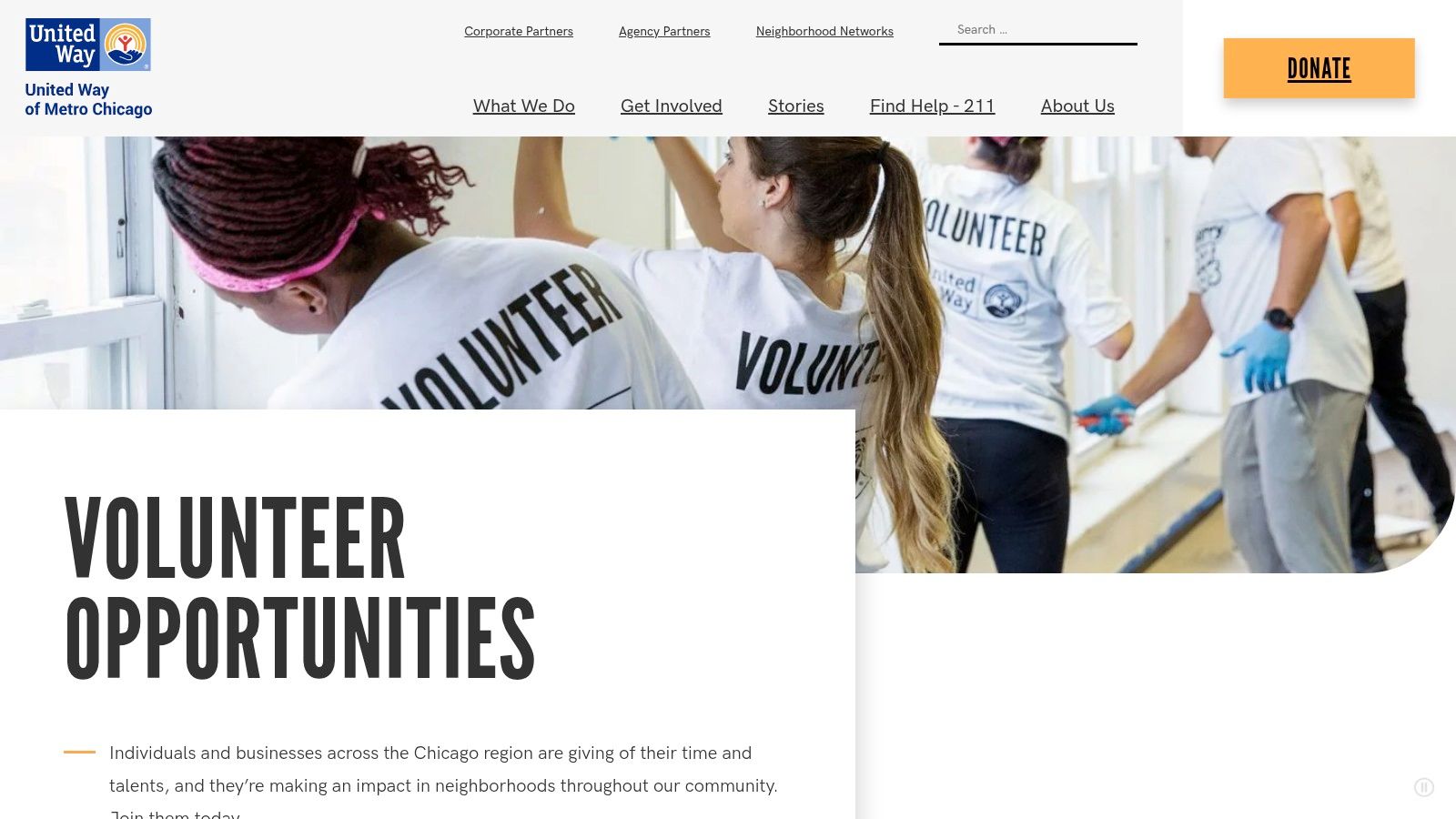
    5. United Way of Metro Chicago – Volunteer Portal

    If you’re looking to join a powerful, coordinated effort to uplift Chicago communities, think of the United Way of Metro Chicago’s portal as your mission control. This isn't just a list of random opportunities; it’s a curated collection of impactful projects from a network of trusted, vetted partner agencies. For me, it feels like being invited to a city-wide collaboration where every project is a crucial piece of a larger strategy to build stronger neighborhoods across Cook County.

    United Way of Metro Chicago – Volunteer Portal

    What makes this platform special is its focus on structured, group-oriented action. I believe it’s built not just for individual volunteers but for teams who want to make a collective impact, turning good intentions into organized, meaningful work.

    What It's Best For

    The United Way portal is the perfect resource for corporate teams, friend groups, or families looking for a seamless way to volunteer together. If you've ever tried to organize a group outing, you know the logistical headaches. United Way simplifies this by offering curated team projects and large-scale "Days of Action" where all the planning is handled for you. It's also fantastic for anyone who values accountability and wants to see the cumulative effect of their service, as the portal allows you to track your volunteer hours and measure your impact over time. From assembling hygiene kits at your office to participating in neighborhood revitalization projects, it excels at providing organized, accessible opportunities.

    How to Get Started

    Engaging with United Way's network is designed to be straightforward and rewarding. Here’s how you can jump in and find some of the best volunteer opportunities in Chicago:

    1. Visit the Website: Head over to liveunitedchicago.org/get-involved/volunteers/.
    2. Browse Opportunities: Explore the listings for individual, group, or even remote volunteer roles. You’ll find everything from skills-based virtual help to hands-on outdoor projects.
    3. Sign Up for an Account: Create a free account to register for projects, join a team, and begin tracking your hours.
    4. Register and Show Up: Once you find a project that inspires you, follow the simple registration steps and get ready to make a difference with other dedicated Chicagoans.

    First-Time Volunteer Tip: Look out for United Way’s seasonal drives and "Days of Action." These are large, high-energy events that are incredibly welcoming to newcomers and provide a fantastic introduction to the spirit of community service in Chicago.

    Pros and Cons

    Pros Cons
    Trusted Network: All opportunities are with vetted, reputable nonprofit partners. Inventory Varies: The number of available spots can ebb and flow depending on partner needs and season.
    Group-Friendly: The platform is expertly designed for organizing corporate or large group volunteer days. Corporate Priority: Some popular listings may reserve spots for corporate partners first.
    Impact Tracking: Easily log your hours and see the collective impact of your contributions. Less Spontaneous: The structured nature means fewer last-minute or drop-in style opportunities.

    United Way’s portal transforms the search for a volunteer role into a clear path toward community-building. It provides the structure and support to ensure your time and energy are channeled effectively, making you a vital part of a unified force for good across our city.

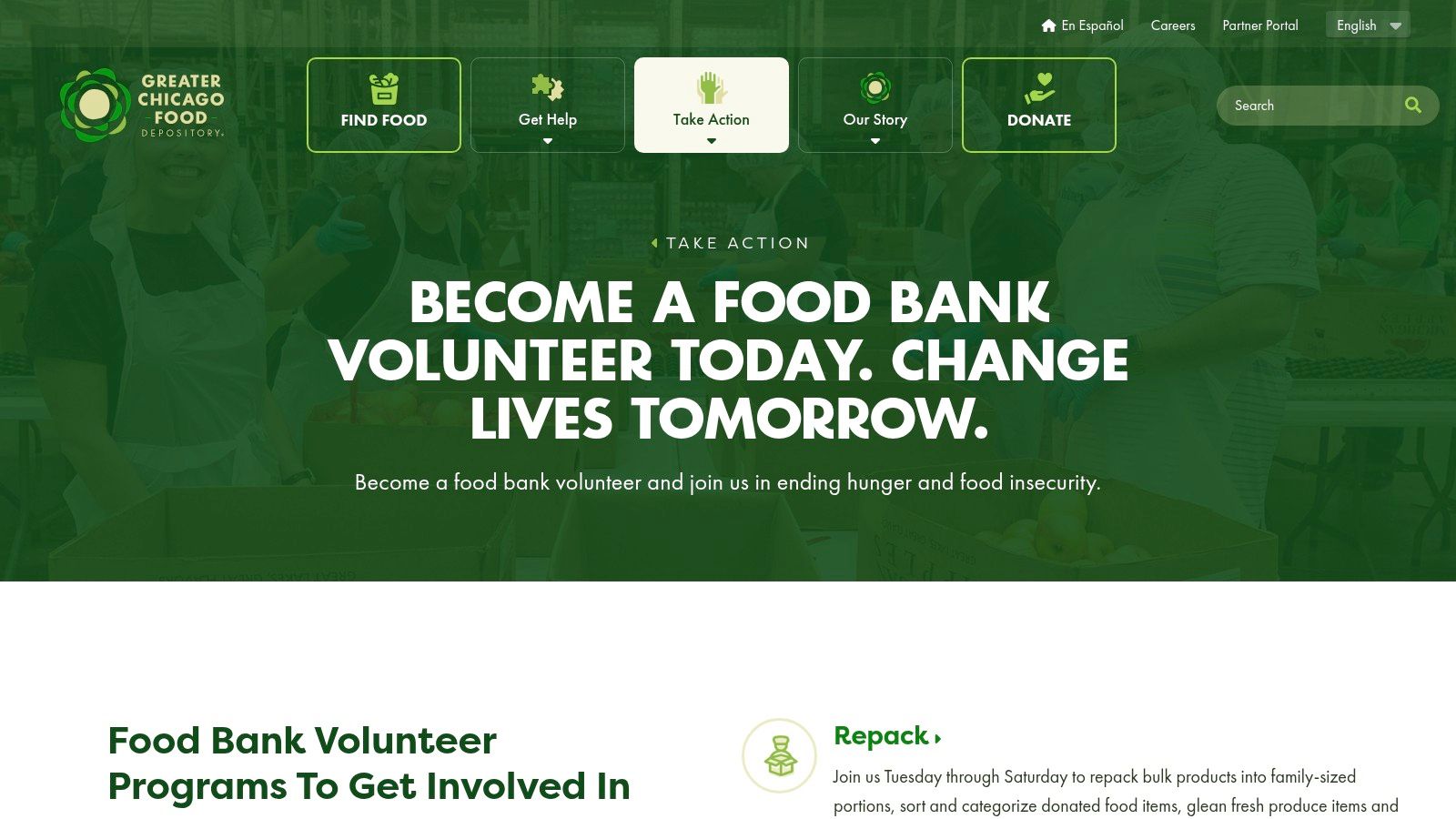
    6. Greater Chicago Food Depository – Volunteer

    If you want to feel the immediate, tangible result of your efforts, volunteering at the Greater Chicago Food Depository is an experience like no other. This isn't just about sorting cans; it's about being a crucial link in the chain that feeds our neighbors across Chicago and Cook County. The energy in their massive warehouse is palpable—a vibrant, organized hum of people coming together for one powerful mission: ending hunger. It's one of the most hands-on, high-impact, and best volunteer opportunities in Chicago, where a few hours of your time directly translates into meals on families' tables.

    Greater Chicago Food Depository – Volunteer

    The platform is designed for action. With a real-time calendar and clear instructions, they make it incredibly easy for you to jump in and start making a difference right away. You leave your shift knowing exactly how many pounds of food you helped pack and how many people you helped feed.

    What It's Best For

    The Food Depository is perfect for the volunteer who thrives on physical activity and teamwork. If you enjoy working with your hands and seeing a direct outcome, this is for you. I think it’s ideal for individuals looking for consistent, scheduled shifts, as well as for families, corporate teams, and students seeking meaningful group activities. With roles like repacking bulk food into family-sized portions, sorting fresh produce, or helping at mobile distributions, there is a constant need for your support. They even offer pathways for court-ordered community service, making it an accessible option for many.

    How to Get Started

    Signing up for a shift is simple and you manage it entirely through their online portal. The system is efficient and user-friendly, letting you see what’s available at a glance.

    1. Visit the Website: Go to chicagosfoodbank.org/get-involved/volunteer/.
    2. Create an Account: You'll need to create a quick volunteer profile to access the calendar.
    3. View the Calendar: Browse the real-time calendar for available shifts, which are typically held Tuesday through Saturday.
    4. Sign Up: Choose a date and time that works for you and register. You will receive a confirmation email with all the details you need for your shift, including directions and what to wear.

    First-Time Volunteer Tip: Wear comfortable, closed-toe shoes and dress in layers. The warehouse can be cool, but you’ll warm up quickly once you get moving. I suggest arriving a few minutes early for the orientation—it's quick, informative, and gets everyone energized for the work ahead.

    Pros and Cons

    Pros Cons
    Consistent Availability: A reliable schedule of shifts is posted weekly. Popular Shifts Fill Quickly: The most convenient spots, especially on Saturdays, get booked up fast.
    Immediate Impact: You see the direct results of your labor in real-time. Limited Sunday Options: If your only free day is Sunday, it can be difficult to find an available session.
    Easy Online Signup: The real-time calendar makes it simple to find a spot. Physically Demanding: Most roles require you to be on your feet and may involve some light lifting.

    Volunteering here is more than just a task; it’s an empowering way to stand against hunger in our community. You become part of a massive, coordinated effort, working shoulder-to-shoulder with fellow Chicagoans to ensure no one goes without a meal.

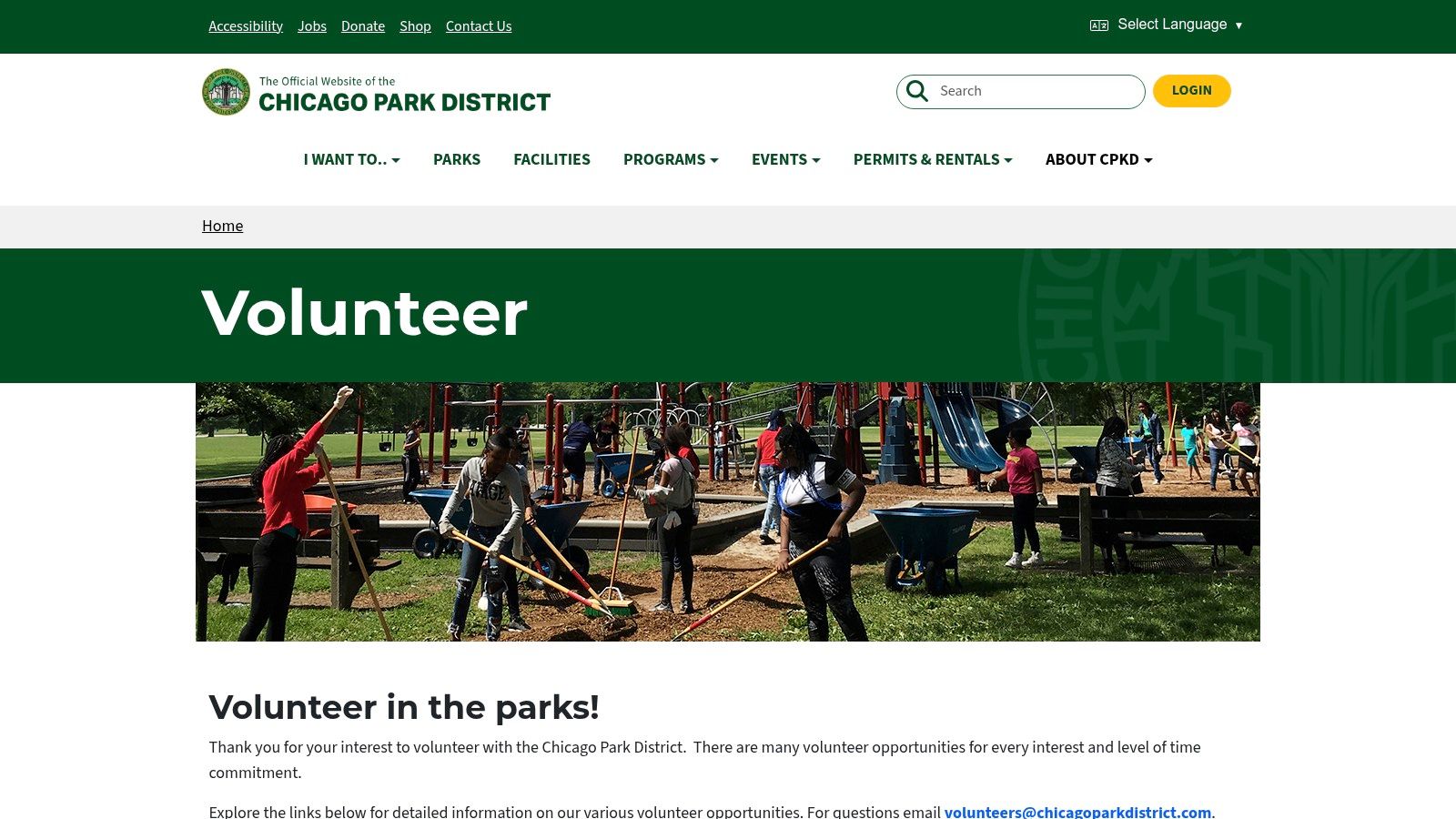
    7. Chicago Park District – Volunteer

    If you've ever walked through one of Chicago's beautiful parks and felt a surge of gratitude, here is your chance to give back directly to the green spaces that make our city breathe. I see the Chicago Park District’s volunteer portal as your gateway to becoming a hands-on steward of your neighborhood's natural treasures. It’s less like a job board and more like a community calendar, inviting you to roll up your sleeves and leave a visible, lasting mark on the parks you love. This is where you connect with the earth, meet your neighbors, and become part of the city's living ecosystem.

    Chicago Park District – Volunteer

    This platform stands out because it focuses on tangible, hyperlocal impact. You won't just be helping an organization; you'll be mulching trees, planting flowers, and removing invasive species in the park right down your street.

    What It's Best For

    The Chicago Park District is perfect for the volunteer who loves being outdoors and seeing immediate results from their work. If your ideal Saturday involves fresh air, a bit of physical activity, and a strong sense of community, this is for you. I find it’s fantastic for one-day commitments, group service projects, and family outings. From neighborhood cleanups to ongoing stewardship days in natural areas, you’ll find opportunities to get your hands dirty in all 77 community areas.

    How to Get Started

    Signing up for a park event is simple and connects you directly with the people leading the charge on the ground.

    1. Visit the Website: Head over to chicagoparkdistrict.com/volunteer.
    2. Explore Opportunities: Browse the listings for one-day events, Natural Areas Community Stewardship Days, or garden projects. The opportunities are often organized by park location.
    3. Find Your Event: Click on an event to see the details, including the tasks involved (like planting or weeding), time, and location.
    4. RSVP: Follow the instructions to sign up. Many listings will ask you to RSVP directly with a site steward via email or phone, creating a more personal connection from the start.

    First-Time Volunteer Tip: Dress for the weather and wear clothes you don’t mind getting dirty. Most events run rain or shine, and bringing your own water bottle and work gloves is always a good idea. It’s a simple way to stay comfortable while you work.

    Pros and Cons

    Pros Cons
    Visible Local Results: Your work directly improves a specific neighborhood park you can visit and enjoy. Direct RSVP Required: Some events require contacting a site steward directly by phone or email.
    Easy Weekend Plug-In: Many events are one-day commitments, making it simple to fit volunteering into your schedule. Extra Onboarding: Long-term roles, like a Community Steward, require a background check and more training.
    Outdoor, Hands-On Service: Perfect for those who want to be active and connect with nature. Weather Dependent: As events are outdoors, they can sometimes be impacted by severe weather conditions.

    Volunteering with the Park District is a powerful way to claim ownership of your community's green spaces and make them better for everyone. If you’re inspired by this work, you can discover more ways to get involved by exploring a guide to community gardens in Chicago.

    Top 7 Chicago Volunteer Opportunities Comparison

    Organization 🔄 Implementation complexity ⚡ Resource requirements 📊 Expected outcomes 💡 Ideal use cases ⭐ Key advantages
    Litter Caterpillars Low — volunteer-run weekly meetups, informal coordination Low — volunteer time, basic cleanup supplies, social channels High visible local impact (ward cleanups, new park); ⭐⭐⭐⭐ Hands-on neighborhood cleanups, community-building volunteers Strong volunteer-first culture and consistent on‑the‑ground results
    Idealist – Chicago Volunteer Opportunities Medium — large platform with self‑service listings Low‑medium — account + internet; varied org processes Broad discovery across causes; quality varies by poster; ⭐⭐⭐ Searching many roles (one‑day, skills‑based, remote) across Chicago Very large inventory and detailed filters for targeted searches
    Points of Light Engage Medium — aggregated search across partners Low — online access; may require external signups Good for uncovering varied partners/suburban options; duplicates possible; ⭐⭐⭐ Finding partner‑affiliate opportunities and less‑visible nonprofits Aggregated feed from multiple networks with clear recruiting labels
    Chicago Cares Medium‑High — staff‑led calendar and project coordination Medium — account signup, staff-organized events, onboarding Reliable neighborhood impact and volunteer onboarding; ⭐⭐⭐⭐ First‑time volunteers, recurring projects, corporate service days Local expertise and consistent, well‑organized projects
    United Way of Metro Chicago – Volunteer Portal Medium — central portal coordinating vetted partners Medium — portal use, group coordination, hour tracking Vetted partner opportunities and coordinated Days of Action; ⭐⭐⭐⭐ Corporate/group volunteering, tracking impact and hours Trusted network with tools for organizing teams and tracking service
    Greater Chicago Food Depository – Volunteer Low‑Medium — scheduled, logistics‑heavy shifts Medium — in‑person shifts, orientation; physical capacity Immediate, measurable impact distributing food; very consistent; ⭐⭐⭐⭐ Warehouse repacks, mobile distributions, family shifts High frequency of shifts and clear, visible outcomes
    Chicago Park District – Volunteer Medium — site stewardship and one‑day events; some roles need checks Medium — volunteer time, site stewards; background checks for long‑term roles Visible local park and stewardship improvements; ⭐⭐⭐ Outdoor stewardship, plantings, neighborhood cleanups City‑run, neighborhood reach across all community areas

    You've Seen the Options, Now It's Time to Show Up

    I’ve walked you through seven incredible pathways to making a tangible impact in Chicago. You’ve seen the sprawling volunteer search engines like Idealist and Points of Light, which are like giant libraries where every book is a chance to help. You’ve explored community-focused powerhouses like Chicago Cares and United Way, the established pillars that have been connecting good people to good work for decades.

    You’ve even looked at hyper-specific, powerful missions, from sorting life-sustaining food at the Greater Chicago Food Depository to restoring natural beauty with the Chicago Park District. Each one is a different door. Behind one, you might find yourself laughing with new friends while packing boxes of produce. Behind another, you could be on your knees in the dirt, planting the seeds of a greener, more beautiful park for everyone to enjoy. And of course, there's my personal favorite: grabbing a picker and joining the grassroots energy of Litter Caterpillars, turning forgotten streets into sources of neighborhood pride.

    But reading about these opportunities is like looking at a travel brochure. You can admire the pictures of the beautiful destinations, read about all the amazing things you can do there, but you don't actually get the experience until you book the ticket and get on the plane. The map isn't the territory. This article is your map, but the real adventure begins the moment you close this tab and take your first step.

    Choosing Your First Adventure

    So, how do you pick just one? Don't let the paradox of choice freeze you. Think of it less like a lifelong commitment and more like choosing what to have for dinner tonight. You aren’t marrying the first organization you volunteer with.

    • Craving direct, visible results? If you’re someone who needs to see the change you’re making, look at the Greater Chicago Food Depository or Litter Caterpillars. At the end of a few hours, you can point to a pallet of sorted food or a clean city block and say, “I did that.” The feedback is immediate and deeply satisfying.

    • Want flexibility and variety? If your schedule is a beautiful, chaotic mess, portals like Chicago Cares and Idealist are your best friends. They are built for people like you, offering one-off events, weekend projects, and opportunities that fit into the nooks and crannies of a busy life.

    • Looking for community and connection? If your primary goal is to meet like-minded people and build your Chicago tribe, focus on team-based activities. The Chicago Park District’s restoration days and, again, the almost party-like atmosphere of a Litter Caterpillars cleanup are fantastic for forging genuine connections while you work.

    The truth is, your perfect fit might change from month to month, and that’s okay. The most important factor isn't finding the "one perfect" opportunity forever. It's finding the right opportunity for you, right now.

    The Real Reason We Show Up

    Let me tell you something I’ve learned from countless hours picking up trash in every kind of Chicago weather imaginable. Volunteering isn't just about giving. It's about what you get back, often in ways you never expect.

    I’ve had my most profound moments of clarity not in a quiet room, but on a noisy street corner with a garbage bag in hand. I’ve built stronger friendships while sweating through a park cleanup than I have over a dozen brunches. Facing the small challenges, the early mornings, the unexpected rain, the sheer volume of work, it doesn't break you. It builds you. It adds color, texture, and meaning to your own story.

    You’ve seen the options. You have the tools. You know where to go and what to do. The only question left is the one you have to ask yourself: What kind of character do you want to be in Chicago’s story? The one who saw a need and kept walking, or the one who saw a need and decided to show up?

    Pick one. Just one. Sign up for that first shift. I promise you, the city will be better for it. But more importantly, so will you.


    Ready to skip the search and jump straight into action with a crew that’s all heart? Join us at Litter Caterpillars for a weekend cleanup. We provide the gear and the good vibes; you just bring yourself and a desire to make our neighborhoods shine. Find your next event and see what we're all about at Litter Caterpillars.