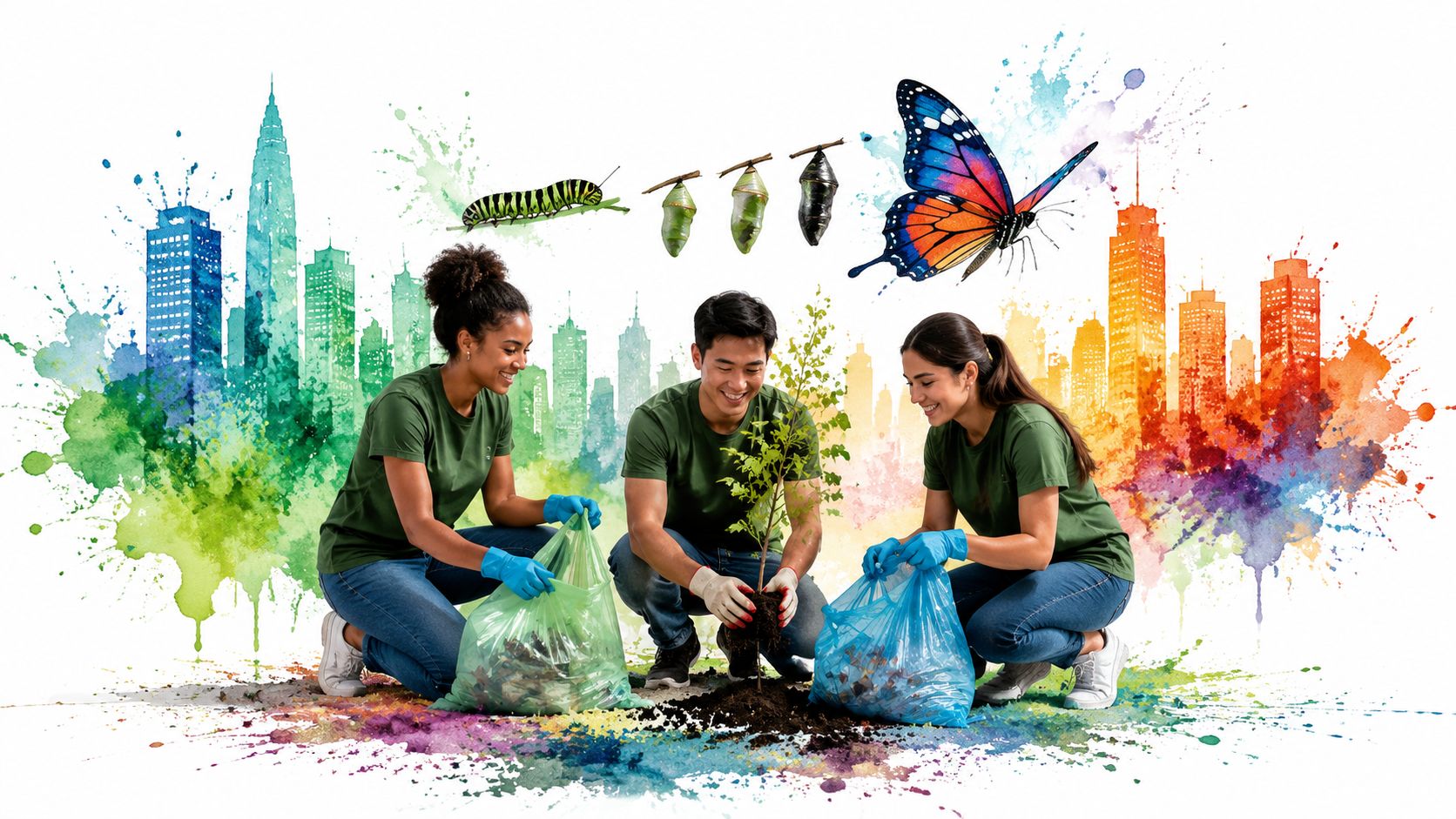
Tag: volunteering chicago

  • What Is Community Service: Your Guide to Impact

    What Is Community Service: Your Guide to Impact

    Trash clung to my life before it ever clung to my grabber. I could stare at an old jar in my fridge for months, not because it was heavy, but because every useless thing carried a memory, and every memory made my room feel impossible.

    Then one cold day, I went outside and picked up someone else's litter. Somehow that was easier. It was even fun.

    My Messy Room and the Start of an Adventure

    I started to understand what community service is when I failed, over and over, at cleaning my own room.

    I'm serious. My place used to feel like a museum of unfinished versions of me. The bag of nuts from the week I swore I'd get healthy. The old blueberry jam from a trip I didn't want to forget. Random papers, boxes, wrappers, half-plans, half-dreams. Every item looked small, but each one felt like it weighed five hundred pounds in my mind.

    Then my life cracked open. I got out of a chaotic relationship that drained me. I looked around and saw mess everywhere. My room was messy. My habits were messy. My social circle was messy. I felt stuck in the kind of way that makes even tiny tasks feel impossible.

    An artistic illustration featuring a human hand reaching toward a single flower growing from scattered items

    Why someone else's mess felt lighter

    So I tried something strange. Instead of fixing my whole life in one dramatic sweep, I went outside to pick up trash in my neighborhood.

    That first cleanup had only a few of us. We got caught in a Chicago spring hailstorm that felt more like a prank than weather. We huddled under a tree, freezing, while ride after ride canceled on us. I should've hated it.

    I didn't.

    I laughed. I felt awake. I realized that cleaning other people's messes was easier than cleaning my own, and that mattered more than I expected. A candy wrapper on the sidewalk didn't come with guilt. A bottle in the gutter didn't ask me to revisit an old regret. I could just bend down, grab it, and make the block a little better.

    Sometimes the first honest step in fixing your life is doing one small useful thing outside your own head.

    The plot started moving again

    That day gave me a weird kind of relief. Service didn't feel like punishment. It felt like motion.

    When you're stuck, motion is gold. You don't need a perfect plan. You need a task you can finish. Pick up the cup. Tie the bag. Walk to the next corner. Say hi to the person next to you. Survive the hail. Tell the story later.

    That's why I still think community service is one of the best ways to restart yourself. It gives you a simple job when your inner life feels too tangled. You don't have to solve everything. You just have to show up and carry one piece of the load.

    What Community Service Really Means

    Community service is simple. You give your time and energy to improve the shared world around you.

    That's it. It's being a good neighbor at a bigger scale. Maybe you clean a sidewalk, stock a pantry shelf, tutor a kid, plant flowers, or help at a library. The action changes, but the heartbeat is the same. You see a need, and you answer it with your time.

    A city is just a giant block party

    I like to think of a neighborhood as one big apartment building. If the hallway is dirty, the lights are broken, and nobody checks on each other, everyone feels it. Community service is what happens when you stop walking past the mess and decide, “I live here too.”

    That choice is common all over the world. About 862.4 million volunteers aged 15 and older take part each month worldwide, or roughly one out of every seven working-age people, according to Better Impact's volunteer facts roundup.

    That number doesn't mean you need to be heroic. It means ordinary people help all the time. Repeatedly. In ways that often look small up close.

    What counts and what doesn't

    A lot of people overcomplicate this. They think service has to be dramatic, formal, or impressive. It doesn't.

    Here's a better way to judge it:

    • Does it help other people or a shared place? Then it's probably service.
    • Does it cost you time, effort, attention, or comfort? Then it's probably real.
    • Does it make life a little easier, cleaner, safer, or kinder for someone else? Then you're in the right lane.

    If you want another angle on public participation, this guide on civic engagement and community action connects the dots between personal effort and shared life.

    Practical rule: If you can point to what got better because you showed up, you're probably doing community service.

    The cleanest definition I know is this: community service is love made visible through action. Nothing fancy. Just hands, time, and follow-through.

    The Three Main Paths of Service

    People use the phrase community service to mean different things. That's why confusion happens.

    I've seen one person say it after a joyful weekend cleanup, another say it about a court requirement, and a student say it about a class project. All three can fit under the same umbrella, but the reason behind the work changes the experience.
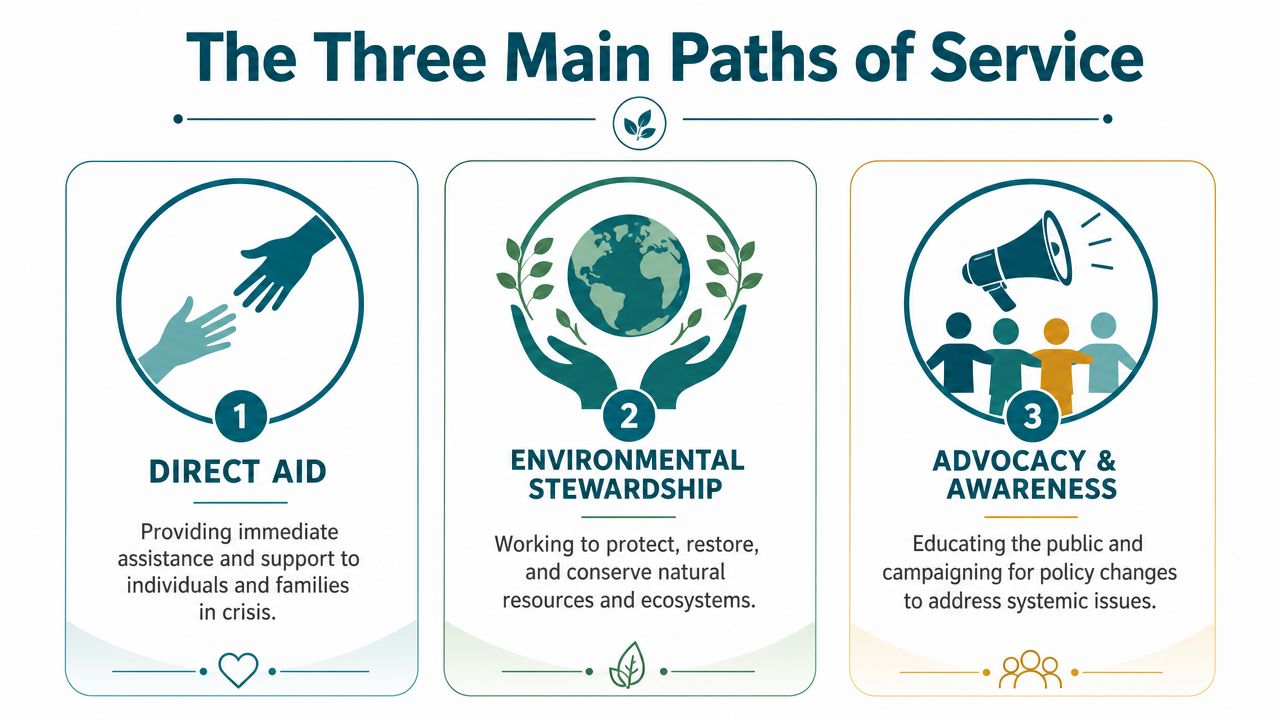
    An infographic detailing the three main paths of service: direct aid, environmental stewardship, and advocacy and awareness.

    Voluntary service

    This is the kind I know best. You choose it.

    Nobody sentences you to it. Nobody grades you on it. You wake up early on a Saturday, pull on your gloves, and go because you want your block, your river, your school, or your neighbors to feel more cared for. Voluntary service has a certain spark because choice changes the mood. You're there on purpose.

    You also learn fast that your reason can be mixed. Maybe you want to help. Maybe you want friends. Maybe you need structure. Maybe you're trying to become braver. That still counts.

    Court-ordered service and service-learning

    Court-ordered service is different. A person does work for the community because the legal system requires it. The task might look similar on the surface, but the starting point is obligation.

    Service-learning has another flavor. A school or training program ties service to reflection and education. You serve, then think about what happened, what you learned, and how the experience connects to a larger lesson.

    Here's a quick comparison:

    Path Why you do it What it often feels like
    Voluntary service Personal choice Freer, social, self-directed
    Court-ordered service Legal requirement Structured, mandatory
    Service-learning Educational goal Reflective, guided, tied to study

    Why motivation matters

    This matters a lot for students. Many people confuse general volunteering with the stricter meaning of community service in academic or professional settings. In medical school prep, direct work with underserved populations often matters most, and 78% of pre-med students overlook that distinction, according to GHL Foundation's discussion of underserved community service.

    So if you're asking what community service is, the full answer is this: the action matters, and the context matters too. Picking up litter, mentoring youth, visiting elders, helping with food distribution, or teaching health basics can all fit. The question is why you're there, who you're helping, and what kind of service the situation calls for.

    The Unexpected Gift You Get from Giving

    I started serving because I wanted to clean streets. I kept serving because it started cleaning up parts of me.

    That sounds dramatic, but I mean it in a plain, practical way. When you keep showing up to help other people, you build traits that are hard to fake. You become steadier. You get less fragile. You stop panicking every time conditions aren't perfect.

    You practice being the person you want to be

    I didn't become brave by reading about bravery. I became brave by standing outside when it was cold, awkward, inconvenient, and a little uncomfortable. I became more reliable by showing up again the next week. Then the week after that.

    Service works like a gym for character. One cleanup won't change your life. Repeated cleanups might.

    Here's what I got from it:

    • Bravery in small doses. Going to unfamiliar blocks, meeting strangers, and doing visible public work trained me to move before I felt fully ready.
    • Consistency I could feel. Weekend after weekend, the habit got stronger than my excuses.
    • Better friendships. Shared work is a great filter. People who wake up to help others usually have something solid in them.

    You find out who you are when the weather gets bad and you stay anyway.

    Volunteer-first groups change the experience

    Group culture matters. A lot.

    The healthiest service spaces I've seen protect the people doing the work. They care about safety. They care about morale. They don't treat volunteers like a wallet with legs. Volunteer-first groups that put safety and happiness ahead of pressure for money create a more sustainable experience, and that changes whether people come back.

    If you want a deeper look at what real results can look like over time, this page on measuring community service impact has a useful framework.

    The caterpillar idea is real to me

    I love the caterpillar image because nobody expects a caterpillar to stay a caterpillar.

    That's how service felt for me. I wasn't trying to become flawless. I was trying to become less afraid, less selfish, less flaky, less trapped in my own head. Service gave me a place to practice that transformation in public, one bag of trash at a time.

    And there's something else. Hard days become good stories. The freezing cleanup. The long walk. The muddy shoes. The weird conversation that turned into a real friendship. Service gives your life texture. It gives the plot somewhere to go.

    Watching Your Neighborhood Come Alive

    The first thing you notice after a cleanup is visual. A block looks calmer. A curb line appears again. Grass comes back into view. The street breathes a little easier.
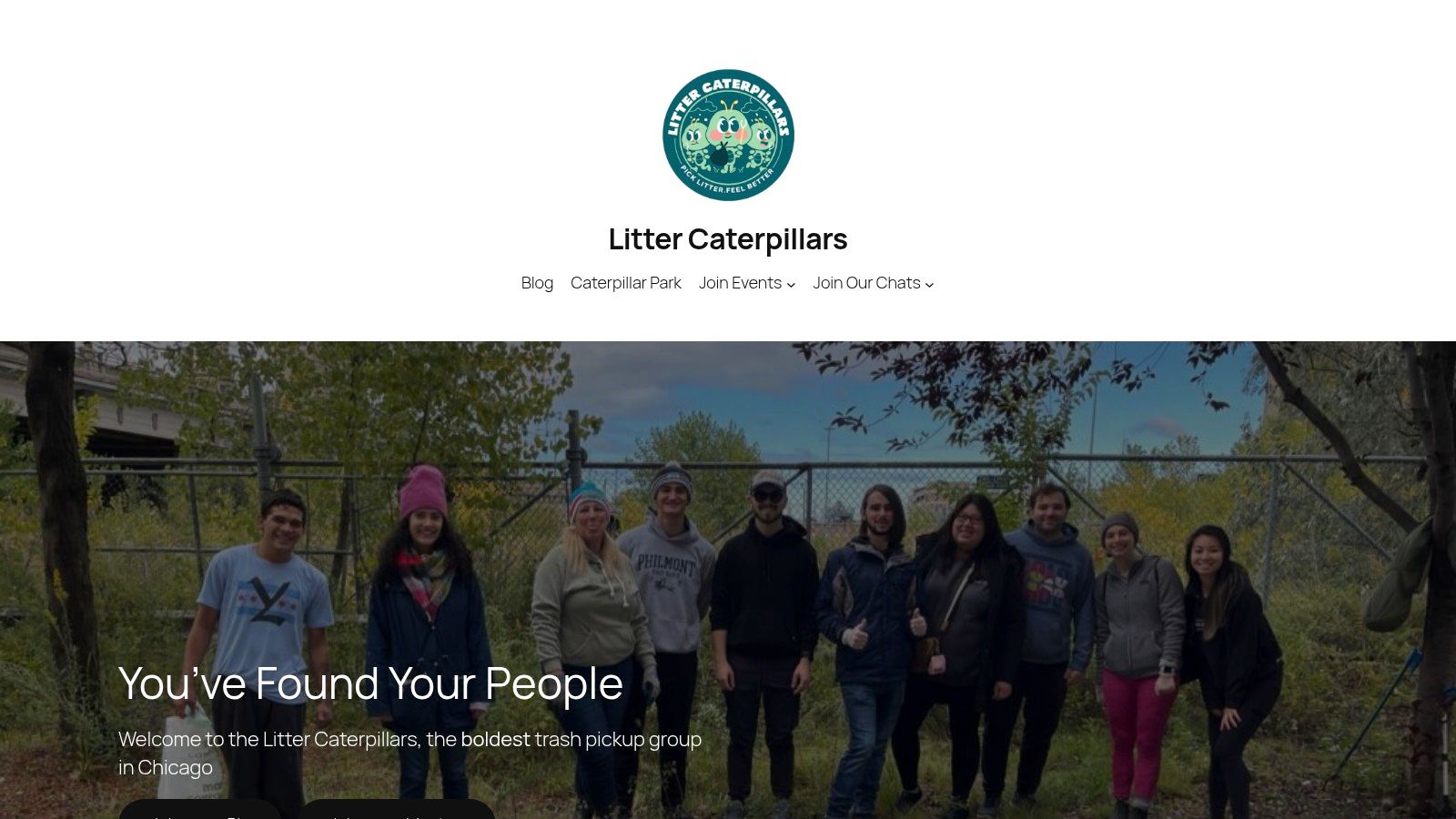
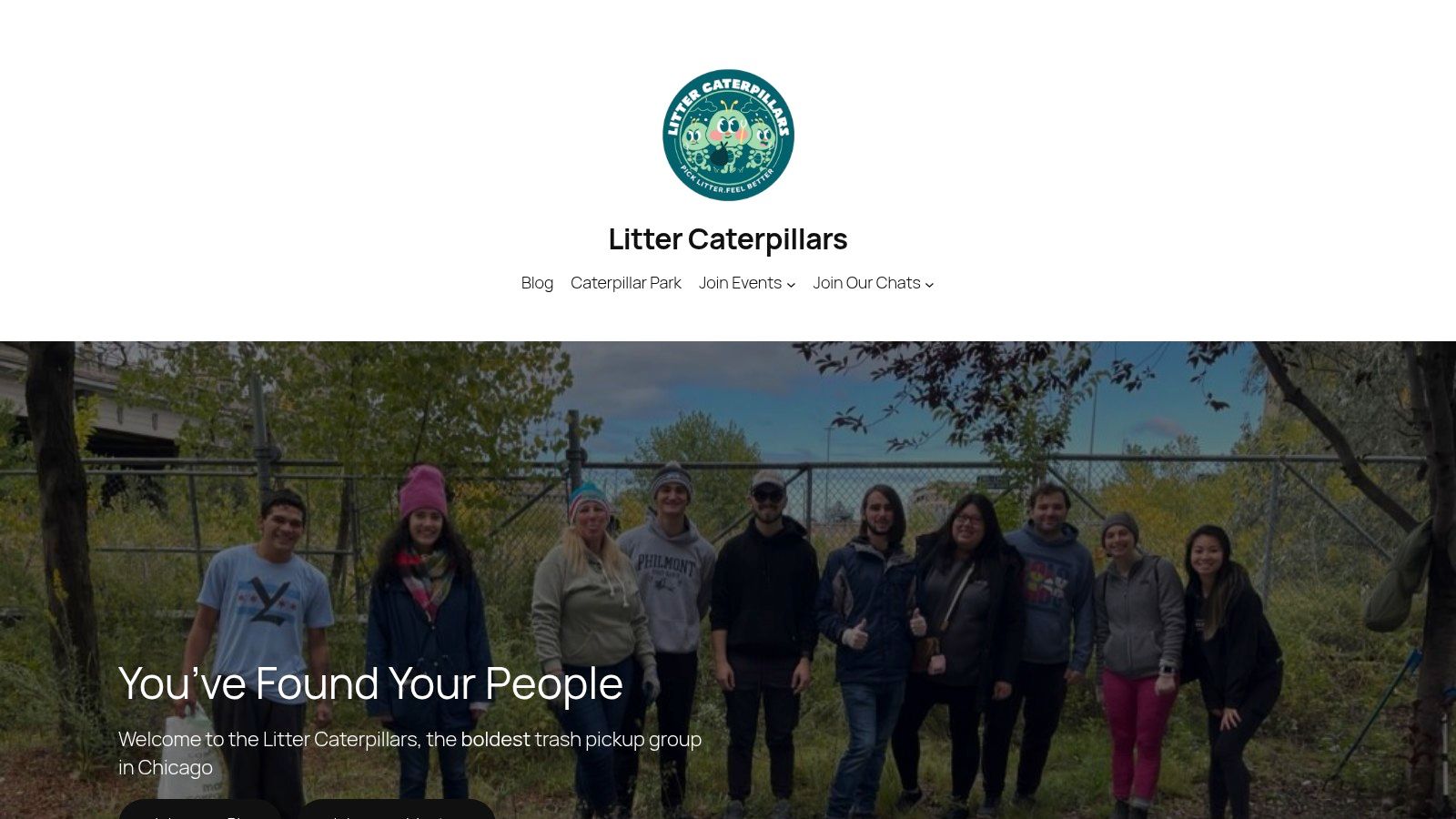
    Screenshot from https://www.littercaterpillars.com

    But the deeper change is emotional. People walking by start talking. Someone thanks you from a porch. A kid stares like you're doing magic with a trash bag and a grabber. Another neighbor starts picking up around their own building a few days later. Service spreads because people copy what they can see.

    Block by block is how a city changes

    I've learned to trust repeated action more than grand speeches. One corner today. Another next week. A rough alley nobody wanted to deal with. A commercial strip full of bottles and wrappers. An empty lot that looked forgotten.

    That kind of work gets especially real in places people avoid. Community service grows when you stop treating some neighborhoods as disposable. Litter Caterpillars has cleaned all 50 Chicago wards, including neighborhoods others often avoid. I love that example because it refuses the lazy map in people's heads, the one that says some areas count more than others.

    There's also a direct environmental side to this work. Litter cleanup helps stop trash from washing into rivers, and the Chicago-Calumet River litter prevention effort shows how local cleanup connects to cleaner waterways.

    A short clip tells that story better than I can:

    You start seeing possibility where you used to see blight

    One of my favorite shifts is internal. You stop looking at an ugly space and thinking, “That's a shame.” You start thinking, “We can do something about that.”

    That mindset changes a neighborhood because it changes the people in it. Cleanup is rarely about making things look cute. It's about telling the truth with your hands. This place matters. These people matter. We're not waiting for someone else.

    A cared-for block invites more care. A neglected block teaches people to give up.

    That's why community service feels alive to me. You can watch the before and after happen in real time.

    Your First Steps to Making a Difference

    Individuals don't need more inspiration. They need a first move.

    The good news is that starting is much easier than performing some giant act of goodness. You don't need a full life mission. You need one cause you can stick with long enough to build a habit.
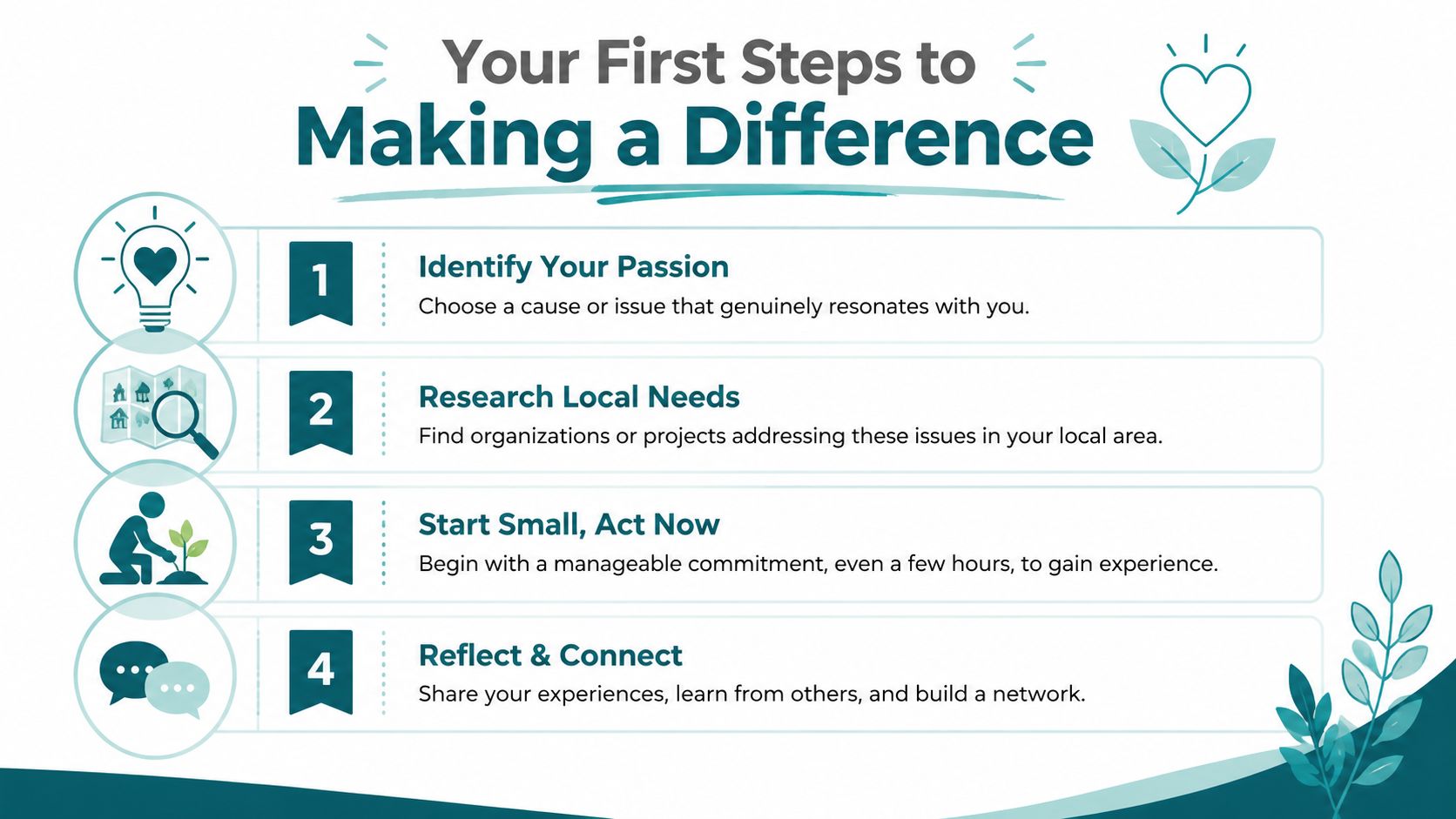
    A four-step infographic illustrating how to start contributing to community service and making a difference.

    Start with fit, then build consistency

    Pick something that pulls at you. If you care about litter, join a cleanup. If you care about hunger, find a pantry. If you care about reading, help at a library. Your odds of staying committed go way up when the work feels personal.

    Then make the commitment small enough that you'll keep it.

    • Choose one lane. Don't sign up for five causes at once. Pick one and learn its rhythm.
    • Check the group culture. Look for clear meeting details, safety norms, and respectful communication.
    • Use a simple schedule. One steady hour each week can change you more than one giant burst once a year.
    • Reflect after each shift. Ask yourself what felt energizing, awkward, useful, or meaningful.

    If you want a practical starting point, this guide to starting volunteering gives a straightforward way to begin. One factual option is Litter Caterpillars, which organizes volunteer trash pickups in Chicago and provides cleanup tools for participants.

    If you need service for school or applications

    Consistency matters even more when service connects to admissions or career goals.

    For academic or professional applications, longitudinal service over 6+ months is prioritized over one-day events by AMCAS and AAMC, according to this PMC article on service learning and sustained engagement. That tracks with what I've seen in real life too. A single service day can be nice. Ongoing service changes how you think, who you know, and what you notice.

    A good starting checklist looks like this:

    1. Pick a cause you can talk about without forcing it.
    2. Find a group that feels safe and grounded.
    3. Commit to a repeat schedule, even if it's modest.
    4. Keep showing up long enough for your presence to mean something.

    You don't have to become a saint. You just have to become dependable. That's where the change begins.


    If you want a simple way to try community service in Chicago, join Litter Caterpillars. You'll spend a morning cleaning a block, meeting other people who like to help, and finding out how much lighter life can feel when you carry one bag of trash at a time.
  • Top Environmental Volunteer Opportunities in 2026

    Top Environmental Volunteer Opportunities in 2026

    I once had a fridge full of old memories. A four-year-old jar of blueberry jam from a trip. A bag of nuts from a failed health kick. Each item felt like it weighed 500 pounds. I couldn't move them.

    Then I learned something weird. Cleaning up somebody else's mess is easier than cleaning your own. A bottle on the curb has no backstory. You grab it, drop it in a bag, and keep walking. If you're hunting for environmental volunteer opportunities, you might think this is about saving the planet. I think it can also help you save yourself.

    1. Litter Caterpillars

    Litter Caterpillars

    A friend once told me the hardest trash to pick up is the stuff with your name on it. Old boxes in the hallway. Clothes in the chair. The drawer you avoid opening. Kevin Tao, who started Litter Caterpillars, ran into that same wall. Cleaning his own mess felt heavy. Cleaning a sidewalk felt possible. He grabbed a bag, picked up what was in front of him, and built a habit out of that simple act.

    That origin story matters to me because it gets at something a lot of environmental volunteer opportunities miss. Sometimes you show up for the park or the block, and end up finding your nerve. You prove to yourself that you can face ugliness, do something about it, and leave a place better than you found it. That changes people.

    Litter Caterpillars has the feel of a real crew, not a nameless shift on a weekend calendar. You see it in the small stuff. Flags. Badges. A theme song. Group chats that make it easier to return the next week instead of talking yourself out of it. If you've ever arrived at a volunteer event alone and spent the first twenty minutes pretending to check your phone, you know why that matters.

    Why this one sticks with people

    The group meets weekly, and that rhythm does something powerful. One cleanup can give you a good morning. Repeating it can give you a new identity. You stop being someone who keeps meaning to help and become someone who shows up.

    I also respect the way the group treats volunteers. Safety comes first. Volunteer happiness comes second. There's no constant push to donate, no feeling that your body is useful only if your wallet follows. That sounds basic. It isn't.

    Picking up litter with other people can break a kind of paralysis. Your hands keep moving, your brain gets quieter, and the day opens up.

    The work is physical and visible. You walk, bend, lift, sort, and watch a block change in real time. By the end of a cleanup, you don't need a report to tell you whether your effort mattered. You can see the empty sidewalk, the cleared grass, the bags lined up at the curb.

    Best fit and tradeoffs

    • Best for brave beginners: A strong choice if you want environmental volunteer opportunities that feel social, active, and a little uncomfortable in the right way.
    • Best for building courage through repetition: Weekly meetups help you turn good intentions into a practice.
    • Best for finding community fast: The rituals and shared identity help solo volunteers stop feeling like outsiders.
    • Best for seeing more of Chicago: Cleanups pull you beyond your usual route and into neighborhoods you might never know otherwise.

    There is a tradeoff. This work asks something from your body, and the weather does not always cooperate. If you want indoor volunteering with predictable comfort, choose something else. If you want a grassroots group where service feels personal, a little gritty, and surprisingly life-giving, Litter Caterpillars stands out.

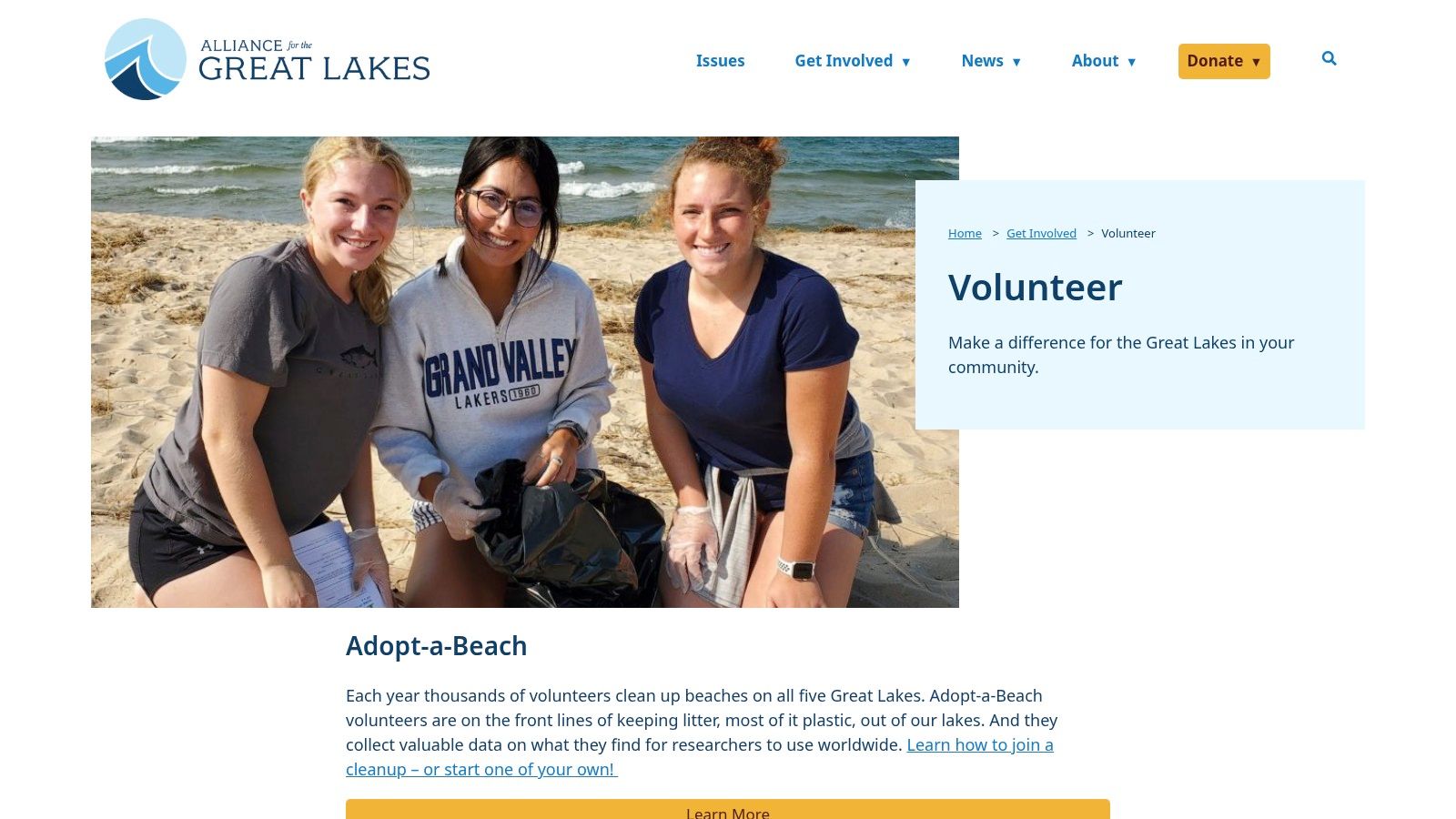
    2. Alliance for the Great Lakes Adopt-a-Beach

    Alliance for the Great Lakes, Adopt‑a‑Beach

    The first time you pick litter out of sand, you notice something fast. Beach trash is sneaky. It hides in seaweed, under driftwood, in that thin line where the water leaves things behind. You stop strolling and start scanning.

    That's why I like Alliance for the Great Lakes Adopt-a-Beach. It gives you a clean entry point into environmental volunteer opportunities, but it doesn't stop at “grab bag, fill bag, go home.” Volunteers can also collect litter data, which gives the work a sharper edge.

    What you actually do

    You can join scheduled cleanups, sign up to lead one, or move into an ambassador role that leans more into public education. That mix matters. Some people want pure hands-on work. Some want to talk with neighbors and explain why the mess keeps coming back.

    There's also a practical lesson here. Cleanup programs often work best when they pair removal with measurement and prevention, not just a one-off trash sweep. That's one reason this model feels solid to me.

    Practical rule: If you get energized by both action and evidence, choose a program that tracks what volunteers collect.

    A lot of environmental volunteer opportunities still bury the details people need. Is it one-time or recurring? Do you need training? Is it family-friendly? Programs like this make that matching process easier, which is exactly the kind of gap many volunteer seekers run into, as noted by The Nature Conservancy's volunteer guidance.

    Best fit and tradeoffs

    • Best for first-timers: Beach cleanups feel intuitive. You don't need much background to start.
    • Best for families and teams: The work is easy to understand and the setting is inviting.
    • Best for people who like structure: The data side gives the day more purpose.

    The downside is seasonality. Lakefront volunteering depends on weather, and popular events can fill up fast.

    3. Friends of the Chicago River Chicago River Day and Stewardship Workdays

    A river cleanup has a different mood from a sidewalk cleanup. The mess feels older. Tangled. Like the place has been carrying human neglect for a long time and is tired of it.

    That's why Friends of the Chicago River volunteer events pull people in. Chicago River Day gives you that big shared push, while the recurring stewardship workdays let you come back and do slower, steadier work. Trash removal, invasive control, native planting, trail care. It's all there.

    Why it works for people who need momentum

    Some of us need a flagship event on the calendar. We need a date, a crowd, a reason to commit. Then, once we've broken the seal, we can keep going. This group gets that. The big day draws you in. The follow-up work keeps you attached.

    I also like that the tasks vary. If you get bored doing the same thing every time, this helps. One day you're hauling litter. Another day you're working near native plants and learning the shape of the river system by touching the river system itself.

    Best fit and tradeoffs

    • Best for group energy: If you want a strong community feel, the citywide event is a good on-ramp.
    • Best for repeat volunteers: Stewardship days make it easy to return.
    • Best for people who learn by doing: You pick up local ecological knowledge without sitting through a lecture.

    The catch is that some tasks are more physical than people expect. River-edge work can mean uneven ground, tools, mud, and early registration.

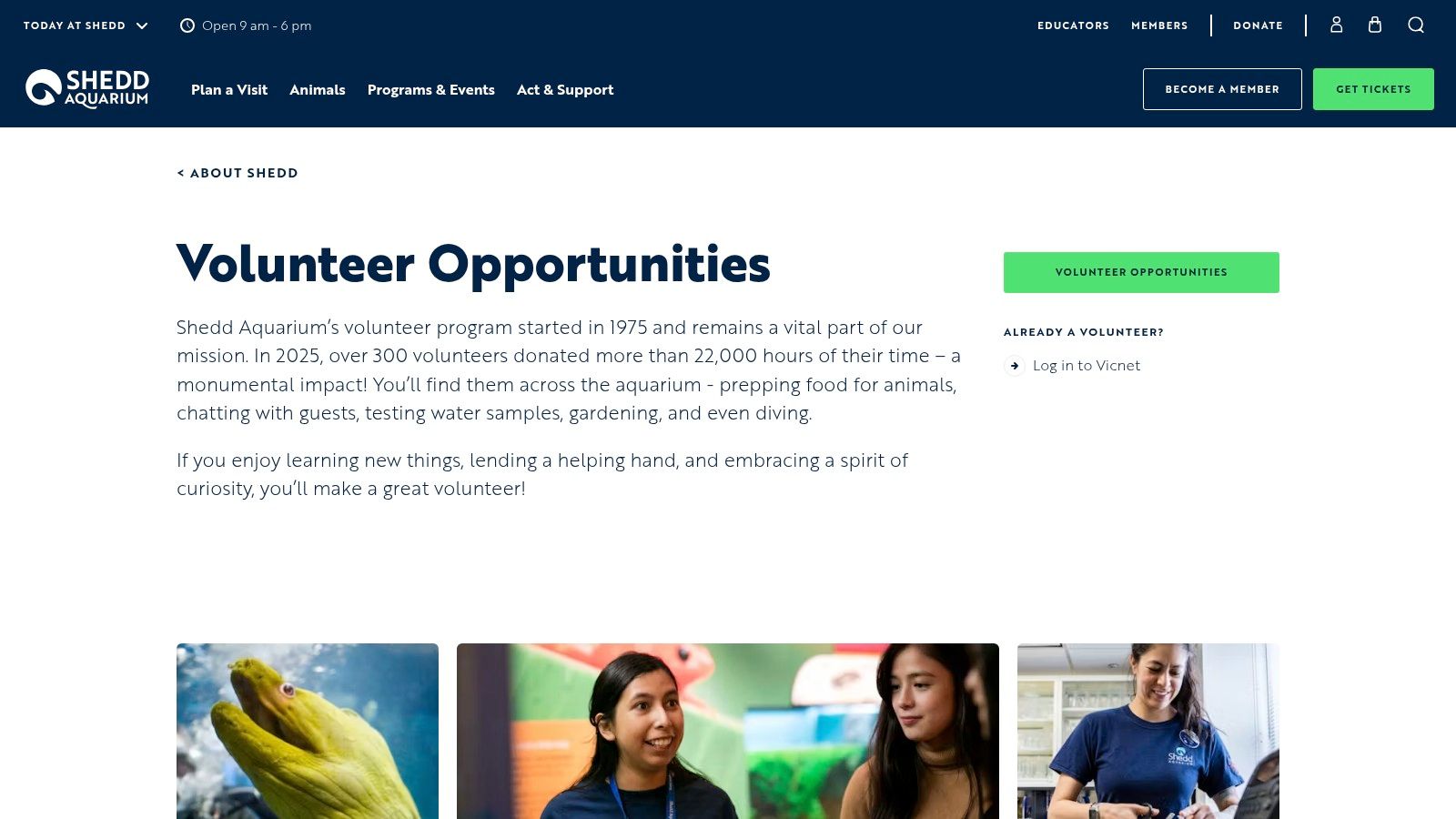
    4. Shedd Aquarium Action Days

    Shedd Aquarium, Shedd Aquarium Action Days

    Some people want a low-friction first step. They don't want to decode ten pages of instructions. They want a date, a location, and a clear task. I get it. When motivation is fragile, friction kills it.

    Shedd Aquarium volunteer programs are strong for that reason. Action Days take volunteers into the community for cleanups and habitat work around Chicago, while deeper in-building roles exist for people who want a more serious ongoing commitment.

    Two paths, two very different experiences

    The outside Action Days are the easy door. Good for students, groups, and anybody who wants short-term service hours without overthinking it. You show up, do the work, and leave with that clean-body, clear-head feeling that outdoor service gives you.

    The in-aquarium roles are another animal. Those have application windows and more commitment, but they also open up a wider set of experiences. Neutral institutional programs often divide volunteer work into specific modules like aquarium care, trail maintenance, gardening, office support, tours, and outreach, as seen in the Smithsonian Environmental Research Center volunteer program. Shedd fits that more structured model.

    Some people need spontaneity. Some need a role. If you know which one you are, you'll choose better.

    Best fit and tradeoffs

    • Best for cautious starters: Action Days are simple and approachable.
    • Best for students: Short-term events work well if your schedule shifts a lot.
    • Best for growth-minded volunteers: You can start outside and aim for a deeper role later.

    The tradeoff is access. The in-building roles run on set windows, and competition can be real.

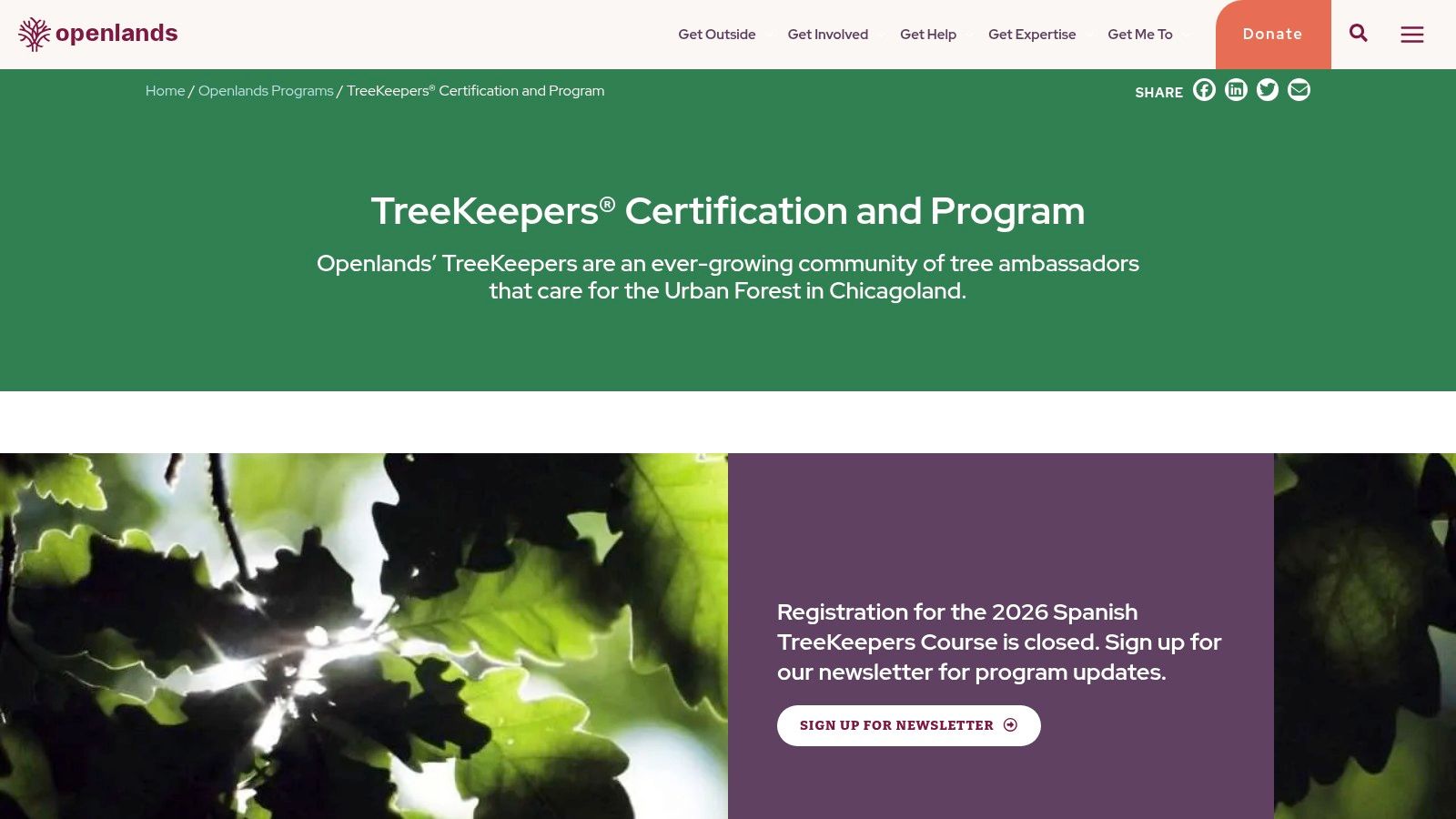
    5. Openlands TreeKeepers and TreePlanters Grants

    Openlands, TreeKeepers + TreePlanters Grants

    Picking up trash gives you a fast win. Caring for trees gives you a longer relationship.

    That's why Openlands TreeKeepers and TreePlanters hit a different nerve. This isn't just “come help for a morning.” This is “learn enough to take care of your own block better.” I love volunteer work that leaves you more capable than when you arrived.

    The skill-building option

    TreeKeepers trains residents to care for street and park trees. TreePlanters Grants help neighborhoods organize planting days with coaching and support. That means you're not just joining an event. You're learning how to become useful in a durable way.

    Environmental volunteer opportunities have widened far beyond simple cleanup work. Public programs now include trail clearing, wildlife surveys, water assessments, beach cleanups, education support, and stewardship agreements, as shown by the New York State Department of Environmental Conservation volunteer page. Openlands fits that broader skills-based style. You leave with knowledge, not just sore legs.

    Best fit and tradeoffs

    • Best for neighborhood builders: If you care about your exact street, this is a strong match.
    • Best for people who like training: Certification gives the work shape.
    • Best for future leaders: Organizing tree days forces you to talk to neighbors and take initiative.

    The downside is that scheduled courses can feel less spontaneous than a simple cleanup. If you're craving instant action this weekend, this may feel slower. If you want roots, that slowness is the point.

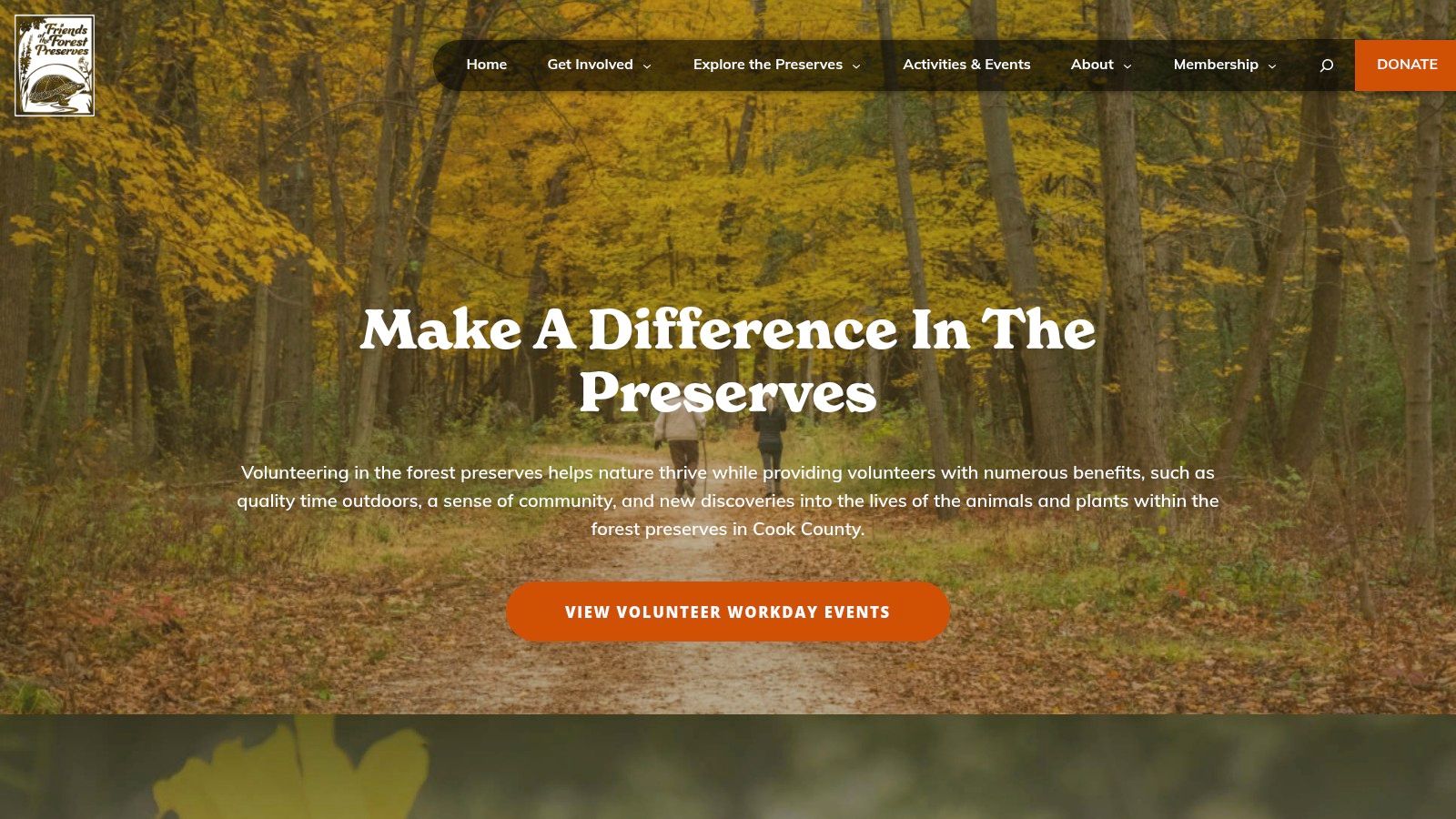
    6. Friends of the Forest Preserves Restoration Workdays

    Friends of the Forest Preserves (Cook County), Restoration Workdays

    Forest preserve workdays are for people who don't mind getting dirty in a less glamorous way. This isn't the cinematic beach cleanup. This is brush, mud, seeds, tools, and the strange satisfaction of pulling out what shouldn't be there so something better can grow.

    That's what I like about Friends of the Forest Preserves volunteer workdays. The work is concrete. Invasive removal, seed collecting, trail work, litter cleanup. You start to see restoration as active repair, not vague good intentions.

    What you learn with your hands

    If you've ever wondered what environmental restoration means on the ground, this guide to environmental restoration helps put language to what volunteers do in places like these.

    And there's a bigger reason to take this kind of role seriously in your own life. Many environmental programs now rely on specialized task design, training, registration, and role-based scheduling instead of generic signup pages. That's because tasks like habitat work, invasive removal, and data collection ask different things from different bodies and skill levels. You can see that pattern in many institutional volunteer programs, and it tends to make recurring service easier to sustain.

    I've found that hard manual work in a preserve clears my head faster than almost anything on a screen.

    Best fit and tradeoffs

    • Best for outdoorsy volunteers: If you'd rather be in prairie, woodland, or wetland than on a city sidewalk, go here.
    • Best for repeat learning: Returning to the same site lets you notice change over time.
    • Best for people who want depth: You start seeing ecology as a set of relationships, not scenery.

    The drawback is terrain and weather. Natural areas don't smooth themselves out for your convenience.

    7. Chicago Parks Foundation It's Your Park Day and Hosted Park Cleanups

    Chicago Parks Foundation, "It's Your Park Day" + Hosted Park Cleanups

    I've seen people hesitate over volunteering because they assume it has to be dramatic. A kayak on the river. A whole Saturday in the woods. Special knowledge. Then they spend two hours in a neighborhood park, filling bags, pulling weeds from a fence line, talking to a stranger who lives three blocks away, and something shifts.

    That's what makes Chicago Parks Foundation volunteer events different. The work happens in plain view, in the places where life is already unfolding. Dog walkers pass by. Kids cut across the field. Someone thanks you without stopping. You go home knowing you changed a patch of the city you will see again on Tuesday.

    I like that honesty.

    The founder story behind Litter Caterpillars carries that same lesson. You do not need a grand plan to begin repairing a mess. You start with what is in front of you. In a park cleanup, that might mean bottles under a bench or trash caught in shrubs after a windy week. The cleanup is literal, but the change in you is not just physical. You get less precious. Less avoidant. You stop waiting for the perfect role and become the kind of person who helps.

    Chicago Parks Foundation supports citywide volunteer days like It's Your Park Day and helps groups host their own cleanups with supplies and on site support. That makes it a strong fit if you want to bring classmates, coworkers, or neighbors into something useful without spending weeks organizing every detail yourself.

    There is a social courage to this kind of work, too. In a preserve, you can disappear into the task. In a neighborhood park, you are part of the public face of care. People see who showed up. Sometimes that is exactly what helps you grow. If you have been lonely, unsure, or stuck in your own head, shared work in a familiar place can crack that open fast.

    Best fit and tradeoffs

    • Best for people who want visible change: You can walk past the park later and see what your morning accomplished.
    • Best for new volunteers: The setting feels familiar, which lowers the friction of starting.
    • Best for groups that want simple logistics: Hosted cleanups can make turnout easier to manage.

    The drawback is that neighborhood events can feel less adventurous than river or forest work. If you only chase the dramatic version of service, you might miss the one that changes your actual daily life.

    7 Environmental Volunteer Opportunities, Quick Comparison

    Item Complexity 🔄 Resource requirements ⚡ Outcomes 📊 Ideal use cases 💡 Effectiveness ⭐
    Litter Caterpillars Low, volunteer‑run, informal weekly coordination Minimal, volunteer time, basic cleanup gear, social channels Visible neighborhood cleanup; civic engagement; created Caterpillar Park Regular weekend volunteers, social community building, adventurous cleanups ⭐⭐⭐
    Alliance for the Great Lakes, Adopt‑a‑Beach Moderate, standardized protocols and leader roles Moderate, training, data tools, seasonal site logistics Shoreline litter removal + research‑grade data for policy use Beach cleanups, data collection, family and team events ⭐⭐⭐
    Friends of the Chicago River, Chicago River Day + Stewardship Moderate, multi‑site event planning and recurring stewardship Low–Moderate, tools provided, some registration required River trash removal, native plantings, trail maintenance Group service days, first‑timers, visible riverfront impact ⭐⭐⭐
    Shedd Aquarium, Action Days Low, short‑term community events; in‑building roles require applications Low–Moderate, organized events; competitive application windows for deeper roles Short‑term service hours; pathways to aquarium volunteer roles Student groups, short service commitments, those seeking structured growth ⭐⭐
    Openlands, TreeKeepers + TreePlanters Moderate–High, training, certification, grant coordination Moderate, training time, organizing neighbors, possible fees Long‑term tree care, street greening, leadership development Residents seeking skills, long‑term stewardship, neighborhood plantings ⭐⭐⭐
    Friends of the Forest Preserves, Restoration Workdays Low–Moderate, scheduled workdays with staff support Low, tools/equipment provided; some physical effort required Habitat restoration, invasive removal, skills in ecology Hands‑on ecology volunteers, repeat stewardship, corporate groups ⭐⭐⭐
    Chicago Parks Foundation, "It's Your Park Day" Low, turnkey or staff‑led park cleanups Low, CPF supplies and optional on‑site leadership Quick neighborhood beautification with high local visibility Block clubs, company service days, school groups ⭐⭐

    Find Your People, Find Your Purpose

    A woman once showed up to a cleanup because her week had gone sideways. She did not come to save the planet. She came because she needed somewhere to put her hands. An hour later, she was laughing with strangers over a ridiculous haul of cups, wrappers, and one busted lawn chair dragged out of the weeds. By the end of the morning, she had done more than fill a trash bag. She had crossed the hardest line, the one between meaning to help and showing up.

    That pattern matters.

    You might start at the lake, cold wind in your face, picking bottle caps out of the sand. You might end up learning tree care until neighbors ask you what species is planted on the block. You might spend a Saturday knee-deep in mud near the river or pulling invasives in the forest preserves. The work changes with each group, but the deeper reward is strangely consistent. You leave more steady than you arrived.

    I have seen cleanup work do something subtle and tough at the same time. It shrinks the distance between your values and your schedule. It gives you a visible problem, a bag, a pair of gloves, and a few other people who decided their morning would count for something. In a life cluttered with abstract worries, that kind of direct action can reset you.

    The founder's story behind Litter Caterpillars carries that lesson all the way through this list. Cleaning up a block can become practice for cleaning up other parts of your life. You get less afraid of awkward introductions. You get better at doing small hard things. You start recognizing familiar faces. Then one day it stops feeling like volunteer work and starts feeling like your people.

    Fun helps, too.

    Not fake, forced fun. Real fun. Dirt on your shoes. Sore arms. A conversation that starts stiff and ends with plans for coffee. The small pride of looking back at a stretch of park or sidewalk and knowing it looks different because you were there.

    So pick the one that fits your life right now. Pick the beach, the river, the trees, the forest preserves, the park near your apartment, or the cleanup crew that first showed you service can make you braver.

    If you want a place to start this weekend, join Litter Caterpillars. As noted earlier, it offers a simple way to get outside, clean a block, meet good people, and build courage by doing something real.

  • Reconnect with Nature Without Leaving the City

    Reconnect with Nature Without Leaving the City

    The first trash bag I filled felt lighter than the moldy jam jar in the back of my fridge. I could haul other people's mess through an alley in Chicago, but I couldn't throw out my own old stories.

    My Life Was a Mess So I Started Cleaning Up Other People's

    My apartment used to look like a storage unit for broken promises. Old jars, stale bags of nuts, half-finished projects, clothes I meant to donate, dishes I let sit too long. None of it was heavy in a physical way. But every object had a little story attached to it, and that story made it feel impossible to move.

    That was my real mess. Not the clutter itself. The attachment.

    The blueberry jam in the fridge was from some trip I took years ago. The health food in the cabinet came from a phase where I swore I was about to become disciplined. Even trash had emotional weight. A bag clip could carry shame. A receipt could carry regret. My place was packed with sentimental trash, and if I'm honest, so was my life.

    Then a chaotic relationship ended, and I hit that ugly quiet after the storm. No more noise. No more excuses. Just me, my apartment, and the fact that I had built a life I didn't trust.

    A man sits pensively by a window looking out at lush green trees and city buildings.

    The first honest thing I did

    I made a short list of the things that scared me most. Cleanliness. Consistency. Bravery. I didn't pick those words because they sounded noble. I picked them because I was bad at them.

    So I did something strange. I started picking up litter outside.

    I noticed right away that cleaning other people's mess felt easier than cleaning my own. A bottle in the gutter didn't come with a sad memory. A fast-food wrapper on the sidewalk didn't argue back. I could grab it, bag it, and see progress fast. For once, my hands knew what to do.

    Practical rule: If your own life feels jammed up, do one physical act of service outside your front door.

    That simple act changed the texture of my week. I'd walk out tense and noisy in my head. I'd come back sweaty, dirty, and calmer. The city stopped feeling like a machine I was trapped inside. It started feeling like a place I could touch.

    One bag at a time

    I didn't start with some polished mission. I started because I needed a way to stop drowning in my own excuses. Trash pickup gave me that. It also gave me a path back into the world, the world of sidewalks, trees fighting through fence lines, wind on my face, and neighbors who would stop and talk.

    If you're stuck right now, I get it. If your room is a wreck, your routine is weak, and your brain feels like a junk drawer, I get that too. Sometimes the first clean thing you do isn't inside your own apartment.

    Sometimes it's one bottle cap, one chip bag, one alley.

    And if being around people feels hard too, I wrote more about that in this piece on how to overcome social anxiety.

    Shift Your Mindset from Escape to Engagement

    A lot of people think they'll reconnect with nature when they finally leave the city. They imagine some clean break. Cabin, mountain, forest, silence. Until then, they treat daily life like a waiting room.

    I think that idea traps people.

    If you believe nature only counts when you're far away from traffic and brick, then your own neighborhood becomes spiritually invisible. You stop looking. You stop noticing. You stop caring. Then the city feels dead, even when life is crawling all over it.

    Stop waiting for a perfect setting

    I learned this the hard way while walking blocks commonly considered ugly. Cracked sidewalks. Fly-dumped lots. Chain-link fence. Graffiti. Broken glass. But once I kept showing up, I started seeing more than damage.

    I saw weeds forcing their way through concrete seams like they had a personal grudge. I saw pigeons doing their weird little strut under train tracks. I saw the same sparrow on the same wire at the same hour. I saw sunset turn a brick wall gold for about three minutes before the light slipped away.

    That's where the shift happens. You stop asking, “How do I escape this place?” and start asking, “What is alive here, and what is my relationship to it?”

    More than 100 studies have found that being in nature, living near nature, or even viewing nature in paintings and videos can improve brains, bodies, feelings, thought processes, and social interactions, according to the Greater Good Science Center's summary of nature research. That matters to me because it takes the pressure off the fantasy of the big wilderness trip. Repeated contact counts.

    The city has living edges if you train your eyes

    Your block might not have a waterfall. Fine. Mine doesn't either.

    But it has signs of life if you stop walking through it like a hostage.

    • Look low: Watch the weeds, moss, tree roots, and tiny flowers pushing up along curbs and fences.
    • Look up: Pay attention to birds on wires, clouds between buildings, and branches hanging over alleys.
    • Look twice: A trash-strewn lot and a future garden can be the same place at different stages of attention.

    Sentimental trash keeps us stuck because we keep assigning old meaning to dead objects. The same thing happens with neighborhoods. You decide a place is dirty, ugly, dangerous, boring, or beneath notice, and then you only collect evidence for that story. Your eyes become lazy. Your heart follows.

    Sometimes reconnecting with nature starts when you stop insulting the patch of earth you already live on.

    Engagement beats fantasy

    I'm not against leaving town. Go hike. Go camp. Go stare at a lake if you can. But don't build your whole spiritual life around rare escapes. That's like saying you'll only nourish a friendship once every six months.

    Nature connection in a city starts with engagement. Attention. Repetition. Responsibility.

    Here's the mindset I had to learn:

    Old mindset Better mindset
    Nature is somewhere else Nature is scattered all around me
    I need a trip I need a practice
    My neighborhood is the problem My neighborhood is where I begin
    I'll care when it looks better I help it look better by caring

    Once I saw the city that way, the work changed too. A cleanup wasn't just sanitation. It was relationship repair. Between me and the place. Between me and myself.

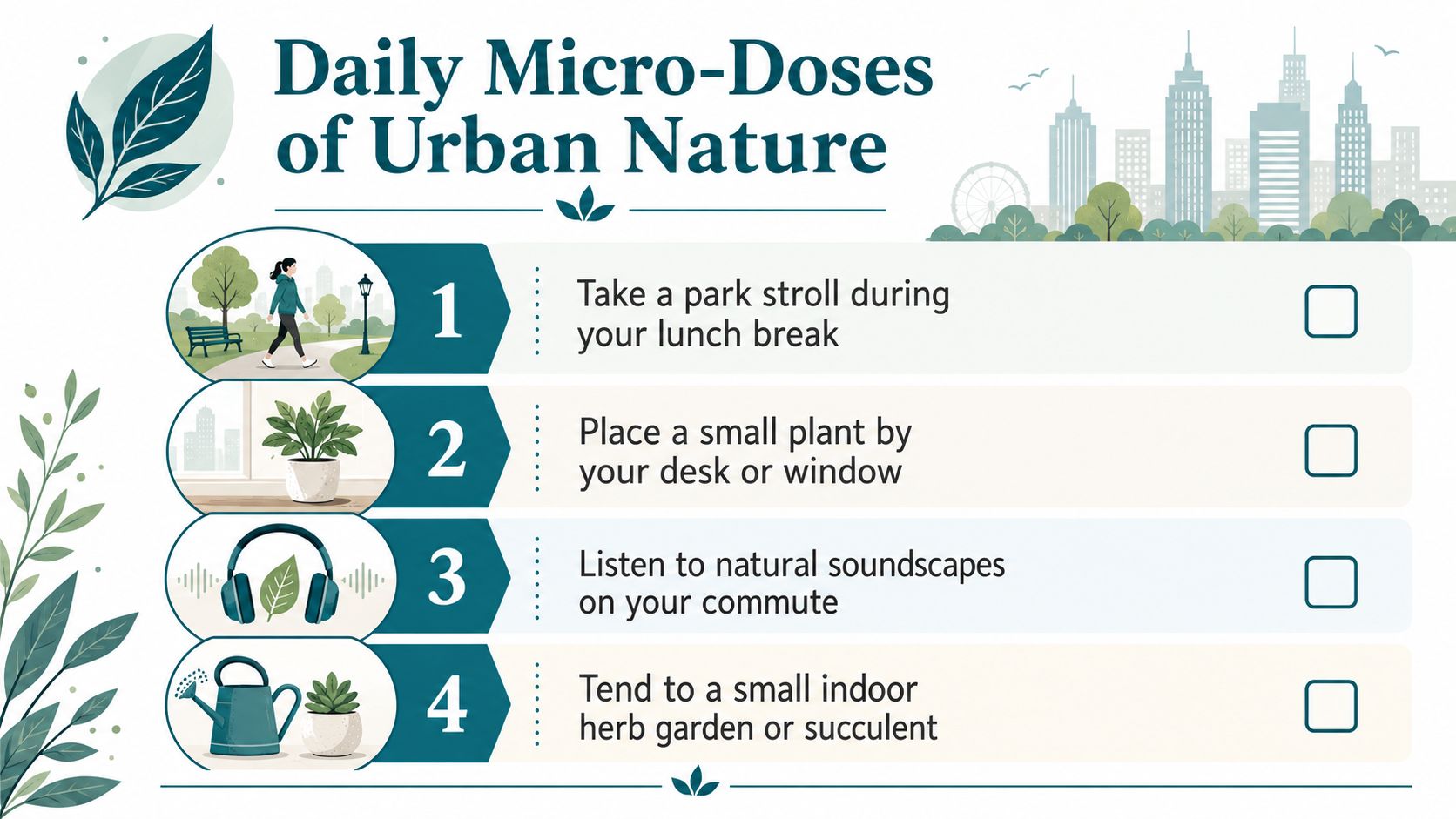
    Start with Daily Micro-Doses of Urban Nature

    If your schedule is packed, your money is tight, or your energy is low, good. You don't need a dramatic plan. You need one you'll do on a Wednesday.

    The American Psychological Association says even a stroll through a city park can improve attention and lower stress, and it suggests a simple tiered rhythm: start with 10 to 20 minutes daily in nearby green space, then add longer weekly sessions as the habit gets stronger, as noted in the APA's article on being nurtured by nature.

    That's practical. It also matches what I've seen on the ground. Big promises die fast. Small rituals stick.

    The daily floor

    Don't ask yourself for a complete lifestyle overhaul. Ask for a tiny daily contact with the living world. Make it so easy you'd feel sillier skipping it than doing it.

    A checklist featuring four simple daily activities to incorporate urban nature into a busy lifestyle.

    Here are a few that work in real city life:

    1. Stand by a window for one minute and look at the nearest tree, patch of ivy, cloud cover, or even the light moving across a wall.
    2. Take the long route past a park on your way home, even if you only get a few extra minutes.
    3. Eat one meal outside on a stoop, bench, patch of grass, or under a street tree.
    4. Listen on purpose for birds, wind, leaves, rain, or the hum that comes after traffic dies down.
    5. Touch something living. Bark, dirt, leaves, herbs in a pot, grass if you've got access to it.

    None of this is glamorous. Good. Your nervous system doesn't need glamorous. It needs contact.

    Add one weekly ritual

    Daily contact is the spark. A weekly ritual is what turns it into identity.

    Mine often looked rough and ordinary. A long walk through a neighborhood with a grabber in hand. Sitting in a small park after cleanup. Visiting a different green space and noticing how each one has its own mood. You can do your version without gear and without drama.

    Try one of these:

    • A weekend park lap: Walk one full loop and leave your headphones off.
    • A bench ritual: Sit in the same place every week and notice what changes.
    • A windowsill garden: Grow herbs, a succulent, or anything small enough that you can't overcomplicate it.
    • A cleanup walk: Bring a bag and gloves, pick up a few things, then wash up and head home.

    Small test: If your plan needs perfect weather, free hours, and high motivation, the plan is too big.

    Make it easy enough to repeat

    Individuals often fail because they make nature connection feel like a production. Special clothes. Special travel. Special mood. Then life gets busy and the whole thing collapses.

    I'd rather see you spend ten minutes under one stubborn tree every day than chase a giant outing you never take. Reconnect with nature by lowering the bar so far that your routine can step over it half asleep.

    That's how habits become part of your body. Subtly. Without applause.

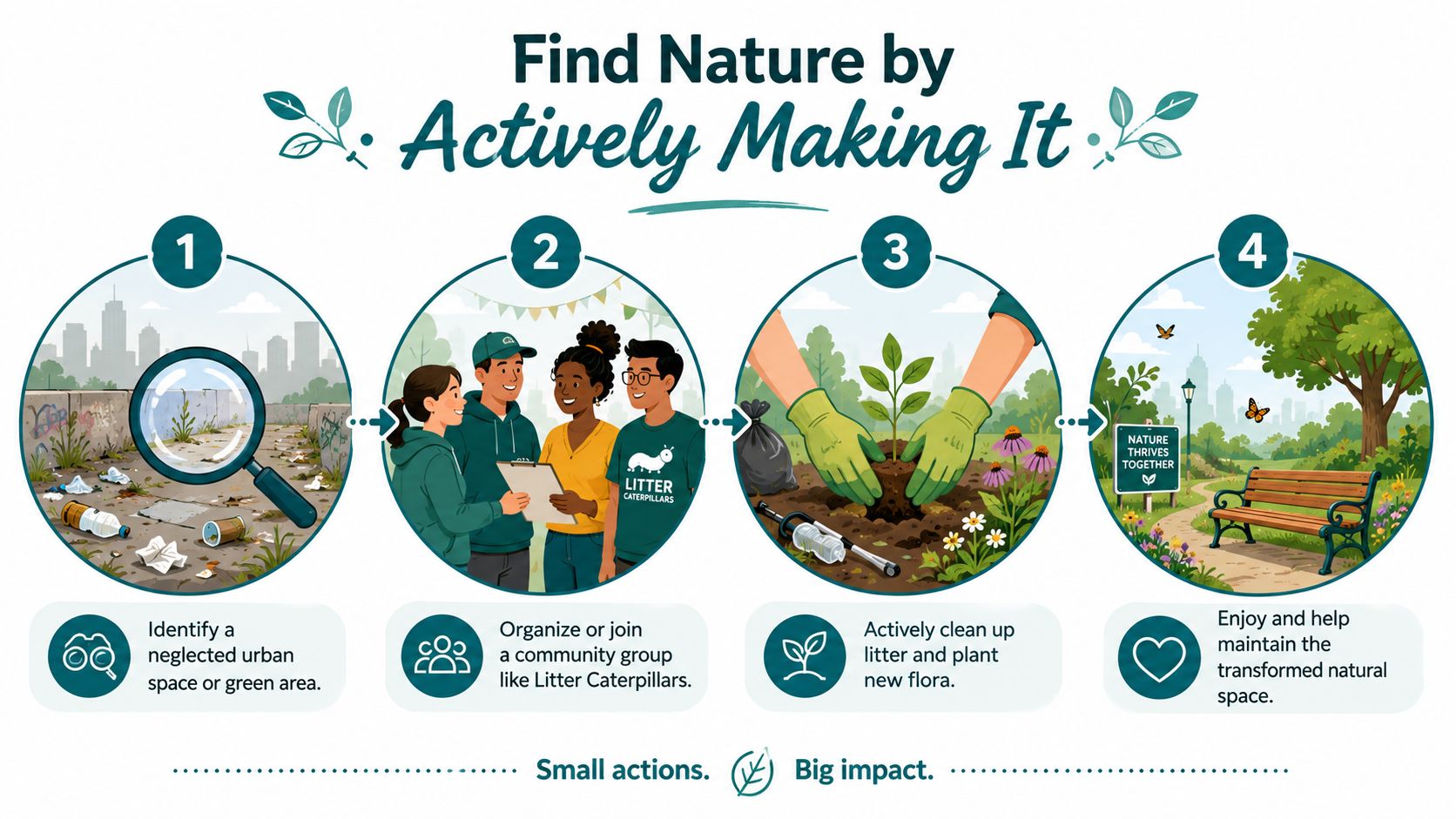
    Find Nature by Actively Making It

    The deepest connection I've found in a city didn't come from staring at nature. It came from helping make it possible.

    A neglected lot isn't just ugly. It's interrupted potential. Same with a trash-choked parkway, a weedy curb, a corner where people have given up. Once you clean it, even a little, the whole place changes mood. People slow down. They look. They talk. You start to feel that land wake up under your hands.

    That feeling is hard to explain if you haven't done it. It's half labor, half magic.

    The Tom Sawyer trick is real

    As a kid, I thought the Tom Sawyer fence scene was funny. As an adult, I realized it was a strategy. Work changes when you change the story around it.

    If you call trash pickup punishment, your body drags. If you call it a mission, an adventure, a shared act of reclaiming ground, people show up differently. They laugh more. They notice more. They carry themselves with a little more pride.

    That's what happened with us. We'd head out with bags, grabbers, gloves, and some dumb optimism. The block would look rough. Then an hour later there'd be piled bags on the curb and this clean line where chaos used to be. It felt like drawing order with your own hands.

    A four-step infographic showing how to clean and revitalize neglected urban spaces with a community group.

    Service fixes the access problem in a real way

    A lot of advice about reconnecting with nature implicitly assumes you have time, transport, money, and easy access to decent green space. Plenty of people don't. Economic limits, lack of transportation, and living in underserved areas can block access. The Environmental Science Center's piece on access to nature in underserved communities points out those barriers and notes that community-led cleanups and park stewardship are practical ways to improve environmental access while building social connection.

    That matches what I've seen block by block.

    If your neighborhood has poor access to healthy outdoor space, waiting for someone else to fix it can turn into a long sentence. But a cleanup crew, a garden crew, or a stewardship group can change the immediate conditions around you. Not perfectly. Not all at once. But for real.

    Here's what active nature-making can look like in a city:

    • Clean a neglected edge: Alleys, fence lines, vacant lots, bus stop areas, and park borders all shape how a place feels.
    • Adopt one recurring zone: Repetition matters. The second and third cleanup are where trust starts.
    • Plant something small: A tree bed, native flowers, herbs in containers, or a little pollinator patch.
    • Join a group instead of waiting for motivation: Shared calendars beat private intentions.

    One option is community gardens in Chicago, which can give you a physical place to put your hands in soil and meet neighbors who care about the same block you do.

    From one bag to a future park

    Our own path kept widening. What started as simple litter pickup turned into a different relationship with land itself. We stopped seeing empty lots as dead zones. We saw them as unfinished sentences.

    That shift matters. If you only consume nature, you wait for access. If you help build it, you become part of access.

    I've watched people show up shy, guarded, and tired. Then they spend a morning pulling trash from grass, clearing a path, talking to strangers, noticing birds, feeling sun on their arms, and suddenly the city doesn't feel so numb. They didn't leave for the woods. They repaired a piece of their environment and got repaired a little in the process.

    You can reconnect with nature by protecting the scraps of it that still exist, and by helping create more.

    That's the strongest form of urban nature connection I know. Responsibility turns scenery into relationship.

    Build Your Tribe and Embrace the Adventure

    Our first cleanup had three people and terrible weather. We got caught in a freak spring hailstorm, huddled under a tree, shivering while ride after ride canceled on us. It was miserable in the normal sense. It was also one of the most fun mornings I'd had in a long time.

    Shared discomfort does something coffee never will. You see who complains, who laughs, who checks on the others, who keeps moving, who makes the day lighter. Weather strips people down to something honest.

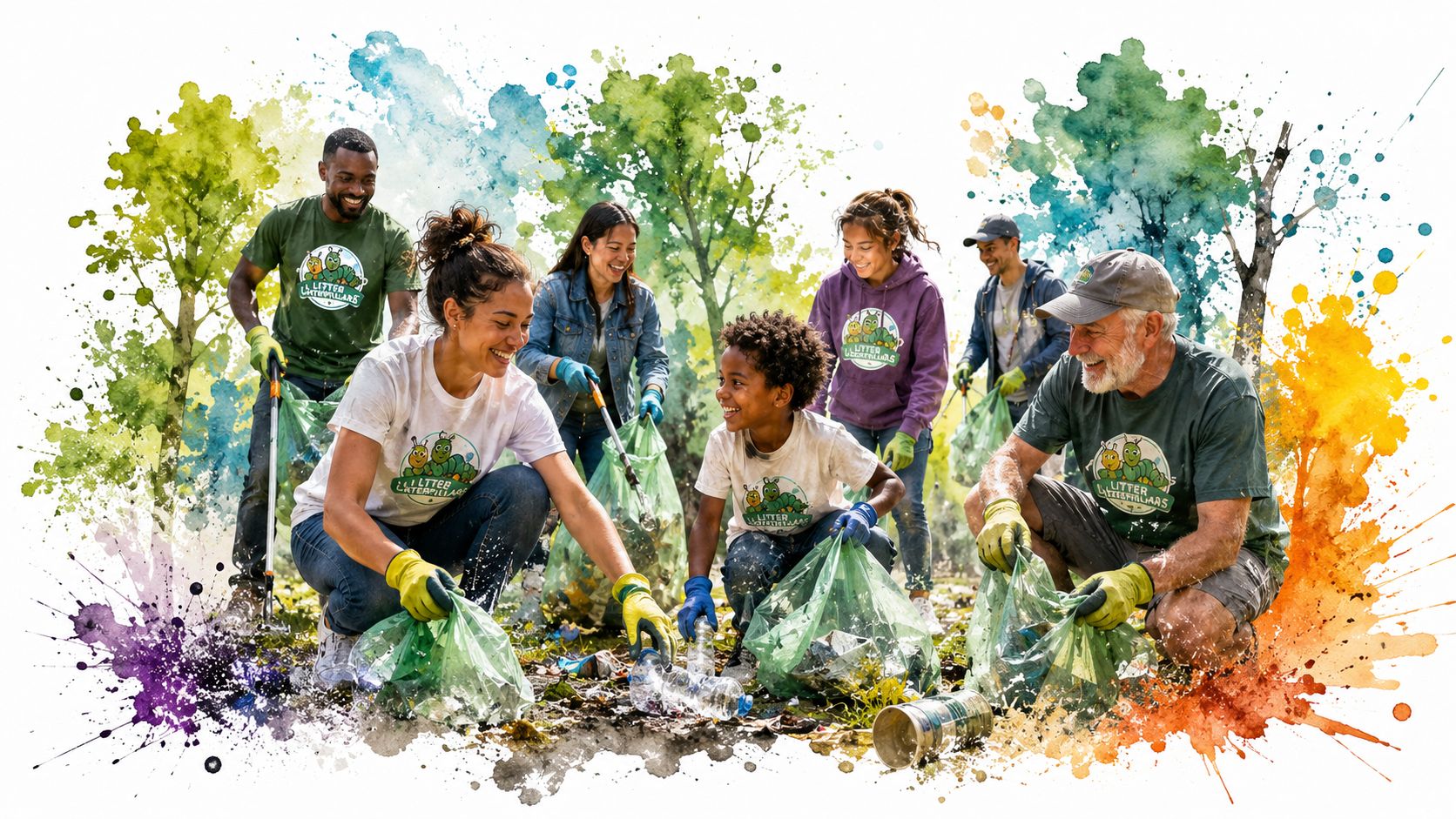
    A diverse group of volunteers cleaning up litter in a park, fostering community and environmental stewardship.

    The right people want a shared mission

    I've become very picky about how I build community. I'd rather know a few people who will show up on a cold morning than a crowd who only wants easy fun. Weekend morning service has a filtering effect. It tends to attract givers.

    That doesn't mean people need to be intense. It means they're willing. Willing to get dirty. Willing to be awkward at first. Willing to care about a block that doesn't belong to them alone.

    True nature connectedness is more than just being outside. It involves emotional attachment, attention, and sensory engagement. Building that connection through social, repeatable rituals can have stronger mental-health effects than occasional solitary trips, as discussed in this video on nature connectedness and the way we build it.

    That word ritual matters. Same people. Same kind of effort. Same kind of care. Week after week.

    What you actually need

    People overpack for outdoor service all the time. You don't need to dress like you're summiting a mountain.

    A basic setup is enough:

    • Gloves: Cheap work gloves beat bare hands every time.
    • A grabber and bags: Simple tools, no mystery.
    • Closed-toe shoes: Leave the sandals at home.
    • Water and layers: City weather flips fast.
    • Common sense: If something looks dangerous, leave it for trained crews or proper city services.

    Safety comes first. Pride doesn't mean doing reckless things. Bravery is staying useful while respecting limits.

    If you want help finding people who are built for this kind of friendship, I wrote this guide on how to meet like-minded people.

    Here's a look at the vibe in motion:

    Adventure fixes the dead feeling

    A lot of adults are bored because they only socialize in predictable boxes. Drinks. Brunch. Small talk. Repeat. Then they wonder why they feel lonely.

    Try this instead. Carry bags through an alley with two strangers while the wind is slapping you in the face. Find an old tire in weeds. Pull glass from mud. Laugh when someone's hood flies off. Watch a block look better by noon because you were there.

    That's a real day. Your body knows the difference.

    Measure Your Transformation Not Your Miles

    I don't think the best measure of reconnecting with nature is how far you hiked, how wild the setting was, or how pretty the photo looked after. Those are travel metrics. They're not transformation metrics.

    The city taught me to track different things.

    Better scoreboards

    Ask yourself harder questions.

    Did you learn the shape of your own neighborhood with your feet? Did you notice one tree enough times that it started to feel familiar? Did you make one real friend through shared work? Did you help one dirty patch of ground look cared for again?

    That's the stuff I trust.

    Old metric Better metric
    Miles traveled Blocks cared for
    Remote location Repeated relationship
    Great photo Real memory
    Solo escape Shared effort
    One big day Steady habit

    A better measure: Count the ways your attention changed, your courage changed, and your neighborhood changed under your hands.

    The caterpillar part

    We call ourselves caterpillars because transformation is slow, awkward, and not always pretty. You show up carrying some mess. You keep serving anyway. Over time, that service changes what you believe about yourself.

    You start to trust your own follow-through. You forgive yourself a little. You stop needing every act to be dramatic. A filled trash bag counts. A cleaner corner counts. A morning spent outside with good people counts.

    That's how I'd tell you to reconnect with nature in a city. Don't chase a fantasy version of the outdoors while ignoring the ground beneath your shoes. Put your hands on the place you live. Care for it. Let it change you back.


    If you want a concrete way to start, Litter Caterpillars organizes volunteer trash pickups in Chicago that give you a simple job, outdoor time, and a chance to meet people through shared service. Show up, grab a bag, and start with one block.

  • How to Make Friends as an Adult: A Real-World Guide

    How to Make Friends as an Adult: A Real-World Guide

    I once stood in my kitchen holding a jar of ancient blueberry jam like it was evidence from a lost life. Then I looked around at the clutter, the silence, the fallout from a relationship that had drained me, and I realized I didn’t just need to clean my apartment. I needed to rebuild my people.

    The Loneliness Problem I Couldn't Clean Up

    My place used to look like my inner life felt. Crowded. Stale. Weirdly sentimental about things that should’ve gone out weeks ago.

    I had trash with backstories. A half-finished bag of nuts from my brief healthy era. Old receipts from days I couldn’t even remember. The blueberry jam from a trip that mattered more in my memory than it ever did in real life. None of it weighed much, but every item felt heavy. I’m talking emotional cinder block heavy.

    Then a chaotic relationship ended, and the whole illusion cracked. I had spent too long tolerating selfishness, too long calling inconsistency “chemistry,” too long acting like loneliness would solve itself if I just stayed busy. It didn’t. It spread.

    A sad woman crying on a sofa while looking at a torn photograph of a couple.

    When your life gets smaller

    The hardest part of loneliness as an adult isn’t always dramatic. Sometimes it’s stupidly ordinary. You go through a whole weekend and realize nobody saw you outside of a cashier and a screen. You have a funny story and no one to text it to. You need help moving a chair and think, “Who would I even ask?”

    That private pain isn’t just in your head. A 2021 survey on close friendships among U.S. adults found that the share of adults reporting 10 or more close friends fell from 33% in 1990 to 13% in 2021, while 12% reported having no close friends at all.

    That hit me because it explained something I had felt but couldn’t name. I wasn’t failing at adulthood because friendship got harder. Friendship had gotten harder, period.

    Practical rule: If your social life feels broken, stop treating it like a personality defect. Treat it like a problem that needs design, repetition, and courage.

    Why cleaning up someone else’s mess helped me

    I learned something strange when I started helping clean outdoor spaces. Other people’s mess felt easier to face than my own. A candy wrapper on the sidewalk didn’t come with shame. A bottle in the grass didn’t carry my history. I could bend down, grab it, toss it, and feel one tiny burst of order.

    That mattered.

    Because once you’ve spent enough time stuck, momentum matters more than insight. You don’t need another podcast telling you to “put yourself out there.” You need a place to stand, something useful to do with your hands, and a reason to show up when your feelings say stay home.

    I’ve written before about fighting social anxiety one piece of trash at a time, and that phrase still feels true to me. Service gave me a side door into connection. I didn’t have to be dazzling. I just had to be present.

    That’s when I started seeing friendship differently. Not as luck. Not as chemistry. Not as something that falls from the sky when your life gets cute enough.

    More like cleanup.

    You show up. You pick one thing up. Then another. Then another. And one day the place looks different.

    So do you.

    How to Find Your People by Filtering for Givers

    Most adult friendship advice is too polite. It tells you to join a club, download an app, go to a mixer, smile more. Fine. But if you’re serious about how to make friends as an adult, you need a better question than “Where do I meet people?”

    Ask this instead. What kind of activity makes selfish people less likely to show up?

    That question changed everything for me.

    I used to think I had a bad picker in romance and friendship. But the truth was less mysterious. I kept putting myself in environments that rewarded charm, spontaneity, and vibes. Those places can be fun, but they’re terrible filters. A loud room hides a lot. So does a casual social scene where nobody has to sacrifice anything.

    If you want better friends, pick better proving grounds.

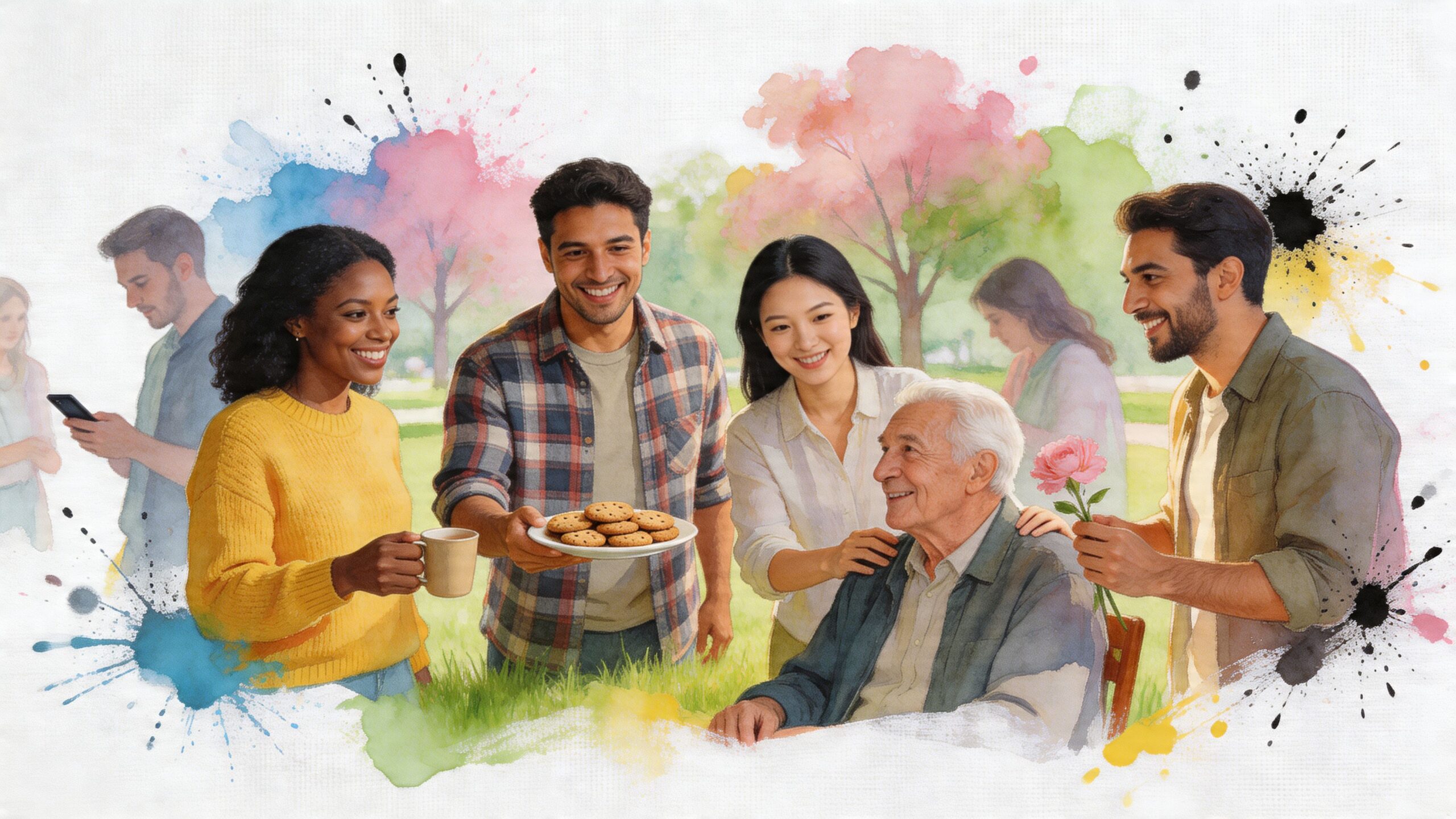
    A diverse group of adults and an elderly man sharing cookies and flowers in a park setting.

    Why challenge reveals character

    A warm café is great for catching up with people you already trust. It’s not great for screening new ones. Everybody looks generous when the lighting is soft and the stakes are zero.

    A service activity in bad weather tells you more.

    You notice who shows up early.
    You notice who shares gloves.
    You notice who complains for two hours and who makes the whole thing feel lighter.
    You notice who sees an older volunteer struggling with a bag and helps without turning it into theater.

    That’s what I mean by filtering for givers. Not saints. Not perfect people. Givers. People who can carry a little discomfort without making it everyone else’s problem.

    A strong social life doesn’t come from collecting whoever is available. It comes from building around people with the right instincts.

    The activity is the filter

    The best social settings aren’t always the most comfortable. They’re the most revealing.

    A weekend morning volunteer shift does something a random happy hour doesn’t. It asks for effort. It asks for wakefulness. It asks for a tiny act of selflessness before brunch and errands and scrolling can swallow the day. That alone changes who walks through the door.

    The logic here is simple. If the activity requires consistency, a little grit, and some public usefulness, it naturally attracts people who value those things.

    That isn’t just my opinion. Jen Hatmaker’s article on finding your people includes this idea directly: strategically engineering social circles by activity design is a powerful filtering tool, and scheduling volunteer events on weekend mornings can naturally attract givers over partiers. The same verified material notes that a 2025 Corporation for National & Community Service report found volunteer retention doubles in adversity-groups, which supports the point that shared struggle builds committed circles.

    If you keep meeting flaky, self-involved people, stop blaming your luck and start auditing your settings.

    What this looks like in real life

    I’ve watched people bond faster while carrying trash bags through wind than they ever did at polished networking events. Not because suffering is magical. Because challenge strips away performance.

    Here’s what service-based challenge gives you that generic social advice doesn’t:

    • A built-in job: You don’t have to invent conversation from thin air. You already share a task.
    • Visible character clues: You see kindness, patience, grit, and selfishness in motion.
    • Low-pressure repetition: People come back regularly, so you don’t have to force instant intimacy.
    • A reason to care together: Shared purpose gives the interaction weight.

    That’s why meeting like-minded people through intentional community settings works better than floating through random social noise. The right structure does half the work for you.

    Stop waiting for spontaneous friendship

    A lot of adults still cling to a high school fantasy. You sit near someone enough times, say a few funny things, and suddenly you’re close. That happened more easily when life shoved us into shared spaces every day. Adult life doesn’t do that.

    You have to build your own ecosystem now.

    That means choosing places where the social outcome isn’t the only point. Ironically, that’s what makes connection more likely. When people focus on helping, hauling, sorting, carrying, or fixing, they relax. They reveal themselves. They become easier to trust.

    And trust is the whole game.

    You don’t need to become more universally appealing. You need to become more intentional about where you invest your hours. Friendship grows best where values show up in behavior.

    If you want a tribe, don’t just chase people. Chase a cause that forces good people to become visible.

    Your Step-by-Step Guide to Making the First Move

    The first move feels huge when you’ve been lonely for a while. Your brain turns “say hi” into “perform a TED Talk while being judged by a panel.” I know that feeling well.

    I used to stand near people I wanted to know and act busy. I’d tie a bag. Adjust my sleeve. Look very interested in a random leaf. I was physically present and socially absent. That’s a brutal habit because it lets you tell yourself you’re trying when you’re really hiding.

    The fix started with one idea. You probably think people like you less than they do.

    The liking gap is messing with you

    Dr. Marisa G. Franco’s Acceptance Prophecy Methodology addresses the liking gap, where people underestimate how much others like them by 50-60%. Her approach is simple but powerful. Assume baseline likability. That shift can increase your own friendliness by up to 40% and can raise the success rate of turning group acquaintances into one-on-one friends to 70%, as described in Dr. Franco’s guide to making friends as an adult.

    That idea changed the script in my head.

    Before, I’d leave an interaction thinking, “I was awkward.” After learning this, I started asking, “What if they enjoyed that more than I think?” That one question made me warmer, more direct, and less weirdly defensive.

    You do not need certainty before you act. You need a more generous interpretation of how you’re being received.

    The four-part move

    I like simple systems because anxiety loves fog. Here’s the one I use.

    1. Show up enough times for familiarity to do its job

    Don’t treat the first event like speed dating for best friends. Your first task is repeat exposure. Come back. Let people see your face enough times that your presence starts to feel normal.

    If you disappear after one appearance, nobody has enough material to trust you yet.

    2. Assume they’ll be glad you spoke

    This is the inner move. Before you walk over, say something like, “They probably don’t need me to be impressive. They just need me to be human.”

    That sounds small. It isn’t. It changes your body language. You smile sooner. You stop overediting. You become easier to talk to.

    3. Open with the obvious truth in front of you

    Forget clever. Use what’s happening right now.

    A lot of people freeze because they think the opener has to sparkle. It doesn’t. It has to land. Real life already gives you material.

    Here are a few openers that work because they’re specific and low-pressure:

    Conversation Starters That Actually Work
    The Situation Your Opening Line
    You’re both grabbing supplies “Hey, have you done this route before, or are you winging it like me?”
    It’s freezing or raining “I can’t decide if this weather is miserable or kind of funny.”
    They did something helpful “That was kind of you. You noticed that fast.”
    You keep seeing them each week “I think we’ve been orbiting the same events for a while. I’m glad we finally said hi.”
    You’re walking between tasks “What made you start coming out to this kind of thing?”
    The event just ended “I’m starving after that. Are you headed straight home or doing a recovery snack somewhere?”

    4. Make the tiny invitation before the moment closes

    Many hesitate at this stage. They have a decent conversation, then leave with a polite smile and no bridge to the next one.

    You need a bridge.

    Not a giant one. A wooden plank. Something easy.

    Try these:

    • After a good chat: “I liked talking with you. Want to grab coffee after this next time?”
    • When you’ve seen them more than once: “You seem fun and solid. Want to swap numbers so we can coordinate next week?”
    • When you share a local connection: “You’re in my area too? We should do a neighborhood walk sometime.”

    None of these lines are too much. They’re clear. Adults appreciate clear.

    What awkward people do wrong

    I say this with love because I’ve done every one of these.

    • You hover instead of entering: You stand nearby and hope someone rescues you.
    • You wait for perfect timing: There isn’t any.
    • You talk once and vanish: Repetition builds trust.
    • You confuse chemistry with momentum: A pleasant moment means nothing if nobody follows up.
    • You make the invitation too big: Don’t jump to “we should all take a weekend trip.” Start with coffee.

    A script for the whole interaction

    If you want a practical sequence, use this:

    1. Approach: “Hey, I’m [your name].”
    2. Anchor to the moment: “This wind is trying to humble us.”
    3. Ask one simple question: “How’d you get into this?”
    4. Reflect something back: “That makes sense. I like that.”
    5. End with a small next step: “I’m glad we talked. Want to swap numbers and say hi next time?”

    That’s enough. Really.

    For more ideas on community-building activities for adults, look for settings where people do something together instead of only talking about doing something someday. Shared action makes every one of these steps easier.

    The tough-love truth

    Nobody is coming to tap you on the shoulder and announce that now it’s socially safe for you to begin. Adult friendship often starts when one person decides to risk a mildly awkward moment on purpose.

    Let that person be you.

    You don’t need swagger. You need reps. You need to stop worshipping coolness and start practicing contact. Most friendship failure doesn’t come from rejection. It comes from stalled effort.

    Say hi. Stay a few minutes longer. Ask the follow-up. Make the small invitation.

    That’s how strangers stop being scenery.

    The 200-Hour Journey From Acquaintance to Friend

    Most adults quit too early.

    They meet someone good, have one nice conversation, maybe even exchange numbers, and then they expect the friendship to self-assemble. When it doesn’t, they decide the spark wasn’t real. I used to do that too. I thought closeness should feel spontaneous if it was “meant to be.”

    Friendship is less like lightning and more like stacking firewood. One log doesn’t heat the house. Enough logs, placed regularly, will.

    Friendship takes longer than you think

    Research from the University of Kansas found that adult friendship grows through time spent together. It takes about 50 hours to move from acquaintance to casual friend, 90 hours for a real friendship, and more than 200 hours for a close bond, according to this summary of the University of Kansas friendship research.

    That number can feel discouraging until you understand what it means. It doesn’t mean you need one giant emotional marathon. It means closeness comes from repeated ordinary contact.

    A timeline chart titled The 200-Hour Journey to Friendship showing the time needed for different friendship levels.

    Why recurring activities are a friendship accelerator

    This is why recurring service matters so much. A weekly event solves three adult friendship problems at once.

    First, it removes decision fatigue. You don’t have to keep inventing plans.
    Second, it gives you a stable backdrop for repeated contact.
    Third, it creates a rhythm where following up feels normal instead of random.

    A one-off party gives you a spike. A weekly habit gives you a ladder.

    A working rule: Don’t ask, “Did we click?” Ask, “Did we spend enough time together for trust to form?”

    What those hours actually look like

    People hear 200 hours and picture some dramatic montage. Real friendship is usually built from much less glamorous moments.

    It’s the walk to the train after the event.
    It’s the ten-minute chat while sorting supplies.
    It’s the shared snack afterward.
    It’s texting, “You still going tomorrow?”
    It’s seeing how someone acts when plans get messy.

    The hours count because they accumulate context. You stop knowing only their funny side. You start learning how they handle stress, disappointment, lateness, weather, tiredness, small joy, and boring tasks. That’s when trust stops being theoretical.

    A practical rhythm for the long game

    If you’ve met someone promising, don’t leave it to chance. Use a rhythm.

    Week one

    Talk at the event. Keep it light. Find one point of overlap. Neighborhood, work rhythm, food, books, weird weather tolerance, anything.

    Send a short follow-up if you swapped numbers:
    “I liked talking with you today. Glad we met.”

    Week two

    Find them again. Reference the earlier conversation.
    “How did that exam go?”
    “Did you ever try that coffee place?”
    “Are you still on for next weekend?”

    That one callback matters. It tells them you weren’t just being socially polished. You were paying attention.

    Week three or four

    Add a small one-on-one extension connected to the shared activity.

    • Grab coffee after
    • Walk to the station together
    • Share a meal nearby
    • Invite them to a related errand or neighborhood stop

    Short is better than elaborate. You’re not trying to impress them. You’re trying to widen the lane.

    The mistake of waiting for intensity

    A lot of adults think a real friend should arrive with instant emotional depth. That expectation wrecks good beginnings.

    Close friendship usually starts off humble. You joke about gloves. You compare terrible apartment stories. You complain about wind chill. You remember each other’s names. You carry bags. That can look small from the outside. It isn’t.

    Small interactions are deposits. Keep making them.

    Here’s what helps those deposits grow:

    • Consistency beats charisma: I trust the person who returns.
    • Specific invitations beat vague hopes: “Coffee after next Saturday?” works better than “We should hang sometime.”
    • Shared labor beats endless talking: Doing a task together gives the bond a spine.
    • Follow-up beats fantasy: If you don’t act on a good interaction, it evaporates.

    How to know when to deepen the friendship

    You don’t need a formal milestone. Watch for these signals instead:

    • Conversation expands naturally: You’re not forcing topics anymore.
    • They initiate too: They text first, save you a spot, or ask if you’re coming.
    • You’ve seen each other in different moods: Tired, rushed, happy, annoyed.
    • The hangouts leave the original setting: You talk before or after, not just during.

    When that happens, deepen carefully. Offer a little more of yourself. Not a trauma dump. Just more reality.

    Try:
    “I’ve been trying to build a more solid circle lately.”
    “I’m glad I started showing up here. I needed this more than I realized.”
    “You seem like someone who follows through. I appreciate that.”

    That kind of honesty opens the door without kicking it off the hinges.

    A simple model for reaching 200 hours

    You don’t need to calculate this like a spreadsheet, but it helps to think in seasons.

    If you spend a few hours a week around the same people, plus occasional follow-ups outside the event, those hours add up. The magic isn’t speed. It’s regularity. Adult closeness grows when time stops being accidental.

    I like to think of it in layers:

    1. Recognition
      You know each other’s names and faces.

    2. Familiarity
      You’ve had enough repetition that the interaction feels easy.

    3. Reliability
      You expect to see each other and notice when the other person isn’t there.

    4. Trust
      You share more truth. You help each other. The friendship starts existing outside the original context.

    5. Belonging
      The person becomes part of your real life, not just your Saturday life.

    That’s the journey.

    The emotional payoff of the slow build

    The beauty of recurring challenge is that it sneaks the hours past your resistance. You’re not sitting across from a stranger trying to force intimacy over one expensive drink. You’re living side by side for a while. That’s closer to how childhood and college friendships formed. Not by magic. By repeated exposure, shared inconvenience, and enough ordinary moments to become known.

    If you’ve struggled with how to make friends as an adult, this is the part to tattoo on your brain. Stop judging early connections by intensity. Start judging them by whether the structure allows enough hours to accumulate.

    A good recurring activity isn’t just where you meet people. It’s the machine that turns contact into closeness.

    Show up. Keep showing up. Then make the extra half-step after the event. That’s how acquaintance becomes friend without either of you needing to force it.

    Friendship Is the Reward for Becoming a Better You

    At some point I realized I had been asking the wrong question.

    I kept asking, “How do I get friends?”

    A better question was, “Who am I becoming when nobody’s watching?”

    That question annoyed me at first because I wanted a social solution, not a character arc. I wanted a better calendar, not a better backbone. But friendship kept teaching me the same lesson. The people I most wanted in my life were drawn to bravery, steadiness, kindness, and effort. So if I wanted that kind of circle, I had to practice those traits before I felt fully ready.

    Service changes your posture

    When you serve, something subtle happens. You stop standing in the center of your own insecurity. You still feel shy sometimes. You still overthink. But your attention has somewhere better to go.

    A bag needs carrying.
    A corner needs cleaning.
    A new person looks nervous.
    Someone forgot gloves.
    The job is right there.

    That shift matters because self-consciousness is sticky. Purpose unsticks it.

    I’ve seen people arrive withdrawn, unsure, half-apologetic for taking up space. Then they spend enough time doing useful work beside good people and their whole posture changes. Their jokes come out easier. Their eye contact steadies. Their standards rise. They stop chasing random approval because they’ve started building earned self-respect.

    Friendship often arrives as a side effect. You become more trustworthy to yourself first.

    You don’t attract what you want. You attract what you rehearse

    Tough love enters the scene.

    If you rehearse flakiness, you’ll keep building flaky dynamics.
    If you rehearse hiding, you’ll keep collecting shallow contact.
    If you rehearse chasing exciting but unreliable people, you’ll keep ending up lonely in crowded rooms.

    You need new reps.

    Mark Manson’s Selective Effort Principle argues that investing 10+ hours a week in personal growth can boost your baseline attractiveness by 40%, and that passionate people attract 2.7x more invitations, as described in Mark Manson’s article on making friends. The deeper point matters more than the numbers. Shift from hunting for friends to becoming a person who naturally draws healthier connection.

    That tracks with what I’ve lived. The strongest friendships in my adult life didn’t start when I got more charming. They started when I got more solid.

    Pride helps more than people admit

    A lot of adults feel embarrassed by visible belonging. They think pride is corny. I used to think that too.

    Now I think pride is fuel.

    Teams know this. Marching bands know this. Cities know this. Shared symbols matter because they turn a loose gathering into a living identity. A badge, a ritual, a nickname, a song, a repeated joke, a familiar route, even a goofy tradition after the work is done. Those things say, “We are not just random individuals floating near each other. We are building something.”

    That sense of identity protects friendship because it gives people a reason to return even when life gets messy.

    Here’s what healthy group pride can do:

    • It makes consistency easier: People return to identities, not just events.
    • It softens awkwardness: Ritual gives shy people a script.
    • It creates memory: Shared symbols make ordinary effort feel meaningful.
    • It strengthens courage: Belonging helps people try harder things.

    I’m not saying you need costumes and chants. I’m saying don’t underestimate the power of shared spirit. Adults need it too.

    The caterpillar lesson

    I love the image of a caterpillar because it’s honest. A caterpillar isn’t sleek. It’s not glamorous. It crawls. It does the work slowly. It looks a little ridiculous if you judge it too early.

    That’s most of us in the middle of rebuilding.

    We are not polished when we begin. We are trying. We are carrying our own mess, our old habits, our fear of rejection, our shame about how long we stayed isolated. We are learning consistency after years of drift. We are learning bravery in public. We are learning to be kinder than our old environments taught us to be.

    And if we keep going, we change.

    Not in the fake self-help way where your life becomes perfectly curated. In the real way. You trust yourself more because you’ve kept promises to yourself. You forgive yourself more because you’ve done something useful with your pain. You become easier to love because you’re no longer living entirely from defense.

    That’s when friendship deepens. Not because you performed your way into a circle, but because the person standing there is more available, more grounded, and more aligned.

    What to do this week

    If you’re lonely, don’t turn this article into a thought exercise. Pick a challenge with a purpose and put it on your calendar.

    Do it even if you feel awkward.
    Do it even if you don’t feel instantly at home.
    Do it even if you have to go alone.

    Then return.

    Talk to one person.
    Remember their name.
    Ask one follow-up question.
    Make one tiny invitation.
    Come back next week.

    That’s the playbook. Not glamorous. Effective.

    You do not build a tribe by wishing for one. You build it by becoming someone who can help carry the bags, laugh in bad weather, and stay when the novelty wears off.

    And the wild part is this. Once you start doing that, you won’t just find better friends.

    You’ll like yourself more in their company.


    If you want a place to practice this in real life, Litter Caterpillars offers a simple, brave way in. You show up on a weekend morning, help clean a piece of Chicago, and meet people who chose service over sleep and excuses. That’s a strong starting point for anyone serious about how to make friends as an adult.

  • Fulton River Park Chicago: A Downtown Oasis – fulton river park chicago

    Fulton River Park Chicago: A Downtown Oasis – fulton river park chicago

    Picture this. You're walking down a loud, busy city street. Then you turn a corner. Suddenly, quiet. You're in a little pocket of green. That’s the feeling of Fulton River Park Chicago. It’s this incredible community spot, a secret tucked between the soaring high-rises and the old, winding Chicago River. The first time I ever organized a cleanup here with the Litter Caterpillars, a thought hit me like a ton of bricks: for so many people living in those towers, this little park is their backyard. Their only backyard.

    A Shared Living Room for the City

    A vibrant watercolor-style image of a city park with people and a dog enjoying a sunny day.

    Before I break down all the details, I want you to feel the vibe of this place. This is not just some random patch of grass. No way. It's more like the city’s shared living room. A big, comfy couch where all the small, beautiful, unscripted moments of life happen. You'll see office workers escaping their cubicles to eat a sandwich in the sun. You’ll see neighbors you recognize, walking dogs that are practically local celebrities. You'll hear the unmistakable sound of kids laughing on the playground, a sound that cuts through any city noise.

    It's a lung for the neighborhood. Think of the park as a pause button for your day. A little slice of nature that just beautifully crashes the party of concrete and steel all around you.

    Why This Park Matters

    I believe, with my whole heart, that parks like this are the lifeblood of a community. They're the common ground. The place where our separate paths finally cross, where you actually meet the people you live next to. Fulton River Park is a champion at this because it's a chameleon; it becomes whatever you need it to be. For you, it might be:

    • That quiet corner to cradle a warm coffee on a cool morning.
    • The perfect sun-drenched spot for an impromptu picnic.
    • The starting line for a long, winding walk along the river.

    This park is a canvas. It’s not just a list of features; it's a place for your life to happen, and proof that no matter how high we build our towers, we humans will always crave open space and each other. It’s one of many incredible places, and you can see more in my guide to other Chicago neighborhoods to explore.

    In this guide, I'm going to walk you through it all. My personal take on what makes Fulton River Park so special and everything you need to know to make your first visit feel like coming home.

    From Gritty Rails to Green Space

    Watercolor illustration of a city park with a skyline, rusty train tracks, and two people walking.

    Every single inch of Chicago has a story buried under it, and let me tell you, Fulton River Park is no exception. When you stand on this grass, you’re standing on history. Layers of it. You’re on ground that was once the city’s roaring, clanking engine room.

    Close your eyes for a second. I do this sometimes. You can almost hear it. The deep, earth-shaking rumble of trains on the tracks. The clatter of iron-rimmed wagon wheels on the cobblestones of Randolph Street’s old produce market. The sheer, unapologetic grit of an industrial machine that refused to sleep. This wasn't just a part of the city; this was its heart, pumping with commerce, ambition, and sweat.

    The Bones of Old Chicago

    The Fulton River District is where Chicago's story was written. Scrawled in lumber, grain, and steel. It was raw. It was loud. It was bursting with the kind of energy that pulls a city right out of the mud.

    This neighborhood was the center. The very beginning. The city’s original 1830 plat map was centered right here at Wolf Point, setting the grid that would define Chicago forever. For more than a hundred years, this was a place of relentless work—lumber and grain poured in from the plains, the city’s first railroad terminal at Kinzie and Canal roared to life in 1848, and huge moments like the Haymarket Square riots happened just steps from here. You have to dive deeper into this local history; I really recommend you learn about the district’s foundational role.

    That industrial soul is the park’s secret ingredient. It gives the green space a weight, a depth. A feeling that this peace was earned.

    The park isn't just a park. It’s a living monument to Chicago's superpower: reinvention. It's the story of a city that can look at a noisy, dirty, industrial artery and see a peaceful place for families to live.

    I think about this all the time when my Litter Caterpillars crew is out here cleaning. We're not just picking up somebody's forgotten coffee cup. We're tending to history. We're polishing a piece of the city's story, honoring its journey from gritty rails to green space. You can still feel the echoes of the past, but now they’re softened by the sound of kids playing and neighbors saying hello. It's a beautiful, powerful thing to be a part of.

    Exploring the Park's Layout and Amenities

    Watercolor illustration of Fulton River Park with winding paths, trees, playground, and people enjoying the space.

    So, when you first walk into Fulton River Park, what's the deal? Let me be your guide. Imagine a little urban getaway, cleverly designed with a few different zones that each have their own personality. It’s simple. And that’s what I love about it.

    You've got these wide-open fields of grass. They’re like green carpets rolled out just for you, practically screaming at you to throw down a blanket and finally finish that book you’ve been reading for six months. These are the park’s lungs—the perfect spot to tilt your face to the sun or just lie on your back and watch the clouds morph into weird shapes.

    Then you have the paths. They snake and wind through the trees. I love these. They feel like an invitation to just slow down. Take a real walk. Unplug from the city’s relentless pace. They aren't just for getting from point A to point B. They’re for the journey.

    The Heartbeat of the Park

    The real heartbeat, though? You can hear it from a hundred feet away. It’s the playground. This is where the soundtrack of pure joy takes over. Kids shrieking with laughter. Parents catching up. It’s a modern, safe space where children can unleash all that boundless energy. It’s a magnet for families, a place where you always see new friendships forming while the little ones conquer the slide.

    To give you the lay of the land, here’s what you’ll find.

    Fulton River Park at a Glance

    Amenity What to Expect Best For
    Open Lawns Spacious, well-kept grassy fields perfect for spreading out. Picnics, sunbathing, frisbee, or just relaxing with a book.
    Winding Paths Paved walkways that loop through the park's trees and gardens. Leisurely walks, jogging, or a peaceful stroll with a stroller.
    Playground A modern, fenced-in play structure with slides and climbing equipment. Kids ages 2-12 looking to run, climb, and make new friends.
    Benches & Seating Plenty of benches strategically placed along paths and near the playground. Taking a quiet break, watching the kids play, or people-watching.

    This simple design is why the park feels so intuitive. You’re not hunting for things. Whether you need a quiet bench with a view or a place for your kids to go bananas, you'll find it instantly. It’s just a smart, welcoming design that works.

    Making the Most of Your Park Visit

    A park is just grass and trees. Until you show up. You are the magic ingredient. **Fulton River Park** is a blank canvas, just waiting for you to come and paint your own experience on it—to create those little, perfect moments that stick with you.

    I've seen so many stories unfold on these lawns. I remember watching a group of new parents meet by the playground, a little club of sleeplessness and joy, swapping tips while their toddlers explored the world. I’ve seen friends spread out a blanket and share a pizza, catching up for hours as the city lights started to twinkle. People come here to connect.

    Your Park Your Way

    So, what do you need from this space today? What is your story? Are you looking for a quiet escape, just you, a good book, and a thermos of coffee? You can find a perfect, hidden-away bench for that. Or maybe you need to get your blood pumping with a quick jog? The paths are calling your name.

    • For a Quiet Moment: Grab a spot on the grass furthest from the playground.
    • For a Family Picnic: The big open lawns give you plenty of space to spread out.
    • For a Quick Workout: The paved loops are just right for a few laps.

    It’s about more than just a list of things to do. It’s about creating memories. This small patch of green is a simple, powerful tool for happiness and community.

    Think of this as your permission slip. How are you going to use this great public space to add a little more good to your day? Your visit is what gives the park its pulse, and if you ever feel like giving a little back, you can always look for a volunteer trash pickup near you.

    Becoming a Guardian of Our Green Space

    Four smiling volunteers in a watercolor park illustration are collecting litter into trash bags and a recycling bin.

    Okay, now we're getting personal. A park doesn’t just stay beautiful. It's not magic. It stays that way because we decide it will. Because people like you and me show up and care for it. This is where the story of Litter Caterpillars and Fulton River Park Chicago smash into each other. I started this group because I believe in the raw, messy power of service, friendship, and looking a problem right in the eye and doing something about it.

    Cleaning up a park like this? It's not a chore. I promise you. It's an act of love for our city. It's about showing up, even when it's a little cold, and discovering this weird, unexpected joy in doing something good with other people.

    It’s More Than Just Picking Up Trash

    So, I am personally inviting you to join us. The work itself is simple, but the feeling you get when you’re done is gigantic. There's this incredible hit of accomplishment when you look at a patch of grass that was cluttered and now it's clean. Because of you.

    But it’s even deeper than that. You build real friendships when you're working next to someone. You swap stories. You laugh. You complain about the weather together. You get through it.

    This neighborhood is exploding. With the tech boom, especially after Google moved in back in 2015, the local population skyrocketed by 52% between 2010 and 2020. This transformation from old meatpacking grit to a shiny high-rise community is exactly why our work here is so vital—we're helping care for a neighborhood that’s bursting at the seams with new life. You can read all about this impressive neighborhood growth on century21sgr.com.

    For me and my crew, this is prime territory for our weekend cleanups. It’s where we build our own resilience and make a difference we can literally touch, one block at a time.

    This isn't about picking up litter. It's about transforming ourselves while we transform our city. It's about becoming part of a community that believes kindness is a verb, that showing up matters, that you can make a real, tangible difference.

    You’ll discover how to join our next event and become part of a group that actually shows up. If you're feeling that little spark of inspiration, I would be so thrilled if you would learn more about how to clean up a park with us.

    Your Park Questions Answered

    You've got questions. I've got answers. After spending so many hours here—both chilling out and cleaning up with my fellow Litter Caterpillars—I've heard it all. These are the same things that pop up again and again from people visiting for the first time or new volunteers trying to get the lay of the land. Think of me as your inside source for Fulton River Park Chicago, getting all the boring little details out of the way so you can just go and enjoy this gem.

    Let's dive in.

    Getting Around and Park Logistics

    What's the best way to get to Fulton River Park using public transit?

    Honestly, just take the 'L'. It's a total no-brainer. The Clinton station, for the Green and Pink Lines, is an incredibly short walk away—it practically spits you out right at the park's doorstep. If you're coming in from the suburbs, the Ogilvie Transportation Center, a huge Metra hub, is right there too. I always tell my friends, just take the train. Hunting for parking around here is a classic Chicago nightmare you can completely avoid.

    Are there public restrooms available at the park?

    Ah, the million-dollar question, especially if you're bringing kids along! Fulton River Park is what I’d call a true neighborhood green space, which means it doesn't have its own dedicated public bathrooms. But don't you dare let that stop you. You are surrounded by civilization! There are tons of coffee shops and little restaurants on nearby streets like Clinton where you can pop in as a customer. Just have a game plan, especially if you’re with little ones who have tiny bladders.

    Park Rules and Community Life

    Is Fulton River Park dog friendly?

    Oh, absolutely! It’s like a daily dog party here. You’ll see so many happy pups sniffing around and making friends. It’s a fantastic spot for a walk. All I ask is that you follow the two golden rules of city dog ownership: always, always keep your dog on a leash, and even more importantly, always clean up after them. A massive part of what we do at Litter Caterpillars is keeping these spaces beautiful for everyone, and let me tell you, responsible pet owners are our number one allies in that fight.

    Every single time I see an owner bend down to bag waste, it feels like a small victory. A little act of kindness for the entire neighborhood. It's such a simple thing, but it makes a huge difference. It keeps the park clean for the next person, the next kid, the next dog.

    How can I find out about Litter Caterpillars cleanup events at the park?

    I'm so glad you asked! The best way to keep up with us is to follow our Instagram or join our group on the Meetup app. That’s where I post all our events—the details, the times, where we're meeting, everything. We often hit up amazing spots like Fulton River Park. All you have to bring is yourself and a good attitude; I provide all the gear. It is a seriously fun, zero-pressure way to meet some really cool people and make an impact you can see with your own eyes.


    At Litter Caterpillars, I believe transforming our city starts with showing up for it, one piece of trash at a time. Join our next cleanup event and become part of a community that’s building friendships and a cleaner Chicago.