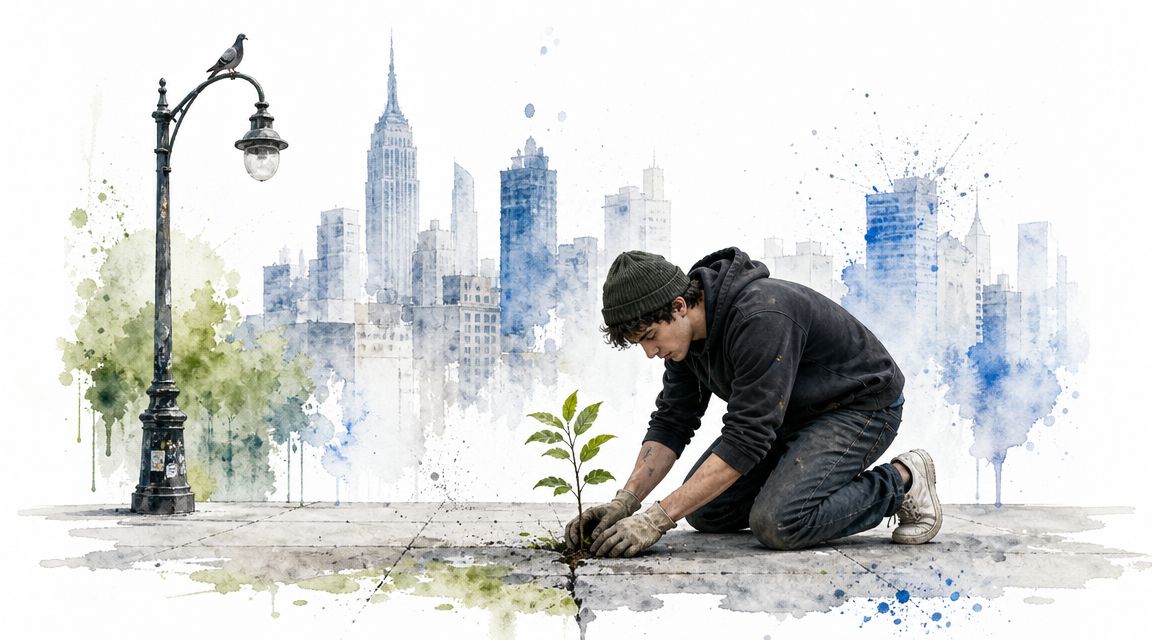
The first trash bag I filled felt lighter than the moldy jam jar in the back of my fridge. I could haul other people's mess through an alley in Chicago, but I couldn't throw out my own old stories.
My Life Was a Mess So I Started Cleaning Up Other People's
My apartment used to look like a storage unit for broken promises. Old jars, stale bags of nuts, half-finished projects, clothes I meant to donate, dishes I let sit too long. None of it was heavy in a physical way. But every object had a little story attached to it, and that story made it feel impossible to move.
That was my real mess. Not the clutter itself. The attachment.
The blueberry jam in the fridge was from some trip I took years ago. The health food in the cabinet came from a phase where I swore I was about to become disciplined. Even trash had emotional weight. A bag clip could carry shame. A receipt could carry regret. My place was packed with sentimental trash, and if I'm honest, so was my life.
Then a chaotic relationship ended, and I hit that ugly quiet after the storm. No more noise. No more excuses. Just me, my apartment, and the fact that I had built a life I didn't trust.

The first honest thing I did
I made a short list of the things that scared me most. Cleanliness. Consistency. Bravery. I didn't pick those words because they sounded noble. I picked them because I was bad at them.
So I did something strange. I started picking up litter outside.
I noticed right away that cleaning other people's mess felt easier than cleaning my own. A bottle in the gutter didn't come with a sad memory. A fast-food wrapper on the sidewalk didn't argue back. I could grab it, bag it, and see progress fast. For once, my hands knew what to do.
Practical rule: If your own life feels jammed up, do one physical act of service outside your front door.
That simple act changed the texture of my week. I'd walk out tense and noisy in my head. I'd come back sweaty, dirty, and calmer. The city stopped feeling like a machine I was trapped inside. It started feeling like a place I could touch.
One bag at a time
I didn't start with some polished mission. I started because I needed a way to stop drowning in my own excuses. Trash pickup gave me that. It also gave me a path back into the world, the world of sidewalks, trees fighting through fence lines, wind on my face, and neighbors who would stop and talk.
If you're stuck right now, I get it. If your room is a wreck, your routine is weak, and your brain feels like a junk drawer, I get that too. Sometimes the first clean thing you do isn't inside your own apartment.
Sometimes it's one bottle cap, one chip bag, one alley.
And if being around people feels hard too, I wrote more about that in this piece on how to overcome social anxiety.
Shift Your Mindset from Escape to Engagement
A lot of people think they'll reconnect with nature when they finally leave the city. They imagine some clean break. Cabin, mountain, forest, silence. Until then, they treat daily life like a waiting room.
I think that idea traps people.
If you believe nature only counts when you're far away from traffic and brick, then your own neighborhood becomes spiritually invisible. You stop looking. You stop noticing. You stop caring. Then the city feels dead, even when life is crawling all over it.
Stop waiting for a perfect setting
I learned this the hard way while walking blocks commonly considered ugly. Cracked sidewalks. Fly-dumped lots. Chain-link fence. Graffiti. Broken glass. But once I kept showing up, I started seeing more than damage.
I saw weeds forcing their way through concrete seams like they had a personal grudge. I saw pigeons doing their weird little strut under train tracks. I saw the same sparrow on the same wire at the same hour. I saw sunset turn a brick wall gold for about three minutes before the light slipped away.
That's where the shift happens. You stop asking, “How do I escape this place?” and start asking, “What is alive here, and what is my relationship to it?”
More than 100 studies have found that being in nature, living near nature, or even viewing nature in paintings and videos can improve brains, bodies, feelings, thought processes, and social interactions, according to the Greater Good Science Center's summary of nature research. That matters to me because it takes the pressure off the fantasy of the big wilderness trip. Repeated contact counts.
The city has living edges if you train your eyes
Your block might not have a waterfall. Fine. Mine doesn't either.
But it has signs of life if you stop walking through it like a hostage.
- Look low: Watch the weeds, moss, tree roots, and tiny flowers pushing up along curbs and fences.
- Look up: Pay attention to birds on wires, clouds between buildings, and branches hanging over alleys.
- Look twice: A trash-strewn lot and a future garden can be the same place at different stages of attention.
Sentimental trash keeps us stuck because we keep assigning old meaning to dead objects. The same thing happens with neighborhoods. You decide a place is dirty, ugly, dangerous, boring, or beneath notice, and then you only collect evidence for that story. Your eyes become lazy. Your heart follows.
Sometimes reconnecting with nature starts when you stop insulting the patch of earth you already live on.
Engagement beats fantasy
I'm not against leaving town. Go hike. Go camp. Go stare at a lake if you can. But don't build your whole spiritual life around rare escapes. That's like saying you'll only nourish a friendship once every six months.
Nature connection in a city starts with engagement. Attention. Repetition. Responsibility.
Here's the mindset I had to learn:
| Old mindset | Better mindset |
|---|---|
| Nature is somewhere else | Nature is scattered all around me |
| I need a trip | I need a practice |
| My neighborhood is the problem | My neighborhood is where I begin |
| I'll care when it looks better | I help it look better by caring |
Once I saw the city that way, the work changed too. A cleanup wasn't just sanitation. It was relationship repair. Between me and the place. Between me and myself.
Start with Daily Micro-Doses of Urban Nature
If your schedule is packed, your money is tight, or your energy is low, good. You don't need a dramatic plan. You need one you'll do on a Wednesday.
The American Psychological Association says even a stroll through a city park can improve attention and lower stress, and it suggests a simple tiered rhythm: start with 10 to 20 minutes daily in nearby green space, then add longer weekly sessions as the habit gets stronger, as noted in the APA's article on being nurtured by nature.
That's practical. It also matches what I've seen on the ground. Big promises die fast. Small rituals stick.
The daily floor
Don't ask yourself for a complete lifestyle overhaul. Ask for a tiny daily contact with the living world. Make it so easy you'd feel sillier skipping it than doing it.
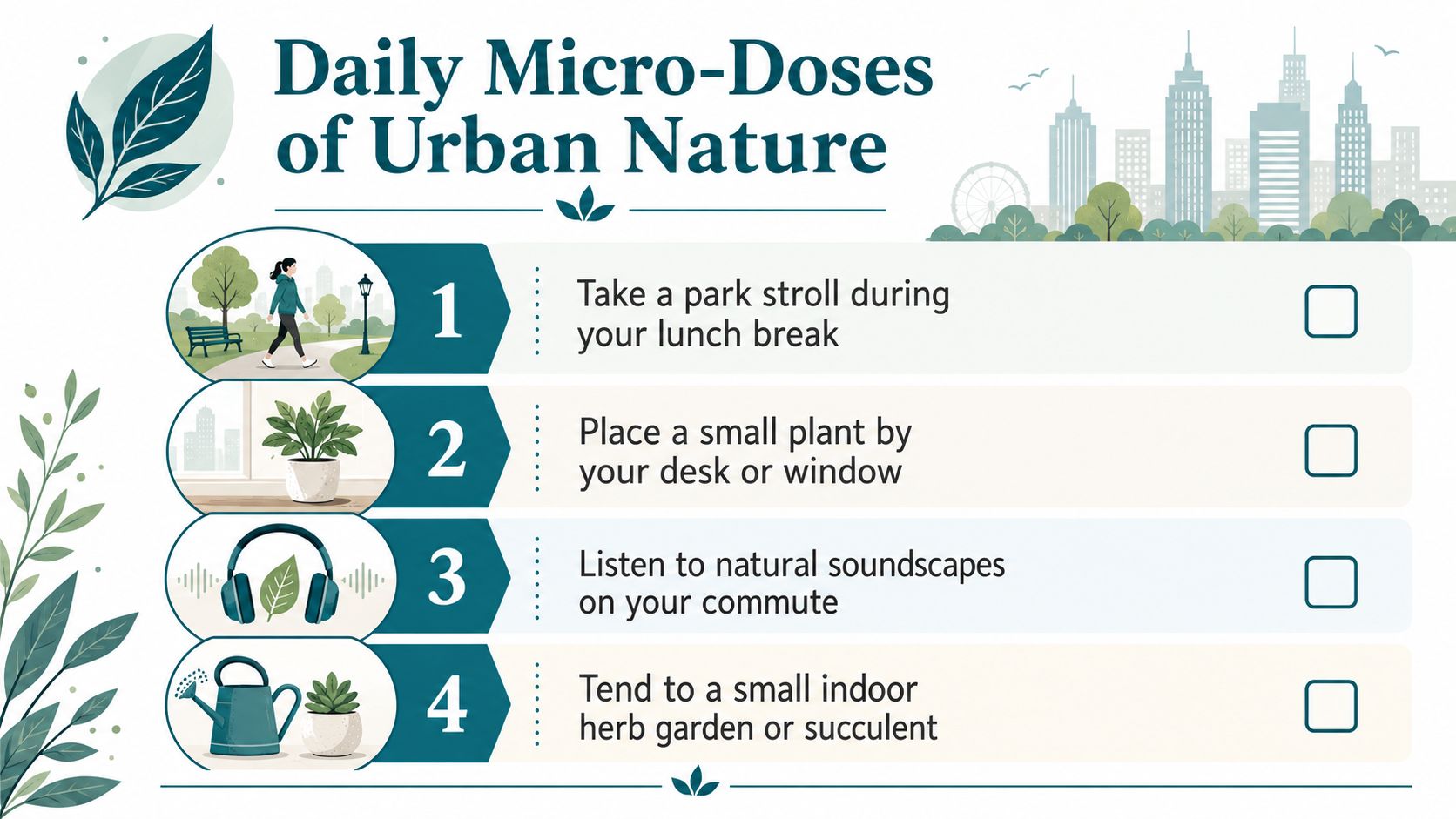
Here are a few that work in real city life:
- Stand by a window for one minute and look at the nearest tree, patch of ivy, cloud cover, or even the light moving across a wall.
- Take the long route past a park on your way home, even if you only get a few extra minutes.
- Eat one meal outside on a stoop, bench, patch of grass, or under a street tree.
- Listen on purpose for birds, wind, leaves, rain, or the hum that comes after traffic dies down.
- Touch something living. Bark, dirt, leaves, herbs in a pot, grass if you've got access to it.
None of this is glamorous. Good. Your nervous system doesn't need glamorous. It needs contact.
Add one weekly ritual
Daily contact is the spark. A weekly ritual is what turns it into identity.
Mine often looked rough and ordinary. A long walk through a neighborhood with a grabber in hand. Sitting in a small park after cleanup. Visiting a different green space and noticing how each one has its own mood. You can do your version without gear and without drama.
Try one of these:
- A weekend park lap: Walk one full loop and leave your headphones off.
- A bench ritual: Sit in the same place every week and notice what changes.
- A windowsill garden: Grow herbs, a succulent, or anything small enough that you can't overcomplicate it.
- A cleanup walk: Bring a bag and gloves, pick up a few things, then wash up and head home.
Small test: If your plan needs perfect weather, free hours, and high motivation, the plan is too big.
Make it easy enough to repeat
Individuals often fail because they make nature connection feel like a production. Special clothes. Special travel. Special mood. Then life gets busy and the whole thing collapses.
I'd rather see you spend ten minutes under one stubborn tree every day than chase a giant outing you never take. Reconnect with nature by lowering the bar so far that your routine can step over it half asleep.
That's how habits become part of your body. Subtly. Without applause.
Find Nature by Actively Making It
The deepest connection I've found in a city didn't come from staring at nature. It came from helping make it possible.
A neglected lot isn't just ugly. It's interrupted potential. Same with a trash-choked parkway, a weedy curb, a corner where people have given up. Once you clean it, even a little, the whole place changes mood. People slow down. They look. They talk. You start to feel that land wake up under your hands.
That feeling is hard to explain if you haven't done it. It's half labor, half magic.
The Tom Sawyer trick is real
As a kid, I thought the Tom Sawyer fence scene was funny. As an adult, I realized it was a strategy. Work changes when you change the story around it.
If you call trash pickup punishment, your body drags. If you call it a mission, an adventure, a shared act of reclaiming ground, people show up differently. They laugh more. They notice more. They carry themselves with a little more pride.
That's what happened with us. We'd head out with bags, grabbers, gloves, and some dumb optimism. The block would look rough. Then an hour later there'd be piled bags on the curb and this clean line where chaos used to be. It felt like drawing order with your own hands.
Service fixes the access problem in a real way
A lot of advice about reconnecting with nature implicitly assumes you have time, transport, money, and easy access to decent green space. Plenty of people don't. Economic limits, lack of transportation, and living in underserved areas can block access. The Environmental Science Center's piece on access to nature in underserved communities points out those barriers and notes that community-led cleanups and park stewardship are practical ways to improve environmental access while building social connection.
That matches what I've seen block by block.
If your neighborhood has poor access to healthy outdoor space, waiting for someone else to fix it can turn into a long sentence. But a cleanup crew, a garden crew, or a stewardship group can change the immediate conditions around you. Not perfectly. Not all at once. But for real.
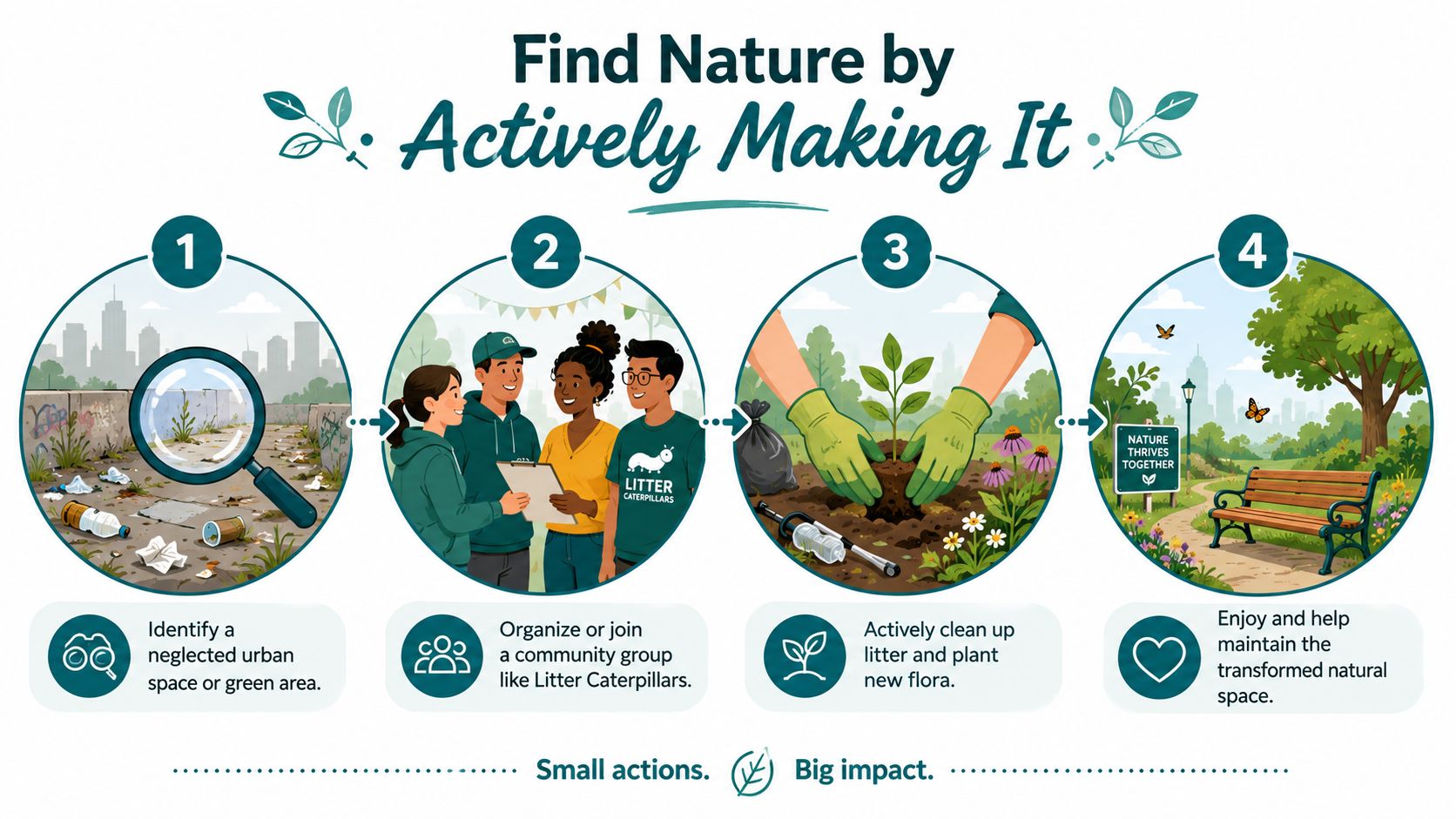
Here's what active nature-making can look like in a city:
- Clean a neglected edge: Alleys, fence lines, vacant lots, bus stop areas, and park borders all shape how a place feels.
- Adopt one recurring zone: Repetition matters. The second and third cleanup are where trust starts.
- Plant something small: A tree bed, native flowers, herbs in containers, or a little pollinator patch.
- Join a group instead of waiting for motivation: Shared calendars beat private intentions.
One option is community gardens in Chicago, which can give you a physical place to put your hands in soil and meet neighbors who care about the same block you do.
From one bag to a future park
Our own path kept widening. What started as simple litter pickup turned into a different relationship with land itself. We stopped seeing empty lots as dead zones. We saw them as unfinished sentences.
That shift matters. If you only consume nature, you wait for access. If you help build it, you become part of access.
I've watched people show up shy, guarded, and tired. Then they spend a morning pulling trash from grass, clearing a path, talking to strangers, noticing birds, feeling sun on their arms, and suddenly the city doesn't feel so numb. They didn't leave for the woods. They repaired a piece of their environment and got repaired a little in the process.
You can reconnect with nature by protecting the scraps of it that still exist, and by helping create more.
That's the strongest form of urban nature connection I know. Responsibility turns scenery into relationship.
Build Your Tribe and Embrace the Adventure
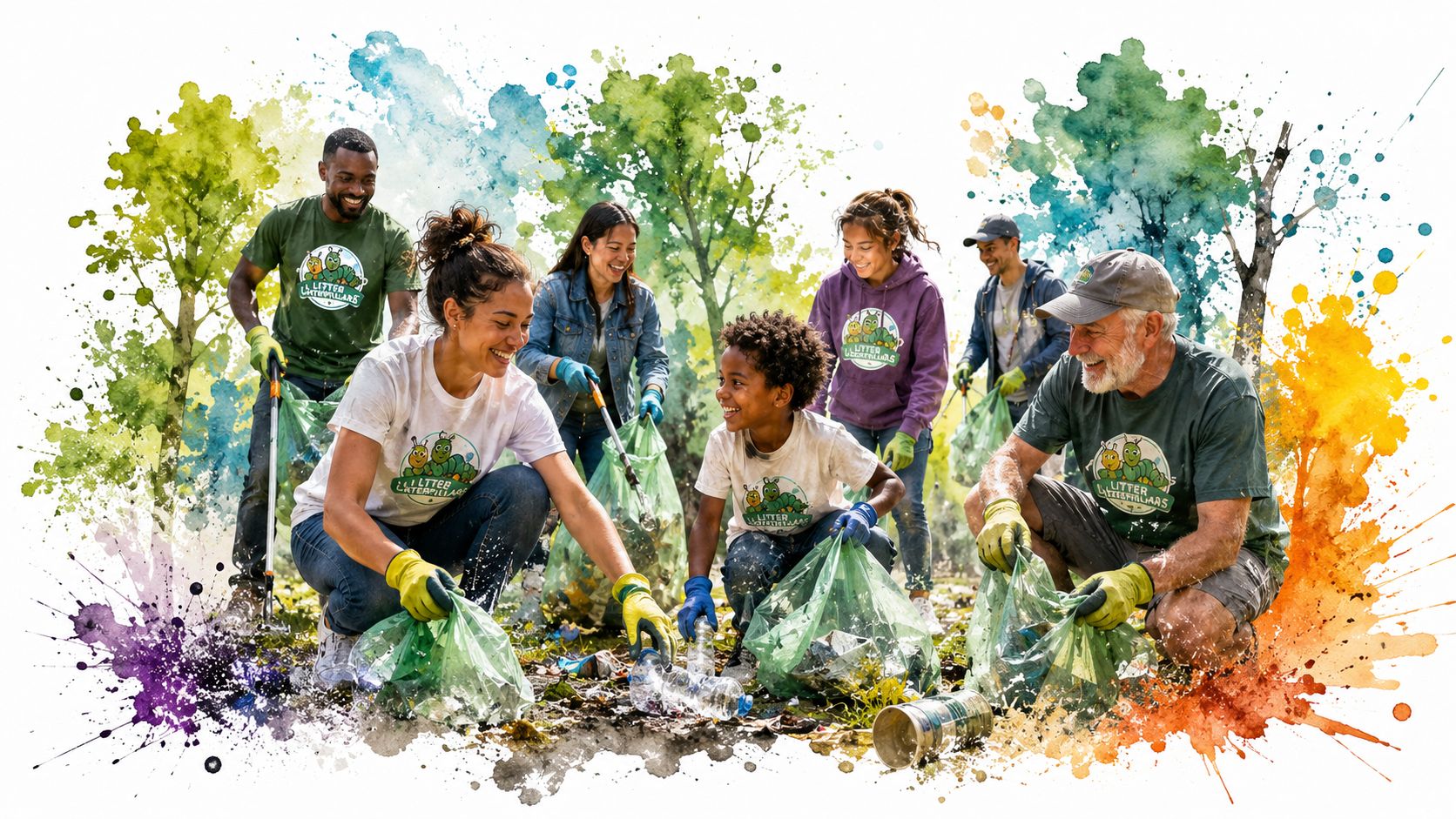
Our first cleanup had three people and terrible weather. We got caught in a freak spring hailstorm, huddled under a tree, shivering while ride after ride canceled on us. It was miserable in the normal sense. It was also one of the most fun mornings I'd had in a long time.
Shared discomfort does something coffee never will. You see who complains, who laughs, who checks on the others, who keeps moving, who makes the day lighter. Weather strips people down to something honest.
The right people want a shared mission
I've become very picky about how I build community. I'd rather know a few people who will show up on a cold morning than a crowd who only wants easy fun. Weekend morning service has a filtering effect. It tends to attract givers.
That doesn't mean people need to be intense. It means they're willing. Willing to get dirty. Willing to be awkward at first. Willing to care about a block that doesn't belong to them alone.
True nature connectedness is more than just being outside. It involves emotional attachment, attention, and sensory engagement. Building that connection through social, repeatable rituals can have stronger mental-health effects than occasional solitary trips, as discussed in this video on nature connectedness and the way we build it.
That word ritual matters. Same people. Same kind of effort. Same kind of care. Week after week.
What you actually need
People overpack for outdoor service all the time. You don't need to dress like you're summiting a mountain.
A basic setup is enough:
- Gloves: Cheap work gloves beat bare hands every time.
- A grabber and bags: Simple tools, no mystery.
- Closed-toe shoes: Leave the sandals at home.
- Water and layers: City weather flips fast.
- Common sense: If something looks dangerous, leave it for trained crews or proper city services.
Safety comes first. Pride doesn't mean doing reckless things. Bravery is staying useful while respecting limits.
If you want help finding people who are built for this kind of friendship, I wrote this guide on how to meet like-minded people.
Here's a look at the vibe in motion:
Adventure fixes the dead feeling
A lot of adults are bored because they only socialize in predictable boxes. Drinks. Brunch. Small talk. Repeat. Then they wonder why they feel lonely.
Try this instead. Carry bags through an alley with two strangers while the wind is slapping you in the face. Find an old tire in weeds. Pull glass from mud. Laugh when someone's hood flies off. Watch a block look better by noon because you were there.
That's a real day. Your body knows the difference.
Measure Your Transformation Not Your Miles
I don't think the best measure of reconnecting with nature is how far you hiked, how wild the setting was, or how pretty the photo looked after. Those are travel metrics. They're not transformation metrics.
The city taught me to track different things.
Better scoreboards
Ask yourself harder questions.
Did you learn the shape of your own neighborhood with your feet? Did you notice one tree enough times that it started to feel familiar? Did you make one real friend through shared work? Did you help one dirty patch of ground look cared for again?
That's the stuff I trust.
| Old metric | Better metric |
|---|---|
| Miles traveled | Blocks cared for |
| Remote location | Repeated relationship |
| Great photo | Real memory |
| Solo escape | Shared effort |
| One big day | Steady habit |
A better measure: Count the ways your attention changed, your courage changed, and your neighborhood changed under your hands.
The caterpillar part
We call ourselves caterpillars because transformation is slow, awkward, and not always pretty. You show up carrying some mess. You keep serving anyway. Over time, that service changes what you believe about yourself.
You start to trust your own follow-through. You forgive yourself a little. You stop needing every act to be dramatic. A filled trash bag counts. A cleaner corner counts. A morning spent outside with good people counts.
That's how I'd tell you to reconnect with nature in a city. Don't chase a fantasy version of the outdoors while ignoring the ground beneath your shoes. Put your hands on the place you live. Care for it. Let it change you back.
If you want a concrete way to start, Litter Caterpillars organizes volunteer trash pickups in Chicago that give you a simple job, outdoor time, and a chance to meet people through shared service. Show up, grab a bag, and start with one block.
Leave a Reply