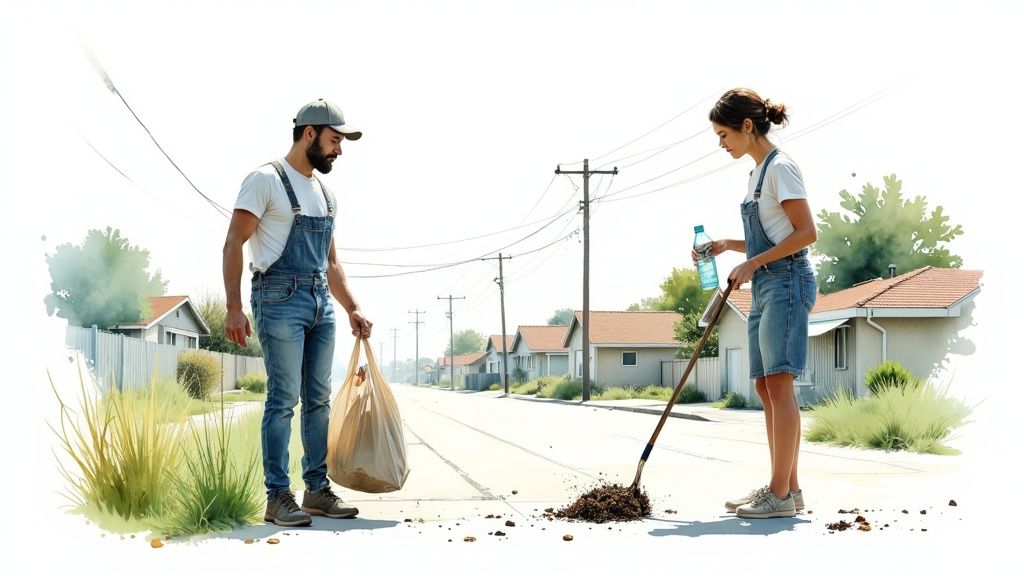
Cleaning up trash is a brave, simple choice to care for the world right outside your door. It starts small—one person, one bag—but that single act has the power to inspire an entire community. This is the journey of turning that feeling of frustration into action, and discovering just how damn fun and fulfilling it can be to make a real difference.
The Moment You Decide to Make a Difference
It always starts with a feeling, doesn't it? You’re walking your usual route and see it again. That same crushed can or fast-food wrapper tucked into the bushes. At first, it's just a mild annoyance. But then it morphs into a question: "Why doesn't someone do something about this?"
That question is a seed. It can die right there, or it can grow into something powerful. The moment it really takes root is when you realize the simple, profound truth: you are that someone.
This is the turning point. It's not about becoming a superhero overnight or solving the world's problems in one afternoon. It’s about the brave, kind decision to change the small slice of the world you walk through every day. It's about personal growth, about deciding you have the power to make things better, right here, right now.
From Observer to Participant
Once you make that switch, it’s like seeing your neighborhood in a totally new light. Before, the litter was just background noise, an ugly part of the landscape. Now, each piece represents a choice—a choice someone made to toss it, and a choice you can make to pick it up.
This feels deeply personal. It's a quiet declaration that you care, a commitment to kindness for the shared spaces we all use. The first time you bend down to pick up a piece of trash, you're drawing a line in the sand. You’re saying, “This matters to me.”
“Cleaning other people's messes is WAY easier than cleaning up our own. It brings about a strange, new form of 'fun.' Suffering and freezing… actually makes things interesting. It adds a type of 'flavor.' Another page in the story. It 'advanced' the plot!”
That first step is the bravest one. It might feel small, maybe even invisible, but its impact is huge. A neighbor sees you and feels inspired. Someone else notices the cleaner street and feels a bit more pride. It’s a lot easier to make an impact than you think. If you're looking for that initial spark, you can explore guides on how to find volunteer work that speaks to you.
The journey starts with you, a bag, and the decision to just do it. It’s an adventure in kindness, a practice in bravery, and proof that one person really can make a world of difference.
Your Cleanup Toolkit From Simple to Pro
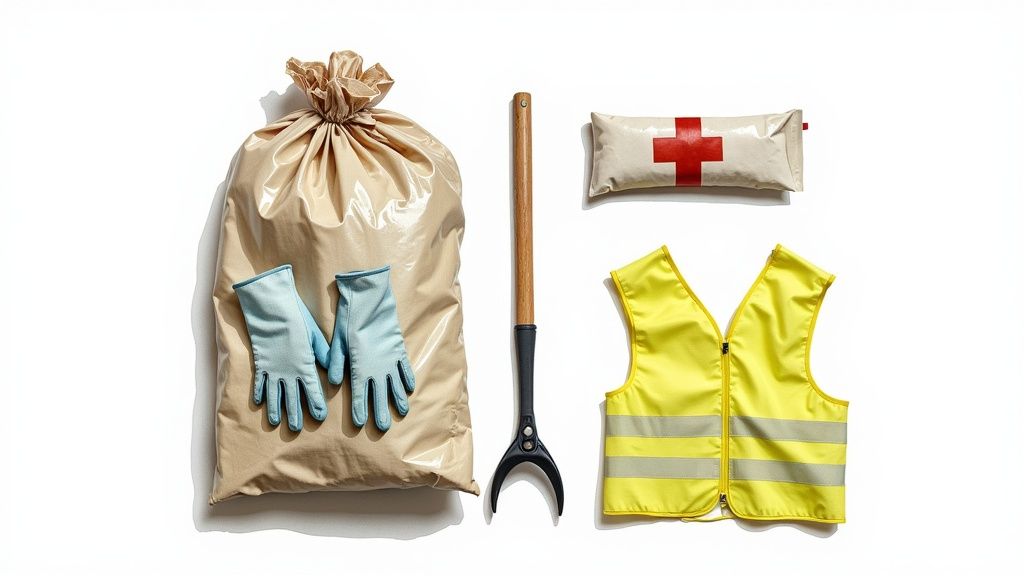
You really don’t need a bunch of high-tech gear to make a difference. Honestly, you can start this journey right now with two things you probably have: a bag from your kitchen and a pair of gloves.
That's it. That’s your ticket to the game.
Think of it like learning to cook. You don't start with a sous vide machine. You start with a pan and a spatula. The gear doesn't make the change—you do. The gear just makes the work safer, easier, and a hell of a lot more comfortable. So let’s build your kit, from the bare essentials to a full-blown "pro" setup. This is all about making it feel easy and fun.
The Scrappy Starter Pack
This is your go-to for spontaneous action. It's light, costs nothing, and proves you don’t need to spend a dime to be a force for good.
- A Simple Bag: Any sturdy bag works. A reusable tote, a plastic grocery bag you've been saving, a small trash bag from under the sink. Doesn't matter.
- Basic Gloves: A pair of gardening or work gloves is perfect. They create that crucial barrier between your hands and whatever gnarly thing you’re about to pick up.
That’s all you need to get going. This minimalist approach removes every excuse. It's about grabbing what you have and just walking out the door.
Leveling Up Your Gear
Once you get a taste for it, you’ll want to upgrade. This isn’t about looking official; it’s about protecting yourself and being able to stay out there longer. It's about self-kindness.
First on the list: puncture-proof gloves. These are your best friends. They shield you from the nasty surprises—broken glass, sharp metal, or worse—that can turn a good deed into a trip to urgent care.
Next up, get yourself a litter grabber. This tool is a complete game-changer. It saves your back from bending over a hundred times, extends your reach into thorny bushes, and keeps you at a safe distance from sketchy items. It’s the key to making this a sustainable, and even fun, habit.
“When you adopt a spot, you’re not just cleaning up — you’re showing pride in the place we all call home.”
Finally, a high-visibility vest is a non-negotiable if you’re cleaning anywhere near a road. This simple piece of gear makes you seen. It yells to drivers, cyclists, and pedestrians that you’re there. It's a loud, clear signal that says, "I'm here, I'm helping, and my safety matters."
Building Your Pro Kit for Group Events
When you start leading others, your toolkit has to grow with you. Suddenly, you're not just responsible for yourself—you’re creating a safe and effective experience for your whole crew. Think of yourself as the host of a party. Your job is to have everything ready so your volunteers can just show up and focus on the good work. It's surprisingly fun to be this prepared.
Here’s what you’ll need to put together a solid group cleanup kit.
Essential Cleanup Gear Guide
| Gear Item | Why You Need It (The Real Talk) | Where to Find It |
|---|---|---|
| Heavy-Duty Trash Bags | Flimsy bags rip, creating a second mess. Strong bags hold more and just don't quit. Don't be that person. | Hardware stores or online bulk supply retailers. |
| Variety of Gloves | Bring extras in different sizes. I promise, someone will always forget theirs or need a fresh pair after a gross find. | Buy multi-packs from a home improvement store like Home Depot. |
| First-Aid Kit | Scrapes happen. Being ready with bandages shows you genuinely care about your team's safety. It's simple kindness. | Any pharmacy or supermarket. Keep it stocked. |
| 5-Gallon Buckets | These are perfect for safely collecting sharp stuff like broken glass or needles that could easily pierce a bag. | Old paint buckets (cleaned out) or durable bins from a hardware store. |
| Hand Sanitizer & Wipes | A must-have. It lets everyone clean up before grabbing a drink or heading home. It's a small detail that shows you care. | Drugstores or ordered in bulk online. |
Having this gear on hand makes your event run smoothly and shows your volunteers that you’re a prepared and thoughtful leader. It’s these little details that make people want to come back. And don't forget to check with local resources! Your city's public works department often provides supplies for free. All you have to do is ask. They want to help you.
Rallying Your Crew and Sparking a Movement
Picking up trash by yourself is a noble act. But doing it with others? That's when you become a force of nature. That's where the real magic is—you're not just cleaning streets, you're building a tribe of people who give a damn. It's FUN.
Asking people to join you can feel weird, I get it. What if no one shows up? Let that fear go. You're not begging for help. You're offering a connection, a chance to do something real that leaves a tangible mark of kindness on your neighborhood.
Imagine lighting a campfire. You start with one spark—just you. To make it grow, you invite others to bring their own logs to the fire. It's about sharing warmth and light, not demanding help.
How to Craft an Invitation That Actually Works
Forget the boring flyers. The secret to a great invitation is genuine human connection. Your goal isn't just to find "volunteers"; it's to create an experience people actually want to be part of.
So, how do you do that? You tell a story.
Instead of posting, "Volunteer cleanup this Saturday," try coming from the heart. Post a photo of a spot that breaks your heart a little—that park bench covered in coffee cups, that beautiful trail spoiled by plastic bags. Then, share your vision for it.
Here’s an example for a local Facebook group:
"Hey neighbors! I walk past the little playground on Elm Street every morning, and the trash lately has been really getting to me. I keep picturing how amazing it would be for the kids. I'm going to be out there this Saturday at 10 AM with a box of trash bags to do something about it, and I'd love some company! Let's spend an hour making our corner of the world a little brighter. I'll bring coffee for everyone who shows up."
See the difference? It's personal, it's specific, and it has a clear, kind call to action. It’s not a chore; it’s a shared mission. It promises good company, a feeling of accomplishment, and coffee! That’s the kind of authentic invitation people respond to.
Small Groups Create Big Movements
Every big movement starts small. The Litter Caterpillars began with just three of us huddled under a tree during a freak hailstorm, shivering but laughing our butts off. We didn't set out to clean the whole city; we just wanted to clean one block.
Your first cleanup might just be you and a friend. That's a huge win! Celebrate it. Take a picture of your full trash bags and post it with a thank you. People need to see the impact. Your consistency is what will turn that duo into a dozen.
When you share your "why"—your personal reason for caring—you give people something to connect with on a human level. It’s not about the trash; it’s about the community you’re building, one piece of litter at a time.
This isn't just a local problem. Globally, we produce over 2 billion tonnes of municipal solid waste each year. And get this: high-income countries, with just 16% of the world's population, generate over a third of it. Your small, local action is a brave pushback against a massive global problem. You can learn more about the staggering scale of it all over at 4thbin.com.
Building Your Tribe
Once people start showing up, your job is to make the experience fun and welcoming. Remember names. Introduce people. Create a space where friendships can spark. The trash is the excuse to gather, but the connection is the reason people stay.
Here are a few ways to build that community spirit:
- Make it easy to join: Use platforms people already use, like a local Meetup group or an Instagram page. Keep the instructions simple and the vibe low-pressure. For a deeper dive, check out our guide on how to find volunteers who share your passion.
- Celebrate everyone: Acknowledge every single person who shows up. A simple "So glad you could make it today!" goes a long, long way.
- End on a high note: Always finish with a social element, even if it's just five minutes of chatting over coffee or donuts. This is where the real community building happens.
You're the host of a party where the main activity is cleaning up trash. Your energy sets the tone. Be brave, be kind, and be unapologetically enthusiastic. People are drawn to that passion, and soon, you won't be inviting people to a cleanup; you'll be gathering your tribe.
Your Cleanup Day Playbook for Success
This is where it all comes together. You've got the gear, you've rallied your crew, and now it's game day. This is your playbook for turning good intentions into a smooth, safe, and ridiculously successful cleanup. Forget about boring safety talks and logistical nightmares. We're keeping it simple, brave, and focused on what really matters.
Think of yourself as the captain of a sports team. Your job isn't to micromanage every move. It's to set the strategy, make sure everyone's equipped, and keep the energy high. A little prep work ensures the day feels less like a chore and more like a victory lap.
Choosing Your Battlefield
Where you decide to clean is everything. You're looking for a spot where your efforts will make a huge, visible impact. This is about strategic kindness. Picking a high-traffic park or a neglected neighborhood block sends a powerful message: this space is loved.
Don't overthink it. Pick a place that speaks to you, a spot you know could be beautiful if it just got a little attention.
- Go for visibility: A cleanup along a busy street inspires others. It shows the whole community what you’re about.
- Target a 'forgotten' area: Cleaning up a neglected alleyway or a small patch of woods can completely transform the feel of a neighborhood.
- Keep it manageable: Don’t try to clean the entire city in one day. Pick a defined zone so your team can see their progress and leave with a real sense of accomplishment.
Safety That Actually Sticks
Long, preachy safety speeches are where good intentions go to die. Nobody remembers a ten-minute lecture. What they do remember is a simple, clear rule that gets stuck in their head.
Here’s our one and only safety rule: "If it’s sharp, glassy, or sketchy—leave it!"
That's it. Repeat it. Make it your mantra. This single phrase covers 99% of what people need to know. It empowers them to use their own judgment and reminds them that their safety is the top priority. No bag of trash is worth a trip to the ER. For those few sketchy items, have a designated sharps container or a sturdy bucket ready.
“When Tom Sawyer was punished by his aunt and was forced to paint a fence, he could have wallowed and complained. Instead he convinced his friends that painting the fence was actually extremely fun. His friends even paid him with an apple for the opportunity! We believe that a big part of bravery is also pride / inspiration.”
Demystifying the Paperwork
Let’s talk permits. The word itself sounds intimidating, but it’s usually way easier than you think. See your local council or parks department not as a barrier, but as a potential partner. They want people like you helping to keep the city clean.
A quick phone call or email is often all it takes. Just explain who you are, what you want to do, and ask what they need from you. Many cities will not only grant permission but will also provide free supplies and arrange to pick up the trash you collect. For those eager to jump in, checking a list of weekend volunteer opportunities near me can connect you with established groups that already have these relationships figured out.
This simple visual breaks down the core process of turning your idea into a community event.
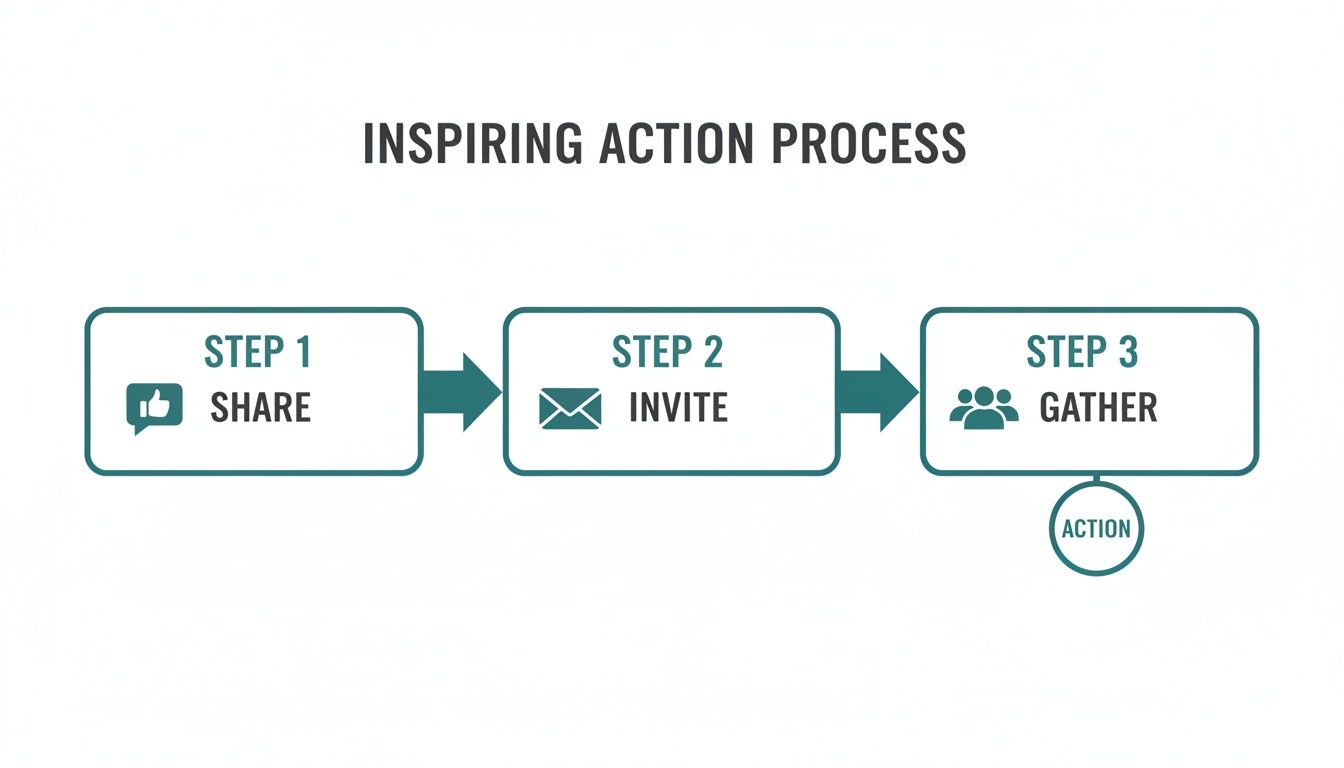
The flow is straightforward: bravely share your vision, kindly invite others to join, and gather as a community to make a real impact.
Keeping Your Crew Happy
Your final job as the leader is to be the chief of good vibes. A successful event is one where people feel appreciated, stay hydrated, and have a genuinely good time.
- Hydration is non-negotiable: Bring a big cooler of water. Gently nag people to drink it.
- Snacks are magic: Seriously. A box of donuts or a bag of oranges can completely change the mood and turn a group of strangers into a team of friends.
- Crank the tunes: A portable speaker with an upbeat playlist makes everything more fun.
- Celebrate the wins: Point out the progress. Take before-and-after photos. End the event by gathering everyone to admire the mountain of trash bags you’ve all collected together.
This isn’t just about picking up trash. It’s about building a community of givers. A little planning makes sure everyone leaves feeling safe, valued, and pumped for the next one.
Beyond the Bag: What to Do With the Trash You Collect
There's no feeling quite like seeing that mountain of full trash bags at the end of a cleanup. It’s a trophy. It’s tangible proof of your hard work, your kindness, and your bravery. You stood up and did something.
But the job isn't quite done yet.
Now comes the final, crucial step: what do you do with it all? Responsible disposal is the last link in the chain, ensuring your good deed doesn’t just move a problem from a park to an overflowing city can.
Think of it like finishing a race. You don’t stop one foot from the finish line—you have to cross it. Sorting and properly disposing of the trash you’ve collected is that final, powerful stride. It’s how you complete the act of care you started.
The Simple Art of Sorting
Sorting doesn't have to be complicated. You’re not expected to be a waste management expert! The goal is just to make a good-faith effort to separate the obvious stuff. A quick sort can make a huge difference.
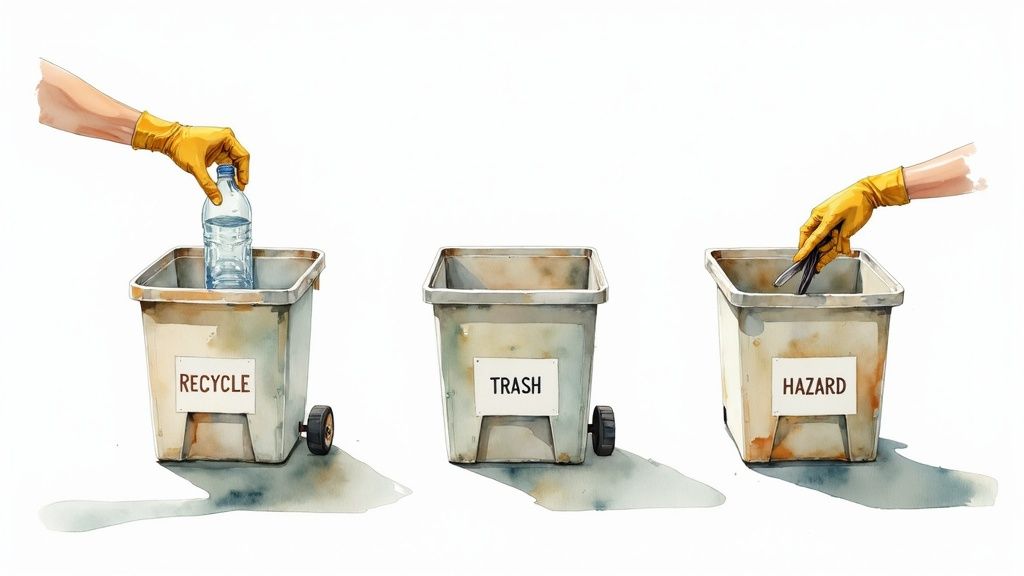
We usually set up a few distinct collection points right at our cleanup site. A few separate bags or buckets make it easy for everyone to pitch in.
- General Waste: This is for the majority of what you’ll find—food wrappers, weird plastics, and other random gunk. This is your main pile.
- Recyclables: Focus on the easy wins. Aluminum cans, plastic bottles, and glass are the low-hanging fruit.
- Sharps & Hazardous Items: Anything that feels dangerous goes into a separate, puncture-proof container, like a 5-gallon bucket. This includes broken glass, needles, and batteries. Safety first, always.
This simple system keeps everyone safe and makes the final disposal process much smoother. It’s a small bit of extra effort that honors the work you’ve already done.
The act of sorting is an act of intention. It’s recognizing that not all trash is created equal and that with a little thought, we can help reduce the burden on our planet’s systems.
You’re Now on the Front Lines of the Plastic Problem
Once you start cleaning up trash, you’ll quickly notice one thing: plastic is everywhere. Bags, bottles, straws, and a million tiny fragments.
You're now face-to-face with a massive challenge. Global plastic waste has now hit a record 225 million tonnes, with a staggering 72 million tonnes of that ending up mismanaged, polluting our oceans, rivers, and soil. When you pick up a plastic bottle, you are directly intervening in this cycle of pollution. You can dive deeper into the global plastic waste crisis at letsrecycle.com.
Knowing this doesn’t make the work feel heavier; it makes it feel more important. Every piece you remove is one less piece choking our environment.
Logistics of the Last Mile
So, where does it all go? You have a few options for the final disposal, and a little pre-planning can save you a major headache.
Connect with Your City
Your local public works or sanitation department can be your biggest ally. Give them a call before your event. Many cities are thrilled to support volunteer cleanups and will arrange a special pickup for your collected bags. They might even provide the bags and gloves themselves.
Leverage Your Own Bins
For smaller, solo cleanups, using your own residential bins is perfectly fine. Just be mindful not to overwhelm them.
Find Local Drop-Off Sites
For specific items, you might need a dedicated drop-off location.
- Hazardous Waste: Your county likely has a designated facility for hazardous materials like paint, chemicals, and batteries. Never put these in regular trash.
- Scrap Metal: Items like old appliances or large metal pieces can often be taken to a local scrap yard, which may even pay you for them.
- Recycling Centers: For large quantities of sorted recyclables, a dedicated recycling center is your best bet.
Your hard work deserves a thoughtful finish. By taking these final steps, you ensure your impact is positive and lasting, turning a simple cleanup into a truly sustainable act of community care.
How to Keep the Momentum Going
You did it. You filled the bags, cleared the space, and left a small corner of the world a little brighter. That feeling is electric, right? A mix of exhaustion and pure, unfiltered pride.
A single cleanup is a victory. It’s a powerful statement.
But a recurring one? That’s how you start a revolution.
The real magic isn't in the one-time event; it's in the echo it creates. It’s in turning that incredible day into a sustainable movement, a rhythm of kindness that becomes part of your community’s heartbeat. This is how you keep the fire going, not just for others, but for yourself. It’s the ultimate act of personal growth.
The Power of Appreciation and Proof
After the last bag is tied, the most important part begins, and it has nothing to do with trash. It’s about celebrating the people who showed up.
A simple, heartfelt thank-you is the fuel that powers a volunteer movement. Send a group message, but not some generic "Thanks." Give it real warmth. Mention a specific moment—how awesome it was to see everyone tackle that overgrown trail, or how much you all laughed when that surprise rain shower hit.
Then, give them proof of their impact. Before-and-after photos are your superpower.
Juxtapose the image of a trashed park with a photo of the same spot, clean and beautiful, with your crew standing proudly in the middle. This visual evidence is undeniable. It screams, "Look what we did together!" It transforms an abstract idea of "helping" into a tangible, beautiful reality.
“When we share the results, we’re not just showing off our work. We’re building a story of collective power, a story people will want to be a part of again and again.”
Strike While the Iron Is Hot
The energy after a successful cleanup is a precious, fleeting thing. Don't let it fade. The best time to schedule the next event is right after the last one ends, while everyone is still buzzing.
You don't need a firm date. Just plant the seed: "This was amazing. Let's do the other side of the park next month!" This small step turns a one-off event into a series, a habit of service. It gives people something to look forward to and solidifies the idea that this isn't just something you did; it's something you do. It's a lot easier to build momentum than you think.
Connecting Your Work to the Bigger Picture
It’s easy to feel like your local cleanup is just a drop in the ocean. But every piece of trash you pick up is part of a much larger story.
Think about the challenge of food waste, which represents a colossal cleanup burden on our planet. Globally, a staggering 1.3 billion tonnes are discarded every year. This waste rots in landfills, releasing methane that contributes 8-10% to global emissions. You can dive deeper into these global waste trends and their impact to see the scale of the problem.
When you’re out there cleaning up, you are on the front lines, fighting back against this tide of waste. You are not just cleaning a street; you are participating in a global act of stewardship.
Framing your work this way empowers everyone. It connects your small, brave actions to a worldwide movement of people who refuse to just stand by. You are proving, one bag at a time, that a small group of kind, brave people can indeed change the world. Keep going.
At Litter Caterpillars, we believe in the power of showing up, for our city and for ourselves. We're out there every weekend, turning frustration into action and strangers into friends. Join our movement and discover how fun and fulfilling it is to make a real difference, one block at a time. Learn more and find your next cleanup at https://www.littercaterpillars.com.
Leave a Reply