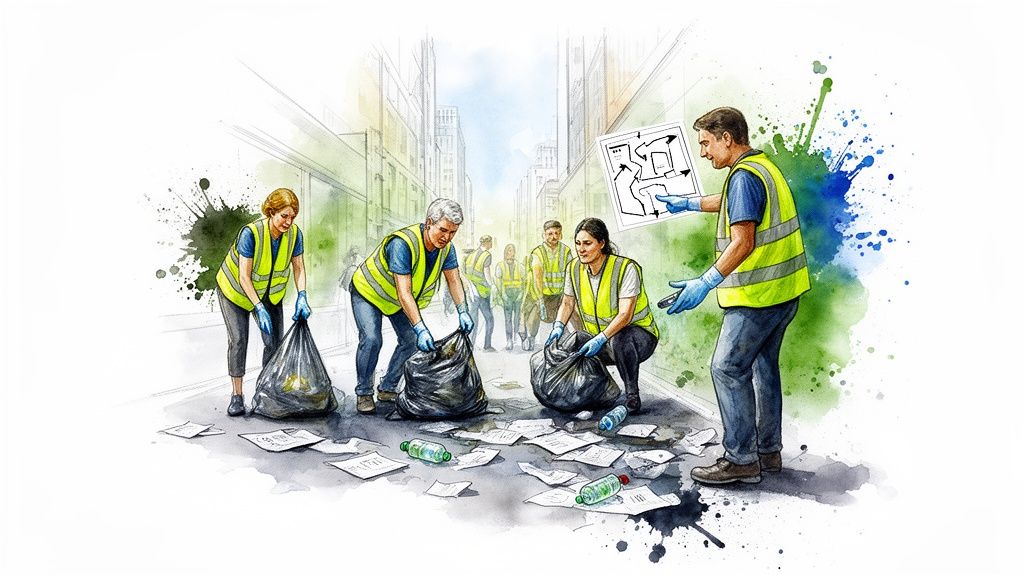
Picking up litter is about so much more than just, well, picking up litter. It’s a way to take back your neighborhood and find a little bit of clarity for yourself. It’s how you turn a trashed-out street corner into something you're proud of, proving that small, steady actions can make a huge, visible difference. I wrote this guide as your playbook for turning that simple idea into a movement.
Find Your Why and a Place to Start
I know the feeling. Life gets messy, and the very idea of cleaning up your own space feels like trying to climb a mountain. I've been there. The dishes are piled high, the laundry basket is a monster, and every single piece of clutter seems attached to some memory or emotion that makes it impossible to touch.
But I stumbled on a secret, a kind of life hack for the soul: cleaning up someone else's mess is a thousand times easier. There’s a strange freedom in it.
From Personal Chaos to Community Action
My whole journey with Litter Caterpillars kicked off when my own life felt like a total train wreck. The mess in my apartment was a perfect reflection of the chaos in my head. A physical manifestation of my internal static. So, instead of trying to tackle my own disaster, I decided to go after the mess in my neighborhood. It just felt more manageable, something with a clear beginning and end.
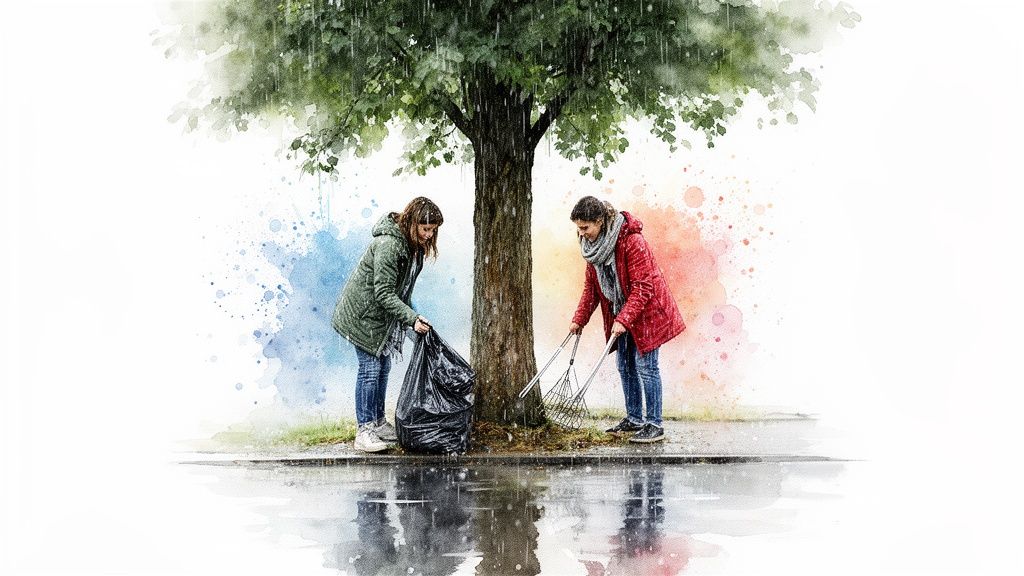
That one decision led me to organize a tiny cleanup with just two friends. Of course, this is Chicago, so a freak hailstorm decided to crash our party. We ended up huddled under a tree, absolutely freezing, watching Ubers cancel on us one by one. And right there, in that moment of shared, ridiculous misery picking up soggy chip bags, we found something real.
We found clarity.
That's the unexpected magic of a litter cleanup. You go out thinking you’re going to fix a little piece of the world, and you end up fixing a little piece of yourself. It cuts through the noise. It gives you a real, tangible win in a world that often feels way too complicated.
You're Not the Only One Who Feels This Way
This urge to do something, to make a real impact, is a global thing. It’s universal. Look at World Cleanup Day—it shattered records by getting 25 million volunteers on the streets worldwide, with the story reaching a staggering 2.4 billion people through media. That’s a massive wave of regular people deciding to roll up their sleeves and create change, block by block.
It's the same fire that gets our group out there every single week, hitting all 50 wards of Chicago, even the spots people tell you to avoid. You can read more about this incredible global effort and see how your own cleanup connects to a much bigger story.
That small act of leaning into a little chaos on a stormy day was the first step in turning my own life around. It taught me that sometimes, the best way to move your own story forward is to step outside of it for a minute and serve something bigger than yourself. A litter cleanup can be that perfect first chapter for you, too.
Assemble Your Crew and Scout a Location
First things first: you can’t do this alone. And honestly, you wouldn't want to. The real magic of a cleanup isn’t just the trash you bag; it’s the stories you swap and the friendships you build doing something that actually matters.
Trying to tackle a big mess by yourself is like trying to move a piano solo. You might budge it an inch, but you'll just end up wiped out and frustrated. Bring a few friends, and suddenly it’s not just doable—it’s an adventure.
Finding Your First Volunteers
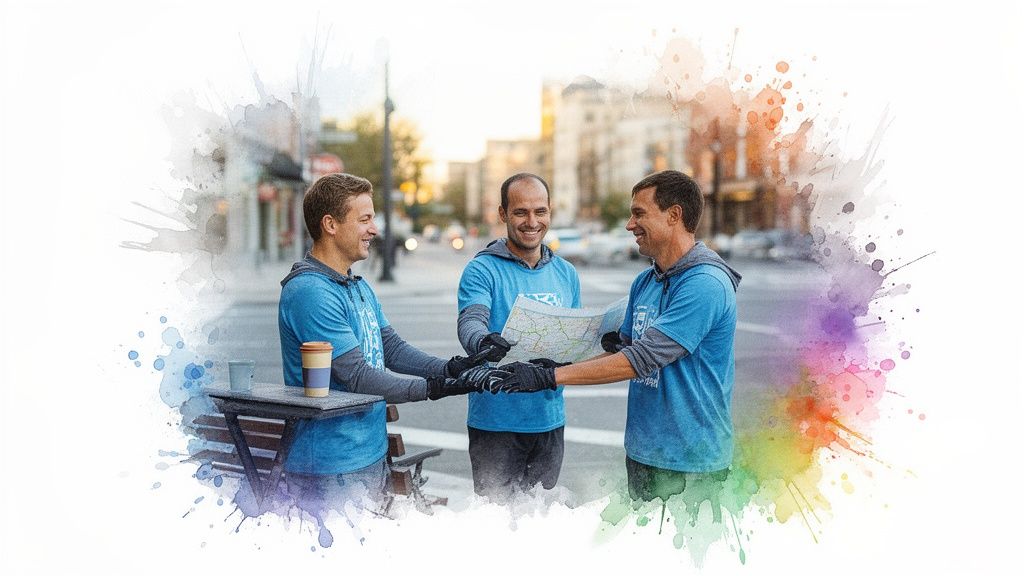
Let's get one thing straight: recruiting doesn't have to be some awkward, salesy pitch. You don’t need to be a charismatic leader or a social media guru. You just have to be real and make the ask simple. Your goal is to find the 'givers'—the kind of people who are just naturally wired to show up.
I’ve found the best filter for finding these people is scheduling cleanups on weekend mornings. It’s a natural barrier. The ones who drag themselves out of bed at 9 AM on a Saturday are the ones you can build a movement with. They're your people.
Here are a few low-pressure ways to get your first crew together:
- The Personal Text: Shoot a message to a couple of friends you know care about the neighborhood. "Hey, I'm doing a quick litter blitz on Saturday morning at [Park Name]. Want to join? No pressure, but it'd be cool to do it together."
- The Social Media Post: Snap a picture of a spot that's been bugging you and throw it on your Instagram story. Keep it simple: "This corner needs some love. I’m going to clean it up this weekend. DM me if you want to help!"
- The Group Chat Invite: Drop a line in a group chat—coworkers, neighbors, whatever. You’ll be surprised who raises their hand when given the chance.
If you want to go deeper on building your team, check out our guide on how to find volunteers who are genuinely committed. It’s full of strategies that have worked for us time and time again.
How to Scout the Perfect Location
Once you have a few people saying "I'm in," it's time to choose your battlefield. This is one of my favorite parts. It’s where you start seeing your city with new eyes—not just looking for dirty streets, but for opportunities to make a huge, visible dent.
A great location is like a good story; it needs a clear beginning, middle, and a satisfying end. I don’t just pick a random block. I look for what I call high-impact zones. These are places that are super visible but constantly ignored. Think about spots like:
- The grassy medians along a busy road.
- The forgotten corners of a neighborhood park.
- The alleys behind local shops.
These spots are perfect because the transformation you create is immediately obvious to hundreds, if not thousands, of people every single day. It sends a powerful message that someone cares.
The best cleanups aren't about covering the most ground. They're about creating the most dramatic "before and after" picture in a place that people see every day. That’s how you inspire others to join in.
When you're out scouting, look for a route that's both safe and satisfying. A good route is usually just a few city blocks long, letting your team focus their energy and see a tangible result in an hour or two. Steer clear of areas with dangerously high-speed traffic or no sidewalk. Your crew's safety is everything.
Remember, up to 40% of roadside litter comes from unsecured loads falling off trucks. This means hitting major roads can deliver that massive visual payoff you're after. Choosing your spot is where your vision starts to take shape. You're not just picking up trash; you're curating an experience that leaves everyone feeling proud and accomplished.
Gather Your Gear for a Safe and Effective Cleanup
Think of it this way: you wouldn't head out for a hike in the woods without water, good shoes, and a map, right? Showing up to a cleanup unprepared is the same deal. It's not just less effective; it can be risky. The energy and enthusiasm of your volunteers is everything, and your number one job is to keep them safe so they can focus on the mission.
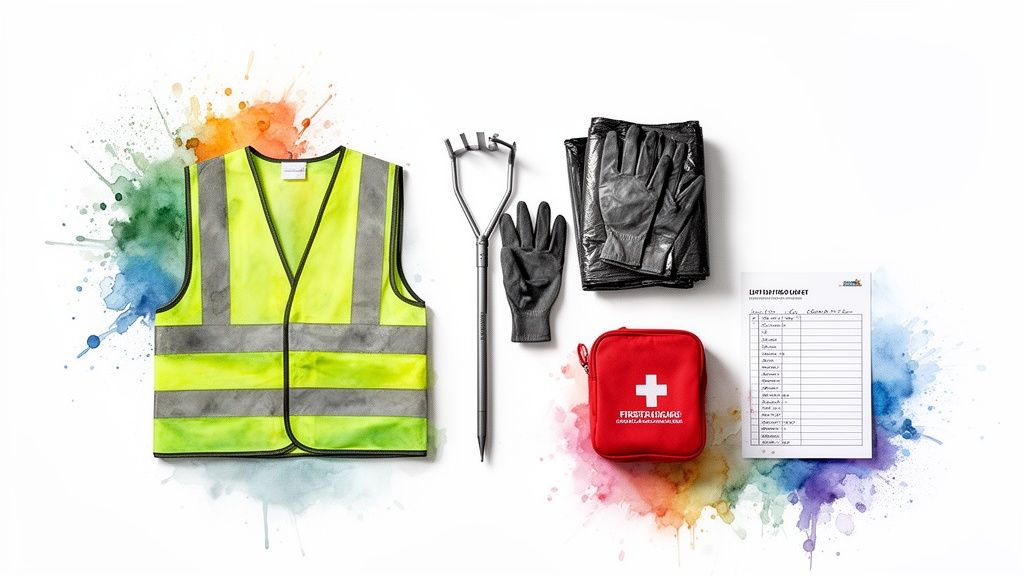
Having the right gear isn't about being fancy—it's about being smart. Good equipment is the armor that protects your crew from the unexpected. It’s the shield.
The Essentials Your Cleanup Crew Needs
After three years of weekly cleanups in every kind of Chicago weather, I've learned what you absolutely can't skip. You don’t need a massive budget, but you can’t skimp on the basics. I keep a simple "go-kit" that's ready for every single event.
Here are the non-negotiables for your kit:
- Heavy-Duty Gloves: Forget those flimsy, disposable things. You need thick, puncture-resistant work gloves for every single person. This is your first line of defense against broken glass and sharp objects.
- Durable Trash Bags: Spring for the contractor-grade bags. Yeah, they cost a bit more, but they won't bust open and spill a morning's hard work all over the sidewalk. Trust me, you don't want to learn that lesson the hard way.
- Litter Grabbers: These are total game-changers. They save your back from bending over a hundred times and create a safe buffer between you and whatever you're picking up.
- High-Visibility Vests: If you're cleaning anywhere near a street, these are a must. They make your team impossible to miss, which is crucial for staying safe around traffic.
A great pro-tip: check with your local government. Many cities have programs to support volunteer groups. Your local sanitation or public works department might hook you up with bags, gloves, and even vests for free. All you have to do is ask!
Your Essential Cleanup Gear Checklist
Here's a quick reference guide to make sure you have all the must-have supplies before you head out.
| Category | Essential Items | Pro Tips |
|---|---|---|
| Personal Safety | Thick work gloves, high-visibility vests, closed-toe shoes | Bring a few extra pairs of gloves. Someone always forgets! |
| Cleanup Tools | Litter grabbers/pickers, heavy-duty trash bags | Bring a few buckets for collecting sharp items like glass or needles separately. |
| Health & Comfort | First-aid kit, hand sanitizer, water bottles, sunscreen | Pack extra water, especially on hot days. Hydration is key. |
| Waste Disposal | Designated bags for recycling vs. trash, sharps container (optional) | Know your local disposal plan in advance. Don't just leave bags by a can. |
Having this stuff ready to go makes everything run smoother and shows your volunteers that you've got their back.
The Safety Briefing That People Actually Hear
Before anyone picks up a single piece of trash, you have to run through the safety rules. I know, it sounds like a boring lecture. But it’s all in how you frame it. Don't just read a list of rules; tell a story and connect with your crew.
I start every event with a quick, five-minute huddle. I make eye contact, keep the energy positive, and focus on the why behind the rules. It's not about being bossy; it's about making sure we can all come back and do this again next week.
A safety briefing isn't a lecture; it's a pact. It's the moment you all agree to look out for each other. You’re building a team, not just handing out assignments.
Here’s what I always cover in my briefing:
- "If You Don't Know, Don't Touch": This is my golden rule. Needles, sketchy-looking chemical containers, or anything that feels off gets left alone. We mark the spot and report it.
- The "Buddy System" on Busy Streets: No one cleans along a busy road by themselves. Period. One person works while a spotter keeps an eye on traffic.
- Hydration and Breaks: I always remind everyone that this isn't a race. Listen to your body, take breaks, and drink water. Burnout is the enemy of any long-term movement.
Dealing with potentially dangerous items is a real part of this work. To get the full rundown, you can learn more about how to handle hazardous waste disposal from our city partners. This knowledge gives your team the confidence to make smart, safe decisions.
Leading the Cleanup and Making It Fun
Alright, the moment is here. Your volunteers are rolling in, the sun is out (or maybe it’s hailing, Chicago-style), and it’s time to kick this thing off. This is where all that prep work pays off and the real fun begins.
You’re not just managing a crew; you’re leading an experience. It’s on you to set the tone from the very first minute. I call this the "Tom Sawyer" principle. Remember how he tricked his friends into believing that painting a fence wasn't a punishment, but a privilege they should pay him for? That's our cleanup. It’s an adventure, not a chore.
Kicking Things Off with Energy
As your first volunteers arrive, greet them with real excitement. A simple "I'm so glad you're here!" makes a huge difference. This isn't some corporate meeting; it's a gathering of people who decided to do something awesome together.
Once everyone’s there, I pull them into a quick huddle. I keep the intro short, hit the safety basics we covered earlier, and then I crank up my portable speaker. A killer playlist is non-negotiable. It instantly changes the vibe from "work" to a block party.
Another thing I always bring is our Litter Caterpillars flag. The second we finish a particularly nasty stretch, we plant it. It might sound goofy, but it's a powerful symbol of victory. It screams, "We were here, and we made this place better." These little rituals build a shared pride that keeps everyone going.
This is more than just picking up litter; it's a collective transformation. You're creating a space where people feel connected, powerful, and proud of what they can do together. Never underestimate the power of that feeling.
The whole point is to create an environment where people feel energized and comfortable enough to connect. You can find more ideas for building this kind of atmosphere in our guide on volunteer team-building activities.
Managing the Trash Haul
As the bags start piling up, you’ve got a new problem to solve: where does it all go? A successful cleanup doesn't end when the last wrapper is bagged. It ends when every single bag is properly disposed of. Dropping the ball here is a rookie mistake that can undo all your hard work.
Here’s my system for handling the haul:
- Consolidate Everything: Don't leave a trail of half-full bags scattered everywhere. Pick a single collection point along your route—a spot that’s easy for a truck to get to but won’t block the sidewalk.
- Stack with a System: I stack the bags neatly, almost like building a monument to our hard work. It makes for an epic "after" photo and keeps the area tidy while you wait for the pickup. It shows you’re organized and respect the space you just cleaned.
- Coordinate the Pickup: This is the most important part. Never assume the city will just find and collect your bags. You need a plan before the event even starts.
Most cities have a specific process for this. For my cleanups, I call Chicago’s 311 service ahead of time and schedule a bulk pickup for our designated spot. I just give them the address and a rough bag count. It’s a simple phone call that makes all the difference.
You absolutely cannot skip this step. The scale of our waste problem is insane; global plastic pollution has already hit 130 million tonnes a year, and that's projected to more than double by 2040. When you organize a proper pickup, you make sure your effort is part of the solution, not just moving the problem a few feet down the street. You can learn more about the state of the ocean plastic crisis from 4ocean.com.
As you finish up, bring everyone together for one last huddle. Thank them genuinely, celebrate the mountain of trash you collected, and, most importantly, snap that final group photo. It’s proof of that moment when a bunch of strangers became a team and left a corner of their city better than they found it.
Telling Your Story to Build a Movement
Think your cleanup is done when you tie off that last trash bag? Not even close. That's just the halfway point.
The real magic happens afterward. The story you tell is the engine that turns one morning of hard work into a movement that actually grows. It’s how you bottle up that amazing energy from the day and share it with everyone else, making them feel what you felt and want to be a part of it.
You did something real. Something tangible. You took a space someone forgot about and you filled it with care. Now, you’ve got to show people that transformation.
Capture the Transformation
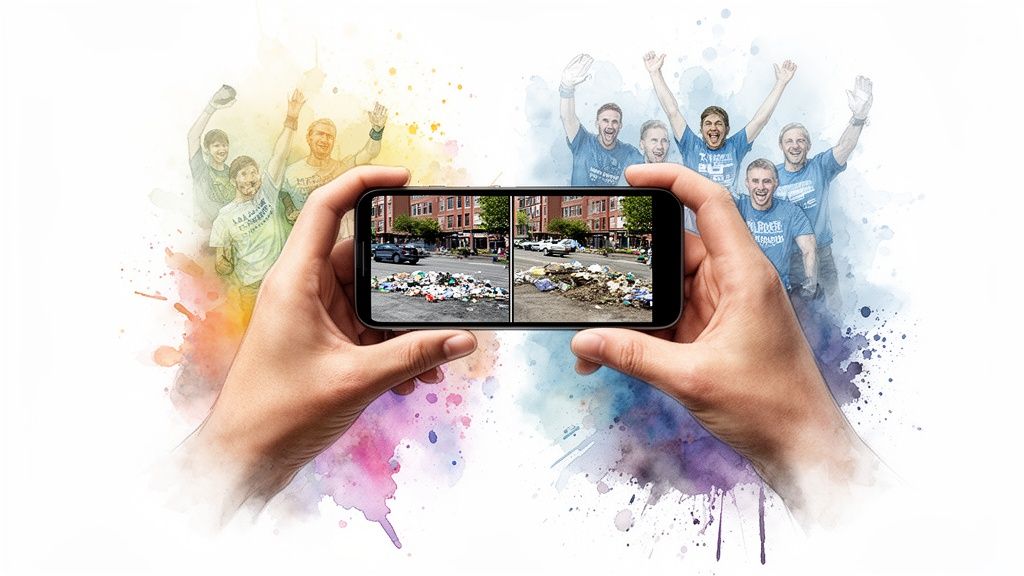
You don't need some fancy camera rig. Your phone is all you need. The trick is to think like you're making a mini-movie—you need a beginning, a middle, and a triumphant finale.
Before anyone even picks up a grabber, get that "before" shot. I mean really get in there. Get low to the ground and capture the mess in all its chaotic glory. This isn't just a photo of trash; it’s the villain of your story.
Then, as your crew gets going, snap photos of them in action. People laughing, working side-by-side, those candid moments of teamwork. These are your heroes.
Finally, the grand finale: the "after" shot. Go back to the exact same spot where you took your "before" photo and frame it the same way. This creates an undeniable, side-by-side visual of the impact you just made. Trust me, it’s the most satisfying photo you’ll ever post online.
Craft an Inspiring Story
When you post on social media, your job isn't to lecture or shame people. It's to celebrate. Every single time. Your story should hit these three points, no exceptions:
- Celebrate the Heroes: This is non-negotiable. Tag your volunteers. Thank them by name. Your post is a tribute to the awesome people who showed up and put in the work.
- Showcase the Impact: Put that "before" shot right next to the "after." Let the pictures do the heavy lifting. Then, throw in a fun, punchy stat like "25 bags of trash GONE in just one hour!"
- Extend the Invitation: End with a warm, no-pressure invitation to the next cleanup. Frame it as what it is: a chance to be part of something positive and make new friends.
This simple formula transforms your social media from a boring report into an ongoing story of a community that cares. It pulls people in.
Your story isn't just about cleaning up litter. It's about what happens when people decide to show up for each other and for their city. That’s a story everyone wants to be a part of.
And this isn't just something we feel in our own neighborhood; it's a global current. Just look at the recent Global Ocean Cleanup initiative. It brought together 54 cleanups across 25 countries, pulling a mind-blowing 47.4 tons of waste out of the ocean.
One person who took part said it was incredible seeing people worldwide give up their weekend just to clean up trash. When you share your story, you’re tapping into that exact same powerful energy. You can learn more about this amazing global effort at Oceanic Society.
By sharing these small victories, week after week, you're building a library of proof that change is possible. Every post is a seed you plant. Over time, those seeds grow into a forest of givers, making sure your impact gets bigger and stronger with every single cleanup.
Common Questions I Get About Organizing a Cleanup
When you start talking about organizing a litter cleanup, the same questions always seem to pop up. After three years of running these events every single week—through Chicago hailstorms, blistering summer heat, and everything in between—I’ve heard them all.
These aren't just hypotheticals; they're the real worries that can stop good people from starting something amazing. So, let's tackle them head-on. This is me sharing what I’ve learned from being out there on the streets, so you can start your own journey with a little more confidence and a lot less guesswork.
What If Only a Few People Show Up?
This is the number one fear I hear. My answer is always the same: that's perfect.
My very first event had only three people, and it remains one of the most powerful and memorable cleanups I've ever done. We got caught in a freak hailstorm, huddled under a tree, and realized we were onto something special. There's a certain magic in a small crew.
Small groups are fast. They’re nimble. And you actually get to know each other. You can make an absolutely massive visual impact on a single city block that will blow your mind. Don't fall into the trap of measuring success by the size of the crowd, especially not at first.
Instead, measure it by the feeling. Did you have a good time? Did you leave a space cleaner than you found it? If the answer is yes, your event was a roaring success. The crowds will come later if you stay consistent and tell your story well.
How Do You Handle People Who Are Negative?
Honestly, this happens way less than you'd think. I’ve found that 99% of the interactions you'll have are incredibly positive. People will honk their horns in support, bring you water, or just shout a "Thank you!" from their window. It's amazing.
But for that rare 1% who might be skeptical or even a little hostile, my strategy is simple: lead with unwavering bravery and kindness. Just smile, keep a friendly posture, and explain what you're doing. "We're just a group of neighbors who love this community and want to help tidy up."
Kindness is your superpower. It disarms suspicion and turns potential conflict into a non-event. Your positive actions will always, always speak louder than any negative comment.
When people see you showing up week after week with a great attitude, their curiosity eventually wins out over their skepticism. I've seen it happen time and time again. Your consistency is the most convincing argument you have.
I'm Worried About the Cost of Supplies
You can absolutely do this on a shoestring budget. Don't let the thought of expensive gear stop you from getting started. Your passion and willingness to show up are the only tools you really need.
For your very first litter cleanup, you can get everything you need for less than the price of a pizza. A box of contractor trash bags and a few pairs of sturdy work gloves from the dollar store are more than enough to make a real difference.
But you might not even have to spend that. Here’s a little secret I've learned:
- Call your city: Many sanitation or public works departments have programs specifically to support volunteer groups. They often provide free bags, gloves, and sometimes even litter grabbers. Just ask!
- Talk to local businesses: Walk into your local hardware store and tell them what you're planning. You’d be surprised how many are willing to donate a box of bags or a few pairs of gloves to a good community cause.
Your most valuable resource isn't money; it's the energy of people who care. Focus on gathering that, and the physical supplies will follow. The goal is just to start.
What Is the Best Way to Keep Volunteers Coming Back?
Making a place clean is great, but making people feel seen and valued is what builds a movement. If you want people to come back, you have to make the experience about more than just trash. It has to be about connection.
This is where you shift from being an organizer to a community builder. I make it a point to learn everyone's name. I introduce people to each other, pointing out shared interests. After the cleanup, we always hang out for a bit—grab coffee, sit in the park we just cleaned, and just talk.
These moments are just as important as the cleanup itself. People don't just come back to pick up litter. They come back for the friendships, for the feeling of being part of a team, for that sense of shared purpose that is so hard to find. You're not just offering a chance to volunteer; you're offering a chance to belong.
At Litter Caterpillars, we've built our entire community around this idea of service, friendship, and personal growth. If you’re in Chicago and ready to see the city, make new friends, and be part of a team that shows up no matter what, we’d love for you to join us.
Find our next event at https://www.littercaterpillars.com.
Leave a Reply