
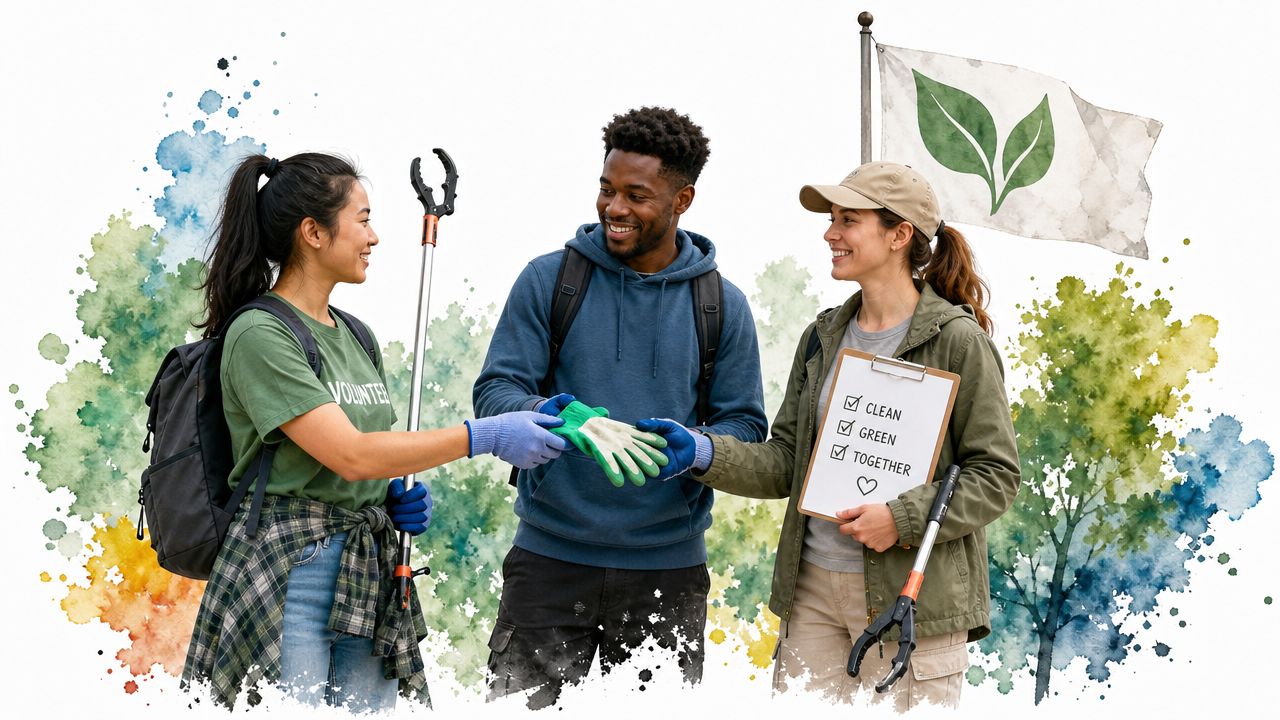
Three of us stood under a tree in a spring hail storm, shaking, waiting for Ubers that kept canceling. We had trash bags in our hands, numb fingers, and one weird thought that changed everything: cleaning other people's messes felt easier than cleaning our own.
The Spark That Starts the Cleanup
I didn't start with a grand plan. I started with a mess.
My apartment was a mess, but that wasn't the hard part. The hard part was that every useless object had a little emotional hook in it. An old jar of blueberry jam from a trip years ago. A stale bag of nuts from one of those short-lived healthy phases. None of it weighed much, but in my head it was all heavy.
Then my life blew up a bit. A chaotic relationship ended. I looked around and realized I didn't trust myself much. I wasn't consistent. I avoided hard things. I let clutter win.
So I tried something sideways. I went outside and picked up litter.

Why other people's messes feel lighter
This is the part most guides miss. Service isn't only about output. It changes you while you do it.
When you clean your own mess, shame gets involved. Memory gets involved. Regret gets involved. When you clean a sidewalk, a vacant lot, or an alley, the task is cleaner in your mind. There's a bottle on the ground. You pick it up. The story ends there.
That simplicity matters.
I learned a strange truth fast: cleaning other people's messes is way easier than cleaning up our own. And because it's easier, you do it. Then you finish. Then you feel useful. Then your brain starts collecting proof that you can show up and make things better.
Cleaning public messes gave me a way to practice self-respect without staring directly at my own failures.
That's a solid starting point for how to start a volunteer group. Your first spark doesn't need to sound noble. It just needs to be honest. Maybe you're lonely. Maybe you're angry at what you keep seeing in your neighborhood. Maybe you need structure. Maybe you need sunlight and better friends.
Any of those reasons can work.
Find the part that hits you in the chest
Your group's early energy comes from one thing: a real motive. People can feel the difference between borrowed language and a lived reason.
Ask yourself:
- What problem makes you stop walking? Trash on your block, seniors who need rides, a park nobody uses because it feels neglected.
- What kind of action gives instant proof? Tangible work helps. You can see a clean street, a painted fence, a stocked pantry.
- What personal wound does this work bypass? Sometimes service opens a back door into healing.
A volunteer group gets stronger when the founder knows why they're doing it. Not the polished answer. The true one.
Mine was simple. I wanted to become cleaner, braver, and more consistent. I wanted to build a social circle around giving instead of taking. Picking up litter gave me a practice field.
And weirdly, the hardship helped. The cold. The rain. The hail. Shared discomfort gave the day flavor. It turned a chore into a story.
That story is often where your group begins.
Find Your Mission Before You Find Your People
A lot of people start backwards. They make an Instagram page, brainstorm names, invite friends, and only then ask what the group is for.
That's how you end up with vague energy and weak turnout.
If you want to learn how to start a volunteer group that lasts, get specific before you recruit. The first real move is a needs assessment. Before you write a mission statement, you must conduct a thorough needs assessment to identify what your community lacks. Given that 6.5% of the global working-age population engages in formal volunteering, your group has to prove why your use of people's time is worth choosing.
Start with the block, not the brand
Don't ask, “What kind of organization should I build?”
Ask, “What is broken near me, and what can I fix with a small crew?”
Walk your area. Take notes. Talk to the people who already live with the problem. If you care about litter, don't just say, “The city is dirty.” That's too broad. Find the repeated pain points.
A simple needs assessment can be ugly and still work:
- Walk three to five target areas and write down what you see.
- Look for repeated patterns like overflowing corners, illegal dumping spots, or neglected park edges.
- Ask locals one direct question. What do you wish somebody would fix around here?
- Check what already exists so you don't duplicate someone else's effort.
- Pick one visible win your group can own.
That's enough to start.
Choose a problem people can feel
Some missions are worthy but fuzzy. Fuzzy missions are harder to recruit for.
Visible problems have an advantage. If a volunteer shows up for two hours and can see the before and after, the work lands deeper. People feel the shift in their body. The street looks different. Their hands did that.
Practical rule: Pick a mission that a stranger can understand in one sentence and spot from across the street.
That's one reason cleanup groups are sticky. The result is concrete. The bag fills up. The lot opens up. The curb stops looking abandoned.
Filter for the right people
Focus is your friend. If you try to attract everyone, you attract almost no one.
Weekend mornings, for example, create a quiet filter. People who show up then usually want to give. They chose service over sleeping in, brunch, or a late night. That doesn't make them better. It just means they fit the culture you're trying to build.
Your mission needs three clean edges:
- The problem you solve
- The kind of person you want beside you
- The kind of energy you won't build around
Write your mission after that.
Keep it plain. “We clean neglected blocks every Saturday morning.” “We visit shut-ins with groceries and conversation.” “We restore neighborhood gardens one bed at a time.” Short beats fancy. Direct beats broad.
People don't join blur. They join clarity.
Build an Identity People Want to Join
Plenty of groups can get a volunteer to show up once. The hard part is getting them to feel like they belong.
Identity does that job better than logistics ever will.
My favorite example is still that first cleanup in the hail storm. Three people. Cold hands. No easy exit. It should have been miserable. Instead, it became funny, memorable, and weirdly bonding. We suffered a little together, and the day stopped being a task. It became an origin story.
A group needs flavor
Most volunteer groups stop at the practical layer. Gloves, sign-up form, safety talk, group photo. Fine. You need those.
But if you stop there, your group feels like an errand.
People stay when the group has flavor. I mean a real shared feel. A logo that means something. A phrase people repeat. A song. A flag. A ritual after the event. Even a running joke. These things sound small until you watch them work.
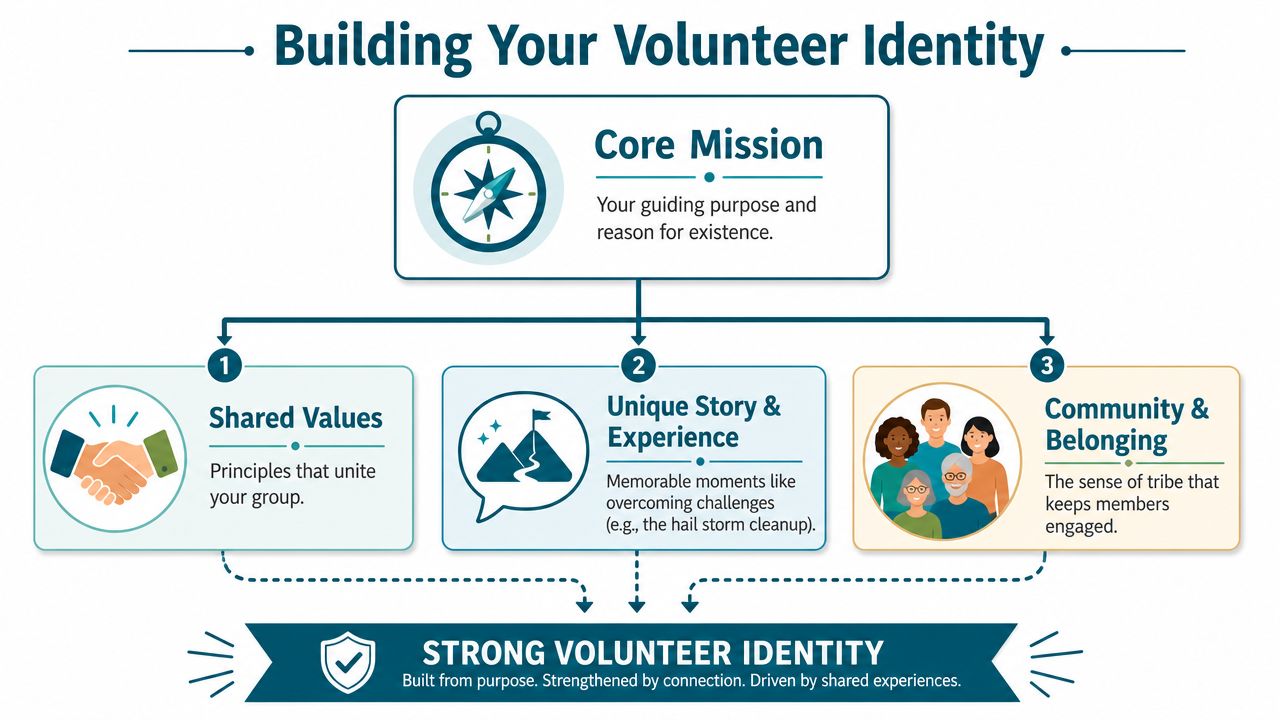
Pride rituals matter because volunteering is not only labor. It is identity. According to Stand Together's volunteering piece, groups that use badges, theme songs, and flags retain 3.4 times more participants and report 68% higher happiness scores. The same source says 79% of volunteers report higher emotional fulfillment when they tackle visible, tangible problems like litter.
That tracks with what I've seen. People don't only want to help. They want to feel part of a story worth repeating.
Borrow from sports, not from office culture
Sports teams understand something volunteer groups often ignore. People love symbols.
A jersey, chant, flag, and mascot can turn strangers into a unit fast. You don't need to become corny, but you do need to give your people something to rally around. Office culture gives people name tags and stale muffins. Teams give people colors and songs.
Use the team model.
Here are a few identity tools that work:
- A repeating symbol: A patch, sticker, button, or badge gives people a visible marker.
- A ritual start: A short huddle, motto, or group photo at the same point each event builds rhythm.
- A hardship story: Your hail storm, flat tire, muddy cleanup, or freezing morning becomes shared folklore.
- A playful language: Little phrases and inside jokes make the group feel lived in.
Pride is not vanity. Pride tells volunteers, “I'm the kind of person who does this.”
Make volunteers the heroes
A bad group identity makes the founder the main character. A good one makes the volunteers feel like they joined a crew with a mission.
That changes how you speak. Don't build your story around your personal sacrifice. Build it around the kind of person your volunteers become when they keep showing up.
You want someone to leave an event thinking:
- I'm braver than I thought.
- I can do hard things with other people.
- This is my kind of crowd.
- I want the next chapter.
That's the deeper answer to how to start a volunteer group people remember. Give the work shape. Give the group a soul. Give the hard days a story people will laugh about later.
Gather Your First Crew and Get to Work
Your first crew doesn't need to be big. Mine wasn't. Three people is enough to start a story.
What matters is that people can say yes fast. If your invite reads like homework, they'll scroll past. If it feels simple, safe, and concrete, you've got a shot.
Start with direct invitations
Don't hide behind branding. Text people.
A first invite should answer five things in plain English: what, where, when, why, and what to bring. Meetup, Instagram, and group chats are enough at the start. You don't need a polished funnel. You need clear words and a real event.
Here's the shape I like:
- What we're doing: “Neighborhood trash pickup”
- Where we're meeting: “Corner of X and Y”
- When: “Saturday at 9 a.m.”
- Why it matters: “This block keeps getting ignored”
- What to bring: “Closed-toe shoes, water, clothes you don't mind getting dirty”
That's it.
If you want more ideas on messaging and channels, this guide on volunteer recruitment strategies is a useful place to compare outreach approaches.
Recruit by role, not by vague enthusiasm
People respond better when they know the lane they're stepping into.
That's especially true across age groups. When recruiting, know your audience. 27.2% of Gen X leads in formal volunteering, which makes them a strong fit for structured roles, while 58.7% of Baby Boomers lead in informal helping, which makes them a strong fit for flexible, ad-hoc actions.
So don't post one mushy invitation and hope for the best. Match the ask to the person.
A practical split looks like this:
| Group | Better ask | Example |
|---|---|---|
| Gen X | Structured roles | Weekly route lead, supply organizer, check-in helper |
| Baby Boomers | Flexible actions | Drop-in cleanup, snack support, one-off neighborhood push |
| Students and young professionals | Social plus visible work | Morning cleanup followed by coffee |
| Existing friends | Starter roles with low friction | Bring gloves, invite one person, help collect bags |
Plan day one like a small field operation
The first event should feel easy to enter. I like a short script.
- Meet at a location people can find without confusion.
- Greet everyone by name.
- Hand out supplies fast.
- Give a short safety talk.
- Split into pairs or small teams.
- Set a clear end time.
- Take one group photo.
- End with a quick recap and casual hangout if people want it.
You don't need to impress people. You need to remove uncertainty.
If volunteers spend the first twenty minutes wondering what's happening, you've already lost energy you may not get back.
A good first event also has a visible finish line. Don't try to clean an entire neighborhood on day one. Pick one stretch, one lot, one alley, one park edge. Let people experience completion.
Here's a look at the kind of field energy that gets people moving:
Keep the ask honest
I've learned to avoid overpromising. Don't tell people they're joining a movement if you've never run a cleanup before. Tell them the truth.
“We're starting small.”
“We're trying this consistently.”
“We're building a good crew.”
“We want this to be useful and fun.”
That honesty helps the right people trust you.
And one more thing. End on time.
A volunteer who gives you two clean hours and leaves smiling is more likely to come back than a volunteer trapped in a sloppy four-hour marathon. Respect the edge of people's energy. That's one of the oldest rules in the game.
Create a Safe and Simple Structure
A volunteer group falls apart in boring ways. Confusing sign-ups. Missing waivers. No safety rules. No one knows who is in charge. A new person arrives and just sort of stands there.
That's avoidable.
The structure you build is not bureaucracy. It is care. It tells people, “Your time matters. Your body matters. We thought about your first day before you got here.”
Make joining easy
The front door matters more than people think. A registration process that takes more than 3 minutes increases volunteer dropout by 45%, and 32% of early volunteer burnout comes from people feeling their role is meaningless according to CivicPlus on creating an effective volunteer program.
That means your sign-up should feel almost frictionless.
Use a simple mobile-friendly form. Ask only what you need. Name, contact info, emergency contact if relevant, and anything tied to safety. Don't bury people in fields and legal language before they've even met you.
Then follow fast with a clear message:
where to go, what to wear, what to expect, who to contact if they're lost.
Give every person a role with edges
A volunteer burns out faster when the role feels foggy. “Come help however” sounds relaxed, but it often creates confusion.
People feel better when they know where they fit. Keep roles simple:
- Greeter: Welcomes people and checks names
- Safety lead: Reviews hazards and watches pace
- Supply runner: Manages gloves, bags, grabbers, water
- Route lead: Knows the area and keeps the team together
That doesn't mean you need a huge hierarchy. It means each person can answer one question: what am I doing today?
If your work carries physical risk, get smart about it. Review your legal setup, waivers, and coverage early. This overview of volunteer liability insurance is a practical starting point for thinking through protection.
Your First Cleanup Event Checklist
| Category | Item | Notes |
|---|---|---|
| Planning | Meeting point | Pick a place that is easy to find and easy to leave from |
| Planning | End time | Tell people when the event ends before work starts |
| Safety | Gloves | Bring extras in multiple sizes |
| Safety | Closed-toe shoe reminder | Send this before the event, not at the event |
| Safety | Hazard policy | Tell volunteers what they should never pick up |
| Supplies | Trash bags | Bring more than you think you need |
| Supplies | Grabbers or pickers | Helpful, but not required for a first event |
| Supplies | Water | Keep extra on hand |
| Communication | Group chat or text thread | Use one channel so updates don't scatter |
| Onboarding | Quick briefing | Explain the route, the goal, and who to ask for help |
| Onboarding | New volunteer buddy | Pair first-timers with someone calm and friendly |
| Wrap-up | Disposal plan | Know where the collected trash goes before you start |
Field rule: If a first-timer doesn't know where to stand, what to do, or what matters, your system is too loose.
Written policies calm people down
Written policies sound formal, but they remove tension. Put basic rules in one place. Weather policy. Safety boundaries. Photo consent. Conduct expectations. What happens if someone finds a needle or other dangerous item. What to do if a volunteer feels sick or unsafe.
Keep the tone human. Short sentences. Real examples.
A simple structure lowers anxiety. And lower anxiety gives you more energy for the work itself.
Keep the Fire Burning with Friendship and Purpose
Starting is exciting. Staying steady is harder.
A group lasts because people build habits and relationships around the mission. If your volunteers only feel useful, they may drift away. If they feel useful and connected, they start protecting the group with their own effort.
Consistency beats intensity
I like weekly rhythms. Same morning. Same general pattern. People begin to build their life around it.
That consistency creates trust. It also lowers the mental cost of showing up. Nobody has to wonder when the next chance is. They already know.
To keep that rhythm healthy, you must develop written policies for safety and consistency, and prepare training that gives volunteers space to ask questions and hear the rules clearly, as explained by VolunteerMatters on starting a volunteer program.
That kind of structure doesn't make a group stiff. It makes the group dependable.
Friendship is retention in human form
I don't think money is the main fuel in volunteer work. Energy is. Attention is. Trust is. Friendship is.
People come back when they know somebody will smile when they arrive. They come back when there's a shared joke, a post-cleanup coffee, a familiar walking partner, a sense that they'd be missed.
If you want practical ways to keep people engaged over time, these volunteer retention strategies are worth reading alongside your own observations.
Try a few simple habits:
- Celebrate small wins: Name the block you finished, the lot you cleared, or the story from the day.
- Protect volunteer energy: Don't guilt people. Don't pressure them for money. Don't treat goodwill like an unlimited resource.
- Leave room for conversation: A few unhurried minutes before or after the event often matters more than one more bag of trash.
A volunteer group becomes durable when people join for the mission and stay for the friendships.
Keep reminding people who they are becoming
The work changes people slowly. That's one of my favorite parts.
Someone who felt shy starts greeting new volunteers. Someone who never woke up early starts protecting Saturday morning. Someone who felt stuck starts trusting themselves because they kept one promise over and over.
That's the deeper reward. You clean a street, sure. But you also practice courage, consistency, and care in public with other people. Done long enough, that starts to spill into the rest of life.
If you're thinking about how to start a volunteer group, start smaller than your ego wants and with more heart than your spreadsheet wants. Then keep showing up. The group will teach you what it needs next.
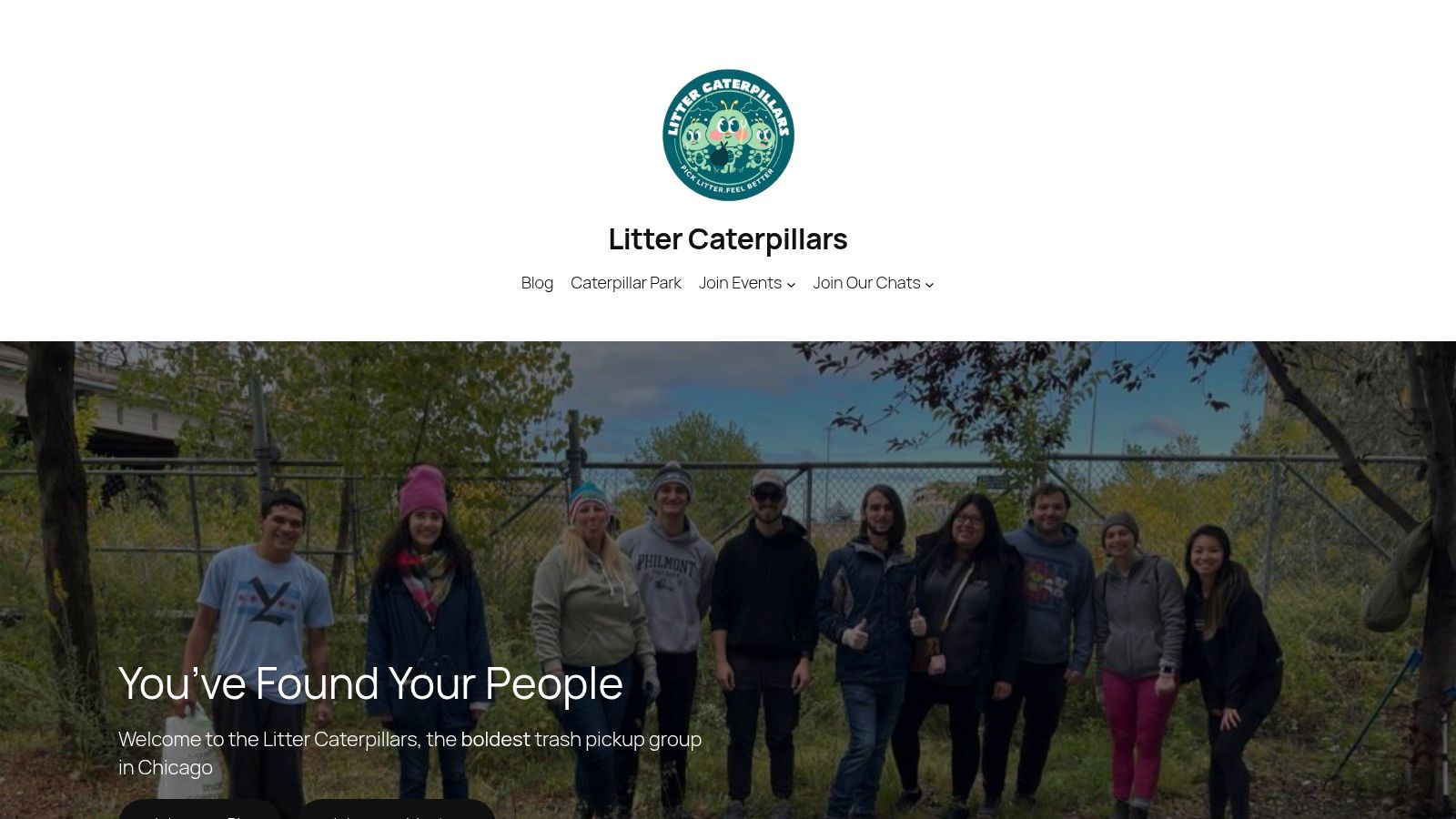
If you want a real-world example of this kind of work in motion, visit Litter Caterpillars. You'll find a volunteer-driven cleanup group built on bravery, kindness, friendship, and the belief that service can change a block and the person holding the trash bag.
Leave a Reply