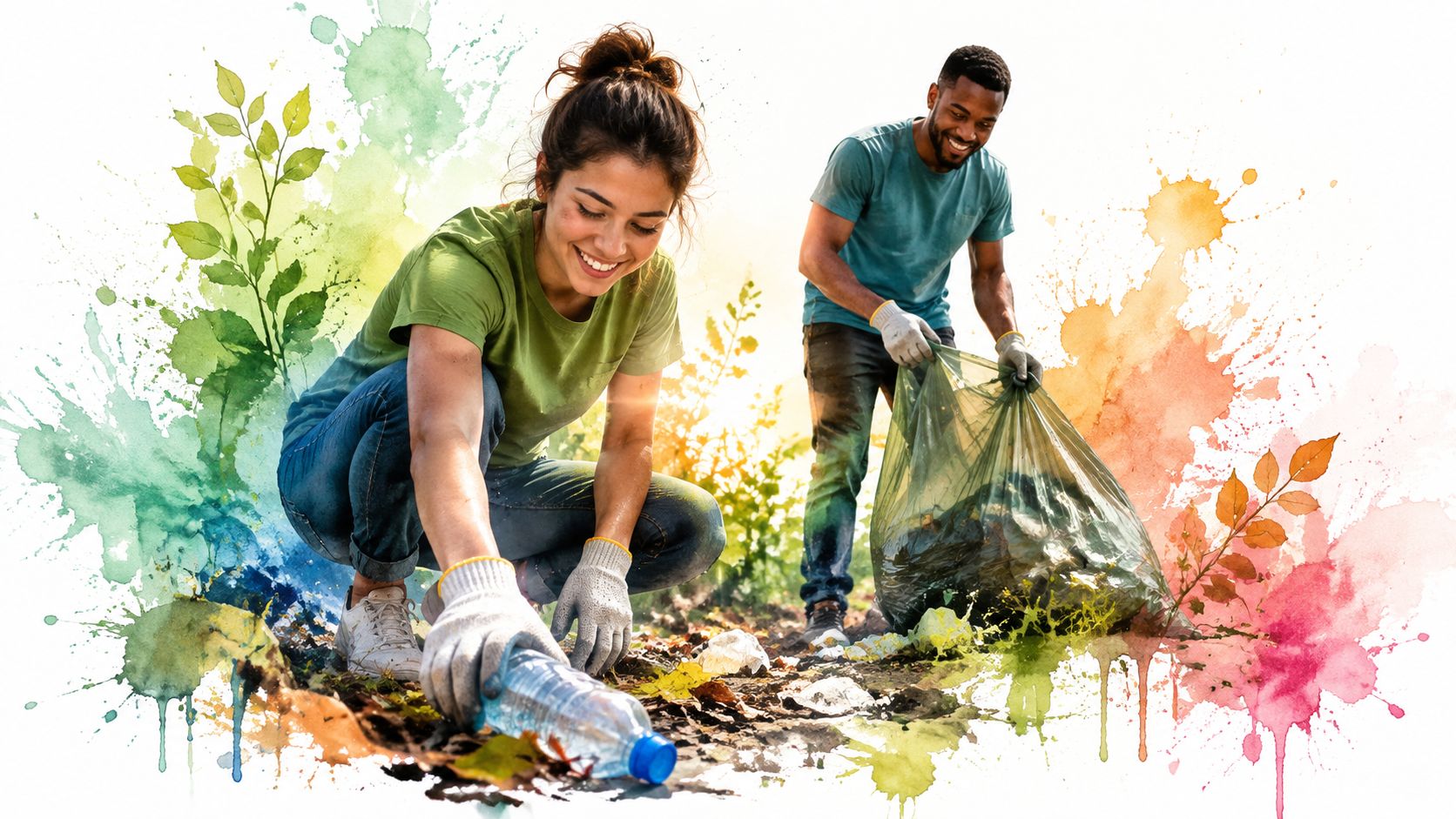
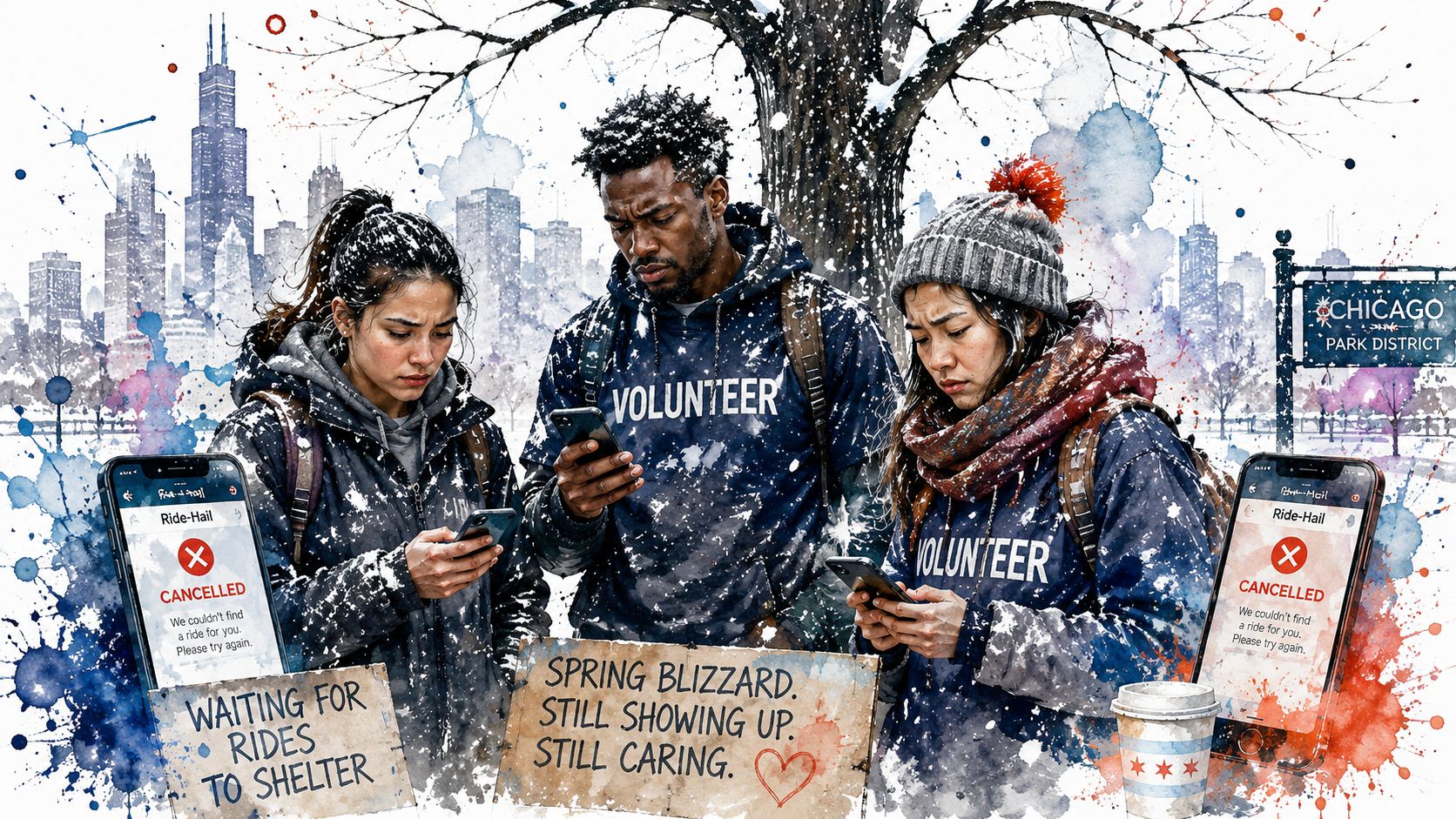
On a cold Chicago morning, I stood with three volunteers under a tree while hail slapped the sidewalk and every ride share canceled one after another. We laughed anyway, grabbed the last bag of trash, and kept going, because the mess on the block felt easier to carry than the mess some of us had been carrying inside.
The Day Everything Changed in a Hail Storm
I still remember that first cleanup like it had weather stuck to it. The sky turned mean, the wind cut through our gloves, and we huddled under a bare tree while our phones lit up with more canceled rides. Nobody called it heroic. We were just cold, muddy, and stubborn.
What surprised me wasn't the trash. It was how fast the cleanup turned into something we wanted to keep doing. The founder of Litter Caterpillars talks about that same moment as the first time he felt cleaning other people's messes could feel easier than cleaning his own. I understand that now. When your hands are busy, the same painful thoughts lose some of their grip for a while.
Movement makes the day feel different
Outdoor service changes the texture of a day. You bend, lift, walk, look up, and scan the curb, and all that motion gives your mind somewhere to go. That is part of why volunteers keep showing up even when the weather gets ugly, because the work has a pulse to it.
I have watched people arrive tense and leave lighter, not because the block got perfect, but because they made something cleaner with their own hands. That visible change matters. You can point to the bag, the sidewalk, the cleared patch of grass, and say, “I helped that happen.”
Practical rule: If the work leaves you smiling while your hands are dirty and your legs are tired, you are probably feeling the kind of strain that can still be good for you.
The health piece does not live only in feelings. A major 2020 study of U.S. adults age 50+ found that people who volunteered at least 100 hours per year, about 2 hours per week, had a 44% lower risk of mortality and a 17% lower risk of physical functioning limitations over 4 years compared with people who volunteered 0 hours per year. That is not a vague mood boost. That is a real, concrete dose tied to health outcomes in a longitudinal study of older adults.
The same kind of steady service is part of what people look for in service learning benefits, because the work reaches beyond the curb and into how people carry themselves afterward.
What the Research Shows About Volunteer Longevity
I think about the men I've seen show up for cleanup after a long week on the South Side, gloves on, coffee in hand, quiet at first. By the time the bags start filling and the block looks different under their feet, they are standing a little taller. That kind of change is hard to fake, and the research points in the same direction, steady service seems to matter more than a single burst of effort.
The health effect is not built around one heroic day. It comes from showing up often enough that volunteering starts to feel like part of ordinary life, the way walking to the train or making dinner does.
The minimum dose looks smaller than people expect
A source cited by the American Heart Association says about 2 hours a week may be the point where health benefits start to appear, and Carnegie Mellon research in that same report found that older adults who volunteered at least 200 hours per year cut their risk of high blood pressure by 40% AHA-cited report. That gives people something practical to work with. You do not need a perfect schedule. You need a repeatable one.
Other reviews point in the same direction. A systematic review and meta-analysis of volunteering outcomes found that volunteers had a 22% lower mortality risk than non-volunteers after adjustment, with a risk ratio of 0.78 and 95% CI 0.66-0.90. Another review of older-adult volunteering found a 24% adjusted mortality reduction and a 47% reduction in unadjusted analyses meta-analysis. The pattern is clearer than any single number. Service seems to help most when it becomes part of the week, not a rare event.
A practical way to see it is through routine. If volunteering fits beside walking, cooking, or church, the body appears to notice. If you want a place to build that habit around cleanup work, the routines described in service-learning benefits from group volunteer work offer a useful starting point.
Why Cleaning Other People's Messes Heals Your Own
I've watched people show up to a cleanup carrying more than gloves and grabbers. A man in Pilsen once worked a whole stretch of sidewalk after losing a job, saying almost nothing until the bag at his feet started filling up. A mother from the South Side told me she came for the litter pickup after a rough week at home, then admitted the first hour of picking up bottles gave her enough distance to breathe again. The trash did not erase what they were carrying, but the work gave their minds a smaller, concrete problem to hold.
Emotional weight feels lighter when your hands move
That is the part people miss. A candy wrapper on the curb is simple to grab, even when the rest of life feels stuck in place. You bend, reach, bag, and keep moving. That sequence gives your brain proof that at least one thing can change right now.
Research supports that feeling without flattening it into a slogan. The major 2020 study reported better self-rated health and higher physical activity among volunteers. A systematic review of volunteering and mental health also found favorable effects on depression, life satisfaction, and wellbeing.
Clean a block for an hour, and your mind gets a moving target instead of a closed loop.
Sunlight matters when you are outside instead of stuck in a room with your own thoughts. Movement matters because your body has something to do besides sit in worry. Visible progress matters because you can watch a curb shift from ugly to usable right in front of you.
Purpose grows from visible repair
Outdoor cleanup feels different from a lot of other good deeds because the change is right there in your hands. The bag gets heavier, the sidewalk gets clearer, and the work leaves a mark you can point to before you go home.
That visible repair changes the inner rhythm too. When you spend an hour sorting through bottles, wrappers, and fast-food boxes, your attention has to stay with the next grab, the next step, the next bag tie. A review on volunteering and physical health outcomes says the strongest gains show up when service increases physical activity, functioning, and social support. That matches what I have seen on Chicago streets, where the body stays busy, the group keeps pace together, and the mind gets a break from its usual replay mode.
Physical Demands Versus Physical Benefits
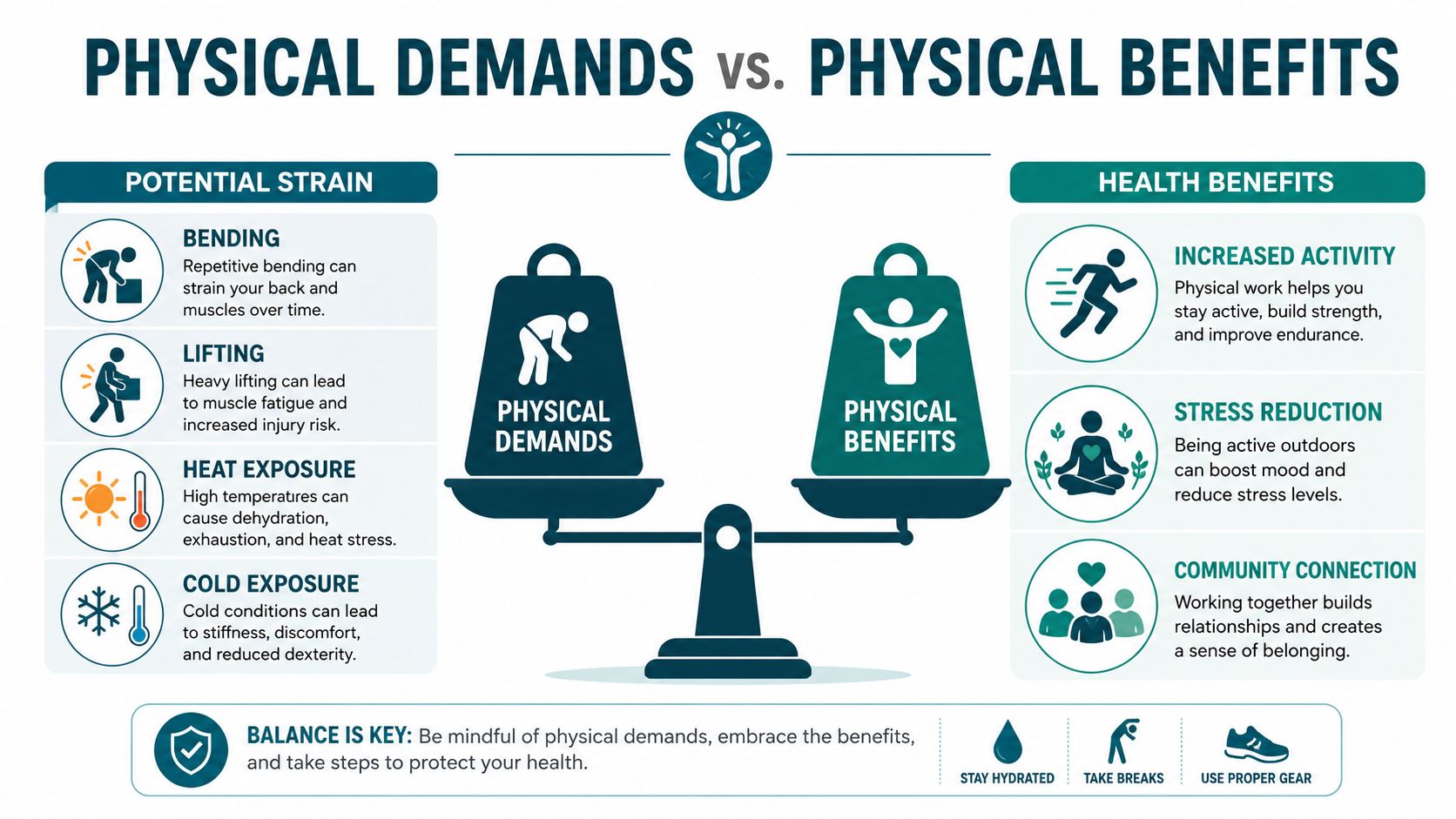
I still remember a cleanup crew on a windy Chicago morning, each person working a little differently because each body brought something different to the block. One volunteer bent to grab cans from the curb, another filled bags and tied them off, and a third took the slower path along the alley because a sore knee made fast steps a bad idea. Outdoor cleanup can be rough on the body, and I do not want to gloss over that part.
The benefit grows when the task fits the body
A volunteer shift pays off most when the work matches what people can safely do that day. Lifting bags, gripping grabbers, walking blocks, and standing in the sun all ask something real of the body, so the gain comes from good task design, not from pushing everyone through the same pace. A review on volunteering and multidimensional health outcomes found benefits across mental, physical, and social health, which fits the fact that outdoor service works best when the movement, the role, and the group rhythm all line up.
I have seen crews get that right on the street. One person handled the heavier bags, one stayed on a shorter route, and another rotated in after a rest break so nobody had to fight through pain just to stay useful. That kind of setup keeps the work moving without asking a volunteer with joint pain, high blood pressure, or mobility limits to carry a load that does not belong to them.
A cleanup can also help the body in a quieter way. It gets people bending, walking, reaching, and carrying, but it should never turn into a strain contest. When the route is too long, the bags are too heavy, or the heat and cold are ignored, the body stops getting the upside and starts paying the cost.
Good service design keeps the work humane
The body notices details that a flyer never mentions. Uneven sidewalks, wet grass, broken glass, icy curbs, and long stretches without a break all change what a volunteer can do safely, so the event plan should account for those conditions before anyone starts. Park restoration, street cleanup, and alley pickups each ask for different kinds of effort, and role rotation helps crews keep going without wearing one person down.
I've watched a small crew split a litter pickup into pieces that made sense. One volunteer packed bags, one used tongs near traffic, and one handled the slow lane for anyone who needed less bending or less walking. That is the sort of planning that lets service stay active without turning into punishment.
The volunteer event planning guide is useful here because it keeps the focus on roles, pacing, and the kind of setup that lets people contribute without overreaching. When the task matches the body, the work feels steady instead of punishing, and people leave with enough strength to come back again.
Staying Safe While Showing Up Rain or Shine
Chicago weather doesn't care about your good intentions. Hot pavement will drain you, cold wind will cut through a wet hoodie, and a long cleanup can go bad if nobody pays attention to simple signals. I treat safety like part of the volunteer kit, right next to the grabber and gloves.
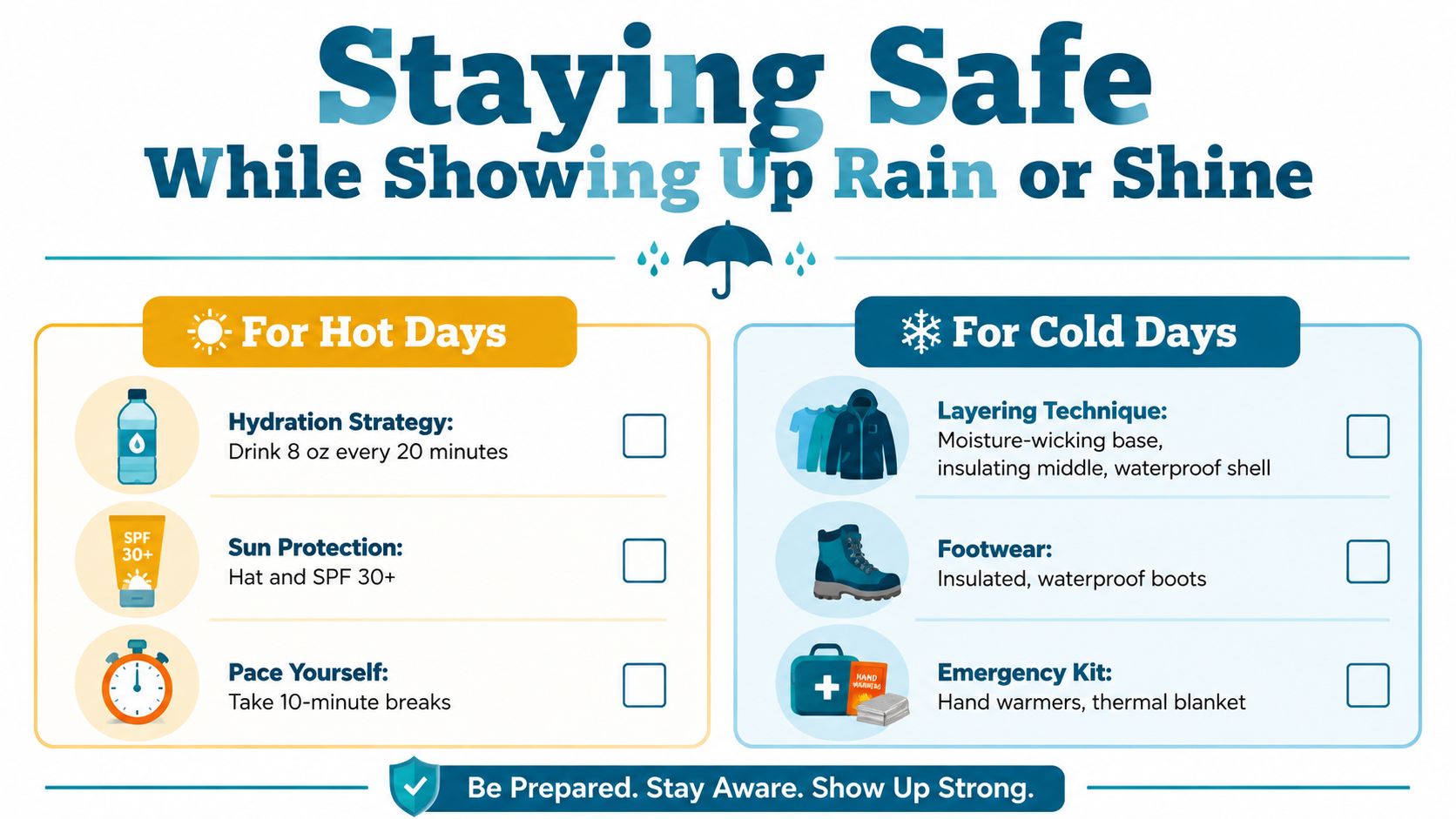
Hot days need pacing, water, and shade
Drink before you feel thirsty, and keep water close enough that you use it. On scorching days, I want volunteers to slow down early, not after they've already gotten shaky. If someone looks confused, stops sweating, or gets a pounding headache, I stop the work and move them to shade.
- Hydration strategy: Carry water and sip regularly.
- Sun protection: Wear a hat and SPF 30+.
- Pace yourself: Take short breaks before you feel wiped out.
Cold days need layers and a backup plan
Cold cleanup can feel fine for ten minutes and then turn sharp fast. I tell people to dress in layers that pull moisture away from the skin, then trap warmth, then block wind and rain. Insulated, waterproof boots matter more than style, and hand warmers or a thermal blanket belong in the car or event bag.
If you want help planning an event that doesn't push people past their limits, the volunteer planning guide at Litter Caterpillars' event planning page is a practical place to start. The point is simple. You can still show up in rough weather, just don't pretend rough weather is free.
Building Friendships That Keep You Coming Back
The best cleanup crews feel less like errands and more like a team you want to see again. I've watched people arrive alone, take a flag, learn a theme song, earn a badge, and leave with a group chat full of new names. That social glue matters because people don't keep doing hard things just for abstract goodwill. They return for the people.
Belonging turns service into habit
Litter Caterpillars leans into that on purpose. The group schedules events on weekend mornings, which helps attract people who want to give their time with a clear head and a steady rhythm. It also filters out the kind of chaos that can turn a volunteer event into a drain.
That idea lines up with what we already know from the health data. Volunteers show better mental and physical health, lower depression and anxiety, and lower mortality in older adults even after researchers control for age, gender, and physical health Mayo Clinic Health System summary. Social connection is part of why that happens. When you keep seeing the same faces, you build trust before the work even starts.
Small rituals make people stay
Flags, songs, and badges may sound playful, but they do serious work. They give people a shared identity, and that identity helps them show up again when the weather is bad or the street looks worse than expected. I've seen the same thing in sports and neighborhood groups. People want to feel like they belong to something that knows their name.
Open group chats and consistent meetups help too. They make it easy to say yes on a random Thursday and still feel like part of the circle on Saturday morning. That's how friendship grows in real life, through repeated contact, shared strain, and a little bit of joy after the trash bags are tied off.
If you want the health benefits to stick, keep the people close, keep the schedule predictable, and keep the work human.
That's the part I trust most. Not the hype. Not the speeches. Just the simple truth that when people clean a block together, they often leave with stronger legs, clearer minds, and friends they didn't have before.
If you want a volunteer crew that treats safety, friendship, and visible neighborhood change as part of the same job, join Litter Caterpillars. You'll find Chicago cleanup events that make it easy to show up, move your body, and build a habit that feels good on the street and in your own head.
Leave a Reply