
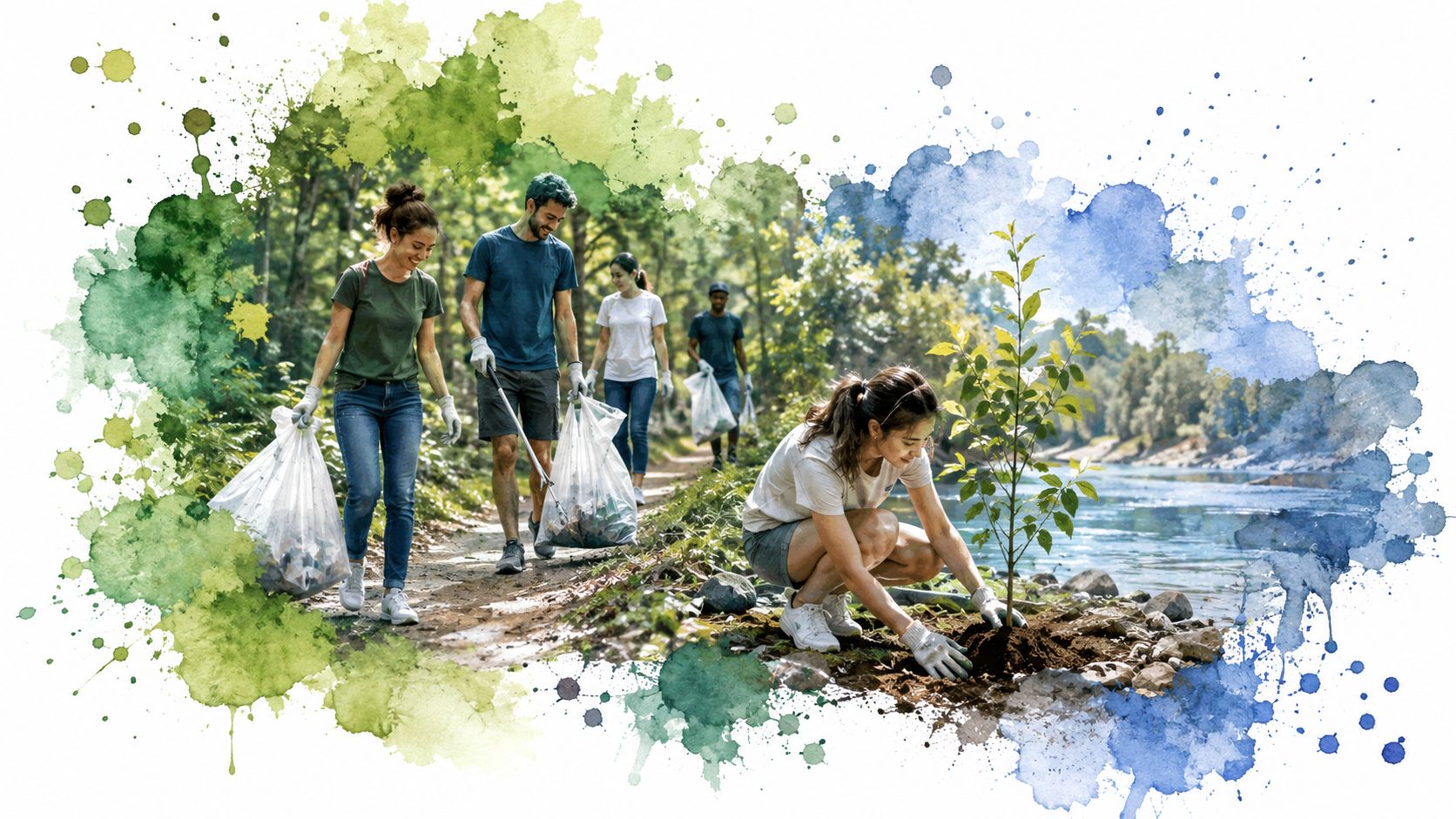
Old jam in the fridge, a dead houseplant on the windowsill, a pile of unopened mail. I know what it feels like when your own space starts looking like a warning label. Then I found out that hauling trash out of a park, a riverbank, or a vacant lot can feel easier than fixing your own mess, and sometimes that's exactly the first honest step.
The best outdoor volunteer opportunities don't ask you to become a saint. They ask you to show up, wear gloves, and keep moving. You sweep leaves off a path, pull weeds from a garden bed, or drag bags of litter to a truck, and somewhere in that simple work you start rebuilding your nerve. You meet people who also chose to leave the couch, the spiral, and the excuses behind.
A lot of people think volunteering outdoors means one thing. It doesn't. You can spend an hour on a neighborhood cleanup, spend a season restoring prairie, or spend a Saturday morning helping a park group that knows every cracked sidewalk in the area. The point isn't to perform goodness. The point is to get outside, do useful work, and come home a little harder to shake.
1. Find Your Crew on VolunteerMatch and Meetup
The easiest first move is often the one people skip. Open a platform, search your area, and stop waiting for a perfect invitation that may never come. If you want a weekend beach cleanup, a garden workday, or a trail crew that meets before brunch, you can usually find it by searching the word you already care about and then reading the event details like you mean it.
That matters because the fit matters. The National Environmental Education Foundation says volunteers should identify their skills, decide how often they can give time, and get the details before they commit, because outdoor work ranges from light cleanup to harder land work NEEF guidance on finding outdoor volunteer opportunities. If you want a low-risk, low-pressure start, look for a short cleanup in a city park or a community garden shift.
I'd start with a narrow search and then get picky about the vibe. A group that sounds casual on paper can still be organized, friendly, and serious about showing up. If you want one concrete place to start looking for volunteer work, this guide can help you sort the options fast, how to find volunteer work.
Practical rule: send the organizer a short message before you go. Ask what to wear, how long the work lasts, and whether the group welcomes first-timers.
- Search by task, not just location: Try “cleanup,” “trail,” “garden,” or “park” in your area.
- Check the commitment level: One-time events work well if you're nervous. Recurring groups work better if you want routine.
- Read the description for tone: You can tell a lot from how a group talks about safety, tools, and new volunteers.
2. Join a Hyper-Local Group Like Litter Caterpillars
I learned fast that one block can change you. You carry one bag of trash, you meet the same people again and again, and the street starts to feel like yours in a way it never did before. Hyper-local groups do that. They turn a random Saturday into a place where you can prove something to yourself.
I started Litter Caterpillars because my own life felt scattered, and I wanted a place to practice consistency, cleanliness, and bravery without pretending I already had them. We show up every week, rain or shine, and that repeat rhythm matters. Cold wind, wet snow, summer heat, all of it becomes part of the deal. After a while, you stop using discomfort as an excuse.
That's the point. You are not just picking up what other people left behind. You are building the habit of staying present when the work is dull, muddy, or embarrassing. A local cleanup group can do that faster than a polished volunteer program because the feedback is immediate. You can see the curb, the lot, or the sidewalk change right in front of you.
One of the strongest parts of a hyper-local crew is the pride it creates. In Chicago, volunteers have cleaned a highway during a bike-event shutdown, and Litter Caterpillars won an empty lot at auction to build Caterpillar Park in Englewood. Those moves did not start with a huge plan. They started with people who looked at one neglected place and decided it deserved care.
Suffering together in the hail makes for a great story, and a better crew.
- Look for weekend-morning events: They are easier to keep showing up for when you want a steady habit.
- Start small if needed: Grab a bag, text a friend, and go once.
- Stay with one group long enough to matter: Familiar people make hard work feel less awkward and more human.
3. American Rivers
A river cleanup changes the way you read a city. I've watched people arrive thinking they're signing up for a simple trash pickup, then notice how bottles, wrappers, and broken plastic travel with current, rain, and runoff. After that, the river stops feeling like scenery. It feels like a system, and your own habits start to look different too.
American Rivers runs cleanup work along waterways, and the job is clear the moment you arrive. You pick up debris, sort what can be handled safely, and pay attention to where litter collects after storms and high water. For a local example of that kind of work, this page gives a direct entry point, cleaning up a river.
What I'd bring to a river day
- Waterproof boots: Mud and wet ground show up fast.
- Extra gloves: Wet gloves turn a good shift into a miserable one.
- A strong trash bag mindset: You'll see a lot of odd junk, and you need to keep moving.
Chicago-area volunteers have removed debris from the Chicago River and its tributaries, and spring restoration season can bring multi-day events. I like river work because it teaches patience without asking for perfect strength. You learn to step carefully, work steadily, and trust your hands.
4. The Trust for Public Land
A vacant lot can feel like a sentence. Then a crew arrives, clears the weeds, lays out beds, and turns the place into something kids want to cross on the way home. I like that kind of work because it makes change visible before lunch.
The Trust for Public Land builds parks in neighborhoods that need them, and volunteers help make that happen by clearing land, planting, and shaping spaces people can use. You might spend one weekend hauling brush, then return later to help set raised beds or prep a community garden opening. If you want a model of that kind of park work, start here, clean up a park.
The work feels physical because it is physical. You drag, lift, sort, and plant. Then you step back and see the space breathe again. That moment can hit hard if you've spent a long time feeling stuck in your own life.
Simple test: if you want a project that shows results in the same season, choose one site and keep going back.
Chicago-area lot cleanups that became community gardens show how much a piece of land can change when neighbors keep returning. That repeat presence matters. You don't just help build a park. You become one of the people who knows how it got there.
5. Illinois Department of Natural Resources Volunteer Programs
State land work feels different from a one-off cleanup. You're not just collecting trash. You're walking into forests, prairies, wetlands, and other places that need hands, eyes, and patience. If you live in the city, that can feel like stepping into another state without leaving Illinois.
The Illinois Department of Natural Resources connects volunteers to that work across the state. One day you might help with prairie restoration at Midewin National Tallgrass Prairie. Another day you might tackle trail building, trail maintenance, or invasive garlic mustard removal in spring. Over time, you start to understand why one patch of ground looks healthy and another doesn't.
The best part is that newcomers can learn alongside people who already know the land. You don't need to walk in pretending to be a naturalist. You need layers, sturdy shoes, and enough humility to ask what the tool is called before you use it.
A few ways to make your first field day easier
- Wear layers: Field temperatures swing more than city sidewalks.
- Ask about tools first: Every site has its own gear and habits.
- Bring a friend: New volunteers relax faster when they know one person.
There's something brave about stepping into wild space when your usual world is concrete and routine. You stop being a visitor to the city's edge and start learning how the land works.
6. Openlands
Openlands asks volunteers to protect green space in the Chicago region with real hands-on work. That can mean restoring oak savannas, pulling buckthorn, or helping habitat recover around rare plants. You won't just be tidying a space. You'll be helping it breathe again.
I like this kind of work because it rewards attention. Once you've spent a morning dragging buckthorn out of a preserved area, you start noticing how invasive plants crowd out native growth. You also start seeing the region as a set of living places rather than a list of neighborhoods.
A small field note before you go
Wear pants and closed-toe shoes. Thorns don't care how optimistic you feel.
Openlands work can take you across the collar counties and into nearby natural areas, which means you get to know the region through actual ground under your boots. Volunteers often return season after season, and that repetition helps you see recovery in real time. A patch that looked rough in spring can look steadier later, and your own habits can start to follow that same pattern.
There's another benefit too. You begin to talk like someone who knows the land. You learn what buckthorn is, why native wildflowers matter, and how one site connects to another. That kind of knowledge can pull you out of your head fast.
7. Chicago Park District Community Service Programs
A neighborhood park tells the truth. If the grass is cut, the trash is gone, and the beds are cared for, people feel it the second they walk in. If the place is ignored, people feel that too. Chicago Park District community service events let you put your hands on that truth.
The work is straightforward, and that's why it works. You pick up trash, remove graffiti, help with landscaping, or clean up garden beds in parks your neighbors use. If you want a park day that feels local from the first minute, it usually helps to focus on one place and return to it again and again.
I like the repetition because it turns strangers into familiar faces. You start to know the regular walkers, the kids who cut across the grass, and the other volunteers who keep coming back. A park stops feeling anonymous, and that changes the way you treat it.
There's also a practical side. Bring your own gloves and bags if the event asks for them, and check in with park staff before you begin. That tiny bit of coordination saves time and keeps the day moving. It also shows that you're there to help, not to improvise your own show.
The park you work on becomes part of your routine. That's when you stop visiting and start belonging.
8. Habitat for Humanity Chicago Volunteer Build Days
Build days hit a different nerve than cleanup days. You're not only clearing space, you're helping create a home. That changes the mood from “I helped” to “I helped make this possible,” and I think people feel that difference in their chest.
At Habitat for Humanity Chicago volunteer build days, you might paint, do carpentry, handle landscaping, or help with demolition and rehab work. The job can get messy, but the result has a longer shadow. You watch a house move from rough to ready, and you know that every measured cut and painted wall matters to a family waiting to move in.
You should arrive early, listen closely, and ask questions. Mistakes on a build site can slow people down and create extra work, so humility helps more than swagger. Heavy shoes and work clothes matter too, because this is the kind of volunteer day that asks you to respect the space.
Chicago build days also tend to pull in groups, which changes the energy. You meet people who came for a church group, a company outing, or a weekend with friends. Then you all spend the day learning how to move wood, paint straight lines, or clear debris without getting in each other's way.
When you leave, your body will know it did real work. That feeling is honest, and I trust it.
9. Chicago Audubon Society Habitat Restoration and Bird Monitoring
Bird work pulls your attention upward. You start with your hands in dirt, then you catch yourself watching a warbler move through a tree line or listening for a call you can't name yet. That small shift can change the whole day.
Chicago Audubon Society projects often involve native plant restoration, bird monitoring, and invasive species removal in places like parks and forest preserves. If you help restore the right plants, birds come back through the space with more reason to stop. That's the kind of outdoor service that makes you slower in a good way, because you have to look, wait, and listen.
Why this work hooks people
- You learn a real skill: Bird identification gets easier with repetition.
- You see seasonal change: The same place looks and sounds different as birds move through.
- You work with purpose: Every cut vine and planted native gives wildlife more room.
I've known volunteers who began as casual helpers and ended up paying attention to migration patterns, nesting habits, and the difference between a quick glance and a real sighting. That kind of learning feels rewarding because it starts in the body, not in a textbook. Show up early if you can. Birds move early, and people who care about birds usually do too.
10. Active Transportation Alliance Chicago Greenway and Street Cleanup Projects
If you've ever walked a dirty bike lane or pushed a stroller through debris, you already know why street and greenway work matters. This kind of volunteer day doesn't stay in the park. It reaches the paths people use to move through the city.
Active Transportation Alliance projects can include litter cleanup, debris removal, bike lane cleanup, and small improvements on greenways and pedestrian routes. You might help clear the Lakefront Trail, handle winter debris in the Chicago Pedway, or clean up a neighborhood route that gets ignored until someone decides it shouldn't be. That directness is part of the appeal.
I like this work because it has a commuter's honesty. You see how people travel, where the trash piles up, and which corners need attention before someone gets hurt or frustrated. It also puts you near active streets, so bright clothing and extra gloves make sense.
The first time you help with a route cleanup, you may think you're only picking up cans and wrappers. Then you realize you've made a lane easier to use for a parent, a rider, or a person walking home after dark. That's a good feeling, but I don't want you to romanticize it. It's work, and the work matters because it changes what people meet on their way through the city.
Keep your eyes open. The clean line you leave behind is part of somebody else's daily life.
Top 10 Outdoor Volunteer Opportunities Comparison
| Option | Core features | Experience & Impact ★ | Value & access 💰 | Target audience 👥 | Unique selling points ✨ |
|---|---|---|---|---|---|
| Find Your Crew on VolunteerMatch & Meetup | Search filters, RSVPs, organizer contact, mobile apps | ★★★☆☆, wide variety; quality varies | 💰 Free to join; trial-friendly | 👥 Casual starters, flexible schedules | ✨ Discover hyper-local groups; easy to try different causes |
| 🏆 Litter Caterpillars | Weekly rain‑or‑shine cleanups; volunteer‑first; flags, songs, badges | ★★★★★, consistent neighborhood transformation | 💰 Free; no donation pressure; high social payoff | 👥 Service‑minded locals building friendship & resilience | ✨ Builds bravery, pride, lasting habits; grassroots park projects |
| American Rivers | River/stream cleanups, watershed training, tools provided | ★★★★☆, visible water quality + education | 💰 Free; training adds long‑term value | 👥 Waterway stewards, eco‑learners | ✨ Watershed science training; regional chapter network |
| The Trust for Public Land | Park creation, design workshops, long‑term stewardship | ★★★★☆, tangible park and lot transformations | 💰 Free; requires seasonal commitment | 👥 Community builders, planners, long‑term volunteers | ✨ Turn vacant lots into parks; influence design |
| Illinois DNR Volunteer Programs | Trail maintenance, invasive removal, habitat restoration, training | ★★★★☆, structured ecological stewardship | 💰 Free; some travel/time required | 👥 Nature volunteers, learners seeking structure | ✨ Work in state parks; hands‑on ecosystem training |
| Openlands | Ecological restoration, habitat monitoring, invasive control | ★★★★☆, science‑driven conservation outcomes | 💰 Free; high educational benefit | 👥 Conservation‑focused volunteers, serious stewards | ✨ Oak savanna & prairie restoration; ecologist collaboration |
| Chicago Park District Community Service | Park cleanups, graffiti removal, landscaping, facility support | ★★★☆☆, immediate visible neighborhood impact | 💰 Free; easy for organized groups | 👥 Neighborhood teams, families, local groups | ✨ Work across 50 wards; direct local park improvements |
| Habitat for Humanity Chicago Build Days | Home construction/renovation, skill workshops, homeowner engagement | ★★★★★, permanent impact on families | 💰 Free; higher time/skill commitment | 👥 Skilled volunteers, team builders, trades learners | ✨ Build homes, meet residents, learn construction skills |
| Chicago Audubon Society | Bird habitat restoration, nesting monitoring, education | ★★★★☆, seasonal wildlife benefits; educational | 💰 Free; niche appeal for birders | 👥 Birders, native‑plant enthusiasts, monitors | ✨ Combine habitat work with birdwatching & monitoring |
| Active Transportation Alliance | Greenway/street cleanups, bike/ped path work, advocacy training | ★★★★☆, improves mobility and safety | 💰 Free; civic engagement opportunities | 👥 Cyclists, urban advocates, community organizers | ✨ Pair cleanup with advocacy to reshape city infrastructure |
Your First Day
You've seen the options. Now go do the awkward part. Fear is normal. So is feeling clumsy the first time you show up. I still think Tom Sawyer got something right when he made painting look like fun, because attitude changes everything once the work starts.
Before you go, keep this simple.
Safety first. Know where you're going. Tell someone your plan. Wear bright clothing near roads. Don't pick up anything that feels unsafe.
Gear up. Sturdy, closed-toe shoes matter. Gloves matter. A reusable water bottle matters. Dress in layers because weather changes fast.
Be social. Say your name. Ask questions. Offer to help carry something. The people beside you are part of the point.
Make it stick. Go more than once if you can. A few steady weekends can do more for your confidence than one perfect afternoon ever will.
If you want a group that meets weekly in Chicago and keeps the work simple, direct, and social, Litter Caterpillars is one option to try. I'd love for you to test that first brave step and see what changes when you trade a free afternoon for a bag, some gloves, and a street that needs you.
If you want a place to start in Chicago, Litter Caterpillars runs weekly trash pickup events and keeps the focus on showing up, meeting people, and making visible change block by block. Visit the site, pick a morning, and come see how outdoor service can turn a rough week into your next strong habit.
Leave a Reply