

The first time I walked into aurora forest preserve, I had that tight, overfull feeling in my chest that city weeks can give you. Ten minutes later, I was standing still beside tall grass, listening to wind move through it like someone slowly turning down the volume on my life.
Discovering a Place to Breathe Near the City
One Saturday last spring, I met a young volunteer at the trail edge who had come straight from a brutal workweek. He kept checking his phone for the first five minutes. By the time we reached the grasses, he slipped it into his pocket and laughed at himself. "I forgot I could feel this calm without earning it first," he said.
That is the gift of aurora forest preserve.
It gives city-tired people a place to soften. No polished outdoor persona required. You arrive carrying too much, and the land does not ask for an explanation.

When your mind needs a wider horizon
I have learned to notice a certain warning sign in myself. My thoughts get cramped. Every small task starts acting bigger than it is. On days like that, I need open ground, a place where my eyes can travel farther than my worry.
Aurora West offers that feeling of room. You step out, hear wind comb through the grasses, and the body begins to unclench before the mind has caught up. And that sense of space is significant.
A preserve like this changes your scale. The inbox, the dishes, the awkward conversation you keep replaying, they still exist. They just stop being the only thing in view.
A walk in a preserve can feel like sweeping a cluttered floor. You still own the room, but now you can move through it again.
I have felt that same reset in other restored places too, especially on mornings spent walking the quiet trails at Waterfall Glen Forest Preserve, where the first mile can loosen a week of mental knots.
Why restored land feels personal
What stays with me here is not perfection. It is recovery.
Aurora West was not preserved because nobody touched it. People put their hands back into damaged ground and chose to help it heal. Former farmland became habitat again through patient work, season after season. I am moved by that story of restoration. It is a reminder that repair is rarely dramatic.
That lesson sits close to the heart of the Litter Caterpillars. We show up with bags, gloves, sore backs, and ordinary hope. We pick up what was discarded. We leave a place better than we found it. Then we come back and do it again. A forest preserve teaches the same rhythm. Care is repetitive. So is renewal.
That is why a visit here never feels like escapism to me. It feels like recalibration.
What you feel when you stop rushing
Your first visit does not need to be ambitious. Some of the best hours I have spent in a preserve came from walking one easy stretch, then standing still long enough to hear red-winged blackbirds before I spotted them.
If you want the day to open up a little more, try this:
- Start with one easy loop: Let curiosity set the pace.
- Keep your headphones in your pocket: Wind, birds, and rustling grass do better work than another playlist.
- Watch the transitions: Prairie meeting marsh, shade meeting sun, still water beside moving stems. Life gathers at those edges.
- Pause for a full minute: The preserve changes when you stop acting like a person passing through it.
That small pause can do more than lower your pulse. It can remind you that healing is not always a dramatic turn. Sometimes it is a quiet return to attention, to gratitude, and to your place in a living community that includes soil, water, birds, neighbors, and you.
Your Guide to Reaching Aurora Forest Preserve
The first time I drove out there, I missed the mental turn before I ever missed a road. I was still carrying the city in my shoulders. Emails. Noise. That itchy habit of checking the time. Then the streets widened, the buildings thinned, and I remembered a small truth I have learned on cleanup days with the Litter Caterpillars. Sometimes the trip is part of the repair.
If you are searching for aurora forest preserve, you are usually looking for Aurora West Forest Preserve, as noted earlier. The name matters because a calm morning can get scrambled fast when your map sends you somewhere close, but not quite right.
I keep the plan simple. Pick your route the night before. Save the location in your map app before you leave. Put water and a pair of trail-ready shoes by the door. Those tiny acts feel ordinary, yet they create the kind of margin that lets you arrive open instead of rushed.
Driving with less friction
From Chicago or the inner suburbs, I like an early start.
Morning light changes the whole approach. The roads feel quieter. The parking area usually feels easier. You step out with more patience, and patience is one of the best things you can bring to a preserve.
I use the same rule I use for volunteer cleanup mornings. Leave early enough that one wrong turn, one train, or one stretch of traffic does not steal your mood. If you have done longer day trips like Waterfall Glen Forest Preserve, you already know how much smoother the day feels when travel is not a race.
What to expect when you arrive
Arrival here is gentle.
You park, open the door, and the pace shifts. Gravel underfoot. Air that feels less used. Fewer signs asking for your attention. That first minute can do a surprising amount of good if you let it.
A few habits help:
- Use the official entrance information from the forest preserve district before you leave. Access points can be labeled differently across apps.
- Bring your own water and a small snack. I have seen good walks cut short by simple underpacking.
- Wear shoes that can handle mixed ground. Restored land changes with the weather.
- Keep a towel or paper towels in the car. Mud, wet grass, and damp paws have a way of joining the trip home.
Give the visit room to work on you
I have brought friends to preserves when they were worn thin by work, grief, or just too much screen light. The ones who got the most from the day were not the ones with the tightest schedule. They were the ones who left space around the outing.
Build your visit around daylight, weather, and your actual energy. Check the district listing for current hours, parking details, and any notices before you go. Then protect a little unclaimed time on both sides of the trip.
That extra hour matters. It gives you room to walk slowly, sit longer than planned, and notice what service-minded people learn sooner or later. Care takes time. So does returning to yourself.
Choose Your Adventure on the Trails
Some days I want a trail that lets me think. Other days I want one that tires me out enough to stop thinking.
Aurora forest preserve works well for both moods because the terrain feels varied, even when it stays approachable. You can walk it like a reflective pilgrim, a casual stroller, a birdwatcher, or the friend who says, “Let’s just keep going and see where this leads.”
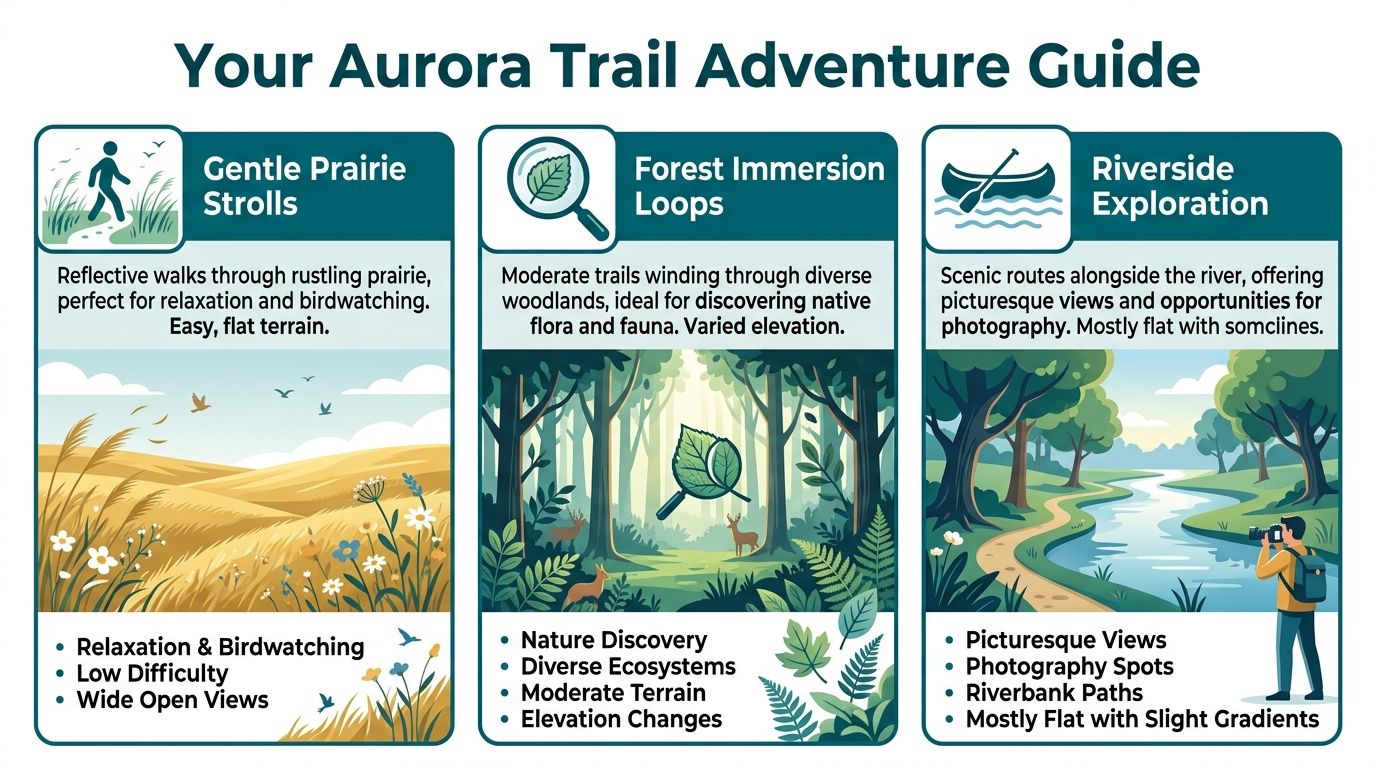
Three trail moods I come back to
I do not think of preserve paths as lines on a map. I think of them as different conversations.
A prairie path talks in long sentences. A woodland loop speaks more softly. A route near water keeps interrupting itself with flashes of movement and reflection.
Here is the simple version.
| Aurora Forest Preserve Trail Overview | Approx. Length (Miles) | Difficulty | What You'll See |
|---|---|---|---|
| Gentle Prairie Stroll | Varies | Easy | Open grassland views, breeze moving through tall plants, good sightlines for birds |
| Forest Immersion Loop | Varies | Easy to moderate | More shade, layered plant life, quieter stretches for slow walking |
| Marsh and Edge Route | Varies | Easy | Wetland scenery, shifting light, strong chance for still-water reflections and animal movement |
I am keeping the distances broad on purpose. Trail conditions, route choices, and your own wandering style can change how long a walk feels. On a preserve day, exact mileage matters less to me than matching the land to my state of mind.
If you want calm, take the open route
Open prairie paths do something special.
They give your eyes distance. That sounds small, but it is not. When I spend too much time indoors, my focus narrows. Screens train you to stare at near things. Prairie trains you to widen again.
Choose the broadest, flattest-looking route if you want:
- A gentle reset: Less technical footing, more room to settle into rhythm.
- Sky therapy: Big cloud views can change the whole emotional tone of a walk.
- Birdwatching without effort: You can often notice movement from far off.
This is the route I choose when my brain feels hot and crowded.
If you want intimacy, take the wooded loop
Woodland sections feel different right away. The air cools. Sound tightens. Your attention gets pulled closer to bark, leaves, and shadows.
I like these loops when I need to get out of performance mode. Trees do not care if you have answers. They only ask that you notice them.
A wooded walk fits you well if you want a bit more enclosure and a slower kind of discovery. It pairs nicely with solo walks, quiet conversation, and the kind of afternoon where you leave your phone in your pocket.
For a broader look at protected natural spaces across the state, I also like this guide to a forest preserve in IL. It helps frame Aurora West as part of a larger culture of preserved land, not just a one-off escape.
If you want distance, follow the connection outward
One of the best features here is the preserve’s multi-purpose trail connection to the Virgil Gilman regional bike trail, noted on the preserve’s official listing earlier in this guide.
That changes the feel of the place. It means your outing can stay local and contained, or it can become a longer moving day.
The right trail is not the hardest one. It is the one that meets the version of you who showed up.
If you are with friends, I suggest asking one question before you start. “Do we want to talk, wander, or move?” That answer usually picks the route for you.
Meeting the Wild Heart of the Preserve
I once stopped beside a wet patch at dusk and heard frogs before I saw anything else. The sound came up from the ground like the preserve had switched itself on.
That is the part I love most. Not the map. Not the parking lot. The life.
This land is alive because people repaired it
Aurora West does not hide its history. The beauty here has effort behind it.
The preserve is part of a restoration story shaped by work on hydrology, wetland recreation, prairie plant reintroduction, and invasive species removal, according to the preserve information cited earlier. You feel that in the variety of habitats. One minute you are looking across open prairie. Then you move toward marsh. Then woodland closes around the trail.
That mosaic changes the way you walk. You stop scanning for one big attraction and start noticing many small ones.

What to look for by season
I do not treat wildlife spotting like a checklist. I treat it like learning the preserve’s mood.
In spring, I look low first. Fresh growth, wetter ground, the sense that the whole place is waking up from underneath.
In summer, the preserve feels full-bodied. Taller plants, stronger insect song, thicker greens, more motion if you stand still long enough.
Fall sharpens everything. Seed heads catch the light. Grasses take on warmer tones. Birds seem to announce themselves differently because the visual texture changes around them.
Winter strips the place to structure. Trails feel more skeletal, but also more honest. You notice shape, spacing, and the architecture of the land.
Here are the clues I use:
- Listen before you scan: Sound often reveals water, birds, and hidden movement first.
- Watch transition zones: Where marsh meets prairie or woodland meets open ground, life tends to gather.
- Pause near still water: Reflections pull your eye down, and animals often do the same.
- Look twice at “empty” spaces: A lot of the preserve’s magic starts as something barely moving.
Learning to see, not just look
The first few times you visit a preserve, you may think nothing is happening.
Then your eyes adjust.
You notice how one patch of grass bends against the rest. You catch a bird rising where you thought there was only reeds. You see tracks in softer ground. The surroundings stop being background and start becoming conversation.
That shift matters far beyond the trail. It teaches patience. It teaches attention without force. It reminds you that a restored place can hold more life than a rushed person first notices.
Nature rewards the second look. Most beauty does not shout.
When I bring someone new to a preserve, I never try to impress them with names. I just ask, “What changed since we stopped?” That question works almost every time.
Making Your Trip Comfortable and Safe
A good preserve day feels loose, but it works better when you prepare with respect. I have learned that simple habits give you more freedom once you are on the trail.
Pack for comfort, not for fantasy
I used to overpack for outdoor trips. Then I realized many individuals need less gear and better judgment.
My standard setup is plain:
- Water you already trust drinking
- Shoes with grip
- One extra layer
- A snack that does not melt into chaos
- A small bag for your own trash
That last one matters. Nothing breaks the spell of a beautiful place faster than leaving a wrapper behind because there is no convenient bin in sight.
Read the day before the trail reads you
Weather around northern Illinois can turn quickly. I check conditions before I leave and again when I arrive.
Wind changes how open areas feel. Recent rain changes footing. Strong sun can tire you out faster than a cool morning forecast suggests.
A few safety habits carry most of the load:
- Stay on marked paths when possible. You protect both yourself and sensitive habitat.
- Give wildlife space. A good sighting is one that does not disturb the animal.
- Tell someone your rough plan if you are going alone.
- Turn back early if the day feels off. Pride is not a trail skill.
Amenities and expectations
I do not assume every preserve day comes with polished convenience. That mindset helps.
Check the official district information before you go if you need specifics on restrooms, accessibility, picnic areas, or seasonal site details. If those features matter to your group, confirm them in advance rather than hoping the trailhead answers the question for you.
I also keep expectations flexible. A preserve is not a theme park. Sometimes a bench is wet. Sometimes a path is muddy. Sometimes the best seat for lunch is a patch of sun beside the car after your walk.
Comfort outdoors comes less from perfect amenities and more from bringing what lets you adapt calmly.
If you are visiting with kids, older relatives, or anyone new to nature walks, start shorter than you think you need. Ending with energy still in the tank makes the next visit much easier.
Join Us in Protecting These Wild Spaces
Every preserve asks a quiet question.
You came here for peace. Will you help protect the place that gave it to you?
I think that question matters because restoration does not stay restored by accident. Trails need care. Habitats need attention. Invasive plants do not remove themselves. Litter does not walk out on its own.
Conservation becomes real when you touch the work
The first time you help care for land, the preserve stops feeling like scenery. It starts feeling like shared responsibility.
Aurora West already carries the mark of public commitment. In Kane County, a 2001 referendum passed with 52% yes vote and authorized $68.5 million for land acquisition. Surveys also found 72% of residents were concerned about protecting existing open space, as reported in the DuPage Forest Preserve District year in review document that summarizes regional conservation context and Kane County support.
I love those numbers because they do not feel abstract to me. They feel like trailheads, shade, frogsong, and places where a tired person can recover for an afternoon.
Small acts count more than grand intentions
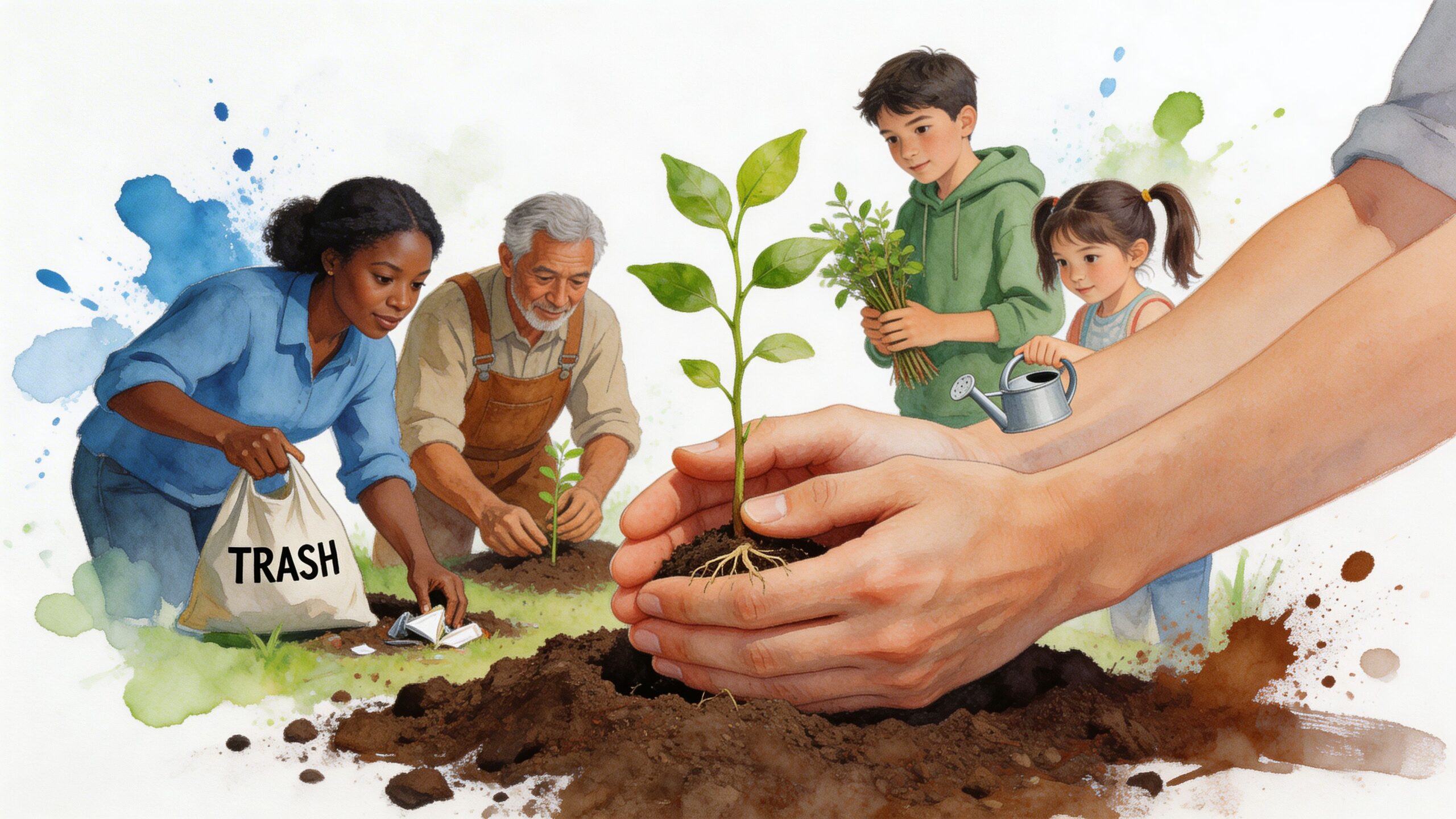
You do not need to lead a major initiative to become useful.
Start with one act that is easy to repeat:
- Pick up a little litter on your way out: Bring a glove or bag and leave a stretch cleaner than you found it.
- Join an official volunteer day: Habitat work feels better when local staff or stewards guide the effort.
- Respect closures and restrictions: That includes wildlife protection rules, especially in sensitive areas.
- Bring one friend next time: Stewardship spreads through relationships faster than speeches.
That last point matters most. Care is contagious when people watch someone they know practice it.
Why service changes the person doing it
I have never believed environmental stewardship is only about the environment.
It also changes the volunteer. You begin to trust yourself differently when you show up for something that cannot praise you back. Land does not flatter you. It only responds to care over time.
That is why cleanup work, seed collection, invasive removal, and trail respect all matter. They train a deeper muscle than productivity. They train fidelity. You say you value beauty, and then you act like it.
If that idea resonates with you, I recommend exploring examples of hands-on environmental stewardship programs. Practical service gives all this inspiration somewhere to go.
Aurora forest preserve is not just a place to consume peace. It is a place to practice guardianship.
If this kind of service speaks to you, Litter Caterpillars offers a welcoming way to turn that feeling into action. Join a cleanup, meet people who care, and build the habit of leaving every place better than you found it.
Leave a Reply