
Author: Kevin Tao

  • You Don’t Need Permission to Fix Your Neighborhood

    You Don’t Need Permission to Fix Your Neighborhood

    I used to think cleaning up my own life was impossible. Every old jar, every dusty bag, it all felt like it weighed 500 pounds. My apartment was a mess, and so was my life. Then, a funny thing happened during a freak Chicago hailstorm with two friends. Huddled under a tree, freezing and trying to pick up trash, I realized something profound: cleaning up someone else’s mess is way easier than cleaning our own.

    And suffering together? It's not just bearable; it’s fun. It advances the plot.

    That moment of clarity, cold and soaking wet, is the real heart of this article. This isn't a list of generic tips. It’s a battle plan born from that storm, built for people who are tired of waiting for permission to make a difference. We’re going to share 10 powerful community engagement strategies that turn fear into fuel, strangers into friends, and neglected spaces into something beautiful and cared for. These are the exact methods we used to build Litter Caterpillars from a wild idea into a city-wide movement.

    This guide is for anyone who believes, deep down, that making an impact should be an adventure. Forget what you’ve been told about how hard it is to change things. It's time to be brave, get a little weird, and prove that real change is easier and more joyful than you ever imagined.

    1. Volunteer-First Community Mobilization

    Imagine you're building a fire. You could spend all day looking for a fancy lighter and a pile of perfect, dry logs. Or, you could find two good sticks and a spark. A Volunteer-First strategy is about finding that spark—the raw human energy that starts every great movement. It flips the old model on its head. Instead of chasing grants and donors, you obsess over creating an incredible, empowering, and fun experience for your people.

    This isn't about money; it’s about connection. An hour of someone's time is a far more precious gift than a few dollars. When people see their own sweat and smiles transforming a space, they become its fiercest protectors. They become the fire itself. The focus shifts from financial transactions to human relationships, which fosters deep ownership and pride.

    When to Use This Strategy

    This is the brave way to begin. If you have more heart than cash, this is your blueprint. It’s perfect for initiatives that thrive on hands-on participation, like a weekly cleanup or a community garden. You're not building an institution; you're building a tribe.

    Key Insight: Protecting your volunteers' energy is your most sacred duty. This means learning to say 'no' to opportunities that might bring in money but would burn out your people. A happy, motivated volunteer base is your greatest asset.

    How to Implement It

    • Create Zero-Pressure Participation: Make it clear that your time is the only donation you'll ever ask for. At Litter Caterpillars, we say, "Your presence is the only present we need."
    • Build a Simple Rhythm: Pick a time and stick to it, like "every Saturday at 10 AM." This removes the guesswork and makes showing up a joyful habit.
    • Celebrate the Humans: Take a group photo. Give a shout-out. Acknowledge the effort. Make people feel seen and cherished.
    • Let Leaders Emerge: Encourage experienced volunteers to welcome newcomers. This builds a self-sustaining culture of kindness.

    This is one of the most powerful community engagement strategies because it’s built on trust, not transactions. It creates a movement that can weather any storm. Ready to see it in action? You can find volunteer work that fits your passion and feel the difference.

    2. Scheduled Weekend Morning Events for Values Alignment

    What if your schedule could be a secret handshake? A quiet signal that calls out to your kind of people? Scheduling events on weekend mornings is one of the most powerful, unspoken community engagement strategies for building a dedicated team. It’s a filter for the soul.

    Think about it. Who shows up at 10 AM on a Saturday? Not the person nursing a hangover. It's the person who finds joy in starting their day with purpose, who would rather build community than sleep in. It’s a magnet for the givers, the doers, and the believers. This isn't about excluding anyone; it's about intentionally creating a culture of brave, kind people who show up.

    When to Use This Strategy

    This is for organizers who value deep engagement over sheer numbers. If you want to build a reliable core crew—the kind of people who show up even when it rains—this is your method. It’s how Litter Caterpillars built its unwavering Saturday and Sunday morning rhythm.

    Key Insight: Your schedule is a statement of your values. By claiming weekend mornings for community action, you are saying, "We prioritize building a better world together, and we start our day with that purpose."

    How to Implement It

    • Make the Schedule Sacred: Cement your weekend morning slot. Consistency turns an event into a community ritual.
    • Embrace the Weather: Get ponchos. Get sunscreen. Showing up in "bad" weather becomes a badge of honor. It’s part of the adventure.
    • Create a Post-Event Ritual: Grab coffee. Go for brunch. Turn a morning of service into a full-fledged social connection.
    • Frame the Commitment with Pride: Use language like, "While others sleep in, we're building the neighborhood we want to see." This reinforces a shared identity.

    This strategy is one of the most effective community engagement strategies because it builds your foundation with people who are already on your wavelength. It's not just scheduling an event; it's curating a community of the willing.

    3. Identity and Pride Building Through Symbols

    Humans are wired for belonging. We rally behind flags and wear team colors with passion. This strategy taps into that deep need by creating a visual identity for your tribe. It’s the difference between showing up for a workout and putting on the jersey for game day. It turns the simple act of volunteering into a role, a membership, and a source of personal pride.
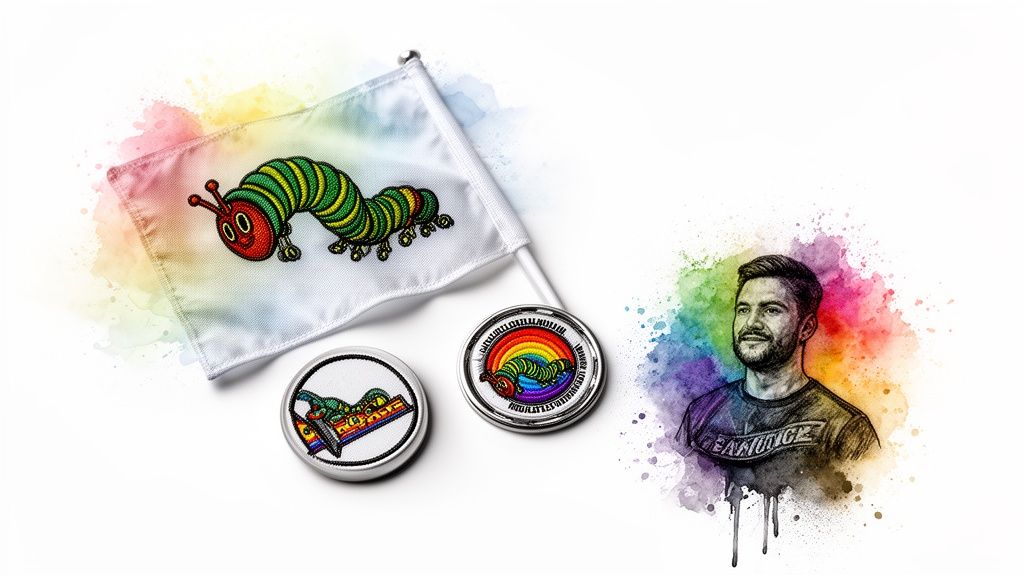
    A white flag with a green caterpillar, two pins, and a man's sketch with colorful watercolor splashes.

    A logo, a pin, or a flag gives your people a shared language and a tangible piece of the mission. When someone wears a Litter Caterpillars pin, they aren't just a person who picks up trash; they are a visible ambassador for a cleaner, kinder city. The symbol holds the story of every laugh, every rainstorm, every bag of trash collected together.

    When to Use This Strategy

    Use this once your group has a beating heart—a consistent core of people. It’s time to give that heart a face. This is how you shift from a loose collection of individuals to a cohesive, motivated team that feels like they are a part of something bigger than themselves.

    Key Insight: A symbol isn't just a design; it's a container for every shared memory, laugh, and moment of triumph your group has ever had. It becomes more powerful with every story it represents.

    How to Implement It

    • Create it Together: Involve your core volunteers in designing the logo or flag. When they have a hand in creating the symbol, their sense of ownership deepens immensely.
    • Tell the Story: Every symbol needs a story. Explain why you chose a caterpillar, what the colors on your flag mean. This transforms a simple image into a meaningful emblem.
    • Make it Real: Print it on flags. Create enamel pins. Make stickers. Tangible things people can see, hold, and wear make the identity feel real.
    • Celebrate with Ceremony: Make a little moment out of earning a badge or receiving a pin for the first time. This public recognition reinforces the value of showing up.

    By building a strong symbolic identity, you are implementing one of the most profound community engagement strategies available. You give people something to belong to, turning their service into a story they are proud to tell and wear.

    4. All-Neighborhood Equity and Geographic Saturation

    True community care doesn't play favorites. It doesn't just clean the "nice" streets. This strategy is a bold promise to show up for everyone, everywhere. It’s like drawing a map of your entire city and promising to color it in, one cleanup at a time. It ensures that no community is overlooked, especially those that other organizations might ignore.

    This method turns volunteering into an urban expedition of empathy. By intentionally going to unfamiliar areas, volunteers break down invisible barriers and witness the shared humanity connecting every corner of the city. This strategy proves that when we say we care about our city, we mean all of it.

    When to Use This Strategy

    This is for established groups ready to scale their mission beyond their own backyard. If your goal is to make a city-wide statement about equity, this is your path. It’s perfect for organizations like Litter Caterpillars, which is committed to hosting cleanups in all 50 of Chicago's wards.

    Key Insight: Bravery isn’t the absence of fear; it's showing up with kindness where it's needed most. Tackling a "difficult" neighborhood isn't a burden, it's an honor and a powerful act of solidarity.

    How to Implement It

    • Create a Public Rota: Develop and share a schedule that shows when you'll be in each neighborhood. This builds anticipation and shows a transparent commitment to fairness.
    • Find Local Allies: Partner with local leaders, block clubs, or passionate residents. Their insight is gold for building trust and being truly helpful.
    • Celebrate Every Community: Frame every cleanup as a victory. Use stories and photos to highlight the beauty and resilience you find in every corner of the city.
    • Address Safety with Honesty: Acknowledge any concerns transparently. Provide clear guidelines and work with local contacts to ensure a positive experience.
    • Don't Be a Tourist: Plan to return. Don't make your visit a one-time event. Build trust and show long-term commitment.

    This is one of the most profound community engagement strategies because it actively dismantles inequality. When you commit to every map dot, you inspire volunteers to see the city not as separate parts, but as one shared, beautiful home.

    5. Digital Hub Integration (Multi-Platform Accessibility)

    Your community doesn't live in one place; it lives across a dozen different apps. A Digital Hub strategy meets people where they already are. Some people discover events on Instagram, others live on Meetup, and many build friendships in a group chat. This approach makes it incredibly easy for anyone to find you and take that first brave step to join in.

    Think of it like building several bridges to the same beautiful island. Each platform has a job: Instagram tells the emotional, visual story; Meetup handles the official schedule; and a group chat fosters the inside jokes that turn strangers into friends. By weaving them together, you create a seamless and welcoming experience that feels effortless.

    When to Use This Strategy

    This is a powerful growth strategy when you're ready to expand beyond your immediate circle. If you want to attract different kinds of people, creating a multi-platform presence is your next move. It's especially effective for groups like Litter Caterpillars that thrive on a steady stream of new friends.

    Key Insight: Don’t try to make every platform do everything. Assign a clear 'job' to each channel. This clarity prevents confusion for your members and burnout for you. One platform is for logistics, another is for inspiration, and a third is for community chatter.

    How to Implement It

    • Establish a 'Source of Truth': Designate one platform, like Meetup, as the official hub for all event details. All other platforms should point back to this central source.
    • Use Channels for Their Strengths: Use Instagram for telling brave stories. Use a group chat for informal updates and community building. Use Facebook Groups for hyperlocal outreach.
    • Create One-Click Pathways: A post on Instagram should have a direct, easy link to sign up. Make it so simple a person can't say no.
    • Be a Broken Record: Post your weekly schedule and reminders across all channels. Repetition builds habit and ensures no one misses out.

    By implementing these community engagement strategies, you lower the barrier to entry so significantly that joining becomes an easy and exciting decision. You show people you respect their time, making your movement accessible to all.

    6. Reframing Hardship and Challenge as Growth Opportunity

    True community isn't forged in comfort; it's welded in the fire of shared struggle. This strategy is about deliberately embracing the hard stuff—the rain, the heat, the overwhelming mess—and reframing it as an opportunity for adventure, courage, and bonding.

    Think of your favorite movie. The hero doesn't become a hero when everything is easy. They become a hero when they face the storm. When a group endures a challenge together, they don't just clean a street; they build a shared story of triumph. The hardship becomes a badge of honor. This is how you transform a casual gathering into a legendary crew.

    When to Use This Strategy

    This mindset is essential for any group that operates in the real world, where things get messy. It’s perfect for organizations like Litter Caterpillars that pride themselves on consistency, rain or shine. Use this to cultivate a culture of grit, attracting members who are seeking a genuine adventure.

    Key Insight: The story you tell about the struggle is more important than the struggle itself. Frame every challenge not as a setback, but as the next chapter in your community's epic saga of courage and impact.

    How to Implement It

    • Lead with a Smile: As a leader, your enthusiasm in the pouring rain sets the tone. Show up with joy, demonstrating that the mission is bigger than your comfort.
    • Tell the Story: Celebrate the "worst" days. Our origin story is literally a hailstorm. We talk about it constantly because it reminds us that we can handle anything together.
    • Prepare, Don't Prevent: Offer ponchos, hand warmers, or extra water. The goal isn't to eliminate hardship, but to equip your team to face it bravely.
    • Use the Language of Courage: Talk about bravery, resilience, and strength. Frame showing up in tough conditions as a heroic act, because it is.
    • Make It Optional but Celebrated: Always stress that showing up in extreme weather is not required, but give extra love to those who do.

    Reframing hardship is one of the most potent community engagement strategies because it builds an unbreakable culture. You create a team that doesn't just show up when it's convenient; they show up for each other, no matter what.

    7. Environmental Intervention and Visible Impact Creation

    Picking up litter is where the journey begins, but it doesn't have to end there. This strategy is about graduating from maintenance to creation. It’s about looking at a trash-filled vacant lot and seeing a future park. It’s about turning your community’s sweat equity into a lasting legacy.
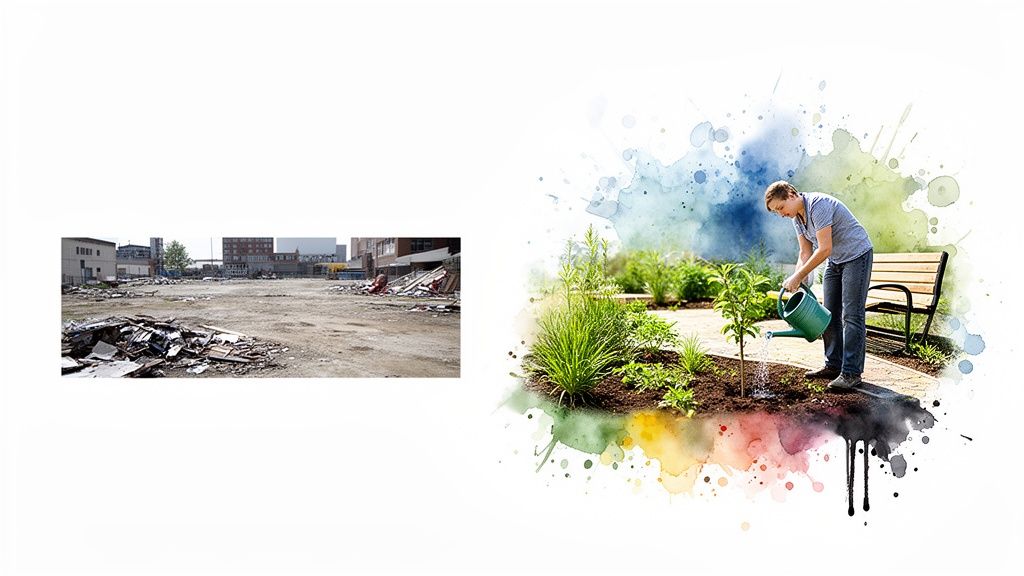
    Two panels contrasting a desolate, rubble-filled lot with a man watering a new plant in a vibrant garden.

    This approach transforms your group from a cleanup crew into neighborhood builders. It's one thing to say you cleaned a street; it's another to stand in a beautiful garden and say, "We built this." This creates a profound sense of ownership and pride that inspires even deeper commitment from everyone. It's undeniable proof that you have the power to make real, lasting change.

    When to Use This Strategy

    This is for established groups ready to take a brave leap. Once you have a consistent crew, you can channel that energy into a bigger project. It’s perfect when you’ve identified a specific eyesore and have the community support to dream bigger. You're shifting from reacting to problems to proactively building solutions.

    Key Insight: The story of transformation is your most powerful recruitment tool. Documenting the journey from a desolate space to a vibrant community hub proves that real change is possible and inspires others to join the cause.

    How to Implement It

    • Start Small, Win Big: Begin with a manageable project, like installing a few planters, to build confidence before tackling a full park.
    • Document Everything: Take "before" photos. Film the process. Interview your people. This visual story becomes a cornerstone of your outreach.
    • Build with the Community: Involve neighbors in the design. This ensures the project truly serves their needs and fosters deep ownership.
    • Make Friends at City Hall: Start conversations with city officials early. Understand the process for permits and land use to avoid roadblocks. Our own Caterpillar Park in Englewood started this way.
    • Throw a Party: Host a grand opening when the project is done. This rewards your volunteers and signals a new chapter for the entire neighborhood.

    This is one of the most rewarding community engagement strategies because it leaves a physical legacy of your group's love. If you’re ready to move from cleaning up to building up, you can learn more about the impact of targeted cleaning projects and start planning your transformation.

    8. Friendship and Relationship Building as Primary Outcome

    What if the amount of trash you collect is just the excuse? This strategy redefines success by treating friendships as the main goal, not just a happy accident. We aren’t just cleaning a street; we are building a family. The real magic happens when people stop showing up for the cause and start showing up for each other.

    Three laughing men toasting with mugs on a bench, surrounded by colorful watercolor splashes.

    This approach recognizes a fundamental human truth: people stay where they feel they belong. When your group becomes a source of genuine social connection, participation becomes sustainable and deeply meaningful. The work of cleaning up becomes the joyful reason for the community to gather, creating a resilient movement powered by authentic human bonds.

    When to Use This Strategy

    This is one of the most vital community engagement strategies for long-term survival. If you want to build a lasting presence rather than just hosting one-off events, this is your guiding star. It’s about creating a culture where people feel seen, valued, and connected beyond the task at hand.

    Key Insight: The strongest communities are not built on shared tasks, but on shared lives. When you create a space where people can bring their whole selves, celebrate milestones, and support each other, the work becomes secondary to the relationships.

    How to Implement It

    • Design for Social Time: Intentionally schedule time for non-work socializing. A pre-cleanup coffee circle or a post-event gathering at a local cafe works wonders.
    • Create Post-Event Rituals: Establish a fun, optional tradition after every event, like grabbing breakfast together. This is where friendships deepen.
    • Bridge the Gaps: Use a group chat to maintain connections between events. Share photos, celebrate personal wins, and keep the conversation flowing.
    • Make Warm Introductions: When a new person joins, don't just point them to the supplies. Introduce them warmly to a few regulars by name.
    • Celebrate the People: Acknowledge birthdays and new jobs. This shows you care about your members as whole people, not just as volunteers.

    9. Values-Driven Recruitment and Participant Selection

    A strong community isn't just a random collection of people; it's a tapestry woven together by shared beliefs. This strategy is about being so clear and loud about your values—like bravery and kindness—that the right people feel an undeniable pull to join. It isn't about exclusion; it's about creating a powerful gravity field around your mission.

    When your group is filled with people who embody bravery and kindness, those values become the air you breathe. Newcomers either thrive in that environment or realize it's not for them. This approach prioritizes the health of your culture over sheer numbers, knowing that a small, committed group is infinitely more powerful than a large, disconnected crowd.

    When to Use This Strategy

    This is essential when how you do the work matters as much as what you do. If you're building a long-term movement founded on trust, this is non-negotiable. It's how groups like Litter Caterpillars ensure the experience of cleaning together is always positive and supportive.

    Key Insight: Your community's culture is your most precious creation. Protecting it means being unapologetically clear about who you are and what you stand for. The people meant for your mission will find you.

    How to Implement It

    • Broadcast Your Values Boldly: Weave your core values (bravery, kindness, unity) into every piece of communication. Don't just list them; tell stories that show them in action.
    • Let Your Structure Do the Filtering: Our Saturday morning cleanups and volunteer-only model aren't accidental. They naturally select for people who are committed and generous.
    • Celebrate Value-Aligned Behavior: When you see a volunteer help a newcomer or tackle a tough spot with a smile, celebrate it publicly. This reinforces what your community cherishes.
    • Share Your "Why": When a new person joins, tell them your origin story. Talk about the heart behind the work. This connects them to the mission from day one.

    Building a team based on shared beliefs is one of the most sustainable community engagement strategies you can employ. If you're looking for practical ways to attract the right people, our guide on how to find volunteers offers deeper insights.

    10. Personal Transformation Narrative and Self-Development Positioning

    Sometimes, picking up a piece of trash isn't just about cleaning a street. It’s about picking up a piece of yourself. This strategy reframes community service not just as giving back, but as a brave journey of personal growth. It positions showing up as a way to build discipline, self-trust, and resilience.

    This approach connects the external work of improving a neighborhood with the internal work of becoming a stronger version of oneself. It taps into a deep human desire for meaning. When people see that showing up for their community is also a way to show up for themselves, their motivation becomes incredibly powerful. This is one of the most resonant community engagement strategies because it honors the whole person, not just their helping hands.

    When to Use This Strategy

    This is perfect for leaders with an authentic story rooted in personal change. If your group's "why" is tied to overcoming your own struggles, this approach will feel true. It’s also highly effective for attracting individuals who are seeking meaning, connection, and a way to believe in themselves again.

    Key Insight: Your story of struggle is your superpower. Being open about your own journey-the doubts, the fears, the small wins-gives others permission to be on their own journey without shame. Transformation isn’t about perfection; it's about progress.

    How to Implement It

    • Share Your Origin Story Authentically: Tell the real story of why your group started. My own journey with Litter Caterpillars began as a way to find discipline when I felt lost. This truth connects with others on a human level.
    • Use Transformational Language: We call ourselves "Litter Caterpillars" for a reason. Frame participation as a metamorphosis. Use words that evoke growth and becoming.
    • Connect Service to Inner Strength: Explicitly link showing up consistently to building personal discipline. Frame cleaning a neglected space as an act of forgiveness—for the community and for oneself.
    • Create Space for Reflection: End your events with a brief moment for volunteers to share what the experience meant to them. This helps cement the connection between the outer work and their inner world.
    • Celebrate Personal Journeys: Invite volunteers to share their own stories of transformation, creating a culture where personal growth is seen and honored.

    10-Point Community Engagement Strategies Comparison

    Approach 🔄 Implementation Complexity ⚡ Resource Requirements 📊 Expected Outcomes 💡 Ideal Use Cases ⭐ Key Advantages
    Volunteer-First Community Mobilization 🔄 Medium — decentralized coordination; volunteer care systems ⚡ Low $; high volunteer-management time 📊 Deep trust & sustained participation; slower scale 💡 Grassroots cleanups; community-led programs ⭐ High retention, authentic engagement, low overhead
    Scheduled Weekend Morning Events for Values Alignment 🔄 Low — fixed schedule, simple logistics ⚡ Low–Moderate; consistent volunteer commitment 📊 Reliable, aligned volunteer base; habit formation 💡 Values-filtering recruitment; family-friendly events ⭐ Consistency, reduced flakiness, ritual culture
    Identity and Pride Building Through Symbols 🔄 Medium — design + ongoing reinforcement ⚡ Moderate $ for creative resources & merch 📊 Increased pride, visibility, and social sharing 💡 Brand-building; retention-focused groups ⭐ Strong belonging and shareable identity
    All-Neighborhood Equity and Geographic Saturation 🔄 High — complex routing, safety & partnerships ⚡ High time/travel costs; liaison roles required 📊 Citywide visible impact; equitable coverage 💡 Citywide programs; equity-driven missions ⭐ Broad reach, prevents service gaps, builds city unity
    Digital Hub Integration (Multi-Platform Accessibility) 🔄 Medium — multi-channel upkeep & consistency ⚡ Moderate time for content; low platform costs 📊 Greater discovery, multiple engagement touchpoints 💡 Outreach to diverse digital audiences; scalable signups ⭐ Low barrier entry; flexible, real-time communication
    Reframing Hardship as Growth Opportunity 🔄 Medium — cultural framing plus safety protocols ⚡ Low–Moderate; training and protective gear 📊 Strong bonding; attracts resilient, growth-minded volunteers 💡 Challenge-oriented communities; resilience-building ⭐ Deep cohesion and memorable experiences
    Environmental Intervention and Visible Impact Creation 🔄 High — permits, project management, partnerships ⚡ High $ and diverse skills; long timelines 📊 Lasting, tangible legacy; media and public recognition 💡 Long-term transformation projects; fundraising goals ⭐ Tangible legacy, increased pride, recruitment draw
    Friendship & Relationship Building as Primary Outcome 🔄 Medium — intentional facilitation and social design ⚡ Low $; time for social programming and follow-up 📊 High retention; resilient social networks beyond events 💡 Community cohesion; mental-health and social support ⭐ Sustained engagement through friendships and belonging
    Values-Driven Recruitment and Participant Selection 🔄 Medium — messaging, modeling, and onboarding ⚡ Low–Moderate; leadership time for consistent messaging 📊 Cohesive culture; self-selecting, mission-aligned participants 💡 Mission-focused groups seeking cultural alignment ⭐ Reduced conflict; clearer decision-making and culture fit
    Personal Transformation Narrative & Self-Development 🔄 Medium — storytelling, reflection practices ⚡ Low–Moderate; needs programmatic reflection time 📊 Attracts growth-minded volunteers; deeper meaning & retention 💡 Personal-development seekers; retention strategy ⭐ Deep intrinsic motivation and long-term commitment

    Your Turn to Advance the Plot

    You’ve just been handed a toolkit full of community engagement strategies. But a toolkit is useless until you pick up a tool and start building. The real secret isn't mastering all ten of these at once. It’s understanding the simple, brave truth that connects them all: turning work into play, and turning strangers into friends.

    The Tom Sawyer Secret

    Remember Tom Sawyer, stuck with the dreadful chore of whitewashing a fence? He didn't complain. He reframed it. With a spark of genius, he convinced his friends that painting a fence wasn't work at all—it was a rare and exclusive privilege. Soon, they were trading their treasures just for a chance to help.

    This is the secret sauce. The best community engagement strategies don’t delegate tasks; they invite people into an adventure. They turn the "hard stuff"—the challenges we’d normally avoid—into the very thing that makes the story worth telling. The hardship isn’t the obstacle; it’s the plot twist. It’s what makes the experience meaningful.

    From Strategy to Action

    Looking back at these strategies, you can see this principle everywhere:

    • Volunteer-First Mobilization and Friendship as the Primary Outcome are about building a crew for your adventure.
    • Identity Building Through Symbols and Values-Driven Recruitment create the feeling of being part of an exclusive club, just like Tom’s fence-painting crew.
    • Reframing Hardship as Growth is the ultimate Tom Sawyer move. It takes the "chore" and turns it into a powerful opportunity for personal transformation.

    You don't need a perfectly polished plan or a 501(c)(3) to begin. You don’t need permission. All you need is the courage to show up, the kindness to welcome others, and the willingness to face a little discomfort. We are all caterpillars, a little messy and imperfect, inching our way forward. But through simple acts of service and friendship, we build the cocoon for our collective transformation.

    So, here is your call to adventure. Don’t get overwhelmed. Just pick one.

    Which strategy sparked something in you? Was it creating a symbol for your neighborhood? Or the simple act of scheduling a consistent weekend event? Whatever it is, choose that one thing.

    Commit to trying it this weekend. Send that text. Make that social media post. Show up at the park with a trash bag and a smile. You’ll be amazed at how quickly others join when they see someone leading with bravery and kindness. Because if you want to go fast, you can go alone. But if you want to go far, we must go together.

    Let’s go far.


    Here in Chicago, Litter Caterpillars puts these community engagement strategies into practice every single weekend, transforming neighborhood cleanups into joyful adventures in friendship and self-discovery. If you’re ready to see these ideas in action and advance your own plot, we invite you to join us. Find your next cleanup and see for yourself at Litter Caterpillars.
  • How to Reduce Plastic Use A Guide to Fearless Change

    How to Reduce Plastic Use A Guide to Fearless Change

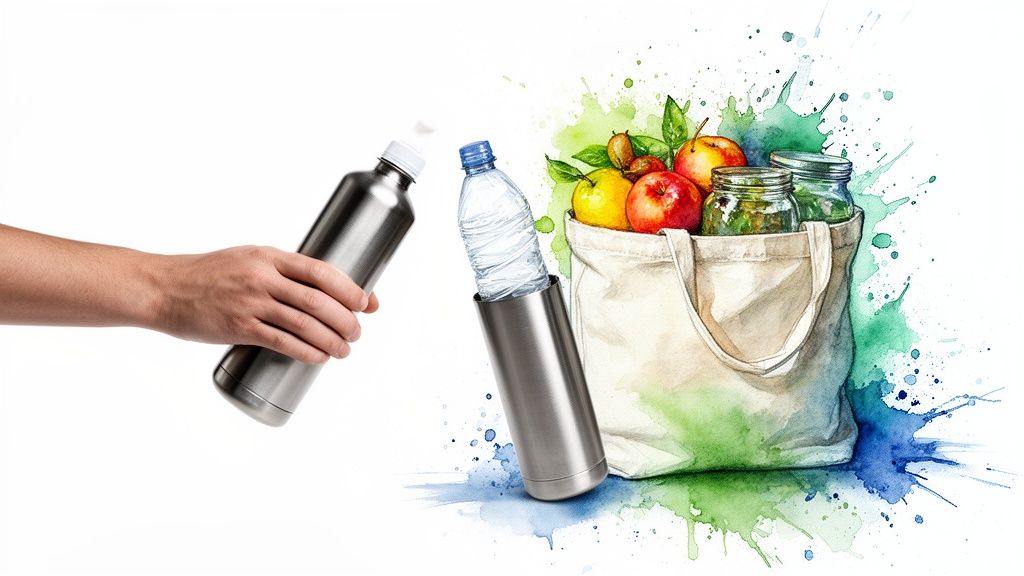
    Figuring out how to use less plastic can feel totally overwhelming, like being asked to clean up an entire city by yourself. But the real magic isn't in some huge, heroic act. It's in the small, brave choice to clean up your own corner of the world—and in doing so, cleaning up your own life. This is about decluttering your space to make room for something better inside you.

    Your Mess Is Your Superpower

    This whole thing didn’t start with a grand plan to save the planet. It started with my own personal mess. For years, I just couldn't get my own space organized. My apartment was a mess, and frankly, so was my life.

    Every little piece of trash, every forgotten item, felt like it weighed a thousand pounds. That old jar of jam in the back of the fridge wasn't just jam; it was a memory from a trip, a piece of the past I just couldn't seem to let go of.

    My life felt stuck, bogged down by all the physical and emotional junk I'd collected. After getting out of a chaotic relationship, I knew I had to make a change. I decided to finally face the things that had always felt impossible for me: consistency, bravery, and cleanliness.

    One day, I was looking at the litter on the streets of Chicago, and it hit me. It was a perfect reflection of the chaos I felt inside. A wild idea popped into my head: what if cleaning up someone else's mess was actually easier than cleaning up my own? What if that one simple act could be the key to unlocking everything else?

    It’s a crazy truth, but we discovered that service isn't just about helping other people. It's one of the most powerful forms of self-care there is. It's how you prove to yourself that you can show up, that you can make a real difference, and that you're stronger than your own mess.

    Born in a Hailstorm

    The origin story of Litter Caterpillars is perfectly, beautifully chaotic. Our very first cleanup was just three of us. We were out there, bravely picking up trash, when a classic Chicago spring storm decided to show up—a bizarre mix of freezing rain and hail. We ended up huddled under a tree, shivering, as one ride-share after another canceled on us.

    In that freezing, slightly miserable moment, it all clicked. Suffering together for a good cause wasn't just bearable; it was fun. It was an adventure. It advanced the plot of our lives.

    And that's the heart of what we do. We show up. No matter what.

    Reducing your plastic use isn't about sacrifice or trying to be perfect. It’s an act of self-respect. It's about taking pride in your choices and building the life you actually want, one small, brave step at a time. The goal is to build habits that serve both you and your community.

    This journey will help you find consistency and, more importantly, find your people. If you're looking for where to begin, learning more about how to find volunteer work can be a powerful first step in that transformation.

    Your Personal Plastic Purge Is a Brave First Step

    You can’t change the world overnight. But you can change what’s on your kitchen counter. This is where the real work begins—not with some overwhelming wave of guilt, but with a simple, brave first step.

    Think of it like a treasure hunt in your own home. The goal isn't to judge yourself for what you find. It's to see. To become aware of what's actually there. That awareness is the starting line for any real transformation.

    You’re just taking inventory. What plastic are you really using every day? Where is it hiding? This isn't a test; it's just getting curious.

    The Home Plastic Audit: A Gentle Investigation

    Forget complicated spreadsheets or weighing your trash. Just grab a notepad or open a new note on your phone. For one week, just pay attention.

    Wander through your home and, without any judgment, jot down the single-use plastic you see.

    Your mission is to find your personal "Big Four" plastic culprits. For most of us, they hide in plain sight:

    • Bottles: Water bottles, soda, juice, cleaning sprays, shampoo.
    • Bags: Grocery bags, produce bags, sandwich baggies, snack wrappers.
    • Cups: Coffee cups (yep, those paper-looking ones are lined with plastic!), takeout drink cups.
    • Containers: Takeout clamshells, yogurt tubs, berry containers, microwave meal trays.

    One of our volunteers, Sarah, told us her "aha!" moment came from looking at her own recycling bin. She thought she was doing great, but when she really looked, it was overflowing with the exact same plastic iced coffee cups and salad containers every single week. It wasn't a moment of failure. It was a moment of clarity. She finally saw her pattern.

    That’s what this audit is for. It gives you a pattern, a starting point. It turns a vague, scary problem—"the plastic crisis"—into something you can actually tackle: "my yogurt container habit." Now that is a problem you can solve.

    Your First Four High-Impact Swaps

    Once you’ve spotted your own Big Four, the fun begins. This is where you start taking your power back. You don't have to become a zero-waste guru overnight. Just pick one. Then another.

    Start with these simple, high-impact swaps to kickstart your plastic reduction journey. These changes are easy to implement and address the most common single-use items.

    The Plastic Villain Your Hero Swap Why It's a Win
    Single-Use Water Bottles A reusable water bottle you love This is the easiest win. You save money, cut waste instantly, and stay hydrated. Find one that feels like an extension of you!
    Plastic Grocery Bags A set of sturdy reusable bags Keep them in your car or by the door. This one habit stops hundreds of flimsy bags from becoming litter each year.
    Disposable Coffee Cups A reusable coffee mug or travel tumbler Many cafes even give you a discount for bringing your own. Your coffee tastes better and stays warmer. Win-win.
    Plastic Produce Bags Reusable mesh produce bags They're lightweight, washable, and let the cashier see what’s inside. A simple swap that gets rid of those annoying, impossible-to-recycle bags.

    These small changes are about more than just switching products; they’re about building a new muscle.

    The point isn't perfection. It's progress. It’s about building the habit of choosing durability over disposability. Each swap is a vote for the world you want to live in.

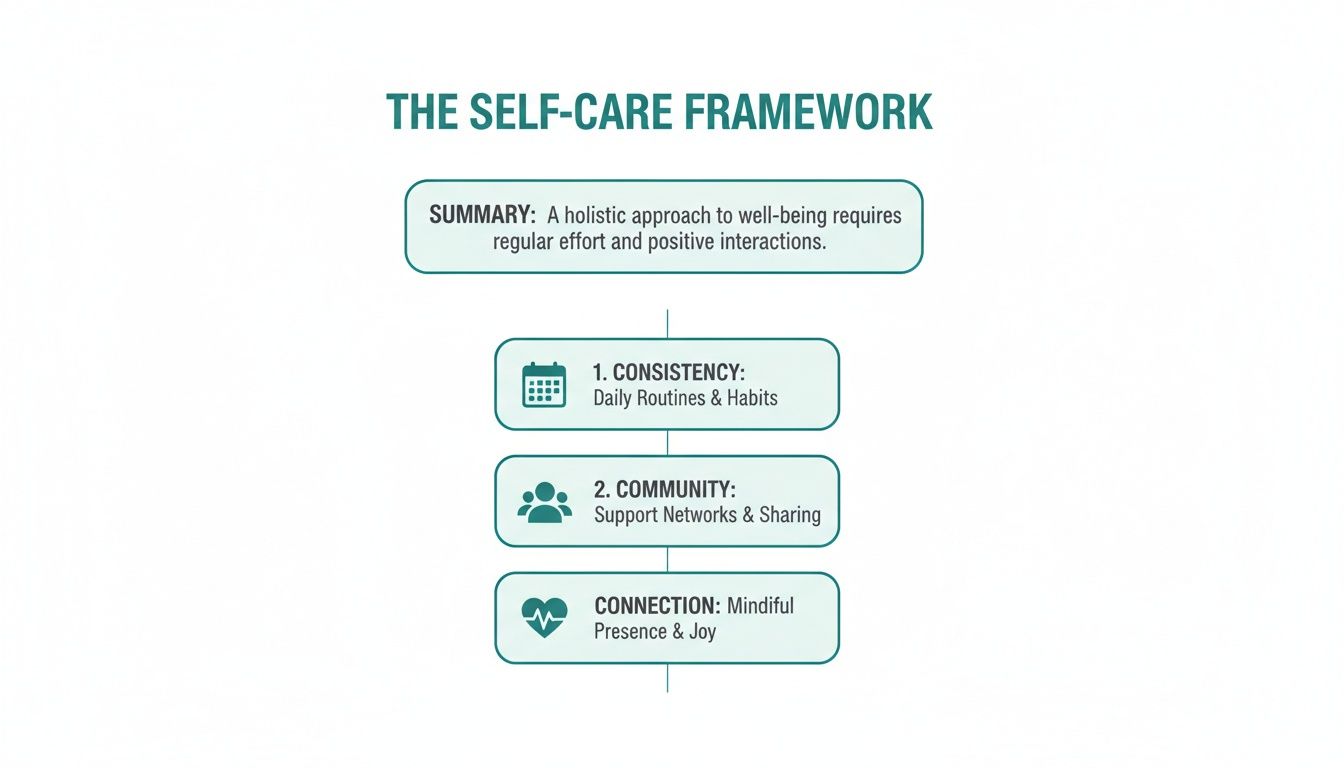
    This journey of reducing plastic isn't just about the environment; it's a powerful form of self-care rooted in consistency, community, and connection.

    A self-care framework diagram detailing summary, consistency, community, and connection for well-being.

    When you show up for your own goals consistently, you naturally find others on the same path. It builds a powerful sense of belonging and reminds us that we’re not in this alone.

    Why We Must Target Packaging First

    If you want to make the biggest dent in the plastic problem, you have to go after the biggest villain in the story. It’s not the durable plastic in your car or your computer. It’s the stuff we use for a few minutes and then toss without a second thought.

    It’s the packaging.

    Imagine the plastic crisis is a river overflowing its banks. You could spend all your energy scooping water out downstream, or you could be brave and go straight to the source where the floodgates are wide open. Packaging is those floodgates. It's the wrapper on your granola bar, the clamshell holding your salad, and the bottle your soda came in.

    These things have an incredibly short life with us, but an eternal one in our environment. Going after them is the most powerful and direct way to turn down the flow.

    The Numbers Behind the Story

    This isn’t just a feeling; it’s a cold, hard fact. A massive chunk of the plastic problem comes from these fleeting encounters. Around 40% of all global plastic production is for packaging alone, and it makes up a similar slice of the waste overwhelming our planet.

    The scariest part? Global plastic production is set to soar, but our ability to manage the waste is barely inching forward. This means if we don't change course, even more of this packaging will end up littering our streets, parks, and oceans.

    Stepping in here is powerful because you’re tackling the largest and fastest-moving part of the problem. You can dig into the full scale of this challenge in the Breaking the Plastic Wave assessment.

    When we, as a community, make a conscious choice to refuse single-use packaging, we're not just making a small personal statement. We're sending a powerful economic signal.

    Your Choices Are Your Voice

    Every time you shop, you're on the front lines. Your choices at the grocery store, the coffee shop, and the local farmers market are a direct vote for the kind of world you want.

    It’s a quiet, kind rebellion against the throwaway status quo.

    • At the Grocery Store: Choosing loose produce instead of the pre-packaged stuff. Hitting up the bulk bins with your own containers. Picking the glass jar of pasta sauce over the plastic one.
    • At the Coffee Shop: The simple act of saying, "I have my own cup."
    • For Takeout: Politely refusing the plastic cutlery and straw. Some brave folks even bring their own containers for their food.

    These actions might feel small, but they create ripples. When a business owner sees more and more customers bringing their own bags or cups, they notice. It starts a conversation. It plants a seed that maybe, just maybe, there's a better way to do business.

    Choosing to reduce packaging isn’t about deprivation. It's about intentionality. It's about choosing to own fewer, better things and honoring the resources used to create them. You're not losing convenience; you're gaining control.

    Community Is the Game Changer

    This is where individual action blossoms into a community movement. At Litter Caterpillars, we see this magic happen every single weekend. When we talk to local shop owners about reducing their plastic footprint, it’s not an attack; it’s an invitation to partner with us.

    Supporting a local business that offers refills for soap or olive oil is a powerful way to show there's a real demand for a different system. Organizing a local swap meet for household goods means fewer new things need to be bought, packaged, and shipped.

    It’s about building a new culture, one where durability is valued over disposability. Targeting packaging is the most strategic, high-impact place to start. It’s where your personal choices and community actions can create the most visible and immediate change, turning the tide one coffee cup, one grocery bag, one brave conversation at a time.

    The Truth About Recycling and Why Reuse Is Our Superpower

    Various reusable containers, a community swap crate with produce, and hands holding a jar of food waste on a wooden table.

    Time for some real talk. We need to have a fearless, honest conversation about recycling.

    For decades, we’ve been fed this comforting story: just toss your plastic in the blue bin, and it'll magically get a second life. It’s a nice thought. The problem is, it’s mostly a fairytale.

    Recycling isn't the solution to our plastic crisis. It's a last-ditch effort, and the system itself is completely overwhelmed and broken. Thinking we can recycle our way out of this mess is like trying to bail out a sinking ship with a teaspoon. Sure, it feels like you're doing something, but the water is still rising.

    The hard truth is that only a tiny fraction of the plastic we dutifully sort ever gets recycled. The numbers are, frankly, shocking.

    The Myth of the Blue Bin

    Let’s be brave and look at the actual data. Globally, the amount of plastic waste that gets recycled is depressingly low—somewhere around 9-15%. Meanwhile, most new plastic is made from virgin materials, not our old bottles and containers.

    This isn’t some accident. The system is rigged to favor making new plastic because it's often cheaper and easier than collecting, sorting, and processing used stuff. This means even with our best intentions, recycling can’t possibly keep up.

    Improving our recycling systems is important, don't get me wrong. But it’s not enough. To dig into the data behind this gap, you can read the full breakdown of plastic waste statistics.

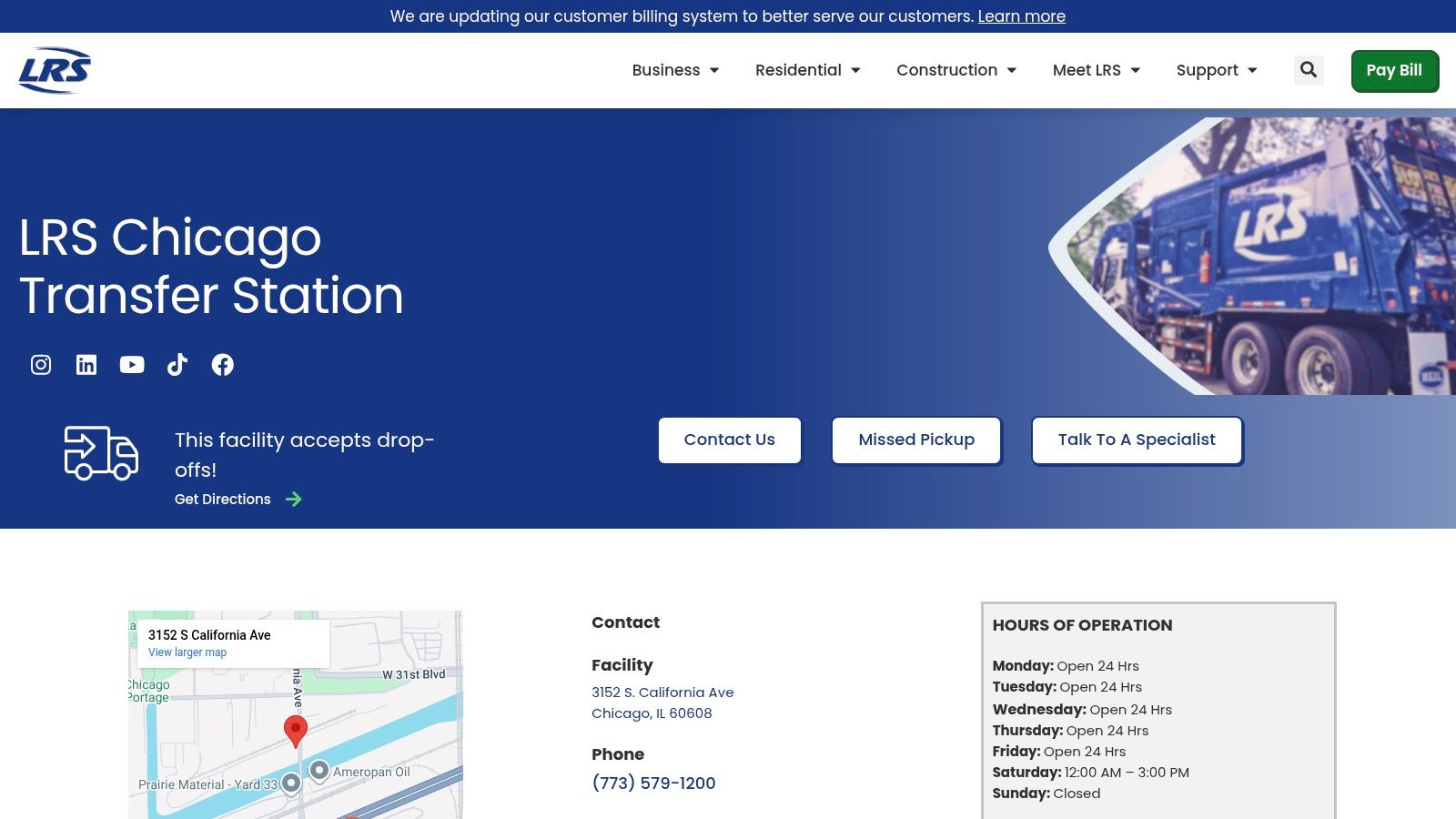
    Understanding this isn't about feeling hopeless. It's about channeling our energy where it actually makes a difference. If you want a practical first step, get to know your local system. Our guide to Chicago recycling centers can show you what’s really possible right here in our community.

    Once we accept that recycling can’t save us, we can finally embrace our true superpower: reuse.

    Unleashing Your Superpower of Reuse

    This is where the story gets exciting. This is where we take our power back.

    Reuse isn’t about buying a bunch of fancy new "zero-waste" gear. It’s a mindset shift—from disposable to durable, from temporary to treasured. It’s about seeing the value in what we already own and building systems in our neighborhoods that make reuse fun, easy, and social.

    At Litter Caterpillars, we see this superpower in action every single week. It’s not some grand, complicated strategy. It's just a series of small, kind, and brave actions that add up to something huge.

    • Neighborhood Swap Events: We’ve seen people organize simple swaps for everything from books and clothes to kids' toys and kitchen gadgets. It’s basically a party with a purpose, keeping perfectly good stuff in circulation and out of the landfill.
    • Mug-Sharing Programs: A few of our volunteers bravely walked into their local coffee shops. They started a simple conversation: "What if we helped you start a mug library?" Now, a couple of local cafes have a shelf of donated mugs for customers to borrow and bring back. It’s a small act of trust that builds incredible community bonds.
    • Refill Partnerships: Supporting businesses that offer refills is one of the most powerful things you can do. It creates a real market for reuse and shows business owners that we are hungry for a different way of doing things.

    Reuse is an act of rebellion. It’s a quiet, powerful declaration that we value our resources, our communities, and our planet more than the fleeting convenience of a throwaway culture.

    This isn't about being perfect. It's about being intentional. It's about choosing the library book over the new paperback, the hand-me-down jacket over the fast-fashion trend, and the refillable jar of oats over the plastic-wrapped box.

    Each act of reuse is a vote for a more resilient and connected world. It's a skill we build, a muscle we strengthen, and a superpower we can all unleash together.

    Go Far Together by Uniting Your Community

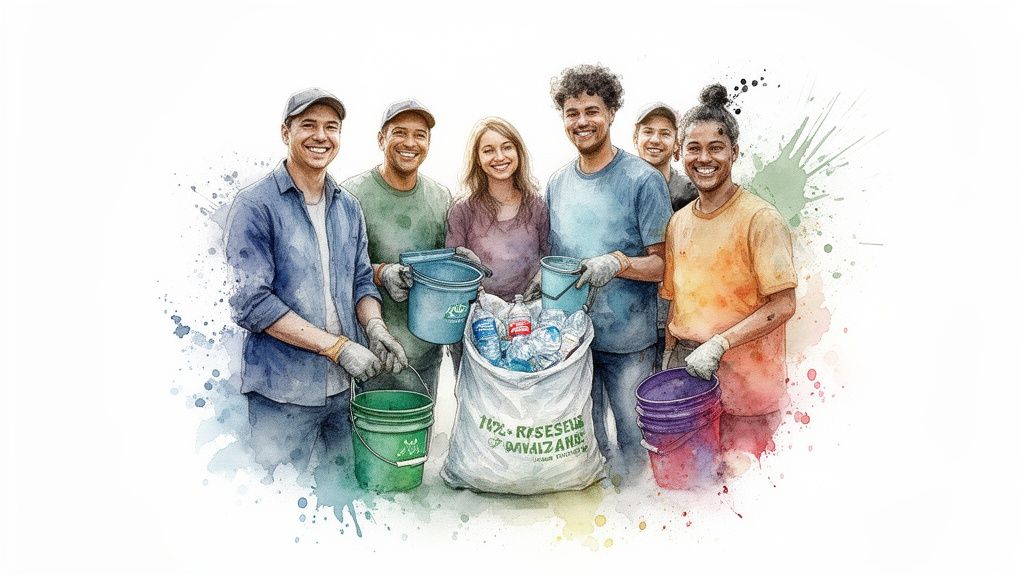
    A diverse group of smiling people holding buckets and a bag full of plastic bottles, promoting recycling.

    Trying to tackle the plastic problem alone feels like an impossible, lonely chore. It’s like trying to paint a giant mural with a tiny little brush. Sure, you'll make a mark, but you'll never bring the whole picture to life by yourself.

    But doing it with friends? That turns the chore into an adventure.

    This is the entire soul of Litter Caterpillars. We live by the old wisdom: "If you want to go fast, go alone. If you want to go far, go together." We are living proof that small actions, when multiplied by a community, create a force that's way bigger than any one of us.

    Here’s how you can turn that quiet desire for change into a powerful, joyful community movement. It's easier and a lot more fun than you might think.

    Start a Conversation, Not a Crusade

    Your first move isn't organizing some massive event; it's just starting a small conversation. We've found that the people running our favorite local spots—the coffee shops, taco stands, and grocery stores—are often just as worried about waste as we are. They're just crazy busy running their businesses.

    So instead of showing up with demands, approach them with kindness and genuine curiosity.

    A simple, friendly opener can work wonders:

    • "I absolutely love your coffee! Just wondering, have you ever thought about offering a little discount for people who bring their own mugs?"
    • "Your tacos are the best in the neighborhood! We're trying to cut down on plastic at home. Would you mind if we brought our own container for takeout next time?"

    See? It's not a confrontation. It's an invitation to team up. You're not just some random customer; you're a neighbor who gives a damn. You’d be amazed how many small business owners are thrilled to have a customer who wants to find solutions with them.

    Create an Event That Serves Others

    Ready for the next step? Host an event. But here’s our secret sauce: frame it around giving, not just taking away trash. This is exactly why we schedule our cleanups on weekend mornings. It acts as a filter for kindness. The people who show up are the givers—the ones ready to serve their community before anything else.

    And your event doesn't have to be a litter cleanup. It can be whatever your neighborhood really needs.

    • A Repair Cafe: Get a few handy neighbors together in a garage or community center. People can bring their broken toasters, ripped jeans, and wobbly chairs to get fixed up for free. This directly fights our throwaway culture and builds incredible skills and friendships along the way.
    • A Neighborhood Swap Meet: Pick a theme—kids' toys, books, clothes, or kitchen stuff. Everyone brings their gently used items and "shops" for free. It’s basically a party that keeps perfectly good things out of the landfill and helps everyone save some cash.
    • Organize a Community Cleanup: If you want to dive right in, this is our bread and butter. It's simple, the results are immediate, and it's incredibly satisfying.

    The key is to set small, achievable goals. Your first goal isn't to clean the whole city. It's to get five neighbors to show up and clean one block. Success builds momentum like nothing else.

    The Math of Making a Real Impact

    Sometimes, the sheer scale of global plastic production—somewhere around 436–450 million tonnes annually—can feel completely paralyzing. But community action has a powerful, measurable effect that you can actually see.

    Small, repeated changes, when multiplied across a whole neighborhood or city, add up to real reductions in waste. For example, if every person in a city the size of Chicago cut their single-use plastic by just 5 kg a year through these kinds of community efforts, it would prevent 13,500 tonnes of plastic waste annually. That’s the weight of over 1,000 city buses.

    This is why we set practical, numerical goals at Litter Caterpillars. If we organize 52 weekend events where 200 people each pledge to skip just 10 single-use items that week, that’s 104,000 fewer items in the waste stream. That's a real, countable number. It's proof that what we do together actually matters.
    This is your invitation. Find your people. Start small. Be brave. Your collective impact is the real superpower, and it’s just waiting for you to unleash it.

    Answering Your Questions About Ditching Plastic

    Starting out, you're going to have questions. That's a good thing. It means you're paying attention and you're brave enough to question the way things have always been done. Here are a few we hear all the time, answered with the honesty you'd get from a friend.

    Isn't It Expensive to Live with Less Plastic?

    This is the biggest myth out there, and we need to smash it right now. Sure, some of those fancy "zero-waste" stores can feel a little pricey, but the real point of cutting out plastic is simple: buy less stuff. And buying less always saves you money.

    Think about it. Your single-use plastic habit is like a subscription you never even signed up for, draining your bank account every week. A reusable water bottle might cost a few bucks once, but bottled water can set you back hundreds of dollars a year. Buying oats from a bulk bin is almost always cheaper per ounce than buying them in a plastic canister.

    Yeah, there's a small upfront cost for a few good reusables—a solid water bottle, some cloth bags, a travel mug—but they pay for themselves in weeks. The most expensive habit you have is the disposable one.

    This isn't about buying expensive eco-gadgets. It’s about getting back to a simpler, smarter way of living. We focus on what works for real people with real budgets, because this has to be a movement for everyone.

    What If My Family or Roommates Just Don't Get It?

    This one is so real. It’s where your bravery and kindness really get put to the test. You can't force people to change, and trying to will just make everyone miserable. The most powerful tool you have is leading by a joyful example.

    Don't lecture. Just do.

    Rock your reusable grocery bags. Talk with real excitement about the cool local shop you found that does olive oil refills. Cook an amazing dinner with all the plastic-free stuff you got at the farmers market.

    People are inspired by action and joy, not guilt trips. Start by creating your own "zone of influence." Maybe it's just your shelf in the pantry or your corner of the fridge. Focus on your own journey. A lot of the time, when people see how easy and rewarding it is for you, their curiosity gets the best of them. Be patient, be kind, and own your path.

    I'm So Overwhelmed. Where Do I Even Start?

    You start right here. Right now. Don't try to become some zero-waste guru overnight. That's a surefire way to burn out.

    Pick one thing. Just one.

    The easiest, most powerful first step for almost anyone is this: get a reusable water bottle you actually like and promise yourself you'll use it every single day for a month. That's it. That's your only job. This one small habit builds the "muscle memory" you need until grabbing your reusables is as automatic as grabbing your keys.

    Once that feels totally normal, pick your next one thing. Maybe it's always bringing your own bags to the store. The goal isn't perfection; it's progress. Small wins build momentum. Remember what we learned in that hailstorm: every big change starts with one small, brave step.


    Ready to turn that personal fire into community action? Litter Caterpillars is where you find your people, get your hands dirty, and make a difference you can actually see. Join us for a weekend cleanup—we bring the gear, you bring the heart. Find your next adventure at https://www.littercaterpillars.com.

  • City of Chicago Hazardous Waste Disposal: A Fearless Guide

    City of Chicago Hazardous Waste Disposal: A Fearless Guide

    Getting rid of that old can of paint or those dead batteries isn't just another chore. It's a quiet act of bravery. In Chicago, the city makes it free to drop off household chemicals and old electronics at their permanent facility or mobile collection events. It’s a surprisingly simple way to protect our shared home, and honestly, it’s one of the kindest things you can do for the whole city.

    Turn Your Clutter into a Crusade

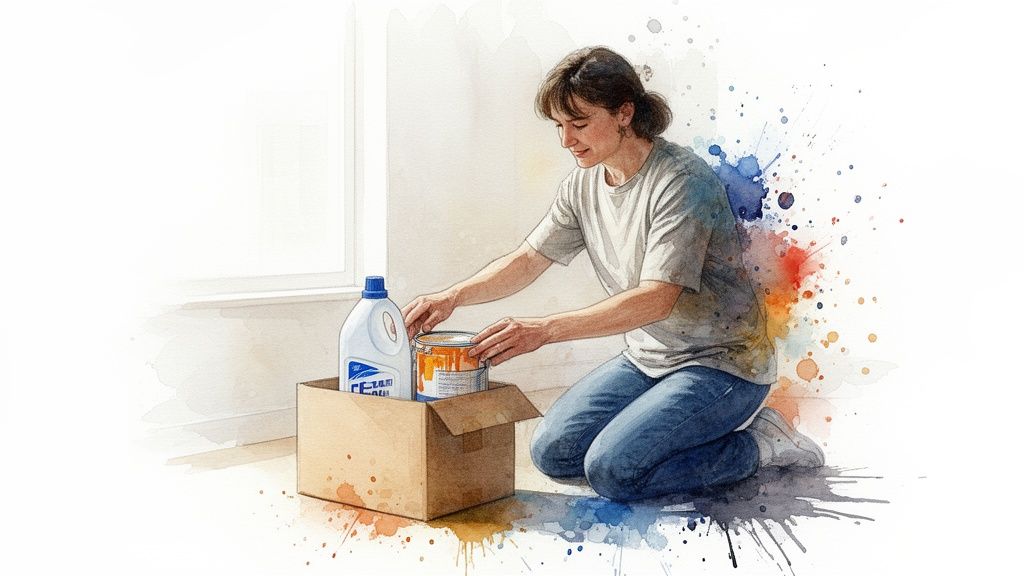
    A woman kneels, taking a paint can and bleach bottle from a cardboard box, surrounded by paint splatters.

    You know the stuff I’m talking about—the forgotten bottle of bleach under the sink, the half-used paint cans from that project five years ago. They feel like small, nagging problems. But what if they were actually clues on a map to a better you and a healthier Chicago? This isn't just a guide about trash; it’s about transformation. We’re going to show you how tackling the hidden gunk in your home is a powerful act of courage.

    I started Litter Caterpillars from this exact feeling. My apartment was a disaster, a perfect mirror for the chaos I felt inside. Cleaning it up wasn't about tidying; it was an act of choosing bravery over avoidance. I learned that by properly managing the mess in our homes, we clean up our inner worlds, too. This is your invitation to an adventure, where every item you dispose of correctly is a heroic step.

    The Scale of Our Shared Challenge

    It's easy to feel like one can of old paint thinner doesn't matter. But our individual clutter adds up to a massive, city-wide problem.

    In 2020 alone, Chicago produced a staggering 4.13 million tons of waste. Imagine the weight of that. And a huge chunk of it—over 1.4 million tons—came from commercial and industrial sources, which are prime generators of hazardous stuff. When you see those numbers, it's clear our small actions are part of a much bigger story. You can dig deeper into Chicago's waste strategy and its findings to get the full picture.

    This is where personal growth slams right into community impact. The story of Litter Caterpillars began when I hit a personal breaking point. My messy apartment mirrored a messy life. The decision to finally clean up wasn't just about throwing things away; it was an act of taking control. It was about choosing bravery over avoidance.

    That's the secret we discovered: cleaning someone else’s mess is often easier than cleaning our own. It builds a muscle. It teaches you consistency and gives you a strange, new kind of fun—the kind that comes from doing something hard with friends.

    That’s the exact spirit we bring to our weekly cleanups, rain or shine. For three years, we’ve shown up. We've cleaned highways and are even turning an auctioned lot into a park, all fueled by the simple idea that service can redeem and transform us.

    Why Your Small Act of Sorting Matters

    Disposing of your hazardous waste correctly is an act of kindness to thousands of people you’ll never meet. It protects the sanitation workers who handle our trash every day and the water we all drink from Lake Michigan. It's a quiet, heroic choice that ripples outward.

    Think of it like this: every single item has a story. That old bottle of weed killer is a potential threat to the soil in a local park. Those expired batteries could leach heavy metals into the ground. When you choose to take them to a proper disposal site, you’re not just getting rid of clutter. You are rewriting the end of that item's story from a harmful one to a helpful one.

    This guide is here to make that choice easy. We believe making an impact is a lot easier than you think, and it can even be fun. It’s about building new habits, one brave decision at a time. The same focus it takes to sort your hazardous waste is the focus you can bring to other parts of your life. This isn't just a cleanup; it's a crusade.

    Recognize the Hidden Hazards in Your Home

    Before you can tackle a problem, you have to know what you're looking at. This part is your field guide for a brave mission: finding the common household hazardous waste (HHW) hiding in your own home. Forget boring lists. We’re going on a scavenger hunt, and the prize is a safer home and a healthier Chicago.

    This isn’t about making you paranoid; it’s about making you powerful. Think of yourself as a detective and your home as the scene. The clues are usually hiding in plain sight—the old can of paint thinner, the half-used bottle of drain cleaner, the expired pills in the medicine cabinet. By learning to see your space with new eyes, you’re taking the first, most important step.

    Meet the Garage Goblins

    The garage is often the main hideout for some of the nastiest stuff we own. We call them "Garage Goblins" because they're usually out of sight, but they can cause some serious trouble.

    I'm talking about things like used motor oil, antifreeze, and old gasoline. When these liquids get tossed in the regular trash, they can seep into the ground at the landfill, contaminating soil and our groundwater. That’s a direct threat to Lake Michigan, our drinking water source.

    Then you've got the pesticides, herbicides, and fertilizers. These chemicals are designed to be powerful, and that power doesn't just vanish when you throw them away. Spotting these goblins is the first move in getting them out of your life for good.

    Unmasking the Kitchen Gremlins

    Your kitchen might seem innocent, but it’s a favorite hiding place for its own tricky creatures. These "Kitchen Gremlins" often come in bottles and cans, promising a sparkling clean home.

    We're talking about items like:

    • Caustic Cleaners: Oven cleaners and drain openers are no joke. They often contain lye or strong acids that can cause severe burns and eat right through stuff.
    • Aerosol Cans: Even if they seem empty, cans for cooking spray or air fresheners can still explode under pressure in a garbage truck.
    • Cooking Oils: While it’s not toxic like a chemical, pouring old cooking oil down the drain is a fast way to clog up the city's sewer lines. Throwing it in the trash just makes a greasy mess and attracts pests.

    The real danger here is how normal these things are. We use them all the time, so we forget how potent they can be. Treating them with respect by disposing of them properly is a small act of kindness to our city's workers and our environment.

    To make this even clearer, here’s a quick reference table to help you spot these creatures around your house and understand the "why" behind handling them carefully.

    Common Household Hazardous Waste and Its Dangers

    Item Category (The 'Creature') Common Examples The Hidden Danger (Why it's hazardous)
    Garage Goblins Motor oil, antifreeze, gasoline, paint thinner, pesticides, herbicides Can contaminate soil and groundwater, posing a risk to drinking water and wildlife. Flammable.
    Kitchen Gremlins Oven cleaner, drain opener, aerosol cans, polishing agents Corrosive chemicals can cause severe burns. Aerosols can explode. Fumes can be toxic.
    Bathroom Bogeymen Expired medications, mercury thermometers, nail polish remover, button batteries Pharmaceuticals pollute waterways. Heavy metals (like mercury) are highly toxic. Flammable.

    Spotting these items is half the battle. Once you know what you have, you can make a plan to get rid of it the right way.

    Battling the Bathroom Bogeymen

    The bathroom cabinet is another prime spot for what we call the "Bathroom Bogeymen." This is where you'll find expired pharmaceuticals, old-school mercury thermometers, and nail polish remover.

    Flushing old pills was once common advice, but now we know better. It just sends those chemicals straight into our water system, and treatment plants aren't built to filter them all out. This stuff can mess with aquatic life and eventually circle back into our environment.

    Even something tiny like a button battery from a hearing aid or a watch is packed with heavy metals like mercury, cadmium, or lithium. If you’re looking to tackle this specific challenge, our guide on how to properly recycle batteries in Chicago gives you clear, actionable steps. Every single battery you keep out of a landfill is a small but heroic victory against pollution.

    Your Guide to Official Chicago Disposal Programs

    Alright, you’ve bravely hunted down the hazardous goblins and gremlins lurking in your home. Now what? You’re holding a box of powerful, potentially messy stuff. Don't worry. This next part isn't some bureaucratic chore; it's a simple mission. It’s all about getting these items into the right hands, and the City of Chicago has made it surprisingly easy.

    Think of yourself as a secret agent on a delivery mission. Your package is sensitive, and your job is to get it to the drop-off point safely and securely. The city provides the secure location; you just need to handle the transport. This isn't about navigating red tape; it's about being part of a city-wide effort to do the right thing, together.

    The Main Hub: The Permanent Drop-Off Facility

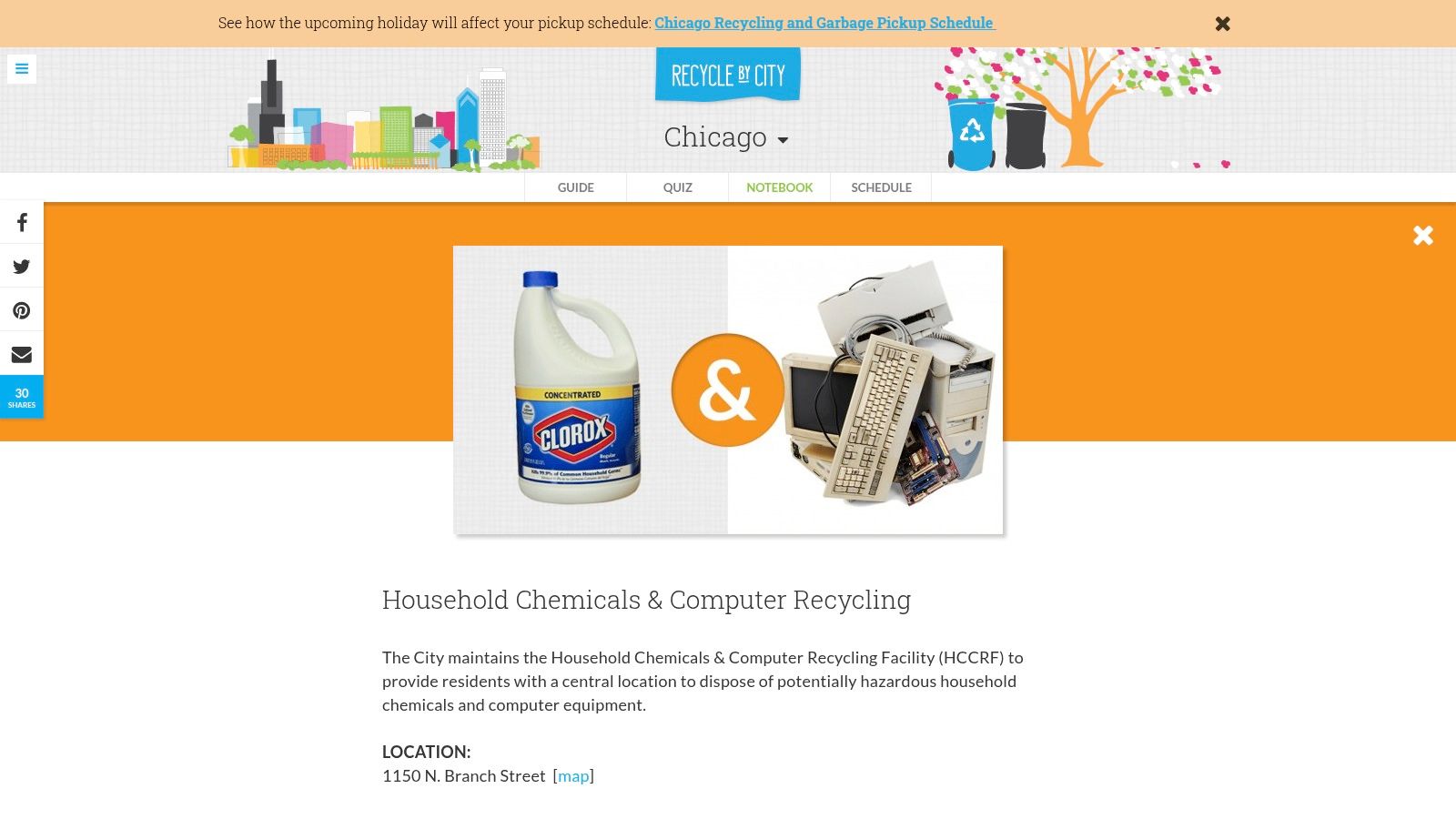
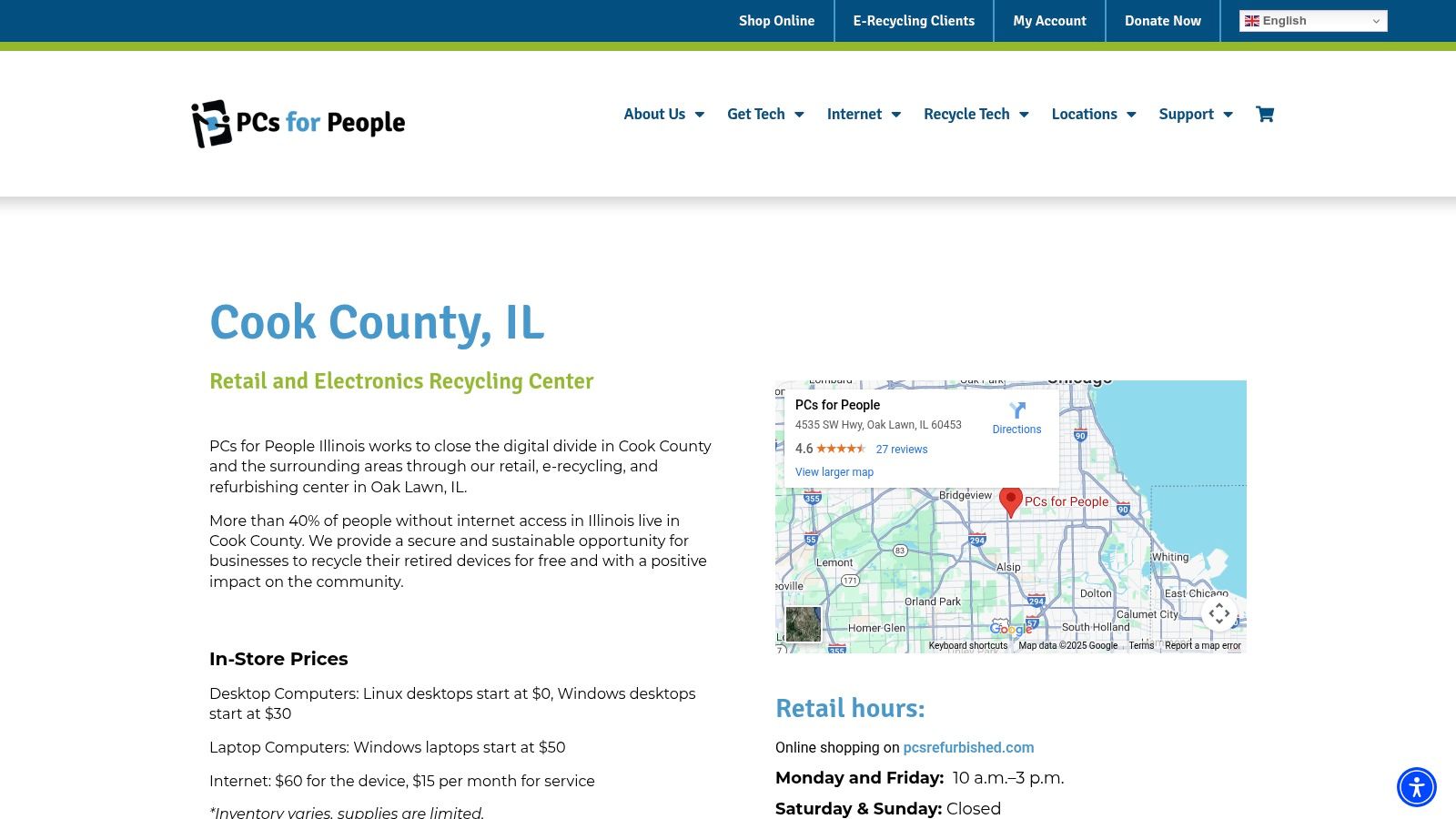
    Chicago has one central, permanent location dedicated to this mission: the Household Chemicals & Computer Recycling Facility at 1150 N. North Branch Street. This is your go-to headquarters for safe disposal. It’s a place built specifically to handle the tricky items you’ve gathered.

    The best part? It's completely free for Chicago residents. No appointment needed. You just show up with your items, and a trained crew takes them off your hands. It feels good, like completing a quest. You drive in with a problem and drive out with a solution, leaving your community a little bit safer.

    So, what can you bring? The list is long, but here are the highlights:

    • Garage & Garden Chemicals: Think paint thinners, lawn chemicals, antifreeze, and used motor oil.
    • Cleaning Supplies: Bleach, ammonia, drain cleaners, and all those old household cleaners under the sink.
    • Electronics: This is a big one. Computers, monitors, printers, cell phones, and televisions.
    • Miscellaneous Hazards: Fluorescent light bulbs (CFLs), thermostats, old batteries, and expired medications.

    Just a heads-up, they do not accept things like latex-based paint (which you can just dry out and toss in the regular trash), explosives, fireworks, or smoke detectors. Knowing what they take beforehand is key to a smooth drop-off.

    Mobile Missions: Pop-Up Collection Events

    What if the permanent facility on North Branch feels like a journey? This is where the city’s kindness really shows up. Throughout the year, they host mobile collection events in different neighborhoods.

    These events are like a traveling roadshow for responsible disposal. They bring the solution closer to your doorstep, making it even easier to participate. It’s a powerful reminder that you’re not alone in this. When you see your neighbors also dropping off their old electronics and chemicals, you realize you're part of a movement.

    This is community in action. Each person showing up to a mobile event is casting a vote for a cleaner Chicago. It’s a shared moment of responsibility, proving that when we make good choices accessible, people will bravely make them.

    Keep an eye on the city's official website for the schedule. These events are fantastic opportunities to clear out your clutter and feel connected to a larger purpose.

    Your Pre-Mission Checklist: Safe and Simple Transport

    Getting your items to the drop-off site safely is the final, crucial step. It’s not complicated, but it requires a little mindfulness.

    Think of it this way: you wouldn't carry a leaky water bottle in your backpack, right? The same principle applies here. Your goal is to make sure everything stays contained.

    Start by checking that all your containers have tight, secure lids. If a product is in its original container, leave it there—that label has important info. If you have something in a leaky container, place the entire thing inside a larger, sealed plastic tub or a heavy-duty bag.

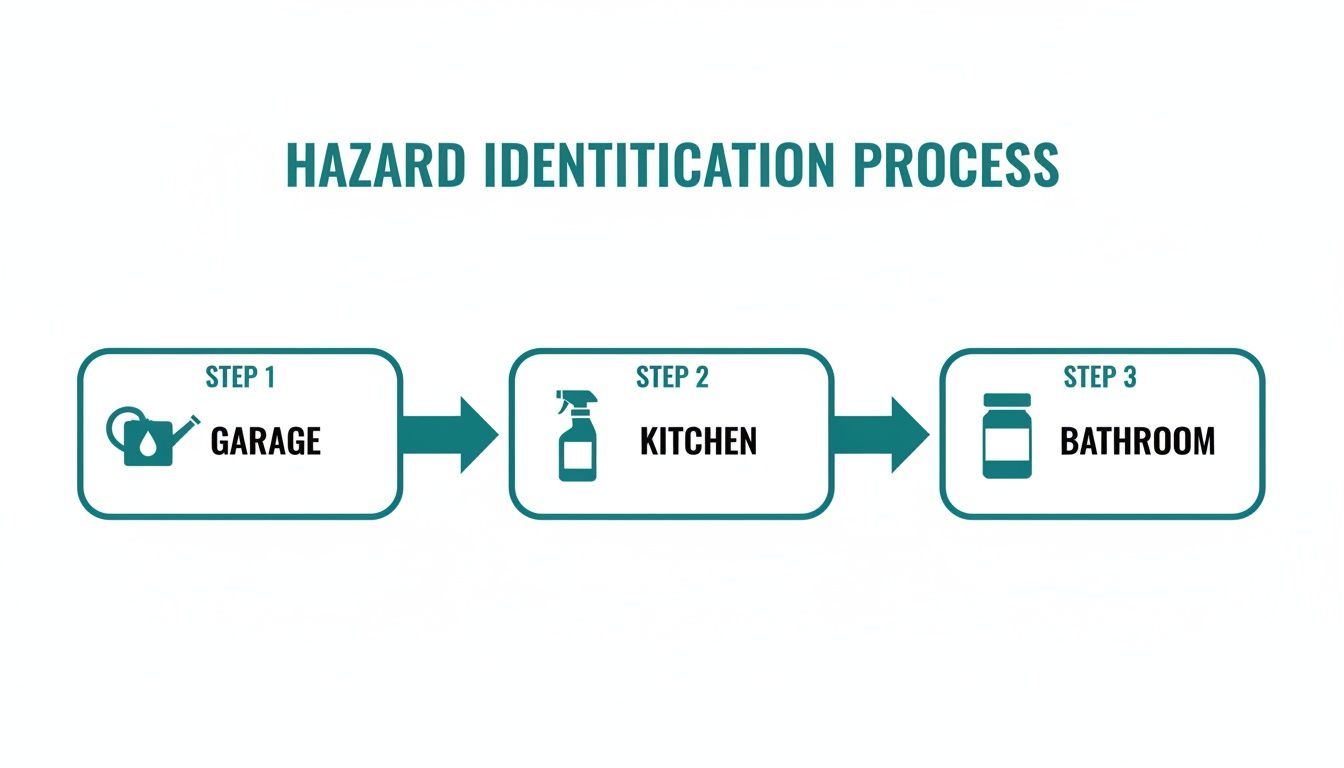
    The visual below breaks down the typical hunt for these items in your home, from the garage to the bathroom.

    Flowchart illustrating a three-step hazard identification process for garage, kitchen, and bathroom areas.

    This simple flow highlights the key areas where these hidden dangers often reside, making your search more focused and effective.

    When you're ready to drive, place the items in your trunk or the bed of your truck, away from the main passenger area. This prevents fumes from building up and keeps everyone safe in case of a spill. It’s a small act of kindness to yourself and anyone riding with you.

    And once you've made your drop-off, you'll find there are many other ways to continue your journey. For those items that aren't hazardous but still need a new home, our guide to Chicago recycling centers can help you find the right place for everything else.

    Why Your Small Action Creates a Big Impact

    It’s easy to look at that one can of old paint or your little box of dead batteries and think, "what difference does it really make?" Chicago is a massive city with problems that feel way too big for one person to solve. But trust me, your small, brave choice to do the right thing sends ripples out farther than you can see.

    Think of our recycling system as a giant river. When it’s clean, everything flows perfectly. But toss in one wrong thing—like a leaky can of bug spray—and you poison everything downstream. This isn't just an analogy; it's the hard reality of Chicago's waste problem.

    The Contamination Nightmare

    When you toss a bottle of bleach into your blue bin, you're not just making a tiny mistake. That single item can get an entire truckload of good, clean recyclables rejected and sent straight to a landfill. It's a heartbreaking domino effect. The system is more fragile than people realize, and one person's choice holds a shocking amount of power.

    This is what we call contamination, and it’s a monster of a problem. It’s why proper city of chicago hazardous waste disposal isn’t just a nice-to-do. It’s a critical mission. Your one correct decision literally protects the good work of hundreds of your neighbors.

    The numbers don't lie. Chicago's household waste diversion rate—the stuff we actually keep out of landfills—is only 9.4%. That’s embarrassingly low compared to other big cities. Contamination makes that bad number even worse. With our local landfills having less than 10 years of space left, every single choice matters more than ever. You can read more about Chicago's recycling mess and what you can do to help.

    Your Quiet Act of Bravery Echoes Through the City

    This isn't about shaming anyone. It’s about empowerment. It’s about understanding the real power you hold in your hands.

    Let's tell a different story. Imagine you have that half-used can of pesticide. Instead of just tossing it, you take a brave step. You look up the city's drop-off site, you seal the can, and you make the trip. What did you just accomplish?

    • You Protected Our Water: You stopped toxic junk from seeping into the ground and maybe even into Lake Michigan, where we get our drinking water.
    • You Saved Landfill Space: You made sure a whole truck full of recycling didn't get contaminated and dumped into a landfill that's about to burst.
    • You Became a Good Neighbor: You did something that helps millions of people you will never, ever meet. It’s a quiet, powerful act of kindness.

    Every time you correctly dispose of a hazardous item, you are casting a vote. You’re voting for a healthier lake, cleaner parks, and a city that values its resources. Your small act is a massive contribution to our shared community challenge.

    This is the exact same spirit we live by at Litter Caterpillars. We know that cleaning up trash is about more than just making a block look pretty; it's about taking pride in our home and inspiring others to do the same. Each piece of litter we grab feels small, but together, we've transformed entire neighborhoods.
    Your personal decision to handle hazardous waste with care is no different. It’s a quiet, heroic act that builds a stronger, kinder, and more resilient Chicago for all of us.

    Creative Solutions and Community Power

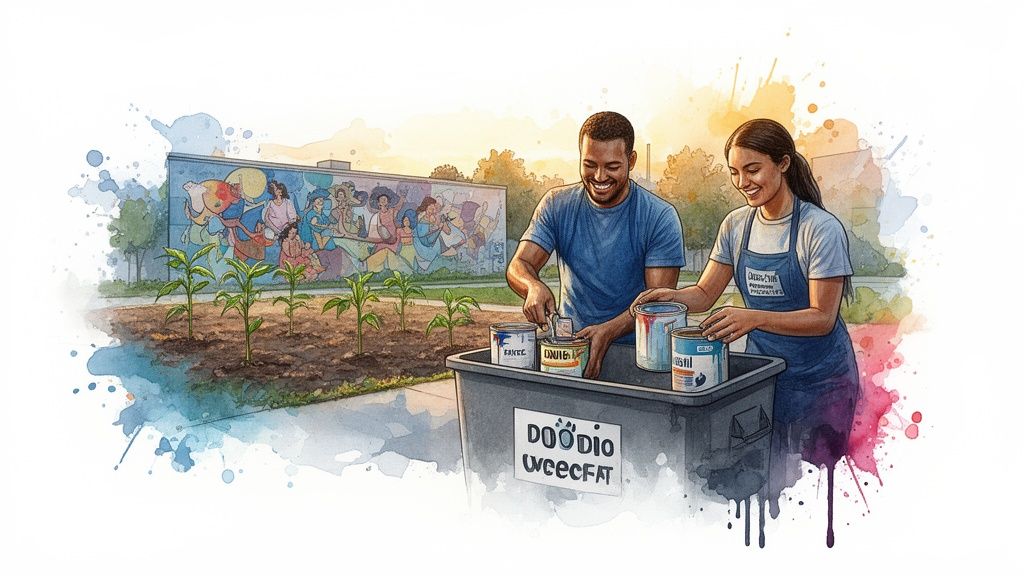
    Two smiling volunteers sort paint cans into a recycling bin near a community garden and mural.

    Tackling hazardous waste doesn't have to be a lonely trip to a drop-off site. The journey you started by finally cleaning out that scary garage corner can be the start of something bigger—an act of connection and real community power. This is where it gets fun. This is where you see your own personal growth start to ripple out and inspire other people.

    Think of it like this: your house is your personal ecosystem, but the city is our shared one. When you find a smarter way to handle waste, you're not just cleaning a shelf; you're healing a tiny piece of Chicago. It’s about looking at "waste" and seeing potential instead of just an ending.

    Give Your Stuff a Second Act

    Before you tape up that box and haul it to the city's hazardous waste facility, take one last brave look inside. Is every single thing in there truly "waste"? Sometimes, what we see as a problem is actually a solution that's just waiting for a new home.

    This is especially true for things like leftover latex paint. Now, oil-based paints are a different story, but latex paint? If it’s still good, it's a resource! That half-full can could be exactly what a local theater group needs for their next set design, or what a community garden needs to finally paint those planters.

    This tiny shift in mindset is powerful. It turns a chore into an act of kindness. Here’s how you can find a new home for your usable stuff:

    • Hit up local arts and theater groups. Most of them are running on shoestring budgets and would be thrilled to get usable materials like paint.
    • Check with schools and community centers. You never know, their art or maintenance departments might be looking for exactly what you have.
    • Post on neighborhood groups. Platforms like Facebook or the Buy Nothing Project are incredible for connecting your "clutter" with a neighbor's need.

    Every single item you can keep out of the waste stream is a victory. It’s a creative act that saves resources, supports local groups, and weaves our community a little bit tighter. It’s you, looking at a can of paint and choosing to see a possibility instead of a problem.

    This same logic works for other items, too. That old laptop you replaced isn’t just e-waste; it could be a lifeline for a student who doesn’t have one. Finding a proper electronics recycler or refurbisher gives it a second life.

    The Power of Collective Action

    This is how we go from personal growth to community transformation. One person making a trip to the disposal facility is good. A whole neighborhood organizing together? That’s unstoppable. This is the heart of what we do at Litter Caterpillars. We know that when kind, brave people join forces, they can literally change the landscape of our city.
    The Chicago Metropolitan Region is facing a landfill crisis that makes our work even more urgent. As of early 2025, our region's main landfills have an average of just 23.6 years of capacity left, and some have less than a decade. With budgets being cut, volunteer groups are the ones stepping up. You can learn more about the critical state of Illinois's landfill capacity and see for yourself.

    This is where community groups shine. Imagine a block club organizing a "Hazardous Waste Carpool Day," where a few neighbors with cars help others get their stuff to the city’s facility. Or picture a group pushing for more pop-up collection events in their area. This is kindness in action—seeing a shared problem and tackling it together.

    At Litter Caterpillars, we saw this happen firsthand. We found a trashed-out vacant lot in Englewood and saw a park. So we rallied, we cleaned, we bid, and we won it at auction. That lot is now becoming Caterpillar Park. A small team with a brave vision is turning a forgotten space into something beautiful.

    That’s the kind of power you tap into when you join a group or even just start a conversation with your neighbor. Your personal mission to handle your city of chicago hazardous waste disposal can be the spark that ignites a block-wide, a neighborhood-wide, or even a city-wide movement. Together, our small, brave acts are truly unstoppable.

    Your Questions Answered Fearlessly

    Look, every big adventure starts with a few nagging questions. It’s that last little bit of doubt that tries to trip you up before you even take the first step. Let's tackle those common worries about city of chicago hazardous waste disposal head-on. No fluff, just clear, kind answers.

    This isn't some official manual. Think of it as a chat with a friend who’s already figured this stuff out. These are the real-world problems people worry about but feel weird asking. Let's get into it.

    What Happens If I Mess Up?

    "Okay, real talk. What if I accidentally toss something hazardous in my regular trash?"

    First off, don't beat yourself up. It happens. We’re not aiming for perfection overnight; we’re building new habits.

    The real risk is that the item could leak, maybe harming a sanitation worker or, down the line, seeping into the soil and water at the landfill. So, forgive yourself for the mistake. Then, use that "oops" moment as fuel. Set up a little "hazard box" in your garage or under the sink. Now you have a designated spot for the next time you find an old can of paint thinner. Every small change adds up.

    Solving the Transportation Challenge

    "I don't have a car. How am I supposed to get this stuff to a drop-off site?"

    This is a huge, very real problem for a lot of Chicagoans. And honestly, it’s where the power of community really kicks in. This is your chance to be brave in a different way: by asking for help.

    Your first move should be to check the city’s website for any mobile collection events that might pop up in your neighborhood. But don’t stop there. Reach out! Post in your local Facebook or Nextdoor group. Ask a friend who drives. You could even organize a little carpool with a few neighbors. You’ll be shocked how many people are happy to help when they know it’s for a good cause.

    Is My Small Effort Really Worth It?

    "Seriously, is it worth all this trouble for just a few batteries and one can of paint?"

    Yes. A thousand times, yes. Think about it like our cleanups. At Litter Caterpillars, every single piece of trash we pick up is small. A bottle cap, a chip bag. But when we work together, we’ve cleared literal tons of it from our city. Your "small" effort is part of a giant, city-wide movement.

    That one can of paint you dispose of correctly keeps gnarly pollutants out of Lake Michigan. Those few batteries prevent heavy metals from poisoning the ground our food grows in. Your single action is a vote for a healthier Chicago. It’s not just worth it; it’s everything.

    Can My Community Group Host a Collection Event?

    "Can my block club or community group host our own hazardous waste collection event?"

    This is a great idea, but organizing an official event is a beast. It means partnering with licensed waste handlers and getting city permits to make sure everything is safe and legal. It’s a mountain of liability and logistics.

    But that doesn’t mean your group can't lead the charge! Instead of collecting the waste yourselves, host a "Hazardous Waste Awareness Day." You can be the neighborhood experts.

    • Hand out flyers with the official drop-off locations and hours.
    • Educate neighbors on what counts as hazardous waste.
    • Organize a carpool to the city's permanent facility on North Branch Street.

    This way, you create a massive impact and build community spirit without taking on the legal and safety risks. You become the guide, the helper, the spark.


    Ready to turn your personal mission into a community movement? Join Litter Caterpillars and see how a few hours of kindness each week can transform our city and you. Find your next adventure at https://www.littercaterpillars.com.

  • Your 2025 Guide to 12 Transformative Chicago Recycling Centers

    Your 2025 Guide to 12 Transformative Chicago Recycling Centers

    It started with a single piece of trash. For me, it was an old jar of blueberry jam. It sat in my fridge for four years, a tiny, sticky monument to a past I couldn't clean up. Each piece of clutter in my apartment felt like it weighed 500 pounds, a physical anchor to a messy life. It wasn't until I faced a painful breakup that I knew I had to change. I decided to tackle the hardest things first: cleanliness, consistency, and bravery.

    I started by picking up someone else's trash. Why? Because cleaning up other people's messes is way easier than cleaning up our own. It's a brave first step. That’s how Litter Caterpillars was born, in a freak hailstorm with two friends, realizing that shared struggle can be fun, that it can advance the plot of your life. This guide to Chicago recycling centers isn't just a list of addresses. It's a map for your own transformation.

    Each center is a place where you can take something broken or unwanted and turn it into a new beginning. It’s an act of kindness to our community and a brave step toward becoming the person you want to be. This comprehensive resource is designed to make that first step simple. Inside, you'll find a detailed directory of drop-off sites, from electronics and hazardous waste to mattresses and scrap metal. We'll show you exactly where to go, what they accept, their hours, and any special rules, all with direct links to make your journey easier. Let’s start this journey together. It’s a lot easier, and more fun, than you think.

    1. City of Chicago – Household Chemicals & Computer Recycling Facility (HCCRF)

    This is your official, city-run destination for those tricky items that can’t go into your blue bin. Think of it as the responsible final resting place for old electronics, half-empty paint cans, and mystery cleaning supplies lurking under your sink. Instead of letting these hazardous materials seep into our groundwater or take up space in a landfill, you’re giving them a chance at a new life or safe disposal. It’s a small act of bravery that protects our shared home, a simple step that ripples outward to protect Lake Michigan and the soil beneath our feet.

    City of Chicago – Household Chemicals & Computer Recycling Facility (HCCRF)

    Why It’s a Go-To Resource

    What makes the HCCRF special is its accessibility and reliability. It’s a permanent facility, a steadfast ally in our city’s sustainability mission. Unlike pop-up events, you can count on its regular hours to plan your drop-off. Plus, it’s completely free for Chicago residents, removing any financial barriers to doing the right thing. The city staff on-site are incredibly helpful, guiding you and even unloading your car. This direct support transforms a potentially confusing chore into a moment of collective action and community care.

    Key Details & User Experience

    • Availability & Access: This is a free service exclusively for Chicago residents. Businesses and commercial operations are not permitted.
    • Unique Offerings: It’s a one-stop-shop for both Household Hazardous Waste (HHW) and electronics, which is a rare and convenient combination.
    • User Experience: The process is streamlined. You drive up, and the staff assists you, which minimizes your contact with potentially harmful chemicals and makes the experience quick and safe.
    • Pro Tip: Always check the official website for the most current list of accepted materials and updated hours before you go. This simple step ensures your trip is successful and efficient.

    2. Recycle by City – Chicago

    Before you can bring your items to the right place, you need to know what goes where. Think of this website as your personal recycling coach, the wise friend who helps you sort with confidence. Recycle by City is the official educational hub for Chicago's Blue Cart program, designed to demystify the process and turn confusion into clear, decisive action. It’s not a physical drop-off center but a foundational resource that empowers you to recycle correctly from home, preventing contamination before it even starts. This digital guide helps you honor the system and ensure your efforts truly count.

    Recycle by City – Chicago

    Why It’s a Go-To Resource

    Knowledge is the first step in any meaningful journey, and recycling is no different. This platform excels by providing simple, visual, and Chicago-specific guidance that cuts through the noise. Instead of generic advice, you get rules tailored exactly to our city’s program. It answers those nagging questions like, "Can I recycle this plastic container?" or "What do I do with greasy pizza boxes?" By making the right information so accessible, it transforms a mundane task into a mindful practice of city-wide stewardship, helping every resident become a recycling champion.

    Key Details & User Experience

    • Availability & Access: This is a free online resource available to anyone, but its content is specifically tailored for Chicago residents participating in the Blue Cart program.
    • Unique Offerings: Its strength is its hyper-local focus. You’ll find clear visual guides on what’s accepted, FAQs that tackle common recycling myths, and updates on holiday collection schedules.
    • User Experience: The website is clean, intuitive, and designed for quick answers. The visual "what goes in the cart" guide is especially helpful for getting a clear yes or no in seconds.
    • Pro Tip: Bookmark the Recycle by City Chicago page on your phone. When you're standing in your kitchen unsure about an item, you can pull up the answer instantly instead of guessing and potentially contaminating a whole batch.

    3. Chicago Recycles (Recycle Coach web app)

    Ever stood over your blue bin, holding an empty pizza box or a plastic container, caught in a moment of recycling paralysis? You’re not alone. This digital tool is your personal recycling guru, a pocket-sized guide designed to demystify the curbside process. It’s an act of empowerment, transforming confusion into confidence and ensuring your efforts truly count. Instead of guessing and hoping for the best (a practice known as "wishcycling"), you're taking a deliberate step to reduce contamination and make our city's recycling program stronger for everyone.

    Chicago Recycles (Recycle Coach web app)

    Why It’s a Go-To Resource

    The beauty of Chicago Recycles lies in its hyper-local precision. It’s not just a generic guide; it's your guide, tailored to your specific address. By providing personalized pickup schedules, reminders, and a searchable database for tricky items, it eliminates the guesswork. This clarity is a game-changer, helping you become a more effective advocate for our environment right from your own home. It’s the small, consistent actions that build a sustainable city, and this tool makes those actions simpler than ever.

    Key Details & User Experience

    • Availability & Access: This is a free digital tool available to all Chicago residents via the web or a mobile app.
    • Unique Offerings: The "What Goes Where?" search function is its standout feature, providing instant answers on how to dispose of hundreds of different items correctly.
    • User Experience: The interface is clean and incredibly user-friendly. Setting up reminders takes less than a minute, and the search function provides clear, actionable instructions.
    • Pro Tip: Download the mobile app and enable push notifications. You'll get timely reminders for your collection day and alerts about service changes, like holiday delays, ensuring your blue bin never gets left behind. Get started on the official website.

    4. Illinois EPA – “Beyond the Bin” Locator

    When your recycling needs go beyond the city limits or your blue bin’s capacity, this tool is your compass. The Illinois EPA’s “Beyond the Bin” locator is a powerful statewide map, a digital treasure hunt for finding the right home for unusual items like old tires or spent batteries. It empowers you to think bigger, to see our state's entire sustainability network as your resource. By looking beyond our neighborhood drop-offs, we join a larger movement, connecting our local actions to a statewide commitment to a cleaner, healthier Illinois.

    Illinois EPA – “Beyond the Bin” Locator

    Why It’s a Go-To Resource

    This locator is the official, authoritative guide from the state itself, which means you can trust the information. It’s perfect for those specialty items that standard chicago recycling centers might not accept, giving you a reliable backup plan. Rather than giving up and trashing a hard-to-recycle item, this tool offers a path forward, a way to ensure everything finds its proper place. It’s an act of dedication, proving that with a little research, we can overcome any recycling challenge and truly minimize our waste.

    Key Details & User Experience

    • Availability & Access: This is a free, public tool available to all Illinois residents. It covers the entire state, not just Chicago.
    • Unique Offerings: Its strength lies in its filters for specific, hard-to-recycle materials like tires, electronics, and various types of batteries.
    • User Experience: The interface is a technical GIS map, which may take a moment to learn. However, its power lies in its ability to filter and search for exactly what you need.
    • Pro Tip: Use the filter options on the official map tool to narrow your search by material before you start exploring. This will save you time and point you directly to the nearest facility for your specific item.

    5. Earth911 Recycling Search (iRecycle app)

    Think of this tool as your personal recycling compass, a digital guide that cuts through the confusion of “what goes where.” It’s more than just a search engine; it’s an empowering resource that connects your good intentions with real, actionable steps. Holding an old car battery, a tangled mess of holiday lights, or an empty bottle of motor oil, you’re not left wondering. You’re given a map, a direct path to a responsible solution, turning a moment of uncertainty into an act of environmental stewardship.

    Earth911 Recycling Search (iRecycle app)

    Why It’s a Go-To Resource

    What sets Earth911 apart is its sheer breadth and laser-focused specificity. While other resources might offer general guidelines, this platform lets you search for over 350 different material types. This incredible detail means you can find a home for nearly anything, from asphalt to Ziploc bags. It transforms recycling from a guessing game into a precise, confident action. This platform is an indispensable tool for anyone serious about minimizing their landfill footprint and finding proper chicago recycling centers for even the most obscure items.

    Key Details & User Experience

    • Availability & Access: The website and its companion app, iRecycle, are completely free to use for everyone, not just Chicago residents. It covers the entire Chicagoland area and beyond.
    • Unique Offerings: Its massive, searchable database of over 250,000 locations is its standout feature, making it one of the most comprehensive recycling directories available.
    • User Experience: The interface is straightforward. You simply enter the material and your ZIP code to get a list of nearby options, complete with maps and contact information.
    • Pro Tip: Always call the facility listed on Earth911 before you visit. Since it’s an aggregator, information like hours or accepted materials can sometimes be out of date, and a quick call ensures your trip won't be wasted.

    6. PaintCare Illinois – Paint Drop-Off Locations

    That half-full can of "Agreeable Gray" from your last apartment doesn't have to become a permanent resident of your garage. PaintCare Illinois provides a brilliant and simple solution, turning a common household waste problem into an opportunity for responsible action. It's a statewide program that creates a network of local drop-off sites, often at paint and hardware stores you already visit, making it incredibly easy to recycle leftover architectural paint. Think of it as a community library for paint, where unwanted colors and finishes are collected and given a chance to be useful again, preventing them from ending up in a landfill.

    PaintCare Illinois – Paint Drop-Off Locations

    Why It’s a Go-To Resource

    The genius of PaintCare is its convenience and integration into your existing routine. Instead of waiting for a special hazardous waste event, you can drop off old paint while picking up new supplies. This program transforms a chore into a seamless act of environmental stewardship. By making paint recycling as easy as running an errand, PaintCare empowers everyone to make a sustainable choice without hassle. It’s a powerful example of how smart, simple systems can inspire collective action and protect our local environment.

    Key Details & User Experience

    • Availability & Access: The service is free for residents at drop-off sites, funded by a small fee added to new paint purchases in Illinois.
    • Unique Offerings: Its website features a zip-code locator that instantly shows you the nearest retail stores and other facilities participating in the program.
    • User Experience: The process is straightforward. Find a location online, bring your eligible, sealed paint cans (check for accepted types), and drop them off. It’s a quick and efficient way to handle a tricky waste item.
    • Pro Tip: Check the PaintCare Illinois website to confirm what products they accept (e.g., latex paint, stains) and what they don’t (e.g., spray paint). If you have a large amount, it’s wise to call the drop-off location ahead of time to confirm their volume limits.

    7. LRS (Lakeshore Recycling Systems) – Chicago Transfer Station & Drop-off

    Sometimes, our recycling needs are bigger than a blue bin can handle. When you’re in the middle of a home renovation, a massive yard cleanup, or clearing out a multi-unit building, you need a powerful partner. LRS serves as a professional-grade solution for those moments, providing a place for the materials that city services might not be equipped to manage. Think of it as a bridge between your ambitious project and responsible waste management, ensuring that even large-scale efforts contribute to a cleaner Chicago.

    LRS (Lakeshore Recycling Systems) – Chicago Transfer Station & Drop-off

    Why It’s a Go-To Resource

    LRS offers a crucial service for complex recycling scenarios. Its ability to accept mixed loads, construction and demolition debris, and large volumes of yard waste makes it an invaluable resource for homeowners, landlords, and small contractors. While free city services are fantastic for daily needs, this facility provides a necessary paid option for jobs that fall outside typical residential recycling. It’s the practical, get-it-done choice when you’re committed to diverting as much material from the landfill as possible, no matter the scale of your project.

    Key Details & User Experience

    • Availability & Access: This is a paid service open to the public, including residents, businesses, and contractors. Fees vary based on the type and weight of materials.
    • Unique Offerings: It specializes in handling construction debris, e-waste, yard waste, and other mixed loads that don’t fit into standard curbside recycling programs.
    • User Experience: The process is designed for efficiency. You drive in with your load, it’s weighed, you pay on-site, and their team directs you on where to drop everything off.
    • Pro Tip: Before loading up your vehicle, visit the LRS website or call ahead to confirm their current rates and specific rules for items like electronics. This ensures a smooth and predictable drop-off experience.

    8. PCs for People – Cook County (Oak Lawn)

    Recycling an old laptop can be more than just responsible disposal; it can be an act of profound community uplift. PCs for People transforms your unwanted electronics from forgotten relics into powerful tools for connection and opportunity. This is where your old tech finds a higher purpose, getting refurbished and placed into the hands of families, students, and job seekers who need them. Donating here isn't just clearing out a drawer; it's opening a door for someone else.

    PCs for People – Cook County (Oak Lawn)

    Why It’s a Go-To Resource

    What sets PCs for People apart is its powerful dual mission: environmental responsibility fused with social equity. They aren't just one of many electronics recycling centers; they are a bridge across the digital divide. By prioritizing reuse and refurbishment, they give devices a second life, directly empowering low-income households with affordable computers and internet access. This model creates a beautiful, circular impact where your contribution directly fuels someone else's access to education, employment, and modern life.

    Key Details & User Experience

    • Availability & Access: Drop-offs are free for individuals and businesses. While the main storefront is in Oak Lawn, they frequently partner on collection events within Chicago city limits.
    • Unique Offerings: This is more than a drop-off site. It’s a retail store offering low-cost, high-quality refurbished computers and mobile hotspots to eligible low-income residents.
    • User Experience: The process is transparent and mission-driven. They are a certified e-recycler that performs secure data wiping, giving you peace of mind that your personal information is protected.
    • Pro Tip: Before you head out, visit the official Cook County location page to check their hours and see what special collection events might be happening closer to you.

    9. Sims Metal – Chicago Scrap Metal Yards

    This is where your old metal finds its second wind, transforming from forgotten scrap into a resource with real value. Think of that old brass lamp, the pile of aluminum cans from a community cleanup, or the stainless steel sink from a kitchen remodel. Instead of sending these materials to a landfill, you’re plugging them back into the industrial lifeblood of our economy. It’s a powerful act of circularity, turning what seems like waste into raw material and even putting a little cash back in your pocket.

    Sims Metal – Chicago Scrap Metal Yards

    Why It’s a Go-To Resource

    Sims Metal stands out by attaching tangible, monetary value to your recycling efforts. It’s one of the few places where your commitment to sustainability literally pays off. With multiple locations across the city, they make it incredibly convenient for residents and small businesses to participate in the metal recycling stream. This network of accessible yards demystifies the scrap metal industry, making it approachable for everyone, not just large-scale industrial operations. It’s an empowering experience to see your collection weighed, valued, and processed for its next chapter.

    Key Details & User Experience

    • Availability & Access: Open to the public, but primarily focused on ferrous and non-ferrous metals. You will likely need to present a valid ID for payment.
    • Unique Offerings: This is one of the premier chicago recycling centers where you get paid for your materials. They handle everything from common aluminum and steel to more valuable copper and brass.
    • User Experience: The process is straightforward. You bring your sorted metals, they are weighed on a certified scale, and you receive payment based on current market rates. It feels professional and efficient.
    • Pro Tip: Give them a call or visit the official website before you go to ask about current prices for the specific metals you have. Commodity prices fluctuate, so a quick check can help you know what to expect.

    10. Abt Electronics – Recycling Center (Glenview)

    While technically just outside the city limits, Abt Electronics in Glenview acts as a powerful ally for Chicago’s northern residents. Think of it as a recycling hub disguised as a retail giant, a place where the life cycle of your old appliances doesn’t end but transforms. When you upgrade your microwave or finally part with that ancient VCR, Abt provides a responsible pathway forward, ensuring these bulky items are dismantled with care rather than abandoned in a landfill. It’s an act of conscious consumerism, turning a shopping trip into an opportunity to close the loop on your electronic footprint.

    Why It’s a Go-To Resource

    What sets Abt apart is the seamless integration of recycling into the retail experience. It's one of the few places where you can drop off a broken toaster for free and shop for its replacement in the same visit. This convenience removes the friction that often prevents us from recycling larger items. Their on-site recycling center is a testament to corporate responsibility, a tangible commitment to sustainability that goes beyond just selling green products. They are a valuable partner for anyone on the North Side or in the northern suburbs looking for reliable appliance and electronics recycling.

    Key Details & User Experience

    • Availability & Access: The recycling center is open to the public, not just Abt customers. It is located in Glenview, a short drive from Chicago's northern neighborhoods.
    • Unique Offerings: Abt accepts a massive range of electronics and appliances, with free drop-off for most items. They also offer haul-away services for old appliances when they deliver a new one.
    • User Experience: The process is exceptionally easy. You pull up to their dedicated recycling drop-off area, and staff are usually available to help you unload heavy items directly from your vehicle.
    • Pro Tip: Be aware that while most items are free to recycle, there is a fee for TVs and computer monitors. Check the Abt Green Initiatives page for the current fee schedule and a complete list of accepted items before making the trip.

    11. Best Buy – Electronics Recycling (multiple Chicago stores)

    Your old tech has stories to tell, but it shouldn't end its tale in a landfill. Best Buy’s recycling program transforms your routine errands into an act of environmental kindness. That drawer full of mystery cords, the printer that gave up the ghost, and the ancient cell phone in your closet can all find a responsible next chapter here. By dropping them off, you’re not just decluttering your home; you’re reclaiming precious materials and preventing toxic e-waste from harming our planet.

    Best Buy – Electronics Recycling (multiple Chicago stores)

    Why It’s a Go-To Resource

    What makes Best Buy a standout among Chicago recycling centers is sheer convenience. With multiple locations across the city, you’re likely just a short drive from a drop-off point. This program integrates sustainability directly into your existing shopping trips, removing the need for a special journey. It’s a simple, powerful way to make a difference, proving that making an impact can be as easy as swinging by your local electronics store. This accessibility empowers everyone to participate in the circular economy.

    Key Details & User Experience

    • Availability & Access: This is a free service at all Best Buy locations for a wide range of small electronics and peripherals. Some larger items may have a fee.
    • Unique Offerings: The program accepts an extensive list of items, including cables, computers, ink cartridges, and small kitchen appliances. They also offer a trade-in program for working devices, giving your old tech monetary value.
    • User Experience: The process is incredibly simple. Most stores have a recycling kiosk right at the front entrance for smaller items, or you can bring them to the customer service desk.
    • Pro Tip: Policies can vary slightly by store, especially regarding TVs, monitors, and quantity limits. Always check the official website to confirm what your local store accepts before you head out.

    12. Staples – Free Electronics & Tech Recycling

    Your old office equipment doesn't have to become a ghost haunting your closet. Staples offers a surprisingly simple and powerful way to give that outdated tech a dignified exit. Turning in your old laptop, keyboard, or printer is an act of closure, clearing space in your home and preventing toxic e-waste from ever reaching a landfill. It’s a small, convenient step that transforms a routine shopping trip into a meaningful contribution to a cleaner Chicago.

    Staples – Free Electronics & Tech Recycling

    Why It’s a Go-To Resource

    The beauty of the Staples program is its sheer convenience. Instead of planning a special trip to one of the dedicated Chicago recycling centers, you can integrate this responsible act into your regular errands. Their wide retail footprint means a drop-off point is likely just minutes away. This accessibility breaks down barriers, making it incredibly easy to do the right thing without disrupting your day. It’s a testament to how corporate responsibility, when done right, can empower individual action and create collective impact.

    Key Details & User Experience

    • Availability & Access: This is a free service available at most Staples locations for all customers, not just residents of a specific area.
    • Unique Offerings: The program is ideal for small to medium-sized electronics like desktops, laptops, peripherals, and tablets. They also frequently run promotions offering store rewards for recycling ink and toner cartridges.
    • User Experience: The process is typically straightforward. You bring your items to the customer service desk, and an associate will take them off your hands. It’s quick, efficient, and requires no appointments.
    • Pro Tip: Before you go, visit the official Staples website to confirm your local store's participation and check their specific limits, as some have a daily cap on items per customer and do not accept larger electronics like TVs.

    12 Chicago Recycling Centers — Quick Comparison

    Provider Core offering Quality (★) Cost (💰) Target audience (👥) Unique / standout (✨🏆)
    City of Chicago – HCCRF Permanent HHW + e‑waste drop‑off; staffed unloading, posted hours ★★★★☆ 💰 Mostly free for residents 👥 Chicago households (residential only) ✨Staffed site with clear accepted‑item lists 🏆
    Recycle by City – Chicago Visual Blue Cart rules, FAQs & holiday/tag guidance ★★★★☆ 💰 Free information 👥 All Chicago residents ✨Simple visuals to reduce contamination
    Chicago Recycles (Recycle Coach) Address‑specific calendars, reminders & "What Goes Where" app ★★★★★ 💰 Free 👥 Residents who want personalized reminders ✨Hyper‑local schedules & lookup 🏆
    Illinois EPA – “Beyond the Bin” Locator Statewide interactive map for specialized drop‑offs by material ★★★★☆ 💰 Free 👥 People with hard‑to‑recycle items ✨Filterable statewide facility map
    Earth911 / iRecycle National ZIP‑based directory & app for 350+ materials ★★★★☆ 💰 Free (verify local fees) 👥 Regional users & volunteers ✨Extensive directory; material‑specific search
    PaintCare Illinois Zip locator for eligible paint drop‑offs; retail partners ★★★★☆ 💰 Free for eligible paints (fee paid at purchase) 👥 Residents with leftover paint ✨Retail drop‑off network; clear accepted list
    LRS – Chicago Transfer Station Private drop‑off for mixed loads, C&D, yard waste & e‑waste ★★★☆☆ 💰 Paid (rates vary by load) 👥 Residents/buildings with large or mixed loads ✨Handles mixed loads; on‑site payment
    PCs for People – Cook County Nonprofit refurbisher & certified e‑recycler; data wiping & reuse ★★★★☆ 💰 Often free/low‑cost recycling 👥 Donors & low‑income households ✨Secure data wiping + device reuse mission 🏆
    Sims Metal – Chicago Scrap Yards In‑city scrap metal yards; buys ferrous & non‑ferrous metals ★★★★☆ 💰 You get paid (market rates) 👥 People with scrap metal ✨Paid option for metal; multiple city locations
    Abt Electronics – Glenview Retail recycling center for electronics & appliances; TV fees ★★★☆☆ 💰 Mixed — free appliance drop‑off, fees for TVs 👥 North/North‑shore residents ✨Transparent fees; appliance handling
    Best Buy – Electronics Recycling Store drop‑off for small electronics & trade‑ins (store limits) ★★★☆☆ 💰 Mostly free for small items 👥 Errand‑running residents ✨Convenient retail locations; trade‑in options
    Staples – Free Electronics & Tech Recycling Retail drop‑off for small electronics (per‑day limits) ★★★☆☆ 💰 Free (item limits apply) 👥 Offices & home declutterers ✨Wide footprint; predictable hours

    From Clutter to Caterpillar: Your Next Brave Step

    We've just walked through a dozen powerful tools, a veritable treasure map to navigate the world of Chicago recycling centers. You now have the addresses, the hours, and the specific rules for everything from that ancient laptop gathering dust in your closet to the mountain of paint cans from your last home project.

    This isn't just a list. It's an arsenal. It's proof that for every piece of "trash" you encounter, there is a place, a process, and a potential for new life. You're no longer staring at a problem; you're looking at an opportunity.

    The Real Takeaway: It's Not About the Trash

    Let's be honest. For most of us, recycling feels like a chore. It’s one more thing on an endless to-do list. But what if we saw it differently? What if sorting plastics and finding a drop-off for old electronics was a tiny act of rebellion against a throwaway culture?

    Think of it like this: every time you choose to use one of these resources instead of the landfill, you are casting a vote. You are voting for a cleaner street, a healthier lake, and a city you are proud to call home. This isn't about perfection. It’s about participation.

    Your Simple Path Forward

    Feeling overwhelmed? Don't be. Bravery isn't about doing everything at once. It's about taking the next right step. Here’s how you can start:

    • For the Tech Hoarder: That drawer of old phones and tangled chargers? Your mission is simple. Pick the closest Best Buy or Staples from our list. Next time you're running errands, just bring the bag with you. Done.
    • For the Hazardous Waste Worrier: Those old chemicals under the sink feel intimidating. But the city has a dedicated place for them. Plan a single trip to the Household Chemicals & Computer Recycling Facility (HCCRF). One trip, and that lingering anxiety is gone.
    • For the Everyday Recycler: Your challenge is consistency. Bookmark the Chicago Recycles (Recycle Coach) web app. Use it to answer one "Can I recycle this?" question each week. Knowledge builds habits.

    The most important thing to remember is that you don't have to become a zero-waste guru overnight. You just have to start. Choose one item, one location, one action. That’s it. That’s the beginning of your transformation.

    From Small Acts to a Mighty Movement

    Remember Tom Sawyer tricking his friends into whitewashing a fence? He convinced them a chore was a grand adventure. We believe cleaning our city is the same kind of adventure. It’s not a punishment; it’s a privilege.

    By taking one small, kind action for our community, we begin to change ourselves. We become like caterpillars, imperfect but always moving, always growing. We learn that making an impact is simpler and more fun than we ever imagined. The journey from a cluttered apartment to a clean curb is the same journey from self-doubt to self-respect. You are not alone in this, and together, our small efforts can build something beautiful and strong. So take your next brave step.


    Ready to turn this inspiration into action alongside a community that gets it? Litter Caterpillars meets every weekend to clean Chicago's neighborhoods, and we use this guide to properly recycle everything we find. Join us to make a real impact, have fun, and find your people at Litter Caterpillars.

  • Recycle Batteries Chicago: A Fearless Guide to Your Junk Drawer Mission

    Recycle Batteries Chicago: A Fearless Guide to Your Junk Drawer Mission

    You can recycle batteries in Chicago by dropping them off at special collection sites, like city-run hazardous waste spots or big retailers like The Home Depot and Best Buy. But whatever you do, never toss them in your blue curbside bin—they're a huge fire risk for the people who handle our city's waste.

    The Hidden Power in Your Junk Drawer

    We all have one. That drawer, that box, that dark corner of a closet where dead batteries go to die. The AAs from the remote that saw you through a thousand movie nights, the 9-volt from the smoke detector that kept your family safe, the lithium-ion cell from an old phone holding years of memories. Each one is a tiny, forgotten monument.

    But let's be real. It’s a mess. A pile of clutter and procrastination that feels way heavier than it actually is.

    For years, my own apartment was a mirror of that drawer. Every old jam jar, every expired bag of nuts—it all had a story, and I couldn't let go. Each thing weighed less than a pound, but emotionally, it might as well have been 500. Trying to clean that personal mess felt impossible.

    From Personal Mess to Public Mission

    Then, something clicked. I realized cleaning up someone else's mess—litter on the sidewalk, trash in a park—was so much easier. That's how Litter Caterpillars got started. A few of us met to pick up trash, got caught in a classic Chicago hailstorm, and discovered something wild: tackling a visible, shared problem together isn't just easy, it's fun. It builds guts and connection.

    That small act of cleaning a public space started a chain reaction. It gave me the strength to deal with my own messes, physical and emotional. This guide to recycling batteries in Chicago is built on that very same idea.

    We believe taking care of the small, forgotten things is an act of bravery. It’s how you practice kindness, build trust in yourself, and prove that making a real impact is way easier than you think.

    This isn’t just a how-to guide. It's an invitation. A challenge to see that junk drawer not as a burden, but as your next big adventure. It’s your first step.

    One Battery at a Time

    That single dead battery? That's where you start. Think of it like the first domino. When you choose to recycle batteries in Chicago, you’re doing more than just preventing a fire at a sorting facility or keeping toxic metals out of the ground. You’re taking control. You're making a choice to leave things better than you found them.

    This simple move plugs you into a whole city of people who care. And just like picking up that first piece of litter, it can spark something bigger inside you.

    • It’s personal growth: Cleaning up small messes builds the muscle you need to tackle bigger challenges in your life.
    • It’s an act of kindness: You’re protecting sanitation workers and making our city safer for everyone.
    • It’s a source of real joy: There's a special kind of satisfaction that comes from doing the right thing, especially when you do it with others.

    So, let's open that drawer together. Let’s grab those spent batteries and get them ready for their next life. Your mission, should you choose to accept it, starts right now.

    Your Chicago Battery Recycling Mission Briefing

    Alright, you’ve decided to tackle that drawer full of old batteries. Awesome. Before you charge in, let's talk strategy. Think of this as your field guide for doing it right, because knowing why this matters is just as important as knowing how.

    Not all batteries are created equal. Some are steady, everyday workhorses, while others are tiny powerhouses that need a bit more respect.

    Getting to Know Your Battery Stash

    Let's break down the common types you’ll find lurking in your home. This isn't a pop quiz; it’s about knowing your gear so you can handle it properly.

    Here’s a quick rundown of the usual suspects.

    Your Guide to Common Household Batteries
    Battery Type Commonly Found In How to Prepare for Recycling
    Alkaline (AA, AAA, C, D, 9V) Remote controls, flashlights, clocks, kids' toys. The classics. Just bag them up. For 9V batteries, tape the two little metal snaps on top. Easy.
    Lithium-Ion & Lithium Polymer (Li-ion, LiPo) The rechargeable crew: Old cell phones, laptops, tablets, vapes, cordless drills. CRITICAL: Tape the metal ends with clear or electrical tape. This prevents them from sparking. Bag them separately.
    Button & Coin Cells The tiny silver discs: Watches, hearing aids, car key fobs, singing greeting cards. Tape these little guys, too, or stick them on a strip of packing tape. They’re small but potent.

    Each of these powered a small part of your life. Now, it's our turn to give them a second one.

    The #1 Rule: Never, Ever Use the Blue Bin

    Listen up, because this is the most important part: batteries of any kind can absolutely never go in your blue curbside recycling bin. Seriously.

    Think of that bin like a party with a very strict guest list: paper, cardboard, cans, and plastic bottles only. Batteries are the gate-crashers that start fires.

    When a battery, especially a lithium-ion one, gets crushed in a recycling truck, it can spark and ignite all the dry paper around it. This is a huge fire hazard that puts sanitation workers and entire recycling facilities at risk.

    Keeping batteries out of the blue bin is a simple act of kindness. It protects the people who work hard every day to keep our city running. You’re looking out for your team.

    Prep Work: A Simple Act of Care

    Getting your batteries ready for their journey is easy, but it’s a crucial sign of respect for everyone down the line. It's a small, mindful act that prevents big, dangerous problems.

    For any rechargeable battery (like from a laptop) or any battery with exposed metal ends (like a 9-volt), the most important step is to tape the ends. A small piece of clear packing tape or electrical tape over the contacts is all you need. This simple move is like putting a safety on a firework—it prevents sparks.

    This visual guide breaks down the simple choices you'll make.

    A decision tree flowchart for dead batteries, guiding users on whether to recharge, recycle, or drop off for disposal.

    As you can see, every battery has a path forward, and it’s a lot simpler than you think to make the right call.

    The Bigger Picture in Chicago

    Your personal mission connects to a much larger city-wide effort. The truth is, Chicago has a lot of room for improvement. Our city's recycling rates are stubbornly low, and a big reason is "contamination"—when the wrong things get thrown in the blue bin.

    The good news? Illinois recently passed a law that requires battery producers to fund better collection programs, with big goals to recover 60-70 percent of batteries. For groups like ours, this is huge.

    A stronger city-wide system means the batteries we all collect have a better chance of actually being recycled. This new framework promises more drop-off points and better support, making it easier for every single one of us to do our part. By joining this effort, you're not just cleaning a drawer; you're helping build a more resilient Chicago.

    If this kind of hands-on work inspires you, check out our guide to environmental volunteer opportunities in Chicago to find more ways to make a difference.

    Find Your Local Battery Drop Off Point

    Alright, your batteries are taped, bagged, and ready for their next adventure. You’ve done the hard part—you faced the drawer. Now comes the fun part: finding them a new home.

    Think of this as your guide to the network of good people and places across Chicago ready to help you do the right thing. You’re not alone in this; a whole system is waiting for you.

    Man walks by a blue battery recycling bin in a watercolor-style illustration of Chicago.

    City Of Chicago Household Hazardous Waste (HHW) Sites

    This is the big one. The City of Chicago runs a permanent drop-off facility for all sorts of household hazardous waste, and your old batteries are VIPs on their guest list. This is the official route to ensure your batteries are handled with the most care.

    It’s located at 1150 N. North Branch Street on Goose Island. Think of it as Grand Central Station for tricky-to-recycle items. It’s a drive-through service, which makes things incredibly simple.

    • When to Go: Tuesdays (7:00 AM to 12:00 PM), Thursdays (2:00 PM to 7:00 PM), and the first Saturday of every month (8:00 AM to 3:00 PM).
    • What to Expect: Seriously, it’s a no-fuss process. You don't even need to get out of your car. Just have your batteries ready in your trunk or back seat.
    • Pro Tip: This is the absolute best place to take any damaged, swollen, or leaking batteries. The staff there are trained pros. Don't mess around with those.

    The city also hosts periodic HHW collection events across different wards. Keep an eye on the Department of Streets and Sanitation website for an event near you. These pop-ups bring the service right to your neighborhood.

    Your Neighborhood Retail Partners

    Sometimes, a special trip isn't in the cards. That’s where many big-box retailers have stepped up to become community collection hubs. You’re probably already shopping at these places anyway.

    These stores are like friendly outposts on your recycling journey.

    • The Home Depot & Lowe's: Look for the Call2Recycle collection boxes, usually right near the entrance or by customer service. They’re a fantastic spot for rechargeable batteries from power tools, laptops, and phones.
    • Best Buy: This is my go-to for all sorts of electronic waste, including rechargeable batteries. Their collection kiosks are typically just inside the main entrance. You can’t miss them.
    • Staples: Another great spot for rechargeable batteries. Their drop-off bins are often located near their tech recycling services area.

    The simple act of adding "drop off batteries" to your weekend to-do list alongside "buy groceries" is a powerful habit. It transforms a chore into a seamless act of community care.

    The Hidden Network of Call2Recycle

    Beyond the big stores, there's a huge, unsung network of drop-off spots powered by Call2Recycle. This is where the real treasure hunt begins, uncovering convenient spots you might walk past every day.

    Call2Recycle is a non-profit that has placed collection boxes in thousands of local hardware stores, libraries, and municipal buildings. Finding one in Chicago is as easy as using their online locator. You’ll be surprised to discover a drop-off point in a local library or a small hardware store just a few blocks away.

    This network is proof that opportunities to do good are all around us, often hidden in plain sight.

    Taking this extra step is a small act of bravery that ripples through the entire system. When things like batteries get tossed in the blue bin, they can ruin entire batches of good recyclables. By using these dedicated drop-off points, you’re helping solve that problem directly.

    It’s like clearing a path for others to follow. And just like we find ways to recycle Christmas trees in Chicago after the holidays, finding a home for old batteries is a seasonal cleanup we can all get behind.

    Become a Recycling Hero in Your Community

    One person choosing to recycle batteries in Chicago is a great start. But an entire apartment building? A whole block?

    That’s a movement.

    This is your call to action. We live by the idea that "if you want to go far, go together." A single person cleaning a park is nice. A group of people cleaning a park becomes a force of nature.

    Three smiling people, two men and a woman, actively placing batteries into a collection bin, surrounded by colorful watercolor splashes.

    This is your fearless guide to becoming that force of nature right where you live. It’s about organizing your own community battery drive and showing everyone how easy it is to make an impact together.

    The Power of a Single Cardboard Box

    You don’t need a grant or a permit to start. All you need is a cardboard box and a little bit of courage.

    Think about a central spot where people already go. The lobby of your building, the mailroom, the counter at your favorite local coffee shop. These are perfect headquarters for your mission.

    One of our volunteers, Sarah, started this way. She put a clearly labeled box next to the mailboxes in her Logan Square three-flat with a simple, handwritten sign: "Dead Batteries Live Here!" Within a week, it was half full. Her neighbors didn't need a lecture; they just needed an easy way to do the right thing.

    Spreading the Word with Kindness

    Once your box is in place, it’s time to rally the troops. This isn't about shaming people into action. It's about inviting them on a fun, simple mission.

    Create a simple flyer—you can design one for free online or just write it out. The key is to keep the message clear, kind, and empowering.

    Your Flyer Should Include:

    • A Friendly Headline: "Let's Power Up Our Recycling!" or "Give Your Old Batteries a New Life!"
    • The Why (in one sentence): "Did you know batteries can cause fires in recycling trucks? Let's keep our sanitation workers safe!"
    • The How (super simple): "Just drop your old household batteries in the collection box in the lobby. Please tape the ends of rechargeable ones!"
    • The Who: "Your neighbor, [Your Name] from Apt 3B."

    Put these flyers on a community bulletin board or slip them under doors. People want to help. You're just making it ridiculously easy for them.

    The goal isn't just to collect batteries. It's to create a small act of connection. It’s a way of saying, "Hey, we're in this together, and we can make our little corner of the world better."

    This small effort turns an individual task into a shared victory. It’s the same spirit we bring when we’re cleaning up trash across the city, turning a chore into a chance for community.

    Making It an Event

    Want to take it to the next level? Make it an event. Announce a "Battery Drive Weekend" for your building or your block.

    Set up a collection table for a few hours on a Saturday morning. Bring some coffee or donuts. Play some music. Suddenly, recycling isn't a chore; it’s a neighborhood get-together. It’s a chance to meet the people you share walls with.

    This is how movements start. Not with a grand plan, but with small, consistent acts of service that bring people together. A few years ago, there were just three of us picking up trash in a hailstorm. Now, we're a city-wide family. Your battery drive can be the spark that builds a stronger, kinder community right where you are.

    Once your box is full, you become the hero who completes the mission. Bag up the batteries, make sure the terminals are taped, and take them to a drop-off spot. Then, post a "Thank You" note celebrating your collective success. You didn't just recycle batteries; you built something together.

    So, you’ve done it. You stared down the junk drawer, learned what goes where, and found the drop-off spots. You get it now—choosing to recycle batteries in Chicago isn't just another chore. It's a way of showing up for our city and, more importantly, for yourself.

    It reminds me of that first trash pickup, the one where we got caught in a hailstorm. We didn't set out with some grand mission to clean all 50 wards. It started with just showing up. Your journey is the same. It starts with one battery.

    This Is Just the Beginning

    This guide isn’t the finish line; it’s the starting block. When you take care of these small, forgotten things, you're building a powerful kind of self-trust. You're learning to handle your own messes, both the ones in your drawer and the ones in your life, one AA at a time.

    Service has a funny way of changing you from the inside out. It makes you more resilient. It proves you have the power to make things better, right where you are. That feeling you get from doing the right thing becomes its own reward, fueling the next brave step you take.

    The real transformation doesn’t happen when the battery lands in the recycling bin. It happens the moment you decide to act. That's the spark.

    Come Find Your People

    We’d love for you to join us, the Litter Caterpillars. This isn't just an invitation to pick up trash. It's an invitation to find real friendship, discover a deeper purpose, and experience the weird kind of joy that comes from showing up for Chicago and for each other.
    There’s a whole community of givers here, ready to welcome you. People who, like us, think that suffering through a little cold or rain for a good cause is a lot more interesting than sitting at home.

    Your transformation is waiting. It’s in that junk drawer. It’s on the sidewalk outside your door. It all starts with one small choice.

    What’s your next move?

    Common Questions We Get About Battery Recycling

    Thinking about how to recycle batteries in Chicago brings up a lot of questions. That’s a good thing. It means you're being intentional. Let's tackle some of the most common ones we hear.

    Can I Really Not Put Any Batteries in My Blue Bin?

    Yep, that's 100% correct. Never, ever, ever put batteries of any kind in your blue curbside recycling bin. Think of the blue bin as being just for paper, cans, and plastics.

    Batteries are like special agents on a different mission. When they end up in the wrong place, they get crushed, spark, and cause devastating fires that risk the lives of sanitation workers. It's a tiny choice for you that makes a world of difference for them. It’s a small act of bravery and kindness.

    What's the Biggest Mistake People Make?

    The most common—and most dangerous—mistake is not taping the ends of rechargeable, lithium-ion, or 9-volt batteries. It sounds so small, but when those metal ends touch each other or another piece of metal, they can short-circuit and ignite.

    A simple piece of clear tape over the ends is a tiny act of care that prevents a huge safety hazard.

    The second biggest mistake is what we call "wish-cycling"—tossing them in the blue bin and just hoping for the best. Hope is awesome, but for batteries, we need a plan.

    How Do I Handle a Swollen or Damaged Battery?

    A swollen, puffy, or damaged battery is a serious fire risk and must be handled with extreme care. This is a moment that calls for both bravery and caution.

    Don't just toss it in the trash or a regular recycling bin. Instead, place it in a non-flammable container like a glass jar filled with sand or kitty litter to keep it stable. Immediately take it to a City of Chicago Household Hazardous Waste (HHW) facility and let the staff know you have a damaged battery. They are trained to handle these things safely.

    Are Alkaline Batteries Like AAs Still Hazardous?

    Modern alkaline batteries (the AAs and AAAs in your remote) are way safer than their older, mercury-filled ancestors. While they can legally go in the trash in many places, recycling them is always the kinder, more impactful choice. It's about leaving things better than you found them.

    Recycling alkaline batteries recovers valuable materials like steel and zinc, reduces the need for destructive mining, and keeps even small amounts of heavy metals out of our landfills. It’s an easy win for the planet and a simple way to practice service in our daily lives.


    Ready to take the next brave step? Join Litter Caterpillars at one of our weekly cleanups and discover the power of service, friendship, and showing up for our city. Find your next event and your new community at https://www.littercaterpillars.com.

  • How to Recycle Christmas Trees in Chicago: Give Your Tree a Heroic Finale

    How to Recycle Christmas Trees in Chicago: Give Your Tree a Heroic Finale

    The holiday lights are packed away, but your Christmas tree's story isn't over. Don't just drag it to the curb. Imagine it embarking on a heroic new adventure, becoming vital mulch for Chicago's parks.

    It's shockingly simple to join thousands of your neighbors in this city-wide act of kindness. You can turn your tree's final chapter into a beautiful gift for the entire community. It’s a lot easier to make an impact than you think. And it's fun.

    Give Your Christmas Tree a Heroic Finale

    Think of your Christmas tree not just as a holiday decoration, but as a temporary visitor with a greater purpose. For a few weeks, it filled your home with joy and the scent of pine. Now, it has one last brave mission to complete: nourishing the very soil of our city.

    This isn’t about just getting rid of something; it’s about transformation. It's a small, kind act that ripples outward in a massive way. Instead of a lonely trip to the landfill, your tree can join a powerful movement.

    A happy couple carries a Christmas tree with a red ribbon through a watercolor-style city park.

    A Story of Collective Impact

    Every January, something amazing happens in Chicago. It’s a quiet but powerful parade of cars pulling up to local parks, each carrying a tree ready for its next chapter.

    This isn't just a city service; it's a community ritual. It's neighbors helping neighbors create a greener city, one tree at a time. This simple act of dropping off your tree is a vote for a healthier Chicago.

    This collective kindness has a huge effect. Chicago’s Holiday Tree Recycling program is a cornerstone of our city's green initiatives. In 2023 alone, residents helped divert over 20,000 trees—that’s about 730,000 pounds of organic material kept out of landfills where it would release harmful methane gas. That's a powerful example of how small, individual actions add up to a monumental impact.

    More Than Just Mulch

    This guide is your map for how to recycle Christmas trees in Chicago. But it's more than just logistics. It’s an invitation to see this final step as part of the holiday spirit itself—an act of giving back.

    Your tree's journey from a festive centerpiece to protective mulch is a perfect circle of life. The very thing that brought warmth and light into your home now protects the roots of new life in our public gardens and parks.

    Joining this effort connects you to something bigger than yourself. It’s like the work we do when we clean up a park; you take one small, brave step, and suddenly you’re part of a team making a visible, tangible difference. It feels good because it is good.

    Let’s make your tree’s finale a heroic one.

    How to Prep Your Tree for Its New Life

    Alright, before your tree gets its second chance as fragrant mulch for Chicago’s parks, it needs a little TLC from you. Don't think of it as a chore. Think of it as sending a friend off on their next great adventure—you’ve got to make sure they're packed right.

    This is the final step, a quick but crucial send-off for the tree that brought so much cheer into your home.

    Hands decorate a Christmas tree with colorful lights and ornaments, a box of tangled decorations nearby.

    Making Sure Your Tree is Ready to Recycle

    This is the most important part: your tree has to be completely bare. Naked. Back to its natural state, just like the day it was cut. That means every last ornament, every string of lights, and all that sneaky tinsel has got to go.

    Why the fuss? Because even one tiny metal hook or a single strand of tinsel can bring the entire recycling operation to a screeching halt. Those wood chippers are powerful, but they’re not designed to chew through metal, plastic, or glass.

    When a machine gets jammed, it's not just a minor hiccup. It causes delays for the whole program, slowing down the process of creating that awesome mulch our parks desperately need.

    The "Undecorating" Checklist

    Give your tree a good once-over to make sure you've caught everything. Here's what you need to strip away:

    • Ornaments: All of them. Glass balls, wooden soldiers, your kid’s macaroni masterpiece—everything.
    • Lights: Take your time and unwind every single strand.
    • Tinsel and Garland: This stuff is the absolute worst for the machinery. Be thorough.
    • Tree Stand: The base, whether it's metal or plastic, has to come off.
    • Bags & Skirts: Don't wrap your tree in a plastic bag or leave the skirt on it. Just the tree, please!

    I like to think of this as the tree's final act of service. By stripping it down, you're honoring its journey and making sure it can give back to the earth in a meaningful way.

    One quick but important note: flocked trees can't be recycled. That fake snow spray contains adhesives and other gunk that contaminates the mulch and makes it unusable for city parks. If you have a flocked tree, it needs to go out with your regular bulk trash.

    Taking a few extra minutes to prep your tree properly makes a huge difference. It’s a simple act of respect for the city workers, the equipment, and the green spaces that will benefit from your tree's next chapter.

    How to Recycle Your Tree with the City of Chicago

    Look, Chicago gets it. After the holidays, you’ve got this giant, drying-out tree in your living room, and you want to do the right thing. The good news is, the city’s official program makes it ridiculously easy to give your tree a second life instead of just chucking it in a landfill.

    This isn't just about getting rid of something; it's about being part of a massive, city-wide effort. Think about it: your one tree, combined with tens of thousands of others, becomes a huge pile of mulch that protects the soil in our parks. It's a small act with a big, tangible payoff for the city we all share.

    Finding Your Local Drop-Off Spot

    Every January, the city transforms dozens of parks into tree recycling hubs. Seriously, they're everywhere—from the far North Side to the deepest South Side. There’s almost definitely one just a short drive from your place.

    The program usually kicks off the first Saturday after New Year's and runs for about two weeks. This gives you plenty of time to untangle the last of the lights and haul it over. To find the spot closest to you, just head to the Chicago Park District website. They post an updated map and list of locations every year.

    There's something really cool about showing up and seeing that growing mountain of trees. It feels like you're part of a secret club of people who actually care. You realize you're not the only one making this small effort, and it’s a quiet, powerful reminder that we're all in this together.

    Live in a House or Small Building? You Might Get Curbside Pickup

    For some Chicagoans, it gets even easier. If you live in a single-family home or a smaller apartment building (usually four units or less) that gets its regular trash and recycling picked up by the Department of Streets and Sanitation (DSS), they'll come get your tree right from your alley or curb.

    You just have to strip it bare—no lights, no tinsel, no stand—and put it out during the designated collection weeks in January. DSS crews will grab it along with the regular trash.

    A word of caution: if you're in a big condo building or a high-rise with a private trash contract, this isn't for you. You'll need to use one of the park drop-off spots or find another option.

    The Best Part: Taking Home Free Mulch

    This is where the whole thing comes full circle, and it’s honestly pretty beautiful. The city doesn't just hoard all that amazing mulch for itself. After they've chipped all those thousands of trees, they give it right back to us.

    Starting around the second week of January, six specific parks become distribution centers where you can go and get free mulch for your own garden beds or backyard projects.

    Here’s what you need to know before you go:

    • It’s DIY. Bring your own shovels and bags or buckets. Nobody is there to load it for you.
    • It’s first-come, first-served. The mulch is available only while supplies last, so don't wait until the last minute.
    • It’s a connection. You’re literally bringing your tree's story back home, using its remains to nourish your own little piece of Chicago.

    It’s the perfect end to the story. The tree that lit up your home for a month gets to return the favor, protecting the plants in your garden. It’s a simple, powerful reminder that doing good for your community can also be good for you.

    Creative Alternatives to City Drop Off

    The city’s program is a fantastic way to recycle Christmas trees in Chicago, but life doesn't always fit neatly into a two-week window. Maybe your schedule is insane, you don't have a car, or you just want a more direct, personal way to give back. That’s more than okay; it’s an opportunity to get brave and find a different path.

    Think of it like Tom Sawyer painting the fence. He turned a boring punishment into an adventure his friends paid to join. Your tree's final journey doesn't have to be a chore. It can be a creative act of kindness that feels uniquely you. The city park isn't the only destination; it's just the most well-known road.

    Forge Your Own Green Path

    What if your tree could help a small, local business thrive? Or become a tasty snack for some very happy animals? These aren't just ideas; they're real options that let you make an impact on your own terms.

    • Private Haul-Away Services: For a fee, companies like City Tree Delivery will come right to your door, grab your tree, and make sure it gets recycled properly. It’s the ultimate convenience, especially if you're in a high-rise or don't have a vehicle. You're not just buying a service; you're supporting a local business that makes sustainability easy.

    • Goat-astic Donations: This one is my absolute favorite. Local farms and animal sanctuaries sometimes accept Christmas tree donations because goats, in particular, think pine needles are a delicious and nutritious winter treat! A quick search for "goat farm near Chicago" or a call to an animal rescue can turn your old tree into a feast. It’s a beautiful, direct way to give back.

    • Backyard Bird Sanctuary: You can give your tree an extended life right in your own yard. Just prop it up in a corner and decorate it with bird feeders, suet cages, and strings of popcorn. It provides crucial shelter for birds during the harsh Chicago winter, turning your yard into a lively little haven.

    This simple decision tree can help you visualize your options.

    A flowchart guiding Chicago residents on how to recycle their Christmas trees, offering options like drop-off, curbside, mulch, or composting.

    As the flowchart shows, your best choice often comes down to simple logistics, like whether you have a car or need mulch for your garden.

    Rally Your Community for Collective Action

    You don't have to do this alone. The most powerful changes happen when we team up. If you're feeling inspired, why not organize a tree collection event for your block or building?

    It’s way simpler than you think. Pick a weekend, spread the word on a neighborhood Facebook group, and have everyone bring their trees to one spot. From there, you can either hire a single private service to pick them all up at once—splitting the cost makes it super affordable—or organize a carpool to the nearest city drop-off.

    This is where the magic happens. A simple task becomes a community-building event. You’re not just recycling trees; you’re building connections, sharing a purpose, and making your corner of the world a little kinder and greener.

    This is the very spirit that drives community action. If the idea of bringing neighbors together for a common cause lights a fire in you, you might be a perfect fit for volunteer opportunities in Chicago that focus on hands-on, local impact. It's about finding joy in service, together.

    What Good Does Recycling One Tree Really Do?

    It’s a fair question. You look at your single, solitary tree and think, "What difference can this possibly make?" By itself, one tree feels small, almost insignificant.

    But your tree isn't alone. It’s part of a massive, city-wide effort. Think of it like a single raindrop. Alone, it’s just a drop. But when it joins millions of others, it becomes a powerful river, capable of changing the entire landscape.

    When you recycle Christmas trees in Chicago, you’re joining that river with thousands of your neighbors. This collective action is what turns a small choice into a tidal wave of positive change.

    From Your Living Room to a Healthier Planet

    The story of your tree doesn’t end when you drop it off at the park. Its final chapter is directly tied to the health of our planet. When a tree gets tossed in a landfill, it’s like sealing it in a plastic bag and burying it. Starved of oxygen, it can’t decompose the way it’s supposed to.

    Instead, it releases methane, a greenhouse gas that’s over 25 times more potent than carbon dioxide at trapping heat. That one small act of tossing a tree in the alley has a surprisingly big, negative footprint.

    Recycling flips the script completely. Chipping that same tree into mulch lets it break down naturally, feeding the soil instead of poisoning the air. It’s a brave choice that actively fights back against climate change.

    The Real Tree vs. Fake Tree Showdown

    So, what about the alternative? The artificial tree. It seems reusable, maybe even eco-friendly at first glance, but its story is often much darker. Most are made from non-biodegradable PVC plastics and shipped thousands of miles, leaving a huge carbon footprint.

    When they eventually break or just go out of style, their final stop is almost always the landfill, where they’ll sit for centuries without breaking down.

    A real tree, on the other hand, completes a beautiful, natural cycle when you recycle it. And this isn't just a local thing; it's a national movement. A staggering 93% of U.S. consumers who buy real trees recycle them. This commitment shows up big time right here in Chicago, where the city's program has diverted hundreds of thousands of pounds of waste, turning would-be pollutants into precious resources for our parks.

    Choosing to recycle your real tree isn't just about avoiding the landfill. It's a vote for a sustainable, renewable system where nature’s gifts are honored from start to finish. You’re choosing a living thing that, even in its final act, continues to give back.

    This is the power of a single choice. It’s the same spirit we channel when we focus on cleaning up trash one piece at a time. A small, local action creates a real, global impact. This is how we build a kinder, greener world together.

    Answering Your Chicago Tree Recycling Questions

    We get it. You've got questions. That's a great sign—it means you're already thinking about how to do the right thing, the brave thing. Fear and "what ifs" can stop us cold, but a little knowledge is all it takes to light up the path. Let's tackle those common questions so you can get moving with confidence.

    What If I Miss the City's Recycling Dates?

    It happens! Life gets chaotic, and suddenly you realize the city's drop-off window slammed shut. Don't let that little hiccup send your tree to a landfill. Think of it as a detour, not a dead end.

    You've still got great options. Plenty of private haulers will pick up trees well into January. Or get creative and call up a local community garden. Sometimes they'll take trees for composting or to lay down on their pathways. The only wrong move is just leaving it in the alley. Then it’s just trash, not a gift back to the earth.

    Can I Recycle My Wreath or Other Greenery?

    This is a fantastic question because it shows you're thinking beyond just the big tree. The short answer is, unfortunately, no—at least not in the city’s program. Most wreaths and garlands are sneakily built on a hidden wire frame.

    That little bit of wire is like a secret agent of destruction for the giant wood chippers they use. It can jam up the whole operation.

    But you can still be a hero here. Just take a few minutes to snip the greenery off the wire frame yourself. The branches can go into a home compost bin, and you can toss the metal frame in with your other recycling. It’s a small extra step that makes a huge difference.

    My Tree Is Flocked. What Should I Do?

    Ah, the flocked tree. It looks like a winter dream, but it's a recycling nightmare. That beautiful fake snow is made of adhesives and chemicals that poison the mulch, making it totally unsafe for our city's parks and gardens.

    For a flocked tree, your only real option is to schedule a bulk trash pickup. It’s a bummer, I know. But look at it this way: now you have a powerful piece of knowledge for next year. Choosing a natural, unflocked tree from the get-go is an act of kindness to Chicago's green spaces.

    How Can I Organize a Tree Collection in My Neighborhood?

    What a powerful, kind idea! This is exactly how real community gets built—by turning a small personal chore into a shared mission. It reminds me of Tom Sawyer convincing his friends that painting a fence was an honor, not a punishment.

    Start small. Post on your neighborhood Facebook group or on Nextdoor. Pick a central spot—someone's big driveway works great—and set a date. From there, you can either organize a carpool to the nearest city drop-off or call a private hauler to get a bulk quote. When everyone chips in a few bucks, it becomes super affordable.

    You’re not just moving trees; you’re building friendships and showing everyone how easy it is to make a huge impact when we work together.


    At Litter Caterpillars, we believe these small, brave acts of service are what transform our city and ourselves. If you love the feeling of teaming up to make Chicago a better place, we invite you to join us. Check out our upcoming events at https://www.littercaterpillars.com.

  • Cleaning Up a River: Your Guide to Making a Real Difference

    Cleaning Up a River: Your Guide to Making a Real Difference

    It all starts with one person and one trash bag.

    Seriously. That’s it. That’s the secret to sparking massive, positive change in your community. Forget needing some grand, complicated plan or a massive team. You just have to be brave enough to start.

    The Unbelievable Power of a Single Trash Bag

    Man in a cap and shirt carrying a bag walks along a serene riverbank at golden hour.

    You know that feeling, right? You're walking along the river, and you see plastic bottles and old bags tangled in the reeds. Your heart sinks. It's that familiar pang of sadness mixed with a heavy dose of helplessness, the sense that the problem is just too big for one person to tackle.

    We're here to tell you that’s a lie. The real magic isn't in some massive, top-down initiative. It's in the simple, brave act of just starting.

    This whole guide is built on one core belief: you have the power to create incredible change.

    We’ve seen it happen. I remember a few friends who were just fed up with seeing the same stretch of their local river choked with trash. One Saturday, armed with nothing more than gloves, trash bags, and a shared feeling of "enough is enough," they just started cleaning. That one small act of bravery snowballed into a community-wide movement that made the whole town proud.

    From Helpless to Hopeful

    This isn't about being some credentialed environmental expert. It's about being a neighbor who gives a damn. We want to help you shift your mindset from "someone should really do something about this" to "I can actually do something amazing."

    The journey of cleaning up a river isn't just about the impact—it's deeply rewarding and, believe it or not, a ton of fun. You meet people who care as much as you do. You get to see the direct result of your work. It's pure, simple, and good.

    Sure, the scale of the problem can feel overwhelming. Globally, it’s estimated that 1.95 million metric tonnes of plastic flows down our rivers every single year. But that number isn’t a reason for despair; it's a call to action. Small, dedicated groups are already making a huge dent in it, one kind act at a time.

    "Think of a river cleanup like Tom Sawyer painting the fence. He didn't see it as a chore; he made it an adventure so compelling that his friends literally paid him for the chance to help. That’s the spirit we’re channeling here—turning service into something joyful and magnetic."

    This guide is your playbook for turning that spark of inspiration into a real, tangible, and fun event. It’s as much about your personal growth as it is about community service. You'll find that the tools you need for both are way simpler than you think. In fact, you can apply these same principles anywhere—you might even check out our guide on cleaning up trash in your neighborhood.

    Let's get one thing straight: it’s a LOT easier to make an impact than you think. Let's show you how.

    How to Plan Your First Cleanup Adventure

    That little spark you're feeling? Let's turn it into a full-blown bonfire. This is where your good intentions start growing legs, where your kindness gets an action plan. But hold off on the complicated spreadsheets and dry logistics for now. The real adventure of cleaning up a river starts with something much simpler: a walk.

    The very first step is just about getting out there and being a curious explorer in your own backyard. Lace up some comfy shoes and go scout a stretch of your local river. What do you actually see? Is it a minefield of plastic bottles tangled in tree branches? A sad graveyard of old tires half-sunk in the mud? Or is it maybe just a light dusting of everyday trash that feels totally doable for a small crew?

    I'll never forget a story I heard about a group out in the Midwest. They were scouting a park that looked pretty clean on the surface. But one person, with a bit of a brave streak, spotted a faint trail of old construction debris leading into the woods. They followed it. Not even 50 yards off the main path, they discovered a massive illegal dumping site, completely hidden from sight. That one curious walk turned their small litter pickup into a major restoration project. That’s the power of looking a little closer.

    Become a River Detective

    Think of this first walk as a recon mission. You’re gathering intel. You're not just spotting trash; you're getting a feel for the terrain, understanding the challenges, and seeing the opportunities. It's like mapping out a hiking trail before you lead a group on it. A little prep work here builds a ton of confidence for the main event.

    Before you start planning anything, you need to know what you're up against. Your initial scouting trip is all about gathering the on-the-ground facts that will shape your entire event.

    Use this checklist as your guide when you first walk the site. It’ll help you spot the critical details that make the difference between a chaotic day and a smooth, successful cleanup.

    Your Initial River Scouting Checklist

    Area to Assess What to Look For (Examples) Why It Matters
    Volunteer Access Are there official parking lots? Paved or unpaved trails? Public boat ramps or easy-to-walk-down banks? You need safe, clear entry points for your crew. Kindness means not making people scramble down a treacherous, muddy hill to help out.
    Trash Hotspots Look for eddies where trash collects, areas under bridges, or sections near storm drains. This helps you focus your energy. You can direct teams to the highest-impact zones right away instead of having them wander aimlessly.
    Safety Hazards Steep, slippery banks? Patches of poison ivy? Areas with fast-moving water or hidden drop-offs? Volunteer safety is everything. Identifying hazards beforehand lets you warn everyone and mark off any no-go zones on the day of the event. Being brave doesn't mean being reckless.
    The "Big Stuff" Discarded furniture, shopping carts, tires, appliances, or anything that looks like it might contain chemicals. These items often require special equipment, more people, or specific disposal methods. You need to know about them early to plan properly.

    This scouting trip does more than just give you data; it gives you a story. It transforms your mission from a vague "let's clean the river" into a powerful, concrete goal: "We're going to clear that huge pile of styrofoam from under the old bridge." That’s something people can rally behind.

    Starting the Conversation with Your City

    Alright, now for the part that sometimes makes people nervous: talking to local officials. Let's reframe this. This isn't some bureaucratic chore; it's a conversation with a potential partner. You're the one bravely stepping up to improve a public space—most city and park departments will be thrilled to have your help.

    Your first call should probably be to your local Parks and Recreation Department. When you connect, be direct, friendly, and fearless.

    Instead of asking, "Am I allowed to do this?" try framing it this way: "Hi! I'm leading a group of neighbors who are excited to help clean up the riverbank at Lincoln Park. What’s the best way we can coordinate with you to make sure our event is safe and successful?"

    That small shift in language changes the entire dynamic. You’re not a kid asking for permission; you’re an organized leader asking for a partnership. It shows you’re serious and that you respect the process.

    This one conversation can be a goldmine. They can give you crucial info on waste disposal, flag any sensitive wildlife areas to avoid, and sometimes even provide supplies like bags and gloves. Building this relationship from the start makes your event solid, safe, and way more impactful.

    How to Rally Your Crew of River Champions

    A river cleanup is a team sport. Its magic doesn’t come from a perfectly executed plan; it comes from people showing up for each other and for a piece of earth they care about. This is where we gather your crew, but let’s throw out the idea of a boring, formal volunteer call.

    Think of this as inviting friends to a party with a purpose. Your passion is the real invitation.

    This isn’t about begging for help. It’s about sharing an opportunity to do something that feels good, something that connects us to our community and to each other. It’s a chance to spend a few hours outside, get our hands a little dirty, and see a tangible, beautiful result at the end of it.

    The real power of cleaning up a river is that it’s a shared victory.

    Finding Your First Believers

    Forget mass emails and generic flyers, at least for now. Your first champions are probably already in your life.

    Start with the people who get you. The friend you go hiking with, the person you grab coffee with every week, the neighbor who also complains about the trash in the park. Your invitation can be as simple as: “Hey, I’m putting together a small group to clean up that messy spot by the old bridge next Saturday morning. Want to join me? We’ll grab pizza after.”

    That’s it. It’s personal, it’s kind, and it’s brave. You’re stepping up and inviting others into your vision.

    The goal isn't to recruit an army overnight. It's to find your first few "yeses." Those first few people are like the kindling for a campfire; their energy and belief will attract others and help the movement grow.

    From there, the circle widens. Think about the natural gathering spots in your community. Where do people who care about local spaces already hang out?

    • Local Coffee Shops: Chat with the owner or manager. Ask if you can leave a small, story-driven postcard at the counter.
    • Outdoor & Hobby Groups: Connect with local hiking clubs, bird-watching societies, or even book groups. Their members already value community and the outdoors.
    • Neighborhood Social Media Pages: Craft a post that tells a story, not just a call for volunteers. Instead of "Volunteers Needed," try something like, "Felt heartbroken seeing all the plastic along our river this morning. I’m going out with a few friends on Saturday at 10 AM to do something about it. Anyone want to be a hero with us?"

    Telling a simple, authentic story connects with people on an emotional level. It transforms a task into a mission. And if you’re looking for more creative ways to spread the word, our guide on how to find volunteers offers even more ideas for building your team.

    The Gentle Art of Asking for Help

    Now let’s talk about partnerships. Asking a local business for support can feel intimidating, but it’s just another conversation. You’re not asking for a handout; you’re offering them a chance to be a hero in their own community story.

    People want to help—they often just need a clear and kind invitation. When you walk into that local hardware store or pizzeria, go in with a smile and a simple, direct request.

    Scenario: Asking a Hardware Store for Supplies

    • Don't say: "Can you donate something to my event?"
    • Do say: "Hi, I’m Sarah. A few of us neighbors are cleaning up the riverbank behind the library this weekend. We're so excited, but we're short on work gloves for everyone. Would you be willing to help us out by donating a few pairs? We’d be sure to give your store a huge thank you on our social media page."

    Scenario: Asking a Pizzeria for Post-Cleanup Food

    • Don't say: "We need food for our volunteers."
    • Do say: "Hi, I’m Mike. Our community group is spending Saturday morning cleaning up trash along Miller Creek. We’re expecting about 20 people to come out. We’d love to celebrate their hard work afterward and were wondering if you might be able to help us with a couple of pizzas? It would mean the world to our crew."

    This approach is kind, specific, and honors their contribution. You are inviting them to be part of the celebration.

    Building these small, local partnerships is how a one-day event starts to feel like a true community movement. You’re not just cleaning up a river; you’re weaving a stronger, more connected neighborhood, one brave and kind conversation at a time.

    Your Game Plan for a Safe and Unforgettable Cleanup Day

    The big day is finally here. This is the moment it all pays off. What follows is your playbook for turning a great idea into a lasting memory—an event that’s not just effective, but safe, fun, and genuinely empowering for every single person who shows up.

    Forget the dry, boring safety manuals. Today, you're not just an organizer; you're an expedition leader. Your job is to make safety feel like empowerment, not a list of restrictive rules. It’s about creating an atmosphere where everyone feels looked after, confident, and ready to make a real difference.

    Crafting a Safety Briefing That Actually Connects

    Think of the pre-cleanup huddle as a campfire gathering, not a lecture. This is your chance to set the tone for the whole day. Get everyone in a circle, make eye contact, and speak from the heart. This is where a group of strangers becomes a unified, caring team.

    A good briefing is the foundation of a safe event. Keep it engaging, clear, and kind.

    • Talk About the Hazards Honestly: Be upfront about the real risks. Mention slippery banks, poison ivy, and the potential for sharp objects. You're not trying to scare people; you're equipping them. Frame it like, "We're going to be brave and smart out there today, and that means looking out for each other."
    • Show, Don't Just Tell: Demonstrate how to do things right. The most important one? Show everyone the proper way to lift a heavy bag—bend with your knees, not your back. It’s a simple move that prevents a world of hurt.
    • Make the Buddy System Mandatory: This one is non-negotiable. Pair people up and tell them their main job is to keep an eye on their partner. This instantly builds camaraderie and creates a web of safety across the entire group.

    The story of the Citarum River in Indonesia really puts this in perspective. Cleanup crews there pulled a staggering 3,200 tons of waste from the river in a single year. That same river has mercury levels 100 times above safety standards. It’s a stark reminder of why safety has to be number one—you never know what’s lurking in the water.

    Your Essential Gear Checklist

    Having the right equipment is an act of care for your volunteers. It tells them you’ve thought about their well-being from the start. You don't need a warehouse full of gear, just the smart essentials.

    Here’s a simple, can't-skip list:

    • Puncture-Proof Gloves: This is your #1 priority. Hands need to be protected from glass, metal, and whatever else is hiding in the mud.
    • Sturdy Trash Bags: Get the heavy-duty kind. The last thing you want are bags ripping open when they're full of wet, jagged debris.
    • A Well-Stocked First-Aid Kit: Make sure it's easy to find and at least one other person knows where it is. Stock it with bandages, antiseptic wipes, pain relievers, and anything else you might need.
    • Hand Sanitizer and Wipes: An absolute must for a quick clean-up before grabbing a snack or after handling particularly grimy trash.
    • Buckets or Tubs: These are surprisingly useful for carrying smaller bits of trash or consolidating half-full bags, which makes the whole process way more efficient.

    These principles for a safe event apply everywhere, from riverbanks to city squares. For more tips on group safety and logistics, check out our guide on how to clean up a park.

    Building Your Base Camp and Logistics Flow

    Every great expedition needs a base camp. For your cleanup, this is the heart of the operation—a central spot where people check in, grab supplies, take a break, and connect. It doesn't have to be fancy. A pop-up tent or a couple of folding tables under a shady tree works perfectly.

    This graphic shows the simple journey that got you and your team to this point.

    A graphic illustrating a team building journey with three steps: Inspire, Partner, and Gather.

    Each step—inspiring others, partnering with your community, and gathering your crew—is what makes a successful and safe cleanup day possible.

    "A well-organized base camp is a message to your volunteers: 'You are valued here. Your comfort and safety matter.' It turns a tough job into a supported mission."

    Set up clear stations for water, snacks, and sorting the trash. A simple system—one pile for recycling, one for general trash—makes the final disposal so much easier. This central hub ensures nobody gets lost, everyone stays hydrated, and the day runs like a well-oiled machine. Make sure you've coordinated your waste pickup ahead of time so the fruits of your labor don't just become a new eyesore.

    Finally, designate a photographer. Capturing the smiles, the teamwork, and the triumphant moments will tell the story of your success long after the last bag is gone.

    How to Turn One Great Day into a Lasting Movement

    Six diverse volunteers celebrate a successful outdoor cleanup, displaying a '2,000lb removed' sign.

    The last bag of trash is tied off, and that quiet sense of victory settles over your crew. This feeling right here? This is the most important part of your entire river cleanup. It's the spark that can ignite a lasting movement, but only if you tend to it.

    Don't let this incredible energy just fizzle out as people head home. The work isn't truly over until you’ve honored the effort. This is your victory lap, and it's where a one-day event transforms into a real community of river champions.

    Celebrate Your Champions

    Think of your cleanup as a championship game. You wouldn't win the Super Bowl and then just quietly walk off the field, right? You celebrate! Your volunteers are the MVPs, and they absolutely deserve to feel like it.

    A celebration doesn't need to be fancy or expensive. Its only job is to be genuine.

    • Host an immediate after-party. This could be as simple as pizzas and sodas at a nearby park or moving the crew to a local cafe that offered you a discount. The goal is to give everyone a chance to connect as friends, not just as fellow workers.
    • Give a heartfelt thank you speech. Before everyone scatters, get them together. Look them in the eye and tell them what their effort means. Share a specific, memorable moment from the day—maybe someone pulling a particularly gnarly tire from the mud.
    • Share the glory. Get photos up on your social media pages within 24 hours. Tag anyone you can, and shower praise on your team and community partners. Make your volunteers the heroes of the story, because they are.

    This simple act of celebration tells every single person that their time and sweat were seen, valued, and deeply appreciated. That feeling is what brings them back.

    The Power of Cold, Hard Data

    Now, let's give all that hard work a voice that can speak to city councils, potential sponsors, and future volunteers. The most powerful way to do that is with data. Numbers tell a story that's impossible to ignore.

    Before the trash is hauled away, take a few minutes for this crucial step: weigh the collected trash. A simple bathroom scale or a luggage scale can do the trick. Tally up the total weight and count the number of bags you filled.

    Imagine telling your town, "Today, our team of 50 neighbors removed 2,000 pounds of plastic, tires, and debris from our river in just three hours." That’s not just a feel-good story; it’s a headline that demands attention and inspires action.

    This data becomes your proof of impact. It’s the evidence you can use in grant applications, partnership proposals, and media outreach. It quantifies your effort and turns a day of cleaning up into a measurable community achievement.

    Keeping the Campfire Burning

    Your event created a powerful burst of positive energy. The final piece of the puzzle is to capture that energy and keep it glowing. Don't let the community you just built fade away.

    This is about creating a real legacy for your river.

    1. Follow Up Fast: Send a thank-you email to all participants within 48 hours. Share the final stats (pounds of trash collected!), include a link to the photo gallery, and give a shout-out to your partners.
    2. Create a Hub: Start a simple Facebook group or an email newsletter. This gives your river champions a place to stay connected, share ideas, and hear about future events. It’s their community space.
    3. Plant the Seed for Next Time: In your follow-up, mention that you're already thinking about the next cleanup. This simple act turns a single event into the beginning of a sustained effort.

    This data-driven approach is critical on a global scale, too. We know that ten major rivers are responsible for an astonishing 90% of all plastic that flows into the world's oceans. Reporting your local data contributes to a bigger picture, showing how targeted cleanups can make a massive difference. You can read more about these global pollution statistics and discover why every piece of data matters.

    By celebrating your people, measuring your impact, and building a community, you turn one great day into an unstoppable force for good. You’ve shown everyone just how easy—and fun—it is to make a real difference.

    Your Questions About River Cleanups Answered

    So, you feel that pull. You're ready to do something brave and kind for your river. But then the questions start creeping in, the little "what ifs" that can stop you cold if you let them.

    Let's drag those questions out into the sunlight and tackle them head-on. These aren't roadblocks; they're just the last few turns you need to figure out before the real adventure begins. We've been there, and we've got the answers to help you lead with confidence.

    What If I Can't Get Official Permission?

    This is a classic fear, but don't let it kill your momentum. It's almost never a hard "no." It's usually just a matter of finding the right person to talk to.

    Your first stop should be your local parks and recreation department. When you call, don't frame it as asking for permission. Frame it as offering a gift. You're a community leader bringing a team of passionate people to beautify a public space they're in charge of—for free.

    If that’s a dead end, look up a local environmental nonprofit. These folks often have relationships with city officials already baked in. They might partner with you or just give you the right name to call.

    "Sometimes, the kindest path is the simplest one. Grab a few friends for a 'plogging' walk—jogging and picking up litter. This small, brave act often requires no permits and shows you're serious. It builds the foundation for something much bigger."

    How Do We Handle Large or Hazardous Items?

    Your crew's safety is everything. This is where your kindness as a leader has to be fierce. Their job is the everyday stuff—plastic bottles, foam cups, chip bags. For anything else, the rule is simple and absolute.

    If you come across big items like tires or furniture, or anything that looks sketchy like sealed drums or chemical containers, the rule is: Do Not Touch.

    In this situation, your team's job is to become expert witnesses.

    • Flag it: Have volunteers mark the spot so it's easy to find again.
    • Document it: Snap a quick photo on a phone.
    • Report it: Mark the location on a map and call it in to the right people, like your city’s public works or environmental protection agency.

    You're their eyes on the ground. Reporting these bigger problems is a huge part of the mission. It’s an act of bravery that protects your people and the river.

    How Can I Keep Volunteers Motivated for Future Events?

    The trick to turning first-timers into a loyal crew isn't complicated: make them feel seen, valued, and part of a team that wins. You’re not just filling a roster; you're building a community.

    It all starts on cleanup day. Be organized. Be positive. Thank everyone, out loud, for their hard work. Let them stand back and see the massive pile of trash they collected together. Let them feel their impact.

    Then, follow up within 48 hours. Send an email celebrating what you all accomplished. Use the numbers: “Together, we pulled 800 pounds of trash out of our river!” Fill it with pictures of people smiling, working, and looking proud.

    The real magic, though, is giving that energy a home. Start a simple Facebook group or an email list to share updates and celebrate the wins. When you focus on the shared passion, the cleanup stops being a one-time chore and becomes a joyful, ongoing movement they can't wait to join again.


    At Litter Caterpillars, we believe in showing up for our city and each other, one piece of trash at a time. If you’re in Chicago and ready to find friendship and purpose through service, join our next adventure. Learn more about our mission and find an event at https://www.littercaterpillars.com.

  • Clean Up a Park: How One Brave Act Can Change Everything

    Clean Up a Park: How One Brave Act Can Change Everything

    You don't need a master plan. You don't need a city permit. To clean up a park, all you need is a garbage bag, a pair of gloves, and the guts to start.

    Seriously. That’s it.

    This whole thing is a lot easier than you think. Grab a bag, ask a friend to come along, and just begin. This one small, brave act is a stone tossed into a still pond. The ripples will surprise you.

    The Moment You Decide to Be the Change

    It always starts with a walk. You're in your favorite park, maybe cutting through on your way to work, and you see it. A crumpled chip bag. A plastic bottle hiding in the grass. That familiar annoyance creeps in, and you think, "Someone really ought to clean this up."

    That's the moment. That's the spark.

    Most people just keep walking. But you're reading this, which means that thought stuck with you. You started asking yourself, "What if I'm that someone?"

    This isn't about being a superhero. It's about having the quiet courage to bend over and pick up a piece of trash. It's realizing you don't need anyone's permission to care for a place that brings you peace.

    From Frustration to Action

    That feeling of frustration? It's a superpower. It’s a sign that you give a damn. The trick is to aim that fire at the problem instead of letting it burn you out.

    Think of that annoyance as a seed. On its own, it’s nothing. But with a little action, it can grow into something incredible.

    This mental shift is everything. It's the difference between feeling helpless and feeling powerful. You stop waiting for someone else to fix the problem and realize you already have everything you need to start.

    The biggest community movements don’t start in boardrooms. They start with one person who decides to show up. Your decision to clean up a park is a brave act of kindness that will ripple out in ways you can't even imagine.

    This journey is also one of massive personal growth. When you decide to pick up that first piece of litter, you’re not just cleaning a physical space; you’re cleaning out a corner of your own mind. You're proving to yourself that you can face a problem head-on, that you can be consistent, and that your actions count.

    This isn't about being perfect. It's about showing up. It’s a joyful rebellion against apathy, and it's proof that one person’s initiative is the foundation of every great community movement.

    If you want to connect with others who feel the same way, you can even check out resources on how to find volunteer work.

    You are that someone. Let's get started.

    Your Blueprint for a Successful Cleanup Day

    That spark you feel? The one that says, "Someone should do something about this"? That's powerful. You’ve decided to be that someone, and now it’s time to turn that feeling into a real-world impact. This isn't about getting bogged down in spreadsheets; it's about drawing a simple map so you can focus on the mission, not the minutiae.

    Think of it like planning a surprise party for a friend. You scout the location, get the supplies, and invite the guests. A park cleanup is the same thing—it's a party with a purpose. A little bit of planning upfront ensures everyone has a fantastic, impactful time.

    This is the journey you're on right now. That moment of frustration leads to an idea, which leads to the brave action you're about to take.

    A diagram illustrates the personal change journey with three steps: frustration, idea, and action, connected by arrows.

    This simple progression is the heart of all community improvement. It’s how one person's vision becomes a win for everyone.

    Scout Your Park With Purpose

    Before you do anything else, go back to the park. But this time, look at it with new eyes—not just as a spot you enjoy, but as a project you're about to lead. Walk the entire perimeter and take notes.

    Where does the litter pile up the most? Is it near the picnic tables, along a fence line, or tucked into the bushes? These are your litter hotspots.

    Then, think logistics. Where will your volunteers meet up? Is there easy parking? What's the best spot to set up a home base with water and supplies? Nailing these details now will make the actual day feel smooth and effortless. This little recon mission is your first real act of leadership.

    Navigating Permits The Fearless Way

    The word "permit" can scare people off. Don't let it. Honestly, for a small cleanup with a few friends, you probably don't need one. But if you plan on inviting the public, getting a permit is your best friend.

    It's not red tape; it's a partnership. A permit lets the Parks and Rec department know you’ll be there, so they can arrange for trash collection and make sure you don’t clash with another event. Most city websites have a simple "volunteer event" or "special use" form. Fill it out with confidence—you're doing them a favor!

    You are not asking for permission to do good. You are coordinating with the city to make your act of kindness as effective as possible. Frame it that way in your mind, and any fear of paperwork melts away.

    Build Your Master Supply List

    The right tools make all the difference. Going beyond just bags and gloves shows your volunteers that you care about their safety and comfort. A well-stocked supply station is an act of kindness.

    You never know what you'll find out there. I've pulled everything from old tires to a single, sad baby shoe out of the bushes. The Global Ocean Cleanup initiative found 47.4 tons of waste across 25 countries, from fishing nets to medical syringes. Being prepared for anything is key to a safe and effective cleanup.

    Here’s a checklist to get you started.

    Essential Cleanup Supply Checklist

    A solid supply list is the backbone of a smooth event. Covering these bases ensures your crew is safe, effective, and comfortable from start to finish.

    Category Essential Items Pro-Tip (Nice to Have)
    Gear Thick, puncture-resistant work gloves and heavy-duty trash bags (for both recycling and landfill). Litter grabbers (a back-saver and great for thorny areas) and a few buckets for sharp objects like glass.
    Safety A fully stocked first-aid kit, hand sanitizer, and a designated sharps container (a hard plastic jug works great). Sunscreen, bug spray, and bright safety vests, especially if you're working near a road.
    Organization A foldable table for your check-in station, a clear sign so people can find you, and a clipboard with a sign-in sheet. Name tags to help people connect and a portable speaker to play some music and set a fun vibe.
    Hydration Large water coolers (ask volunteers to bring reusable bottles!) and some simple snacks like granola bars or fruit. A thermos of hot coffee on a chilly morning—it's a small gesture that goes a long way.

    Having these items ready to go will make you look like a seasoned pro, even if it's your first time.

    Create Your Simple Timeline

    Don't let the planning drag on. Momentum is everything. A clear, simple timeline keeps you on track and helps build excitement without the stress.

    • Four Weeks Out: Scout your park and submit your permit application.
    • Three Weeks Out: Start spreading the word to friends, family, and on social media.
    • Two Weeks Out: Finalize your supply list and start gathering your gear.
    • One Week Out: Send a reminder email to everyone who has shown interest.
    • Event Day: Arrive early, set up your station, and greet your fellow champions with a huge smile.

    This blueprint isn’t about being perfect. It’s about taking brave, clear steps forward. You’ve got this.

    Building Your Team of Park Champions

    A park cleanup is really just a party with a purpose. You’ve scouted the location and figured out the supplies, and now it's time to invite your guests. But this isn't about sending a generic invite and hoping for the best; it's about starting a small, brave fire that others will want to gather around.

    You don't need a marketing degree to do this. You just need to be real.

    Think about why you started this in the first place. Was it a specific memory in that park? A feeling of frustration that turned into hope? That’s your story. That’s the magic you need to share.

    Crafting an Invitation from the Heart

    Forget corporate jargon. Your invitation—whether it’s a social media post, an email, or a flyer you tack onto a telephone pole—should sound like you. Speak from the heart.

    I remember standing in my local park, watching the wind blow a plastic bag across the field where my friends and I used to play. I felt that familiar sting of annoyance, but then I thought about the kindness of this place, how it had given me a space to breathe on tough days.

    So when I first asked for help, I didn't say, "Join my environmental initiative." I said, "This park means a lot to me, and it’s hurting. Let’s spend a couple of hours on Saturday showing it some love."

    That’s it. That’s the secret. People don't show up for a task; they show up for a feeling. They show up for a story they can see themselves in.

    Your vulnerability is your greatest recruitment tool. When you share why you care, you give others permission to care, too. You make it personal, and that’s what inspires brave action.

    Start by telling your story. It doesn’t have to be dramatic. It just has to be true. This authenticity is the magnet that will draw your first champions to your side.

    Building Your Community Crew

    Once you have your story, it’s time to find your people. Your goal is to make it incredibly easy for others to say "yes!" You aren't just looking for bodies to fill bags; you're building a team.

    • Start with Your Inner Circle: Your friends, family, and coworkers are your first believers. A personal text or call is way more powerful than a hundred social media posts.
    • Connect with Local Hubs: Think about where people in your neighborhood gather. That local coffee shop with the community bulletin board? That's your stage. Ask the owner if you can put up a flyer. They’re often excited to support local efforts.
    • Partner with Like-Minded Groups: Local schools, running clubs, and faith groups are often looking for meaningful service projects. A single email to the right person can bring a whole team of enthusiastic helpers.

    Don't be afraid to ask for help. When a massive illegal dumpsite with over 4,000 tires was discovered in a Philadelphia park, the city didn't go it alone. They partnered with multiple local green organizations to rally the community, turning a daunting task into a unified, high-impact event.

    For an even deeper dive into this topic, you can explore our full guide on how to find volunteers for your cause.

    A Welcome Worth Showing Up For

    The first five minutes of the event set the tone for everything. Your check-in process shouldn’t feel like a chore; it should feel like the welcome mat to your party.

    Keep it simple. A foldable table with a sign-in sheet is all you need. Greet every single person with a genuine smile and thank them for being there. This small act of kindness is huge. It tells them, "You are seen. You are valued. I’m so glad you came."

    Have a stack of gloves and bags ready to go. Point them to the water and snacks. Introduce them to someone else who just arrived. These tiny connections are what turn a group of strangers into a team. You're not just organizing a cleanup; you're building a community, one brave and kind person at a time.

    Leading the Event with Confidence and Joy

    The big day is here. After all the planning and dreaming, this is the moment it all comes together. Your most important job right now isn't to pick up the most trash—it's to be the calm, confident host who makes everyone feel welcome, safe, and ready to make a difference.

    You're the conductor of this awesome orchestra of kindness. Your energy is the music.

    Four individuals in orange safety vests and jeans using brooms to clean a dry, dusty outdoor area.

    This isn't about being a boss; it's about being the heart of the event. Greet every single person with a genuine smile. Thank them for showing up. Your warmth is the fuel that will power everything.

    The Energizing Huddle

    Ditch the boring safety briefing. This is your kickoff, your pre-game huddle. Get everyone in a circle, look them in the eye, and connect. This is where you turn a list of rules into a shared mission.

    Start with a quick, punchy kickoff. Remind everyone why you're all here. It's not just to clean up a park—it's about reclaiming a space for the entire community.

    Keep the safety talk simple and direct.

    • Gloves stay on. This one's non-negotiable.
    • Watch where you step. Keep an eye out for uneven ground or hidden junk.
    • If you don't know what it is, don't touch it. Just point it out to a team lead. We'll handle weird stuff like broken glass or mysterious containers separately.
    • Stay hydrated. Point out the water station and tell people to take breaks.

    This huddle isn't just about safety; it's about unity. It's the moment you transform a group of individuals into a team ready to make a visible, tangible difference together.

    Orchestrating the Cleanup Effort

    Once everyone is fired up, it’s time to unleash the kindness. The key is to organize the effort so people feel effective, not overwhelmed.

    Remember that scouting mission you did? Now's the time to use that knowledge. Break the park up into zones and assign small groups to different areas—the playground, the walking path, the tree line. This "divide and conquer" approach makes the task feel manageable and gives teams a clear win as they see their zone transform.

    Set up a central station for waste sorting. This is your command center. Have clearly labeled areas for three main categories:

    1. Recycling: For plastic bottles, aluminum cans, and clean cardboard.
    2. Landfill: For non-recyclable items like chip bags, foam containers, and other general waste.
    3. Hazardous/Bulky Items: A separate, safe spot for things like broken glass, sharp metal, or anything that needs special handling.

    Your job is to make doing the right thing easy. Clear signage and a quick explanation empower every volunteer to sort waste correctly, multiplying your environmental impact far beyond just collecting litter.

    This system turns a potentially chaotic process into a smooth, efficient operation. It respects your volunteers' time and maximizes the good you're all doing.

    Keeping Morale High and Handling the Unexpected

    As the leader, you're also the head cheerleader. Walk around, check in with your teams, and celebrate the small wins. Crack a joke about the weirdest piece of trash someone found. Take photos. High-five people. Your positive energy is infectious.

    Of course, not everything will go perfectly. The weather might turn, or you might find a bigger mess than you anticipated. This is where you shine. If it starts to drizzle, smile and say, "A little rain won't stop us!" Your can-do attitude is the antidote to any setback.

    Remember, you’re part of a massive global family. On World Cleanup Day, over 114 million people came together across 190 countries, showing the incredible power of organized community action. Your local effort channels that same spirit. To see the incredible impact, check out the global movement at World Cleanup Day.

    Celebrating and Sustaining Your Impact

    The work isn't finished when the last bag of trash is tied. That’s just the end of chapter one. The real magic happens now, turning the energy of one great day into a lasting movement.

    Think of your cleanup as a campfire. You gathered everyone, you built something warm and bright, and it lit up the darkness. Your job now is to keep those embers glowing long after everyone has gone home.

    Two smiling people in overalls high-five next to newly planted trees and a '300 lbs removed' sign.

    This next part is where you show the world—and your volunteers—that their effort created real, measurable change. It’s the proof that their bravery mattered.

    From Trash Bags to Powerful Stories

    Numbers are powerful, but they don't tell the whole story. Saying "we collected 50 bags" is fine, but it lacks heart. The real impact comes from translating that effort into a narrative that resonates.

    Instead of just counting bags, get a cheap luggage scale and weigh them. Suddenly, "50 bags" becomes "we removed 300 pounds of waste from our shared home" or "we diverted over 100 pounds of plastic and aluminum from the landfill." Now that's a story people can feel proud of.

    This data is your most powerful tool for advocacy. The Surfrider Foundation, for example, discovered that a staggering 83% of all items collected during their cleanups were single-use plastics. That one stat transformed their work from simple beach cleaning into a powerful argument for policy change. You can see more about their impact on PR Newswire.

    When you measure your impact, you're not just doing math. You’re writing the next chapter of your park's story—one where data becomes the voice for change, proving that a cleaner future is possible.

    Share these victories! Post the numbers, the photos, and the stories on social media. Tag your volunteers and partners. Make the celebration public and joyful, so everyone who participated feels like the hero they are.

    Keeping the Momentum Going

    After the celebration, the most common question is, "What's next?" Your goal is to make the answer easy and exciting. You’ve created a spark of community; now, you need to fan the flames.

    Don’t let that amazing energy fade away.

    • Send Heartfelt Gratitude: Within 48 hours, shoot a personal thank-you email to every volunteer. Share the final impact numbers and a link to photos from the day.
    • Gauge Interest for Round Two: In that same email, ask a simple question: "We had such an amazing time, and we're thinking of doing this again next season. Would you be interested?" A simple poll can capture that enthusiasm immediately.
    • Create a Community Hub: Start a simple social media group or email list for your "Park Champions." This gives people a space to connect beyond the events and build real friendships.

    This follow-up is an act of kindness. It shows you see your volunteers as people, not just a pair of hands for a day. It honors their contribution and invites them to be part of an ongoing story.

    From One-Time Event to Lasting Legacy

    The ultimate goal is to make your effort sustainable. One person can start a movement, but a community is what keeps it alive.

    Look for those passionate volunteers who showed leadership during the cleanup. Could one of them co-organize the next event with you? Empowering others is the most fearless act of a leader. It ensures the mission is bigger than any single person.

    By sharing the story, celebrating the wins, and creating a community, you do more than just clean up a park. You build a network of brave, kind people who are ready to show up for their neighborhood again and again. For more ideas and inspiration, check out our deeper guide to the nuts and bolts of cleaning up trash effectively. This is how you build a legacy of care that will last for years.

    Questions That Might Be Holding You Back

    That little voice of doubt whispering in your ear? It asks questions that feel like giant roadblocks, but I promise you, they're just small hurdles. Let's tackle them head-on.

    Think of these questions not as stop signs, but as trail markers. Every single person who has ever organized a cleanup has asked them. Answering them is part of the journey.

    Do I Really Need a Permit to Clean Up a Park?

    This one causes so much unnecessary fear. Let me clear it up: if you're just grabbing a few friends for a casual cleanup, you almost certainly don't need one. Just show up and do good.

    But if you’re planning a bigger event and promoting it publicly, the answer is usually yes. Please don't see this as red tape! A permit is basically a high-five from the city. It lets them know you're coming so they can support you, and often they'll even arrange to pick up all the trash bags you collect. It's a tool for teamwork, not a barrier.

    What's the Most Important Thing to Bring?

    Beyond a good attitude, a well-stocked first-aid kit is non-negotiable. Safety is the ultimate act of kindness to your volunteers.

    After that, water is key. But from a gear standpoint, the real game-changer is thick, sturdy work gloves. Seriously. Those thin latex ones will tear on the first piece of broken glass. Investing in durable gloves shows you care about keeping everyone's hands safe.

    The most crucial tool isn't a litter grabber or a fancy bag—it's preparation. Thinking ahead about safety and comfort is what transforms a good idea into a great and memorable experience for everyone.

    How Do I Handle Hazardous Stuff We Find?

    The fact you're even asking this question shows you're already a great leader. Your number one rule, which you need to state clearly in your safety briefing, should be: "If you don't know what it is, don't touch it!"

    For things like syringes or sketchy-looking chemical containers, they cannot go into the regular trash. Here’s the protocol:

    • Designate a Container: Before the event starts, have a specific, sturdy, sealed container ready—like a sharps container from a pharmacy, or even just a hard plastic bucket with a secure lid.
    • Create a Protocol: Tell your volunteers to flag you or another designated leader down if they find something hazardous. Never let a volunteer handle it themselves.
    • Plan for Disposal: Check your local sanitation department’s website ahead of time. They’ll have clear instructions on how to dispose of hazardous waste.

    What If Only a Few People Show Up?

    Then you celebrate them! A small, passionate crew isn't a failure; it’s the founding chapter of your movement. I'm serious. Two or three dedicated people can make a massive dent in a park's litter problem.

    Think of it like this: your small group is the spark. You'll forge stronger connections, take amazing photos, and share a story of dedication that will inspire more people to join next time. Your impact isn't measured by headcount; it's measured by the courage you showed in starting something that matters.


    The journey to clean up a park is really a journey of self-transformation. At Litter Caterpillars, we believe that serving our community is how we grow stronger, kinder, and braver together. If you're ready to find your crew and make a real difference, we're here waiting for you. Come join us at https://www.littercaterpillars.com.

  • Cleaning up trash: How small actions transform communities

    Cleaning up trash: How small actions transform communities

    Cleaning up trash is a brave, simple choice to care for the world right outside your door. It starts small—one person, one bag—but that single act has the power to inspire an entire community. This is the journey of turning that feeling of frustration into action, and discovering just how damn fun and fulfilling it can be to make a real difference.

    The Moment You Decide to Make a Difference

    Watercolor illustration of a young man kneeling on a sidewalk, holding a bag, possibly cleaning up trash.

    It always starts with a feeling, doesn't it? You’re walking your usual route and see it again. That same crushed can or fast-food wrapper tucked into the bushes. At first, it's just a mild annoyance. But then it morphs into a question: "Why doesn't someone do something about this?"

    That question is a seed. It can die right there, or it can grow into something powerful. The moment it really takes root is when you realize the simple, profound truth: you are that someone.

    This is the turning point. It's not about becoming a superhero overnight or solving the world's problems in one afternoon. It’s about the brave, kind decision to change the small slice of the world you walk through every day. It's about personal growth, about deciding you have the power to make things better, right here, right now.

    From Observer to Participant

    Once you make that switch, it’s like seeing your neighborhood in a totally new light. Before, the litter was just background noise, an ugly part of the landscape. Now, each piece represents a choice—a choice someone made to toss it, and a choice you can make to pick it up.

    This feels deeply personal. It's a quiet declaration that you care, a commitment to kindness for the shared spaces we all use. The first time you bend down to pick up a piece of trash, you're drawing a line in the sand. You’re saying, “This matters to me.”

    “Cleaning other people's messes is WAY easier than cleaning up our own. It brings about a strange, new form of 'fun.' Suffering and freezing… actually makes things interesting. It adds a type of 'flavor.' Another page in the story. It 'advanced' the plot!”

    That first step is the bravest one. It might feel small, maybe even invisible, but its impact is huge. A neighbor sees you and feels inspired. Someone else notices the cleaner street and feels a bit more pride. It’s a lot easier to make an impact than you think. If you're looking for that initial spark, you can explore guides on how to find volunteer work that speaks to you.

    The journey starts with you, a bag, and the decision to just do it. It’s an adventure in kindness, a practice in bravery, and proof that one person really can make a world of difference.

    Your Cleanup Toolkit From Simple to Pro

    A flat lay of essential items for litter cleanup, including a trash bag, gloves, and a grabber tool, next to a first aid kit and a yellow high-visibility safety vest, all on a white background.

    You really don’t need a bunch of high-tech gear to make a difference. Honestly, you can start this journey right now with two things you probably have: a bag from your kitchen and a pair of gloves.

    That's it. That’s your ticket to the game.

    Think of it like learning to cook. You don't start with a sous vide machine. You start with a pan and a spatula. The gear doesn't make the change—you do. The gear just makes the work safer, easier, and a hell of a lot more comfortable. So let’s build your kit, from the bare essentials to a full-blown "pro" setup. This is all about making it feel easy and fun.

    The Scrappy Starter Pack

    This is your go-to for spontaneous action. It's light, costs nothing, and proves you don’t need to spend a dime to be a force for good.

    • A Simple Bag: Any sturdy bag works. A reusable tote, a plastic grocery bag you've been saving, a small trash bag from under the sink. Doesn't matter.
    • Basic Gloves: A pair of gardening or work gloves is perfect. They create that crucial barrier between your hands and whatever gnarly thing you’re about to pick up.

    That’s all you need to get going. This minimalist approach removes every excuse. It's about grabbing what you have and just walking out the door.

    Leveling Up Your Gear

    Once you get a taste for it, you’ll want to upgrade. This isn’t about looking official; it’s about protecting yourself and being able to stay out there longer. It's about self-kindness.

    First on the list: puncture-proof gloves. These are your best friends. They shield you from the nasty surprises—broken glass, sharp metal, or worse—that can turn a good deed into a trip to urgent care.

    Next up, get yourself a litter grabber. This tool is a complete game-changer. It saves your back from bending over a hundred times, extends your reach into thorny bushes, and keeps you at a safe distance from sketchy items. It’s the key to making this a sustainable, and even fun, habit.

    “When you adopt a spot, you’re not just cleaning up — you’re showing pride in the place we all call home.”

    Finally, a high-visibility vest is a non-negotiable if you’re cleaning anywhere near a road. This simple piece of gear makes you seen. It yells to drivers, cyclists, and pedestrians that you’re there. It's a loud, clear signal that says, "I'm here, I'm helping, and my safety matters."

    Building Your Pro Kit for Group Events

    When you start leading others, your toolkit has to grow with you. Suddenly, you're not just responsible for yourself—you’re creating a safe and effective experience for your whole crew. Think of yourself as the host of a party. Your job is to have everything ready so your volunteers can just show up and focus on the good work. It's surprisingly fun to be this prepared.

    Here’s what you’ll need to put together a solid group cleanup kit.

    Essential Cleanup Gear Guide

    Gear Item Why You Need It (The Real Talk) Where to Find It
    Heavy-Duty Trash Bags Flimsy bags rip, creating a second mess. Strong bags hold more and just don't quit. Don't be that person. Hardware stores or online bulk supply retailers.
    Variety of Gloves Bring extras in different sizes. I promise, someone will always forget theirs or need a fresh pair after a gross find. Buy multi-packs from a home improvement store like Home Depot.
    First-Aid Kit Scrapes happen. Being ready with bandages shows you genuinely care about your team's safety. It's simple kindness. Any pharmacy or supermarket. Keep it stocked.
    5-Gallon Buckets These are perfect for safely collecting sharp stuff like broken glass or needles that could easily pierce a bag. Old paint buckets (cleaned out) or durable bins from a hardware store.
    Hand Sanitizer & Wipes A must-have. It lets everyone clean up before grabbing a drink or heading home. It's a small detail that shows you care. Drugstores or ordered in bulk online.

    Having this gear on hand makes your event run smoothly and shows your volunteers that you’re a prepared and thoughtful leader. It’s these little details that make people want to come back. And don't forget to check with local resources! Your city's public works department often provides supplies for free. All you have to do is ask. They want to help you.

    Rallying Your Crew and Sparking a Movement

    Picking up trash by yourself is a noble act. But doing it with others? That's when you become a force of nature. That's where the real magic is—you're not just cleaning streets, you're building a tribe of people who give a damn. It's FUN.

    Asking people to join you can feel weird, I get it. What if no one shows up? Let that fear go. You're not begging for help. You're offering a connection, a chance to do something real that leaves a tangible mark of kindness on your neighborhood.

    Imagine lighting a campfire. You start with one spark—just you. To make it grow, you invite others to bring their own logs to the fire. It's about sharing warmth and light, not demanding help.

    How to Craft an Invitation That Actually Works

    Forget the boring flyers. The secret to a great invitation is genuine human connection. Your goal isn't just to find "volunteers"; it's to create an experience people actually want to be part of.

    So, how do you do that? You tell a story.

    Instead of posting, "Volunteer cleanup this Saturday," try coming from the heart. Post a photo of a spot that breaks your heart a little—that park bench covered in coffee cups, that beautiful trail spoiled by plastic bags. Then, share your vision for it.

    Here’s an example for a local Facebook group:

    "Hey neighbors! I walk past the little playground on Elm Street every morning, and the trash lately has been really getting to me. I keep picturing how amazing it would be for the kids. I'm going to be out there this Saturday at 10 AM with a box of trash bags to do something about it, and I'd love some company! Let's spend an hour making our corner of the world a little brighter. I'll bring coffee for everyone who shows up."

    See the difference? It's personal, it's specific, and it has a clear, kind call to action. It’s not a chore; it’s a shared mission. It promises good company, a feeling of accomplishment, and coffee! That’s the kind of authentic invitation people respond to.

    Small Groups Create Big Movements

    Every big movement starts small. The Litter Caterpillars began with just three of us huddled under a tree during a freak hailstorm, shivering but laughing our butts off. We didn't set out to clean the whole city; we just wanted to clean one block.

    Your first cleanup might just be you and a friend. That's a huge win! Celebrate it. Take a picture of your full trash bags and post it with a thank you. People need to see the impact. Your consistency is what will turn that duo into a dozen.

    When you share your "why"—your personal reason for caring—you give people something to connect with on a human level. It’s not about the trash; it’s about the community you’re building, one piece of litter at a time.

    This isn't just a local problem. Globally, we produce over 2 billion tonnes of municipal solid waste each year. And get this: high-income countries, with just 16% of the world's population, generate over a third of it. Your small, local action is a brave pushback against a massive global problem. You can learn more about the staggering scale of it all over at 4thbin.com.

    Building Your Tribe

    Once people start showing up, your job is to make the experience fun and welcoming. Remember names. Introduce people. Create a space where friendships can spark. The trash is the excuse to gather, but the connection is the reason people stay.

    Here are a few ways to build that community spirit:

    • Make it easy to join: Use platforms people already use, like a local Meetup group or an Instagram page. Keep the instructions simple and the vibe low-pressure. For a deeper dive, check out our guide on how to find volunteers who share your passion.
    • Celebrate everyone: Acknowledge every single person who shows up. A simple "So glad you could make it today!" goes a long, long way.
    • End on a high note: Always finish with a social element, even if it's just five minutes of chatting over coffee or donuts. This is where the real community building happens.

    You're the host of a party where the main activity is cleaning up trash. Your energy sets the tone. Be brave, be kind, and be unapologetically enthusiastic. People are drawn to that passion, and soon, you won't be inviting people to a cleanup; you'll be gathering your tribe.

    Your Cleanup Day Playbook for Success

    This is where it all comes together. You've got the gear, you've rallied your crew, and now it's game day. This is your playbook for turning good intentions into a smooth, safe, and ridiculously successful cleanup. Forget about boring safety talks and logistical nightmares. We're keeping it simple, brave, and focused on what really matters.

    Think of yourself as the captain of a sports team. Your job isn't to micromanage every move. It's to set the strategy, make sure everyone's equipped, and keep the energy high. A little prep work ensures the day feels less like a chore and more like a victory lap.

    Choosing Your Battlefield

    Where you decide to clean is everything. You're looking for a spot where your efforts will make a huge, visible impact. This is about strategic kindness. Picking a high-traffic park or a neglected neighborhood block sends a powerful message: this space is loved.

    Don't overthink it. Pick a place that speaks to you, a spot you know could be beautiful if it just got a little attention.

    • Go for visibility: A cleanup along a busy street inspires others. It shows the whole community what you’re about.
    • Target a 'forgotten' area: Cleaning up a neglected alleyway or a small patch of woods can completely transform the feel of a neighborhood.
    • Keep it manageable: Don’t try to clean the entire city in one day. Pick a defined zone so your team can see their progress and leave with a real sense of accomplishment.

    Safety That Actually Sticks

    Long, preachy safety speeches are where good intentions go to die. Nobody remembers a ten-minute lecture. What they do remember is a simple, clear rule that gets stuck in their head.

    Here’s our one and only safety rule: "If it’s sharp, glassy, or sketchy—leave it!"

    That's it. Repeat it. Make it your mantra. This single phrase covers 99% of what people need to know. It empowers them to use their own judgment and reminds them that their safety is the top priority. No bag of trash is worth a trip to the ER. For those few sketchy items, have a designated sharps container or a sturdy bucket ready.

    “When Tom Sawyer was punished by his aunt and was forced to paint a fence, he could have wallowed and complained. Instead he convinced his friends that painting the fence was actually extremely fun. His friends even paid him with an apple for the opportunity! We believe that a big part of bravery is also pride / inspiration.”

    Demystifying the Paperwork

    Let’s talk permits. The word itself sounds intimidating, but it’s usually way easier than you think. See your local council or parks department not as a barrier, but as a potential partner. They want people like you helping to keep the city clean.

    A quick phone call or email is often all it takes. Just explain who you are, what you want to do, and ask what they need from you. Many cities will not only grant permission but will also provide free supplies and arrange to pick up the trash you collect. For those eager to jump in, checking a list of weekend volunteer opportunities near me can connect you with established groups that already have these relationships figured out.

    This simple visual breaks down the core process of turning your idea into a community event.

    A flowchart illustrates the 'Inspiring Action Process' with three steps: Share, Invite, and Gather, leading to action.

    The flow is straightforward: bravely share your vision, kindly invite others to join, and gather as a community to make a real impact.

    Keeping Your Crew Happy

    Your final job as the leader is to be the chief of good vibes. A successful event is one where people feel appreciated, stay hydrated, and have a genuinely good time.

    • Hydration is non-negotiable: Bring a big cooler of water. Gently nag people to drink it.
    • Snacks are magic: Seriously. A box of donuts or a bag of oranges can completely change the mood and turn a group of strangers into a team of friends.
    • Crank the tunes: A portable speaker with an upbeat playlist makes everything more fun.
    • Celebrate the wins: Point out the progress. Take before-and-after photos. End the event by gathering everyone to admire the mountain of trash bags you’ve all collected together.

    This isn’t just about picking up trash. It’s about building a community of givers. A little planning makes sure everyone leaves feeling safe, valued, and pumped for the next one.

    Beyond the Bag: What to Do With the Trash You Collect

    Hands in yellow gloves sorting a plastic bottle, general trash, and hazardous waste into labeled bins.

    There's no feeling quite like seeing that mountain of full trash bags at the end of a cleanup. It’s a trophy. It’s tangible proof of your hard work, your kindness, and your bravery. You stood up and did something.

    But the job isn't quite done yet.

    Now comes the final, crucial step: what do you do with it all? Responsible disposal is the last link in the chain, ensuring your good deed doesn’t just move a problem from a park to an overflowing city can.

    Think of it like finishing a race. You don’t stop one foot from the finish line—you have to cross it. Sorting and properly disposing of the trash you’ve collected is that final, powerful stride. It’s how you complete the act of care you started.

    The Simple Art of Sorting

    Sorting doesn't have to be complicated. You’re not expected to be a waste management expert! The goal is just to make a good-faith effort to separate the obvious stuff. A quick sort can make a huge difference.

    We usually set up a few distinct collection points right at our cleanup site. A few separate bags or buckets make it easy for everyone to pitch in.

    • General Waste: This is for the majority of what you’ll find—food wrappers, weird plastics, and other random gunk. This is your main pile.
    • Recyclables: Focus on the easy wins. Aluminum cans, plastic bottles, and glass are the low-hanging fruit.
    • Sharps & Hazardous Items: Anything that feels dangerous goes into a separate, puncture-proof container, like a 5-gallon bucket. This includes broken glass, needles, and batteries. Safety first, always.

    This simple system keeps everyone safe and makes the final disposal process much smoother. It’s a small bit of extra effort that honors the work you’ve already done.

    The act of sorting is an act of intention. It’s recognizing that not all trash is created equal and that with a little thought, we can help reduce the burden on our planet’s systems.

    You’re Now on the Front Lines of the Plastic Problem

    Once you start cleaning up trash, you’ll quickly notice one thing: plastic is everywhere. Bags, bottles, straws, and a million tiny fragments.

    You're now face-to-face with a massive challenge. Global plastic waste has now hit a record 225 million tonnes, with a staggering 72 million tonnes of that ending up mismanaged, polluting our oceans, rivers, and soil. When you pick up a plastic bottle, you are directly intervening in this cycle of pollution. You can dive deeper into the global plastic waste crisis at letsrecycle.com.

    Knowing this doesn’t make the work feel heavier; it makes it feel more important. Every piece you remove is one less piece choking our environment.

    Logistics of the Last Mile

    So, where does it all go? You have a few options for the final disposal, and a little pre-planning can save you a major headache.

    Connect with Your City
    Your local public works or sanitation department can be your biggest ally. Give them a call before your event. Many cities are thrilled to support volunteer cleanups and will arrange a special pickup for your collected bags. They might even provide the bags and gloves themselves.

    Leverage Your Own Bins
    For smaller, solo cleanups, using your own residential bins is perfectly fine. Just be mindful not to overwhelm them.

    Find Local Drop-Off Sites
    For specific items, you might need a dedicated drop-off location.

    • Hazardous Waste: Your county likely has a designated facility for hazardous materials like paint, chemicals, and batteries. Never put these in regular trash.
    • Scrap Metal: Items like old appliances or large metal pieces can often be taken to a local scrap yard, which may even pay you for them.
    • Recycling Centers: For large quantities of sorted recyclables, a dedicated recycling center is your best bet.

    Your hard work deserves a thoughtful finish. By taking these final steps, you ensure your impact is positive and lasting, turning a simple cleanup into a truly sustainable act of community care.

    How to Keep the Momentum Going

    You did it. You filled the bags, cleared the space, and left a small corner of the world a little brighter. That feeling is electric, right? A mix of exhaustion and pure, unfiltered pride.

    A single cleanup is a victory. It’s a powerful statement.

    But a recurring one? That’s how you start a revolution.

    The real magic isn't in the one-time event; it's in the echo it creates. It’s in turning that incredible day into a sustainable movement, a rhythm of kindness that becomes part of your community’s heartbeat. This is how you keep the fire going, not just for others, but for yourself. It’s the ultimate act of personal growth.

    The Power of Appreciation and Proof

    After the last bag is tied, the most important part begins, and it has nothing to do with trash. It’s about celebrating the people who showed up.

    A simple, heartfelt thank-you is the fuel that powers a volunteer movement. Send a group message, but not some generic "Thanks." Give it real warmth. Mention a specific moment—how awesome it was to see everyone tackle that overgrown trail, or how much you all laughed when that surprise rain shower hit.

    Then, give them proof of their impact. Before-and-after photos are your superpower.

    Juxtapose the image of a trashed park with a photo of the same spot, clean and beautiful, with your crew standing proudly in the middle. This visual evidence is undeniable. It screams, "Look what we did together!" It transforms an abstract idea of "helping" into a tangible, beautiful reality.

    “When we share the results, we’re not just showing off our work. We’re building a story of collective power, a story people will want to be a part of again and again.”

    Strike While the Iron Is Hot

    The energy after a successful cleanup is a precious, fleeting thing. Don't let it fade. The best time to schedule the next event is right after the last one ends, while everyone is still buzzing.

    You don't need a firm date. Just plant the seed: "This was amazing. Let's do the other side of the park next month!" This small step turns a one-off event into a series, a habit of service. It gives people something to look forward to and solidifies the idea that this isn't just something you did; it's something you do. It's a lot easier to build momentum than you think.

    Connecting Your Work to the Bigger Picture

    It’s easy to feel like your local cleanup is just a drop in the ocean. But every piece of trash you pick up is part of a much larger story.

    Think about the challenge of food waste, which represents a colossal cleanup burden on our planet. Globally, a staggering 1.3 billion tonnes are discarded every year. This waste rots in landfills, releasing methane that contributes 8-10% to global emissions. You can dive deeper into these global waste trends and their impact to see the scale of the problem.

    When you’re out there cleaning up, you are on the front lines, fighting back against this tide of waste. You are not just cleaning a street; you are participating in a global act of stewardship.

    Framing your work this way empowers everyone. It connects your small, brave actions to a worldwide movement of people who refuse to just stand by. You are proving, one bag at a time, that a small group of kind, brave people can indeed change the world. Keep going.


    At Litter Caterpillars, we believe in the power of showing up, for our city and for ourselves. We're out there every weekend, turning frustration into action and strangers into friends. Join our movement and discover how fun and fulfilling it is to make a real difference, one block at a time. Learn more and find your next cleanup at https://www.littercaterpillars.com.

  • How to Find Volunteers Who Will Change Your World

    How to Find Volunteers Who Will Change Your World

    Want to find great volunteers? The secret isn’t some slick sales pitch or a desperate post online. It’s about a gut-level shift in how you see the world.

    Stop begging for help. Start inviting people to a mission they can’t stop thinking about.

    From Asking For Help To Offering A Mission

    Too many groups come from a place of scarcity. Their message screams, “We’re desperate! We need people!” This doesn’t inspire anyone. It feels heavy. It feels like a chore.

    Think of it like building a campfire. You don’t run around town frantically begging strangers for a spare log. You bravely build a warm, bright, inviting fire. You create a space so full of light and laughter that people want to gather. A place where they feel an pull to add their own log, to share their story, and to feel a sense of real belonging.

    This isn’t just some feel-good theory. It’s a strategy built on the courage to share your authentic ‘why’ and the kindness to make the experience joyful from the very first hello.

    We're building a movement, not just filling a roster. It’s a lot easier to make an impact than you think. And it’s fun.

    The Power of an Abundant Mindset

    An abundant mindset flips the whole script. It says, "We have an incredible opportunity for you to find purpose, to grow, and to connect." It’s a genuine invitation to an adventure, not a transaction. This simple shift from a scarcity-based 'ask' to an abundance-based 'offer' changes everything.

    This is what it looks like in practice.

    A diagram illustrating the volunteer mindset shift from scarcity to abundance, listing key differences.

    When you focus on the mission and the community you’re building, you attract people who are looking for more than just a task—they’re searching for connection and a chance to become more of who they are.

    And the good news? People are actively looking for these opportunities. Data shows a huge rebound in volunteering, with 28.3% of people over 16 volunteering through an organization last year. That’s a massive pool of potential changemakers just waiting for the right invitation.

    Here's a quick look at how to reframe your thinking.

    From Scarcity to Abundance Mindset

    Old Tactic (Scarcity) New Approach (Abundance)
    "We desperately need your help." "Join us in making a real difference."
    Focuses on tasks and to-do lists. Focuses on impact and shared purpose.
    Makes people feel obligated. Makes people feel inspired.
    Transactional: "Give us your time." Relational: "Become part of our community."
    Leads to burnout and high turnover. Leads to passion and long-term commitment.

    This isn't about sugarcoating the work. It's about grounding it in purpose.

    The real work is not to convince people to help you. It’s to create something so meaningful that they are inspired to help themselves by helping you. Your mission is the magnet.

    By focusing on the 'why' behind what you do, you give people a powerful reason to care. You offer them a chance to be part of something bigger than themselves.

    If you're wondering where your own journey can begin, our guide on how to find volunteer work can help you discover those meaningful opportunities. This approach is how you find volunteers who don't just show up, but who show up with their whole hearts.

    Craft Your Unforgettable Volunteer Story

    Let's be real. People don't show up to fill a slot on a spreadsheet. They show up for a feeling, a connection, a story they can see themselves in. Before you even think about writing a role description or posting on Instagram, you have to ask yourself one question, and you have to be brutally honest: Why should anyone care?

    This is where you find the emotional heart of your work. Forget the marketing spin and the perfect taglines. This is about finding your truth and sharing it with courage. Think of it like inviting people to your campfire; the story you tell is what makes them pull up a log and listen.

    A diverse group of happy friends sitting around a glowing campfire, some holding a heart.

    Unearth Your Core Narrative

    Your core narrative is the "why" that gets you out of bed on the hard days. It’s the reason this work matters so much that you’d do it in a Chicago blizzard or a scorching heat wave. To find it, you have to dig past the tasks and get to the transformation.

    Start by asking yourself these questions. Don't rush them. Let the real stories bubble up.

    • When did you feel most proud of this work? Get specific. Picture that exact moment. Who was there? What did that feel like in your chest? Don't just say "we cleaned a park." Say, "I remember watching a little girl point at the new playground we cleared, a space that was covered in broken glass just two hours earlier."
    • What problem truly breaks your heart? I mean, really gets under your skin. Is it the loneliness you see in your neighborhood? The litter that makes a beautiful street feel neglected? The lack of safe spaces for kids? Your anger and sadness are fuel for a powerful story.
    • What change do you want to see in a person, not just a place? Maybe you want people to feel less alone, more connected to their neighbors, or prouder of where they live. This is the human impact—the real reason people will show up.

    This isn't about finding volunteers; it’s about finding kindred spirits. Your story is a beacon. When you share it honestly, the right people will find their way to your fire. They won’t just see a task; they’ll see a mission they were already looking for.

    From Task to Invitation

    Once you've got that emotional core, you can reframe every volunteer need. You stop asking for help and start offering an opportunity for growth and connection. This is how you make your mission impossible to ignore.

    Let’s look at a real-world example. A community garden in Chicago’s Englewood neighborhood could post a sign that says, “Volunteers needed for weeding on Saturday.” It's a task. It's functional, but it’s not inspiring.

    Now, let’s inject the story.

    "Tired of the concrete jungle? Come get your hands dirty with us this Saturday. We're not just pulling weeds; we're growing food and friendships, turning this empty lot into a place where our neighbors can connect and find a little peace. No green thumb required—just a good heart."

    See the difference? The first is a chore. The second is an adventure. It speaks to a deeper human need for community, nature, and purpose. It’s an invitation to become part of something beautiful.

    Here’s a simple way to transform your own volunteer posts:

    Instead Of This (The Task) Try This (The Invitation)
    "We need help sorting donations." "Help us turn a box of donated clothes into a warm welcome for a family new to Chicago."
    "Help us pick up trash at the park." "Join our crew and help us reclaim this park for our community, one block at a time."
    "We need someone to manage our social media." "Use your creative skills to share our story and inspire more people to join our movement."

    This isn't about being clever. It's about being authentic. The most powerful way to find volunteers is to bravely share the heart of your mission and trust that it will hit home. Your story isn't just words; it’s the spark that will light up your entire community.

    Find Your People Where They Already Are

    You’ve got your story, your mission is clear. So, where do you find the people who will actually show up? The default move is to post on your own social media and just… wait. That’s like building a campfire in your backyard and just hoping the whole city smells the smoke. It doesn't work.

    To find your volunteers, you have to go to them. You have to join the conversations they're already having and show up in the places they already gather. It's less about shouting into the void and more about finding the right rooms to speak in.

    Hands gently holding a small green plant growing from soil, symbolizing growth and care.

    Go Digital, But Stay Human

    Think of your online presence as a living extension of your group—real, messy, and fun. People connect with authenticity, not a polished corporate brochure.

    Instagram Stories: The Real, Unfiltered View
    Forget the perfect grid for a second. Your Instagram Stories are where you show the real soul of your work. This is the behind-the-scenes pass that makes people feel like they know you.

    • Show the instant impact. Film a quick "before" of a trash-covered alley, then a quick "after" 30 minutes later showing it clean. That immediate transformation is ridiculously powerful.
    • Feature your people (with permission, of course!). A short, candid clip asking a volunteer, "What made you come out today?" is a thousand times more compelling than a perfectly written caption. Show their sweaty, smiling faces. Show them laughing.
    • Use polls and question stickers. Ask simple stuff like, "What neighborhood should we hit next?" This turns people who just watch into people who participate.

    Local Facebook Groups & Meetup: The Community Hubs
    This is where you find the people who are actively looking for something to do. We saw a Chicago group use this exact strategy and they doubled their volunteer numbers in three months. They didn't spam—they became part of the community.

    Find groups like "Logan Square Community" or hobby-based groups that align with your mission (gardening, hiking, etc.). Introduce yourself, but don't just drop a link and run. Comment on other posts. Be a good neighbor first.

    Then, post your invitation.

    Here's a message that works:
    "Hey everyone! We're a crew called the Litter Caterpillars, and we meet up every weekend to clean up different Chicago neighborhoods while making friends. It's surprisingly fun! Last week in Pilsen, we cleared an entire alleyway and found a vintage street sign. We're meeting in Lincoln Park this Saturday if anyone wants to join us in making our city a little brighter. No pressure, just good vibes."

    It’s personal, specific, and low-pressure. It’s an invitation to an experience, not just a chore.

    The Power of Old-School Connection

    Don't sleep on face-to-face interaction. Real-world relationships are the bedrock of community organizing. It's about building trust, one conversation at a time. Think of local businesses as your allies, not just a place to hang a flyer.

    Coffee Shops and Libraries: The Neighborhood Anchors
    These places are the modern-day town square.

    1. Be a regular. Don’t just march in and ask for a favor. Go often. Learn the baristas' or librarians' names.
    2. Tell your "why." When they ask what you do, tell them your story with genuine passion. "I'm part of this amazing group that cleans up our parks. It started because I was just tired of seeing my own neighborhood look neglected."
    3. Make an easy ask. "Would it be cool if I left a small stack of these postcards on your community board? We'd love for more of our neighbors to join us."

    These small acts build a real network. Pretty soon, the barista isn't just letting you put up a flyer; they're telling customers about that cool cleanup crew they met.

    A Simple, Human-First Outreach Plan

    Consistency is key, but you don't need a complicated marketing strategy. Here’s a simple checklist to get you started.

    • [ ] Weekly Instagram Story: Post at least one behind-the-scenes video or volunteer highlight each week.
    • [ ] Bi-Weekly Community Post: Share your invitation in one or two relevant local Facebook or Meetup groups.
    • [ ] Monthly Local Visit: Connect with one new local business, library, or coffee shop. Be a person, not a marketer.
    • [ ] Track Your Wins: Keep a simple note of where new folks are coming from. Is it Instagram? A coffee shop flyer? This tells you where to put your energy.

    By showing up in both digital and physical spaces, you create more doorways for people to find you. Whether they're scrolling for weekend volunteer opportunities near you or just grabbing a latte, they’ll find an open invitation to be part of something real.

    Your Welcome is Everything

    Getting someone to click “RSVP” isn’t the finish line. It’s the starting pistol. The real work—the stuff that turns a curious stranger into a core member of your crew—begins the moment they say yes.

    Think about it. When you invite someone to your home, do you greet them at the door with a rulebook? No. You smile, take their coat, and say, “I’m so glad you could make it.” That’s the vibe. Your welcome for a new volunteer needs to feel just like that: a real, human invitation to belong.

    Ditch the bureaucratic confirmation email packed with sterile instructions. Your first job is to swap out those first-day jitters for genuine excitement. Small, thoughtful gestures are what build long-term commitment.

    The First Touchpoint Has to Be Human

    The second someone signs up, the clock starts. This is your first shot to show them what your group is really about. Sure, an automated confirmation email checks a box, but it's cold. It's forgettable.

    What if you did something bolder?

    A personal text from the group leader within a few hours? Game-changer. It’s totally unexpected and immediately makes the new person feel like they actually matter.

    It doesn’t need to be some long, drawn-out message. Keep it simple.

    Example Welcome Text:
    "Hey, [Name]! Kevin here from Litter Caterpillars. Just saw you signed up for our cleanup on Saturday—awesome! We're super excited to have you. Just wanted to say hi and let you know you can text me if you have any questions before then."
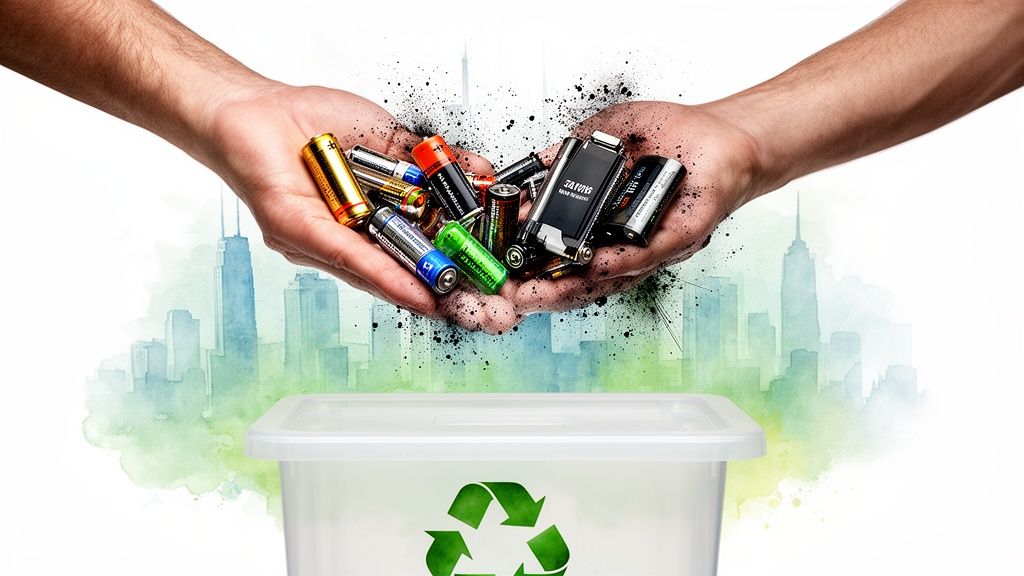
    That one text takes all of 30 seconds. But it tells them, “You’re not just a number on a spreadsheet. You’re a person, and we’re genuinely glad you’re here.” It builds an instant bridge.

    Make Their First Day Feel Like Their Second

    Nobody likes being the new kid in class, awkwardly standing in the corner. Your mission is to shatter that feeling as fast as possible. You have to be intentional about sparking connections from the second they walk up.

    • The Buddy System: Don't just point them to a pile of tools and say "go for it." Pair them up with a friendly veteran volunteer. This isn't some formal mentorship program; it's just giving them a person—a friendly face to stick with, ask dumb questions, and share a laugh.
    • A Simple One-Pager: Forget dense handbooks. Create a single, easy-to-read page that gives them the essential info. What’s our mission in one sentence? What does winning look like today? Who do I talk to if I need help? It shows you respect their time and sets them up to contribute with confidence.

    These little things provide a safety net. It lets the new person relax and actually focus on the work and the people around them.

    The most powerful onboarding tool you have is kindness. When people feel safe and valued from the start, they’re not just volunteering their time; they’re investing their heart.

    Weave In Safety and Scheduling With Care

    Even the boring stuff—the logistics—can be handled with a human touch. Talking about safety isn’t about scaring people; it’s about showing you actually care about them.

    Instead of a dry list of "don'ts," frame it as a collective agreement.

    • For safety: "We look out for each other here. That means always working with a buddy, wearing your gloves, and speaking up if something feels off. Your safety is always our #1 priority, no exceptions."
    • For scheduling: "Look, life happens! If you can't make it, it's no big deal. Just shoot a quick message in the group chat so we know you're okay. We're always happy to see you whenever you can make it out."

    This isn't about rigid rules; it’s about mutual respect. It reinforces that you're a team. When you welcome people with this much intention, you’re not just filling volunteer slots. You're building a community where everyone feels like they belong from day one.

    Keep the Spark Alive for the Long Haul

    Getting people to sign up is one thing. Building a crew that sticks around through thick and thin? That’s a whole different ballgame.

    A thriving community isn’t measured by how many people show up once. It’s measured by how many people stay.

    Keeping that initial spark alive isn’t about perks or free pizza. It’s about bravely and kindly creating a space where people feel seen, where their contribution actually matters, and where they can grow. This is how you turn a first-timer into a lifelong advocate for your cause.

    Two happy people embrace affectionately, one in a beret, with a plant and book nearby.

    Celebrate the Small Wins Like They're Everything

    Think of appreciation as the fuel for your community engine. Without it, even the most passionate volunteer will eventually run out of gas. This isn’t about grand gestures; it’s about consistent, genuine recognition.

    You have to hunt for those moments of impact and hold them up to the light for everyone to see.

    • Handwritten Thank-You Notes: Seriously. In a world of fleeting digital pings, a simple, handwritten card feels monumental. After an event, take five minutes to write a note to someone who went the extra mile. Get specific. "Sarah, watching you help that new person figure out the recycling bags was pure kindness. Thank you."
    • Shoutouts with Substance: Don't just post a generic "thanks to our volunteers!" Dig deeper. A weekly ‘Volunteer Spotlight’ on Instagram that tells a mini-story is incredibly powerful. "This is Maria. On Saturday, she single-handedly cleared the overgrown bushes blocking the sidewalk on 53rd Street. Because of her, our elderly neighbors can now walk there safely. Maria, you’re a rockstar."

    This kind of specific praise does two things. It makes that person feel deeply valued, and it shows everyone else what your group’s values look like in action.

    Create Pathways for Growth

    People don't just volunteer to give their time; they also want to grow. They want to learn new things, challenge themselves, and maybe even discover strengths they didn't know they had. Your job is to create clear paths for that to happen.

    Think of it like a video game. A player starts at level one, but they can always see the next level they can achieve. It keeps them hooked.

    You’re not just managing tasks; you’re nurturing potential. The best way to keep a volunteer is to show them a future where they can become more than they are today.

    Does someone have a knack for getting people excited? Ask them to lead the welcome circle at the next event. Is another person incredibly organized? Invite them to help you plan the logistics for the next big project. This proves you're paying attention to their unique talents.

    It shows you see them as a whole person, not just a pair of hands. For more actionable guidance on fostering this kind of environment, check out our collection of volunteer tips.

    Fearlessly Ask for Feedback

    Asking for feedback is an act of bravery. It opens you up to criticism, and that can be scary. But it's also one of the most powerful ways to show your volunteers you respect them. It says, “Your voice matters here. Your experience matters here.”

    Don’t wait for problems to bubble up. You have to proactively create channels for people to share their thoughts.

    • Simple Surveys: Use a free tool like Google Forms to send out a quick, three-question survey once a quarter. Keep it short. "What's one thing we should start doing?" "What's one thing we should stop doing?"
    • Listen, Then Act: This is the most important part. Share the results with the group—the good and the bad. Then, publicly commit to acting on one or two key pieces of feedback. This closes the loop and builds an incredible amount of trust.

    This feedback loop is crucial because the volunteer world is always shifting. Recent data shows that while sign-ups are growing, retention is a top concern for over a third of organizations. People are short on time, pushing them toward shorter, more flexible opportunities. By listening, you can adapt to these needs instead of losing great people. You can discover more insights about the current state of volunteering on Signupgenius.com.

    When you celebrate wins, foster growth, and listen with an open heart, you build something that sustains itself. You create a resilient, joyful, and powerful force for good.

    Answering the Tough Questions

    Starting a community group is an act of pure guts. You're putting your heart on the line for something you believe in, and let's be real—it's scary. Along the way, you're guaranteed to hit some bumps and face some tricky situations.

    Don't let that stop you. These challenges are part of the deal. They’re a sign that you're doing something real and important. I've been there, and I've heard the same fears from so many other organizers. Let's tackle them head-on.
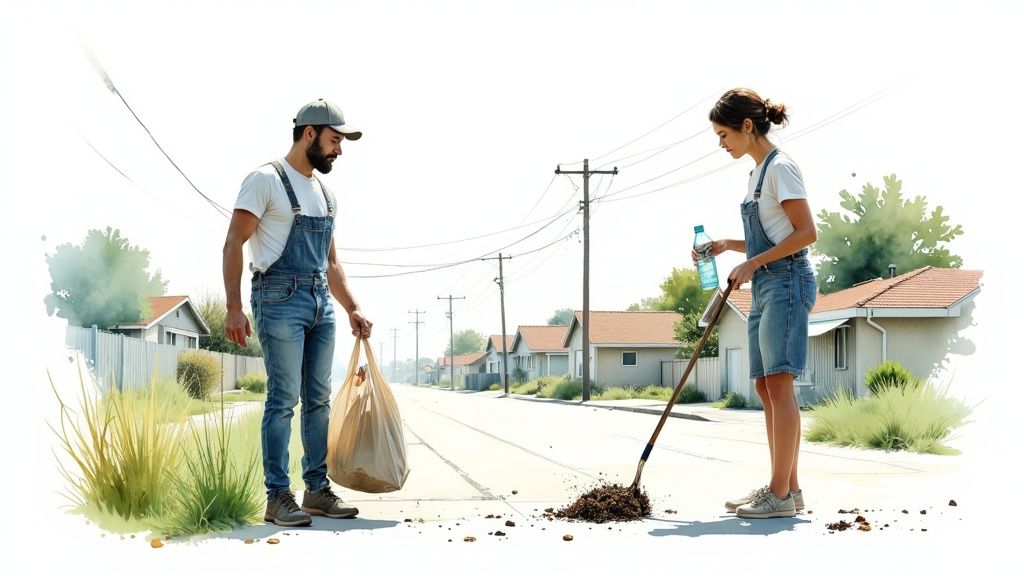
    What If I Ask for Help and… Crickets? No One Signs Up.

    This is the big one. The number one fear for just about every community leader out there. It’s brave just to admit it. First, take a breath. A slow start isn’t a verdict on you or your mission. It's just feedback.

    Think of yourself as a scientist. If an experiment fails, you don't burn down the lab. You look at the formula and tweak it.

    • Is Your Story Punching Hard Enough? Is your message clear and full of heart? Find a friend who knows absolutely nothing about your project and show them your call for volunteers. Can they tell you why it matters in 30 seconds? If not, you need to simplify. Get back to that core, emotional 'why' that got you started in the first place.


    • Are You Shouting into the Void? Where did you post your ask? If it was just your personal Instagram, you've only hit up your existing circle. Get a little braver. Pick one new place to post—a local neighborhood Facebook group, a bulletin board at the library. Just go introduce yourself.
    • Is Your "Ask" Too Big? A vague "we need help" is overwhelming. People don't know what they're signing up for. Instead, make your first ask ridiculously specific and easy. Don't say "we need volunteers." Try: "I need three people to help me hand out water for just one hour this Saturday." A small, concrete task is so much easier to say "yes" to. It builds that crucial momentum.

    An empty sign-up sheet isn't failure. It's a compass. It’s pointing you toward a clearer message, a different audience, or a smaller first step. It’s just data, not a disaster.

    How Do I Deal with a Volunteer Who Just Isn't Working Out?

    Ugh, this is the toughest. It requires a tricky mix of kindness and courage. But letting a bad fit hang around can poison the atmosphere for everyone else. The kindest thing you can do for the whole group is to handle it—privately, directly, and quickly.

    Pull them aside for a one-on-one chat. Start with "I" statements so they don't get defensive. Instead of "You're always late," try something like, "I've noticed it's been a struggle to get here on time, and I just wanted to check in and see if everything is okay."

    A lot of the time, it's just a mismatch of what they expected versus what the role actually is. Talk about the role again and ask them point-blank if it still feels right for them. Maybe there's a different job where their skills would be a better fit.

    But if the problem is their behavior—constant negativity, flakiness—you have to be lovingly firm. Bring it back to your group's values. It's okay to say, "For this community to feel safe and supportive, we all need to be able to count on each other. It feels like this role might not be the best match for you right now." Protecting the health and energy of your team is your most important job.

    How Can I Find People with Specific Skills?

    Okay, so you don't just need bodies—you need a graphic designer, or someone who actually understands a spreadsheet. This is when you switch from casting a wide net to fishing with a spear.

    You have to be super explicit about what you need and, more importantly, the impact they'll have.

    • Weak Ask: "Looking for a volunteer accountant." (Snooze.)
    • Strong Ask: "Seeking a financial wizard to help our community kitchen manage its budget for two hours a month. Your skills will help us provide 500 more meals to our neighbors."

    See the difference? Frame it as a high-impact, short-term project. This is gold for busy professionals who want to help but can't commit to showing up every single Saturday morning.

    Use platforms like LinkedIn to find people with the right job titles in your area. Post in industry-specific Facebook groups. Ask your current volunteers if they know anyone. You can even reach out to the corporate social responsibility (CSR) person at local companies—they're often looking for skills-based volunteer gigs for their employees. And don't sleep on local universities; a student would probably kill for a real-world project to slap on their resume.


    At Litter Caterpillars, we believe every single act of service, no matter how small, changes our city and changes us. If you’re ready to get your hands dirty, build real friendships, and see the impact you can make with your own two hands, come join us. Find your next chance to make a difference at https://www.littercaterpillars.com.