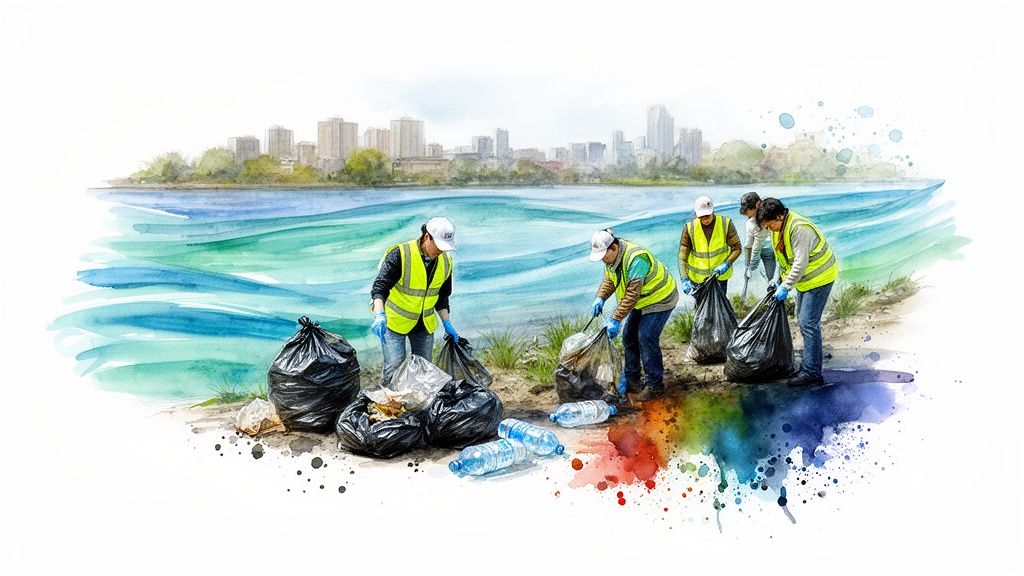
You see it, don't you? The plastic bags snagged on branches, the Styrofoam cups bobbing by the shore. You feel that little sting, that whisper in your gut that says, someone should do something. I know that feeling. It's a fire starter. This guide is everything I've learned about how to clean up rivers—how you and I can turn that frustration into a force of nature, one bag of trash at a time.
Your River Is Calling, Let's Answer
Staring at a polluted river can feel like looking at a mountain of debt. Where do you even begin? My whole journey kicked off from that same spot, feeling small and powerless. But I stumbled upon a weird truth: cleaning up our shared spaces, our community's living room, is somehow more energizing and way more fun than cleaning my own apartment.
You don't need some grand, flawless blueprint. Forget perfect. Just be brave enough to start.
Why This Work Echoes Louder Than You Think
It's so easy to drown in despair when you see a river choked with our carelessness. But that feeling? That's not the end. It's the beginning. Every single person who ever made a difference started right there, stewing in that same frustration.
My first cleanup—I’ll never forget it. Three of us. Just three. A freak hailstorm exploded over us in Chicago. Huddled under a bridge, teeth chattering, I had this lightning-strike thought: there is a strange, powerful joy in tackling a mess that belongs to all of us.
This isn't just about bagging litter. It's a reclamation. It’s you planting a flag, a small act of rebellion against apathy. We're mending not just the earth but our frayed connections to each other and to the places we call home. The problem is a giant, yes, but so is our collective spirit.
Look at the Ganges River in India to understand the stakes. A sacred artery for over 500 million people, but it’s suffocating under raw sewage and industrial poison. This isn't just an eyesore; it's a killer, causing over 100,000 deaths a year from waterborne diseases. The story is global: a horrifying 80% of wastewater gushes untreated into our planet's rivers, leading to 485,000 deaths annually.
I've learned that one person with a trash bag feels like a whisper. But a group of people with trash bags? That's a roar. It becomes a story. And stories are the sparks that light the next fire.
From Desire to Action
The path to a clean river always follows a simple, human arc. It ignites with a feeling, solidifies into a plan, and then erupts into action.
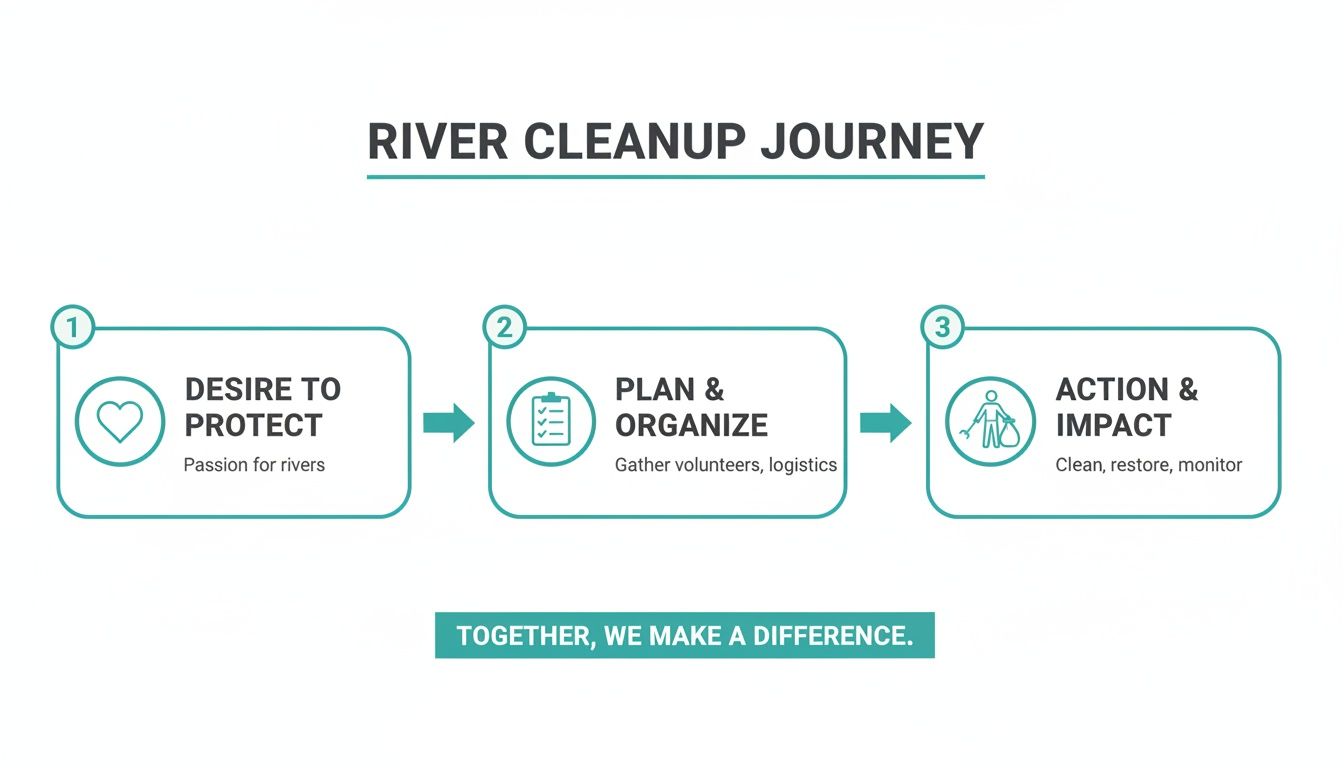
This map shows you the way. Every colossal cleanup begins with that tiny, personal spark—your desire to fix what's broken. You channel that spark through smart planning, and boom: you create real, visible impact.
Think of me as your guide through this whole adventure. I’m going to pour out everything I’ve learned on the ground, leading cleanups in sun, sleet, and sideways rain. This is your personal roadmap. You can dive deeper into the whole philosophy behind cleaning up trash in our communities and how it changes us from the inside out.
Let's do this. Together.
Your River Cleanup Action Plan at a Glance
To make this crystal clear, I've mapped out the whole journey in a table. Use this as your compass to navigate from that first flicker of an idea all the way to celebrating your victory.
| Phase | Key Actions | Why It Matters |
|---|---|---|
| 1. The Spark | You spot a problem, feel that pull to act, and make a promise to yourself to do something. | This is your fuel. Without that genuine fire in your belly, the hard work of planning will feel like a chore. |
| 2. The Plan | You scout the site, tackle permits, round up tools, recruit your crew, and build a rock-solid safety plan. | Good planning is the antidote to chaos. It ensures your event is safe, powerful, and doesn't backfire. |
| 3. The Action | You host the event, lead your volunteers, and manage every piece of collected waste like a pro. | This is where the magic ignites. Your plan breathes life, and the river starts breathing again, one bag at a time. |
| 4. The Impact | You measure your results, thank your heroes, shout your story from the rooftops, and plan the sequel. | This is how you close the loop. It builds a wave of momentum that turns a single day into a true movement. |
Don't see this table as a rigid prison of rules. It’s a flexible framework, a skeleton you can build on. Every river is different, but these core phases will always point you toward success.
Laying the Groundwork for a Safe and Successful Cleanup
Before you rally a single soul, you need a battle plan. I want you to think of yourself as a detective for your river. You’re not just spotting trash; you're uncovering opportunities, sniffing out dangers, and mapping out a strategy for a friendly invasion—against grime and neglect.
This prep work is everything. Skipping it is like trying to build a house on a swamp. It's all the invisible effort that makes the big day feel smooth, safe, and ridiculously triumphant. Trust me, I’ve seen events implode from poor planning, and I want to help you sidestep those landmines from day one.
Becoming a River Scout
First mission: get your boots on the ground. You have to walk the turf you plan to clean, but with new eyes. You're looking for more than just the biggest heap of junk.
You're searching for the site's story. I remember scouting a stretch of the Chicago River and finding a literal mountain of old car tires. I learned that for decades, people used tires for "bank stabilization," a method we now know is a spectacular failure. That bit of history totally reshaped our entire approach to that cleanup.
Here's what I look for on my first scouting trip:
- Access Points: Where can your people safely get to the water's edge? I hunt for gentle slopes, existing paths, or park entrances. I steer clear of steep, crumbling banks like they're the plague.
- Trash Hotspots: Pinpoint where the litter is clustered. What kind of trash is it—plastic bottles, construction debris, an old sofa? This intel tells you what weapons to bring to the fight.
- Potential Hazards: Are there slick rocks, angry patches of poison ivy, or hornet nests lurking in the trees? Your number one job is to be a guardian for your crew.
- Staging Area: Where will you build your glorious mountain of collected trash? It needs to be easy for a truck to reach but not blocking a public path.
Navigating the Permit Maze
Okay, let's talk about the thing that makes everyone groan: paperwork. Permits. It sounds like a dentist appointment, I know. But getting the right blessing from your city's parks department or local government is the secret key to a stress-free day. It's not about bureaucracy; it's about being a good dance partner.
Imagine this: you've got 50 fired-up volunteers, and mid-cleanup, a park ranger rolls up and shuts you down because you skipped a step. All that incredible energy just vanishes into thin air. I've watched it happen. It's a gut punch.
A single phone call can prevent all that heartache.
Here’s the simple script I use for that first call: "Hi, my name is [Your Name], and I'm a resident who's tired of seeing our river looking sad. I'm getting a small group of volunteers together to clean up the bank at [Location] on [Date]. Could you tell me who I need to talk to, to make sure we do this the right way?"
This approach shows you're a responsible citizen, not a rogue agent. It flips the city from a potential hurdle into your most powerful ally. Nine times out of ten, they’ll not only say yes but will offer you free trash bags, gloves, or even a special trash pickup.
Preparing for a Safe Cleanup Day
Last but not least, let's get serious about safety. Your volunteers are your most precious asset. Protecting them is the most sacred part of your job. A safe, well-run event is an event people will return to, again and again.
Your safety plan doesn’t need to be some 50-page legal tome. It’s just about smart prep. Start with a solid first-aid kit. You can buy one ready-made, but I always beef mine up with extras from the school of hard knocks:
- Extra antiseptic wipes (you'll use them all)
- Tweezers for splinters
- Saline solution for flushing gunk out of eyes
- Instant cold packs
Beyond the kit, your most powerful safety tool is your voice. A clear, confident safety briefing at the start of the day sets the whole tone. It shows everyone you've got their back. This is how you build the trust you need to clean up rivers as a team.
Building Your Cleanup Crew of Passionate Volunteers
You cannot do this alone. Believe me, I tried. I once thought my own two hands were enough to tackle a trashed-out stretch of riverbank. It’s like trying to bail out the ocean with a teaspoon—a noble idea, but you’ll just end up soaked, exhausted, and demoralized.
The real lightning strikes when you build a crew. Your own band of litter-fighting misfits. This is how you transform a solo crusade into a community bonfire. I still see us, that first day—just three of us, shivering through that Chicago hailstorm. Now? Now we're a force.
I’m going to show you exactly how I grew that tiny, frozen tribe into a steady flame.
Crafting a Call That Attracts Givers
First, you have to send up a flare. But not just any flare. You need to write a call for help that resonates with the right kind of people—the givers, the doers, the folks who show up to make a difference, not just to snag a selfie.
Think of your volunteer post on Meetup or a local Facebook group as a magnet. You want it to pull in people who vibrate on your same frequency. Be honest. Be real. Be a little bit of a poet. Don’t just announce, “We’re picking up trash.” Tell them why this river, this patch of earth, is worth fighting for.
Here’s a version of what I post:
"Do you ever walk by the river and feel that little punch in the gut when you see the trash? Me too. I'm getting a group of friendly folks together who want to turn that frustration into action. We bring the bags, gloves, and good vibes—you just bring yourself. Let's make our city a little better, together."
This simple message does a few powerful things:
- It validates their feelings: It starts from that place of shared frustration. You're not alone.
- It’s disarmingly simple: "You just bring yourself" removes every barrier to entry.
- It sets a positive, can-do tone: It's about being part of the solution.
When you frame it like this, you’re not begging for free labor; you're inviting them to join a cause. If you want to dive deeper, you can learn a lot more about how to find volunteers who are ready to go all in.
The Power of Community Partnerships
Once you get a few regulars, you can start weaving partnerships with local businesses. This is a game-changer. It anchors your little cleanup crew into the very fabric of the neighborhood, making your work visible and proving that the community has your back.
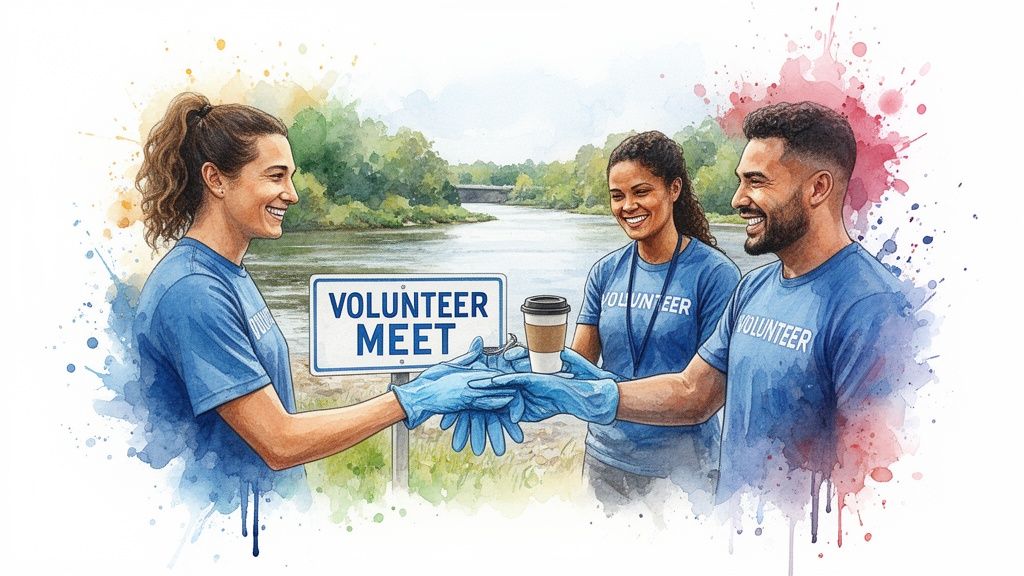
Start small. I literally started by walking into my favorite coffee shop. I told the owner what we were doing down by the river and just asked, "Hey, would you ever consider donating a big pot of coffee for our crew on Saturday mornings?" He was ecstatic to help. That small gesture—a warm cup of joe on a chilly morning—became a symbol of our community's support.
Here are a few other ideas that have worked for me:
- The Coffee Shop: A big dispenser of coffee or hot chocolate is liquid gold.
- The Hardware Store: Ask for a small discount on heavy-duty gloves or trash grabbers.
- The Local Pizzeria: See if they'll chip in a couple of free pies for a post-cleanup celebration.
- A Community Garden: Ask if you can use their bins for any green waste you find.
These aren't just transactions; you're building relationships. When a business helps you out, you shout them out on social media. You thank them publicly. It creates this beautiful feedback loop of mutual support.
Making It More Than Just Work
This is the most critical piece of advice, so listen close. If you want people to come back, you must make it fun. Picking up trash is hard. It can be smelly and gross. But it can also be ridiculously joyful if you create the right atmosphere.
Think of your cleanup less like a chore and more like a party with a purpose. I always bring a portable speaker and blast an upbeat playlist. We tell bad jokes, we share stories, we high-five over every disgusting, mud-caked thing we pull from the river.
The work is serious, but our vibe is anything but. We've figured out how to turn the struggle into a shared story, an adventure that bonds us. Simple things, like grabbing a coffee together afterward, transform the entire experience. It gives everyone a chance to connect as human beings, not just as trash-pickers.
That connection? That's the superglue. That’s what will keep your crew coming back to clean up rivers with you, again and again.
Turning Passion Into Action on Cleanup Day
Alright, the day has arrived. You’ve got coffee steaming, the sun is (hopefully) showing its face, and there’s a low hum of anticipation in the air. This is it. This is the moment all your planning and passion gets unleashed.
Here’s your guide to running a cleanup that’s not just effective, but electric—the kind of day that makes people pull out their phones and block off their calendars for your next one before they even leave.
It all starts with the morning huddle. This is not a formality. This is where you light the fuse for the entire day. Gather everyone in a circle, look them in the eye, and welcome them like the heroes they are. Their energy is the fuel.
The All-Important Morning Huddle
Your safety briefing needs to be quick, clear, and honestly, a little bit thrilling. A good briefing feels more like a pre-game pep talk than a boring lecture. You have to hit the absolute must-knows with confidence and a smile.
First things first: you thank them. You thank them for showing up, for choosing this over sleeping in. You remind everyone that their time is the most valuable currency you have. Then, you pivot to the crucial safety stuff.
Here’s my huddle checklist:
- Acknowledge the Land: If you can, a quick mention of the area's native history adds a layer of respect and deepens the purpose of your work.
- Point Out the Booby Traps: Be specific. "Watch out for those slick rocks by the water's edge, and the bank gets real steep over there, so find your footing."
- Explain the Tools: "Use your grabbers for everything. I'm serious. Never, ever pick up anything sharp or unidentifiable with your bare hands."
- Identify the "Do Not Touch" List: This is non-negotiable. "If you see anything that looks like a chemical drum, a needle, or a dead animal, do not touch it. Mark the spot, and come find me or a team lead. We have a plan for that."
- Show Them Home Base: "Every full bag of trash comes right back here to this tarp. We're going to build a glorious mountain of accomplishment today!"
This quick talk does more than keep people safe. It shows them you're in command, that you care about them. That builds trust, and trust is the bedrock of any volunteer army.
Managing the On-the-Ground Logistics
Once you break the huddle, it’s go-time. Handing out gear can become a mosh pit if you’re not ready. I like to have everything laid out: piles of gloves by size, stacks of bags, and grabbers ready to go. Let people get kitted out, then you can start pointing them to different zones.
Think of yourself as a friendly field marshal. You're not just barking orders; you're directing energy. I've found it's a game-changer to divide a large site into smaller, bite-sized zones and assign small teams to each. It gives people a sense of ownership and makes a colossal task feel conquerable. You'd be amazed what a team of four can do to a 50-foot stretch of riverbank.
Your central trash drop-off is your rallying point. Keep it organized. As volunteers drag back full bags, give them a high-five. Cheer for that bag. Every single one is a trophy. This is how you clean up rivers effectively—you celebrate the small wins, all day long.
I’ve learned that the little struggles often become the best stories. A sudden downpour, someone slipping in the mud, or a ridiculously heavy tire that takes three people to haul out—these are the moments that forge real bonds.
Embrace the beautiful chaos of it all. As the leader, your calm, positive energy is a contagion. If you're having fun, they will too. Keep walking the site, checking in with your teams, offering water, and thanking them relentlessly. You’re not just directing a cleanup; you’re hosting an experience. Their passion got them here. Your job is to make sure they leave with that passion burning even hotter.
Showcasing Your Impact to Build Momentum
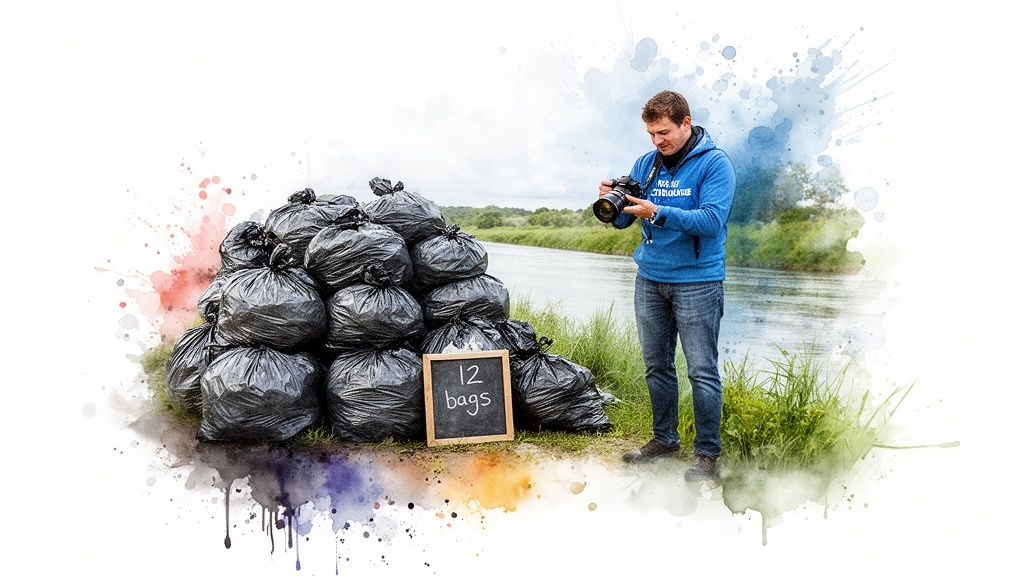
The work isn't over when you tie off that last bag of trash. In many ways, the real work is just beginning.
This is your moment to show the world—and more importantly, to show your volunteers—what you all just accomplished. This is how you take a single day of sweat and grit and turn it into a tidal wave of momentum for the next event.
You have to tell the story. A pile of trash bags is just a pile of trash bags until you give it a soul. It's a story of change, of community, of defiance. Your job now is to become the storyteller.
Making the Invisible Visible
First, let's talk numbers. Numbers have a superpower. They’re a universal language that cuts through the noise and shows undeniable results. It’s like stepping on a scale after a month of hard work; that number proves your effort mattered.
You don't need a science lab. Just keep it simple but be religious about it. At every single cleanup, I make sure we track a few key things.
- Bag Count: This is the easiest win. Just count every single bag you fill.
- Volunteer Hours: Multiply your number of volunteers by how many hours you worked. This number is huge—it shows the incredible gift of time your community gave.
- Total Weight: This one is a game-changer. I bought a cheap digital luggage scale for $10, and it's one of the best tools in my arsenal. Weighing each bag gives you a jaw-dropping total that a simple bag count can’t touch.
These numbers become your weapons for good. They prove you're not just "picking up some litter." You're making a measurable dent in the fight to clean up rivers.
Capturing the Heart of the Story
Now, let's get visual. A picture truly is worth a thousand words, especially when you’re trying to bottle the spirit of your day.
During the cleanup, I’m always snapping photos, but I'm not just taking pictures of trash. I’m hunting for moments.
A shot of two strangers laughing as they wrestle a tire from the mud. A close-up of a volunteer’s muddy, gloved hand. A wide-angle "before" shot of a trashed-out bank, followed by a triumphant "after" shot of that same spot, now breathing again. These are the images that tell the human story behind your numbers.
Your volunteers are the heroes of this story. Frame them that way. Your photos and videos should be a celebration of their effort, their smiles, their resilience. When people see themselves making a real difference, they come back for more.
This is also how you connect your little local skirmish to the bigger, global war. It’s easy to feel crushed when you hear that the Yangtze River dumps a mind-boggling 1,469,481 tons of plastic into the ocean every year. But our focused cleanups are a real part of the answer. Groups in the Clean Currents Coalition have already pulled over 7.3 million kilograms of debris from rivers since 2020. This proves our local efforts are part of a massive, winning strategy. You can learn more about how river cleanups are tackling ocean pollution.
Sharing Your Victory with the World
After the event, it's time to craft the perfect social media post. This isn't just a "thanks for coming" note. It's a victory speech, a public thank-you card, and a recruitment poster all rolled into one.
Here’s a simple formula that never fails me:
- Lead with Gratitude: Start by worshipping your amazing volunteers. They are the whole story. Tag them if you can.
- Show the Proof: Post your absolute best photos and videos. That "before and after" shot is pure gold.
- Share the Numbers: Hit them with the cold, hard facts. "Today, 15 volunteers gave 45 hours of their lives to our river and hauled out 527 pounds of trash!"
- Tag Your Partners: Give a public high-five to the coffee shop that donated coffee or the business that sponsored your supplies.
- A Call to Action: Don't just fade out. End with an invitation to the next battle.
Each cleanup is a chapter. Sharing the story is how you invite your whole community to help you write the next one.
Keeping the Current Flowing After the Cleanup
You did it. The river is breathing a little easier, your crew is heading home with muddy boots and full hearts, and you're exhausted but glowing with pride. The real work, though, isn't just in the bags you collected. It's in what happens now.
This is how you turn one incredible day into a genuine movement to clean up rivers. The work isn’t done when you tie the last knot. It’s done after you've sent a real, heartfelt thank you, celebrated the win, and taken a moment to heal yourself. This follow-up is the current that keeps everything moving forward.
From a Single Event to a Lasting Community
A thank-you email is non-negotiable. And it has to be more than a sterile "thanks for coming." I always make mine personal, sharing the final stats—the total weight, the number of volunteers—so every single person feels the epic scale of what they helped build. A great message makes every person feel seen.
But don't stop there. This is your chance to bottle that lightning. While everyone is still buzzing, start a simple group chat or a private social media group. It instantly becomes a home for sharing photos, keeping the good vibes alive, and—most importantly—announcing the next event while the fire is still hot. We've written a lot more about specific volunteer retention strategies that have worked magic for our crew.
Your data is your new superpower. Those numbers—500 pounds of trash, 30 tires, 1,000 plastic bottles—are not just for a social media post. They are evidence. They are ammunition. You can take that data straight to your local city council meeting and push for bigger changes, like more public trash cans or a crackdown on illegal dumping.
The work can feel like trying to empty the ocean, especially when you think about the scale of the global crisis. But every local cleanup is a piece of the solution. It’s a mirror of the resilience shown at places like Indonesia's Citarum River, one of the world's most polluted.
There, powerful coalitions have cleared 7.3 million kilograms of debris since 2020. It's a stunning blueprint for how focused, community-powered efforts create monumental change. You can read more about this inspiring Citarum River cleanup story and see how your small acts ripple out into a huge global movement.
Taking Care of the Leader
Finally, let’s talk about you. The one who started this whole thing. This work is brave, it is vital, and it can be draining. You pour so much of your soul into this, and it is absolutely essential that you refill your own well.
Don't just leap into planning the next event. Stop. Breathe. Celebrate your own victory. Take a day off. Go for a quiet walk by the very river you just helped heal, but this time, leave the trash grabber at home.
Leading with kindness, strength, and relentless optimism requires you to be kind to yourself first. Recharge your spirit. Your river and your community need your fire for the long haul.
The Questions I Always Get
When you first decide you want to do this, your brain probably sounds like a pinball machine. I get it. I’ve heard just about every question you can think of. Let's wrestle with some of the big ones.
People always ask me, "Do I really need a permit just to pick up trash?" It's a fair question. You don't ask for permission to clean your own house, right? But a river is different. It’s a public space, a shared artery.
Getting the city or park district on your side isn't about red tape. It's about turning them into your most powerful ally. They can handle the massive headache of waste disposal. Think of it less like asking for permission and more like inviting a giant to join your team. It's a game-changer.
What if I Find Something Dangerous?
This one comes up constantly: "What if I find something scary, like a needle or a chemical barrel?" It’s a real possibility, and your safety trumps everything. The rule is brutally simple: if you don't know what it is, you do not touch it.
You are not a hazmat expert. You are the eyes on the ground.
- Mark the spot: Use bright flagging tape or something to make the location obvious.
- Tell your leader: Immediately find me or another leader. We have contacts for professional removal.
- Walk away: Feel proud. You found a real danger and let the experts handle it.
You are a volunteer, not a superhero. Your bravery is in showing up and working smart, not in taking stupid risks. Protecting yourself is the most important thing you’ll do all day.
And my favorite question of all: "What if only a few people show up?" I love this one. It gets right to the soul of this work. My very first event had exactly three of us. We got caught in a hailstorm. It was miserable, it was glorious, and I will never forget it.
Success is not a head count. Success is the fact that you showed up at all. A small, fired-up crew will run circles around a big, uninspired crowd. Every single person who comes out to clean up rivers is a universe of victory. It always, always starts small.
At Litter Caterpillars, we believe in the raw power of just showing up. We turn that nagging feeling into real, dirty, beautiful action. If you're in Chicago and you want to join a crew that finds joy in service, come get your hands dirty with us. Learn more and sign up at LitterCaterpillars.com.
Leave a Reply