
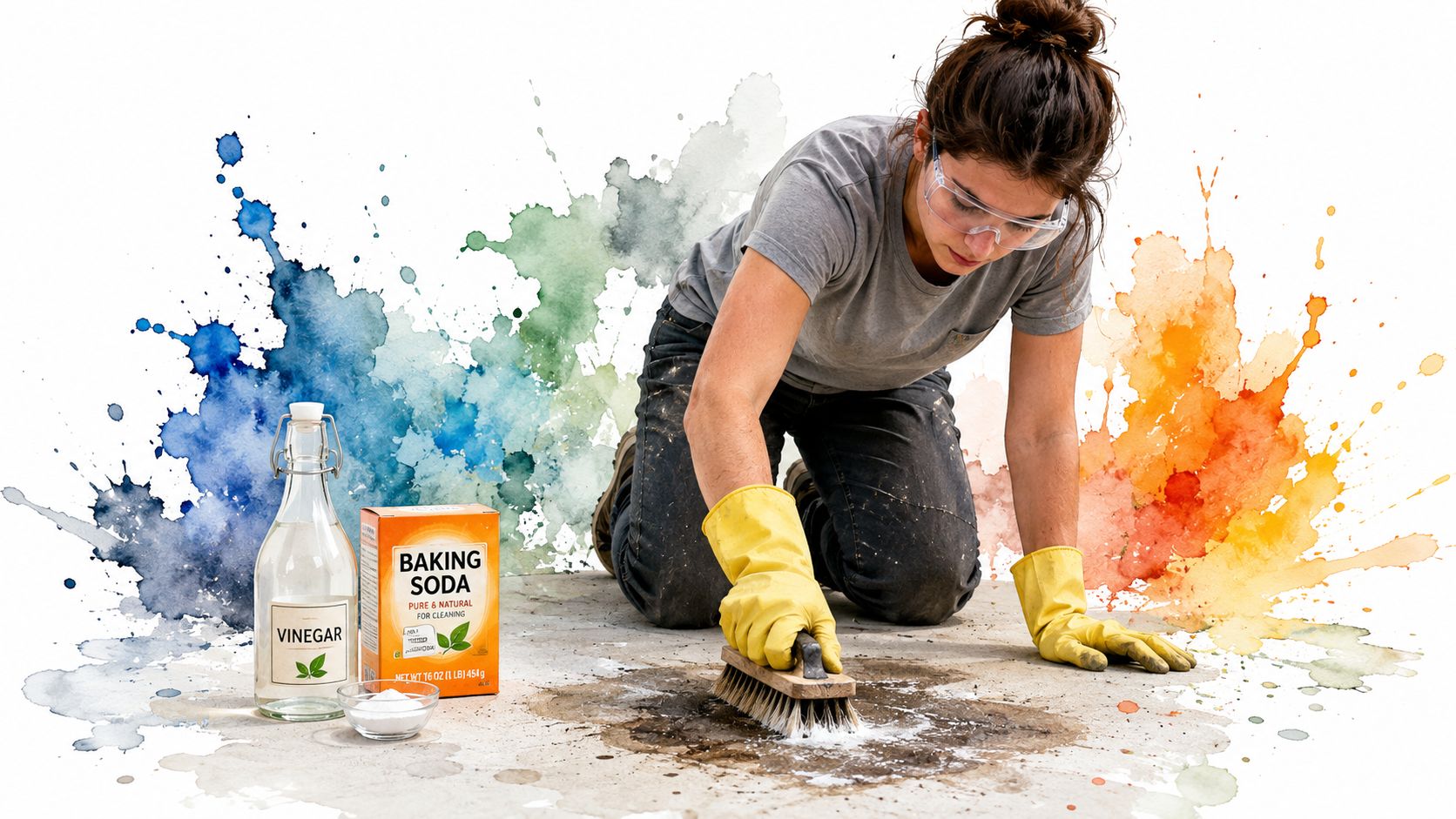
I stood on a filthy stretch of sidewalk with a broom in my hand and the same resistance I used to feel when I looked at my bedroom floor. The stains looked small, but in my chest they felt huge.
Your Sidewalk Your Story
I used to live with a kind of mess that didn't stay in the room. It spread into my head. An old container in the fridge wasn't just an old container. It was a memory, a failed plan, a little guilt token. A bag of stale snacks wasn't trash to me. It was proof that I had tried and slipped. Every object felt like it weighed far more than it should.
A dirty sidewalk can hit you the same way.
You pass the same patch of dark grime every morning. You step over the weeds pushing through the crack. You see the mystery stain near the curb and tell yourself you'll deal with it later. After a while, the sidewalk stops feeling like concrete. It starts feeling like an accusation.
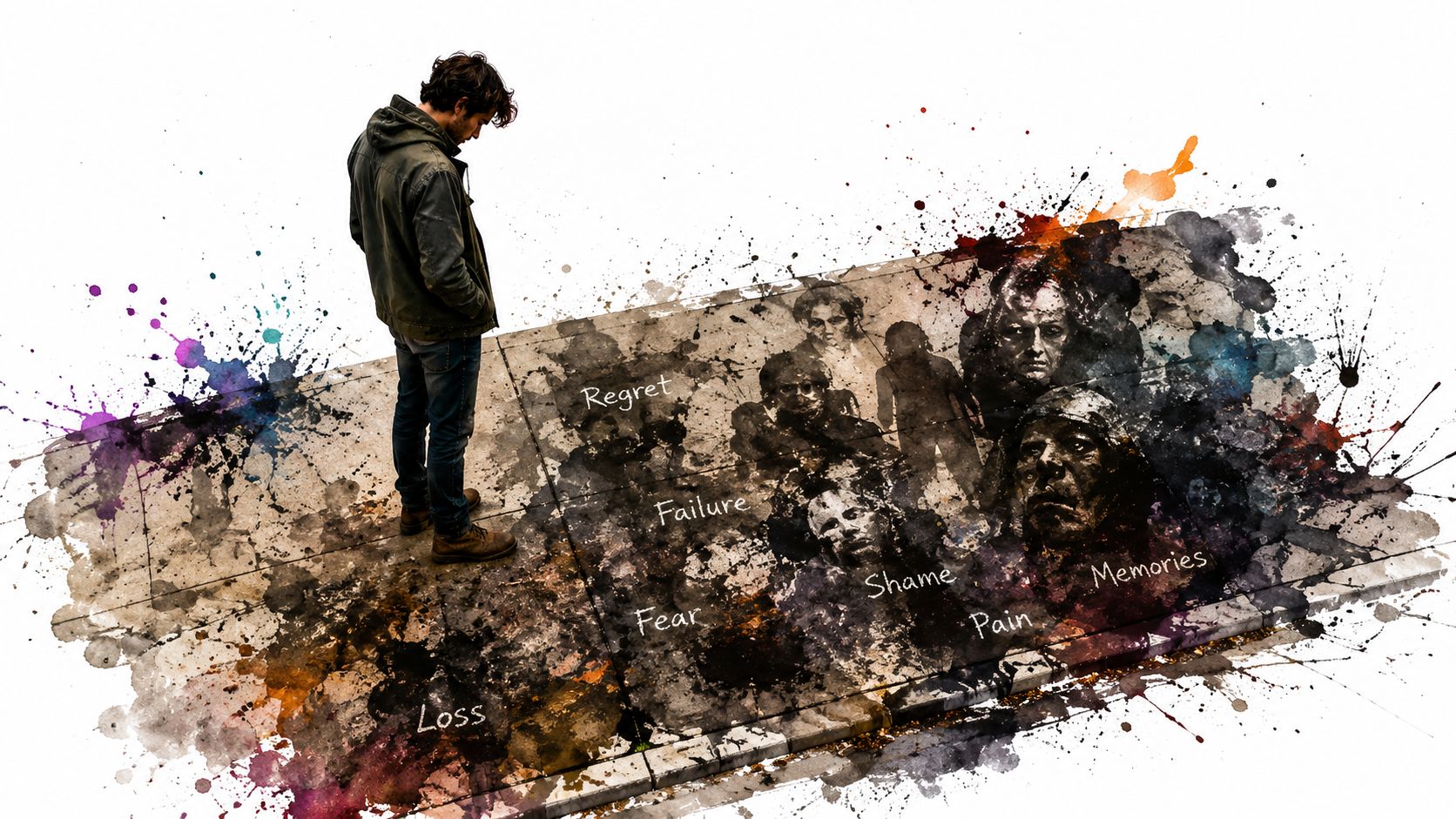
I learned something strange when I started helping clean outdoor spaces. Other people's messes felt easier to face than my own. Outside, I could move. I could act. I didn't have to untangle every emotion before I picked up a brush. I just had to start.
That first lesson changed me. It also connects to how I fought my social anxiety. Bravery didn't arrive in some shining burst. It came in small, awkward motions. Walk outside. Put on gloves. Sweep one section. Scrub one square. Keep going.
The weight of a small task
If you're looking up how to clean sidewalks, maybe you want cleaner concrete. Good. Clean concrete feels better under your feet. But I think you might want something else too. You might want the relief of finally facing a task that's been staring at you.
Practical rule: Treat the sidewalk like a tiny dragon. Don't negotiate with it for six months. Walk up and poke it with a broom.
I remember staring at a stretch of pavement that had leaves mashed into the surface, gum flattened into black coins, and a green film near a shady edge. Nothing dramatic. Just enough neglect to create that heavy feeling. I told myself I'd do ten minutes.
Ten minutes became momentum.
One square at a time
That's the trick. You don't clean a whole sidewalk first. You clean the patch right in front of your shoes. Then the next one. Courage works the same way. You don't become brave in theory. You do one mildly annoying thing you were avoiding. Then another.
Your sidewalk has a story because you do. When you clean it, you're not fixing your whole life. You're proving to yourself that stuck isn't permanent.
Gearing Up for the Grime
I love good gear, but I don't mean expensive gear. I mean gear that lets you work safely, comfortably, and with some dignity. If you go outside in flimsy sandals and bare hands, the sidewalk will bully you. If you gear up right, you show up ready.
First comes safety. Always.
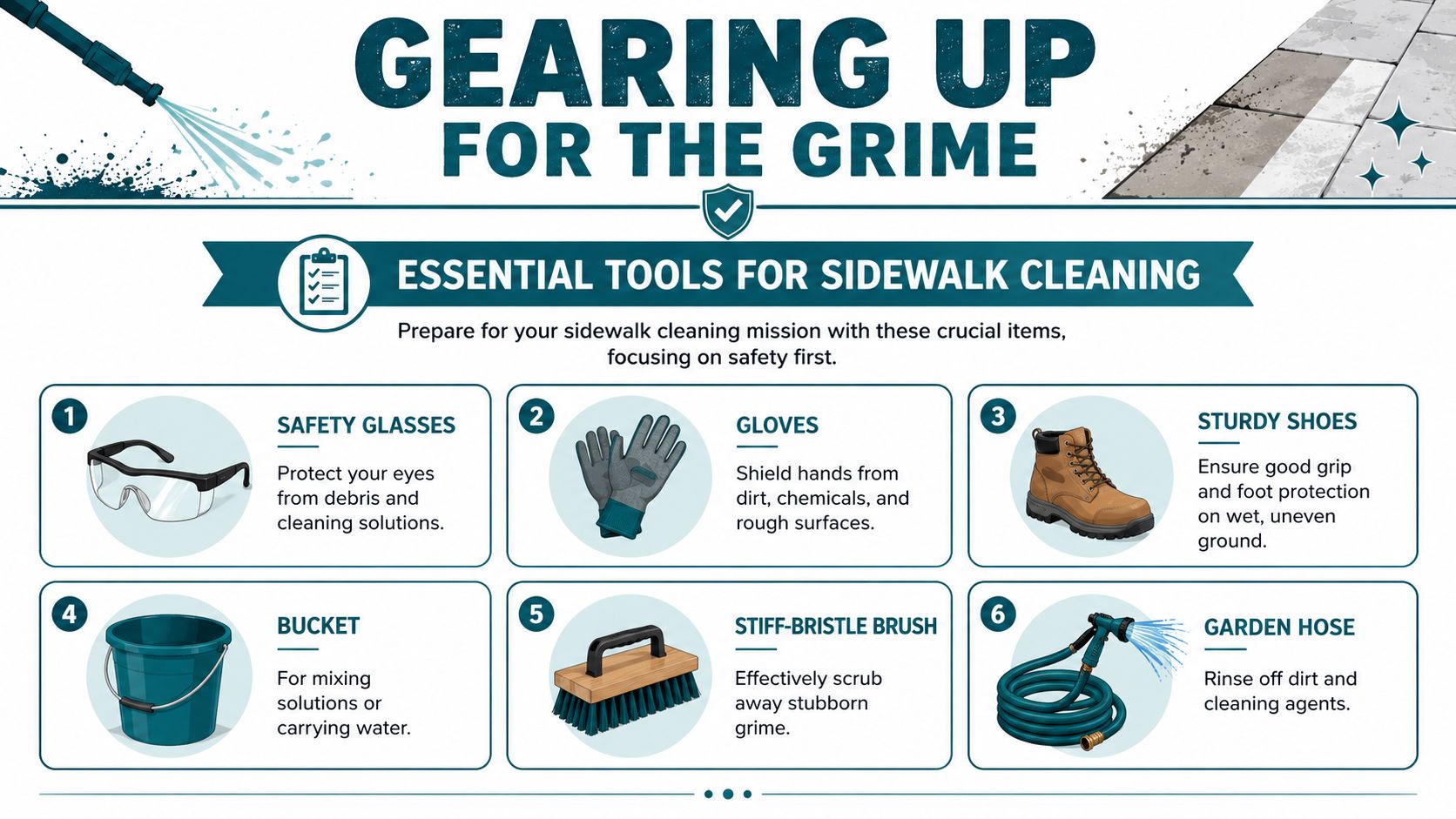
I want you in thick gloves, safety glasses, and sturdy closed-toe shoes. Concrete scraps, grit, bits of glass, and splashes from cleaning mixes don't care whether you're trying to have a noble little self-improvement morning. Protect your hands. Protect your eyes. Protect your toes.
Then bring the simple workhorses:
- Push broom: Use a stiff-bristled push broom to move loose dirt, leaves, grit, and broken-down plant matter before you add water.
- Long-handled scrub brush: This is your close-combat tool for stains, algae, and packed grime.
- Bucket: Mix cleaning solution, carry water, or dunk the brush when you need more bite.
- Garden hose with spray nozzle: A hose helps you wet the surface, rinse soap away, and see what dirt remains after the first pass.
The quiet heroes from your kitchen
You don't need to open with harsh chemicals. I often reach for white vinegar and baking soda first. Vinegar helps with organic film and green growth. Baking soda gives you mild grit and odor control. Dish soap can help loosen greasy residue on the surface before you scrub.
Use these with common sense. Test any cleaner on a small spot first, especially if the concrete is old, stained, sealed, or cracked.
Gear changes your mood. Gloves tell your brain it's time to work. Shoes tell your body you're staying in the fight.
If you want to get a feel for the mindset of group cleanup work, I like the spirit behind this trash pickup volunteer page. You prepare first, then you move.
A basic loadout that works
Here is the simple sidewalk kit I trust:
- Safety glasses for flying grit and splashback
- Work gloves for rough surfaces and dirty debris
- Closed-toe shoes with grip for wet concrete
- Push broom for the dry sweep
- Scrub brush for focused stain work
- Bucket and hose for mixing and rinsing
- Vinegar, baking soda, and dish soap for everyday grime
A short visual helps if you want to see the rhythm of it before you start.
Put your uniform on. It sounds silly, but it matters. Half of cleaning is physical. The other half is getting your mind to stop flinching.
The Two Paths to a Clean Path
Some days I want the express train. Some days I want the scenic route. Sidewalk cleaning works the same way. You usually have two main options. You can pressure wash, or you can scrub by hand.
Neither choice is morally superior. You're picking the right boot for the trail in front of you.
Pressure washing when you want speed
Pressure washing is fast, loud, and satisfying. It can strip off broad layers of dirt, brighten a large section, and clear shallow organic buildup without making you scrub every inch yourself. If your sidewalk has a wide coat of general filth, pressure washing can save your back and your patience.
But it has a personality. It can be rough. Older concrete, damaged edges, loose joints, and fragile areas don't always enjoy being blasted. Debris can kick up. Water can carry grime onto nearby walls, shoes, pants, and plants. You need control, not just force.
Manual scrubbing when you want control
Manual scrubbing is slower, but it gives you precision. You can work one stain without soaking the whole area. You can ease up around cracks. You can stay quiet on an early morning without sounding like a machine is chewing through the block.
I like hand scrubbing for targeted messes, smaller sections, and days when I want the work to feel more personal. There is something grounding about seeing the brush move in circles and watching a problem shrink because your arms kept going.
| Factor | Pressure Washing | Manual Scrubbing |
|---|---|---|
| Speed | Faster for large areas | Slower, especially on long stretches |
| Control | Less precise around delicate spots | More precise on stains and edges |
| Noise | Loud | Quiet |
| Effort on your body | Less scrubbing, more equipment handling | More elbow grease |
| Risk to old concrete | Higher if you use too much force | Lower because you control pressure |
| Best use | Broad dirt, general surface cleaning | Spot treatment, delicate sections, small jobs |
How I choose in real life
I ask myself a few direct questions:
- Is the mess spread out? If dirt coats the whole walkway, pressure washing may make sense.
- Is the sidewalk old or flaky? If yes, I lean toward brushing.
- Do I need quiet? If neighbors are close and the morning is still, I scrub.
- Is the stain local? One ugly patch doesn't need a machine sermon.
Choose force for broad dirt. Choose patience for specific trouble.
If you're learning how to clean sidewalks, this choice matters more than people think. A lot of frustration comes from using the wrong method for the mess. People try to blast out one stubborn stain that needed soaking and scrubbing. Or they hand-scrub an entire long path that would have cleaned up faster with a pressure washer.
I use both. You probably will too. The sidewalk isn't asking for ideology. It wants the right move on the right day.
Tackling the Toughest Sidewalk Stains
Every stain has its own attitude. Some cling like an old bad habit. Some sink deep and act innocent. Some spread subtly in the shade until the whole slab looks tired. If you learn the personality of the stain, the fix gets simpler.
Gum, the sidewalk barnacle
Chewing gum is clingy. It flattens into the concrete and dares you to attack it the wrong way.
Start by hardening it. Press an ice cube or a bag of ice against the gum until it stiffens up. Then use a dull scraper or the edge of a sturdy putty knife to lift it. After that, scrub the area with warm water and a little dish soap.
A lot of people rush straight to scraping soft gum. That usually smears it and turns a small gross circle into a larger gross circle. Freeze first. Then pry.
Oil, the greedy stain
Oil is greedy. It doesn't just sit on top. It seeps down and settles in.
If you catch an oily patch early, cover it with cat litter or cornstarch and let it sit so it can absorb the grease. Sweep that up, then scrub with dish soap and hot water using a stiff brush. You may need more than one round, especially if the stain has been there long enough to get comfortable.
For stubborn spots, I like to work in stages:
- Blot and absorb first with cat litter or cornstarch
- Scrub with soap and a stiff brush
- Rinse and inspect once the concrete dries a bit
- Repeat if needed instead of dumping stronger stuff immediately
That sequence keeps you from wasting effort. If the oil is still lounging deep in the pores, a single quick scrub won't evict it.
Some stains don't need violence. They need extraction.
Algae and green film, the unwelcome guest
Green growth likes shade, moisture, and neglect. It creeps in, then the sidewalk gets slick and sour-looking.
Mix white vinegar with water in a bucket or spray bottle. Wet the affected area, apply the vinegar mix, let it sit for a bit, then scrub with a long-handled brush. Rinse well. If the green comes back often, trim back whatever is keeping that area damp and shaded if you can.
Algae isn't just ugly. It can get slippery. Take your time with it.
Graffiti, the unwanted tattoo
Graffiti asks for restraint. I know the urge is to go hard and erase it instantly, but concrete can punish impatience.
Use a graffiti remover made for masonry or concrete, and test it on a small hidden patch first. Follow the product directions. Apply, wait, scrub, and rinse. You may need several rounds rather than one aggressive attack.
If the sidewalk has decorative finish, color treatment, or older surface wear, testing first matters even more. You want to remove the mark, not create a pale scar around it.
Snow and ice, the winter trap
Winter grime is different. You're not just cleaning. You're trying to prevent slips and protect the concrete.
A good shovel is your first tool. Get snow off early before footsteps pack it down. For traction, I prefer sand over harsh salts when possible. Sand gives grip. Strong de-icers can be hard on concrete over time, especially if the surface already has cracks.
When ice locks itself to the sidewalk, chip carefully. Don't swing like you're trying to split firewood. Concrete remembers abuse.
A simple stain map
Use this quick guide when you don't want to overthink it:
- Black gum spots: Freeze, scrape, wash
- Fresh oil: Absorb, scrub, rinse
- Green slime: Vinegar mix, wait, scrub
- Graffiti: Specialized remover, test first
- Snow and ice: Shovel early, use sand for grip
I like this part of the job because it reminds me that ugly things aren't all the same. You don't solve every life problem with one tool, and you don't solve every sidewalk stain with one cleaner. Learn the language of the mess in front of you. Then answer it directly.
Keeping Your Sidewalk Clean for Good
The dramatic deep clean feels amazing. The quieter win is maintenance. That part took me longer to learn because I used to treat cleaning like a single heroic act. I wanted redemption in one sweep. Life usually doesn't work like that.
A sidewalk stays clean when you build a rhythm around it.
The boring habit that saves you
Sweep once a week. Pull weeds when they're small. Rinse off spills before the sun cooks them into the surface. Check shady corners after damp weather. None of this is glamorous. That's why it works.
If you ignore a sidewalk for long stretches, dirt layers up and tiny problems become projects. If you keep showing up, the work gets lighter.
Cleanliness gets easier when you stop treating it like punishment.
My maintenance loop
I like a simple loop instead of a big perfect plan:
- Quick sweep: Move leaves, dirt, and trash before they grind into the concrete
- Fast weed pull: Grab new growth while the roots are still weak
- Spot scrub: Handle a fresh stain while it still has manners
- Small check-in: Look at the edges, cracks, and damp spots before they get weird
This is one reason I care about how to clean sidewalks as a repeat practice, not a one-time stunt. Consistency changes your relationship to the task. You stop dreading it. You start trusting yourself.
Stewardship feels different
There is a special kind of pride in maintaining a space. It isn't loud. It doesn't need applause. You just look down one morning and realize the path is clear because you kept showing up.
That does something good inside you. It tells your nervous system, "I can handle things before they become chaos." That's useful on concrete, and it's useful everywhere else.
From a Clean Sidewalk to a Clean Block
I found out that cleaning gets lighter when other people are there. Someone cracks a joke. Someone brings coffee. Someone points at a stain and says, "I bet I can beat that thing." Suddenly the job has energy.
Tom Sawyer understood this better than most adults. He turned fence painting into a prize. That's not manipulation at its worst. At its best, it's an invitation. People often want a reason to join something wholesome and a little ridiculous.
How to invite people without making it weird
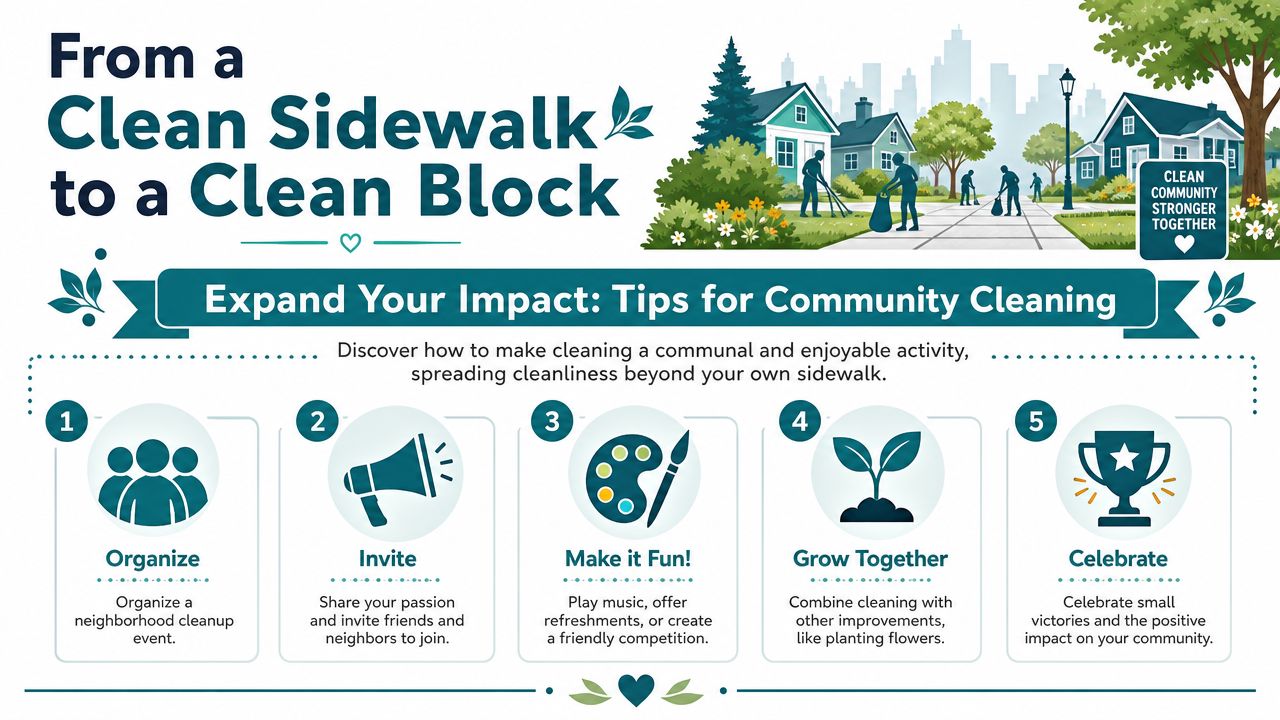
Keep it simple. Knock on a door or send a text. Say you're cleaning your sidewalk on Saturday morning and ask if they want to do theirs at the same time. Tell them you'll bring coffee, music, or donuts. Make the invitation easy to accept.
Don't make it sound like a committee meeting. Make it sound like a small adventure.
The block changes in ordinary ways
When people clean side by side, they talk. They learn names. They trade stories about the tree roots wrecking the pavement, the old dog that barks at mail carriers, the best time to catch the morning shade. Friendship doesn't always start with deep confession. Sometimes it starts with two people scrubbing gum off concrete.
Here are a few ways to make it stick:
- Keep it short: An hour feels doable.
- Make it visible: Start where neighbors can see the action.
- Add one fun thing: Coffee, a playlist, cold fruit, anything.
- Celebrate the tiny win: Take a look at the block when you're done and actually enjoy it.
If you want a path into that kind of shared work, this volunteer trash pickup page has the same spirit I believe in. Show up, do good work, meet people who are trying.
Bravery spreads by contact
You clean your sidewalk. Then your neighbor notices. Then one more person joins. Soon the block feels less anonymous. That's how community often starts. Not with a speech. With a visible act that tells other people, "I'm willing to care first."
A clean sidewalk is nice. A block where people know each other because they worked next to each other is better. That's the part I keep coming back to. Concrete gets brighter, sure. But so do people.
If you want to turn that energy into real-world action, check out Litter Caterpillars. It's a Chicago volunteer group built around bravery, friendship, and the strange fun of cleaning up together. If you've been waiting for a sign to get outside and do something good with other people, this is it.
Leave a Reply