Tag: litter caterpillars

  • Van Patten Woods Lake County IL: Trails & Wildlife

    Van Patten Woods Lake County IL: Trails & Wildlife

    I once pulled into Van Patten Woods with a head full of noise and a coffee gone cold in the cup holder. By the time I stood near the lake and heard my own footsteps on the gravel, the day felt less like something attacking me and more like something I could shape.

    Your Adventure Begins at Van Patten Woods

    Some places meet you where you are. Van Patten Woods Lake County IL does that for me.

    I don't mean that in a soft, postcard way. I mean it in a genuine way. The way a place feels when your mind is packed with old conversations, unfinished plans, and that stale sense that you've been standing still too long.

    I know that feeling.

    I’ve had seasons when my life looked manageable from the outside but felt cluttered underneath. Not just physically cluttered. Spirit cluttered. The kind where every task feels heavier than it should, and even a simple day trip feels like too much effort.

    Then you get out of the car. You smell damp earth. You see water through the trees. You start walking.

    That’s the invitation here.

    A person standing by a window looking out at a lush forest scene with scattered paint splashes.

    When a walk becomes a reset

    I’ve learned that a forest preserve can do what a pep talk can’t. It gives your body something honest to do. Step. Breathe. Look up. Keep going.

    Van Patten Woods doesn't ask you to become a new person before you arrive. It just asks you to show up.

    That matters.

    If you've ever had one of those mornings where your room is a mess, your phone is full of notifications, and your head feels like a junk drawer, this place can break the spell. Not because it magically fixes your life. Because it gives you one clean action.

    Walk forward.

    You don't need a grand breakthrough in the woods. Sometimes you just need one hour without friction.

    Why this place feels different

    This preserve has a grounded energy. Water, woods, open trail, old history in the soil. It feels close enough to daily life to be reachable and far enough away to let your thoughts loosen their grip.

    If you like pairing one preserve with another, I also like the contrast between this place and MacArthur Woods Forest Preserve. One day can feel expansive and river-worn. Another can feel tucked away and quiet. Both teach the same lesson. Your mind changes when your surroundings change.

    Here’s how I’d frame your first visit:

    • If you feel restless: Start with movement. Don’t overthink the route.
    • If you feel worn down: Go to the water early and sit longer than feels productive.
    • If you feel numb: Pay attention to textures. Gravel under shoes, bark under your palm, wind off the lake.

    The woods won't sort your whole life in an afternoon. But they can help you clear one shelf in your mind. Sometimes that's how change starts.

    How to Get There and What to Expect

    The hardest part of a restorative day is often the front door. Once you commit to leaving home, the rest gets easier.

    Van Patten Woods sits in Wadsworth, Illinois. If you're coming from the Chicago area, the drive feels like a gradual exhale. Buildings thin out. The pace softens. You stop thinking about errands and start thinking about weather, trail shoes, and whether the water will be still.

    Arrive with a simple plan

    Don’t turn this into a military operation. Give yourself a basic plan and let the place do the rest.

    Try this:

    1. Choose your anchor activity. Pick one thing before you leave. Walking, sitting by the lake, paddling, or fishing.
    2. Pack for mud, not for fantasy. Bring water, decent shoes, and one extra layer.
    3. Keep your first visit light. Let curiosity lead more than ambition.

    When you pull in, expect a preserve that feels practical rather than flashy. That’s part of the charm. You’re not there for spectacle. You’re there for contact with something steady.

    You’re stepping into local history

    Van Patten Woods carries weight beyond its tree line. It was the very first forest preserve established by the Lake County Forest Preserves district in 1961, and that first step helped launch a system that now protects over 31,200 acres and more than 200 miles of trails in Lake County, as noted by the Lake County Forest Preserves overview on Wikipedia.

    I like knowing that when I arrive.

    It changes the mood of the place. You’re not just wandering into a random patch of green. You’re walking into the starting point of a larger act of care.

    Practical rule: Treat the arrival like part of the experience. Don’t rush from parking lot brain into trail brain. Pause for a minute before you move.

    What the first few minutes feel like

    Many visitors need those first minutes to recalibrate. You get out. You hear less traffic. You notice more sky. Your shoulders drop a little without asking permission.

    That’s when the preserve starts working on you.

    A few things to expect on the ground:

    • Trail variety: You can keep things easy or stretch into a longer outing.
    • Water access: The lake draws anglers, paddlers, and people who need a horizon line.
    • A lived-in preserve feel: This place feels used in the best sense. It invites return visits.

    If you tend to hesitate before trying somewhere new, this is a good antidote. It’s approachable. It doesn’t demand expertise. It rewards attention.

    Trails for Every Mood and Fitness Level

    Some days I want a trail that asks nothing from me except motion. Other days I want a path that pushes back a little. Van Patten Woods gives you both.

    The preserve has five miles of trails that support hiking, biking, horseback riding, and cross-country skiing, and those routes connect with the Des Plaines River Trail, according to the background details provided earlier in this guide. What matters on the ground is simpler. You can choose the conversation you want to have with yourself.

    The easy loop mood

    When my brain feels overcrowded, I start near the lake.

    That kind of walk works like wiping steam off a mirror. You don’t solve everything. You just see better. A wider, easier route gives you room to settle in without constantly watching your feet.

    This is the route for:

    • Mental overload: You need rhythm more than challenge.
    • A first visit: You want confidence before exploration.
    • A shared walk: You’re with someone and want easy conversation.

    The woods path mood

    Then there are the unpaved stretches through the trees.

    These ask more from your attention. Roots, turns, softer ground, changing light. I like those paths when I’ve been scattered. They pull me back into my body because they require me to notice where I am.

    That’s the hidden gift of a slightly rougher trail. It doesn’t let you drift too far into your own static.

    A dirt path can do what a meditation app can't. It keeps asking, "Are you here or not?"

    The long-haul mood

    Some visitors hit the connector routes and keep going. That’s the day for endurance, for seeing what happens when you stay with your effort a little longer.

    If that sounds like your kind of outing, the regional connection to the Des Plaines River Trail near Chicago gives the whole preserve a bigger horizon. Van Patten Woods can be a destination, but it can also be a launch point.

    Van Patten Woods Trail Overview

    Trail Name Length (Round Trip) Surface Best For
    Sterling Lake area route Flexible Crushed gravel and developed path Easy walks, strollers, calm starts
    Woodland side paths Flexible Unpaved natural surface Presence, quiet, a little more focus
    Des Plaines River Trail connection Flexible Mixed multiuse trail Longer outings, biking, momentum

    I’m keeping the table honest on purpose. The exact route you create depends on your choices once you arrive.

    Pick the trail by feeling, not ego

    A lot of us choose the wrong path because we want to impress ourselves. We pick the longer route when what we need is the gentler one.

    Try asking a better question. Not “What should I accomplish?” Ask “What kind of return do I need?”

    Maybe you need sweat. Maybe you need stillness. Maybe you need to walk until your inner monologue gets bored and goes quiet.

    Van Patten Woods is good at all three.

    What You'll See When You Look Closely

    The lake is the part that catches many people first. Water does that. It gathers your attention and holds it there.

    But Sterling Lake means more when you know what it used to be.
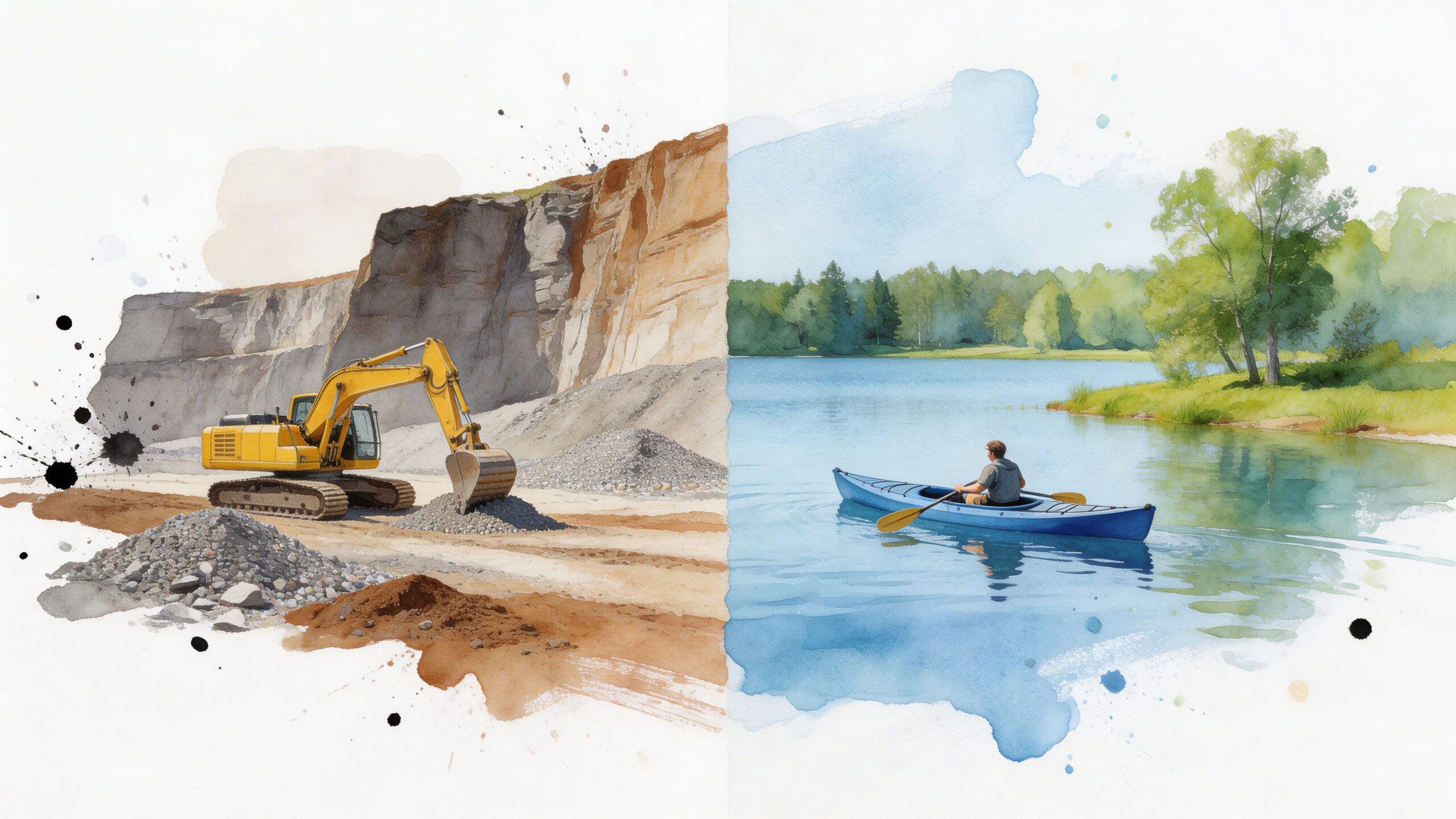
    A split-screen watercolor illustration showing an industrial quarry on the left and a peaceful lake on the right.

    The scar beneath the beauty

    Sterling Lake covers 86 acres, and it began as a gravel quarry mined from the 1930s to the mid-1970s. Then a major restoration effort from 1989 to 1993 reshaped the contaminated site into a stable aquatic ecosystem through sediment capping and shoreline revegetation, as described by Visit Lake County's Van Patten Woods page.

    I love that story because it refuses the easy version of beauty.

    This lake did not appear untouched. People wounded this land first. Then people helped heal it. You can stand at the water’s edge and feel both truths at once.

    That lands hard if you’ve ever looked at your own life and seen old damage.

    Restoration changes how you view a natural area

    When I know the history, I stop seeing a pretty lake and start seeing a record of repair. The shoreline feels more meaningful. The calm feels earned.

    That changes the whole visit.

    You start noticing that recovery usually looks ordinary from the outside. It looks like reeds, water, stable banks, birds moving through space that once held extraction. In a person, recovery often looks ordinary too. Better routines. Cleaner choices. More patience. Less chaos.

    Healing rarely arrives with fireworks. Most of the time it looks like steadier ground.

    Watch the season, not just the scene

    This is a place worth revisiting because the woods keep changing their language.

    Here’s how I think about the seasons:

    • Spring: raw hope, bright mud, the feeling of starting before you feel ready.
    • Summer: full canopy, longer light, a more generous kind of energy.
    • Fall: clarity, edge, the beauty of things letting go.
    • Winter: honesty. No cover. No decoration. Just shape and silence.

    The preserve also carries the practical life of a working natural area. It sits along the Des Plaines River floodplain, and that terrain plays a role in holding and slowing water during heavy rain. I respect places more when they do a job as well as offer comfort.

    Looking takes practice

    A lot of people visit nature and still don’t quite see it. I’ve done that too. I’ve walked while mentally answering emails and left with almost no memory of where I was.

    If you want the woods to hit deeper, slow down enough to notice one thing fully.

    Try one of these:

    • Follow the shoreline with your eyes instead of rushing to the next turn.
    • Stand still under the oaks and listen until the loudest sound changes.
    • Look for contrast between restored water, floodplain, and forest.

    Van Patten Woods teaches a blunt lesson. A damaged place can become generous again. That’s not just ecology. That’s a way to live.

    Designing Your Perfect Day

    A good day in the woods doesn’t happen by accident. It helps to choose your purpose before you arrive.

    When I started getting serious about changing my own habits, I stopped hoping my days would somehow improve on their own. I started designing them. A visit to Van Patten Woods gets better when you do the same.
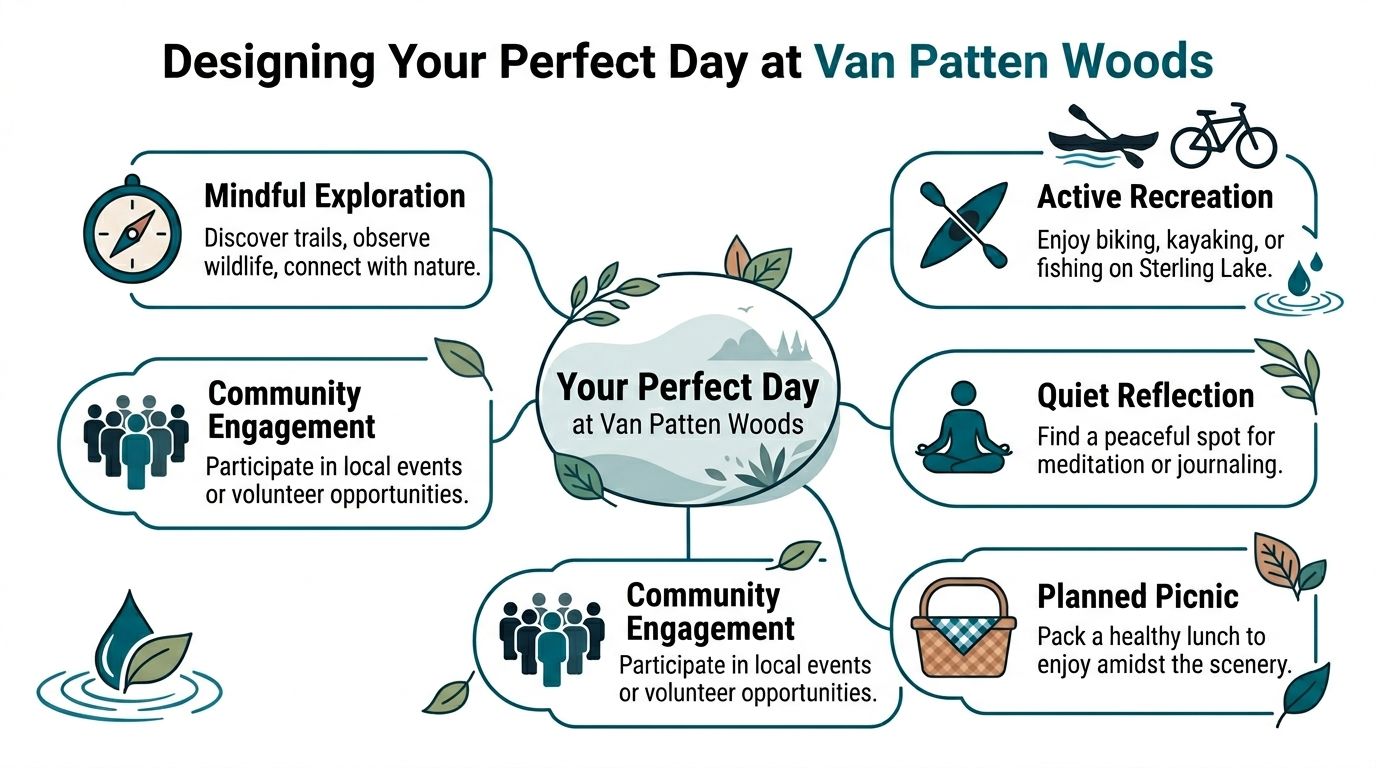
    An infographic titled Designing Your Perfect Day at Van Patten Woods listing various recreational activity ideas.

    The Solo Reset

    This is the one I recommend when life feels too loud.

    Arrive early. Walk at a brisk pace until your thoughts stop tripping over each other. Then sit by the lake without reaching for your phone.

    That last part matters more than people admit. If you fill every quiet second, you never hear what your mind has been trying to say.

    Good ingredients for this version:

    • A thermos or water bottle
    • Shoes you don’t mind getting dusty
    • A small notebook if thoughts come loose

    The Connector Day

    Some places make conversation easier because your bodies have something simple to do while your minds open up.

    Bring one friend. Keep the plan loose. Walk, pause, point things out, maybe eat lunch after. You don’t need entertainment when the environment does the heavy lifting.

    This kind of day works especially well if a friendship has felt rushed, distracted, or trapped inside restaurants and screens.

    The Water-and-Motion Day

    Sterling Lake gives you more than a view. The preserve offers a wheelchair-accessible floating dock, two fishing piers, and a boat ramp for non-motorized craft, with electric trolling motors allowed, based on the verified park details provided for this article.

    That opens up a different kind of outing.

    Try this blend:

    1. Start with a trail walk.
    2. Shift to fishing or paddling if that’s your thing.
    3. End with a quiet sit before leaving.

    The day feels fuller when it includes both movement and pause.

    The Intentional blueprint

    If you don’t know what to choose, use this filter.

    Day style Best if you feel What to prioritize
    Solo Reset Overstimulated Silence and slow observation
    Connector Day Disconnected Easy walking and conversation
    Water-and-Motion Day Restless Variety and physical engagement

    I think intention is underrated. You don’t need a perfect day. You need a day with shape. Van Patten Woods gives you enough options to build one that meets you where you are.

    Leaving the Woods Better Than You Found It

    Many visitors think a park visit ends with a nice walk, a photo, maybe tired legs. I think that’s too small.

    A place gives you something. You can give something back.

    A happy diverse family picking up trash and cleaning litter from the grass in a park.

    Don’t stay a spectator

    I used to think stewardship belonged to experts, staff, or the especially outdoorsy. That idea falls apart fast once you spend time in real public spaces.

    Public land stays beautiful because people decide it matters.

    At Van Patten Woods, that can be simple. Pick up a stray bottle near the shoreline. Grab a snack wrapper from the trail edge. Set a better tone than the one you found.

    This isn't about guilt. It's about identity.

    Small acts build a stronger self

    One of the strangest truths in life is that helping with an outer mess can steady something inside you.

    There’s a satisfaction in doing one direct, useful thing with your own hands. No performance. No abstract opinions. Just action.

    That’s why I think environmental care is personal care too.

    If this idea resonates, I like the framing in this piece on environmental stewardship. It treats care for a place as a lived practice, not a slogan.

    A field note: Pride grows when you leave evidence that you contributed.

    How to do it without making it weird

    You don’t need to turn your outing into a full cleanup operation. Keep it light and respectful.

    A practical approach:

    • Bring gloves: Lightweight work gloves make it easier to help safely.
    • Use a spare bag: One small bag is enough for incidental litter.
    • Know your limit: Leave hazardous items alone and report them if needed.

    That last point matters. Courage doesn’t mean carelessness.

    Service changes the flavor of the day

    A walk can refresh you. A small act of service can strengthen you.

    That’s the difference.

    When you leave Van Patten Woods after giving something back, the visit sticks differently. The memory has more grit. More ownership. More meaning. You weren't just a consumer of scenery. You joined the life of the place for a moment.

    I think that’s part of growing up, no matter your age. You stop asking only, “What can I get from this place?” You start asking, “How can I honor it?”

    That question improves more than parks.

    Your Questions About Van Patten Woods Answered

    Let’s keep the last details clean and useful.

    Can you bring a dog

    Yes. Dogs are generally welcome if you keep them leashed and clean up after them. Good trail manners make the day better for everyone.

    Are there restrooms

    Yes. You can expect restroom access near main visitor areas. I still recommend handling the basics before you arrive if you want a low-stress start.

    Can you fish at Sterling Lake

    Yes, fishing is part of the draw here. Sterling Lake includes two fishing piers and a wheelchair-accessible floating dock, based on the verified preserve details already referenced in this article.

    Bring whatever licenses and gear Illinois requires for your outing. Check current rules before you go.

    Can you bring a kayak or canoe

    Yes. Non-motorized boats such as canoes, kayaks, and paddleboards are allowed, and electric trolling motors are permitted. The launch is free, and the setup is designed for cartop-style access according to the verified preserve information provided for this piece.

    Is Van Patten Woods accessible

    Parts of it are built with accessibility in mind. The floating dock is accessible, and the easier lake-adjacent routes tend to work better for wheelchairs and strollers than rougher woodland paths.

    Can you camp there

    Yes, but not in the casual, show-up-and-pitch-a-tent sense. The preserve has a rustic campground for organized youth groups of up to 60 participants, and reservations require a permit through the district offices, based on the verified details provided for this article.

    What activities fit best here

    That depends on your mood.

    If you want a short answer, use this:

    • Need peace: walk and sit by the lake
    • Need movement: bike or hike the trail system
    • Need focus: fish, paddle, or take the woods slowly
    • Need connection: bring one good friend and let the preserve carry the conversation

    Van Patten Woods works best when you don’t demand too much from it. Show up ready to notice, and it gives a lot back.


    If you want to turn that energy into action after your visit, check out Litter Caterpillars. It’s a Chicago volunteer group built around service, friendship, and the idea that caring for the environment can also reshape your own life.

  • Aurora Forest Preserve: Your Complete Guide

    Aurora Forest Preserve: Your Complete Guide

    The first time I walked into aurora forest preserve, I had that tight, overfull feeling in my chest that city weeks can give you. Ten minutes later, I was standing still beside tall grass, listening to wind move through it like someone slowly turning down the volume on my life.

    Discovering a Place to Breathe Near the City

    One Saturday last spring, I met a young volunteer at the trail edge who had come straight from a brutal workweek. He kept checking his phone for the first five minutes. By the time we reached the grasses, he slipped it into his pocket and laughed at himself. "I forgot I could feel this calm without earning it first," he said.

    That is the gift of aurora forest preserve.

    It gives city-tired people a place to soften. No polished outdoor persona required. You arrive carrying too much, and the land does not ask for an explanation.

    A young man with closed eyes enjoys a peaceful moment in a lush green forest park.

    When your mind needs a wider horizon

    I have learned to notice a certain warning sign in myself. My thoughts get cramped. Every small task starts acting bigger than it is. On days like that, I need open ground, a place where my eyes can travel farther than my worry.

    Aurora West offers that feeling of room. You step out, hear wind comb through the grasses, and the body begins to unclench before the mind has caught up. And that sense of space is significant.

    A preserve like this changes your scale. The inbox, the dishes, the awkward conversation you keep replaying, they still exist. They just stop being the only thing in view.

    A walk in a preserve can feel like sweeping a cluttered floor. You still own the room, but now you can move through it again.

    I have felt that same reset in other restored places too, especially on mornings spent walking the quiet trails at Waterfall Glen Forest Preserve, where the first mile can loosen a week of mental knots.

    Why restored land feels personal

    What stays with me here is not perfection. It is recovery.

    Aurora West was not preserved because nobody touched it. People put their hands back into damaged ground and chose to help it heal. Former farmland became habitat again through patient work, season after season. I am moved by that story of restoration. It is a reminder that repair is rarely dramatic.

    That lesson sits close to the heart of the Litter Caterpillars. We show up with bags, gloves, sore backs, and ordinary hope. We pick up what was discarded. We leave a place better than we found it. Then we come back and do it again. A forest preserve teaches the same rhythm. Care is repetitive. So is renewal.

    That is why a visit here never feels like escapism to me. It feels like recalibration.

    What you feel when you stop rushing

    Your first visit does not need to be ambitious. Some of the best hours I have spent in a preserve came from walking one easy stretch, then standing still long enough to hear red-winged blackbirds before I spotted them.

    If you want the day to open up a little more, try this:

    • Start with one easy loop: Let curiosity set the pace.
    • Keep your headphones in your pocket: Wind, birds, and rustling grass do better work than another playlist.
    • Watch the transitions: Prairie meeting marsh, shade meeting sun, still water beside moving stems. Life gathers at those edges.
    • Pause for a full minute: The preserve changes when you stop acting like a person passing through it.

    That small pause can do more than lower your pulse. It can remind you that healing is not always a dramatic turn. Sometimes it is a quiet return to attention, to gratitude, and to your place in a living community that includes soil, water, birds, neighbors, and you.

    Your Guide to Reaching Aurora Forest Preserve

    The first time I drove out there, I missed the mental turn before I ever missed a road. I was still carrying the city in my shoulders. Emails. Noise. That itchy habit of checking the time. Then the streets widened, the buildings thinned, and I remembered a small truth I have learned on cleanup days with the Litter Caterpillars. Sometimes the trip is part of the repair.

    If you are searching for aurora forest preserve, you are usually looking for Aurora West Forest Preserve, as noted earlier. The name matters because a calm morning can get scrambled fast when your map sends you somewhere close, but not quite right.

    I keep the plan simple. Pick your route the night before. Save the location in your map app before you leave. Put water and a pair of trail-ready shoes by the door. Those tiny acts feel ordinary, yet they create the kind of margin that lets you arrive open instead of rushed.

    Driving with less friction

    From Chicago or the inner suburbs, I like an early start.

    Morning light changes the whole approach. The roads feel quieter. The parking area usually feels easier. You step out with more patience, and patience is one of the best things you can bring to a preserve.

    I use the same rule I use for volunteer cleanup mornings. Leave early enough that one wrong turn, one train, or one stretch of traffic does not steal your mood. If you have done longer day trips like Waterfall Glen Forest Preserve, you already know how much smoother the day feels when travel is not a race.

    What to expect when you arrive

    Arrival here is gentle.

    You park, open the door, and the pace shifts. Gravel underfoot. Air that feels less used. Fewer signs asking for your attention. That first minute can do a surprising amount of good if you let it.

    A few habits help:

    1. Use the official entrance information from the forest preserve district before you leave. Access points can be labeled differently across apps.
    2. Bring your own water and a small snack. I have seen good walks cut short by simple underpacking.
    3. Wear shoes that can handle mixed ground. Restored land changes with the weather.
    4. Keep a towel or paper towels in the car. Mud, wet grass, and damp paws have a way of joining the trip home.

    Give the visit room to work on you

    I have brought friends to preserves when they were worn thin by work, grief, or just too much screen light. The ones who got the most from the day were not the ones with the tightest schedule. They were the ones who left space around the outing.

    Build your visit around daylight, weather, and your actual energy. Check the district listing for current hours, parking details, and any notices before you go. Then protect a little unclaimed time on both sides of the trip.

    That extra hour matters. It gives you room to walk slowly, sit longer than planned, and notice what service-minded people learn sooner or later. Care takes time. So does returning to yourself.

    Choose Your Adventure on the Trails

    Some days I want a trail that lets me think. Other days I want one that tires me out enough to stop thinking.

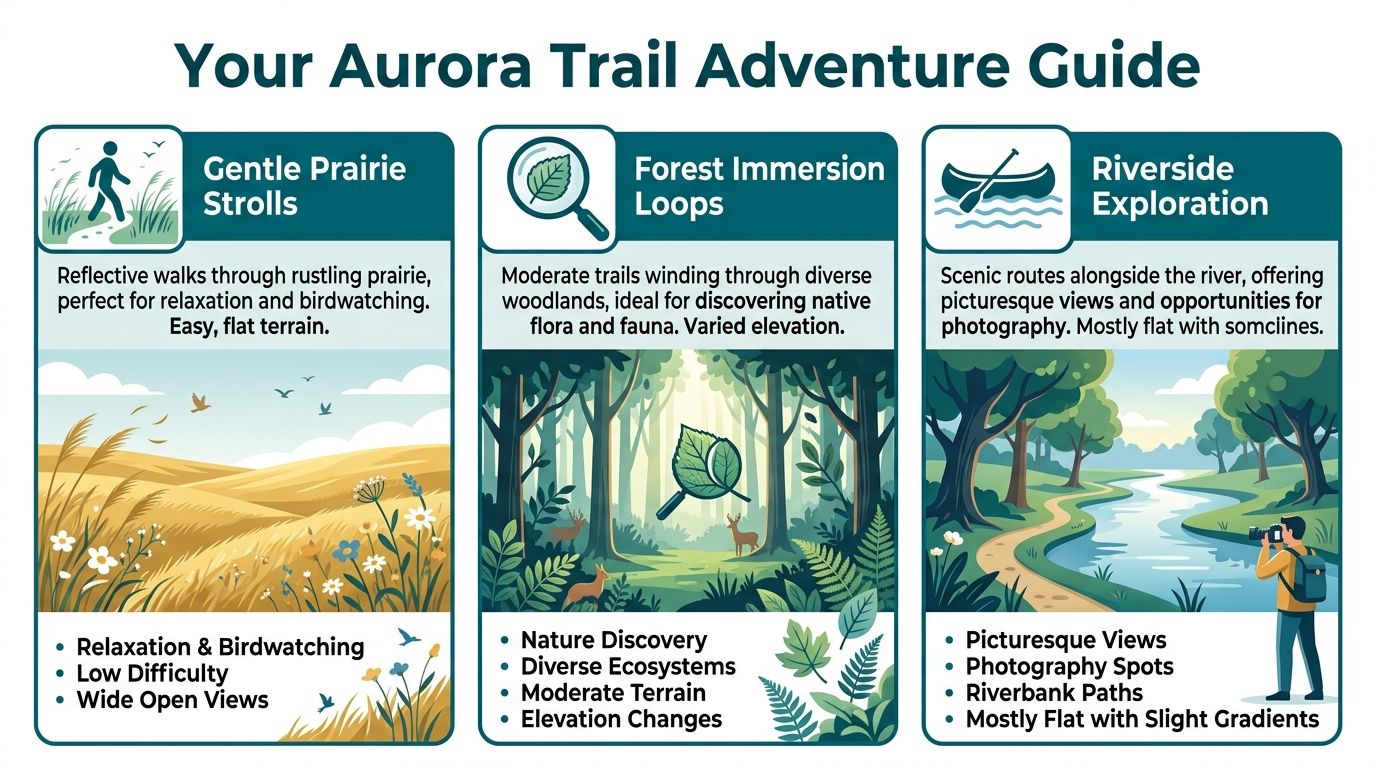
    Aurora forest preserve works well for both moods because the terrain feels varied, even when it stays approachable. You can walk it like a reflective pilgrim, a casual stroller, a birdwatcher, or the friend who says, “Let’s just keep going and see where this leads.”

    Infographic

    Three trail moods I come back to

    I do not think of preserve paths as lines on a map. I think of them as different conversations.

    A prairie path talks in long sentences. A woodland loop speaks more softly. A route near water keeps interrupting itself with flashes of movement and reflection.

    Here is the simple version.

    Aurora Forest Preserve Trail Overview Approx. Length (Miles) Difficulty What You'll See
    Gentle Prairie Stroll Varies Easy Open grassland views, breeze moving through tall plants, good sightlines for birds
    Forest Immersion Loop Varies Easy to moderate More shade, layered plant life, quieter stretches for slow walking
    Marsh and Edge Route Varies Easy Wetland scenery, shifting light, strong chance for still-water reflections and animal movement

    I am keeping the distances broad on purpose. Trail conditions, route choices, and your own wandering style can change how long a walk feels. On a preserve day, exact mileage matters less to me than matching the land to my state of mind.

    If you want calm, take the open route

    Open prairie paths do something special.

    They give your eyes distance. That sounds small, but it is not. When I spend too much time indoors, my focus narrows. Screens train you to stare at near things. Prairie trains you to widen again.

    Choose the broadest, flattest-looking route if you want:

    • A gentle reset: Less technical footing, more room to settle into rhythm.
    • Sky therapy: Big cloud views can change the whole emotional tone of a walk.
    • Birdwatching without effort: You can often notice movement from far off.

    This is the route I choose when my brain feels hot and crowded.

    If you want intimacy, take the wooded loop

    Woodland sections feel different right away. The air cools. Sound tightens. Your attention gets pulled closer to bark, leaves, and shadows.

    I like these loops when I need to get out of performance mode. Trees do not care if you have answers. They only ask that you notice them.

    A wooded walk fits you well if you want a bit more enclosure and a slower kind of discovery. It pairs nicely with solo walks, quiet conversation, and the kind of afternoon where you leave your phone in your pocket.

    For a broader look at protected natural spaces across the state, I also like this guide to a forest preserve in IL. It helps frame Aurora West as part of a larger culture of preserved land, not just a one-off escape.

    If you want distance, follow the connection outward

    One of the best features here is the preserve’s multi-purpose trail connection to the Virgil Gilman regional bike trail, noted on the preserve’s official listing earlier in this guide.

    That changes the feel of the place. It means your outing can stay local and contained, or it can become a longer moving day.

    The right trail is not the hardest one. It is the one that meets the version of you who showed up.

    If you are with friends, I suggest asking one question before you start. “Do we want to talk, wander, or move?” That answer usually picks the route for you.

    Meeting the Wild Heart of the Preserve

    I once stopped beside a wet patch at dusk and heard frogs before I saw anything else. The sound came up from the ground like the preserve had switched itself on.

    That is the part I love most. Not the map. Not the parking lot. The life.

    This land is alive because people repaired it

    Aurora West does not hide its history. The beauty here has effort behind it.

    The preserve is part of a restoration story shaped by work on hydrology, wetland recreation, prairie plant reintroduction, and invasive species removal, according to the preserve information cited earlier. You feel that in the variety of habitats. One minute you are looking across open prairie. Then you move toward marsh. Then woodland closes around the trail.

    That mosaic changes the way you walk. You stop scanning for one big attraction and start noticing many small ones.

    A gentle deer peeking through lush green leaves beside a sparkling stream in a watercolor art style.

    What to look for by season

    I do not treat wildlife spotting like a checklist. I treat it like learning the preserve’s mood.

    In spring, I look low first. Fresh growth, wetter ground, the sense that the whole place is waking up from underneath.

    In summer, the preserve feels full-bodied. Taller plants, stronger insect song, thicker greens, more motion if you stand still long enough.

    Fall sharpens everything. Seed heads catch the light. Grasses take on warmer tones. Birds seem to announce themselves differently because the visual texture changes around them.

    Winter strips the place to structure. Trails feel more skeletal, but also more honest. You notice shape, spacing, and the architecture of the land.

    Here are the clues I use:

    • Listen before you scan: Sound often reveals water, birds, and hidden movement first.
    • Watch transition zones: Where marsh meets prairie or woodland meets open ground, life tends to gather.
    • Pause near still water: Reflections pull your eye down, and animals often do the same.
    • Look twice at “empty” spaces: A lot of the preserve’s magic starts as something barely moving.

    Learning to see, not just look

    The first few times you visit a preserve, you may think nothing is happening.

    Then your eyes adjust.

    You notice how one patch of grass bends against the rest. You catch a bird rising where you thought there was only reeds. You see tracks in softer ground. The surroundings stop being background and start becoming conversation.

    That shift matters far beyond the trail. It teaches patience. It teaches attention without force. It reminds you that a restored place can hold more life than a rushed person first notices.

    Nature rewards the second look. Most beauty does not shout.

    When I bring someone new to a preserve, I never try to impress them with names. I just ask, “What changed since we stopped?” That question works almost every time.

    Making Your Trip Comfortable and Safe

    A good preserve day feels loose, but it works better when you prepare with respect. I have learned that simple habits give you more freedom once you are on the trail.

    Pack for comfort, not for fantasy

    I used to overpack for outdoor trips. Then I realized many individuals need less gear and better judgment.

    My standard setup is plain:

    • Water you already trust drinking
    • Shoes with grip
    • One extra layer
    • A snack that does not melt into chaos
    • A small bag for your own trash

    That last one matters. Nothing breaks the spell of a beautiful place faster than leaving a wrapper behind because there is no convenient bin in sight.

    Read the day before the trail reads you

    Weather around northern Illinois can turn quickly. I check conditions before I leave and again when I arrive.

    Wind changes how open areas feel. Recent rain changes footing. Strong sun can tire you out faster than a cool morning forecast suggests.

    A few safety habits carry most of the load:

    1. Stay on marked paths when possible. You protect both yourself and sensitive habitat.
    2. Give wildlife space. A good sighting is one that does not disturb the animal.
    3. Tell someone your rough plan if you are going alone.
    4. Turn back early if the day feels off. Pride is not a trail skill.

    Amenities and expectations

    I do not assume every preserve day comes with polished convenience. That mindset helps.

    Check the official district information before you go if you need specifics on restrooms, accessibility, picnic areas, or seasonal site details. If those features matter to your group, confirm them in advance rather than hoping the trailhead answers the question for you.

    I also keep expectations flexible. A preserve is not a theme park. Sometimes a bench is wet. Sometimes a path is muddy. Sometimes the best seat for lunch is a patch of sun beside the car after your walk.

    Comfort outdoors comes less from perfect amenities and more from bringing what lets you adapt calmly.

    If you are visiting with kids, older relatives, or anyone new to nature walks, start shorter than you think you need. Ending with energy still in the tank makes the next visit much easier.

    Join Us in Protecting These Wild Spaces

    Every preserve asks a quiet question.

    You came here for peace. Will you help protect the place that gave it to you?

    I think that question matters because restoration does not stay restored by accident. Trails need care. Habitats need attention. Invasive plants do not remove themselves. Litter does not walk out on its own.

    Conservation becomes real when you touch the work

    The first time you help care for land, the preserve stops feeling like scenery. It starts feeling like shared responsibility.

    Aurora West already carries the mark of public commitment. In Kane County, a 2001 referendum passed with 52% yes vote and authorized $68.5 million for land acquisition. Surveys also found 72% of residents were concerned about protecting existing open space, as reported in the DuPage Forest Preserve District year in review document that summarizes regional conservation context and Kane County support.

    I love those numbers because they do not feel abstract to me. They feel like trailheads, shade, frogsong, and places where a tired person can recover for an afternoon.

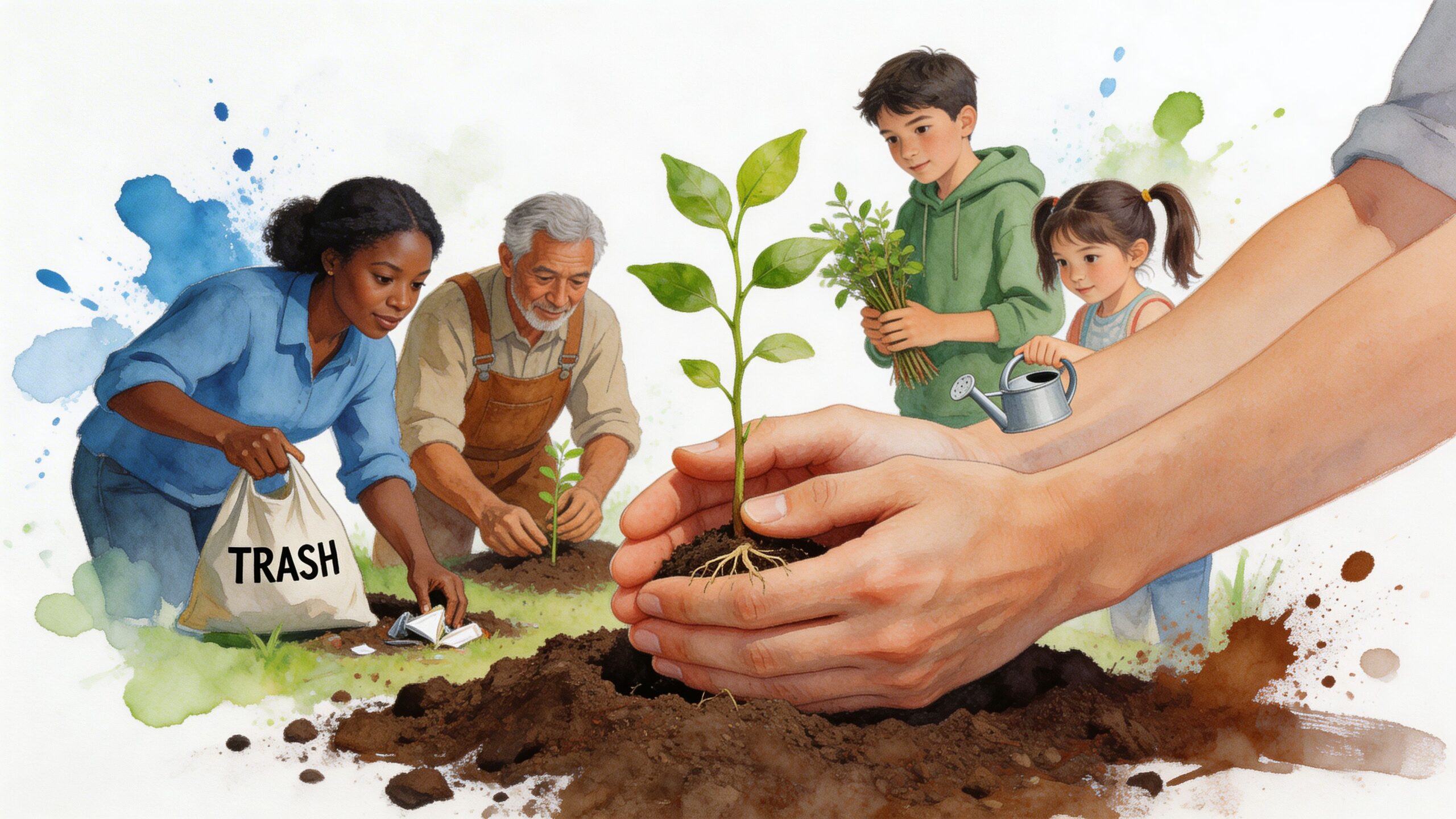
    A diverse group of people planting trees and cleaning up litter to help the environment together.

    Small acts count more than grand intentions

    You do not need to lead a major initiative to become useful.

    Start with one act that is easy to repeat:

    • Pick up a little litter on your way out: Bring a glove or bag and leave a stretch cleaner than you found it.
    • Join an official volunteer day: Habitat work feels better when local staff or stewards guide the effort.
    • Respect closures and restrictions: That includes wildlife protection rules, especially in sensitive areas.
    • Bring one friend next time: Stewardship spreads through relationships faster than speeches.

    That last point matters most. Care is contagious when people watch someone they know practice it.

    Why service changes the person doing it

    I have never believed environmental stewardship is only about the environment.

    It also changes the volunteer. You begin to trust yourself differently when you show up for something that cannot praise you back. Land does not flatter you. It only responds to care over time.

    That is why cleanup work, seed collection, invasive removal, and trail respect all matter. They train a deeper muscle than productivity. They train fidelity. You say you value beauty, and then you act like it.

    If that idea resonates with you, I recommend exploring examples of hands-on environmental stewardship programs. Practical service gives all this inspiration somewhere to go.

    Aurora forest preserve is not just a place to consume peace. It is a place to practice guardianship.


    If this kind of service speaks to you, Litter Caterpillars offers a welcoming way to turn that feeling into action. Join a cleanup, meet people who care, and build the habit of leaving every place better than you found it.

  • Eco Friendly Transport: Our Chicago Cleanup Guide

    Eco Friendly Transport: Our Chicago Cleanup Guide

    The first time I huddled under a tree in Chicago hail after a cleanup, every Uber kept canceling on us. We were cold, wet, carrying grabbers, and somehow more alive than we had felt all week.

    Why Your Commute Is Part of Our Cleanup Story

    I started picking up litter for a strange reason. I could not clean my own life.

    My room felt heavy. My fridge felt heavy. Old containers, expired food, random objects with emotional history. None of it weighed much, but every item felt enormous to me. I knew I needed a way to move again.

    Then I started cleaning public spaces, and something clicked. A bottle on a sidewalk did not come with years of guilt. A chip bag in a bush did not come with a memory attached. I could bend down, pick it up, and keep walking. That simple act started loosening something inside me.

    A woman looking thoughtfully out a window with a city street scene and a messy desk overlaid.

    The mission starts before the cleanup

    I learned that service begins long before your glove touches a piece of trash.

    It starts when you leave your home. It starts with the shoes you put on. It starts with whether you rush into a car in frustration or step outside with intention.

    When you walk to a cleanup, you notice the broken glass near the curb, the alley that needs help, the mural half-hidden behind weeds. When you bike, you feel the distance between neighborhoods in your legs. When you take the train, you see how one city contains many worlds, all stitched together by tracks and effort.

    That matters.

    Eco friendly transport is not just a technical choice. It is a mental shift. You stop treating the trip as dead time and start treating it as part of the work.

    Travel can clean your mind too

    I love the quiet discipline of a good commute. You grab your gloves. You check the weather. You head out even when the sky looks rude. That small act builds character.

    A cleanup day can fail before it begins if you arrive angry, flustered, and disconnected. I have felt that. I have also felt the opposite. I have walked to a site with the cold air waking me up and arrived ready to serve.

    Those are two different versions of the same morning.

    Your route shapes your mindset. If you travel with intention, you arrive with intention.

    For me, green travel and cleanup work belong together because both fight the same enemy. Carelessness. One kind leaves trash on the ground. Another kind treats every trip like someone else will absorb the cost.

    A Saturday morning feels different when you earn it

    There is a special feeling in getting somewhere the hard but honest way. Not miserable hard. Meaningful hard.

    You bike through wind. You wait on a platform with a grabber tucked under your arm. You walk the last few blocks and see the street you came to help before anyone else does. That does something to you.

    It turns you from a spectator into a participant.

    I think a lot about bravery. People usually save that word for giant moments, but I think bravery often looks small. Getting out of bed on a freezing weekend morning is brave. Showing up in a neighborhood you have never visited is brave. Choosing a cleaner way to move through the city when the easier option calls your name is brave too.

    Here is what I want you to carry with you. Your commute is not separate from the cleanup. It is the first bag you pick up. The first act of discipline. The first way you tell the city, and yourself, that you care.

    What Makes Transport Eco-Friendly Anyway

    A lot of people hear the phrase eco friendly transport and think it means buying something expensive or becoming some perfect climate saint. I do not see it that way.

    It's like tools.

    If you need to tighten one screw, you do not grab a sledgehammer. If you need to carry one backpack across a neighborhood, a private car can be the same kind of overkill. Big machine. Big space. Big side effects.

    Use the right tool for the job

    That is the simplest definition I know.

    Eco-friendly transport means choosing a way to move that matches the task with less waste. Sometimes that is walking. Sometimes it is a bike. Sometimes it is a train. Sometimes it is sharing a ride instead of driving alone.

    The point is not purity. The point is fit.

    A short trip to a cleanup with light gear might call for walking. A medium trip with some flexibility might fit a bike. A longer cross-city trip might belong to the train or bus. If you need to haul supplies with friends, carpooling can make sense.

    Why this matters in plain English

    Road traffic carries a giant environmental burden. Road vehicles account for 75% of global transport CO2 emissions, with passenger cars and buses contributing 45.1%, and road transport responsible for about 15% of all global CO2 emissions, according to Neste’s transport emissions data room.

    You do not need to memorize that. You just need to understand the pattern.

    When a city leans too hard on private road travel for everything, the costs spread everywhere. Air. Noise. Space. Stress. Streets stop feeling like places for people and start feeling like channels for machines.

    Green is not only about carbon

    I care about emissions, but I also care about what a trip feels like on the ground.

    A greener mode often does a few things at once:

    • It uses less space: One person walking or biking takes up less room than one person in a car.
    • It creates less noise: Quiet movement changes the mood of a street.
    • It invites awareness: You see more when you are not sealed away from your surroundings.
    • It can build community: Shared routes create chance encounters and repeated human contact.

    That is why I resist reducing this topic to a lecture. The issue lives in your body. You feel it in a loud intersection. You feel it on a calm side street. You feel it when a train drops you off and the neighborhood opens up on foot.

    Eco friendly transport is less about looking virtuous and more about wasting less.

    My rule for daily decisions

    I use a rough filter.

    Ask yourself three questions before you go:

    1. How far am I really going
    2. What am I carrying
    3. What choice gets me there with the least unnecessary impact

    That is it.

    Not every trip will be ideal. Life is messy. Schedules break. Weather turns. But if you keep choosing the right tool more often, your habits change. Then your city changes with you.

    Choosing Your Ride A Chicago Volunteer's Guide

    Chicago does not ask for one perfect commuting style. It asks for adaptability.

    Some cleanup mornings start with calm sunshine and a coffee. Others start with wet gloves, missed trains, and a grabber poking awkwardly out of your tote bag. I have learned to stop asking, “What is the best mode?” and start asking, “What is the best mode for this mission?”

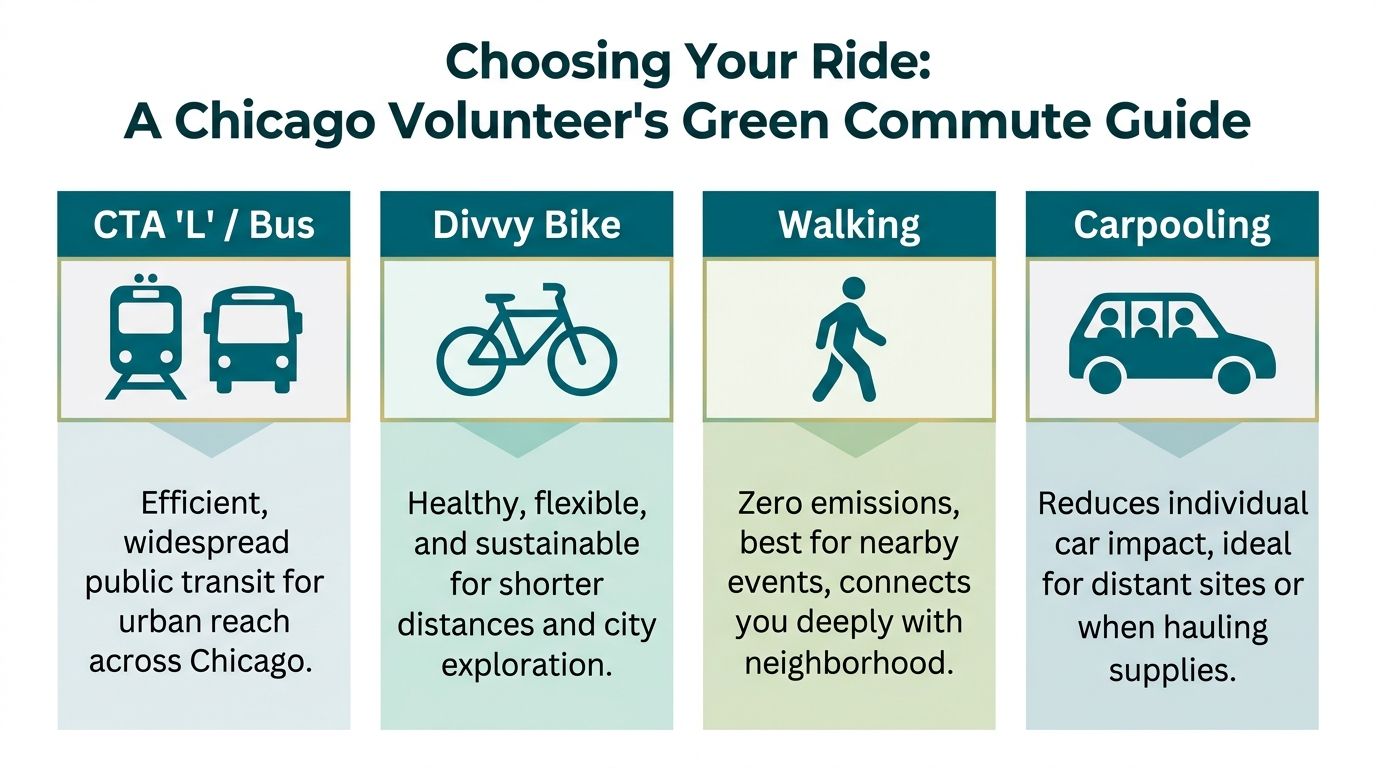
    Infographic

    Four ways I think about the trip

    Walking gives you intimacy.

    You notice dumped cups in tree pits. You spot alleys you want to come back to. You arrive warmed up and grounded. If the event is close, walking is beautiful because it asks almost nothing except your attention.

    Divvy gives you freedom.

    You can improvise. You can stop. You can take the long way through a park if your mind needs air. A bike also turns the city into something you can feel, not just pass through. If you want inspiration for routes beyond cleanup day, I like this guide to bike trails in Illinois for 2026.

    The CTA gives you reach.

    Chicago stretches. A lot. Public transit lets you cross that stretch without making the whole trip about parking. And trains are strong on pure efficiency. Electric trains emit 88 grams of CO2 per mile per passenger, compared with 100 grams for buses and 400 grams for standard cars, according to this electric rail comparison.

    Carpooling gives you practicality.

    Sometimes you have extra supplies. Sometimes the site sits far from your easiest train route. Sometimes you are bringing snacks, water, gloves, and one oddly shaped sign. Sharing a ride can still be a thoughtful choice when it replaces multiple separate car trips.

    Chicago Volunteer Transport Comparison

    Mode Eco-Impact Avg. Cost Gear Friendly? Adventure Factor
    Walking Very low impact Low Best for light gear High if you like neighborhood detail
    Divvy Bike Low impact Moderate Good with backpack and clipped tools High and playful
    CTA L / Bus Strong option for cross-city trips Moderate Good if you pack compactly Medium-high, feels like an expedition
    Carpooling Better than solo driving Shared cost Best for bulky supplies Medium, social and practical

    What I would choose in real volunteer situations

    If the cleanup is near your home, walk.

    You save yourself the hassle of locking up a bike or timing a train. You also get a preview of the street conditions before you arrive.

    If you live a few neighborhoods away and the weather is decent, bike.

    A bike works especially well when you want to stay mobile after the cleanup. Maybe you want to grab lunch with volunteers or explore a new stretch of the city while your energy is high.

    If the event is across town, take the CTA.

    The train and bus network let you show up without the mental drag of driving. I like that public transit turns travel into shared space. You are not isolated. You are already in public life.

    If your group is hauling things, carpool on purpose.

    Fill seats. Consolidate supplies. Make one trip do the work of several.

    If you are unsure, choose the option that makes it easiest to show up. Consistency beats fantasy.

    The hidden factor nobody talks about enough

    The best commute is the one that leaves you ready to serve.

    Some modes save time but drain your patience. Others take a bit longer but hand you your focus back. Pay attention to that. Your body knows the difference.

    A cleanup is physical, social, and emotional work. Choose a ride that helps you arrive open, not depleted.

    Navigating Chicago The Caterpillar Way

    I fell in love with Chicago more once I stopped moving through it only for convenience.

    The city changed when I started traveling through it for service. A station was no longer just a station. It became the threshold to a block that needed care. A bike lane stopped being paint on pavement and became a thread connecting people willing to help.

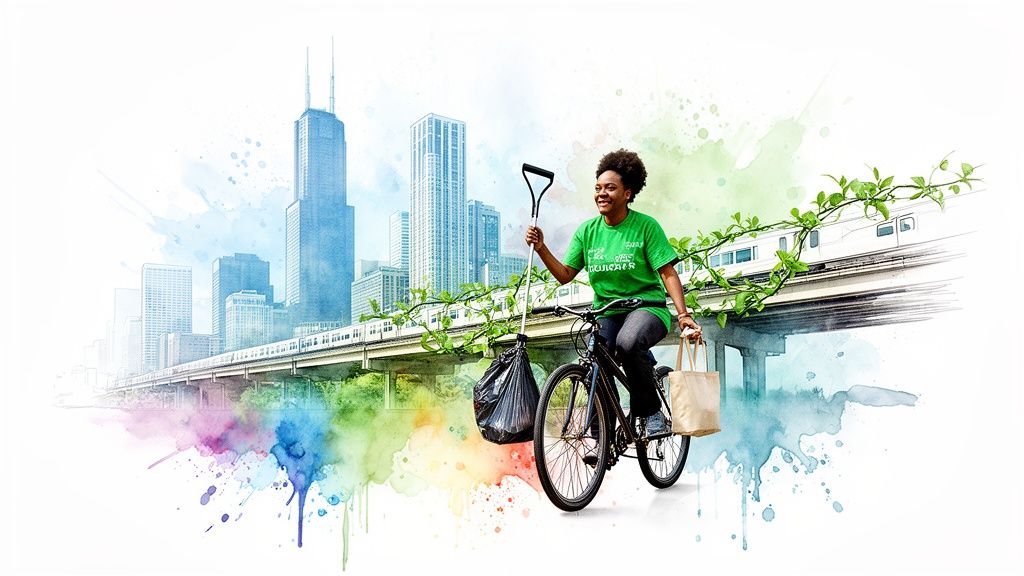
    A young woman wearing a green Litter Caterpillar shirt travels on a train past the Chicago skyline.

    The train turns distance into possibility

    One winter morning, I rode through gray skies toward a cleanup site with a grabber angled against my leg and gloves stuffed in my pocket. The platform was cold enough to make you question your life choices.

    Then the train came. Doors opened. Heat. Light. Other people heading somewhere with their own reasons.

    That is one of my favorite things about the CTA. It rescues the day from self-importance. You are just one person on a city artery, trying to do something useful.

    Chicago’s train lines let you string together neighborhoods that too many people keep mentally separate. If you care about service, that matters. You cannot clean a whole city if you only move through the parts that already feel comfortable.

    For a slower, street-level way to know the city beyond the tracks, I also like these self-guided Chicago walking tours. They help you build neighborhood memory, and that memory makes service more personal.

    The bike convoy feeling

    Bikes create a different mood.

    A small group rolling to a cleanup has its own energy. You feel slightly ridiculous, slightly heroic, and fully awake. Someone has a trash grabber strapped to a rack. Someone else has work gloves clipped to a backpack. Somebody forgot water and realizes it halfway there.

    Good. That is real life.

    I love that kind of travel because it keeps the mission human-sized. You hear each other. You stop for a red light and joke around. You pass blocks where you want to return. The route itself becomes shared memory.

    Protected infrastructure makes all of this more dependable. As noted in Earth911’s discussion of resilient bike infrastructure, Minneapolis has shown that year-round cycling is possible with protected bikeways, and the lesson is simple. Paint isn’t protection. If you want people to ride in rough weather, give them something real.

    That line sticks with me because it applies beyond bikes. People act brave more often when a city meets their courage halfway.

    Here is a short look at the spirit of getting out there anyway.

    Bad weather reveals what you believe

    Some of my favorite cleanup stories start with ugly forecasts.

    Chicago has a way of testing whether your values are decorative or real. Wind, sleet, surprise snow, summer heat. The city asks, “Do you still mean it?”

    Traveling to a cleanup in rough weather strips away excuses fast. If the sidewalks are bad, you learn what curb cuts matter. If the bike lane vanishes under slush, you learn what infrastructure was never serious. If the bus is your lifeline that morning, you learn what reliability feels like in your bones.

    A city shows its character in blue-sky conditions. It shows its truth in bad weather.

    I think that is why eco friendly transport has to be practical, not performative. It has to work on ordinary days and difficult ones. Otherwise it is just marketing.

    Gearing Up for Your Green Commute

    A good commute starts the night before. Not with philosophy. With packing.

    I have made enough dumb mistakes to respect preparation. I have carried awkward gear in flimsy bags. I have underdressed, overdressed, forgotten water, and tried to look cool instead of being ready. Every one of those choices made the mission harder than it needed to be.

    A person holding a travel card next to a water bottle, sneaker, and map on watercolor background.

    Pack like you plan to move

    Your gear should help you travel, not trap you.

    If I am taking transit, I want one bag that stays close to my body and leaves my hands free. If I am biking, I want the weight off my shoulders as much as possible. If I am walking, I want no item bouncing, swinging, or digging into my side.

    Here is the practical checklist I would hand a new volunteer.

    • Gloves first: Put them where you can grab them fast. Outer pocket beats buried at the bottom.
    • Water matters: A reusable bottle saves you from starting tired and dehydrated.
    • Compact layers: Chicago weather changes its mind. Wear light layers you can tie around your waist or pack easily.
    • Transit card or phone ready: Do not fumble at the gate while holding gear.
    • Small snack: Cleanup work feels longer when you are hungry.
    • Simple bag: Backpack beats tote when you are moving through stations, curbs, and crowds.

    Carrying odd gear without hating your life

    Trash grabbers are useful. They are also awkward.

    If you bike, strap a grabber to a rear rack or slide it along the frame if it fits securely. Test it before you leave. You do not want your heroic setup turning into roadside nonsense at the first bump.

    If you take the train, collapse or shorten gear when possible and keep it vertical. That makes you a better neighbor on a crowded car. If you walk, switch hands often and avoid overpacking everything else.

    I also like to use work gloves with enough grip to be useful but not so bulky that I lose dexterity. You do not need fancy. You need reliable.

    Safety is part of the ethic

    I do not think preparation is boring. I think it is respectful.

    You respect your own energy. You respect the people meeting you. You respect the mission enough to arrive ready instead of scattered.

    A few habits help a lot:

    1. Check the route before you leave: Especially if you are combining train, bus, and walking.
    2. Use lights on a bike when visibility drops: Early mornings and cloudy days can get dim fast.
    3. Wear shoes you trust: Cleanup work punishes flimsy shoes.
    4. Tell someone your route if conditions look rough: Basic, simple, smart.

    Bravery works best when you pair it with preparation.

    I have learned that eco friendly transport feels much easier when friction disappears. Pack the right bag. Secure the weird tool. Dress for movement. Then the trip becomes part of your rhythm instead of a problem you must solve from scratch every time.

    Making Green Transport Fair for Every Neighborhood

    If you only talk about eco friendly transport as a personal lifestyle choice, you miss the hardest part.

    Not everyone starts from the same curb.

    Some neighborhoods have better sidewalks, easier train access, safer bike routes, and more visible investment. Other neighborhoods get told to wait, adapt, or settle. Then people act shocked when the greener option feels harder to choose.

    Access is a justice issue

    That is not just inconvenient. It is unfair.

    The U.S. Department of Transportation identifies 35% of census tracts as transportation disadvantaged, and work highlighted by the Systems Change Lab on access to green mobility notes significant disparities in public EV charging access for Black and Hispanic communities in major cities like Chicago.

    I care about that because the gap shows up in everyday life. The cleanest option on paper means less if reaching it is harder, less safe, or less reliable depending on where you live.

    What this means on the ground

    When a neighborhood lacks dependable green mobility, people lose more than a convenient commute.

    They lose time. They lose flexibility. They lose the sense that the city belongs to them equally.

    That also affects volunteer work and neighborhood care. If people from one part of the city can move easily to serve and explore while others face extra barriers, the map of participation gets warped. The neighborhoods that most need solidarity can end up hardest to reach sustainably.

    I think about this a lot when people praise urban sustainability in broad terms. Broad terms can hide sharp edges.

    What I want cities and communities to fight for

    I want a city where green movement does not feel like a privilege badge.

    That means supporting improvements that make sustainable travel real in every ward, not just the fashionable ones. Better connections. Safer routes. Reliable service. Charging access where renters and residents in multi-unit buildings can use it. Infrastructure that respects people who do not have backup options.

    If you care about clean streets, you should care about this too. Environmental work and mobility justice touch the same nerve. They both ask who gets protected, who gets ignored, and who gets told to work around preventable problems.

    For a deeper look at the moral side of this, I recommend reading about environmental justice and how you create change.

    A greener city that excludes whole neighborhoods is not a greener city. It is just a prettier version of the same old inequality.

    I do not want that. I want the kind of city where a kid, a renter, a student, a retiree, and a volunteer with a trash grabber all have a fair shot at moving safely and sustainably.

    Partner With Us to Keep Chicago Moving and Clean

    A cleanup group can remove litter from a block. A network can change what a city believes about itself.

    That is why I think local businesses, schools, clubs, and community groups have such a powerful role here. Eco friendly transport becomes real when people support it together. A lone volunteer can be brave. A whole neighborhood can make bravery normal.

    What partnership can look like

    It does not need to be complicated.

    A bike shop can host a pre-cleanup tune-up morning. A café near a train stop can become a meeting point where volunteers gather before heading out. A community center can offer storage for supplies so fewer people need to haul everything across town. A local employer can encourage staff to join by transit, on foot, or by shared ride.

    Those are small moves. They create real momentum.

    Why this matters for businesses too

    When a business backs cleaner and smarter movement through the city, it is not doing charity theater.

    It is investing in streets people want to spend time on. It is helping neighbors meet one another. It is reducing the friction that stops good intentions from becoming action.

    I think a lot of organizations underestimate how much people remember practical support. If you help volunteers get somewhere warm before a winter cleanup, they remember. If you offer bike parking, water refills, or a reliable meet-up corner, they remember that too.

    That kind of support has soul.

    The bigger story

    The best version of Chicago is not just cleaner. It is more connected.

    People travel across neighborhoods they were taught to fear. They discover local businesses they never would have seen from an expressway. They build confidence using trains, bikes, sidewalks, and shared rides in service of something bigger than themselves.

    That is a city with momentum.

    I want more of that. I want partnerships that make sustainable movement feel welcoming, capable, and full of pride. Not preachy. Not polished to death. Just real. Real people helping other real people get where they need to go so they can do good work together.

    If you run a business or lead an organization, you do not need to solve every transit problem. You just need to take one honest step that makes green movement easier for your community.

    That is how cities change. Not only by plans on paper, but by people who decide to make the next trip better.


    If you want to turn a Saturday morning into something brave, useful, and memorable, join Litter Caterpillars. You can show up, make friends, explore Chicago, and help build a cleaner city one block and one green commute at a time.

  • Hope for Every Island with Trash

    Hope for Every Island with Trash

    A jar of blueberry jam sat in the back of my fridge for years. I could not throw it away, not because it was useful, but because it had a memory attached to it, and that memory made the jar feel heavier than glass.

    We All Have Our Own Island of Trash

    My first island with trash was not in the Pacific. It was my room.

    I know how strange that sounds when people use the phrase to talk about floating plastic far out at sea. But for me, the feeling started at home. A bag of nuts from my failed healthy phase. Old receipts. Empty boxes. Food I was “saving” because part of me still believed I might become the person who used it all wisely.

    None of it looked dramatic on its own. That was the trick.

    When trash carries a story

    Every object had a tiny emotional hook in it. The jam reminded me of a trip. The nuts reminded me of hope. A shirt on the floor reminded me of who I was when I bought it. I was not staring at garbage. I was staring at unfinished chapters of my life.

    That is why mess can feel impossible. You are not just cleaning. You are deciding what version of yourself to keep.

    I used to look around and feel pinned in place. A single piece of trash weighed almost nothing in my hand, but inside my mind it felt like a boulder. My space became crowded, then my schedule became crowded, then my relationships got crowded too. Chaos on the floor started to rhyme with chaos everywhere else.

    The room and the planet

    That personal mess taught me something uncomfortable. Trash does not stay “outside” the story. It enters it.

    The same thing happens on a global scale. A bottle tossed somewhere else does not disappear. It travels. It waits. It lands in someone else’s life, or on someone else’s shore, or in the path of an animal that never asked for any of it.

    My apartment was a tiny model of the larger world. Delay the hard decision long enough, and the pile grows into a vast accumulation. Ignore enough objects, and they start shaping how you move, how you think, how you feel.

    Key takeaway: The first battle with an island with trash is often emotional, not physical.

    That is why I do not like shame-based talk about cleanup. Shame freezes people. It makes the room feel smaller and the pile feel taller. Compassion does the opposite. Compassion gives you enough air to pick up one thing.

    One piece at a time

    I did not wake up one morning and become organized. I started smaller than that.

    I threw away one expired thing. Then another. Then I wiped one shelf. Then I tied one trash bag and took it outside. None of those actions felt heroic. But each one broke the spell.

    That matters because the world’s trash crisis also feels too big when you stare at it all at once. Too much plastic. Too much drift. Too much history already baked into the mess.

    So I come back to the same lesson. You do not defeat chaos by arguing with its size. You defeat it by touching one piece and moving it somewhere better.

    That is how I learned to look at any island with trash, whether it is a room, a street, a beach, or a patch of ocean. Not as proof that people are hopeless, but as an invitation to begin.

    Understanding the Two Types of Trash Islands

    The first time I understood this, the whole problem stopped feeling like one giant blur.

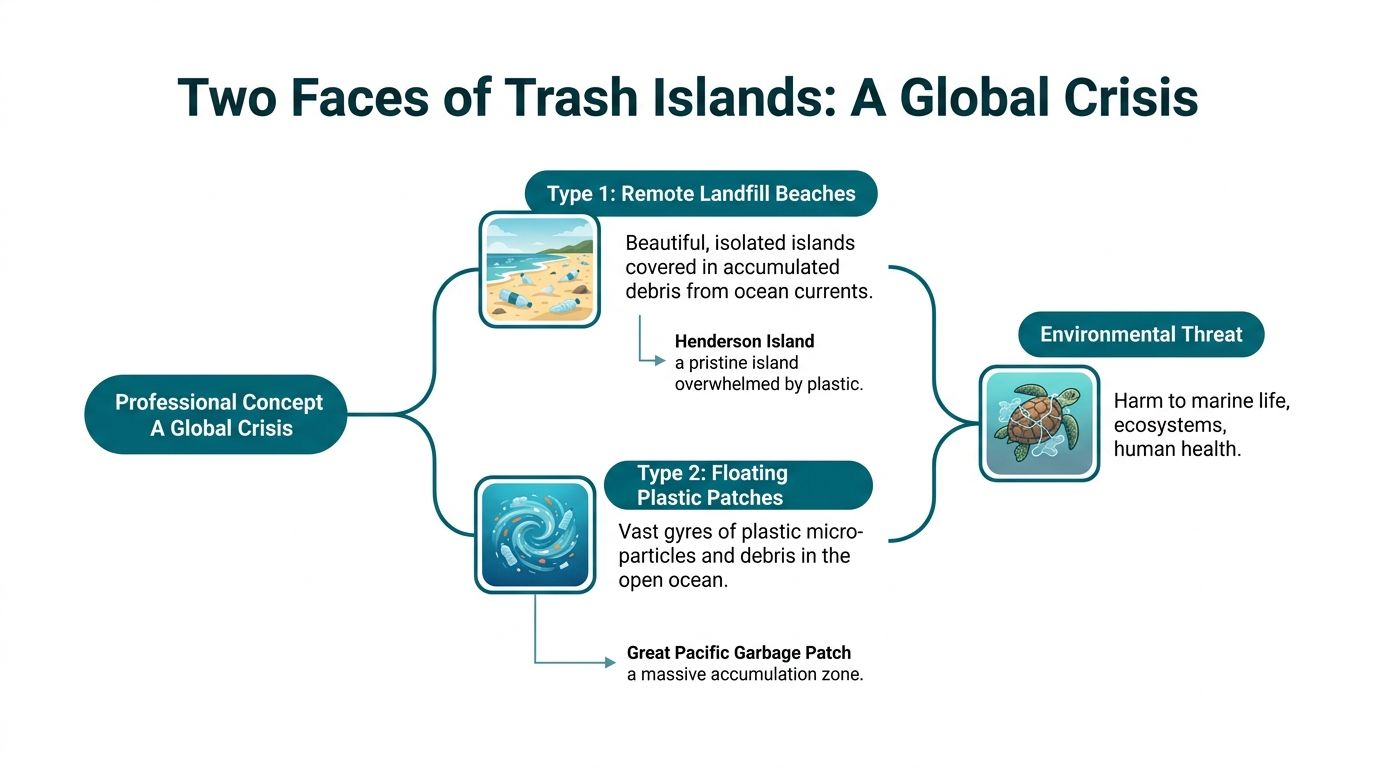
    A beach choked with bottles and fishing rope is one kind of island with trash. A drifting mass of plastic caught in ocean currents is another. They are related, but they are not the same thing, and that difference changes how we respond.

    Type one is a real island that keeps receiving what the world throws away

    Some islands are what you picture. Shoreline. Birds. Plants. Quiet.

    Then the currents arrive with our leftovers.

    Henderson Island is one of the clearest examples. It is remote, uninhabited, and known for its ecological importance. Yet wave after wave of debris has washed onto its beaches, turning a protected place into a receiving point for plastic from far beyond its own shores.

    I keep coming back to that image because it feels familiar. Sometimes a person becomes like that island. You did not create every part of the mess around you, but somehow you are still the one standing in the middle of it, sorting what arrived.

    That is one type of trash island. A real piece of land that becomes a collection point.

    Type two forms out at sea

    The second kind has no firm ground under it.

    It develops in open water where large circulating currents, called gyres, gather floating debris and keep it moving in broad loops. The plastic does not pile up into a walkable heap. It spreads across the surface and through the upper water in fragments, nets, containers, pellets, and pieces too small to spot from far away.

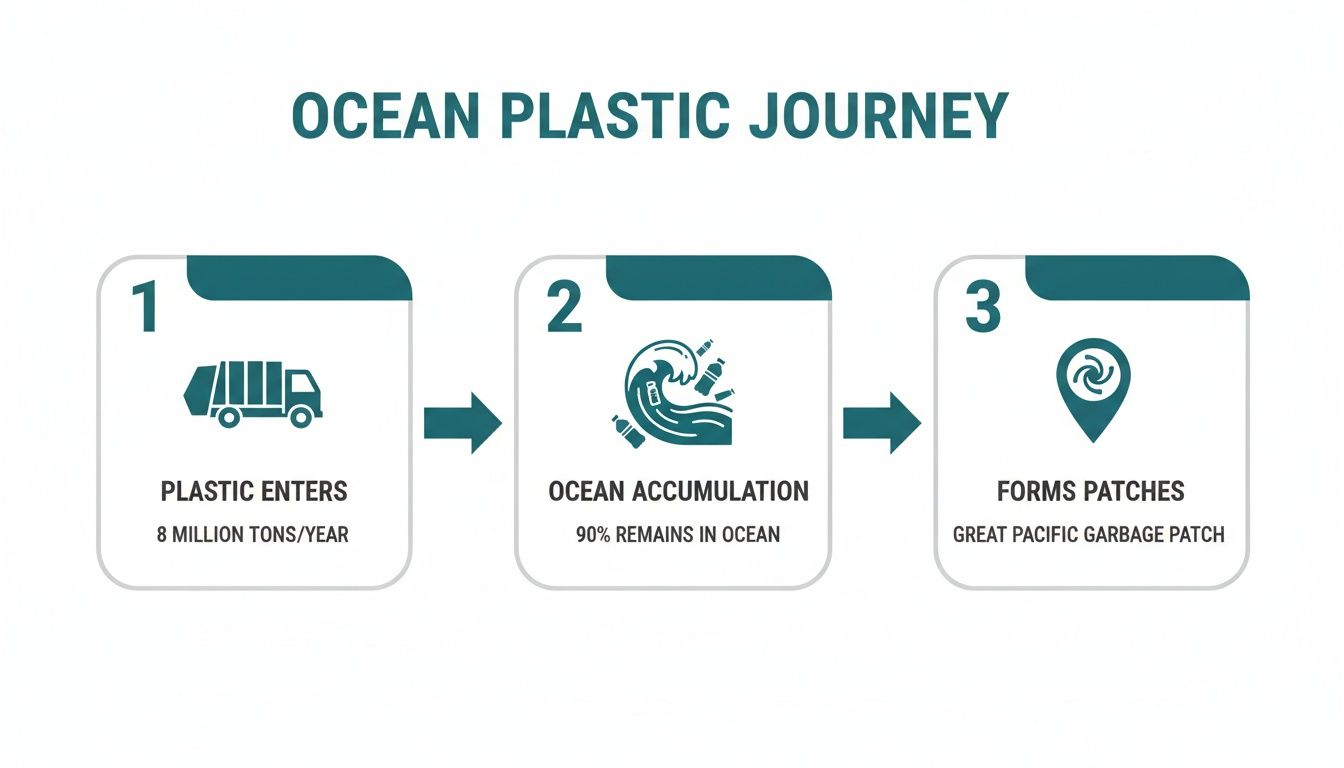
    The Great Pacific Garbage Patch is the example many people know best. It sits between California and Hawaii, not as a solid island, but as a vast accumulation zone.

    Infographic

    That misunderstanding matters. People hear “island” and picture something they could step onto with a trash bag and a pair of gloves. Open-water patches do not work like that.

    A simple way to separate them

    Type What it is How it collects trash What it feels like
    Remote landfill beach A real island or shoreline Currents and waves wash debris onto land A beautiful place forced to hold what drifted in
    Floating plastic patch A moving accumulation zone in open ocean Rotating currents keep debris circulating A diffuse, hard-to-reach spread of plastic in many sizes

    Cleanup changes with the setting.

    • On land: People can remove debris from beaches and coves, even when the work is slow and access is difficult.
    • At sea: Crews have to deal with a scattered field of floating and submerged plastic across an enormous area.
    • In both cases: The waste usually started somewhere else.

    That last part stays with me most. An island can suffer from trash it never used. A patch in the ocean can hold pieces from thousands of ordinary decisions made far away.

    Once I saw those two forms separately, I also saw something hopeful. If trash can travel piece by piece, care can travel that way too. One bottle refused. One bag picked up. One beach cleaned with friends. That is how a global mess starts, and it is also how change starts.

    The Unsettling Life on Floating Trash Islands

    The strangest part of this story is that floating plastic does not remain empty for long. Life moves in.

    A bottle cap or polyethylene fragment drifts through the sea, and tiny organisms begin treating it like real habitat. That should unsettle us, because the ocean is adapting to our garbage in ways that make the problem harder, not easier.

    Plastic becomes a raft

    Scientists now describe floating trash islands as novel ecosystems. Plastic’s hydrophobic surfaces show biofouling rates 2 to 5 times higher than natural substrates, and polyethylene fragments can gather up to 1,000 barnacles per square meter within 60 days, according to this report on the research.

    That means the plastic becomes less like litter and more like a raft. Algae cling to it. Barnacles stack onto it. Small creatures use it as shelter or transport.

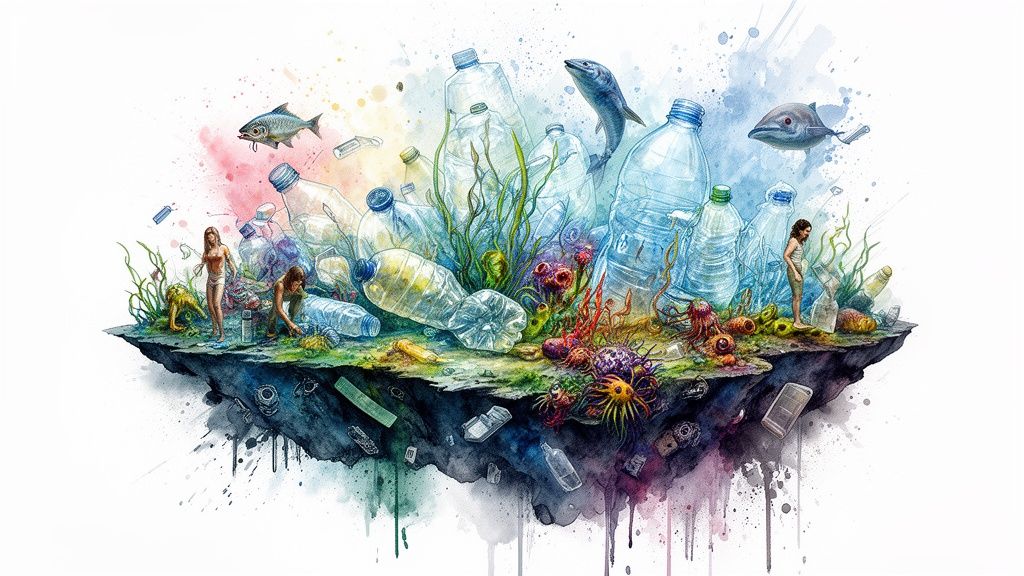
    A surreal illustration of an island made of discarded plastic bottles and waste floating in water.

    Wood and seaweed break down. Plastic lingers. It keeps offering a ride.

    The ocean did not ask for this architecture

    I find that detail hard to shake. We did not just dirty the water. We accidentally built floating neighborhoods.

    Those neighborhoods can carry species across entire ocean basins. Organisms that would never have crossed naturally can now hitch a ride on our debris and arrive in places where they do not belong. That changes competition, feeding patterns, and local balance.

    The visual is almost absurd. A cracked fragment of consumer plastic, once part of a throwaway object, drifts across blue water carrying life on its back like a little stolen continent.

    Why cleanup gets more complicated

    This changes the moral picture in a subtle way. Most of us think of trash as dead matter. Pick it up and the job is done.

    At sea, it is no longer that simple. The debris is still pollution, but it can also host living communities. Removing it remains necessary, yet the delay creates extra ecological knots. Every extra day gives more time for colonization, transport, and disruption.

    A few realities sit side by side here:

    • Plastic is still harmful. Its presence alters where species can live and travel.
    • Life is opportunistic. Organisms use whatever stable surface they can find.
    • Cleanup timing matters. Fresh debris is different from long-drifting debris coated in growth.

    Practical insight: The longer plastic stays afloat, the more it stops behaving like a simple piece of trash and starts behaving like infrastructure.

    That is what makes an island with trash so eerie in open water. It is not only a monument to waste. It is a world we should never have built.

    A World Tour of Infamous Trash Islands

    The first time I saw photos of Henderson Island, I felt the same shame I feel when a junk drawer spills open and proves I have been postponing a mess for too long. Henderson is remote, uninhabited, and famous for its ecological value. Still, waves keep laying our leftovers at its feet.

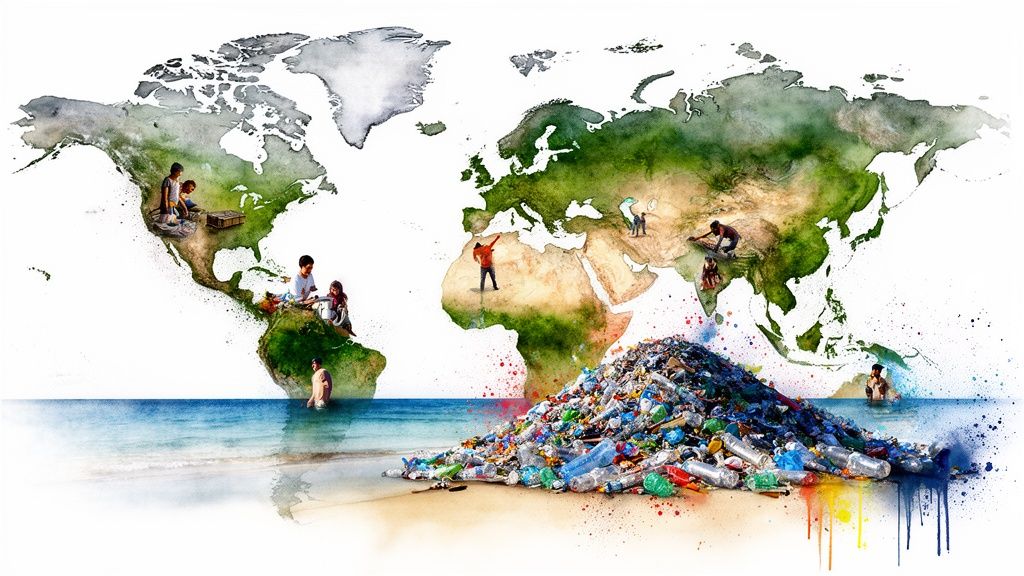
    A conceptual illustration showing a world map with various people and a large pile of plastic waste

    Henderson Island feels like a betrayal

    Researchers found Henderson covered with plastic at a scale that shocked even people who study pollution for a living. As noted earlier, the island holds millions of pieces of trash, much of it plastic, and a large share is buried in the sand rather than sitting plainly on top.

    That buried detail stays with me.

    A beach can look quiet and still be full of evidence. You see a little on the surface, then learn that much more is packed underneath, like personal clutter stuffed into closets before guests arrive. Henderson makes the global crisis feel intimate in that way. We hide nothing from the ocean. We only send it somewhere else, and the tide keeps returning it.

    Scientists tracing the problem have linked debris there to both fishing activity and land-based waste carried by currents. The island did not create this mess. It received it.

    The Great Pacific Garbage Patch is a spread-out trap

    Far offshore, the Great Pacific Garbage Patch gathers waste into a huge circulating zone between California and Hawaii. It is not a neat raft or a solid island. It is a loose field of floating debris, ghost gear, and tiny fragments suspended through the water.

    A 2018 Nature study, summarized by Iberdrola, describes it as spanning 1.6 million square kilometers and containing 80,000 tonnes of plastic made up of 1.8 trillion pieces, with 94% microplastics too small to spot from satellites, according to Iberdrola’s overview of the Great Pacific Garbage Patch.

    That mismatch matters. People hear “island” and picture something they could point to, walk across, and clean in a weekend with enough gloves and grit. The situation is harder. The mess is dispersed, weathered, and constantly moving.

    What the patch reveals about us

    The materials in the patch tell a blunt story about human habits. Iberdrola’s summary says 46% of the mass is fishing gear such as nets, ropes, and buoys. It also notes major origin shares from Japan, China, South Korea, the USA, and Taiwan.

    So this is not only a story about careless beachgoers dropping bottles after a picnic. It is also a story about industry, supply chains, lost gear, and systems big enough to feel faceless. If you want a clearer explanation of how these currents gather debris, the Litter Caterpillars guide to the ocean garbage patch breaks it down in plain language.

    A short visual can help turn those facts into something your brain can hold.

    Two places, one human pattern

    Henderson Island and the Great Pacific Garbage Patch are different forms of the same confession. One catches debris on shore. The other gathers it in motion. Both exist because people made something, used it briefly, and let distance hide the consequence.

    That is why cleanup matters at more than one scale.

    A person picking up a bottle from a park is not solving the Pacific alone. But that act pushes against the same habit that created these infamous trash islands in the first place. The outer mess and the inner mess come from a similar lie, that someone else will deal with it later.

    The hopeful part is simple. Communities can interrupt that pattern. One bag filled on a local walk. One fishing system improved. One crew deciding that service is better than denial. That is how an abstract horror on a world map becomes a personal practice, one piece of trash at a time.

    The Hidden Scars Our Plastic Leaves Behind

    A piece of plastic rarely harms the world in only one way. It keeps changing form, and each form creates a new kind of damage.

    First it is a visible object. Then it becomes fragments. Then it enters bodies, habitats, and food chains. The bottle you ignore today can become tomorrow’s invisible problem.

    Big plastic hurts in obvious ways

    On beaches and in open water, larger debris can trap animals or block their movement. The Henderson findings describe entanglement and ingestion risks to nesting sea turtles and endangered petrels. The Great Pacific Garbage Patch also kills marine animals through ingestion and entanglement, as noted in the earlier section’s cited reporting.

    This is the kind of harm that people can picture fast. A turtle caught in a net. A bird feeding plastic to its chick. A seal dragging line behind it.

    The pain is direct. The cause is direct too.

    Small plastic slips past our defenses

    Then the sun, salt, and wave action grind larger objects into smaller pieces. In the Great Pacific Garbage Patch, 94% of the pieces are microplastics, according to the Iberdrola source cited earlier.

    That detail changes everything. You cannot clean microplastics the same way you pick up a bottle from sand. Tiny fragments spread through water, move through ecosystems, and become easy for animals to swallow. This is comparable to breaking a plate on the kitchen floor. A whole plate is easy to see. The glittering dust afterward is what keeps cutting you.

    The scar is ecological and personal

    Plastic also changes the places it touches. On Henderson, much of the debris is buried in sediment, which means the mess is not only on the surface. It works its way into the structure of the beach itself.

    In floating patches, colonized plastic carries organisms across the sea, altering habitats in motion. That does not stay “out there.” Oceans feed coastlines, wildlife, weather patterns, and human communities. The line from a city sidewalk to the ocean is longer than one might assume, but it is still one line.

    A few connections matter in daily life:

    • Street litter can travel. Rain pulls it into drains, rivers, and eventually larger waters.
    • Single-use habits add up. One item feels trivial until millions of people repeat the same motion.
    • Invisible pollution still counts. When plastic becomes tiny, it becomes harder to confront, not less dangerous.

    Remember: The ugliest part of plastic pollution is not what you can see on top. It is what keeps happening after the item breaks apart.

    That is why cleanup matters so much. You are not just making a place look better. You are interrupting a chain reaction.

    How to Paint the Fence and Clean the World

    I stopped seeing cleanup as punishment when I remembered Tom Sawyer.

    He got stuck painting a fence, then turned the whole thing inside out. He made the task look meaningful, playful, even desirable. His friends wanted in. That old story sticks because it names a deep truth. The frame changes the feeling.

    A chore can become a dare

    When I hit a breaking point in my own life, I realized something odd. Cleaning my own mess felt emotionally loaded. Cleaning somebody else’s mess felt lighter.

    Not because the work was easier in a technical sense. It was easier because the shame was gone. I could step into service instead of self-judgment.

    That shift matters for any island with trash, from a cluttered block to an overwhelmed shoreline. If you tell yourself, “I have to fix everything,” you freeze. If you tell yourself, “I get to help this place breathe,” your body moves.

    A group of happy children painting a colorful picket fence made from recycled plastic bottles together outdoors.

    Shared hardship changes the mood

    Some of my favorite cleanup memories were not comfortable. Cold wind. Wet shoes. Bad timing. The kind of day when any reasonable person would stay home.

    But shared discomfort can turn into glue. When people face a hard task together, the story changes. It stops being “I did a chore.” It becomes “We survived that ridiculous morning together.”

    That is one reason service builds friendship so fast. You are not only collecting trash. You are making a memory in public, with a purpose.

    The practical side of this mindset is simple:

    • Bring symbols of pride. A flag, a shirt color, a team name, a little ritual before you begin.
    • Treat the event like an adventure. Walk a route. Notice the neighborhood. Celebrate weird weather.
    • Measure success by showing up. The habit matters as much as the haul.

    If you want ideas for larger-scale ocean responses, this overview of solutions for pollution in the oceans offers a useful set of approaches.

    Bravery matters more than perfection

    Many individuals wait to help until they feel ready. I think that is backwards.

    Bravery comes first. Readiness often follows. You show up awkward, unsure, underdressed, a little embarrassed, maybe carrying the wrong gloves. Then you learn by doing.

    I love that because it gives ordinary people a real entry point. You do not need to become a perfect environmental saint. You need to become someone willing to touch the mess.

    Best mindset: Do not ask whether cleanup feels glamorous. Ask whether it makes you more alive, more useful, and more connected.

    That question has changed my life. It can change yours too.

    An island with trash can break your heart. It can also train your courage. The same hands that once avoided the mess can become the hands that start clearing it.

    Join the Transformation and Find Your Crew

    A giant ocean patch can make you feel tiny. Your own block can make you feel powerful again.

    That is where I would start. Not with fantasies of solving the whole planet by yourself. Start with one corner, one morning, one bag, one friend.

    Why people hesitate

    The primary obstacle is often emotional before it is practical. On remote islands like Henderson, psychological barriers and isolation can deter volunteers. That same pattern shows up in cities too. Personal “trash stories” and the heaviness we attach to mess can stop us from acting, while cleaning other people’s messes often feels easier and shared hardship can make the work feel fun, according to Atlas Obscura’s reporting on the human side of cleanup.

    That insight gave me relief. If cleanup feels easier in a group, that is not weakness. It is a clue.

    How to build a cleanup crew

    You do not need a complicated system. You need a repeatable one.

    1. Pick a simple time
      Weekend mornings work well because they attract people who want to give their energy, not just squeeze in an obligation.

    2. Protect safety first
      Choose visible areas. Wear gloves. Bring bags. Watch traffic. Stop if conditions feel risky. Service should strengthen people, not grind them down.

    3. Make the group memorable
      Names matter. So do songs, badges, inside jokes, photos, and little traditions. People return to belonging, not just to tasks.

    4. Keep the first event small
      A short route beats an overambitious one. End while people still feel good.

    5. Stay volunteer-first
      Nobody likes feeling used. Build friendship. Share water. Thank people. Let the group become a place where people can breathe.

    For anyone ready to find a hands-on event, this volunteer trash pickup page shows what joining a cleanup community can look like.

    What transformation looks like

    Transformation is not dramatic most days. It is quiet.

    You become the kind of person who notices a bottle and picks it up. You become the kind of friend who invites somebody else. You become the kind of neighbor who leaves a place lighter than you found it.

    That identity grows slowly, like anything alive.

    • You gain trust in yourself because you did what you said you would do.
    • You gain resilience because weather, awkwardness, and inconvenience stop scaring you as much.
    • You gain community because useful people tend to find each other.

    Start where you stand: You do not need to reach a remote island with trash to join this story. Your sidewalk counts.

    I think that is the most hopeful part of all this. The world’s waste crisis is enormous, yes. But service shrinks the distance between helplessness and action. One bag closes that distance. One morning closes it more. One crew closes it faster.

    And somewhere along the way, while you are cleaning the street, you may notice that another mess is clearing too. The one inside you.


    If this way of serving speaks to you, join Litter Caterpillars. Show up for a cleanup, meet people who care, and turn one ordinary morning into a small act of transformation.

  • 10 Transformative Adventures at a Forest Preserve in IL You Can’t Miss in 2026

    10 Transformative Adventures at a Forest Preserve in IL You Can’t Miss in 2026

    I know what it’s like to feel stuck. Imagine your life is a refrigerator full of old jam and bags from failed health kicks. That was me. Each piece of trash felt like a 500-pound weight, a story I couldn't move past. I had to end a bad relationship to finally see it. I realized I needed to face the things that terrified me: cleanliness, consistency, and being brave enough to start over.

    So, I started picking up trash. It's a strange hobby, I know. But cleaning up other people's messes felt so much easier than tackling my own. And you know what? I found a weird kind of fun in it, especially when things got tough. I remember my very first cleanup, huddled under a tree with two friends during a freak Chicago hailstorm. We were shivering. Ubers were canceling. But in that moment, I realized something powerful. Suffering together adds flavor to the story. It moves the plot forward.

    That’s how I started Litter Caterpillars. We believe in showing up—for our city, for our parks, and for ourselves. The spaces in this guide, from a sprawling forest preserve in IL to a dense city park, are not just land. Think of them as canvases for your own transformation. Let me show you 10 places where you can find that for yourself.

    1. Schiller Woods Forest Preserve: A Gateway to the Des Plaines River Trail

    You step into Schiller Woods and feel it instantly. The city's hum fades away, replaced by the rustle of ancient oak trees. This classic forest preserve in IL is more than just green space; it's a living portal, a doorway to the vast Des Plaines River Trail. For me and my crew, it’s a frontline where we protect a vital waterway.

    Cleaning along the riverbanks here feels incredibly direct. It’s like being a goalie for the environment. I remember one Saturday morning, we were pulling out forgotten fishing lines, picnic leftovers, and all the usual city debris from the water's edge. Each piece I grabbed was one less item that could float downstream and pollute the river. It's a powerful act of interception.

    Why You Should Go

    Schiller Woods is a perfect spot whether you're new to this or a seasoned pro. The trails are mostly flat and easy, so you can cover a lot of ground. Plus, its connection to the Des Plaines River means your work sends ripples of positive change through an entire ecosystem.

    "When you tackle the litter here, you feel like you're healing a small part of something much larger. You watch the river flow on, relentless and steady, and you know you helped it stay clean."

    Get Involved:

    • Your Mission: Focus on the riverbanks. That's where trash gets stuck before the water can sweep it away.
    • Actionable Tip: You should bring waders or waterproof boots. This lets you safely grab the litter tangled just offshore that other people can't reach.
    • Learn More: Find details on parking and trail maps on the Forest Preserves of Cook County website.

    2. The Chicago Botanic Garden (Glencoe)

    When you walk into the Chicago Botanic Garden, you don't feel like you're in a typical forest preserve. It's more like a perfectly curated masterpiece of nature. This 385-acre living museum isn’t just for looking at beautiful flowers; it’s a powerhouse for restoring native habitats. For us, it offers a unique chance to protect delicate ecosystems where manicured gardens and wild nature meet.

    I once volunteered during a prairie cleanup here, working right alongside their expert staff. We weren't just picking up stray wrappers. No. We were learning to identify and remove invasive plants that were choking out the native grasses. Pulling each invasive thistle felt like a direct action, a way to help the local ecosystem flourish. It was a hands-on lesson in ecological stewardship.

    Why You Should Go

    The Garden is an amazing place if you want a deeper, more educational cleanup experience. The work here is about precision and care, like a surgeon protecting sensitive plant life while removing litter. Your effort supports the conservation of rare and beautiful native Illinois flora in a truly world-class setting.

    "Working here is like being a surgeon for the prairie. You’re not just clearing debris; you are making careful, intentional moves to help a beautiful, complex system heal and thrive."

    Get Involved:

    • Your Mission: You should focus on the edges of the naturalized areas, like the Skokie River Corridor and the Dixon Prairie. That’s where litter and invasive species often sneak in.
    • Actionable Tip: Partner up with the Garden’s volunteer coordinator. They can align our cleanup efforts with their seasonal needs, like seed collecting or invasive species removal days.
    • Learn More: Discover volunteer opportunities and plan your visit on the Chicago Botanic Garden website.

    3. Lincoln Park: Urban Oasis, Crucial Cleanup Zone

    You might not think of Lincoln Park when you hear “forest preserve in IL,” but don't be fooled. This sprawling urban oasis is a critical ecosystem on the front lines of our city. It stretches for miles along Lake Michigan, a mosaic of beaches, gardens, and wooded paths right in the heart of Chicago. For us, its high visibility and heavy foot traffic make it a top priority for litter interception.

    I remember leading a cleanup at North Avenue Beach right after a big storm. The sheer amount of plastic debris washed ashore was jarring. It was a plastic graveyard. But as my group and I worked, clearing section by section, we saw the immediate difference. We weren't just cleaning sand; we were stopping that pollution from going back into the lake, protecting a vital source of fresh water for millions of people.

    Why You Should Go

    Lincoln Park's incredible diversity makes it an ideal spot for any kind of cleanup. You can tackle high-traffic picnic areas one day and feel like you're in a remote nature sanctuary the next. Its location makes it super accessible, letting you organize focused, neighborhood-based efforts that have a massive impact.

    "Cleaning Lincoln Park is a direct act of service to the city itself. You’re protecting a shared space that brings joy to so many, and you can see the immediate, positive result of your work right before your eyes."

    Get Involved:

    • Your Mission: Focus on areas right after big events or storms. That's when debris is most concentrated, especially along the lakefront.
    • Actionable Tip: You should divide and conquer. Split the park's six-mile stretch into zones and assign a team to each. This systematic approach ensures no area gets missed.
    • Learn More: Connect with the Lincoln Park Conservancy for resources and to coordinate your cleanup efforts with their ongoing work.

    4. Humboldt Park: Urban Preservation and Community Power

    Humboldt Park stands as a testament to the power of a community green space. This 207-acre park on Chicago's West Side isn't just a bunch of trees and fields; it's the vibrant, breathing heart of its neighborhoods. It’s an urban forest preserve in IL where our mission goes beyond just picking up litter and into building real, human connections.

    I’ll never forget a cleanup we organized around the lagoon. We partnered with a local neighborhood group, and what I thought would be a small event blossomed into a full-on community gathering. We shared stories, we shared donuts, and we shared a common goal. Removing bags of storm debris and picnic trash from the water's edge felt like we were restoring a community landmark, not just cleaning a park.

    Why You Should Go

    Humboldt Park is where our work feels most connected to people. It's the perfect spot if you want to see your efforts build community pride. The mix of manicured parkland, natural wooded areas, and the iconic lagoon presents a unique set of challenges and incredibly rewarding moments.

    "Cleaning here is about more than the environment; it’s about showing love for a neighborhood. You can see the 'before and after' in the landscape and in the smiles of the people who call this park their own."

    Get Involved:

    • Your Mission: You should concentrate on the lagoon edges and the natural wooded sections where trash often gets hidden from view.
    • Actionable Tip: Schedule cleanups for early weekend mornings, between 8 and 10 AM. This is a sweet spot for safety and attracting the most community volunteers before the park gets too busy.
    • Learn More: Discover more about this historic park on the Chicago Park District website.

    5. Grant Park: Restoring Chicago's Iconic Front Yard

    While it's not a traditional forest preserve in IL, Grant Park is Chicago's public heart. It's our sprawling front yard along Lake Michigan. For us, cleaning here is an act of pure civic pride, a high-visibility effort that shows thousands of people what community care looks like in action. It’s about protecting the city's most iconic gathering space.

    I’ll never forget a post-festival cleanup we organized. The sheer volume of discarded items was overwhelming. It looked like a party had exploded. But as we worked, dozens of passersby stopped to thank us, and a few even jumped in to help. We weren't just picking up trash; we were inspiring a sense of collective ownership over this incredible public asset.

    Why You Should Go

    Grant Park is the ultimate stage for showing what we do. The high foot traffic means your efforts are seen by everyone, creating a powerful recruiting opportunity. By partnering with the Grant Park Conservancy or joining post-event cleanups, you can directly support Chicago’s cultural backbone and keep its most famous park beautiful.

    "Cleaning in Grant Park feels different. You’re not hidden away in the woods; you are on full display, restoring a space that belongs to everyone. Each piece of litter you grab is a direct contribution to the city's spirit."

    Get Involved:

    • Your Mission: Focus on the less-maintained borders of Millennium Park and Museum Campus, where trash often piles up.
    • Actionable Tip: You can schedule your cleanup to coincide with a major cultural event. You’ll find more volunteers and create opportunities to partner with event organizers.
    • Learn More: Connect with the Grant Park Conservancy to find official volunteer events and coordinate your own group cleanup.

    6. Busse Woods Forest Preserve (Rolling Meadows/Des Plaines)

    Busse Woods feels like you've stepped into a completely different world. With over 3,000 acres, it’s a vast expanse of woodlands and wetlands that shows what a dedicated forest preserve in IL can truly protect. This isn't just a park; it's a genuine ecosystem where our work feels less like tidying up and more like real habitat restoration.

    A person in a high-visibility vest cleans a forest path beside a lake, with two deer in the misty background.

    Our first volunteer day trip here was an eye-opener for me. We partnered with the Forest Preserve District and focused on a section of trail near the elk pasture. Instead of just picking up wrappers, we were learning to identify and remove invasive garlic mustard. It felt like we were giving the native wildflowers a fighting chance, directly contributing to the health of the entire forest understory.

    Why You Should Go

    Busse Woods is perfect for you if you want to go deeper than just a surface-level cleanup. It’s an opportunity to learn about habitat restoration and see the direct impact of removing invasive species. The sheer scale of the preserve means our efforts are crucial for maintaining its wild character for both wildlife and visitors.

    "Working in Busse Woods is like being a gardener for a giant, wild forest. You're not just picking up trash; you're helping native plants thrive and protecting the homes of countless animals. It’s a powerful feeling."

    Get Involved:

    • Your Mission: Focus on trail edges and undergrowth for invasive species removal and accumulated litter. Its immense size means there's always a new area to restore.
    • Actionable Tip: You should organize a carpool day trip. Since it’s a bit of a drive from the city, making it a group event with shared transport builds community and makes it easier for everyone to participate.
    • Learn More: Explore volunteer opportunities and preserve details on the Forest Preserves of Cook County website.

    7. Garfield Park (Douglas Park Historic District): A Partnership in Urban Renewal

    Garfield Park isn't just a park; it's the heart of a community. Spanning 185 acres on the West Side, its historic lagoons, formal gardens, and the stunning Garfield Park Conservatory act as a vital green haven. For us, this isn't a typical forest preserve in IL; it's a chance to build deep community partnerships and restore a piece of Chicago's legacy.

    I'll never forget a cleanup we did near the lagoon. We worked alongside a neighborhood group that had been caring for the park for years. We weren’t just picking up litter. No, we were sharing stories, learning about the area’s history, and becoming part of a local movement. It showed me that our work here is about more than just trash; it's about solidarity.

    Why You Should Go

    Garfield Park is where you can make a profound, visible impact. The need is significant, but the potential for collaboration with groups like the Garfield Park Conservancy is even greater. This is a place to invest your energy where it will be seen, felt, and celebrated by the people who call this park their home.

    "Cleaning up here is an act of respect. You're showing the community that you see their efforts and want to stand with them. It’s about building trust, one piece of litter at a time."

    Get Involved:

    • Your Mission: Your first goal should be to build relationships. You need to connect with local organizations before you even plan a cleanup.
    • Actionable Tip: Schedule early morning cleanups (7-9 AM) with clear safety protocols. This respects the park's daily rhythm and ensures your volunteers feel comfortable.
    • Learn More: Discover the incredible community work happening and see how you can join in by exploring our guide to Garfield Park.

    8. Navy Pier Lakefront & Easternmost Edge

    While not a traditional forest preserve in IL, the public lakefront surrounding Navy Pier offers a unique and vital urban cleanup frontier. The pier itself is private, but the surrounding pedestrian paths and shoreline are where the city’s energy meets Lake Michigan’s vastness. This intersection creates a high-impact zone for our cleanup efforts, protecting a world-renowned waterfront.

    I’ll never forget an early morning cleanup we organized here. The city was just waking up, and we patrolled the eastern edge, collecting countless plastic bottles, food wrappers, and windblown debris. With the iconic skyline behind us, every bag we filled felt like a direct gift back to the city and the lake. It was like giving Chicago a thank-you note.

    Why You Should Go

    The Navy Pier lakefront is an incredible spot to show the power of community action in a highly visible area. The constant foot traffic means there is always work to be done, and the urban setting allows us to engage with tourists and locals alike, spreading awareness about litter prevention.

    "Cleaning here is a powerful statement. You’re standing at the edge of one of the world's great cities, physically stopping pollution from entering one of the world's great lakes."

    Get Involved:

    • Your Mission: You need to target the water’s edge and the rocky revetments along the easternmost point where trash gets trapped by the waves.
    • Actionable Tip: Schedule your cleanups for early mornings or weekdays to avoid the largest crowds. This gives you better access and makes the work much more efficient.
    • Learn More: Coordinate with the Navy Pier sustainability team for access and to see how your efforts can support their larger environmental initiatives.

    9. Des Plaines River Corridor & Restoration Areas

    The Des Plaines River isn't just one forest preserve in IL; it's a vital artery flowing through dozens of them. It snakes over 80 miles, a long, winding corridor connecting communities and ecosystems. For us, this isn't a single site but a massive, linear opportunity to defend an entire watershed from pollution.

    A man in a green shirt cleans up litter by a winding river with reeds in watercolor.

    I think of the river as a story that we can help rewrite. We've worked at access points from the Salt Creek confluence all the way north, and the mission is always the same: stop trash before it travels. A single plastic bottle you remove here won't end up miles downstream, and that’s a victory you can see and feel in real-time.

    Why You Should Go

    The Des Plaines River Corridor is perfect for you if you want to see your impact scale up. Cleaning just one section contributes to the health of the entire river system. It’s an ideal setting for ongoing projects, where you can "adopt" an access point and witness its transformation week after week.

    "Working along the river feels like you're part of a relay race for conservation. Every cleanup event passes the baton of a cleaner waterway to the next community downstream."

    Get Involved:

    • Your Mission: You should focus on the riparian zone—that critical area where land meets water. This is where litter gets snagged in reeds and roots.
    • Actionable Tip: You can partner with a group like the Des Plaines River Watershed Group for larger, coordinated cleanups that will amplify your impact.
    • Learn More: Discover more about the many access points by exploring our guide to the Des Plaines River Trail.

    10. Cantigny Park & Neighboring Woods (Wheaton/DuPage): A Fusion of History and Habitat

    Cantigny Park offers something different. It’s a beautifully curated estate where manicured gardens meet authentic woodland habitat. While not a traditional forest preserve in IL, its 500 acres in Wheaton represent a significant commitment to preserving natural spaces. For us, it’s an opportunity to blend our cleanup mission with history, education, and community partnership.

    I think of it as a destination cleanup. We once organized a day-trip here. We started the morning by clearing debris from the edges of the woodland trails, where nature meets the more formal park areas. After our work, we explored the museums and gardens. It turned a simple cleanup into a rich, rewarding experience for everyone, showing that stewardship can be part of a larger, wonderful day out.

    Why You Should Go

    Cantigny is ideal for a more structured volunteer event. The park is well-maintained, but the borders between the wilder sections and curated landscapes are prime spots for stray litter. It’s a perfect place to introduce new volunteers to our work in a setting that feels safe, inspiring, and full of other activities.

    "Cleaning up at Cantigny feels like you’re protecting a living museum. You’re not just picking up trash; you’re helping preserve a piece of Illinois history and its natural legacy for families and visitors."

    Get Involved:

    • Your Mission: Focus on the woodland trail edges and the borders of the native plant gardens. These transitional zones are where litter often gets overlooked.
    • Actionable Tip: You must contact the park’s volunteer office beforehand to coordinate your group's visit. This can open doors for partnerships and ensure you’re helping in the most impactful way.
    • Learn More: Plan your trip and explore partnership opportunities on the Cantigny Park website.

    Top 10 Illinois Forest Preserves & Parks Comparison

    Site 🔄 Implementation Complexity ⚡ Resource Requirements 📊 Expected Outcomes (⭐) 💡 Ideal Use Cases ⭐ Key Advantages
    Millennium Park & AT&T Plaza High — permit coordination & crowd management Medium — volunteer teams, early-morning staffing, park coordination ⭐⭐⭐⭐ — immediate visible improvement & media attention Urban volunteer recruitment; high-visibility campaigns Partnerships with city/cultural institutions; strong media appeal
    Chicago Botanic Garden (Glencoe) Medium — sensitive habitats require coordination with staff Medium — trained volunteers, transport for urban groups, educational materials ⭐⭐⭐⭐ — habitat restoration & volunteer retention Ecology-focused cleanups and educational workshops Established volunteer network; strong education potential
    Lincoln Park High — large geographic scope and multi-agency logistics High — many volunteers, equipment, ongoing scheduling ⭐⭐⭐⭐ — sustained lakefront and neighborhood impact Rotating weekly zones; large-group lake/beach cleanups Diverse ecosystems for varied volunteer experiences; strong recruitment
    Humboldt Park Medium — safety planning and community trust-building Medium — consistent volunteer commitment, local partnerships ⭐⭐⭐⭐ — neighborhood pride and meaningful environmental justice impact Building community relationships in underserved areas Strong local engagement; visible neighborhood benefits
    Grant Park High — event schedules, permits, dense crowds High — large volunteer drives, coordination with institutions ⭐⭐⭐⭐⭐ — maximum visibility and media/social reach Media-focused recruitment; post-event cleanups Iconic location; high volunteer influx and partnership potential
    Busse Woods Forest Preserve Medium — transportation logistics to suburban site Medium — trail tools, day-trip coordination, fewer volunteers needed ⭐⭐⭐⭐ — strong habitat and trail preservation outcomes Authentic forest preservation and trail maintenance trips True natural preserve experience; safer, less-crowded work
    Garfield Park (Douglas Park Historic District) Medium–High — community engagement and safety protocols Medium — regular volunteer cadence, conservatory coordination ⭐⭐⭐⭐ — deep community impact and restoration gains Long-term neighborhood partnership projects Conservatory partnerships; multigenerational volunteer potential
    Navy Pier Lakefront & Easternmost Edge High — intense crowds, commercial coordination, water safety High — strict timing, safety gear, coordination with Navy Pier ⭐⭐⭐⭐⭐ — high social-media impact and visible litter removal Tourist engagement; photo-driven volunteer recruitment Iconic skyline/backdrop; exceptional social visibility
    Des Plaines River Corridor & Restoration Areas Medium — dispersed sites require transport planning Medium — trail/river gear, partner coordination, variable access ⭐⭐⭐⭐ — measurable watershed and riparian habitat benefits Sequential ward-by-ward or watershed restoration campaigns Linear coverage enables consistent weekly presence; educational value
    Cantigny Park & Neighboring Woods Low–Medium — coordinate with institutional staff, smaller scale Medium — transport, small-group tools, museum coordination ⭐⭐⭐⭐ — combined preservation and educational outcomes Day-trip volunteer experiences blending history and ecology Strong educational partnerships; intimate woodland stewardship

    Your Story Is Waiting in the Woods

    We’ve walked together, virtually, through ten incredible green spaces. From the sculpted gardens of the Chicago Botanic Garden to the wild, sprawling trails of the Des Plaines River Corridor, each place offers you more than just scenery. They are invitations. They are blank pages waiting for your story.

    I remember my first real cleanup. It was a cold, drizzly Saturday at Busse Woods. Honestly, I didn't want to go. I was tired, feeling a little lost in my own life, and the idea of picking up soggy fast-food wrappers felt anything but inspiring. But I showed up. And within an hour, something inside me shifted. Working alongside strangers, sharing a thermos of hot coffee, and watching a patch of woodland slowly return to its natural state changed me. It wasn't about the trash. It was about the shared effort. It was about taking a small, messy corner of the world and making it whole again.

    That simple act became my lifeline. I found that every piece of litter I picked up felt like I was clearing away a piece of my own internal clutter. Every restored prairie I saw was a metaphor for my own potential to grow. These places, these beautiful examples of a forest preserve in IL, are not just for you to look at. They are dynamic arenas for action and connection.

    You don't need a grand plan to start. Your journey can begin with a single step onto a trail at Cantigny Park or a quiet moment watching the birds in Humboldt Park. Let the peace of the woods settle your mind.

    But if you feel a deeper calling, a pull to do more, then that’s where the real story begins.

    • Your Next Step: You should choose one location from this list that speaks to you. Don't overthink it. Just pick one and make a plan to visit within the next week.
    • Your First Action: Go for a walk. That's it. No pressure. Just observe. Notice the light filtering through the trees, the sound of your own footsteps, the feel of the air. See what feelings come up for you.
    • Your Community: If you feel that spark, that desire to protect these spaces, then you know where to find us. You know there’s a community waiting for you with open arms, a trash bag, and a shared purpose.

    This is your story. It might start with a simple walk in a park, but it can lead you to discover your own strength, find your people, and realize you have the power to create real, tangible change. Your transformation is waiting for you. It might just be under a piece of litter in a forest preserve in IL.


    Ready to turn your inspiration into action? Join Litter Caterpillars and become part of a community dedicated to restoring the beauty of our local parks and preserves. We provide the gear and the camaraderie; you provide the heart. Find your next cleanup event and start your story with us at Litter Caterpillars.

  • How Chicago Fights Ocean Plastic Pollution Globally

    How Chicago Fights Ocean Plastic Pollution Globally

    Let's be real—the vast blue ocean can feel a million miles away from my life here in Chicago. But the crisis of ocean plastic pollution is closer than you think. It's a problem that connects our city streets directly to the heart of the planet. I want to show you how, through an invisible, relentless river of waste.

    The Story That Connects Our Streets to the Sea

    I started Litter Caterpillars because my whole life I've had trouble cleaning and organizing my things. As my own living space became more of a mess, my life became more of a mess, too. It felt like our planet was in a similar state, buried under a mountain of plastic that tells a story of fleeting convenience with a disastrous, suffocating ending. I want to tell you how that personal struggle connects our local lives to this massive global challenge.

    My own apartment was a disaster. Every piece of trash had its own sentimental story. An old jar of jam from a trip to Michigan four years ago, a bag of nuts from that time I tried to eat healthy but failed—each item was a monument to a past I couldn’t clean up. Each one weighed less than a pound, but to me, it might as well have weighed 500 pounds.

    This personal chaos reached a breaking point, and I knew I had to change. I resolved that I would finally tackle the things that have always been the most difficult for me: cleanliness, consistency, and bravery. That’s when I had a powerful realization on a freezing Chicago day.

    It’s often much, much easier to clean up a mess that isn’t yours.

    This simple idea sparked everything. It turns out that tackling someone else's litter—the anonymous trash on our streets—can be a profound act of self-care. It builds a strange, new form of fun. It turns a chore into an adventure.

    The Scale of the Problem We Face

    My personal struggle with a messy room is a small-scale version of what our entire planet is up against. The numbers behind the ocean plastic crisis are staggering and can make anyone, even you, feel small.

    Imagine standing on a beach, anywhere in the world, and knowing that right now, between 75 and 199 million tonnes of plastic waste are choking our oceans. Every single year, another 8 to 10 million metric tons flood in. It’s like a garbage truck dumping its entire load into the sea every single minute. This relentless influx has birthed five massive garbage patches, with the Great Pacific Garbage Patch now spanning an area three times the size of France. You can discover more insights about the state of the plastic crisis on 4ocean.com.

    But I'm here to tell you that these numbers don't have to paralyze us. They can inspire us. This guide will show you how this problem is immediate, personal, and surprisingly solvable, starting right here in our own neighborhoods. We can fight back.

    The Unseen River That Connects Your Street to the Sea

    You're probably thinking, 'I'm in Chicago, a thousand miles from any ocean. How does my litter possibly end up there?' It’s a fair question, one I've asked myself. But I want you to follow me on a journey.

    Picture a single plastic bottle dropped on a street in Logan Square. It just sits there until a heavy rain comes. That downpour washes it into a storm drain, a dark, hidden channel right under our feet. From there, it’s a quick trip into the Chicago River.

    From Our River to the World’s Oceans

    This is where our local story goes global. Thanks to a massive, century-old engineering project, my city reversed the Chicago River's flow. Instead of flowing into Lake Michigan, it now runs away from it, connecting to a vast system that feeds the mighty Mississippi River.

    That one plastic bottle from Logan Square is now on a thousand-mile voyage south. It will drift past St. Louis, Memphis, and New Orleans, eventually spilling into the Gulf of Mexico. And from the Gulf, it’s a straight shot into the Atlantic.

    This is the unseen river of trash that connects us all. It flows from our city blocks, through our local waterways, and directly into the heart of the world’s oceans. You aren't separate from this problem; you are a source.

    This infographic breaks down the simple, grim journey our plastic takes from land to sea.

    A three-step infographic illustrates the journey of plastic from entering oceans to forming large patches.

    This visual drives home a critical point: once plastic gets into our waterways, it inevitably collects in the ocean, creating the infamous garbage patches we hear so much about.

    To see just how local this global problem is, let's trace the path step-by-step.

    The Journey of a Plastic Bottle from Chicago

    Stage Location Mechanism Impact
    1. The Drop Chicago Street Littered by a person Visual blight, potential hazard for local wildlife.
    2. The Wash Storm Drain System Rainwater runoff Enters the urban water system, unseen and unmanaged.
    3. River Entry Chicago River Drain outfall Becomes river pollution, threatening aquatic life.
    4. The Long Drift Mississippi River River currents Travels hundreds of miles, breaking down into microplastics.
    5. Ocean Entry Gulf of Mexico River delta Contributes to a massive concentration of marine debris.
    6. Global Drift Atlantic Ocean Gyre Ocean currents Joins a "garbage patch," harming marine ecosystems for centuries.

    That's how a single piece of trash from your neighborhood becomes part of a planetary crisis. The connection is direct, and it starts right here.

    A Global Problem with a Local Source

    We often hear about major international rivers like the Ganges contributing massively to this crisis—and they do—but it's a mistake to think we're disconnected. I know that an estimated 80% of ocean plastic comes from land-based sources, carried to the sea by rivers just like ours.

    Our local waterways act as superhighways for this pollution. Every piece of litter you see has the potential to start this exact journey. The problem isn't just "over there" in some distant country; it starts right here, on our streets, in our parks, and along our riverbanks.

    We can’t fix the global issue without tackling our local contribution first. If you're ready to get your hands dirty and stop this problem at the source, you can learn more by checking out our guide on cleaning up a river. It’s where our work truly begins. That bottle's story doesn't have to end in the ocean.

    The True Cost of Our Plastic Habit

    A vibrant watercolor painting shows a sea turtle and a fish surrounded by colorful plastic debris, highlighting marine pollution.

    So, what happens to that plastic bottle we followed from Chicago? It doesn't just vanish when it hits the Gulf of Mexico. No, it starts a second, much darker life, leaving behind a trail of destruction that’s almost hard for me to wrap my head around.

    For marine animals, it's a horror show.

    Picture a sea turtle, just doing its thing, gliding through the water. It spots something that looks exactly like a jellyfish—its favorite meal. But it's not. It’s a plastic bag. Once swallowed, that bag is a one-way ticket to a slow, miserable death from starvation. It just sits there, clogging its stomach. A gut full of trash it can't ever digest.

    A Death Sentence for Marine Life

    This isn't some rare, freak accident. This is the daily reality for countless animals out there. I've read that an estimated 100,000 marine mammals die from our plastic trash every single year. Scientists have confirmed that at least 81 out of 123 marine mammal species have either eaten plastic or gotten tangled up in it.

    The danger comes in two brutal forms:

    • Ingestion: Like that poor turtle, animals mistake our junk for food. A plastic bag looks like a squid. A tiny shard of hard plastic looks like a small fish. It's a fatal mistake you or I could never imagine making.
    • Entanglement: This is a special kind of cruel. Imagine old fishing nets—what I call "ghost nets"—just drifting around for decades, trapping and killing everything in their path. Seals, dolphins, and whales get caught. They can't surface for air. They simply drown.

    It's a world gone mad. A world where a sperm whale can wash up on a beach with nearly 30 kilograms of plastic junk in its stomach—a nightmare collection of shopping bags, ropes, and even a jerry can. I feel like we've created a situation where an animal's natural instincts have become a fatal flaw.

    From Toxic Confetti to Our Dinner Plates

    But the nightmare doesn't stop there. As that bottle from Chicago floats in the ocean, the sun and salt water start to break it apart. It doesn't biodegrade. It just shatters into smaller and smaller pieces until it becomes microplastics.

    Think of it like toxic confetti.

    These tiny fragments, most smaller than a grain of rice, are everywhere. They get eaten by the smallest creatures, like plankton. Then, a small fish eats the plankton. A bigger fish eats the small fish. And eventually, that same fish ends up on a dinner plate. Maybe even yours.

    We made this mess, and now it’s coming right back to us. I've found that microplastics have been found in our drinking water, the air we breathe, and even the salt we use to season our food. This isn't just about saving the whales anymore. It's about saving ourselves.

    The future looks grim if we don't act. I've seen projections that the amount of plastic pouring into our oceans could nearly triple by 2040. We are on a collision course with a future where there’s more plastic than fish in the ocean by 2050. That’s not a sci-fi movie plot; it's a real projection based on the path we're on now.

    We have to change. The stories of the victims, animal and human, make the stakes painfully clear. If you’re ready to start fighting back, our guide on how to reduce plastic pollution is a good place to begin.


    How Tom Sawyer Taught Us to Fight Pollution

    Remember when Tom Sawyer got punished and had to paint that giant fence? He could have sulked. He could have complained. But he didn't. Instead, he made that chore look like the most fun, most exclusive privilege in the entire world—and pretty soon, his friends were literally paying him for the chance to help.

    That’s exactly what I'm doing at Litter Caterpillars. I'm taking the “chore” of cleaning up Chicago and turning it into an adventure. It’s not a punishment; it's a mission. It’s how you and I can build something real and beautiful together.

    This simple flip in how you think about the work is the key to solving a problem as massive as ocean plastic pollution. You have to find the joy in it. You have to find the story, the community, and the fun.

    Turning a Global Problem into Your Personal Mission

    It’s so easy for me to get crushed by the weight of the plastic crisis. You see those pictures of garbage patches the size of a country and just feel… helpless. But what if you and I stopped trying to look at the whole giant mess at once? What if we just focused on our one little piece of it?

    I’ll never forget our very first cleanup. There were only three of us, and we got caught in one of those classic Chicago hailstorms, huddled under a tree, shivering. Every Uber kept canceling on us. In that moment of pure, shared misery, I realized something. Suffering together like that, it adds flavor to the adventure. It advances the plot of your story.

    This is our theme song. It’s a fun little tune that captures that spirit of adventure.
    This song reminds us that what we’re doing isn't just about picking up trash. We're building a powerful, positive identity around service.

    Just like Tom Sawyer convinced his friends that painting a fence was an honor, you and I can convince ourselves—and our communities—that cleaning our planet is one of the most rewarding things we can do. It’s not a punishment; it’s a privilege.

    This is how a scary global issue becomes your personal mission. The real solution to ocean plastic pollution isn't just about some high-level policy or fancy new tech. It starts the moment you and I decide to find the joy in the work. The moment we make the chore an adventure.

    From Mindset to Action

    So, how do we take this Tom Sawyer idea and make it bigger? We look at all the big-picture solutions, but we ground them in that same core belief: finding purpose and fun in what we do. It means we can get behind both the huge strategies and the tiny grassroots efforts, because they all come from the same place of inspired action.

    Here’s what that actually looks like:

    • Global Policy: You and I can fight for international agreements that treat plastic pollution seriously. It's not a boring policy debate—it's a thrilling global quest to save our oceans.
    • Innovative Product Design: We can get behind companies creating amazing plastic-free products. Every dollar you spend becomes a vote for the future you want to live in.
    • Smarter Waste Management: I want us to push our cities for better recycling and composting systems that are so easy and satisfying, they become a natural part of our day.

    Every single one of these solutions starts with the simple decision to act. It starts when you stop seeing it as "someone else's mess" and start seeing it as "our shared adventure." That is how we begin to turn the tide.

    Alright, you're fired up. You get it now. You see the straight line from that plastic bag snagged on a fence in your neighborhood all the way to the middle of the ocean. And you're ready to do something about it. Right now.

    This isn't your grandpa's "reduce, reuse, recycle" lecture. I know we're past that. This is your playbook for making a real, visible dent in the problem, right here on the streets of Chicago. This is how you turn that feeling in your gut into action that you can see and feel.

    This is about more than just picking up trash. It's about finding your people, taking back your community, and starting your own story of transformation.

    Find Your Crew

    Honestly? The most powerful thing you can do is just show up. When you join a group like mine, a weekend morning stops being a chore. It becomes a mission. An adventure.

    Cleaning with a crew means you're not just some person picking up litter alone. You're building something. You’re making friends, exploring parts of the city you've never seen, and creating a story you'll actually be proud to tell. I know some of our best memories were made shivering in a freak hailstorm or laughing under the summer sun, all of us there for the same reason.

    Use Your Voice

    You don't need to be a lobbyist to make a difference. Your voice is a weapon. It can be as simple as a conversation or a quick email.

    • Hit Up Your Alderperson: Find out who represents your ward and send them a personal message. Don't be shy. Ask for more trash cans on your block. Ask why your neighborhood doesn't have a community composting program. I promise your story as a resident matters more than you think.
    • Talk to Local Shops: Next time you grab coffee, just ask the owner if they've ever thought about a discount for people who bring their own mugs. I find that a friendly nudge from a regular customer can be the spark that gets things moving.

    This isn't about picket signs and protests—it's about starting conversations. It's about showing the people in charge that you actually care about how your community looks and feels. You're a voter. A customer. A neighbor. They need to listen.

    Your Weekend Warrior Action Plan

    Ready to jump in this weekend? Here’s a simple checklist of things you can do to get your hands dirty, the Litter Caterpillar way.

    Action Step Why It Matters Litter Caterpillar Pro-Tip
    Go on a "Trash Hunt" Every single piece of plastic you grab is one less piece on its long journey to the ocean. I want you to make it an adventure. Pick a neighborhood you’ve never really explored. Throw on a great playlist and see what you can find in an hour. It's a treasure hunt for a cleaner city.
    Support a Zero-Waste Shop "Voting with your wallet" sounds cliché, but it's real. It shows businesses there's a demand for stuff that isn't wrapped in pointless plastic. I say start small. Don't try to change your whole life overnight. Just switch one thing. Go for bar soap instead of a plastic bottle. Get one reusable produce bag. Easy.
    "Adopt" a Local Park Clean spaces create pride. When a place is clean, people are less likely to trash it. You're starting a positive feedback loop. Find a small patch of a park near your home and make it yours. Spend 15 minutes there each week. You'll be shocked at the difference one person can make.

    I'm not just dreaming about change; we're making it happen.

    Be Part of Something Bigger

    I'll never forget the time we got permission to clean an entire stretch of highway while it was shut down for a bike event. Dozens of us swarmed it. We turned this dangerous, disgusting eyesore into something clean. That's what happens when a few brave, kind people like you and me decide to stop waiting and start acting.

    Every small win builds on the last. It creates momentum. It proves what's possible when we stop feeling helpless and start getting our hands dirty. This is your invitation to join the fight against ocean plastic pollution, starting right here on your block.

    If you need some inspiration, check out what a real cleanup looks like in our guide to a public beach cleanup on Lake Michigan.

    Why Becoming a Caterpillar Will Change Your Life

    A diverse group of people, the 'Litter Caterpillars,' stand under a tree with bags for environmental cleanup.

    Let me be honest. I started Litter Caterpillars because I had to clean up my own life. Seriously. My living space was a mess, and my life was an even bigger mess. I was looking for consistency, a bit of bravery, and a group of people who just wanted to give back—not take.

    What I found was that serving others is the fastest way to serve yourself. It can completely transform you from the inside out. That’s the entire reason I call us Caterpillars. We’re all imperfect, kind of messy, and maybe a little lost. But we’re all committed to growing into something better.

    Joining us isn't just about picking up trash, even though we do a lot of that. It’s about the simple, powerful act of showing up when it's hard. It’s about making a real friend while you're both shivering under a tree during a classic Chicago hailstorm. It's about earning a deep sense of pride with your own two hands—a pride we symbolize with the flags we fly and the badges we earn.

    The Power of Simple, Honest Work

    For me, it became a way to forgive myself. I learned to trust myself again through the simple, honest work of cleaning up a small patch of the earth. When my own world felt chaotic, just tidying up a single block brought a weird and wonderful kind of clarity.

    I want you to feel that. This is your personal invitation to join a movement built on bravery, kindness, and unity. The fight against ocean plastic pollution can feel impossibly huge. It can make you feel completely helpless.

    But I promise you this: the moment you decide to show up, the second you pick up that first piece of trash with us, that feeling of helplessness starts to disappear. It gets replaced by something much better. It gets replaced by purpose.

    This is your chance to stop being overwhelmed by the problem and start becoming the solution. Right here, right now. You can start with just one morning and see where it takes you.

    What It Means to Be a Caterpillar

    Being a Caterpillar isn't about being perfect. It's about being present. It means you're willing to put on a pair of gloves and do something real about the mess we’re all in.

    • It’s an act of bravery. Just showing up, especially if you’re new or not sure what to expect, is courage.
    • It’s an act of kindness. You aren't just cleaning for you; you’re doing it for your neighbors and for the planet.
    • It’s an act of unity. You'll be side-by-side with people from every corner of Chicago who believe we're stronger when we work together.

    This is how you change your own life. You start by helping to clean up the world around you. You start by becoming a Caterpillar.
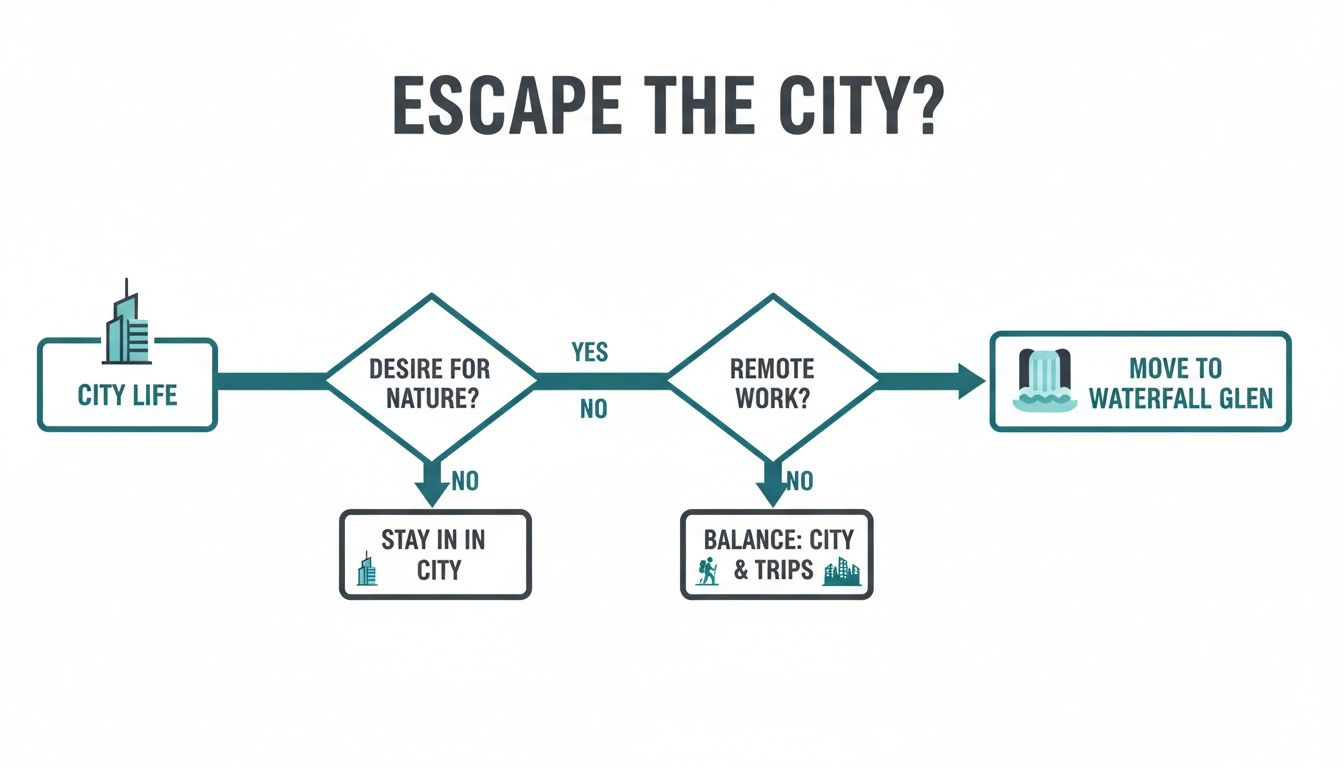
    A Few Questions I Get Asked A Lot

    You probably have questions. I know I did. The whole problem of ocean plastic pollution is so huge it can make you feel powerless, like what you do doesn't matter. I want to give you some real answers, the kind that got me started and keep me going.

    How Does Cleaning a Chicago Street Actually Help the Ocean?

    I hear this one all the time, and it’s a fair question. The way I see it, if your bathtub is overflowing, you don’t just grab a mop—you run to turn off the tap. That's what we're doing.

    Every single wrapper or bottle you or I pick up on a street in Chicago is one less piece that gets swept into a storm drain. It’s one less piece that travels down the Chicago River, into the Mississippi, and ultimately into the Gulf of Mexico. It’s a direct interception. But it’s more than that. When your neighbors see you out there, it plants a seed. It makes them think, and that’s how we start to change the culture around trash, building the pressure that leads to bigger things.

    I’m Not Brave or Super Outgoing. Is This for Me?

    Yes. Absolutely. Let me tell you something: bravery isn't about not being scared. It's about showing up even when you are. Many of our regulars started out feeling the exact same way.

    Some people come, put in their headphones, and just get lost in the work. It's satisfying. Others end up making lifelong friends. There's zero pressure. You can be as quiet or as social as you feel that day.

    We’re here to create a place where the simple act of working together builds you up. Just being here is an act of bravery. We see that, and we respect it.

    This is a space for you to grow at your own speed. By just showing up, you’re doing something real for the city and, more importantly, for yourself.

    Besides a Cleanup, What’s the Most Impactful Thing I Can Do?

    Pick one thing you use, change it, and then talk about it. It’s that simple.

    Don’t try to fix everything at once. Just find one single-use plastic you rely on—maybe it's your daily coffee cup, those plastic water bottles, or takeout containers. Find a reusable version you actually like and use it until it’s second nature.

    Then, tell people about it. When someone at work asks about your cool new travel mug, tell them your story. That’s how you make this stuff feel normal. I believe it’s a personal, powerful act that ripples out to your friends and family, and eventually, brands and politicians have to listen. That's how a movement starts in your own kitchen.


    Ready to do something real? Join Litter Caterpillars. Become part of a group that’s cleaning our city, building friendships, and proving that every single one of us can make a difference. Find our next event and start your own story at https://www.littercaterpillars.com.

  • A Guide to Waterfall Glen Forest and Its Hidden Wonders

    A Guide to Waterfall Glen Forest and Its Hidden Wonders

    I need to tell you about a place, a secret really, tucked just beyond Chicago's reach. Imagine a forest where ancient oak trees stand like giants and a genuine waterfall whispers secrets that shift with every season. This is Waterfall Glen Forest Preserve, and for me, it's so much more than just a park.

    This Isn't Just a Map, It's My Story

    I want to pull you into this world with me. I need you to see why Waterfall Glen transcends being a mere collection of trails. It's the very place where my volunteer crew, the Litter Caterpillars, stumbled upon a mission that goes deeper than just clearing away trash. We unearthed something vital out here.

    For years, my own apartment mirrored the chaos in my life—cluttered, overwhelming. I talk about this constantly, how sorting through my own stuff felt like an impossible climb. Every single object held a story, a weight that pinned me down. The thought of cleaning up an entire forest? That was a mountain a thousand times taller. But then, I started coming here.

    I discovered something profound: cleaning a public space feels like scrubbing your own soul clean. It's a liberation. You're tidying a small fragment of the world, and in doing so, you mend something fractured inside yourself.

    How I Found My Way in the Woods

    This preserve became my personal reset button. I remember reading the poet Donna Vorreyer, who described this place as a living character in her work, existing in a "constant state of change and cycles." Her words struck me like lightning. That was it. That was exactly the feeling. The forest doesn’t judge your messy life; it simply persists. The waterfall thunders with life in the spring, only to transform into silent, crystalline sculptures when winter arrives.

    It's the very same journey we all embark on with Litter Caterpillars. We show up intending to clean, but we always leave with something more profound.

    • You get this visceral sense of accomplishment, watching a tangled mess untangle into pristine beauty right before your eyes.
    • You forge real friendships, bonds tempered by the shared fire of doing something that truly matters.
    • You connect with nature in a way that feels utterly impossible anywhere else near the city's hum.

    This guide is my story. It’s pieced together from all the hours I've spent wandering these trails, sometimes alone with my thoughts, other times with my crew. Just as we guide people through the nooks and crannies of the city in our tour of Chicago's parks, I want to help you discover the raw magic pulsating within Waterfall Glen. Let’s dive in. This place is for anyone who just needs to take a deep, cleansing breath and feel new again.

    Navigating the Trails of Waterfall Glen

    So, you’re ready to find your own path. The lifeblood of Waterfall Glen is its sprawling 9.5-mile main loop. Picture this incredible ribbon of crushed limestone weaving through sun-drenched prairies, ancient savannas, and woods so deep they feel like another time. The first time I walked it, every single bend in the trail felt like opening a door to a new room in a vast, secret mansion.

    It’s an analogy for life’s own journey, isn't it? It's long, presenting you with smooth, easy stretches and a few challenging climbs, but the feeling of completion you get at the end makes every step worthwhile. This main trail is your personal canvas. It’s perfect for a long, soul-searching hike, a heart-pounding run, or just a breezy bike ride to blow the cobwebs out of your mind.

    Let me break down how you can conquer this place, whether you have just one precious hour or an entire day to get beautifully lost in the soul of Waterfall Glen.

    The Main Loop: Your Grand Adventure

    The 9.5-mile main trail is the preserve's central artery. It’s a wide, meticulously maintained path that's surprisingly gentle underfoot, making it a dream for hikers, runners, and cyclists. I love that it’s a loop; there’s something deeply satisfying about circling back to your starting point, yet feeling like a completely different person after the miles you've traveled.

    This trail is your companion, marked with posts every half-mile like little friends cheering you onward. You’re never truly lost. The path meanders through a breathtaking tapestry of landscapes. One moment you're bathing in the warm sun of an open prairie; the next, you're plunged into the cool, dark sanctuary of an old oak forest.

    Sometimes the biggest hurdle is just making the decision to walk out the door. This little flowchart says it all—when that primal pull for nature strikes, the path leads directly here.

    Flowchart illustrating decisions to escape city life, considering desire for nature and remote work.

    It really is that simple. When you need nature, this is your sanctuary.

    Shorter Routes for Quick Escapes

    Don’t have the time to commit to the full 9.5 miles? Don't even worry about it. Waterfall Glen is a beautiful web of smaller, intersecting trails that empower you to craft your own adventure. You can carve out a short, potent walk that slots perfectly into a crammed schedule.

    These shorter paths are my secret weapon for a quick, potent dose of nature. They feel more intimate, like you’re stumbling upon a hidden corner of the woods that no one else knows, a secret shared just between you and the trees.

    Here's a quick rundown of the main options to help you choose your own journey.

    Waterfall Glen Trail Options at a Glance

    This table offers a quick snapshot of the main loop and a couple of my favorite shorter routes to help you plan your escape.

    Trail Name Distance (Miles) Surface Type Best For
    Main Loop 9.5 Crushed Limestone Long Hikes, Running, Biking
    Waterfall Dash < 1 Crushed Limestone Families, Quick Visits, Photos
    Prairie Meander 1 – 2 Dirt & Limestone Open Views, Bird Watching

    Whether you choose a marathon or a sprint, you're guaranteed an incredible experience. Here are a couple of my go-to ways to leverage the shorter trails:

    • The Waterfall Dash: This is your quickest victory. Park at the main lot on Northgate Road and just follow the short spur trail directly to the waterfall. It’s a simple, immensely rewarding walk, less than a mile round-trip, that delivers you straight to the preserve’s crown jewel.
    • The Prairie Meander: For a completely different flavor, start from the trailhead on Cass Avenue and lose yourself in the paths winding through the Bluff Savanna. You'll be met with these vast, sweeping views that feel like a world away from the dense, intimate woods.

    These routes are your lifeline when you just need to breathe. They prove you don’t need an entire day to connect with the wild, untamed spirit of Waterfall Glen. You just need to show up.

    Alright, let's talk about the main event—the waterfall. This is the reason most people make the pilgrimage out to Waterfall Glen in the first place.

    But let me frame your expectations correctly. This isn’t some colossal, thundering cascade you’d find plastered on a national park brochure. It's smaller, more personal. It feels like a secret you stumble upon, a tiered masterpiece on Sawmill Creek that rewards your effort for getting out there.

    A person on a bridge admires a beautiful multi-tiered waterfall amidst colorful autumn trees.

    Finding it is a breeze. If you use the main lot on Northgate Road, it’s just a quick stroll down the southern spur trail. I promise, you’ll hear its whisper before you see its face.

    So, When Should You Go?

    Honestly, when you visit is more critical than how you get there. The waterfall’s personality undergoes a complete metamorphosis with the seasons. It’s like the forest’s own mood ring, and each color tells a unique and compelling story.

    After a heavy spring rain, that thing is a beast. The water churns, powerful and alive, feeling like it’s washing the entire world clean. It reminds me of the catharsis we feel at a Litter Caterpillars cleanup—purging the old junk to make space for something new and vibrant.

    I truly believe a forest is the ultimate classroom for watching change unfold. It’s a relentless cycle of death and rebirth, a kind of reinvention that mirrors the transformations we all navigate in our own lives.

    Summer arrives, and the entirety of Waterfall Glen Forest is draped in this deep, heavy blanket of green. The air by the falls grows cool and misty—a perfect little pocket to escape the city’s oppressive heat and just breathe for a moment. It becomes a quiet, contemplative sanctuary.

    My Favorite Time at the Falls

    But if you’re asking for my personal favorite, it’s autumn. Hands down. The entire forest simply detonates in a riot of reds, golds, and oranges. The waterfall, framed by that blaze of color, is something surreal. It’s the kind of beauty that forces you to stop, to just stand and stare, completely humbled.

    Even winter offers its own stark magic. The waterfall frequently freezes solid into a wild, otherworldly ice sculpture. A profound quiet descends. You can see the very bones of the forest. Every season is a new chapter in its story, and I think you owe it to yourself to experience every single one.

    Getting There and Getting Started

    A little foresight will take you a long way. Think of this as the essential intel you need before you even think about lacing up your hiking boots. Getting to Waterfall Glen Forest is the easy part; where you park, however, can literally make or break your entire day, especially on a gorgeous weekend morning.

    The main parking lot off Northgate Road is popular for a very good reason—it’s your most direct line to the waterfall. But it fills up with astonishing speed. My advice? Get there early. And I mean early. Show up before 9 a.m. on a Saturday or Sunday, or you'll find yourself in a frustrating loop, circling for a spot that may never appear.

    The Weekend Morning Filter

    We use this very same strategy for our Litter Caterpillar meetups. There’s a certain magic to showing up on a weekend morning with a shared purpose. We've discovered it acts as a filter, attracting a specific kind of person: a giver. Someone who is willing to trade a little extra sleep for an experience that resonates with meaning. It sets a powerful, positive frequency for the entire day.

    If you’re not an early riser or if the main lot is a complete circus, pivot and try the parking area off Cass Avenue. It’s almost always less crowded and drops you right near the Bluff Savanna and the prairie sections. Starting your hike here offers a completely different, and equally beautiful, flavor of the preserve.

    Think of your visit to Waterfall Glen as a story you are writing. The trail is the main plot, absolutely. But the details—where you park, when you arrive, what you pack—that’s the stuff that adds texture and transforms a simple walk into a genuine adventure.

    The Bare Necessities

    Okay, let's talk gear. While the trails are remarkably well-maintained, you must remember this is still a wild space. You will find restrooms at the main parking areas, but they are just pit toilets, and they become scarce once you're deep in the woods. Plan accordingly.

    Most importantly: bring your own water. I cannot stress this enough. There are absolutely zero drinking fountains along the entire 9.5-mile loop. Dehydration is no joke; it’s a silent predator that can turn a beautiful hike into a miserable, even dangerous, ordeal. Do not get caught without it.

    Finally, a quick word on trail etiquette. The path is a shared space, a beautiful mix of hikers, runners, and bikers. It’s a community. So, I need you to act like it.

    • Stay to the Right: This is the golden rule. It’s just like driving. This allows faster people to pass you safely on your left.
    • Announce Yourself: If you're approaching someone from behind, a simple, friendly "On your left!" works miracles. Nobody enjoys being startled.
    • Keep Your Ears Open: This one is huge, especially if you listen to music. Keep the volume low or leave one earbud out. You have to be able to hear a cyclist or runner coming up behind you.

    Sharing the trail with a little kindness and awareness ensures everyone’s visit to the magnificent waterfall glen forest is a happy one.

    Join Us and Transform With the Litter Caterpillars

    This is where the story of the waterfall glen forest becomes our story. I started Litter Caterpillars because my own life felt like an unmanageable mess, and I discovered a strange kind of therapy in cleaning up our shared parks. It actually all began right here, in this very preserve.

    Something just clicked for me when I figured out how to reframe a chore as a mission. It’s like that old story of Tom Sawyer, who brilliantly convinced his friends that painting a fence wasn't work at all, but a privilege. What looked like a tedious job transformed into a shared adventure—something people were eager to be a part of.

    That’s precisely what we do. We take the simple act of picking up trash and we elevate it into something powerful and deeply enjoyable. We aren't just cleaning; we are forging a real community and changing ourselves, one small, deliberate act of service at a time. This is my personal invitation for you to join us.

    What We Stand For

    Our group is built on a few core beliefs that we live and breathe every single time we gather, especially here at Waterfall Glen. These aren't just empty words on a website; this is the real, tangible ethos of our crew.

    • Bravery: We show up. No matter what. Rain, snow, or blazing sun. Facing a little discomfort together is precisely what builds grit and turns a simple morning into a story you’ll actually want to tell later.
    • Kindness: We look out for each other on the trail. Kindness means we create a safe, welcoming space where every single person feels like they belong from the very second they arrive.
    • Unity: We bring people together from every walk of life, every background. The philosophy is simple: if you want to go fast, go alone. If you want to go far, go together.

    These values are the very bedrock of our group. They are the reason a weekend morning spent picking up litter feels more like a celebration than a task. It's about discovering your own strength through service.

    When you join us, you’re not just helping clean the waterfall glen forest. You’re making a powerful statement that you believe in the transformative power of showing up—for your community, and more importantly, for yourself.

    Your First Cleanup: What to Expect

    Joining us couldn’t be easier. The most important thing for you to bring is just your positive energy and a willingness to meet some new, like-minded people. We handle everything else.

    We provide all the necessary supplies for every single event:

    • Gloves to keep your hands clean and safe.
    • Trash bags for collecting all the litter we uncover.
    • Hand sanitizer because, well, it’s just a smart move.

    You don't need any special gear or prior experience. All you have to do is show up. We make our events easy to find and incredibly welcoming for newcomers. You can check out all of our volunteer opportunities in Chicago and see exactly where we'll be next.

    This isn’t about achieving perfection; it’s about making progress. It’s about taking one small step alongside a group of people who believe that together, we can make a real, visible, and lasting difference. We are the Litter Caterpillars, and I truly hope to see you on the trail.

    The Hidden Life of the Forest

    A watercolor painting of a deer, surrounded by colorful wildflowers, green oak leaves, and two small birds.

    Look, Waterfall Glen is so much more than just a place to burn off miles on a trail. It’s an entire living, breathing world, and most people just blast right past it, totally oblivious. I was guilty of that myself. For years, I just came here to hike, obsessing over my pace, and I completely missed the point.

    But once you force yourself to slow down, the place truly begins to speak to you. I want to show you how to see the waterfall glen forest for what it truly is. Imagine the towering oak and hickory trees as the skeleton. They're the first thing you notice, the massive structure holding it all together.

    The Forest Floor and Its Secrets

    But the real magic, the real story, is in the details. You have to get down low. In the spring, the forest floor is carpeted with these delicate wildflowers—trout lilies, spring beauties, wild ginger. They're called ephemerals because they don't linger. They erupt, live their beautiful, brief lives, and then vanish. Spotting them feels like you’ve been let in on a precious secret. You can learn more about the incredible trees you'll see in our guide on trees found throughout Illinois.

    It’s just like our Litter Caterpillars cleanups. Every single piece of discarded trash tells a dumb, meaningless story, but every plant and animal here is part of a much larger, more beautiful narrative. It’s all interconnected.

    I’m telling you, the best parts of this preserve only reveal themselves when you’re moving slowly. This isn’t a race. It’s a conversation with nature, and you have to shut up for a minute to actually hear what it’s trying to tell you.

    If you’re quiet and just a little bit patient, you’ll get lucky. The real show, after all, happens at the edges of the day.

    My Favorite Sights and Photo Spots

    I love coming here when the sun is just beginning its ascent or descent. That’s when the white-tailed deer grow bold, stepping out from the cover of the woods to graze. Seeing them is a stark reminder that you are a guest in their home. So, act like one.

    And listen! Just stop what you’re doing and listen. The air is thick with birdsong, this wild, ever-changing chorus. It’s the forest's own personal soundtrack.

    Here are a few spots I always hit for photos:

    • The Bridge over Sawmill Creek: It’s a perfect, natural frame for the woods and the creek. You simply can't take a bad picture here.
    • The Prairie Vistas: That enormous, wide-open sky set against the tall grasses is just breathtaking.
    • The Waterfall Itself: Yes, it’s the main attraction, but for a very good reason. Don't just take the standard head-on shot. Get low, get high, and capture the intricate way the water spills and dances down the tiers.

    Connecting with this hidden life is what makes Waterfall Glen truly special. It elevates a simple walk into something more. It turns it into a discovery.

    Your Questions About Waterfall Glen Answered

    People ask me a lot of the same questions before they head out to waterfall glen forest for the first time. I get it. After all our cleanups and hikes here, I've learned a thing or two. Let me get you ready.

    Are dogs allowed? Yes. But they must be on a leash, without exception. This isn't just some arbitrary rule; it's about respect. We are guests in the home of deer, coyotes, and countless other creatures. Keeping your dog on a leash protects them and ensures everyone feels safe and comfortable on the trail.

    What About Ticks and Bugs?

    Look, it's a forest. Of course there are bugs. Mosquitoes can be a nuisance in the summer, especially down by the water. The real thing you need to be smart about is ticks. They are a fact of life in the Illinois woods.

    But fear is not our way. Fear keeps you trapped inside. Bravery gets you out there.

    We don't let a little challenge stop us, whether it's a blizzard during a cleanup or a few bugs on a hike. Just be smart: stay in the middle of the trail, wear light-colored clothing so you can easily spot any stowaways, and give yourself a quick check when you get back to your car. It’s a simple, powerful habit.

    Is the waterfall always flowing? Nope. And that’s what makes it so interesting. After a heavy rain, it’s a roaring spectacle. During a dry spell, it might diminish to a mere trickle. It's a humbling reminder that nature is in charge, not us. You never get the same view twice.


    At Litter Caterpillars, being prepared is everything. It's the first courageous step in showing up for yourself and for your community. We’re all about transformation, one brave act at a time. Come see what we're about at https://www.littercaterpillars.com.

  • Reducing Plastic Usage: 8 Practical Tips for Home and Community

    Reducing Plastic Usage: 8 Practical Tips for Home and Community

    I know what it’s like to feel stuck. My apartment used to be a fortress of things I couldn't let go of. A four-year-old jar of jam wasn't just old food; it was a trip to Michigan, a ghost of a past me. The jar weighed less than a pound, but emotionally, it was a 500-pound anchor. My life was a landfill of my own making, an impossible mess. I felt completely overwhelmed.

    The change came after a brutal breakup. I decided I had to tackle the hardest things first: cleanliness, consistency, bravery. It’s like learning to swim by jumping into the deep end. I figured if cleaning my own mess felt impossible, maybe cleaning someone else's would be easier. That simple, desperate idea became Litter Caterpillars. What started with three of us shivering in a Chicago hailstorm has grown into a weekly mission. We found a strange, powerful joy in just showing up, facing the elements, and doing something hard together.

    That’s the secret. It’s the secret to transformation, and it’s also the secret to reducing plastic usage in a way that actually sticks. You aren't just swapping a bottle or a bag. You're facing the mess, one piece at a time, and discovering you have the strength to change things, starting with yourself. This guide is your map for that journey. You'll find real strategies here, from personal swaps to community action, that will empower you to tackle plastic waste and, in the process, transform a lot more than just your trash can.

    1. Switch to Reusable Shopping Bags and Containers

    Imagine you're building a new habit. Swapping out flimsy, single-use plastic bags for durable, reusable ones is your cornerstone. It's one of the most powerful first steps you can take in reducing plastic usage. Think of it as your gateway to a more sustainable life. A simple change with a massive ripple effect. You’ll prevent thousands of plastic bags from polluting our streets, our parks, our waterways. When my Litter Caterpillars crew and I head out for a neighborhood cleanup, guess what we find tangled in bushes and fences? Those exact plastic bags. It’s a constant, ugly reminder.

    A hand holds a reusable tote bag with groceries, next to folded burlap reusable produce bags, against a colorful watercolor background.

    This isn't just you. It's a movement. San Francisco banned plastic bags way back in 2007, and even our own Chicago has seen dramatic decreases in litter after similar policies. Retailers like Trader Joe's and Whole Foods now reward you for bringing your own bags. Each time you shop with a reusable bag, you're casting a vote for a cleaner, healthier planet. You’re telling them what you want.

    Key Insight: Bringing your own bag isn't just about avoiding a single piece of plastic. It's a message. You’re sending a clear signal to retailers and policymakers that you demand sustainable options.

    How to Make It a Habit

    Making the switch permanent is all about building a system that works for you. The biggest hurdle? Forgetting. You can beat it.

    • Stash Them Everywhere: I keep a few foldable bags in my car's glove compartment, my work backpack, and my purse. I have a designated "bag hook" right by my front door next to my keys. You can’t miss it.
    • Set Digital Nudges: Create a recurring reminder on your phone. If you usually shop on Saturdays, set an alert: "Got your bags?" It makes all the difference.
    • Think Beyond the Grocery Store: Don't just bring them to the supermarket. Use them for trips to the pharmacy, the library, or the farmer's market. Every single plastic bag you avoid is a win.
    • Lead by Example: When you show up to a Litter Caterpillars event with your snacks in a reusable tote, you inspire others. Your actions are contagious, but in the best way.

    2. Eliminate Single-Use Water Bottles with a Refillable Alternative

    Ditching single-use water bottles is like breaking up with a toxic friend. It’s a commitment to cleaner communities. Each plastic bottle you refuse is one less that could end up on the shores of Lake Michigan or rotting in a landfill for centuries. When my Litter Caterpillars volunteers and I comb through Chicago parks after a hot summer weekend, what do we find? A sea of these disposable bottles. A landscape of unnecessary waste. It’s heartbreaking.

    Hand holding a reusable stainless steel water bottle with a green eco-sticker near a water dispenser.

    This idea is gaining powerful momentum. Programs like Chicago's "Drink Tap" and the explosion of refill stations at universities like Northwestern and UIC make it easier than ever to stay hydrated without the waste. This simple act of reducing plastic usage has a compounding effect. You save resources, cut pollution, and inspire others to join a culture of reuse. Every refill you make is a small act of defiance against our throwaway world.

    Key Insight: Carrying a reusable bottle is a visible statement. It shows everyone around you that there is a better, more responsible way to live. You're normalizing sustainability.

    How to Make It a Habit

    The key to never buying a plastic water bottle again is making your reusable bottle feel as essential as your phone or keys. You have to weave it into your routine.

    • Invest in Your Perfect Bottle: Find one you love. For me, an insulated bottle from Hydro Flask or S'well is a game-changer. It keeps my water cold on a scorching Chicago summer day, making it a joy to use.
    • Find Your Refill Spots: I use a fountain-finder app to locate free water sources when I’m out exploring the city. You'd be surprised how many public refill stations are hiding in plain sight.
    • Make It Your Cleanup Companion: I bring my reusable bottle to every Litter Caterpillars event. It keeps me hydrated while I work and serves as a powerful, practical example for fellow volunteers.
    • Create a "Hydration Station": I set up a dedicated spot at home with my clean bottle, ready to grab and go. I also keep one at my desk at work so it's always within reach.

    3. Refuse Plastic Straws and Use Alternatives

    Saying "no straw, please" is one of the simplest yet most symbolic things you can do. It's a small phrase with a huge impact. You make a daily choice that prevents a piece of plastic from potentially harming wildlife for centuries. When my Litter Caterpillars team cleans along the Chicago Riverwalk, we find countless plastic straws. They were used for a few minutes, but they'll pollute our water for generations. This is a classic story of how a tiny habit can cause a massive problem. But it also shows how a tiny change can be part of the solution.

    A diverse collection of reusable straws made from metal, bamboo, silicone, and glass, promoting sustainability.

    This idea has caught fire globally. It went from a niche activist plea to mainstream policy. Seattle's 2018 ban sparked a nationwide movement. Big chains like Starbucks are phasing them out, and many Chicago restaurants now offer paper or reusable options. This proves that when you demand less plastic, it works. Every time you politely refuse a straw or pull out your own reusable one, you're not just sipping a drink. You’re making a statement that convenience shouldn't cost our planet its health.

    Key Insight: Refusing a plastic straw is more than a personal win. It’s a powerful public signal. It drives corporate and legislative change and makes sustainable choices normal for everyone.

    How to Make It a Habit

    Making the switch from disposable to durable is about being prepared. You have to make your reusable straw just as convenient as the plastic one you’re refusing.

    • Carry It Everywhere: I invested in a compact, collapsible straw set with a cleaning brush and case. I keep it in my purse so I'm never caught without it. You can even find ones that fit on your keychain.
    • Be Proactive When Ordering: Don't wait for the straw to arrive. I always say, "No straw, please," as I order my drink. This prevents the server from bringing one out of habit.
    • Normalize It for Others: When I’m out with friends, I use my reusable straw proudly. My simple action can spark conversations and inspire them to make the switch, too.
    • Gift the Change: I think reusable straw sets make fantastic, affordable gifts. It's a thoughtful way to introduce friends and family to a more sustainable lifestyle and grow the movement for reducing plastic usage.

    4. Choose Plastic-Free Packaging When Shopping

    Your real power isn't just the shopping bag. It's the choices you make down every single aisle. You can actively prioritize products sold in glass, aluminum, or cardboard over plastic. It's a crucial strategy for reducing plastic usage right at the source. Imagine you're voting with your wallet. You're choosing a future where our shelves aren't lined with disposable plastic that clogs our landfills and our beautiful Chicago parks. When my team and I sort through the litter we collect, we see the story of our consumption written in branded plastic wrappers and bottles.

    A watercolor illustration of a jar of grains, an aluminum can, a cardboard box, and an apple.

    This shift is happening everywhere. You see it in zero-waste pioneers like Package Free Shop and in the expanding bulk bin sections at stores like Whole Foods. Brands are even getting creative with services like Loop, which partners with major companies to offer products in durable, returnable containers. When you choose these alternatives, you’re not just buying a product. You’re fueling a market revolution that demands more responsible options for everyone.

    Key Insight: Every time you pick pasta in a cardboard box over a plastic bag, or salsa in a glass jar over a plastic tub, you're directly shaping supply and demand. You’re helping build a less plastic-dependent world.

    How to Make It a Habit

    Turning this into an everyday practice is like going on a treasure hunt. You train your eyes to spot the better alternatives. The prize is a cleaner planet.

    • Go for Glass, Cans, and Cardboard: When you have a choice, pick the option in more easily recyclable materials. I always choose the glass bottle of juice, the canned tomatoes, or the oats in a paper canister. Understanding the basics helps you make better decisions. You can learn more about Chicago's recycling guidelines to see what’s most effective where you live.
    • Embrace the Bulk Bins: I bring my own jars and bags to stores with bulk sections for things like rice, nuts, spices, and grains. It feels incredibly satisfying to walk away with groceries that have absolutely no new packaging.
    • Shop the Perimeter: I focus my shopping on the outer edges of the grocery store. That's where you'll usually find fresh, unpackaged produce, meat, and bakery items.
    • Support Local Markets: You should visit your neighborhood farmers market. I find that produce there often comes with zero packaging, and I get the bonus of supporting local growers directly.

    5. Practice Mindful Consumption and Buy Less

    Here it is. The most effective way to reduce plastic waste is to attack its source: our own consumption habits. When you practice mindful consumption and simply buy less, you cut off the demand for new plastic products before they're even made. This isn't about depriving yourself. It's about being intentional. It's choosing quality over quantity, a philosophy that directly fights the throwaway culture responsible for so much pollution. When I'm picking up litter along the Chicago River, it’s not just bottles and bags I find. It's countless broken toys and cheap plastic junk that were used once and tossed.

    This shift in mindset is gaining ground. You see it in movements like minimalism and with advocates like The Minimalists and Marie Kondo. You also see it in the rise of thrift culture and programs like Patagonia's "Worn Wear," which celebrate durability and repair. In Chicago, local "Buy Nothing" groups in neighborhoods from Lincoln Park to Hyde Park are powerful examples of this. My neighbors and I share and gift items instead of buying new. Each time you borrow a tool or find a treasure secondhand, you prevent a new plastic-packaged item from ever entering the waste stream.

    Key Insight: Reducing plastic usage starts before you even walk into a store. The most sustainable product is the one you don't buy. The second most sustainable is the one that already exists.

    How to Make It a Habit

    Embracing mindful consumption is a gradual process. You learn to question what you need and discover the joy of having just enough. It’s about being a conscious consumer, not an automatic one.

    • Implement the 30-Day Rule: Before I make a non-essential purchase, I wait 30 days. If I still feel I truly need it after a month, I go for it. This simple pause helps me distinguish between a fleeting want and a genuine need.
    • Shop Secondhand First: Make thrift stores, Facebook Marketplace, and local consignment shops your first stop. I look there first for everything from clothing to furniture. You’ll save money, find unique items, and give existing goods a second life.
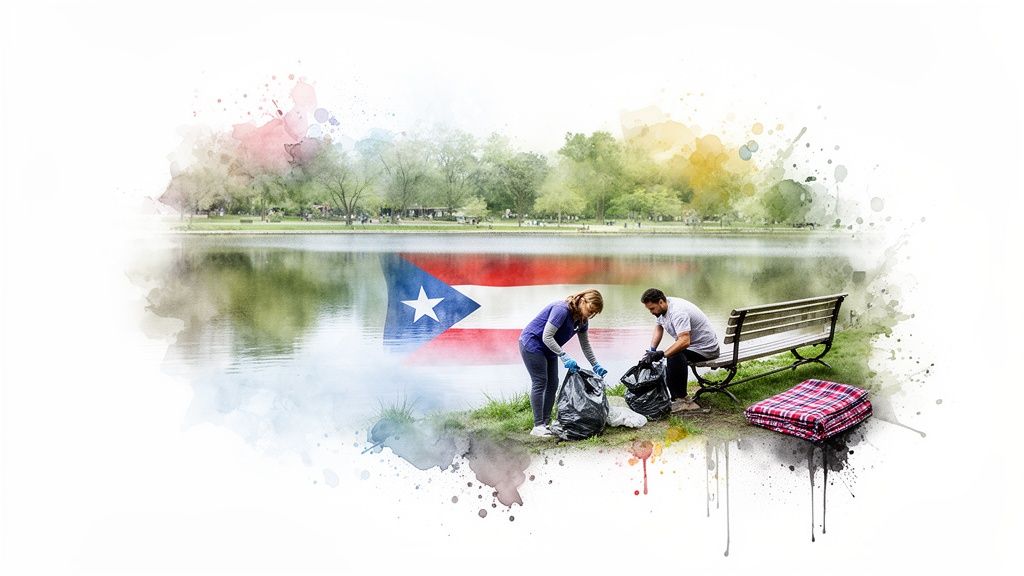
    • Join a Sharing Community: You can tap into your local Chicago Buy Nothing Project group or community swap events. Need a power drill for a weekend project? A serving dish for a party? Someone nearby is probably happy to lend you one.
    • Embrace Repair: Instead of tossing a broken item, learn a new skill. I’ve learned to mend a torn shirt. You can take your shoes to a cobbler or visit a local repair cafe. Repairing what you own deepens your connection to your belongings and keeps them out of the landfill.

    6. Transition to Plastic-Free Personal Care and Household Products

    Your bathroom and kitchen sink might be the sneakiest sources of single-use plastic in your entire home. It’s a battlefield. Shampoo bottles, liquid soap dispensers, tubes of toothpaste, spray cleaners. These areas are often overflowing with plastic containers that are destined for the landfill. If you make the switch to plastic-free alternatives, it's a game-changer for reducing plastic usage right where you live. You can transform your daily routines into powerful acts of sustainability.

    This isn't about giving up quality. It’s about discovering innovative, effective products that are kinder to the planet. Brands like Lush and Ethique have perfected solid shampoo and conditioner bars that work wonders for your hair without the plastic bottle. Just think about the countless plastic pump bottles my Litter Caterpillars crew and I pick up from the banks of the Chicago River. When you choose a simple bar of soap, you help eliminate that exact type of waste, one household at a time.

    Key Insight: Your daily self-care and cleaning routines are a major frontier in the fight against plastic. By choosing solid, refillable, or package-free options, you directly reduce the flow of plastic waste from your home.

    How to Make It a Habit

    Transitioning your personal and household products doesn't have to be an expensive or overwhelming overhaul. The key is to start small. You just replace items as you run out. You make the change gradual and sustainable for your lifestyle and your budget.

    • Start with One Swap: Don't try to replace everything at once. When your current toothbrush wears out, buy a bamboo one. When your liquid soap is gone, try a classic bar of soap. I use this “one-in, one-out” method. It makes reducing plastic usage feel effortless.
    • Explore Refill Options: You can look for local Chicago stores that offer refill stations for products like laundry detergent, dish soap, and hand soap. Bringing your own container is a fantastic way to eliminate packaging entirely.
    • Embrace DIY Cleaners: For a simple, effective, and plastic-free all-purpose cleaner, I mix equal parts white vinegar and water in a reusable glass spray bottle. It’s a trick many of us at Litter Caterpillars use in our own homes.
    • Share Your Finds: Found a brand of toothpaste tablets or a deodorant bar you absolutely love? You should share your recommendation in the Litter Caterpillars community forum. Your experience can inspire and help someone else make a successful switch.

    7. Reduce Food Packaging Waste Through Strategic Meal Planning

    Your kitchen can be a plastic minefield, but it doesn't have to be. Strategic meal planning is your secret weapon. It will transform how you shop, cook, and eat, and it will significantly cut down on plastic packaging. You stop grabbing pre-packaged meals and plastic-wrapped produce. Instead, you're making conscious choices that reduce waste and often lead to healthier, more delicious meals. It’s about being intentional with your food. That's a powerful way of reducing plastic usage in your daily life.
    This approach connects you more deeply with your food and your community. When you plan your meals around what's available at a Chicago farmers market, like the one in Logan Square on a Sunday morning, you're not just avoiding plastic. You're supporting local farmers. I love that. Similarly, joining a Community Supported Agriculture (CSA) program delivers a weekly box of fresh, seasonal produce with minimal to no packaging. It turns your grocery routine into a sustainable adventure.

    Key Insight: Meal planning isn’t just about organization. It's a proactive strategy. You design plastic out of your diet and support a more local, sustainable food system.

    How to Make It a Habit

    Integrating meal planning is about creating a new weekly rhythm. A little forethought goes a long way. It will stop plastic from ever entering your home.

    • Plan Your Plate: Before I even think about shopping, I sketch out my meals for the week. Knowing exactly what I need prevents me from making impulse buys of over-packaged convenience foods.
    • Embrace the Bulk Bins: You should seek out stores with bulk sections for items like grains, nuts, and spices. I bring my own jars and containers to create a truly zero-waste shopping experience for my pantry staples.
    • Shop the Perimeter (and the Market): I focus my shopping on whole foods like loose fruits and vegetables. You can make a weekly trip to a local farmers market your new ritual. Just don't forget your reusable produce bags.
    • Rethink Your Storage: You have to ditch the plastic wrap and single-use sandwich bags. I invested in a set of glass containers, beeswax wraps, and silicone pouches for storing leftovers and packing lunches. My food stays fresher, and my conscience is clearer.

    8. Support and Advocate for Plastic Reduction Policies and Legislation

    Your individual actions are the foundation of change. But to create lasting impact in reducing plastic usage, you have to think bigger. Supporting and advocating for policies that tackle plastic pollution at its source is how we turn our personal habits into community-wide standards. It's the difference between you picking up a single plastic bottle and you preventing millions of them from ever being produced in the first place. When my Litter Caterpillars volunteers and I find the same branded wrappers week after week, it’s a clear signal. The problem needs a systemic solution, not just a cleanup crew.

    This is about using your voice to create a ripple effect that benefits everyone. Policies like plastic bag bans, Extended Producer Responsibility (EPR) programs, and restrictions on single-use foam containers are game-changers. Seattle's comprehensive ordinances and California's bold EPR program prove that when communities demand change, governments listen. These laws shift the responsibility from you, the consumer, back to the corporations that profit from single-use plastics.

    Key Insight: Your individual actions are powerful, but your voice as a citizen is your superpower. Advocacy turns your personal passion into public policy. It creates a cleaner future for an entire city, not just for your household.

    How to Make It a Habit

    Becoming an advocate might sound intimidating. It's more accessible than you think. You can integrate it into your life just like any other sustainable practice.

    • Start Local and Stay Informed: Your local alderperson's office is your most direct line to change in Chicago. I signed up for their newsletter to stay informed about environmental proposals and town halls. A five-minute phone call or a short, personal email can have a huge impact.
    • Amplify Your Efforts: You can join forces with established environmental groups like the Sierra Club or local Chicago organizations. They provide scripts, petitions, and organized advocacy days, making it easy for you to participate effectively.
    • Use Your Cleanup as Evidence: The next time you're at a Litter Caterpillars event, snap a photo of the litter you collect. Share it on social media and tag your local representatives. For me, a picture of a park fence tangled with plastic bags is powerful evidence they can't ignore.
    • Show Up and Speak Up: Attending a city council meeting or a public hearing is one of the most direct ways to be heard. Even if you don't speak, your presence shows officials that their constituents care deeply about reducing plastic usage.

    9. Community Engagement: Education, Visible Modeling, and Organized Cleanups

    Reducing plastic usage becomes exponentially more powerful when it transforms from your personal habit into a community movement. This is about making sustainability visible. It’s about making it educational and collaborative. When you share your journey, organize cleanups, and educate others, you create a powerful feedback loop. You inspire widespread change. You move beyond your own actions to shift cultural norms and even policy. This is how you and I turn personal conviction into collective impact.

    When you join a Litter Caterpillars cleanup, you’re doing more than just picking up trash. You’re becoming a visible advocate for a cleaner Chicago. You’re showing your neighbors that you care. This tangible action, combined with sharing your experiences online or with friends, creates social proof. It shows this is a cause worth fighting for. Organizations like Ocean Cleanup document the massive scale of the problem. Grassroots groups like mine bring the reality of it right to our own doorsteps. We generate data that can drive real change.

    Key Insight: Visible action is the most powerful form of education. When people see you making a difference, they are far more likely to believe they can make a difference, too.

    How to Make It a Habit

    Engaging your community doesn't require a bullhorn. It starts with authentic connection and you leading by example. Your personal story is your most powerful tool for inspiring others.

    • Share Your Swaps: I post pictures of my reusable coffee cup or my new solid shampoo bar on social media. You never know who you’ll inspire to make their first switch.
    • Start a Conversation: When a friend compliments your reusable produce bags, share why you made the change. I frame it as a positive choice, not a judgment.
    • Invite, Don't Preach: The best way to show someone the impact of plastic litter is to let them see it firsthand. You should invite a friend to a weekend cleanup. The experience will speak for itself. You can find everything you need to know about how to start a volunteer trash pickup and lead your own event.
    • Celebrate Others: When you see a local coffee shop offer a discount for reusable cups or a neighbor composting, celebrate it! Positive reinforcement builds a stronger, more motivated community.

    10. Challenge the Convenience Culture and Embrace Intentional Living

    This might be the most profound step. Shifting your entire mindset. Modern culture screams at us to value convenience above all else. This message directly fuels the demand for single-use plastics. You can embrace intentional living. That means you consciously reject that script. You choose durability over disposability. You find joy in the process, not just the instant result. When you stop chasing the fastest, easiest option, you naturally sidestep the plastic traps that come with it.

    This philosophy is the heart of movements like Slow Food and Minimalism. It's also at the core of what we do at Litter Caterpillars. I started this organization from a place of personal chaos. The consistent, sometimes difficult, act of showing up to clean our Chicago neighborhoods transformed me. The real change wasn't just cleaner streets. I found profound meaning in the deliberate effort itself. This is the essence of environmental stewardship: a commitment that goes deeper than a simple action.

    Key Insight: Reducing plastic isn't about adding inconvenient tasks to your life. It's about discovering a more meaningful and connected way of living. A life where your daily actions align with your deepest values.
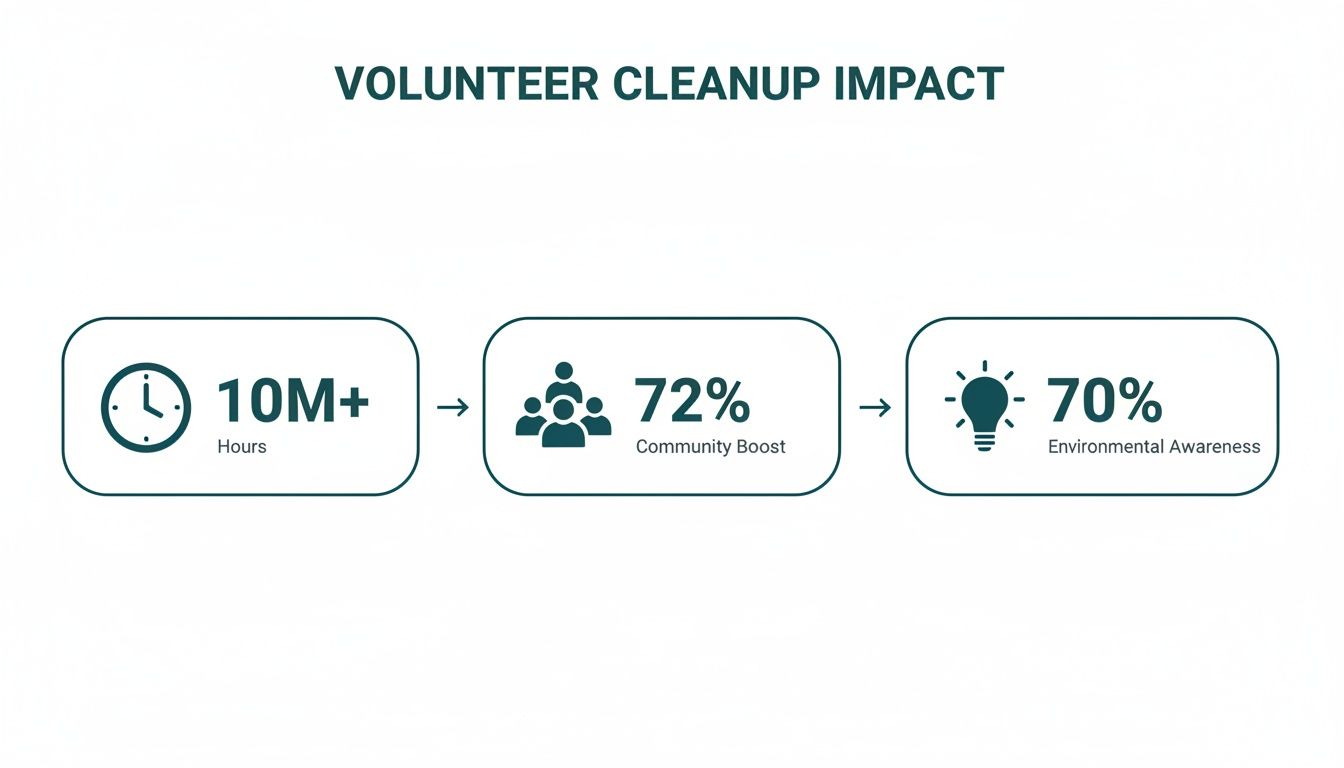
    How to Make It a Habit

    Rewiring your brain to prioritize intention over convenience is a practice. It's not a perfect science. It’s about you building resilience and finding fulfillment in the journey.
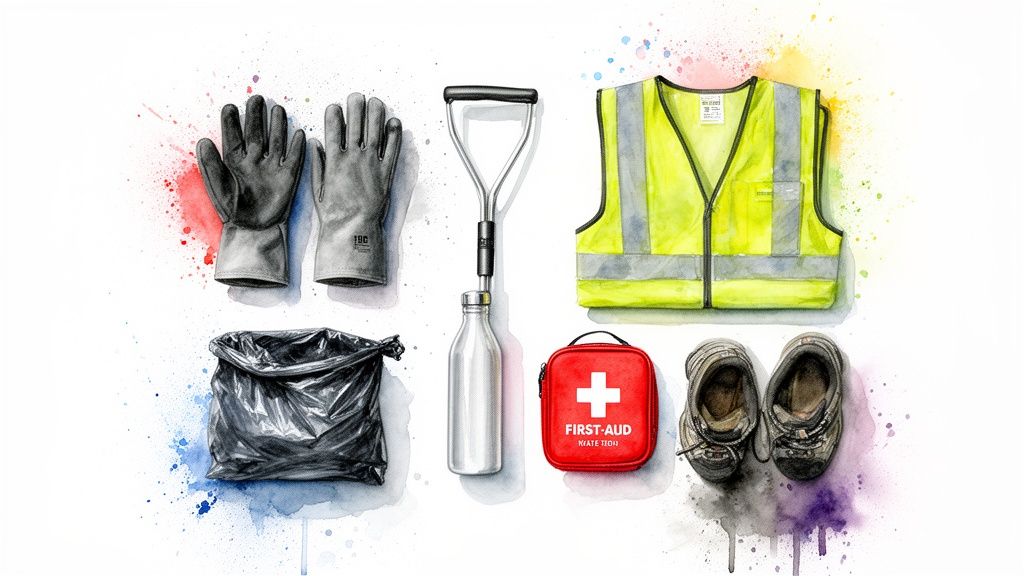
    • Reframe the "Inconvenience": Instead of groaning about washing a reusable container, I see it as a two-minute mindful practice. Instead of viewing meal prep as a chore, I see it as an act of self-care that nourishes me all week.
    • Practice Gratitude: You should take a moment to appreciate the durable items you already own. Your favorite coffee mug. Your sturdy water bottle. Your well-loved tote bag. Commit to using them fully and caring for them. It builds a stronger connection to your belongings.
    • Embrace the Power of "No": I politely decline the free plastic pen, the single-use sample, and the unnecessary bag for a single item. Every "no" from you is a quiet vote for a world with less waste.
    • Celebrate the Process: Find joy in making your own coffee, packing your own lunch, or carrying your own bags. These small rituals are powerful anchors to a more intentional, plastic-free life. They remind you that you are in control of your consumption.

    10-Point Plastic Reduction Strategy Comparison

    Item Implementation Complexity 🔄 Resource Requirements ⚡ Expected Outcomes 📊 Ideal Use Cases ⭐ Key Advantages 💡
    Switch to Reusable Shopping Bags and Containers Low — habit change and storage management Low — one‑time purchase, occasional washing Medium–High — noticeably reduces plastic bag litter Grocery trips, everyday shopping, city with bag bans Cost-effective long-term; visible sustainability; keep bags in car/near door
    Eliminate Single‑Use Water Bottles with a Refillable Alternative Low — buy bottle and adopt refill habit Low–Medium — initial purchase, access to clean water High — removes a top littered item type Commuting, outdoor activities, cleanup events Large cost savings and hydration benefits; use insulated bottles
    Refuse Plastic Straws and Use Alternatives Very Low — decline or carry reusable straw Very Low — inexpensive sets, small carry case Medium — prevents iconic, long‑lasting litter pieces Restaurants, cafes, bars, events Conversation‑starting action; carry collapsible straw in pouch
    Choose Plastic‑Free Packaging When Shopping Medium — requires planning and product choice Medium — possible higher prices and travel to bulk/eco stores High — reduces packaging entering homes and streets Grocery shopping, pantry restocking, bulk shoppers Supports circular economy; favor glass/aluminum/bulk bins
    Practice Mindful Consumption and Buy Less High — sustained mindset and behavioral change Low–Medium — time to source secondhand and plan purchases Very High — reduces waste at source and production impacts Major purchases, wardrobe, household goods Saves money and waste; try 30‑day rule and cost‑per‑use analysis
    Transition to Plastic‑Free Personal Care & Household Products Medium — product testing and gradual swaps Medium — research and sometimes higher prices High — eliminates many common single‑use containers Daily personal care routines, travel, household cleaning Longer‑lasting formats and less chemical runoff; transition gradually
    Reduce Food Packaging Waste Through Strategic Meal Planning Medium — weekly planning and prep required Medium — time for meal prep; upfront container cost High — cuts food packaging and spoilage, saves money Families, weekly shoppers, CSA/bulk buyers Supports local food systems; use glass containers and compost
    Support and Advocate for Plastic Reduction Policies & Legislation High — organize, lobby, and sustain campaigns Low–Medium — volunteer time, coalition building Very High — systemic, long‑term reduction of plastic use Community organizers, civic groups, long‑term strategy Scales impact beyond individuals; document litter to support policy
    Community Engagement: Education, Modeling & Organized Cleanups Medium — coordination and ongoing outreach Medium — volunteers, equipment, communication channels High — immediate litter removal plus behavior and policy influence Neighborhoods, schools, nonprofits, public events Builds social proof and data for advocacy; share authentic stories
    Challenge the Convenience Culture and Embrace Intentional Living High — deep cultural and personal transformation Low — mostly time and practice, social support helpful High — addresses root causes of overconsumption Individuals, community leaders, cultural change efforts Fosters resilience and meaning; join supportive groups and celebrate progress

    From Caterpillar to Something More

    We’ve walked through a whole landscape of possibilities together in this guide. We went from the simple swap of a reusable bag to the more profound challenge of reshaping our daily habits and advocating for systemic change. I know it can feel like a lot. When you look at the sheer scale of the plastic problem, it's easy to feel like you, a single person with a single canvas tote bag, are just a tiny, insignificant drop in a vast, polluted ocean. But I want to tell you something my friends and I learned on a stormy Saturday morning in Chicago.

    We were just a handful of volunteers. We huddled under a big oak tree as a freak hail storm came out of nowhere. We were soaked. Cold. And honestly, we were wondering if we had made a huge mistake showing up. But as we stood there, laughing at how absurd it all was, a weird kind of magic happened. Doing something difficult, something that mattered, with other people who cared… it forged a bond. It built a trust not just in each other, but in our own ability to show up and do the hard thing.

    The Practice of Transformation

    That’s what this journey of reducing plastic usage is really about. It's not a quest for perfection. You're not trying to meet some impossible standard. You don't have to beat yourself up when you forget your reusable cup or have to grab a plastic-wrapped snack. It's a practice.

    This isn't about guilt. It's about grace. It's about you choosing, again and again, to align your actions with your values. It’s about forgiving yourself when you fall short. Each small choice you make is like a workout, strengthening your resolve.

    Think of it like this: every single time you refuse a plastic straw, you’re not just saving one piece of plastic. You are casting a vote for a different kind of world. You are sending a signal to businesses that you demand better options. You are reminding yourself that you have power. When you plan your meals to avoid takeout containers or choose the apples that aren't shrink-wrapped, you are practicing bravery over convenience. You are choosing connection to your food and your planet over the hollow ease of just consuming.

    From Individual Acts to Collective Impact

    This is the very heart of the Caterpillar philosophy. We start small, like a caterpillar inching along a leaf. We focus on one piece of litter, one plastic bottle, one small, consistent act.

    • You start with your own choices: The reusable water bottle, the bamboo toothbrush, the bulk bin shopping. These are your foundational steps.
    • You inspire your circle: Your friends see your cool travel mug. Your family gets used to the cloth napkins. Your actions become a quiet, powerful form of advocacy.
    • You join a larger movement: You sign a petition. You show up for a community cleanup. You realize you are not alone in this fight.

    This progression, from your personal habits to community action, is where the real transformation happens. It’s where you and I move from feeling helpless to feeling hopeful. We learn to trust ourselves. We start to believe in our own capacity for change. We see how our individual efforts ripple outward, creating waves we could never have imagined. We start as one, but we become part of something so much bigger, something powerful enough to reshape the world around us. Your own transformation is waiting for you, right inside these small, intentional choices.


    Ready to turn your intention into action and connect with a community that gets it? Join Litter Caterpillars for a neighborhood cleanup event in Chicago and see for yourself how small acts create massive change. Find your next opportunity to make a difference and meet incredible people at Litter Caterpillars.

  • 10 Unforgettable Chicago Neighborhoods to Explore and Transform in 2026

    10 Unforgettable Chicago Neighborhoods to Explore and Transform in 2026

    I get it. You've seen the bean, you've walked the Mag Mile. But what if I told you the real soul of this city isn't in the landmarks, but in its stories, its quiet corners, and the people who show up for it? My own life was once a cluttered room, packed with old memories and things I just couldn't release. Imagine a four-year-old jar of jam, not just as a condiment, but as a story that weighed a thousand pounds.

    I discovered a strange truth: cleaning up someone else’s mess is infinitely easier than sorting through your own. It’s a start. This isn’t just another list of places to see; consider it an invitation to explore Chicago in a way that actually remakes you. You find real friendship not in some dimly lit bar, but huddled under a tree during a freak hailstorm, laughing because you’re doing something brave and a little bit crazy together.

    This guide is your map. It’s for discovering the authentic, thrumming pulse of the city, block by block, one piece of litter at a time. These are the Chicago neighborhoods to explore if you want to find the real city, and maybe, just maybe, a stronger, kinder version of yourself along the way.

    1. Englewood: From Neglected Lots to Community Green Spaces

    When you explore Englewood, you don't just visit a place on a map; you step directly into a story of incredible, community-led alchemy. This South Side neighborhood is a potent testament to how people can reclaim their streets and literally build beauty from the ground up. We looked upon vacant lots, those stark symbols of neglect, and envisioned them as vibrant hubs for human connection.

    This isn't some abstract theory. We, at Litter Caterpillars, experienced this raw and unfiltered by winning an empty lot at auction. With the help of countless volunteers like you, we transformed that forgotten space into Caterpillar Park. It’s now a green oasis where neighbors gather and children play. This is what makes Englewood one of the most inspiring Chicago neighborhoods to explore: you can see and feel the direct, tangible impact of your service.

    Watercolor illustration of three diverse people gardening in Caterpillar Park, planting a tree and flowers.

    Why Volunteer in Englewood?

    Volunteering here offers a unique chance to bridge divides. You work alongside residents who are passionately, fiercely invested in their community's future. It’s about more than just picking up litter; it’s about forging relationships and supporting a genuine grassroots movement.

    Actionable Tips for Your Visit:

    • Connect First: Before starting any cleanup, you have to introduce yourself to residents. Building that initial bridge of trust is the most crucial step you'll take.
    • Safety in Numbers: I invite you to join our scheduled weekly cleanups, which we always hold during daylight hours for everyone's comfort and safety.
    • Celebrate Progress: We make a point to take before-and-after photos. It’s a fantastic way to boost morale and show the palpable difference you are making.
    • Long-Term Vision: This isn't a one-and-done effort. We partner with established neighborhood groups to ensure spaces like Caterpillar Park are maintained for years to come.

    Englewood’s journey from disinvestment to vibrant community gardens shows me that with consistent effort, real change is not just possible; it's inevitable. To see more stories of urban greening, you can learn more about Chicago's community gardens and witness how they are changing the city, one plot at a time.

    2. Pilsen: Vibrant Arts District with Street-Level Stewardship

    Exploring Pilsen is like walking through a living art gallery. This historic Mexican-American neighborhood bursts with color, culture, and a profound sense of community pride. The vibrant murals that adorn the buildings aren't just decorations; they are the neighborhood's very soul, telling stories of heritage, struggle, and resilience. I see our role here as helping to protect this incredible outdoor museum.

    Our work in Pilsen is about more than just tidiness; it’s an act of cultural preservation. When we organize cleanups along the 18th Street corridor, we're ensuring that the stunning artwork remains the main attraction. This is what makes Pilsen one of the most unique Chicago neighborhoods to explore: you get to be a guardian of public art, helping to keep the community’s visual story bright and clean for everyone to enjoy.

    A vibrant watercolor mural of diverse faces, with a man sweeping and another standing nearby.

    Why Volunteer in Pilsen?

    Volunteering in Pilsen gives you the chance to connect directly with the artistic heart of Chicago. You’ll work alongside residents and artists who pour their souls into their streets, and your efforts directly support the cultural fabric that makes this neighborhood so special. It’s a beautiful synthesis of environmental service and cultural appreciation.

    Actionable Tips for Your Visit:

    • Connect with Artists: I always start by connecting with local galleries and cultural centers to understand their needs and show our respect for their work.
    • Time It Right: You should schedule cleanups before big community events like art walks or festivals to help the neighborhood put its best foot forward.
    • Focus on Preservation: Our messaging for these events highlights mural preservation, framing the cleanup as an act of celebrating and protecting local art.
    • Build Diverse Teams: We intentionally build volunteer groups that reflect the diversity of Pilsen itself, creating a welcoming space for all.

    Pilsen teaches us that cleaning can be a form of stewardship, a way to honor the creativity and history that make a place truly alive. By keeping the streets clean, you help ensure the neighborhood’s powerful art continues to inspire.

    3. Rogers Park: Diverse, Student-Friendly North Shore Hub

    The first time we organized a cleanup in Rogers Park, I was struck by the incredible energy. This far North Side neighborhood is a true mosaic, home to Loyola University students, young professionals, and vibrant immigrant communities from every corner of the globe. The constant foot traffic and density present unique cleanup challenges, but they also offer a powerful opportunity for us to build one of our most diverse volunteer teams.

    Exploring Rogers Park means seeing this diversity in action. It's where different cultures, languages, and life experiences converge. For me at Litter Caterpillars, this neighborhood embodies our mission of connection. I’ve seen firsthand how a simple weekend beach cleanup can unite students looking for service hours with longtime residents passionate about their shoreline, creating friendships that bridge generational and cultural divides.

    Why Volunteer in Rogers Park?

    Volunteering here is a chance to tap into the neighborhood's youthful energy and progressive spirit. You’ll work alongside a dynamic mix of people, from university students to established community leaders, all dedicated to preserving the beauty of their shared home.

    Actionable Tips for Your Visit:

    • Partner with Students: We actively recruit through Loyola and other local student organizations, tapping into their passion for service.
    • Build Weekend Habits: Join our weekend morning cleanups. I designed them to be a consistent, accessible way for students and professionals to start their weekend with purpose.
    • Create Buddy Systems: We often pair new volunteers with experienced ones. This helps everyone feel welcome and builds stronger, more inclusive teams.
    • Celebrate Diversity: I believe our strength is in our differences. Our Rogers Park cleanups are a fantastic way for you to build friendships across different ethnic and cultural backgrounds.

    4. Lakeview: East-West Divide and Neighborhood Consciousness

    When you explore Lakeview, you encounter a neighborhood of powerful contrasts. It's home to both affluent, pristine lakefront areas and more transitional blocks further west that often get overlooked. This diversity makes it a fascinating case study in how cleanup efforts can bridge economic divides and foster a unified sense of neighborhood pride. I see this as an opportunity to connect residents who might not otherwise interact.

    The sheer number of young professionals here presents a huge opportunity for volunteer recruitment. Our challenge, and our goal, is to channel that energy strategically, focusing our efforts on the blocks that need the most attention. Lakeview is one of the essential Chicago neighborhoods to explore because it shows how visible, consistent service can shift a community's consciousness toward collective responsibility, connecting people across different streets and backgrounds.

    Why Volunteer in Lakeview?

    Volunteering in Lakeview allows you to be part of an intentional effort to unite a diverse community. It’s about more than just cleaning; it’s about demonstrating that every block deserves care and attention. You can help build those bridges and show that neighborhood pride has no boundaries.

    Actionable Tips for Your Visit:

    • Focus West: We often concentrate our cleanups on the blocks west of Broadway, where I know our efforts can make a more visible impact.
    • Build Bridges: We intentionally create mixed volunteer teams, bringing together people from different parts of the neighborhood to foster new friendships.
    • Inspire Action: We use the cleanliness of the lakefront as a positive example, inspiring a broader effort to bring that same level of care to every street.
    • Partner Locally: We coordinate with Lakeview neighborhood associations and local groups to support their ongoing efforts and ensure our work is aligned with community needs.

    Lakeview’s dynamic landscape offers a powerful lesson in unity. By working together, we can ensure the entire neighborhood shines, proving that community care can connect us all.

    5. Logan Square: Creative Community and Gentrification Frontline

    When you explore Logan Square, you feel its vibrant, creative pulse. It's a place where thriving murals, artist collectives, and historic boulevards converge. But this neighborhood is also a frontline where long-time Latino residents and new arrivals navigate the complex, often painful, realities of rapid gentrification. This is what makes Logan Square one of the most vital Chicago neighborhoods to explore through service.

    Our work here isn't just about cleaning streets; it's about showing up as allies. I’ve learned that true community stewardship means building trust, not just picking up trash. By partnering with established Latino organizations and centering the voices of those who have called this neighborhood home for generations, we practice a form of service rooted in deep respect and solidarity. This is how we ensure our efforts strengthen the community fabric, rather than contributing to displacement.

    Why Volunteer in Logan Square?

    Volunteering here is a powerful lesson in conscious community engagement. It’s an opportunity for you to support the cultural heart of Logan Square while actively practicing anti-gentrification values. You're not just cleaning; you're helping preserve the very soul of a neighborhood.

    Actionable Tips for Your Visit:

    • Build Authentic Relationships: Before organizing a cleanup, we first connect with Latino-serving organizations to understand their needs and priorities.
    • Communicate with Intention: We are always explicit in our messaging. Our goal is community stewardship and support, not paving the way for developers.
    • Center Long-Time Residents: Cleanup planning and execution are guided by the voices of those who know the community best. Their leadership is essential.
    • Strengthen Existing Networks: We use our events as opportunities to connect neighbors and reinforce the strong social bonds that already exist in Logan Square.

    Logan Square teaches me that meaningful service requires deep listening and profound respect for a community's history and future. To understand more about how we approach these complex dynamics, you can read about our commitment to responsible volunteering.

    6. Wicker Park: Neighborhood Transformation Through Consistent Presence

    Wicker Park shows us what happens when people commit to showing up, week after week, rain or shine. This neighborhood’s story isn’t about a single grand event; it's about the powerful, cumulative impact of consistent presence. I’ve seen how this steady effort, from residents and volunteers alike, has been central to its revitalization, transforming it into the vibrant community it is today.

    Exploring Wicker Park with us isn't just a visit; it's a lesson in the long game of community care. When we commit to being there every week, we do more than clean the streets. We become a familiar, trusted presence, building the relationships that are the true foundation of a strong neighborhood. This is why Wicker Park is one of the most rewarding Chicago neighborhoods to explore: you get to witness how persistence truly pays off.

    Why Volunteer in Wicker Park?

    Volunteering here is an opportunity for you to see long-term change unfold before your very eyes. It’s about being part of a sustained effort that honors the neighborhood's history while contributing to its future, proving that small, repeated actions create massive, tectonic shifts.

    Actionable Tips for Your Visit:

    • Be Consistent: Join us for our regularly scheduled cleanups. Showing up at the same time and place builds momentum and deepens our community connections.
    • Document the Journey: I love capturing the long-term transformation with photos. It's a powerful way to celebrate our collective progress and inspire others.
    • Partner with Purpose: We actively build relationships with local institutions like the Wicker Park Bucktown Chamber of Commerce to amplify our impact.
    • Listen First: We prioritize the voices of longtime residents in our planning to ensure our efforts serve the people who call Wicker Park home.

    Wicker Park’s journey teaches us that real change is a marathon, not a sprint. To dive deeper into building these kinds of lasting connections, you can explore our proven community engagement strategies and see how you can apply them.

    7. Uptown: Overlooked Gem with Highest Need for Consistent Service

    When you explore Uptown, you witness a neighborhood rich in history and bursting with a diversity that few other places can claim. Home to vibrant Vietnamese, Cambodian, LGBTQ, and Native American communities, this area is a true cultural mosaic. I saw beyond the outdated stigmas and recognized a community with the highest need for consistent service, a place where showing up truly, deeply matters.

    This isn't just about picking up litter on a Saturday. We, at Litter Caterpillars, see our work in Uptown as an act of solidarity. By committing to weekly cleanups along the historic Broadway corridor and lakefront, we build trust with residents and honor the neighborhood's resilience. This is what makes Uptown one of the most rewarding Chicago neighborhoods to explore: you become part of a story of compassion and unwavering commitment.

    Why Volunteer in Uptown?

    Volunteering here is an opportunity to practice our core value of serving overlooked communities. It's a chance to build deep, meaningful friendships and learn from residents who are fiercely proud of their home, while addressing real challenges with compassion.

    Actionable Tips for Your Visit:

    • Lead with Compassion: We train our volunteers on how to engage with individuals experiencing homelessness and addiction with respect and kindness, sometimes even inviting them to join our efforts.
    • Build Partnerships: We actively collaborate with cultural centers and social service providers to ensure our work supports their long-term community goals.
    • Reframe the Narrative: Our efforts focus on celebrating Uptown's diversity and strength, not on "fixing" a "bad" neighborhood. I use our platform to share positive stories.
    • Show Up Consistently: Our presence every week, rain or shine, demonstrates a reliable commitment that builds trust and encourages residents to join in.

    Uptown’s spirit teaches me that true service is about consistent presence and genuine connection. To see how we support diverse communities across the city, you can learn more about our neighborhood initiatives and find a cleanup that speaks to you.

    8. Bridgeport: Industrial History and Community Pride in Cleanup Work

    Stepping into Bridgeport feels like connecting with the very heart of Chicago's industrial soul. This is a neighborhood built on hard work and deep-rooted pride, a place where generations of families have forged a tough, authentic community. I see its working-class heritage not just in the architecture, but in the residents' incredible commitment to their home.

    The proximity to the Chicago River offers a unique challenge and a powerful opportunity. I envision transforming the waterfront from an industrial remnant into a cherished community space. This makes Bridgeport one of the most rewarding Chicago neighborhoods to explore; you’re not just cleaning a street, you’re helping to reclaim a vital natural artery for the people who live here.

    Why Volunteer in Bridgeport?

    Volunteering in Bridgeport is an exercise in respect and partnership. It’s about showing up consistently and working shoulder-to-shoulder with residents who have a fierce love for their neighborhood. Here, your effort directly supports the pride that has defined this community for decades.

    Actionable Tips for Your Visit:

    • Partner First: You must always connect with established groups like local churches or community organizations before you start. Their trust is essential.
    • Show Up Consistently: Bridgeport residents value commitment. A consistent weekly presence on the same blocks builds familiarity and trust over time.
    • Respect the Identity: You should acknowledge and celebrate the neighborhood's working-class and immigrant heritage in all your interactions.
    • Empower Residents: We make it a priority to include longtime residents in our volunteer leadership teams. Their guidance is invaluable.

    Bridgeport teaches us that community stewardship is built on a foundation of mutual respect and consistent effort. To join a team that values this approach, you can find a volunteer trash pickup event near you and become part of the story.

    9. Humboldt Park: Historical Community Hub with New Volunteer Energy

    When we bring our cleanup efforts to Humboldt Park, I feel the immense pride of a community rich in history and culture. This neighborhood, a long-standing heart of Chicago's Puerto Rican community, is a vibrant tapestry of art, music, and activism. Exploring Humboldt Park isn’t just about seeing the sights; it’s about engaging with a legacy of resilience and profound community strength.

    I see our role here as supporting, not leading. Our work is to amplify the efforts of the incredible people and cultural institutions that have nurtured this neighborhood for generations. It’s a chance to build diverse teams that honor and center the voices of longtime residents, ensuring our service is rooted in respect and genuine partnership.

    Volunteers clean a park near a lake, reflecting the Puerto Rican flag with watercolor effects.

    Why Volunteer in Humboldt Park?

    Volunteering in Humboldt Park gives you a front-row seat to the power of cultural preservation and community action. It's an opportunity to learn, serve, and connect with the activists, artists, and families who are the backbone of this neighborhood. You get to be part of a mission that celebrates history while building a cleaner future.

    Actionable Tips for Your Visit:

    • Partner with Cultural Anchors: We always connect with historic institutions like the National Museum of Puerto Rican Arts & Culture to guide our efforts.
    • Center Local Leadership: Our first step is to listen. We ensure longtime residents and community leaders are at the forefront of planning and decision-making.
    • Use the Park as a Focal Point: The iconic park itself is a source of immense neighborhood pride. Our cleanups here are celebrations of this beloved green space.
    • Be Clear About Your Intentions: We openly communicate our commitment to supporting the community without contributing to displacement, building trust through transparency and action.

    Humboldt Park teaches me that the most meaningful service happens when we honor the cultural fabric of a place. To dive deeper into how community and culture intersect, you can explore our guide to local Chicago arts and culture and see how creativity fuels change.

    10. All 50 Wards Systematic Rotation: The Litter Caterpillars Philosophy of Equitable Service

    This final "neighborhood" isn't one place but our core philosophy for how we explore them all: a systematic rotation through all 50 Chicago wards. Instead of staying in well-resourced areas, I believe in equitable service. This commitment means we show up everywhere, from the South Side to the West Side to the North Side, rain, snow, or shine. It’s our promise to every single community.

    We practice true citywide service. One week, you’ll find us clearing a highway ramp during a bike event in Uptown; the next, we’re nurturing Caterpillar Park in Englewood. This rotation isn't just about logistics; it’s about a deeply held belief that every neighborhood deserves care and attention. By visiting all 50 wards, we get to know the true fabric of Chicago and ensure our volunteer energy is distributed fairly, not just concentrated in a few popular spots.

    Why Volunteer Across All 50 Wards?

    Volunteering with this philosophy allows you to see the entire city and understand its intricate interconnectedness. It’s an opportunity to break out of your bubble and contribute to a unified vision of a cleaner, more connected Chicago, proving that consistent effort across all communities creates the most profound impact.

    Actionable Tips for Your Visit:

    • Follow the Schedule: Check our public rotation schedule to see which ward we're visiting next. It's the best way for you to explore new Chicago neighborhoods.
    • Embrace the Journey: You should use the rotation to learn the city's geography. Each cleanup is a mini-adventure into a new part of Chicago.
    • Share Stories Widely: Help us document and celebrate our work in every community. Your photos and stories highlight the equal importance of all 50 wards.
    • Be Consistent: True transformation happens through consistency, not by picking and choosing the "easy" spots. Show up, and you’ll be part of building something citywide.

    This approach is the foundation of everything we do. To see our philosophy in action and find our next cleanup location, you can view our upcoming events and join us in serving every corner of this great city.

    10 Chicago Neighborhoods: Community & Service Comparison

    Neighborhood / Program 🔄 Implementation complexity ⚡ Resource requirements 📊 Expected outcomes 💡 Ideal use cases ⭐ Key advantages
    Englewood: From Neglected Lots to Community Green Spaces High — safety planning, long-term stewardship Medium‑High — volunteers, maintenance, partnerships Reclaimed lots, visible pride, community gardens Volunteers seeking max environmental impact in underserved areas High visible impact and strong community relationships
    Pilsen: Vibrant Arts District with Street-Level Stewardship Medium — coordinate with cultural orgs and event timing Medium — frequent cleanups due to foot traffic, artist liaisons Preserved murals, cleaner commercial corridors, cultural protection Culturally‑minded volunteers supporting arts districts Protects visual identity; strong local buy‑in
    Rogers Park: Diverse, Student-Friendly North Shore Hub Low‑Medium — student recruitment and scheduling Low — easy campus recruitment, institutional partners Diverse volunteer cohorts, improved lakefront/blocks Students and young professionals seeking regular service High recruitment potential and institutional partnerships
    Lakeview: East‑West Divide and Neighborhood Consciousness Medium — strategic targeting across affluent/transitional blocks Medium — large volunteer pool but targeted deployment Bridges economic divides; shifts neighborhood responsibility Volunteers aiming to bridge socioeconomic gaps Access to resources and broad volunteer base
    Logan Square: Creative Community and Gentrification Frontline High — requires culturally sensitive, anti‑displacement approach Medium — partnerships with resident groups and artists Cultural stewardship when resident‑centered; reduced displacement risk Volunteers committed to anti‑displacement, resident‑centered work Strong cultural engagement when led by community
    Wicker Park: Neighborhood Transformation Through Consistent Presence Low‑Medium — routine scheduling & documentation Medium — sustained weekly commitment Cumulative visible transformation and maintained revitalization Volunteers seeking long‑term impact through consistency Demonstrated long‑term results and established partners
    Uptown: Overlooked Gem with Highest Need for Consistent Service High — anti‑stigma training, safety, sensitive engagement High — ongoing presence, training, social‑service coordination High‑need impact, trust building, cross‑cultural friendships Volunteers prepared for challenging, high‑impact service Deep community appreciation and transformative impact
    Bridgeport: Industrial History and Community Pride in Cleanup Work Medium — respectful outreach, waterfront logistics Medium — some physical demands, community liaisons Authentic resident relationships; waterfront improvements Volunteers seeking authentic working‑class community ties Strong neighborhood pride and fewer competing orgs
    Humboldt Park: Historical Community Hub with New Volunteer Energy Medium‑High — center Puerto Rican leadership; anti‑displacement care Medium — park/event coordination, cultural partnerships Park stewardship, cultural preservation, inclusive teams Volunteers serving culturally‑rooted communities Strong institutional partnerships and cultural relevance
    All 50 Wards Systematic Rotation: Equitable Citywide Service Very High — complex logistics, scheduling, communication High — transportation, coordination, documentation Equitable coverage, citywide visible impact, volunteer growth Volunteers wanting democratic, citywide service experience Ensures equity and comprehensive impact across the city

    Your Turn to Write the Next Page

    You’ve just journeyed through a handful of Chicago’s most dynamic communities, from the artistic streets of Pilsen to the industrial heart of Bridgeport. We've seen how Englewood is reclaiming its green spaces and how Rogers Park thrives on its diverse, student-led energy. Each neighborhood I’ve highlighted isn't just a dot on a map; it's a living, breathing story of resilience, creativity, and change.

    This guide was never meant to be a static list. Think of it as a book of short stories, where each chapter gives you a glimpse into a different world. But here's the secret: the most important chapter is the one that hasn't been written yet. It’s the one you’re about to write.

    More Than Just a Cleanup

    Remember how I mentioned that suffering through hail adds flavor to the story? It’s true. It advances the plot. You can't just read about a city; you have to become a character in its narrative. Every piece of trash you pick up, every new street you walk down in Uptown or Humboldt Park, every conversation you have with a neighbor—that's you, advancing the plot for Chicago.

    I’m not pretending we're perfect saviors. We’re caterpillars, all of us, in a constant state of trying to transform our city and ourselves. This mission was never about one heroic, picture-perfect cleanup. It’s about the small, consistent, sometimes-unseen act of showing up, week after week. It’s about building a new kind of community pride, one rooted in service instead of spectacle.

    Find Your Place in the Story

    Our bright flags, our theme song, our matching gear—they aren't silly distractions. They are symbols. They are our jersey, a reminder that kind people can and should have power. They remind us that we are a team, united in a shared purpose to make our city a little brighter. I believe that caring for our streets is a powerful act of love and defiance against neglect.

    So, I ask you: which of these Chicago neighborhoods to explore will be your first chapter? Will you join us in Lakeview to bridge the east-west divide, or will you help us bring new energy to the historic parks of Humboldt? The invitation is open. The story is waiting for a new hero. And that hero is you. Let’s go far, together.


    Ready to turn your curiosity into action? Join Litter Caterpillars this weekend and explore a new part of the city while making a real difference. Visit our website at Litter Caterpillars to see our schedule and find your next adventure.

  • Your Guide to Becoming a Trash pickup Volunteer in Chicago

    Your Guide to Becoming a Trash pickup Volunteer in Chicago

    Becoming a trash pickup volunteer does more than just clean up the streets. It's a real, hands-on way for you to reclaim your community and, weirdly enough, find a little piece of yourself you didn't know was missing. This simple act connects you with people who actually care. It creates an immediate, visible impact you can point to and say, "I did that."

    How Volunteering Transforms More Than Just the Streets

    Let's be real. When you picture a life-changing experience, picking up soggy fast-food wrappers on a Saturday morning probably doesn’t come to mind. I get it. Three years ago, my apartment was a mess, my mind was a mess, and my life felt completely stuck. The last thing I thought I needed was to clean up someone else's disaster.

    But I was so wrong.

    I stumbled onto something incredible: tackling the clutter on the streets was way easier than facing the chaos in my own home and my own head. It was a first step. Each piece of litter I bagged felt like a small win, a tiny bit of order I could create in a world that felt out of control. Think of it like organizing one bookshelf before you try to tackle the entire library of your life. That small action gave me the momentum I desperately needed.

    This journey from my messy apartment to founding Litter Caterpillars showed me a surprising truth. The simple act of cleaning, of serving, of just showing up for your city, builds a unique kind of resilience. It's an adventure in self-discovery disguised as community service.

    The Ripple Effect of Showing Up

    This isn't just my story; it's a movement. Since it kicked off, National Cleanup Day has sparked over 10 million volunteer hours across the country, turning neglected lots into points of pride. The impact is huge: these events boost environmental awareness by 70% and strengthen community ties for 72% of participants, forging real connections block by block.

    This infographic breaks down some of the awesome stats behind what happens when people like you decide to show up.

    Infographic showing the impact of volunteer cleanup: 10M+ hours, 72% community boost, and 70% environmental awareness.

    The numbers don't lie. Your time and effort add up to a massive collective impact, building stronger neighborhoods and a greater understanding of our environment. For more practical advice on getting started, you should check out our guide on cleaning up trash effectively.

    Finding Your First Cleanup Event

    So, you're feeling that urge to get out there and actually do something. Awesome. That's the most important part—that little spark that gets you off the couch. Finding your first event can feel like trying to find the start of a hidden trail, but once you know where to look, it’s a piece of cake.

    Most of our new crew members find us through simple platforms like Meetup and Instagram. Seriously, a quick search for hashtags like #ChicagoCleanup or #VolunteerChicago will drop you right into the middle of the action. It's how you find your people.

    Two happy volunteers picking up trash in the rain, holding bags and grabber tools.

    What to Expect on Your First Day

    Your first cleanup will probably be on a weekend morning. You’ll show up, maybe a little nervous, and see a bunch of us in bright vests, armed with grabbers and trash bags. There's this immediate feeling of, "Okay, we're all here for the same reason." We do a quick welcome, go over the game plan, and then we’re off.

    I’ll never forget our first-ever cleanup. It was just three of us. A classic Chicago spring day decided to hit us with a hailstorm out of nowhere. We were huddled under a tree, shivering, watching Ubers cancel on us one by one. It was equal parts miserable and hilarious.

    In that moment, freezing our butts off, we figured something out: cleaning up someone else’s mess is way easier than cleaning your own. And that shared struggle? It builds friendships faster than any sunny, easy day ever could.

    That memory is the core of what Litter Caterpillars is all about. It’s not about waiting for perfect weather. It’s about you showing up, laughing at the absurdity of it all, and knowing the person next to you is in it with you. You'll go home with tired arms, muddy shoes, and a feeling of accomplishment that’s hard to beat.

    Locating Groups in Your Area

    Finding a group is easier than you’d think. Social media is great, but don't forget to check with local environmental organizations or even your park district—they often have scheduled cleanups that are perfect for first-timers.

    • Meetup.com: You can just search for "litter pickup," "environmental volunteer," or "community cleanup." This is where we post all our events.
    • Local Community Pages: Your neighborhood Facebook group is a goldmine for grassroots cleanups organized by passionate locals.
    • Environmental Non-Profits: Groups like the Alliance for the Great Lakes or Friends of the Parks host massive, impactful events.

    My best advice? Just pick one and show up. Don't overthink it. If you're in our neck of the woods, you can check out our upcoming volunteer opportunities in Chicago to find one that fits your schedule. Just bring yourself—we'll handle the rest.

    Essential Gear and Your Safety Checklist

    Before you charge into your first cleanup, let's talk about what to bring to the battle. You don’t need a superhero’s utility belt, but a few simple items can make the difference between a great morning and a frustrating one.

    It all starts with the basics. We’re out there in Chicago weather, which means we see it all—rain, sun, and even snow. Dressing in layers is your best strategy. And good, sturdy, closed-toe shoes are a must. You’ll be walking on uneven ground, and the last thing anyone wants is a twisted ankle or something sharp poking through a flimsy sneaker.

    A flat lay of volunteer cleanup essentials: gloves, vest, trash bag, grabber, first-aid kit, and shoes.

    Most importantly, we bring thick, sturdy gloves for everyone. They are your first and best line of defense. This isn't about being reckless; it’s about being prepared so we can be brave and effective together.

    Our Volunteer-First Philosophy

    Here’s something you need to know about us: your safety and well-being are everything. That's our volunteer-first philosophy.

    We will never ask you for money. Your time, your energy, your positive spirit—that’s the real currency that powers this whole operation. We take safety seriously so you can focus on the fun and the impact. This means we always stick together, we stay aware of our surroundings, and we have a simple protocol for anything that looks tricky.

    We teach everyone how to handle potentially sharp objects—like broken glass or metal—by clearing the area and using tools, never bare hands. It's common sense, but it’s a rule we live by. Your hands are precious; we protect them.

    We also stress staying hydrated, even on cool days. You're moving your body, and that requires fuel. Simple acts of preparation are what allow us to be bold and tackle the tough spots nobody else will touch.

    Your Trash Pickup Go-Bag Checklist

    I keep a simple "go-bag" ready for every event. It makes getting out the door on a Saturday morning that much easier. Here's a quick look at what I recommend you bring along to stay comfortable and ready for anything.

    Item Category Essential Items Why It's Important
    Hydration & Fuel Reusable Water Bottle, Snack (granola bar, fruit) You'll be surprised how much you sweat! A quick snack is a game-changer when your energy dips.
    Protection Sunscreen, Hat/Beanie, Layers You need to protect your skin from the sun (even on cloudy days) and stay warm or cool as needed.
    Personal Hand Sanitizer, Small First-Aid Kit For a quick clean-up before you grab that snack or head home. You should be prepared for minor scrapes.
    Footwear Sturdy, Closed-Toe Shoes (boots, sneakers) This is crucial for protecting your feet from sharp objects and navigating uneven terrain safely.

    We provide the main gear like bags, grabbers, and safety vests, but having these personal items will make your day so much more comfortable.

    Finally, for the stuff we can't pick up—like batteries, chemicals, or other weird finds—it helps to know the rules. You can learn more from our guide on hazardous waste disposal in Chicago. It's all about being smart, safe, and ready for action.

    The Unspoken Rules of Community Cleanups

    Every crew has its own vibe, and we're no different. When you show up to a Litter Caterpillars event, you’re joining a group that’s built on respect and a shared mission. I’ve always loved that old saying: "If you want to go fast, go alone. If you want to go far, go together." We’re all about going far.

    This is about more than just trash bags. It's about bringing together people from every corner of Chicago—all different backgrounds, all walks of life—to do something good. It’s a simple act, but it creates this incredible sense of unity.

    Four diverse volunteers in blue shirts high-fiving over a trash bag with colorful splashes.

    And it’s not just us feeling this. This is a global thing. During the 2023 International Coastal Cleanup, nearly 470,000 volunteers got together across 97 countries. The results? 72% of them felt more connected to their local community. Almost half were brand new to volunteering. You can read more about the powerful impact of these cleanups to see just how big this movement really is.

    How to Be a Great Team Member

    Being a great trash pickup volunteer isn't about how much you can carry. It’s about how you show up for the people next to you.

    • Talk it out. If you see a really nasty spot that needs backup, yell it out. If your bag is getting too heavy, ask for a hand. We're a team, not a bunch of solo acts.
    • Celebrate the little things. Give someone a high-five after clearing a gnarly corner. A simple "nice job!" makes a huge difference, especially on those cold Chicago mornings. That’s the energy that keeps us going.
    • Be patient. Some people are sprinters, others are methodical. There's no "right" way for you to do this. Just be kind, be supportive, and remember we're all here for the same reason.

    Why We Own Our Weekend Mornings

    Our schedule isn't random. There’s a reason we meet on Saturday or Sunday mornings. It attracts a certain kind of person: a giver.

    When you choose to get up early on a weekend to serve your community, you’re making a statement. You’re showing you’re serious about making a difference. It’s a built-in filter for people who are truly dedicated.

    That simple decision helps us build a core group of kind, brave, and consistent people. It creates an environment where real friendships start. You’ll find yourself surrounded by folks who inspire you, and honestly, that’s a powerful way to kick off a weekend. You’re not just cleaning a street; you’re finding your people.

    How to Turn Volunteering Into a Habit

    Showing up for one cleanup is awesome, but the real change happens when you keep coming back. That's how you really become a caterpillar—slowly, steadily transforming yourself through the simple act of service. It’s about turning a one-time thing into a habit that actually gives back to you.

    At Litter Caterpillars, we have what I call our "Tom Sawyer" philosophy. If you know the story, Tom gets stuck with the punishment of painting a fence. But instead of moping, he flips the script. He convinces all his friends that painting the fence is an amazing, exclusive privilege. Before you know it, they're literally paying him for a turn with the brush.

    That’s exactly what this is. The work is tough, no doubt. But it's your perspective that makes it fun. Think of it as an adventure, not a chore.

    Building Pride in Your Service

    So, how do you drag yourself out of bed when it's freezing cold or you'd rather be doing anything else? You build an identity around it. You make it a part of who you are. We borrow from the best—sports teams, countries, social movements—to give our crew a powerful sense of pride.

    Think about it. A flag isn't just a piece of fabric. A theme song isn't just a catchy tune. They are powerful symbols of belonging and shared purpose.

    • Our Flag: When we plant our Litter Caterpillars flag at a cleanup, we’re making a statement. It says, "We are here. We care about this place."
    • Our Badges: We give out badges for hitting milestones. It might seem like a small thing, but it’s a tangible symbol of your commitment and your bravery.
    • Our Theme Song: Yep, we have a theme song! It's a little goofy, totally heartfelt, and it instantly connects us. It’s a reminder that we're all part of something bigger than just picking up trash.

    You can check out our official theme song, created by the amazing Ella Duke, on SoundCloud. It perfectly captures our spirit: turning hard work into a joyful adventure.

    This isn't just about cleaning up the streets. It's about building a culture where service is celebrated. A culture where you can be proud of the dirt under your fingernails.

    The Power of Showing Up for Yourself

    Ultimately, making volunteering a habit is an act of self-care. Every time you show up, you're doing more than cleaning a park; you're building trust with yourself. You're proving to yourself that you can be consistent, brave, and kind—even when it's hard.

    I know this firsthand. My own life was a mess, and the idea of being consistent at anything felt impossible. But each cleanup was a small promise I kept to myself. One cleanup at a time, I learned to forgive myself for my past messes and started to believe I could build something better—one full trash bag at a time. This is your chance to do the same.

    Alright, you're ready to jump in. You get the mission, you understand the "why," and you know that just showing up is half the battle. So, what's next?

    This is your official invitation to roll with us, the Litter Caterpillars.

    Look, we’re not perfect. We’re just a bunch of regular, brave, and kind people who got tired of waiting for someone else to clean up our city. We’re out there every single week, no matter what Chicago decides to throw at us—blizzards, heatwaves, you name it. We do it to make our home a little better and, honestly, to make ourselves a little stronger.

    And this isn't just some small Chicago thing. We're part of a massive global pulse. In 2023, World Cleanup Day got an insane 19.1 million volunteers on the streets in over 91% of the world's countries. Together, they collected a mind-blowing 205,000 tons of trash. Think about that. From a 101-year-old in Curaçao to moms with their babies in Estonia, people are proving that anyone, anywhere, can be part of the fix. You can read the full story on this global effort and see the scale of what we're all a part of.

    So, How Do You Find Us?

    Joining is easy. No complicated applications, no membership fees. Just show up with an open mind and be ready to get your hands a little dirty. We post all our events in two main spots to make it simple for you to find us.

    • Our Meetup Group: This is home base. Every cleanup, every special event, and any last-minute plans get posted here first. It's the most reliable way for you to see what's coming up and RSVP.
    • Our Instagram Page: Want a preview of the action? Our Instagram is where we post the pictures, the stories, and the real-life vibe of our cleanups. It’s the perfect way for you to see the impact we’re making week after week.

    This isn't just a call to action; it’s a call to adventure. It’s an invitation to find your people, to fall in love with Chicago all over again, and to discover what you’re capable of when you decide to serve something bigger than yourself. We’re out there. Come find us.

    Got Questions? We've Got Answers.

    Jumping into something new always brings up a million questions. I get it. When I first started this, I had plenty of my own. So let's tackle a few of the most common things people ask before their first trash pickup volunteer event.

    "What If I Can't Come Every Week?"

    This is probably the biggest one. Life is chaotic, schedules change, and sometimes you just need a weekend to sleep in.

    Let me be clear: this isn't a job. There's no time clock for you to punch. You should show up when you can, and don't sweat it when you can't. We're just happy to have you when you're here. Every single person who shows up, even just once, makes a real difference.

    "Do I Need to Bring My Own Gear?"

    Nope! We’ve got you covered. We bring all the gloves, bags, and those super-clutch trash grabbers.

    You just show up dressed for the weather—and you know how Chicago weather is. Layers are your friend. We'll handle the rest.

    "Is It Safe to Go Into All These Neighborhoods?"

    Absolutely. Your safety is our number one priority, full stop. We never go it alone. We always work in groups, we stay aware of our surroundings, and we have experienced leaders at every single event.

    Look, we're on a mission to clean up all 50 wards of Chicago. All of them. That includes the ones some people might tell you to avoid. Why? Because we believe breaking down those invisible walls is the only way to build real unity in this city.

    It’s about showing up for all of our neighbors and discovering the true fabric of Chicago, from Rogers Park to Englewood. It's an adventure, and we always, always do it together.


    Ready to join the adventure? Come find your people and discover your city with Litter Caterpillars. All our events are posted on our Meetup page.