
Tag: nonprofit operations

  • Nonprofit Sustainability: Real Strategies That Work

    Nonprofit Sustainability: Real Strategies That Work

    We were halfway through a Chicago hailstorm when three of us bent down to pick up cups, wrappers, and broken bottle glass from the curb. One Uber after another canceled, and we laughed because the trash was easier to move than our own plans.

    That day taught me something I still use every week. Nonprofit sustainability starts when people keep showing up through bad weather, awkward moods, and unfinished work.

    Why Most Nonprofits Fail Before They Start

    I remember that first cleanup because nothing about it felt polished. We had no polished pitch, no neat budget deck, no donor list, just three people, a storm, and a block that needed work. That kind of beginning is messy, but it tells the truth about how volunteer groups survive.

    Start with the person, not the spreadsheet

    My own life was a mess before the group ever existed. I had trouble cleaning and organizing my space, and every little thing I owned felt stuck in place because I had attached a story to it. Trash looked small from the outside, but inside my head it carried weight, and that made consistency hard.

    So I built the group around the problem I needed to solve in myself. I wanted a circle that filtered out selfishness, because I had already lived through a chaotic relationship that made me tired of people who only wanted to party and take. That choice shaped everything that came after, from the tone of our events to the people who stayed.

    Practical rule: If your mission only helps other people and never helps your volunteers become better versions of themselves, you will keep losing the people who make the work possible.

    That is why so many groups fade early. They ask people to care, but they never give them a reason to belong. They ask for labor, but they never build a rhythm that feels human.

    Build a repeatable habit, not a heroic sprint

    Our first cleanup in the hailstorm was awful in one way and perfect in another. We were freezing, traffic was bad, and the day felt ridiculous, but the chaos created a story that people wanted to return to. I learned that sustainability grows from repeatable habit, clear identity, and a group that knows why it gathers.

    The Community-Wealth green manual lays out a simple loop, measure impacts, survey employees, determine priorities, create an action plan, and repeat, plus practical moves like energy audits and switching printers to double-sided the manual's five-step process. I use that kind of sequence in my head all the time. First I look at what hurts. Then I ask who feels it. Then I choose the next action.

    The hardest mistake is thinking a nonprofit needs a perfect launch. It doesn't. It needs a reason people can feel in their bones, then a way to return next week without forcing themselves.

    Protecting Volunteer Energy Above All Else
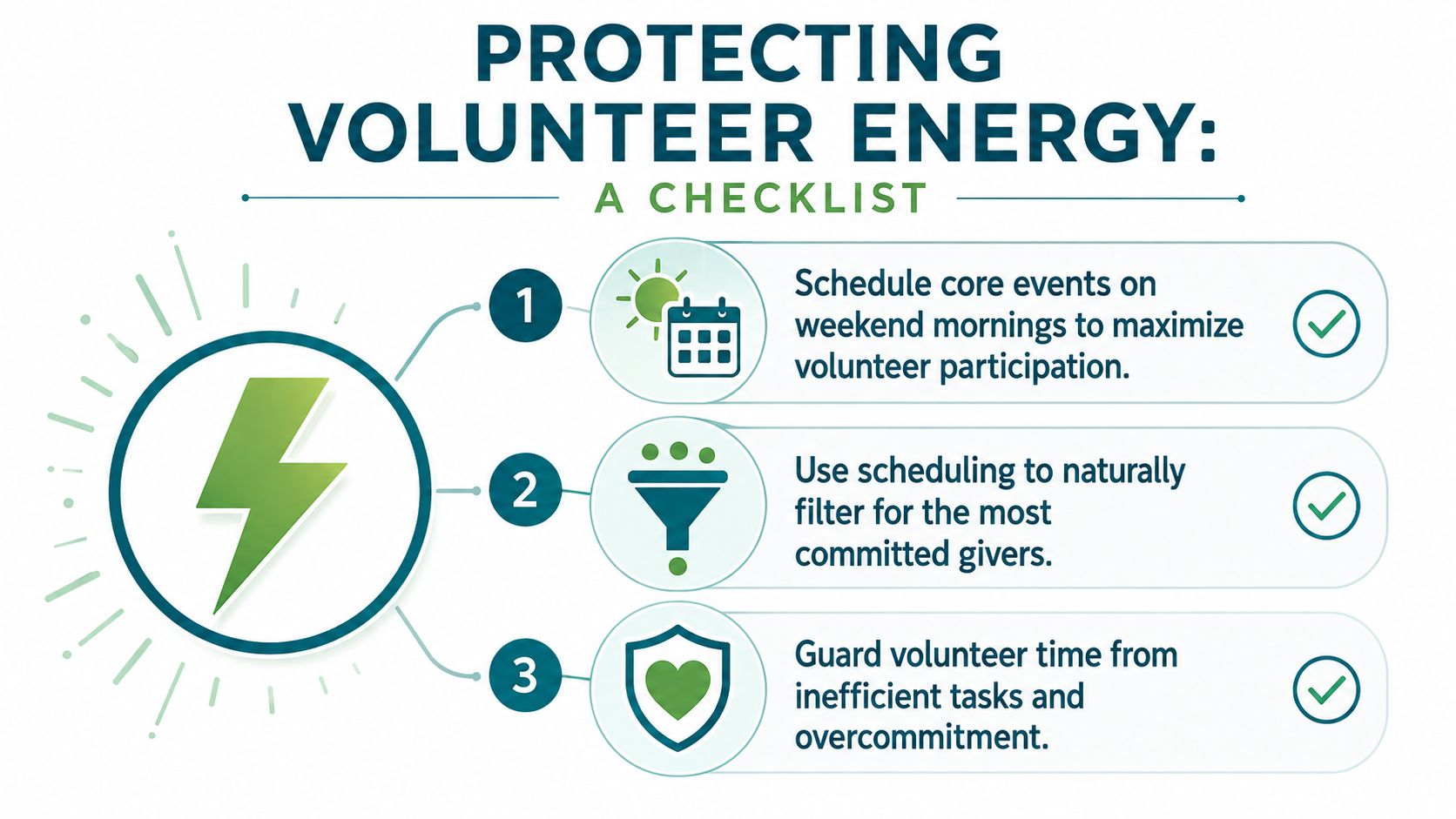
    A checklist infographic titled Protecting Volunteer Energy with three tips for managing and sustaining volunteer commitments.

    I treat volunteer energy like a battery that drains faster than money ever does. If you spend it badly, you don't get a loud failure. You get silence, no-shows, and a group chat that goes cold.

    Schedule for the people you want to keep

    Weekend mornings work because they reward intention. The people who wake up early to pick up trash usually want to be there, and that matters more than raw turnout. If you schedule like a party, you attract party energy. If you schedule like service, you attract givers.

    That is why I keep events simple and predictable. I want people to know when to show up, what to wear, and how long it'll take. I also want them to leave with enough energy to come back.

    Practical rule: Make the first hour easy to understand and hard to fake. The wrong people drift off, the right people stay.

    The group's own retention advice lives at our volunteer retention guide, and the lesson is plain. Clarity protects energy. Confusion burns it.

    Safety comes first, happiness comes second

    I never ask volunteers to prove toughness. I ask them to stay safe, because nobody returns to a group that treats bruises like badges. Happiness comes second, but it still matters, because people remember how they felt more than what they carried.

    That means I choose routes with care, keep the task list visible, and watch the weather with a practical eye. Blizzard, heat wave, slush, or calm morning, the rule stays the same. People come before output.

    Never turn volunteers into fundraisers

    I don't pressure people for donations, because that changes the whole mood. Once a cleanup group starts treating volunteers like a donor pool, people feel it. They stop feeling like neighbors and start feeling like targets.

    A volunteer-first group needs a clean emotional contract. Come help. Make friends. Leave proud. That's enough.

    When you protect volunteer energy, you stop treating participation like a transaction. You start treating it like a shared ritual.

    Building Financial Reserves Without Chasing Donations

    On a hard week, I'd rather open the books and see a cushion than start asking volunteers to cover the gap. A cleanup group can keep its dignity intact by building steady support from grants, partnerships, and public backing, instead of turning every person in a glove into a walking fundraiser. That path feels slower at first, but it keeps the work from resting on volunteer guilt.

    The reserve numbers show why that matters. A 2025 survey found that 30% of nonprofits had no reserve funds at all, another 19% had reserves for less than three months of operating expenses, and only 15% had more than one year of reserves, while about two-thirds said unrestricted revenue did not increase from 2024 to 2025 (FNA Nonprofits Survey 2025 report). A thin cushion leaves no room for a missed payment, a broken tool, or a slow month.

    Read cash like weather

    I learned to read reserves the same way I read a storm line. If the forecast turns ugly and you already have supplies, you keep moving. If you do not, every surprise turns into a stoppage, and the crew feels it.
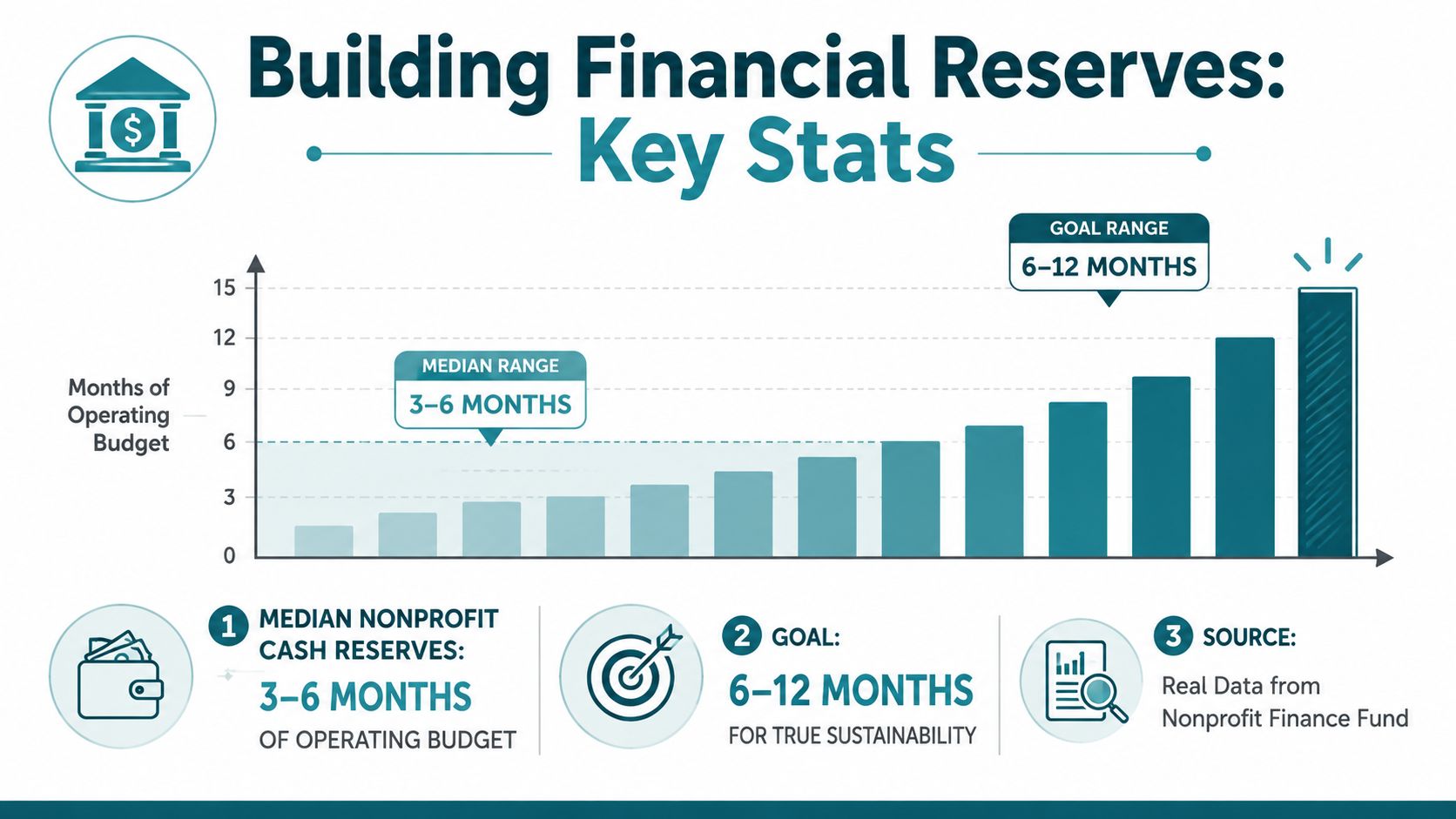
    A chart showing the recommended financial reserves for nonprofits as three to twelve months of budget.

    I start with simple cash targets. Cover the stretch you need to survive first, then build from there. The goal is not to pile up money for show, it is to keep the work alive when the month turns messy.

    Use outside support without changing your culture

    Public and philanthropic support already carries a lot of environmental work. In the United States, nonprofits focused on climate change were estimated to spend between $7.8 billion and $9.2 billion annually, with 49% going to mitigation and 14% to adaptation, and philanthropic sources supplied about 88% of that funding in fiscal year 2021 (Philanthropy News Digest). Federal energy and environmental infrastructure programs also invested $69.96 billion in nonprofit organizations from 2010 to 2024, with annual federal investment rising from $5.34 billion in 2010 to $29.79 billion in 2024.

    That gives you room to build a funding mix that respects volunteer time. You do not need to squeeze every dollar out of the same people who show up to haul bags and plant trees. A practical first pass is to look at corporate sponsorship ideas and judge them by fit, not desperation.

    A Practical Approach to Strategic Planning

    A lot of nonprofit planning fails because people confuse activity with direction. They make a long spreadsheet, then keep doing the same things with better formatting. I've done that too, and it doesn't save you.

    Pick a few outcomes and track them hard

    The strongest planning loop I've seen starts small. Define 3 to 5 mission-critical outcomes, turn each one into a quarterly metric, give each metric an owner, then review the results against resource, staff, and mission dashboards. That approach lines up with research that found a strong positive correlation between strategic planning and sustainability, with ρ = 0.759 and p < 0.01 (PMC study). The same study also reflects what McKinsey observed, nonprofits often track dollars raised, membership growth, people served, and overhead, but a better system also watches resource mobilization, staff effectiveness, and mission progress.

    I use three simple questions when I plan:

    1. What do we need to happen this quarter?
    2. Who owns each result?
    3. What will I check before the quarter ends?

    That keeps the work concrete. It also keeps me from hiding behind vague goals like “grow awareness” or “do more outreach,” which sound nice and do almost nothing.

    Measure more than money

    Money matters, but so do the people doing the work and the impact they create. If your dashboard only tells you how much money came in, you'll miss the moment your team starts fading.

    That is why I keep reviews short and regular. I want to know what broke, what held, and what needs a change before the next cleanup day arrives.

    For a visual version of that rhythm, the loop is simple. Define the outcomes. Build the action plan. Review, then adjust.

    The video below fits that same mindset.

    If you want a sample of how I think about partner work inside a plan, I'd point you to community partnership development.

    Earning Community Trust Block by Block

    The first time I saw an empty lot at auction, I didn't think about a logo or a media moment. I thought about what it would feel like to turn dead space into somewhere a neighborhood could use. That lot became Caterpillar Park in Englewood, and the path to it ran through a lot of small cleanup days.

    Trust grows from repetition

    We clean all 50 wards, including the places people avoid. That choice matters because trust usually forms where people expect you not to show up. When a group keeps showing up in rough weather and rougher blocks, neighbors start reading your behavior instead of your pitch.

    That's the deeper story behind community trust. People need to see consistency before they believe your words. They need to watch you pick up trash in the same place more than once. Then they start opening doors.

    Be a bridge, not a savior

    Research on low-infrastructure settings makes a sharp point. Many social problems persist because interventions don't reach underserved communities, and nonprofits often work best as bridging agents rather than inventing brand-new solutions from scratch (BYU Journal of Nonprofit and Social Innovation). I agree with that instinct. Most neighborhoods already know what they need. They need access, repetition, and someone who can keep the connection alive.

    That is why last-mile delivery matters more than clever branding. If a park, cleanup, or service path feels unreachable, the idea might be good but the impact stays out of reach.

    Make your reputation local and specific

    I don't think reputation comes from a big statement. I think it comes from one block, one event, one friendly face, and one follow-up text. People remember who listened, who came back, and who kept their word.

    The same logic applies to sustainable service. A nonprofit that earns trust block by block can keep going without shouting. It becomes familiar. Familiarity lowers friction, and lower friction keeps people involved.

    Your Sustainability Checklist for the Next 90 Days

    If I had to rebuild a volunteer-first nonprofit from scratch, I'd stop talking about “big strategy” and spend the next 90 days on four things, people, partnerships, governance, and money. I've seen crews hold together through blizzards and heat waves when those four pieces were clear. I've also seen good missions stumble because nobody knew who was answering messages, who was checking supplies, or who was watching the bank balance.
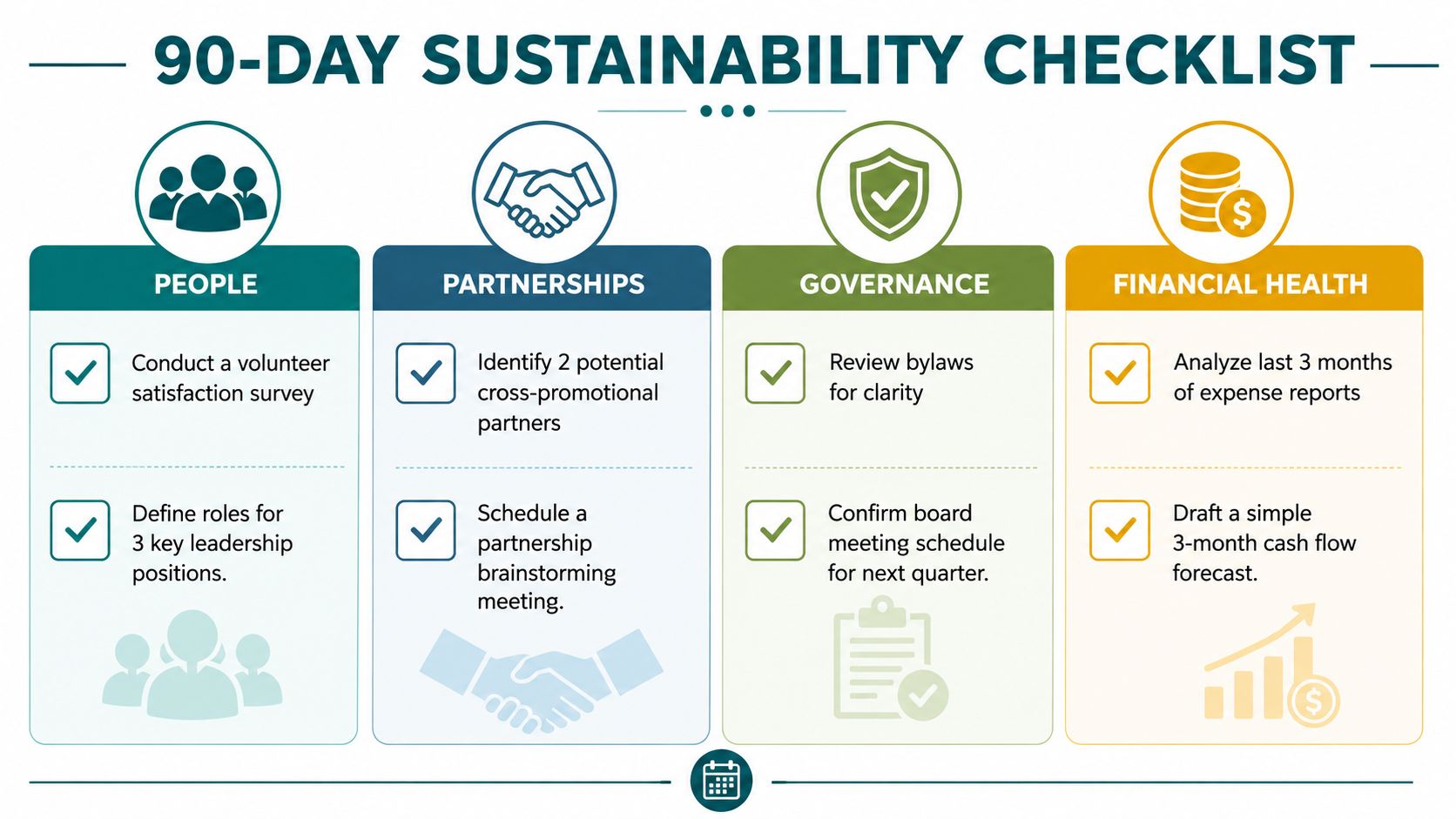
    A 90-day sustainability checklist infographic for organizations covering people, partnerships, governance, and financial health categories.

    Days 1 to 30

    Start with the people who already carry the mission. Ask what helps them stay, what wears them out, and what makes the work feel worth it. Then name who owns the roles that keep things from slipping through the cracks, because volunteer energy disappears fast when every task floats around unanswered.

    A founder I know in Chicago keeps this simple. The group cleans across all 50 wards and helps build parks, but nobody gets pressured to donate money before they are welcomed onto a cleanup. That choice matters. It tells volunteers their time is the contribution, and it keeps the door open for people who want to help without being sold to.

    Days 31 to 60

    Move to partnerships and governance. Set one meeting with a possible partner, review your bylaws, and make sure your board schedule is clear for the next quarter. Write down what happens when a grant ends, who takes over, what changes, and what stays.

    Research on nonprofit sustainment shows that continuation can fall well below initial implementation, so the safe move is to plan for the handoff before the handoff arrives. A PMC study found that in one nonprofit partnership study, 56.8% of 937 partnerships continued for one year, even though implementation was very high at 98.4% overall and 89.1% for strongly implemented scoping items (PMC study). I use that gap as a warning. Getting a program started is not the same as keeping it alive.

    Days 61 to 90

    Finish with money and review. Look at your last three months of expenses, draft a simple three-month cash flow forecast, and set your first reserve target. Then run one quarterly planning review with your team and ask what moved, what stalled, and what needs a new owner.

    Practical rule: If you cannot explain your next 90 days in one page, your group is probably carrying too much guesswork.

    I also like to use one simple self-check at the end of each quarter. Did people show up? Did partners respond? Did the board stay useful? Did cash move in a stable direction? If the answer is mixed, that's fine. You adjust and keep going.

    If you want a crew that thinks this way in the world, Litter Caterpillars has built a volunteer-first model around cleanup, friendship, and steady action. Visit, join a cleanup, and see how a group can protect volunteer energy while staying useful block by block.

  • Volunteer Event Planning That Actually Works

    Volunteer Event Planning That Actually Works

    Three of us showed up for that first Chicago pickup with gloves, trash bags, and too much optimism. The sky flipped from spring to hail to blizzard, Ubers kept canceling, and we ended up huddled under a tree like a bad weather cartoon.

    The First Pickup That Started Everything

    I remember looking at the street, the slush, and the mess on the curb and thinking one weird thing at once. Cleaning other people's trash was easier than cleaning up my own life, and somehow it was also more fun.

    That first outing taught me what most volunteer event planning guides miss. People do come for the task, but they come back for how the task feels, who they met, and whether the day had a pulse. If your event feels like a chore with a clipboard, people vanish. If it feels like a small crew with a shared mission, a little chaos, and a good reason to laugh, they return next week.

    I didn't know the terms for any of that then. I just knew I wanted a group where people could show up, do something real, and leave with a story worth telling. In Chicago, that story might involve hail, wind, heat, or a bike lane closed at the last second. That's fine. The plan only works if it can hold a little weather and a little personality.

    Volunteer event planning gets better when you stop treating it like a one-time cleanup and start treating it like a hangout people respect. The trash matters. The people matter more. The best events I've run have had both pieces in the right order.

    Define the Event Before You Recruit Anyone

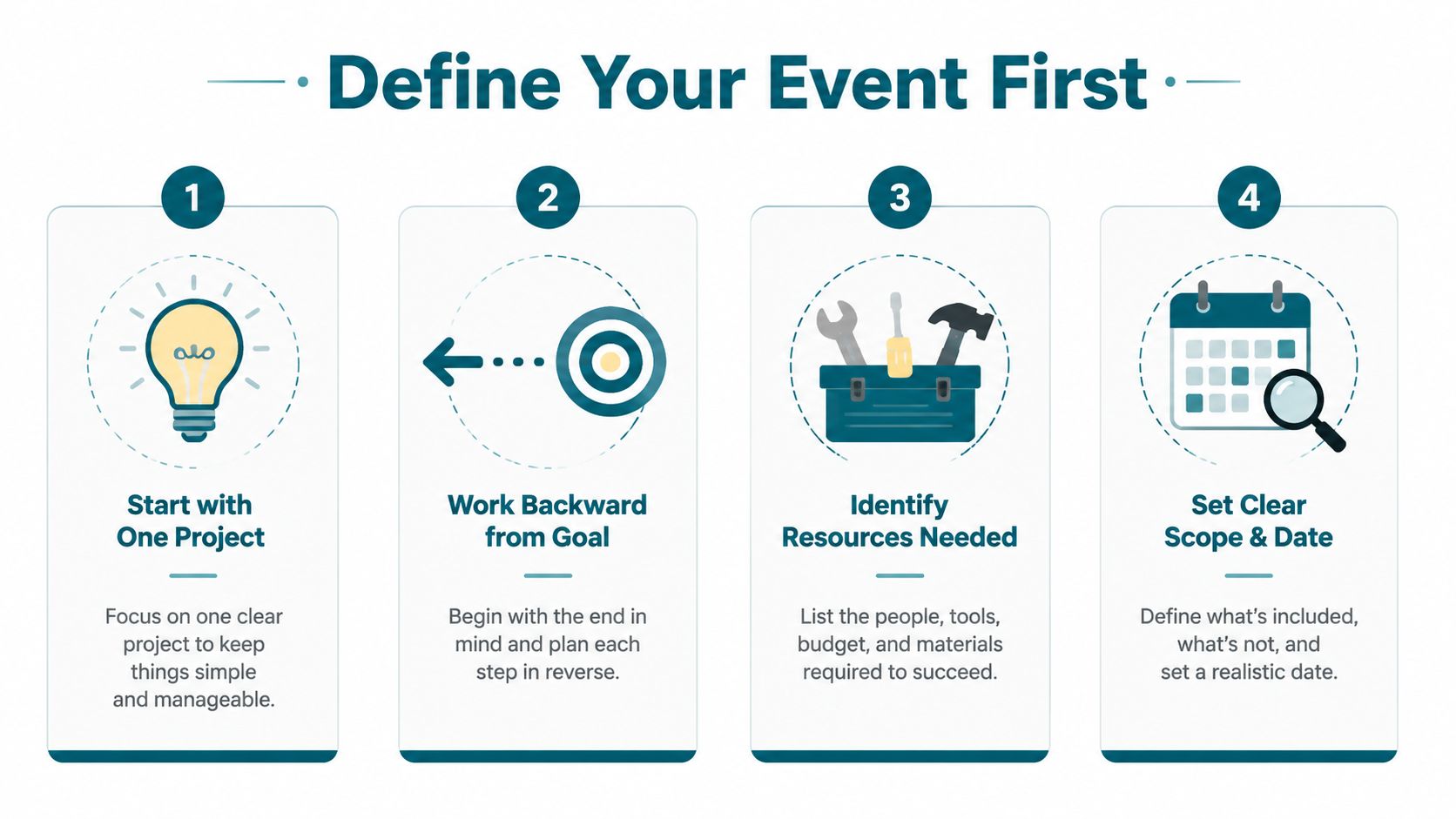
    Start with one project, not a pile of them. That rule saves you from vague planning, and it keeps the event easy to explain when someone asks what you're doing, where you're doing it, and why they should care.

    Pick the scope first

    For a neighborhood cleanup, I start with a block, a park edge, or a route I can describe in one breath. Then I write the purpose in plain language, like cleaning litter from a specific stretch, helping a partner site, or testing a new volunteer route. After that, I choose the date and time around the people I want to recruit, the neighborhood's access, and how much daylight I can count on.

    A one-page brief is enough if it answers the basics. What is the project, where does it happen, who is coming, what do they need, and what permission do I need before anyone touches the site? The UK government's voluntary-event guide pushes planners to define the purpose, size, safety and access needs, budget, publicity, day-of schedule, and cleanup before anything else, and that sequence keeps me from recruiting into a foggy plan. I've found that same order works when I'm emailing a park office, a business group, or an alderman's office, because nobody wants a soft answer about scope.

    Practical rule: lock the event before you ask for help. Volunteers forgive a lot, but they don't forgive confusion.

    Build the timeline with slack

    The planning calendar needs room for real life. A simple event-volunteer checklist recommends adding a 15 to 20 percent time buffer, and that fits the way cleanup events go, with weather shifts, last-minute cancellations, and gear delays. I use that buffer whenever I know the site has road access, tricky parking, or a partner who needs extra lead time.

    If you want a reference point for what a cleaner signup flow looks like, I also keep a plain internal guide on how to find volunteers, because recruitment works better when the event brief and the outreach message are built together. The brief tells people what they're walking into, and the message tells them why the day is worth their Saturday morning.

    A four-step infographic illustrating a process for defining an event with clear planning and project goals.

    Fill the page in under an hour

    If I can't write the event brief fast, the scope is too wide. I want a short document that names the goal, the site, the minimum permissions, the rough headcount, the budget, and the backup date logic. That is enough to move forward and still flexible enough to survive a rainy forecast.

    The trick is simple. Decide what the event is, then decide who needs to know, then ask for volunteers. When I reverse that order, I get no-shows, mixed expectations, and extra cleanup on the back end.

    Recruit Volunteers and Design Real Roles

    A signup sheet is not a plan. It's a pile of names with no shape, and that's where volunteer events start to wobble.

    Give every person a job that feels real

    I recruit where people already gather, on Meetup, Instagram, neighborhood Facebook pages, university service boards, corporate volunteer leads, and group chats that already have trust. Then I write the post like a person, not a flyer. I say what the cleanup is, where we're meeting, what kind of shoes people should wear, and what kind of energy the group has. If the post sounds like a county form, it attracts nobody.

    Then I split the work into roles. A check-in lead greets people and confirms names. A supplies lead hands out bags, gloves, and grabbers. A route lead keeps people moving through the block or park zone. A safety lead watches road edges, weather, and strain. A photo and storytelling lead gets consent and captures what the day looked like. A social lead keeps the chat alive before and after the event. Each role needs a backup, because one sick text can leave a hole.

    Keep the roles small enough that a new volunteer can say yes without guessing what the day will feel like.

    Match the role to the person

    Some people walk in talking to everybody. Put them near check-in, the welcome loop, or the route lead slot. Detail-oriented people do well on supplies or roster work. Calm, steady communicators work as team leads because they can answer questions without turning every question into a lecture.

    Role Core Responsibility Time Commitment Who Fits
    Check-In Lead Greet arrivals and confirm names Arrive early, stay through the opening huddle Friendly, fast with names
    Supplies Lead Hand out gear and track extras Early setup and end-of-day count Organized, practical
    Route Lead Keep the cleanup moving through assigned zones Full event block Clear communicator, good at pacing
    Safety Lead Watch weather, road edges, and buddy checks Full event block Calm, observant, steady under pressure
    Photo and Storytelling Lead Capture moments and note consent Flexible, part of the day Social, quick with a phone
    Social Lead Run the chat and reminders before and after Before, during, after Responsive, warm, consistent
    Backup Lead Step in if a lead drops out On call Reliable, nearby, easy to brief

    I keep a waitlist, too. If someone cancels, I don't leave the hole open and hope. I move the next person in and send a short message that tells them where to show up and who will meet them. Recruiting is a pipeline, not a post, and follow-up messages are part of the job.

    The best recruiting language sounds like an invitation, not a pitch. It should tell people they'll do something useful, meet people who care, and leave without getting trapped in a huge commitment. That's how you get first-timers to say yes.

    Build a Safety and Weather Plan You Will Actually Use

    Chicago weather has taught me not to trust optimism. I've cleaned in snow, heat, wind, rain, and the kind of cold that makes a phone battery give up before the volunteer does.

    Write the weather rules before the day

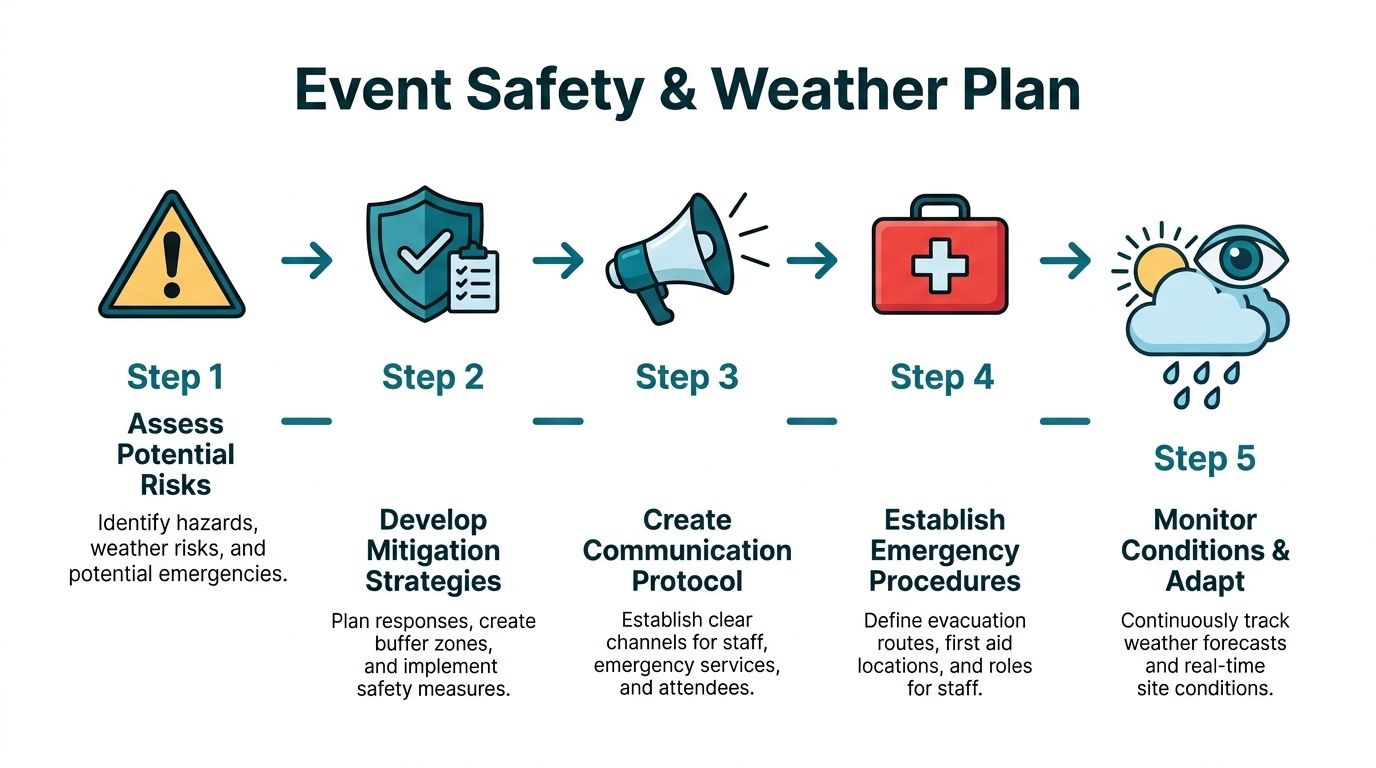
    A safety plan works when it is short enough to read at 6 a.m. I split mine into three parts. First, I write the weather thresholds for heat, cold, lightning, and rain. Second, I list the on-site rules for hydration, gloves, eye protection, sunscreen, and buddy checks. Third, I write the cancellation or pivot rule so nobody has to improvise when the forecast turns ugly.

    That matters even more for outdoor cleanup work near roads. If anyone steps onto a shoulder, I want cones, a spotter, clear permissions, and bright gear. During one highway shoulder cleanup tied to a bike-event shutdown, reflective vests and cones did more to keep people safe than any speech I could've given. The point was simple, the edge was dangerous, and everyone knew it.

    If you want a wider planning reference, the volunteer liability insurance guidance is a useful place to think through risk, because insurance, permissions, and a written safety plan belong in the same conversation.

    Use the weather to make the fallback, not to make the decision later

    One snowy cleanup ended with us huddled under a tree, cold and laughing while the cars kept sliding past. That day taught me to build a pivot into the plan, so I can move a crew to a covered park, switch to an indoor service task with a partner nonprofit, or defer to a new date with a message that goes out fast.

    The same logic helps in summer. On a hot day, gloves and water stop being optional. People tire sooner, tempers get shorter, and the day gets sloppy if I pretend the heat is a small thing. I'd rather shorten the route, add shade breaks, and keep the group moving than watch people fade halfway through.

    A five-step infographic titled Event Safety and Weather Plan outlining the process for emergency preparation.

    Keep the rules visible

    A one-page safety sheet at check-in solves more problems than a long speech. I want people to know where to meet, what to do if someone gets hurt, who carries the first aid kit, and who makes the call if the sky turns. That sheet keeps me from repeating the same instructions ten times.

    The best weather plan is the one you can use without thinking too hard. If it feels fancy, it will fail when the wind picks up.

    Run the Day With a Simple Operating System

    The event day gets easier when I treat it like a small operating system instead of a scramble.

    Use a clean sequence from arrival to closeout

    I ask the lead team to arrive 15 minutes early for gear check and setup. The check-in table gets a printed roster, name tags, and a visible place to stand so new people don't wander around wondering if they're late. Then I open with a short huddle, a route map, a safety reminder, and a clear answer to the two questions every volunteer has, where do I go and what do I do now.

    The event itself runs in short shifts, and I keep them at no more than three hours when I can, because people stay sharper when the work block feels human. That schedule also gives me room for a water break, a snack pause, and a quick correction if a route gets messy or a bag pile grows too fast. DAV's guidance on short shifts fits what I've seen in the field, because nobody volunteers for a cleanup to get trapped all day with no structure.

    The day ends with a closing huddle, a fast feedback question, a group photo if people want one, and a clear handoff of supplies. That closing rhythm matters more than people think, because it tells everyone the day had a beginning, a middle, and a clean finish.

    Keep one channel, one map, one table

    I use one group chat for the day so updates don't scatter. I print a map with zone assignments so people can move without checking their phone every two minutes. I keep one check-in table visible so nobody has to guess where to start.

    For a basic scheduling setup, I keep a simple system in free volunteer scheduling software, because any tool is better than a dozen text threads when people are arriving at different times.

    Opening huddle script: “I'm [name]. We're cleaning [site]. Your role is [role]. Stay in your zone, wear your gear, check in with your buddy, and come to me if you see a hazard or get hurt.”

    Avoid the failures that sink cleanup days

    The worst day-of failures are easy to spot. No check-in table, no printed roster, and no backup lead will turn a decent morning into a mess. I also watch for vague route calls, because people need a clear start point more than they need a motivational speech.

    A clean operating system keeps volunteers calm. Calm volunteers work longer, ask better questions, and leave with enough energy to come back.

    Turn First-Timers Into a Crew That Comes Back

    The bags are only part of the work. A cleanup becomes a group when people leave with a reason to return, and that usually comes down to how they were treated after the trash was picked up.

    Make the follow-up feel immediate and human

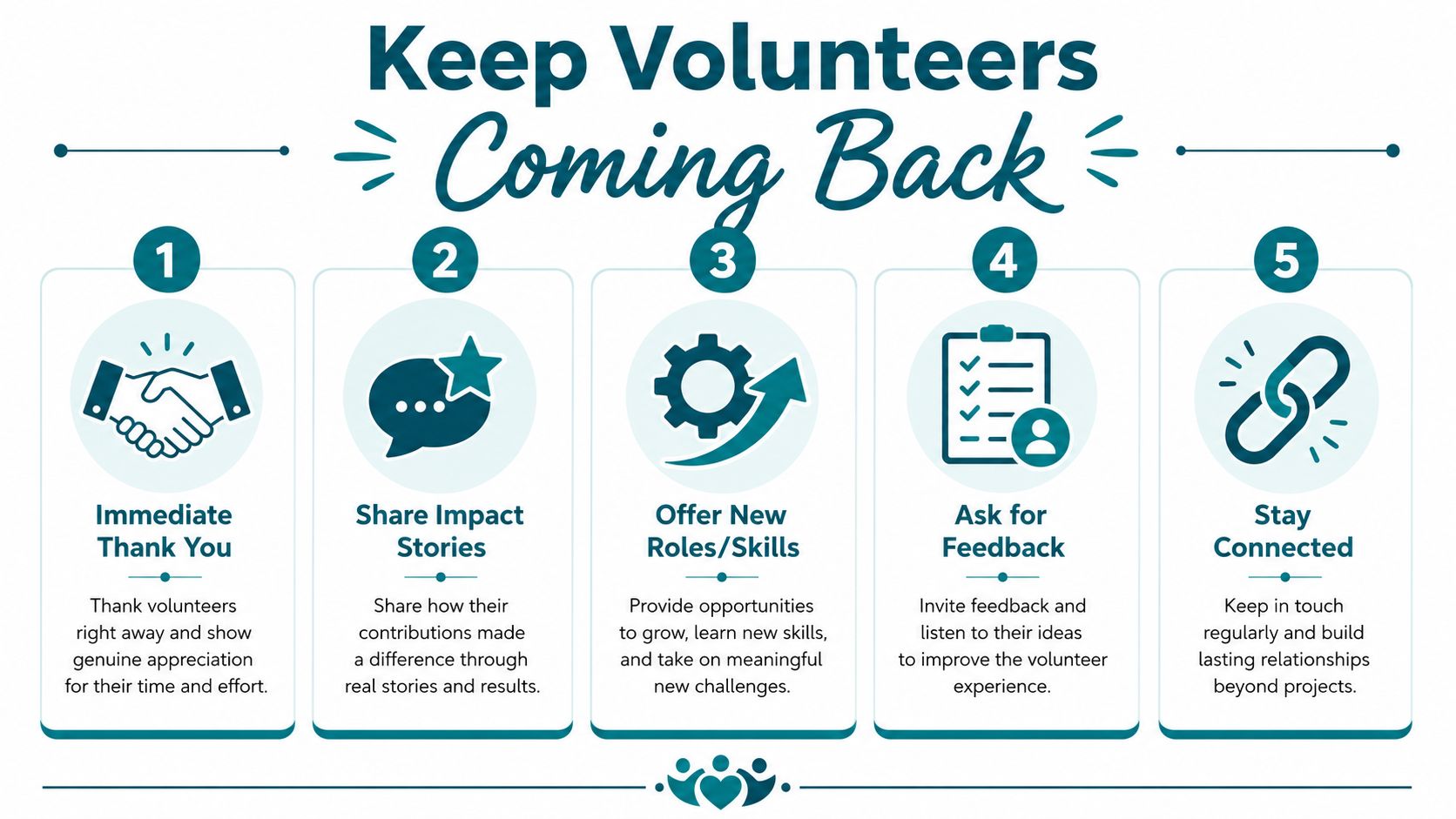
    I send a same-day thank-you in the chat while the day still feels fresh. On Monday, I post a recap photo and tag everyone who said yes to being tagged. Then I send a one-question survey that asks what was clear, what was confusing, and what would have made the day easier. Short surveys get replies because they respect people's time.

    Small rituals help here too. A flag, a badge, a theme song, or one weekly habit people recognize right away gives the crew a shared marker to come back to. That is not decoration. It gives people an identity they can carry home, and identity is what kept me showing up when the weather got ugly and my mood did the same.

    Build the social layer on purpose

    Group chats, planning threads, and quick meetups are the social scaffolding that holds the work together. They let first-timers hear from regulars before the event, and they give new people a low-pressure place to ask what to wear, where to park, and whether they need to bring anything. Public recognition helps here too, as long as it never turns into a donation ask.

    Retention habit What I do What it changes
    Same-day thank-you Send a message right after cleanup People feel seen before the day fades
    Monday recap Post photos and tag opt-ins The event stays alive in memory
    Quick survey Ask one useful question I learn what confused people
    Small ritual Use a badge, flag, or theme song People start to feel like part of a crew
    Ongoing chat Keep one open thread New volunteers have a place to return

    What holds true across volunteer programs is simple. People do not volunteer once and disappear for no reason. They return when the day feels social, clear, and worth repeating. If sponsors ask for metrics, I track recurring participation and referral rate, even if I do it in a simple spreadsheet.

    An infographic titled Keep Volunteers Coming Back outlining five tips for volunteer retention and engagement.

    Make belonging visible

    People come back when they feel known. A volunteer who gets a thank-you, a photo tag, and a place in the chat is much more likely to become a regular than someone who only gets a sign-up link and silence afterward.

    That is the part most guides skip. The cleanup is real, but the crew is the reason the cleanup survives winter.

    Your Pre-Event Checklist and a Call to Show Up

    I keep my pre-event check simple enough to screenshot.

    Category Check Before Event Day
    Scope and date One project, one site, one time
    Permissions Park, business, or city contact confirmed
    Roles and backups Every role filled, backup names set
    Supplies and gear Bags, gloves, grabbers, name tags, water
    Safety and weather Heat, cold, rain, lightning, and pivot rule written
    Communication One chat, one roster, one map
    Check-in system Table, printed list, clear arrival spot
    Follow-up plan Thank-you, recap, survey, next invite

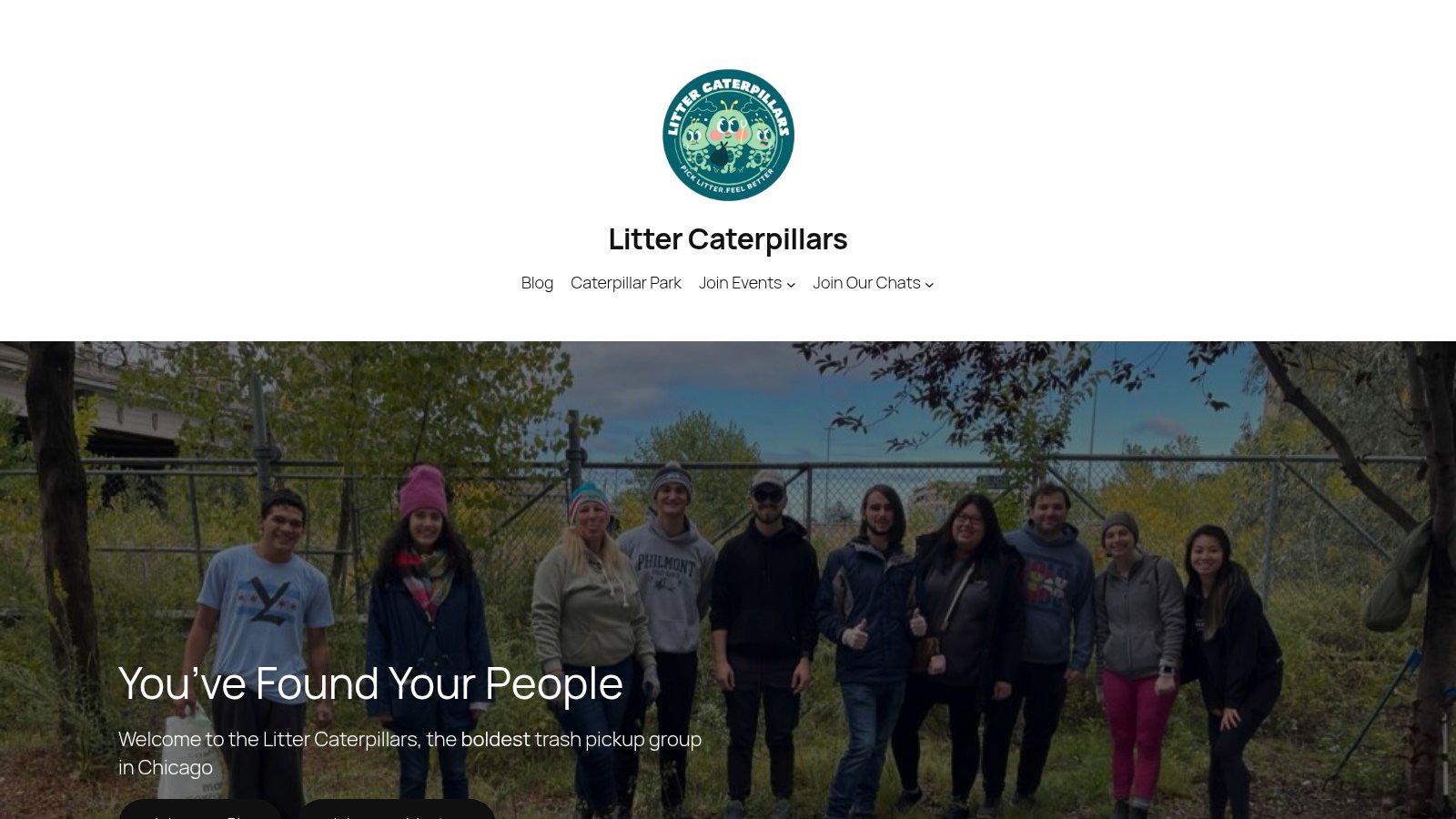
    Screenshot from https://www.littercaterpillars.com

    If you want a real Chicago example of this playbook in action, Litter Caterpillars uses weekly weekend morning cleanups, open group chats, Meetup, and Instagram to help people plug in and stay connected. Pick one project, pick one date, recruit eight people, and run it. Then fix the next one based on what happened.


    If you want a living example of volunteer event planning that puts people first, visit Litter Caterpillars. You'll see how a cleanup group can mix safety, structure, and friendship without turning the day into a boring form. If you're in Chicago and want a place to start, that's where I'd send you.