Category: Uncategorized

  • 8 Area for Improvement Examples That Work

    8 Area for Improvement Examples That Work

    A small task can feel absurdly heavy. I've stared at one old bag on the floor as if it weighed hundreds of pounds, then wondered why a simple cleanup had turned into a test of character. Performance reviews, volunteer feedback, and personal growth often begin in that same place: you notice a pattern, but you need better words and a practical next move.

    The strongest area for improvement examples follow a simple shape. Name the observable behavior, explain its effect, and choose one change you can check later. Keep the wording fair. Focus on what happened, not on someone's personality. The examples below use three lenses each time: language for a workplace review, a volunteer or civic-service application, and a personal action plan.

    1. Volunteer Retention and Consistency

    The first cleanup can feel electric. People arrive curious, take photos, fill bags, and leave with the satisfaction of a visible result. The harder work begins when the next weekend arrives and the excitement has faded.

    I learned that people need more than a good cause. They need friendship, identity, and proof that their effort matters. Litter Caterpillars has kept a weekly pickup rhythm across all 50 Chicago wards for about 3 years, according to the group's own account, but consistency comes from deliberate habits, not enthusiasm alone.

    Weekend mornings create a clear routine. Group chats keep people connected between events. Badges, theme songs, and shared rituals give volunteers a way to recognize one another. A social gathering after a pickup can turn a task into a relationship.

    Turn the pattern into review language

    Performance-review wording: “I need to improve how I build repeat engagement. New volunteers often enjoy the first event, but I haven't always created a clear reason for them to return.”

    Feedback phrasing: “You create strong first-event energy. A next step would be to follow up with new volunteers, ask what would bring them back, and give them a simple way to join the next pickup.”

    Personal action plan: After every event, send a short follow-up, invite people to the next date, and record the reasons volunteers give for returning or leaving. Use volunteer management best practices to make the experience easier to repeat.

    • Build belonging: Give members shirts, stickers, badges, or another visible sign of participation.
    • Remove friction: Share the meeting point, supplies, expected time, and route before people arrive.
    • Recognize progress: Celebrate milestones in the group chat and ask volunteers which neighborhoods need attention.

    Practical rule: If you want people to return, make the next step obvious before the current event ends.

    2. Expanding Into Neglected Neighborhoods

    Cleaning an easy block can make you feel productive. Cleaning the places people avoid asks more of you. You need local trust, honest safety planning, and the patience to return after the first bag of litter leaves the curb.

    Litter Caterpillars describes weekly pickups across all 50 Chicago wards, including areas with heavy abandonment. The group also won an empty lot at auction and turned it into Caterpillar Park in Englewood. Those efforts require more than a map and a supply bin. They require conversations with residents who know the block better than any visitor does.

    I've learned that bravery doesn't mean ignoring danger. It means naming the risk, planning around it, and deciding whether the work makes sense. A group that arrives once, takes photos, and disappears can leave residents feeling used. A group that listens, returns, and shares visible progress can build a different relationship.

    Translate courage into accountable language

    Performance-review wording: “I need to improve how I approach difficult service areas. I sometimes choose locations that are easy to organize instead of giving enough attention to neighborhoods with greater logistical and safety challenges.”

    Feedback phrasing: “You've handled straightforward routes well. I'd like you to spend more time listening to residents and local groups before planning work in areas that need a different approach.”

    Personal action plan: Speak with long-term residents and local organizations before scheduling a pickup. Scout the route, set a buddy system, define an exit plan, and document changes through before-and-after photos or neighborhood meetings.

    • Start with listening: Ask residents what they want cleaned and what problems keep returning.
    • Plan for continuity: A single visit rarely changes a place. Set a repeat schedule you can maintain.
    • Show the work: Share progress without treating residents as background scenery.

    The useful improvement here isn't “be braver.” That phrase sounds noble but tells you little. “Build local relationships before entering unfamiliar service areas” gives you behavior, impact, and a next step you can review.

    3. Managing Volunteer Safety Without Scaring People Away

    A weather warning can divide a cleanup before anyone picks up a bag. One volunteer wants to continue because the event matters. Another sees dark clouds and decides the risk is too high. A responsible leader makes room for both reactions.

    Litter Caterpillars operates in all seasons, including storms, blizzards, and heat, while putting safety before volunteer happiness. Its origin story began with three people caught in a spring hailstorm, sheltering under a tree as rides were repeatedly canceled. The story is funny, but its practical lesson is serious: difficult weather may become memorable, yet nobody should feel trapped by group expectations.

    Give volunteers control through plain information. Send a weather update before the event, describe the conditions, identify route hazards, explain the gear you will provide, and state when the group will cancel or leave.

    Turn safety into usable choices

    Performance-review wording: “I need to improve how I communicate safety information. I sometimes provide logistics without explaining conditions, warning signs, or the choices available to volunteers.”

    Feedback phrasing: “You keep events organized and moving. Before the next route, give a clear weather and hazard briefing, then ask volunteers whether they feel comfortable participating.”

    Personal action plan: Send an update 24 hours before each event. Scout for broken glass and traffic patterns. Teach volunteers to recognize heat exhaustion, hypothermia, and injury. Use this volunteer safety checklist as a planning reference.

    • Offer honest choices: Volunteers can decline conditions they cannot safely handle without defending that decision.
    • Prepare visibly: Bring suitable gear, first-aid supplies, water, and clear meeting instructions.
    • Invite concerns early: Treat “I'm not comfortable with this” as information that may prevent an injury.

    A safety plan works like a guardrail. It cannot remove every risk, but it stops one person's urgency from deciding for everyone else. The improvement to name in a review is specific: communicate hazards clearly, provide an exit option, and respond to concerns before the work begins.

    4. Building Identity and Pride in Service Work

    A volunteer pins on a badge before the cleanup begins. Someone starts the theme song, another person raises the group flag, and strangers become teammates for the morning. The litter is still there, but the work now has a shared meaning.

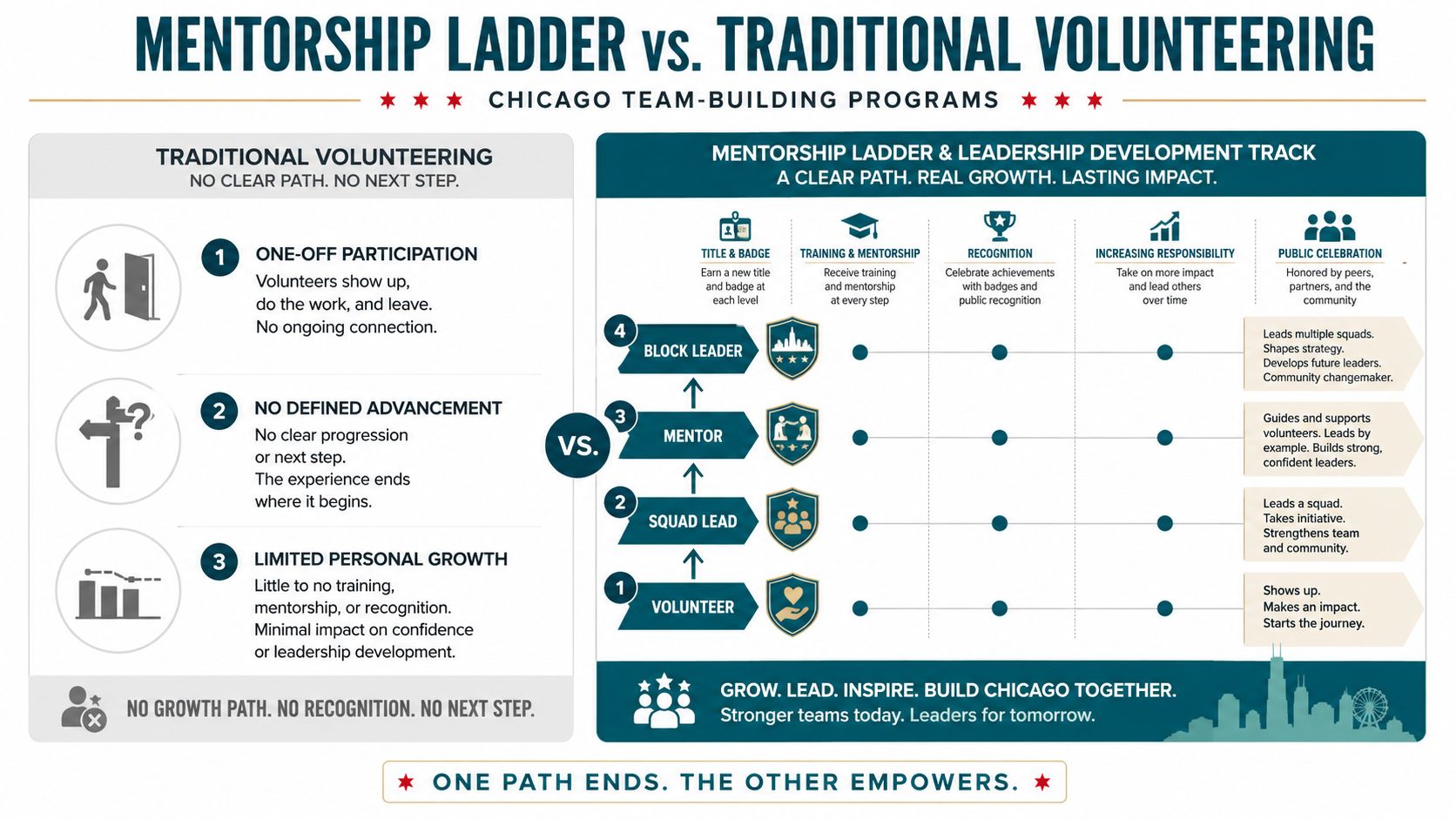
    Cleanup can look like punishment, charity, or an unpleasant chore. Sports teams build belonging through jerseys, anthems, logos, and rituals. Civic groups can use the same tools without turning service into a performance.

    Litter Caterpillars uses flags, badges, a theme song, and consistent visual branding to give volunteers a shared identity. These objects do not collect trash. They can remind people that they belong to a group that shows up, while a familiar song can make a cold morning feel less anonymous.

    A hand holds a volunteer pin with a colorful caterpillar illustration next to a rainbow flag and musical notes.

    Give the group a role in shaping its identity. Ask volunteers to suggest a phrase, design a badge, choose a song, or create a simple way to recognize contributions. Keep participation open by avoiding symbols that require people to spend money. Let traditions change as new members join.

    Performance-review wording: “I need to improve how I build shared identity in group projects. I focus on completing the task and sometimes leave people without a clear sense of belonging.”

    Feedback phrasing: “Your work gets completed, but the group could feel more connected. Invite members to create a ritual, phrase, symbol, or recognition practice that fits the team.”

    Personal action plan: Ask volunteers to design one badge or tradition together. Recognize contributions without making symbols expensive, and collect stories about what service has changed for individual members.

    “Build team culture” sounds vague in a review. “Create one shared ritual and invite the team to shape it” gives you an observable action and a clear next step.

    5. Creating Inclusive Spaces for Diverse Volunteer Types

    A weekend cleanup may suit someone who wants a service-first routine, yet exclude a parent managing family care, a worker scheduled that morning, or a volunteer who prefers smaller groups. Inclusion begins before arrival. A newcomer needs the exact meeting point. Someone with a disability may need details about terrain, walking distance, restrooms, and available equipment. An introvert may choose a quiet route or behind-the-scenes task.

    Litter Caterpillars uses Meetup, Instagram, and open group chats to reach different volunteers. Those channels widen access, but they do not guarantee welcome. Ask what makes participation easier, then adjust the event where possible.

    Performance-review wording: “I need to improve how I design participation for people with different schedules, communication preferences, and access needs.”

    Feedback phrasing: “You explain the main plan clearly. Offer options for people who cannot attend the full event or need more information before joining.”

    Personal action plan: Ask, “What would make this easier for you to participate?” Publish the start time, exact location, supplies, route, and expected duration. Let volunteers join the full pickup, help provide supplies, or attend one event without treating any choice as lesser.

    A useful access check can be short:

    • Offer location choices: Rotate neighborhoods so different communities can participate and build ownership.
    • State the logistics: Explain what to bring, where to meet, how long the work lasts, and what the route involves.
    • Plan for language access: Arrange interpreters or translated materials when local language needs call for them.
    • Invite correction: Tell volunteers which parts of the format are still being improved.

    The trade-off is practical. More options require clearer coordination, and some requests may exceed the group's resources. Clear limits are better than vague promises.

    A strong improvement statement names the design gap without blaming yourself. You connect what volunteers experience to one change you can make, then invite feedback on whether that change works.

    6. Avoiding Donor Dependence and Protecting Volunteer-First Energy

    A volunteer arrives ready to pick up litter, then receives a message asking for money before the gloves are handed out. Repeated fundraising targets or guilt-laced reminders can change the relationship. People may still give their time, but they begin to wonder whether participation carries a financial obligation.

    Litter Caterpillars says it will not pressure volunteers for donations. Its approach protects volunteer energy by seeking support from people who are not volunteering, corporate sponsors, grants, and community supporters. The Caterpillar Park effort in Englewood offers one example, connecting the project with an auction and community backing instead of asking participants to fundraise.

    I have seen the same tension in civic-service work. Supplies, permits, and cleanup projects cost money, yet a volunteer invitation should remain about service. Leaders can explain the funding model without making each event feel like a sales request.

    Performance-review wording: “I need to improve how I protect volunteer trust while meeting resource needs. I sometimes mention funding concerns in volunteer communications without clearly separating optional support from participation.”

    Feedback phrasing: “You explain what the group needs. Keep invitations focused on service, and describe financial support as optional while showing how other funding paths help.”

    Personal action plan: Publish a short funding explanation. Approach sponsors that do not require volunteer labor in return, apply for environmental and community grants, and offer a friends-of-the-group donation option for people who prefer giving money to time.

    Use three simple safeguards:

    • Make requests optional: Never imply that showing up creates a financial debt.
    • Report outside support: Share sponsorship and grant wins so volunteers understand the funding mix.
    • Protect the invitation: Let “come pick up litter with us” stand on its own.

    The trade-off is real. Outside funding can take longer to secure, and leaders may need to explain where supplies come from. In return, volunteers can choose time, money, or neither without questioning whether they still belong. The improvement area is separating fundraising from belonging, so service remains the reason people joined.

    7. Scaling Impact Without Losing Community Texture

    Three people cleaning in a hail storm can become weekly pickups across all 50 Chicago wards over about 3 years. Litter Caterpillars shows what growth demands: route plans, trained leaders, supply systems, and clear roles. The group also handled highway cleanup during a Chicago bike-event shutdown. Each step calls for coordination, yet volunteers still need friendship, choice, and a voice in local decisions.

    A small group may settle plans in a chat thread. A larger one needs defined responsibilities, but a central roster can make people feel interchangeable. Sometimes two groups of 30 preserve connection better than one group of 60, even if the larger arrangement looks simpler on paper.

    Performance-review wording: “I need to improve how I scale work without making it impersonal. I add structure quickly, but I do not always protect local decision-making or personal connection.”

    Feedback phrasing: “Your systems help people coordinate. Build neighborhood leaders and smaller teams so volunteers can make decisions close to the work.”

    Personal action plan: Write down the group's values, train several leaders, create neighborhood subgroups, and keep a few shared rituals consistent. Ask core volunteers what still feels personal, then decline partnerships that pull the group away from those values.

    Use the structure to protect the experience:

    • Share ownership: Give local leaders authority over routes and neighborhood choices.
    • Keep anchors: Retain familiar meeting habits, badges, and group rituals.
    • Count local wins: Celebrate a block's progress, not only the combined total.

    The trade-off is practical. More local authority can produce different routines, and separate teams may require extra coordination. A single system can look cleaner, while neighborhood groups keep decisions close to the people doing the work.

    For ideas about relationship-centered growth, see this guide to community building for e-commerce sites. The setting differs, but the question remains useful: how can you grow a community without reducing people to transactions?

    8. Measuring Impact Beyond Trash Bags and Media Coverage

    A full bag gives you an immediate answer. You can see what changed, stack the result, and move on. Human change asks different questions.

    Did a newcomer make a friend? Does a volunteer trust themselves more? Do long-term residents feel heard? Did the group leave people safer and more connected, or did it arrive briefly, collect images, and disappear? Media coverage and donation totals can be easy to count, but they can't answer every question that matters to a volunteer-led group.

    Keep America Beautiful gives cleanup organizers concrete measurement models. Its 2022 Great American Cleanup included 11,191 events, 208,379 volunteers and participants, and 904,069 volunteer hours, with 14,056,280 pounds of litter and debris collected and 2,449,669 pounds of material recycled. The same report records improvements across 29,979 acres and 29,358 miles of streets, roads, and highways. Keep America Beautiful reports these results.
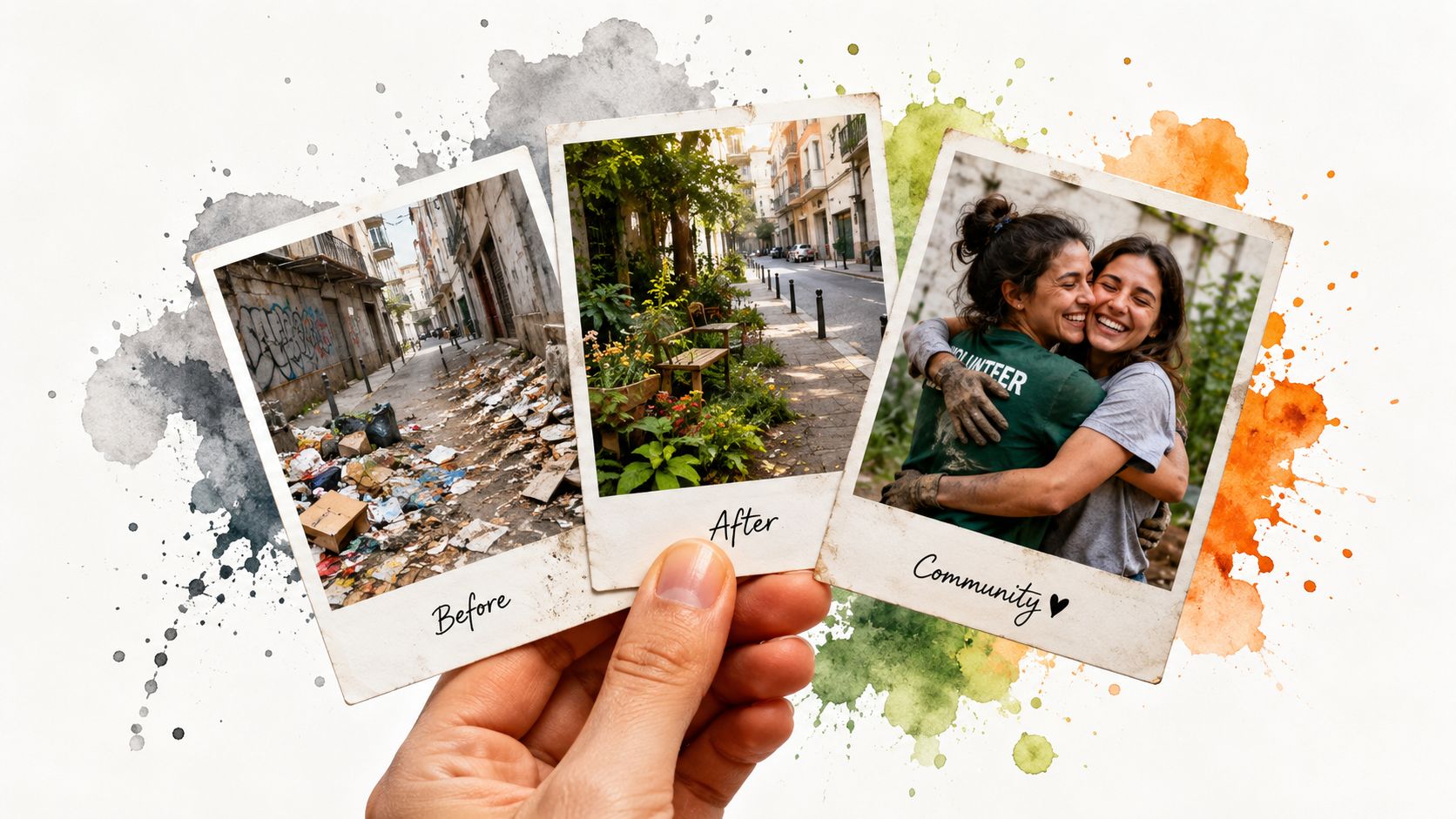
    A hand holding three polaroid photos showing a messy street, the same street cleaned, and happy volunteers.

    Pair visible measures with human questions

    Performance-review wording: “I need to improve how I measure outcomes. I track completed tasks, but I don't consistently record whether people feel connected, respected, and willing to return.”

    Feedback phrasing: “Your activity records are clear. Add short volunteer and resident feedback so the group can judge the experience as well as the output.”

    Personal action plan: Ask volunteers whether they made friends, feel braver, or trust themselves more. Track why people stay or leave, gather resident feedback, and record stories alongside cleanup totals through this community impact measurement guide.

    A 2026 longitudinal U.S. litter study reports that roadway litter fell to 2,204 items per mile in 2025, a 22% reduction compared with 2020, while litter along roads and surface waterways declined overall by 34% and litter per capita reached 96 pieces per person. The study's benchmark supports a practical method: record a baseline by mile or block, then track change after repeated cleanups. Read the litter study's measurement details.

    8 Areas for Improvement: Side-by-Side Comparison

    Initiative Implementation Complexity (🔄) Resource Requirements (⚡) Expected Outcomes (📊/⭐) Ideal Use Cases (💡) Key Advantages (⭐)
    Volunteer Retention and Consistency Moderate–High 🔄, ongoing scheduling & community management Low–Moderate ⚡, time, communication tools, small merch High impact on retention & team cohesion 📊 ⭐ Recurring local programs seeking steady volunteer base Strong relationships, consistent crews, sustained capacity ⭐
    Expanding into Neglected Neighborhoods High 🔄, partnership-building, safety planning, long-term commitment High ⚡, local partnerships, time, safety resources Visible neighborhood change over time; slower compounding 📊 ⭐ Equity-focused outreach; underserved or high-abandonment areas Real change where need is greatest; stronger resident trust ⭐
    Managing Volunteer Safety Without Scaring People Away Moderate 🔄, protocols, training, clear communication Moderate ⚡, PPE, first-aid, communication systems Safer volunteers, higher trust, lower liability 📊 ⭐ All-weather operations and higher-risk sites Protects volunteers while maintaining turnout and confidence ⭐
    Building Identity and Pride in Service Work Low–Moderate 🔄, creative work and co-creation Moderate ⚡, design, music, badges, events Increased recruitment, visibility, and belonging 📊 ⭐ Groups wanting strong brand/ritual to boost morale Transforms perception; boosts pride and social sharing ⭐
    Creating Inclusive Spaces for Diverse Volunteer Types Moderate–High 🔄, deliberate design for accessibility & flexibility Moderate ⚡, multiple platforms, translations, flexible logistics Broader demographics, higher retention and richer perspectives 📊 ⭐ Diverse cities; groups seeking equitable participation Inclusive community, varied skills and sustained engagement ⭐
    Avoiding Donor Dependence and Protecting Volunteer-First Energy Moderate 🔄, alternative funding strategy & transparency Moderate–High ⚡, grant-writing, sponsorships, admin capacity Preserved volunteer motivation; slower budget growth 📊 ⭐ Groups prioritizing volunteer culture over active fundraising Authentic participation; reduced volunteer pressure and burnout ⭐
    Scaling Impact Without Losing Community Texture High 🔄, systems, leader development, distributed governance High ⚡, communication infrastructure, training, documentation Wider reach with risk of cultural dilution; scalable impact 📊 ⭐ Organizations expanding geographically or by chapter Multiplies impact while enabling local autonomy when managed ⭐
    Measuring Impact Beyond Trash Bags and Media Coverage High 🔄, qualitative metrics, surveys, resident feedback loops Moderate ⚡, survey tools, staff/volunteer time for interviews Deeper, authentic understanding of transformation; slower visible metrics 📊 ⭐ Programs focused on long-term social change and accountability Accountability to real impact; better strategy and volunteer value ⭐

    Make Your Next Review More Useful

    A weak spot becomes useful when you can see it happening. “I need to be better at teamwork” gives you no scene, no consequence, and no way to tell whether anything changed. “I interrupt route planning before others finish sharing safety concerns, which makes quieter volunteers less likely to speak. I'll pause, take notes, and ask for missing views before each planning decision” gives you something you can practice.

    Use this compact formula:

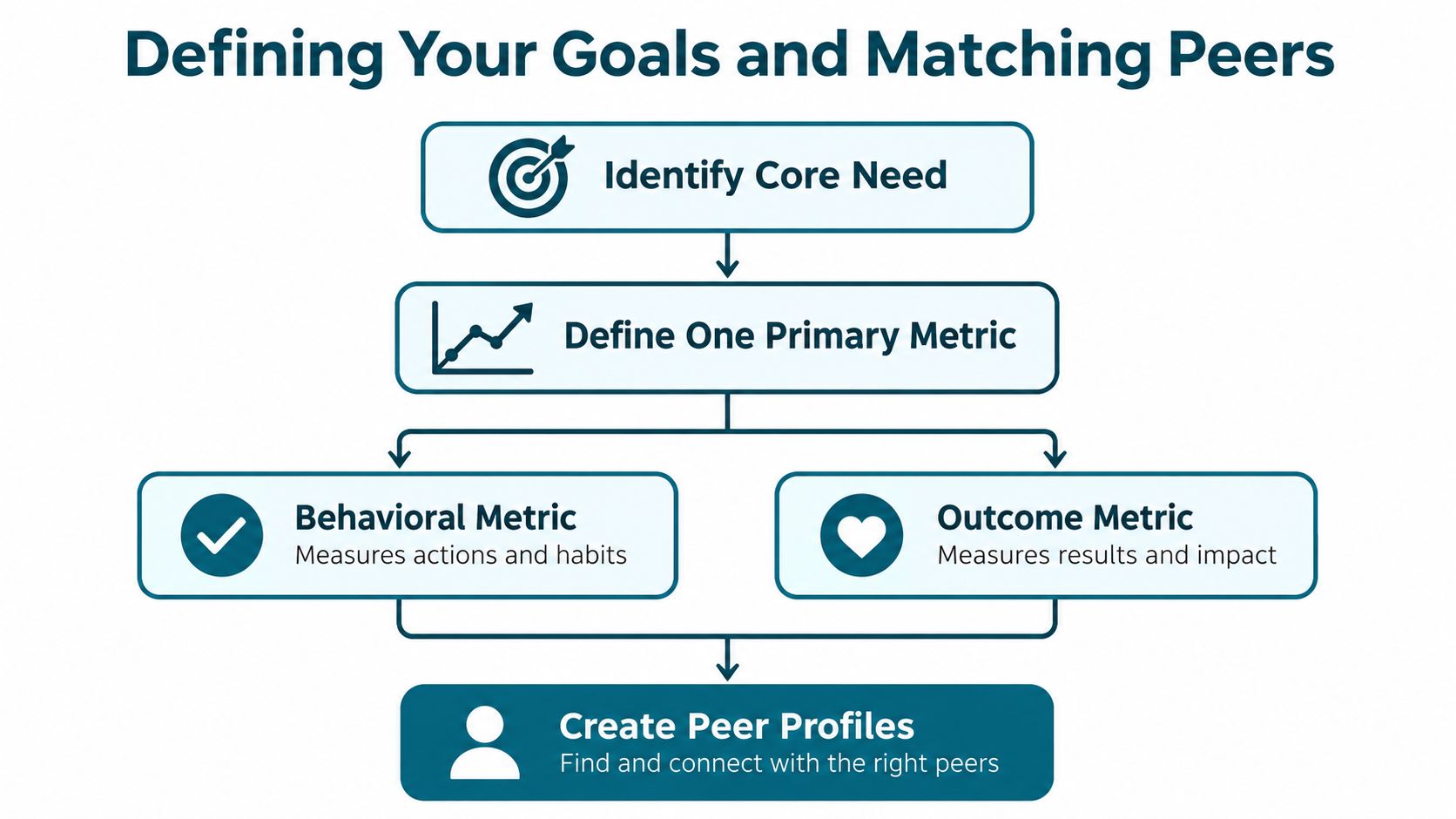
    1. Name one behavior. Describe what you do or what you observe. Keep the language neutral and specific.
    2. Explain its effect. Show how the behavior affects a teammate, customer, resident, volunteer, deadline, or decision.
    3. Choose one action. Pick a change you can repeat rather than a personality trait you can only wish for.
    4. Set a check-in point. Use a date, meeting, event, or review cycle when you'll examine what happened.

    The order matters. Start with behavior, then impact, then the fix. If you have a number or date, use it. Avoid “always” and “never,” because those words turn one pattern into a verdict. Keep the improvement area separate from the rating so the conversation can stay focused on development, as guidance on writing performance review comments recommends.

    A SMART goal can make the next step testable. One example sets an engagement score target from 68 to at least 75 in the November 2026 cycle, using three quarterly listening sessions and closing the top issue from each session. This SMART goal example shows the useful structure: a starting point, a desired result, actions, and a review period.

    You can also use the same formula for community service. A civic group might write, “We announce route hazards too late, which leaves volunteers uncertain about whether to attend. We'll send a weather and safety update 24 hours before each event and review volunteer feedback after the next pickup.” A personal version might say, “I avoid difficult tasks until they feel urgent, which makes small problems feel heavy. I'll choose one five-minute cleanup at the end of each workday and check my consistency at the end of the week.”

    Don't copy language that doesn't fit your situation. Borrow the structure, then replace the scene with something real. A manager should describe what they observed. An employee should own what they can change. A volunteer leader should listen to residents and participants before deciding which outcome matters.

    Choose one area for improvement today. Write a sentence beginning with “I am working on…” and connect it to one small action you can repeat at work, in your volunteer group, or in daily life. Then choose the next check-in point and let the evidence, not your mood, tell you what changed.


    Litter Caterpillars gives Chicago volunteers a weekly way to practice consistency, safety, community building, and visible neighborhood service across all 50 wards. Visit Litter Caterpillars to find an event, meet people, and turn one area for improvement into a habit you can keep.
  • Volunteer Code of Conduct: How to Write One for Your Group

    Volunteer Code of Conduct: How to Write One for Your Group

    At one Saturday creek cleanup, a volunteer picked up a syringe alone, two people argued over gloves until voices rose, and a quiet newcomer drove home without saying goodbye. Nobody had bad intentions. Everyone had guessed at the rules.

    Why a Volunteer Code of Conduct Actually Matters

    Outdoor groups run on goodwill until the first awkward moment. A volunteer sees a sharp object, assumes someone else knows the procedure, and reaches down. Another person jokes about who should carry the heavy bag. A newcomer stays silent because the regulars already seem to know one another. The group finishes the cleanup, yet someone leaves hurt, unsafe, or unsure whether they belong.

    I've learned to treat a volunteer code of conduct as a promise to the people holding the grabbers and trash bags. It tells beginners what they can expect, gives long-time volunteers a fair way to raise a concern, and keeps one loud personality from defining the whole morning. A written standard also gives you something to point to before a small disagreement turns into a friendship-ending argument.

    The history of formal volunteer conduct goes back further than many group leaders realize. A peer-reviewed article titled “The code of conduct of the volunteer” appeared in Supportive Care in Cancer, Volume 6, Issue 2, pages 120–124, in 1998. The paper treated volunteer behavior as an ethical consensus problem and argued for explicit standards instead of relying only on informal goodwill. The PubMed record for the article documents that publication.

    A promise volunteers can understand

    Your code should protect people first. That means clear expectations around respect, confidentiality, accountability, safety, and conflicts of interest. A volunteer shouldn't need to decode legal language while standing beside a creek in the rain.

    The five-part ethics framework of Citizenship, Respect, Accountability, Fairness, and Trust gives leaders a useful foundation. The Canadian Volunteer Administration Certification ethics guidance connects those ideas with accessible service, ethical decisions, stakeholder trust, and a helping environment. The same guidance points to the SAVMA Member Code of Ethics, adopted in December 2013, which calls for a safe working environment, protection from risk, adequate training, frequent positive feedback, confidentiality, and freedom from discrimination.

    That structure fits a neighborhood cleanup better than a giant policy binder. You need enough detail to protect volunteers, yet not so much that nobody reads the document.

    Practical rule: If a volunteer can't understand the rule while wearing wet gloves, rewrite it.

    A good code creates fewer awkward confrontations because you can discuss behavior instead of attacking character. It speeds up onboarding because every newcomer receives the same answer. It also supports the health and social reasons people join outdoor service groups, including the ideas gathered in this guide to volunteer health benefits. Leaders who run faith-based teams can also borrow useful retention ideas from 10 retention strategies for church teams, especially around appreciation, communication, and belonging.

    The Core Rules Every Volunteer Code of Conduct Should Cover

    Start with one page. Write each sentence as if you're explaining it to a new volunteer before the first bag comes open. Settle the basic behavior rules before you add weather triggers, digital boundaries, or special requirements for a highway cleanup.

    Write the baseline in plain English

    Use direct sentences that tell people what to do.

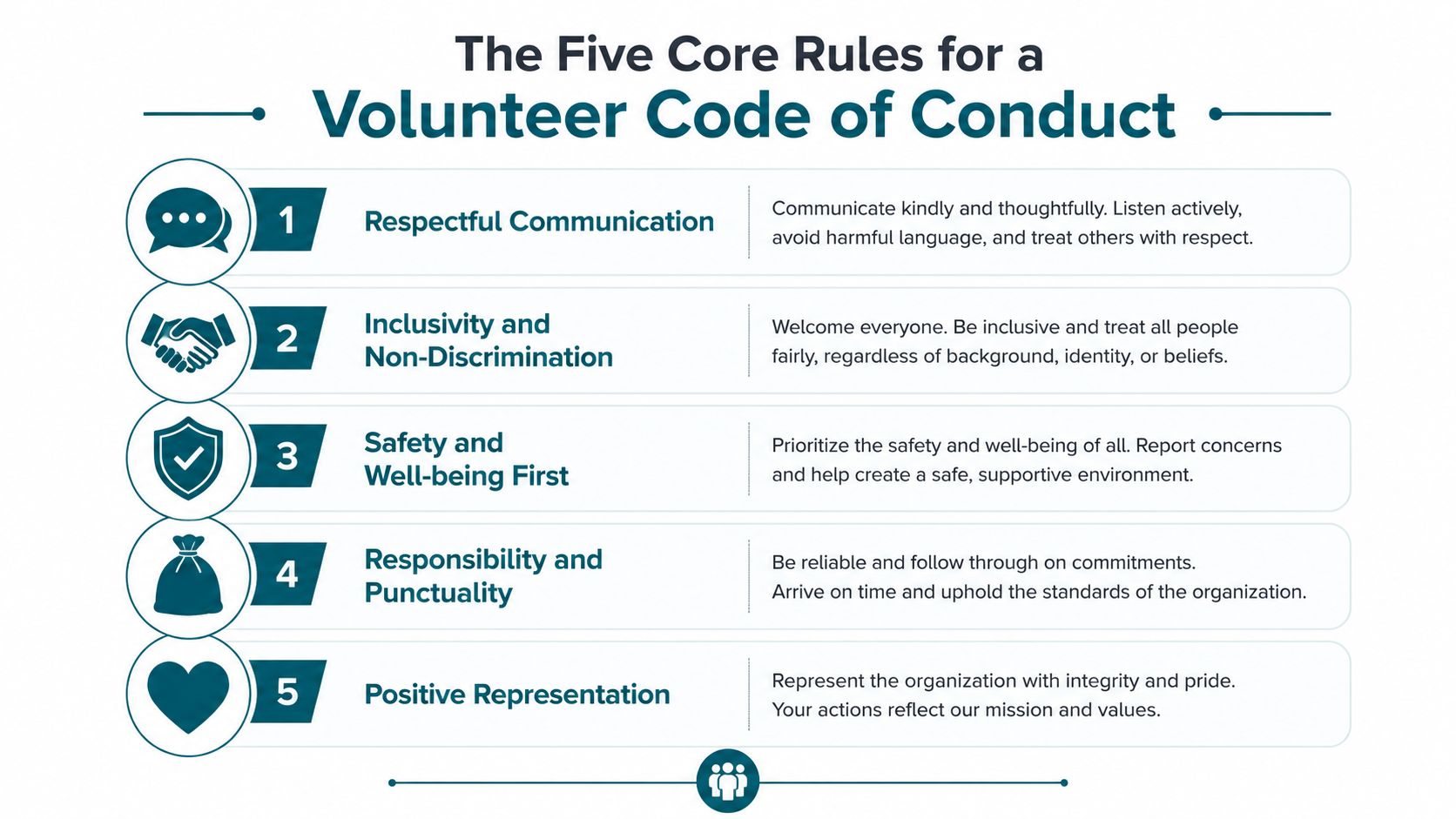
    1. Respectful communication: “We speak to volunteers, residents, visitors, and coordinators with respect, both at events and in group chats.”

    2. Safe litter handling: “We wear gloves, use a grabber for sharp or contaminated items, and ask an organizer when an object looks unsafe.”

    3. No solo risky work: “We work with a buddy or small group near roads, water, unstable ground, heavy debris, or other hazards.”

    4. Alcohol and substances: “Volunteers must not drink alcohol or use impairing substances before or during an event, and nobody may volunteer while impaired.”

    5. No harassment or discrimination: “We don't tolerate harassment, bullying, threats, or discrimination based on race, gender, religion, disability, age, sexual orientation, or another personal trait.”

    The fifth rule needs a firm line. A volunteer code example also includes a simple attendance expectation, tell the coordinator as soon as possible if you can't make a shift. This volunteer code clause reference shows how groups often pair conduct rules with attendance communication.

    A visual guide listing the five core rules for a volunteer code of conduct, featuring numbered icons.

    Keep the first draft readable

    Put the rules near the top, then add reporting, consequences, and an acknowledgment line. Avoid phrases like “in accordance with applicable provisions” when “follow the organizer's safety directions” says the same thing. You can use a writing workspace or a Codex tool for marketers to compare versions, but don't let any tool turn a one-page promise into a policy maze.

    Your baseline also needs a practical safety partner. The Western Australian government's Volunteer Management Guide connects the code with recruitment, role clarity, hazard identification, risk assessment, controls, complaints handling, and review cycles. That approach makes your document useful beside a riverbank, not merely tidy in a shared folder.

    A Ready-to-Use Template and Two Real Sample Scenarios

    Copy this block into a Google Doc or Notion page, then replace the brackets before your next signup.

    [Group Name] Volunteer Code of Conduct

    Event: [Event type]
    Meeting spot: [Meeting spot]
    Purpose: [One sentence explaining who you help and what volunteers do]

    • Respect: We speak and act with respect toward volunteers, residents, visitors, and coordinators, online and in person.
    • Safety: We use gloves and tools correctly, ask for help with sharp or hazardous items, and follow event safety directions.
    • Buddy work: We don't work alone in risky areas. We stay with a buddy or small group when the organizer requires it.
    • Sobriety: We don't volunteer while impaired, and we don't drink alcohol or use impairing substances before or during the event.
    • Inclusion: We don't tolerate harassment, bullying, threats, or discrimination.
    • Reporting: We report safety or conduct concerns to [organizer name or role] through [channel].
    • Acknowledgment: I have read this code, understand it, and agree to follow it.
      Name and date: [Name, date]

    The same skeleton can support a relaxed park morning or a roadside operation. Only change the clauses that match the risk.

    Two versions in practice

    Neighborhood park cleanup: “Families and children may attend. Volunteers stay within the marked park area, use tools with care, and ask an adult organizer before handling unfamiliar objects.” A beginner should add clear language about child supervision, tool handoffs, and where families meet if they become separated.

    Highway or river-bank cleanup: “Volunteers wear bright vests, work in buddy pairs, stay outside marked danger zones, and stop immediately when the lead organizer calls a pause.” A beginner should add clauses about traffic, water edges, weather, emergency access, and who has authority to end the event.

    Clause Neighborhood Park Cleanup Highway or High-Risk Cleanup
    Meeting area Marked park entrance Designated safe access point
    Work pattern Families and small groups Buddy system at all times
    Equipment Gloves, grabbers, bags Bright vests, gloves, grabbers, extra safety gear
    Stop rule Organizer pauses for local hazards Organizer pauses for traffic, water, storms, or unsafe visibility
    Beginner addition Child and tool supervision Roadside, water, emergency, and evacuation clauses

    Save the finished document as a reusable Google Doc or Notion page. Keep a clean master copy, then create a dated version for events with special hazards.

    Four Customizations for Outdoor, Friendship-Driven Groups

    A generic code won't answer the questions that come up when a storm arrives, a group chat gets sharp, or three people vanish after signing up. Outdoor leaders need adjustable rules. Start with the condition that can hurt someone fastest, then tighten the social rules that protect trust.

    Customization Default rule Tighter version for high-risk work Looser version for a small neighborhood group
    Weather stop rules The lead organizer may pause work when conditions become unsafe. Name stop conditions, such as lightning, flooding, dangerous wind, poor visibility, extreme heat, or unsafe cold. Give every volunteer permission to leave. State that the organizer checks conditions before arrival and may shorten the route or move to a safer block.
    Off-event digital conduct Separate personal speech from statements made for the group. No posting identifiable details about volunteers, incident photos, private messages, or the organization's name for political, fundraising, or business promotion without approval. Ask members to resolve personal disagreements privately and avoid tagging the group in heated arguments.
    Attendance norms Tell the coordinator early when you can't attend. Require prompt notice for assigned safety roles and treat repeated no-shows as a scheduling issue. Accept occasional cancellations without guilt, then ask people to update the chat when plans change.
    Conflict reporting Report concerns to a named organizer through a private channel. Use a backup contact, written incident notes, and a clear escalation path. Let a trusted regular receive the first report, then bring serious concerns to the lead.

    I'd tighten weather and reporting first. Weather can create immediate physical harm, while weak reporting leaves people alone with problems. Tighten digital conduct next, because screenshots and group-chat arguments can spread beyond the event. Tighten attendance last, unless a missed shift leaves someone alone near a road or water.

    The 2025 volunteer code from the Christian College of Guidance and Support points toward a gap many outdoor groups still leave open, what happens when weather, fatigue, and difficult conditions test a volunteer's limits. Give leaders authority to stop work, and give volunteers explicit permission to step away without shame. Guidance on digital conduct also needs to address private messages, encrypted chats, screenshots, and posts made after the event. A volunteer may speak personally, yet they shouldn't imply that the group endorses personal politics, fundraising, or business activity.

    Decision aid: If the problem could injure someone before you can hold a discussion, tighten the rule today.

    How to Adopt and Communicate the Code Without Killing the Vibe

    Don't unveil a formal document like a company merger. Bring it into the group the same way you bring extra gloves, with preparation, a quick explanation, and a place to ask questions.

    Use the order small groups can actually manage

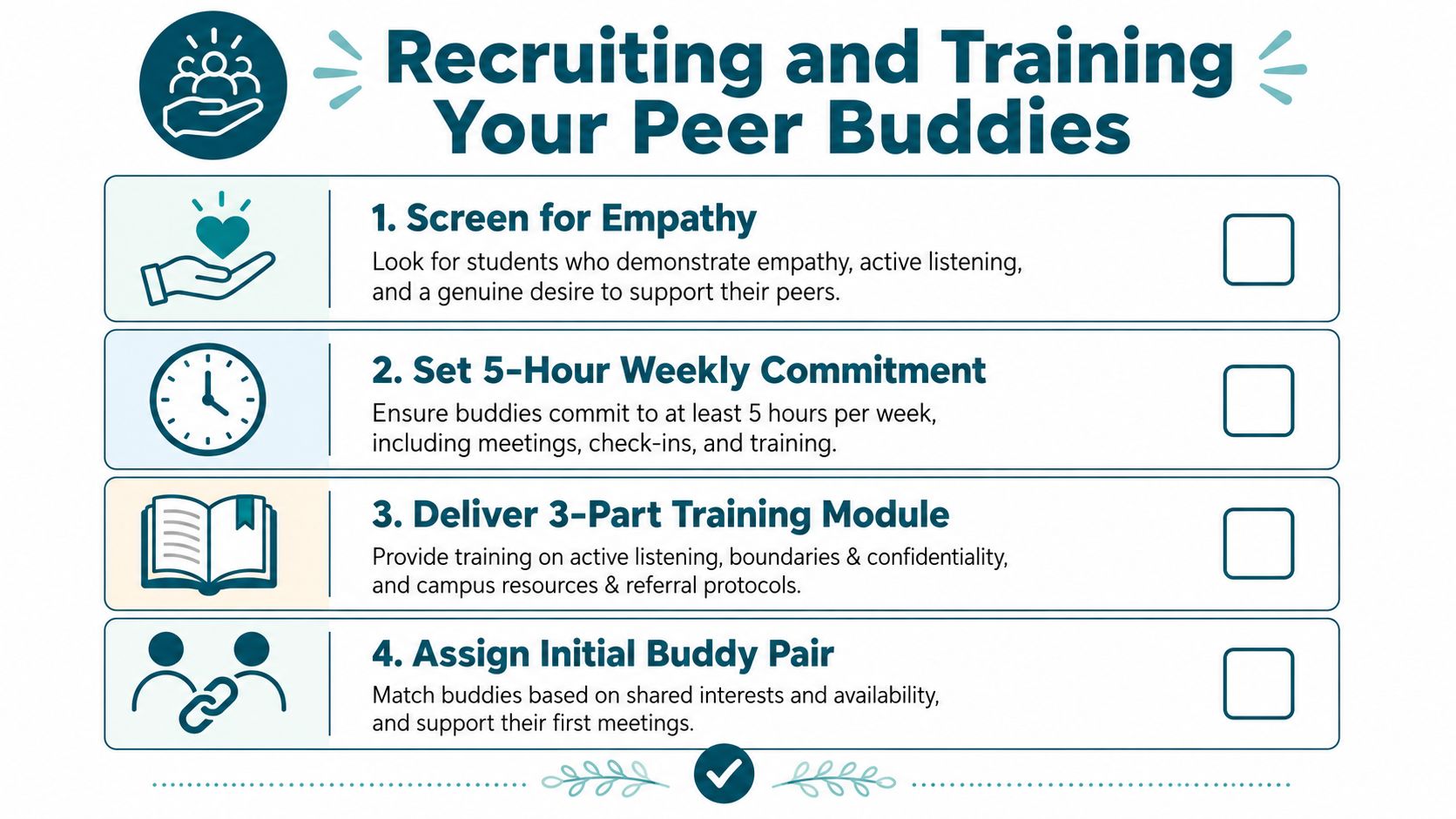
    1. Ask two trusted volunteers to review the draft. Choose one regular and one newer member. Ask where the language feels unclear, harsh, or unrealistic.
    2. Approve the final copy. If you have a board, let the board approve it. If you run the group informally, record the decision among the organizers.
    3. Add acknowledgment at signup. Ask each volunteer to read the code and confirm agreement before the first event.
    4. Explain it in person. Spend a few minutes on the rules that matter for that morning, especially sharps, buddy work, weather, and reporting.
    5. Pin reminders in the group chat. Keep the full code available, then post short reminders instead of repeating the whole document.

    Use Meetup for the event description, Instagram for a friendly public summary, and Signal or WhatsApp for practical reminders. If you're choosing between tools, this guide to compare group communication tools can help you think through privacy, message history, and group access.

    Try this announcement:

    We're adding a short volunteer code so everyone knows how we handle safety, respect, weather, and concerns. It isn't a corporate rulebook. It's a shared promise that nobody has to guess what to do with a sharp object, an unsafe storm, or a tense conversation. Please read it before Saturday and message us with questions.

    Store signed acknowledgments in a restricted Google Drive folder, an organizer-only Notion database, or the signup system you already use. Keep access narrow, record the date, and avoid collecting personal information you don't need. For the rest of your operating system, use these volunteer management best practices as a practical reference.

    Reporting, Enforcement, and the Volunteer-First Discipline Flow

    A reporting process fails when it asks volunteers to “tell someone” without naming the person, channel, response time, or next step. Write the chain down. Then follow it even when the person involved is your friend.

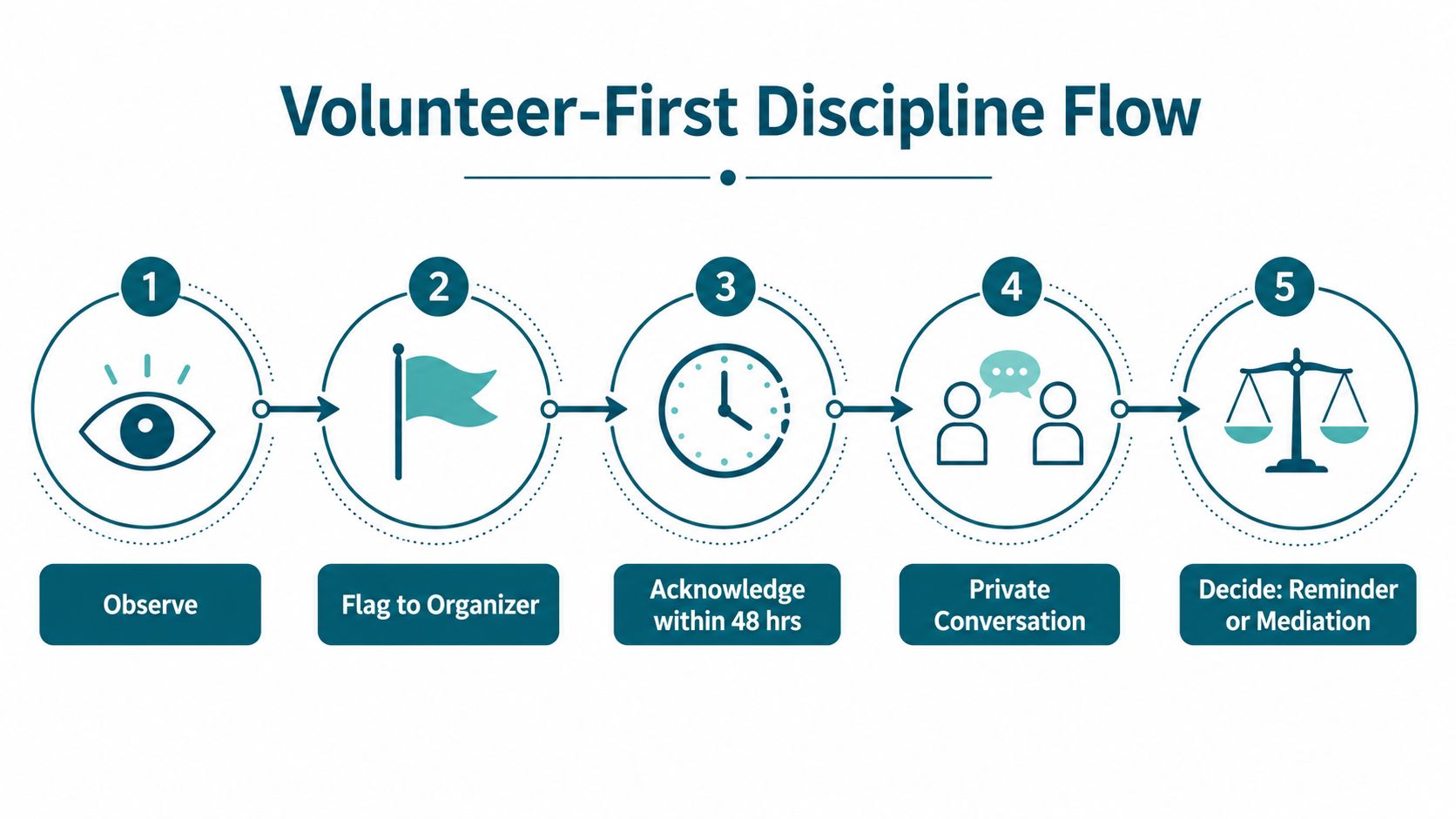
    A five-step flowchart illustrating a volunteer-first discipline process ranging from observation to deciding on mediation.

    A simple five-step chain

    Observe. Record what happened, when it happened, who saw it, and what immediate safety action followed. Stick to behavior. “Jordan shouted over Maya and blocked the path” is useful. “Jordan is toxic” isn't.

    Flag it. Send the concern to the named organizer through a private channel. Offer an alternate contact when the lead organizer is involved.

    Acknowledge within 48 hours. Tell the reporting volunteer that you received the concern and explain when you'll follow up. Don't promise a particular outcome before you speak with the people involved.

    Hold a private conversation. Speak with the volunteer away from the group. Ask for their account, explain the reported conduct, and state the rule that applies.

    Decide and document. A response can range from a friendly reminder or retraining to a written warning, mediation, removal from an event, or dismissal from the program. This municipal volunteer agreement illustrates how codes can connect reporting, organizational policies, legal duties, personal gain restrictions, and consequences.

    Concrete triggers include harassment, threats, violence, discrimination, theft, data breaches, intoxication on duty, repeated safety violations, and social posts that target other volunteers. Guidance for challenging volunteers also recommends formal channels, a designated manager, incident documentation, resolution steps, and clear escalation or termination benchmarks. The VolunteerHub guidance on managing challenging volunteers gives examples of serious conduct that can justify immediate removal.

    Volunteer-first discipline usually starts with a second-chance conversation when the conduct allows it. A written warning comes next when the behavior continues or the first conversation doesn't solve it. Remove someone immediately when they create serious danger, threaten people, harass someone, steal, breach private data, or arrive impaired.

    If the accused person is your long-time friend, don't investigate alone. Ask another organizer to join, give the reporting volunteer a different contact, and use the same written standard. Friendship can remain part of your life. It can't decide whether another volunteer gets heard.

    Use these conflict resolution strategies to prepare organizers before the first report arrives.

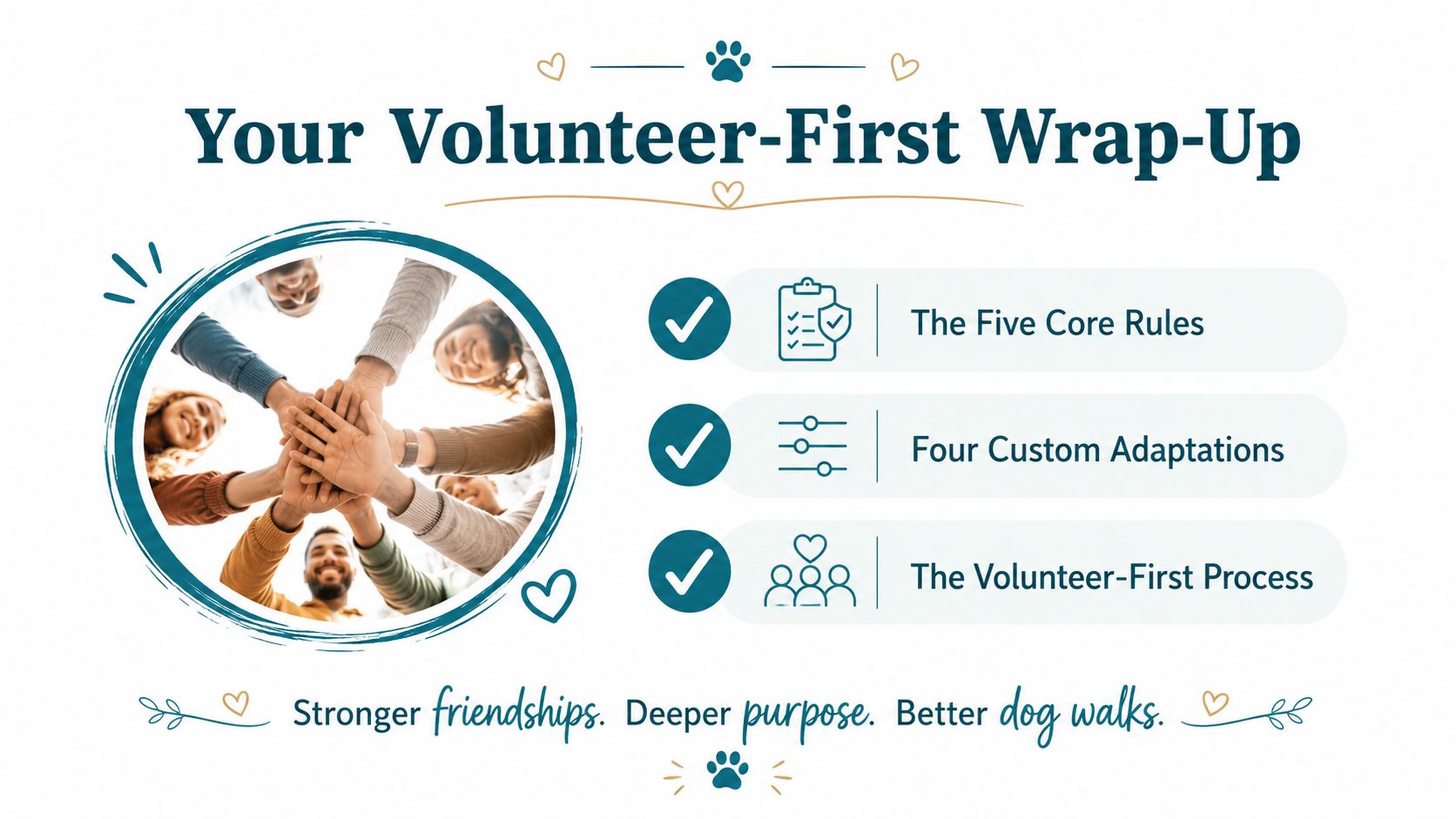
    Your Volunteer-First Wrap-Up and Quick Checklist

    People keep showing up at eight in the morning because the work gives them purpose, friendship, and a reason to walk the dog between trash bags. The code should protect that feeling without pretending every Saturday will feel easy.

    Write the rules in plain language. Set the five core boundaries before adding custom clauses. Keep a reusable template for different event types. Adjust weather, digital conduct, attendance, and reporting to match the place where you work. Introduce the code face to face, store acknowledgments in a straightforward manner, and respond to concerns through a predictable volunteer-first chain.

    A graphic titled Volunteer-First Wrap-Up showing a group of people stacking their hands together in solidarity.

    Your seven-action checklist

    • Draft one page: Write the purpose, five core rules, reporting contact, and acknowledgment line.
    • Ask two volunteers to review it: Include one regular and one newer participant.
    • Add event-specific safety clauses: Cover roads, water, children, tools, weather, or other hazards.
    • Name the decision-maker: State who can pause work, investigate concerns, and remove someone from an event.
    • Create the acknowledgment step: Add it to your signup flow and store confirmations in a restricted folder.
    • Practice the briefing: Explain the code before the next cleanup in ordinary language.
    • Pin the code and review it: Keep it visible in your chat and revise it when an incident reveals a missing rule.

    Put this tone note in your onboarding document:

    We wrote this code to protect the people who make these cleanups possible. Ask questions, speak up early, and give one another room to learn. The bags matter, yet the friendships are part of the work too.


    Litter Caterpillars runs volunteer-driven trash pickups in Chicago, with weekly outdoor events, safety briefings, tool-based litter handling, and a volunteer-first approach to community cleanup. Visit Litter Caterpillars to find a cleanup, meet the group, and turn your own code of conduct into a friendly practice people can trust.

  • Community Service Documentation: A Complete Guide for 2026

    Community Service Documentation: A Complete Guide for 2026

    Three of us were picking up litter when a spring hailstorm turned into a Chicago blizzard. We huddled under a tree, shivering, while every Uber canceled, but I still wrote down who came, what we did, and how long we stayed.

    That habit has followed me through years of rain, heat, frozen sidewalks, highway cleanups, and muddy vacant lots. Community service documentation doesn't need to bury volunteers in paperwork. It needs to preserve the few facts that let another person trust the work.

    Why Your Volunteer Hours Need Real Proof

    That first Litter Caterpillars cleanup looked chaotic from the outside. Three volunteers stood beneath one tree, coats soaked, gloves stiff, trash bags snapping in the wind. A photo could show the storm and the bags, but it couldn't prove each person's service time, identify the supervising organization, or answer a registrar's question months later.

    The weather taught me something simple. Effort disappears quickly unless someone records it while the details are fresh. A volunteer may remember the cold, the broken glass, and the overflowing bin, yet a school office or probation officer needs a clear record tied to dates, hours, an organization, and a responsible contact.

    Students often need records for school credit, and each school may ask for its own format. Someone completing court-ordered service faces a different review. A court may need specific dates, total hours, and a legitimate organization that can confirm the work. A volunteer building a résumé may want a supervisor who can verify duties and skills. A nonprofit may need clean participation data for grant reporting.

    You can find ideas for student service projects through community service opportunities for students, but the opportunity itself doesn't complete the record. Your documentation does.

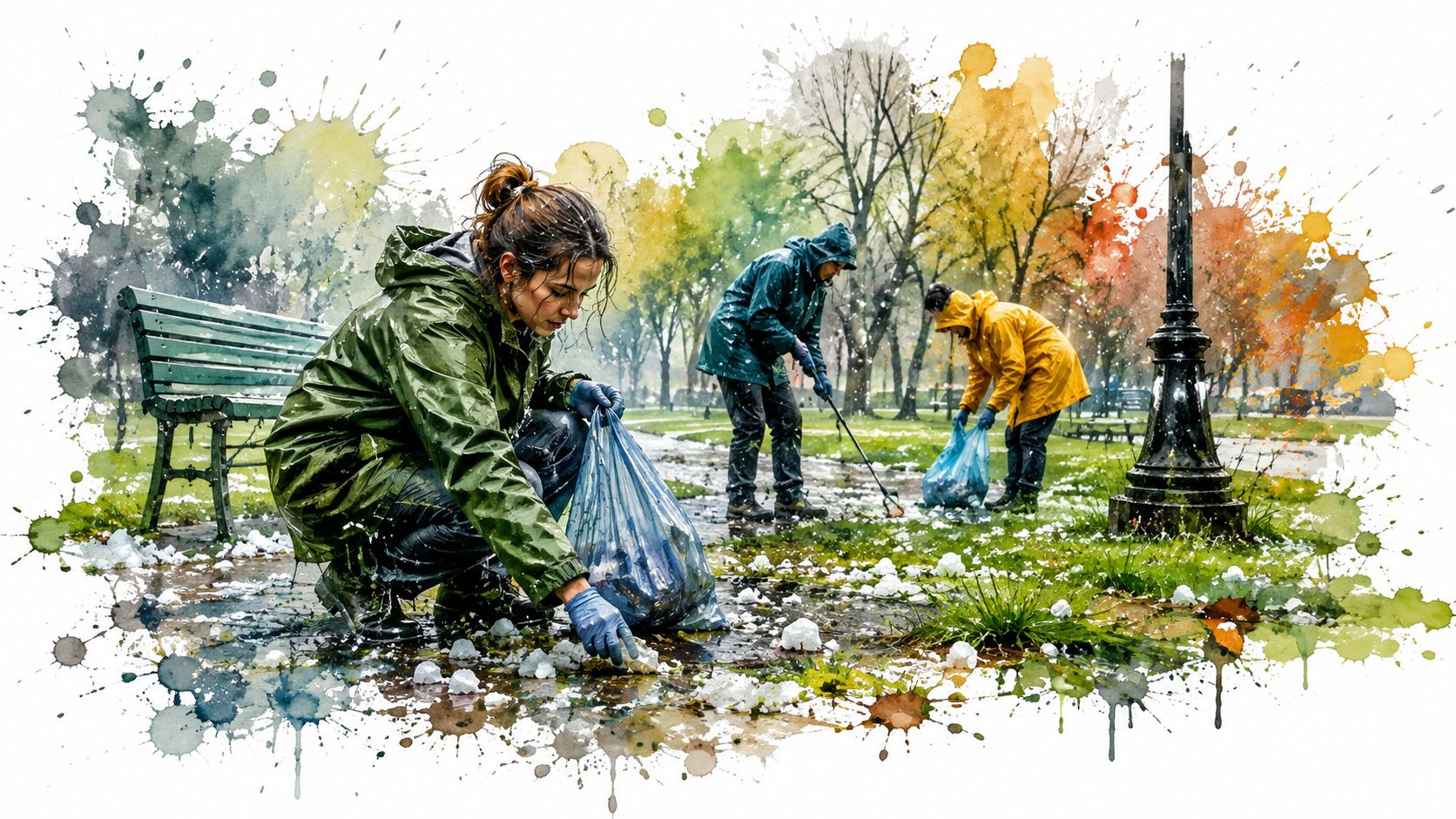
    A group of volunteers in raincoats cleaning up a litter-filled park during a rainy day.

    What proof needs to accomplish

    A selfie with a trash bag can support a story. It rarely carries the whole burden of verification. A reviewer needs enough information to connect one volunteer, one organization, one period of service, and one approving supervisor.

    A documented volunteer record may include the service date, hours spent, beneficiary organization details, a contact person's information, and a signature. One volunteer verification program also requires organization-verified records and asks volunteers to reconstruct daily time if an organization gives only one summary letter, because the system relies on day-based entries. (Volunteer Scholars explains its verification requirements)

    That level of detail protects everyone. You won't have to rely on memory, a vanished event page, or a supervisor who no longer remembers the shift. The organization can answer questions without searching through scattered messages.

    Practical rule: Record the work before the weather, fatigue, and ordinary life wash away the details.

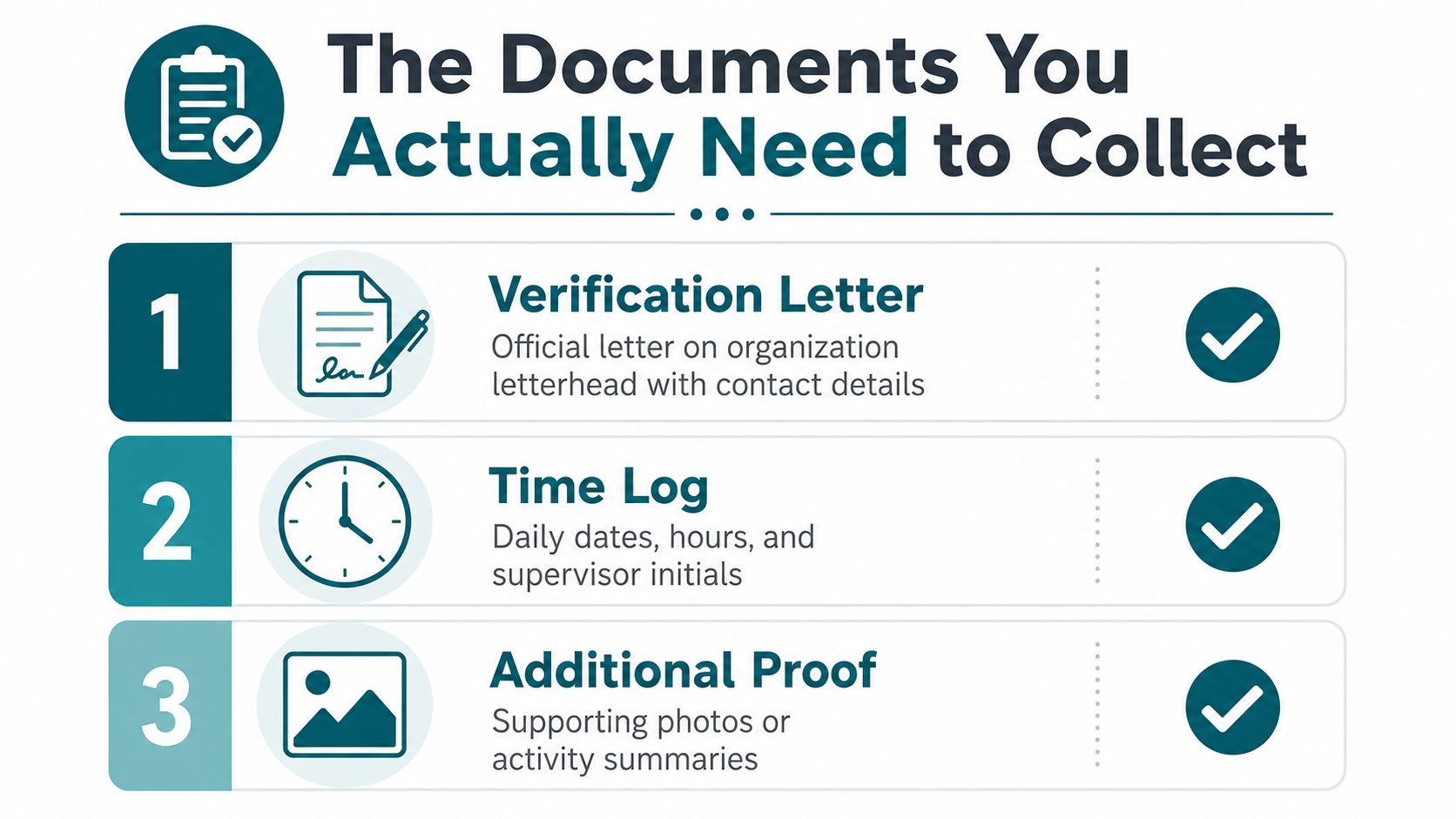
    The Documents You Actually Need to Collect

    Before your first shift, ask the organization what your school, court, employer, or program will accept. Then build a small packet around the records that prove identity, service, time, and approval.

    A list of three essential documents for community service including a verification letter, time log, and additional proof.

    Start with the verification record

    A community service verification form usually contains four blocks:

    • Volunteer details: Name and contact information.
    • Organization details: Organization name and address.
    • Service details: Dates and hours worked.
    • Supervisor approval: Signature, title, and contact information.

    That structure works like a receipt. It ties a person, a place, a time period, and an approving adult together. A community service verification form guide shows this four-part pattern clearly.

    Write dates in full, with the month, day, and year. If you volunteered on March 9, 2026, write “March 9, 2026,” rather than relying on a short form that could confuse someone reading it in another format.

    Use plain language in a letter:

    “This letter confirms that [full name] volunteered with [organization] on [full dates] and completed [total hours] of service. Please contact [supervisor name, title, phone number, and email] to verify this record.”

    A letter should use the organization's letterhead when available. A signature helps, but a signature without a contact path leaves the reviewer with nowhere to go.

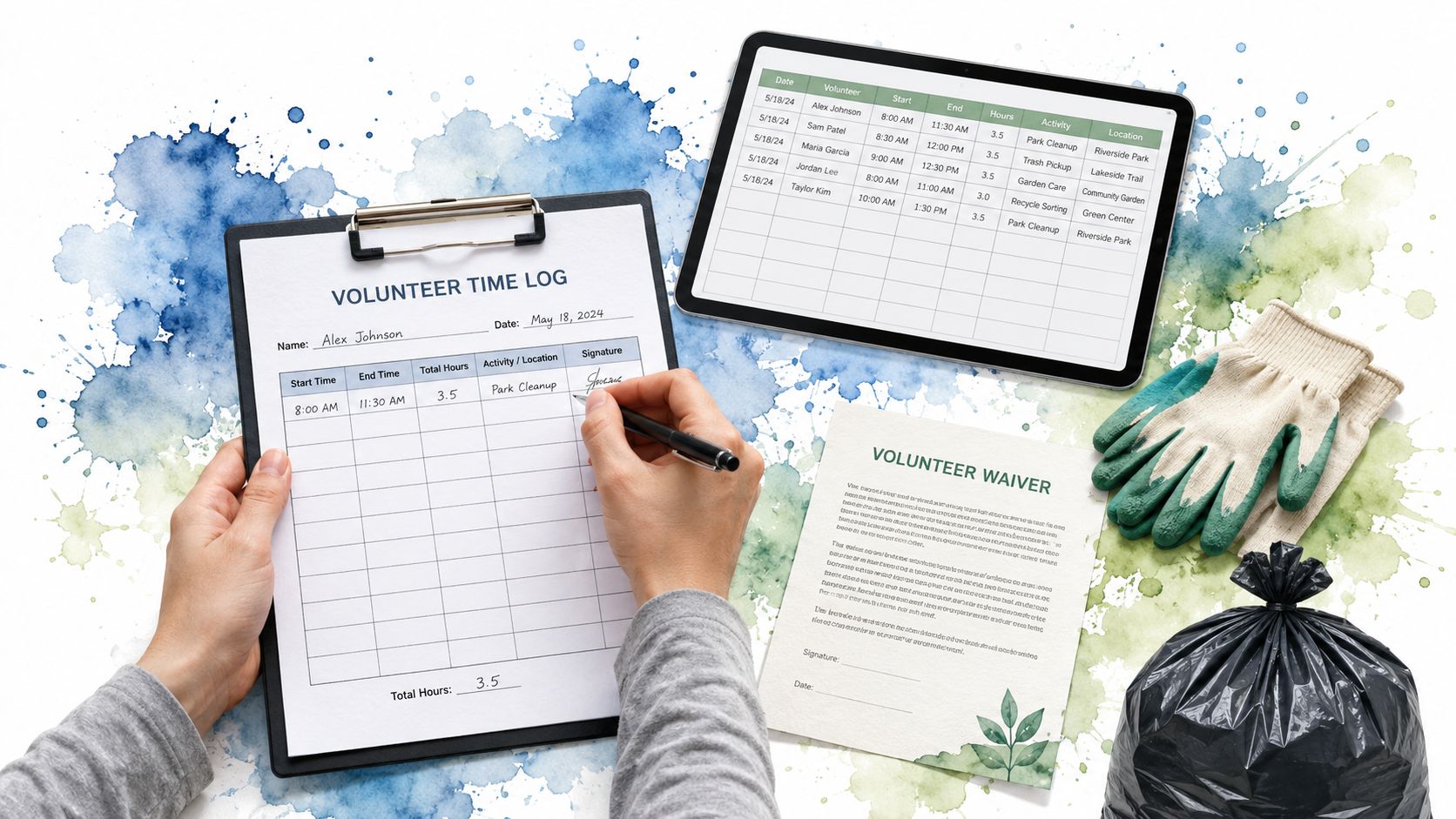
    Keep the daily log too

    Your log should record:

    • Date
    • Start time
    • End time
    • Task description
    • Total hours
    • Supervisor initials or signature

    One volunteer verification format lists start time, end time, task description, and total hours directly, which lets a reviewer check both the length of a shift and the work performed. (See this activity-log format)

    Some organizations require one form per project or per agency. Follow that rule, and don't resubmit hours you've already turned in. A university volunteer form gives both instructions, including the need to write all dates and have a supervisor sign the forms. (Review this university verification form)

    A waiver, safety acknowledgment, application, or screening form belongs in the packet when the role requires it. A basic sign-in sheet can record attendance, but it can't replace a signed verification record when an outside reviewer needs formal proof. For practical guidance about cleanup reporting and neighborhood conditions, use guidance on reporting illegal dumping.

    The video below gives another visual way to think about organizing service records.

    Building a Time Log That Survives Scrutiny

    A time log earns trust through small details. When I finish a cleanup, I don't write “park work” and hope I remember the rest. I write the location, the task, the start and end times, and the person who can confirm it.

    Use Google Sheets, Airtable, or a note on your phone. The tool matters less than the timing. Enter the shift before you leave the site, then ask the supervisor to review or initial it while everyone still remembers what happened.

    Field What It Proves Common Mistake
    Date When the service happened Entering only the month
    Start time When the shift began Rounding from memory later
    End time When the shift ended Forgetting breaks or early departures
    Task description What you actually did Writing “volunteered” with no detail
    Total hours The amount of service claimed Adding hours incorrectly
    Supervisor initials or signature Who approved the entry Waiting until the end of the season

    Log continuously, not retrospectively

    Reconstructing a season at year-end invites errors. You may remember the big cleanup while forgetting a short shift, confuse two locations, or claim time that another form already includes. A running spreadsheet creates a dated trail and makes the final summary much easier to prepare.

    Create one row per shift. Keep the original entries, and add a correction note instead of deleting information. Store a PDF copy after a supervisor reviews the log, so a later spreadsheet edit doesn't erase the version someone approved.

    Organizations can also use scheduling tools to connect attendance with service records. Free volunteer scheduling software from Litter Caterpillars can fit a small group that needs a simple way to coordinate shifts and track participation.

    For teams with more formal controls, document compliance tracking provides useful ideas about ownership, status, and retrieval. You don't need a complicated system for a neighborhood cleanup, but you do need a clear answer to three questions: Who entered this record? Who approved it? Where can we find it?

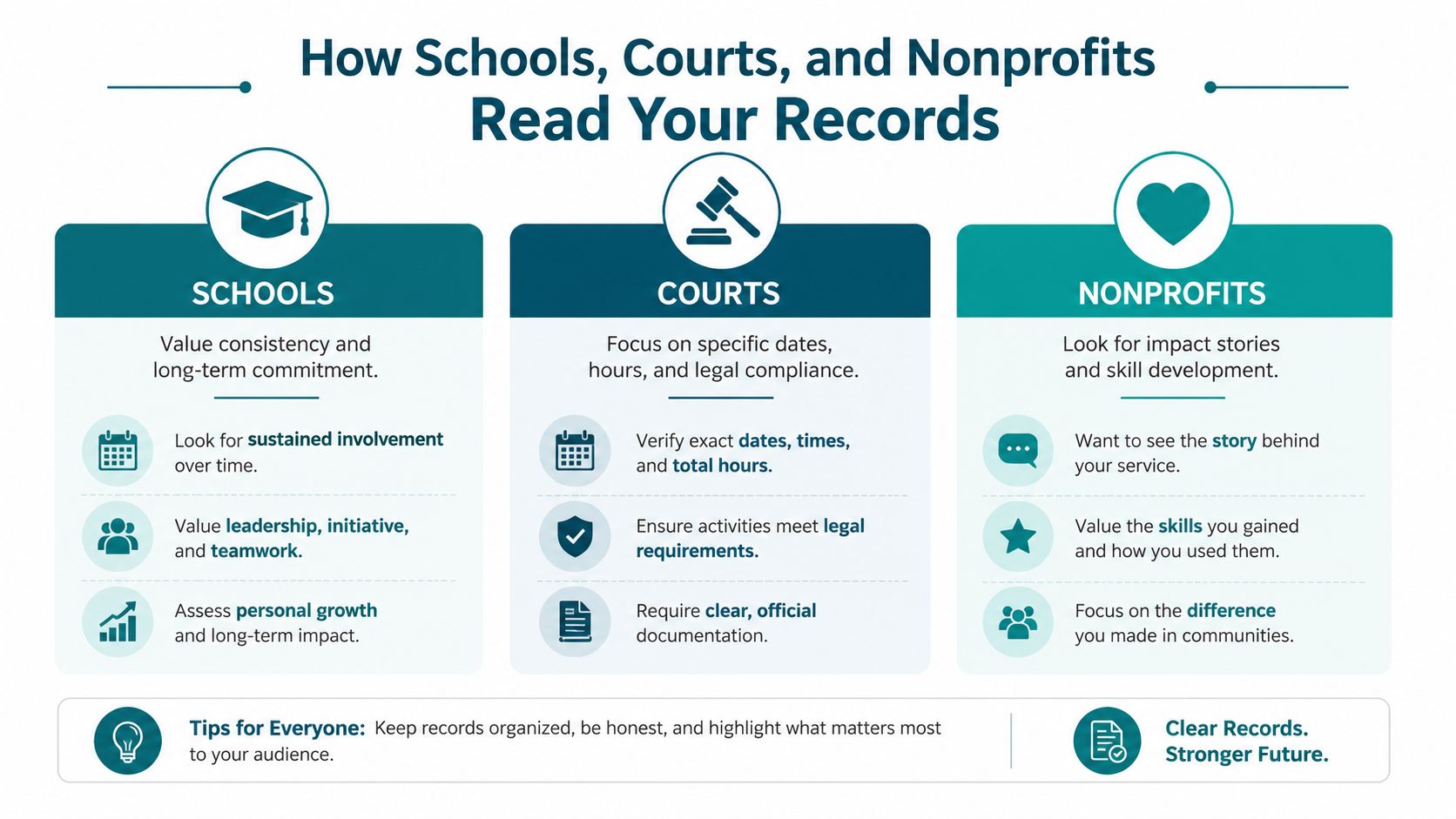
    How Schools Courts and Nonprofits Read Your Records

    The same folder can support different reviewers, but each reviewer reads it for a different reason. A school usually wants a record that matches its credit rules. A court needs a defensible account of required service. A nonprofit needs information it can combine with other volunteer activity.

    An infographic showing how schools, courts, and nonprofits evaluate and prioritize different aspects of service records.

    Schools look for consistency

    A school reviewer may compare your form with an internal deadline, required fields, or a specific approval process. Give the office the format it asks for, even if your own spreadsheet contains more detail. Keep the spreadsheet as your backup, then submit the signed form and supporting letter through the approved channel.

    A student who volunteers with several organizations should keep each agency separate. Combining every shift into one vague total makes it harder for a school to verify who supervised each activity.

    Courts focus on proof and compliance

    Court-related service needs clean dates, hours, organization information, and supervisor approval. Avoid estimates. If a shift ran from 9:00 a.m. to noon, record those times and the actual task. If the court or supervising agency provides a required form, use that form rather than substituting a personal spreadsheet.

    The organization must remain reachable. Keep the supervisor's title, phone number, and email with the record, and ask what happens if the supervisor changes before your final submission.

    Nonprofits need usable summaries

    A nonprofit may care about the work behind the number. A description like “removed litter from a creek path and sorted collected material” gives a grant writer more to use than “cleanup.” Add project names, locations, participant names or counts when the organization requires them, and notes about completed tasks.

    A single end-of-term letter doesn't remove your responsibility to track each day. One verification program explicitly requires daily reconstruction when the organization supplies only a summary letter. Keep your own log, then use the letter as the organization-level confirmation. (Read the documented daily-log requirement)

    Schools ask, “Does this meet our format?” Courts ask, “Can someone verify every claimed shift?” Nonprofits ask, “What did the group accomplish?”

    If your service crosses state lines, keep the same record fields and store the organization details for each location. Requirements may differ, so ask the receiving school, court, or program before you start.

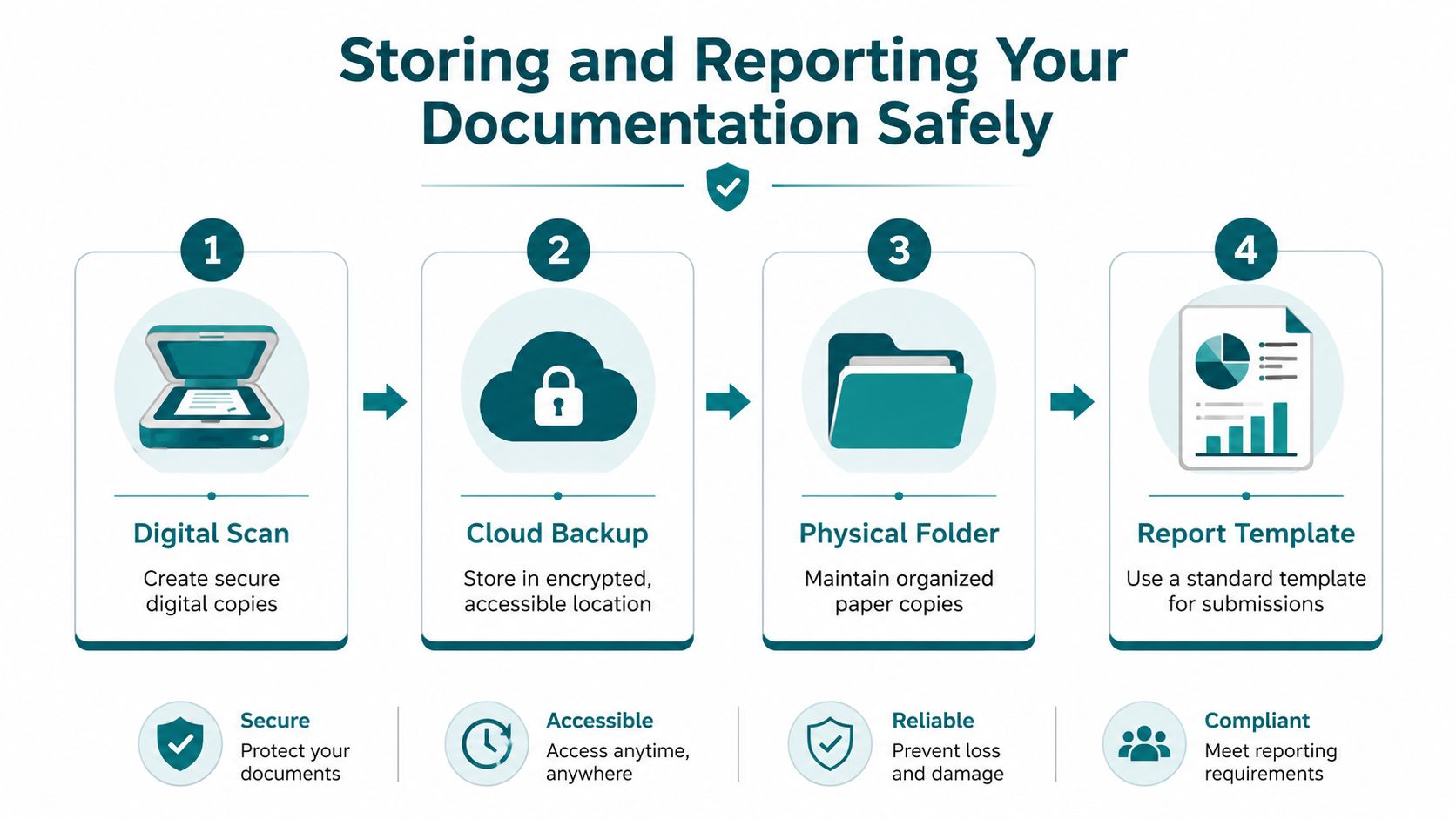
    Storing and Reporting Your Documentation Safely

    A muddy paper form can disappear in a backpack. A phone can break. A volunteer coordinator can leave. I use a workflow that assumes ordinary problems will happen, because they always do.

    Federal volunteer recordkeeping guidance instructs agencies to keep volunteer files for three years after closure and lists records such as the volunteer agreement, application, reference or background checks, training records, timesheets, and an accomplishment report. (U.S. Forest Service volunteer recordkeeping guidance)

    Use four connected steps

    1. Define the record. Decide which documents apply to each role before recruitment. A cleanup helper may need an agreement, safety acknowledgment, attendance record, and hours log. A driver may need additional vehicle or mileage details.

    2. Record participation. Enter dates, tasks, hours, and outputs during or immediately after each shift. Don't wait for an annual report.

    3. Collect and store. Scan signed forms, use clear filenames, and restrict access to people who need it. Keep paper copies in an organized folder when the organization still relies on physical records.

    4. Report the service. Use one template for recurring reports, then check totals against the daily log before submission.

    An accomplishment report can include the date, project or position, number of individuals, total hours served, miles driven in private vehicles, age and gender data, racial or ethnic data, and cost data, according to the same federal guide. Those fields turn scattered shifts into information a program can review and summarize.

    A small group doesn't need a maze of folders. Create one folder per volunteer, one subfolder per project, and a standard file name that includes the volunteer name, project, and date. For teams preparing grant submissions, streamlining hours for funders can help frame time records as report-ready data.

    The federal guidance also recommends closing the file after service ends, then retaining it for the stated period. Keep a simple closure note with the last service date, final approval, and location of the archived records.

    A four-step infographic illustrating a secure process for storing and reporting community service documentation using digital and physical methods.

    Mistakes That Get Your Hours Rejected and How to Avoid Them

    The paperwork that looks most official can still fail. I have seen volunteers carry a thick packet while missing the one signature a reviewer needed.

    Avoid paperwork without a purpose

    Over-documentation creates friction when volunteers can't tell which forms apply to their role. It also creates more chances for someone to lose a page, use an outdated version, or skip a field. Assign documents by role, explain them before the first shift, and remove anything that doesn't support safety, verification, reporting, or legal requirements.

    An agreement that expires or describes an old role can create trouble later. Review the role description when duties change, and set reminders for renewals or expiration dates. A controlled digital folder helps the coordinator find the current version instead of sending volunteers several conflicting files.

    Capture details before memory fades

    The federal volunteer guidance recommends a complete file with the agreement, application, relevant checks, training records, a running hours and accomplishments log, and a closing record. It also identifies outdated agreements, missing service details, and inconsistent fields as avoidable administrative failures. (Read the participation documentation guidance)

    Use a short end-of-shift routine:

    • Write the entry: Add the date, time, task, and total hours.
    • Confirm the approval: Ask the supervisor to initial or sign.
    • Save the file: Scan or upload the record before leaving.
    • Check the role: Confirm that the forms match the work performed.

    Our group, Litter Caterpillars, records cleanup events through photos and stories, while a formal hours log carries the verification burden. Keep evidence proportional to the role. A photo can show a transformed park, but a signed record proves who worked, when they worked, and how long they stayed.


    If you want to put your records into practice, visit Litter Caterpillars to find Chicago cleanup events, meet a volunteer group that works through rain and cold, and build service history you can document as you go. Bring a phone for your log, ask for supervisor approval before you leave, and let the work speak through records that another person can verify.

  • 10 Community Service Opportunities in Chicago

    10 Community Service Opportunities in Chicago

    I bend down for one bottle, then spot a wrapper under a parked car. A minute later, someone beside me fills a bag, and the work feels lighter because we're moving together. Chicago has community service opportunities for a one-hour neighborhood cleanup, a park partnership, a school project, a vacant-lot garden, and plenty between them. Meetup, local nonprofits, schools, neighborhood groups, and open chats can help you find a starting point. Weekend mornings make a practical first try. Choose a place you can reach, a pace your body can keep, and a group that makes returning feel realistic. Litter Caterpillars gives Chicago volunteers one example of that approach, with regular trash pickups built around showing up together.

    1. Weekly Neighborhood Cleanup Groups

    A weekly cleanup gives service a dependable shape. You meet at a familiar time, pick up a bag and gloves, and learn the rhythm of the street. The first visit may feel like a small errand. After a few visits, you start noticing which corner collects cups, which alley needs attention, and which neighbors wave as you pass.

    Litter Caterpillars runs weekly pickups across all 50 Chicago wards, according to the group's publisher information, while neighborhood associations organize cleanups in specific areas. Lincoln Park groups often focus on lakefront paths and park zones. You can also search Meetup for an event that fits your Saturday instead of building a project from scratch.

    A diverse group of three people walking down a city street while collecting litter in trash bags.

    Make repetition easy

    Organizers can schedule events at 9 AM or earlier when they want a steady weekend routine. A simple RSVP page removes needless steps. Group shirts, flags, badges, or another shared marker can help strangers recognize one another quickly, while before-and-after photos give the team a small record of each morning.

    Rotate neighborhoods when you can. A cleanup in Lincoln Park feels different from one in Englewood or on the South Side, and moving around Chicago helps volunteers meet more people.

    Practical rule: Choose a recurring time before you choose a grand mission. A routine you can keep beats an ambitious plan you abandon.

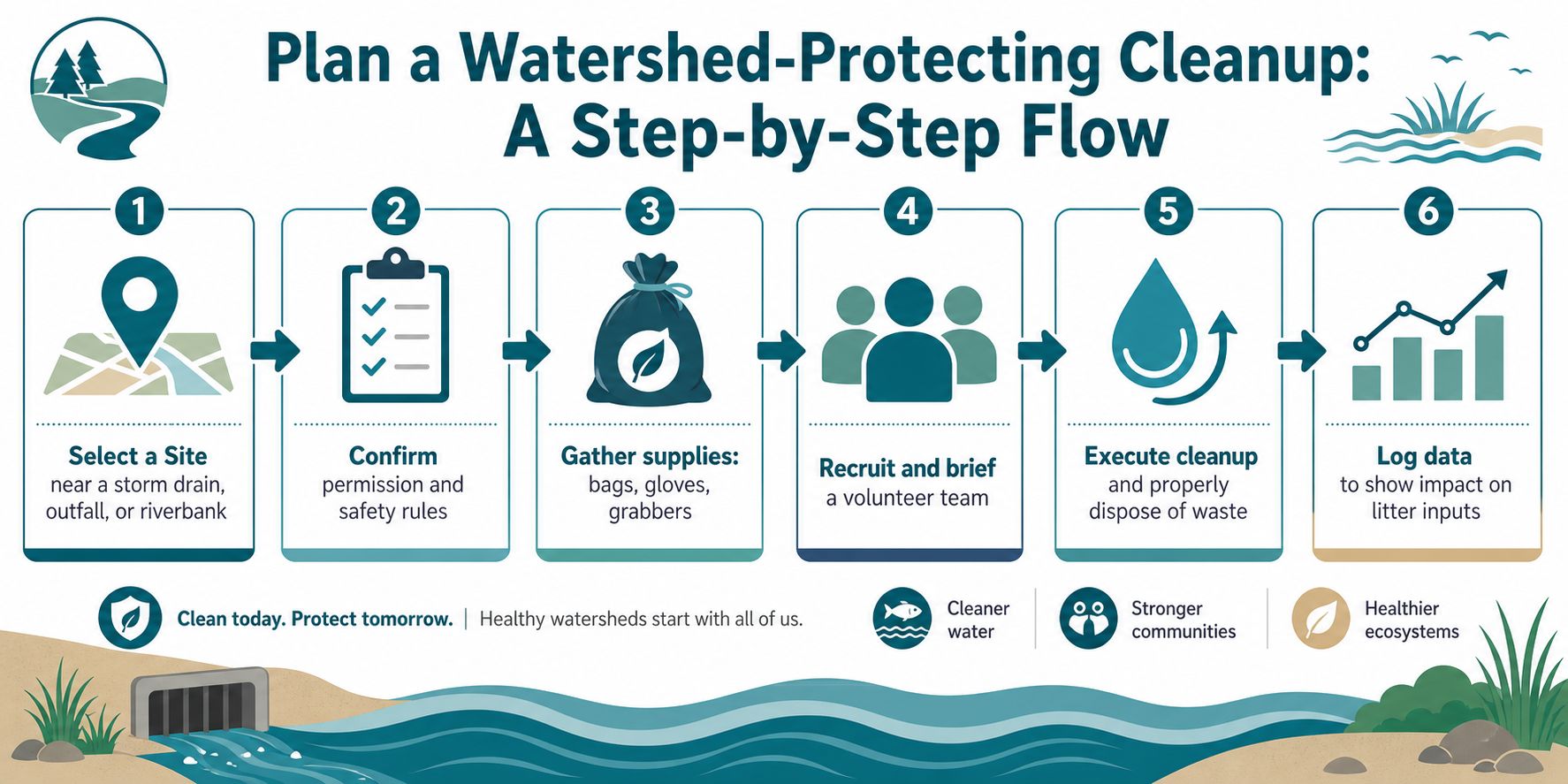
    If you're organizing your own crew, use this guide to organize a neighborhood cleanup. The best group may be the one that makes a bag, a meeting point, and a friendly hello feel enough to begin.

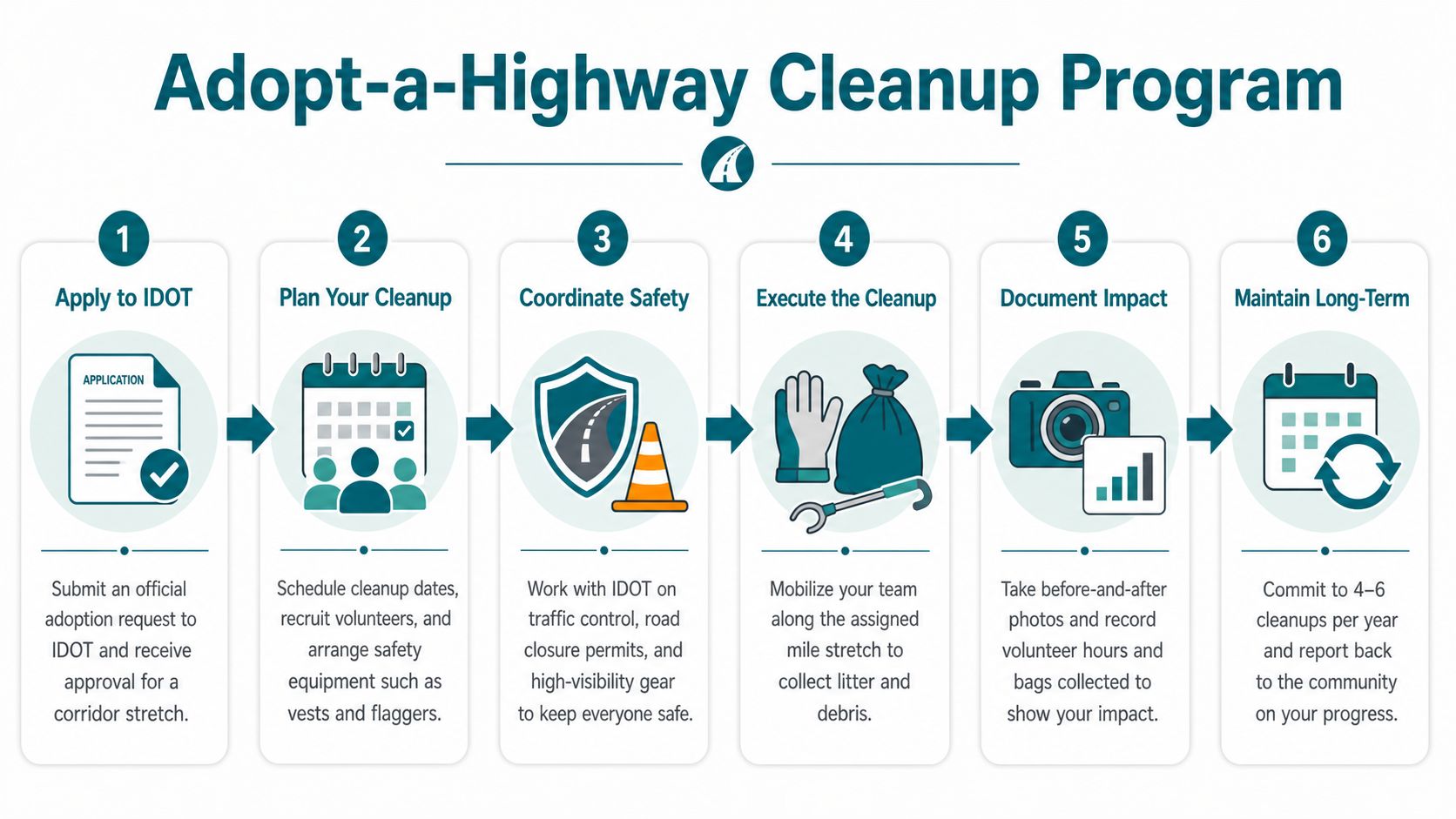
    2. Adopt-a-Highway and Major Corridor Programs

    A major road changes the experience of picking up litter. Cars move quickly, the shoulder can feel exposed, and a loose team needs clear boundaries before anyone lifts a bag. In return, volunteers take responsibility for a defined stretch instead of treating cleanup as a one-off walk.

    Chicago groups can work with IDOT on safety equipment and road-closure coordination. Litter Caterpillars cleaned a highway during the shutdown for the Bike the Drive event, and corporate teams can adopt sections of Lake Shore Drive. Community groups may also maintain portions of Ashland Avenue or Western Avenue.

    Treat the corridor like a worksite

    Schedule service after a large event or a season that leaves extra litter behind. Ask nearby businesses to help with water, bags, gloves, and volunteer recruitment. Give every participant a clear job, such as bag collection, supply support, route observation, or communication with the lead.

    High-visibility vests and trained flaggers belong in the plan. Volunteers should never improvise around moving traffic. Take photos from safe locations, record what the team completed, and use those records in community updates or partnership conversations.

    A corridor project needs more than enthusiasm. It needs a route map, a meeting point, a weather decision, and an exit plan.

    For prevention work beyond pickup, explore ways to prevent illegal dumping. Removing waste helps today. Learning why people dump materials, where repeat problems appear, and whom to contact can shape the next response.

    3. Vacant Lot Transformation and Urban Gardening

    A vacant lot asks for patience. You may begin with broken glass, tangled weeds, old furniture, and soil that needs professional attention. The first cleanup clears the view. Later, neighbors can decide whether the space should become a garden, a gathering place, a play area, or another useful community resource.

    Caterpillar Park in Englewood grew from Litter Caterpillars' work, while Growing Home in Englewood transforms lots into urban farms. The Local Initiatives Support Corporation, or LISC, supports vacant-lot projects across Chicago. Each example points to the same practical truth, a lot needs a plan for its next life before people invite the public in.

    A six-step infographic illustrating the process to join the IDOT Adopt-a-Highway cleanup volunteer program.

    Build the next phase early

    Start with one property. Get the owner's agreement before volunteers invest time, and work with a nonprofit that understands land management, soil questions, permits, and maintenance. Ask neighbors what they want to see, then create a schedule for watering, mowing, repairs, trash removal, and winter care before opening the space.

    • Choose a manageable footprint: A smaller project lets people learn the site before expanding.
    • Invite local design voices: Neighbors should help decide paths, planting, seating, and use.
    • Plan funding carefully: Environmental and community-development funders may support eligible work.

    The transformation takes shape in stages. First, people remove hazards. Then they create a place that asks for regular care.

    See Chicago community gardens for a place-based route into this kind of service. The video below gives the project a more tangible feel.

    4. School and Youth Organization Volunteer Partnerships

    A school cleanup can start with a short walk, a few pairs of gloves, and a teacher who knows how to keep the group moving. Chicago Public Schools can partner with environmental nonprofits for cleanup days. Boys and Girls Clubs can place service inside summer programming, and Kenwood Academy students have taken part in lakefront cleanups.

    Young volunteers need jobs they can understand. One student can track supplies, another can collect safe litter, and another can photograph the work with permission. Give older participants a chance to lead a briefing or welcome new members. A service habit grows more naturally when students can see their own progress.

    A woman and three children smiling while participating in community service activities like cleaning and planting trees.

    Connect service to school life

    Start with an environmental coordinator, service coordinator, teacher, or youth-program director. A cleanup can support lessons about waste, water, wildlife, civic life, or local geography. Libraries and schools can also run low-barrier projects such as making cards for veterans, decorating materials for care homes, or creating bookmarks for young readers, based on examples described by the American Library Association's school-library blog.

    Ontario students who need a comparison for school service requirements can look to Ontario's graduation guidance, which requires 40 hours of unpaid community involvement for the Ontario Secondary School Diploma. Students can begin recording hours in July before Grade 9, and the guidance suggests aiming for about 10 hours per year. Ontario school guidance provides those details.

    Keep the activity hands-on, recognize participation with certificates or a thank-you, and give students a route from helper to team leader.

    5. Corporate Team Building and Volunteer Days

    A company volunteer day works best when nobody has to guess what happens next. Employees arrive at a neighborhood or park, receive a short briefing, split into defined roles, and leave with a clear picture of the site they helped. The day can feel social without turning service into a forced office exercise.

    Chicago environmental groups can work with technology, finance, law, consulting, and other companies. Google and Salesforce organize employee volunteer days, and local nonprofits partner with firms that want a practical group project. Organizers can package the experience around a site, a meeting time, supplies, safety guidance, and a simple follow-up.

    Give the team a story and a job

    Before the event, explain why the neighborhood needs the work without reducing the community to a problem. Show the route, name the local partner, and tell employees what to bring. On site, assign a company lead and a service lead so questions have a clear home.

    Afterward, send before-and-after photos and a concise account of what the team completed. Ask what felt easy, what felt confusing, and whether anyone wants to join a recurring cleanup.

    Small details can make the day feel shared. A group flag, a team photo, or a playful sign can help participants remember the morning. If a project uses branded site markers, organizers can review guidance on designing effective hole signs for ideas about readable, visible messaging, even outside a golf setting.

    The trade-off is simple. A company day can bring many hands at once, while a recurring group builds deeper continuity. A thoughtful organizer can invite both.

    6. Environmental Education and Workshops

    Some volunteers want to understand the route from a discarded cup to a clogged drain or polluted waterway. A cleanup followed by a workshop gives them that connection. You can talk about what litter does in waterways, how materials break down, and which daily choices prevent waste from reaching the street.

    Chicago Public Schools can use environmental lessons about waste and litter. Lincoln Park Zoo can connect wildlife education with plastic concerns, and the League of Women Voters Chicago hosts workshops about environmental sustainability. Schools, libraries, and community centers already have rooms and audiences, so a local partnership can make the first session easier to arrange.

    Teach with objects people can see

    Avoid leading with shame. Put a storm-drain image beside a bag of collected items. Show a clean sorting station, a composting example, or a sealed container that demonstrates how litter can travel through water. Ask participants to name one change they can make that day.

    • Use a local route: Walk from the meeting point to a drain, park edge, or shoreline.
    • Let young people speak: Students can create messages for classmates and neighbors.
    • End with action: Give people a simple next step, such as joining a cleanup or checking local recycling guidance.

    A workshop should leave people with something to do, not only something to worry about. Pair the lesson with a short service activity so the idea becomes physical.

    You can also create remote participation for people who can't attend outdoors. A student might design a litter-prevention poster, a volunteer might help organize event information, and a community member might share a workshop invitation through a local group chat.

    7. Parks and Lakefront Stewardship Programs

    A park volunteer notices more than a bottle. You may spot a damaged bench, a broken sign, a bare planting bed, or a path that needs attention. Stewardship gives you a way to report those problems while you pick up litter and care for the place over time.

    Friends of the Parks organizations run volunteer stewardship programs. The Lakefront Cleanup Initiative coordinates beach and shoreline work, and the Lincoln Park Conservancy works on park improvements and maintenance. A group can adopt one section, establish a recurring schedule, and keep a simple record of what needs follow-up.

    A volunteer wearing a high-visibility vest picks up a plastic bottle from a beach, cleaning the coastline.

    Care for the place between events

    Build a working relationship with the Chicago Park District or the relevant park partner before assigning tasks. Decide how volunteers should report maintenance issues, where filled bags go, and which work requires staff or trained professionals. Monthly or twice-monthly gatherings can keep the site familiar without making every volunteer promise a permanent obligation.

    Families can join when the activity suits different ages. One person may collect litter, another may photograph conditions, and children may help with safe, supervised tasks. Document the park across seasons so returning volunteers can see changes without relying on memory.

    A beach cleanup also needs a weather plan, sturdy footwear, water, gloves, and a way to avoid sharp or unknown objects. Volunteers should report unsafe conditions, accidents, and injuries immediately, and they should know where first-aid supplies and evacuation routes are located, as described in this volunteer safety training checklist.

    8. Neighborhood Association and Block Club Integration

    A block club already knows who lives on the street, which alley creates frustration, and when neighbors gather. That knowledge can save an organizer from starting with a blank page. Instead of asking people to join a new institution, you can add a cleanup to a communication channel they already use.

    Pilsen neighborhood groups coordinate environmental work. The Lincoln Square Chamber of Commerce can partner on street and alley cleanups, while Rogers Park community organizations organize block cleanups. Each group may have different priorities, so listen before you propose a route.

    Earn trust before asking for turnout

    Attend an association meeting or contact a leader with a short plan. Explain how the cleanup supports the group's existing goals, then offer to handle logistics such as supplies, reminders, route planning, and waste disposal. Schedule around a neighborhood event, a seasonal change, or a day when residents already expect activity outside.

    • Ask about the problem first: Residents may prefer an alley, vacant edge, school route, or business strip.
    • Bring a finished plan: Include a meeting point, time, supply list, and safety contact.
    • Return with updates: Share photos, thank participants, and report what still needs work.

    You can connect cleanup with neighborhood pride without making promises about property values. People usually respond better when they can see a specific place, a reasonable task, and a group that will return.

    This route also works for newcomers. A block club can turn a new city into a set of familiar faces, one street at a time.

    9. Faith-Based Organization Service Programs

    A church, synagogue, mosque, or temple often has a service calendar, a gathering place, and people who already know the surrounding blocks. A cleanup can fit that rhythm when organizers approach the community with respect instead of treating it as a list of available volunteers.

    Trinity United Church of Christ in Chicago runs community service initiatives. The Jewish Federation of Chicago coordinates volunteer projects, and interfaith groups have worked on environmental stewardship in Chicago's South and West sides. These partnerships can bring together people who care about service for different reasons.

    Start with relationship, not recruitment

    Meet with a clergy member or community-service coordinator first. Explain the work, listen to the organization's priorities, and ask where a cleanup might fit. Respect major religious observances and the group's calendar. Bring a plan that includes supplies, safety, accessibility, transportation questions, and a clear end time.

    Invite faith leaders to share why service matters to their community, but don't ask them to promote a project they haven't reviewed. Offer to facilitate the cleanup and manage the details. Afterward, send thanks and a short update about the work.

    • Keep the invitation open: Make room for people who can contribute time, planning, hospitality, or translation.
    • Protect the group's culture: Follow local expectations around food, clothing, prayer, and photographs.
    • Build a return path: Invite interested participants to a recurring cleanup or another service day.

    Groups can use congregation-focused tools such as Taja AI for faith-based communities when they need help communicating with members. The human conversation still comes first.

    10. Social Media and Community Mobilization Networks

    A volunteer may discover Saturday's cleanup while scrolling in bed, then decide to attend because the post gives a time, a place, and a short list of what to bring. That small amount of information can remove the uncertainty that keeps people home. Instagram, Meetup, Facebook groups, and open chats can work as doors into in-person service.

    Litter Caterpillars uses Instagram storytelling and Meetup for events. Chicago Loves Its Parks uses Facebook for volunteer coordination, and environmental groups use branded hashtags to help participants recognize related activities. A clean event post should answer the practical questions before anyone has to send a message.

    Make the post do useful work

    Share photos with clear lighting and framing, then tell a short volunteer story about why that person returns. Before-and-after images give the audience a visible record. Post regularly, respond quickly, and use stories for weather changes, route updates, or last-minute reminders.

    • Write the basics first: Include the time, location, meeting point, duration, and what to bring.
    • Use a consistent identity: A hashtag, flag, shirt, or badge can help people find the same group again.
    • Thank people directly: Public appreciation can make a first-time volunteer feel seen.
    • Keep RSVP simple: Use Meetup or an open chat when a long application would add needless friction.

    You can also draw ideas from this guide for artists on community platforms, especially when you need to make a group feel welcoming online. Digital mobilization works best when it leads to a real meeting, a real task, and a clear way to return.

    Community Service Opportunities: 10-Item Comparison

    Activity 🔄 Implementation Complexity ⚡ Resource Requirements 📊 Expected Outcomes & Ideal Use Cases ⭐ Key Advantages 💡 Tips
    Weekly Neighborhood Cleanup Groups 🔄 Low, recurring coordination and simple logistics ⚡ Low, bags, gloves, grabbers, volunteer time Gradual visible neighborhood improvement; ideal for local blocks/wards ⭐⭐⭐ Strong community-building; low barrier to entry 💡 Schedule mornings; document before/after; create group identity
    Adopt-a-Highway and Major Corridor Programs 🔄 Medium–High, permits, safety planning, agency coordination ⚡ Medium, safety gear, larger crews, formal reporting High-visibility corridor improvements; ideal for long-term adopters and corporate sponsors ⭐⭐⭐ Official recognition; high visibility; sponsor appeal 💡 Coordinate with IDOT; use vests/flaggers; schedule after busy events
    Vacant Lot Transformation and Urban Gardening 🔄 High, land access, remediation, permitting, design ⚡ High, heavy removal, soil testing, funding, skilled partners Lasting beautification and community space; ideal for long-term investment projects ⭐⭐⭐⭐ Creates permanent change; attracts funding and deep ownership 💡 Start small; secure owner buy-in; plan maintenance & funding early
    School and Youth Organization Volunteer Partnerships 🔄 Medium, schedule alignment, supervision, curriculum links ⚡ Low–Medium, adult supervisors, basic supplies, educational materials Builds service habits and environmental literacy; ideal for schools and youth programs ⭐⭐⭐ Reliable volunteer base; educational & leadership benefits 💡 Tie activities to curriculum; provide recognition and leadership roles
    Corporate Team Building and Volunteer Days 🔄 Medium, packaged logistics, single-day coordination ⚡ Medium, supplies, staffing, possible sponsorships Rapid, high-output events; ideal for companies seeking team bonding and PR ⭐⭐⭐ Large short-term impact; potential funding and partnerships 💡 Offer turnkey packages; assign clear roles; follow up with impact metrics
    Environmental Education and Workshops 🔄 Medium, content development and skilled facilitation ⚡ Low–Medium, presenters, materials, demo supplies Behavior change and advocacy; ideal for classrooms, libraries, community centers ⭐⭐⭐ Addresses root causes; builds advocates 💡 Lead with stories and data; include hands-on demos and immediate takeaways
    Parks and Lakefront Stewardship Programs 🔄 Medium, coordinate with Parks Dept and monitoring systems ⚡ Medium, tools, reporting system, regular volunteer schedule Maintained public recreation spaces; ideal for families and intergenerational groups ⭐⭐⭐ City support; visible community benefit 💡 Establish formal Parks relationship; schedule regular stewardship; report issues
    Neighborhood Association and Block Club Integration 🔄 Low–Medium, navigate local governance and meetings ⚡ Low, access to lists, modest supplies, volunteer coordination Efficient recruitment and sustained campaigns; ideal where associations exist ⭐⭐⭐ Trusted channels; potential small grants 💡 Attend meetings first; offer to manage logistics; align with priorities
    Faith-Based Organization Service Programs 🔄 Low–Medium, schedule and cultural coordination with congregations ⚡ Low, volunteer pools, meeting space, occasional meals/supplies Values-driven sustained volunteering; ideal for faith communities and neighborhood outreach ⭐⭐⭐ Deep commitment; strong volunteer base 💡 Meet with clergy; align with calendars; explain mission alignment
    Social Media and Community Mobilization Networks 🔄 Medium, sustained content, moderation, and event management ⚡ Low, platform accounts, time for posts, RSVP tools Rapid recruitment, visibility, and ad-hoc turnout; ideal for outreach and youth engagement ⭐⭐⭐ Low barrier to entry; visual storytelling boosts participation 💡 Post 2–3x/week; use before/after photos; create branded hashtags and quick logistics

    Turn One Cleanup Into Your Regular Thing

    Chicago gives you many ways to begin. You can join a weekend-morning event on Meetup, contact a local nonprofit or school, ask a block club about a service day, or speak with a faith group that already organizes community work. You can explore Litter Caterpillars at littercaterpillars.com and see whether its weekly Chicago pickups fit your routine.

    Before you RSVP, run a quick fit check. How long will travel take from your home, school, or workplace? Can you manage the walking, bending, heat, cold, or uneven ground? Does the organizer explain safety plans, supplies, meeting points, and what happens if weather changes? Do people greet newcomers, answer questions, and respect different abilities? Can you keep the schedule without turning service into another source of stress?

    People volunteer through formal organizations and through direct help in their communities. Updated United Nations Volunteerism reporting estimates that about 2.1 billion people worldwide, or 34.5% of the working-age population, volunteer each month. The same reporting places monthly direct helping at 25.0% and organizational volunteering at 11.7%, showing why a neighborhood group or informal cleanup can be a genuine entry point, not a lesser version of service. Read the United Nations Volunteerism monthly volunteering estimates for the measurement details.

    If you need community service for a housing requirement, check your local housing authority before choosing an event. HUD guidance says many public housing residents in the United States must complete 8 hours per month of community service or an economic self-sufficiency program, with a combined total of 8 hours per month allowed. Residents may bank fewer hours in a month, but they must reach 96 hours before the next annual reexamination, according to this HUD community service and self-sufficiency guide.

    Safety deserves the same attention as scheduling. Wear the clothing the organizer requests, bring water, and ask before handling sharp, heavy, or unknown items. If you have COVID-19 symptoms, stay home. California volunteer guidance also advises keeping 6 feet of distance, washing hands before, during, and after a project, disinfecting surfaces, and covering coughs and sneezes with a tissue or elbow. See California Volunteers' safety guidance before joining a group that uses shared tools or works closely together.

    Make your first test small. RSVP, bring the requested supplies, introduce yourself to one volunteer, and return once before deciding whether the group fits. One morning can show you whether the route, people, pace, and purpose feel right.


    Litter Caterpillars hosts scheduled trash pickups across Chicago, with weekend-morning events, Meetup listings, Instagram updates, and open group chats that help volunteers join without a complicated process. Visit Litter Caterpillars to find an upcoming cleanup, meet people who care about their neighborhoods, and choose a service routine you can keep.

  • How to Pick Up Trash the Smart and Safe Way

    How to Pick Up Trash the Smart and Safe Way

    We met before sunrise in a parking lot off a busy street, twenty of us with coffee in one hand and buckets in the other. The ground smelled like wet leaves, and every time someone dragged a grabber across the asphalt, it made a hard scrape that woke everybody up fast.

    The first bag filled with a broken umbrella, three cups, and a shopping cart wheel. By the time we reached the curb, the shiny version of cleanup work was already gone, replaced by the actual task: bend, grab, stand, sort, repeat.

    What Picking Up Trash Really Looks Like Out There

    A diverse group of volunteers standing together in a parking lot holding cleaning tools and buckets.

    The morning after the photo

    People like the clean group shot. I get it. It looks tidy. Everyone's smiling. The buckets are lined up. Then the hour starts, and the roadside turns into a game of fetch with bad prizes.

    I've picked up trash in cold wind that bit through gloves and in heat that turned the blacktop into a griddle. The same pattern shows up every time. You see a plastic bag snagged in a fence, a coffee cup stuck in grass, a half-buried bottle by a drain, and then the little stuff, cigarette ends, bottle caps, fast-food wrappers, stray receipts. The work is repetitive. That's the point. How to pick up trash well is mostly about staying steady when the first rush fades.

    I tell new volunteers the truth early. If you rush, you miss sharp stuff. If you bend badly, your back complains by lunch. If you treat one Saturday like a heroic event instead of a repeatable habit, you burn out before you learn the route.

    Practical rule: the best cleanup is the one people can do again next week.

    That's why I care about the method before the bag fills. Gear matters. Body position matters. The way you sort, walk, and hand off bags matters. Even the tote you bring matters if you want something that can handle wet gloves and muddy corners, so I keep an eye on practical guides like tips for choosing eco-friendly totes when I'm packing the crew kit.

    What I watch before anyone bends down

    I do a quick scan first. I look for glass, needles, rusty metal, and weird spills. I look for where the curb drops off and where people will crowd if the group starts drifting.

    The volunteers who last are the ones who work like they're going to do this again. Clean lines. Short reach. No drama. That's the job.

    The Gear That Keeps You Going

    I hand gear out like I'm loading a tailgate. First gloves. Then a grabber. Then the rest. If you forget the order, you usually forget the things that save your hands.

    Start with your hands and feet

    Wear thick gloves. I like nitrile-coated work gloves because they grip well when a bag is wet and they shrug off mud better than thin, flimsy pairs. I still tell people to keep both hands visible and away from anything sharp, because a glove is a buffer, not a promise.

    Put on closed-toe shoes with a real sole. Long pants help when you brush through weeds or kneel near broken debris. A hat and sunscreen matter more than people admit, even on cloudy mornings, because one long cleanup can leave you fried by noon.

    Don't dress for a nice walk. Dress for a field job with bad surprises.

    Carry the tools that create distance

    A grabber changes the whole morning. I prefer a long reacher with rubber tips and a wrist strap, because it lets you pull bottles, cans, and wrappers without crouching on every single item. Use tongs or pliers when the object is too grimy for a bare grabber head.

    A five-gallon bucket is my favorite sorting buddy. It keeps your hands free, it travels well, and it gives you a place to stash small finds before they rip a bag open. Bring heavy-duty contractor bags for the rough stuff. Thin bags split fast once you hit metal edges or wet cardboard.

    A few more things go in the pile every time:

    • Water, because people get sloppy when they're dehydrated.
    • First-aid kit, because scraped knuckles happen.
    • Sharpie markers, because bags need labels when you sort by type.
    • Hi-vis vest, because drivers need to see you and your group needs to find each other.
    • Pickup pole, because some items are too gross or awkward to grab by hand.

    I also keep one extra pair of gloves in my bag and hand them to the person who forgot theirs. That tiny swap saves a lot of whining.

    For crews that want a ready-made reference on safe event gear and cleanup flow, I sometimes point people to the Litter Caterpillars volunteer event guide. It keeps the focus on simple preparation instead of overthinking the morning.

    Body Mechanics and the Do-Not-Touch Rule

    The volunteers who stay loose at hour three know one trick. They move like lifters, not like people pecking at crumbs. Bad form turns a simple cleanup into a sore-back parade.

    The pickup motion that saves your back

    Set your feet about shoulder-width apart. Bend your knees. Keep your back flat. Pull the item in close, then stand with your legs. I say this out loud when I see people folding at the waist like a lawn chair.

    On uneven ground, take small shuffle steps. Don't lunge across a ditch or twist hard while you're reaching. Turn with your hips instead of torquing your spine. If the item sits under a bush, step around it. Don't lean like you're trying to win a contest.

    Move slow enough that your body stays square to the ground. That's how you keep control.

    If you use a grabber, keep a two-handed grip when you can. One hand guides, the other steadies. That's especially useful near curb edges where the grabber can skid.

    The rule that keeps people out of trouble

    I teach one hard line. Do not touch anything that looks dangerous, contaminated, or weird enough to make you pause. That includes needles, broken glass, used condoms, animal carcasses, gas cans, propane tanks, ammunition, and anything leaking unknown chemicals.

    Use the tool. Use the bag. Keep your skin out of it.

    That matches the same practical safety logic you'll find in the Litter Caterpillars injury prevention notes, and I like that mindset because it keeps the crew from improvising around sharp stuff. A used needle gets treated like a live fishhook. You don't grab the barb. You guide the sharp end away from you and leave the clean-up to trained handling.

    Bag handling without wrecking your shoulders

    Don't let a bag get so full that it drags. Switch it early. Leave a little space at the top so the seam doesn't split when you twist it shut. Carry it by the top, not by a limp corner. And never hurl bags into dumpsters like you're scoring points. That's how handles snap and trash bursts open.

    Short shifts help here. So does pairing a stronger volunteer with someone new. The body stays fresher, and the pace stays sane.

    Sorting, Bagging, and Getting Rid of the Haul

    The bag is only half the job. The other half is where it goes after the scoop. I've seen new volunteers stack a neat row of bags on the curb, then realize nobody set up a place for the trash to land.

    Sort before the pile gets messy

    I sort at the bag level. One bag for landfill trash. One for recyclables. One separate container for hazardous finds, handled by trained volunteers.

    Clean PET bottles, aluminum cans, and cardboard that has not gone soggy can usually be set aside for recycling. Everything else gets a hard look. Syringes go straight into a sharps container if trained handling is in place. E-waste stays untouched and gets logged. Paint cans, propane cylinders, and other oddball items go to the proper municipal drop point. For the recycling side, I keep a guide to proper recycling drop-offs handy so nobody has to guess after the bags start filling up.

    A lot of crews lose time here because they sort by mood instead of by category. I don't. I want each bag to have one job, and I want the person loading the truck to know what they are holding.

    Pack the bags like you mean it

    I do not let a bag get huge. Heavy bags split, drag, and hurt backs. Leave a little room at the top so the plastic can twist shut without fighting sharp corners. Carry it from the top, not by a loose side that can tear in your hand.

    When the load is rough, I layer the bags and group them at one pickup point. That keeps the truck moving and keeps the crew from wandering around with full bags looking for a place to drop them.

    What I found Where it goes
    Landfill trash Main trash bags
    Clean bottles and cans Recycling bag
    Syringes or sharps Sharps container handled by trained volunteers
    Paint, propane, e-waste Municipal depot or special drop-off

    I also have the person on the last bag mark it with a Sharpie if the route had broken glass or contaminated debris. That note helps whoever is handling receipts, handoff, or disposal paperwork. If the haul includes electronics, I send people to the cleanup and recycling guide from Beyond Surplus only after the route is over, when we are checking where the special items should go.

    Count it before the photo

    The photo comes last. First I want a rough count of what came out, who carried it, and where it went. Some crews track weight. I usually keep it simpler. I write down the haul, the drop point, and the names of the people who handled the handoff.

    That record saves headaches later. When the sanitation partner, recycler, and bookkeeping contact all know their piece, the cleanup ends cleanly instead of turning into a curbside pileup.

    Planning Routes and Running the Group

    A calm cleanup morning feels boring in the best way. Nobody wanders off. Nobody asks where the water went. Nobody has to guess where the bags belong.

    Build the route before the first person arrives

    I scout with maps first, then I walk the ground. Bus stops, fast-food borders, drain outflows, and overpasses usually carry the worst scatter. I slice the area into small sectors so each team gets a clear stretch instead of a vague “go that way” instruction.

    Base camp needs a visible cross-street, some shade if I can get it, vehicle access, and one drop point for bags, first-aid, water, and spare gloves. If the crew can see where to return, they won't drift all morning.

    For route planning and turnout logistics, I keep a copy of the volunteer event planning notes from Litter Caterpillars in my pocket folder. It matches the way I like to work, small zones, clear arrival, no guessing.

    Keep the brief short and sharp

    I keep the morning talk under ten minutes. People want to move, not sit in a lecture circle.

    • Sector assignment: Each team gets one stretch and one return point.
    • Sharps protocol: Anything sharp or suspicious stays put and gets flagged.
    • Buddy rule: Nobody works alone.
    • Hydration and breaks: Water is part of the job, not a reward.
    • Dog warning: Everyone watches for pets on long leads and loose corners.
    • Return time: I set one exact time so people don't vanish for hours.

    I also split the crew by pace. The fastest volunteers outrun the bag haul if I let them sprint. The slowest volunteers get overloaded if I don't pair them right. So I put one steady walker with one eager mover, and the whole line holds together.

    Practical rule: route speed should match bag speed, or you create mess behind the crew.

    Use signals people remember

    A text thread works for the whole group. A whistle helps when traffic noise eats your voice. Color-coded vests make sweepers and bag-runners easy to spot. I put one person in charge of the final corner check, because drains and bushes always hide one more cup.

    Then we end with a quick headcount, a few photos, and a fifteen-minute debrief. People like knowing the morning is finished cleanly.

    Making It Social So People Come Back

    Trash pickup survives on people coming back. Gear helps. Route maps help. The hangout after the work is what usually seals the deal.

    Build the habit around the after-work spot

    Volunteers leave for coffee, snacks, or a warm drink, not for a speech. So I make the post-cleanup stop part of the event. Same café. Same sidewalk. Same group photo at the same landmark. That little repeat gives the day a shape.

    I also give the crew a name and claim a stretch of city as ours. People like belonging to a place they've worked on before. It changes the way they talk about the block. It changes the way they notice it on their own time.

    Make recognition easy and a little funny

    I keep the motivators low effort. Weirdest find. Longest glove streak. Most cigarette butts counted. Best “I can't believe that was in the shrub” story. The person who brings the good attitude gets shouted out as fast as the person who hauls the heavy bag.

    Rotating roles helps too. Don't let one volunteer become the permanent trash hauler. Swap who leads, who bags, who watches the corner, and who takes photos. People stay more engaged when they're not locked into one job forever.

    For recruiting flyers that people read, I've pointed friends to proven flyer designs for nonprofits. Clear design beats vague inspiration every time.

    Make the crew feel safe enough to return

    Accessible routes matter. Beginner-friendly gear matters. Parent volunteers need a track that doesn't force them into risky spots. Late people and early leavers need a no-shaming rule, because shame kills repeat turnout faster than rain does.

    I've watched crews grow around inside jokes about one stubborn storm drain or one busted shopping cart that kept reappearing. That sounds small. It is small. It's also what keeps people showing up in February rain and August heat.

    The photo archive matters too. When people see the same corner cleaned again and again, they know the work happened.

    Your First Cleanup Weekend, Start to Finish

    Friday night, I scout the route, pack the gloves, grabbers, bags, water, and first-aid kit, then send one group text with the meet time and return time. I keep the message plain. Where to meet. What to wear. What to bring. No fluff.

    Saturday morning, I hand out gear, do the safety talk, and split eight to ten people into small zones. I like a 60 to 90 minute work window for the first run, because new volunteers need a win, not a marathon. I keep the group tight, one helper for one strong walker if I can, and I keep the pace easy enough that nobody feels chased.

    Then we pick up trash the way we practiced. One-by-one with tools. No bare hands. No hero moves. If someone finds a syringe, broken glass, or a mystery spill, we leave it alone and flag it. If a bag starts to sag, we swap it before it rips.

    Mid-morning, we regroup. Water. Quick count. New bag tags. A few jokes. Then back out for the last pass.

    At the end, I weigh or log the bags, sort recyclables, take the after photo, and send the totals to the group chat. We finish at the same coffee shop every time so the stop becomes part of the habit. That matters more than people think.

    Your first cleanup won't feel perfect. You'll miss a corner. You'll forget one glove. Somebody will ask a question you didn't plan for. That's normal. The biggest win is the second one, because that's when the work stops feeling like an event and starts feeling like your crew.


    If you want a crew that keeps trash pickup simple, safe, and repeatable, visit Litter Caterpillars and borrow the rhythm we use on real weekends in Chicago. We build events for people who want a clear plan, good company, and a route that gets finished.

  • 10 Team Building Ideas Chicago Teams Can Try

    10 Team Building Ideas Chicago Teams Can Try

    What will your teammates remember after the event ends, the winning score and a quick group photo, or the morning your crew tackled a hard Chicago block and left visible proof behind? Many team days disappear once the snacks run out. A shared challenge can stay with people because everyone carries part of the story.

    These team building ideas Chicago teams can try range from indoor creative work to outdoor service, recurring neighborhood programs, leadership tracks, and simple add-ons that give a one-off outing more shape. I'll help you compare group size, estimated cost, timing, accessibility, safety, weather backup, and the kind of connection each idea can create. Some activities need little more than gloves and a meeting point. Others need a sponsor, a trained coordinator, or advance transit planning.

    Chicago already gives service-based outings a strong starting point. In the Chicago-Naperville-Elgin metro area, 1,967,127 volunteers contributed 151.1 million hours, and 25.6% of residents volunteered, according to AmeriCorps's Chicago city profile. If your team wants to pick up litter together and build friendships through service, Litter Caterpillars gives you a Chicago-specific place to begin. You can even make the day feel like a team uniform exercise with embroidered hats for teams.

    1. Neighborhood Cleanup Challenges with Friendly Competition

    The first bag fills quickly. One squad finds bottles near a bus stop, another works beside an alley, and a third team spots the odd prize, perhaps a broken sign or a lonely kitchen object. Give each group a Chicago neighborhood or block, and the cleanup starts to feel like a mission instead of a chore.

    Litter Caterpillars can inspire a weekly ward rotation, while a company might assign teams to different neighborhoods for quarterly cleanups. A block club can run the same format on its own street and nearby alleys. Each squad owns its zone for the morning, then shares what it found.

    Use a simple scorecard. Track area covered, bags filled, unusual objects, or before-and-after photos. Keep the contest friendly, and celebrate persistence as much as the winning score. You want people to compare notes, not hide useful information from another squad.

    Make the zones personal

    Let people choose areas where they live, work, commute, or already feel curious. Rotate zones later so the group explores another part of Chicago. Before the first event, read this guide to organizing a neighborhood cleanup and confirm supplies, disposal plans, traffic boundaries, and a contact person.

    A small team can walk one compact route. A larger group can split into squads with one lead per zone. Cost stays low when volunteers bring weather gear and organizers arrange basic supplies, though hauling, disposal, and coordinator time still need attention. Choose wide paths for mobility needs, avoid active traffic lanes, and create a seated check-in spot.

    For another low-cost outdoor option, pair the cleanup with outdoor activities for any age. End with coffee, a group photo, and one sentence from each squad about the strangest thing it found.

    2. Trash Treasure Hunt and Upcycling Workshop

    A cracked chair leg becomes a design question. A piece of reclaimed wood becomes the start of a small library. Your team first searches for safe, reusable materials, then gathers around a worktable to turn those finds into something useful.

    Scout the route before the event. Mark objects that may work for art, furniture, gifts, or a neighborhood project, and remove anything sharp, contaminated, unstable, or difficult to transport. A maker, artist, or craft studio can provide space and guidance. Bring paint, wood stain, nails, wire, glue, and protective equipment.

    A diverse team works together on a creative upcycling project, turning old materials into beautiful handmade treasures.

    Let the objects decide the project

    One team might build a small book-sharing box from reclaimed wood. Another might create a wall piece for a nonprofit office. The best result doesn't need to look perfect. It needs to show how people divided tasks, solved problems, changed plans, and finished something together.

    Keep the cleanup portion accessible by assigning walking, sorting, photography, carrying, and workshop roles. A compact group can use one studio table. A larger group should create stations, with one person managing safety at each station. Your main costs may include workshop space, tools, materials, transport, and disposal.

    Safety first: Treat every found object as unknown until someone checks it. Skip sealed containers, medical waste, needles, damaged electronics, and anything with chemical residue.

    Use a morning hunt, a midday meal, and an afternoon workshop. Close with a small exhibit of the finished pieces. Teams remember the moment someone holds up a rough object and says, “We can make something from this.”

    3. All-Weather Endurance Cleanups

    Rain taps the park shelter. Gloves cling to cold fingers. Someone suggests canceling, then another teammate points toward the first bag and starts walking. The weather becomes part of the story when your group prepares well and chooses safe limits.

    Litter Caterpillars describes a three-year track record of weekly pickups in all conditions, including blizzards and heat, through its own organization story. You can borrow the spirit without copying the risk. Weekend mornings work well for teams that want a consistent habit, while weekday groups can choose a shorter service window before work.

    Build toughness without ignoring safety

    Give volunteers clear gear guidance. Ask people to bring layers, water, sun protection, sturdy shoes, and gloves suited to the conditions. Plan warm-up locations for winter work, and prepare an indoor discussion, sorting session, or planning meeting for dangerous weather. Lightning, unsafe heat, flooding, and severe cold should end the outdoor portion.

    Chicago summer weekends can feel very different by hour. Daytime highs typically sit in the high 70s to high 80s Fahrenheit from mid-June through mid-September, and heatwaves can move past 90°F, while mornings often begin in the mid-60s to low 70s Fahrenheit, according to Offsite's Chicago planning guide. Start early, carry water, provide shade breaks, and shorten the route when the pavement starts radiating heat.

    Three smiling volunteers in rain gear working together to clean up litter in a public park.

    A small, committed team can build a strong rhythm with little spending. A large company needs more supervisors, supplies, rest points, and a firm emergency plan. Celebrate attendance, brave weather choices, and thoughtful decisions. The win is showing up prepared, then knowing when to stop.

    4. Adopt-a-Block Program with Recurring Ownership

    A single cleanup gives you a snapshot. A recurring block gives you a relationship.

    Choose one street, alley, plaza, or park edge that matters to your team. Return monthly or quarterly. The first visit may feel messy and slow. Later, your crew recognizes the problem spots, greets neighbors, and notices changes that a one-day group would miss.

    Litter Caterpillars points to the transformation of an Englewood lot into Caterpillar Park, a project that gives volunteers a shared place to care for over time. A block club can maintain its own street, and a company can adopt a park or plaza with local partners. Keep the promise manageable. A small team that returns regularly can do more than a large team that disappears after one event.

    Give the block a memory

    Invite neighbors to join. Ask nearby businesses about supplies, storage, or a place to meet. Take photos from similar angles during each visit, and record short notes about what changed. When your group reaches a chosen milestone, hold a simple gathering with food and stories.

    Accessibility needs attention from the first visit. Walk the route, check surfaces, identify seating, and provide roles for people who can't bend, lift, or walk far. Keep tools matched to the task. Separate traffic areas from work zones, and arrange disposal before volunteers arrive.

    This format works for teams that want a habit rather than a single morale event. Cost depends on equipment, transport, disposal, and any improvements you add. Start with cleanup. Let the larger project earn its way into the calendar.

    5. Themed Cleanup Days with Costumes, Celebration, Photo Documentary and Social Campaign

    Flags snap in the wind. A theme song starts from a phone speaker. Someone pins on a badge, and a routine pickup suddenly feels like a team tradition.

    Litter Caterpillars uses flags, a theme song, and badges to give volunteers a shared identity. Your team can create its own version with superhero capes, neighborhood colors, movie-inspired clues, or a theme chosen by vote. Keep costumes practical. A cape that catches on branches isn't worth a funny photo.

    Turn the morning into a small production

    Assign one or two people to document the event. Ask permission before sharing volunteer photos, especially when you post on Instagram, Meetup, or an internal company channel. Capture the empty route, the first bag, the group at work, unusual discoveries, and the final view. A before-and-after pair often tells the story better than a long caption.

    Make the theme repeatable. A monthly “superhero Saturday” or a rotating neighborhood color gives people something to anticipate. Create simple badges for first cleanup, route captain, safe sorting, new volunteer welcome, or perfect attendance. Let people earn recognition through helpful actions, not only through speed.

    A themed day can suit small teams in one park or large groups spread across several zones. Your main expenses may include badges, printing, music, costumes, food, and photography. Keep a quiet role available for people who dislike costumes or cameras. Someone can manage supplies, map routes, or document the day.

    Close with a meal and a short photo review. The group should leave with a cleaner place and a shared visual record of how it got there.

    6. Cleanup Skills Workshop and Training Series

    Before the bags come out, a local naturalist explains why one patch of weeds attracts more litter than another. A waste professional demonstrates sorting. An experienced volunteer shows a newcomer how to use a grabber without twisting a shoulder.

    A short workshop gives people confidence before they enter the route. Teach safe handling, sorting, recycling, first aid, local ecology, neighborhood history, traffic awareness, or safe responses to hazardous items. Keep each lesson practical and brief. The plan calls for 30 to 45 minutes maximum before hands-on work.

    Pair every lesson with practice

    A Chicago ecology session can lead into a park cleanup. A sorting lesson can lead into a station where teams separate materials. A safety session can lead into a route walk that identifies traffic boundaries and meeting points. Rotate instructors so your team develops more than cleanup muscle.

    You can build a simple progression with badges or certificates. Record sessions for people who miss them, and keep written instructions with the supplies. For a coordinator-focused version, use Litter Caterpillars' volunteer coordinator training as a planning reference.

    Accessibility improves when you provide seated learning, printed instructions, captions for recordings, and multiple work roles. A workshop also gives people an indoor backup when weather changes. Costs may include instructor time, room rental, training materials, first-aid supplies, and transportation.

    Finish with a real task. People retain a skill more easily when they use it immediately, then explain it to someone else.

    7. Community Partnership and Block Leader Network

    One cleanup crew can cover one route. A network can let neighbors lead where they already live.

    Start with block club presidents, community leaders, faith communities, neighborhood organizers, or trusted employees. Give each person a simple playbook, basic supplies, safety rules, and room to adapt the event. Litter Caterpillars describes distributed leadership across all 50 wards, a model that shows how separate neighborhood crews can connect under one shared identity.

    Give leaders tools and freedom

    Begin with three to five people you know and trust, as the planning model suggests. Meet monthly, trade stories, solve supply problems, and let leaders run their own style of cleanup. A private group chat can answer quick questions, welcome new volunteers, and keep people from planning alone.

    Supply kits might include bags, gloves, grabbers, route maps, badges, and emergency contacts. A company can train employees as neighborhood ambassadors. A faith community can ask its leaders to coordinate local squads. A block club can set its own meeting point and pace.

    Group size changes the work. One leader can guide a compact crew on a familiar route. Larger events need zone leads, check-in support, clear boundaries, and a central contact. Cost grows with supplies, printing, transportation, storage, and coordinator time, so set expectations before launch.

    Give leaders public thanks, but don't turn recognition into pressure. Some people want responsibility for a season, then need to step back. A healthy network makes room for that change. The best leader leaves a route organized enough for someone else to continue.

    8. Sustainability Challenge and Waste Reduction Goal Setting

    A poster goes up in the break room. Every cleanup adds a mark. The team watches the route fill in, then argues cheerfully about whether the next goal should focus on blocks, plastic, or total litter removed.

    Set a shared target that people can understand. Your group might choose a litter weight goal, a number of blocks, a plastic-removal aim, or a company waste-reduction project. The plan can include a target of 1,000 pounds of litter in a quarter, though you should choose a figure that matches your route, equipment, disposal access, and volunteer capacity.

    Measure what people can see

    Track progress on a poster, shared document, or digital dashboard. Break the larger aim into weekly or monthly steps. Celebrate each milestone, even when the team misses the final target. If a route produces less litter than expected, shift the goal toward coverage, sorting quality, or neighborhood participation.

    Don't let one number decide whether the day mattered. A crew may collect less material because another group cleaned the area earlier. A mobility-friendly route may cover less ground while bringing more people into the activity. Set goals around neighborhood needs, then use data to adjust the plan.

    Costs vary by the tool you use, printing, supplies, disposal, and any measuring equipment. Small teams can use a paper chart. Larger companies may want a coordinator who checks entries and posts updates.

    End each event with a quick review. Ask what worked, what slowed the group down, and what the next route needs. The dashboard should guide decisions, not turn volunteers into a scoreboard.

    9. Cross-Neighborhood Team Exchanges and Rotation Events

    A volunteer who usually works near home steps off the train in another neighborhood. A local block leader explains the route. New teammates pair up, trade questions, and discover that every area has its own patterns, stories, and problem spots.

    Use exchanges to move people through different Chicago zones. Litter Caterpillars describes work across all 50 wards, which gives teams a citywide model for pairing neighborhoods and connecting volunteers. You can arrange a smaller exchange between two block clubs, or create a citywide day where each group represents its own area.

    Choose meeting points carefully. Provide written directions, transit notes, a phone contact, and a visible check-in location. CTA has a dedicated Group Sales contact at 1-888-YOUR-CTA (968-7282), extension 12742, available weekdays from 8:30 a.m. to 4:30 p.m., according to CTA's group travel information. Contact the agency rather than guessing about fare arrangements for a larger outing.

    Make transit part of the team day

    Mix experienced volunteers with newcomers. Pair neighborhoods that can teach each other something. Keep the cleanup route manageable, then share food and stories afterward. A field-trip feeling helps people approach the day with curiosity.

    Metra's group policy applies discounted travel to groups of 25 to 135 paying riders traveling together, with arrangements made at least 21 days before travel. Full payment falls due at least 14 days before travel, and discounted travel windows include weekdays from 9 a.m. to 3 p.m., after 7 p.m., plus weekends and certain holidays, according to Metra group-travel details. Confirm current terms before booking.

    Transit access, walking distance, rest points, and weather backup matter more than a clever route. End with a photo that mixes neighborhoods, then ask each person what surprised them.

    10. Mentorship Ladder and Leadership Development Track

    A newcomer arrives unsure how to start. An experienced volunteer pairs with them, explains the tools, and checks in after the first route. Later, that newcomer leads a squad, trains another person, and takes responsibility for a block.

    Create a clear path from participant to Volunteer, Squad Lead, Mentor, and Block Leader. Give each stage a name, simple criteria, training, and recognition. Litter Caterpillars' volunteer mentor programs provide a Chicago-specific reference for building that kind of progression.

    Make advancement supportive

    Define what each role includes. A squad lead may welcome people, explain the route, and check supplies. A mentor may train newcomers and answer questions. A block leader may coordinate with neighbors and set recurring dates. Use attendance, skills, reliability, and contribution as guideposts, not as a rigid test.

    A comparison chart showing the difference between traditional volunteering and a structured mentorship ladder for team building.

    Pair people one-on-one, celebrate advancement in person or online, and train every new lead before handing over a route. Rotate roles so volunteers can test different responsibilities. Let someone step back without embarrassment when work, family, health, or energy changes.

    A small organization can use a handwritten progression card. A company can connect the track to leadership development, service hours, or employee resource groups. Costs may include training time, badges, supplies, transport, and coordinator support.

    This idea works indoors and outdoors. Hold a planning session inside, then practice on a safe route. End with a conversation between mentors and newcomers about what felt easy, what felt strange, and what they want to try next.

    10 Chicago Cleanup Team-Building Ideas Compared

    Approach 🔄 Implementation complexity ⚡ Resource requirements & efficiency 📊 Expected outcomes (⭐ quality) Ideal use cases 💡 Key tips
    Neighborhood Cleanup Challenges with Friendly Competition 🔄 Medium, zone coord. and score tracking ⚡ Low–Medium, basic supplies, simple scorecards; quick setup 📊 Visible, measurable local impact; ⭐⭐⭐ Teams seeking fun competition and ward coverage 💡 Assign zones by interest, use scorecards, rotate zones
    Trash Treasure Hunt and Upcycling Workshop 🔄 Medium–High, salvage sorting + workshop logistics ⚡ Medium, workshop space, tools; low material cost (found items) 📊 Waste diversion + memorable artifacts; ⭐⭐⭐⭐ Creative groups, education, events that combine cleanup + craft 💡 Scout sites, partner with makers, set safety rules
    All-Weather Endurance Cleanups 🔄 High, safety protocols & leadership needed ⚡ Medium, quality gear required; slower in extreme weather 📊 Builds resilience, trust, strong retention; ⭐⭐⭐ Groups aiming to form a committed core and strong culture 💡 Provide gear, warm-up/heat breaks, indoor contingencies
    Adopt-a-Block Program with Recurring Ownership 🔄 Medium, scheduling and long-term coordination ⚡ Low–Medium, recurring supplies; logistics simplify over time 📊 Deep neighborhood trust and compound improvements; ⭐⭐⭐⭐ Long-term community transformation and partnership building 💡 Start with a meaningful block, invite neighbors, document progress
    Themed Cleanup Days with Costumes & Social Campaign 🔄 Medium, event planning, media coordination ⚡ Medium, costumes/props and photo coverage; high visibility per event 📊 High recruitment and social reach; memorable identity; ⭐⭐⭐ Recruiting, awareness campaigns, volunteer engagement boosts 💡 Let team pick themes, assign documenters, ask photo permissions
    Cleanup Skills Workshop and Training Series 🔄 Medium, instructor sourcing and curriculum ⚡ Medium, indoor space, materials; slower but builds capacity 📊 Increased competence, safety, and retention; ⭐⭐⭐⭐ Training volunteers, building leadership and safety standards 💡 Keep sessions short, follow with hands-on practice, record sessions
    Community Partnership & Block Leader Network 🔄 High, training infrastructure and coordination ⚡ Medium, starter kits and comms systems; highly scalable 📊 Multiplies impact citywide; sustainable local leadership; ⭐⭐⭐⭐ Scaling across neighborhoods, building distributed leadership 💡 Start with trusted leaders, provide playbook and supplies, meet monthly
    Sustainability Challenge & Waste Reduction Goal Setting 🔄 Medium, goal-setting and tracking systems ⚡ Low–Medium, dashboards and measurement tools; motivates action 📊 Measurable environmental impact and team focus; ⭐⭐⭐⭐ Goal-oriented teams, corporate sustainability programs 💡 Set team-created achievable goals, track visually, break into milestones
    Cross-Neighborhood Team Exchanges & Rotations 🔄 Medium, transport and cross-group coordination ⚡ Medium, transport logistics and scheduling; energizing but time-consuming 📊 Builds citywide solidarity and learning; ⭐⭐⭐ Building cross-community ties and shared understanding 💡 Partner with block leaders, mix experienced/new volunteers, debrief with social time
    Mentorship Ladder & Leadership Development Track 🔄 High, mentorship systems, criteria, training ⚡ Medium, time and training resources; high long-term ROI 📊 Strong retention and leadership pipeline; ⭐⭐⭐⭐ Long-term organizational growth and volunteer advancement 💡 Define clear criteria, mentor one-on-one, celebrate advancement, rotate roles

    Turn One Team Day Into a Habit

    Choose the idea by asking what your team can sustain, not what looks most exciting in a planning deck.

    A small group with limited funds can start with a neighborhood cleanup, a themed route, or a skills workshop. A larger company may need zones, team leads, transit coordination, and a disposal plan. Habitat Chicago's corporate builds can require a $5,000 sponsorship for 10 people, scaling at $500 per person, while other group programs work around 30-person construction-site capacity or 80-plus-person warehouse formats, according to Habitat Chicago's corporate group inquiry. Ask about minimum commitments before you promise a service day to your team.

    Your budget also depends on what you already have. Gloves, bags, grabbers, transport, food, workshop space, badges, photography, and disposal can all change the estimate. Write down the cost of supplies and coordination separately. A low-spend event still needs a clear owner.

    Season changes the plan. Chicago summer mornings can feel easier than midday heat, while rain, snow, and cold require layers, warm-up space, and a decision point for cancellation. Choose indoor training, upcycling, trivia, cooking, or planning when outdoor conditions become unsafe. For outdoor scavenger hunts and group missions, locations including Millennium Park, the Chicago Riverwalk, Grant Park, Navy Pier, and Lincoln Park can give you ready-made backdrops, according to Adventure Games' Chicago location guide.

    Mobility needs should shape the route before anyone arrives. Check surfaces, stairs, crossings, seating, restrooms, transit access, and the distance between meeting points. Offer roles that involve sorting, welcoming, documenting, mapping, teaching, or coordinating. People can contribute without walking the longest route or lifting the heaviest bag.

    Use this simple first step:

    • Pick a date: Choose a morning that gives people enough notice and leaves room for a weather decision.
    • Name a leader: Give one person authority over the route, supplies, safety, and final call.
    • Confirm materials: Check gloves, bags, grabbers, water, first aid, disposal, directions, and contact numbers.
    • Set safety rules: Explain traffic boundaries, hazardous items, buddy systems, heat breaks, and when volunteers should stop.
    • Create a backup: Prepare an indoor workshop, planning session, meal, or rescheduled date before the forecast turns.
    • Leave time to talk: Share food, compare discoveries, thank people, and ask what the team should repeat.

    The best first event may feel simple. A team meets, works, laughs, gets tired, and looks back at a cleaner route. Then someone asks when you're doing it again.

    For a ready-made Chicago service experience, explore Litter Caterpillars. The volunteer-driven group holds weekly trash pickups across Chicago, works in all 50 wards, schedules events on weekend mornings, and builds connection through shared service, flags, theme songs, badges, and open group communication. Its story includes difficult weather, neighborhood cleanup, friendship, and the transformation of an Englewood lot into Caterpillar Park.

    Choose the idea that fits your people today. Then give it a date, a leader, a safe route, and a reason to return. Your teammates may forget the score, but they'll remember the block they cleaned, the stranger they met, the storm they handled, and the story they carried home.


    Litter Caterpillars gives Chicago teams a way to join weekly trash pickups, meet other volunteers, and build a service habit across neighborhoods. Visit Litter Caterpillars to choose an upcoming event or explore a group cleanup that can give your team a shared story.

  • 6 Community Cleanup Flyer Examples That Get Volunteers

    6 Community Cleanup Flyer Examples That Get Volunteers

    A woman walks past a crowded bulletin board, catches one bold line, and slows down. Saturday morning. Bring a friend. Clean our block. She can keep walking, or she can scan the code and join. The strongest community cleanup flyer gives her one reason to care, one simple action, and enough detail to feel safe showing up. I'll walk through six formats built around bravery, friendship, clear logistics, neighborhood pride, and visible progress, then connect them to Litter Caterpillars' volunteer-first weekend mornings in Chicago. The group meets rain or shine, builds friendships through service, and never pressures volunteers for donations. Your flyer should create that same feeling before anyone reaches the first trash bag.

    1. Bold Call-to-Action Header with High-Contrast Colors

    A passerby has only a moment to notice your flyer. Give that moment a job.

    Put the action at the top in large type. JOIN US. CLEAN WITH US. TRANSFORM WITH US. Bright colors can pop against a dark background, while a bold font can make the message readable from a distance. Chicago volunteer groups could place this format near L stations, coffee shops, libraries, and busy neighborhood entrances. A flyer for a Lincoln Square cleanup should say Lincoln Square early. A Pilsen event should name Pilsen before a reader has to hunt for it.

    A woman wearing a volunteer shirt picks up trash, with text encouraging community involvement and environmental action.

    Use your group's own colors when you have them. Litter Caterpillars could adapt the headline to SHOW UP. CLEAN UP. TRANSFORM UP. The words should sound like the group, while the next line should tell people exactly what happens next.

    Practical rule: Test the flyer from about fifteen feet away. If you can't read the main action, neither can someone hurrying past.

    Keep the lower half calm. Add the date, weekend-morning time, meeting place, and a QR code without competing with the headline. Use social media for volunteer recruitment to repeat the same short invitation online, then ask volunteers to share it with a friend.

    Your photo should show a real person doing the work. A gloved hand holding a grabber, a full bag beside a cleared sidewalk, or a smiling volunteer in a group shirt gives the headline a human landing place. Avoid turning the flyer into a donation appeal. The action is simple, show up and clean together.

    2. Story-Driven Personal Narrative Layout

    Three people huddle under a tree while hail hits the pavement. Their Ubers keep canceling. The bags stay empty for a moment, then someone laughs, steps back into the storm, and grabs the first piece of litter.

    That moment can carry an entire flyer. Litter Caterpillars began with three people caught in a springtime hailstorm, and the group's story turns bad weather into a scene with tension, humor, and friendship. A reader doesn't need a broad promise about community improvement. The reader needs a reason to enter the story.

    Three volunteers in raincoats smiling while cleaning up litter in a bag during a rainy day.

    Write the opening like a real memory:

    • Start with a physical detail: hail on a jacket, wet gloves, a bus arriving, or the sharp smell after rain.
    • Give the reader a small problem: nobody knows whether the weather will break, the bags keep sliding, or the block looks worse than expected.
    • End with an invitation: “Come write the next part with us Saturday morning.”

    Use one strong photograph and plenty of white space. The story should remain readable beside the image. If a volunteer gave you permission to use a real quote, include that person's exact words and name. Otherwise, write in your own voice and label the moment accurately.

    “Cleaning someone else's mess felt easier than cleaning my own.”

    That line connects to the group's personal story without asking readers to pretend cleanup feels easy. The flyer can say that first-time volunteers may arrive alone, work beside others, and leave with a new friend. It can name Englewood, Rogers Park, or another specific neighborhood instead of hiding behind a generic city image.

    The final line should turn emotion into movement: Meet us at the listed location. Wear clothes you can work in. No experience needed.

    3. Visual Timeline with Impact Snapshots

    A volunteer sees the first bag fill and realizes the block can change before lunch. A timeline lets someone feel that progression before arriving.

    Divide the flyer into clear stages. Use First 30 Minutes, Middle Hour, and Last 30 Minutes as visual anchors, then place a small photo or icon beside each stage. The first panel might show the team meeting, putting on gloves, and hearing the safety briefing. The middle panel might show volunteers sorting tasks, carrying bags, or logging litter. The final panel might show the cleared block and a team photo.

    Use actual photos from your own cleanups. A rainy-day beginning can lead into a row of full bags, then a bright group portrait. That sequence gives the reader a role in the story. They can see where they enter and what they'll do after they arrive.

    The timeline can also make room for different kinds of volunteers:

    • Trash pickup: Walk a defined area with gloves and a litter picker.
    • Data logging: Record what the group finds.
    • Traffic watch: Keep eyes on nearby movement and alert the team.
    • Photo support: Capture the work and the finished space.
    • Short-shift help: Join for one segment when a full event won't fit your schedule.

    Add small badges at the end of each segment if your group uses a badge system. A first badge might represent courage, another teamwork, and another a finished block. Keep the language honest. Say what volunteers did, rather than promising a dramatic result you can't document.

    The Great American Cleanup gives organizers a sense of the scale that a simple event can reach. In 2025, more than 60,000 community events took place in the United States, and participants cleaned more than 94,000 public spaces, according to Keep America Beautiful's Great American Cleanup details. Your flyer doesn't need giant numbers. It needs a visible sequence that makes the first step feel manageable.

    4. Community Map Highlighting Neighborhood Coverage

    A Chicago map can turn a flyer into a personal question: Do you see your block?

    Place the city map in the center, then mark the next cleanup with a bright color. Add the ward number and neighborhood name beside it. A legend should explain every symbol. One color can show completed areas, another can show upcoming events, and a third can invite people to suggest a new location. Keep the map readable. A dense outline with tiny labels will make people walk away.

    Litter Caterpillars can use this Northeastern Illinois map as a reference point for geographic communication, then build a Chicago version around its own events. The publisher describes a goal of cleaning across all 50 Chicago wards, so a map can show the next three scheduled cleanups while leaving room for neighbors to point toward another area.

    Add a recognizable landmark when it helps. A park, train station, school, or major intersection can answer the question people ask first: “Is this near me?” Use the meeting point in plain language underneath the map. A bright pin should never replace a street address.

    The map also works well for neighborhood-specific handouts. A flyer for one ward can show the current area in strong color, then use lighter marks for adjacent neighborhoods. That approach speaks to a resident who wants to help nearby without making the whole city feel abstract.

    Clean Up Australia's FY24 report records 1,077,127 registered volunteers at 16,320 cleanup sites, with about 2,154,254 hours contributed, according to its litter report. You don't need to copy that scale onto a local flyer. The useful lesson is simpler: show where people act, name the site, and give the next volunteer a clear place to join.

    A visual timeline infographic illustrating a successful community cleanup event with three stages and final impact results.

    5. Identity and Pride-Focused Design with Badges and Symbols

    A volunteer arrives wearing the same green shirt as someone they've never met. They spot the caterpillar logo, exchange a grin, and start filling bags together. Identity can make that first meeting less awkward.

    Build the flyer around a recognizable logo, mascot, color pair, or symbol. Litter Caterpillars can use its caterpillar transformation logo, green and orange colors, flags, theme songs, and badges. A group without a mascot can choose a simple neighborhood mark, an illustrated glove, or a symbol tied to the local park.

    Keep the visual system consistent across flyers, shirts, signs, and social posts. A person should recognize the group before reading every word. Use three to five badge designs only when the group can explain what each one means. Possible badges might represent a first cleanup, a new neighborhood, a safety role, or bringing a friend. Avoid making badges feel like a contest. Let them celebrate participation rather than rank people.

    Give the symbol a human story

    The logo can show the original three-person hailstorm, followed by a larger group holding flags. That image gives the flyer a beginning and a present-day invitation. A small music-note icon can point readers toward the group's theme song, if the song fits the event's tone.

    A pride-focused flyer still needs practical information. Place the identity artwork near the top, then reserve a clean section for date, meeting place, clothing, and safety. A beautiful badge won't tell someone whether they can bring a child, take a short shift, or avoid heavy lifting.

    Use language that welcomes newcomers:

    You don't need a uniform, a history with the group, or cleanup experience. Bring yourself, and we'll show you the first step.
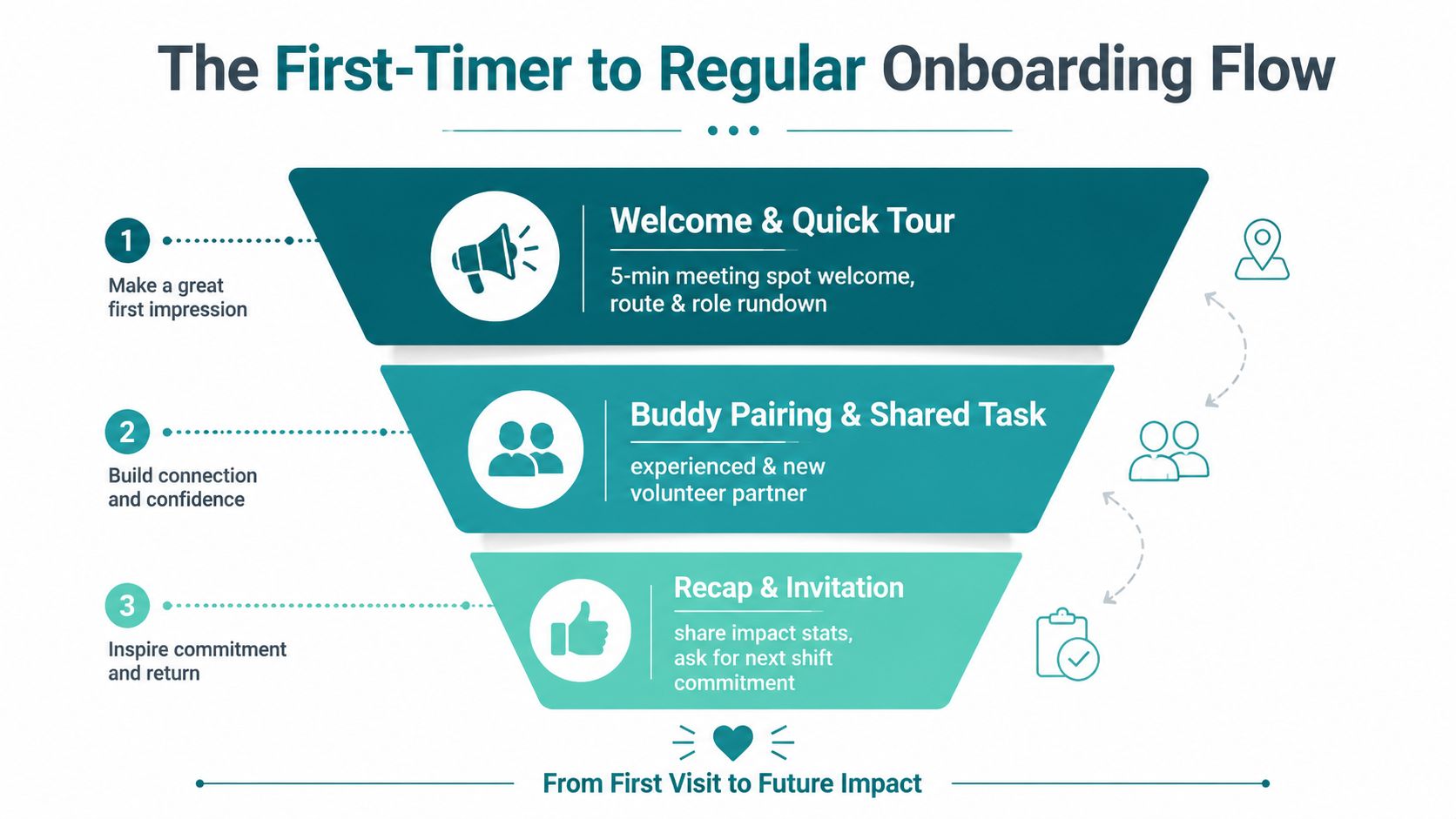
    The design should make friendship visible without promising instant closeness. Show volunteers greeting each other, carrying bags side by side, or posing with flags after the work. Kindness, unity, and bravery can appear in the copy through specific actions. “We check on new volunteers before we start” feels more useful than a vague statement about values.

    6. Practical Details-First Template with Scannable Information Architecture

    A student finds your flyer outside a coffee shop. She has ten seconds before her bus arrives. She needs the date, place, time, and answer to one private question: “What do I need to bring?”

    Put logistics first. Use the largest type for When, Where, and How to Join. Divide the rest into short blocks:

    • When: Weekend morning, with the exact date and start time.
    • Where: Neighborhood, ward, meeting point, and a clear landmark.
    • What to wear: Closed-toe shoes, work clothes, gloves if the group asks volunteers to bring them, and weather-ready layers.
    • What we provide: Bags, litter pickers, briefing, and role choices when available.
    • Who you'll meet: Organizers, neighbors, first-time volunteers, and returning members.
    • How to join: QR code, Meetup, email, text, Instagram, or an open group chat.

    A QR code should lead directly to the signup page. Test it with more than one phone before printing. Put a short readable URL under it for anyone who prefers typing. For planning support, use volunteer event planning guidance from Litter Caterpillars, then adapt the wording to your actual event.

    Safety needs room on the page. Cleanup guidance says organizers should keep sites away from roadsides when possible, brief volunteers on local hazards, and provide gloves, high-visibility clothing, sensible footwear, and weather-appropriate clothing, as described in this community litter-picking safety guide. Another volunteer safety briefing says people should never use bare hands, should use litter pickers, and should leave weapons or medical waste for local officials.

    Add one friendly line: No experience needed. No donations asked. Just show up. Then check the print size with this marketing flyer size reference. A practical layout should help someone decide quickly, without forcing them to decode a crowded design.

    Community Cleanup Flyer Designs, 6-Point Comparison

    Template 🔄 Implementation complexity ⚡ Resource requirements 📊 Expected outcomes 💡 Ideal use cases ⭐ Key advantages
    Bold Call-to-Action Header with High-Contrast Colors Moderate, strong typography and color contrast skills required Low–Moderate, designer time, bold inks or bright digital assets; quick turnaround High visibility and immediate attention; fast responses from passersby High-traffic poles, bulletin boards, short-term recruitment drives Grabs attention from distance; very clear CTA; concise
    Story-Driven Personal Narrative Layout High, needs skilled writing and careful image selection Moderate, real photos or commissioned imagery and copy editing Strong emotional engagement and memory; attracts committed volunteers Recruiting committed volunteers, storytelling campaigns, newsletters Builds authenticity and belonging; filters for aligned volunteers
    Visual Timeline with Impact Snapshots Moderate, infographic/layout design with sequential flow Moderate, quality photos from events, metric collection, designer time Clear expectations and perceived progress; motivates repeat attendance Structured events, visual learners, recurring weekly cleanups Conveys concrete impact and satisfying progression
    Community Map Highlighting Neighborhood Coverage Moderate, map design and accurate geodata required Moderate, map assets, up-to-date location data, designer work Communicates scale and momentum; attracts geographically motivated helpers City-wide outreach, ward-based recruitment, expansion campaigns Shows organized reach and where help is needed; easy to update
    Identity and Pride-Focused Design with Badges and Symbols High, requires cohesive brand system and visual consistency High, logo/badge design, brand guidelines, possible merch production Strong retention and group identification; increased repeat participation Long-term community building, retention programs, brand-led events Creates pride/affiliation; differentiates group; encourages repeat turnout
    Practical Details-First Template with Scannable Information Architecture Low, straightforward hierarchy and clear sections Low, QR codes, clear type, basic layout; easy to update Reduces friction; quick decisions and higher sign-up conversions Coffee shops, community centers, posters where people need logistics fast Maximizes clarity and actionability; fast to scan and update

    Turn a Good Flyer Into a Show-Up Moment

    Choose one format that fits your group's real personality. A brave group may use the hailstorm story. A neighborhood network may need the map. A busy weekly cleanup may work best with the details-first layout. You can combine parts, too. Use the bold headline from the first format, the personal photo from the second, and the safety block from the sixth.

    Run a small print test before you cover every bulletin board. Ask someone who has never attended the cleanup to read the flyer from a distance. Ask them to find the meeting point, start time, clothing guidance, and signup link without help. Watch where their eyes go. If they miss the action, change the hierarchy.

    Check every date and location twice. Walk the route yourself. Confirm that the QR code opens the right page. If the event sits near traffic, rewrite the plan before you print. Road-cleanup guidance says volunteers should face oncoming traffic, wear high-visibility vests, work on one side at a time, and stay out of carriageways and restricted areas, as described in this community cleanup guide. A flyer should describe the conditions, not a safer version that exists only on paper.

    Place copies where volunteers already spend time. Try coffee shops, libraries, community centers, workplace boards, apartment entrances, and partner locations. Add a reminder online several days before the event, then ask a few people to invite someone directly. A Tunis neighborhood cleanup experiment found that flyer recruitment alone produced only 3% participation among initially recruited heads of household, and neighbor-to-neighbor pressure didn't meaningfully raise turnout, according to the study record. That result gives you a practical lesson: a flyer starts the conversation, while personal welcomes and reminders help people finish the decision.

    Your final print should feel like a handshake. Choose readable type and suitable stock, using this guide to paper choice for business flyers as a reference. Make the action easy, make the welcome clear, and give people a reason to show up together.


    Litter Caterpillars publishes Chicago cleanup events with a meeting time, an agenda, and a volunteer-first approach built around safety, friendship, and service. Visit Litter Caterpillars to find an event, see how the group organizes neighborhood cleanups, and join the next weekend morning.

  • Volunteer Peer Support: How to Build a Grassroots System

    Volunteer Peer Support: How to Build a Grassroots System

    Three of us huddled under a Chicago tree while spring hail bounced off our jackets and every Uber canceled. We had come to clean someone else's mess, and I realized that task felt easier than facing the messes inside our own lives.

    Why Volunteer Peer Support Changes Everything

    That storm became part of the Litter Caterpillars story. We were cold, soaked, and annoyed, yet we also laughed. The weather gave the morning a strange flavor, as if the hard part had turned into another page in our shared story. We learned that people often find courage beside someone who understands the same discomfort.

    Three volunteers standing under a tree, collaborating and reviewing project notes on a clipboard outdoors.

    Volunteer peer support starts with that simple exchange. One person brings lived experience, another brings a current struggle, and both people gain a reason to keep showing up. The volunteer doesn't need to pretend to have every answer. They need to listen, share practical knowledge when appropriate, respect boundaries, and stay present.

    The practice has a long history. Reformers Jean-Baptiste Pussin and Philippe Pinel advanced more humane, empathy-based psychiatric care in late eighteenth-century France. Modern peer support later re-emerged through the psychiatric survivor movement in the United States during the 1960s and 1970s. In youth support, Teen Line began in 1980, and its high school volunteers complete more than 65 hours of intensive training before answering calls, texts, and emails. The program says it responds to thousands of contacts each year. (Teen Line history)

    My rule: Protect the person who gives help with the same care you give the person who receives it.

    Format changes the experience. A group can give someone several points of connection, shared language, and a sense that they aren't carrying a problem alone. One-on-one companionship can feel more personal, yet it can also blur expectations if nobody defines the relationship.

    A school-based volunteer peer group ran for a year and gained strong acceptance, even though two-thirds of students felt uncomfortable at first. The study reported improvement across interpersonal, internal, and school outcomes, and two-thirds of alcohol and substance users said they reduced intake or abstained. (School peer-support study)

    I build from the same place every week, whether we're cleaning in rain, heat, or a Chicago blizzard. Safety comes first, happiness comes second, and friendship keeps people connected. That order helps a grassroots system grow without treating volunteers like an endless supply of labor.

    Defining Your Goals and Matching Peers

    Before you recruit anyone, write one sentence that describes the change you want. “Improve wellbeing” sounds kind, but it gives volunteers no clear action and gives coordinators no clean way to learn what works. A narrow target gives everyone a handrail.

    Start with this sentence:

    We pair [specific people] with [specific peer experience] so they can [one behavior or outcome], measured by [one primary metric].

    You might pair new residents with longtime neighbors so they attend community events more consistently. You might pair people managing diabetes with peers who can support a specific self-management habit. You might create a group where participants practice social connection through regular attendance.

    A rapid systematic review of peer-volunteer diabetes interventions found mixed psychosocial results. One of fifteen psychosocial outcomes favored the intervention group, while fourteen showed no difference. Behavioral outcomes looked more encouraging, with six of nine favoring the intervention group. (Rapid systematic review) The lesson feels practical to me. Choose one behavior, teach the same core material, and measure attendance or adherence separately from broad feelings about wellbeing.

    A flowchart titled Defining Your Goals and Matching Peers, illustrating the process of setting goals and metrics.

    Match experience with care

    Lived experience matters, but it shouldn't become the only criterion. Create a short profile for every volunteer and participant:

    • Relevant experience: What has this person lived through or practiced?
    • Availability: Which days and communication methods can they sustain?
    • Boundaries: What topics, locations, or situations should they avoid?
    • Temperament: Would they prefer a quiet conversation, a small group, or active collaboration?
    • Support needs: What supervision or backup would help them stay steady?

    A systematic review of adult diabetes peer support found benefits in selected domains, including self-efficacy, depression, and perceived social support, while other outcomes showed benefit in only a minority of trials. The review reported improvement in three of fourteen glycaemic-control trials, one of four blood-pressure trials, one of six cholesterol trials, two of seven BMI or weight trials, two of five physical-activity trials, two of three self-efficacy trials, four of six depression trials, and two of two perceived-social-support trials. (Adult diabetes review)

    Use one-on-one support when a person wants privacy, continuity, or companionship around a defined need. Use a group when people can learn from one another and share a common activity. Recent community research says group peer support shows promise, while one-on-one community engagement needs clearer definition and further exploration. (Community peer-support trial paper)

    For practical examples of matching volunteers with structured community roles, review volunteer mentor programs. Then write your goal statement, your matching questions, and the one metric you'll review after every cycle.

    Recruiting and Training Your Peer Buddies

    Good recruitment begins with honesty. I don't write, “Change the world in your spare time.” I write what the work asks people to do, including the awkward weather, emotional conversations, and ordinary follow-up that keeps trust alive.

    Try this:

    “We're looking for volunteers with lived experience who can listen without taking over, respect privacy, attend scheduled sessions, and ask for help when a situation exceeds the role. You won't provide therapy or medical advice. You will practice steady, human support with a trained team.”

    Set the commitment before someone signs up. A UK survey of peer mentors and service users recorded a median volunteering length of two years, a median commitment of 25 hours per month, and more than 9,000 combined volunteer hours in a typical month among respondents. Participants reported between three and more than 100 hours per month, so peer service can range from occasional help to sustained work. (UK peer-volunteering survey)

    A four-step infographic guide on how to effectively recruit and train volunteer peer buddies.

    Build training around real moments

    One structured peer-support trial used two volunteer peers to lead a 10-week group course for about 10 participants maximum. Volunteers had to be 18 or older and have lived experience. The program added a training weekend and written material on group rules, adult learning, experiential language, and trauma-informed facilitation. It also allowed individual companionship for up to six months when needed. (Structured peer-support trial)

    I use a training weekend with four practical blocks:

    1. Role and boundaries: Volunteers learn what they can do, what they can't do, and when they must contact a coordinator.
    2. Listening practice: Partners rehearse open questions, reflective listening, pauses, and respectful endings.
    3. Safety scenarios: The group practices responding to distress, privacy concerns, missed meetings, and requests for professional advice.
    4. Session rehearsal: Each volunteer leads a short activity, receives feedback, and writes a personal plan for recovery after difficult conversations.

    Give every volunteer a written boundary sheet. Include the approved referral list, emergency procedure, communication hours, cancellation process, and supervisor contact. Teen Line's requirement for more than 65 hours before first contact shows how seriously some youth programs treat preparation. (Teen Line history)

    I also ask one question before approval: “What will make it easier for you to step away when you need rest?” A volunteer who can answer that question has already started protecting the relationship.

    Protecting Volunteer Mental Health and Safety

    A volunteer can care deeply and still reach a limit. I've watched people leave after carrying too many intense conversations, guessing at their responsibilities, or feeling alone after an interaction went badly. Their dedication didn't fail. The system failed to give that dedication a safe container.

    Research on peer supporters names recurring problems around lack of training and support, role ambiguity, and emotional labour. Another study found that organizational support and supervision improved preparedness, while one-on-one community peer support still needed clearer definition. (Peer-support volunteer challenges)

    Use a check-in before and after

    Before a session, I ask:

    • “Do you have enough energy for this conversation?”
    • “What boundary do you want me to help you protect?”
    • “What will you do if the discussion moves beyond your role?”

    Afterward, I ask:

    • “What stayed with you?”
    • “Did anything feel unsafe or unclear?”
    • “Do you need a break, a supervisor, or a referral?”
    • “What should we change before the next contact?”

    The coordinator records only what the team needs for safety. I don't ask volunteers to write private emotional details into a public chat. I schedule supervision, create a clear escalation path, and make it normal to pause without apology.

    Safety check: A peer supporter should never become the only person holding someone else's crisis.

    A volunteer-run program for socially isolated older adults used older community volunteers. By the end, the intervention group had higher physical-health and general-health scores than the control group, along with better depression, social functioning, and satisfaction with social support. (Older-adult peer-support program) Those outcomes don't erase the work volunteers carry. They make proper support more necessary.

    I keep caseloads limited, rotate difficult assignments, and give volunteers a way to decline a match without explaining their whole history. I also build small rituals of care, such as a shared meal after an event, a private debrief, or a quiet walk. For a gentle example of how objects and stories can help people process difficult feelings, see these Threadies teddy bear stories.

    Building Scheduling and Communication Workflows

    A peer program feels welcoming when a new volunteer can answer three questions quickly: Where do I go? Who will meet me? What happens if plans change?

    I use Meetup for event details, Instagram for public invitations, and an open group chat for live coordination. The tools matter less than the sequence. Publish one clear event page, send one reminder, introduce every newcomer by name, and close with a short reflection.

    A simple event description might say:

    “Meet us Saturday morning at the library entrance. We'll pair up, review the safety plan, work for the agreed session period, and gather afterward for introductions and reflection. Bring water, weather-appropriate clothing, and questions.”

    Weekend mornings create a natural rhythm for service-minded people. They also help volunteers know what they're choosing before they commit. I avoid chat overload by keeping announcements in one channel and casual friendship in another.

    Give every message a job

    Use a welcome message that says who coordinates the group, where safety information lives, how to cancel, and how to ask for a private check-in. Instagram captions should name the neighborhood, the meeting point, the kind of support involved, and the invitation to attend with a friend.

    Keep emergency information separate from ordinary scheduling. A current contact list should include coordinators, venue contacts, and approved escalation resources. Teams that need a practical reference can review how to maintain emergency lists with 3rd-i.

    When a group grows, don't make the chat louder. Add predictable labels, a weekly pinned message, and one named host for each gathering. For a lightweight way to organize recurring volunteer shifts, see free volunteer scheduling software. Consistency gives people room to focus on one another.

    Building Pride Through Flags, Badges, and Identity

    People show up more readily when service has a face, a sound, and a shared story. I learned this from sports teams and national communities, which use colors, songs, and symbols to help strangers recognize one another. A volunteer group can use the same tools without turning service into a performance.

    At Litter Caterpillars, our logo comes from that first storm under the tree. Our theme song came from a community member. Our flags travel to events, and our badges give volunteers a visible way to remember their own progress. A first-event badge says, “I crossed the threshold.” A tenth-event badge says, “I built a habit.” A neighborhood-lead badge says, “I can help someone else begin.”

    Make rituals affordable

    You don't need a large budget. Choose one color, one symbol, one song, and one phrase that volunteers can repeat. Welcome newcomers at the start. Thank people by name at the close. Take a group photo only when everyone agrees. Let volunteers suggest new badge names and tell the origin story behind each design.

    Pride shouldn't pressure people to work through exhaustion. It should make rest compatible with belonging. A volunteer who misses a session remains part of the group.

    For groups that need durable visual materials, premium vinyl Teresa flags can provide one route for creating a recognizable event marker. Keep the design simple enough for someone to draw from memory.

    Identity also helps people face difficult conditions. On a freezing morning, the flag says, “You're with us.” On a hot afternoon, a shared song can break the silence. The symbol doesn't replace safety or supervision. It gives people a small piece of courage they can carry together.

    Measuring Impact and Sustaining Your Program

    I track two kinds of information: what volunteers do and what participants experience. Attendance, completed sessions, retention, and cancellations show whether the system runs. Short surveys can ask about emotional support, practical information, loneliness, social connection, and physical activity.

    A peer-to-peer volunteer model for highly isolated patients reported wellbeing rising by 58%, emotional and informational support improving by 50%, reduced social interaction dropping by 91%, loneliness falling by 70%, and physical activity increasing from 49% to 66% after volunteer visits. (Peer-to-peer volunteer model) Use those findings as examples of measurable questions, not promises for your own program.

    Review the dashboard each quarter:

    • Attendance: Who keeps coming, and where do people drop out?
    • Adherence: Did participants complete the agreed activity?
    • Experience: What felt useful, confusing, or draining?
    • Safety: Did volunteers receive timely supervision?
    • Pride: Which rituals help people return?

    A simple volunteer program evaluation can turn stories into decisions. Celebrate what works, change one weak process at a time, and protect the people who make the work possible.


    Litter Caterpillars brings volunteer-led community service, introductions, partner activities, and reflection into weekly gatherings across Chicago. Visit Litter Caterpillars to find a welcoming way to serve, meet people, and build a peer-support habit that respects volunteer safety and friendship.

  • Watershed Protection: A Community Guide You Can Use

    Watershed Protection: A Community Guide You Can Use

    On a Saturday morning beside Chicago's North Branch, I watched a volunteer pull cigarette butts from a wet curb. Two feet away, a storm drain waited for the next hard rain.

    Why Litter on Your Curb Is Really a Watershed Story

    I've learned to treat every block as a small watershed. A watershed is the land area that sends water toward the same creek, river, lake, or wetland. On our street, a raindrop hits a roof, rolls into a gutter, slips through a storm drain, travels through a sewer or channel, and eventually reaches the Chicago River system and Lake Michigan.

    That trip gives ordinary trash a route. A wrapper near the curb can move with rainwater. Pet waste can wash from a sidewalk into the same drainage network. Lawn chemicals can leave a yard during a storm. The Environmental Protection Agency's explanation of stormwater runoff describes how rain and snowmelt pick up sediment and contaminants from streets, rooftops, and lawns before reaching surface water or groundwater.

    Chicago's combined sewer system adds another layer. During heavy rain, stormwater and wastewater can enter the same system, and that can create overflow problems. A single summer storm can move a day's worth of loose litter off the curb before a crew gets back to it.

    An educational infographic explaining how litter on streets travels through storm drains to impact local watersheds.

    Follow the drop

    Friends of the Chicago River has reported bacteria and nutrient readings over the years that connect street-level behavior with water quality. I don't need a laboratory result to understand the basic chain. When a crew removes waste before rain reaches the drain, we remove material from the water's path.

    Field rule: If you can see trash beside a drain, treat it as a watershed input, not a cosmetic problem.

    The same logic applies to soil. The USDA Natural Resources Conservation Service reports that watershed projects across the United States generate more than $2.2 billion in average annual benefits for more than 48 million people, while reducing 92,341,221 tons of soil erosion per year. Those benefits include flood protection and agricultural and non-agricultural gains, so watershed protection reaches beyond cleaner water to the land around it. You can read the USDA watershed benefits fact sheet for the full breakdown.

    I keep a bag of curb litter separate from the rest of our haul when possible. It helps volunteers see what they removed from the drainage route. That bag becomes a simple, measurable record of what the next storm didn't carry downstream. For more practical reasons to remove it, see this guide to picking up litter before it travels.

    How to Plan a Cleanup That Protects a Watershed

    A cleanup protects a watershed when you choose the site, record the waste, and handle disposal with the next storm in mind. I start with a map, not a stack of bags.

    Two weeks before the cleanup

    Pick a site beside a storm drain, outfall, creek, or riverbank. Walk the route after rain if you can. Look for clogged inlets, low points where wrappers collect, bare soil, and places where people cut across grass toward the water.

    Check event calendars from the Chicago Park District and Friends of the Chicago River before you announce anything. Confirm permission, access, disposal rules, and whether the site needs a permit. Notify Chicago Streets and Sanitation, the ward office, nearby property managers, local sponsors, and any park or river partner connected to the location.

    Recruit through a school, block club, church, neighborhood group, or alderman's office. Give each person a clear meeting point and a short description of the work. A volunteer who knows the route and safety plan arrives ready to help.

    A step-by-step infographic on how to organize a volunteer cleanup event to protect local watersheds.

    One week before the cleanup

    Gather heavy-duty bags, nitrile gloves, work gloves, grabbers, buckets, first-aid supplies, water, reflective vests, sunscreen, hand sanitizer, and a scale. Bring puncture-resistant containers for sharp objects. Arrange transportation for the filled bags and decide who will contact the city if illegal dumping appears.

    Create a simple sorting sheet:

    • Plastic and food packaging: Record the common items and where you found them.
    • Cigarette waste: Keep it separate because it often concentrates along curbs and entrances.
    • Glass and sharp objects: Let a trained adult handle them.
    • Metal and bulky waste: Photograph unusual items and report them through the proper city channel.
    • Pet waste: Use sealed bags and keep it away from other collected material.

    Use the Alliance for the Great Lakes Adopt-a-Beach app to log the data. Take photos before work begins and after the route looks clear. Stencil storm drains only with permission and approved materials. The message should tell people where the water goes, not just ask them to keep the street tidy.

    Event day and the follow-up

    Open with a safety briefing. Review traffic, broken glass, needles, unstable banks, heat, hydration, and the rule that nobody reaches into hidden spaces. Assign one person to supervise children and one person to track bags, weights, categories, and photographs.

    After the cleanup, place waste where the city or site partner instructed. Weigh and sort before disposal when conditions allow. Meet for a short debrief, write down blocked drains and recurring litter spots, then upload the record and share it with your partners.

    For a practical event model, use this community cleanup planning guide as a starting point. The point of the data isn't to decorate a report. It helps you choose the next drain, the next block, and the next stormwater fix.

    Stormwater Moves You Can Run on Your Block

    I rank stormwater work by effort, cost, and how close it sits to the runoff source. Start where water leaves your property, then work outward with neighbors.

    A roof can send a surprising volume toward the street. One inch of rain on a 1,000-square-foot roof produces about 600 gallons of runoff, according to the National Oceanic and Atmospheric Administration's rain barrel guidance. Check the exact roof area and local rules before choosing a barrel size.

    Start with small habits

    Redirect downspouts toward a lawn or approved rain barrel. Sweep sidewalks instead of hosing them. Pick up pet waste within a day, and avoid spreading fertilizer before rain. These actions take little equipment, and they keep loose material away from the curb.

    Medium-effort projects include a rain barrel, a downspout planter, a small rain garden near a garage or side yard, and native deep-rooted grasses. Disconnect a sump pump from the sewer only where local rules allow it, and confirm the discharge won't send water toward a neighbor's foundation.

    At block scale, plant trees through programs such as TreeKeeper or Openlands' Tree Census. A mature oak can intercept thousands of gallons per year, according to Openlands' tree information. Consider permeable pavers for a parking pad and work with neighbors on bioswales near bus stops. Chicago examples include green alleys in Avalon Park and rain gardens at the Chicago Center for Green Technology.

    Move Effort Estimated Runoff Benefit
    Sweep instead of hosing Low Keeps loose sediment and litter out of drains
    Redirect a downspout Low Sends roof water toward soil instead of pavement
    Pick up pet waste Low Removes a direct contamination source
    Install a rain barrel Medium Stores roof runoff for later garden use
    Build a small rain garden Medium Holds and filters water near the source
    Plant deep-rooted natives Medium Helps soil absorb and hold water
    Plant a street tree High Adds canopy interception and soil uptake
    Install permeable pavers High Lets rainfall enter the ground through the surface
    Partner on a bioswale High Slows and filters runoff across a shared route

    For tree selection and Chicago planting ideas, browse this guide to trees in Illinois. Match the move to the problem. Pooling calls for storage and infiltration. Basement seepage calls for careful grading and downspout control. Hot, dirty runoff calls for shade, soil, and planted filtration.

    Green Infrastructure Options From Easiest to Most Ambitious

    The right project depends on what your block needs, what your soil can absorb, and who controls the land. Chicago's heavy clay can slow infiltration, so a rain garden may need an underdrain or a different soil mix. Don't dig first and investigate later. Check utilities, property lines, drainage patterns, and approval requirements.

    Option Cost Effort Footprint Watershed Impact Permit?
    Rain barrel Low Weekend Small Stores roof runoff for later use Check local rules
    Downspout planter Low to medium Weekend Small Filters water near the building Check local rules
    Rain garden Medium Weekend to several days Small to medium Holds and filters runoff Confirm with local office
    Alley bioswale Medium to high Multi-weekend Medium Slows shared pavement runoff Coordinate with city
    Permeable paver parking pad High Several days Medium Sends rainfall into a porous surface Confirm paving rules
    Tree trench under sidewalk strip High Multi-month Medium to large Adds soil storage and canopy Coordinate with city
    Curb-cut bioswale High Multi-month Large Captures street runoff at the curb Coordinate with city and Space to Grow

    Match the tool to the water

    A rain barrel works when you need to hold roof water and have a safe overflow route. A downspout planter fits a tight side yard. A rain garden needs a low point, but it shouldn't sit beside a foundation or where standing water creates a hazard.

    An alley bioswale makes more sense when several properties send runoff toward the same route. Permeable pavers can help a parking area, but the base must drain properly. A tree trench needs room beneath the sidewalk, cooperation from the city, and a long maintenance plan.

    Curb-cut bioswales require the most coordination. Chicago's Space to Grow program can provide a useful partnership model for schoolyards and public sites, though each project still needs site review and approval.

    Choose by failure point: Fix the place where water pools, seeps, heats up, or carries sediment. A larger project isn't automatically a better one.

    Test the soil before you commit. If water sits in a test hole for too long, ask a qualified designer about underdrains, amended soil, or a different location. Keep overflow away from basements and neighboring lots. Green infrastructure works through placement and maintenance, not appearance alone.

    Monitoring Water Quality Without Fancy Lab Gear

    I've seen volunteers avoid monitoring because the equipment looks technical. Start with observations and keep your notes consistent. A simple record from the same location can tell you more than a single dramatic sample.

    Four field checks

    1. Visual clarity tube: Fill a clear tube and record what you can see through the water. Note floating trash, foam, oil sheen, unusual color, and sediment.
    2. Turbidity check: Use a Secchi disk or a simple DIY disk to track cloudiness. More cloudiness can point to suspended sediment or disturbed material.
    3. Dissolved oxygen: Use a Hach drop kit or another simple chemical kit. The reading helps you understand whether the water holds oxygen for aquatic life.
    4. Bacteria screening: Use E. coli test strips from a science supply store. Treat the result as a screening signal, follow the kit directions, and avoid contact with the sample.

    Record the date, time, weather, recent rainfall, location, water level, smell, color, clarity, and every test result in a shared spreadsheet. Use the same container, method, and sampling spot each time. Add photographs from the same angle so your visual record stays useful.

    Avoid the two common traps

    Testing immediately after rain can make every result look worse because runoff stirs sediment and carries fresh contaminants. That doesn't make post-rain testing useless, but label the conditions clearly and compare it with dry-weather readings.

    The second mistake is waiting for perfect gear. A clear tube, a notebook, photographs, and careful descriptions can establish a baseline. Escalate unusual color, strong odors, fish distress, repeated sewage indicators, or unsafe conditions to Friends of the Chicago River or the Metropolitan Water Reclamation District. Don't handle suspicious material yourself.

    Building Partnerships and Telling the Right People

    A cleanup that happens twice can disappear from a neighborhood's memory. A cleanup that returns on the same route with the same sponsor creates a habit, a record, and a reason for people to keep the drain clear.

    Start with the person who can say yes. For a hardware store donation, ask the store manager instead of sending a message to a corporate office. For an aldermanic support letter, contact the ward office and send a short one-page request. For a school or church base, ask for a recurring weekend meeting place, storage space, or volunteer announcement.

    Use a plain pitch

    “We're organizing a neighborhood cleanup beside [specific site]. We'll remove and sort litter, record the waste, photograph the route, and share the results. Could you provide [specific supplies, space, volunteers, or letter] for [specific event or recurring schedule]?”

    Ask for a concrete in-kind contribution or dollar amount that fits the partner's capacity. Request bags, gloves, grabbers, water, printing, hauling help, or a small project budget. Don't ask for “support” without saying what support means.

    Chicago has several useful doors: local watershed groups, the city's Green Stormwater Infrastructure team, neighborhood chambers, schools, park partners, and nearby businesses. Give each partner a job that connects to its reason for participating. A hardware store can supply tools. A school can recruit families. A ward office can help route a report about blocked drains.

    Follow up after the event with photos, the sorted waste record, and one sentence about what you'll do next. Send a thank-you soon after the work, then return with a specific year-two request when you have a new date and a clear task. Consistency makes the next ask easier because the partner can see where its help went.

    Your 30 Day Watershed Protection Plan

    I'd start on Monday with one block, one drainage route, and five neighbors. You don't need to solve the whole river. You need to learn where water moves and keep showing up there.

    Week one, walk and map

    Walk the neighborhood and mark storm drains, pooling spots, litter traps, downspouts, and access points near the North Branch Chicago River. Recruit five neighbors for a kickoff cleanup. Choose a safe meeting point and contact the relevant site partner before you set the date.

    Week two, audit and prepare

    Run a household stormwater audit. Trace each downspout, inspect the route from roof to street, look for bare soil, and note where water reaches pavement. Swap a small planting area to native plants, and sign up for monitoring training through Friends of the Chicago River.

    Week three, install one move

    Choose one project that fits the problem. A rain barrel can handle roof runoff. A downspout planter can help a tight side yard. A curb-cut rain garden on a Logan Square boulevard needs permission, design review, and coordination, so treat it as a shared project rather than a casual weekend dig.

    A professional four-week infographic timeline illustrating a step-by-step plan for community watershed protection and environmental cleanup.

    Week four, document and ask

    Hold the public cleanup. Photograph the route before and after, sort and record the waste, and run a basic water-quality check before and after under clearly labeled conditions. Send the photo set and results to the local alderman, then write a specific request for a Green Infrastructure Grant.

    The first time I ran a cleanup, I wanted a heroic result. I wanted one hard morning to fix the block. The work taught me something plainer. Measurable outcomes follow consistency, not heroics.

    Pick one block and show up four Saturdays in a row. Bring a friend, track what you remove, watch what returns, and adjust the next move to the water's path.


    Litter Caterpillars brings Chicago volunteers together for recurring, hands-on cleanups built around safety, friendship, and block-by-block service. Visit Litter Caterpillars to find a cleanup, meet the crew, and turn your next Saturday morning into practical watershed protection.

  • How to Organize Volunteers for Cleanup Events

    How to Organize Volunteers for Cleanup Events

    The first Litter Caterpillars cleanup had three people, one borrowed truck, and trash bags that kept popping open in the rain. We huddled under a tree while Chicago threw hail at us, then went back to picking up cans.

    Three years later, we still meet every week, through heat, rain, blizzards, and the kind of wind that makes a trash grabber feel like a fishing rod. I've learned that how to organize volunteers has less to do with perfect plans and more to do with making the next Saturday easy to understand, safe to join, and worth remembering.

    Why Organizing a Volunteer Crew Is Worth the Mess

    That first pickup looked ridiculous. Water ran down the street, the truck bed filled with soggy bags, and every Uber seemed to cancel while we stood there shivering. Yet nobody wanted to leave empty-handed. We finished the block, loaded what we could, and took a photo that looked less like a nonprofit campaign and more like evidence from a minor weather disaster.

    That's the strange wealth a cleanup crew can build. You collect cleaner sidewalks, familiar faces, small jokes, and friendships that survive bad forecasts. You also get the quiet satisfaction of seeing a filthy stretch of Chicago become walkable again. The work stays physical and ordinary. That's exactly why people remember it.

    A recurring cleanup needs more structure than a casual “who wants to help?” message. A major 2023 volunteer-management survey found that 63% of nonprofits involving volunteers had a paid staff member or volunteer engagement professional managing volunteers, compared with 62% in 2003 and 65.2% in 2019. The median engagement professional spent 40% to 50% of their time on volunteer engagement in 2022, compared with about 30% in 2003. (The State of Volunteer Engagement)

    That doesn't mean you need a full-time coordinator for a Saturday cleanup. It means someone needs to own the details. A named person should know who signed up, where supplies are, what the weather looks like, and who can lead a new group.

    An infographic illustrating the challenges and rewards of organizing a volunteer trash cleanup crew.

    The mess teaches you what the spreadsheet misses

    You'll learn why vague meeting points create wandering volunteers. You'll learn why one experienced person can calm an entire first-timer group. You'll learn why a hot drink in November can matter more than a polished slogan.

    This field-tested playbook moves through the practical pieces:

    • Finding the first people: Where I post, what I say, and how I lower the ask.
    • Building one shift: Roles, time blocks, supplies, zones, and a clean ending.
    • Protecting the crew: Safety rules, waivers, emergency contacts, and incident notes.
    • Turning helpers into regulars: Onboarding, recognition, rituals, and shift leads.
    • Saving your evenings: Tools, templates, and a weekly rhythm that doesn't eat your life.

    If you want shirts, flags, or other identity pieces for a fundraiser, the 2026 nonprofit fundraising apparel guide from T-Shirt Envy can help you think through apparel without making it the center of the operation. Start with people, give them a clear job, and let the branding follow the friendships.

    Finding Your First Volunteers and Getting Them to Show Up

    Recruiting starts with a specific invitation. “Help clean Chicago” sounds noble, but it gives a stranger too many unanswered questions. Which neighborhood? What time? How long? Do I need equipment? Can I leave early?

    I use Meetup for the public event page, Instagram for photos and reach, and an open group chat for last-minute details. Litter Caterpillars also describes its approach to finding and coordinating participants through a Meetup page and group chat in its guide to finding volunteers.

    Give people a small first step

    My event copy usually names the exact place, the exact time, and the smallest reasonable commitment. You can adapt these examples:

    Meetup description

    Join us at McKinley Park near the fieldhouse on Saturday at 10 a.m. We'll clean the paths and nearby sidewalk for two hours. Bring water if you have it, and come for thirty minutes if that's all you can manage. We'll provide bags, grabbers, and gloves.

    Instagram caption

    Saturday cleanup at McKinley Park. Meet by the fieldhouse at 10 a.m. We're picking up litter, meeting neighbors, and heading home before lunch. Come for thirty minutes or stay for the full shift. First-timers are welcome.

    Neighborhood group-chat message

    Hey neighbors, I'm taking a small crew to clean the corner of 47th and Wolcott this Saturday at 9:30 a.m. We'll work for about two hours, but come for thirty minutes if you can. I'll bring bags and grabbers. Reply “in” and I'll send the meeting pin.

    Post early enough for people to see the invitation before their weekend fills up. Then send a direct reminder the day before. A reminder should repeat the meeting point, start time, expected duration, weather plan, and what you'll supply.

    The first event may feel like shouting into a canyon. Design the event so a small turnout can still finish a real patch of ground. One volunteer with a grabber can make a morning useful. Ten volunteers can make it lively.

    Screenshot from https://example.com/meetup-event-screenshot.png

    Invite by motivation, not by résumé

    People join for different reasons. One person wants a cleaner park. Another wants weekend friends. A student needs service hours. A newcomer wants to learn the city block by block. Your message should give each person a doorway.

    A 2025 volunteer-management survey identified role matching as a problem for 11.7% of organizations, alongside recruitment at 26.4% and retention at 9%. (Insight into Volunteering) I take that as a warning against one giant signup labeled “volunteer.” Write separate tasks instead: route scout, supply runner, photo helper, bag carrier, or zone captain.

    Designing One Cleanup Shift From Start to Finish

    A first-timer should know where to stand, what to carry, and when the work ends. If people need to decode the event while cars pass and bags blow down the sidewalk, you've already made the morning harder than it needs to be.

    I use a two-hour shape. It gives the shift a beginning, a middle, and a finish people can remember.

    An infographic titled One Cleanup Shift detailing a two-hour volunteer event schedule broken into four main phases.

    A simple two-hour template

    The exact breakdown can flex, but I plan the morning like this:

    1. 15 minutes for sign-in and safety: Welcome people, collect waivers, explain the route, point out the restrooms, and name the person handling questions.
    2. 75 minutes for pickup: Divide the area into assigned zones. Keep each group small enough for the captain to see everyone.
    3. 30 minutes for sorting and closing: Bring bags back, separate anything your local disposal plan requires, weigh bags if you track that, take a group photo, and finish with a cheer.

    A source on volunteer shifts recommends defining the task, location, and duration before anyone signs up. It also recommends immediate confirmation and reminders 48 to 72 hours before a shift, with day-of nudges for critical roles. (How to Schedule Volunteers) For a recurring crew, I split the schedule by area instead of dumping every assignment into one long list.

    Give every responsibility a name

    Keep the core crew roles to four:

    • Zone Captain: Explains the boundary, watches the group, and reports hazards.
    • Supply Chief: Carries bags, grabbers, gloves, sanitizer, water, and the sharps container.
    • Photo Lead: Takes the opening and closing photos, with permission from participants.
    • Waiver Wrangler: Checks forms, tracks attendance, and knows the emergency contact process.

    Here's my printable supply checklist:

    • Heavy-duty trash bags
    • Pickup grabbers
    • Work gloves in several sizes
    • Closed-toe footwear reminder
    • High-vis vests for roadside work
    • Sharps container
    • Hand sanitizer and wipes
    • Water and weather supplies
    • First-aid kit
    • Phone charger
    • Printed route map
    • Photo-release and emergency-contact records

    Draw the zone map like a child explaining a treasure hunt. Mark the meeting point with a star, the supply station with a square, and each boundary with a thick line. Write “return here” near the finish. Nobody should wonder whether the east side of the park belongs to them.

    The volunteer event planning guide can help you turn that outline into a repeatable event plan.

    Practical rule: Give people a clear job, a visible boundary, and a known ending. Confusion burns energy faster than trash pickup.

    Keeping the Crew Safe, Happy, and Protected From Liability

    Safety comes before fun, photos, and group identity. I'd rather have one untouched pile of litter than one volunteer walking away with an injury because I rushed the briefing.

    Start with rules people can understand without a legal dictionary. Closed-toe shoes stay on. Gloves stay on during pickup. High-vis vests go on near roads. Nobody reaches into a hidden pile. Nobody picks up needles, broken glass, or another sharp object by hand. The Zone Captain calls over the Supply Chief and uses the sharps container.

    A volunteer policy source says people should learn about foreseeable hazardous materials, equipment, and processes before they do the work. (Volunteer safety policy guidance) I explain the hazards before the first bag leaves the supply station.

    Build protection into the signup

    A short Google Form can collect:

    • Assumption of risk
    • Emergency contact
    • Photo release
    • Medical information the volunteer chooses to share
    • Agreement to follow the safety briefing
    • Permission to receive event updates

    Digital forms work better than a clipboard when rain turns paper into oatmeal. Keep the form readable, explain what volunteers should expect, and tell them how to ask questions before arrival. You can use these volunteer agreement templates from Closer Innovation Labs Corp. as a starting point, then ask a qualified professional to review language for your group and location.

    A cleanup group also needs a liability plan. You might arrange volunteer insurance, work with a sponsor nonprofit, or ask a local partner to review the activity before you invite the public. The Litter Caterpillars volunteer liability insurance guide gives organizers a place to begin that conversation.

    Make comfort part of safety

    Chicago weather doesn't care about your event calendar. I keep a stash of high-vis vests, watch heat and storms, and give people permission to stop. If someone feels unsafe stepping into the street, that person sits out. No debate, no guilt.

    In summer, shade matters. In November, hot cocoa can rescue the mood. At the end, I hold a short safety debrief and ask what felt unclear or risky. If an injury happens, I record it the same day with the date, location, people involved, what happened, and what action followed.

    Turning First-Timers Into Regulars Through Onboarding and Identity

    The first shift decides whether someone sees your cleanup as a friendly invitation or a confusing errand. I try to make the first five minutes feel like entering a small club with the doors already open.

    I greet the new person by name, point out the meeting spot, explain the route, and give them one job they can finish quickly. Then I pair them with someone who has done a cleanup before. A new volunteer shouldn't spend the morning guessing which bag to use or wondering whether the group will notice if they fall behind.

    A systematic review and meta-analysis connected volunteer turnover with job satisfaction, affective commitment, engagement, organizational commitment, communication, organizational support, and leader-member relationships. (Volunteer turnover meta-analysis) A separate study found that appropriate training increased the odds of a volunteer becoming an organizational promoter by more than eight times, with an odds ratio of 8.457, in its original survey data. (Volunteer training and promotion study) I read that plainly: teach people what to do, answer them quickly, and let them feel useful.

    A three-step funnel infographic explaining the onboarding process for new volunteers to become regular contributors.

    Give the crew a vocabulary

    Names create memory. We have regulars, Zone Captains, the supply stash, the traveling flag, and the final cheer. A signature flag moves from park to park. A goofy theme song comes out of a Bluetooth speaker when the crew needs a lift. Stickers or photo badges can recognize five, ten, or twenty-five events.

    Recognition works because people want to know that someone noticed. A UK national volunteer-retention survey found that 80% of volunteers said they were likely to continue with their main organization over the next twelve months, while 53% said they were very likely. Attachment to the organization reached 52%, attachment to the cause reached 49%, and changing circumstances ranked as the most common reason for leaving at 33%. (Volunteer retention survey)

    That's why I'd choose a monthly Instagram shoutout, a Crew Member of the Month post, or a tiny trophy before I'd spend the whole budget on free pizza. Food is nice. Being known lasts longer.

    At the end of each shift, we form a recap circle. Each person shares one strange thing they found. Someone finds a garden gnome head. Someone else finds a receipt from a restaurant that closed years ago. The stories turn a pile of trash into a shared morning.

    Here's the handoff that keeps the founder from becoming a permanent bottleneck:

    1. Ask a reliable volunteer to lead one zone.
    2. Give that person the map, safety notes, contact list, and supply checklist.
    3. Let them run the briefing while you watch.
    4. Debrief privately afterward.
    5. Invite them to lead the next shift.

    A recent study found that experienced volunteers on a shift increased new volunteer retention by 52%, and by 125% for group volunteers. (Volunteer experience and retention study) Pairing people does more than make the work smoother. It gives a first-timer a human reason to return.

    Tools, Templates, and Weekly Rhythms That Save Your Sanity

    I don't need a complicated volunteer-management system for a Saturday cleanup. I need a few tools that each do one job and don't make me hunt through six apps for a phone number.

    • Meetup: Public event page, RSVPs, meeting details, and first-time discovery.
    • Instagram: Photos, volunteer stories, reminders, and repostable updates.
    • WhatsApp or GroupMe: Day-of logistics, weather calls, directions, and quick questions.
    • Google Forms: Waivers, emergency contacts, attendance, and post-event feedback.
    • Shared calendar: Recurring events, supply reminders, and leader assignments.

    The schedule below protects my Tuesday evening because I don't rebuild the event from scratch each week.

    Day Core Task Tool Used
    Sunday night Post the next cleanup Meetup and Instagram
    Tuesday Send an RSVP reminder Meetup and group chat
    Thursday Check the forecast and route Weather app and shared calendar
    Friday Confirm headcount and leaders Group chat and Google Forms
    Saturday morning Run the cleanup Printed map and supply checklist
    Sunday Post photos and thank-yous Instagram and group chat

    Keep four templates ready

    RSVP confirmation

    You're on the list for Saturday at [time] near [meeting spot]. We'll work for [duration]. I'll bring bags, grabbers, and gloves. Please wear closed-toe shoes. Reply here if you need directions or can't make it.

    Waiver form

    I understand the cleanup may include walking near roads, lifting bags, uneven ground, and contact with discarded materials. I'll follow the safety briefing, ask for help, and report hazards immediately. Emergency contact: [name and phone]. Photo preference: [choice].

    Shift-leader handoff

    Route: [area]. Meeting point: [location]. Supply location: [location]. Zone boundaries: [description]. Volunteers assigned: [names]. Weather plan: [plan]. Incident contact: [name and phone]. Closing task: [task].

    Recap post

    Today we cleaned [place] with [crew description]. We found [odd item], met [community detail], and left the route ready for the next walkers. Thanks to everyone who showed up. Next cleanup: [date, time, place].

    Set the event to repeat on your calendar. Save a weather-cancellation message. Keep one shared checklist for bags, gloves, grabbers, vests, water, first aid, and the sharps container. Your future self will thank you while drinking coffee instead of rebuilding a spreadsheet at midnight.

    Showing Up Is the Whole Point

    I used to think a successful cleanup needed a big crowd and a perfect result. Chicago corrected me. One volunteer, one Saturday, and one filled trash bag can start a habit that lasts longer than a grand plan sitting in a draft folder.

    The people matter more than the pound count. A first-timer who learns a neighbor's name may return next week. A regular who becomes a Zone Captain may bring someone who never would have come alone. A person who shows up in the rain learns that service can feel like a real part of life, not an item waiting for a convenient day.

    Build the smallest event you can repeat. Name the meeting spot. Bring enough gear. Give everyone a buddy. End with a cheer, a photo, or one ridiculous story from the sidewalk.

    My mantra is simple: make Saturday easy to join, useful to finish, and warm enough to remember.

    Post your next cleanup before the weekend ends. Choose one Chicago block, invite your group chat, and ask people to come for thirty minutes. Then show up, even if the forecast looks rude.


    Litter Caterpillars organizes weekly Chicago trash pickups where volunteers meet, learn the route, share gear, and clean together across the city's neighborhoods. If you want a practical place to start building your own crew, visit Litter Caterpillars, find an upcoming cleanup, and come see how a clear plan turns strangers into Saturday regulars.