I once stared at a jar of blueberry jam in the back of my fridge and felt defeated. It was old, sticky, useless, and somehow too heavy for me to throw away because it carried a memory from a trip to Michigan.
Your Impact Starts with One Piece of Trash
I didn't start cleaning streets because I had my life together. I started because I didn't.
My apartment had its own archaeology. Old food. Half-used bags of nuts from some failed health kick. Receipts. Clothes on chairs. Every item had a tiny emotional hook in it. I knew each thing weighed almost nothing, but in my body it felt like 500 pounds. I could walk past a mess for weeks and feel my energy drain every time I saw it.
Then one day I picked up trash outside.
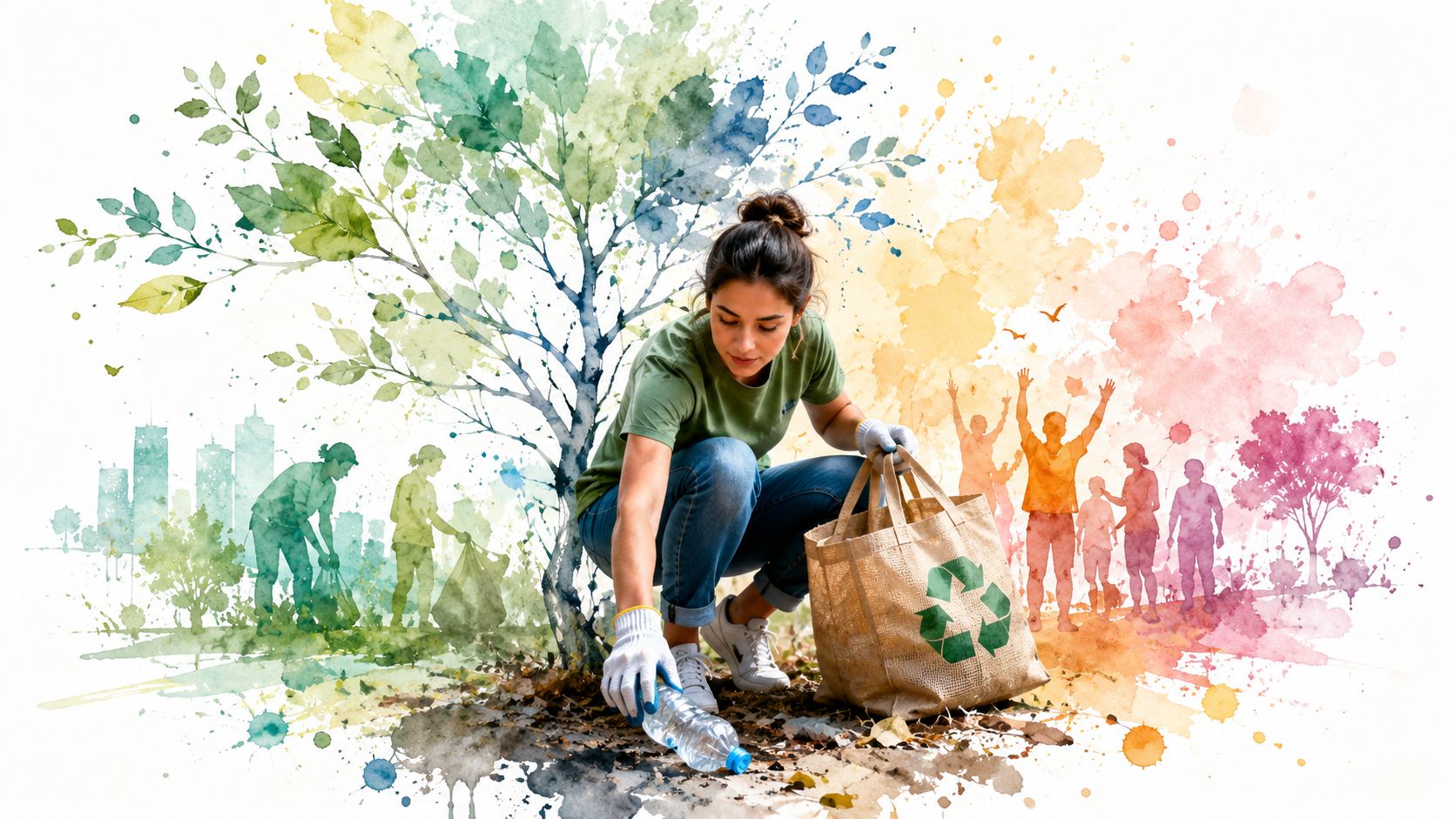
That sounds small. It didn't feel small to me. It felt like cheating my own broken wiring. Cleaning my own room came with shame, history, self-judgment. Cleaning a sidewalk came with none of that. A bottle in the gutter didn't ask me to relive an old mistake. A fast-food cup in the grass didn't remind me who I used to be. I could just bend down, grab it, and put it in a bag.

That was the first lesson I learned about community service impact. It starts before the neighborhood notices. It starts in your nervous system. It starts in the moment when you do one useful thing and your brain finally goes quiet for a second.
Why one small act matters
I think a lot of us carry private chaos. You might hide it better than I did, but you know the feeling. You avoid a drawer, a phone call, a bill, a hard conversation. Then you do one clean action in public, and something unclenches.
Practical rule: If your own mess feels impossible, start with a mess that isn't yours.
That's part of why service pulls people in. It gives your hands a job before your mind can argue with you. If you want to see that in action on the ground, I've written more about cleaning up trash in a simple, direct way.
You are not doing something tiny
It can feel silly to talk about one person with one bag on one block. I get that. But single acts stack up fast when enough people keep showing up.
In the United States, about 60.7 million people, or over 23% of people age 16 and up, formally volunteered through an organization between 2020 and 2021. Their work added up to more than 4.1 billion hours with an estimated economic value of $122.9 billion, according to the U.S. Census Bureau and AmeriCorps volunteering data.
That number helped me stop treating service like a sentimental side hobby. People are out there doing real work. They're feeding neighbors, coaching kids, cleaning blocks, moving supplies, and checking on each other.
- Formal service matters: It creates visible labor that communities would otherwise need to pay for or go without.
- Informal help matters too: The same Census story says nearly 51% of Americans, or 124.7 million people, informally helped neighbors during that period.
- Your first act counts: You don't need a nonprofit title or a polished mission statement to join that current.
I learned that one piece of trash is never just one piece of trash. It's a vote. It says, “I still believe this place is worth caring for.” Sometimes that sentence is the first honest thing you've said to yourself all week.
The First Change You See Is in Yourself
After a chaotic relationship ended, I made a private decision. I was done waiting to become disciplined. I was going to practice it.
I picked three traits that had always scared me because I lacked them: cleanliness, consistency, and bravery. Street cleanup became my training ground. If it was cold, I went anyway. If it was awkward, I went anyway. If I felt embarrassed carrying a grabber and a trash bag in public, I went anyway.
That's why the caterpillar idea hit me so hard. A caterpillar is not glamorous. It crawls. It eats leaves. It looks unfinished. I loved that. I felt unfinished too.
Service gives you a mirror
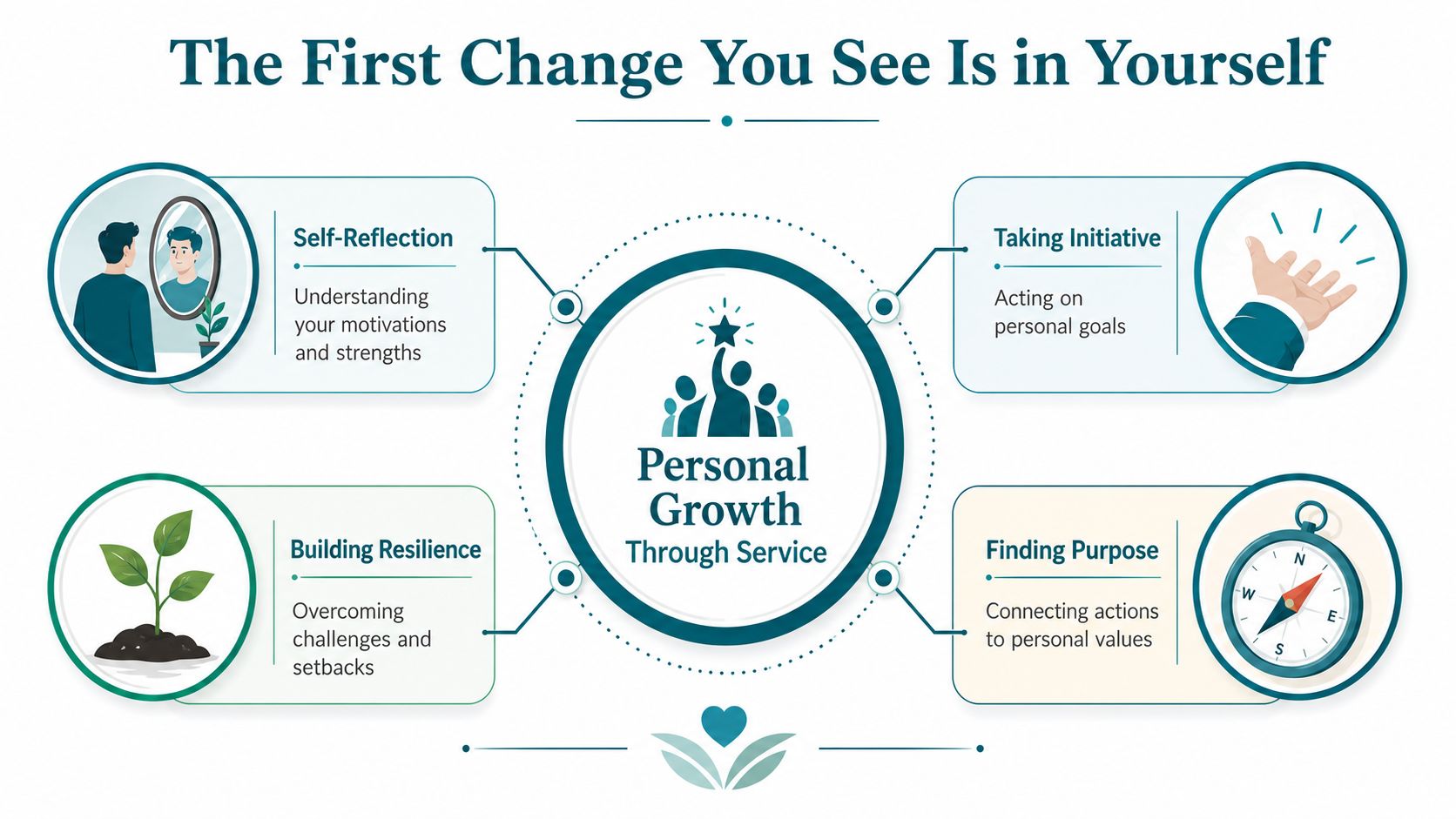
When you volunteer outside, the street reflects you back to yourself. Rain asks if you're still coming. A filthy alley asks whether you quit when a job is ugly. An empty morning asks whether your values are real or just good intentions.
Here's the pattern I noticed in my own life:
- Reflection came first. I had to admit what I kept avoiding.
- Action came next. I needed a repeatable behavior, not a dramatic speech.
- Resilience grew slowly. You don't become brave in one big movie scene. You become brave by keeping promises on ordinary weekends.
- Purpose followed. Meaning arrived after the work, not before it.
If motivation is hard for you, I think it helps to understand what intrinsic motivation looks like in daily life. External praise fades fast. Internal alignment lasts longer.
Your body keeps score, and so does your mind
I used to think volunteering was morally nice but psychologically optional. I don't think that anymore.
A peer-reviewed study in PMC found that consistent community service from ages 18 to 30 was associated with lower substance use and higher psychological well-being in adulthood. The same paper says other studies linked youth volunteering to improved cardiovascular health and fewer depressive symptoms later in life, as described in this PMC review of community service and health outcomes.
That matches what I've felt in a plain, human way. When I spend a morning cleaning a block, I breathe deeper that afternoon. My thoughts stop looping so much. I trust myself more because I did something hard on purpose.
You don't need to feel transformed before you begin. You begin, and then you notice you're changing.
Four things service taught me
- It taught me honesty. If I said I'd show up at a certain time, I had to meet myself there.
- It taught me courage. Public service can feel exposed. People stare. Some people laugh. You keep going.
- It taught me steadiness. Repeating a simple good act each week is its own kind of therapy.
- It taught me self-forgiveness. I stopped demanding perfection from myself and started asking for effort.
That is the first visible layer of community service impact. Before the block changes, you do.
Watching Your Neighborhood Transform with You
A clean block has a different sound to it. I don't mean that poetically. I mean you can hear your own footsteps again instead of wrappers scraping along the curb in the wind.
I've watched this happen over and over. A place starts as “that corner” people avoid. Then a few people show up with gloves and bags. The work is dirty, repetitive, and kind of absurd. A little later, the sidewalk opens up. The lot looks breathable. People slow down and ask what's going on. Someone waves. Someone joins. Someone says, “I've been wanting to do this.”
That is where “me” turns into “we.”
Small acts accumulate into a place people can feel
I've seen volunteers arrive shy and leave with new friends. I've seen strangers compare weird things they found in bushes like they were kids collecting artifacts. I've seen people take photos of a cleaned stretch of sidewalk because they needed proof that effort can leave a mark.
Neighborhood change rarely arrives as one dramatic event. It's more like brushing your teeth. Miss it for long enough and the damage creeps in. Keep doing it and the results become normal.
A cleanup group can do more than remove trash. It can help people trust public space again. It can make a block feel cared for. It can turn a vacant lot from a symbol of neglect into a place where people can imagine something better.
What I look for after a cleanup
I don't judge impact only by what fits in a trash bag. I look for signs that the place itself is reacting.
- Resident response: Do people stop to talk, thank us, or ask when we'll be back?
- Social spillover: Do volunteers exchange numbers, make plans, or return with a friend?
- Behavior changes on the block: Does the area stay cleaner for a while, or does litter rush back fast?
- Sense of ownership: Does the space feel anonymous, or does it feel like somebody cares now?
A neighborhood doesn't change because people talk about civic pride. It changes because somebody bends down and picks something up, then comes back again.
For organizers, this is where resilience matters. You can't clean one corner once and declare victory. You have to learn what holds. Which spots relapse. Which spots invite conversation. Which routes are safe, visible, and easy for newcomers to join. I think that is the heart of building resilient communities through repeated public action.
I've learned to love visible progress. I don't apologize for that. A cleaned street is honest. You can see it. You can point to it. You can tell yourself, “We did that this morning.” In a world full of vague effort and endless scrolling, that kind of proof matters.
How to Measure the Impact You Create
A lot of people stop at feelings. I don't. Feelings matter, but if you want to understand community service impact, you need a scoreboard.
I use a gym analogy because it's simple. Your outputs are the reps, sets, and visits. Your outcomes are the strength, energy, and health that show up because you kept training. Cleanup work works the same way.
Count what you did
Outputs are the easiest things to track because they are concrete. You can write them down right after an event.
| Metric Type | What It Measures | Example |
|---|---|---|
| Output | Activity completed | Volunteer hours logged |
| Output | Participation | Number of returning volunteers |
| Output | Physical service | Bags of trash collected |
| Output | Reach | Blocks, parks, or lots cleaned |
| Outcome | Change in conditions | A previously littered area stays cleaner |
| Outcome | Human response | Residents say the space feels better to use |
| Outcome | Volunteer development | A shy first-timer becomes a regular |
| Outcome | Experience quality | Volunteers report that the work felt meaningful |
That split matters because a lot of organizations overrate hours. Hours can look impressive on paper while the actual place stays the same.
The guidance I trust says the best way to measure volunteer impact is to pair outputs like hours and retention with outcomes like changes in conditions, beneficiary satisfaction, and volunteer growth. It also recommends using surveys, interviews, and testimonials alongside counts, as explained in VolunteerHub's volunteer impact measurement framework.
Translate time into a language people understand
Money is not the soul of service. I still think it helps to know the replacement value of labor.
According to Independent Sector's 2026 estimate, one volunteer hour is valued at $34.79, which means 1,000 volunteer hours can be valued at $34,790 in service before you even add avoided municipal costs, as noted in Independent Sector's volunteer hour value update.
That number is useful for one reason. It helps you explain the scale of work to people who think in budgets.
My simple scorecard
I keep measurement practical. If you're a solo volunteer or a small group, start with this:
- Track the effort: Write down hours, people, locations, and the kind of cleanup done.
- Track the result: Note what changed on the ground by the end of the event.
- Track the after-effect: Return later and observe whether the area held up.
- Track the human side: Ask volunteers one question. “How did this feel, and would you come back?”
If you want a tool-based option, Litter Caterpillars is one example of a volunteer cleanup group that organizes recurring trash pickup events people can join in Chicago. You can also build your own system with a spreadsheet, a shared note, or a group chat check-in after each cleanup.
Don't confuse activity with impact
I've made this mistake myself. I used to think more effort automatically meant more good. It doesn't.
Field note: If you only count bags and hours, you're measuring motion. If you also track cleaner conditions and returning people, you're measuring change.
When your numbers and your observations agree, you can speak clearly. You know what happened, and you know why it mattered.
The True Story of Our First Cleanup
There were three of us.
That is the whole glamorous founding myth. No crowd. No banners at the start. No neat launch photo with perfect weather. Just three people in Chicago trying to pick up litter, and then the sky turned on us.
Spring in Chicago can act like a prank. We got hit with a hailstorm that felt halfway to a blizzard. We were underdressed, freezing, and huddled under a tree while trying to keep trash bags from whipping around. We kept checking our phones for a ride. Ubers kept canceling.
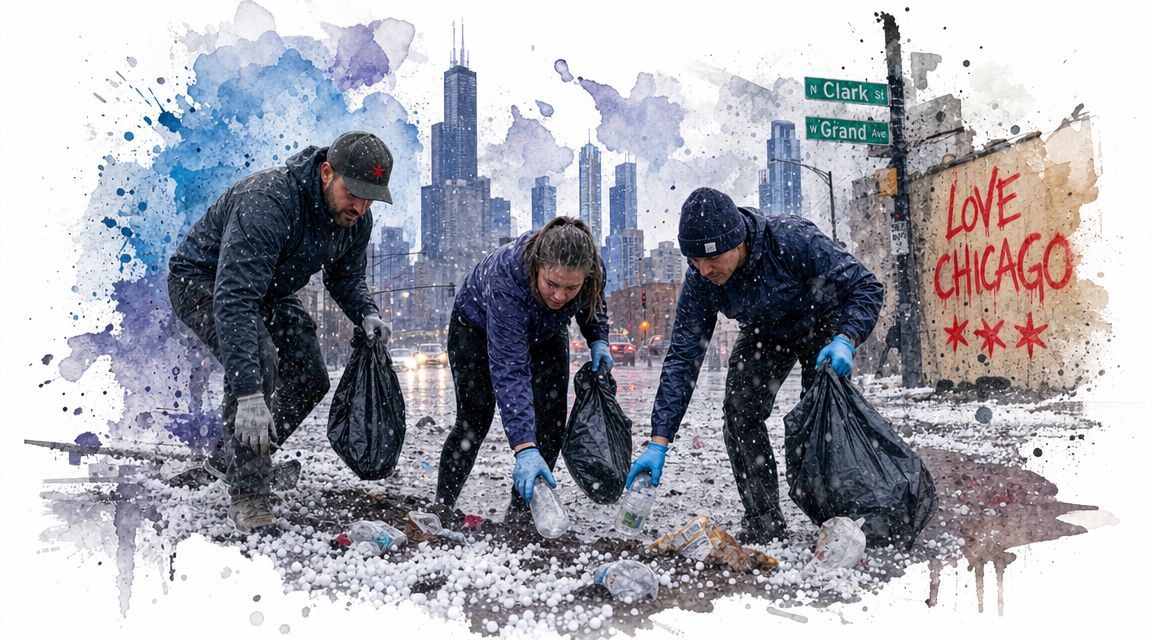
I should have been miserable. I was miserable. But I was also laughing.
What the hail taught me
Standing there, shivering, I realized three things at once.
First, cleaning other people's messes felt easier than cleaning my own. I think it was because the emotional knots were gone. The work stayed physical. Pick up. Bag it. Move on.
Second, shared suffering has a weird power. When a hard thing is chosen and mutual, it can become fun in a way comfort never is. You remember it. You bond through it. It gives the day a pulse.
Third, hardship advances the plot of your life. That phrase came to me because the whole scene felt so absurd that it couldn't be meaningless. It felt like a page turning.
Why bravery needs identity
I care a lot about bravery, and not in the macho sense. I mean the courage to do a humble thing in public and keep doing it when it's inconvenient.
That is where the Tom Sawyer idea helps me. If you can turn a chore into a mission people feel proud of, everything changes. A boring task becomes a shared badge. A rough morning becomes a story.
So I stopped pretending service had to look plain and serious all the time. I like flags. I like theme songs. I like badges and group identity. I think kind people deserve symbols too. Sports teams understand this. Countries understand this. Why shouldn't people cleaning a sidewalk understand it?
We don't become brave because the work is easy. We become brave because we give the hard thing a meaning we can carry together.
Our first cleanup never really ended
That first stormy cleanup still shapes how I think. If a volunteer event is too polished, too controlled, too obsessed with appearances, it loses some life. I'm not chasing misery. I care about safety first. But I also think people are hungry for real experiences.
Here's what I took from that day:
- Discomfort can wake you up. You stop performing and start living.
- Shared work builds trust fast. People reveal who they are when plans go sideways.
- Meaning grows in motion. You don't wait until life feels stable to begin. You begin, and stability grows around the action.
That day in the hail gave me more than an origin story. It gave me a standard. If service can still feel alive in bad weather, it can survive almost anything.
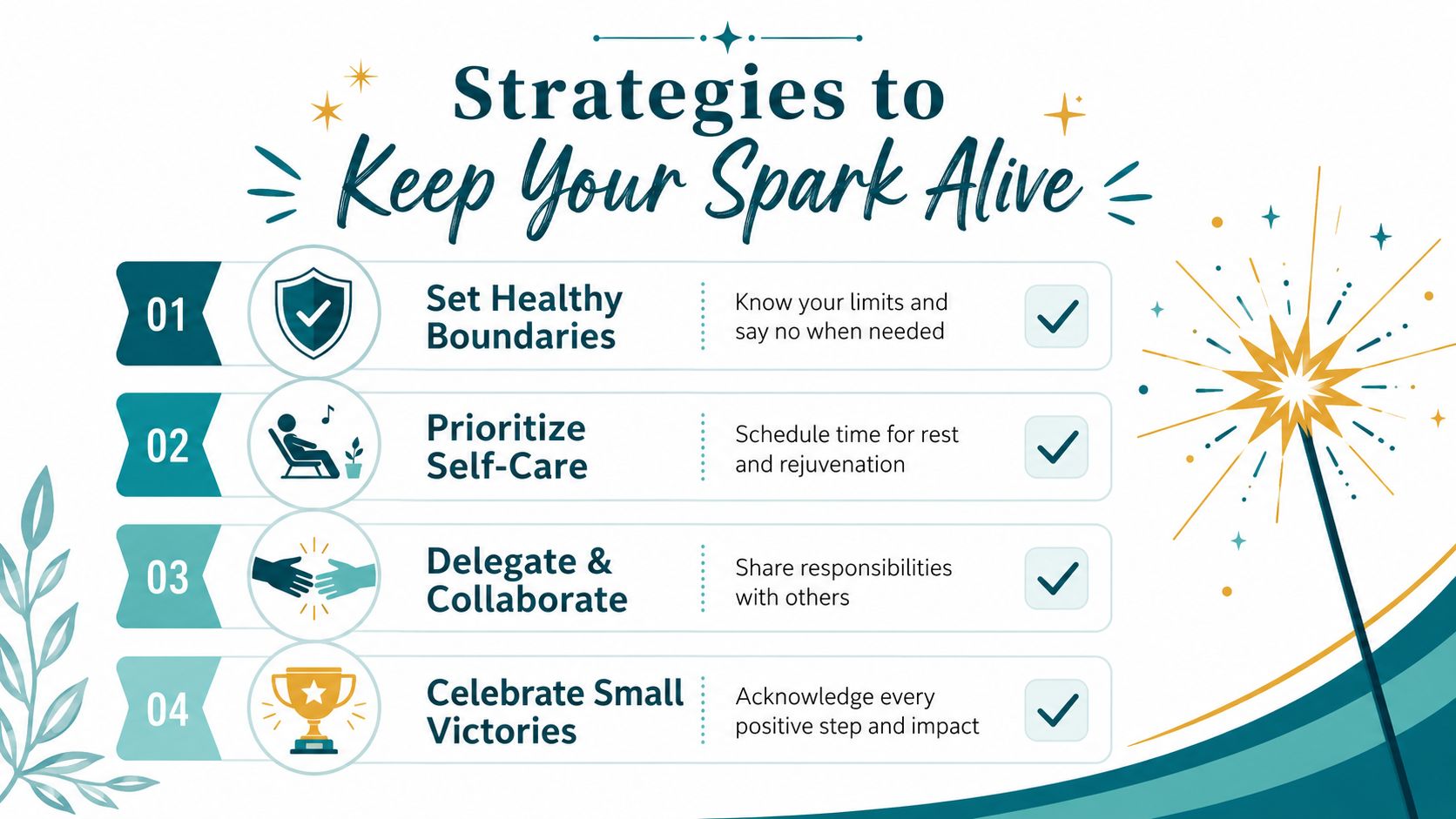
Strategies to Keep Your Spark Alive
The fastest way to lose a good volunteer is to treat their energy like an infinite resource. It isn't. Your energy is fragile. Mine is too. If you don't protect it, service turns into resentment.
I believe in a volunteer-first approach. Safety comes first. Happiness comes second. Pride in sacrifice sounds noble until people burn out and disappear.
What keeps people coming back
Volunteering can reduce loneliness, but retention is still hard. The design of the experience matters. Social bonds, visible wins, and a low-pressure environment help people return, while repetitive or demanding work can push people toward burnout, as discussed in this article on volunteering, connection, and retention.
I've found a few habits that keep the spark alive:
- Make the win visible. People need to see the before and after with their own eyes.
- Protect the vibe. Don't guilt people. Don't pressure them for money. Let service stay generous.
- Choose human-friendly timing. Weekend mornings change the whole tone. People arrive clear-headed and ready to give.
- Build friendship on purpose. A cleanup should feel like work with people, not work near people.
Burnout often starts quietly
Burnout rarely announces itself. It usually enters as dread. You start bargaining with yourself. You stop replying. You tell yourself you need a break, then the break becomes a disappearance.
That's why I think organizers should normalize rest. Let people skip a week. Rotate hard tasks. Keep things simple. End on time. Thank people without making them feel owned.
If you want service to last, make it something people can love, not just endure.
Your Questions Answered
Do I need to be tough to start
No. I wasn't tough when I started. I was overwhelmed. Toughness grows through repetition. Start with one bag, one block, one hour. Let your confidence catch up later.
How do I see my impact if I volunteer alone
Take a before photo in your mind. Then look again when you finish. Notice what changed in the space and in your body. Keep a small log of where you went, what you did, and how you felt after. Over time, that record becomes proof.
Should I give money or give time
Give the resource you can give honestly. Money helps many causes. Time changes you while it helps others. If your life feels numb, scattered, or disconnected, time may do more for you than a donation because it puts your body back into the world.
What if I start and then lose momentum
That's normal. Don't turn one missed week into a moral failure. Return fast. Momentum is easier to rebuild when you don't waste energy on shame.
If you want a place to start, join Litter Caterpillars. We organize volunteer trash pickups in Chicago and make it easy to show up, meet people, and do visible good with your hands.
Leave a Reply