Trash clung to my life before it ever clung to my grabber. I could stare at an old jar in my fridge for months, not because it was heavy, but because every useless thing carried a memory, and every memory made my room feel impossible.
Then one cold day, I went outside and picked up someone else's litter. Somehow that was easier. It was even fun.
My Messy Room and the Start of an Adventure
I started to understand what community service is when I failed, over and over, at cleaning my own room.
I'm serious. My place used to feel like a museum of unfinished versions of me. The bag of nuts from the week I swore I'd get healthy. The old blueberry jam from a trip I didn't want to forget. Random papers, boxes, wrappers, half-plans, half-dreams. Every item looked small, but each one felt like it weighed five hundred pounds in my mind.
Then my life cracked open. I got out of a chaotic relationship that drained me. I looked around and saw mess everywhere. My room was messy. My habits were messy. My social circle was messy. I felt stuck in the kind of way that makes even tiny tasks feel impossible.

Why someone else's mess felt lighter
So I tried something strange. Instead of fixing my whole life in one dramatic sweep, I went outside to pick up trash in my neighborhood.
That first cleanup had only a few of us. We got caught in a Chicago spring hailstorm that felt more like a prank than weather. We huddled under a tree, freezing, while ride after ride canceled on us. I should've hated it.
I didn't.
I laughed. I felt awake. I realized that cleaning other people's messes was easier than cleaning my own, and that mattered more than I expected. A candy wrapper on the sidewalk didn't come with guilt. A bottle in the gutter didn't ask me to revisit an old regret. I could just bend down, grab it, and make the block a little better.
Sometimes the first honest step in fixing your life is doing one small useful thing outside your own head.
The plot started moving again
That day gave me a weird kind of relief. Service didn't feel like punishment. It felt like motion.
When you're stuck, motion is gold. You don't need a perfect plan. You need a task you can finish. Pick up the cup. Tie the bag. Walk to the next corner. Say hi to the person next to you. Survive the hail. Tell the story later.
That's why I still think community service is one of the best ways to restart yourself. It gives you a simple job when your inner life feels too tangled. You don't have to solve everything. You just have to show up and carry one piece of the load.
What Community Service Really Means
Community service is simple. You give your time and energy to improve the shared world around you.
That's it. It's being a good neighbor at a bigger scale. Maybe you clean a sidewalk, stock a pantry shelf, tutor a kid, plant flowers, or help at a library. The action changes, but the heartbeat is the same. You see a need, and you answer it with your time.
A city is just a giant block party
I like to think of a neighborhood as one big apartment building. If the hallway is dirty, the lights are broken, and nobody checks on each other, everyone feels it. Community service is what happens when you stop walking past the mess and decide, “I live here too.”
That choice is common all over the world. About 862.4 million volunteers aged 15 and older take part each month worldwide, or roughly one out of every seven working-age people, according to Better Impact's volunteer facts roundup.
That number doesn't mean you need to be heroic. It means ordinary people help all the time. Repeatedly. In ways that often look small up close.
What counts and what doesn't
A lot of people overcomplicate this. They think service has to be dramatic, formal, or impressive. It doesn't.
Here's a better way to judge it:
- Does it help other people or a shared place? Then it's probably service.
- Does it cost you time, effort, attention, or comfort? Then it's probably real.
- Does it make life a little easier, cleaner, safer, or kinder for someone else? Then you're in the right lane.
If you want another angle on public participation, this guide on civic engagement and community action connects the dots between personal effort and shared life.
Practical rule: If you can point to what got better because you showed up, you're probably doing community service.
The cleanest definition I know is this: community service is love made visible through action. Nothing fancy. Just hands, time, and follow-through.
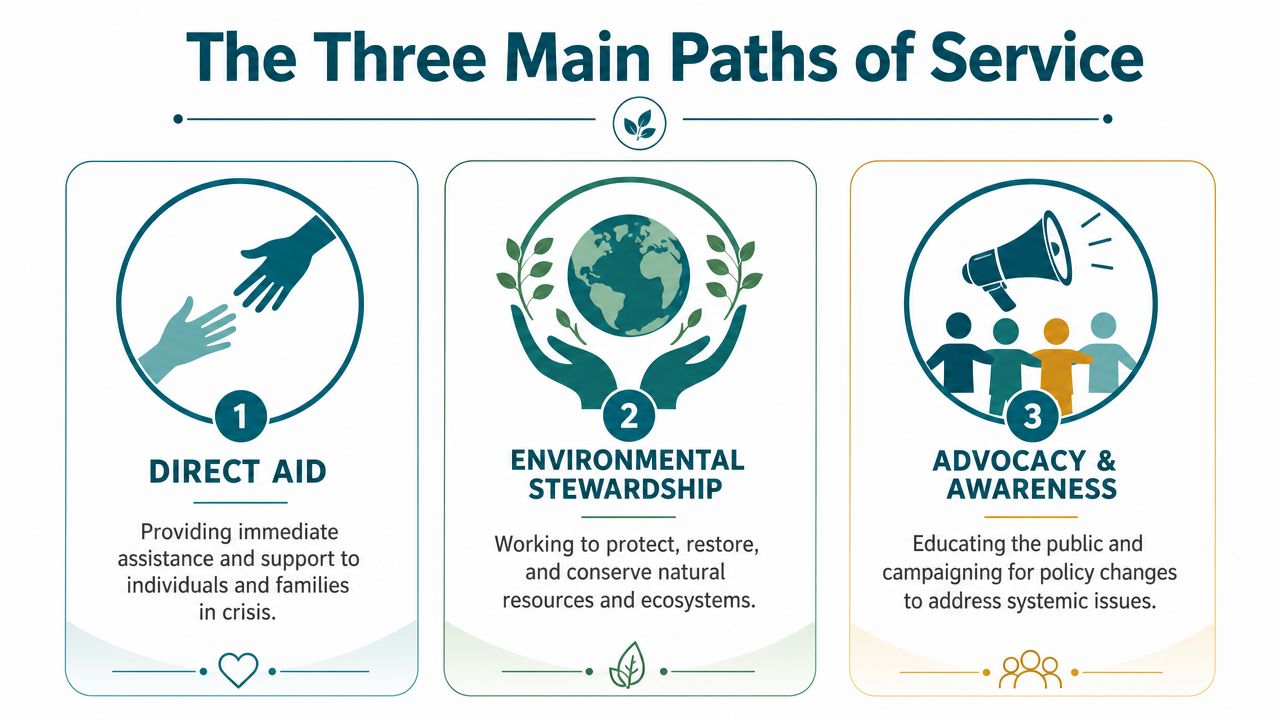
The Three Main Paths of Service
People use the phrase community service to mean different things. That's why confusion happens.
I've seen one person say it after a joyful weekend cleanup, another say it about a court requirement, and a student say it about a class project. All three can fit under the same umbrella, but the reason behind the work changes the experience.
Voluntary service
This is the kind I know best. You choose it.
Nobody sentences you to it. Nobody grades you on it. You wake up early on a Saturday, pull on your gloves, and go because you want your block, your river, your school, or your neighbors to feel more cared for. Voluntary service has a certain spark because choice changes the mood. You're there on purpose.
You also learn fast that your reason can be mixed. Maybe you want to help. Maybe you want friends. Maybe you need structure. Maybe you're trying to become braver. That still counts.
Court-ordered service and service-learning
Court-ordered service is different. A person does work for the community because the legal system requires it. The task might look similar on the surface, but the starting point is obligation.
Service-learning has another flavor. A school or training program ties service to reflection and education. You serve, then think about what happened, what you learned, and how the experience connects to a larger lesson.
Here's a quick comparison:
| Path | Why you do it | What it often feels like |
|---|---|---|
| Voluntary service | Personal choice | Freer, social, self-directed |
| Court-ordered service | Legal requirement | Structured, mandatory |
| Service-learning | Educational goal | Reflective, guided, tied to study |
Why motivation matters
This matters a lot for students. Many people confuse general volunteering with the stricter meaning of community service in academic or professional settings. In medical school prep, direct work with underserved populations often matters most, and 78% of pre-med students overlook that distinction, according to GHL Foundation's discussion of underserved community service.
So if you're asking what community service is, the full answer is this: the action matters, and the context matters too. Picking up litter, mentoring youth, visiting elders, helping with food distribution, or teaching health basics can all fit. The question is why you're there, who you're helping, and what kind of service the situation calls for.
The Unexpected Gift You Get from Giving
I started serving because I wanted to clean streets. I kept serving because it started cleaning up parts of me.
That sounds dramatic, but I mean it in a plain, practical way. When you keep showing up to help other people, you build traits that are hard to fake. You become steadier. You get less fragile. You stop panicking every time conditions aren't perfect.
You practice being the person you want to be
I didn't become brave by reading about bravery. I became brave by standing outside when it was cold, awkward, inconvenient, and a little uncomfortable. I became more reliable by showing up again the next week. Then the week after that.
Service works like a gym for character. One cleanup won't change your life. Repeated cleanups might.
Here's what I got from it:
- Bravery in small doses. Going to unfamiliar blocks, meeting strangers, and doing visible public work trained me to move before I felt fully ready.
- Consistency I could feel. Weekend after weekend, the habit got stronger than my excuses.
- Better friendships. Shared work is a great filter. People who wake up to help others usually have something solid in them.
You find out who you are when the weather gets bad and you stay anyway.
Volunteer-first groups change the experience
Group culture matters. A lot.
The healthiest service spaces I've seen protect the people doing the work. They care about safety. They care about morale. They don't treat volunteers like a wallet with legs. Volunteer-first groups that put safety and happiness ahead of pressure for money create a more sustainable experience, and that changes whether people come back.
If you want a deeper look at what real results can look like over time, this page on measuring community service impact has a useful framework.
The caterpillar idea is real to me
I love the caterpillar image because nobody expects a caterpillar to stay a caterpillar.
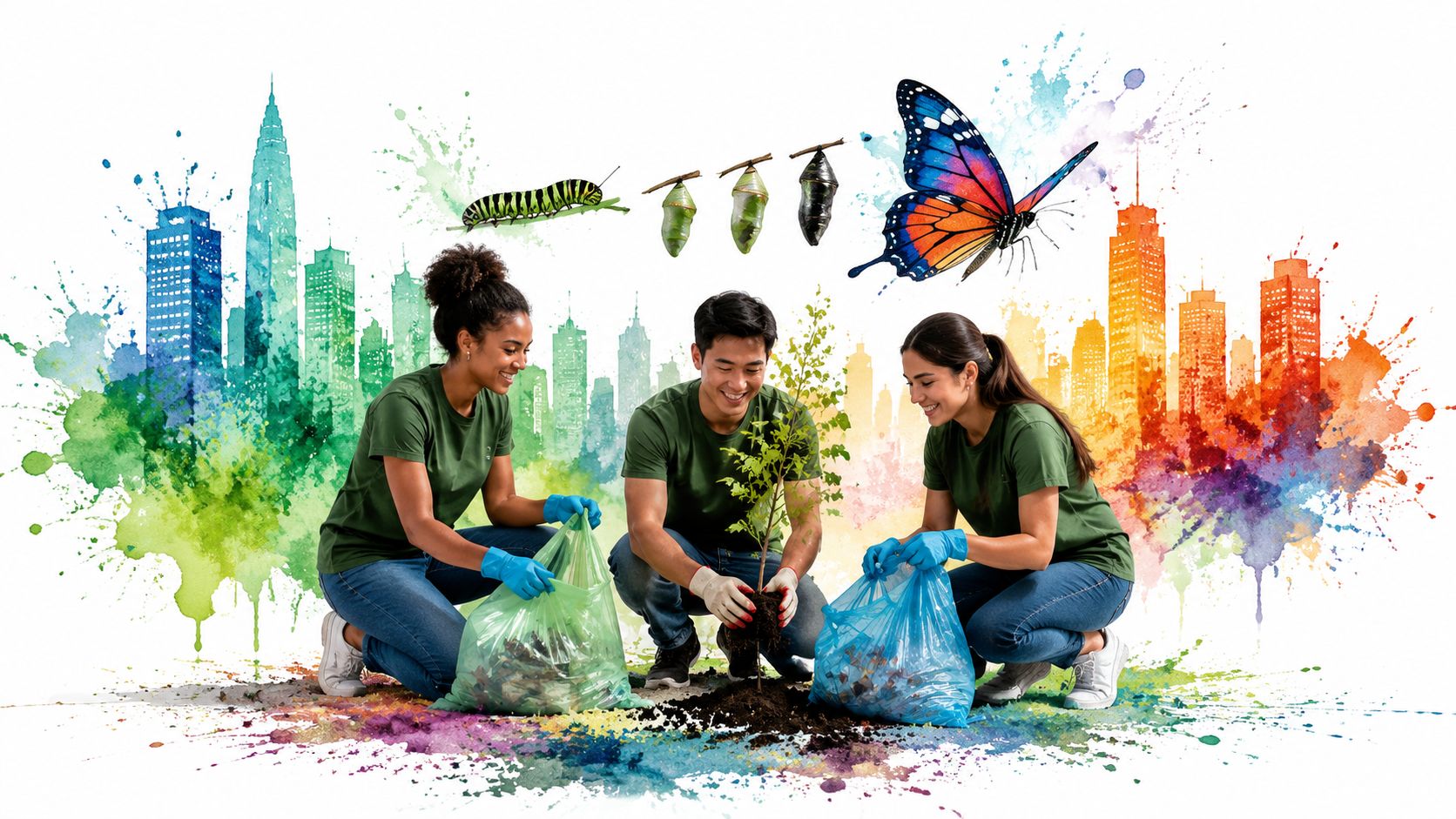
That's how service felt for me. I wasn't trying to become flawless. I was trying to become less afraid, less selfish, less flaky, less trapped in my own head. Service gave me a place to practice that transformation in public, one bag of trash at a time.
And there's something else. Hard days become good stories. The freezing cleanup. The long walk. The muddy shoes. The weird conversation that turned into a real friendship. Service gives your life texture. It gives the plot somewhere to go.
Watching Your Neighborhood Come Alive
The first thing you notice after a cleanup is visual. A block looks calmer. A curb line appears again. Grass comes back into view. The street breathes a little easier.
But the deeper change is emotional. People walking by start talking. Someone thanks you from a porch. A kid stares like you're doing magic with a trash bag and a grabber. Another neighbor starts picking up around their own building a few days later. Service spreads because people copy what they can see.
Block by block is how a city changes
I've learned to trust repeated action more than grand speeches. One corner today. Another next week. A rough alley nobody wanted to deal with. A commercial strip full of bottles and wrappers. An empty lot that looked forgotten.
That kind of work gets especially real in places people avoid. Community service grows when you stop treating some neighborhoods as disposable. Litter Caterpillars has cleaned all 50 Chicago wards, including neighborhoods others often avoid. I love that example because it refuses the lazy map in people's heads, the one that says some areas count more than others.
There's also a direct environmental side to this work. Litter cleanup helps stop trash from washing into rivers, and the Chicago-Calumet River litter prevention effort shows how local cleanup connects to cleaner waterways.
A short clip tells that story better than I can:
You start seeing possibility where you used to see blight
One of my favorite shifts is internal. You stop looking at an ugly space and thinking, “That's a shame.” You start thinking, “We can do something about that.”
That mindset changes a neighborhood because it changes the people in it. Cleanup is rarely about making things look cute. It's about telling the truth with your hands. This place matters. These people matter. We're not waiting for someone else.
A cared-for block invites more care. A neglected block teaches people to give up.
That's why community service feels alive to me. You can watch the before and after happen in real time.
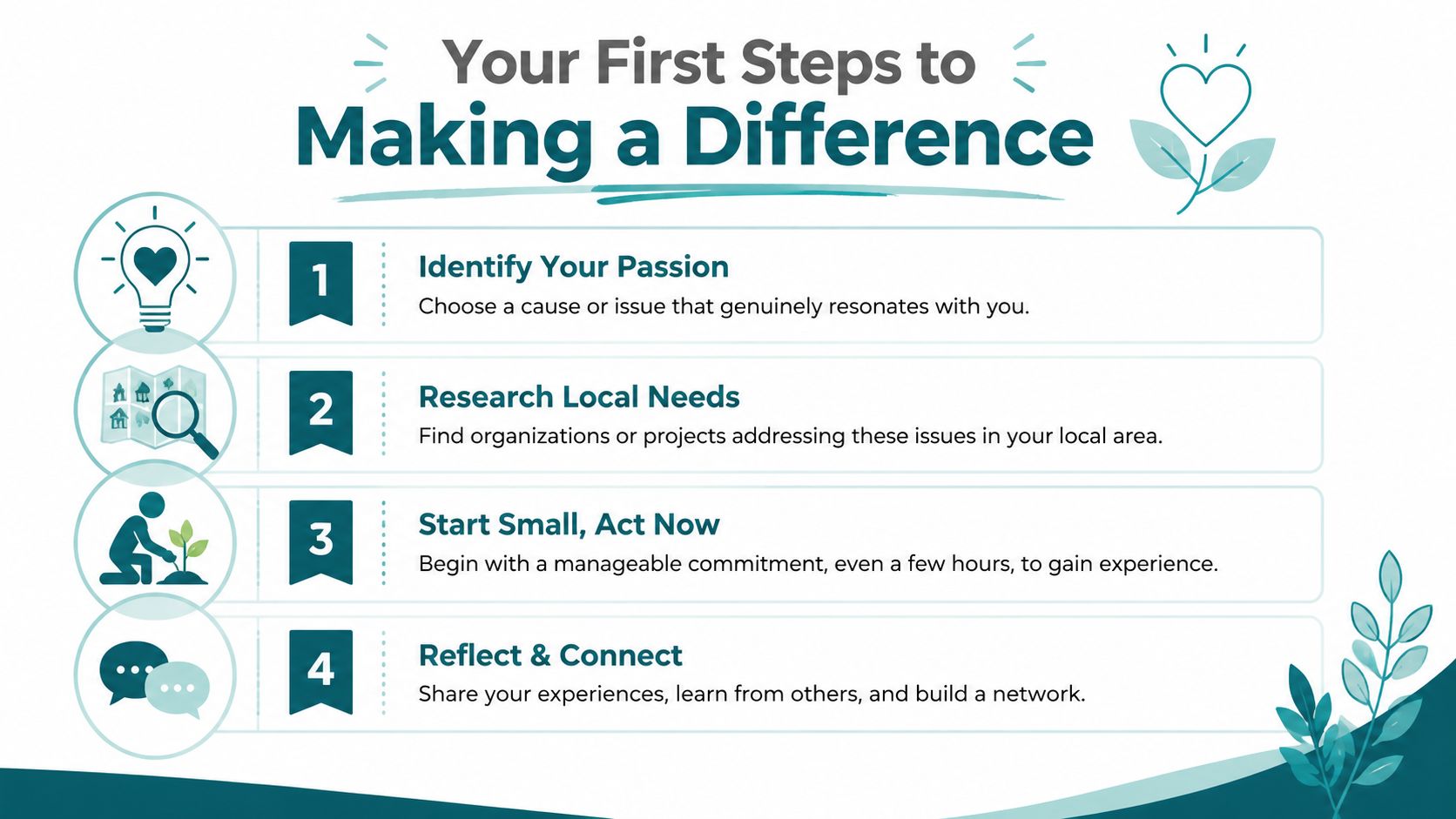
Your First Steps to Making a Difference
Individuals don't need more inspiration. They need a first move.
The good news is that starting is much easier than performing some giant act of goodness. You don't need a full life mission. You need one cause you can stick with long enough to build a habit.
Start with fit, then build consistency
Pick something that pulls at you. If you care about litter, join a cleanup. If you care about hunger, find a pantry. If you care about reading, help at a library. Your odds of staying committed go way up when the work feels personal.
Then make the commitment small enough that you'll keep it.
- Choose one lane. Don't sign up for five causes at once. Pick one and learn its rhythm.
- Check the group culture. Look for clear meeting details, safety norms, and respectful communication.
- Use a simple schedule. One steady hour each week can change you more than one giant burst once a year.
- Reflect after each shift. Ask yourself what felt energizing, awkward, useful, or meaningful.
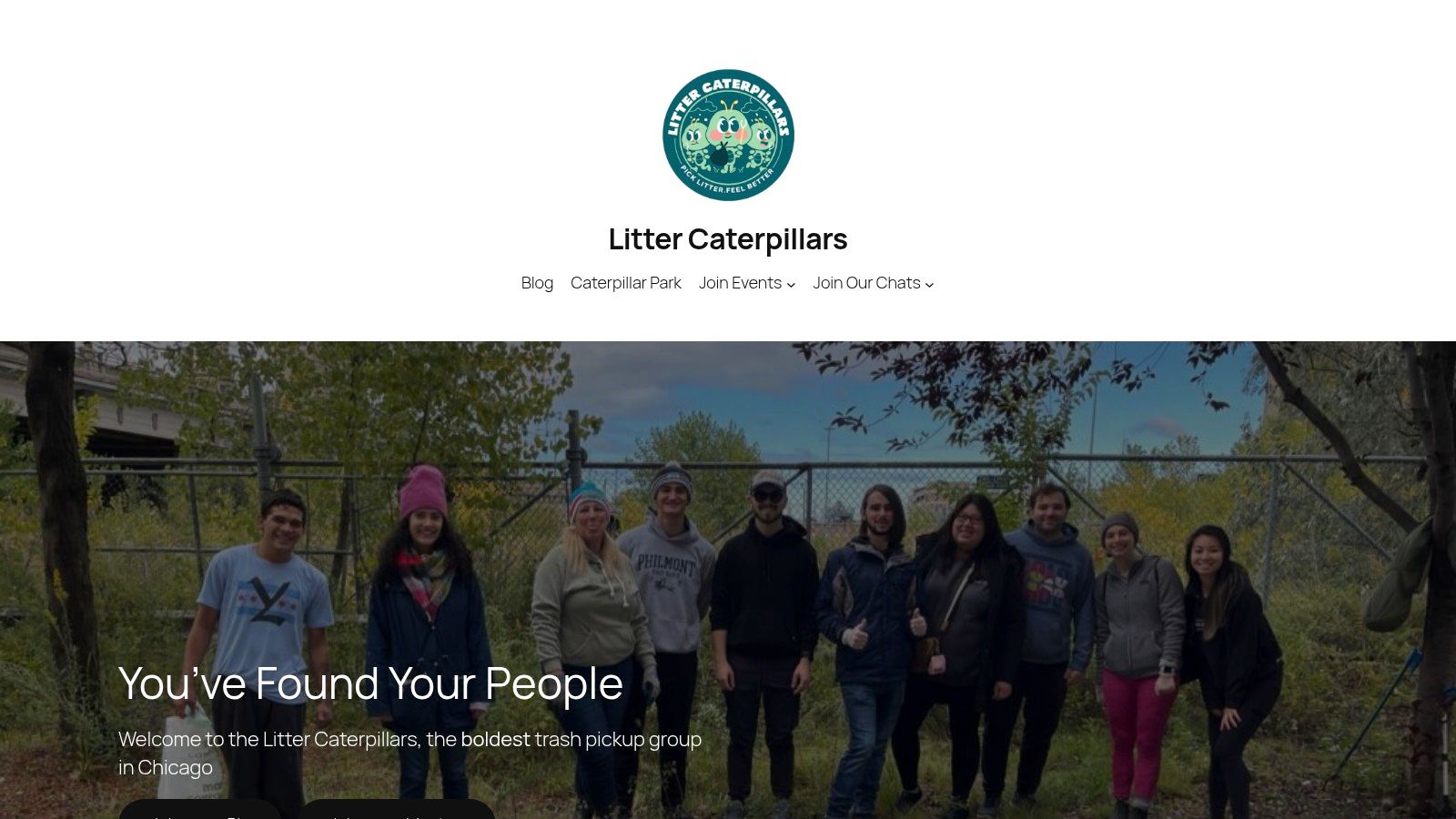
If you want a practical starting point, this guide to starting volunteering gives a straightforward way to begin. One factual option is Litter Caterpillars, which organizes volunteer trash pickups in Chicago and provides cleanup tools for participants.
If you need service for school or applications
Consistency matters even more when service connects to admissions or career goals.
For academic or professional applications, longitudinal service over 6+ months is prioritized over one-day events by AMCAS and AAMC, according to this PMC article on service learning and sustained engagement. That tracks with what I've seen in real life too. A single service day can be nice. Ongoing service changes how you think, who you know, and what you notice.
A good starting checklist looks like this:
- Pick a cause you can talk about without forcing it.
- Find a group that feels safe and grounded.
- Commit to a repeat schedule, even if it's modest.
- Keep showing up long enough for your presence to mean something.
You don't have to become a saint. You just have to become dependable. That's where the change begins.
If you want a simple way to try community service in Chicago, join Litter Caterpillars. You'll spend a morning cleaning a block, meeting other people who like to help, and finding out how much lighter life can feel when you carry one bag of trash at a time.
Leave a Reply