

At dawn, I once found an alley packed with broken drywall, rotting mattresses, and black trash bags. A syringe glittered near my boot. I pulled out my phone before I touched anything.
"Why I Started Caring About Illegal Dumping"
The smell reached me before the pile came into view. Wet wood, spoiled food, mold, and something sharp hung between the brick walls. Construction debris spilled across the alley, mattresses leaned against a fence, and loose bags crowded the curb. I felt angry, then embarrassed, as if someone had entered our home and thrown their mess across the floor.
That block already carried more than its share of neglect. Families on Chicago's South and West Sides work hard to keep their homes and streets in order, yet illegal dumping keeps landing in the same alleys, vacant lots, and roadside spaces. I saw how quickly one pile invited another. People treated the first dump as permission.

Anger needs a direction
For a while, I stood there feeling helpless. I couldn't remove the mattresses alone, and I didn't want to disturb evidence or touch anything dangerous. Then I opened my phone and filed a 311 report.
That small act changed my relationship with the block. I stopped seeing a dump site as an ugly fact I had to tolerate. I started seeing it as a record I could create, a problem I could route, and a pattern neighbors could document together.
Practical rule: Photograph first, report second, clean up only when you know the site is safe and the proper agency has what it needs.
Reporting illegal dumping is a form of community power. Your report gives sanitation workers a location, gives investigators a lead, and gives neighbors a shared starting point. You can learn more about turning concern into hands-on neighborhood care through Litter Caterpillars' community care work.
I've picked up trash in Chicago rain, heat, blizzards, and wind that cut through three layers of clothing. I've learned that a clean block doesn't happen because one person stays angry. It happens because someone documents the problem, makes the call, and invites others to keep showing up.
"Gathering Evidence That Actually Gets Results"
Treat the site like a scene that can change quickly. Before you move a bag, lift a mattress, or ask someone else to help, step back and document what you see from a safe distance.
A vague report says, “There's trash in the alley.” A useful report tells an inspector where to stand, what to look for, and whether the material might create a danger.
Start with the full picture
Take wide photographs from several angles. Include the alley, curb, vacant lot, fence line, or other surroundings so the agency can understand the site's scale and exact setting. Then take close photographs of details that may connect the waste to a person or business:
- Vehicle information: Photograph a license plate, vehicle color, make, and model if you see a vehicle near the dump site.
- Identifying marks: Capture business names, shipping labels, delivery stickers, addresses, and recognizable markings on boxes or materials.
- Location markers: Photograph street signs, building numbers, alley entrances, landmarks, and nearby intersections.
- Waste details: Record whether you see construction debris, furniture, household bags, tires, chemicals, or other hazardous material.
- Activity status: Note whether dumping is happening now, appears to have happened recently, or looks like an older pile that has grown over time.
Philadelphia asks reporters for a location, suspect description, vehicle make, model, color, license plate, and material details. Philadelphia's illegal-dumping reporting guidance shows the level of detail that helps an agency act. New York City also requests vehicle identification and reporter contact information, along with the date, time, waste type, and amount.
Write down what your camera can't explain
Open your phone's notes app and record the date, time, exact address, nearby cross street, and GPS location. Your phone may embed location data in a photograph, but write the location separately so you can paste it into a report.
Estimate the volume in plain language. You might describe a small cluster of bags, a truckload of construction waste, or debris spread across most of an alley. Don't guess at an exact weight. Describe what you can see.
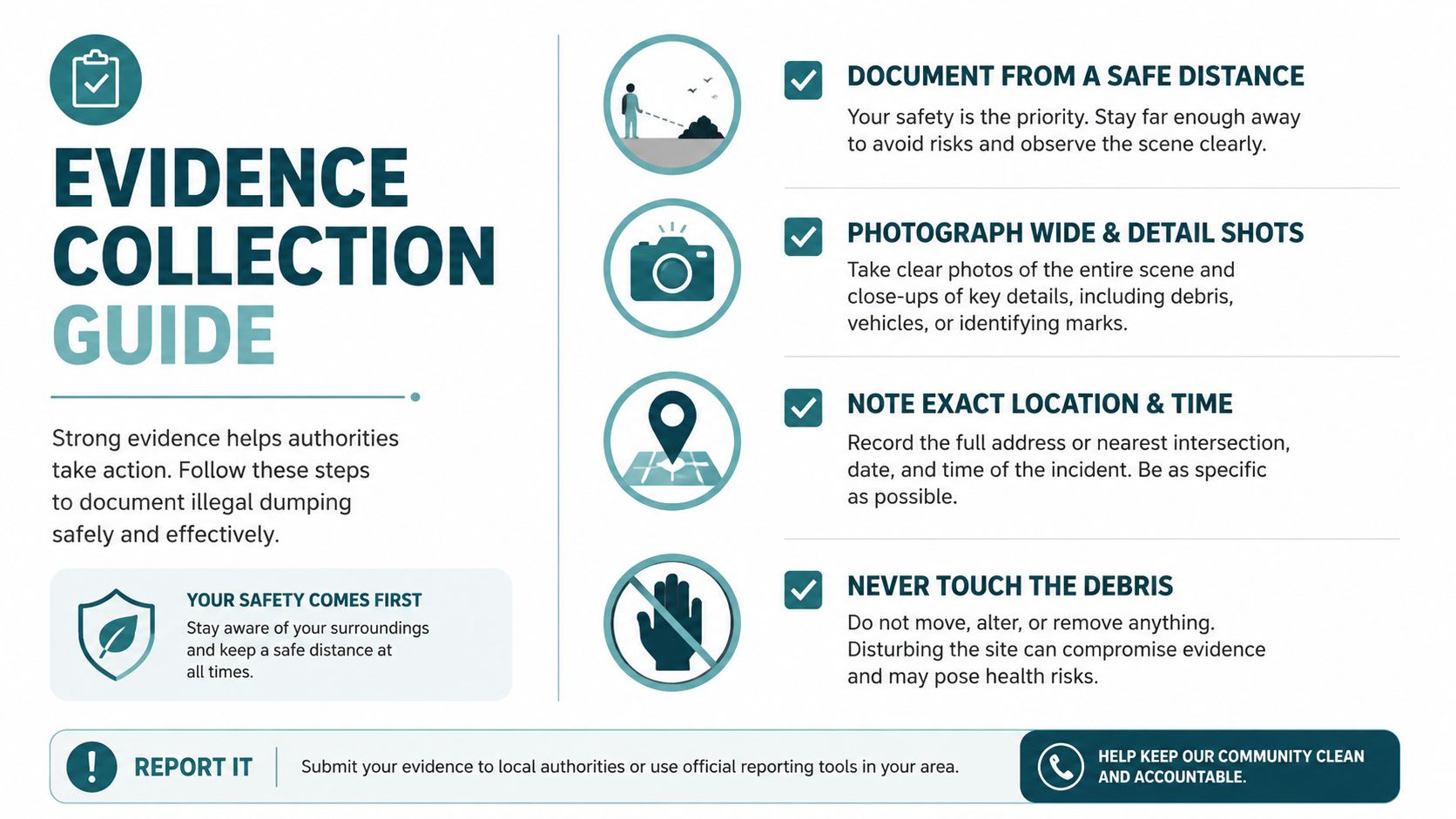
Never enter a pile, open containers, handle needles, or approach a person who may still be dumping. If a dashcam or security camera captured the event, save the original file when possible and note the camera's location and recording time. Ask a property owner for footage rather than trespassing or confronting anyone.
For more field-ready precautions, keep a volunteer safety checklist with your phone supplies.
Here's a short visual guide you can watch before your next cleanup or report:
"Chicago Hotlines and Apps You Need to Know"
Chicago residents usually start with 311 for an existing illegal-dumping site. You can call 311, use the CHI 311 mobile app, or submit a request through the city's online portal. Keep your notes and photographs nearby. The request should include the exact location, waste type, visible volume, date and time, and any vehicle or person details you captured safely.
An active dumper creates a different situation. Don't approach the vehicle or block its path. If someone is dumping right now and you face immediate danger, call emergency services. For a non-emergency report involving suspected criminal activity, use the Chicago Police Department's non-emergency channel and give dispatch the location and vehicle information.
Chicago's Department of Streets and Sanitation handles cleanup-related requests, while hazardous waste or a large commercial dump may need escalation to the Illinois Environmental Protection Agency. Ask the receiving agency whether it needs a direct inspection, additional photographs, or a separate environmental complaint.
Choose the channel that fits the scene
| Channel | Contact Info | Best For | Expected Response |
|---|---|---|---|
| Chicago 311 | Call 311, CHI 311 app, or city online portal | Existing dumping sites and cleanup requests | City routing and follow-up depend on the request |
| Chicago Department of Streets and Sanitation | Request through Chicago 311 | Visible debris on public streets and alleys | Inspection or cleanup routing depends on location and material |
| Chicago Police Department | Emergency services for immediate danger, department non-emergency channel for non-urgent incidents | Active dumping, threats, or suspected criminal conduct | Dispatch priority depends on safety and urgency |
| Illinois EPA | State environmental complaint channel | Hazardous waste, major spills, or large commercial dumping | Agency response depends on hazard and jurisdiction |
| Ward and aldermanic office | Your ward's aldermanic contact page | Repeated sites and unresolved service requests | Office follow-up varies by ward and case |
| Litter Caterpillars | Volunteer reporting network | Shared documentation and neighborhood cleanup coordination | Volunteer follow-up depends on group capacity |
Don't send the same vague message everywhere. Send a clear 311 request first for a routine site, then add the appropriate agency when the material, scale, or active danger calls for it. England, Scotland, and Wales use a similar split, with local councils handling ordinary fly-tipping and the Environment Agency handling large-scale dumping through its 24-hour hotline at 0800 80 70 60; anonymous reports can go to Crimestoppers at 0800 555 111 through the official fly-tipping reporting guidance.
"What Happens After You File a Report"
You press submit, receive a request number, and then the alley looks exactly the same. I know that silence. It can feel as if your report vanished into a machine with no person on the other side.
A routine request usually enters a city queue for review, routing, inspection, or cleanup. The exact timing can change with the material, location, workload, weather, and whether the site creates an immediate hazard. A status that says “referred to inspector” generally means the request has moved beyond intake and needs someone to assess the site or determine the next agency.
Cleanup and enforcement follow different paths
A cleanup crew can remove visible debris without identifying who left it. An enforcement investigation needs evidence that connects the waste to a vehicle, person, business, time, or repeated pattern. That's why your photographs, notes, camera footage, and request number matter.
New South Wales shows how reports can move through an enforcement pipeline. Over five years, its EPA received and actioned 1,507 illegal-dumping reports, including 641 investigations involving major incidents with more than 200 tonnes of waste. In 2016–17, the agency completed 11 waste prosecutions, with $411,000 in financial penalties, and issued 78 clean-up notices plus 53 penalty notices linked to illegal-dumping investigations. The figures appear in answers from the NSW EPA.
That same NSW material says 98% of councils reported illegal dumping as an issue in their area, while one in seven spent more than $500,000 per year on cleanup and enforcement. Reporting gives agencies the information they need to decide whether a site needs removal, inspection, surveillance, or legal action.
Follow up with a record, not a rant
If the pile remains, use the original request number and submit updated photographs. Contact your alderman's office with the location, date of the first report, request number, current condition, and any new evidence. Ask the office to request a status update from Streets and Sanitation.
For dangerous material, don't wait for ordinary cleanup. NSW directs people to call 000 for toxic fumes or large chemical spills, 131 555 for immediate threats, and use RIDonline for other reports with a photo and GPS location, according to its illegal-dumping reporting page. The same principle applies in Chicago. Match the channel to the danger.
"How Volunteer Groups Multiply Your Impact"
A single report gives a city one location. A group can give neighbors a shared map, repeated observations, photographs from different days, and people who know when a site changes.
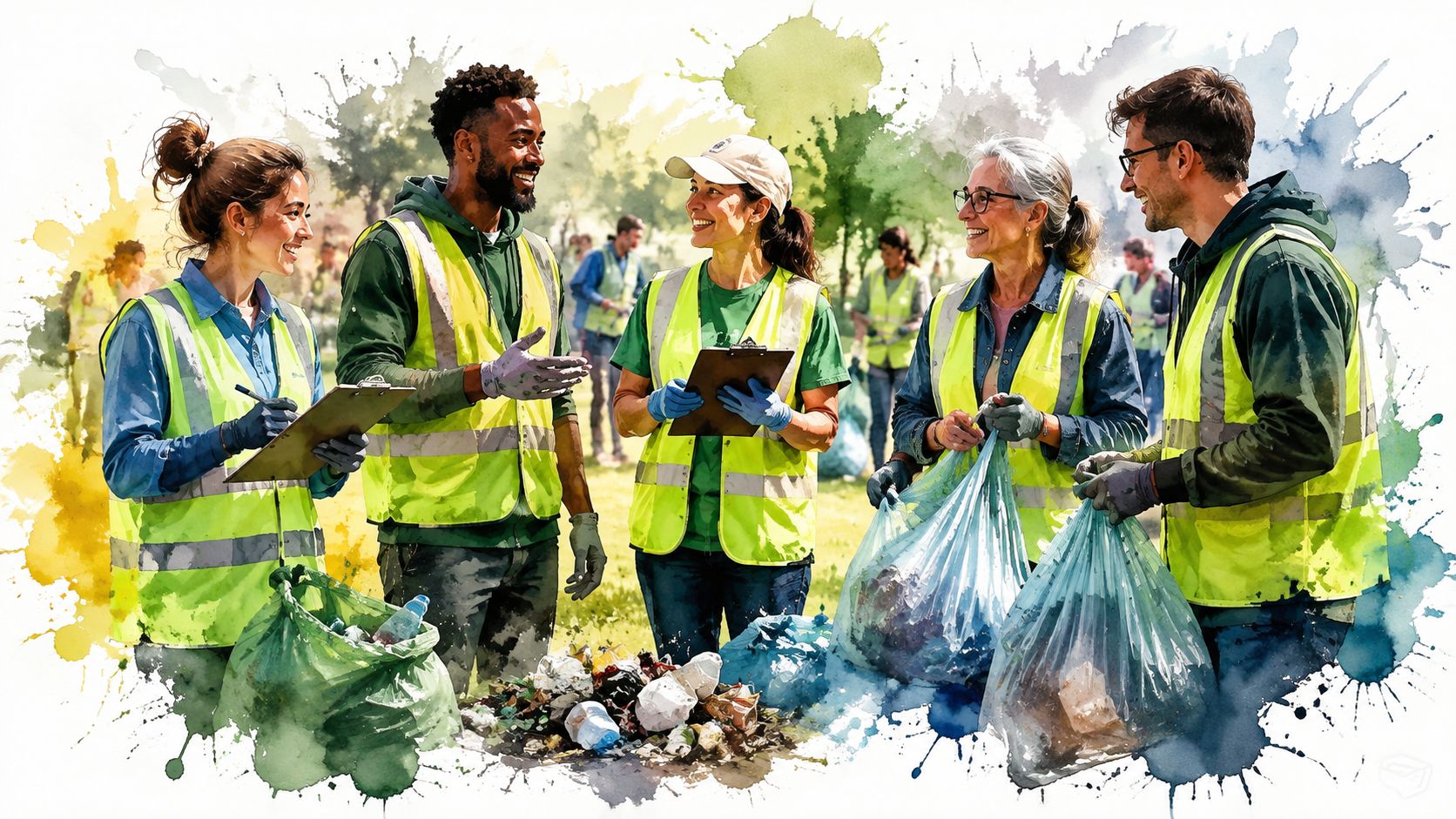
I've watched volunteers walk an alley before a cleanup, photograph every pile, and compare notes afterward. One person notices a contractor label. Another spots a plate. Someone else knows which property owner has a camera facing the alley. Together, they create a clearer account than any one rushed visit can provide.
Turn scattered observations into a neighborhood record
Volunteer groups can coordinate walking cleanups, dumping-watch shifts, shared photo folders, and group-chat alerts. They can also help residents keep request numbers organized and notice when the same location appears in multiple reports.
That work doesn't replace 311, Streets and Sanitation, the police, or an environmental agency. It gives neighbors the structure to use those channels consistently. A group can also bring a chronic site to an aldermanic office with a dated record instead of a stack of disconnected complaints.
Find a role that matches your energy
You don't have to lift heavy debris to help. You can photograph from a sidewalk, enter report details, check a camera angle with a property owner, translate information for a neighbor, or attend a ward meeting.
Chicago residents can browse local environmental groups and choose a group that fits their schedule and safety limits. Litter Caterpillars organizes volunteer trash pickups across Chicago, including work in neighborhoods that other cleanup crews may skip, while keeping volunteer safety and happiness ahead of fundraising.
The work becomes easier when people share it. One neighbor makes the call. Another tracks the request. A third returns after the city visit and photographs what remains. That rhythm turns frustration into a practice.
"Your Action Plan for Cleaner Streets"
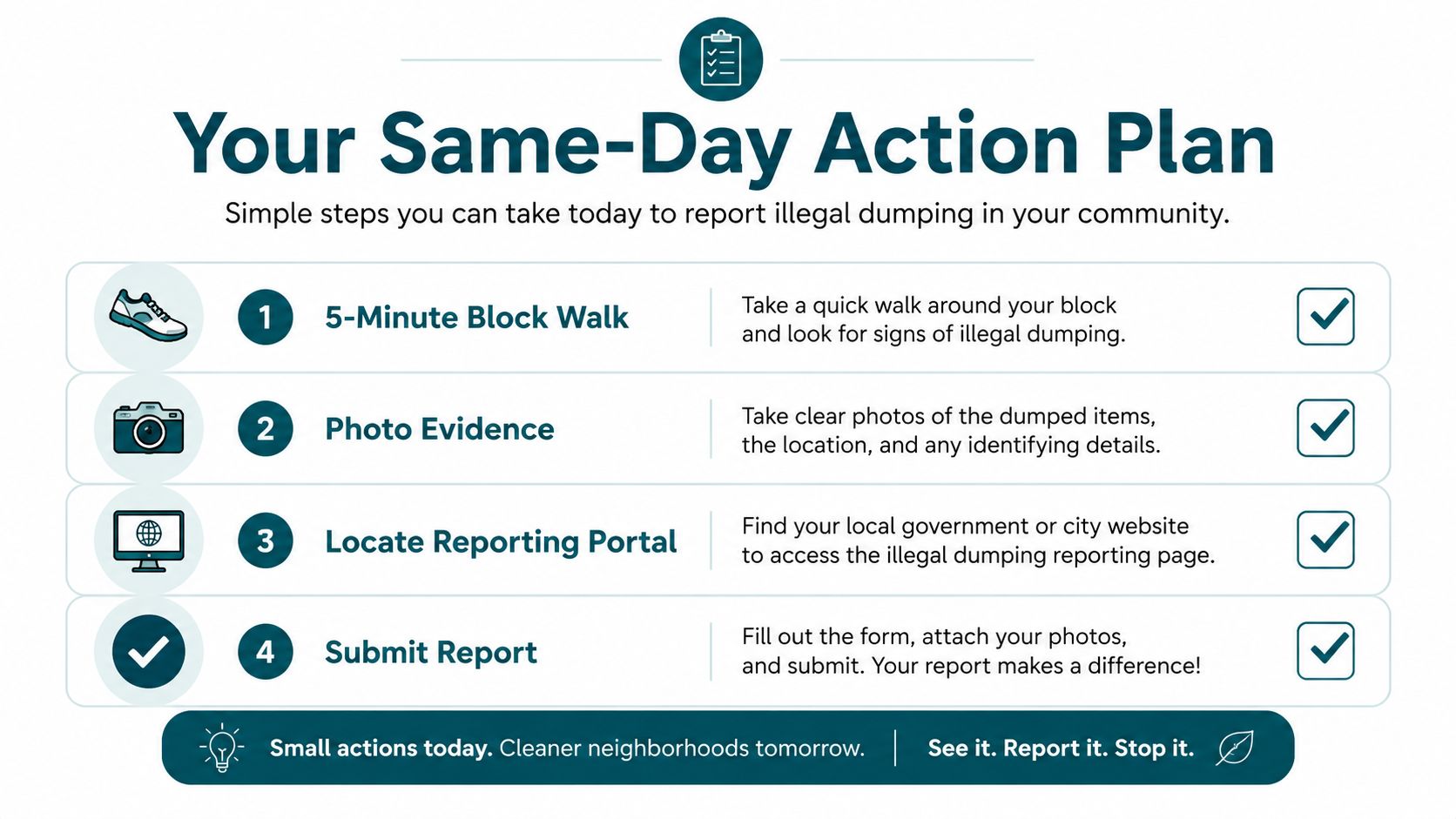
Start today with a short walk around your block. Keep to public space, stay away from unstable piles and hazardous material, and photograph existing dumping before anyone moves it.
Then take these steps:
- Save the channels: Put 311 and your alderman's contact page in your phone.
- Record the facts: Write down the address, cross street, date, time, waste type, and vehicle details.
- File the report: Use 311, the CHI 311 app, or Chicago's online portal.
- Create the follow-up: Save the request number and set a reminder to check the site again.
A report records what happened today. Follow-up reports can show a repeated problem at the same address, while volunteer work helps neighbors protect one another and care for the block.
Litter Caterpillars organizes Chicago trash pickups, cleanup walks, and neighborhood friendships for people who want to act on problems like illegal dumping. Visit Litter Caterpillars to find a cleanup, join the volunteer network, and take your next step toward a cleaner block.
Leave a Reply