Tag: community cleanup

  • Harrison Park in Pilsen: A Guide to Your Next Adventure

    Harrison Park in Pilsen: A Guide to Your Next Adventure

    I remember one cold morning when my gloves were already damp before breakfast. I cut through Pilsen, stepped into Harrison Park, and felt that weird reset you only get when a neighborhood gives you a little room to breathe.

    Finding A New Kind of Fun in Pilsen

    The first time I really paid attention to harrison park in pilsen, I wasn't looking for beauty. I was looking for a place to sit down for five minutes after hauling bags of trash and trying to get my heartbeat back under control.

    I watched a kid race toward the playground like he had somewhere urgent to be. A man moved slowly along the path with his coffee. On the courts, you could hear the ball before you saw the game. That mix hit me hard. Sweat, noise, grass, concrete, laughter. It felt honest.

    Parks tell on us. If people care, you can see it. If people stop caring, you can see that too.

    What I notice when I walk in

    Harrison Park doesn't feel like an escape from the city. It feels like the city taking a full breath. That's why I keep coming back to it in my mind. You don't come here to pretend Chicago disappeared. You come here to remember that people can still make room for each other inside all the pressure.

    A simple morning at the park can turn into a whole emotional weather report:

    • On the basketball side, the energy is sharp and loud. You feel competition, rhythm, and habit.
    • Near the open fields, things loosen up. Families spread out. Kids drift. People stop checking their phones.
    • Around the fieldhouse, you get that public-building feeling I love. Real use. Real wear. Real life.

    What hooked me: I didn't need Harrison Park to impress me. I needed it to feel lived in. It did.

    If you're the kind of person who likes exploring green spaces with purpose, this Chicago parks guide from Litter Caterpillars is a good companion. I like tools that get people out the door instead of trapping them in research mode.

    Why this place sticks with me

    Some fun is flashy. This kind isn't.

    This is the fun of showing up early. The fun of hearing a ball bounce off blacktop. The fun of seeing a public place that people use, and knowing that use is fragile. One rough season, one stretch of neglect, one wave of people deciding "someone else will deal with it," and a park starts to feel different.

    That's why I don't look at Harrison Park like a pin on a map. I look at it like a test. Will we keep this place alive with our presence, our respect, and our effort, or will we just consume it and leave?

    That question follows me every time I walk through the gate.

    The Surprising Story of Harrison Park

    The first time I learned what this ground used to be, I stopped walking.

    A teenager was cutting across the grass with cleats in one hand. A grandfather was posted up on a bench like he'd earned that seat through twenty Chicago winters. Kids were shouting near the path. Then I found out this park began as a limestone quarry, a deep industrial cut in the earth before it became a place where neighbors could breathe.

    That hit me hard.

    Before Harrison Park held pickup games and family routines, this site was worked for dolomite at the old Chicago Union Lime Works. Later, public officials turned the land into park space on the Lower West Side. The park dates back to the early 1900s and became part of the Chicago Park District during the 1930s. I am leaving the official park page for the next section, where it helps more with the on-the-ground details.
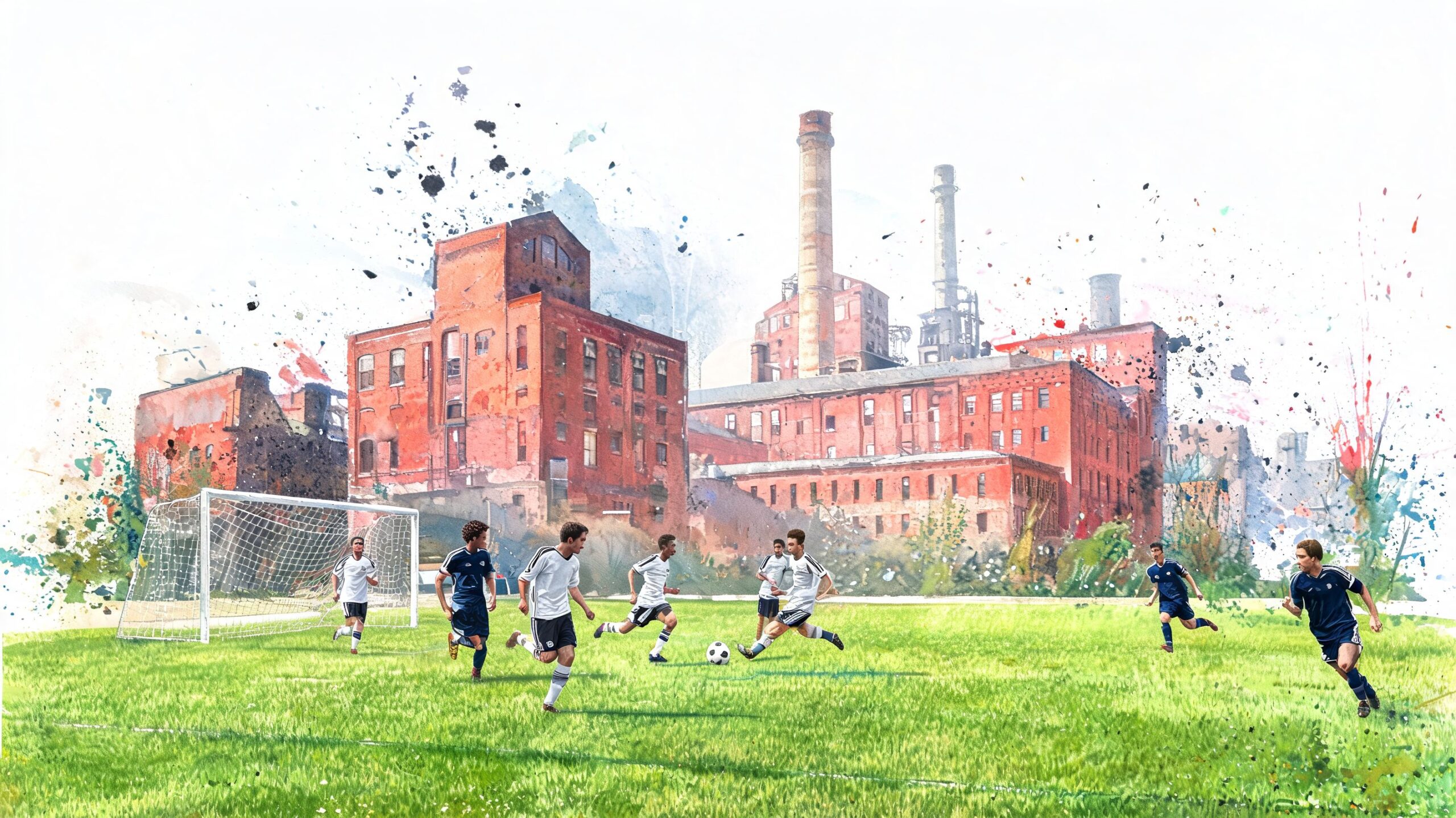
    A watercolor illustration of soccer players competing on a grassy field in front of industrial brick buildings.

    From quarry floor to neighborhood ground

    Our volunteer crew talks a lot about cleanup, repairs, turnout, showing up. We do not talk enough about conversion. Harrison Park is a conversion story.

    Men once blasted and hauled stone here. Then a neighborhood that needed open space got a park instead of a permanent wound in the ground. Somebody had to look at damaged land and say, no, children should run here. Families should gather here. A community should get something back.

    I trust places built from that kind of decision.

    You can feel the older layers if you pay attention. The park carries industry under its grass and public effort over it. Pilsen has always had people making something out of pressure, and this park fits that pattern. It was not handed down clean and easy. It was reshaped.

    That matters to me because I have seen the same thing in people. I have watched volunteers come in late, angry, distracted, burned out, then steady themselves with simple work. Fill bags. Sweep glass. Haul mulch. Check on a neighbor. A rough beginning does not disqualify a place. It does not disqualify a person either.

    Why the history changes the visit

    Once you know the ground was remade, you stop treating the park like background scenery.

    You notice the labor under the ordinary stuff. A path is no longer just a path. A field is proof that a city chose public life over abandonment. Even a worn patch near a busy corner starts to read differently. People kept working on this land until it could hold daily life.

    That is the part of Harrison Park I carry with me. It is not only a park in Pilsen. It is a piece of local stubbornness made visible.

    And around here, stubbornness can become love.

    What You Can Actually Do at the Park

    One Saturday, one of our younger volunteers showed up carrying too much. Bad week. Tight jaw. Would not say much. We handed him a trash grabber, cleaned a stretch near the walkway, and ended up staying for a pickup game after the work was done. An hour later he was laughing, drenched in sweat, arguing about a missed call like the world had given him a little room back.

    That is a real use for Harrison Park.
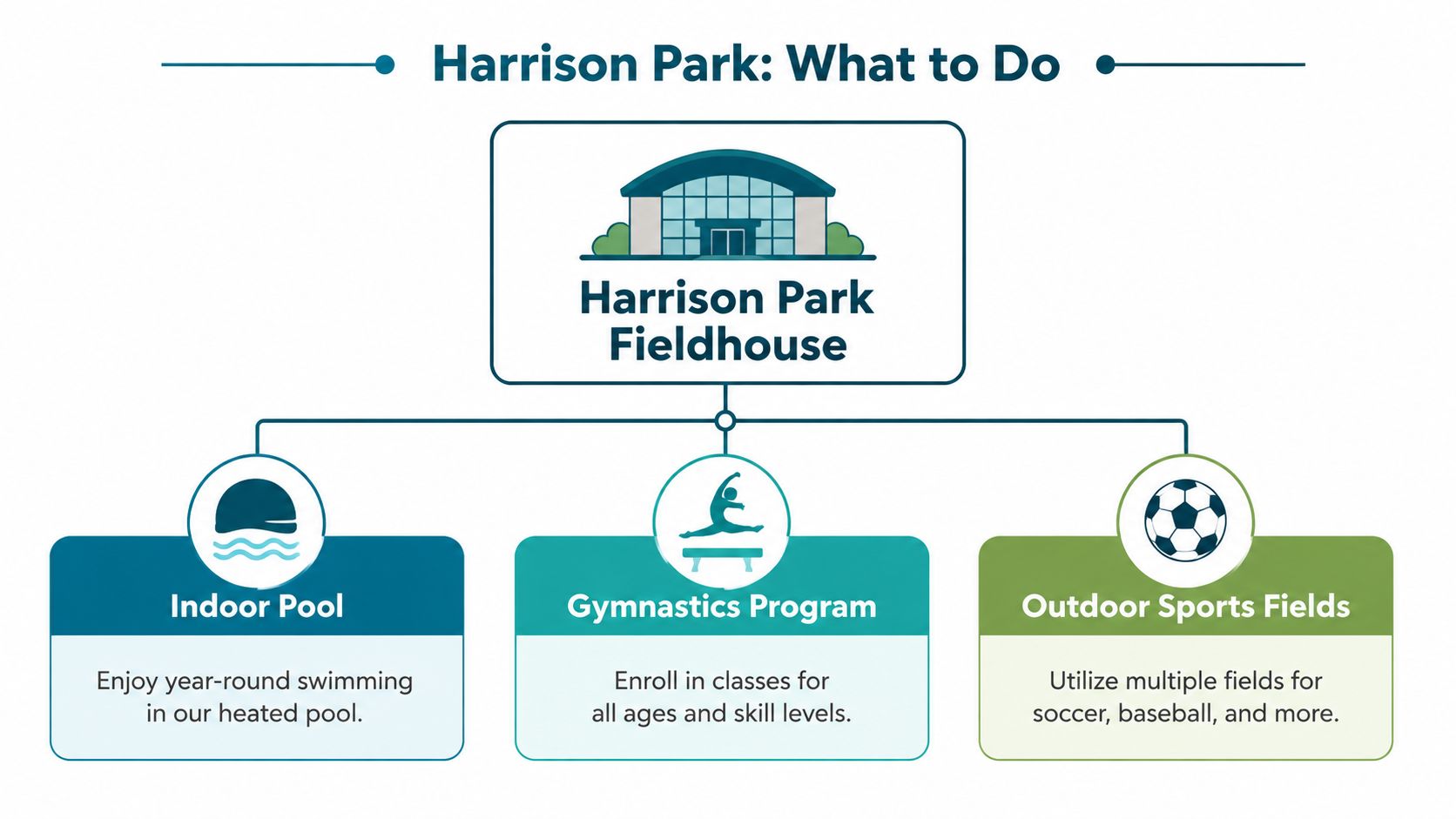
    A diagram outlining amenities at Harrison Park Fieldhouse, including an indoor pool, gymnastics program, and sports fields.

    A park like this earns its keep in small recoveries. Kids burn off chaos on the playground. Neighbors catch up by the courts. Somebody swims laps inside, somebody else sits still long enough to breathe right again. Harrison Park gives you a lot of ways to enter the day, depending on what you need and what you can carry.

    Start with the fieldhouse

    The fieldhouse is the practical center. If you are meeting people, make that your landmark. If the weather turns rude, it keeps the day alive. As noted earlier, it includes an indoor pool, a gymnasium, meeting rooms, a gymnastics center, and a reception rotunda that honors Emiliano Zapata.

    That mix matters. You can come here for organized activity, for a class, for a swim, or just to get oriented before heading outside. I have watched families use it like a base camp, one kid pulled toward the pool, another toward the gym, a parent trying to keep the whole operation from drifting apart.

    Here's a visual overview that helps if you're trying to picture the layout before you go.

    Pick the part of the park that fits your day

    Outside, the park spreads the pressure out. Courts pull in the loud energy first. Fields give people room. The playground keeps its own rhythm, all motion and quick course corrections. If you need structure, go where the games already have rules. If you need air, head for the edges and keep walking until your thoughts stop crowding each other.

    The outdoor setup includes courts, ball fields, a turf field, and a playground, as noted earlier. You do not need a perfect plan to use any of it well.

    Area What happens there Best for
    Courts Fast talk, fast feet, people testing each other Basketball, tennis, meeting up with active friends
    Open field space Room to spread out Soccer, tossing a ball, walking with kids
    Fieldhouse interior More structure, less weather drama Swimming, classes, scheduled activities
    Playground area Constant movement and quick attention shifts Families, short visits, after-school energy

    A better way to spend an afternoon here

    I tell first-timers to stop trying to conquer the whole park.

    Pick one thing that gets your body involved. Shoot for ten minutes. Walk a lap. Stretch near the field. Join a game if somebody waves you in. Then change gears before you wear yourself thin.

    Sit where you can still hear life happening. Near the court fence works. So does a bench with a view of the playground or the field. Let the park do some of the work on you.

    Then end with something small and deliberate. A phone call you have been putting off. A slow walk out. A check-in with the person you came with. We spend a lot of time in this neighborhood teaching people to show up for each other. Parks help when you use them that way.

    Practical rule: Pick one corner and stay with it long enough to notice people, patterns, and your own mood changing.

    What I tell people before their first visit

    If you have kids, start at the playground and stay loose. Children do not care about your itinerary.

    If you want noise and momentum, head toward the courts and see if the energy feels right.

    If you need to clear your head, do not march straight into the busiest section. Walk the perimeter first. Let your nervous system catch up.

    That is the version of Harrison Park I trust most. Not as a checklist of amenities, but as a public place where a rough day can turn into a decent one, and a decent one can turn into a day you remember.

    How to Get Here and Find Your Way

    Getting to a park shouldn't feel like solving a riddle. In Pilsen, it helps to keep your expectations plain. Streets are active, parking can get annoying, and your best move is usually the one that keeps the trip simple.
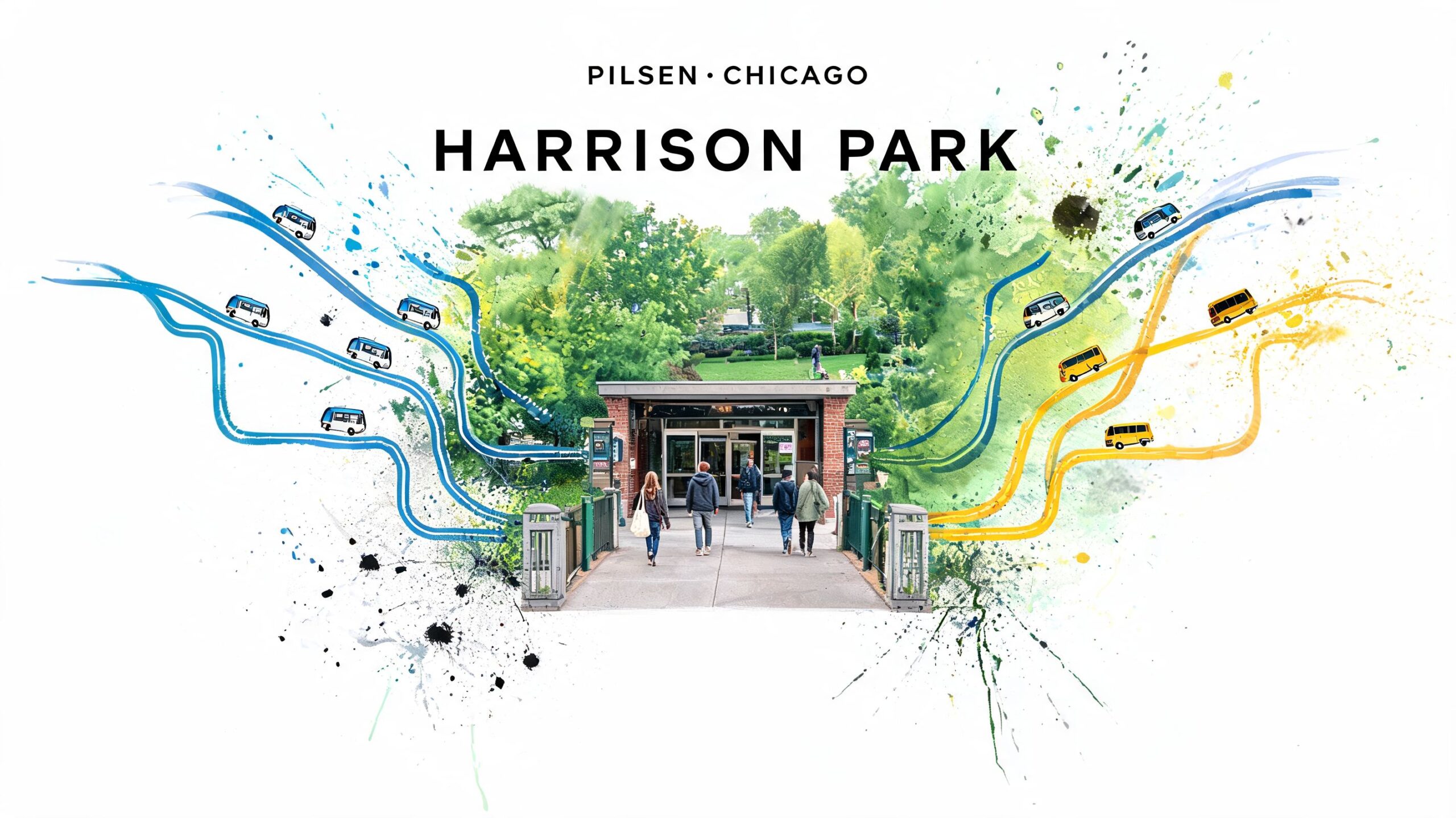
    A creative illustration blending a photo of Harrison Park in Chicago with colorful painted bus transit lines.

    Keep the arrival low drama

    If you're taking transit, I suggest checking your route before you leave and aiming for a short final walk. I won't pretend every trip across Chicago is elegant. Build in a little buffer, wear shoes you don't mind walking in, and don't cut things too close if you're meeting people.

    If you're driving, get there earlier than you think you need to. That's the honest advice. Neighborhood parking can turn a relaxed park visit into a cranky loop around the block if you arrive at the same time as everybody else.

    Once you're there

    The easiest way to orient yourself is to use the fieldhouse as your home base. From there, you can branch outward depending on what you're doing that day. If you're with friends, pick a meeting point before anyone arrives. If you're with kids, identify the bathroom situation and the nearest seating before anyone starts running.

    A few habits make the whole thing smoother:

    • Choose a meetup spot early. "By the fieldhouse" is better than a text thread full of guesswork.
    • Pack for a change in pace. Bring water, a layer, and something to sit on if you like lingering.
    • Walk the edges first. A slow loop gives you a read on the courts, fields, and quieter corners.

    Show up with a loose plan, not a military campaign. Parks are better that way.

    Accessibility and comfort

    I always look for the path of least friction. Paved routes and clear entrances matter, especially if someone in your group has mobility concerns or just doesn't want a chaotic approach. Public places feel friendlier when you can understand them fast.

    That's another thing I like about Harrison Park in Pilsen. Once you enter, the place reads clearly. You don't waste your whole visit trying to decode where life is happening.

    A Smarter Way to Care for Our Park

    One often sees litter and thinks the answer is simple. Grab a bag. Pick it up. Done. I respect that instinct, but Harrison Park asks for a little more brainpower.

    Its past matters to the cleanup. The park's history as a quarry and its location in an industrial area mean cleanup efforts must be strategic. Post-precipitation debris can collect near old drainage systems, and knowing the site's industrial past helps you tell the difference between surface litter and deeper soil issues. The park's governance under the Chicago Park District since 1934 also gives community groups a way to coordinate with official maintenance cycles, according to the Harrison Park assessment PDF from the Chicago Park District.
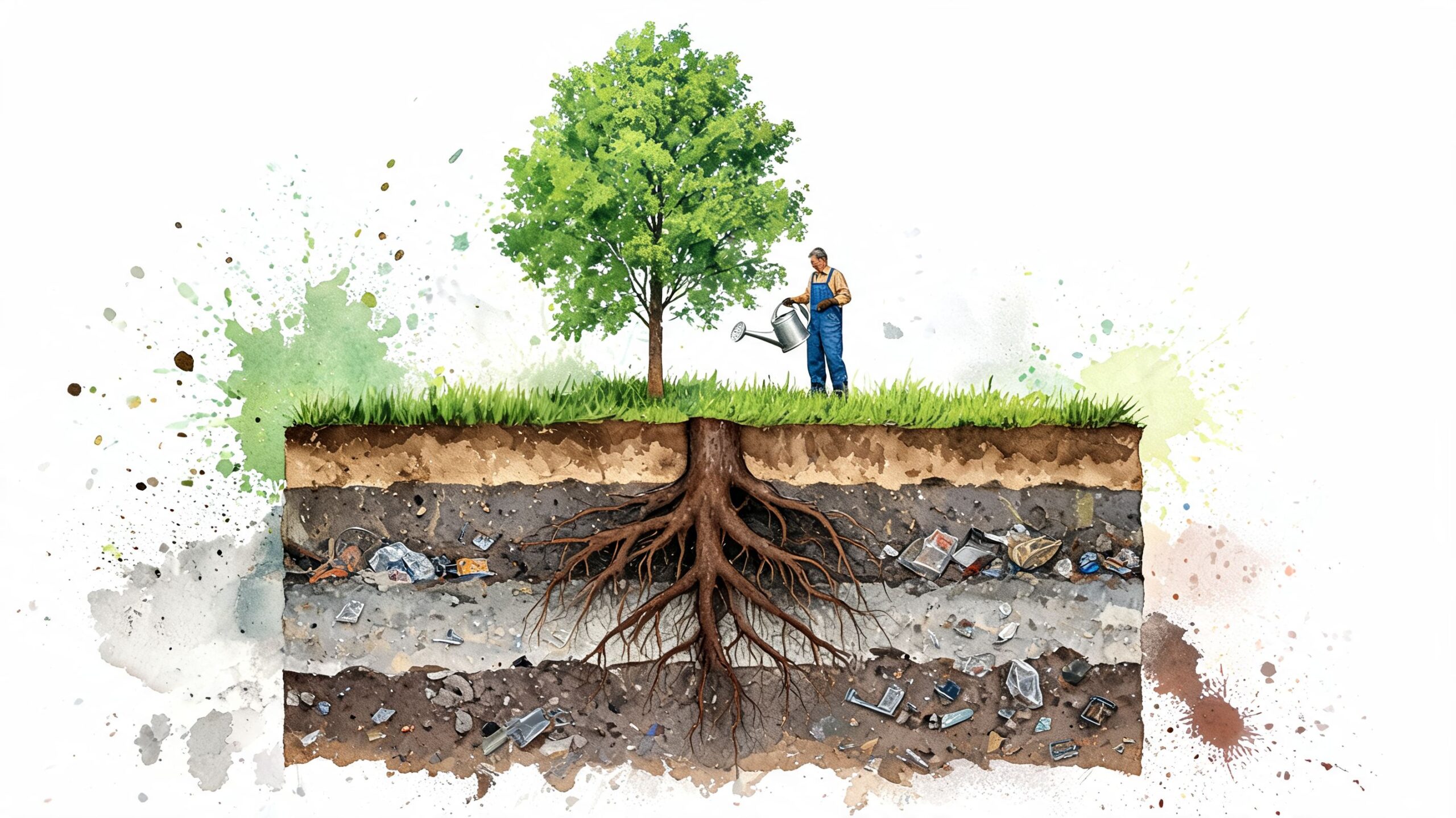
    A man waters a tree growing in ground filled with buried plastic waste and trash underground.

    What smart cleanup looks like

    This changes how I think about service in a place like Harrison Park. You don't attack every mess the same way.

    If a storm pushes cups, wrappers, and bottles toward drainage areas, that's a surface-litter job. If you see something in the ground that looks off, or an area that feels more like a soil problem than a trash problem, that's when regular volunteers need to stop pretending they're a remediation crew. Discipline is part of care.

    I like this because it keeps people safe and useful at the same time.

    A simple field mindset

    When I think about park cleanup, I use a rough filter:

    • Surface litter means cans, bottles, food packaging, and loose trash you can remove safely.
    • Drainage choke points deserve extra attention after rain because debris tends to gather there.
    • Ground concerns need caution. If it feels deeper than a pickup job, don't freelance it.

    That last part matters. Pride can make volunteers reckless. I don't admire reckless.

    Field note: The strongest volunteer is the one who knows where the line is.

    If you want a practical framework for organizing your own effort, this guide on how to clean up a park is useful because it keeps the work grounded in planning instead of hero fantasies.

    Why strategy beats intensity

    I've seen people come in hot, grabbers swinging, trying to "win" against trash in an hour. That energy burns out fast. A smart cleanup works more like chess than like a sprint.

    You watch where debris gathers. You protect volunteers. You respect the site. You work with the people who manage the park instead of pretending you can outmuscle history with one Saturday morning.

    That approach isn't less passionate. It's more mature.

    And for a place with layered ground and a long industrial memory, mature beats dramatic every time.

    Become Part of the Park's Next Chapter

    Every park asks a simple question. Are you just passing through, or are you willing to leave the place a little better than you found it?

    Harrison Park gets that question out of me fast because its whole existence came from change. Hard ground became play space. A worked-over site became somewhere people gather, swim, hoop, talk, watch, recover, and start over. When I spend time there, I don't feel pressure to be perfect. I feel pressure to participate.

    Start small and make it real

    You don't need a speech. You need one act.

    Pick up one piece of trash on your way out. Straighten a bench area if you brought food and made a mess. Bring a friend next time instead of always treating public space like a private convenience. That's how care becomes habit.

    A few good entry points:

    • Visit with intention. Don't only consume the park. Pay attention to it.
    • Learn its rhythm. Go in the morning once, then later in the day another time.
    • Join hands with other people. Community work gets lighter when more people carry it.

    The change goes both ways

    This is the strange thing I keep learning. When you take care of a place, the place starts taking care of you back.

    You become less numb. You notice more. You build a better relationship with your own word because you said you'd show up, and then you did. If you want a concrete next step, check out these Chicago volunteer opportunities.

    I think that's the adventure in harrison park in pilsen. It isn't only the courts, the fieldhouse, or the grass under your shoes. It's the chance to practice being the kind of person who doesn't look away.


    If this kind of service calls to you, take the next step with Litter Caterpillars. Join a cleanup, meet people who come out, and turn one Saturday morning into a better story for you and for Chicago.

  • MrBeast Ocean Cleanup: Your Guide to Local Action

    MrBeast Ocean Cleanup: Your Guide to Local Action

    I once stared at a jar of old jam in my fridge like it was a boulder. Then I walked outside, picked up one crushed bottle on the sidewalk, and felt lighter than I had in months.

    That’s why the mrbeast ocean cleanup story hits me so hard. A giant mess can freeze you. One small action can unfreeze you.

    That One Mess You Can't Clean

    I didn’t start by caring about ocean policy or plastic systems. I started because my own mess beat me.

    A bag of stale nuts from some failed health kick. A container from a trip I didn’t want to forget. That old jam jar in the back of the fridge. None of it weighed much, but to me each item felt welded in place. I’d look at it, feel shame, close the door, and tell myself I’d deal with it tomorrow.

    Tomorrow kept losing.

    A stressed man sitting at a messy wooden table with a large jar labeled jam.

    When a tiny mess feels huge

    That feeling is why people freeze when they hear about plastic in the ocean. The problem sounds too big, too far away, too ugly. You hear about trash in rivers, on beaches, tangled in weeds, lodged under docks, and your brain does what mine did with that jam jar.

    It says, “Nope. Too much.”

    I get that. I really do.

    Because paralysis doesn’t care about scale. A messy room can break your spirit the same way a polluted shoreline can break your hope. Different size, same feeling. You don’t move because you think your effort won’t matter.

    Sometimes the hardest trash to pick up is the first piece.

    What changed me wasn’t some grand plan. It was one outing, one bag, one miserable stretch of weather, one moment where I realized cleaning other people’s mess felt easier than facing my own. Strange, right? But that’s how a lot of us start. We borrow momentum from service.

    Why this story matters to regular people

    That’s what makes the mrbeast ocean cleanup story useful. I don’t mean useful as internet entertainment. I mean useful in your body, in your Saturday morning, in that stuck part of your life that needs a shove.

    MrBeast looked at an absurdly large mess and started anyway. He didn’t wait for the perfect emotional state. He didn’t solve the whole thing alone. He picked a direction and moved.

    That’s the part I want you to keep.

    If your room is a wreck, wash one cup. If your block is filthy, fill one bag. If the ocean problem makes you feel powerless, remember this. Every giant cleanup begins with somebody willing to look silly for doing something small.

    We love the dramatic before-and-after photos. But the miracle itself is more boring than that. Somebody bends down. Somebody gets their hands dirty. Somebody starts.

    What Was the MrBeast Ocean Cleanup

    The simplest way to explain #TeamSeas is this. Two creators asked the internet to help pay for trash removal, and they made the math easy enough for anyone to understand.

    MrBeast and Mark Rober launched #TeamSeas in October 2021. They set a goal to raise $30 million to remove 30 million pounds of trash. The campaign raised $30 million in 65 days from over 400,000 donors, and by July 2024 it had removed 34,080,191 pounds of trash from oceans, beaches, and rivers worldwide, according to Ocean Conservancy’s campaign wrap-up.

    The genius was the simplicity

    A lot of environmental messaging gets muddy fast. You hear a dozen terms, five organizations, three conflicting solutions, and your brain checks out.

    This campaign cut through that.

    • One dollar, one pound: You didn’t need a lecture to understand what your money did.
    • A clear finish line: People could see the target and rally around it.
    • Familiar faces: MrBeast and Mark Rober made a heavy topic feel approachable.

    It worked like a neighborhood potluck. One person doesn’t bring the whole meal. One person brings chips, another brings fruit, another brings a tray of pasta. Suddenly the table is full. That’s what happened here, except the table was global and the shared dish was cleanup.

    Why people joined so fast

    I think people responded because the ask felt clean.

    No maze. No vague promise. No “support awareness.” You give a dollar, a pound of trash gets removed. That kind of clarity is rare, and people trust clarity.

    Practical rule: If you want people to act, give them a mission they can repeat in one sentence.

    That’s true online, and it’s true on your block. If your cleanup pitch needs five minutes of explanation, people drift. If your pitch is “come help us fill bags and leave this place better than we found it,” people get it right away.

    The mrbeast ocean cleanup campaign was huge, but the engine was simple. That’s why it traveled.

    The Two-Pronged Attack on Trash

    A good cleanup plan doesn’t swing blindly. It picks targets.

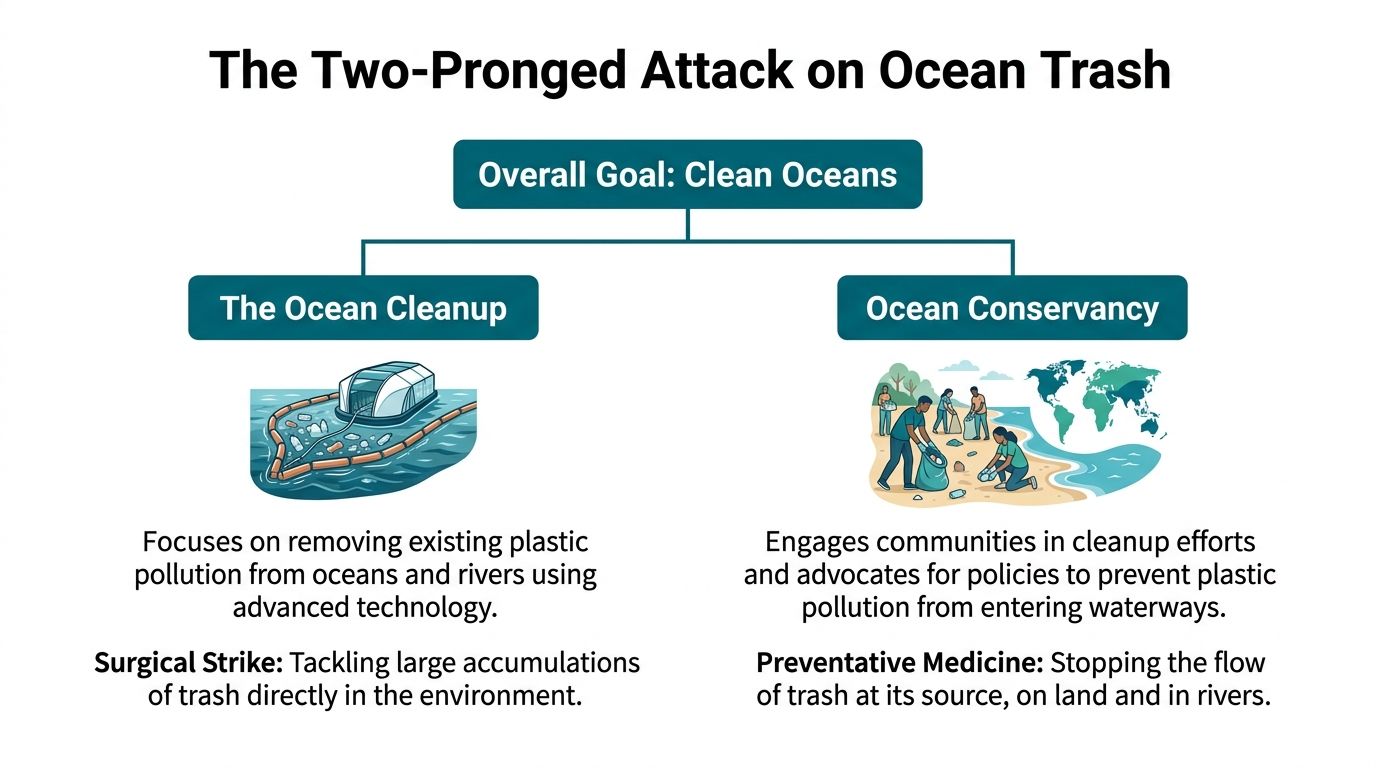
    #TeamSeas used two very different tools for the same problem. I think of it like a two-front fight. One front tried to stop trash before it drifted farther downstream. The other front sent people out to remove what was already choking beaches and coastal areas.

    An infographic showing two organizations, The Ocean Cleanup and Ocean Conservancy, working towards clean oceans.

    The engineering side

    Part of the campaign’s money went to The Ocean Cleanup. Their job focused on rivers.

    The Ocean Cleanup deployed its Interceptor technology, autonomous and solar-powered river barriers with conveyor systems, in high-pollution rivers of the Dominican Republic, Guatemala, Jamaica, and Malaysia. The technology is designed to remove plastic from rivers before it can enter the ocean, as described in The Ocean Cleanup’s #TeamSeas partnership update.

    That matters because rivers are like conveyor belts for litter. If you’ve ever watched trash slide along a curb during hard rain, you already understand the logic. Water carries our laziness farther than we think. A bottle dropped inland doesn’t stay “local” for long.

    So this side of the mrbeast ocean cleanup effort acted like a gatekeeper. Catch the stuff while it’s still moving through a narrower channel. Don’t wait for it to scatter into a much larger body of water.

    The human side

    The other half went to Ocean Conservancy, which worked in a very different way. Less machine, more boots, gloves, grit.

    They organized volunteers for cleanups on beaches and in marine environments. They also went after ghost gear, which means abandoned or lost fishing gear that keeps causing harm long after people leave it behind.

    Here’s the cleanest way to see the difference:

    Partner Main approach What it looked like
    The Ocean Cleanup River interception with technology Interceptor systems catching plastic before it reaches the ocean
    Ocean Conservancy Volunteer-led removal in coastal and marine areas Organized cleanups, gear recovery, direct hands-on work

    I like this split because it mirrors real life. When we clean our homes, we need both. We need a trash can by the door so wrappers don’t pile up again. We also need one painful afternoon to clear the junk already covering the floor.

    Why both approaches mattered

    A lot of people want one perfect answer. There usually isn’t one.

    You need systems that prevent future buildup. You also need people willing to deal with the mess that already exists. If you only build machines, you miss the human labor. If you only send volunteers, you miss the value of intercepting trash upstream.

    A cleanup gets stronger when it combines prevention with removal.

    That’s a lesson you can steal for your own group. Don’t just host pickups. Learn the path trash travels in your area. Which alley dumps into which gutter? Which storm drain carries bottles into the river? Which corner keeps trapping cups and wrappers because the wind circles there?

    The smartest cleanup isn’t always the biggest one. It’s the one that understands the map.

    Lessons for Your Local Cleanup Crew

    The best thing about the mrbeast ocean cleanup isn’t that most of us can copy its scale. We can’t.

    The best thing is that we can copy its design.

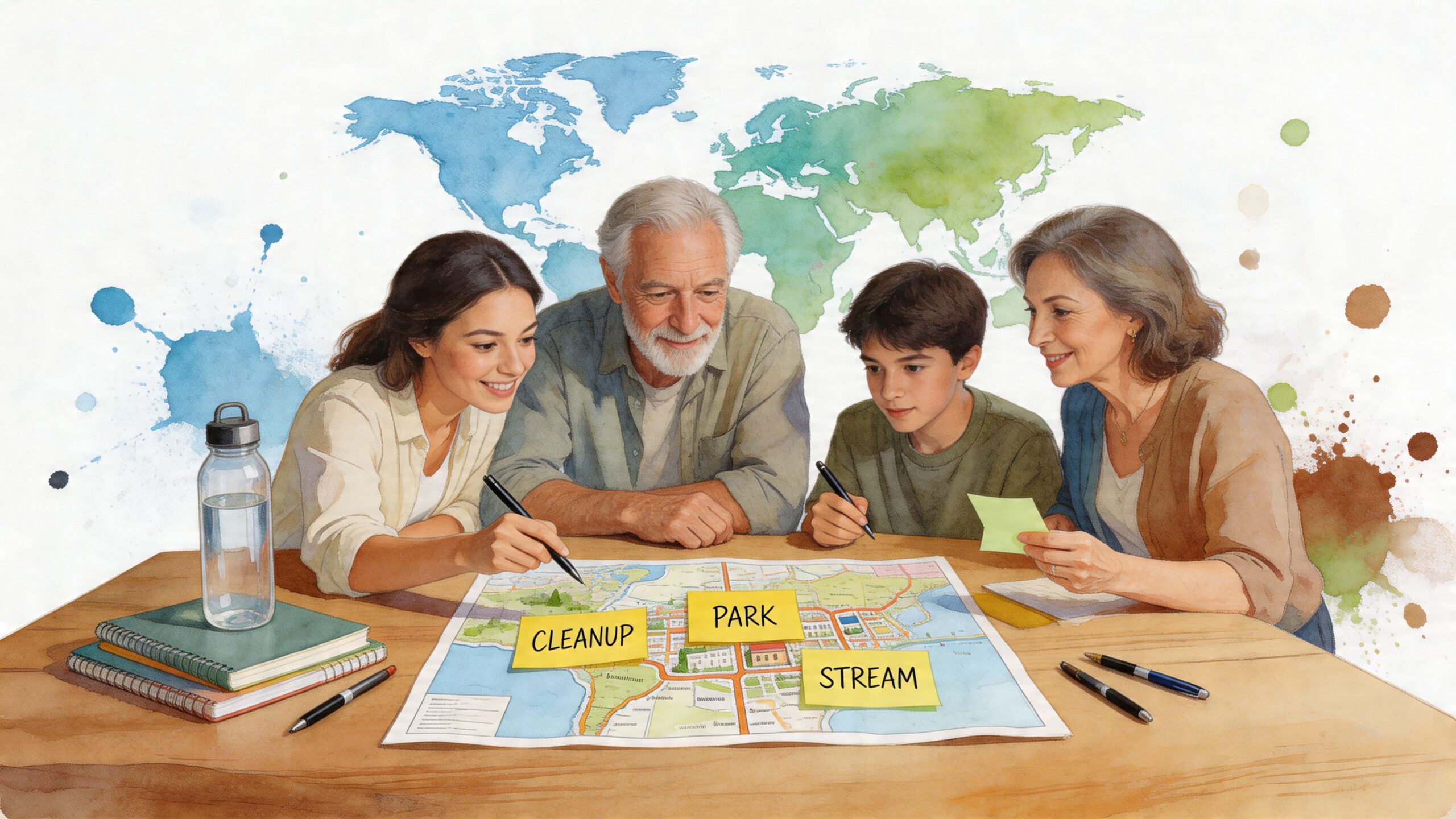
    A family working together on an environmental map project with cleanup and park notes on a table.

    When I’ve seen local cleanup groups stall out, it usually isn’t because people are lazy. It’s because the mission feels fuzzy. Nobody knows where to go, what to bring, or whether the work mattered after it ended. Energy leaks out.

    A strong group fixes that with three moves.

    Make the mission stupid simple

    #TeamSeas had one sentence people could remember. Your group needs one too.

    Don’t say, “We are cultivating civic responsibility through sustainable environmental stewardship.” Nobody talks like that. Say, “We meet, we pick up trash, we leave with full bags.”

    That’s it.

    If you want volunteers, make joining feel light. A page like this guide to volunteer trash pickup events works because it answers the basic human questions fast. Where do I go? What do I bring? Will I feel awkward if I show up alone?

    Those are the actual barriers.

    Give people pride they can wear

    People return to groups that make them feel brave, useful, and seen.

    That doesn’t require celebrity. It requires texture. A group photo. A goofy tradition. A flag. A running joke. A nickname for the route. A ritual coffee stop after the work. These things sound small, but they keep people coming back when the weather turns bad and the novelty wears off.

    Here’s a simple comparison:

    • Weak cleanup group: “Please assist with litter abatement.”
    • Strong cleanup group: “Meet us Saturday. Gloves on at 9. We’re taking this block back.”

    The second one has pulse.

    Field note: Celebration is not fluff. It is how a cleanup becomes a habit.

    Show proof fast

    People need to see what changed.

    Post the bag pile. Take the before shot and the after shot. Keep a simple running log. If somebody spent their morning pulling soggy wrappers from weeds, don’t make them guess whether that effort mattered.

    A short video can help more than a long explanation, especially when people can watch the work happen in real time.

    You don’t need a viral campaign. You need repeatable trust. When people can see a place get cleaner, they start believing they can change other places too.

    And once they believe that, your crew stops feeling like a random volunteer event. It starts feeling like a team.

    Beyond the Stunt The Real Impact

    Some people hear “MrBeast” and roll their eyes. I understand why. Big internet campaigns can feel loud, polished, and a little unreal.

    But if you strip away the thumbnails and chatter, you still have to answer one plain question. Did trash get removed or not?

    In this case, yes.

    Results are stubborn things

    Ocean Conservancy, as #TeamSeas’ beaches and ocean partner, mobilized more than 172,000 volunteers across 73 countries for about 2,000 cleanups targeting ghost gear and other debris, according to The Ocean Cleanup’s #TeamSeas overview.

    That’s not abstract. That’s people waking up, traveling to a cleanup point, bending down, hauling waste, and going home tired.

    And if you care about ocean trash in practical terms, this kind of work is easy to connect to daily life. Fewer nets left drifting. Less debris sitting in coastal habitats. Fewer piles of plastic riding currents and tides.

    Don’t get trapped in motive debates

    I’ve wasted too much of my life waiting for perfect motives, mine and everyone else’s.

    Perfect motives are slippery. Results are easier to inspect.

    If somebody films a cleanup and the place is cleaner after, I care about the cleaner place. If your neighbor thinks your Saturday trash pickup is weird, but the corner stops looking like a dumpster, the corner wins the argument for you.

    That’s one reason I like practical guides on solutions for pollution in the oceans. They pull you away from online sniping and back toward the thing in front of you. Trash has mass. Bags have weight. A cleaner shoreline is visible.

    People can debate style all day. A filled trash bag is hard to argue with.

    The local lesson is simple. Don’t wait for everyone to admire your method. Work first. Let the cleaned space speak.

    Bringing It Home to Chicago

    Chicago will test your sincerity fast.

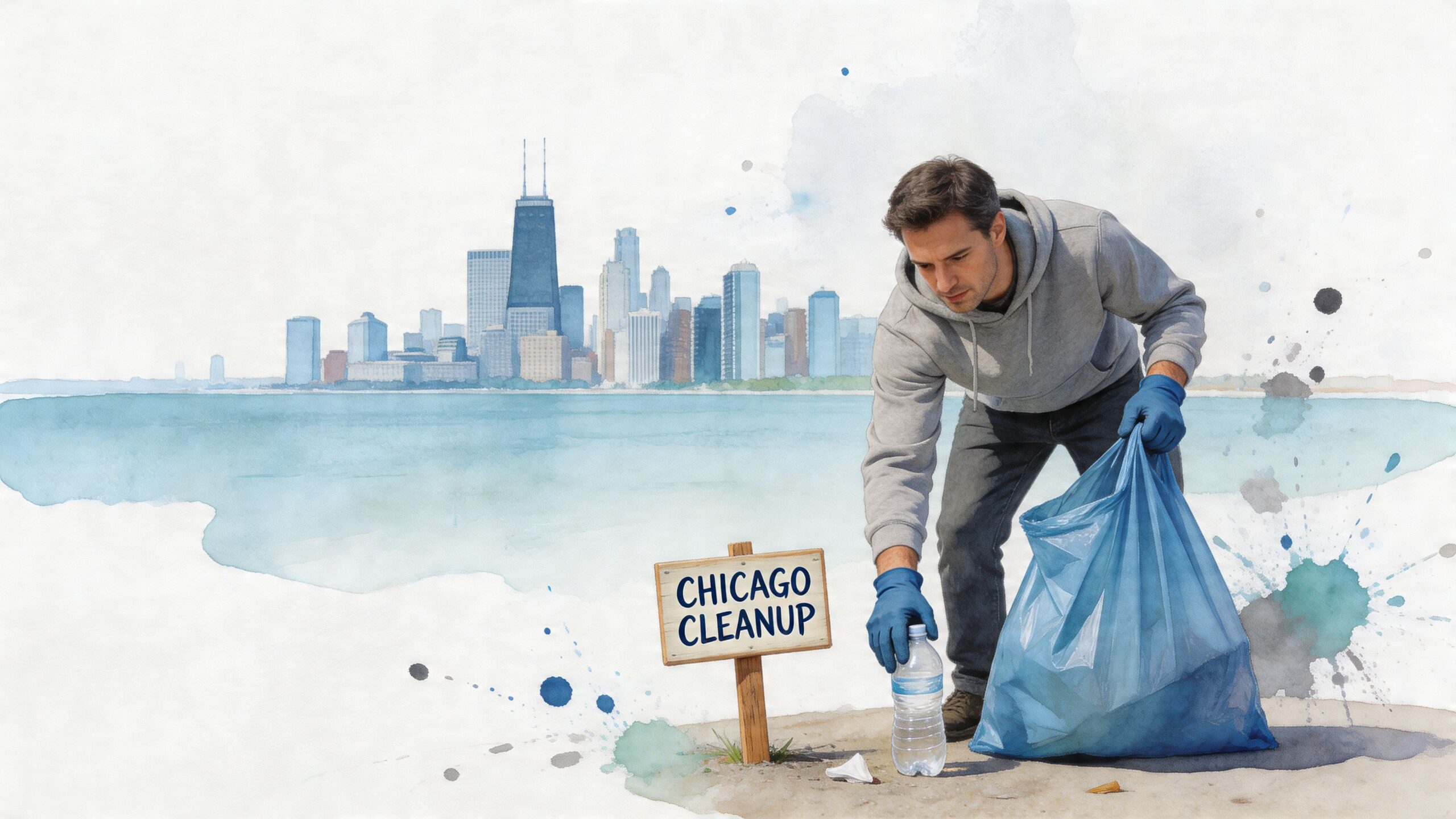
    You’ll get wind off the lake, slush in your shoes, broken glass near curbs, weird smells in the alleys, and that special kind of cold that makes your fingers feel like borrowed objects. If you still want to show up after that, you’re ready.

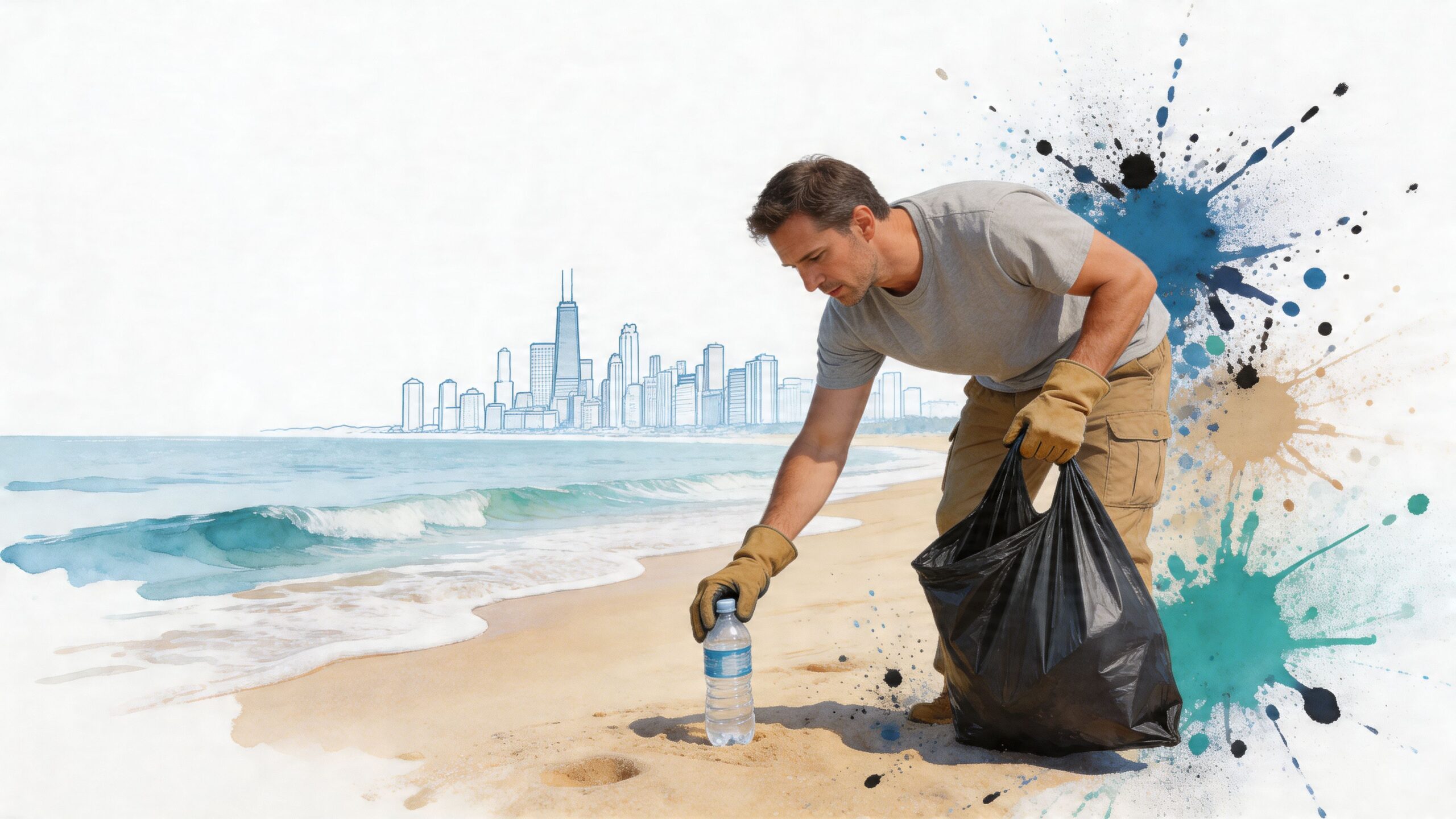
    A man picking up a plastic bottle on a beach in front of the Chicago skyline.

    Start safe and stay boring about it

    I mean “boring” as a compliment. Safe cleanup habits should feel repetitive.

    • Wear gloves: Don’t raw-dog street trash. Use sturdy gloves every time.
    • Dress for layers: Chicago weather lies. Start with layers you can remove.
    • Use a grabber if you have one: It saves your back and keeps your hands farther from sharp junk.
    • Work with a buddy: Streets move fast. So do bikes, scooters, and distracted drivers.
    • Skip dangerous items: If you find needles, leaking containers, or anything that feels off, leave it and report it through the right city channel.

    You don’t get extra points for being reckless. You just get hurt.

    Pick a route that sets you up to win

    Don’t begin with the nastiest stretch you can find. That sounds brave, but it often burns people out.

    Start with a route you can realistically finish. A park edge. One commercial block. A bus stop corridor. The strip near a school fence. You want a visible before-and-after. You want volunteers to leave feeling, “We did that.”

    That’s how people build appetite.

    A simple local education page on ocean plastic pollution and connected waterways can also help people see why inland litter matters. Chicago trash doesn’t stay neatly where it started. Wind and rain move it.

    What to bring on your first morning

    I like a short list better than a giant checklist.

    Bring this Why it matters
    Gloves Protects your hands from grime and sharp edges
    Trash bags Gives the outing a clear finish line
    Water You’ll feel better and stay out longer
    Closed-toe shoes Streets and shorelines both bite
    A friend Keeps things safer and less awkward

    If you can, go early. Weekend mornings are underrated. The city feels softer then. You can hear birds between traffic bursts. You can talk while you work.

    And when you finish, don’t rush off. Stand there for a second. Look at the ground you just changed. That moment matters more than people think.

    Start With Your Own Fence

    I keep coming back to Tom Sawyer and that fence.

    He got handed a chore and turned it into something other people wanted to join. That story sticks because it reveals a strange truth. A burden can change shape when you carry it with pride.

    That’s how I see the mrbeast ocean cleanup. A giant ugly task became a shared mission people wanted to take part in. Not because trash is glamorous. It isn’t. Because action feels better than helplessness.

    Your fence might not be an ocean. It might be the alley behind your building. It might be the block where bottles collect by the bus bench. It might be the pile in your own room that you’ve avoided for months because each object feels heavy with memory.

    Start there.

    A small brave act changes the mood

    You do not need a huge platform to begin. You need one bag, one hour, one friend, one route. That’s enough to change the temperature of a day.

    And often that’s enough to change you, too.

    Find the mess that keeps staring at you. Then make it your project, your ritual, your weird little badge of honor.

    That’s the whole thing. Clean your fence. Then invite somebody else to help paint.


    If you want a real-world place to start, join Litter Caterpillars. We pick up trash in Chicago, make room for friendship, and turn ordinary weekend mornings into something you can feel proud of. If you’ve been waiting to become the kind of person who shows up, this is a good place to begin.

  • Springbrook Prairie Pavilion: Your Guide to Adventure

    Springbrook Prairie Pavilion: Your Guide to Adventure

    I once walked out of a big-box parking lot near dusk with a coffee in one hand and a grocery bag in the other, then looked up and saw open prairie instead of more asphalt. That jolt stayed with me. Springbrook Prairie Pavilion felt like one of those rare places where your errands and your better instincts can meet.

    Finding Your Open Space

    A lot of us know the feeling of being crowded long before we step into a crowded place. I’ve had seasons where every object in my life seemed loaded with memory and guilt. A half-used jar. An old receipt. A bag I meant to donate. None of it looked heavy, but all of it felt heavy.

    Then you get somewhere open, and your chest notices before your mind does.

    That’s what springbrook prairie pavilion represents for me. Not just a shopping center. Not just a nearby preserve. It feels like a release valve. You can arrive carrying stress, indecision, stale routines, and leave with wind in your face and a small sense that your life can change shape.

    The first reset

    My favorite way to think about this place starts with a simple afternoon. You park. You do one ordinary thing first. Pick up groceries. Grab a bite. Walk past storefronts and people moving through their day. Then, absurdly close by, the land opens.

    The contrast matters.

    You don’t need a grand vacation or a dramatic reinvention. Sometimes you need a place that lets you move from noise to horizon in a single outing. Springbrook does that. It gives you a practical entry point into a wider emotional space.

    Some places entertain you. Others loosen the knot you’ve been carrying for weeks.

    That’s why I don’t think of this area as just a destination. I think of it as a threshold. You cross from consumption into attention. You stop asking, “What can I buy?” and start asking, “What can I notice? What can I care for? What can I contribute?”

    Why open space changes you

    Open land does something cluttered rooms can’t. It returns proportion. A problem that looked huge at your kitchen table can shrink when you’re standing under a broad sky with grasses moving in every direction.

    If you already love public green spaces, you’ll enjoy this broader guide to Chicago parks worth exploring. Springbrook belongs in that emotional category, even though it has its own strange and wonderful personality.

    Here’s the practical truth beneath the feeling:

    • You can start small: One walk can reset your mood.
    • You can pair errands with reflection: That makes it easier to show up.
    • You can turn a personal slump into public care: Places like this invite that shift.

    I think that’s why I keep coming back to springbrook prairie pavilion in my mind. It offers room. Physical room, yes, but also moral room: room to breathe, to look up, to become more useful to the place you live.

    Discovering a Place with Two Hearts

    The first time I watched this place reveal itself, a family pushed a cart toward the stores while a child pointed past the parking lot at the open grass beyond it. The adults had come for errands. The child had already spotted the bigger invitation.

    That moment stayed with me because it captures what springbrook prairie pavilion is. It holds two kinds of energy in one shared space, and if you let both of them reach you, a routine stop can turn into a small act of awakening.

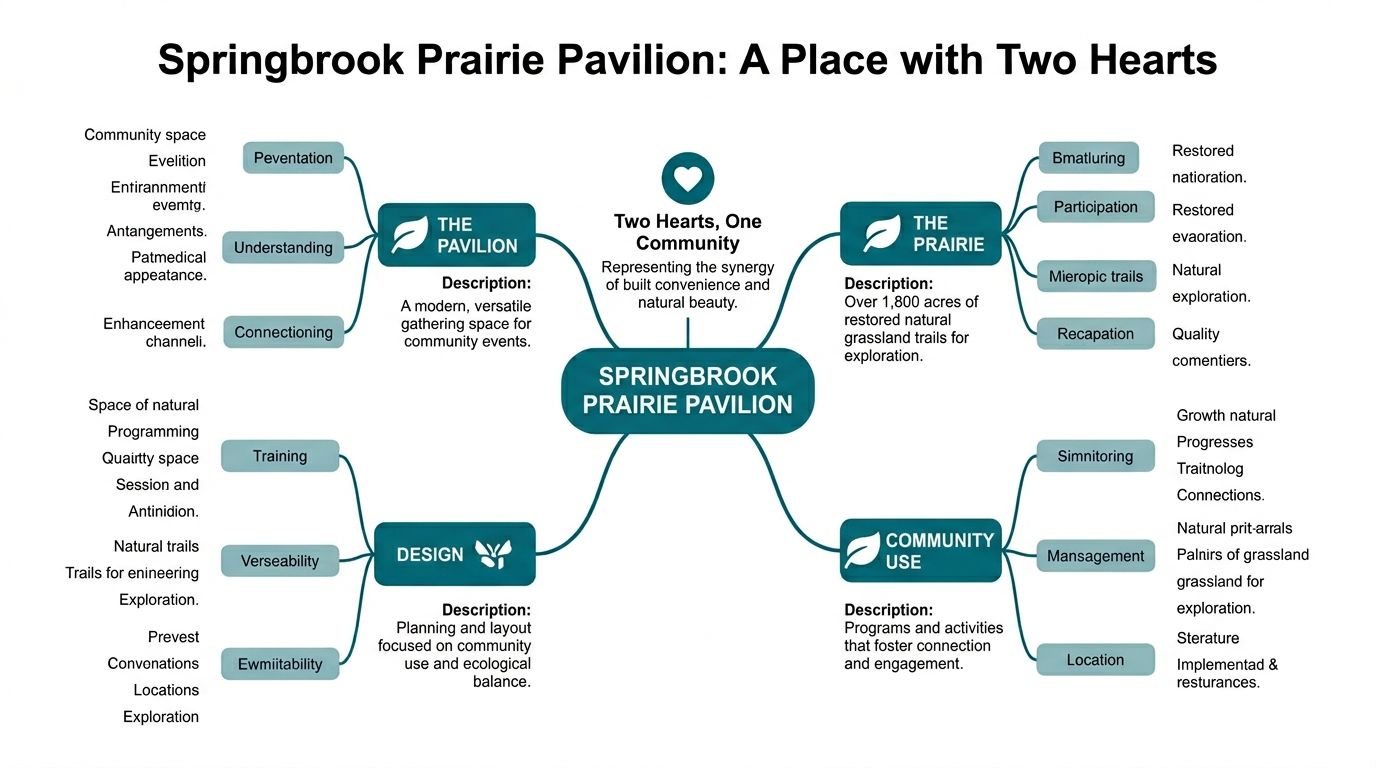
    A mind map illustrating the Springbrook Prairie Pavilion, focusing on its dual nature as community space and prairie.

    Heart one is the pavilion

    On one side, you have a place people know how to use right away. They meet for coffee, grab groceries, pick up what the week requires, and keep life moving. The retail center has been part of that daily rhythm for years, and that familiarity matters.

    A useful place can become a gathering place. A gathering place can become a starting place.

    I keep returning to that idea because community action rarely begins in perfect conditions. It begins where people already are. A parking lot meeting point. A shared meal. A quick errand that leaves twenty extra minutes. The pavilion side of springbrook gives you that practical doorway.

    Heart two is the prairie

    Then the scale shifts.

    The nearby preserve opens into a broad grassland protected through years of public care, and the DuPage Forest Preserve’s Springbrook Prairie page describes why it matters for habitat, birdlife, and the region’s living prairie story. You feel that history under your feet. Somebody chose to keep this land breathing.

    I love places where that choice is visible. You can sense it here. The stores say people live here. The prairie says people also decided this life needed room, restraint, and responsibility.

    That is where the two hearts meet. One supports daily needs. The other asks what kind of neighbor you want to be.

    How to read the place

    If you walk in expecting only convenience, you will miss half the lesson. If you come only for scenery, you may miss the civic miracle hiding in plain sight. This corner of suburbia shows what happens when usefulness stands beside preservation and neither one cancels the other out.

    Part What you notice first What it gives you
    Pavilion Stores, parking, daily movement A gathering point, familiar routines, a place to start
    Prairie Trails, grassland, sky Perspective, habitat, and a reason to care for something beyond yourself

    I think that is why this place feels bigger than its map pin. It is not only a stop. It is a test of attention.

    You can rush through it and leave with bags. You can slow down and leave with purpose. For anyone who has ever needed a gentle way back into service, the two hearts of springbrook prairie pavilion offer a simple invitation. Come for what you need. Stay long enough to notice what your community needs too.

    Your Practical Guide to Visiting

    Good adventures usually begin with plain logistics. If you handle the basics well, the place opens up.

    I like to treat springbrook prairie pavilion as a split-purpose outing. One part of your plan belongs to the retail center. The other belongs to the preserve. If you decide which one matters more before you leave home, the whole visit gets easier.

    Start with your purpose

    Ask yourself one question first. Are you going there to walk, to shop, or to blend both?

    If you want trail time, wear shoes you don’t mind putting miles on. If you want errands plus a walk, keep water in the car and leave enough time so the outing doesn’t feel rushed. The beauty of this place is the transition between modes, but only if you give yourself margin.

    Here’s the preparation checklist I’d hand a friend:

    • For a trail-first visit: Bring water, a hat if the sun is strong, and a small bag for your own waste.
    • For a store-first visit: Finish the must-do errand first so your mind can relax later.
    • For sunset seekers: Get there early enough that you’re not racing the light.
    • For mixed groups: Set a meeting point before anyone wanders off toward shops or trails.

    Know what kind of place you’re standing in

    The pavilion itself reflects care for the land beside it. Springbrook Prairie Pavilion is a LEED Gold certified retail center, the first of its kind in the Chicago area, and its design includes high-performance insulation and native plantings that reduces irrigation needs by 50% while cutting operational energy demands by up to 30% compared to standard developments, according to MGNCE’s project page on Springbrook Prairie Pavilion.

    That detail changes how I see the site. I’m not just walking through another shopping center. I’m standing in a place that at least tried to build with some respect for its environmental context.

    A few field-tested habits

    You don’t need much ceremony, but a few choices can improve the day.

    Practical rule: Do the most time-sensitive thing first. Stores have schedules. Walking space gives you more emotional flexibility.

    I also like to keep expectations simple:

    • Don’t overpack the itinerary. This area works best when you leave room to drift.
    • Check the weather before you go. Open prairie feels different when wind picks up.
    • Wear layers if the day looks uncertain. The land has a way of reminding you that forecasts are only forecasts.

    The best visits don’t feel optimized. They feel balanced. You arrive prepared enough that nothing distracts you, then you let the place do the rest.

    Exploring the Trails Beyond the Stores

    The trails are where springbrook prairie pavilion stops being merely convenient and starts becoming memorable.

    You can feel the shift in your body. Concrete gives way to path. Storefront noise fades. The horizon stretches. You start noticing birds, seed heads, the shape of clouds, the long flat language of Illinois land.

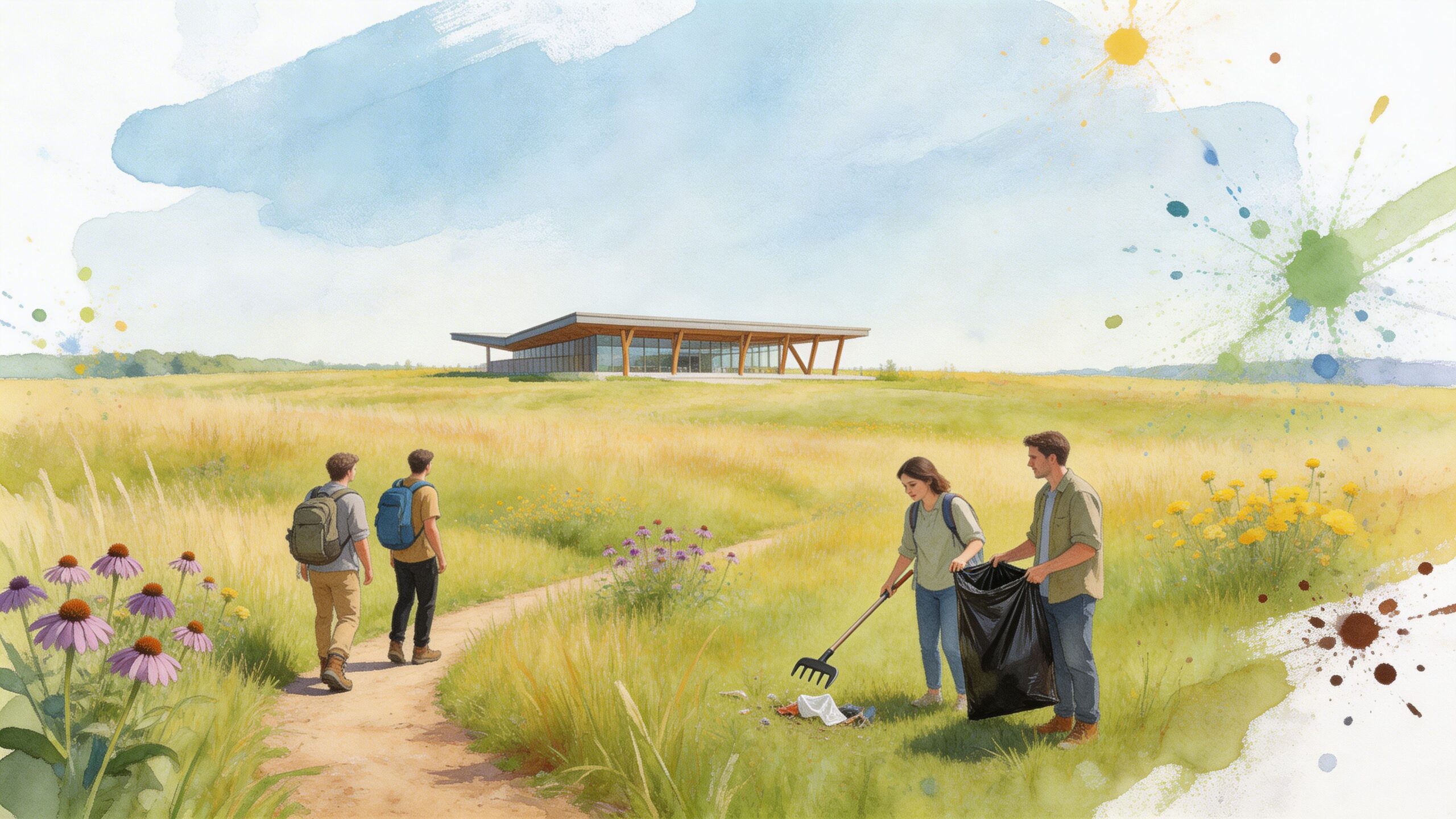
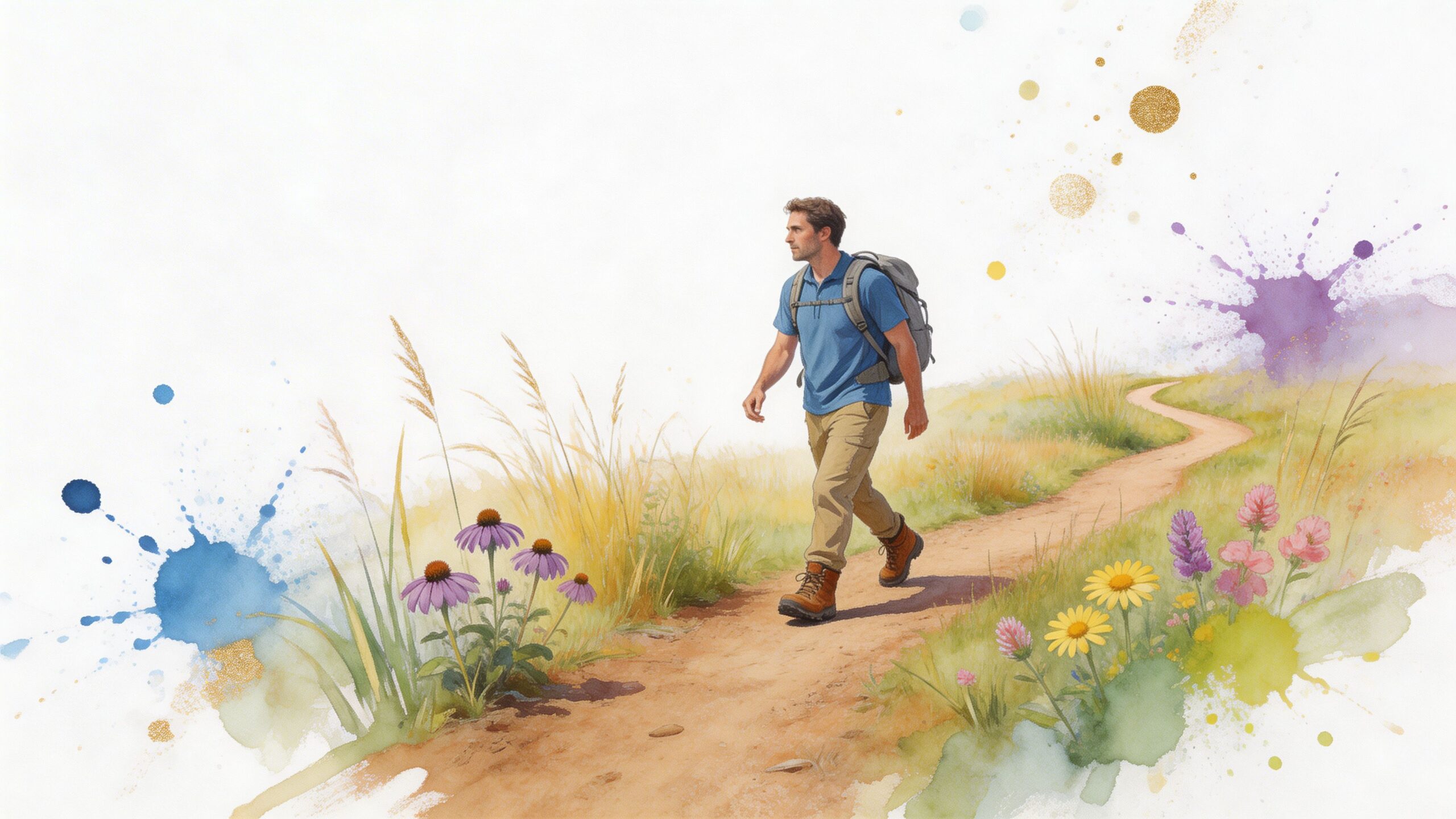
    A man with a backpack hiking along a scenic trail surrounded by wildflowers at Springbrook Prairie.

    The trails change your pace

    The preserve offers a 5.5-mile paved trail and a 2-mile hiking-only Henslow’s Trail, according to the DuPage forest preserve information cited earlier. Those two experiences feel different.

    The paved route invites rhythm. You can walk it with a friend, bike it, or use it as a long exhale after a busy week. The hiking-only trail asks for more attention. It narrows your focus. Your steps get quieter. Your thoughts usually do too.

    That’s why I think these trails matter beyond recreation. They create a kind of honest mental reset. Not an expensive one. Not a branded one. The old human relief of moving through open land.

    Why beauty also creates responsibility

    This preserve gets described as a birder’s paradise, and that phrase makes sense. The habitat is precious, and people come because it’s worth seeing. But beauty draws pressure with it.

    An underserved angle stands out here. Despite the preserve’s strong reputation and 5.5 miles of trails, there’s room for volunteer-led cleanups because high foot traffic and proximity to retail create litter risks for endangered bird habitats, especially as restoration projects continue through 2028, as noted on this Springbrook Prairie Pavilion area page.

    That point landed hard for me. We celebrate access, but access creates responsibility. A snack wrapper dropped near a trail edge doesn’t stay “small” for long when habitat is the thing at stake.

    Beauty isn’t self-protecting. People have to protect it.

    I like this short video because it helps put the place in motion rather than in brochure language.

    What to notice while you walk

    If you go, pay attention to more than distance.

    • Listen for contrast: retail hum in the distance, wind close to your ears.
    • Watch the edges: trail edges often reveal where human care is strongest or weakest.
    • Notice what doesn’t belong: cups, plastic, pet waste bags, scraps of packaging.
    • Look up often: prairie settings reward people who stop staring at their shoes.

    That’s the argument I’d make to anyone on the fence. These trails aren’t just a pleasant extra beside the stores. They’re a vital public resource. They help people think better, breathe deeper, and remember that developed places still need wild neighbors. A space like this deserves visitors, and it deserves guardians too.

    The Sawyer Effect Turning Cleanup into Adventure

    I’ve always loved the Tom Sawyer lesson, not because tricking your friends is admirable, but because he understood something real. Energy changes when people feel pride instead of punishment.

    A cleanup can feel like drudgery. Or it can feel like a mission.

    At springbrook prairie pavilion, that shift happens more easily than you’d expect. The setting helps. You’re in a visible, active place where service shows in the surroundings and in the eyes of passing strangers.

    A diverse group of cheerful volunteers cleaning up litter in a community environmental service project together.

    What makes a cleanup feel alive

    The pavilion sits on Naperville’s busiest retail corridor, with 75th Street seeing 60,100 vehicles per day, and that visibility gives volunteer groups a big public audience. The same area also reaches an affluent local demographic with average household income of $118,722, according to Perform Properties’ Springbrook Prairie Pavilion page.

    I don’t read that as a marketing stat. I read it as social influence.

    When people see volunteers working in a prominent place, the act stops being private virtue. It becomes a civic signal. It tells drivers, shoppers, and families that care is normal, effort is admirable, and somebody is willing to go first.

    A simple cleanup script

    If I were organizing a morning there, I’d keep the plan lean and human:

    1. Choose a clear zone. Start with an obvious edge. Parking lot borders, trail access points, or the seam where retail activity meets natural space.
    2. Bring visible tools. Gloves, grabbers, sturdy bags, and bright markers of group identity help people feel part of something.
    3. Give the morning a mood. A shared playlist before or after, coffee, a group photo, a funny team name. Small rituals matter.
    4. End before people burn out. Leave while spirits are still high.

    Field note: People come back when service feels social, safe, and a little bit heroic.

    If you want ideas for organizing your own crew, this guide to volunteer trash pickup is a useful starting point.

    The point is bigger than the bags

    The best cleanup events don’t remove litter; they alter identity.

    Someone arrives thinking, “I’m tagging along.” Then they spend an hour improving a visible place with other people. They leave standing straighter. They start seeing themselves as the kind of person who acts instead of complains.

    That’s the Sawyer effect. You reframe service as participation in a story worth joining.

    At springbrook prairie pavilion, that story writes itself. Cars pass. Shoppers notice. The prairie sits nearby like a reminder of what’s worth defending. You bend down, pick something up, and the act feels oddly dignified; it's not glamorous, but better than glamorous, it is necessary.

    Hosting Your Own Event at the Pavilion

    The first time I saw a community table work in a place like this, it was almost disarmingly simple. Two folding chairs. A handwritten sign. A bin for winter gloves. People who came for groceries slowed down, asked a question, dropped something in, and kept going. By the end of the morning, that little setup had done more than collect supplies. It had changed the mood of the whole corner.

    That is why Springbrook Prairie Pavilion matters. As noted earlier, it already has the visibility and daily rhythm that many organizers spend weeks trying to create from scratch. You are not begging people to find a hidden cause in a hidden place. You are meeting them where life is already happening.

    A diverse group of families and children enjoying a sunny picnic and playtime at a local park pavilion.

    Why this location helps good ideas catch on

    A pavilion tied to everyday errands gives your event a kind of honest momentum. Parents are already out. Teens are already gathering. Neighbors are already passing through with ten spare minutes they did not know they had.

    For service work, that matters.

    A cleanup sign-in table near a recognizable storefront feels approachable. A supply drive here feels visible, not hidden. A meetup before a stewardship walk starts with less confusion because nobody has to decode where to park, where to wait, or whether they are in the right place.

    I love places like this because they have two audiences at once. The people who came on purpose. And the people who discover your effort by accident, then decide to join.

    Build a gathering people can say yes to fast

    You do not need a festival plan. You need a clear invitation.

    A school club can meet here, share a quick welcome, then head toward nearby green space for a service hour. A neighborhood group can set up a donation point with one volunteer greeting passersby and another keeping things organized. A family-led cleanup morning can begin with coffee, gloves, and a simple promise that kids will get to help in a real way, not just stand around while adults talk.

    If budget is the sticking point, start small and study how to find corporate sponsors for local community events. Even one donated batch of water, gloves, snacks, or printed flyers can make a local effort feel cared for.

    Formats that fit the pavilion well

    The best event here is usually the one people understand at a glance.

    Event idea Why it works at the pavilion
    Cleanup meetup Gives volunteers an easy public meeting point before heading out
    Donation or supply drive Catches everyday foot traffic from people already running errands
    Club meetup before a walk Reduces confusion and makes turnout less intimidating
    Family service morning Combines convenience, visibility, and a nearby outdoor purpose

    One caution, learned the hard way. Keep your first event modest enough that you can greet people warmly, answer questions, and end on time. A well-run hour builds trust faster than an ambitious three-hour plan that leaves everyone tired and scattered.

    This is a significant opportunity here. You are not just borrowing a convenient location. You are helping turn an ordinary commercial stop into a place where neighbors notice one another, act on what they care about, and leave feeling a little more responsible for the ground under their feet.

    Your Questions Answered

    A few practical questions decide whether a visit happens this weekend or gets postponed for months. So here are the straight answers.

    Are dogs allowed in the preserve

    Yes. Dogs are welcome on most trails, and they need to stay leashed. The preserve also has an off-leash dog area that requires a permit from the Forest Preserve District of DuPage County.

    The important part isn’t just rule-following. It’s habitat respect. If you bring a dog, clean up after it and keep the place pleasant for wildlife and other visitors.

    Is there a fee to enter the preserve

    Individual entry for hiking, biking, and picnicking is free. That matters because it removes one of the biggest barriers to trying a new outdoor place.

    The preserve is generally open during posted hours from one hour after sunrise to one hour after sunset. I’d check official postings before you go, especially if weather looks rough or your timing is tight.

    Can you fish or picnic there

    Yes to both.

    Picnicking is a natural fit because the setting already invites lingering. You don’t need much. A blanket, simple food, and a willingness to stay off your phone for a while can turn a regular afternoon into something restorative.

    Fishing is allowed in Spring Brook creek if you have a valid Illinois fishing license. That part of the experience connects you to the water side of the preserve, which is easy to overlook when the grassland views take center stage.

    What should you bring for the best visit

    Keep it simple:

    • For walking: good shoes, water, and weather-appropriate layers.
    • For dogs: leash, waste bags, and patience around others.
    • For picnics: pack light and leave no trace.
    • For service-minded visitors: a small bag and gloves can turn a regular walk into a helpful one.

    Springbrook prairie pavilion works best when you treat it as more than a transaction stop. Give yourself enough time to notice what’s around you. That’s when the place starts giving something back.


    If you want more than a solo visit, join Litter Caterpillars. It’s a volunteer-driven Chicago cleanup group built on bravery, kindness, unity, and the simple idea that showing up for a place can change you too.

  • Eco Friendly Transport: Our Chicago Cleanup Guide

    Eco Friendly Transport: Our Chicago Cleanup Guide

    The first time I huddled under a tree in Chicago hail after a cleanup, every Uber kept canceling on us. We were cold, wet, carrying grabbers, and somehow more alive than we had felt all week.

    Why Your Commute Is Part of Our Cleanup Story

    I started picking up litter for a strange reason. I could not clean my own life.

    My room felt heavy. My fridge felt heavy. Old containers, expired food, random objects with emotional history. None of it weighed much, but every item felt enormous to me. I knew I needed a way to move again.

    Then I started cleaning public spaces, and something clicked. A bottle on a sidewalk did not come with years of guilt. A chip bag in a bush did not come with a memory attached. I could bend down, pick it up, and keep walking. That simple act started loosening something inside me.

    A woman looking thoughtfully out a window with a city street scene and a messy desk overlaid.

    The mission starts before the cleanup

    I learned that service begins long before your glove touches a piece of trash.

    It starts when you leave your home. It starts with the shoes you put on. It starts with whether you rush into a car in frustration or step outside with intention.

    When you walk to a cleanup, you notice the broken glass near the curb, the alley that needs help, the mural half-hidden behind weeds. When you bike, you feel the distance between neighborhoods in your legs. When you take the train, you see how one city contains many worlds, all stitched together by tracks and effort.

    That matters.

    Eco friendly transport is not just a technical choice. It is a mental shift. You stop treating the trip as dead time and start treating it as part of the work.

    Travel can clean your mind too

    I love the quiet discipline of a good commute. You grab your gloves. You check the weather. You head out even when the sky looks rude. That small act builds character.

    A cleanup day can fail before it begins if you arrive angry, flustered, and disconnected. I have felt that. I have also felt the opposite. I have walked to a site with the cold air waking me up and arrived ready to serve.

    Those are two different versions of the same morning.

    Your route shapes your mindset. If you travel with intention, you arrive with intention.

    For me, green travel and cleanup work belong together because both fight the same enemy. Carelessness. One kind leaves trash on the ground. Another kind treats every trip like someone else will absorb the cost.

    A Saturday morning feels different when you earn it

    There is a special feeling in getting somewhere the hard but honest way. Not miserable hard. Meaningful hard.

    You bike through wind. You wait on a platform with a grabber tucked under your arm. You walk the last few blocks and see the street you came to help before anyone else does. That does something to you.

    It turns you from a spectator into a participant.

    I think a lot about bravery. People usually save that word for giant moments, but I think bravery often looks small. Getting out of bed on a freezing weekend morning is brave. Showing up in a neighborhood you have never visited is brave. Choosing a cleaner way to move through the city when the easier option calls your name is brave too.

    Here is what I want you to carry with you. Your commute is not separate from the cleanup. It is the first bag you pick up. The first act of discipline. The first way you tell the city, and yourself, that you care.

    What Makes Transport Eco-Friendly Anyway

    A lot of people hear the phrase eco friendly transport and think it means buying something expensive or becoming some perfect climate saint. I do not see it that way.

    It's like tools.

    If you need to tighten one screw, you do not grab a sledgehammer. If you need to carry one backpack across a neighborhood, a private car can be the same kind of overkill. Big machine. Big space. Big side effects.

    Use the right tool for the job

    That is the simplest definition I know.

    Eco-friendly transport means choosing a way to move that matches the task with less waste. Sometimes that is walking. Sometimes it is a bike. Sometimes it is a train. Sometimes it is sharing a ride instead of driving alone.

    The point is not purity. The point is fit.

    A short trip to a cleanup with light gear might call for walking. A medium trip with some flexibility might fit a bike. A longer cross-city trip might belong to the train or bus. If you need to haul supplies with friends, carpooling can make sense.

    Why this matters in plain English

    Road traffic carries a giant environmental burden. Road vehicles account for 75% of global transport CO2 emissions, with passenger cars and buses contributing 45.1%, and road transport responsible for about 15% of all global CO2 emissions, according to Neste’s transport emissions data room.

    You do not need to memorize that. You just need to understand the pattern.

    When a city leans too hard on private road travel for everything, the costs spread everywhere. Air. Noise. Space. Stress. Streets stop feeling like places for people and start feeling like channels for machines.

    Green is not only about carbon

    I care about emissions, but I also care about what a trip feels like on the ground.

    A greener mode often does a few things at once:

    • It uses less space: One person walking or biking takes up less room than one person in a car.
    • It creates less noise: Quiet movement changes the mood of a street.
    • It invites awareness: You see more when you are not sealed away from your surroundings.
    • It can build community: Shared routes create chance encounters and repeated human contact.

    That is why I resist reducing this topic to a lecture. The issue lives in your body. You feel it in a loud intersection. You feel it on a calm side street. You feel it when a train drops you off and the neighborhood opens up on foot.

    Eco friendly transport is less about looking virtuous and more about wasting less.

    My rule for daily decisions

    I use a rough filter.

    Ask yourself three questions before you go:

    1. How far am I really going
    2. What am I carrying
    3. What choice gets me there with the least unnecessary impact

    That is it.

    Not every trip will be ideal. Life is messy. Schedules break. Weather turns. But if you keep choosing the right tool more often, your habits change. Then your city changes with you.

    Choosing Your Ride A Chicago Volunteer's Guide

    Chicago does not ask for one perfect commuting style. It asks for adaptability.

    Some cleanup mornings start with calm sunshine and a coffee. Others start with wet gloves, missed trains, and a grabber poking awkwardly out of your tote bag. I have learned to stop asking, “What is the best mode?” and start asking, “What is the best mode for this mission?”

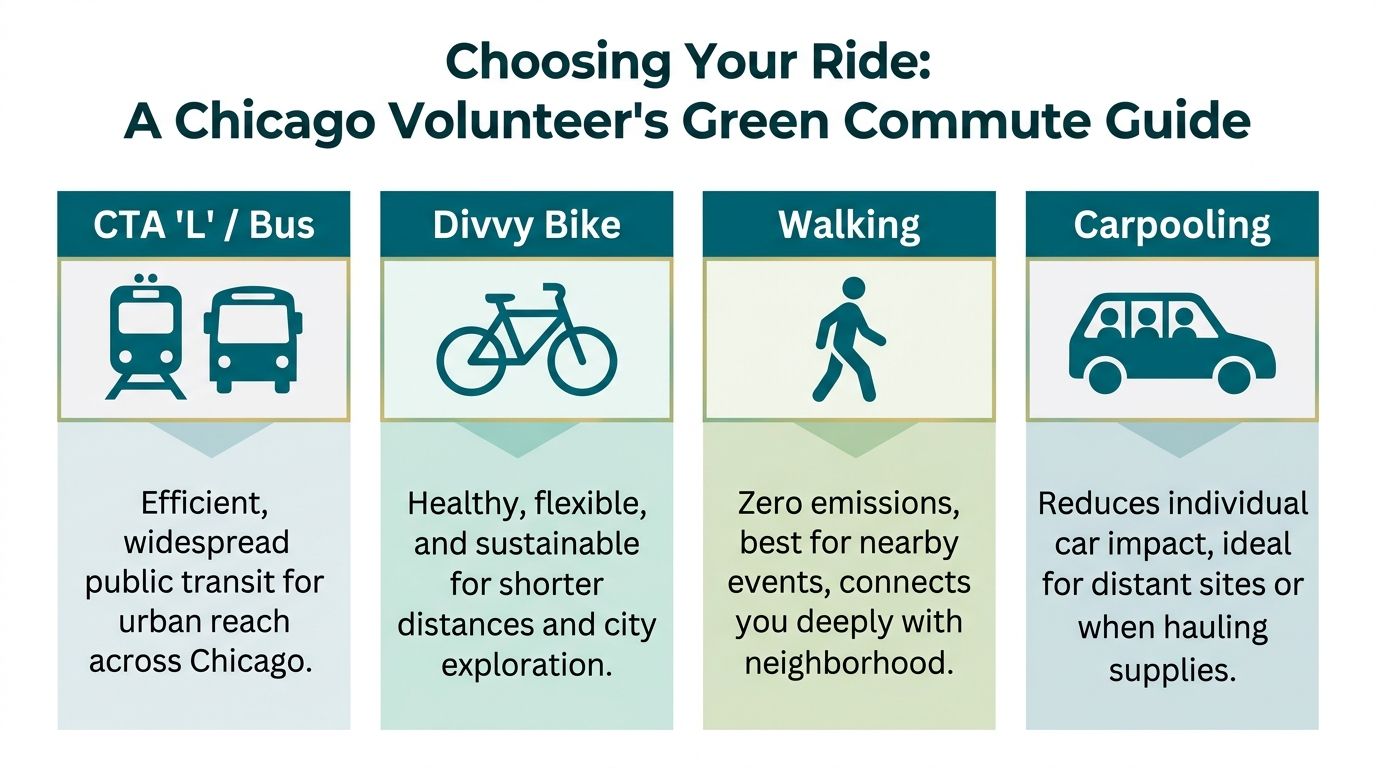
    Infographic

    Four ways I think about the trip

    Walking gives you intimacy.

    You notice dumped cups in tree pits. You spot alleys you want to come back to. You arrive warmed up and grounded. If the event is close, walking is beautiful because it asks almost nothing except your attention.

    Divvy gives you freedom.

    You can improvise. You can stop. You can take the long way through a park if your mind needs air. A bike also turns the city into something you can feel, not just pass through. If you want inspiration for routes beyond cleanup day, I like this guide to bike trails in Illinois for 2026.

    The CTA gives you reach.

    Chicago stretches. A lot. Public transit lets you cross that stretch without making the whole trip about parking. And trains are strong on pure efficiency. Electric trains emit 88 grams of CO2 per mile per passenger, compared with 100 grams for buses and 400 grams for standard cars, according to this electric rail comparison.

    Carpooling gives you practicality.

    Sometimes you have extra supplies. Sometimes the site sits far from your easiest train route. Sometimes you are bringing snacks, water, gloves, and one oddly shaped sign. Sharing a ride can still be a thoughtful choice when it replaces multiple separate car trips.

    Chicago Volunteer Transport Comparison

    Mode Eco-Impact Avg. Cost Gear Friendly? Adventure Factor
    Walking Very low impact Low Best for light gear High if you like neighborhood detail
    Divvy Bike Low impact Moderate Good with backpack and clipped tools High and playful
    CTA L / Bus Strong option for cross-city trips Moderate Good if you pack compactly Medium-high, feels like an expedition
    Carpooling Better than solo driving Shared cost Best for bulky supplies Medium, social and practical

    What I would choose in real volunteer situations

    If the cleanup is near your home, walk.

    You save yourself the hassle of locking up a bike or timing a train. You also get a preview of the street conditions before you arrive.

    If you live a few neighborhoods away and the weather is decent, bike.

    A bike works especially well when you want to stay mobile after the cleanup. Maybe you want to grab lunch with volunteers or explore a new stretch of the city while your energy is high.

    If the event is across town, take the CTA.

    The train and bus network let you show up without the mental drag of driving. I like that public transit turns travel into shared space. You are not isolated. You are already in public life.

    If your group is hauling things, carpool on purpose.

    Fill seats. Consolidate supplies. Make one trip do the work of several.

    If you are unsure, choose the option that makes it easiest to show up. Consistency beats fantasy.

    The hidden factor nobody talks about enough

    The best commute is the one that leaves you ready to serve.

    Some modes save time but drain your patience. Others take a bit longer but hand you your focus back. Pay attention to that. Your body knows the difference.

    A cleanup is physical, social, and emotional work. Choose a ride that helps you arrive open, not depleted.

    Navigating Chicago The Caterpillar Way

    I fell in love with Chicago more once I stopped moving through it only for convenience.

    The city changed when I started traveling through it for service. A station was no longer just a station. It became the threshold to a block that needed care. A bike lane stopped being paint on pavement and became a thread connecting people willing to help.

    A young woman wearing a green Litter Caterpillar shirt travels on a train past the Chicago skyline.

    The train turns distance into possibility

    One winter morning, I rode through gray skies toward a cleanup site with a grabber angled against my leg and gloves stuffed in my pocket. The platform was cold enough to make you question your life choices.

    Then the train came. Doors opened. Heat. Light. Other people heading somewhere with their own reasons.

    That is one of my favorite things about the CTA. It rescues the day from self-importance. You are just one person on a city artery, trying to do something useful.

    Chicago’s train lines let you string together neighborhoods that too many people keep mentally separate. If you care about service, that matters. You cannot clean a whole city if you only move through the parts that already feel comfortable.

    For a slower, street-level way to know the city beyond the tracks, I also like these self-guided Chicago walking tours. They help you build neighborhood memory, and that memory makes service more personal.

    The bike convoy feeling

    Bikes create a different mood.

    A small group rolling to a cleanup has its own energy. You feel slightly ridiculous, slightly heroic, and fully awake. Someone has a trash grabber strapped to a rack. Someone else has work gloves clipped to a backpack. Somebody forgot water and realizes it halfway there.

    Good. That is real life.

    I love that kind of travel because it keeps the mission human-sized. You hear each other. You stop for a red light and joke around. You pass blocks where you want to return. The route itself becomes shared memory.

    Protected infrastructure makes all of this more dependable. As noted in Earth911’s discussion of resilient bike infrastructure, Minneapolis has shown that year-round cycling is possible with protected bikeways, and the lesson is simple. Paint isn’t protection. If you want people to ride in rough weather, give them something real.

    That line sticks with me because it applies beyond bikes. People act brave more often when a city meets their courage halfway.

    Here is a short look at the spirit of getting out there anyway.

    Bad weather reveals what you believe

    Some of my favorite cleanup stories start with ugly forecasts.

    Chicago has a way of testing whether your values are decorative or real. Wind, sleet, surprise snow, summer heat. The city asks, “Do you still mean it?”

    Traveling to a cleanup in rough weather strips away excuses fast. If the sidewalks are bad, you learn what curb cuts matter. If the bike lane vanishes under slush, you learn what infrastructure was never serious. If the bus is your lifeline that morning, you learn what reliability feels like in your bones.

    A city shows its character in blue-sky conditions. It shows its truth in bad weather.

    I think that is why eco friendly transport has to be practical, not performative. It has to work on ordinary days and difficult ones. Otherwise it is just marketing.

    Gearing Up for Your Green Commute

    A good commute starts the night before. Not with philosophy. With packing.

    I have made enough dumb mistakes to respect preparation. I have carried awkward gear in flimsy bags. I have underdressed, overdressed, forgotten water, and tried to look cool instead of being ready. Every one of those choices made the mission harder than it needed to be.

    A person holding a travel card next to a water bottle, sneaker, and map on watercolor background.

    Pack like you plan to move

    Your gear should help you travel, not trap you.

    If I am taking transit, I want one bag that stays close to my body and leaves my hands free. If I am biking, I want the weight off my shoulders as much as possible. If I am walking, I want no item bouncing, swinging, or digging into my side.

    Here is the practical checklist I would hand a new volunteer.

    • Gloves first: Put them where you can grab them fast. Outer pocket beats buried at the bottom.
    • Water matters: A reusable bottle saves you from starting tired and dehydrated.
    • Compact layers: Chicago weather changes its mind. Wear light layers you can tie around your waist or pack easily.
    • Transit card or phone ready: Do not fumble at the gate while holding gear.
    • Small snack: Cleanup work feels longer when you are hungry.
    • Simple bag: Backpack beats tote when you are moving through stations, curbs, and crowds.

    Carrying odd gear without hating your life

    Trash grabbers are useful. They are also awkward.

    If you bike, strap a grabber to a rear rack or slide it along the frame if it fits securely. Test it before you leave. You do not want your heroic setup turning into roadside nonsense at the first bump.

    If you take the train, collapse or shorten gear when possible and keep it vertical. That makes you a better neighbor on a crowded car. If you walk, switch hands often and avoid overpacking everything else.

    I also like to use work gloves with enough grip to be useful but not so bulky that I lose dexterity. You do not need fancy. You need reliable.

    Safety is part of the ethic

    I do not think preparation is boring. I think it is respectful.

    You respect your own energy. You respect the people meeting you. You respect the mission enough to arrive ready instead of scattered.

    A few habits help a lot:

    1. Check the route before you leave: Especially if you are combining train, bus, and walking.
    2. Use lights on a bike when visibility drops: Early mornings and cloudy days can get dim fast.
    3. Wear shoes you trust: Cleanup work punishes flimsy shoes.
    4. Tell someone your route if conditions look rough: Basic, simple, smart.

    Bravery works best when you pair it with preparation.

    I have learned that eco friendly transport feels much easier when friction disappears. Pack the right bag. Secure the weird tool. Dress for movement. Then the trip becomes part of your rhythm instead of a problem you must solve from scratch every time.

    Making Green Transport Fair for Every Neighborhood

    If you only talk about eco friendly transport as a personal lifestyle choice, you miss the hardest part.

    Not everyone starts from the same curb.

    Some neighborhoods have better sidewalks, easier train access, safer bike routes, and more visible investment. Other neighborhoods get told to wait, adapt, or settle. Then people act shocked when the greener option feels harder to choose.

    Access is a justice issue

    That is not just inconvenient. It is unfair.

    The U.S. Department of Transportation identifies 35% of census tracts as transportation disadvantaged, and work highlighted by the Systems Change Lab on access to green mobility notes significant disparities in public EV charging access for Black and Hispanic communities in major cities like Chicago.

    I care about that because the gap shows up in everyday life. The cleanest option on paper means less if reaching it is harder, less safe, or less reliable depending on where you live.

    What this means on the ground

    When a neighborhood lacks dependable green mobility, people lose more than a convenient commute.

    They lose time. They lose flexibility. They lose the sense that the city belongs to them equally.

    That also affects volunteer work and neighborhood care. If people from one part of the city can move easily to serve and explore while others face extra barriers, the map of participation gets warped. The neighborhoods that most need solidarity can end up hardest to reach sustainably.

    I think about this a lot when people praise urban sustainability in broad terms. Broad terms can hide sharp edges.

    What I want cities and communities to fight for

    I want a city where green movement does not feel like a privilege badge.

    That means supporting improvements that make sustainable travel real in every ward, not just the fashionable ones. Better connections. Safer routes. Reliable service. Charging access where renters and residents in multi-unit buildings can use it. Infrastructure that respects people who do not have backup options.

    If you care about clean streets, you should care about this too. Environmental work and mobility justice touch the same nerve. They both ask who gets protected, who gets ignored, and who gets told to work around preventable problems.

    For a deeper look at the moral side of this, I recommend reading about environmental justice and how you create change.

    A greener city that excludes whole neighborhoods is not a greener city. It is just a prettier version of the same old inequality.

    I do not want that. I want the kind of city where a kid, a renter, a student, a retiree, and a volunteer with a trash grabber all have a fair shot at moving safely and sustainably.

    Partner With Us to Keep Chicago Moving and Clean

    A cleanup group can remove litter from a block. A network can change what a city believes about itself.

    That is why I think local businesses, schools, clubs, and community groups have such a powerful role here. Eco friendly transport becomes real when people support it together. A lone volunteer can be brave. A whole neighborhood can make bravery normal.

    What partnership can look like

    It does not need to be complicated.

    A bike shop can host a pre-cleanup tune-up morning. A café near a train stop can become a meeting point where volunteers gather before heading out. A community center can offer storage for supplies so fewer people need to haul everything across town. A local employer can encourage staff to join by transit, on foot, or by shared ride.

    Those are small moves. They create real momentum.

    Why this matters for businesses too

    When a business backs cleaner and smarter movement through the city, it is not doing charity theater.

    It is investing in streets people want to spend time on. It is helping neighbors meet one another. It is reducing the friction that stops good intentions from becoming action.

    I think a lot of organizations underestimate how much people remember practical support. If you help volunteers get somewhere warm before a winter cleanup, they remember. If you offer bike parking, water refills, or a reliable meet-up corner, they remember that too.

    That kind of support has soul.

    The bigger story

    The best version of Chicago is not just cleaner. It is more connected.

    People travel across neighborhoods they were taught to fear. They discover local businesses they never would have seen from an expressway. They build confidence using trains, bikes, sidewalks, and shared rides in service of something bigger than themselves.

    That is a city with momentum.

    I want more of that. I want partnerships that make sustainable movement feel welcoming, capable, and full of pride. Not preachy. Not polished to death. Just real. Real people helping other real people get where they need to go so they can do good work together.

    If you run a business or lead an organization, you do not need to solve every transit problem. You just need to take one honest step that makes green movement easier for your community.

    That is how cities change. Not only by plans on paper, but by people who decide to make the next trip better.


    If you want to turn a Saturday morning into something brave, useful, and memorable, join Litter Caterpillars. You can show up, make friends, explore Chicago, and help build a cleaner city one block and one green commute at a time.

  • A Guide to Partnering with Mid America Paper Recycling Co

    A Guide to Partnering with Mid America Paper Recycling Co

    Let me tell you how I started Litter Caterpillars. It wasn't just about cleaning Chicago's parks. It was about cleaning up my own life. I wrote this guide for you—all the other groups out there like ours, people driven by a need to see real, tangible change.

    Turning Our Passion into a Partnership

    Three smiling men in blue shirts hold trash bags under a tree, cleaning a park with a city skyline.

    I’ll never forget our first cleanup. Just three of us. We got caught in one of those wild Chicago hailstorms, huddled under a tree, but we felt completely united. I learned something profound that day: cleaning up other people's messes is way easier than cleaning up our own, and it's how you begin to transform yourself and the world around you.

    So, you've done the hard part. You've rallied your friends. You've gotten out there and picked up the trash. But what happens next?

    This is where you can take all that effort and make it mean even more. It’s time to team up with a big-hitter like Mid America Paper Recycling Co.

    Think about it like this. Those bags of paper and cardboard you collect aren't just trash anymore; they're a resource. When you partner up, every piece you pick up gets a second life, fueling a bigger cycle of sustainability. This is how you take your small acts of service and turn them into something massive.

    Who Is Mid America Paper Recycling Co

    You’ve definitely seen their big blue trucks rumbling around the city. So, what’s the real story behind Mid America Paper Recycling Co? I think of them as the unsung heavy lifters in Chicago’s recycling world. They're not just another company. They're a true Chicago legacy.

    They’ve been at this since 1926. Imagine that—a family business that started way back when and has grown into one of the most serious recycling operations in the entire country.

    From their massive, modern facility right here in Chicago, they tackle an insane 51 different grades of paper. They know this stuff inside and out. You can get a real sense of their scale by checking out the story behind their impressive numbers on midamericapaper.com.

    When a company has been around that long, it tells you something. It tells me they’re reliable, they know exactly what they’re doing, and they’ve survived by being absolute experts. They're the ones who take all the raw materials we collect and turn them into something new.

    Alright, this part is critical. If you get this wrong, all your hard work on a cleanup goes straight to a landfill. This is where you separate the rookies from the pros.

    Knowing exactly what Mid America Paper Recycling takes is the difference between a successful haul and a completely wasted effort. So, what's on their "approved" list?

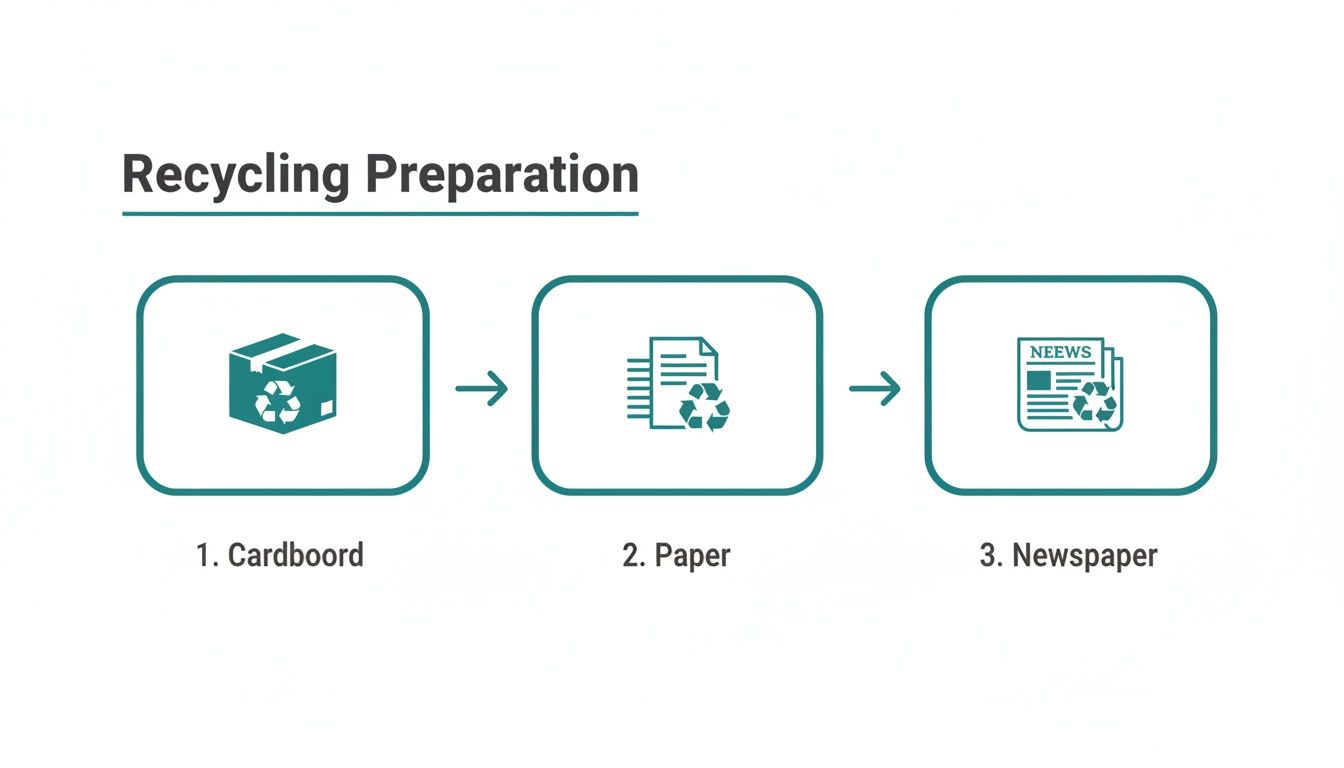
    The good news is, it’s a lot of the stuff you find most often. They are hungry for what the industry calls Old Corrugated Containers (OCC)—that’s just the fancy term for all those cardboard boxes you pull out of alleys and parks. They also take mixed paper, office paper, and newspapers. For a group like yours, this is a huge win. It means the mountains of paper and cardboard you collect actually have a place to go.

    Following these rules is about respecting the work. It makes sure our effort isn't for nothing and that the stuff we collect actually gets a second chance.

    I put together a simple table to make it even easier for you. Think of this as your cheat sheet for sorting on the fly during a cleanup.

    Accepted Materials Guide for Volunteer Groups

    This table breaks down the common paper and cardboard items we find and tells you exactly how to prep them for Mid America. Keep it simple. Keep it clean.

    Material Type Common Examples Simple Prep Instructions
    Old Corrugated Containers (OCC) Amazon boxes, shipping cartons, moving boxes Flatten them completely. Remove any plastic wrap, styrofoam, or excessive tape.
    Mixed Paper Junk mail, magazines, catalogs, paperboard (cereal boxes, tissue boxes) Keep it loose in the collection bag. Make sure it's dry.
    Office Paper Printer paper, letters, envelopes (even with windows!) No need to shred. Just keep it clean and separate from food waste.
    Newspapers Daily and weekly newspapers, including the inserts Keep them flat and dry. Don't bundle with string.

    Basically, if it's paper or cardboard and it's clean and dry, you're probably in good shape. A little bit of food grease on a pizza box is a no-go. A water-logged newspaper is just trash.

    Of course, some things are a definite "no." You can't recycle anything that's been soaked in oil, chemicals, or other nasty stuff. For those items, you need a different game plan. Be sure to check out our guide on what to do with things contaminated by hazardous waste in Chicago.

    Navigating Logistics for Your Volunteer Group

    You’ve just finished a massive cleanup and now you’re staring at a mountain of perfectly sorted cardboard. What’s next? Getting all that good stuff to a commercial facility like Mid America Paper Recycling Co can feel like a whole new battle. Believe me, I’ve been there.

    It’s one thing to pick up the trash; it’s another to get it where it needs to go. Think of it like this: you’ve gathered your army, now you need a battle plan. For a volunteer group like yours, the two most powerful weapons you have are volume and communication.

    These big recycling plants are used to dealing with businesses, not weekend warriors like us. But a huge, well-organized haul from a community cleanup? That’s a different story. The best approach I've found is to combine materials from a few different cleanups into one massive load. Show them you mean business.

    This is how you get your paper and cardboard ready for the big leagues.

    A three-step flowchart illustrates recycling preparation for cardboard, paper, and newspaper materials.

    When you keep your materials clean, dry, and neatly sorted, you’re not just dropping off trash—you’re delivering a valuable resource. It shows respect and turns you into a professional partner. This kind of planning builds relationships that help everyone, and it’s a good habit to build with all the other Chicago recycling centers out there, too.

    So Where Does All Our Hard Work Go?

    Men sort and recycle paper and cardboard bales on a conveyor into a large recycling bin.

    Have you ever wondered what actually happens after you’ve bagged everything up and called it a day? It’s not the end of the story—it’s where your hard work starts a whole new journey. All that paper and cardboard you collect gets sent to a massive facility run by Mid America Paper Recycling Co, and from there, it’s a wild ride.

    Think of it like a giant, high-tech kitchen. The paper gets sorted, cleaned of any gunk, and then squished into massive, dense bales. These aren’t just blocks of old paper; they're the raw ingredients that paper mills all over the world are waiting for. They’ll get transformed into brand new boxes, paper towels, and all sorts of other paper goods.

    This is what people call the "circular economy," and it’s a pretty big deal. It means your effort isn't just about cleaning up a block; it's about plugging your neighborhood directly into a global supply chain that gives our trash a second, third, and fourth life.

    And partnering with a big, established player like Mid America matters. Even when the economy gets weird, they keep the whole process chugging along. In 2023, for example, cardboard prices totally crashed, but the company reported that their volumes were actually surging. That’s a testament to their stability. You can even nerd out on their market report on midamericapaper.com to see how it all works.

    By linking up with them, every cleanup you do becomes part of something so much bigger.

    Building a Stronger Future Together

    The world of recycling never sits still, and something big just happened that makes our potential partnership with Mid America Paper Recycling Co. even more exciting. You might be wondering, "What does this mean for a small volunteer group like us?" I see it as a huge vote of confidence.

    Think of it like two of your favorite bands merging to form an absolute supergroup. In October 2025, FV Recycling acquired the Chicago firm, creating a powerhouse that now handles over 900,000 tons of recyclables every single year. That's a massive operation. You can read more about this game-changing acquisition on resource-recycling.com.

    For us on the ground, this means our partner has greater resources, a more resilient network, and a wider reach.

    This inspires me. It means our local efforts in Chicago are now feeding into an even stronger national mission. Your work just became part of a bigger story, showing how our weekend cleanups can support larger corporate social responsibility programs. Our small actions just got a whole lot bigger.

    Questions You're Probably Asking

    I get it. The idea of a small, scrappy group like ours teaming up with a massive industrial recycler like Mid America Paper Recycling Co feels… unlikely. It definitely brings up a lot of questions. Let me walk you through some of the stuff I had to figure out when we first started down this path.

    Can a Small Volunteer Group Really Work With a Giant Like Mid America?

    Yeah, you can. Look, their bread and butter is huge commercial accounts, not a few bags from somebody's apartment. But a partnership isn't impossible. It all comes down to two things you can actually control: volume and organization.

    When your whole crew pools together everything from a massive park cleanup, you suddenly have the kind of volume that makes them pick up the phone. My advice? Don't just show up. Call them with a real plan. Tell them you're the Litter Caterpillars, you have an estimated mountain of clean, sorted cardboard, and you have a smart way to get it to them. Your professionalism is your key.

    How Is This Different From Just Using the City's Blue Carts?

    Think of it this way: the city's blue cart is your kitchen fridge. It’s perfect for handling a little bit of everything from your house each week—a yogurt cup here, a junk mail flyer there.

    A partner like Mid America Paper Recycling Co is a professional, commercial-grade kitchen. They're built to process enormous amounts of very specific ingredients. For them, that's paper and cardboard from businesses. When you collect hundreds of pounds of cardboard at a single cleanup, taking it to a specialist is just way more powerful and efficient.

    You can dramatically increase the value of your collected materials with two simple steps: keep it clean and keep it sorted.

    How Do We Make Our Trash Valuable to Them?

    This is the secret sauce. A greasy pizza box is just trash. It's not a recyclable material. But a clean, dry, flattened stack of cardboard? That's a different story.

    When you show up with clean, sorted material in a significant quantity, you completely change the conversation. You’re no longer just dropping off "waste." You become a partner bringing them a valuable "commodity." That simple shift in your approach is the golden ticket to building a real, lasting relationship.


    At Litter Caterpillars, we believe in the power of service to transform ourselves and our city. Join us on our next cleanup and become part of the change.

  • My Old Vacuum’s Last Ride: A Guide to Recycling Vacuum Cleaners in Chicago and Beyond

    My Old Vacuum’s Last Ride: A Guide to Recycling Vacuum Cleaners in Chicago and Beyond

    So, you’re staring at that old vacuum and wondering, can I actually recycle this thing? Let me tell you straight up: you absolutely can. It’s one of the best things you can do to keep a big, clunky piece of e-waste out of our ever-growing landfills. I’ve found the best way to get started is by checking for your city's free e-waste drop-offs or seeing if the big electronics stores have their own take-back programs.

    Your Old Vacuum Is More Than Just Trash

    Watercolor illustration of a hand holding a vacuum cleaner, a pair of shoes, and a family photo.

    I know how it is. That old Hoover, sitting silently in the back of your closet, isn't just a hunk of plastic and metal. It's a silent witness. A keeper of memories. You can probably still hear the ghost of its whir as it sucked up spilled glitter from a chaotic kids' craft day or roared to life minutes before guests arrived for a big holiday feast.

    When it finally sputters out, coughing its last breath, it feels like an ending. It’s so damn easy to see it as another piece of junk you need to haul to the curb.

    But I’m here to tell you that its story isn’t over. Not even close. It’s just starting a new one.

    A Second Life Is Waiting

    Just like I stumbled upon a new purpose for my own life by getting my hands dirty cleaning up Chicago’s neighborhoods with the Litter Caterpillars, your old vacuum can be utterly transformed. It has this hidden, vibrant potential we almost always miss. My journey has taught me a profound lesson: what looks like trash is usually just a resource that's found itself in the wrong place.

    I’ve learned that everything—and I mean everything, and everyone—deserves a shot at a second life. I see it blossom in the vacant lots we reclaim from neglect and in the unexpected friendships our volunteers forge in the middle of a city street. Your vacuum is no different.

    That’s why this guide means so much to me. I'm not just here to point you to the nearest dump. I'm here to help you change the way you see.

    You have a few powerful choices, and I promise you, each one makes a real, tangible difference:

    • Repair it: Sometimes, a single, simple fix is all that machine needs to roar back to life, saving you a chunk of money and keeping a perfectly good appliance right where it belongs—in action.
    • Donate it: If it's still chugging along, your vacuum could be a godsend to a family just getting on their feet or a local charity struggling to make ends meet.
    • Recycle it: By recycling vacuum cleaners the right way, you ensure their valuable metals and plastics are recovered and reborn, instead of being left to poison our city's soil.

    This isn’t just about tossing something away; it’s about discovering the astonishing potential for renewal in things we’ve already written off as finished. We do it every single week on the streets of Chicago, and you can do it right from your own home. For a deeper look at what our city offers, you can check out my guide on how to recycle in Chicago. Let’s get started.
    Deciding Your Vacuum's Next Chapter

    So there it is. Your old vacuum cleaner sits there, and your first impulse is probably to just drag it out to the alley and forget it. But hold on a second. Before you write it off as junk, let's you and I play detective. Is it really dead, or is it just having a really, really bad day?

    I’ve seen it happen dozens of times at our cleanups. Someone pulls a vacuum out of a dusty garage or finds one abandoned on the curb, looking like a total lost cause. But with a little bit of tinkering, a bit of care, it suddenly sputters and roars back to life. It’s like finding a wildflower stubbornly pushing its way through a crack in the pavement—a small, beautiful sign of resilience you almost missed entirely.

    Repair Donate or Recycle Your Vacuum Cleaner

    So, what's your game plan? You have to figure out which path makes the most sense for your machine. This isn't about being right or wrong; it's about giving that machine the best possible next chapter instead of a quick, unceremonious trip to the landfill.

    I’ll never forget watching one of our volunteers take home a discarded vacuum everyone else had given up on. He spent a few hours with it, like a surgeon with a patient, and found a massive, hidden clog of hair and string deep inside its guts, then swapped out a single $5 belt. Just like that, it was working perfectly again.

    That’s the kind of mindset you and I need to have. Before you decide its fate, ask yourself: could one simple fix completely change this story? It’s almost always a tangled brush, a clogged hose, or a broken belt—tiny, insignificant problems with surprisingly easy solutions.

    Taking a moment to check can save you money and, more importantly, it keeps a perfectly good appliance out of the ever-growing stream of waste.

    Salvaging What You Can

    Even if the main motor has officially given up the ghost, the story isn't over. Think about all those forgotten attachments collecting dust in your closet: the crevice tool, the upholstery brush, the extension wands. These parts are often universal, like a secret handshake that fits other vacuums, or they can be used by someone else with the same brand. They’re the unsung heroes of your cleaning toolkit.

    Don't let them go to waste. You can offer them up for free on a local buy-nothing group or see if a friend can use them. Think of it as being a good steward of your stuff. You're making sure every single piece gets used to its absolute fullest potential before recycling the vacuum cleaner's main body.

    So, how do you decide what to do? I've put together this quick guide to help you figure out the next move for your old vacuum.

    Repair Donate or Recycle Your Vacuum Cleaner

    Use this quick guide to determine the best next step for your old vacuum cleaner based on its condition.

    Condition Best Action Why It Matters
    Still working, but you got an upgrade. Donate It A working vacuum is a huge help to a family in need or a local shelter. You're directly supporting someone in your community.
    Needs a minor, inexpensive fix. Repair It You save money, prevent waste, and get more life out of your machine. It’s the most sustainable option if it's feasible for you.
    It’s completely broken or unsafe. Recycle It This is the final, responsible step. Recycling ensures its valuable metals and plastics are recovered, preventing pollution.

    Ultimately, it comes down to a quick, honest assessment. Taking a few minutes to decide whether to repair, donate, or recycle is a small action from you that makes a big, big difference.

    How to Prep Your Vacuum for Its Final Mission

    Alright, you’ve made the call. Your old vacuum has reached the end of its line. Recycling is its final, best chapter. A little prep work on your end makes a world of difference for the folks down the line. It's like field-stripping your gear after a long day of work. We do it with our cleanup tools to keep them in top shape; you’re doing it to give your vacuum’s guts a fighting chance at a new life.

    This quick map shows the journey your vacuum cleaner can take from your home to its next purpose.

    A process flow diagram showing steps for vacuum cleaners: working for repair, damaged for donation, or broken for recycling.

    As you can see, even a busted vacuum has a destination beyond the landfill. That’s the whole point. Every part you separate makes the entire recycling process smoother and more successful.

    The Most Important First Step

    First things first: if your vacuum is cordless, you absolutely must remove the battery. I really can't say this enough. These batteries, especially the lithium-ion ones you find in newer models, are a massive fire hazard at recycling facilities. They are tiny bombs waiting to go off. They can literally explode when crushed, putting workers in real danger and causing catastrophic damage.

    It’s a simple but vital safety step you have to take. Once you’ve popped it out, that battery needs to go to a separate, designated recycling spot. You can check out my guide on how to recycle batteries in Chicago to find the right place for it.

    Do It for the Next Person in Line

    Next, please, do everyone a solid and empty the dust bag or canister. Think of it as a small act of human kindness for the people who will handle your machine next. Put yourself in their shoes for a second—a clean, empty machine is infinitely easier and more pleasant to process than one packed with three years of dirt, dust bunnies, and pet hair.

    I see this as a basic principle of respect, whether we're cleaning a public park or getting an old appliance ready for its next journey. You’re handing it off with care.

    Taking a few extra minutes to prep your vacuum is a sign of respect for the recycling process and for the people who make it happen. It’s you being an active participant in the solution, not just another bystander.

    Separating for Success

    Now for the final touches. This part is surprisingly satisfying, like sorting Lego bricks. It's time to snip the power cord and pull off any obvious metal parts from the main plastic body.

    • Snip the Power Cord: Grab a sturdy pair of wire cutters and carefully cut that power cord off right at the base of the machine. The copper inside is incredibly valuable and ridiculously easy to recycle. Coil it up separately so it's a simple grab for the recyclers.
    • Separate Metal and Plastic: Look for easily removable metal bits, like a handle or a wand. If you can unscrew or detach them without starting a major battle, do it. The more you separate, the more precious material can actually be recovered and reborn.

    Countries that are absolute rock stars at recycling often get there because their products are designed for it from the start. Germany, for example, has become a global leader by hitting a remarkable 75% recycling rate for motor parts. They’ve also brilliantly designed 15% of components for easy disassembly, proving that smart design is the real key to recycling vacuum cleaners the right way. You can learn more from these impressive vacuum cleaner recycling statistics.

    Where to Recycle Vacuums in Chicago

    Watercolor illustration shows a man with vacuum cleaners in a recycling drop-off box near a city skyline.

    Alright, you’ve done the hard part. The battery’s out, the dust bag is gone, and the cord is snipped like an umbilical cord. Your old vacuum is prepped and ready for its final journey, but now you need the destination. So, where in Chicago do you actually take this thing?

    Thankfully, our city doesn’t make you wander around aimlessly like a lost tourist. I’m going to make finding a drop-off spot just as easy as finding our next cleanup event.

    Your Go-To City-Run Options

    Chicago gives its residents free and surprisingly easy spots to drop off all kinds of e-waste, and yes, that absolutely includes your old vacuum. These are your best bet for making sure it gets recycled the right way, by the book.

    The city’s Household Chemicals & Computer Recycling Facilities (HCCRF) are permanent sites that welcome a whole range of electronics with open arms. Think of them as the official welcoming stations for your retired appliances. They’re set up specifically to handle these items, ensuring every last bit goes exactly where it’s supposed to. We’ve put together a full list and their hours on our site, so be sure to check out my detailed guide on Chicago recycling centers.

    Retail Take-Back Programs

    Another great route you can take is using retail take-back programs. Places like Best Buy have some pretty solid recycling programs that make dropping off old electronics incredibly simple, and it often doesn't matter where you bought the item in the first place.

    They usually let you bring in up to three items per household each day, and they accept most vacuums—corded, cordless, and even the little robot ones that zip around your floor. It’s a walk-in, walk-out system. I find it’s super convenient if you’re already out running errands.

    The Litter Caterpillars Way

    For my fellow Litter Caterpillars, our process is built on something beautiful: teamwork. We’re always finding abandoned vacuums during our neighborhood cleanups—I remember one time we pulled five of them, like some strange urban harvest, out of a single alley in Logan Square. Instead of five people making five separate trips, we have a much smarter protocol.

    We believe, "If you want to go fast, go alone. If you want to go far, go together." This applies to everything we do, including how we handle the mountains of e-waste we find. Teamwork turns a mind-numbing chore into a shared mission.

    Our method is simple:

    • We pick a central collection spot for all e-waste we find during a cleanup.
    • Everything gets piled up there—broken vacuums, old monitors, you name it.
    • At the end of the event, one or two volunteers with cars make a single, efficient trip to the recycling facility.

    This saves everyone time and gas, turning the logistics of recycling into just one more way we support each other. It’s not just about cleaning up the block; it’s about finishing the job responsibly, together.

    And this work is getting more critical every single day. The world is on track to produce over 74 million metric tons of e-waste by 2030, which is a staggering, almost unimaginable number. With the robotic vacuum market alone growing at 10.5% a year, this problem is only getting bigger, faster. This makes the mission of groups like ours—to pull these exact items out of landfills—more vital than ever before. You can read more about these trends and their impact on e-waste on VacuumWars.com. Your single act of recycling is part of a much bigger, much more important movement.

    Why This Small Act Matters So Much

    I get it. I really do. Tossing an old vacuum can feel like a tiny, insignificant act in the grand scheme of things. But I need you to understand that your choice here is part of something so much bigger. It creates a ripple effect that you can’t see but is powerfully real.

    When a vacuum gets dumped in a landfill, it doesn't just sit there and disappear. Its plastic body, that complex motor, all the little bits of electronics—they start to break down and slowly, insidiously, leach all sorts of nasty stuff into our soil and our groundwater. That one appliance becomes a long-term problem for the earth we all have to live on.

    I’ve seen this with my own two eyes. We pull so much e-waste out of neglected lots, and you can almost feel the ground sighing in relief when it’s finally gone.

    The Coming Wave of Waste

    And this problem is about to get a whole lot bigger. The global vacuum cleaner market is projected to swell to an unbelievable USD 31.04 billion by 2033. Just let that sink in. Millions upon millions of new vacuums will be sold, which means millions more will be thrown out, every single year.

    Right now, vacuums make up about 1.5% of all e-waste, but that number is only going to climb. You can read more about what this boom means for our environment in the full research from Straits Research.

    When you choose recycling vacuum cleaners, you’re personally building a dam against that rising tide of waste. You are actively stopping those chemicals from ever touching Chicago’s soil.

    Your Drop in the Bucket Matters

    It reminds me of the day Litter Caterpillars started. I remember it so clearly, like a photograph burned into my mind. There were just three of us, caught in a freak Chicago hailstorm, feeling ridiculously, laughably small. Just three people trying to clean an entire city. What difference could we really make?

    But we just kept showing up. Week after week. Come rain, shine, or hail.

    Now, years later, I see the incredible, breathtaking impact we have when we all decide to do something. It’s never been about one person doing everything; it's always been about everyone doing their part. That’s how we’ve managed to clean up so much of our city.

    Your decision to recycle that old vacuum is exactly like that. It’s your own personal contribution to a cleaner Chicago and a healthier planet. You aren't just getting rid of junk; you're casting a vote for a better future.

    Trust me when I tell you this: your small act matters more than you will ever know.

    A Few Questions I Get All The Time

    You’ve got questions. After years of hauling every kind of junk imaginable out of every alley in Chicago, trust me, I've got answers. When it’s time to finally say goodbye to an old vacuum, a few worries always seem to bubble to the surface. Let's get right into it.

    It reminds me of when a new volunteer shows up to a cleanup, a little hesitant, not sure what to do but wanting so badly to do the right thing. My job is to cut through the confusion and give them a clear, simple mission. That's what I'll do for you right now.

    Can I Just Ditch My Vacuum on the Curb for Bulk Pickup?

    I know it’s the easiest thing to do. I get the temptation. But please, I'm asking you, don't. In Chicago, vacuums are classified as e-waste, and they absolutely cannot go out with the regular trash. Leaving it on the curb is just a one-way ticket to the landfill, plain and simple.

    Think about it this way: that vacuum sitting on the sidewalk is just another piece of ugly, depressing litter. It adds to the neighborhood blight that we at Litter Caterpillars fight against with our bare hands every single week. It’s the visual noise that makes a place feel forgotten and unloved.

    Taking it to a proper facility is a small effort with a huge payoff. It’s the difference between being part of the problem and being part of the solution. Choose to be the solution.

    Are the Hoses and Attachments Recyclable?

    This one’s a little messy. Most of the time, the answer is no. Those flexible, bendy hoses and weird-shaped plastic tools are usually made of mixed materials that recycling centers just can’t handle. It’s like trying to recycle a burger with the wrapper still on; it just gums up the works for them.

    Your best bet is to ask the specific drop-off spot you’re headed to. But here’s a better idea I've seen work miracles: if the parts are still in decent shape, throw them up for free on a local Buy Nothing group or Facebook Marketplace. You’d be shocked who needs that exact crevice tool you were about to chuck. It's all about keeping things out of the ground, piece by piece.

    What if I Find an Abandoned Vacuum During a Cleanup?

    Now we’re talking! This is our bread and butter. When you’re out with us and we come across a busted, abandoned vacuum, the first rule is always safety. Don't be a hero and try to drag it with you for the next two hours.

    We have a simple, effective system for recycling vacuum cleaners we find on the streets:

    1. Set a collection point. We pick a spot for all the e-waste we find—vacuums, dead TVs, ancient microwaves, you name it.
    2. Haul it all together. Everything gets piled up in that one spot as we clean the area.
    3. Make one big run. At the end, a couple of volunteers with a car will load it all up and take it to the nearest e-waste center.

    It's all about teamwork. That abandoned piece of junk on the corner becomes a successful team mission. We're not just picking up trash; we're seeing it through to its final, responsible resting place. Together.


    At Litter Caterpillars, we turn the chore of cleaning into an act of community and personal growth. If you’re ready to make a real difference in Chicago and find your people, join us for our next cleanup.

  • How Chicago Fights Ocean Plastic Pollution Globally

    How Chicago Fights Ocean Plastic Pollution Globally

    Let's be real—the vast blue ocean can feel a million miles away from my life here in Chicago. But the crisis of ocean plastic pollution is closer than you think. It's a problem that connects our city streets directly to the heart of the planet. I want to show you how, through an invisible, relentless river of waste.

    The Story That Connects Our Streets to the Sea

    I started Litter Caterpillars because my whole life I've had trouble cleaning and organizing my things. As my own living space became more of a mess, my life became more of a mess, too. It felt like our planet was in a similar state, buried under a mountain of plastic that tells a story of fleeting convenience with a disastrous, suffocating ending. I want to tell you how that personal struggle connects our local lives to this massive global challenge.

    My own apartment was a disaster. Every piece of trash had its own sentimental story. An old jar of jam from a trip to Michigan four years ago, a bag of nuts from that time I tried to eat healthy but failed—each item was a monument to a past I couldn’t clean up. Each one weighed less than a pound, but to me, it might as well have weighed 500 pounds.

    This personal chaos reached a breaking point, and I knew I had to change. I resolved that I would finally tackle the things that have always been the most difficult for me: cleanliness, consistency, and bravery. That’s when I had a powerful realization on a freezing Chicago day.

    It’s often much, much easier to clean up a mess that isn’t yours.

    This simple idea sparked everything. It turns out that tackling someone else's litter—the anonymous trash on our streets—can be a profound act of self-care. It builds a strange, new form of fun. It turns a chore into an adventure.

    The Scale of the Problem We Face

    My personal struggle with a messy room is a small-scale version of what our entire planet is up against. The numbers behind the ocean plastic crisis are staggering and can make anyone, even you, feel small.

    Imagine standing on a beach, anywhere in the world, and knowing that right now, between 75 and 199 million tonnes of plastic waste are choking our oceans. Every single year, another 8 to 10 million metric tons flood in. It’s like a garbage truck dumping its entire load into the sea every single minute. This relentless influx has birthed five massive garbage patches, with the Great Pacific Garbage Patch now spanning an area three times the size of France. You can discover more insights about the state of the plastic crisis on 4ocean.com.

    But I'm here to tell you that these numbers don't have to paralyze us. They can inspire us. This guide will show you how this problem is immediate, personal, and surprisingly solvable, starting right here in our own neighborhoods. We can fight back.

    The Unseen River That Connects Your Street to the Sea

    You're probably thinking, 'I'm in Chicago, a thousand miles from any ocean. How does my litter possibly end up there?' It’s a fair question, one I've asked myself. But I want you to follow me on a journey.

    Picture a single plastic bottle dropped on a street in Logan Square. It just sits there until a heavy rain comes. That downpour washes it into a storm drain, a dark, hidden channel right under our feet. From there, it’s a quick trip into the Chicago River.

    From Our River to the World’s Oceans

    This is where our local story goes global. Thanks to a massive, century-old engineering project, my city reversed the Chicago River's flow. Instead of flowing into Lake Michigan, it now runs away from it, connecting to a vast system that feeds the mighty Mississippi River.

    That one plastic bottle from Logan Square is now on a thousand-mile voyage south. It will drift past St. Louis, Memphis, and New Orleans, eventually spilling into the Gulf of Mexico. And from the Gulf, it’s a straight shot into the Atlantic.

    This is the unseen river of trash that connects us all. It flows from our city blocks, through our local waterways, and directly into the heart of the world’s oceans. You aren't separate from this problem; you are a source.

    This infographic breaks down the simple, grim journey our plastic takes from land to sea.

    A three-step infographic illustrates the journey of plastic from entering oceans to forming large patches.

    This visual drives home a critical point: once plastic gets into our waterways, it inevitably collects in the ocean, creating the infamous garbage patches we hear so much about.

    To see just how local this global problem is, let's trace the path step-by-step.

    The Journey of a Plastic Bottle from Chicago

    Stage Location Mechanism Impact
    1. The Drop Chicago Street Littered by a person Visual blight, potential hazard for local wildlife.
    2. The Wash Storm Drain System Rainwater runoff Enters the urban water system, unseen and unmanaged.
    3. River Entry Chicago River Drain outfall Becomes river pollution, threatening aquatic life.
    4. The Long Drift Mississippi River River currents Travels hundreds of miles, breaking down into microplastics.
    5. Ocean Entry Gulf of Mexico River delta Contributes to a massive concentration of marine debris.
    6. Global Drift Atlantic Ocean Gyre Ocean currents Joins a "garbage patch," harming marine ecosystems for centuries.

    That's how a single piece of trash from your neighborhood becomes part of a planetary crisis. The connection is direct, and it starts right here.

    A Global Problem with a Local Source

    We often hear about major international rivers like the Ganges contributing massively to this crisis—and they do—but it's a mistake to think we're disconnected. I know that an estimated 80% of ocean plastic comes from land-based sources, carried to the sea by rivers just like ours.

    Our local waterways act as superhighways for this pollution. Every piece of litter you see has the potential to start this exact journey. The problem isn't just "over there" in some distant country; it starts right here, on our streets, in our parks, and along our riverbanks.

    We can’t fix the global issue without tackling our local contribution first. If you're ready to get your hands dirty and stop this problem at the source, you can learn more by checking out our guide on cleaning up a river. It’s where our work truly begins. That bottle's story doesn't have to end in the ocean.

    The True Cost of Our Plastic Habit

    A vibrant watercolor painting shows a sea turtle and a fish surrounded by colorful plastic debris, highlighting marine pollution.

    So, what happens to that plastic bottle we followed from Chicago? It doesn't just vanish when it hits the Gulf of Mexico. No, it starts a second, much darker life, leaving behind a trail of destruction that’s almost hard for me to wrap my head around.

    For marine animals, it's a horror show.

    Picture a sea turtle, just doing its thing, gliding through the water. It spots something that looks exactly like a jellyfish—its favorite meal. But it's not. It’s a plastic bag. Once swallowed, that bag is a one-way ticket to a slow, miserable death from starvation. It just sits there, clogging its stomach. A gut full of trash it can't ever digest.

    A Death Sentence for Marine Life

    This isn't some rare, freak accident. This is the daily reality for countless animals out there. I've read that an estimated 100,000 marine mammals die from our plastic trash every single year. Scientists have confirmed that at least 81 out of 123 marine mammal species have either eaten plastic or gotten tangled up in it.

    The danger comes in two brutal forms:

    • Ingestion: Like that poor turtle, animals mistake our junk for food. A plastic bag looks like a squid. A tiny shard of hard plastic looks like a small fish. It's a fatal mistake you or I could never imagine making.
    • Entanglement: This is a special kind of cruel. Imagine old fishing nets—what I call "ghost nets"—just drifting around for decades, trapping and killing everything in their path. Seals, dolphins, and whales get caught. They can't surface for air. They simply drown.

    It's a world gone mad. A world where a sperm whale can wash up on a beach with nearly 30 kilograms of plastic junk in its stomach—a nightmare collection of shopping bags, ropes, and even a jerry can. I feel like we've created a situation where an animal's natural instincts have become a fatal flaw.

    From Toxic Confetti to Our Dinner Plates

    But the nightmare doesn't stop there. As that bottle from Chicago floats in the ocean, the sun and salt water start to break it apart. It doesn't biodegrade. It just shatters into smaller and smaller pieces until it becomes microplastics.

    Think of it like toxic confetti.

    These tiny fragments, most smaller than a grain of rice, are everywhere. They get eaten by the smallest creatures, like plankton. Then, a small fish eats the plankton. A bigger fish eats the small fish. And eventually, that same fish ends up on a dinner plate. Maybe even yours.

    We made this mess, and now it’s coming right back to us. I've found that microplastics have been found in our drinking water, the air we breathe, and even the salt we use to season our food. This isn't just about saving the whales anymore. It's about saving ourselves.

    The future looks grim if we don't act. I've seen projections that the amount of plastic pouring into our oceans could nearly triple by 2040. We are on a collision course with a future where there’s more plastic than fish in the ocean by 2050. That’s not a sci-fi movie plot; it's a real projection based on the path we're on now.

    We have to change. The stories of the victims, animal and human, make the stakes painfully clear. If you’re ready to start fighting back, our guide on how to reduce plastic pollution is a good place to begin.


    How Tom Sawyer Taught Us to Fight Pollution

    Remember when Tom Sawyer got punished and had to paint that giant fence? He could have sulked. He could have complained. But he didn't. Instead, he made that chore look like the most fun, most exclusive privilege in the entire world—and pretty soon, his friends were literally paying him for the chance to help.

    That’s exactly what I'm doing at Litter Caterpillars. I'm taking the “chore” of cleaning up Chicago and turning it into an adventure. It’s not a punishment; it's a mission. It’s how you and I can build something real and beautiful together.

    This simple flip in how you think about the work is the key to solving a problem as massive as ocean plastic pollution. You have to find the joy in it. You have to find the story, the community, and the fun.

    Turning a Global Problem into Your Personal Mission

    It’s so easy for me to get crushed by the weight of the plastic crisis. You see those pictures of garbage patches the size of a country and just feel… helpless. But what if you and I stopped trying to look at the whole giant mess at once? What if we just focused on our one little piece of it?

    I’ll never forget our very first cleanup. There were only three of us, and we got caught in one of those classic Chicago hailstorms, huddled under a tree, shivering. Every Uber kept canceling on us. In that moment of pure, shared misery, I realized something. Suffering together like that, it adds flavor to the adventure. It advances the plot of your story.

    This is our theme song. It’s a fun little tune that captures that spirit of adventure.
    This song reminds us that what we’re doing isn't just about picking up trash. We're building a powerful, positive identity around service.

    Just like Tom Sawyer convinced his friends that painting a fence was an honor, you and I can convince ourselves—and our communities—that cleaning our planet is one of the most rewarding things we can do. It’s not a punishment; it’s a privilege.

    This is how a scary global issue becomes your personal mission. The real solution to ocean plastic pollution isn't just about some high-level policy or fancy new tech. It starts the moment you and I decide to find the joy in the work. The moment we make the chore an adventure.

    From Mindset to Action

    So, how do we take this Tom Sawyer idea and make it bigger? We look at all the big-picture solutions, but we ground them in that same core belief: finding purpose and fun in what we do. It means we can get behind both the huge strategies and the tiny grassroots efforts, because they all come from the same place of inspired action.

    Here’s what that actually looks like:

    • Global Policy: You and I can fight for international agreements that treat plastic pollution seriously. It's not a boring policy debate—it's a thrilling global quest to save our oceans.
    • Innovative Product Design: We can get behind companies creating amazing plastic-free products. Every dollar you spend becomes a vote for the future you want to live in.
    • Smarter Waste Management: I want us to push our cities for better recycling and composting systems that are so easy and satisfying, they become a natural part of our day.

    Every single one of these solutions starts with the simple decision to act. It starts when you stop seeing it as "someone else's mess" and start seeing it as "our shared adventure." That is how we begin to turn the tide.

    Alright, you're fired up. You get it now. You see the straight line from that plastic bag snagged on a fence in your neighborhood all the way to the middle of the ocean. And you're ready to do something about it. Right now.

    This isn't your grandpa's "reduce, reuse, recycle" lecture. I know we're past that. This is your playbook for making a real, visible dent in the problem, right here on the streets of Chicago. This is how you turn that feeling in your gut into action that you can see and feel.
    This is about more than just picking up trash. It's about finding your people, taking back your community, and starting your own story of transformation.

    Find Your Crew

    Honestly? The most powerful thing you can do is just show up. When you join a group like mine, a weekend morning stops being a chore. It becomes a mission. An adventure.

    Cleaning with a crew means you're not just some person picking up litter alone. You're building something. You’re making friends, exploring parts of the city you've never seen, and creating a story you'll actually be proud to tell. I know some of our best memories were made shivering in a freak hailstorm or laughing under the summer sun, all of us there for the same reason.

    Use Your Voice

    You don't need to be a lobbyist to make a difference. Your voice is a weapon. It can be as simple as a conversation or a quick email.

    • Hit Up Your Alderperson: Find out who represents your ward and send them a personal message. Don't be shy. Ask for more trash cans on your block. Ask why your neighborhood doesn't have a community composting program. I promise your story as a resident matters more than you think.
    • Talk to Local Shops: Next time you grab coffee, just ask the owner if they've ever thought about a discount for people who bring their own mugs. I find that a friendly nudge from a regular customer can be the spark that gets things moving.

    This isn't about picket signs and protests—it's about starting conversations. It's about showing the people in charge that you actually care about how your community looks and feels. You're a voter. A customer. A neighbor. They need to listen.

    Your Weekend Warrior Action Plan

    Ready to jump in this weekend? Here’s a simple checklist of things you can do to get your hands dirty, the Litter Caterpillar way.

    Action Step Why It Matters Litter Caterpillar Pro-Tip
    Go on a "Trash Hunt" Every single piece of plastic you grab is one less piece on its long journey to the ocean. I want you to make it an adventure. Pick a neighborhood you’ve never really explored. Throw on a great playlist and see what you can find in an hour. It's a treasure hunt for a cleaner city.
    Support a Zero-Waste Shop "Voting with your wallet" sounds cliché, but it's real. It shows businesses there's a demand for stuff that isn't wrapped in pointless plastic. I say start small. Don't try to change your whole life overnight. Just switch one thing. Go for bar soap instead of a plastic bottle. Get one reusable produce bag. Easy.
    "Adopt" a Local Park Clean spaces create pride. When a place is clean, people are less likely to trash it. You're starting a positive feedback loop. Find a small patch of a park near your home and make it yours. Spend 15 minutes there each week. You'll be shocked at the difference one person can make.

    I'm not just dreaming about change; we're making it happen.

    Be Part of Something Bigger

    I'll never forget the time we got permission to clean an entire stretch of highway while it was shut down for a bike event. Dozens of us swarmed it. We turned this dangerous, disgusting eyesore into something clean. That's what happens when a few brave, kind people like you and me decide to stop waiting and start acting.

    Every small win builds on the last. It creates momentum. It proves what's possible when we stop feeling helpless and start getting our hands dirty. This is your invitation to join the fight against ocean plastic pollution, starting right here on your block.

    If you need some inspiration, check out what a real cleanup looks like in our guide to a public beach cleanup on Lake Michigan.

    Why Becoming a Caterpillar Will Change Your Life

    A diverse group of people, the 'Litter Caterpillars,' stand under a tree with bags for environmental cleanup.

    Let me be honest. I started Litter Caterpillars because I had to clean up my own life. Seriously. My living space was a mess, and my life was an even bigger mess. I was looking for consistency, a bit of bravery, and a group of people who just wanted to give back—not take.

    What I found was that serving others is the fastest way to serve yourself. It can completely transform you from the inside out. That’s the entire reason I call us Caterpillars. We’re all imperfect, kind of messy, and maybe a little lost. But we’re all committed to growing into something better.

    Joining us isn't just about picking up trash, even though we do a lot of that. It’s about the simple, powerful act of showing up when it's hard. It’s about making a real friend while you're both shivering under a tree during a classic Chicago hailstorm. It's about earning a deep sense of pride with your own two hands—a pride we symbolize with the flags we fly and the badges we earn.

    The Power of Simple, Honest Work

    For me, it became a way to forgive myself. I learned to trust myself again through the simple, honest work of cleaning up a small patch of the earth. When my own world felt chaotic, just tidying up a single block brought a weird and wonderful kind of clarity.

    I want you to feel that. This is your personal invitation to join a movement built on bravery, kindness, and unity. The fight against ocean plastic pollution can feel impossibly huge. It can make you feel completely helpless.

    But I promise you this: the moment you decide to show up, the second you pick up that first piece of trash with us, that feeling of helplessness starts to disappear. It gets replaced by something much better. It gets replaced by purpose.

    This is your chance to stop being overwhelmed by the problem and start becoming the solution. Right here, right now. You can start with just one morning and see where it takes you.

    What It Means to Be a Caterpillar

    Being a Caterpillar isn't about being perfect. It's about being present. It means you're willing to put on a pair of gloves and do something real about the mess we’re all in.

    • It’s an act of bravery. Just showing up, especially if you’re new or not sure what to expect, is courage.
    • It’s an act of kindness. You aren't just cleaning for you; you’re doing it for your neighbors and for the planet.
    • It’s an act of unity. You'll be side-by-side with people from every corner of Chicago who believe we're stronger when we work together.

    This is how you change your own life. You start by helping to clean up the world around you. You start by becoming a Caterpillar.

    A Few Questions I Get Asked A Lot

    You probably have questions. I know I did. The whole problem of ocean plastic pollution is so huge it can make you feel powerless, like what you do doesn't matter. I want to give you some real answers, the kind that got me started and keep me going.

    How Does Cleaning a Chicago Street Actually Help the Ocean?

    I hear this one all the time, and it’s a fair question. The way I see it, if your bathtub is overflowing, you don’t just grab a mop—you run to turn off the tap. That's what we're doing.

    Every single wrapper or bottle you or I pick up on a street in Chicago is one less piece that gets swept into a storm drain. It’s one less piece that travels down the Chicago River, into the Mississippi, and ultimately into the Gulf of Mexico. It’s a direct interception. But it’s more than that. When your neighbors see you out there, it plants a seed. It makes them think, and that’s how we start to change the culture around trash, building the pressure that leads to bigger things.

    I’m Not Brave or Super Outgoing. Is This for Me?

    Yes. Absolutely. Let me tell you something: bravery isn't about not being scared. It's about showing up even when you are. Many of our regulars started out feeling the exact same way.

    Some people come, put in their headphones, and just get lost in the work. It's satisfying. Others end up making lifelong friends. There's zero pressure. You can be as quiet or as social as you feel that day.

    We’re here to create a place where the simple act of working together builds you up. Just being here is an act of bravery. We see that, and we respect it.

    This is a space for you to grow at your own speed. By just showing up, you’re doing something real for the city and, more importantly, for yourself.

    Besides a Cleanup, What’s the Most Impactful Thing I Can Do?

    Pick one thing you use, change it, and then talk about it. It’s that simple.

    Don’t try to fix everything at once. Just find one single-use plastic you rely on—maybe it's your daily coffee cup, those plastic water bottles, or takeout containers. Find a reusable version you actually like and use it until it’s second nature.

    Then, tell people about it. When someone at work asks about your cool new travel mug, tell them your story. That’s how you make this stuff feel normal. I believe it’s a personal, powerful act that ripples out to your friends and family, and eventually, brands and politicians have to listen. That's how a movement starts in your own kitchen.


    Ready to do something real? Join Litter Caterpillars. Become part of a group that’s cleaning our city, building friendships, and proving that every single one of us can make a difference. Find our next event and start your own story at https://www.littercaterpillars.com.

  • A Guide to the Real Garbage Island Cleanup

    A Guide to the Real Garbage Island Cleanup

    I need to tell you about my room. It wasn't just messy; it was a disaster zone. A place where every takeout container, every bag of clothes I was supposed to donate, felt like an anchor, just weighing me down. My life was completely stuck until a painful breakup shattered everything. Suddenly, I saw the mess for what it was.

    The Mess in My Room and the Mess in Our Ocean

    I decided I had to face the things that scared me most: consistency, cleanliness, and courage. That personal fight? It was the tiny seed that, somehow, miraculously, grew into Litter Caterpillars. The whole thing started with just three of us, shivering our butts off in a Chicago hailstorm, finding this bizarre, powerful joy in picking up other people's trash.

    Strangely, it felt a whole lot easier than cleaning up my own life.

    This guide isn't just another doom-and-gloom article about the giant ‘garbage islands’ swirling in the middle of our oceans. It’s about connecting that feeling we all know—of being totally overwhelmed, whether it’s by a cluttered room or a trashed planet—to the wild power of doing one small, brave thing. This is my story, but I have a feeling parts of it will sound a lot like yours.

    From Personal Clutter to Global Cleanup

    Have you ever looked at a mess so big you just shut down? That’s what hearing about ocean plastic feels like for most people. It's a problem that seems a million miles away, impossibly huge, and something we feel like we have zero control over. My room was my own private garbage patch, and every little thing was a piece of the past I just couldn't seem to let go of.

    But then, I stumbled onto a secret.

    The act of cleaning for someone else—for my city, for my neighbors—gave me the strength I couldn't find to clean for myself. It was an outward expression of the inner change I desperately wanted to make.

    And that’s what this whole guide is really about. We're going to dig into what these garbage patches actually are, cutting through the myths to get to the real science. We will look at the gritty, frustrating challenges of trying to run a garbage island cleanup across thousands of miles of open sea.

    But most importantly, I want to show you how your actions, right here in your own neighborhood, are the most powerful weapon we have in this global fight. My story with Litter Caterpillars is living proof that the road to a cleaner planet literally starts on your own sidewalk.

    • I’ll show you the journey of a single plastic bottle, from a street in Chicago all the way to the Great Pacific Garbage Patch.
    • You'll see exactly why consistent, local cleanups are the ultimate form of prevention.
    • And you’ll realize you don’t have to feel helpless. You can be a hero in this story, too.

    What Is a Garbage Island Really?

    Let’s get one thing straight. When I say “garbage island,” you probably picture something solid, right? A floating continent of trash you could almost walk on. I used to think that, too. The name is completely misleading, and the reality is way more sinister.

    Forget the idea of an "island." Instead, I want you to imagine a thick, swirling plastic soup. That’s what we’re really talking about. Scientists call them ocean gyres—these are just colossal, slow-motion whirlpools created by the Earth’s own currents. They act like giant drains, and for decades, they've been sucking in our plastic waste.

    A Plastic Soup, Not a Solid Island

    These gyres don’t just collect our trash; they shred it. The constant churning and the harsh sun break down bigger plastics—bottles, bags, fishing gear—into smaller and smaller fragments. This creates a horrifying blend of junk you can see and a hazy smog of nearly invisible microplastics.

    This is why "garbage island cleanup" isn't as simple as it sounds. You can't just sail out with a big net and scoop it all up. Imagine trying to strain pepper out of a swimming pool. The plastic has become part of the ocean itself. You can learn more about how these patches form in our guide on what an ocean garbage patch is.

    The real terror of the Great Pacific Garbage Patch isn't that it's a solid island. It's that it's a toxic, soupy mess that has become part of the ocean itself, spanning an area so vast it's hard to even comprehend.

    The scale is just staggering. A big study in 2018 sent out boats and planes to actually map this thing, giving us the clearest picture we've ever had. What they found is hard to wrap your head around.

    The Great Pacific Garbage Patch covers a mind-blowing 1.6 million square kilometers—that’s an area twice the size of Texas. It holds an estimated 1.8 trillion pieces of plastic weighing up to 100,000 metric tons. And get this: abandoned fishing nets make up almost half of that weight.

    Infographic showing the immense scale of the Great Pacific Garbage Patch with its size, plastic pieces, and weight.

    When you see the numbers laid out like that, it stops being abstract data. It feels like a physical weight on the planet. This isn’t just trash; it’s a man-made plague, and it’s going to take our bravest efforts to even begin to fix it.

    The Two Fronts of Our Cleanup War

    When you stare at a problem as huge as the plastic choking our oceans, it’s easy to feel helpless. It’s like trying to bail water out of a sinking ship with a teaspoon. You scoop and you scoop, but the water just keeps pouring in. To ever win, you can't just bail; you have to find the hole and patch it. This is exactly what the garbage island cleanup fight looks like—a war on two completely different fronts.

    The first front is the "downstream" battle. This is the stuff that makes the news—massive, high-tech systems out in the middle of the ocean, trying to scoop plastic out of that giant, swirling soup. These are heroic efforts, and the people doing it are true warriors. They're tackling the mess we've already made.

    But then there's the second front. This is the "upstream" fight, and this is where you and I have the most power.

    Upstream vs. Downstream Cleanup

    Think about it like this: cleaning the ocean gyres is like performing emergency surgery. It’s absolutely necessary to save the patient. But stopping plastic from getting into the water in the first place? That’s prevention. That’s building a healthy lifestyle so you never need surgery to begin with.

    This upstream battle isn't fought in the middle of the Pacific. It's fought on our streets, in our rivers, and along our coastlines. It’s about cutting off the plastic monster at its source.

    The hard truth is, if we only focus on scooping plastic out of the ocean, we'll be fighting that battle forever. It's a noble cause, but it's like trying to mop up a flood while the faucet is still gushing. You have to turn off the tap.

    This means that picking up a single plastic bottle on a Chicago sidewalk is a real, genuine act of ocean cleanup. You are stopping that piece of trash before it can start its long journey down a storm drain, into a river, and out to sea. You become the gatekeeper.

    Two Fronts of the Garbage Island Cleanup Battle

    To really get it, you have to see how these two strategies fit together. One is the emergency response, and the other is the long-term cure. Both are essential if we're actually going to win this thing.

    Approach Focus Example Methods Key Players Analogy
    Downstream Cleanup Removing the plastic that's already in the open ocean gyres. Huge floating barriers, collection ships, "ghost net" removal projects. Organizations like The Ocean Cleanup, research institutes. Performing emergency surgery on a very sick patient.
    Upstream Cleanup Stopping plastic from ever reaching the ocean. River Interceptors, shoreline cleanups, better waste management, and local litter pickups (like Litter Caterpillars!). Local volunteers, community groups, YOU. Teaching the patient how to live a healthy life so they never get sick again.

    See? Neither one is more "important" than the other. They are two halves of the same solution. The downstream heroes are buying us time by cleaning up the disaster we've already created.

    But we, the upstream warriors, have the power to decide how big tomorrow’s disaster will be. Every local cleanup, every piece of trash you stop from blowing into a gutter, is a victory. It’s you, planting a flag and declaring that you refuse to let the problem get any worse.

    How We Can Actually Clean the Ocean

    Watercolor painting of boats and people cleaning up a floating 'garbage island' of plastic waste in the ocean.

    Let’s be real. When you see pictures of those garbage islands, it’s easy to feel completely defeated. Is a full-on garbage island cleanup even possible? It feels too big, too far away, and frankly, hopeless. But I want to tell you about the people who are actually doing it.

    Meet The Ocean Cleanup, a project born from the wild idea of a teenager who just refused to accept that the problem was unsolvable. He saw a path forward, and that spark has ignited one of the most ambitious environmental cleanups our planet has ever seen.

    Their story isn’t some fairy tale. It’s a real-world saga of trial and error, of massive wins and crushing failures. It’s the same spirit we channel every weekend with Litter Caterpillars—you show up, you try something brave, and you refuse to believe the mess is bigger than you are.

    A Brave Idea Takes to the Seas

    The core of their plan was genius. Instead of chasing plastic all over the ocean, why not let the ocean bring the plastic to you? They engineered huge, U-shaped floating barriers designed to drift with the currents, just a little bit slower than the plastic itself.

    Think of it like being a goalie in a giant, slow-motion soccer match where your net moves to intercept the ball. This small speed difference is enough to funnel the trash into a concentrated collection area. They’re using the ocean’s own power as a tool for healing.

    And it’s working. In one 2024 mission, they used AI-powered drones and special imaging to hunt down ghost nets—the deadliest plastic out there. By knowing exactly where to go, they pulled in 200 tons in a single trip. That’s not just a drop in the bucket; it’s proof that we can make a real dent.

    The Milestones That Give Us Hope

    These aren’t just small victories; they’re tangible proof that with enough grit and smarts, we can fix this. Their work in the Great Pacific Garbage Patch, using floating systems that harness the gyre's own currents, is a testament to what's possible. In just a few years, they’ve collected millions of kilograms of plastic, hitting a stunning milestone of 1 million kilograms extracted by 2026. This is the kind of progress that shuts down the despair.

    This is the kind of bold action we need—people taking on a problem that everyone else said was impossible. You can learn more about different solutions for pollution in the oceans in another one of our guides.

    The success of these ocean cleanup missions isn't just about the technology. It's a story of human persistence. It’s about the courage to try something that might fail, learn from it, and come back stronger.

    The Ocean Cleanup’s story is the global version of what we do on the streets of Chicago. They are the downstream heroes, tackling the disaster that's already out there. We’re the upstream crew, fighting to turn off the tap.
    Why Your Fight Starts on the Sidewalk

    A person kneels, picking up plastic bottles from a stylized path near a watercolor ocean.

    It sounds crazy, but the battle for our oceans is won or lost right here on our city streets. It’s a paradox, I know. But it’s the absolute truth. Think about it: you can’t fix a flooded basement just by mopping the floor. You have to find the busted pipe and shut off the gushing water.

    Our sidewalks and storm drains are that busted pipe. A staggering 90% of all ocean plastic doesn't get dumped from ships. It flows into the sea from just a handful of major rivers, acting like pollution superhighways that carry our trash from deep inland all the way out to sea.

    The Journey of a Single Bottle

    I want you to really picture this. Someone in Chicago drops a plastic bottle. The next big rain washes it into a storm drain. From there, that single bottle starts an epic, disastrous voyage—into the Des Plaines River, then the Illinois River, down the mighty Mississippi, and finally, it’s spit out into the Gulf of Mexico.

    This isn’t some abstract idea. It's the real, physical path that millions of plastic items take every year. It’s a direct supply line from our neighborhoods to the sea. And it's the single most important place we can step in and make a real difference in any garbage island cleanup.

    This is where my whole story at Litter Caterpillars comes full circle. Our obsessive, rain-or-shine mission to clean every corner of Chicago isn't just about making things look nice. It’s a direct act of upstream prevention.

    We’re cutting off the supply chain of ocean pollution right at the source. We are the gatekeepers. Your hands, picking up that one bottle, are the first and most powerful line of defense there is.

    This work is a profound act of global citizenship disguised as picking up litter. I remember pulling old, mud-caked tires out of a vacant lot in Englewood, thinking about where they could have ended up. Or the time we cleaned a whole highway stretch just before a huge bike event.

    We weren't just clearing a path for cyclists; we were stopping hundreds of pounds of junk from ever beginning its journey to the ocean.

    You Are the First Line of Defense

    Every cleanup feels like we're plugging another hole in a leaky dam. These aren't just feel-good local projects. They are direct, measurable strikes against global ocean plastic. We might not have giant ships scooping trash out of the Pacific, but we have something just as powerful: the ability to stop the problem before it even starts.

    The heroes cleaning the gyres are doing vital emergency surgery. We, on the streets, are the preventative medicine.

    It’s an incredible feeling to realize that your two hands, grabbing a discarded bag on your street, are connected to this massive global fight. This is where your power truly lies. You can learn more about joining this movement and find opportunities for volunteer trash pickup right in your own community.

    How You Can Become a Litter Caterpillar

    Feeling that fire in your belly? Good. That feeling is contagious. You don’t need to build a giant ship and sail to the middle of the Pacific to make a real difference in the garbage island cleanup effort. You just have to show up.

    Joining the Litter Caterpillars is about way more than just picking up trash. For me, it was a way to heal. I started this group to beat my own demons, and I found that healing by cleaning up my city for other people. It’s about changing yourself through service and finding real, solid friendships in a shared struggle.

    It’s about taking a deep, real pride in the place you call home.

    Find Your Tribe

    There's a reason we meet on weekend mornings. It’s a filter. It draws in the givers, the kind of people who want to wake up and build something together instead of just consuming. We're not your typical volunteer group; we have theme songs, flags, and badges.

    Why? Because kindness and service deserve to feel powerful. They deserve an identity.

    This isn't just about cleaning; it's about belonging. We are creating a story together, one where showing up for your community is the most heroic thing you can possibly do. Your transformation begins the moment you decide to pick up that first piece of litter.

    Joining us is simple. No secret handshakes or weird rituals. We want to make it as easy as possible for you to find us and jump right in.

    • Find us on Meetup: I post all our weekly cleanups on our Litter Caterpillars Meetup page. This is the best place to see where we're headed next and RSVP.
    • Follow us on Instagram: Get a feel for our vibe and see the proof of our work by following @littercaterpillars on Instagram. I share stories, photos, and updates from every single event.
    • Join the Group Chat: Once you come to an event, we’ll add you to our open group chat. This is where the real friendships are made—planning post-cleanup hangs and cheering each other on.

    Our Volunteer-First Philosophy

    When you come to one of our cleanups, you’ll see our priorities are crystal clear. We have a volunteer-first philosophy that shapes everything we do. It’s all about creating a space where you can show up and contribute without any pressure.

    Our Core Values:

    1. Bravery: I believe just showing up is an act of courage. We celebrate facing challenges, whether that’s a freezing Chicago morning or a really disgusting patch of trash.
    2. Kindness & Unity: We’re here to build each other up, not compete. "If you want to go fast go alone. If you want to go far, go together."
    3. Service: You will never be asked for money here. Ever. Your time and energy are the most valuable gifts you can possibly give, and we protect that fiercely.

    This is your invitation. It's a chance to make an impact you can actually see, build friendships that matter, and become part of a story that's bigger than any one of us.

    Answering Your Burning Questions

    Whenever I share the story of Litter Caterpillars, the same questions always surface. I see the confusion in people's eyes—how does picking up trash in a Chicago lot connect to those massive garbage islands floating in the ocean? It’s a fair question. Let's tackle some of those doubts you might be wrestling with.

    Once you truly see the connection between your own two hands and the health of our oceans, you'll get it. You'll realize just how much power you've had all along.

    Does Picking Up Chicago Litter Really Help the Oceans?

    Yes. 100%. Think of it like this: your house is flooding because the bathtub upstairs is overflowing. Downstairs, some very brave people are trying to mop up the mess. That’s the garbage island cleanup—an essential but overwhelming task.

    But when you pick up litter in Chicago? You’re the one running upstairs to shut off the faucet.

    A staggering amount of ocean plastic starts its journey on land. It gets dropped on our streets, washed into our sewers, and then funneled through rivers that act like expressways to the sea. Every piece of trash you snag from a curb is one less piece starting that journey. You are literally cutting off the supply chain at its source.

    What's the Single Most Powerful Thing I Can Do?

    Trade that feeling of helplessness for one single, concrete action. The most powerful thing you can do, honestly, is to join a cleanup. Or better yet, start one. It creates a ripple effect that’s bigger than you can imagine.

    You don't just remove hundreds of pounds of trash yourself. You inspire your neighbors. You build a visible culture of care and responsibility. You prove to everyone watching that change isn't just a fantasy—it's happening right here, right now.

    Consistent, collective action will always, always be more powerful than one person trying to do it all alone.

    Okay, But Why All the Talk About Struggle and Bravery?

    Because that’s where the real magic is. I’m not kidding. True transformation—the kind that changes you deep down—is always born from shared struggle. Like I always say, getting caught in that first hailstorm is what made our work "fun" and "advanced the plot."

    When you step out of your comfort zone with other people, you build a type of resilience you can't find anywhere else. You prove to yourself that you can do hard things. That new strength then bleeds into every other part of your life. The struggle is the flavor that makes the friendship real and the story worth telling. It’s the entire point.


    Are you ready to stop feeling helpless and start making a real, visible difference? Join Litter Caterpillars and find out how powerful you truly are. Your city needs you, and your new friends are waiting. Find our next cleanup at https://www.littercaterpillars.com.

  • What Is Environmental Restoration and How Can You Be a Part of It

    What Is Environmental Restoration and How Can You Be a Part of It

    So, what exactly is environmental restoration? I find the textbook answer a bit dry: assisting the recovery of an ecosystem that has been degraded, damaged, or destroyed.

    That definition misses the soul of it. A better way I think about it is giving nature a helping hand, like a friend, so it can start to heal itself. It's an act of hope.

    What Is Environmental Restoration Anyway?

    Have you ever felt like your own life was a total mess? I know I have. There were times my apartment got so cluttered, old food piling up in the fridge, that every single object felt like it weighed 500 pounds, loaded down with stories I just couldn't let go of. My life felt just as disorganized as my living space.

    This personal struggle I faced is the perfect analogy for understanding environmental restoration. Imagine a vacant city lot. It's choked with weeds. It's covered in trash and broken glass. This is a space that's been neglected, damaged, and forgotten. You can't just leave it alone and hope for the best; the damage is already done.

    That’s where you and I come in. Environmental restoration is our act of stepping into that lot, clearing out all the junk, and actively working to bring it back to life. I want you to see that it’s not just about cleaning up—it’s about rebuilding from the ground up, with purpose.

    More Than Just a Cleanup Job

    Honestly, the real reason I started Litter Caterpillars was to clean up my own life. I discovered something strange: cleaning up someone else’s mess—the city's mess—was way easier and more empowering. This is the exact same idea in restoration. We aren't just tidying up a space; we are creating the right conditions for life to come roaring back.

    This process involves a few key, deliberate steps I've learned to take:

    • Removing Harm: This means you get rid of the bad stuff first. Think pollutants, invasive weeds, or all the physical trash that’s stopping the ecosystem from working properly.
    • Reintroducing Life: Once the junk is gone, we bring back the good stuff. You can plant native flowers, trees, and grasses that actually belong in that specific place.
    • Rebuilding Structure: Sometimes you have to rebuild the foundation itself, like restoring the natural bends in a stream or rebuilding the soil health so new plants can actually take root.

    Essentially, we’re giving that little piece of land the tools it needs to start its own healing journey. I see it as a true partnership with nature.

    It helps me to see how restoration stacks up against other environmental actions people talk about. They're all important, but you'll see they are not the same thing.

    Restoration vs Other Green Actions

    Understanding the key differences between common environmental terms.

    Action What It Means Real-World Analogy
    Restoration Actively rebuilding a damaged ecosystem to its former state. Performing surgery and physical therapy after a serious injury.
    Conservation Protecting existing healthy ecosystems from future harm. Eating healthy and exercising to prevent future health problems.
    Remediation Focusing specifically on cleaning up pollutants from soil or water. Detoxing the body by removing a specific harmful substance.
    Rehabilitation Improving a degraded ecosystem without aiming for its original state. Helping someone walk again with a prosthetic leg—it's functional, but not the original.

    Each of these plays a role, but restoration is unique because it's about actively turning back the clock on damage.

    A Journey of Transformation

    My own transformation started the moment I decided to face the things that were hardest for me: cleanliness, consistency, and bravery. I started a trash pickup group to intentionally build my social circle with givers and to prove to myself I could actually show up, week after week.

    This act of service became a mirror for my own restoration. By cleaning up our city, I was cleaning up my own internal landscape. We are all caterpillars, trying to transform ourselves. Helping our environment is a powerful way for you to begin.

    This is the core of what environmental restoration feels like. It’s an active, hopeful process. It’s about taking a broken piece of the world and, with our own two hands, helping it become whole again.

    For anyone curious about how this connects to a broader sense of responsibility, you might be interested in our guide on environmental stewardship. It's a powerful framework for understanding our role in protecting and healing the planet.

    From Your Block to the Entire Planet

    Have you ever picked up a single plastic bottle and wondered, does this even matter? I’m here to tell you: it’s everything. That one small act connects you to a massive, global movement of healing. Each piece of trash you bag, each native seed you plant, creates a ripple that travels far beyond your block.

    I’ll never forget our first Litter Caterpillars outing. A wild story. There were only three of us, and in classic Chicago fashion, a beautiful spring day turned on us and unleashed a freak hailstorm. We huddled under a tree, shivering, watching every single Uber cancel on us one by one. And in that moment, I had a strange thought: this is actually fun. The suffering added a kind of flavor to it.

    Cold and miserable, that's where our identity was forged. We learned that cleaning up other people's messes is incredibly empowering. I realized it takes a certain kind of bravery to serve your community, especially when it’s uncomfortable.

    The Power in a Single Action

    That spirit of "bravery in service," born in a hailstorm, is the exact same energy that fuels enormous international restoration projects. Your effort on a Saturday morning isn't some isolated good deed; you are part of something huge. The core of what is environmental restoration is simply taking action, no matter how small it feels.

    The decision to show up for your patch of earth—your park, your block, your riverbank—is the first and most important step. It’s a vote of confidence in the future, a declaration that you believe things can get better.

    This is what we're talking about. Restoration isn't some fuzzy concept; it's about real work.

    Diagram explaining environmental restoration through healing ecosystems, assisting nature, and rebuilding habitats with icons.

    It boils down to healing what's broken, giving nature a helping hand to recover, and actively rebuilding habitats that have been lost. It’s a powerful mix of hands-on help and letting nature do what it does best.

    A Global Ripple Effect

    Those small, local actions you take? They add up to a tremendous global force. Our planet is facing huge challenges from deforestation, unchecked city growth, and a climate that’s spinning out of control. But people everywhere are responding. They're creating not just ecological change but massive economic momentum, too.

    The push to restore degraded lands is now a booming industry. In 2023, the global ecological restoration market was valued at an incredible USD 14.25 billion. It’s projected to surge to USD 24.65 billion by 2033, growing at a steady 5.63% each year. This isn't just about planting trees; it’s about creating jobs, building resilient communities, and investing in a healthier planet. You can see the explosive growth for yourself in recent market reports.

    This growth proves that governments and big industries are finally catching on to what volunteers like you have known all along: healing our environment is one of the best investments we can possibly make. It's proof that the work you do matters on a scale you might not even be able to see.

    You Are Part of the Wave

    When we started Litter Caterpillars, we weren’t thinking about global markets. I was thinking about the trash on our streets in Chicago. But the truth is, the two are directly connected.

    Community-led projects like ours create waves. They inspire others, they build local skills, and they show what's possible when people work together. This local momentum often pushes for bigger, system-wide changes.

    • You build community resilience: Cleaning a park with your neighbors isn't just about picking up litter. You're building relationships and a shared sense of ownership.
    • You create a proof of concept: A small, successful project can attract more resources for bigger efforts down the line. It shows the world what works.
    • You inspire a culture of stewardship: Your actions show others that they can make a difference, too, creating a cycle of positive change.

    So, the next time you’re out there, know that your hands are part of a global force for good. That one bottle you grab is one less piece of plastic in the ocean. That one invasive weed you pull gives a native plant a fighting chance. You are part of the answer.

    The Different Ways We Heal Our World

    Environmental restoration isn’t some magic wand you can wave over a trashed-out landscape. It’s more like a doctor's bag, but for the Earth. You wouldn't put a band-aid on a broken bone, right? Same idea here. You can’t use the same technique for a forest after a wildfire as you would for a polluted river snaking through a city.

    Every single place has its own story of what went wrong. Our job is to listen to that story—really listen—and then pick the right tools to help it start healing. The real skill behind what is environmental restoration is knowing what to do and when. It’s creative, it’s hands-on, and it’s happening all around you.

    From Forests to Floodplains

    When most people I talk to think of restoration, they probably picture planting trees. And yeah, reforestation is a huge one. After a fire torches a mountainside, I see replanting as giving it a fresh start. It stops the soil from washing away and brings back a home for all the critters that lost theirs.

    Then you have wetland restoration. I think of this as unclogging our planet's kidneys. Wetlands are supposed to be these incredible natural filters that clean our water and soak up floods. But for centuries, we've just been draining them to build stuff. Bringing them back means restoring that natural sponge, which is one of our best defenses against pollution and crazy weather.

    And of course, you've got coastal restoration. This is all about rebuilding sand dunes, replanting marshes, and even restoring oyster reefs to protect our shorelines. These living barriers honestly work better than concrete seawalls, and they’re usually cheaper too.
    This isn't just some niche hobby for nature lovers anymore; it's becoming a massive global movement. The market for this kind of work is projected to be worth $5 billion in 2025 and is expected to shoot up to $9 billion by 2033. That growth is happening because we’re finally getting serious about biodiversity loss and climate change, and people are realizing nature has the best solutions. You can read more about these exciting market trends to see how healing nature is becoming big business.

    Urban Restoration: A Special Kind of Healing

    My passion, and the work we do every single week at Litter Caterpillars, is a special category: urban restoration. Here in Chicago, we see firsthand how even the most forgotten, junk-filled corners of a city can be brought back to life. We’re turning trashed-out lots into vibrant green spaces that actually serve the community.

    Urban restoration is different because it’s not just about healing the land; it’s about healing people and neighborhoods, too. When we turn an empty lot into a little park, we're not just planting flowers. We’re creating a place for neighbors to meet, for kids to play safely.

    There are some amazing techniques we can use right here in the city:

    • The Miyawaki Method: This is an incredible approach where you plant a super-dense, diverse mix of native plants in a small area. Because they have to compete for sunlight, they grow insanely fast—up to 10 times faster than normal. You can basically create a tiny, self-sufficient forest in just a few years.
    • Soil Bioremediation: Sometimes the ground itself is sick, contaminated with all sorts of nasty stuff. We can actually use special plants and microbes to "supercharge" the soil, helping it break down those toxins and become healthy enough to support life again.
    • Green Infrastructure: This just means using nature to solve city problems. Think rain gardens that soak up stormwater so our sewers don't overflow, or green roofs that cool down buildings and cut energy bills.

    At its heart, urban restoration is an act of hope. It’s a declaration that no space is too small or too damaged to be healed. It’s about seeing the potential for life in a patch of dirt and having the bravery to help bring it forth.

    From a massive coastline to a small park down your street, the idea is the same. We figure out what’s wrong, pick the right remedy, and give nature the support it needs to come roaring back. You have the power to be a part of this healing, right where you are.

    Stories of Transformation: Real Restoration in Action

    A man plants a young tree in a field of vibrant wildflowers with a spade.

    It’s easy for me to talk about restoration methods, but seeing a place change with your own eyes? That’s something else entirely. The real power is in the stories. They show that behind all the science, there are people—full of hope and bravery—making a real difference.

    Let me tell you one of those stories. It’s one that’s still being written, and it’s one that I and the Litter Caterpillars are incredibly proud to be a part of. It’s the story of Caterpillar Park.

    From Abandoned Lot to Community Asset

    In the heart of Englewood, on Chicago’s South Side, there was an empty lot. Like a lot of them, it was just a forgotten space, collecting trash and telling a story of neglect. But we looked at it and saw something totally different. We saw potential.

    So we did something that felt a little nuts at the time: we entered a city auction and bought it. Just like that, this abandoned piece of land was ours. This wasn't just a purchase; it was a commitment. It was us putting our values of bravery, kindness, and unity into action.

    Our dream for this lot is to turn it from a forgotten space into a living, breathing part of the community. This is what environmental restoration is all about on the ground floor. It’s about taking ownership, getting your hands dirty, and believing you can bring life back to a place that desperately needs it. Caterpillar Park is our living experiment in urban restoration.

    This project is more than just planting flowers. It's about planting roots in a community and showing that with a little courage and a lot of teamwork, we can create pockets of beauty and hope right where we live.

    The Big Picture: A Global Goal

    Our work in Englewood is just one tiny piece of a huge puzzle. While we’re focused on a single lot in Chicago, it’s inspiring to know we’re not alone. People all over the world are working toward the exact same goal, but on a massive scale.

    In fact, the world has set some incredibly ambitious targets. One of the boldest is a global agreement to get at least 30% of the world’s degraded lands and seas under effective restoration by 2030. This isn't some vague promise; it's a real, measurable target that countries are working on right now under the Kunming-Montreal Global Biodiversity Framework. Starting in 2026, nations will report their progress, turning these big ideas into real action. If you're curious, you can learn more about countries advancing their restoration monitoring.

    It just goes to show that from a small group of volunteers in one city to a coordinated global effort, the mission is exactly the same: to heal our planet, piece by piece.

    Inspiring Projects Near and Far

    This spirit of restoration is catching fire everywhere, with incredible stories popping up all over. These projects, big and small, show the amazing creativity and dedication people bring to healing their own local environments.

    Here are a few that I find really inspiring:

    • Oyster Reef Restoration: On Long Island Sound, I see groups rebuilding oyster reefs. This isn't just about seafood; these reefs are natural walls that protect coastlines from erosion and act as powerful water filters, cleaning the entire area.
    • Indigenous-Led Learning: A project in Connecticut is building a center that mixes modern green design with traditional Tribal knowledge. I find this a beautiful example of how respecting cultural heritage can lead to stronger, more sustainable communities.
    • From Soil to Sound: A college in New York is showing urban agriculture students how soil health directly impacts the health of nearby waterways. They’re learning firsthand how to use green infrastructure to fight city pollution.

    These stories, from our own Caterpillar Park to the shores of the Atlantic, are all part of the same powerful movement. They prove that restoration is happening everywhere, driven by people who believe in a better future. The problems we face, like waste and pollution, are everywhere, which is why actions even far from the coast matter. For a closer look at that connection, you can read also about the impact of littering on our beaches. Every piece of land is connected to our water.

    Why This Is So Much Bigger Than a Clean Park

    The benefits of environmental restoration go way beyond just having a cleaner-looking neighborhood. When we get our hands dirty, we’re not just picking up litter; we’re transforming ourselves and our communities from the inside out. I see it happen every single week.

    This work sparks change on three different levels all at once: for nature, for us as people, and even for our wallets. It's an investment that pays you back in ways you’d never expect.

    The Big Win for Nature

    First, let's talk about the ecological win. When we restore a piece of land, we’re doing a lot more than just making it look nice. We’re bringing back biodiversity. A healthy ecosystem isn't some neat, tidy lawn; it’s a chaotic, beautiful symphony of different plants, insects, and animals all working together.

    Think of a restored area as a stronger, more resilient community. I've seen how a single native garden can support hundreds of species of bees and butterflies. A mowed lawn? It supports almost nothing. By bringing back what's supposed to be there, we’re creating a much tougher, more adaptable environment.

    It's like building an immune system for our planet. A diverse ecosystem can handle shocks like droughts or floods, just like a healthy body can fight off a cold. Restoration makes our shared home stronger.

    This resilience is everything. I've read about how a healthy floodplain can soak up massive amounts of rainwater, protecting homes from getting destroyed. Restored coastal marshes become natural shields against storm surges. We're not just planting flowers; we're rebuilding nature's own defense system.

    The Big Win for People

    This is the part that gets me the most fired up. When I first started Litter Caterpillars, I had a secret mission: I wanted to engineer my social circle with givers. I was sick of selfishness and wanted to surround myself with people who show up. It worked better than I ever could have imagined.

    Our weekend morning meetups do exactly that. They build real, solid friendships. When you work side-by-side with someone—sweating, laughing, and getting dirty for a cause you both believe in—you build a kind of trust you just can't get anywhere else.

    • Building Real Community: These projects become magnets for people who actually care. You meet your neighbors, you hear their stories, and you build a shared pride in the place you all call home.
    • Fixing Your Headspace: Being outside, working with your hands, and seeing the direct impact of your effort is unbelievably good for the soul. I find it fights that feeling of helplessness and gives you a powerful sense of purpose.
    • Learning to Trust Yourself: This has been a huge one for me personally. The simple act of service—of just showing up, again and again—helps you learn to trust and forgive yourself. It’s not just about the trash; it’s about personal growth, unity, and the redemption that comes from serving something bigger than yourself.

    The Big Win for Your Wallet

    Okay, let's talk about the money. It might sound weird to connect volunteer work with economic benefits, but the link is there and it's crystal clear. Environmental restoration is actually an economic engine.

    It all starts with jobs. I see ecologists, landscape architects, equipment operators, and nursery workers—all these people are needed for bigger projects. This creates stable, green jobs that put money directly back into local communities.

    But the benefits don't stop there. Study after study shows that green spaces jack up property values. A clean, beautiful park makes a neighborhood a place where people want to live. That empty lot we turned into a garden? It just made the whole block more valuable.

    So, the next time you see a group of volunteers out on a Saturday morning, remember what’s really going on. They aren’t just cleaning a park. They’re rebuilding an ecosystem, forging a stronger community, and creating real economic value—all at the same time. This is the profound, layered impact of what we do.

    How You Can Step Up and Join Us

    Watercolor art of cleaning tools, a trash bag, and a smartphone with a 'Cleanup 10AM' reminder.

    Okay, so you feel it, right? That little fire starting inside you. The voice that says, "I can do that. I want to do that." Good. That's exactly how this whole thing starts. The best part is, you don’t need a special degree or a bunch of free time to make a real, visible impact.

    I get it, though. It can feel like a big leap. But joining a group like ours, the Litter Caterpillars, is about as simple as it gets. We post all our cleanups on Meetup and Instagram. There are never any strings attached. We put the happiness and safety of our volunteers above all else—it’s our core belief. Just show up, and we'll put everything you need right in your hands.

    Find Your Crew (Or Build It)

    If you're in Chicago, finding us is easy. But what if you're not? The spirit of environmental restoration isn't confined to one city. You can bring this energy right to your own hometown. Remember Tom Sawyer? He was stuck with a boring chore—painting a fence—but he convinced all his friends it was the most fun thing they could possibly do.

    You can create that exact same magic. Here's a simple way I'd start:

    • Find Your Spot: Is there a park, a street corner, or a local trail that’s been bugging you? That’s it. That’s your ground zero.
    • Rally a Couple of Friends: Just send a text. "Hey, I'm going to clean up this spot on Saturday at 10 AM. Want to join for an hour?" Keep it simple.
    • Embrace the Adventure: Bring some gloves, bags, and just begin. I promise, the first five minutes might feel a little awkward, but that feeling will melt away fast. You might even get hailed on, and you’ll walk away with an amazing story to tell.

    This is your chance to step into your power, make new friends, and become a part of your city's transformation story. It’s not just about picking up trash; it’s about choosing to be a giver.

    It All Starts With One Small Step

    The most critical part is simply starting. The journey from a trashed-out lot to a beautiful community garden begins with one person deciding to pick up one piece of litter. Every single restoration project, no matter how big, starts with that one small act of bravery.

    You have that bravery in you. You have the power to organize a small group and carve out a pocket of beauty and hope in your own neighborhood. We’ve put together some practical advice if you'd like to learn more about how to start a volunteer trash pickup. I think you'll find it's a lot simpler than you imagine.

    Your community is waiting for someone just like you to take that first step. Will it be you?

    Your Questions, Answered

    Whenever I share our story, people get fired up. I love it. But then the questions start bubbling up—the "buts" and "what ifs" that can stop you from taking that first step. I get it. I’ve been there. Let's tackle some of the big ones.

    "But I Don't Have Any Skills… Or a Grabber."

    You don't need them. Seriously. The only thing you need to bring is yourself.

    Your willingness to show up on a chilly Saturday morning is the only skill that matters. At Litter Caterpillars, we handle the rest—gloves, bags, the plan. My job is to make sure you're safe and that you connect with someone new. A positive attitude is the only tool we require. Just show up.

    "How Do I Know It's Not Just a Waste of Time?"

    This is a real question. You want to know that your sweat and effort are actually changing things, not just a feel-good moment. I respect that. Look for the groups who are obsessed with the "after" picture.

    The best projects are the ones that are in it for the long haul. They use native plants, they bring in local experts, and they build a community that keeps coming back. If a group is tracking things—like counting the birds that return or testing the water to see if it’s getting cleaner—that’s a huge sign they’re serious about real, lasting change.

    "Isn't This Just Conservation?"

    Ah, yes. The classic. They sound the same, but they're worlds apart. Let me break it down the way I see it:

    • Conservation is about protecting what's already perfect. It's building a fortress around a pristine, untouched forest to keep it safe. It’s important, but it's a defensive game.
    • Restoration is about healing what's broken. It's active. It's like being a surgeon for the land, stitching wounds and helping that struggling patch of earth grow back stronger than before.

    One prevents the wound; the other heals it. Both are crucial, but restoration is where we get our hands dirty. It’s where we get to bring life back to the places our cities forgot.


    Ready to stop asking questions and start making a difference? Litter Caterpillars is your crew. We make it simple to find a cleanup, meet other givers, and become part of your city's comeback story. Check out our upcoming events and join us!

  • Hazardous Waste Recycling Chicago: Your Guide to a Cleaner Home and City

    Hazardous Waste Recycling Chicago: Your Guide to a Cleaner Home and City

    My apartment used to be a graveyard for things I meant to deal with… eventually. I'm talking about expired supplements, half-empty paint cans from a project I bailed on, and old electronics that felt like souvenirs from a past life. I know that figuring out hazardous waste recycling in Chicago feels like a huge, complicated mess. But trust me, it’s one of the best first steps you can take to reclaim your space and help me build a cleaner city.

    Tackling Your Toughest Clutter in Chicago

    Woman holds paint bucket and device, with Chicago skyline and household hazardous waste at her feet.

    Honestly, every one of those things in my old apartment was an anchor. A chain. That ancient laptop held forgotten projects, sure. The nearly-empty cleaning bottles were just monuments to chores I’d started and never finished, a constant reminder of failure. Each one weighed less than a pound, but emotionally, you know this, they might as well have been 500 pounds apiece. The weight crushes you.

    It wasn't until I started cleaning up other people's messes on the streets of Chicago that I finally figured out how to deal with my own. That’s how my group, Litter Caterpillars, was born. I discovered a weird truth: tackling a stranger’s discarded junk was way easier than facing the junk in my own closet. This small act of service for the city started a ripple effect, a cascade, a revolution in my own life.

    From Personal Mess to Public Mission

    That feeling of being crushed by clutter is just a small-scale version of the city’s much bigger challenge with waste. It's a mirror. Chicago has a messy, toxic history here, with over 240 historical Superfund sites. A lot of these are the direct result of people improperly dumping stuff for decades. This isn't just a history lesson; it’s a powerful reminder of why what you and I do today matters so much.

    When you and I handle our waste correctly, we aren't just cleaning our homes. We are actively preventing our neighborhoods from becoming the toxic legacies of tomorrow. I see it as a small act with huge, profound implications for environmental justice.

    The Power of One Small Victory

    I need you to see that managing your household hazardous waste isn't just another chore to add to your list. No. It’s a powerful first step in taking back control. It’s a single, decisive action. Think of it like a domino.

    • It Declutters Your Mind: Getting rid of that old paint can or bag of dead batteries frees up mental space you didn't even realize was occupied. Suddenly, you can breathe.
    • It Protects Our Community: You're making sure that nasty chemicals don't end up in our water or soil, which protects the health of every single Chicagoan. Me. Your neighbors.
    • It Builds Momentum: Success breeds more success. Once you conquer this task, you’ll feel that surge, that power. You'll feel ready to take on the next one, and the one after that.

    Starting small is a huge win—for you and for our city. In this guide, I'm going to show you exactly how to do it. I will turn that "I don't even know where to begin" feeling into a clear, confident plan. You'll see that hazardous waste recycling in Chicago is something you can absolutely, definitely do.

    Figuring Out What's Hazardous in Your House

    A cabinet holds household hazardous waste like bleach, batteries, a laptop, and a light bulb.

    Okay, let's be real. Cleaning our own space is sometimes the hardest battle. I know for me, my life got messy when my apartment got messy. It's a reflection. It's so easy to let things pile up under the sink or in the back of a closet—that can of mystery paint, those old dead batteries, the half-used bottle of something powerful and smelly.

    This isn’t just about tidying up. This is about taking control. You and I are going on a hunt. An expedition into the forgotten corners of your home to make your space—and our city—safer.

    The Secret Language of Warning Labels

    Here's my go-to rule: if you pick up a bottle and it screams "DANGER," "POISON," "WARNING," or "CAUTION" at you, you must listen to it. Those aren't just suggestions. They're telling you this stuff is serious business, not a toy.

    Pouring it down the drain is a direct pipeline to Lake Michigan, where we all get our drinking water. Tossing it in the trash means it could leak, hurt a sanitation worker, or poison the ground. It doesn't just disappear. It’s like a ghost that comes back to haunt you.

    It’s a bit like our philosophy at Litter Caterpillars. What you do in your own space has a ripple effect on the world outside. I truly believe that taking on hazardous waste recycling in Chicago is just another way we prove that small, brave actions create huge, positive change.

    The Usual Suspects Lurking Around

    You'll be shocked at what you find. I promise. That old laptop shoved in a closet? That crusty can of antifreeze in the garage? All of it is considered household hazardous waste (HHW). It’s wild to think that globally, only about 22.3% of e-waste ever gets recycled properly. So when you find and sort yours, it's a massive win. You are an exception.

    To help you sort things out before you head to a drop-off, I’ve put together a quick cheat sheet for you.

    Accepted vs Not Accepted at Chicago HHW Facilities

    This table is your quick reference guide. It'll help you separate what the city's facilities will take from what you need to leave behind or handle differently. I don’t want you to get to the drop-off spot only to be turned away! That’s a real punch to the gut.

    Accepted Items (Bring These!) Not Accepted (Leave These at Home!)
    Aerosol cans (even if they feel empty) Explosives or ammunition
    All types of batteries (alkaline, rechargeable, lithium-ion, etc.) Fireworks
    Automotive fluids (antifreeze, motor oil, gasoline) Medical waste (including needles/syringes)
    Cleaning products (bleach, drain cleaners, oven cleaners) Propane tanks (small camping-style are sometimes okay, but check first!)
    Compact Fluorescent Light Bulbs (CFLs) & other fluorescent tubes Smoke detectors (many can be mailed back to the manufacturer)
    Old electronics (laptops, cell phones, VCRs, etc.) Business or industrial waste (this is for residential stuff only!)
    Hobby chemicals & paint (oil-based and latex-based paints, thinners) Fire extinguishers (contact your local fire department for disposal)
    Lawn and garden chemicals (pesticides, herbicides, fertilizers) Latex-based paint is often accepted, but the city prefers you dry it out and dispose of it in your regular trash. However, they will take it if you bring it in.
    Mercury-containing items (thermometers, thermostats) Tires

    This list makes it way less intimidating, right? Now you know exactly what to grab.

    So, where should you look?

    • Garage & Basement: This is the jackpot. Look for old paint cans, weed killer, motor oil, and antifreeze. The forgotten soldiers of projects past.
    • Under Sinks: The classic spot for harsh cleaners, drain openers, and corrosive chemicals. A dark kingdom of grime.
    • Closets & Bathrooms: Nail polish remover, old-school mercury thermometers, and even some hair treatments. Who knew?
    • Your "Junk" Drawer or Office: This is where electronics, old phones, and all those batteries hide out. Waiting.

    Speaking of batteries, those little button cells and the ones in your power tools are especially nasty if they end up in a landfill. We have a whole guide on how to recycle batteries in Chicago if you want to dive deeper on that.

    Sorting this stuff isn’t just a chore. It’s an act of taking responsibility. It's you deciding that these powerful chemicals belong in the hands of professionals, not in our water or soil. You are turning a boring task into an act of service. And that’s what we’re all about.

    How to Prepare and Transport Hazardous Waste Safely

    Alright, you’ve done the hard part. You’ve hunted down and gathered up all those sketchy, half-used chemicals from the shadows of your home. A true warrior. So, what’s next? Getting this stuff ready for its final ride is all about simple, safe preparation. I’m going to share some real-world tips we’ve picked up at our Litter Caterpillars cleanups, where we handle every kind of forgotten, leaky mess you can possibly imagine.

    Think of it like you're packing for a road trip, but your passengers are a bunch of grumpy chemicals. Your main job is to make sure nothing spills, breaks, or throws a tantrum in the back of your car. It’s not complicated; it’s just about being mindful.

    Secure Your Cargo Before You Go

    First things first, you need to keep products in their original, labeled containers whenever you can. This is a huge help to the recycling staff because it tells them exactly what they’re dealing with. If the original container is leaking, just place the whole thing inside a second, bigger container that you can seal up, like a sturdy plastic tub or even a heavy-duty trash bag. Think of it as putting a troublemaker in a timeout.

    I’ll never forget one cleanup where we found a can of old paint thinner that had rusted clean through the bottom. The moment we moved it, this small, stinky stream started running down the curb. A toxic little river. We had to double-bag it and stick it in a bucket just to move it safely—a perfect little lesson in always planning for the worst-case scenario.

    Before you even think about loading up, give every bottle and jar a quick check. Make sure you screw all the lids on as tight as they’ll go. It's such a tiny step, I know, but it prevents some seriously massive, car-ruining messes.

    Loading Up and Hitting the Road

    Once everything is sealed up and secure, it's time to load your vehicle. Here’s a simple checklist to make sure your trip to the Chicago hazardous waste facility is a smooth and safe one.

    • Keep It Upright: Place bottles and cans snugly in a box or bin so they can’t tip over when you take a turn. I usually just grab a cardboard box or a laundry basket. Simple.
    • Use Your Trunk: If you can, transport everything in your trunk or the bed of your truck. This is a big one—it keeps any potential fumes away from you while you’re driving and contains any surprise spills. It’s a firewall.
    • No Passengers Allowed: Never, ever transport hazardous waste right next to people or pets. If you absolutely have to carry something in the main cabin, you must keep the car well-ventilated by cracking a window.

    This whole process is really just an exercise in mindfulness, a skill we practice every single week at our cleanups. For a full breakdown of the city's rules and all the drop-off locations, you can find more information in our complete guide to Chicago's hazardous waste disposal. Following these simple steps makes sure you, the sanitation workers, and our environment all stay safe.

    Where to Take Your Hazardous Waste in Chicago

    Alright, you’ve done the hard part. You’ve gone through your closets and garage, wrangled all those weird chemical containers, and packed them up safely. Now for the satisfying finale: getting it all out of your house for good. Let me tell you where to take this stuff so it’s handled right.

    This is one of those city services that actually works, and works well. You have two solid, free options for disposing of your household hazardous waste. There are no excuses.

    The Permanent Drop-Off on Goose Island

    The city’s main hub for this is the Household Hazardous Waste (HHW) facility at 1150 N. North Branch Street. I’ve been there plenty of times, and I can tell you, it’s a smooth operation. It’s a simple drive-through, so you don’t even have to get out of your car. It's a beautiful thing.

    Here’s how it usually goes down when I pull up:

    • You’ll see the signs and get directed into a line. It moves pretty quick.
    • When it's your turn, a crew of trained staff comes right to your car to unload the items from your trunk or back seat. You just pop the trunk and they handle the rest. You are the hero, and they are your pit crew.
    • Best of all, it costs absolutely nothing. Zero fees for Chicago residents. It's a resource you and I should all be using.

    The folks working there are pros—they know how to handle this stuff safely. You can drive away knowing you did the right thing for our sanitation workers and the environment. I recommend you do a quick check on the city’s website for their current hours before you head over, because they can change.

    Community Recycling Events

    If getting to Goose Island is a haul for you, you need to keep an eye out for the Community Recycling Events. The city sets these up in different neighborhoods throughout the year, bringing the drop-off point right to your corner of Chicago. They bring the mountain to you.

    I love these events. It's a powerful thing to see your neighbors lined up with their old paint cans and used batteries. It’s a real, visible sign that people care and that we're all in this together. You can find the schedule for these pop-ups on the Department of Streets and Sanitation website.

    Using these dedicated drop-offs is non-negotiable if you want to make a real impact. This is how we fight back against lazy, wishful recycling and make sure our efforts aren't wasted.

    This matters so much, especially when you remember Chicago's history. The old Blue Bag program back in the 90s was a disaster, a complete and utter failure, recovering only about 10% of recyclables because everything was contaminated. That failure taught us a hard lesson: separating our waste properly and using the right facilities is the only way to guarantee materials are handled correctly.

    These drop-off sites are our best allies in this fight. If you’ve got other stuff to get rid of, you can also check out our guide on other Chicago recycling centers. Now you know exactly where to go. No more excuses—let's get it done.

    Beyond the Bin: Why We Clean the Streets

    Let's get real for a minute. Complaining about how bad recycling is in Chicago doesn't get us anywhere. I get it, it feels good to vent. But it doesn't stop a single plastic bottle from ending up in the lake. It doesn’t stop another bin from being tagged as "contaminated" and dumped in a landfill.

    This is where you and I come in. This is where we stop waiting for someone else to fix things. It’s the entire reason I started Litter Caterpillars in the first place. When the system fails you, you build your own.

    Forget the Blue Bins. We’re Building a New System.

    The hard truth? Chicago’s recycling rate is a disaster. For years, it’s been stuck at a pathetic 9%. That’s one of the worst in the whole country. We’ve all heard the stories of private contractors marking whole truckloads as ‘contaminated,’ trashing public trust and sending perfectly good recyclables to a landfill grave.

    This is exactly why relying on the blue bins is a losing game. A bet you can't win. I decided we had to change the rules of the game.

    Our approach is different. What if we stop the problem before it even starts? By picking up litter directly off the streets and sorting it ourselves, we make sure it never has a chance to contaminate someone's blue bin. It’s a direct strike against a broken system.

    We are the quality control the city can’t—or won’t—provide. Every piece of trash we pick up is a small victory. It's an act of defiance that says to me, and to you, "This block will be clean. This part of our city will be cared for."

    The Power of Just Showing Up

    This was never just about trash. It’s about what happens when you decide to act. When we first started our weekly cleanups, there were only a few of us. A tiny army. But then something amazing happened. Consistency creates its own kind of gravity. It pulls people in.

    People saw us out there. Week after week. In the freezing cold and the summer heat. They saw us making friends, having a weird kind of fun, and making a difference you could actually see. It’s proof that a small, determined crew can build something real where top-down systems have failed. It is the story of David and Goliath, retold on the city streets.

    This Is About More Than Just Trash

    This work changes you. I’ve seen it in myself and in every person who joins us. You find a strength you didn't know you had.

    • You find your grit. There’s nothing like picking up trash in a Chicago winter to teach you how tough you really are. You become forged in that cold.
    • You find your people. You connect with others who actually give a damn. People who show up. Your tribe.
    • You feel that pride. Seriously, there's no feeling like looking back at a block that was covered in filth an hour ago and seeing it clean. That’s your work. You did that.

    This is so much bigger than just hazardous waste recycling in Chicago. It’s about building a culture where we take care of our own home. It’s proving that we—the people who live here—are the most powerful force for change in this city. Every can you sort, every battery you drop off, every piece of litter you pick up is a vote for the Chicago you actually want to live in.

    If dealing with all this hazardous waste has you fired up about building a better, cleaner Chicago, then I have an invitation for you. A challenge, really.

    This is about way more than just picking up trash. It’s about forging real friendships, testing your own limits, and completely transforming yourself through the simple, gritty act of service.

    Come grow with us.


    At Litter Caterpillars, I believe service can transform you and our city. Join our next cleanup event and become part of the movement.